Zara and IT-enabled
     Innovation
   MI703- Computer
 Information Systems
The Defending Champ
 Who is the largest “pure play”
  clothing retailer in the world?
 Problems at the Gap

    • Previous CEO (Mickey Drexler, fired in
      2003, went to turn around JCrew)
    • Most recent CEO (fired in 2006)
   Maybe it’s not the CEO’s fault
    • Looking to sell the company
Gap’s Chief Competitive Assets
   Brand
    • Thoughts and feelings associated with a
      product (best US brands?)
    • How does Gap build brand?

   Coverage/ scale
       Size of operation gives buying power
       They have lots of retail channels to touch

        customers.
Location, Location, Location
   Where does Gap make clothes?
    • Offshore, in Asia
   Why?
    • Cheaper labor
   The Problem?
    • Most firms design a 'collection' for an
      entire season.
    • Place a huge order for stocking at the
      start of the season.
“To everything there is a season.”
   What do you suppose are their lead-times from
    design to manufacture to store: days, weeks, or
    months?
    • Months
    • H&M is #2, it's 3-5 months from creation to delivery.
   How many new items Gap & H&M produce in a
    season?
    •   2,000-4,000
   How do they decide what to produce?
    • Hire and monitor the “fashionistas.”
   What challenges does this raise for clothing
    retailers?
    • If you get it wrong…
The Challenger
 Inditex Group = Zara
 “The Most Dangerous Retailer in the

  World"
 Products may seem different than

  Gap
    • Trendier, more glamorous.
    • Same market segment - mass market
      low end consumer fashions.
    • Not mutually exclusive.
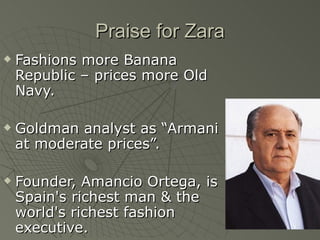
Praise for Zara
   Fashions more Banana
    Republic – prices more Old
    Navy.

   Goldman analyst as “Armani
    at moderate prices”.

   Founder, Amancio Ortega, is
    Spain's richest man & the
    world's richest fashion
    executive.
Anyone here ever shop
      at Zara?
    What do you think?
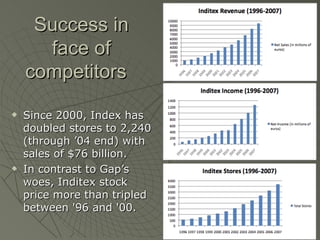
Success in
      face of
    competitors
   Since 2000, Index has
    doubled stores to 2,240
    (through ’04 end) with
    sales of $76 billion.
   In contrast to Gap’s
    woes, Inditex stock
    price more than tripled
    between '96 and '00.
Fast Fashion!
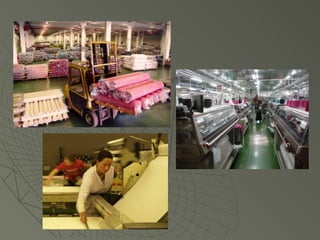
   La Coruna warehouse is 5 million square
    feet = 90 football fields.
    • Nine times the size of Amazon's warehouse
    • These facilities move about 2.5 million items a
      week.
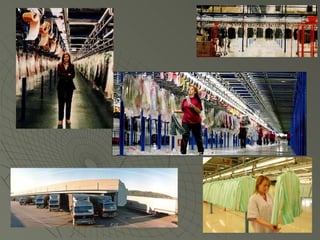
    • Connected to 14 Zara factories through tunnels
      with ceiling-mounted rails.
   Cloth is ironed and products are packed on
    hangers so they don't need ironing when
    they arrive at stores
    • Price tags are affixed
    • Unpack them & they're ready to be sold
How’d they do it?
   Have you ever heard the old saying, “In
    retail, ________ equals death?”
    • Inventory.
   Why's this particularly painful in fashion?
    • Inventory is perishable
    • Fashion world is driven by customer demand.
   If you guess wrong?
    • Mark down your inventory and take the loss
A radical thought
   Who knows best what you should have in your
    stores?
    • Customers

   If your bets are more accurate, what would this
    mean for inventory?
    • Fewer mark downs & write offs

   How might we get a better handle on what
    customers want?
    • Ask them

   Gap places big bets on fashion trends, Zara does
    not.
How does Zara do this?
   Point of Sale Systems (POS)
    • Fancy term for cash-register. Linked to HQ to
      provide data
    • Tracks how items in store are selling…what
      they have that people want.

   Personal Digital Assistant (PDA)
    • Handheld computer for manager.
    • Inputs items people come looking for, what
      customers want that they don’t have.
Competency & Complimentarity
   Sounds sophisticated. Does this cost a lot
    of money?
    • No, they spend 5-10 times less than rivals on
      technology.
    • There’s a lot of return-on-investment (ROI) in
      Zara IT.
   Are these fancy technologies?
    • No.
   Why does Zara succeed with IT?
    • They use it in a smart way (IT Competency)
    • It’s linked with core strategies (IT
      complimentarity)
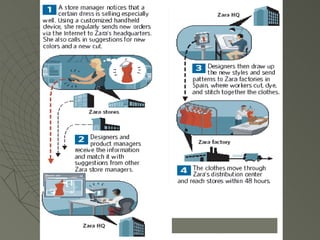
The Process
   What does Zara do with this Data?
    • Real-time data from PDAs and POS are
      whisked to 300+ designers who crank
      out more than 12,000 fresh items each
      year.
    • Use it to decide on the fabric, cut, and
      price points
Just-in-time (JIT) manufacturing
   Scheduling materials to arrive exactly when they are
    needed in the production process.
    • Keeps inventory to a minimum.
    • For Zara, adds flexibility and speed.

   The ace behind this is one of the world's most responsive
    supply chains (e.g. Dell, Wal-Mart).
    • Some use supply chains for efficiency, Zara uses it for
      innovation.

   Do they have a Versace working for Zara?
    • No stars - mostly newcomers whose designs must take
      advantage of cloth & materials Zara can provide.

   Why not?
    • Zara does not predict, respond so quickly don’t have to…
In-house or Outsource?
   Does Zara outsource production?
   Why Not?
    • Production is the critical success factor for Zara
    • Fast Fashion.
   Vertical Integration
    • Zara produces 60% of its merchandise in-house.
    • Zara makes 40% of its own fabric and purchases most
      of its dyes from its own subsidiary.
    • Fabric is cut & dyed by robots in 23 highly automated
      Spanish factories.
    • 50% of fabric arrives undyed so the firm can react to
      mid-season color changes.
   What about competitors?
    • H&M has 900 suppliers and no factories.
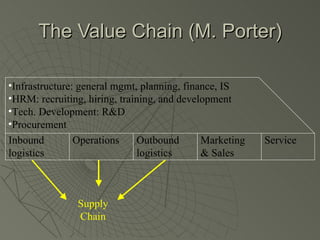
The Value Chain (M. Porter)

•Infrastructure: general mgmt, planning, finance, IS
•HRM: recruiting, hiring, training, and development
•Tech. Development: R&D
•Procurement
Inbound         Operations    Outbound       Marketing   Service
logistics                     logistics      & Sales


               Supply
               Chain
Fresh Fashion
   At Zara, most of the products you see in stores
    didn't exist three weeks ago, not even as
    sketches.
   What about the Madonna concert example?
   How often does the average Zara store accept
    delivery of new products?
    •   Twice-a-week! It's like groceries!
    •   Items rarely remain on shelves for more than a week.
    •   You essentially walk into a new store each time you
        visit.
   What advantage does this give Zara?
    • Exclusivity! No single model is on the market for more
      than four weeks.
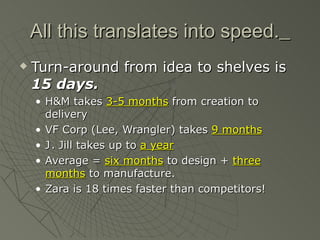
All this translates into speed.
   Turn-around from idea to shelves is
    15 days.
    • H&M takes 3-5 months from creation to
      delivery
    • VF Corp (Lee, Wrangler) takes 9 months
    • J . Jill takes up to a year
    • Average = six months to design + three
      months to manufacture.
    • Zara is 18 times faster than competitors!
Advertising Costs
   What does Zara spend to advertise?
    • 0.3% of sales
   What’s the industry average?
    • 3-4% of sales
 For those keeping score, the average
  in the industry is 10 to 12 times
  more!
 Why no advertising?

    • Their business model does it for them.
Z-days
   If your store looks entirely new twice-a-week,
    how do customers react to this?
    • They visit far more frequently

   How does this impact marketing costs?
    • You don't need any.
    • Zara customers visit 17 times a year (compared to 4 on
      average in London)
    • Highest sales per square foot (everywhere).

   Zara does almost no advertising.
    • Customers are rabidly loyal
    • Line up for 'Z' days when new shipments come in.
“But it costs more…”
   Gap follows cheap labor costs, Zara manufactures
    where?
    • In Europe.

   Who's got the higher manufacturing costs?
    • Zara.
    • The firm spends 15-20% more on manufacturing (less
      of a gap than you'd expect).

   How can Zara manage to survive with higher
    labor costs?
    • Zara produces lots of products in small lots
    • Gap produces a smaller # of product in bigger lots
Deal or No Deal…
   How does this influence Zara’s profitability?
    •   No slack inventory.
    •   What it makes it sells.
    •   It has low prices but almost never has an additional
        sale, they rarely marks down items.

   They take fewer risks.
    • Write-offs at Zara are a single-digit percentage. The
      industry average is 17-20%.

   Zara says: "Being so quick allows us to reduce to
    a minimum the risk of making a mistake - and we
    do make mistakes - with our collections."
Gap’s mistakes
   Spring line '02 – trumpeted as a return to basics,
    was a bust. Discounted within a month.

   And they did it again! You know what the
    industry said of round 2? Here are some quotes:
    • "The colors for women's wear are drab and for men,
      what's with the racks and racks of track pants?"
    • "The women's' printed shirts are wrong and the horrible-
      looking men's graphic tees are really wrong“

   Heavy markdowns have sliced Gap margins 40%
    in two years.
Why doesn't Gap copy Zara?
   They can't – they'd have to unwind
    their model & fund new everything.

   Inimitability - “Making things is easy,
    supply chaining is hard.”

   Couldn’t if they wanted to
    • They have no credit
    • Their debt is junk
Double-edged sword
   What vulnerabilities do you see in Zara’s
    model?
    • Where are almost all of its products
      manufactured?
    • Europe – specifically Spain.

   Financially vulnerable.
    • The Euro – it’s a strong currency. It’s been
      cleaning the dollar’s clock since its
      introduction.
    • Downside is that the cost differential with Asia
      becomes even more pronounced.
Geographical vulnerabilities?
   What dangers can arise from being
    centrally located in Spain?
    • If there’s a natural disaster (think New
      Orleans), terror attack, strike your
      whole supply chain is shot.
    • Pottery Barn Story.
   Geographic Location hurting global
    expansion.
    • Hard to be “fast” when have to travel
      around the world.
Brainstorming?
   Where to from here?
    • What business issues does this bring
      up?
    • Which of these concepts are most
      important to your company?
    • What other companies use IT to
      innovate? Who are the leaders?
    • What are other ways that IT can be
      used to support innovation?

zara

  • 1.
    Zara and IT-enabled Innovation MI703- Computer Information Systems
  • 2.
    The Defending Champ Who is the largest “pure play” clothing retailer in the world?  Problems at the Gap • Previous CEO (Mickey Drexler, fired in 2003, went to turn around JCrew) • Most recent CEO (fired in 2006)  Maybe it’s not the CEO’s fault • Looking to sell the company
  • 3.
    Gap’s Chief CompetitiveAssets  Brand • Thoughts and feelings associated with a product (best US brands?) • How does Gap build brand?  Coverage/ scale  Size of operation gives buying power  They have lots of retail channels to touch customers.
  • 4.
    Location, Location, Location  Where does Gap make clothes? • Offshore, in Asia  Why? • Cheaper labor  The Problem? • Most firms design a 'collection' for an entire season. • Place a huge order for stocking at the start of the season.
  • 5.
    “To everything thereis a season.”  What do you suppose are their lead-times from design to manufacture to store: days, weeks, or months? • Months • H&M is #2, it's 3-5 months from creation to delivery.  How many new items Gap & H&M produce in a season? • 2,000-4,000  How do they decide what to produce? • Hire and monitor the “fashionistas.”  What challenges does this raise for clothing retailers? • If you get it wrong…
  • 6.
    The Challenger  InditexGroup = Zara  “The Most Dangerous Retailer in the World"  Products may seem different than Gap • Trendier, more glamorous. • Same market segment - mass market low end consumer fashions. • Not mutually exclusive.
  • 7.
    Praise for Zara  Fashions more Banana Republic – prices more Old Navy.  Goldman analyst as “Armani at moderate prices”.  Founder, Amancio Ortega, is Spain's richest man & the world's richest fashion executive.
  • 8.
    Anyone here evershop at Zara? What do you think?
  • 9.
    Success in face of competitors  Since 2000, Index has doubled stores to 2,240 (through ’04 end) with sales of $76 billion.  In contrast to Gap’s woes, Inditex stock price more than tripled between '96 and '00.
  • 11.
    Fast Fashion!  La Coruna warehouse is 5 million square feet = 90 football fields. • Nine times the size of Amazon's warehouse • These facilities move about 2.5 million items a week. • Connected to 14 Zara factories through tunnels with ceiling-mounted rails.  Cloth is ironed and products are packed on hangers so they don't need ironing when they arrive at stores • Price tags are affixed • Unpack them & they're ready to be sold
  • 14.
    How’d they doit?  Have you ever heard the old saying, “In retail, ________ equals death?” • Inventory.  Why's this particularly painful in fashion? • Inventory is perishable • Fashion world is driven by customer demand.  If you guess wrong? • Mark down your inventory and take the loss
  • 15.
    A radical thought  Who knows best what you should have in your stores? • Customers  If your bets are more accurate, what would this mean for inventory? • Fewer mark downs & write offs  How might we get a better handle on what customers want? • Ask them  Gap places big bets on fashion trends, Zara does not.
  • 16.
    How does Zarado this?  Point of Sale Systems (POS) • Fancy term for cash-register. Linked to HQ to provide data • Tracks how items in store are selling…what they have that people want.  Personal Digital Assistant (PDA) • Handheld computer for manager. • Inputs items people come looking for, what customers want that they don’t have.
  • 17.
    Competency & Complimentarity  Sounds sophisticated. Does this cost a lot of money? • No, they spend 5-10 times less than rivals on technology. • There’s a lot of return-on-investment (ROI) in Zara IT.  Are these fancy technologies? • No.  Why does Zara succeed with IT? • They use it in a smart way (IT Competency) • It’s linked with core strategies (IT complimentarity)
  • 18.
    The Process  What does Zara do with this Data? • Real-time data from PDAs and POS are whisked to 300+ designers who crank out more than 12,000 fresh items each year. • Use it to decide on the fabric, cut, and price points
  • 20.
    Just-in-time (JIT) manufacturing  Scheduling materials to arrive exactly when they are needed in the production process. • Keeps inventory to a minimum. • For Zara, adds flexibility and speed.  The ace behind this is one of the world's most responsive supply chains (e.g. Dell, Wal-Mart). • Some use supply chains for efficiency, Zara uses it for innovation.  Do they have a Versace working for Zara? • No stars - mostly newcomers whose designs must take advantage of cloth & materials Zara can provide.  Why not? • Zara does not predict, respond so quickly don’t have to…
  • 21.
    In-house or Outsource?  Does Zara outsource production?  Why Not? • Production is the critical success factor for Zara • Fast Fashion.  Vertical Integration • Zara produces 60% of its merchandise in-house. • Zara makes 40% of its own fabric and purchases most of its dyes from its own subsidiary. • Fabric is cut & dyed by robots in 23 highly automated Spanish factories. • 50% of fabric arrives undyed so the firm can react to mid-season color changes.  What about competitors? • H&M has 900 suppliers and no factories.
  • 22.
    The Value Chain(M. Porter) •Infrastructure: general mgmt, planning, finance, IS •HRM: recruiting, hiring, training, and development •Tech. Development: R&D •Procurement Inbound Operations Outbound Marketing Service logistics logistics & Sales Supply Chain
  • 23.
    Fresh Fashion  At Zara, most of the products you see in stores didn't exist three weeks ago, not even as sketches.  What about the Madonna concert example?  How often does the average Zara store accept delivery of new products? • Twice-a-week! It's like groceries! • Items rarely remain on shelves for more than a week. • You essentially walk into a new store each time you visit.  What advantage does this give Zara? • Exclusivity! No single model is on the market for more than four weeks.
  • 24.
    All this translatesinto speed.  Turn-around from idea to shelves is 15 days. • H&M takes 3-5 months from creation to delivery • VF Corp (Lee, Wrangler) takes 9 months • J . Jill takes up to a year • Average = six months to design + three months to manufacture. • Zara is 18 times faster than competitors!
  • 25.
    Advertising Costs  What does Zara spend to advertise? • 0.3% of sales  What’s the industry average? • 3-4% of sales  For those keeping score, the average in the industry is 10 to 12 times more!  Why no advertising? • Their business model does it for them.
  • 26.
    Z-days  If your store looks entirely new twice-a-week, how do customers react to this? • They visit far more frequently  How does this impact marketing costs? • You don't need any. • Zara customers visit 17 times a year (compared to 4 on average in London) • Highest sales per square foot (everywhere).  Zara does almost no advertising. • Customers are rabidly loyal • Line up for 'Z' days when new shipments come in.
  • 27.
    “But it costsmore…”  Gap follows cheap labor costs, Zara manufactures where? • In Europe.  Who's got the higher manufacturing costs? • Zara. • The firm spends 15-20% more on manufacturing (less of a gap than you'd expect).  How can Zara manage to survive with higher labor costs? • Zara produces lots of products in small lots • Gap produces a smaller # of product in bigger lots
  • 28.
    Deal or NoDeal…  How does this influence Zara’s profitability? • No slack inventory. • What it makes it sells. • It has low prices but almost never has an additional sale, they rarely marks down items.  They take fewer risks. • Write-offs at Zara are a single-digit percentage. The industry average is 17-20%.  Zara says: "Being so quick allows us to reduce to a minimum the risk of making a mistake - and we do make mistakes - with our collections."
  • 29.
    Gap’s mistakes  Spring line '02 – trumpeted as a return to basics, was a bust. Discounted within a month.  And they did it again! You know what the industry said of round 2? Here are some quotes: • "The colors for women's wear are drab and for men, what's with the racks and racks of track pants?" • "The women's' printed shirts are wrong and the horrible- looking men's graphic tees are really wrong“  Heavy markdowns have sliced Gap margins 40% in two years.
  • 30.
    Why doesn't Gapcopy Zara?  They can't – they'd have to unwind their model & fund new everything.  Inimitability - “Making things is easy, supply chaining is hard.”  Couldn’t if they wanted to • They have no credit • Their debt is junk
  • 31.
    Double-edged sword  What vulnerabilities do you see in Zara’s model? • Where are almost all of its products manufactured? • Europe – specifically Spain.  Financially vulnerable. • The Euro – it’s a strong currency. It’s been cleaning the dollar’s clock since its introduction. • Downside is that the cost differential with Asia becomes even more pronounced.
  • 32.
    Geographical vulnerabilities?  What dangers can arise from being centrally located in Spain? • If there’s a natural disaster (think New Orleans), terror attack, strike your whole supply chain is shot. • Pottery Barn Story.  Geographic Location hurting global expansion. • Hard to be “fast” when have to travel around the world.
  • 33.
    Brainstorming?  Where to from here? • What business issues does this bring up? • Which of these concepts are most important to your company? • What other companies use IT to innovate? Who are the leaders? • What are other ways that IT can be used to support innovation?

Editor's Notes

  • #2 All on web, always available. Today is tech heavy - lots of terms & definitions. Overwhelming for non-techies. A re-hash of stuff you know if you’re a techie. IT = 50% of capital spending among US firms, $1.08 Trillion in 1996. Estimates are that 1/3 of this investment is squandered . Information technology has been credited with creating powerhouses. Firms like Merrill Lynch (CMA), Schwab (Funds Network), Benetton (Virtual Corp.), and Wal-Mart (links w/suppliers) all owe their present-day size & success to strategically deployed information systems. But inappropriately deployed IS can lead to disasters, as you’ll read about with SnapOn Tools, or as occurred at Oxford Health Care late last year. Oxford was a stellar performing HMO last year, racking up impressive growth and securing deals with some of the nation’s leading hospitals. In less than two months the firm’s stock lost 75% of its value , tens of thousands of customers , and experienced over $200 million in quarterly losses, its first ever since going public . We’ll identify how to find opportunities, how to think about technology and infrastructure as an enabler, and how to effectively deploy technologies to minimize the kinds of problems that occurred at Oxford. On the positive side, IS is the one area where you can know much more than your bosses! Many of the examples sound very impressive when recounted in job interviews. Don’t be afraid to show your stuff! At then end of this class you’ll know more than many people interviewing you.