Developing a Young People’s Substance Misuse Strategy Within the new Drug strategy
Today in context DCSF leading work to develop for post April 2008 Young people element of new Drug Strategy Substance misuse element of new Youth Strategy This phase of work in two main chunks: Targeted stakeholder consultation Officials working groups Draw consultation results and group outcomes into new draft strategy by end of year
Wider context CSR round: New Drugs PSA New Youth PSA inc substance misuse indicator SETF – Families at Risk review New PM Change in the air; do things differently Prevention at the heart; commitment to good quality education at all age phases
Wider context BUT Strategy should stay evidence based Strategy must fit with other Government priorities and policies Local area performance management framework LAAs; CAAs; presumption against ring-fenced budgets Make best use of tight resources
The Prevention Agenda Drugs, Alcohol & VSA Universal – Education, early identification Targeted – Prevention , VYP Specialist – Treatment Custody settings –all of the above Families – parents, hidden harm etc. Public Information Campaigns – FRANK etc.
Blueprint – research publication timetable Process and practitioner reports – 22 November Impact, cost effectiveness, methodology reports – April/May 2008 Targeted policy & practice leaflets in 2008?
Blueprint - key queries? School component How to balance fidelity to an evidence based programme in the classroom with need to differentiate? How to ensure young people receive consistent quality across PSHE How to harness normative education principles in the classroom? And beyond? Other components How to motivate parents to be involved? What should a community component look like?
Aims today Key questions: What should we be aiming to achieve? How do we get there? In practical terms: Possible priorities Actions to deliver them
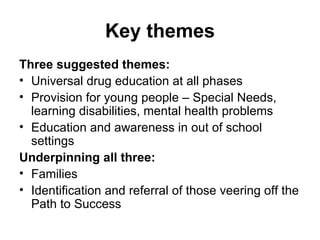
Key themes Three suggested themes: Universal drug education at all phases Provision for young people – Special Needs, learning disabilities, mental health problems Education and awareness in out of school settings Underpinning all three: Families Identification and referral of those veering off the Path to Success
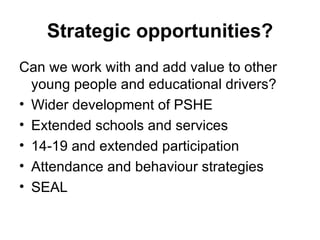
Strategic opportunities? Can we work with and add value to other young people and educational drivers? Wider development of PSHE Extended schools and services 14-19 and extended participation Attendance and behaviour strategies SEAL

Young People's Substance Misuse Strategy Presentation

  • 1.
    Developing a YoungPeople’s Substance Misuse Strategy Within the new Drug strategy
  • 2.
    Today in contextDCSF leading work to develop for post April 2008 Young people element of new Drug Strategy Substance misuse element of new Youth Strategy This phase of work in two main chunks: Targeted stakeholder consultation Officials working groups Draw consultation results and group outcomes into new draft strategy by end of year
  • 3.
    Wider context CSRround: New Drugs PSA New Youth PSA inc substance misuse indicator SETF – Families at Risk review New PM Change in the air; do things differently Prevention at the heart; commitment to good quality education at all age phases
  • 4.
    Wider context BUTStrategy should stay evidence based Strategy must fit with other Government priorities and policies Local area performance management framework LAAs; CAAs; presumption against ring-fenced budgets Make best use of tight resources
  • 5.
    The Prevention AgendaDrugs, Alcohol & VSA Universal – Education, early identification Targeted – Prevention , VYP Specialist – Treatment Custody settings –all of the above Families – parents, hidden harm etc. Public Information Campaigns – FRANK etc.
  • 6.
    Blueprint – researchpublication timetable Process and practitioner reports – 22 November Impact, cost effectiveness, methodology reports – April/May 2008 Targeted policy & practice leaflets in 2008?
  • 7.
    Blueprint - keyqueries? School component How to balance fidelity to an evidence based programme in the classroom with need to differentiate? How to ensure young people receive consistent quality across PSHE How to harness normative education principles in the classroom? And beyond? Other components How to motivate parents to be involved? What should a community component look like?
  • 8.
    Aims today Keyquestions: What should we be aiming to achieve? How do we get there? In practical terms: Possible priorities Actions to deliver them
  • 9.
    Key themes Threesuggested themes: Universal drug education at all phases Provision for young people – Special Needs, learning disabilities, mental health problems Education and awareness in out of school settings Underpinning all three: Families Identification and referral of those veering off the Path to Success
  • 10.
    Strategic opportunities? Canwe work with and add value to other young people and educational drivers? Wider development of PSHE Extended schools and services 14-19 and extended participation Attendance and behaviour strategies SEAL