Young people: drugs, treatment 
and support 
Andrew Brown 
Director of Policy, Influence and 
Engagement, DrugScope
Context 
• Most young people will not use substances, and where they do the 
majority will do so rarely and are unlikely to come to significant 
harm. 
• The last decade has seen significant falls in the number of young 
people using substances. 
• However a small proportion of under 18s continue to require 
specialist services and research for DfE suggests that the annual 
cost of crime and health of young people’s substance use is £104 
million a year.1 
• The same research estimated a benefit of £4.66-£8.38 for every £1 
spent on young people’s drug and alcohol treatment. 
• Young peoples substance services are commissioned as part of 
local authorities public health responsibilities. 
1 Specialist drug and alcohol services for young people: a cost benefit analysis, DfE (2010)
Policy Context 
• The 2010 drug strategy saw the Department for Education 
leading on reducing demand for illicit drugs. 
• However, following a review of its purpose the DfE has 
relinquished most of its role in drug policy, as a consequence 
the only remaining responsibility it has is in setting the school 
curriculum – which is supported by the ADEPIS project 
http://mentor-adepis.org/. 
• The Home Office and Department of Health now have shared 
responsibility for the reducing demand sections of the 
strategy, with Public Health England taking a lead in liaising 
with local commissioners and in running the FRANK website 
and helpline. 
• There is a commitment from government to develop the public 
health outcomes framework to include outcome indicators 
based on prevalence data for 15 year olds – to be collected 
through the What about Youth? survey.
Lessons from Young people’s drug and alcohol 
treatment at the crossroads (DrugScope 2010) 
• Working with young people in treatment is not only 
about problem drug or alcohol use, but multiple needs. 
• A lot of the work done by specialist drug and alcohol 
services is not ‘treatment’ in the narrow medical sense. 
• Polydrug use creates a new challenge for services. 
• Young people’s services should not be judged by the 
same targets as adult services. 
• A key challenge is the gap between young people’s 
and adult services and the issues of transition this 
raises. 
• Young people with drug problems may be involved in 
drug supply and services need to address this 
relationship. 
• We need investment in community and social 
regeneration as well as one-to-one support.
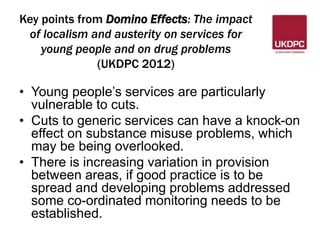
Key points from Domino Effects: The impact 
of localism and austerity on services for 
young people and on drug problems 
(UKDPC 2012) 
• Young people’s services are particularly 
vulnerable to cuts. 
• Cuts to generic services can have a knock-on 
effect on substance misuse problems, which 
may be being overlooked. 
• There is increasing variation in provision 
between areas, if good practice is to be 
spread and developing problems addressed 
some co-ordinated monitoring needs to be 
established.
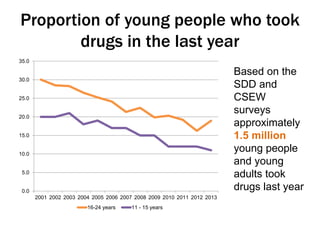
Proportion of young people who took 
drugs in the last year 
35.0 
30.0 
25.0 
20.0 
15.0 
10.0 
5.0 
0.0 
2001 2002 2003 2004 2005 2006 2007 2008 2009 2010 2011 2012 2013 
16-24 years 11 - 15 years 
Based on the 
SDD and 
CSEW 
surveys 
approximately 
1.5 million 
young people 
and young 
adults took 
drugs last year
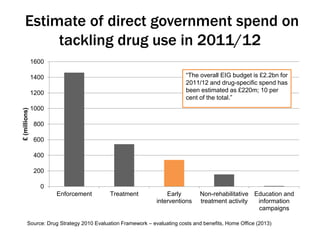
Estimate of direct government spend on 
tackling drug use in 2011/12 
1600 
1400 
1200 
1000 
800 
600 
400 
200 
0 
Enforcement Treatment Early 
interventions 
Non-rehabilitative 
treatment activity 
Education and 
information 
campaigns 
£ (millions) 
“The overall EIG budget is £2.2bn for 
2011/12 and drug-specific spend has 
been estimated as £220m; 10 per 
cent of the total.” 
Source: Drug Strategy 2010 Evaluation Framework – evaluating costs and benefits, Home Office (2013)
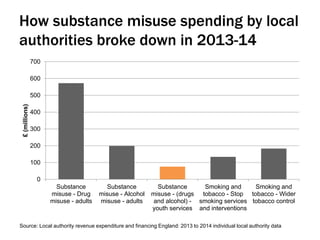
How substance misuse spending by local 
authorities broke down in 2013-14 
700 
600 
500 
400 
300 
200 
100 
0 
Substance 
misuse - Drug 
misuse - adults 
Substance 
misuse - Alcohol 
misuse - adults 
Substance 
misuse - (drugs 
and alcohol) - 
youth services 
Smoking and 
tobacco - Stop 
smoking services 
and interventions 
Smoking and 
tobacco - Wider 
tobacco control 
£ (millions) 
Source: Local authority revenue expenditure and financing England: 2013 to 2014 individual local authority data
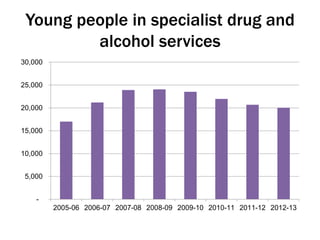
Young people in specialist drug and 
alcohol services 
30,000 
25,000 
20,000 
15,000 
10,000 
5,000 
- 
2005-06 2006-07 2007-08 2008-09 2009-10 2010-11 2011-12 2012-13
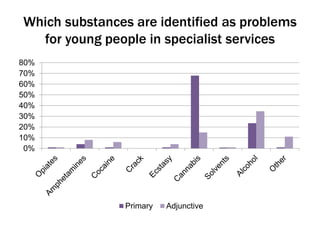
Which substances are identified as problems 
for young people in specialist services 
80% 
70% 
60% 
50% 
40% 
30% 
20% 
10% 
0% 
Primary Adjunctive
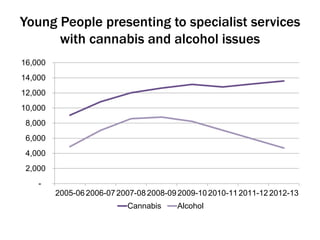
Young People presenting to specialist services 
with cannabis and alcohol issues 
16,000 
14,000 
12,000 
10,000 
8,000 
6,000 
4,000 
2,000 
- 
2005-06 2006-07 2007-08 2008-09 2009-10 2010-11 2011-12 2012-13 
Cannabis Alcohol
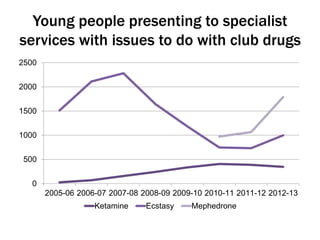
Young people presenting to specialist 
services with issues to do with club drugs 
2500 
2000 
1500 
1000 
500 
0 
2005-06 2006-07 2007-08 2008-09 2009-10 2010-11 2011-12 2012-13 
Ketamine Ecstasy Mephedrone
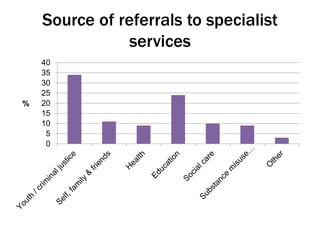
Source of referrals to specialist 
services 
40 
35 
30 
25 
20 
15 
10 
5 
0 
%
Guidance: Interventions to reduce substance 
misuse among vulnerable young people 
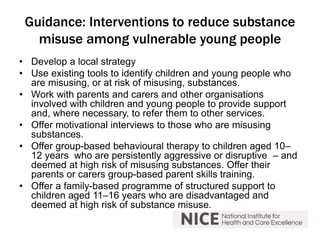
• Develop a local strategy 
• Use existing tools to identify children and young people who 
are misusing, or at risk of misusing, substances. 
• Work with parents and carers and other organisations 
involved with children and young people to provide support 
and, where necessary, to refer them to other services. 
• Offer motivational interviews to those who are misusing 
substances. 
• Offer group-based behavioural therapy to children aged 10– 
12 years who are persistently aggressive or disruptive – and 
deemed at high risk of misusing substances. Offer their 
parents or carers group-based parent skills training. 
• Offer a family-based programme of structured support to 
children aged 11–16 years who are disadvantaged and 
deemed at high risk of substance misuse.
Issues and challenges 
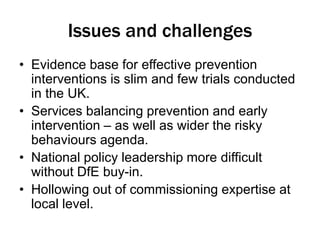
• Evidence base for effective prevention 
interventions is slim and few trials conducted 
in the UK. 
• Services balancing prevention and early 
intervention – as well as wider the risky 
behaviours agenda. 
• National policy leadership more difficult 
without DfE buy-in. 
• Hollowing out of commissioning expertise at 
local level.
Thank you 
Andrew Brown 
Director of Policy, Influence and 
Engagement 
DrugScope 
@andrewbrown365 
andrewb@drugscope.org.uk 
www.drugscope.org.uk

Young people: alcohol and other drugs, treatment and support in England

  • 1.
    Young people: drugs,treatment and support Andrew Brown Director of Policy, Influence and Engagement, DrugScope
  • 2.
    Context • Mostyoung people will not use substances, and where they do the majority will do so rarely and are unlikely to come to significant harm. • The last decade has seen significant falls in the number of young people using substances. • However a small proportion of under 18s continue to require specialist services and research for DfE suggests that the annual cost of crime and health of young people’s substance use is £104 million a year.1 • The same research estimated a benefit of £4.66-£8.38 for every £1 spent on young people’s drug and alcohol treatment. • Young peoples substance services are commissioned as part of local authorities public health responsibilities. 1 Specialist drug and alcohol services for young people: a cost benefit analysis, DfE (2010)
  • 3.
    Policy Context •The 2010 drug strategy saw the Department for Education leading on reducing demand for illicit drugs. • However, following a review of its purpose the DfE has relinquished most of its role in drug policy, as a consequence the only remaining responsibility it has is in setting the school curriculum – which is supported by the ADEPIS project http://mentor-adepis.org/. • The Home Office and Department of Health now have shared responsibility for the reducing demand sections of the strategy, with Public Health England taking a lead in liaising with local commissioners and in running the FRANK website and helpline. • There is a commitment from government to develop the public health outcomes framework to include outcome indicators based on prevalence data for 15 year olds – to be collected through the What about Youth? survey.
  • 4.
    Lessons from Youngpeople’s drug and alcohol treatment at the crossroads (DrugScope 2010) • Working with young people in treatment is not only about problem drug or alcohol use, but multiple needs. • A lot of the work done by specialist drug and alcohol services is not ‘treatment’ in the narrow medical sense. • Polydrug use creates a new challenge for services. • Young people’s services should not be judged by the same targets as adult services. • A key challenge is the gap between young people’s and adult services and the issues of transition this raises. • Young people with drug problems may be involved in drug supply and services need to address this relationship. • We need investment in community and social regeneration as well as one-to-one support.
  • 5.
    Key points fromDomino Effects: The impact of localism and austerity on services for young people and on drug problems (UKDPC 2012) • Young people’s services are particularly vulnerable to cuts. • Cuts to generic services can have a knock-on effect on substance misuse problems, which may be being overlooked. • There is increasing variation in provision between areas, if good practice is to be spread and developing problems addressed some co-ordinated monitoring needs to be established.
  • 6.
    Proportion of youngpeople who took drugs in the last year 35.0 30.0 25.0 20.0 15.0 10.0 5.0 0.0 2001 2002 2003 2004 2005 2006 2007 2008 2009 2010 2011 2012 2013 16-24 years 11 - 15 years Based on the SDD and CSEW surveys approximately 1.5 million young people and young adults took drugs last year
  • 7.
    Estimate of directgovernment spend on tackling drug use in 2011/12 1600 1400 1200 1000 800 600 400 200 0 Enforcement Treatment Early interventions Non-rehabilitative treatment activity Education and information campaigns £ (millions) “The overall EIG budget is £2.2bn for 2011/12 and drug-specific spend has been estimated as £220m; 10 per cent of the total.” Source: Drug Strategy 2010 Evaluation Framework – evaluating costs and benefits, Home Office (2013)
  • 8.
    How substance misusespending by local authorities broke down in 2013-14 700 600 500 400 300 200 100 0 Substance misuse - Drug misuse - adults Substance misuse - Alcohol misuse - adults Substance misuse - (drugs and alcohol) - youth services Smoking and tobacco - Stop smoking services and interventions Smoking and tobacco - Wider tobacco control £ (millions) Source: Local authority revenue expenditure and financing England: 2013 to 2014 individual local authority data
  • 9.
    Young people inspecialist drug and alcohol services 30,000 25,000 20,000 15,000 10,000 5,000 - 2005-06 2006-07 2007-08 2008-09 2009-10 2010-11 2011-12 2012-13
  • 10.
    Which substances areidentified as problems for young people in specialist services 80% 70% 60% 50% 40% 30% 20% 10% 0% Primary Adjunctive
  • 11.
    Young People presentingto specialist services with cannabis and alcohol issues 16,000 14,000 12,000 10,000 8,000 6,000 4,000 2,000 - 2005-06 2006-07 2007-08 2008-09 2009-10 2010-11 2011-12 2012-13 Cannabis Alcohol
  • 12.
    Young people presentingto specialist services with issues to do with club drugs 2500 2000 1500 1000 500 0 2005-06 2006-07 2007-08 2008-09 2009-10 2010-11 2011-12 2012-13 Ketamine Ecstasy Mephedrone
  • 13.
    Source of referralsto specialist services 40 35 30 25 20 15 10 5 0 %
  • 14.
    Guidance: Interventions toreduce substance misuse among vulnerable young people • Develop a local strategy • Use existing tools to identify children and young people who are misusing, or at risk of misusing, substances. • Work with parents and carers and other organisations involved with children and young people to provide support and, where necessary, to refer them to other services. • Offer motivational interviews to those who are misusing substances. • Offer group-based behavioural therapy to children aged 10– 12 years who are persistently aggressive or disruptive – and deemed at high risk of misusing substances. Offer their parents or carers group-based parent skills training. • Offer a family-based programme of structured support to children aged 11–16 years who are disadvantaged and deemed at high risk of substance misuse.
  • 15.
    Issues and challenges • Evidence base for effective prevention interventions is slim and few trials conducted in the UK. • Services balancing prevention and early intervention – as well as wider the risky behaviours agenda. • National policy leadership more difficult without DfE buy-in. • Hollowing out of commissioning expertise at local level.
  • 16.
    Thank you AndrewBrown Director of Policy, Influence and Engagement DrugScope @andrewbrown365 andrewb@drugscope.org.uk www.drugscope.org.uk

Editor's Notes

  • #8 Early Interventions = The Family Nurse Partnership; Sure Start Programme; Intensive Family Pathfinders; Family Intervention Programmes; Myplace; Personal, Social, Health and Economic (PSHE) education; Positive Futures; Choices Non-rehabilitative treatment = Work Programme; tailored conditionality; employment provision; employment engagement; Recovery Champions; homelessness prevention; Supporting People.