You don’t know what you don’t
know:
Using reflection to develop
metacognitive skills for
information literacy
Shirley Yearwood-Jackman
University of Liverpool
Takeaways...
Student Learning
 Pedagogy used to
develop metacognitive
skills
 Impact of pedagogical
approach on student
learning
 Tips to develop
independent learners
and skills for
employability
Reflective Practice
 An understanding of
how you can use
reflective practice to
design innovative
learning and teaching.
 Design in deep student
learning
Reflecting on my
Teaching Practice
Reflective
Practitioner
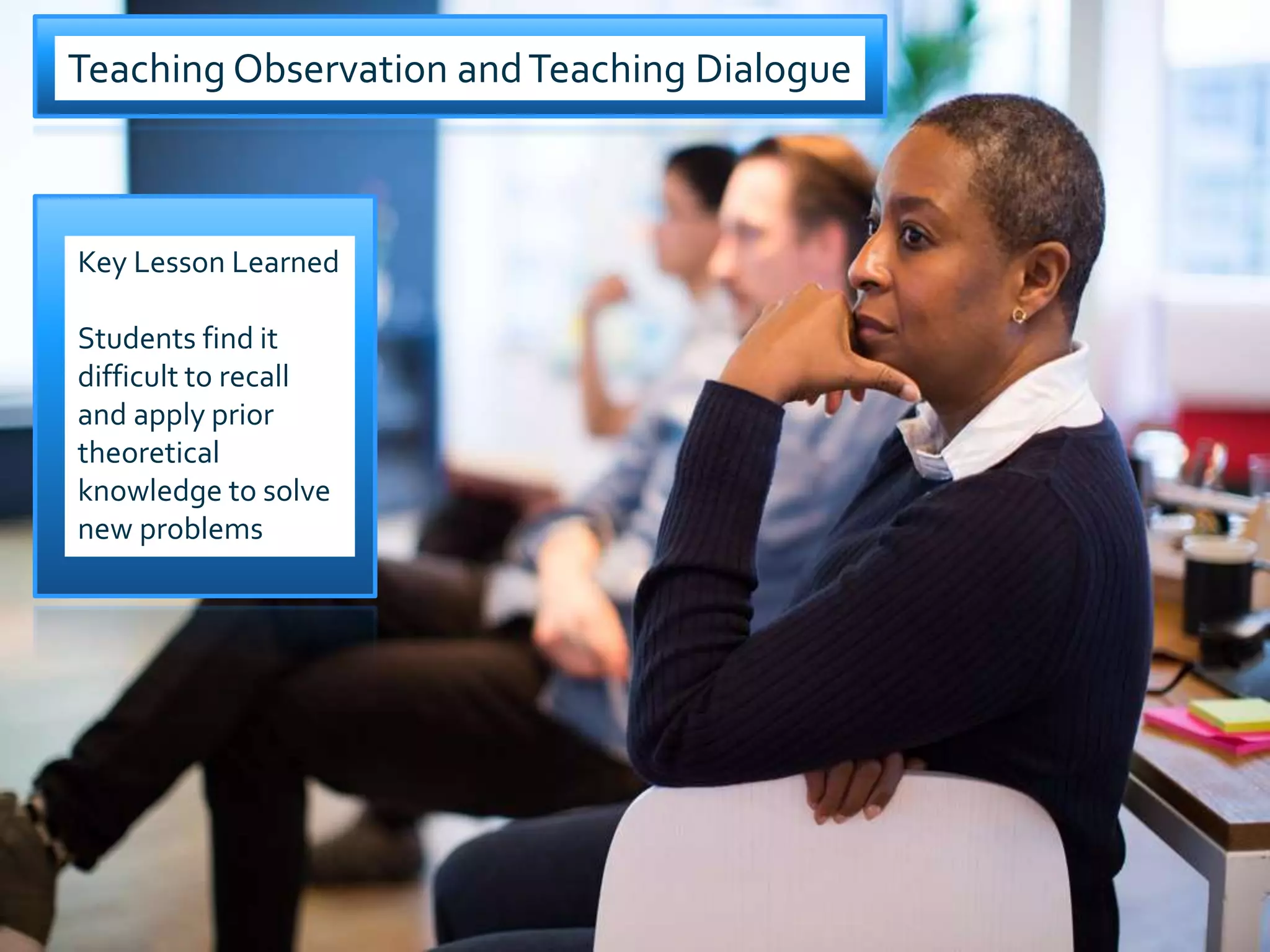
Teaching Observation andTeaching Dialogue
Key Lesson Learned
Students find it
difficult to recall
and apply prior
theoretical
knowledge to solve
new problems
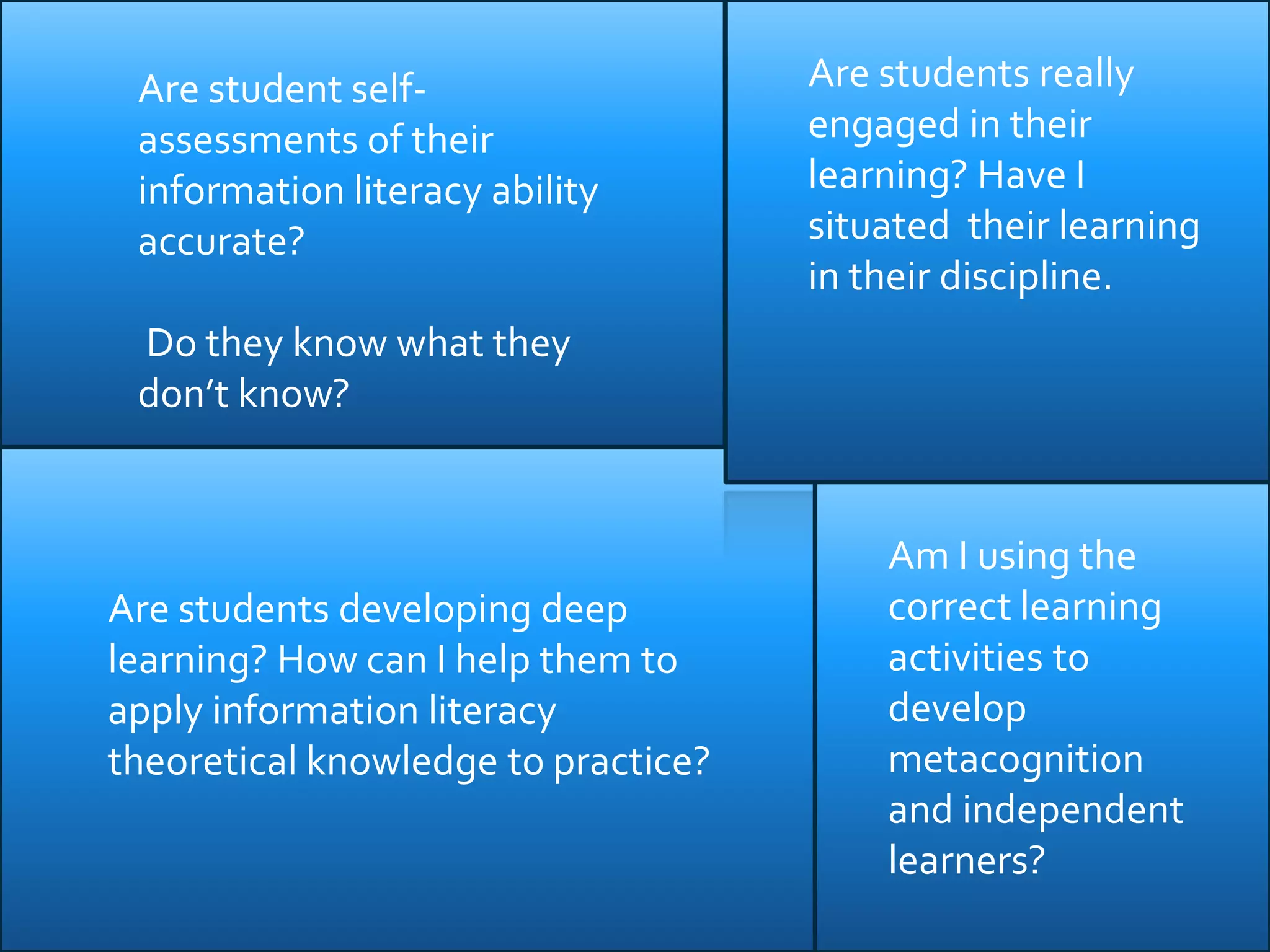
Are student self-
assessments of their
information literacy ability
accurate?
Do they know what they
don’t know?
Are students really
engaged in their
learning? Have I
situated their learning
in their discipline.
Are students developing deep
learning? How can I help them to
apply information literacy
theoretical knowledge to practice?
Am I using the
correct learning
activities to
develop
metacognition
and independent
learners?
New Teaching Unit:
Pedagogy
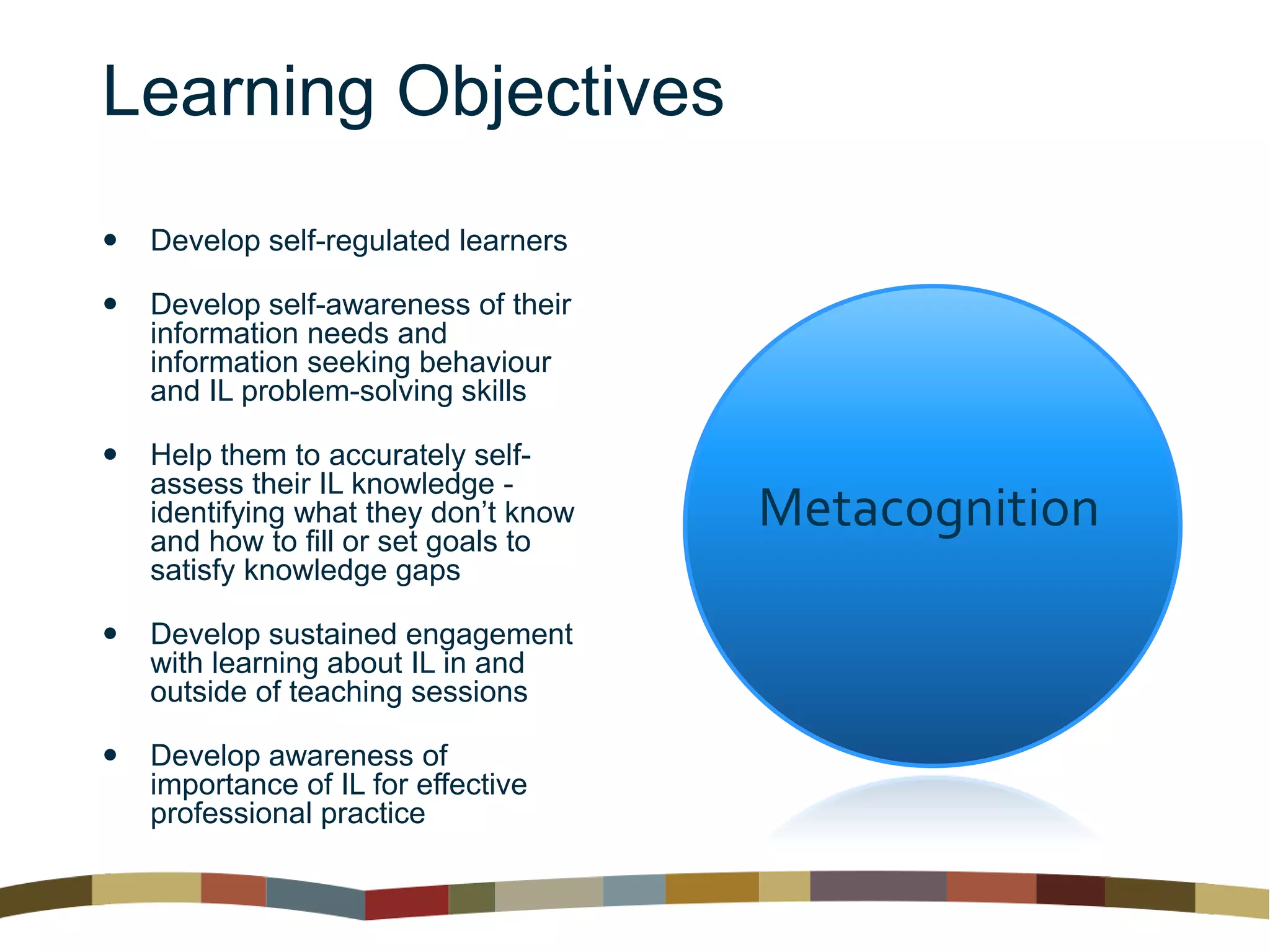
Learning Objectives
 Develop self-regulated learners
 Develop self-awareness of their
information needs and
information seeking behaviour
and IL problem-solving skills
 Help them to accurately self-
assess their IL knowledge -
identifying what they don’t know
and how to fill or set goals to
satisfy knowledge gaps
 Develop sustained engagement
with learning about IL in and
outside of teaching sessions
 Develop awareness of
importance of IL for effective
professional practice
Metacognition
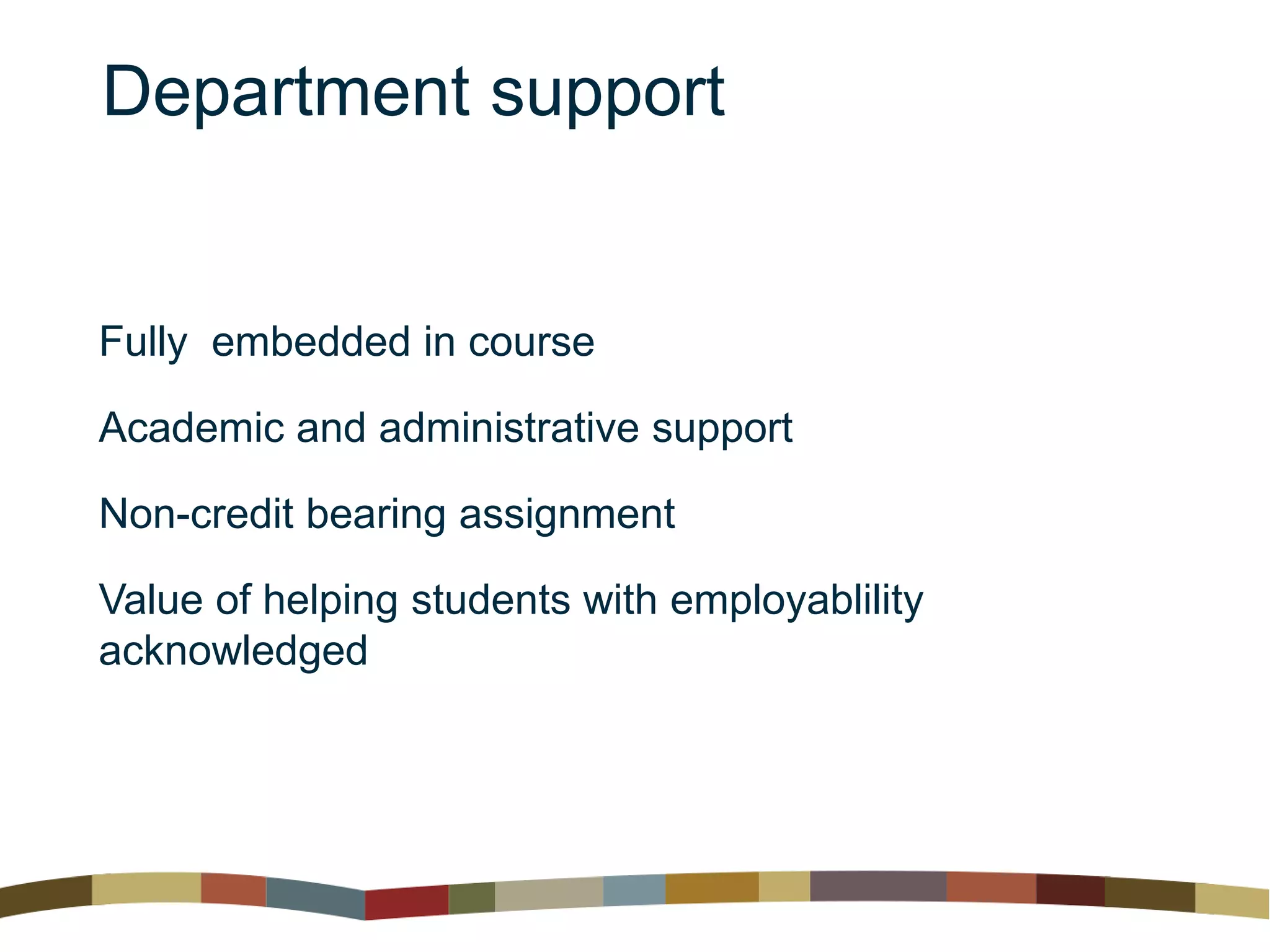
Department support
Fully embedded in course
Academic and administrative support
Non-credit bearing assignment
Value of helping students with employablility
acknowledged
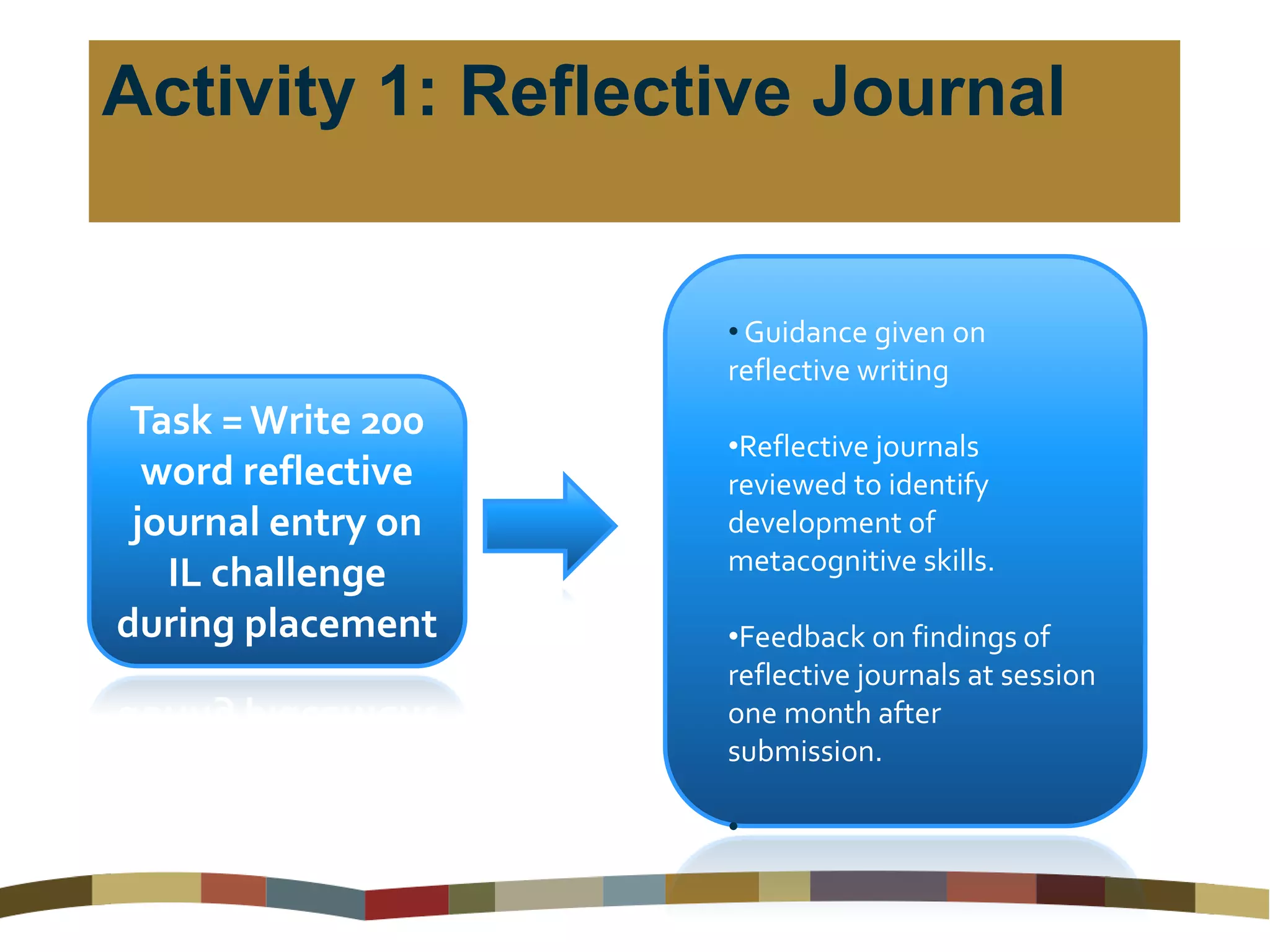
Activity 1: Reflective Journal
Task = Write 200
word reflective
journal entry on
IL challenge
during placement
• Guidance given on
reflective writing
•Reflective journals
reviewed to identify
development of
metacognitive skills.
•Feedback on findings of
reflective journals at session
one month after
submission.
•
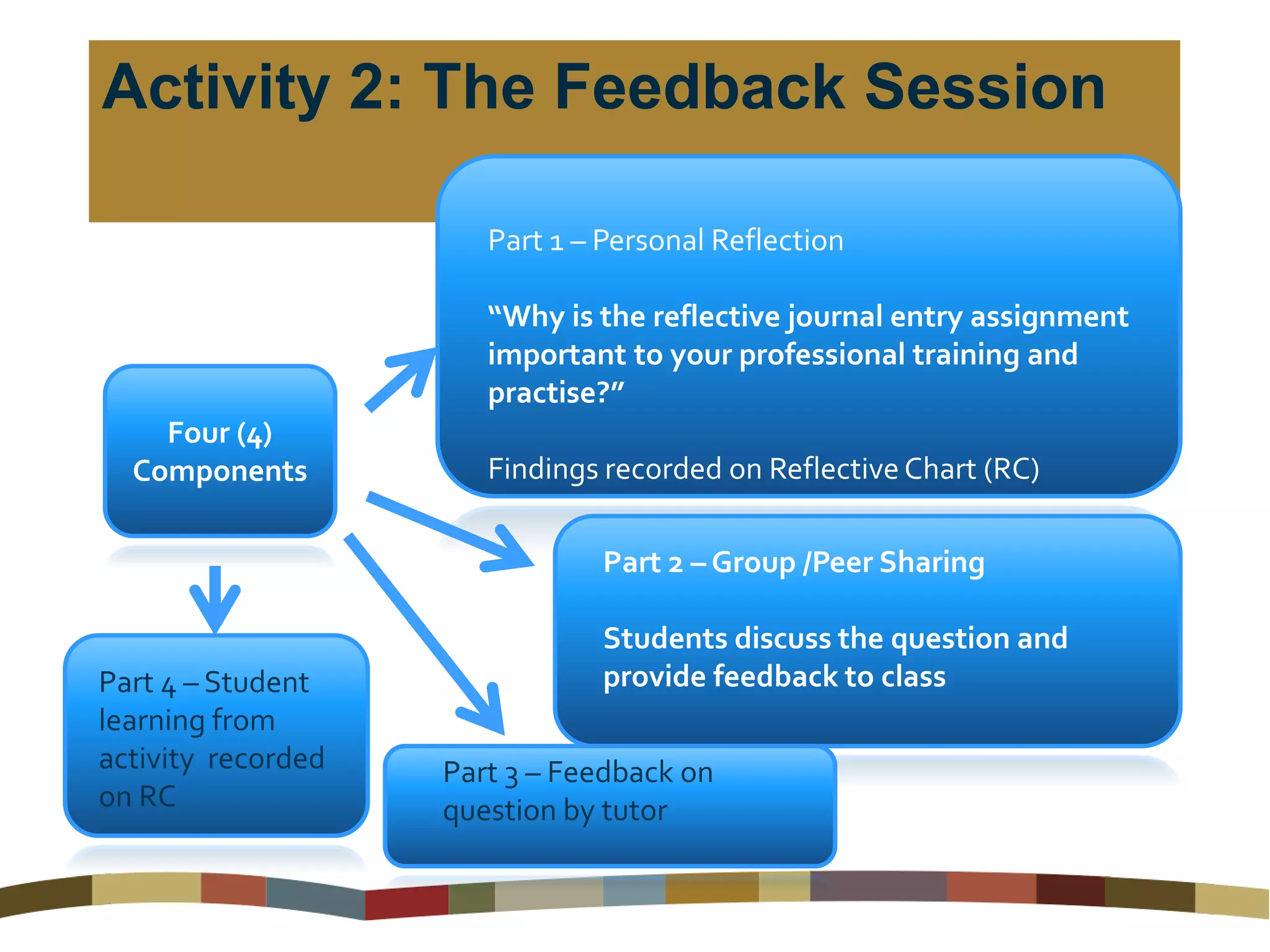
Activity 2: The Feedback Session
Four (4)
Components
Part 1 – Personal Reflection
“Why is the reflective journal entry assignment
important to your professional training and
practise?”
Findings recorded on Reflective Chart (RC)
Part 2 – Group /Peer Sharing
Students discuss the question and
provide feedback to class
Part 3 – Feedback on
question by tutor
Part 4 – Student
learning from
activity recorded
on RC
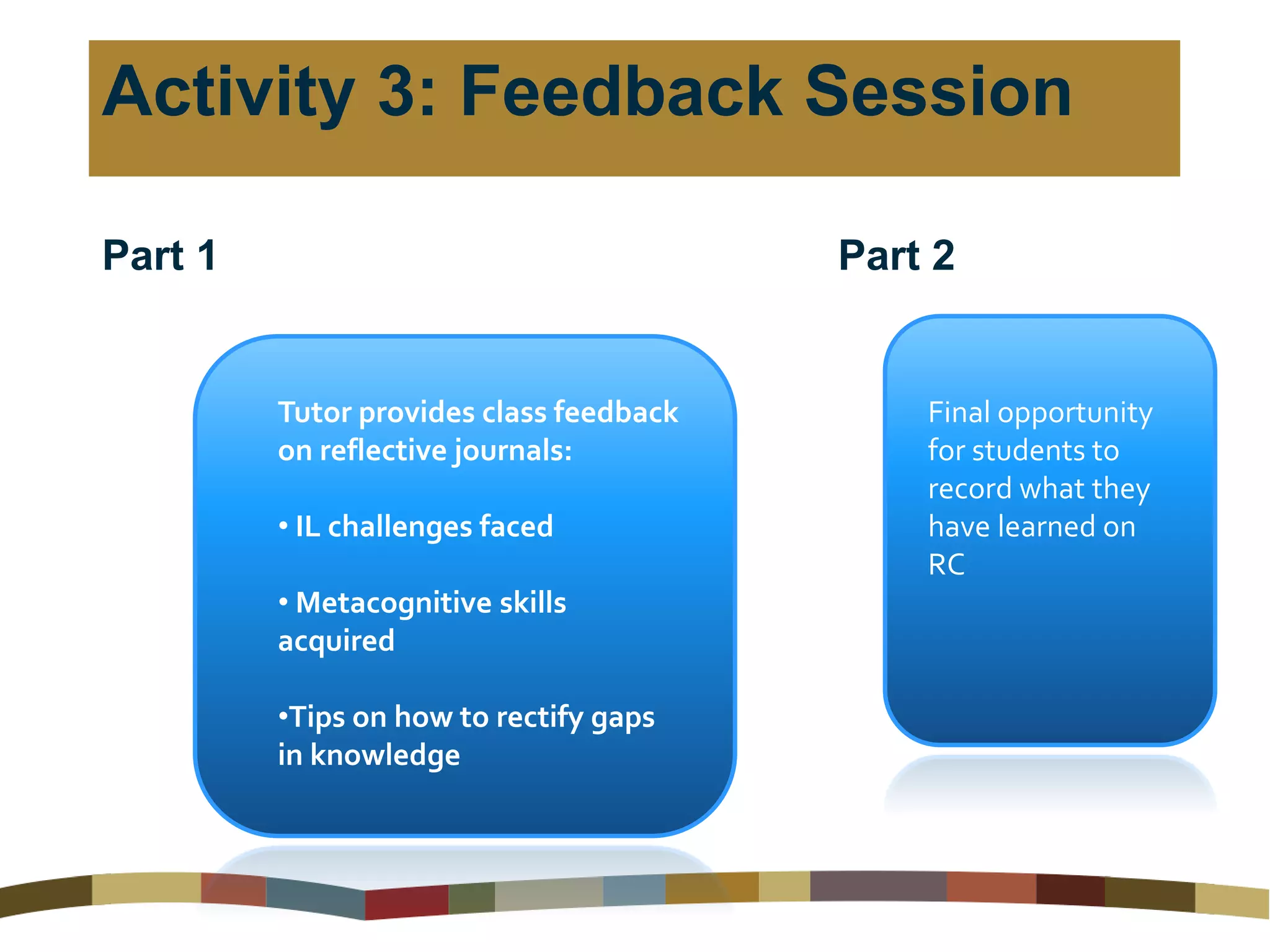
Activity 3: Feedback Session
Part 1 Part 2
Tutor provides class feedback
on reflective journals:
• IL challenges faced
• Metacognitive skills
acquired
•Tips on how to rectify gaps
in knowledge
Final opportunity
for students to
record what they
have learned on
RC
New Teaching Unit:
Outcomes
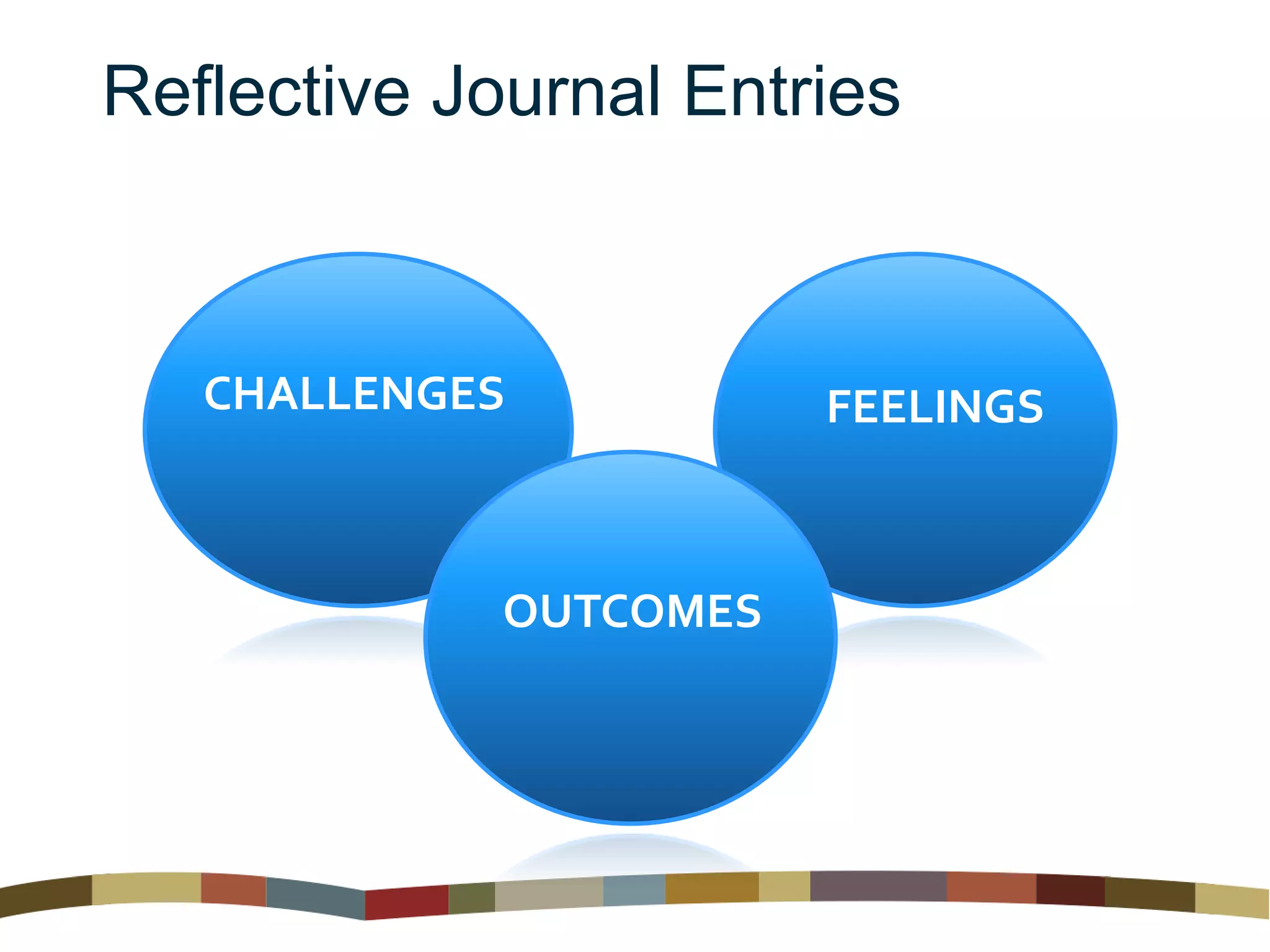
Reflective Journal Entries
CHALLENGES FEELINGS
OUTCOMES
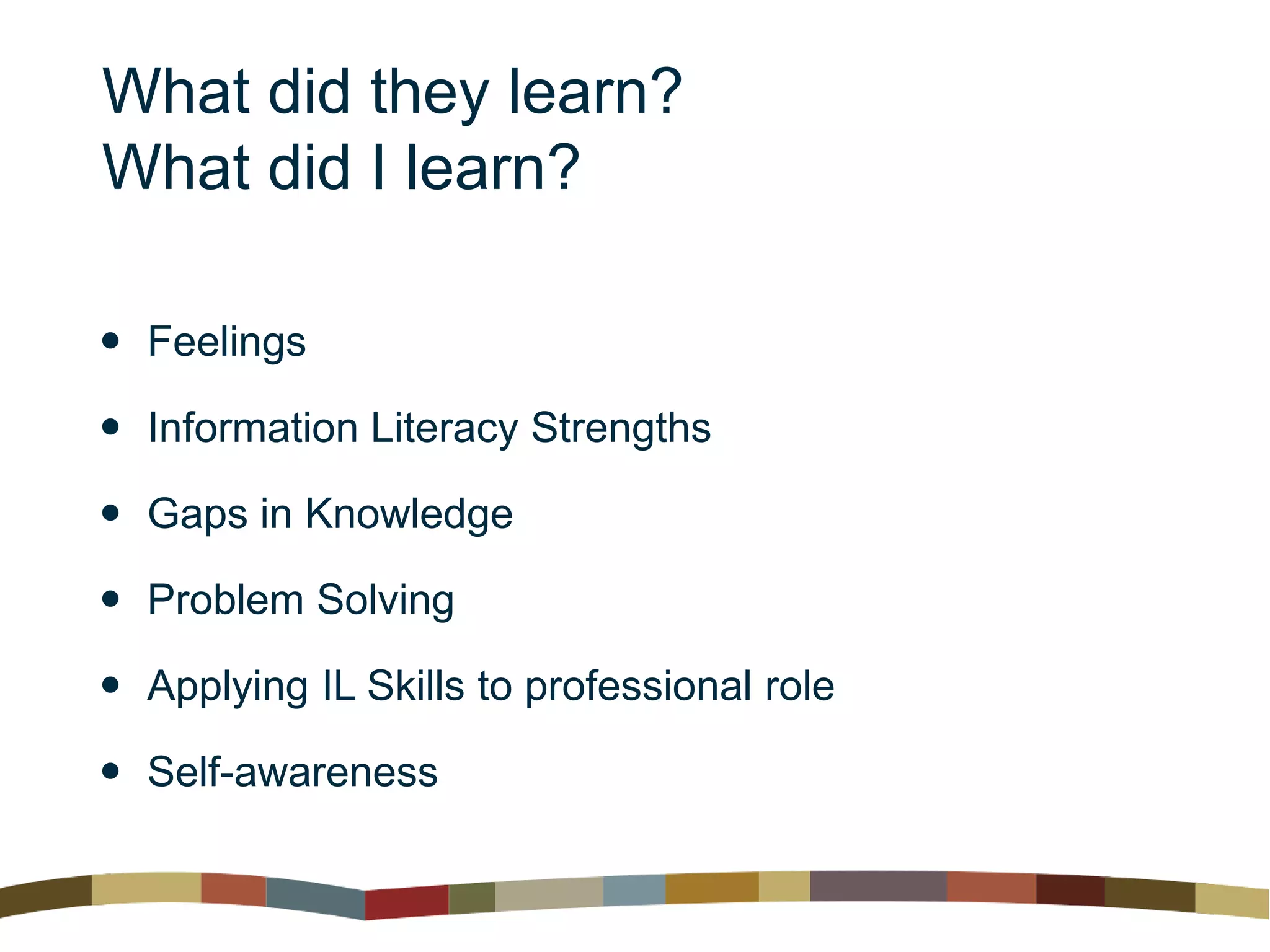
What did they learn?
What did I learn?
 Feelings
 Information Literacy Strengths
 Gaps in Knowledge
 Problem Solving
 Applying IL Skills to professional role
 Self-awareness
Future
Directions
Next steps
 Design a follow-up session to address gaps in
knowledge using experential learning
 Observe if enhancing metacognition continues to
increase student engagement
 Evaluate if this cohort develop better IL skills
 Determine if this cohort seek to develop better
strategies for improving IL knowledge and applying it
to clinical decision-making
Questions

You don't know what you don't know: using reflection to develop metacognitive skills for information literacy - Yearwood-Jackman

  • 1.
    You don’t knowwhat you don’t know: Using reflection to develop metacognitive skills for information literacy Shirley Yearwood-Jackman University of Liverpool
  • 2.
    Takeaways... Student Learning  Pedagogyused to develop metacognitive skills  Impact of pedagogical approach on student learning  Tips to develop independent learners and skills for employability Reflective Practice  An understanding of how you can use reflective practice to design innovative learning and teaching.  Design in deep student learning
  • 3.
  • 4.
  • 5.
    Teaching Observation andTeachingDialogue Key Lesson Learned Students find it difficult to recall and apply prior theoretical knowledge to solve new problems
  • 6.
    Are student self- assessmentsof their information literacy ability accurate? Do they know what they don’t know? Are students really engaged in their learning? Have I situated their learning in their discipline. Are students developing deep learning? How can I help them to apply information literacy theoretical knowledge to practice? Am I using the correct learning activities to develop metacognition and independent learners?
  • 8.
  • 9.
    Learning Objectives  Developself-regulated learners  Develop self-awareness of their information needs and information seeking behaviour and IL problem-solving skills  Help them to accurately self- assess their IL knowledge - identifying what they don’t know and how to fill or set goals to satisfy knowledge gaps  Develop sustained engagement with learning about IL in and outside of teaching sessions  Develop awareness of importance of IL for effective professional practice Metacognition
  • 10.
    Department support Fully embeddedin course Academic and administrative support Non-credit bearing assignment Value of helping students with employablility acknowledged
  • 11.
    Activity 1: ReflectiveJournal Task = Write 200 word reflective journal entry on IL challenge during placement • Guidance given on reflective writing •Reflective journals reviewed to identify development of metacognitive skills. •Feedback on findings of reflective journals at session one month after submission. •
  • 12.
    Activity 2: TheFeedback Session Four (4) Components Part 1 – Personal Reflection “Why is the reflective journal entry assignment important to your professional training and practise?” Findings recorded on Reflective Chart (RC) Part 2 – Group /Peer Sharing Students discuss the question and provide feedback to class Part 3 – Feedback on question by tutor Part 4 – Student learning from activity recorded on RC
  • 13.
    Activity 3: FeedbackSession Part 1 Part 2 Tutor provides class feedback on reflective journals: • IL challenges faced • Metacognitive skills acquired •Tips on how to rectify gaps in knowledge Final opportunity for students to record what they have learned on RC
  • 14.
  • 15.
  • 17.
    What did theylearn? What did I learn?  Feelings  Information Literacy Strengths  Gaps in Knowledge  Problem Solving  Applying IL Skills to professional role  Self-awareness
  • 18.
  • 19.
    Next steps  Designa follow-up session to address gaps in knowledge using experential learning  Observe if enhancing metacognition continues to increase student engagement  Evaluate if this cohort develop better IL skills  Determine if this cohort seek to develop better strategies for improving IL knowledge and applying it to clinical decision-making
  • 20.

Editor's Notes

  • #7 1. Self-perception of IL skills and over-confidence 2. Do they appreciate that advanced information literacy skills are required to be an effective evidenced based practitioner?
  • #10 Definition of self-regulation Self-regulated learning is an active constructive process whereby learners set goals for their learning and monitor, regulate, and control their cognition, motivation, and behaviour, guided and constrained by their goals and the contextual features of the environment. (Pintrich and Zusho, p64)