Yoga
Introduction
 Yoga is a system of physical and mental exercises designed
thousands of years ago to balance and unite the mind, body and
spirit
 “yoga” comes from the Sanskrit word yuga, meaning “union”
 There are many different types of yoga and yoga practices
 The most common type in the U.S. is hatha, a Sanskrit word that
means sun (ha) and moon (tha)
 Some other major types:
 Vinyasa: flows from one pose to another; focuses on coordinating
breath and movement in a fluid series of poses
 Bikram: “hot” yoga; focuses on strength, endurance, flexibility, and
weight loss
 Ashtanga: a very athletic yoga; American version is “power” yoga;
progressive and continuous series of postures
Hatha Yoga
 Easy-to-learn, basic form of yoga
 Foundation of all yoga styles
 It utilizes:
 Asanas (poses/postures)
 Pranayama (regulated breathing)
 Meditation (Dharana & Dhyana)
 Kundalini (Laya Yoga; focuses on awakening the energy
at the base of the spine and drawing it upward; in addition
to postures, a typical class will also include chanting,
meditation, and breathing exercises)
Benefits of Yoga
 Challenges the mind and body
 Increases flexibility and stamina
 Builds strength (strengthens the major muscle groups to
support the weight of the body)
 Improves balance and concentration
 Improves circulation
 Improves posture and alignment less fatigue!
 Promotes relaxation
 Benefits the internal organs, glands, and muscles
 Teaches people how to be more in tune with their bodies
 Teaches people how to be more aware of the mind-body
connection
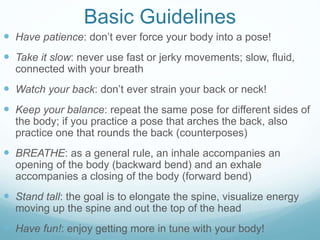
Basic Guidelines
 Have patience: don’t ever force your body into a pose!
 Take it slow: never use fast or jerky movements; slow, fluid,
connected with your breath
 Watch your back: don’t ever strain your back or neck!
 Keep your balance: repeat the same pose for different sides of
the body; if you practice a pose that arches the back, also
practice one that rounds the back (counterposes)
 BREATHE: as a general rule, an inhale accompanies an
opening of the body (backward bend) and an exhale
accompanies a closing of the body (forward bend)
 Stand tall: the goal is to elongate the spine, visualize energy
moving up the spine and out the top of the head
 Have fun!: enjoy getting more in tune with your body!
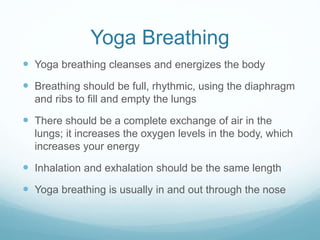
Yoga Breathing
 Yoga breathing cleanses and energizes the body
 Breathing should be full, rhythmic, using the diaphragm
and ribs to fill and empty the lungs
 There should be a complete exchange of air in the
lungs; it increases the oxygen levels in the body, which
increases your energy
 Inhalation and exhalation should be the same length
 Yoga breathing is usually in and out through the nose
Benefits of types of poses
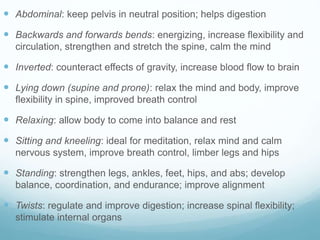
 Abdominal: keep pelvis in neutral position; helps digestion
 Backwards and forwards bends: energizing, increase flexibility and
circulation, strengthen and stretch the spine, calm the mind
 Inverted: counteract effects of gravity, increase blood flow to brain
 Lying down (supine and prone): relax the mind and body, improve
flexibility in spine, improved breath control
 Relaxing: allow body to come into balance and rest
 Sitting and kneeling: ideal for meditation, relax mind and calm
nervous system, improve breath control, limber legs and hips
 Standing: strengthen legs, ankles, feet, hips, and abs; develop
balance, coordination, and endurance; improve alignment
 Twists: regulate and improve digestion; increase spinal flexibility;
stimulate internal organs
Things Yoga Teachers
Might Tell You
 Bend from the hips: to keep the spine lengthened; don’t curve
 Enter deeper into the pose: increase the level of intensity; push
yourself to hold the pose a bit longer than you think you can
 Head alignment: lengthen through the spine; head rests free and
easy on top of the spine
 Hips aligned: not one cocked higher than the other; feet parallel;
pelvis not tucked under too far or tilted too far back
 Hold the pose: remain in the pose for 3-6 breaths while focusing on
your breathing
 In a standing position: straight and tall; lengthening and widening the
back; arms relaxed; back relaxed; don’t lock the knees
 Keep legs straight: straight legs help support the body’s weight
through strength and balance; don’t lock knees
 Keep shoulders down: in poses where arms are above your head,
keep shoulders down away from your ears
Meaning of Namaste
I honor the place in you in which the
entire universe dwells. I honor the
place in you which is of love, of truth,
of light, and of peace. When you are in
that place in you, and I am in that place
in me,
We are all one.
Resources/Works Cited
 Dillman, Erika. The Little Yoga Book. New York: Time
Warner, 1999.
 www.yogajournal.com
 www.yogabasics.com
 www.yoga.com

Yoga Introduction

  • 1.
  • 2.
    Introduction  Yoga isa system of physical and mental exercises designed thousands of years ago to balance and unite the mind, body and spirit  “yoga” comes from the Sanskrit word yuga, meaning “union”  There are many different types of yoga and yoga practices  The most common type in the U.S. is hatha, a Sanskrit word that means sun (ha) and moon (tha)  Some other major types:  Vinyasa: flows from one pose to another; focuses on coordinating breath and movement in a fluid series of poses  Bikram: “hot” yoga; focuses on strength, endurance, flexibility, and weight loss  Ashtanga: a very athletic yoga; American version is “power” yoga; progressive and continuous series of postures
  • 3.
    Hatha Yoga  Easy-to-learn,basic form of yoga  Foundation of all yoga styles  It utilizes:  Asanas (poses/postures)  Pranayama (regulated breathing)  Meditation (Dharana & Dhyana)  Kundalini (Laya Yoga; focuses on awakening the energy at the base of the spine and drawing it upward; in addition to postures, a typical class will also include chanting, meditation, and breathing exercises)
  • 4.
    Benefits of Yoga Challenges the mind and body  Increases flexibility and stamina  Builds strength (strengthens the major muscle groups to support the weight of the body)  Improves balance and concentration  Improves circulation  Improves posture and alignment less fatigue!  Promotes relaxation  Benefits the internal organs, glands, and muscles  Teaches people how to be more in tune with their bodies  Teaches people how to be more aware of the mind-body connection
  • 5.
    Basic Guidelines  Havepatience: don’t ever force your body into a pose!  Take it slow: never use fast or jerky movements; slow, fluid, connected with your breath  Watch your back: don’t ever strain your back or neck!  Keep your balance: repeat the same pose for different sides of the body; if you practice a pose that arches the back, also practice one that rounds the back (counterposes)  BREATHE: as a general rule, an inhale accompanies an opening of the body (backward bend) and an exhale accompanies a closing of the body (forward bend)  Stand tall: the goal is to elongate the spine, visualize energy moving up the spine and out the top of the head  Have fun!: enjoy getting more in tune with your body!
  • 6.
    Yoga Breathing  Yogabreathing cleanses and energizes the body  Breathing should be full, rhythmic, using the diaphragm and ribs to fill and empty the lungs  There should be a complete exchange of air in the lungs; it increases the oxygen levels in the body, which increases your energy  Inhalation and exhalation should be the same length  Yoga breathing is usually in and out through the nose
  • 7.
  • 8.
     Abdominal: keeppelvis in neutral position; helps digestion  Backwards and forwards bends: energizing, increase flexibility and circulation, strengthen and stretch the spine, calm the mind  Inverted: counteract effects of gravity, increase blood flow to brain  Lying down (supine and prone): relax the mind and body, improve flexibility in spine, improved breath control  Relaxing: allow body to come into balance and rest  Sitting and kneeling: ideal for meditation, relax mind and calm nervous system, improve breath control, limber legs and hips  Standing: strengthen legs, ankles, feet, hips, and abs; develop balance, coordination, and endurance; improve alignment  Twists: regulate and improve digestion; increase spinal flexibility; stimulate internal organs
  • 9.
  • 10.
     Bend fromthe hips: to keep the spine lengthened; don’t curve  Enter deeper into the pose: increase the level of intensity; push yourself to hold the pose a bit longer than you think you can  Head alignment: lengthen through the spine; head rests free and easy on top of the spine  Hips aligned: not one cocked higher than the other; feet parallel; pelvis not tucked under too far or tilted too far back  Hold the pose: remain in the pose for 3-6 breaths while focusing on your breathing  In a standing position: straight and tall; lengthening and widening the back; arms relaxed; back relaxed; don’t lock the knees  Keep legs straight: straight legs help support the body’s weight through strength and balance; don’t lock knees  Keep shoulders down: in poses where arms are above your head, keep shoulders down away from your ears
  • 11.
    Meaning of Namaste Ihonor the place in you in which the entire universe dwells. I honor the place in you which is of love, of truth, of light, and of peace. When you are in that place in you, and I am in that place in me, We are all one.
  • 12.
    Resources/Works Cited  Dillman,Erika. The Little Yoga Book. New York: Time Warner, 1999.  www.yogajournal.com  www.yogabasics.com  www.yoga.com