Challenges and Opportunities in
Smart Transportation Research
under the Smart Cities Context
Yinhai Wang, PhD
University of Washington
IEEE Smart Cities Steering Committee
Email: yinhai@uw.edu Tel: 1-206-616-2696
For the 2016 Gigabit City Summit
May 17, 2016
PacTransSTARLabResearchonBigDataandE-Science
1
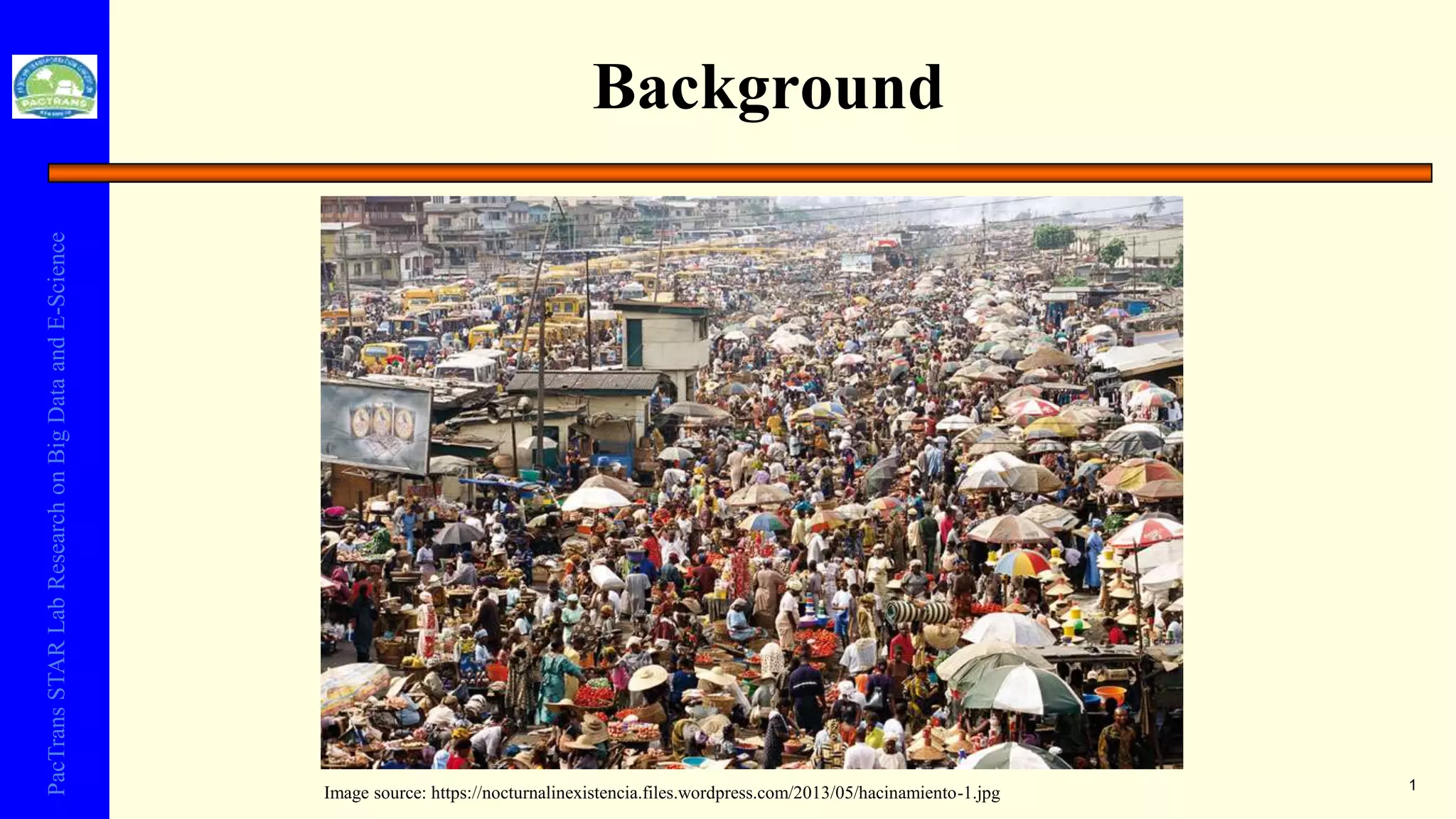
Background
Image source: https://nocturnalinexistencia.files.wordpress.com/2013/05/hacinamiento-1.jpg
PacTransSTARLabResearchonBigDataandE-Science
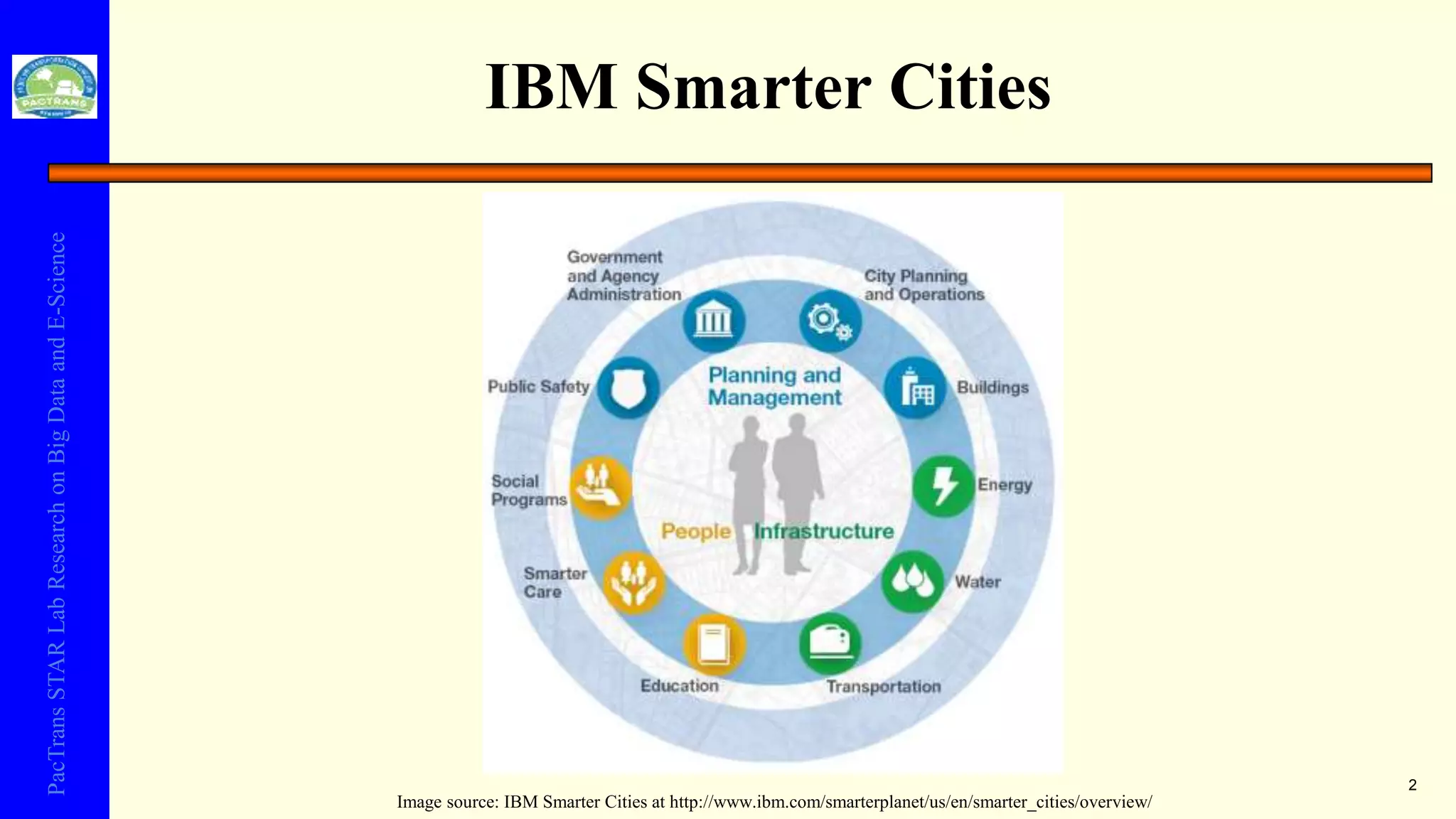
IBM Smarter Cities
2
Image source: IBM Smarter Cities at http://www.ibm.com/smarterplanet/us/en/smarter_cities/overview/
PacTransSTARLabResearchonBigDataandE-Science
IEEE Smart Cities Initiative
3
 The IEEE Smart Cities Initiative
seeks to apply technology to
improve cities and the quality of
life for their residents.
 It is a process of improving urban
living by implementing
technologies throughout a city’s
infrastructure for efficiency,
sustainability, and convenience.
 Smart city is a way of being and a
goal for future development
PacTransSTARLabResearchonBigDataandE-Science
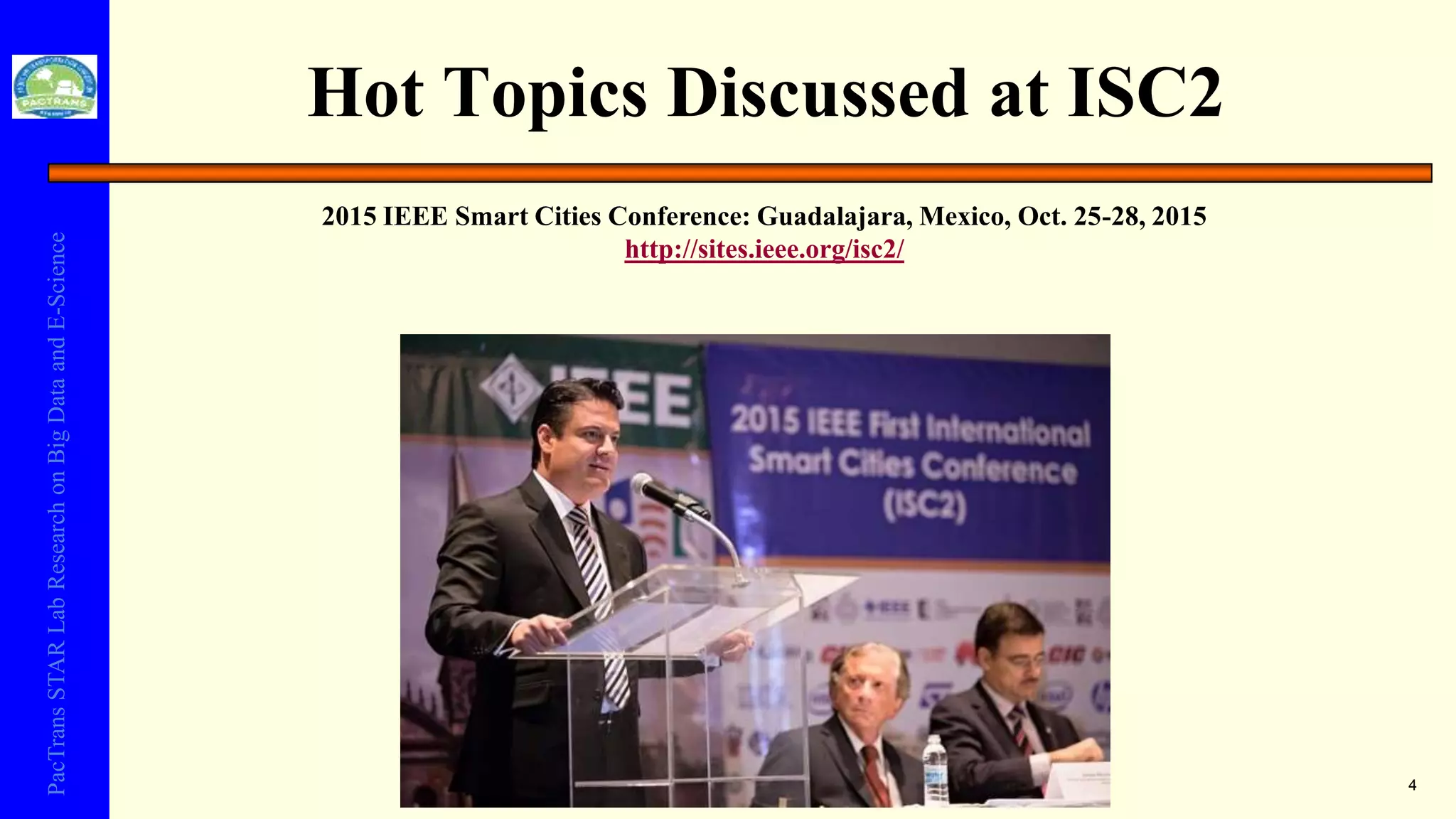
Hot Topics Discussed at ISC2
4
2015 IEEE Smart Cities Conference: Guadalajara, Mexico, Oct. 25-28, 2015
http://sites.ieee.org/isc2/
PacTransSTARLabResearchonBigDataandE-Science
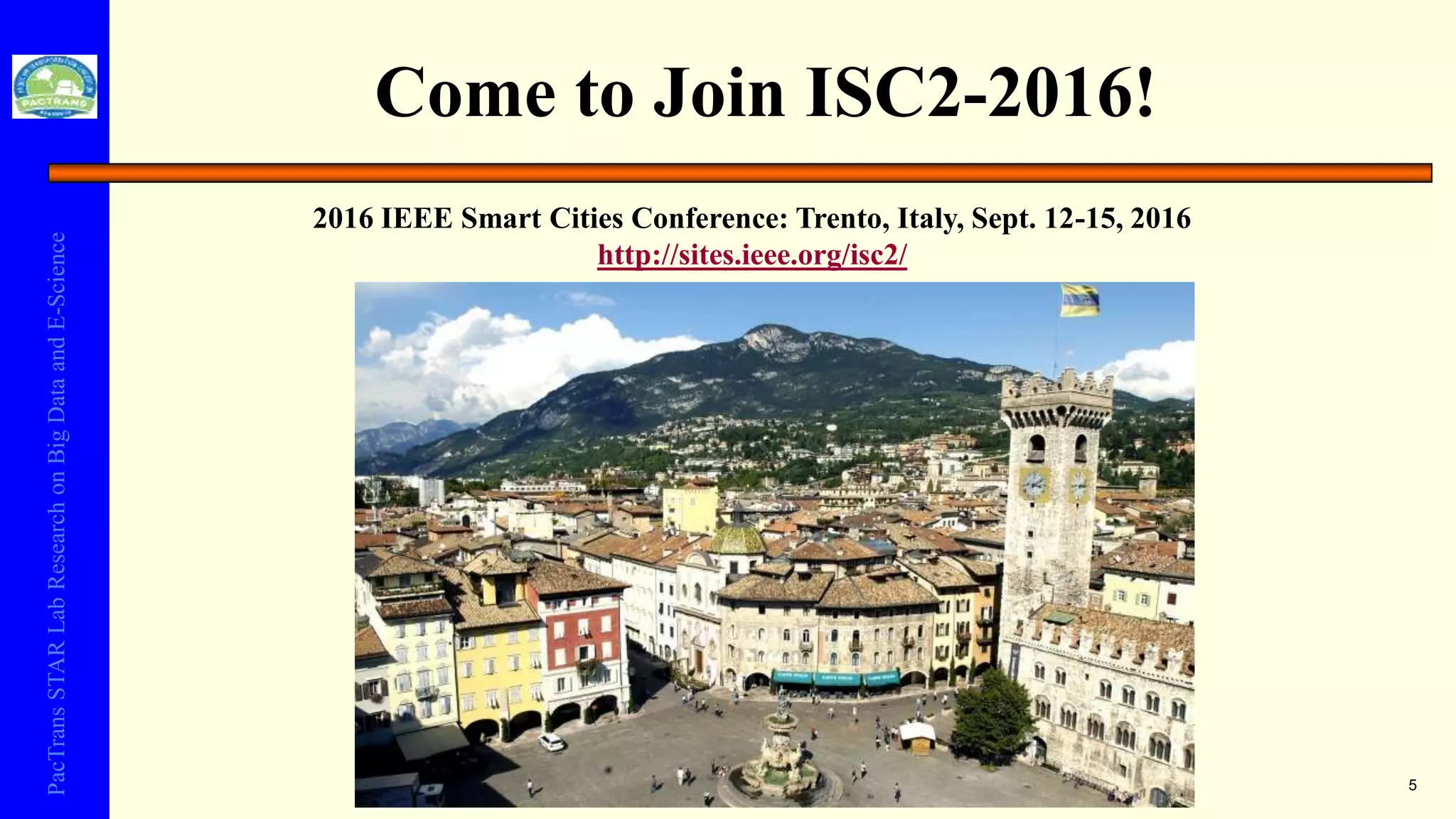
Come to Join ISC2-2016!
5
2016 IEEE Smart Cities Conference: Trento, Italy, Sept. 12-15, 2016
http://sites.ieee.org/isc2/
PacTransSTARLabResearchonBigDataandE-Science
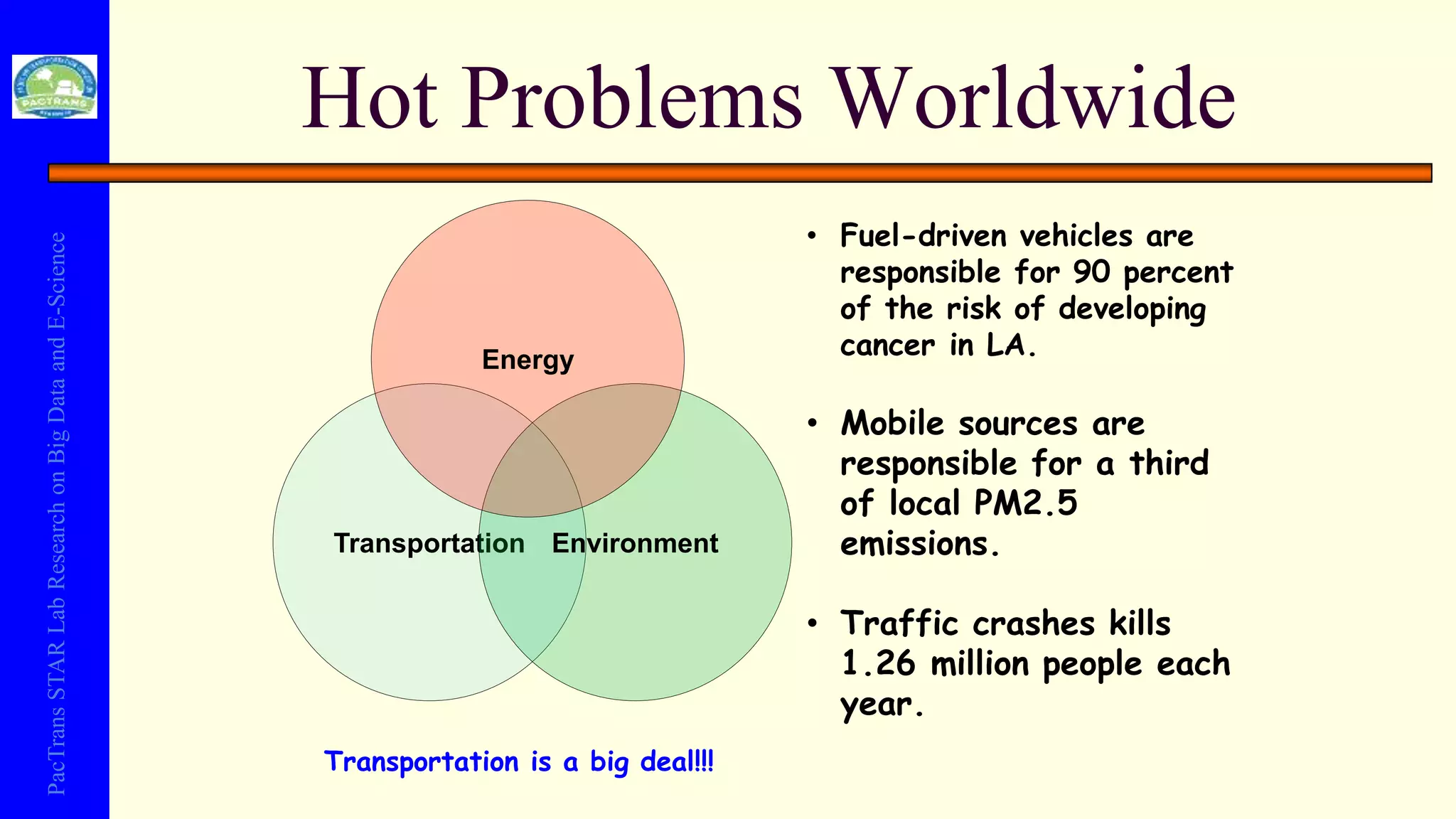
Hot Problems Worldwide
Transportation Environment
Energy
• Fuel-driven vehicles are
responsible for 90 percent
of the risk of developing
cancer in LA.
• Mobile sources are
responsible for a third
of local PM2.5
emissions.
• Traffic crashes kills
1.26 million people each
year.
Transportation is a big deal!!!
PacTransSTARLabResearchonBigDataandE-Science
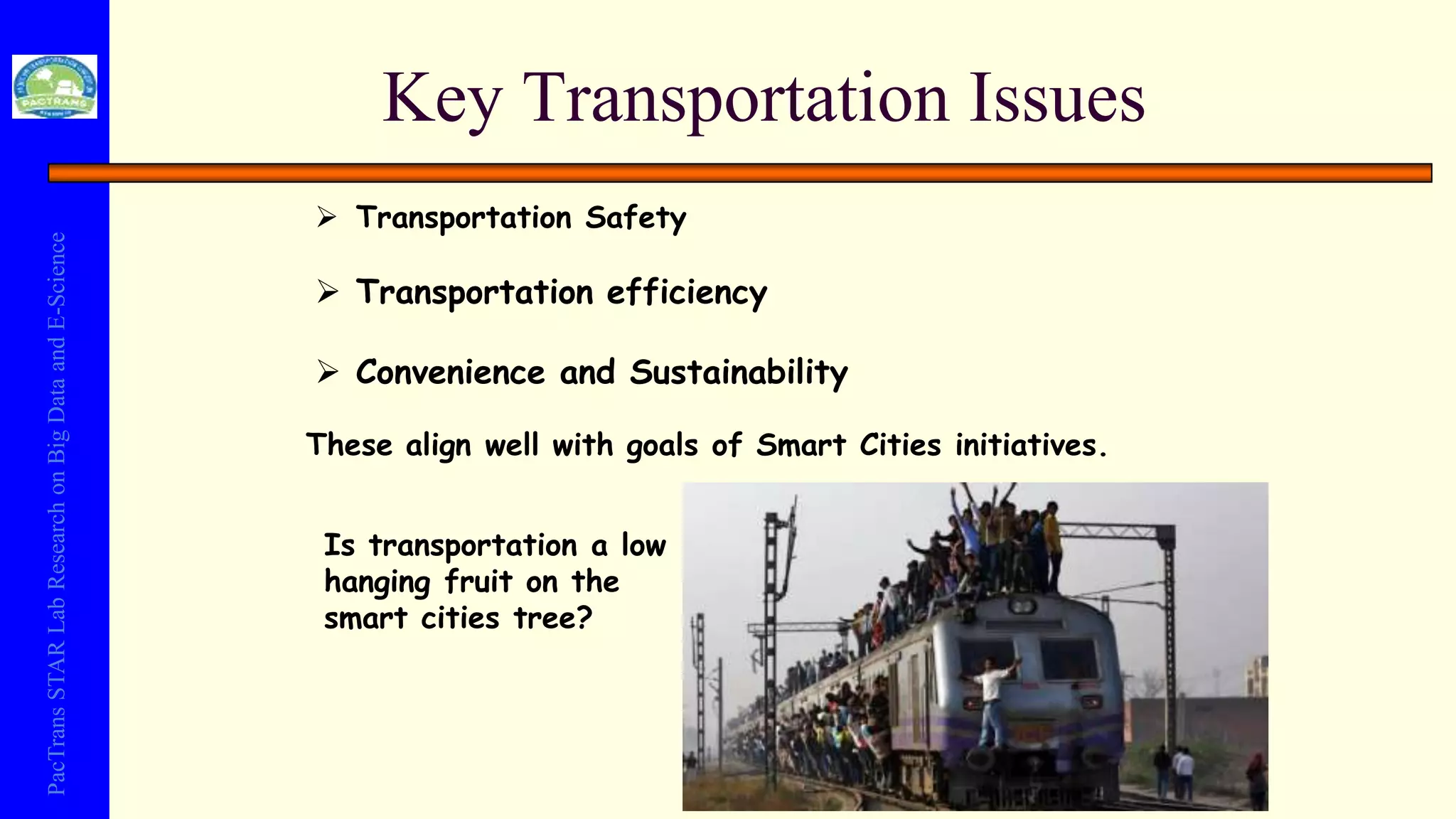
Key Transportation Issues
 Transportation Safety
 Transportation efficiency
 Convenience and Sustainability
These align well with goals of Smart Cities initiatives.
Is transportation a low
hanging fruit on the
smart cities tree?
PacTransSTARLabResearchonBigDataandE-Science
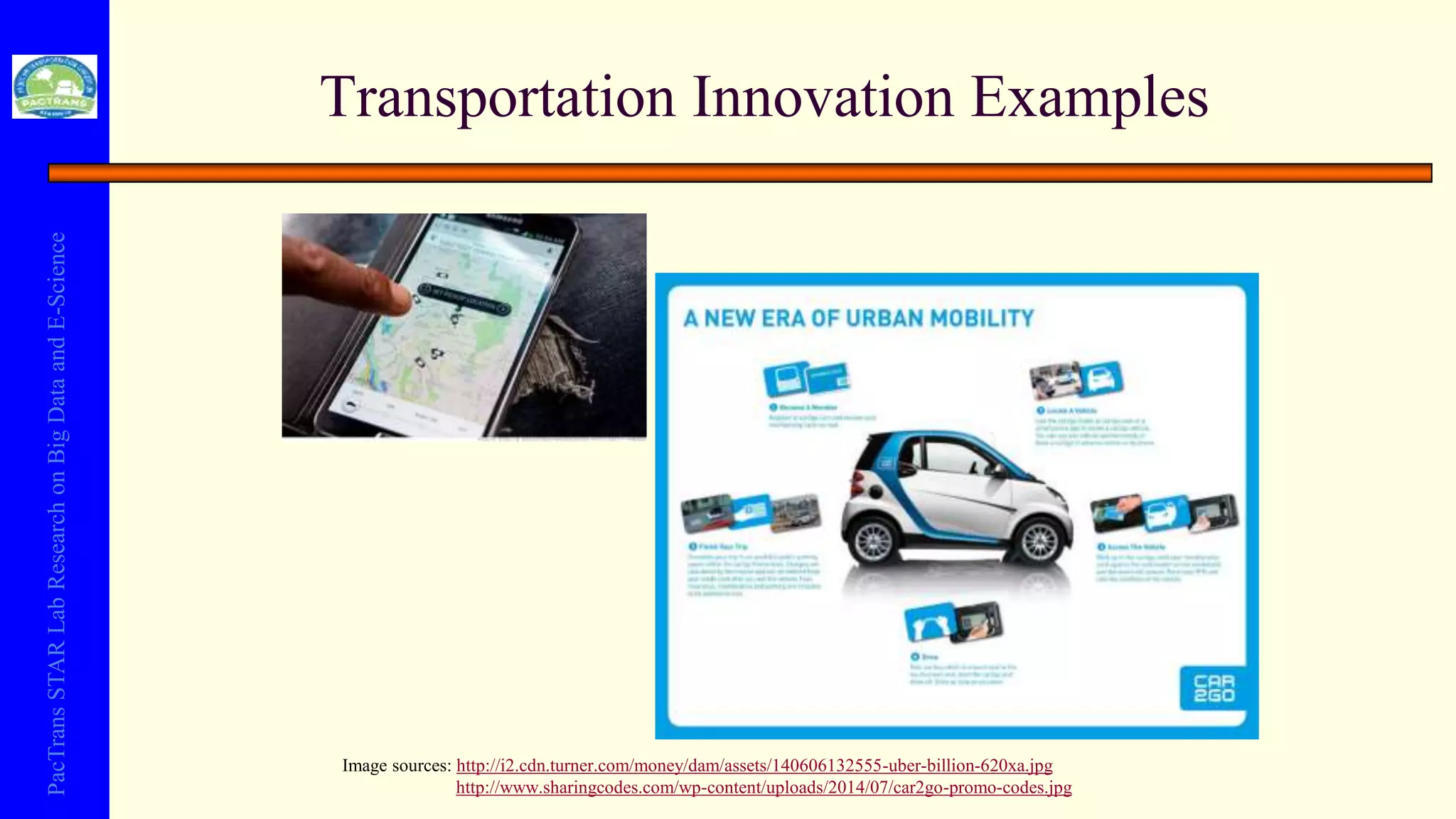
Transportation Innovation Examples
Image sources: http://i2.cdn.turner.com/money/dam/assets/140606132555-uber-billion-620xa.jpg
http://www.sharingcodes.com/wp-content/uploads/2014/07/car2go-promo-codes.jpg
PacTransSTARLabResearchonBigDataandE-Science
Sources of Intelligence
How can we do better?
 All these applications need intelligence
 Intelligence comes from data analytics
 Smart cities and IOT offer new and highly valuable
data sources
 Theoretical framework for data integration is a
must to make a proper use of all available data
valuable for transportation
9
PacTransSTARLabResearchonBigDataandE-Science
Transportation Big Data is a Key
 Designing and deploying sensor networks for monitoring the
city’s condition
 Building a big data stream through properly collecting and
integrating datasets
 Mining big data to feel the social “mood”
 Supporting informed decisions by combining the future goal,
current condition, and available resources
10
PacTransSTARLabResearchonBigDataandE-Science
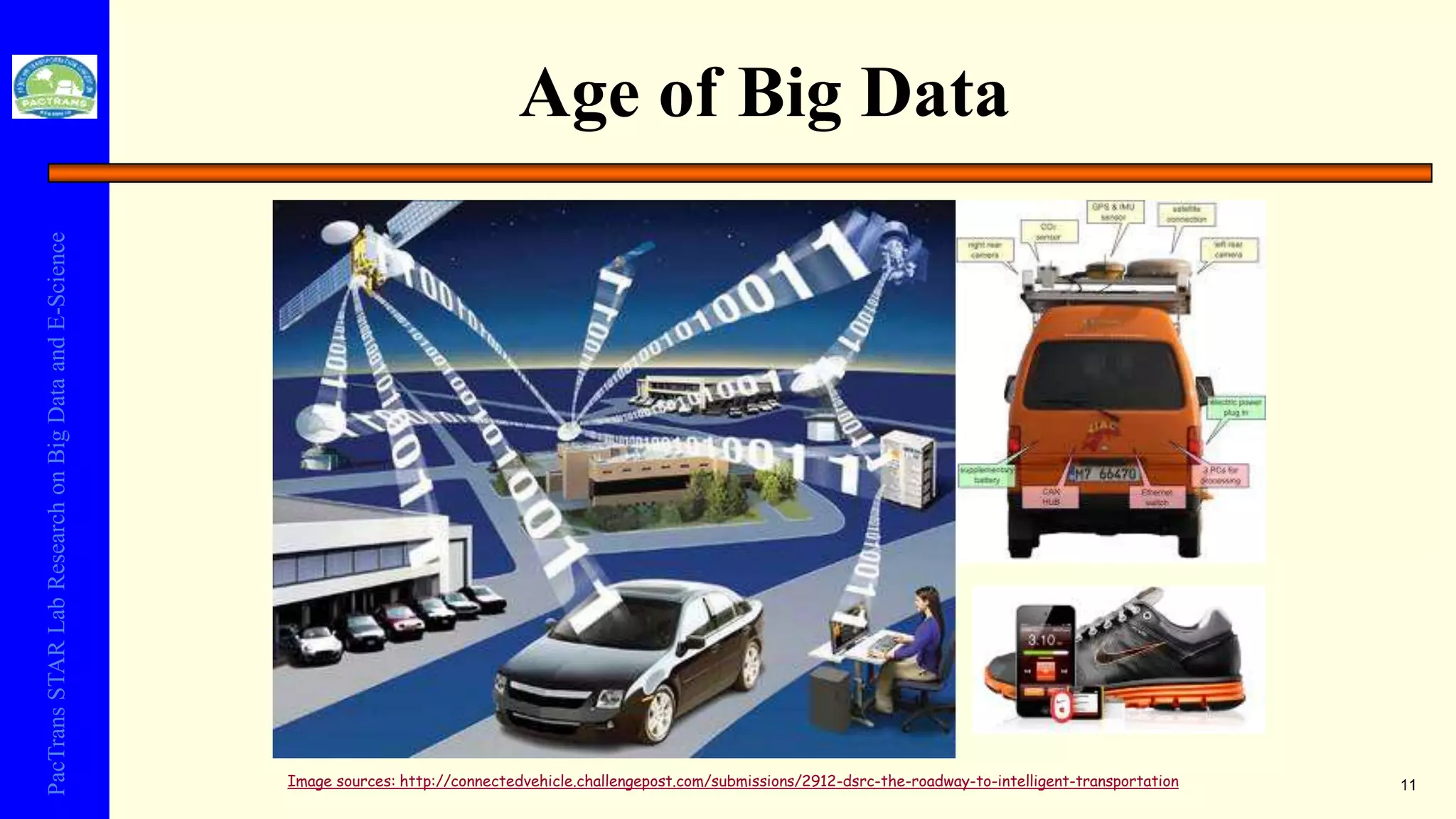
Age of Big Data
11Image sources: http://connectedvehicle.challengepost.com/submissions/2912-dsrc-the-roadway-to-intelligent-transportation
PacTransSTARLabResearchonBigDataandE-Science
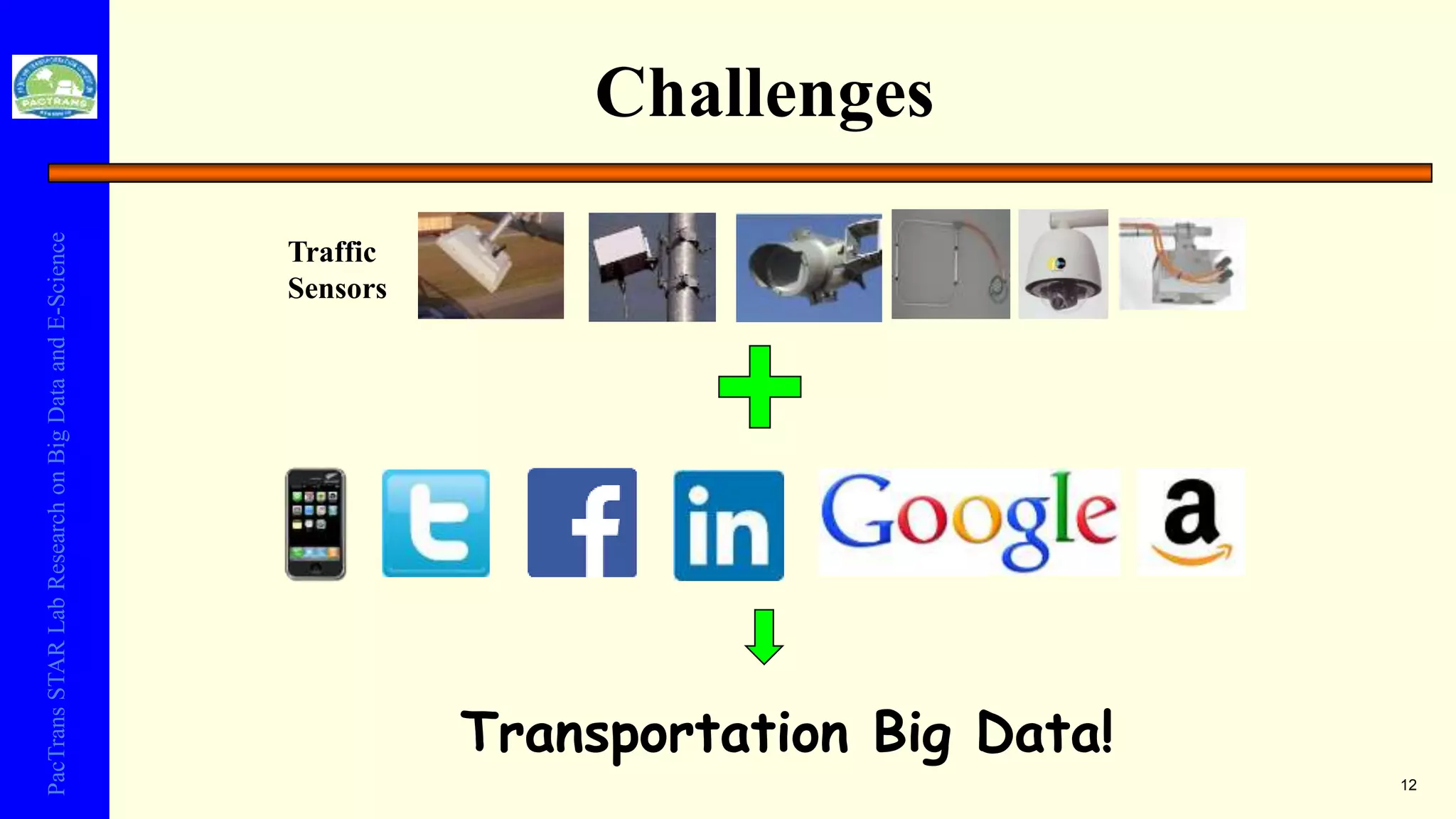
Challenges
12
Traffic
Sensors
Transportation Big Data!
PacTransSTARLabResearchonBigDataandE-Science
Opportunities with Big Data
13
Many key questions can be answered by using big data:
 How to quantify the benefit from a transportation investment?
 What is the impact of a road construction project on travel?
 Which infrastructure design is greener consider life-cycle
operational impacts?
 Where do pedestrians go and how to improve their safety?
 How to improve transit services without adding new
resources?
 Where do trucks go and how to guide them to the best routes?
 …
PacTransSTARLabResearchonBigDataandE-Science
Challenges to Transportation Professionals
 Extract Values from Big Data Streams
 High volume and high velocity
 High variety and high variability
 Methods and tools to take values out
 Manage Big Data
 Spatial and temporal features
 Storage and query efficiencies
 Privacy protection
 Understand and Use Big Data
 Problems with classical transportation theory
 Weak data training in transportation curriculum
 Isolated to systematic view
14
PacTransSTARLabResearchonBigDataandE-Science
Research/Innovation Needs
15
Proposed actions to address the gaps:
 Actively pull what we need from the existing data resources
 Build our own stream of big data
 Design a standard mechanism for connecting transportation
related datasets
 Develop e-science transportation methods to take advantage
of the spatial and temporal datasets to support transportation
analysis and decision making
 Build big data analytics tools to facilitate usage of big data
 Develop new courses in transportation curriculum to make
our students/working professionals ready for the big data era
PacTransSTARLabResearchonBigDataandE-Science
Research/Innovation Needs
16
What is e-science?
 Computationally intensive science that is carried out in
highly distributed network environments
 Application of computer technology to the undertaking of
modern scientific investigation
E-science of transportation:
 Computationally intensive science for scientific
investigations in transportation issues using immense data
sets
PacTransSTARLabResearchonBigDataandE-Science
Research Examples
 Extracting transportation data from big data sources
 Digital Roadway Interactive Visualization and
Evaluation Network (DRIVE Net)
17
PacTransSTARLabResearchonBigDataandE-Science
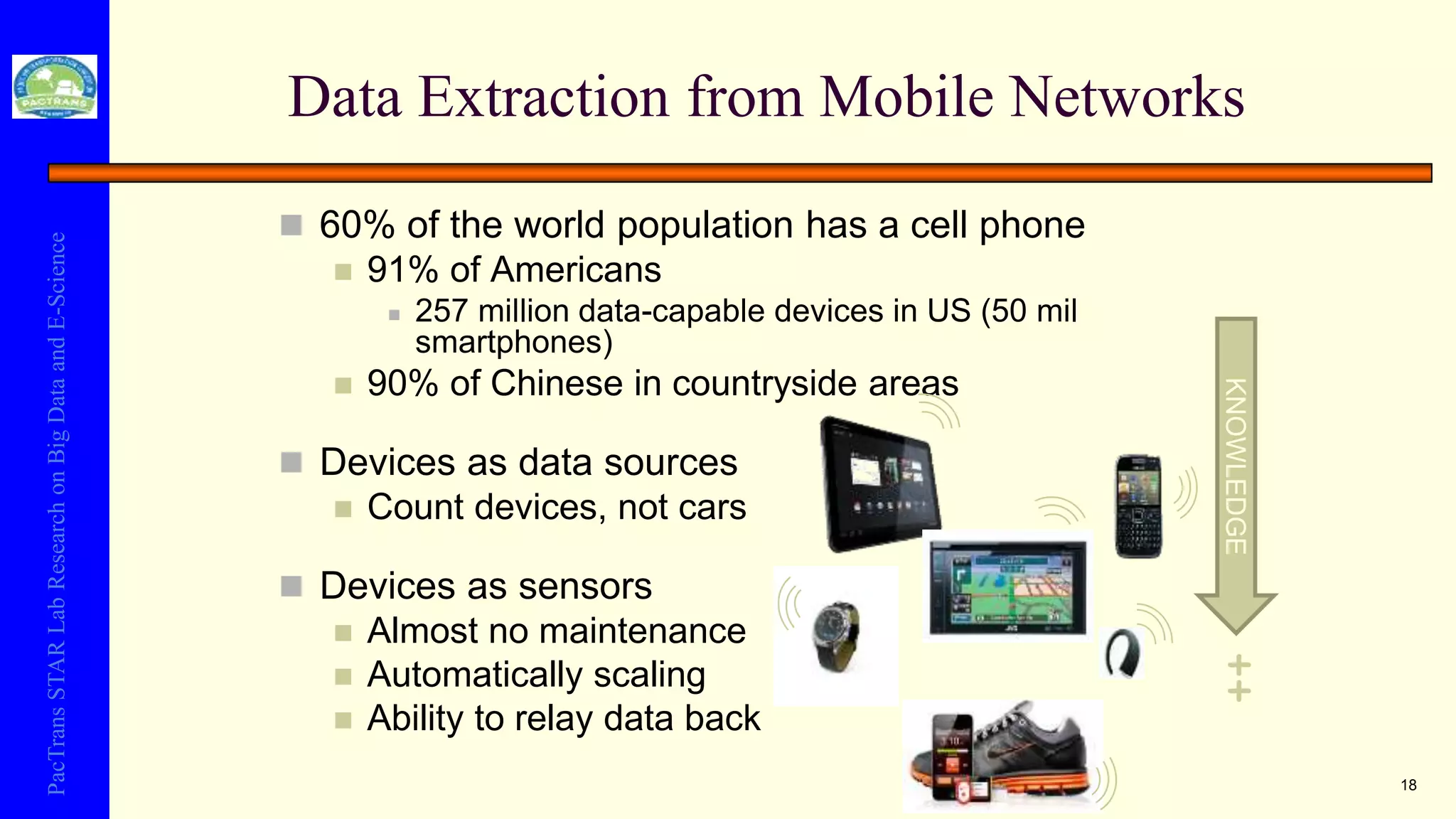
Data Extraction from Mobile Networks
 60% of the world population has a cell phone
 91% of Americans
 257 million data-capable devices in US (50 mil
smartphones)
 90% of Chinese in countryside areas
 Devices as data sources
 Count devices, not cars
 Devices as sensors
 Almost no maintenance
 Automatically scaling
 Ability to relay data back
18
KNOWLEDGE
++
PacTransSTARLabResearchonBigDataandE-Science
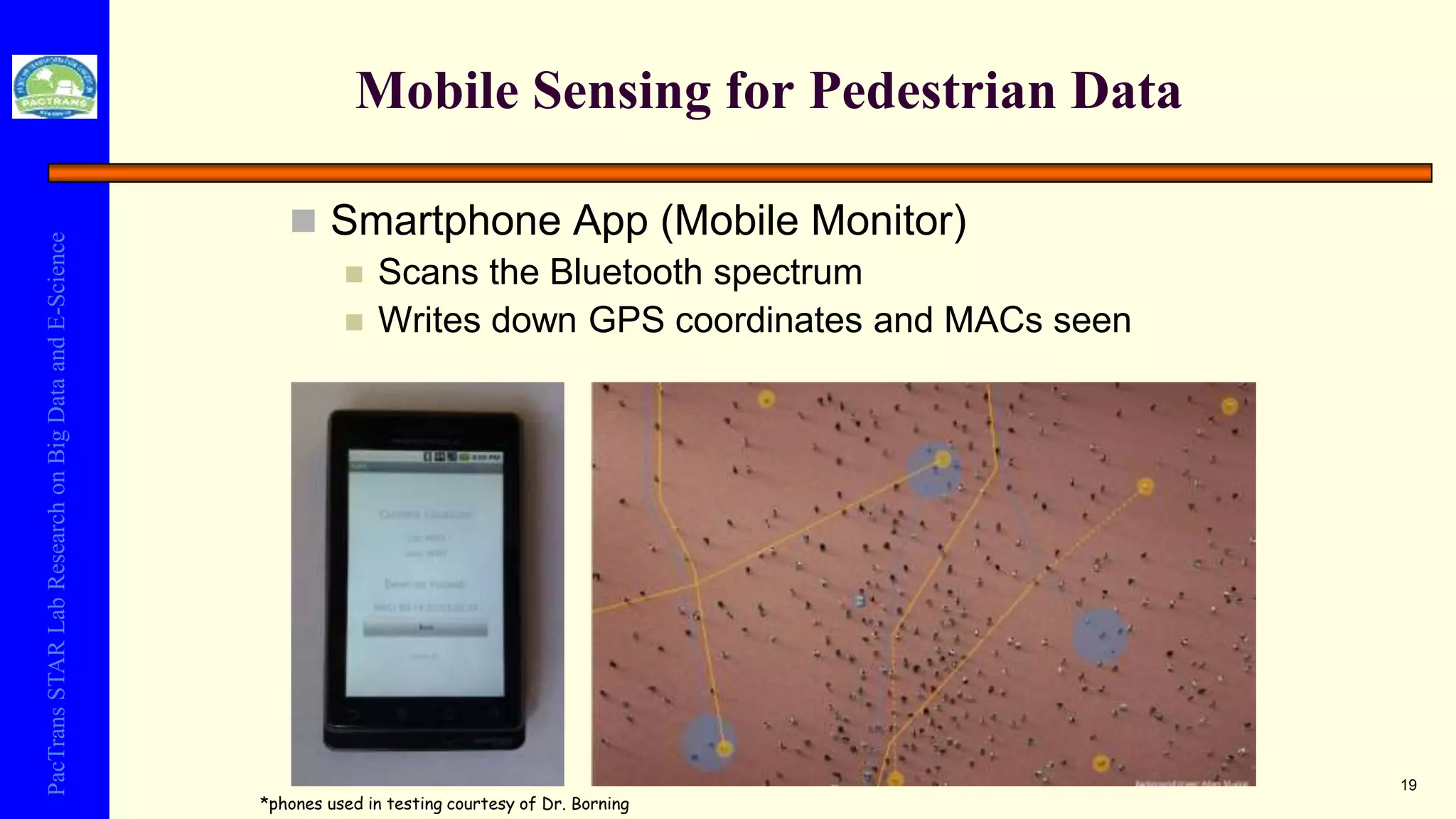
Mobile Sensing for Pedestrian Data
 Smartphone App (Mobile Monitor)
 Scans the Bluetooth spectrum
 Writes down GPS coordinates and MACs seen
*phones used in testing courtesy of Dr. Borning
19
PacTransSTARLabResearchonBigDataandE-Science
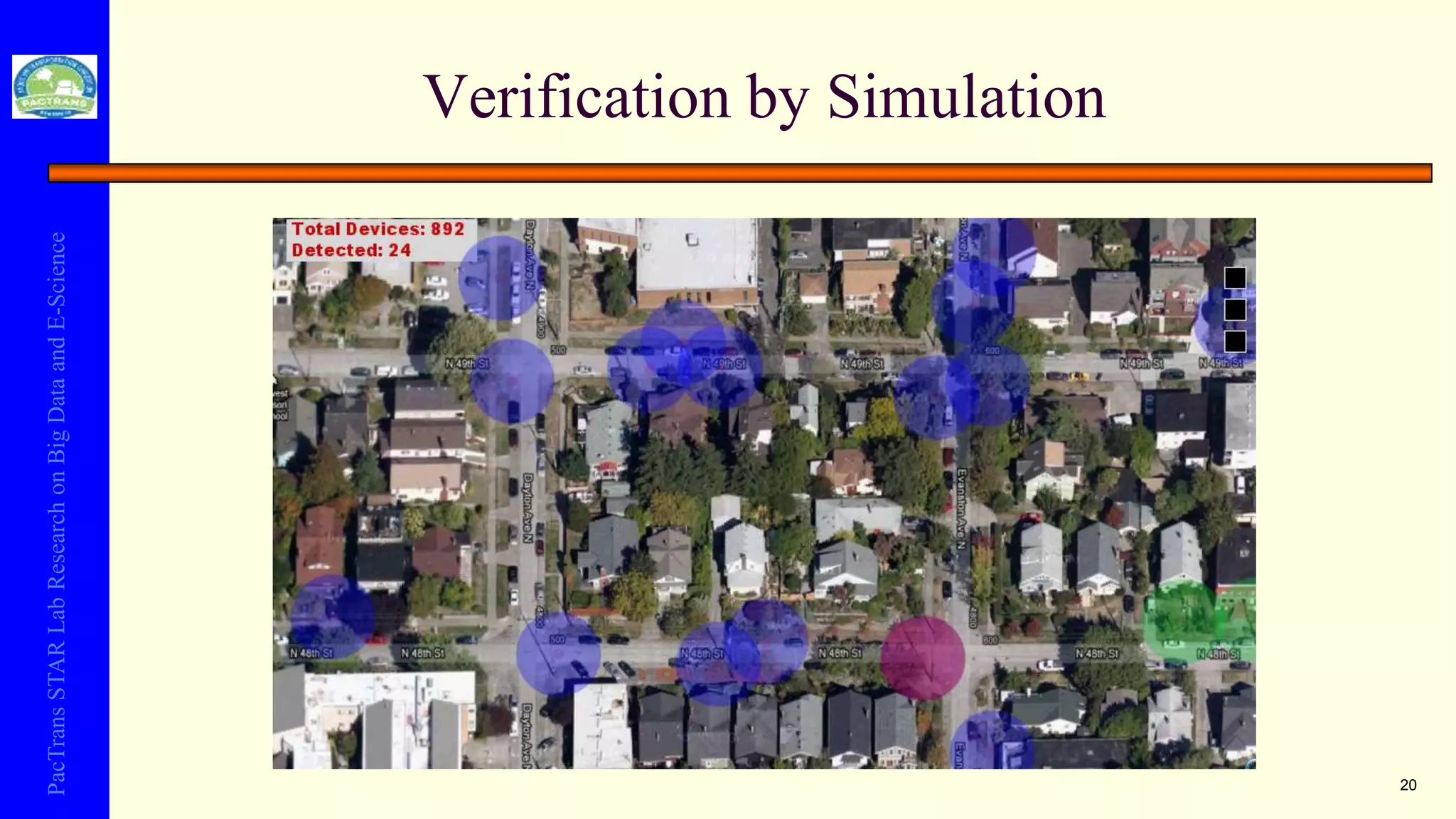
Verification by Simulation
20
PacTransSTARLabResearchonBigDataandE-Science
Big Data Analytics: DRIVE Net
 DRIVE Net is a system for the data sharing,
visualization, modeling, and analysis
 Web-based system for e-Science investigations
 Real-time traffic visualization
 Data sharing platform
 Statistical Modeling
 Vehicle emissions quantification
 Mobile Sensing
 Freeway Performance Measurement
21
PacTransSTARLabResearchonBigDataandE-Science
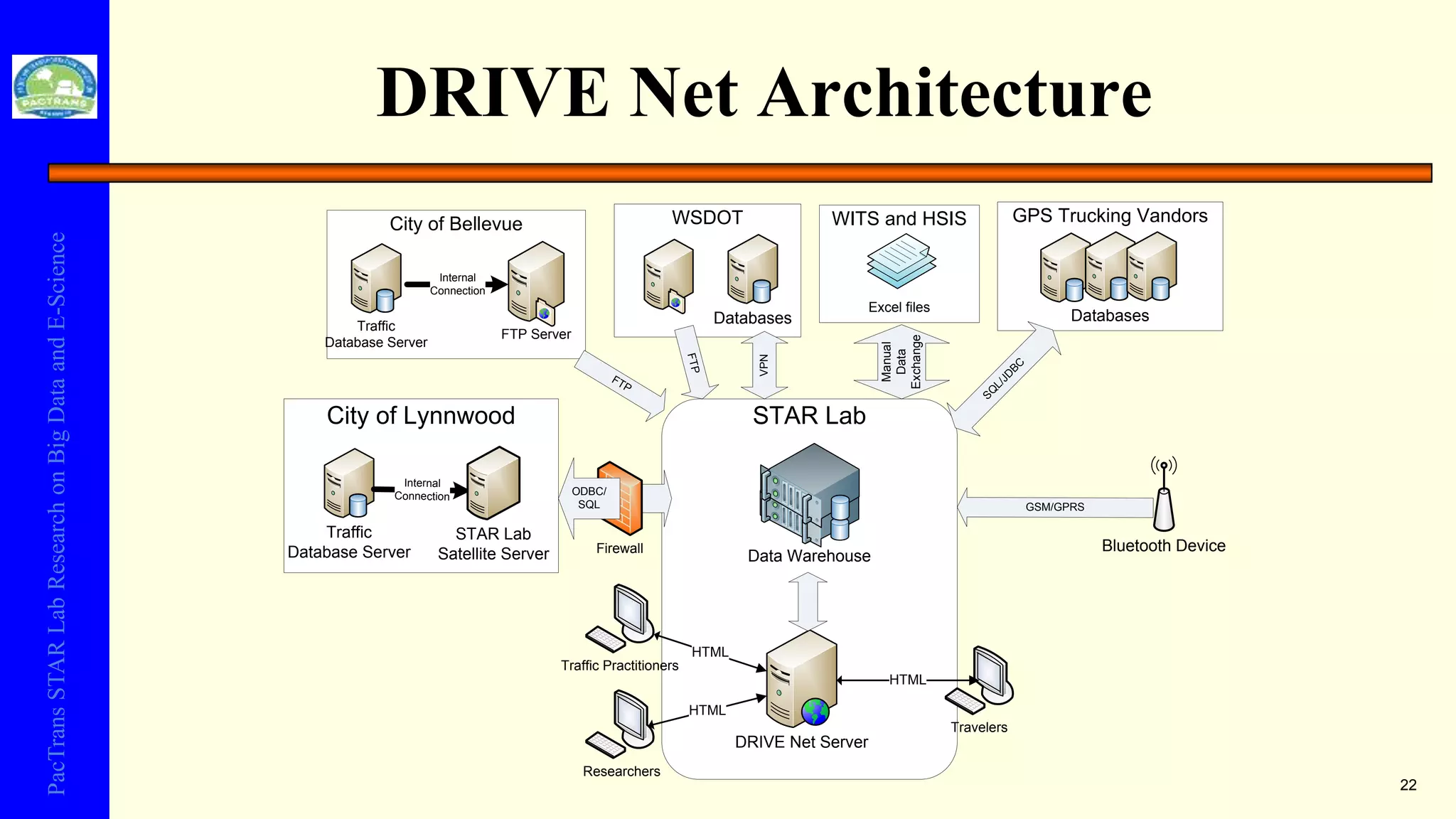
DRIVE Net Architecture
22
City of Bellevue WSDOT WITS and HSIS
STAR Lab
FTP Server
FTP
FTP
GPS Trucking Vandors
Manual
Data
Exchange
Traffic
Database Server
Internal
Connection
Databases
VPN
SQ
L/JD
BC
GSM/GPRS
Databases
Excel files
Data Warehouse
Bluetooth Device
City of Lynnwood
Firewall
Traffic
Database Server
Internal
Connection
STAR Lab
Satellite Server
ODBC/
SQL
DRIVE Net Server
Traffic Practitioners
HTML
Researchers
HTML
Travelers
HTML
PacTransSTARLabResearchonBigDataandE-Science
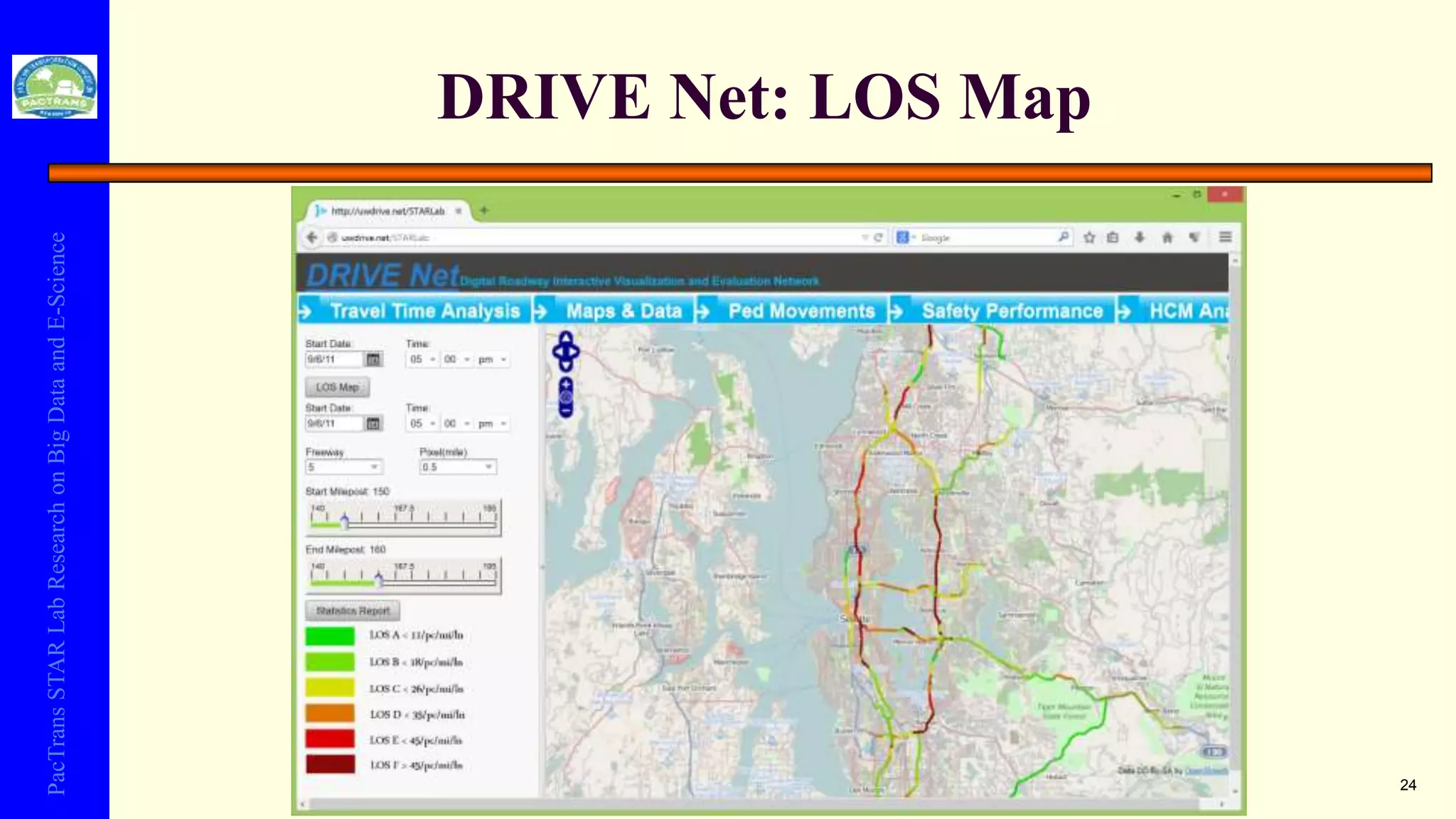
DRIVE Net: LOS Map
24
PacTransSTARLabResearchonBigDataandE-Science
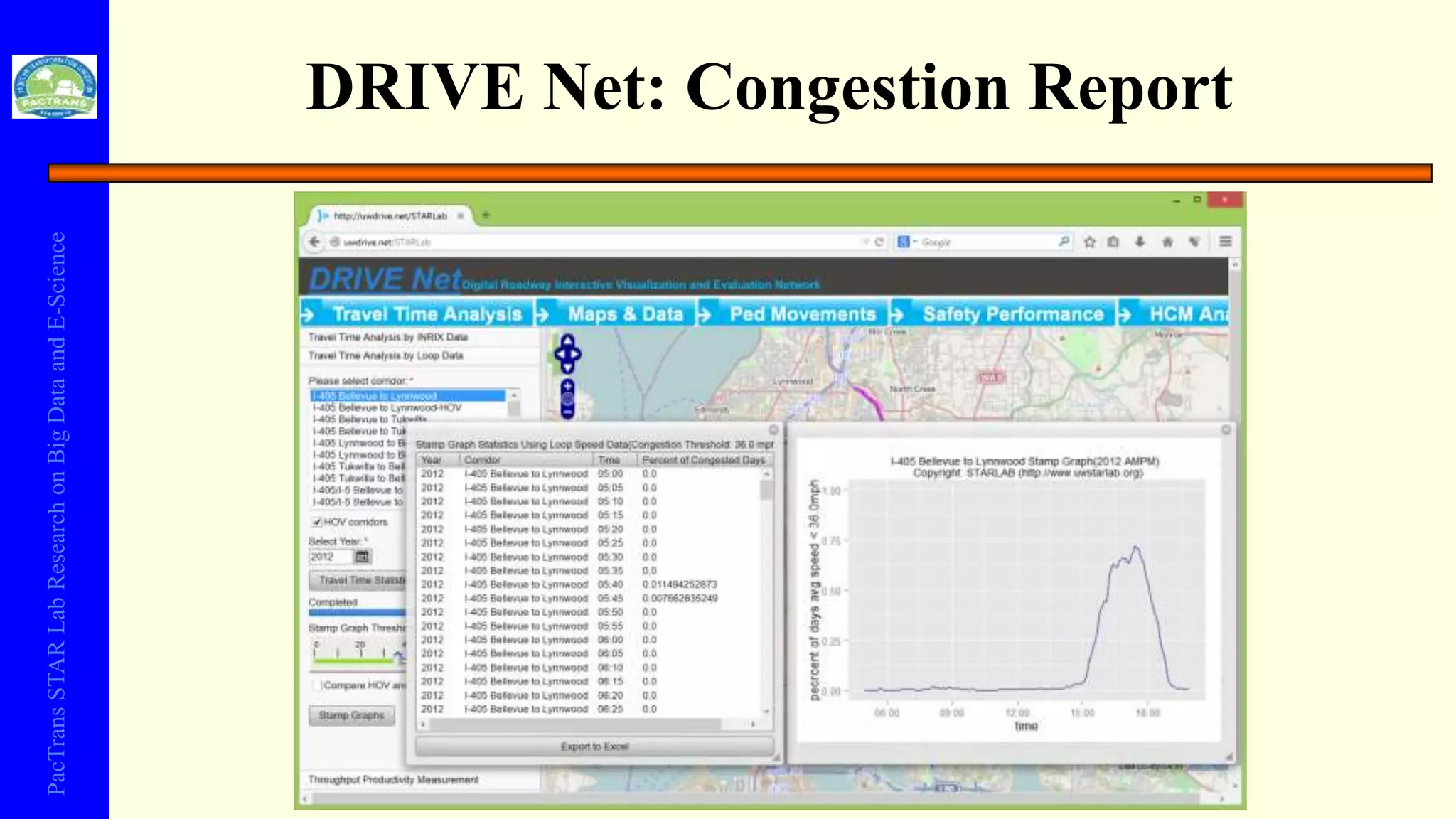
DRIVE Net: Congestion Report
PacTransSTARLabResearchonBigDataandE-Science
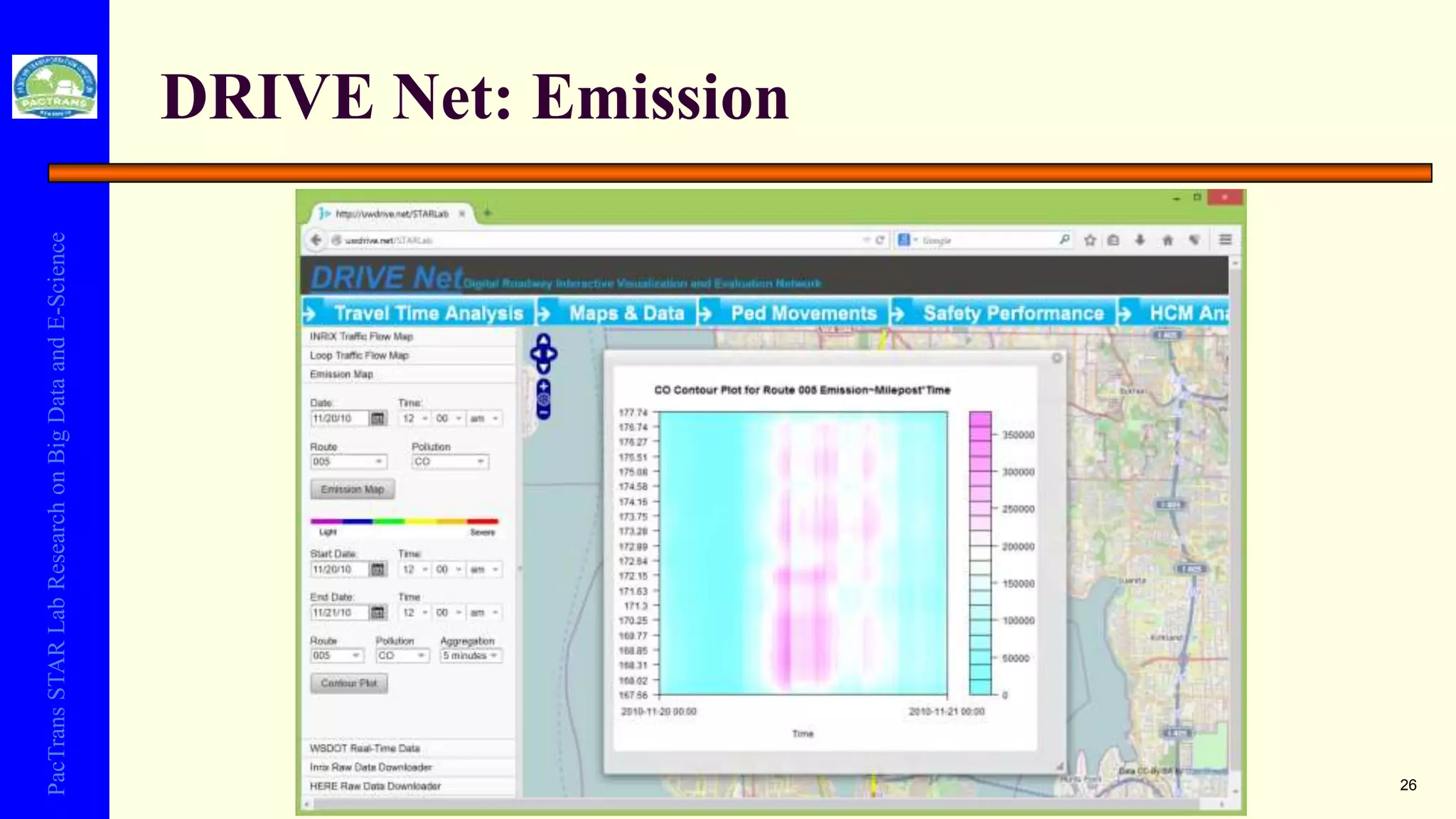
DRIVE Net: Emission
26
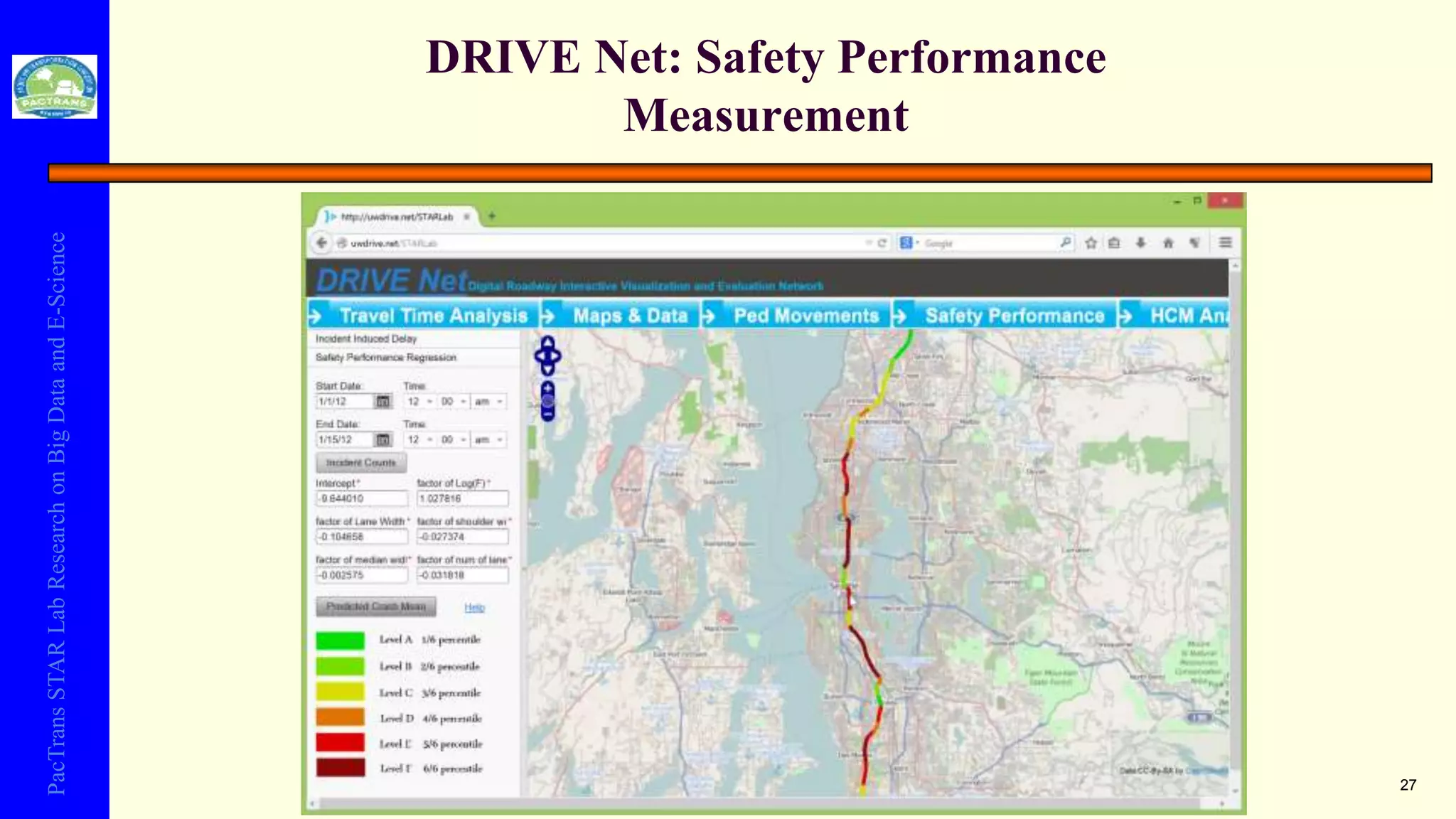
PacTransSTARLabResearchonBigDataandE-Science DRIVE Net: Safety Performance
Measurement
27
PacTransSTARLabResearchonBigDataandE-Science
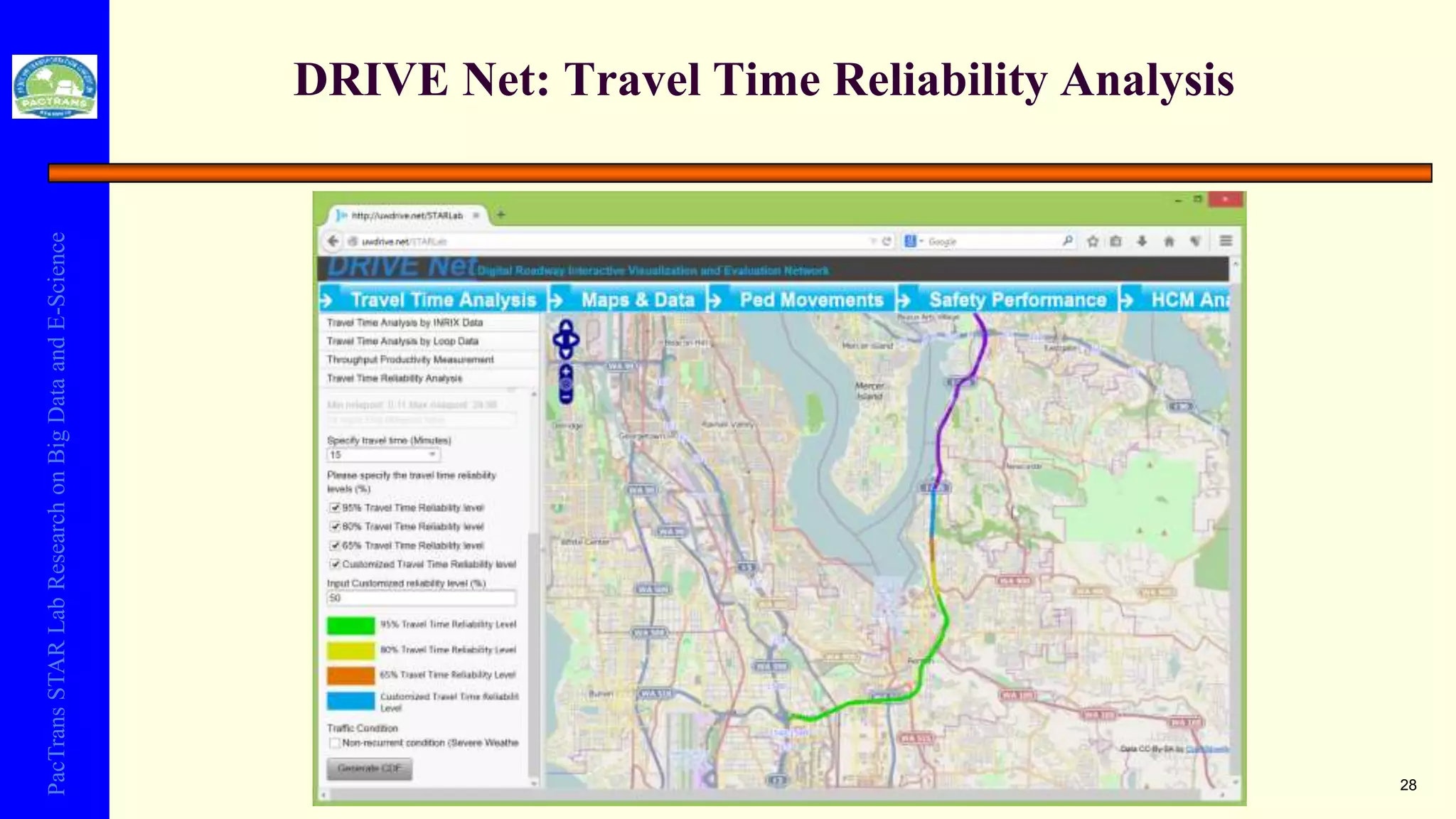
28
DRIVE Net: Travel Time Reliability Analysis
PacTransSTARLabResearchonBigDataandE-Science
 Autonomous vehicles will change car ownerships
 Parking facilities will be significantly reduced
 Traffic network utilization will be optimized
 Traffic congestion will be mitigated or even disappear
 Cars will be seamlessly connected
 Virtual infrastructure for transportation will appear
Vision of Future Smart Transportation
PacTransSTARLabResearchonBigDataandE-Science
30
Thanks for your attention!
 Acknowledgment
Thanks to the UW STAR Lab research team.
The presented projects were partly funded by
Washington State Department of Transportation
(WSDOT), PacTrans, and China Natural Science
Foundation. We appreciate their funding support!

Yinhai Wang - Smart Transportation: Research under Smart Cities Context - GCS16