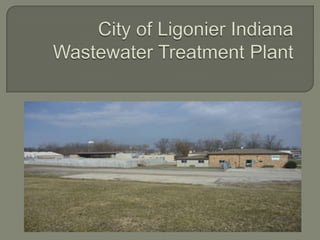
 TheCity of Ligonier WWTP is located within
 a Three (3) acre compound at 305 Bridge
 Street.
 Plant   design flow is a design flow of 1.5 MDG
 From January 1st, 2011 to September 30th,
 2011 the plant treated 324,000,000 gallons for
 a average of 1,180,000 gallons per day
 An
   average flow of 1.18 mgd put that plant at
 78% capacity.
 The    first wastewater treat plant was built
  as a WPA (Works Project Administration)
  project as part of the “New Deal” of the
  1930’s The current facilities still is located
  at the original plant site.
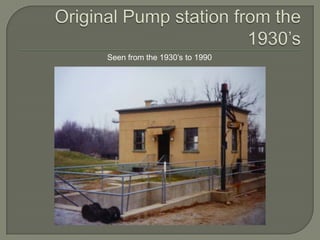
 The first plant consisted of a pump build,
  two primary clarifiers and one fixed cover
  Digester. All three pieces of equipment are
  still in operation today.
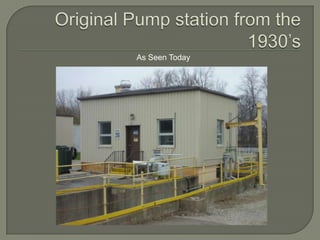
As Seen Today
Seen from the 1930’s to 1990
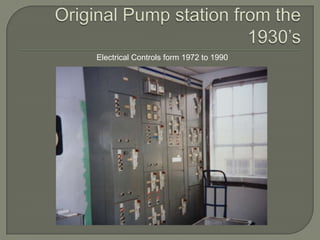
Electrical Controls form 1972 to 1990
 The first plant upgrade took place in 1972,
 the plant was classified at that time by
 IDEM as a Class II treatment plant

 The  design flow for the plant was increase
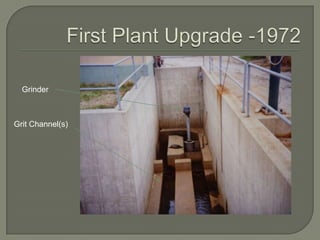
 to .52 mgd, a grit channel and grinder were
 added, along with a manually racked bar
 screen and two additional primary
 clarifiers.
Grinder


Grit Channel(s)
 The  first biological process was also install
 consisting of a standard rate rock media
 trickling filter coupled with the plants first
 secondary clarifier.
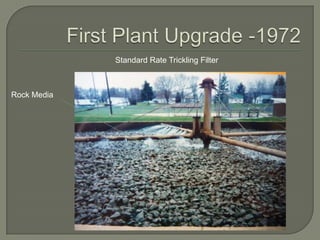
Standard Rate Trickling Filter


Rock Media
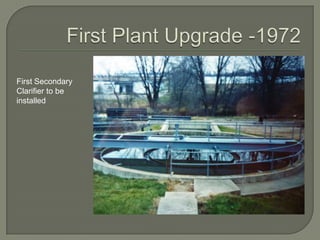
First Secondary
Clarifier to be
installed
 Chlorine was also add for disinfection,
 making it the first time that wastewater was
 disinfected since the installation of the first
 treatment plant.

 Alsoadded to the plant was one floating
 cover digester to work in conjunction with
 the existing fixed cover digester.
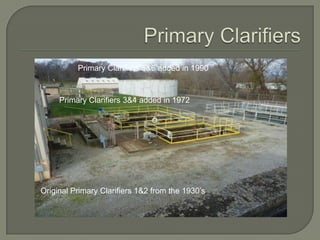
Primary Clarifiers 5&6 added in 1990


     Primary Clarifiers 3&4 added in 1972


Original Primary Clarifiers 1&2 from the 1930’s
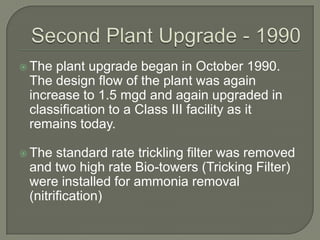
 The plant upgrade began in October 1990.
 The design flow of the plant was again
 increase to 1.5 mgd and again upgraded in
 classification to a Class III facility as it
 remains today.

 The  standard rate trickling filter was removed
 and two high rate Bio-towers (Tricking Filter)
 were installed for ammonia removal
 (nitrification)
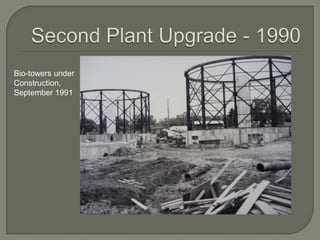
Bio-towers under
Construction,
September 1991
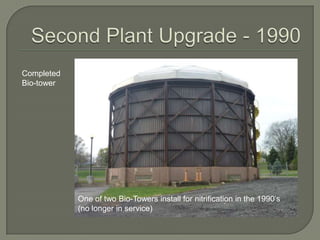
Completed
Bio-tower


            One of two Bio-Towers install for nitrification in the 1990’s
            (no longer in service)
 Alsoinstalled was a Solids Contact
 Process located between the Bio-towers
 and the Secondary Clarifiers
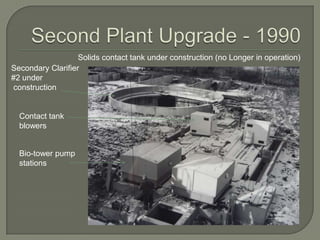
Solids contact tank under construction (no Longer in operation)
Secondary Clarifier
#2 under
construction


  Contact tank
  blowers


  Bio-tower pump
  stations
 Two new secondary clarifiers were
 installed, the existing secondary clarifier
 was then converted to a larger chlorine
 contact tank.

A sulfur dioxide system was then installed
 for dechlorination in the old chlorine
 contact chamber.
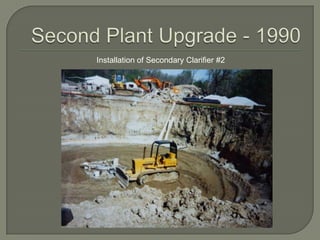
Installation of Secondary Clarifier #2
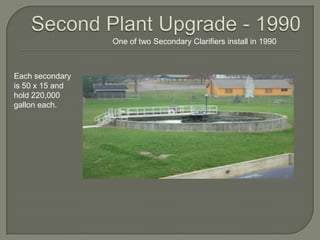
One of two Secondary Clarifiers install in 1990


Each secondary
is 50 x 15 and
hold 220,000
gallon each.
 During  the expansion two more primaries
 clarifiers were added bring the total to six.
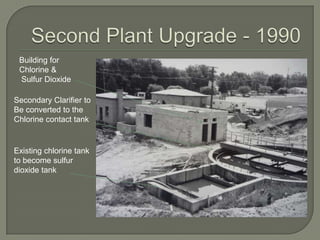
Building for
 Chlorine &
 Sulfur Dioxide

Secondary Clarifier to
Be converted to the
Chlorine contact tank


Existing chlorine tank
to become sulfur
dioxide tank
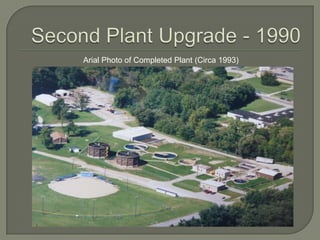
Arial Photo of Completed Plant (Circa 1993)
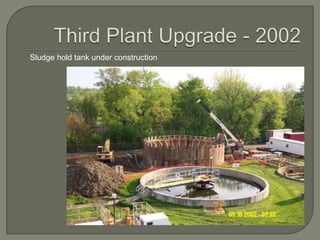
 The third plant upgrade took place in 2002.
 At that time a 317,000 sludge hold tank
 was installed.

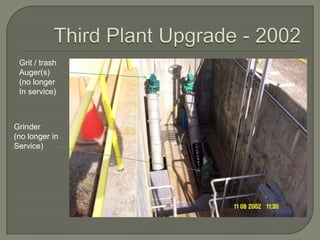
 Two   (2) Grit Augers and One (1) grinder

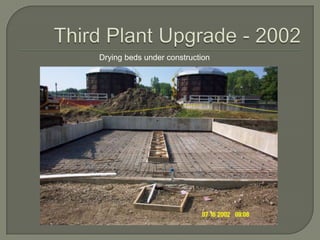
 Two(2) more outside drying beds were
 added bring the total to four (4)
Sludge hold tank under construction
Grit / trash
 Auger(s)
 (no longer
 In service)


Grinder
(no longer in
Service)
Drying beds under construction
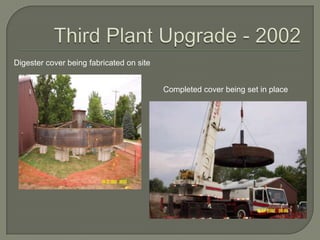
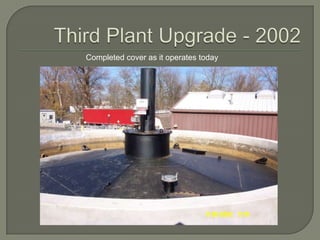
 The fixed cover digester was converted to
 a floating cover, giving the plant two (2)
 floating cover digesters

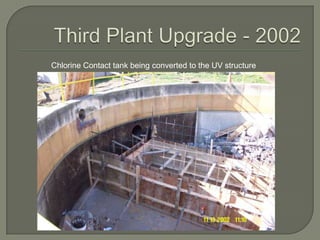
 Also  added was a UV
 (Ultra Violet )disinfection system replacing
  the Chlorine / Sulfur dioxide systems. The
  UV was installed in the Chlorine contact
  structure.
Digester cover being fabricated on site


                                          Completed cover being set in place
Completed cover as it operates today
Chlorine Contact tank being converted to the UV structure
 In2008 the most significant change since
 the 1972 upgrade happened, the
 conversion of the plants biological process
 from a Tricking Filter type of plant to that of
 an Activated Sludge Process.
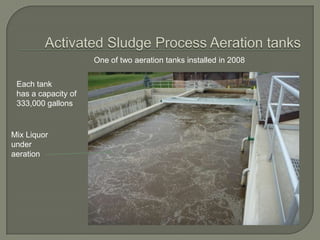
One of two aeration tanks installed in 2008


 Each tank
 has a capacity of
 333,000 gallons


Mix Liquor
under
aeration
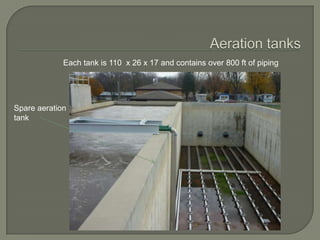
Each tank is 110 x 26 x 17 and contains over 800 ft of piping


Spare aeration
tank
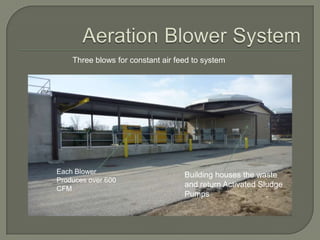
Three blows for constant air feed to system


Each Blower                        Building houses the waste
Produces over 600
CFM
                                   and return Activated Sludge
                                   Pumps
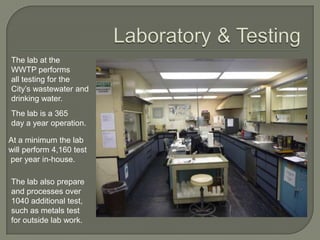
The lab at the
WWTP performs
all testing for the
City’s wastewater and
drinking water.
The lab is a 365
day a year operation.

At a minimum the lab
will perform 4,160 test
per year in-house.

The lab also prepare
and processes over
1040 additional test,
such as metals test
for outside lab work.
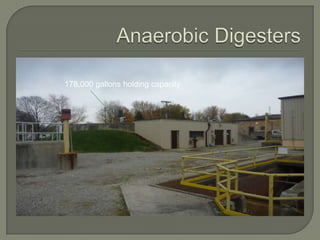
 Atthe present time the WWTP processes
 sludge through two anaerobic floating
 cover digesters with a total holding
 capacity of 178,000 gallons

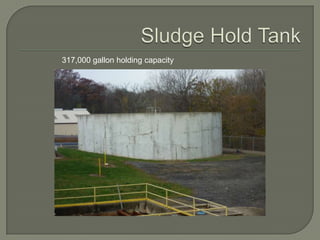
A sludge hold tank that was installed in
 2002 with a capacity of 317,000 gallons
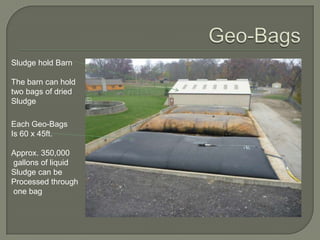
 Geo-bags    are used at this time for drying
 sludge.

 Dried   sludge is stored in a holding barn

 InOctober 2011 the plant applied to IDEM
 for a land application permit to help off set
 the cost of its current disposal method.
178,000 gallons holding capacity
317,000 gallon holding capacity
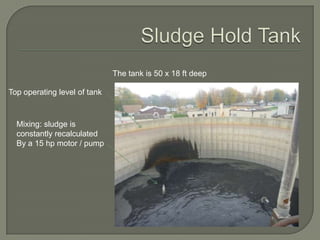
The tank is 50 x 18 ft deep

Top operating level of tank


  Mixing: sludge is
  constantly recalculated
  By a 15 hp motor / pump
Sludge hold Barn

The barn can hold
two bags of dried
Sludge

Each Geo-Bags
Is 60 x 45ft.

Approx. 350,000
gallons of liquid
Sludge can be
Processed through
one bag
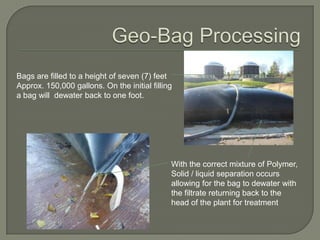
Bags are filled to a height of seven (7) feet
Approx. 150,000 gallons. On the initial filling
a bag will dewater back to one foot.


                                              With the correct mixture of Polymer,
                                              Solid / liquid separation occurs
                                              allowing for the bag to dewater with
                                              the filtrate returning back to the
                                              head of the plant for treatment
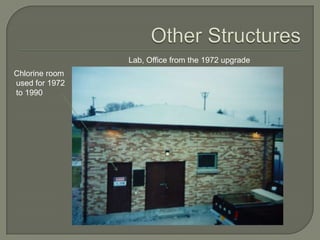
Lab, Office from the 1972 upgrade
Chlorine room
used for 1972
to 1990
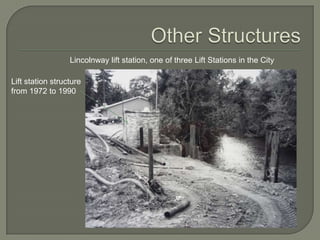
Lincolnway lift station, one of three Lift Stations in the City

Lift station structure
from 1972 to 1990
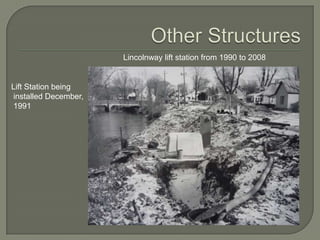
Lincolnway lift station from 1990 to 2008


Lift Station being
installed December,
1991
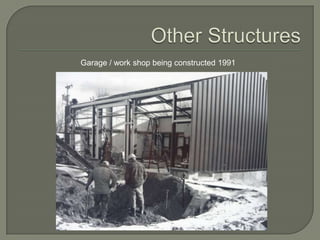
Garage / work shop being constructed 1991
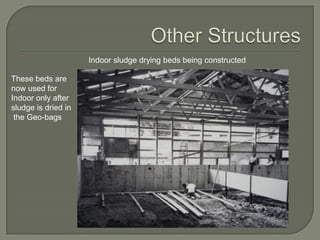
Indoor sludge drying beds being constructed

These beds are
now used for
Indoor only after
sludge is dried in
 the Geo-bags

Ligonier Wastewater Treatment Plant Presentation

  • 2.
     TheCity ofLigonier WWTP is located within a Three (3) acre compound at 305 Bridge Street.  Plant design flow is a design flow of 1.5 MDG  From January 1st, 2011 to September 30th, 2011 the plant treated 324,000,000 gallons for a average of 1,180,000 gallons per day  An average flow of 1.18 mgd put that plant at 78% capacity.
  • 3.
     The first wastewater treat plant was built as a WPA (Works Project Administration) project as part of the “New Deal” of the 1930’s The current facilities still is located at the original plant site.  The first plant consisted of a pump build, two primary clarifiers and one fixed cover Digester. All three pieces of equipment are still in operation today.
  • 4.
  • 5.
    Seen from the1930’s to 1990
  • 6.
  • 7.
     The firstplant upgrade took place in 1972, the plant was classified at that time by IDEM as a Class II treatment plant  The design flow for the plant was increase to .52 mgd, a grit channel and grinder were added, along with a manually racked bar screen and two additional primary clarifiers.
  • 8.
  • 9.
     The first biological process was also install consisting of a standard rate rock media trickling filter coupled with the plants first secondary clarifier.
  • 10.
    Standard Rate TricklingFilter Rock Media
  • 11.
  • 12.
     Chlorine wasalso add for disinfection, making it the first time that wastewater was disinfected since the installation of the first treatment plant.  Alsoadded to the plant was one floating cover digester to work in conjunction with the existing fixed cover digester.
  • 13.
    Primary Clarifiers 5&6added in 1990 Primary Clarifiers 3&4 added in 1972 Original Primary Clarifiers 1&2 from the 1930’s
  • 14.
     The plantupgrade began in October 1990. The design flow of the plant was again increase to 1.5 mgd and again upgraded in classification to a Class III facility as it remains today.  The standard rate trickling filter was removed and two high rate Bio-towers (Tricking Filter) were installed for ammonia removal (nitrification)
  • 15.
  • 16.
    Completed Bio-tower One of two Bio-Towers install for nitrification in the 1990’s (no longer in service)
  • 17.
     Alsoinstalled wasa Solids Contact Process located between the Bio-towers and the Secondary Clarifiers
  • 18.
    Solids contact tankunder construction (no Longer in operation) Secondary Clarifier #2 under construction Contact tank blowers Bio-tower pump stations
  • 19.
     Two newsecondary clarifiers were installed, the existing secondary clarifier was then converted to a larger chlorine contact tank. A sulfur dioxide system was then installed for dechlorination in the old chlorine contact chamber.
  • 20.
  • 21.
    One of twoSecondary Clarifiers install in 1990 Each secondary is 50 x 15 and hold 220,000 gallon each.
  • 22.
     During the expansion two more primaries clarifiers were added bring the total to six.
  • 23.
    Building for Chlorine& Sulfur Dioxide Secondary Clarifier to Be converted to the Chlorine contact tank Existing chlorine tank to become sulfur dioxide tank
  • 24.
    Arial Photo ofCompleted Plant (Circa 1993)
  • 25.
     The thirdplant upgrade took place in 2002. At that time a 317,000 sludge hold tank was installed.  Two (2) Grit Augers and One (1) grinder  Two(2) more outside drying beds were added bring the total to four (4)
  • 26.
    Sludge hold tankunder construction
  • 27.
    Grit / trash Auger(s) (no longer In service) Grinder (no longer in Service)
  • 28.
    Drying beds underconstruction
  • 29.
     The fixedcover digester was converted to a floating cover, giving the plant two (2) floating cover digesters  Also added was a UV  (Ultra Violet )disinfection system replacing the Chlorine / Sulfur dioxide systems. The UV was installed in the Chlorine contact structure.
  • 30.
    Digester cover beingfabricated on site Completed cover being set in place
  • 31.
    Completed cover asit operates today
  • 32.
    Chlorine Contact tankbeing converted to the UV structure
  • 33.
     In2008 themost significant change since the 1972 upgrade happened, the conversion of the plants biological process from a Tricking Filter type of plant to that of an Activated Sludge Process.
  • 34.
    One of twoaeration tanks installed in 2008 Each tank has a capacity of 333,000 gallons Mix Liquor under aeration
  • 35.
    Each tank is110 x 26 x 17 and contains over 800 ft of piping Spare aeration tank
  • 36.
    Three blows forconstant air feed to system Each Blower Building houses the waste Produces over 600 CFM and return Activated Sludge Pumps
  • 37.
    The lab atthe WWTP performs all testing for the City’s wastewater and drinking water. The lab is a 365 day a year operation. At a minimum the lab will perform 4,160 test per year in-house. The lab also prepare and processes over 1040 additional test, such as metals test for outside lab work.
  • 38.
     Atthe presenttime the WWTP processes sludge through two anaerobic floating cover digesters with a total holding capacity of 178,000 gallons A sludge hold tank that was installed in 2002 with a capacity of 317,000 gallons
  • 39.
     Geo-bags are used at this time for drying sludge.  Dried sludge is stored in a holding barn  InOctober 2011 the plant applied to IDEM for a land application permit to help off set the cost of its current disposal method.
  • 40.
  • 41.
  • 42.
    The tank is50 x 18 ft deep Top operating level of tank Mixing: sludge is constantly recalculated By a 15 hp motor / pump
  • 43.
    Sludge hold Barn Thebarn can hold two bags of dried Sludge Each Geo-Bags Is 60 x 45ft. Approx. 350,000 gallons of liquid Sludge can be Processed through one bag
  • 44.
    Bags are filledto a height of seven (7) feet Approx. 150,000 gallons. On the initial filling a bag will dewater back to one foot. With the correct mixture of Polymer, Solid / liquid separation occurs allowing for the bag to dewater with the filtrate returning back to the head of the plant for treatment
  • 45.
    Lab, Office fromthe 1972 upgrade Chlorine room used for 1972 to 1990
  • 46.
    Lincolnway lift station,one of three Lift Stations in the City Lift station structure from 1972 to 1990
  • 47.
    Lincolnway lift stationfrom 1990 to 2008 Lift Station being installed December, 1991
  • 48.
    Garage / workshop being constructed 1991
  • 49.
    Indoor sludge dryingbeds being constructed These beds are now used for Indoor only after sludge is dried in the Geo-bags