Isfd 18 
LEE 4 
Mansilla, Adriana 
Palamara, María Paula
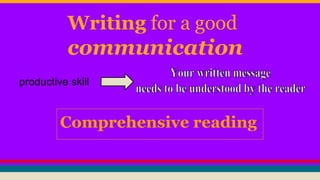
Writing for a good 
communication 
productive skill 
Comprehensive reading
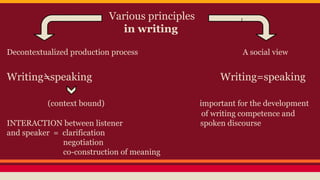
Various principles 
in writing 
Decontextualized production process A social view 
Writing=speaking Writing=speaking 
(context bound) important for the development 
of writing competence and 
INTERACTION between listener spoken discourse 
and speaker = clarification 
negotiation 
co-construction of meaning
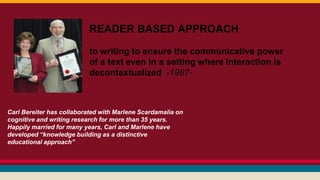
READER BASED APPROACH 
to writing to ensure the communicative power 
of a text even in a setting where interaction is 
decontextualized -1987- 
Carl Bereiter has collaborated with Marlene Scardamalia on 
cognitive and writing research for more than 35 years. 
Happily married for many years, Carl and Marlene have 
developed “knowledge building as a distinctive 
educational approach”
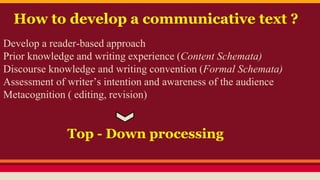
How to develop a communicative text ? 
Develop a reader-based approach 
Prior knowledge and writing experience (Content Schemata) 
Discourse knowledge and writing convention (Formal Schemata) 
Assessment of writer’s intention and awareness of the audience 
Metacognition ( editing, revision) 
Top - Down processing
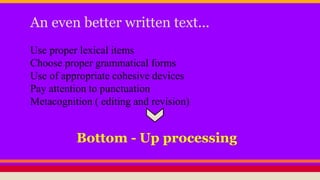
An even better written text... 
Use proper lexical items 
Choose proper grammatical forms 
Use of appropriate cohesive devices 
Pay attention to punctuation 
Metacognition ( editing and revision) 
Bottom - Up processing
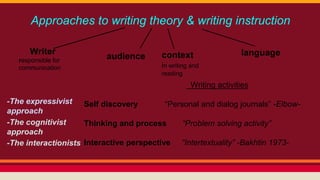
Approaches to writing theory & writing instruction 
audience context 
in writing and 
reading 
language 
-The expressivist 
approach 
-The cognitivist 
approach 
-The interactionists 
Writing activities 
Self discovery “Personal and dialog journals” -Elbow- 
Thinking and process “Problem solving activity” 
Interactive perspective “Intertextuality” -Bakhtin 1973- 
Writer 
responsible for 
communication
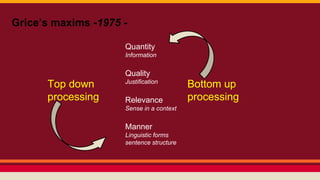
Grice’s maxims -1975 - 
Quantity 
Information 
Quality 
Justification 
Relevance 
Sense in a context 
Manner 
Linguistic forms 
sentence structure 
Top down 
processing 
Bottom up 
processing
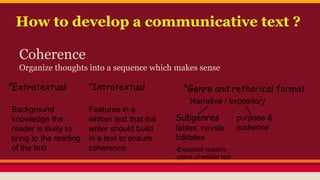
How to develop a communicative text ? 
Coherence 
Organize thoughts into a sequence which makes sense 
°Extratextual 
Background 
knowledge the 
reader is likely to 
bring to the reading 
of the text 
°Intratextual 
Features in a 
written text that the 
writer should build 
in a text to ensure 
coherence 
°Genre and rethorical format 
Narrative / expository 
Subgenres 
purpose & 
fables, novels 
audience 
folktales 
-Expected readers 
-place of written text
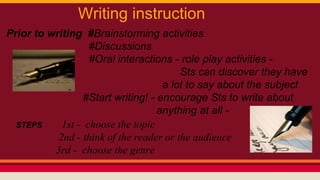
Writing instruction 
Prior to writing #Brainstorming activities 
#Discussions 
#Oral interactions - role play activities - 
Sts can discover they have 
a lot to say about the subject 
#Start writing! - encourage Sts to write about 
anything at all - 
STEPS 1st - choose the topic 
2nd - think of the reader or the audience 
3rd - choose the genre
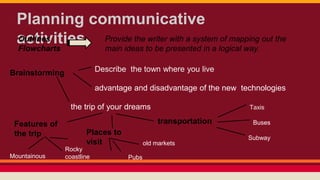
Planning communicative 
aOuctlitnievs ities 
Flowcharts 
Provide the writer with a system of mapping out the 
main ideas to be presented in a logical way. 
Brainstorming Describe the town where you live 
advantage and disadvantage of the new technologies 
the trip of your dreams 
Features of 
the trip Places to 
visit 
transportation 
Taxis 
Buses 
Subway 
old markets 
Pubs 
Rocky 
Mountainous coastline
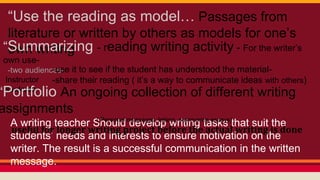
“Use the reading as model… Passages from 
literature or written by others as models for one’s 
“Sowunm wmraitirnizging - reading writing activity - For the writer’s 
own use- 
-two audiences- 
Instructor 
students 
-use it to see if the student has understood the material- 
-share their reading ( it’s a way to communicate ideas with others) 
“Portfolio An ongoing collection of different writing 
assignments 
( Personal messages, letters, summaries essays) 
A writing teacher Should develop writing tasks that suit the 
students’ needs and interests to ensure motivation on the 
writer. The result is a successful communication in the written 
message. 
useful for longer writing project before the actual writing is done
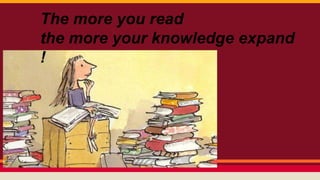
The more you read 
the more your knowledge expand 
!
In order to understand a written texts the reader needs the 
application of different tasks: 
● Decode the message 
● Interpret the message 
● Understand the author´ s intentions
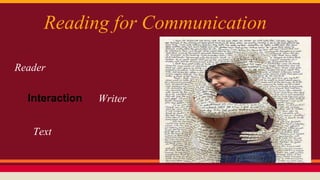
Reading for Communication 
Reader 
Interaction Writer 
Text
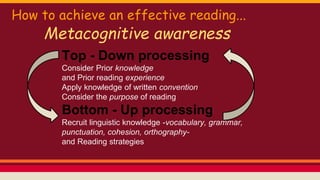
How to achieve an effective reading... 
Metacognitive awareness 
Top - Down processing 
Consider Prior knowledge 
and Prior reading experience 
Apply knowledge of written convention 
Consider the purpose of reading 
Bottom - Up processing 
Recruit linguistic knowledge -vocabulary, grammar, 
punctuation, cohesion, orthography-and 
Reading strategies
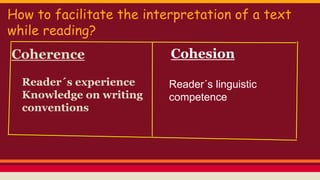
How to facilitate the interpretation of a text 
while reading? 
Coherence Cohesion 
Reader´s experience 
Knowledge on writing 
conventions 
Reader´s linguistic 
competence
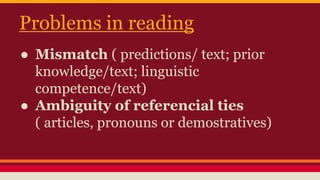
Problems in reading 
● Mismatch ( predictions/ text; prior 
knowledge/text; linguistic 
competence/text) 
● Ambiguity of referencial ties 
( articles, pronouns or demostratives)
A well written product is in constant 
changing and revision to suit the 
writer’s goals and needs to 
accommodate potential readers 
An effective reading is achieved by 
developing reading strategies. Making 
constant adjustment to the text to match the 
schemata of context and form, presented by 
the writer in the text, with our own schemata 
and view of the world.
Sources 
-Celce-Murcia, M. & Olshtain, E. (2000) Discourse and Context in 
Language Teaching. A Guide for Language Teachers. Chapters 7, 8. U.K.: 
Pictures 
sources 
-Stipula_fountain_pen.jpg Available at: en.wikipedia.org 
-Breaking Down Critical Reading | Princeton Tutoring Blog 
blog.princetontutoring.com 
-Bad Girls: Summer Reading Book Club Edition - Work Life Balance ... 
wlbpa.org

Writing & reading skills 1

  • 1.
    Isfd 18 LEE4 Mansilla, Adriana Palamara, María Paula
  • 3.
    Writing for agood communication productive skill Comprehensive reading
  • 4.
    Various principles inwriting Decontextualized production process A social view Writing=speaking Writing=speaking (context bound) important for the development of writing competence and INTERACTION between listener spoken discourse and speaker = clarification negotiation co-construction of meaning
  • 5.
    READER BASED APPROACH to writing to ensure the communicative power of a text even in a setting where interaction is decontextualized -1987- Carl Bereiter has collaborated with Marlene Scardamalia on cognitive and writing research for more than 35 years. Happily married for many years, Carl and Marlene have developed “knowledge building as a distinctive educational approach”
  • 6.
    How to developa communicative text ? Develop a reader-based approach Prior knowledge and writing experience (Content Schemata) Discourse knowledge and writing convention (Formal Schemata) Assessment of writer’s intention and awareness of the audience Metacognition ( editing, revision) Top - Down processing
  • 7.
    An even betterwritten text... Use proper lexical items Choose proper grammatical forms Use of appropriate cohesive devices Pay attention to punctuation Metacognition ( editing and revision) Bottom - Up processing
  • 8.
    Approaches to writingtheory & writing instruction audience context in writing and reading language -The expressivist approach -The cognitivist approach -The interactionists Writing activities Self discovery “Personal and dialog journals” -Elbow- Thinking and process “Problem solving activity” Interactive perspective “Intertextuality” -Bakhtin 1973- Writer responsible for communication
  • 9.
    Grice’s maxims -1975- Quantity Information Quality Justification Relevance Sense in a context Manner Linguistic forms sentence structure Top down processing Bottom up processing
  • 10.
    How to developa communicative text ? Coherence Organize thoughts into a sequence which makes sense °Extratextual Background knowledge the reader is likely to bring to the reading of the text °Intratextual Features in a written text that the writer should build in a text to ensure coherence °Genre and rethorical format Narrative / expository Subgenres purpose & fables, novels audience folktales -Expected readers -place of written text
  • 11.
    Writing instruction Priorto writing #Brainstorming activities #Discussions #Oral interactions - role play activities - Sts can discover they have a lot to say about the subject #Start writing! - encourage Sts to write about anything at all - STEPS 1st - choose the topic 2nd - think of the reader or the audience 3rd - choose the genre
  • 12.
    Planning communicative aOuctlitnievsities Flowcharts Provide the writer with a system of mapping out the main ideas to be presented in a logical way. Brainstorming Describe the town where you live advantage and disadvantage of the new technologies the trip of your dreams Features of the trip Places to visit transportation Taxis Buses Subway old markets Pubs Rocky Mountainous coastline
  • 13.
    “Use the readingas model… Passages from literature or written by others as models for one’s “Sowunm wmraitirnizging - reading writing activity - For the writer’s own use- -two audiences- Instructor students -use it to see if the student has understood the material- -share their reading ( it’s a way to communicate ideas with others) “Portfolio An ongoing collection of different writing assignments ( Personal messages, letters, summaries essays) A writing teacher Should develop writing tasks that suit the students’ needs and interests to ensure motivation on the writer. The result is a successful communication in the written message. useful for longer writing project before the actual writing is done
  • 14.
    The more youread the more your knowledge expand !
  • 15.
    In order tounderstand a written texts the reader needs the application of different tasks: ● Decode the message ● Interpret the message ● Understand the author´ s intentions
  • 16.
    Reading for Communication Reader Interaction Writer Text
  • 17.
    How to achievean effective reading... Metacognitive awareness Top - Down processing Consider Prior knowledge and Prior reading experience Apply knowledge of written convention Consider the purpose of reading Bottom - Up processing Recruit linguistic knowledge -vocabulary, grammar, punctuation, cohesion, orthography-and Reading strategies
  • 18.
    How to facilitatethe interpretation of a text while reading? Coherence Cohesion Reader´s experience Knowledge on writing conventions Reader´s linguistic competence
  • 19.
    Problems in reading ● Mismatch ( predictions/ text; prior knowledge/text; linguistic competence/text) ● Ambiguity of referencial ties ( articles, pronouns or demostratives)
  • 20.
    A well writtenproduct is in constant changing and revision to suit the writer’s goals and needs to accommodate potential readers An effective reading is achieved by developing reading strategies. Making constant adjustment to the text to match the schemata of context and form, presented by the writer in the text, with our own schemata and view of the world.
  • 21.
    Sources -Celce-Murcia, M.& Olshtain, E. (2000) Discourse and Context in Language Teaching. A Guide for Language Teachers. Chapters 7, 8. U.K.: Pictures sources -Stipula_fountain_pen.jpg Available at: en.wikipedia.org -Breaking Down Critical Reading | Princeton Tutoring Blog blog.princetontutoring.com -Bad Girls: Summer Reading Book Club Edition - Work Life Balance ... wlbpa.org