Adaptation

FINANCE
Tracking

…and answers to all your adaptation finance questions!
Pieter Terpstra, WRI Adaptation Summer Brownbag Series, September 9th, 2013
Content
• Defining Adaptation Finance
– Context Specific
– Dynamic
– Not about finance

• Accountability and Transparency Project
– Country Results
– Next Steps
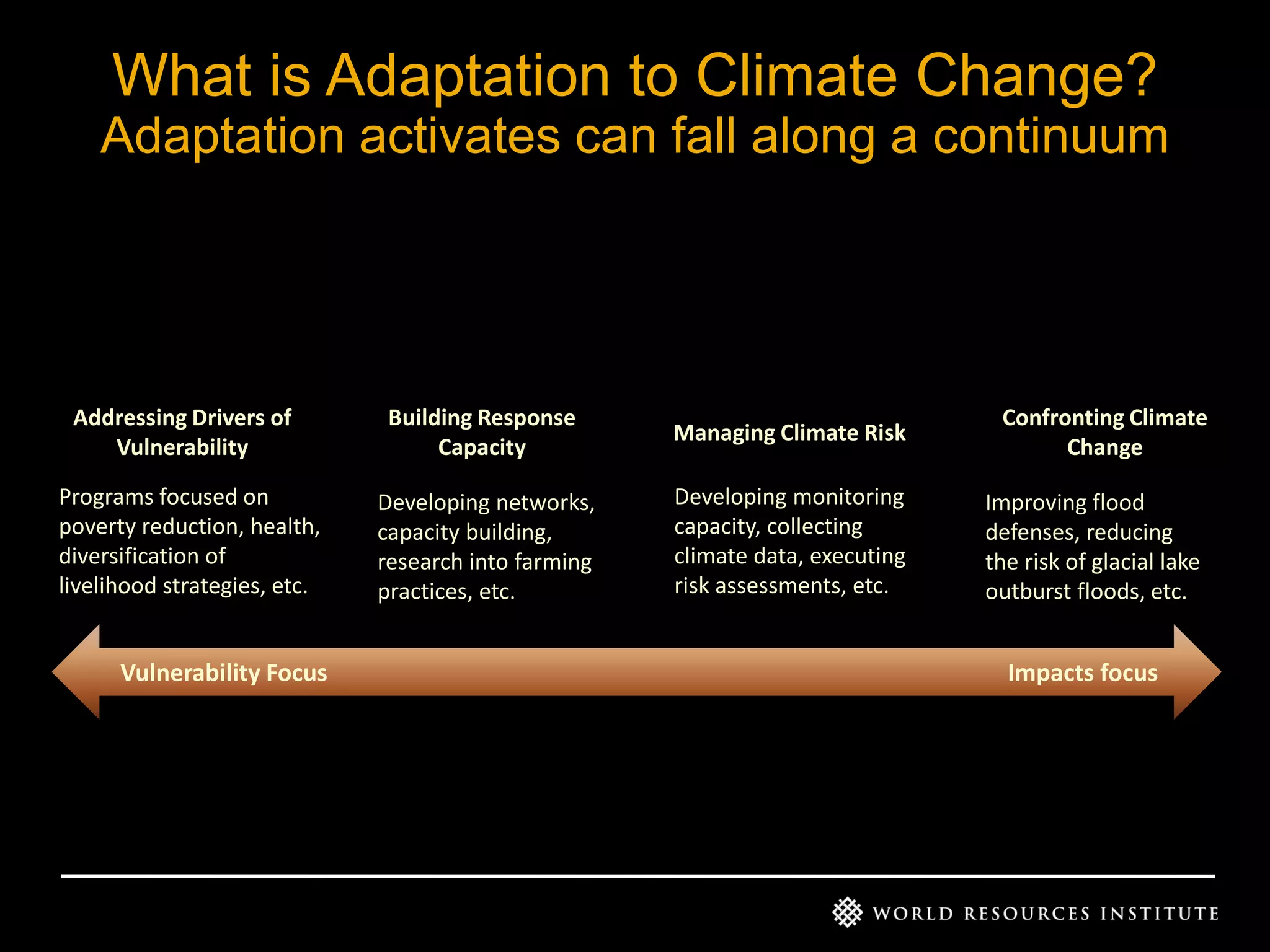
What is Adaptation to Climate Change?
Adaptation activates can fall along a continuum

Addressing Drivers of
Vulnerability

Building Response
Capacity

Managing Climate Risk

Programs focused on
poverty reduction, health,
diversification of
livelihood strategies, etc.

Developing networks,
capacity building,
research into farming
practices, etc.

Developing monitoring
capacity, collecting
climate data, executing
risk assessments, etc.

Vulnerability Focus

Confronting Climate
Change
Improving flood
defenses, reducing
the risk of glacial lake
outburst floods, etc.

Impacts focus
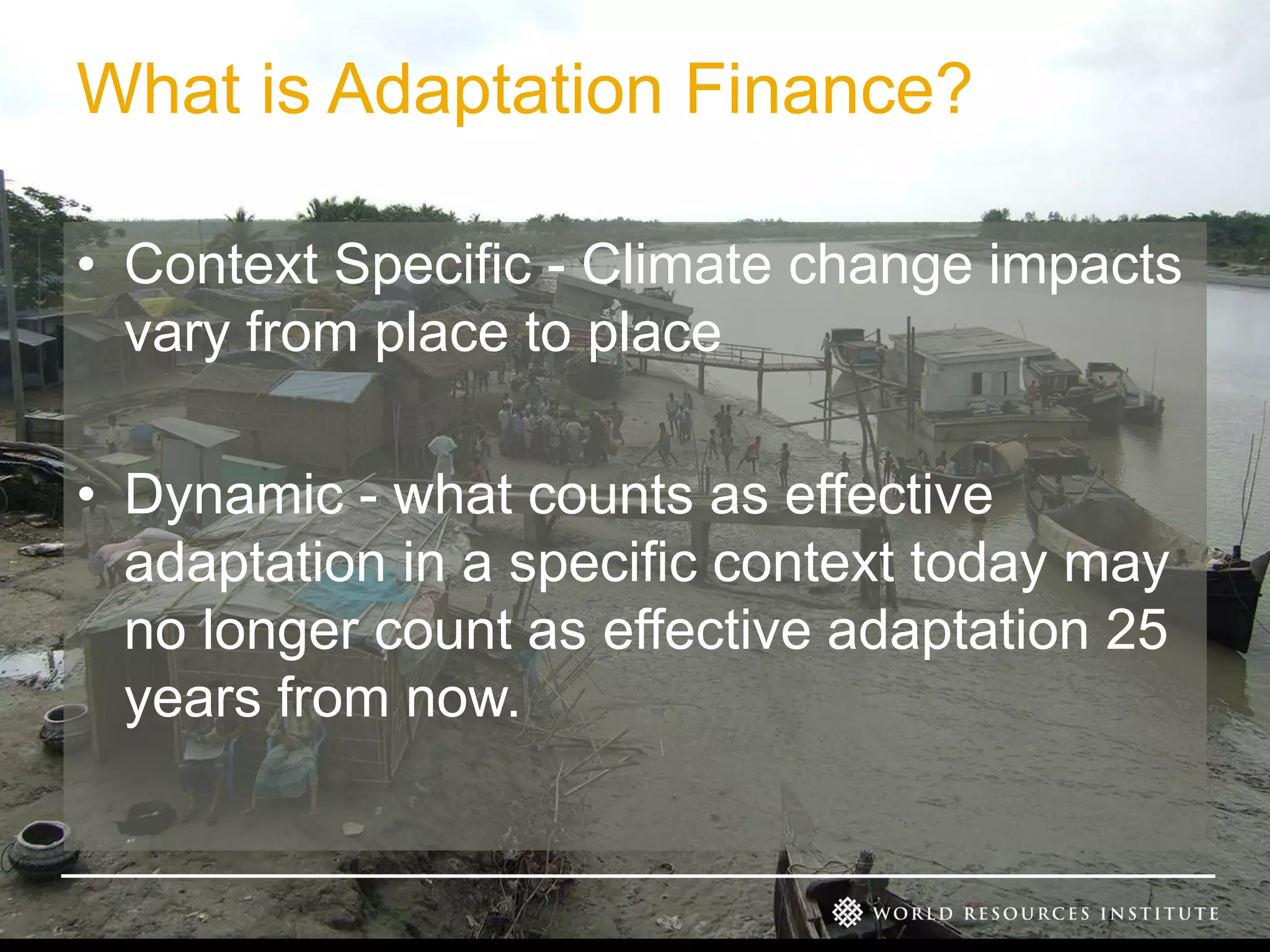
What is Adaptation Finance?
• Context Specific - Climate change impacts
vary from place to place
• Dynamic - what counts as effective
adaptation in a specific context today may
no longer count as effective adaptation 25
years from now.
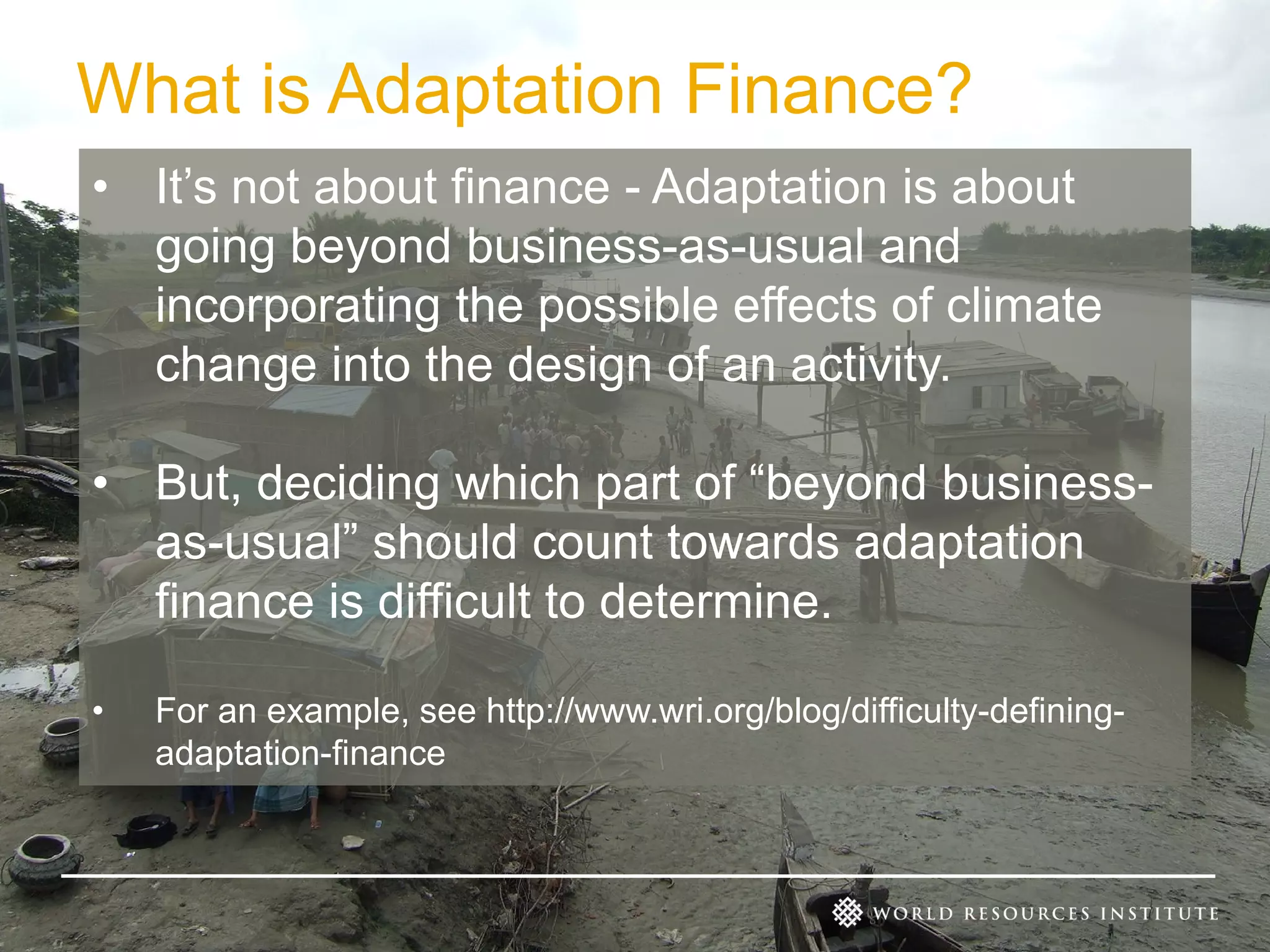
What is Adaptation Finance?
• It’s not about finance - Adaptation is about
going beyond business-as-usual and
incorporating the possible effects of climate
change into the design of an activity.
• But, deciding which part of “beyond businessas-usual” should count towards adaptation
finance is difficult to determine.
•

For an example, see http://www.wri.org/blog/difficulty-definingadaptation-finance
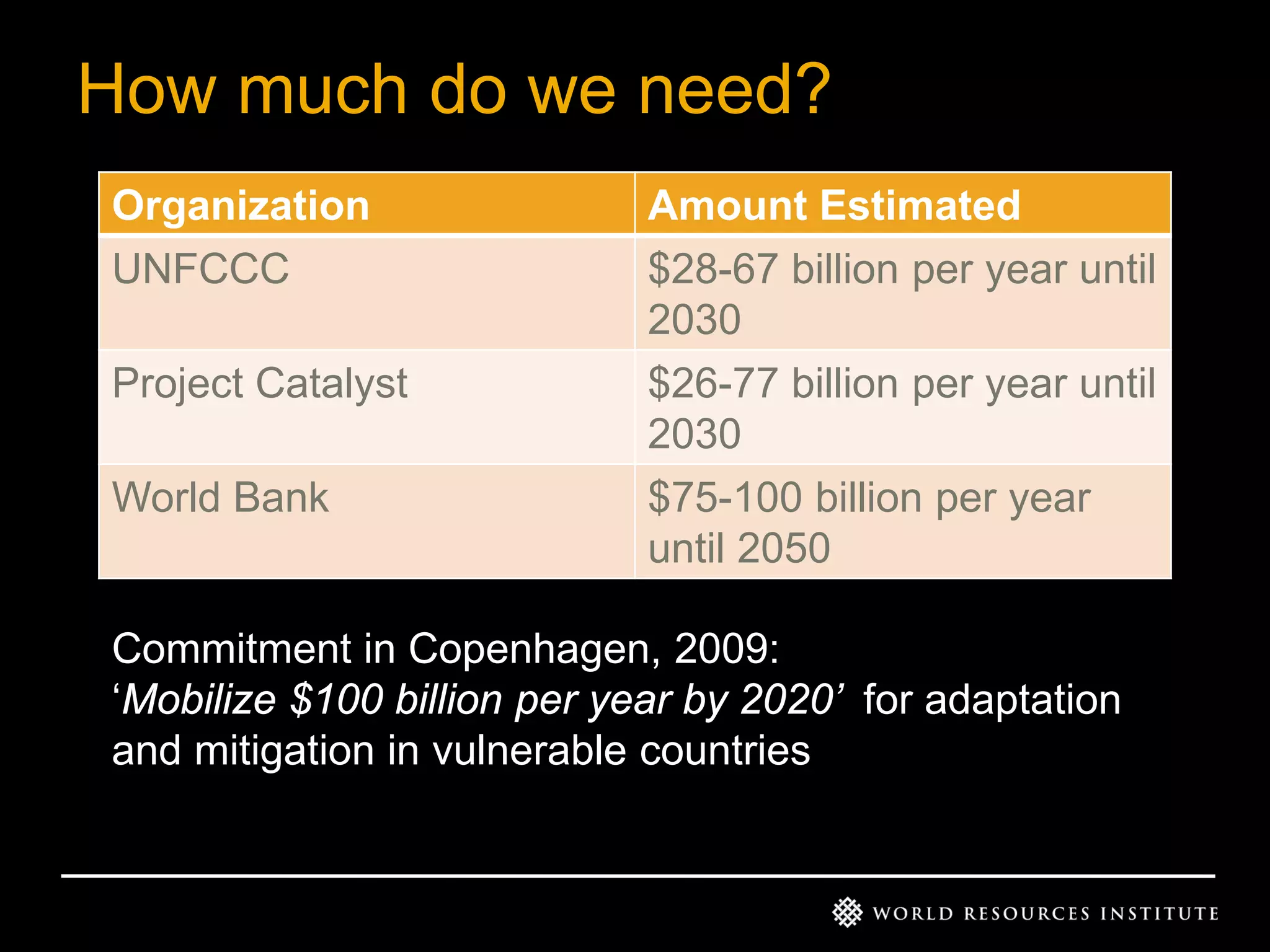
How much do we need?
Organization
UNFCCC
Project Catalyst
World Bank

Amount Estimated
$28-67 billion per year until
2030
$26-77 billion per year until
2030
$75-100 billion per year
until 2050

Commitment in Copenhagen, 2009:
‘Mobilize $100 billion per year by 2020’ for adaptation
and mitigation in vulnerable countries
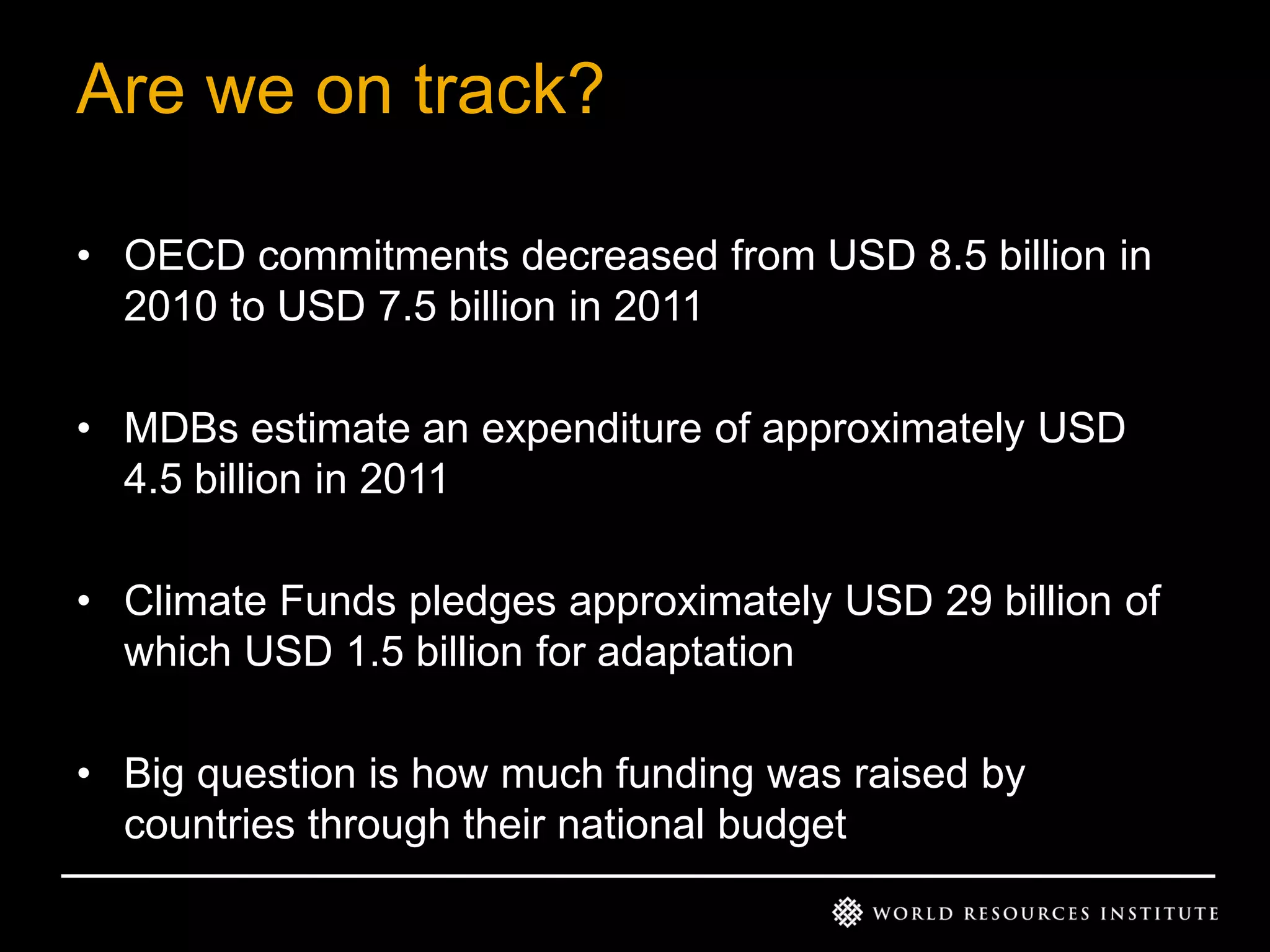
Are we on track?
• OECD commitments decreased from USD 8.5 billion in
2010 to USD 7.5 billion in 2011
• MDBs estimate an expenditure of approximately USD
4.5 billion in 2011
• Climate Funds pledges approximately USD 29 billion of
which USD 1.5 billion for adaptation
• Big question is how much funding was raised by
countries through their national budget
The Issue
• Local communities in vulnerable countries
will feel the biggest impact of climate
change
• Reaching local communities with support
is notoriously difficult
How much adaptation funding is reaching
vulnerable communities?
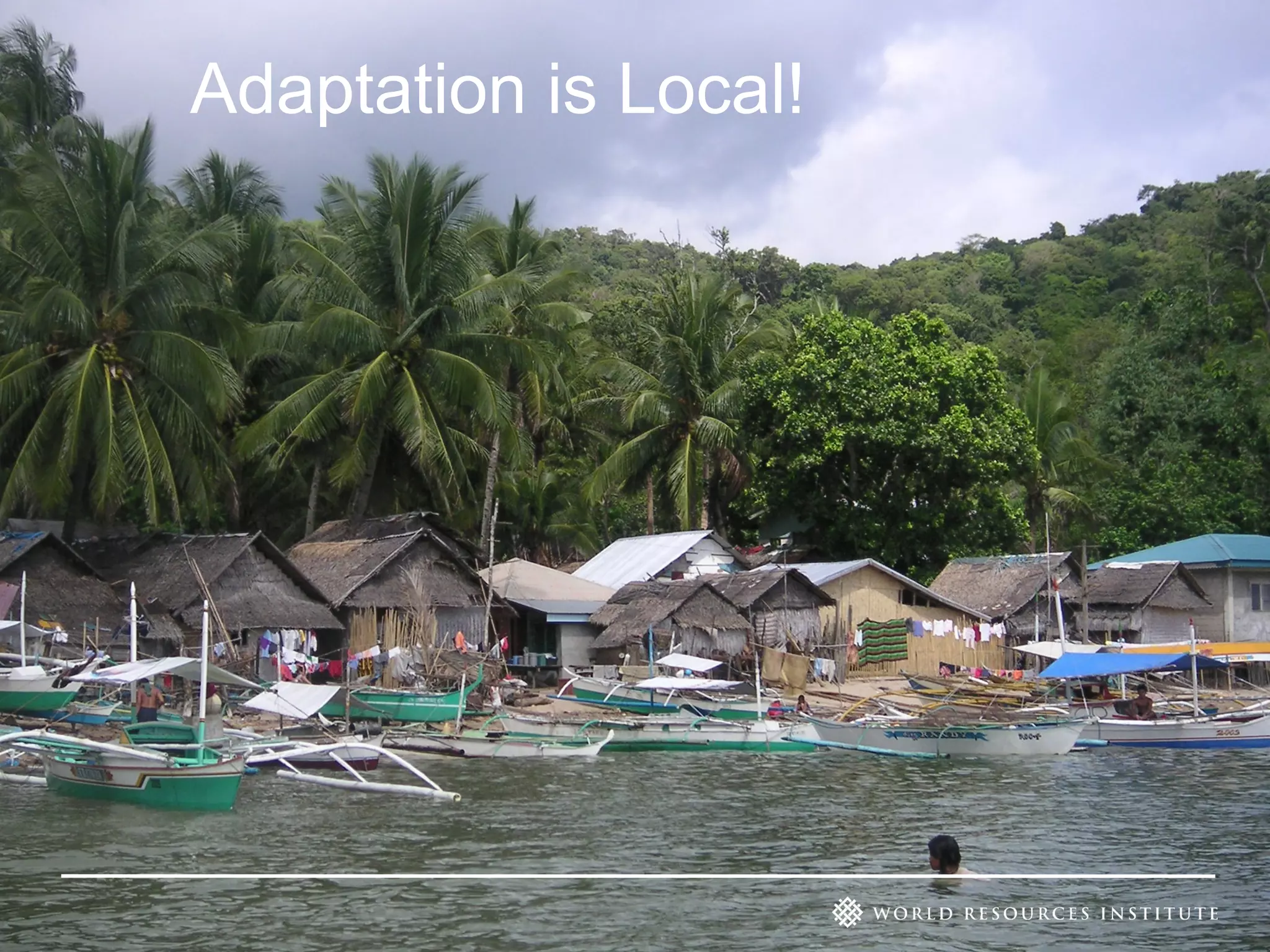
Adaptation is Local!
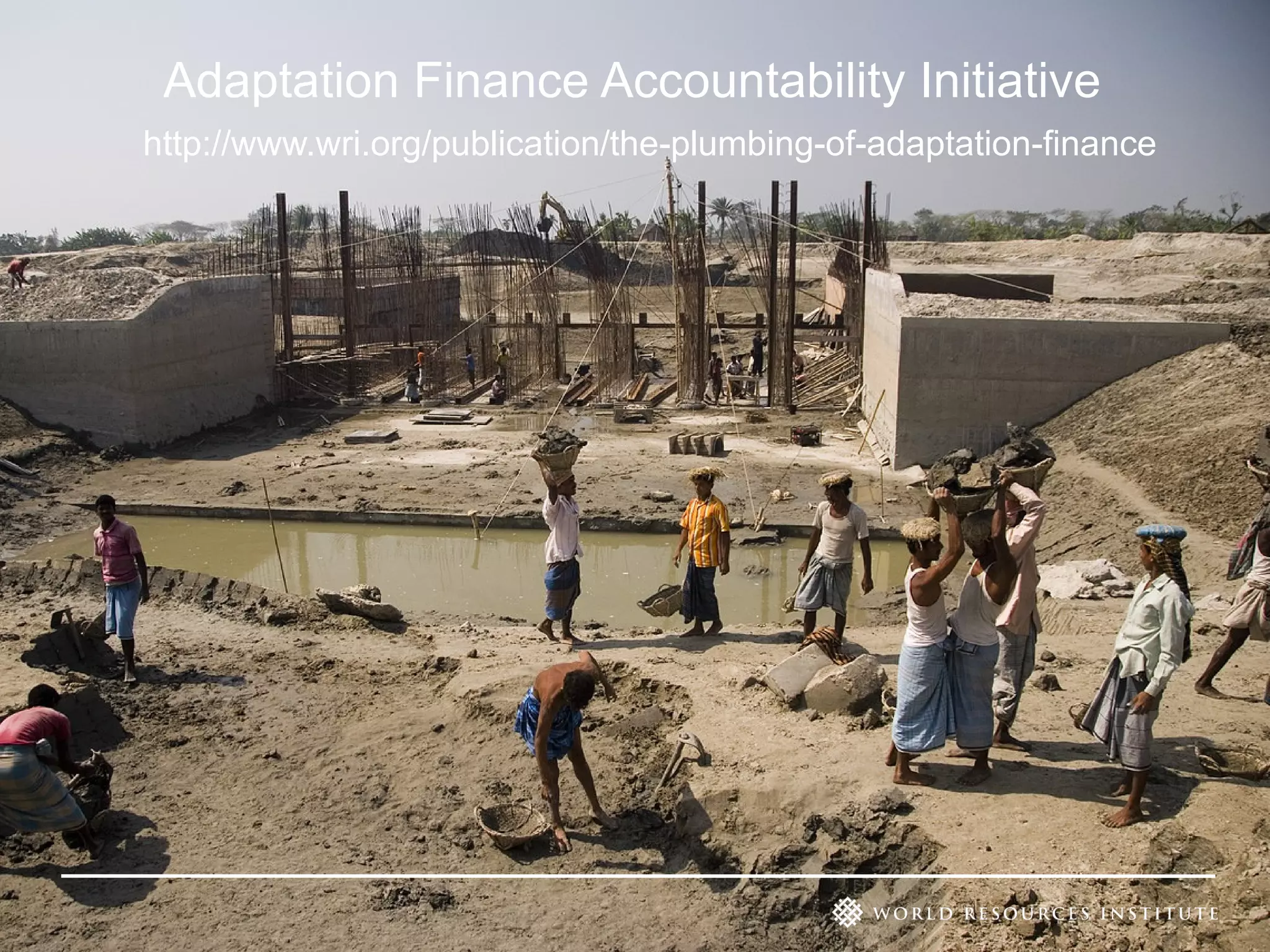
Adaptation Finance Accountability Initiative
http://www.wri.org/publication/the-plumbing-of-adaptation-finance
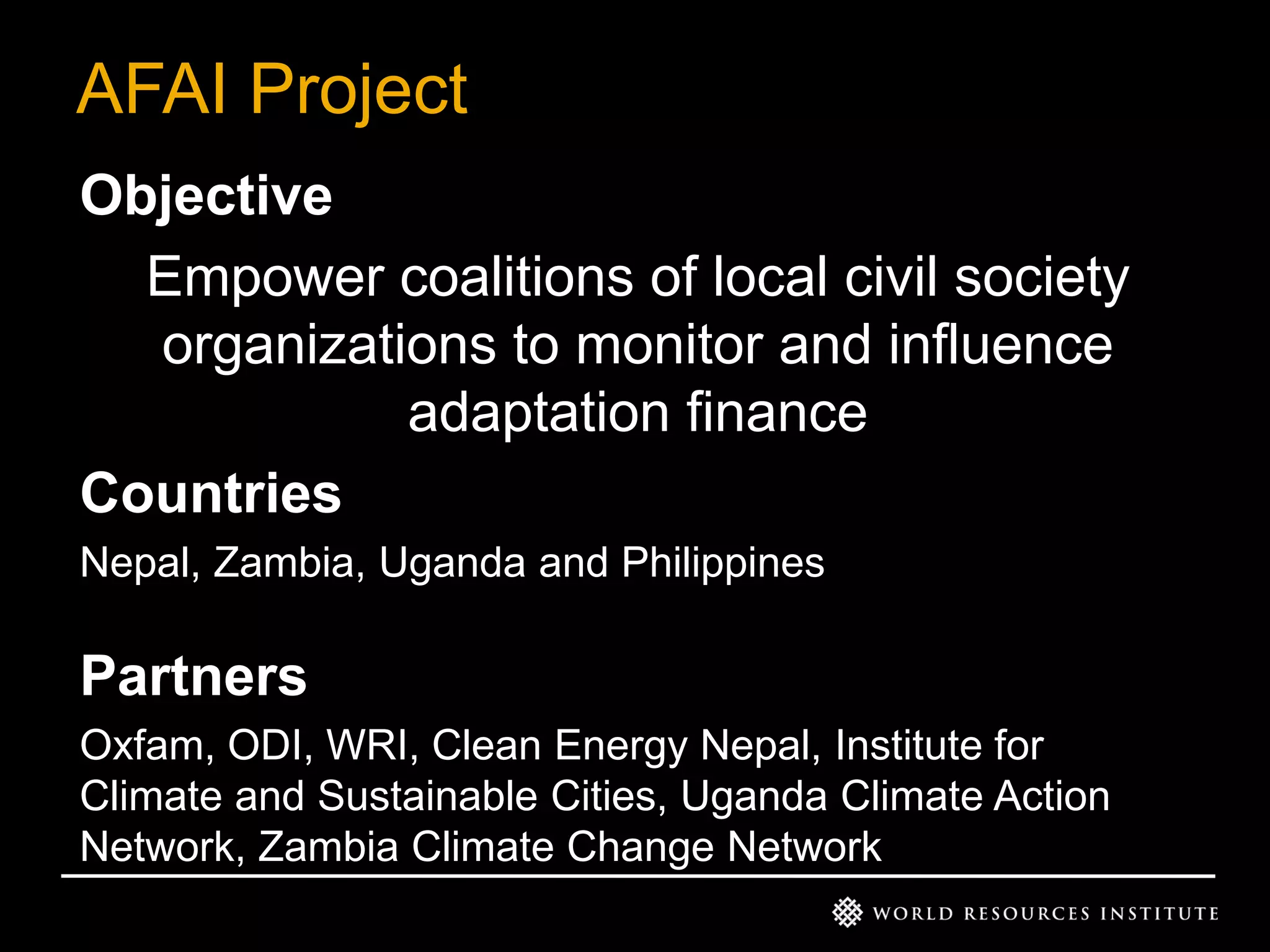
AFAI Project
Objective
Empower coalitions of local civil society
organizations to monitor and influence
adaptation finance
Countries
Nepal, Zambia, Uganda and Philippines

Partners
Oxfam, ODI, WRI, Clean Energy Nepal, Institute for
Climate and Sustainable Cities, Uganda Climate Action
Network, Zambia Climate Change Network
AFAI Project
Phase 1
- Mapping of international flows
- Institutional analysis
Phase 2
- Deep dive research into selected flows
- National and international level advocacy
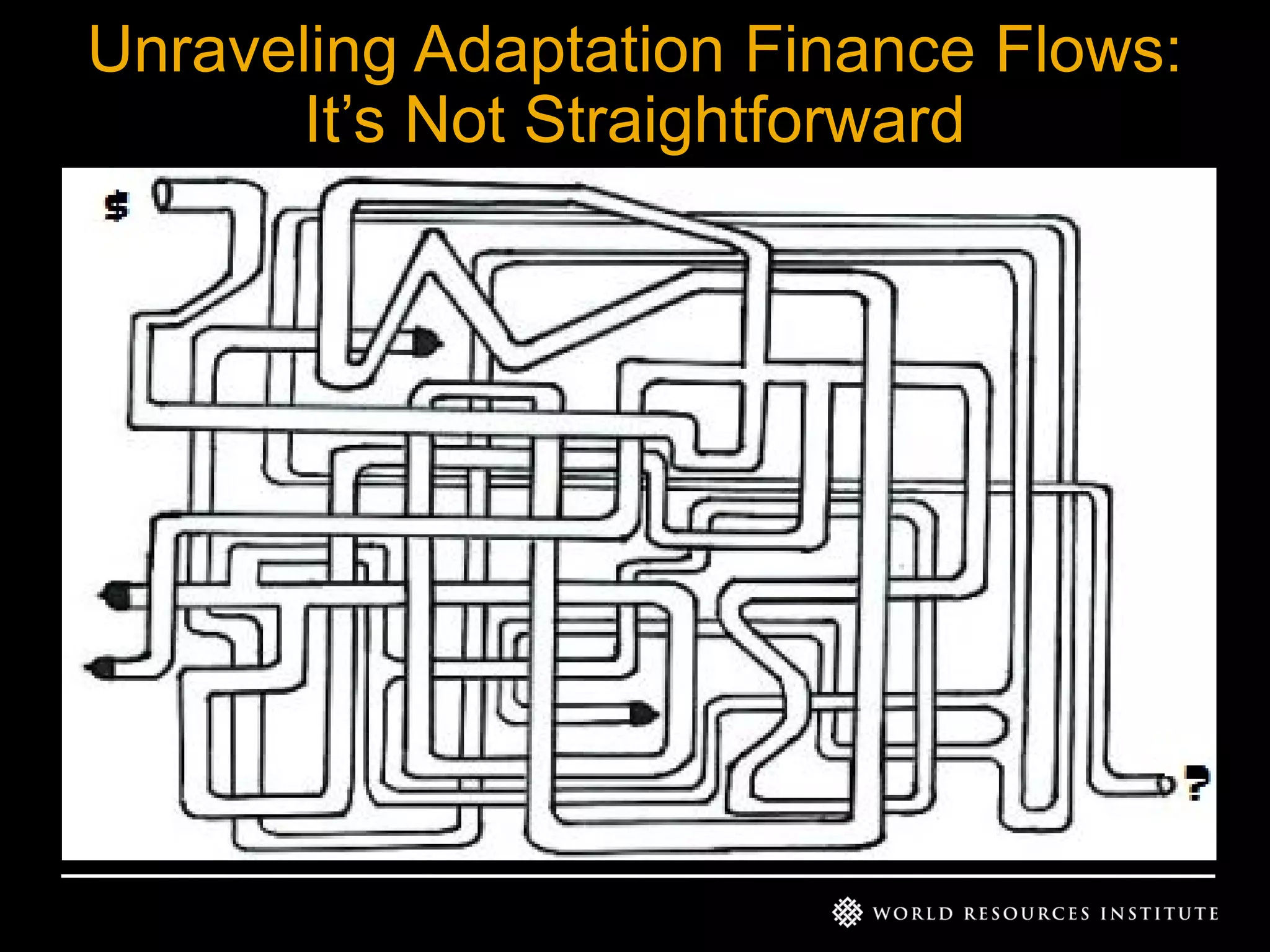
Unraveling Adaptation Finance Flows:
It’s Not Straightforward
• start
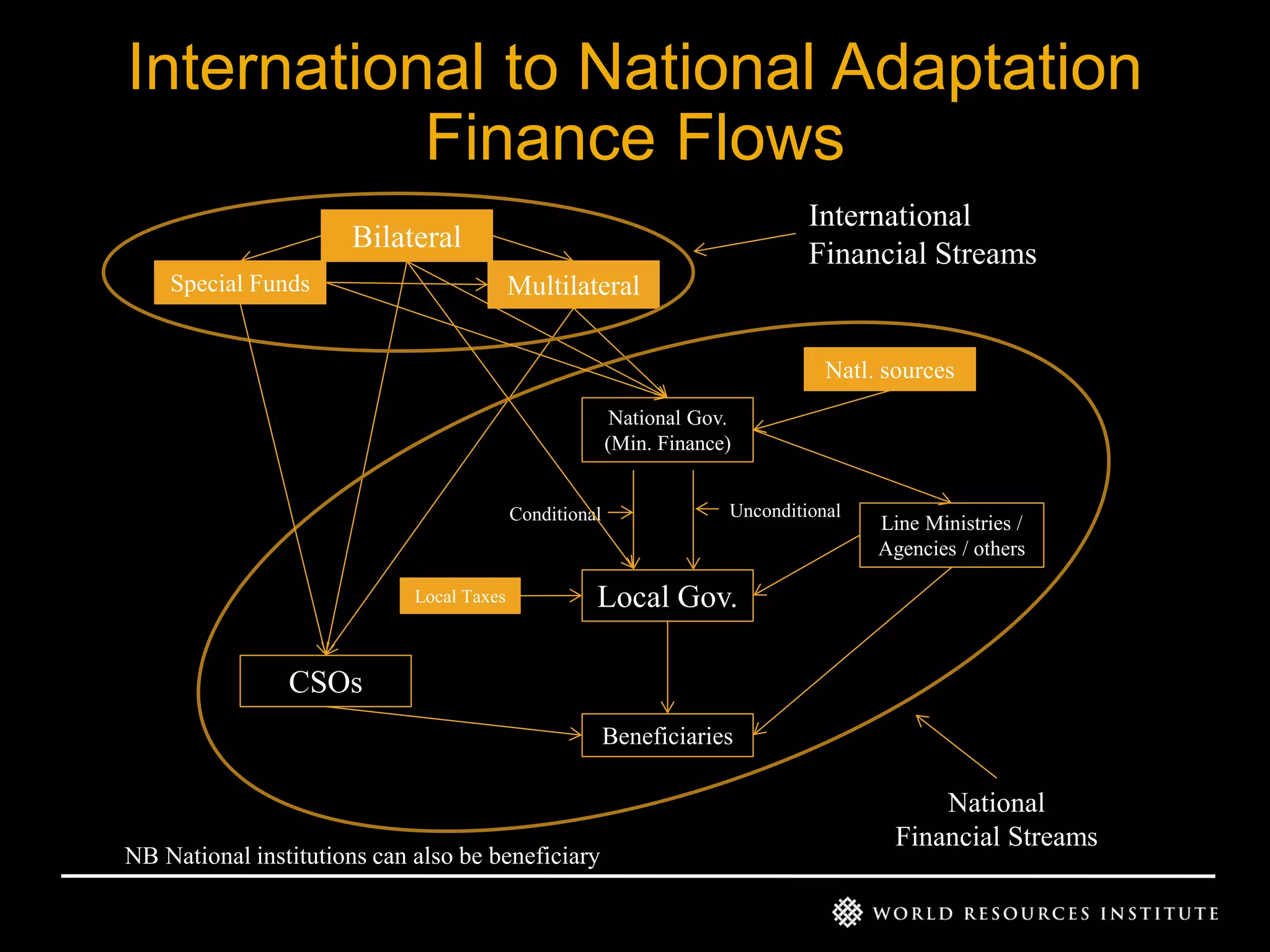
International to National Adaptation
Finance Flows
International
Financial Streams

Bilateral
Special Funds

Multilateral
Natl. sources
National Gov.
(Min. Finance)
Conditional

Local Taxes

Unconditional

Line Ministries /
Agencies / others

Local Gov.

CSOs
Beneficiaries

NB National institutions can also be beneficiary

National
Financial Streams
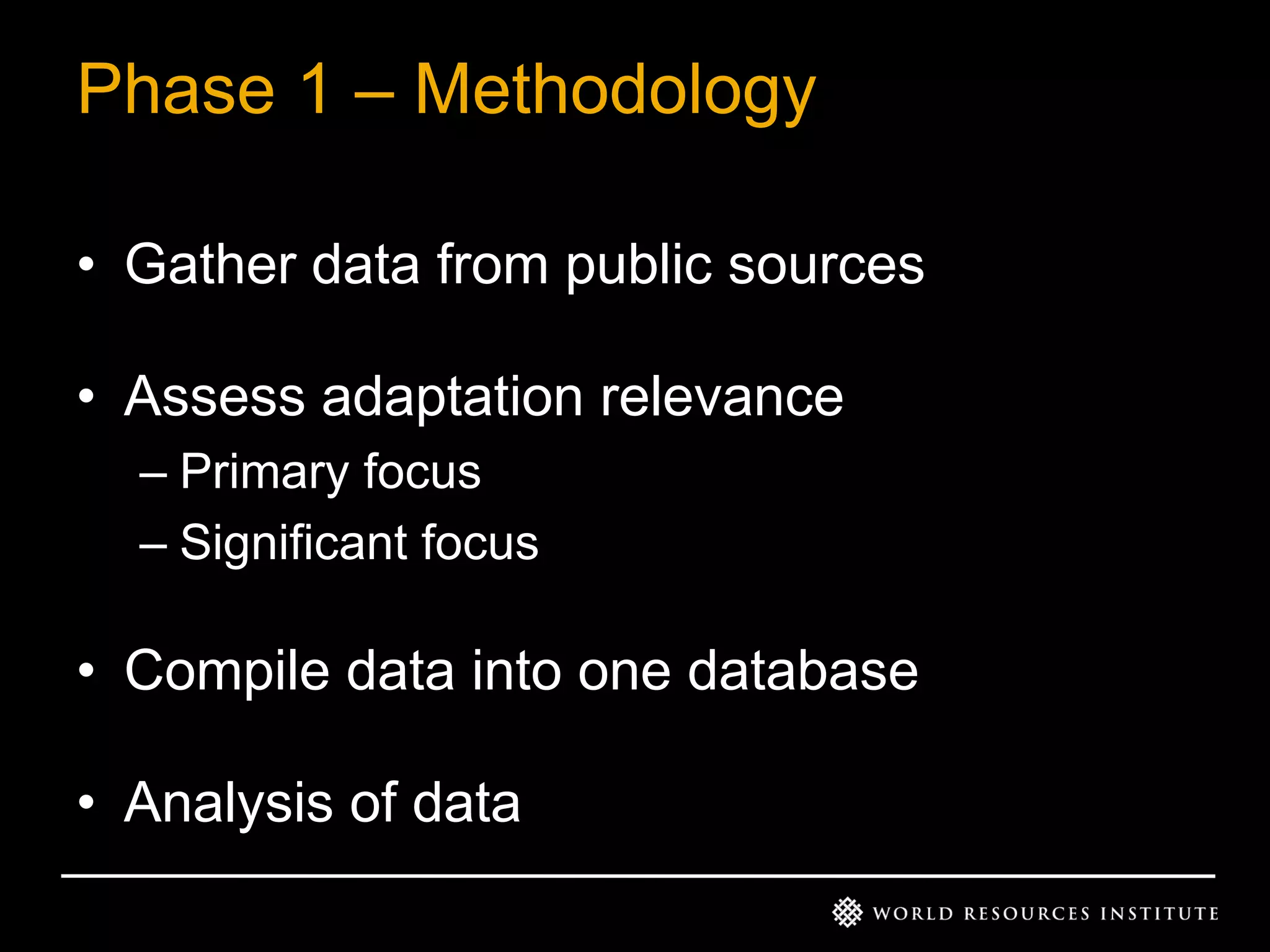
Phase 1 – Methodology
• Gather data from public sources
• Assess adaptation relevance
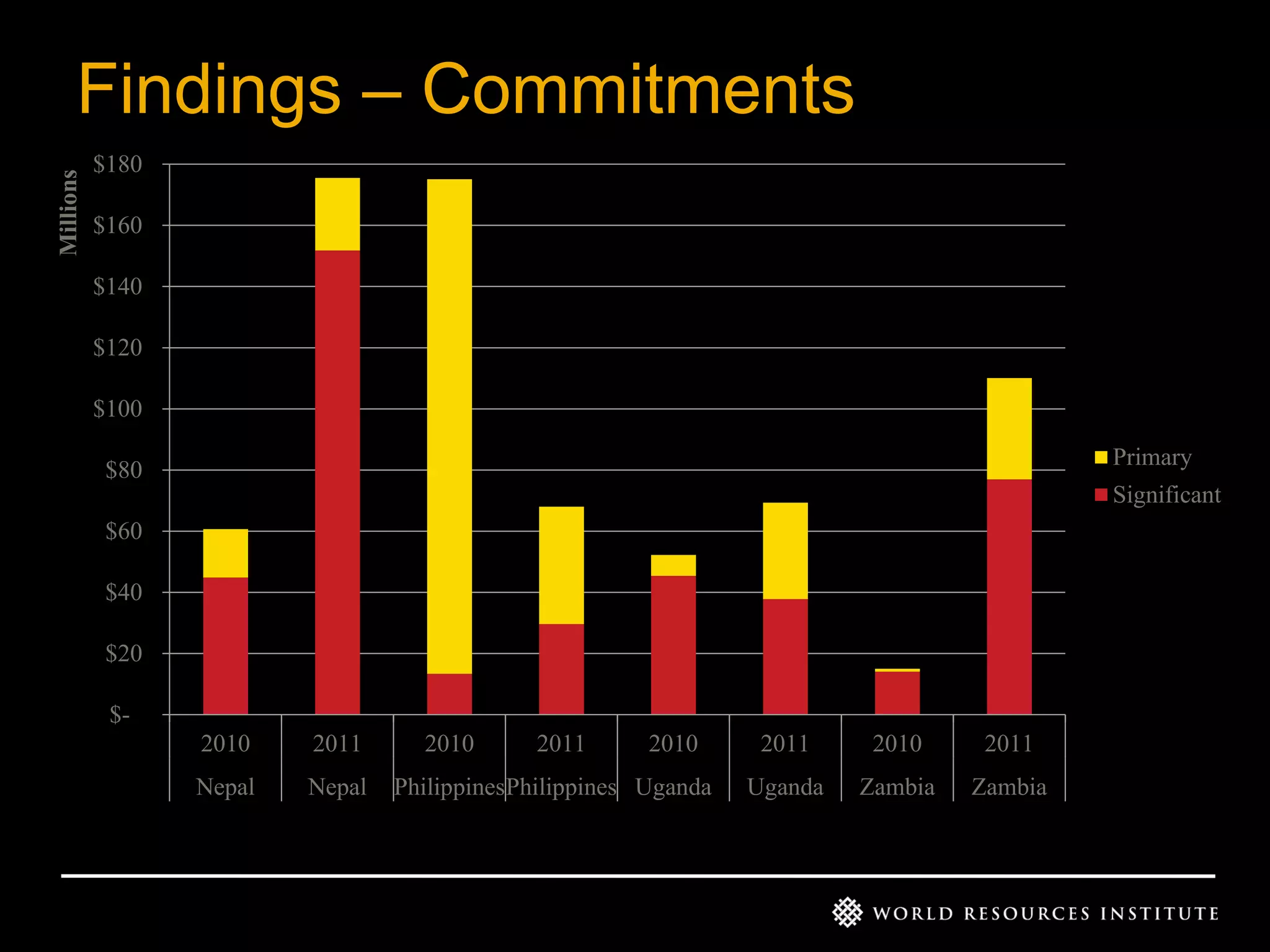
– Primary focus
– Significant focus

• Compile data into one database
• Analysis of data
Millions

Findings – Commitments
$180
$160
$140
$120
$100
Primary

$80

Significant
$60
$40
$20
$2010

2011

Nepal

Nepal

2010

2011

2010

PhilippinesPhilippines Uganda

2011

2010

2011

Uganda

Zambia

Zambia
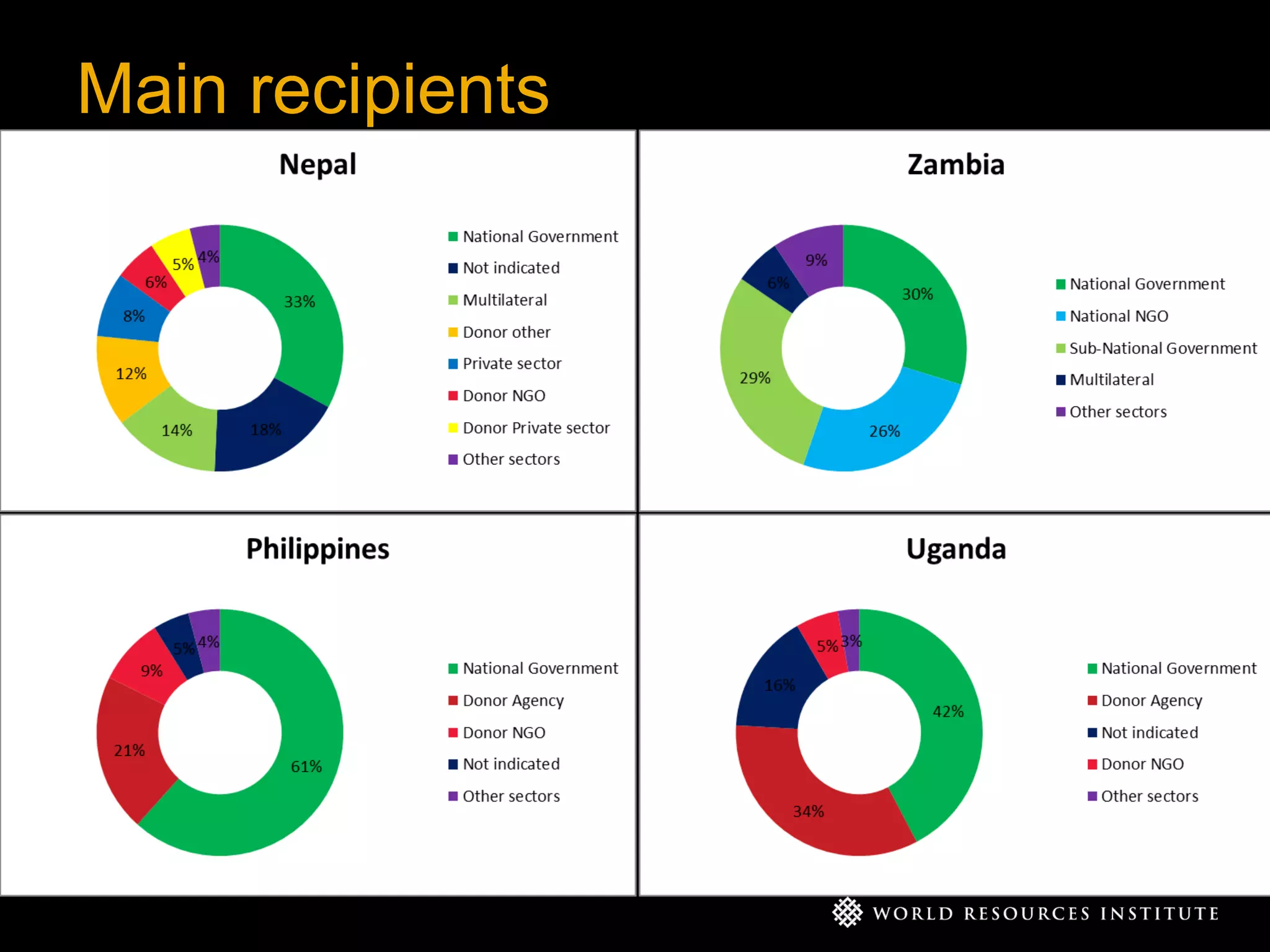
Main recipients
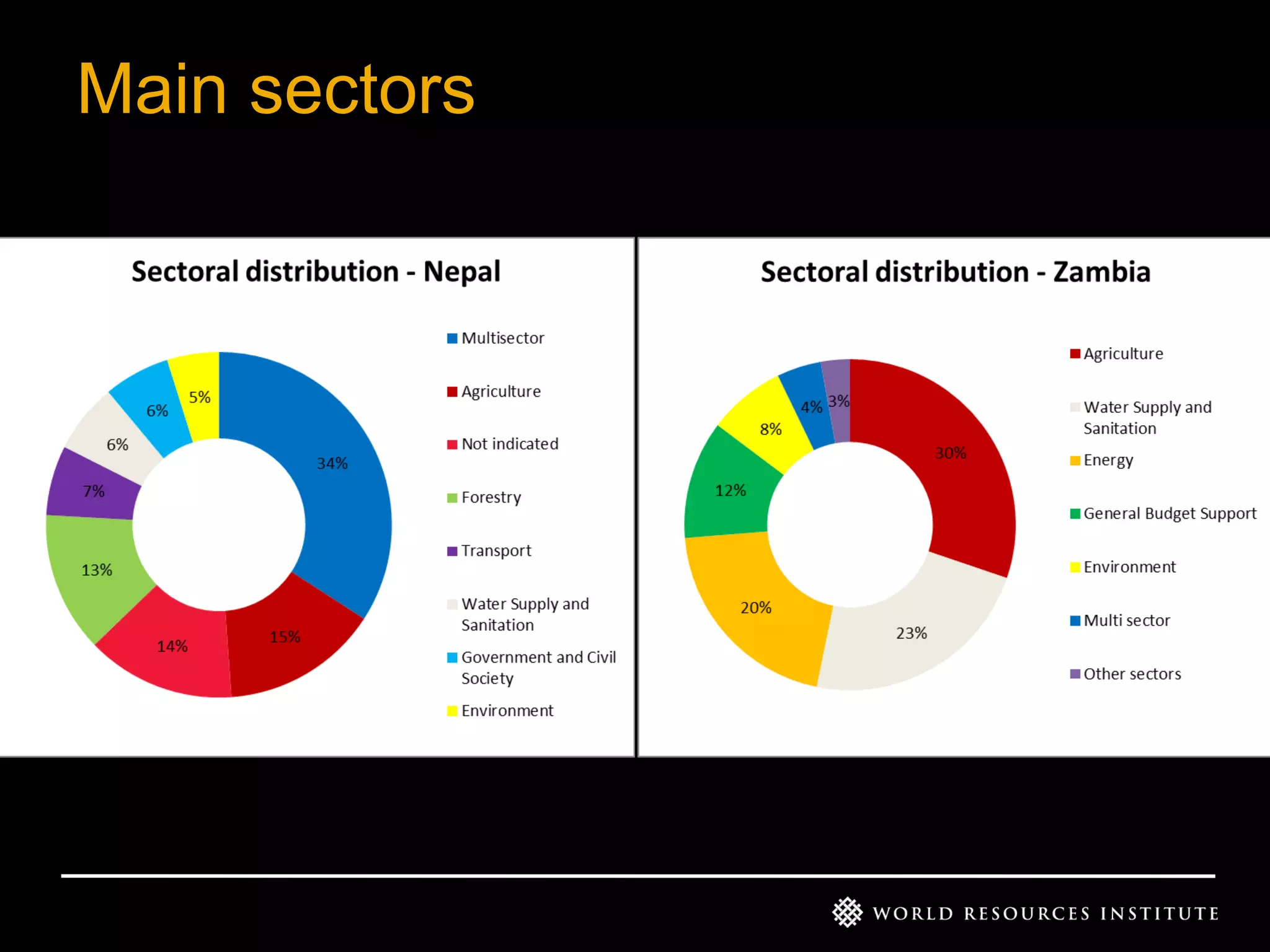
Main sectors
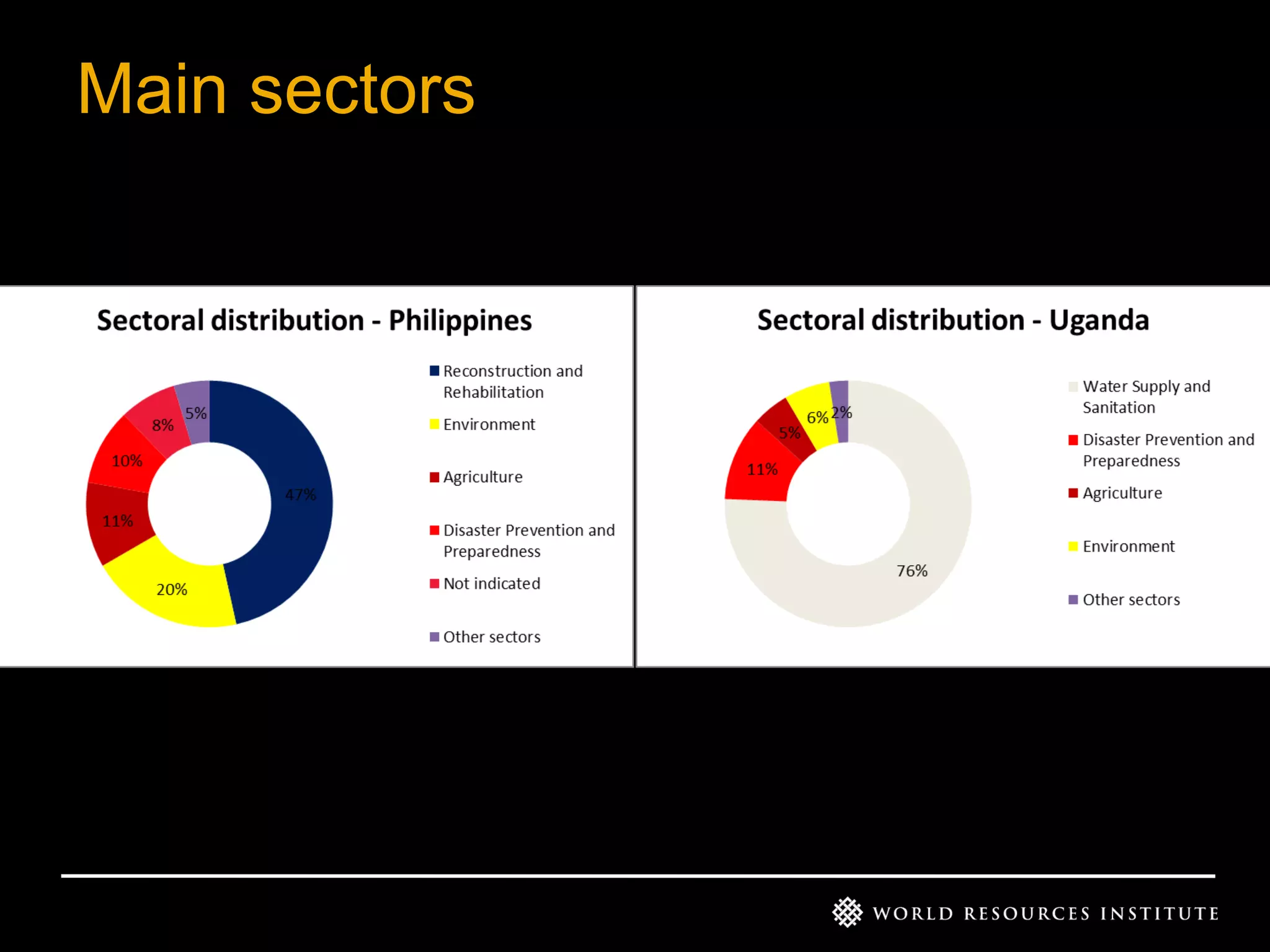
Main sectors
Five Principles for Good Delivery of
Adaptation Finance at the Local Level
1. Transparency
2. Ownership
3. Responsiveness
4. Participation
5. Equity
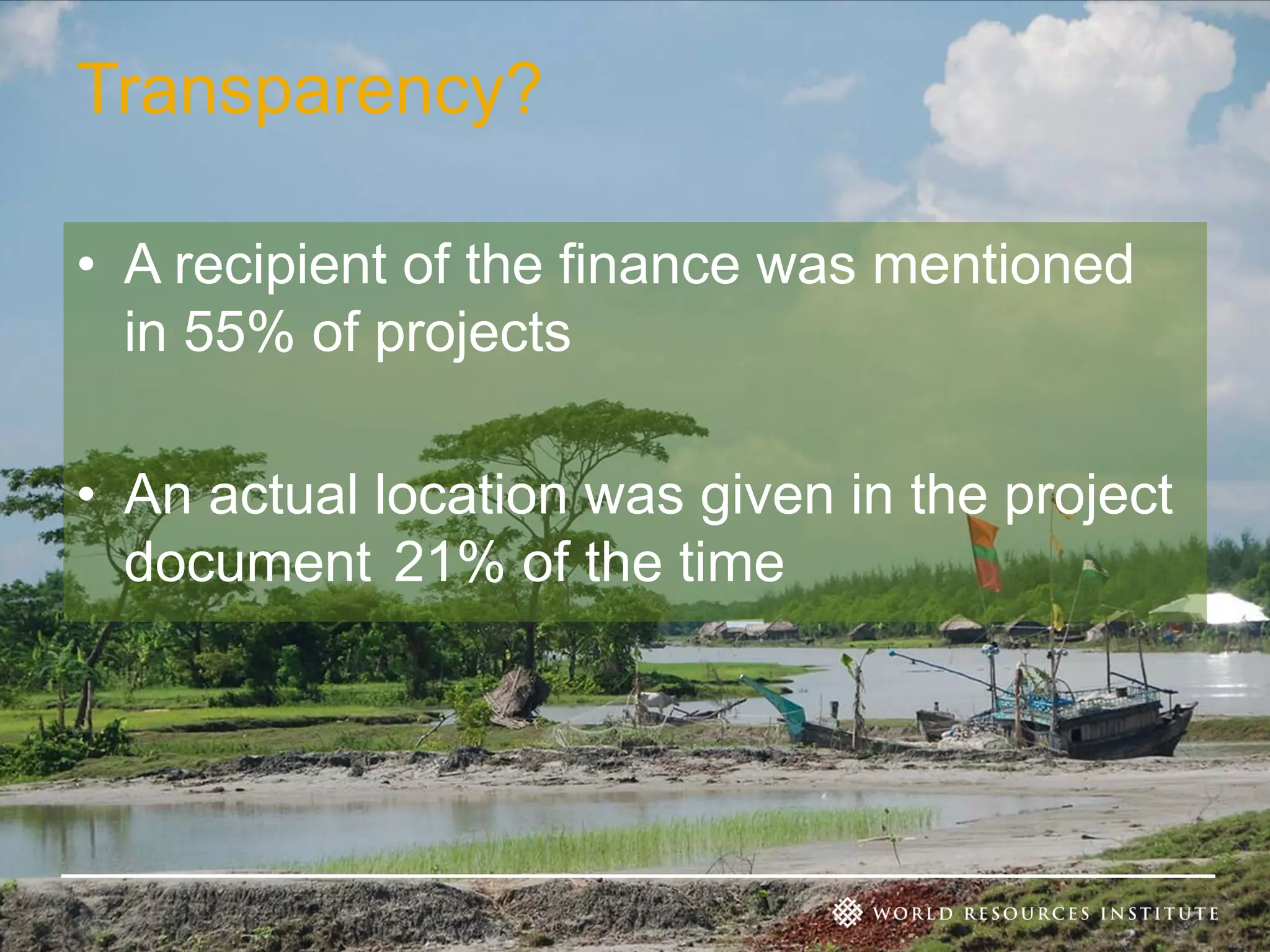
Transparency?
• A recipient of the finance was mentioned
in 55% of projects
• An actual location was given in the project
document 21% of the time
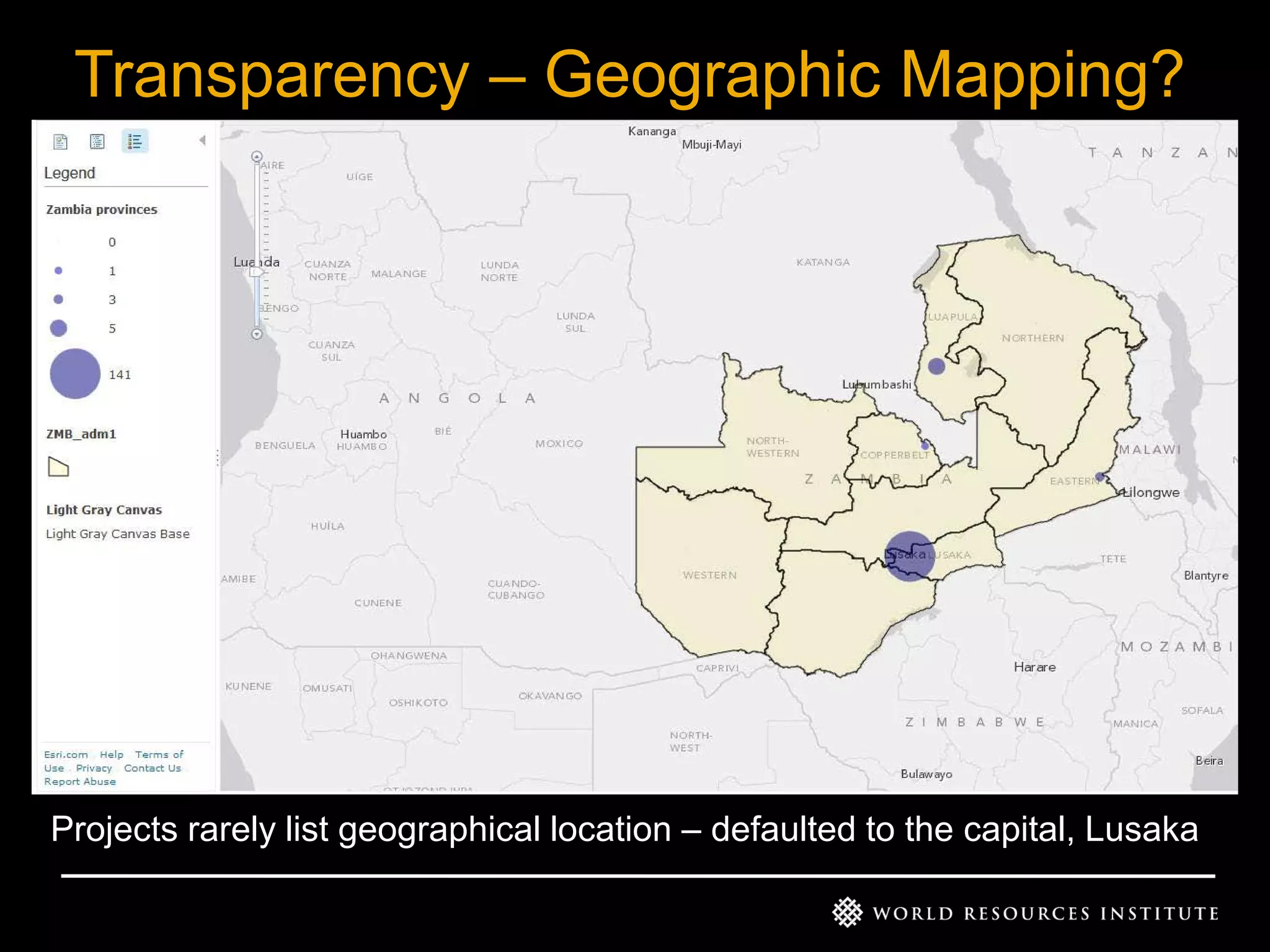
Transparency – Geographic Mapping?
• start

Projects rarely list geographical location – defaulted to the capital, Lusaka
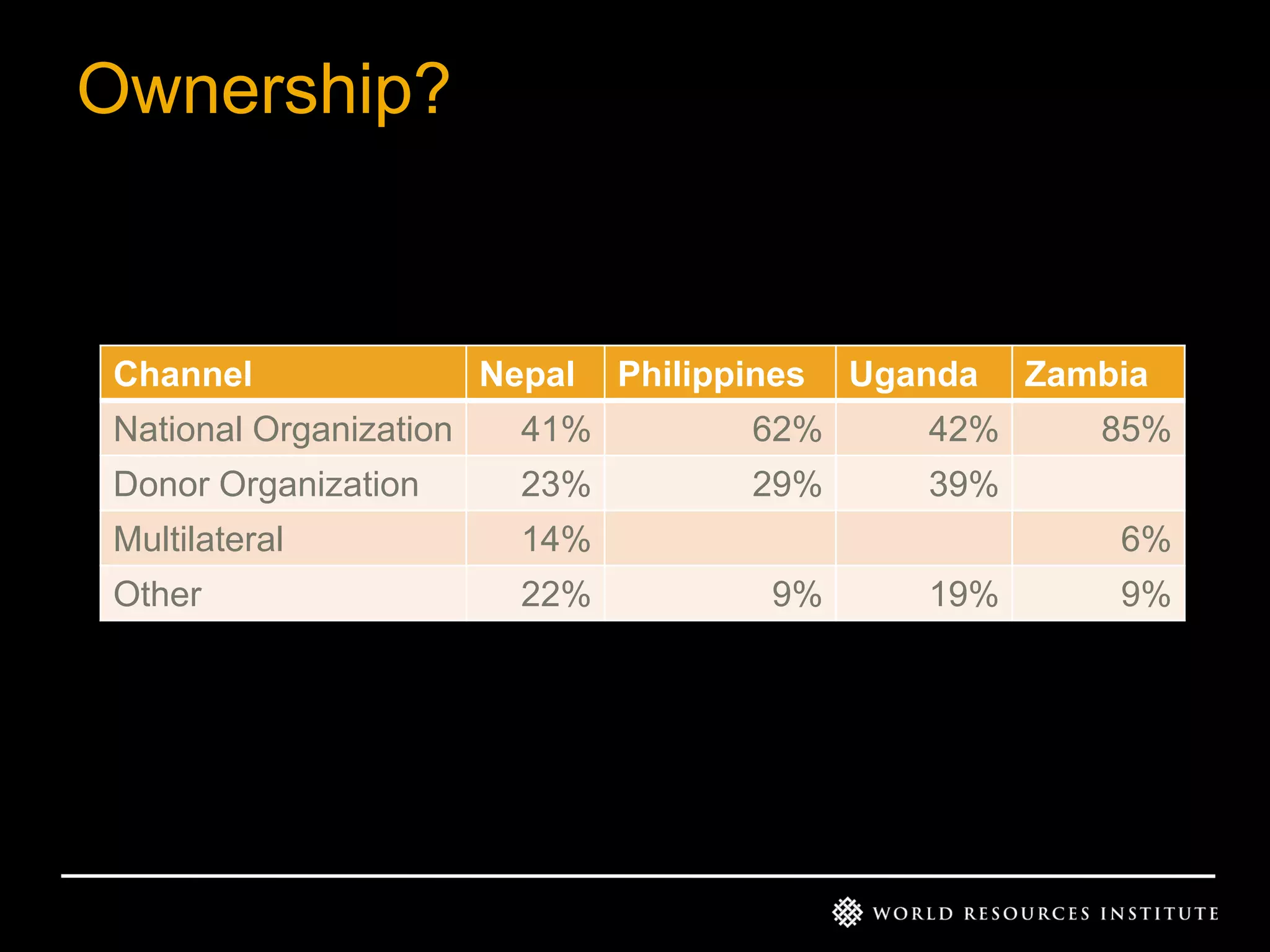
Ownership?

Channel

Nepal

Philippines

Uganda

National Organization

41%

62%

42%

Donor Organization

23%

29%

39%

Multilateral

14%

Other

22%

Zambia
85%
6%

9%

19%

9%
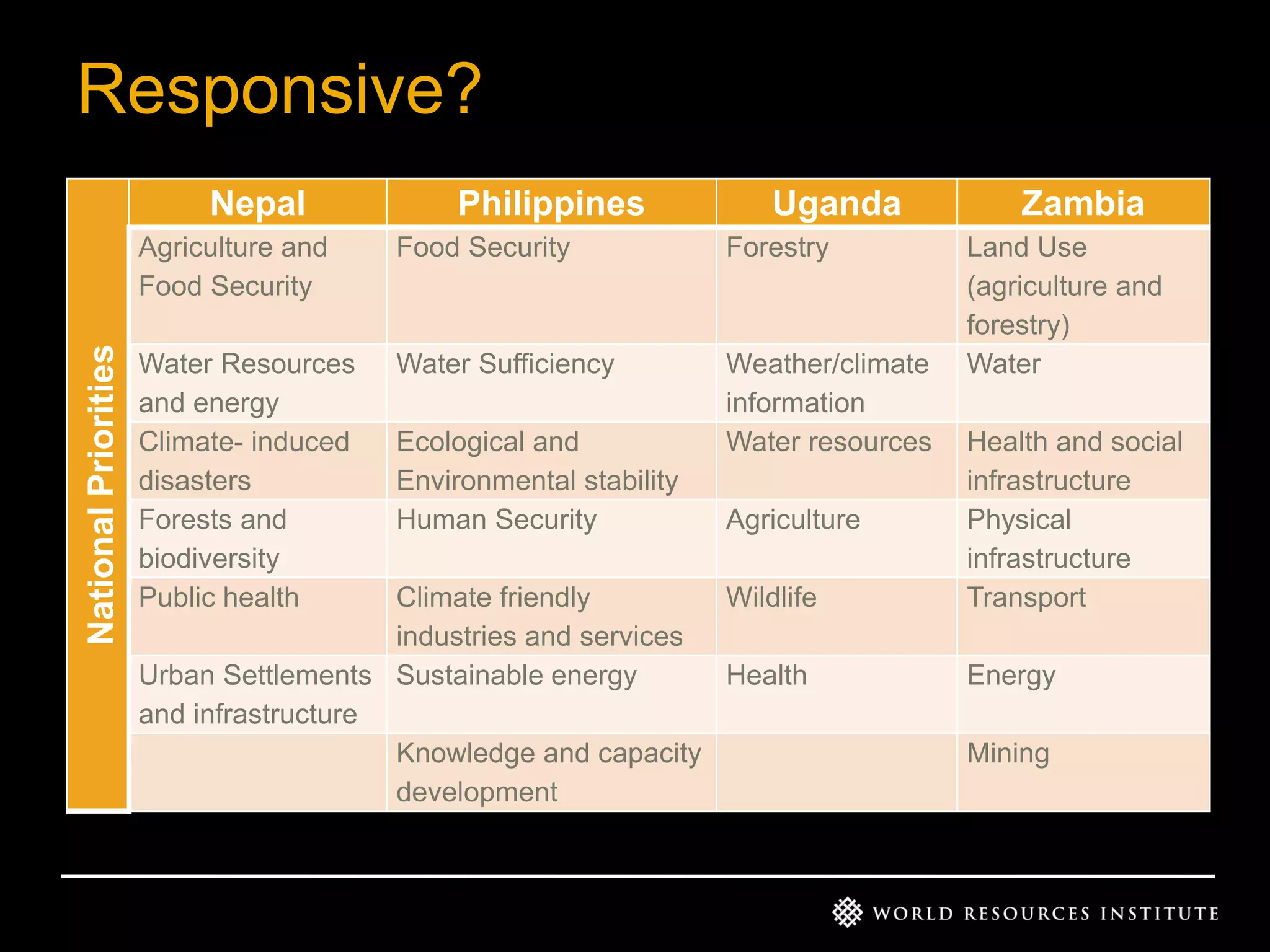
Responsive?
Nepal

Philippines

Uganda

National Priorities

Agriculture and
Food Security

Food Security

Forestry

Water Resources
and energy
Climate- induced
disasters
Forests and
biodiversity
Public health

Water Sufficiency

Weather/climate
information
Water resources

Ecological and
Environmental stability
Human Security

Agriculture

Climate friendly
Wildlife
industries and services
Urban Settlements Sustainable energy
Health
and infrastructure
Knowledge and capacity
development

Zambia
Land Use
(agriculture and
forestry)
Water
Health and social
infrastructure
Physical
infrastructure
Transport
Energy
Mining
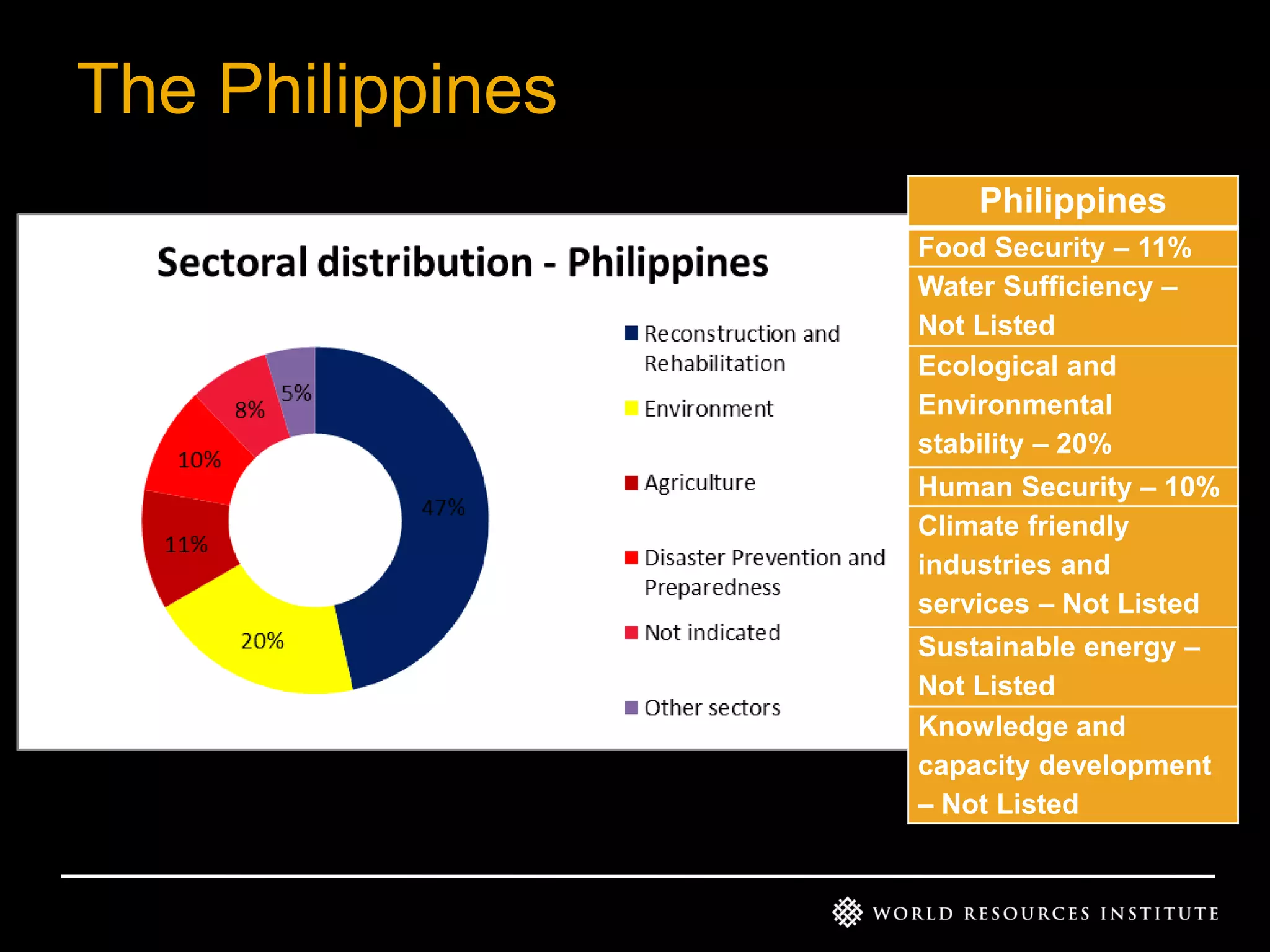
The Philippines
Philippines
Food Security – 11%
Water Sufficiency –
Not Listed
Ecological and
Environmental
stability – 20%
Human Security – 10%
Climate friendly
industries and
services – Not Listed
Sustainable energy –
Not Listed
Knowledge and
capacity development
– Not Listed
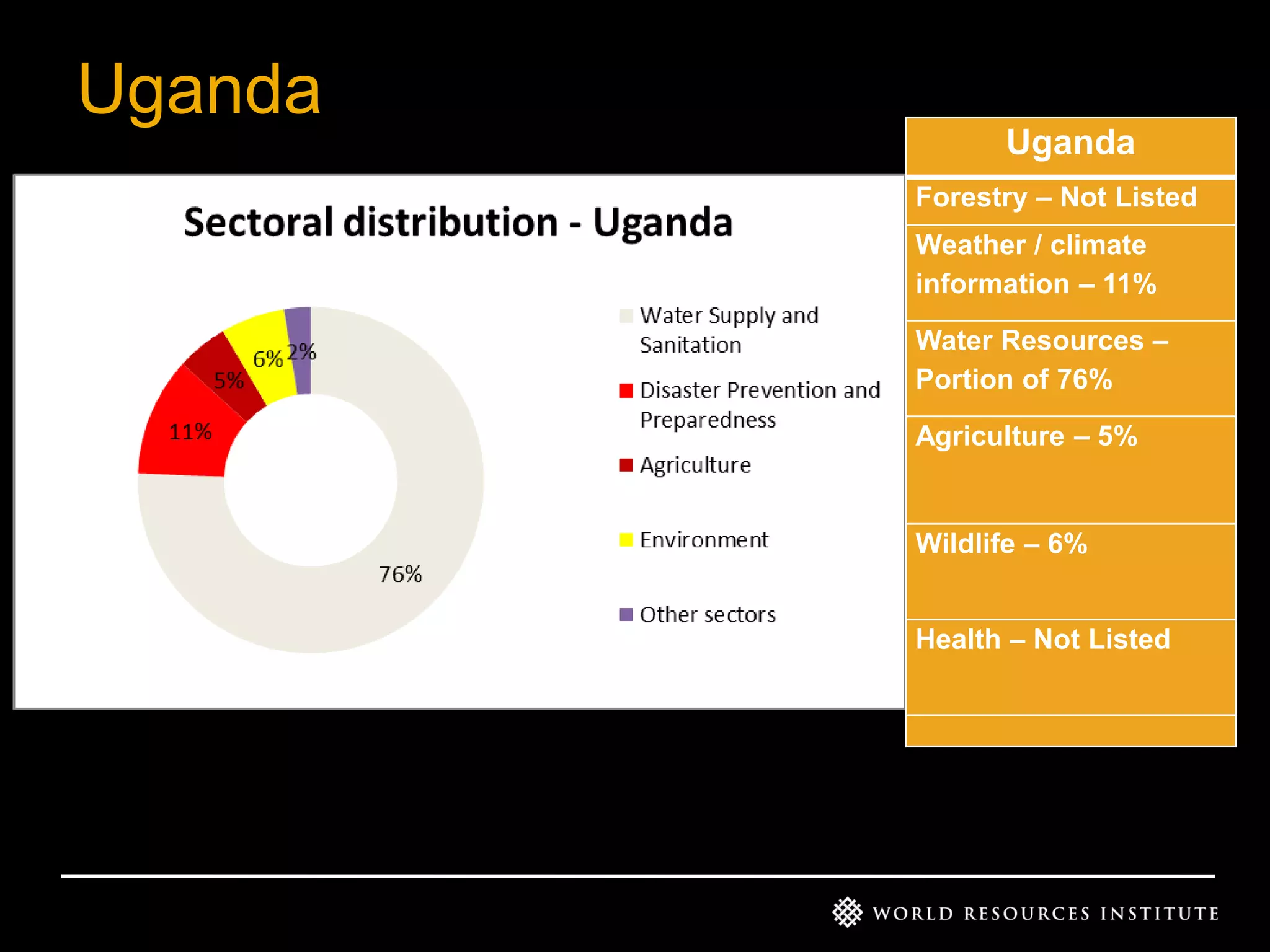
Uganda
Uganda
Forestry – Not Listed
Weather / climate
information – 11%
Water Resources –
Portion of 76%
Agriculture – 5%

Wildlife – 6%
Health – Not Listed
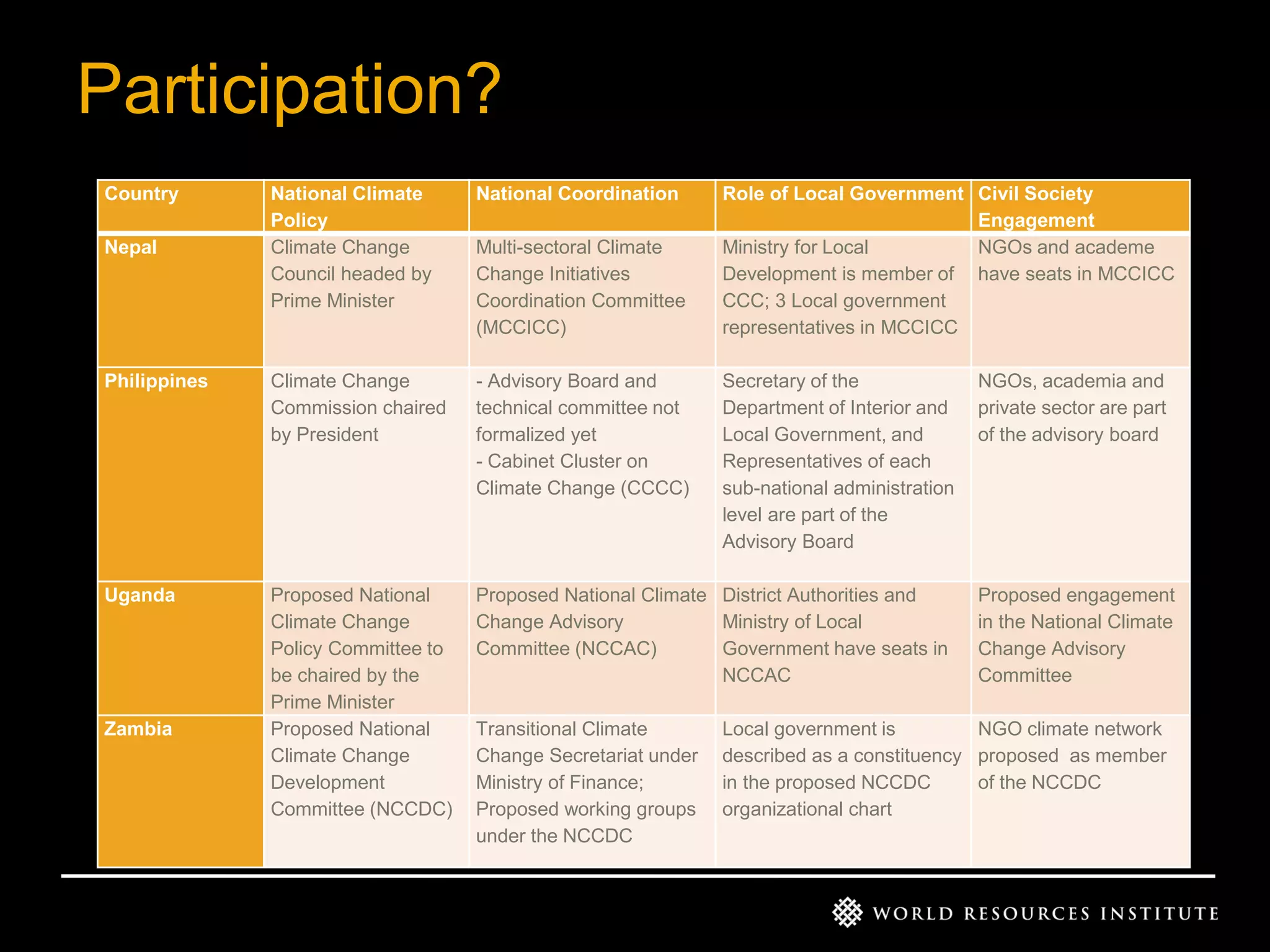
Participation?
Country
Nepal

National Climate
Policy
Climate Change
Council headed by
Prime Minister

National Coordination
Multi-sectoral Climate
Change Initiatives
Coordination Committee
(MCCICC)

Role of Local Government Civil Society
Engagement
Ministry for Local
NGOs and academe
Development is member of have seats in MCCICC
CCC; 3 Local government
representatives in MCCICC

Philippines

Climate Change
Commission chaired
by President

- Advisory Board and
technical committee not
formalized yet
- Cabinet Cluster on
Climate Change (CCCC)

Uganda

Proposed National
Climate Change
Policy Committee to
be chaired by the
Prime Minister
Proposed National
Climate Change
Development
Committee (NCCDC)

Proposed National Climate District Authorities and
Change Advisory
Ministry of Local
Committee (NCCAC)
Government have seats in
NCCAC

Zambia

Transitional Climate
Change Secretariat under
Ministry of Finance;
Proposed working groups
under the NCCDC

Secretary of the
Department of Interior and
Local Government, and
Representatives of each
sub-national administration
level are part of the
Advisory Board

NGOs, academia and
private sector are part
of the advisory board

Proposed engagement
in the National Climate
Change Advisory
Committee

Local government is
NGO climate network
described as a constituency proposed as member
in the proposed NCCDC
of the NCCDC
organizational chart
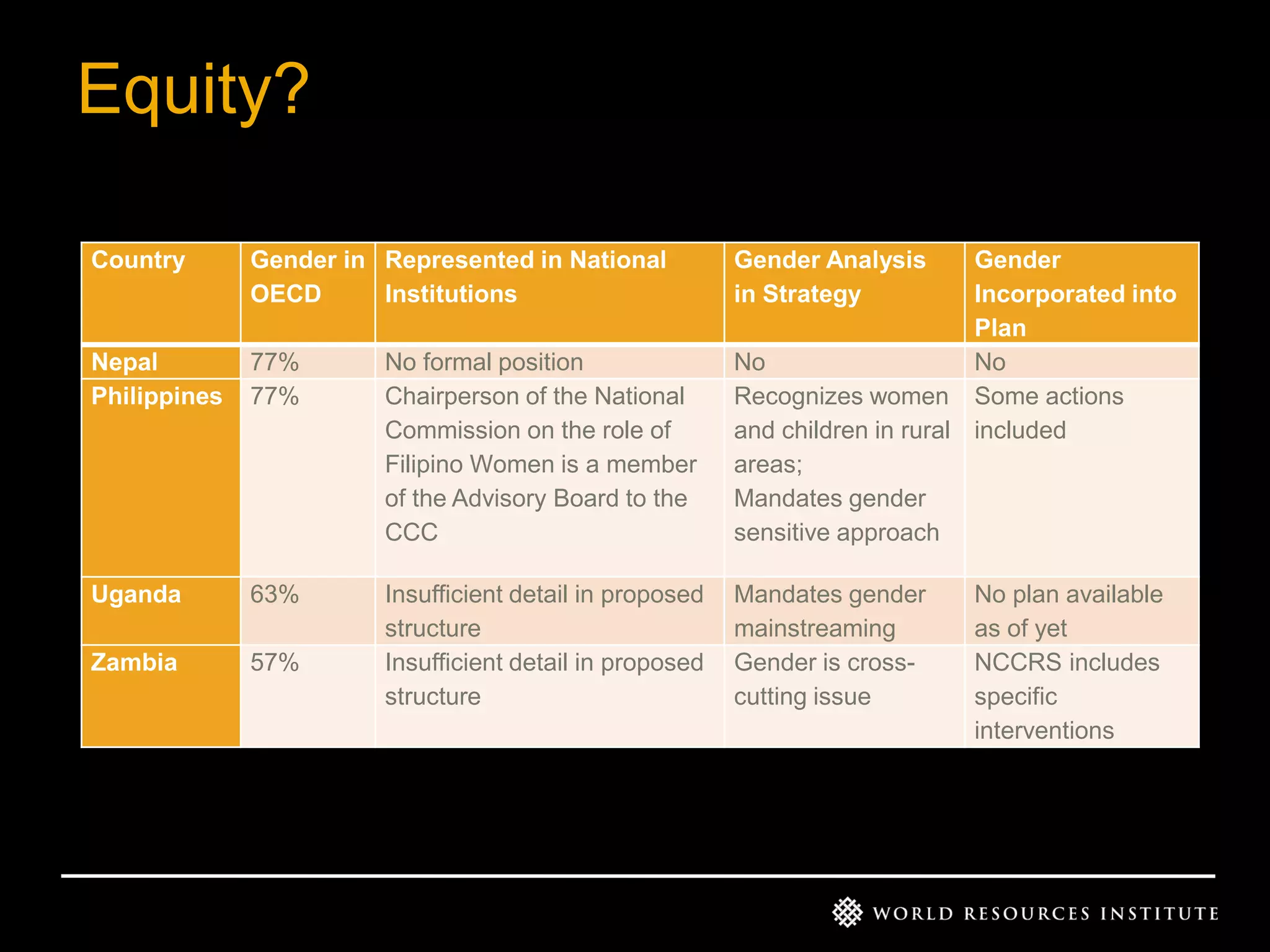
Equity?
Country

Gender in Represented in National
OECD
Institutions

Gender Analysis
in Strategy

Nepal
Philippines

77%
77%

No formal position
Chairperson of the National
Commission on the role of
Filipino Women is a member
of the Advisory Board to the
CCC

Gender
Incorporated into
Plan
No
No
Recognizes women Some actions
and children in rural included
areas;
Mandates gender
sensitive approach

Uganda

63%

Zambia

57%

Insufficient detail in proposed
structure
Insufficient detail in proposed
structure

Mandates gender
mainstreaming
Gender is crosscutting issue

No plan available
as of yet
NCCRS includes
specific
interventions
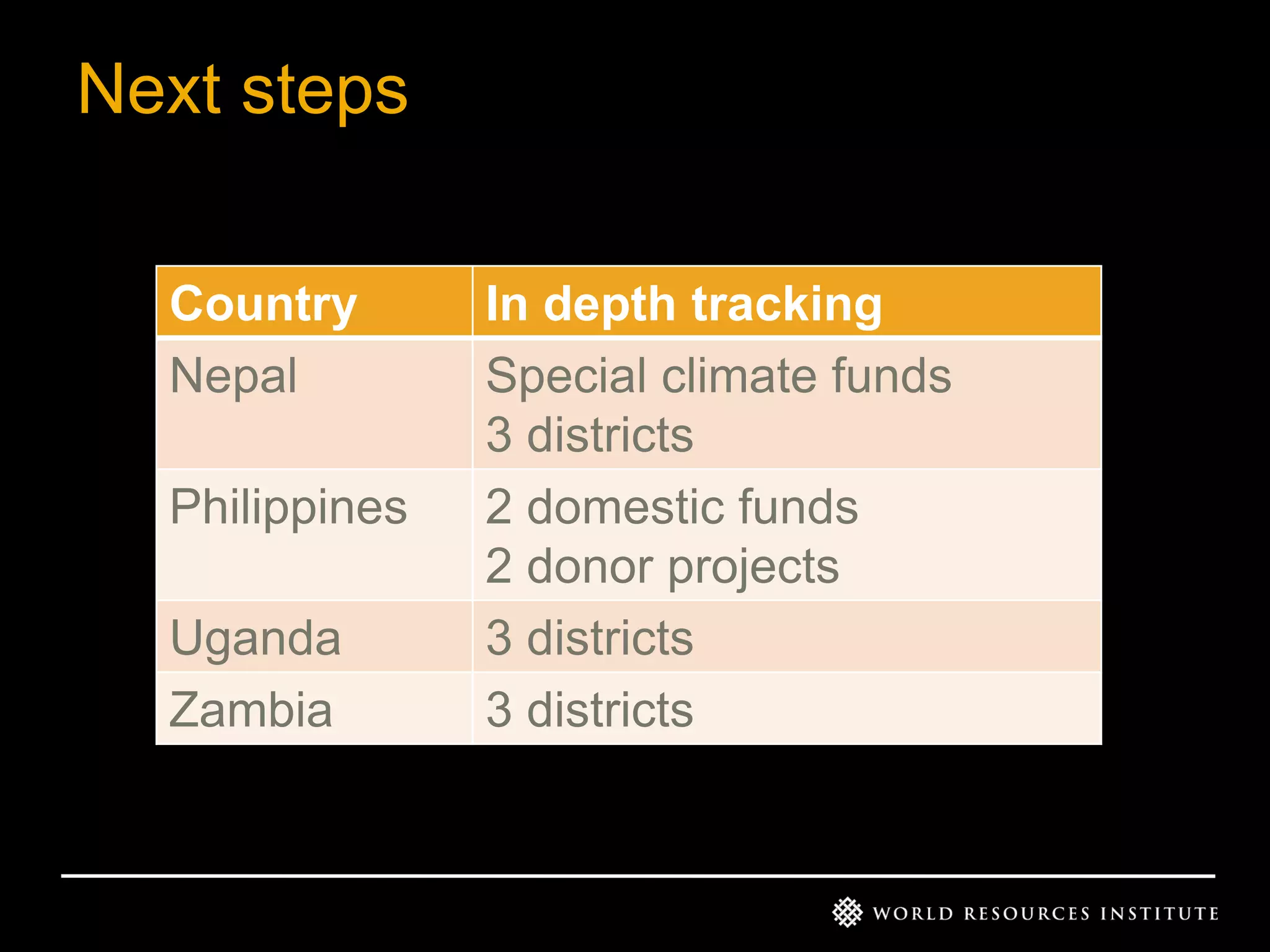
Next steps
Country
Nepal
Philippines
Uganda
Zambia

In depth tracking
Special climate funds
3 districts
2 domestic funds
2 donor projects
3 districts
3 districts
Contact Info:

Pieter Terpstra
• Phone: +1 (202) 729-7805
• Email: pterpstra@wri.org

Adaptation Finance Tracking

  • 1.
    Adaptation FINANCE Tracking …and answers toall your adaptation finance questions! Pieter Terpstra, WRI Adaptation Summer Brownbag Series, September 9th, 2013
  • 2.
    Content • Defining AdaptationFinance – Context Specific – Dynamic – Not about finance • Accountability and Transparency Project – Country Results – Next Steps
  • 4.
    What is Adaptationto Climate Change? Adaptation activates can fall along a continuum Addressing Drivers of Vulnerability Building Response Capacity Managing Climate Risk Programs focused on poverty reduction, health, diversification of livelihood strategies, etc. Developing networks, capacity building, research into farming practices, etc. Developing monitoring capacity, collecting climate data, executing risk assessments, etc. Vulnerability Focus Confronting Climate Change Improving flood defenses, reducing the risk of glacial lake outburst floods, etc. Impacts focus
  • 5.
    What is AdaptationFinance? • Context Specific - Climate change impacts vary from place to place • Dynamic - what counts as effective adaptation in a specific context today may no longer count as effective adaptation 25 years from now.
  • 6.
    What is AdaptationFinance? • It’s not about finance - Adaptation is about going beyond business-as-usual and incorporating the possible effects of climate change into the design of an activity. • But, deciding which part of “beyond businessas-usual” should count towards adaptation finance is difficult to determine. • For an example, see http://www.wri.org/blog/difficulty-definingadaptation-finance
  • 7.
    How much dowe need? Organization UNFCCC Project Catalyst World Bank Amount Estimated $28-67 billion per year until 2030 $26-77 billion per year until 2030 $75-100 billion per year until 2050 Commitment in Copenhagen, 2009: ‘Mobilize $100 billion per year by 2020’ for adaptation and mitigation in vulnerable countries
  • 8.
    Are we ontrack? • OECD commitments decreased from USD 8.5 billion in 2010 to USD 7.5 billion in 2011 • MDBs estimate an expenditure of approximately USD 4.5 billion in 2011 • Climate Funds pledges approximately USD 29 billion of which USD 1.5 billion for adaptation • Big question is how much funding was raised by countries through their national budget
  • 9.
    The Issue • Localcommunities in vulnerable countries will feel the biggest impact of climate change • Reaching local communities with support is notoriously difficult How much adaptation funding is reaching vulnerable communities?
  • 10.
  • 11.
    Adaptation Finance AccountabilityInitiative http://www.wri.org/publication/the-plumbing-of-adaptation-finance
  • 12.
    AFAI Project Objective Empower coalitionsof local civil society organizations to monitor and influence adaptation finance Countries Nepal, Zambia, Uganda and Philippines Partners Oxfam, ODI, WRI, Clean Energy Nepal, Institute for Climate and Sustainable Cities, Uganda Climate Action Network, Zambia Climate Change Network
  • 13.
    AFAI Project Phase 1 -Mapping of international flows - Institutional analysis Phase 2 - Deep dive research into selected flows - National and international level advocacy
  • 14.
    Unraveling Adaptation FinanceFlows: It’s Not Straightforward • start
  • 15.
    International to NationalAdaptation Finance Flows International Financial Streams Bilateral Special Funds Multilateral Natl. sources National Gov. (Min. Finance) Conditional Local Taxes Unconditional Line Ministries / Agencies / others Local Gov. CSOs Beneficiaries NB National institutions can also be beneficiary National Financial Streams
  • 16.
    Phase 1 –Methodology • Gather data from public sources • Assess adaptation relevance – Primary focus – Significant focus • Compile data into one database • Analysis of data
  • 17.
  • 18.
  • 19.
  • 20.
  • 21.
    Five Principles forGood Delivery of Adaptation Finance at the Local Level 1. Transparency 2. Ownership 3. Responsiveness 4. Participation 5. Equity
  • 22.
    Transparency? • A recipientof the finance was mentioned in 55% of projects • An actual location was given in the project document 21% of the time
  • 23.
    Transparency – GeographicMapping? • start Projects rarely list geographical location – defaulted to the capital, Lusaka
  • 24.
  • 25.
    Responsive? Nepal Philippines Uganda National Priorities Agriculture and FoodSecurity Food Security Forestry Water Resources and energy Climate- induced disasters Forests and biodiversity Public health Water Sufficiency Weather/climate information Water resources Ecological and Environmental stability Human Security Agriculture Climate friendly Wildlife industries and services Urban Settlements Sustainable energy Health and infrastructure Knowledge and capacity development Zambia Land Use (agriculture and forestry) Water Health and social infrastructure Physical infrastructure Transport Energy Mining
  • 26.
    The Philippines Philippines Food Security– 11% Water Sufficiency – Not Listed Ecological and Environmental stability – 20% Human Security – 10% Climate friendly industries and services – Not Listed Sustainable energy – Not Listed Knowledge and capacity development – Not Listed
  • 27.
    Uganda Uganda Forestry – NotListed Weather / climate information – 11% Water Resources – Portion of 76% Agriculture – 5% Wildlife – 6% Health – Not Listed
  • 28.
    Participation? Country Nepal National Climate Policy Climate Change Councilheaded by Prime Minister National Coordination Multi-sectoral Climate Change Initiatives Coordination Committee (MCCICC) Role of Local Government Civil Society Engagement Ministry for Local NGOs and academe Development is member of have seats in MCCICC CCC; 3 Local government representatives in MCCICC Philippines Climate Change Commission chaired by President - Advisory Board and technical committee not formalized yet - Cabinet Cluster on Climate Change (CCCC) Uganda Proposed National Climate Change Policy Committee to be chaired by the Prime Minister Proposed National Climate Change Development Committee (NCCDC) Proposed National Climate District Authorities and Change Advisory Ministry of Local Committee (NCCAC) Government have seats in NCCAC Zambia Transitional Climate Change Secretariat under Ministry of Finance; Proposed working groups under the NCCDC Secretary of the Department of Interior and Local Government, and Representatives of each sub-national administration level are part of the Advisory Board NGOs, academia and private sector are part of the advisory board Proposed engagement in the National Climate Change Advisory Committee Local government is NGO climate network described as a constituency proposed as member in the proposed NCCDC of the NCCDC organizational chart
  • 29.
    Equity? Country Gender in Representedin National OECD Institutions Gender Analysis in Strategy Nepal Philippines 77% 77% No formal position Chairperson of the National Commission on the role of Filipino Women is a member of the Advisory Board to the CCC Gender Incorporated into Plan No No Recognizes women Some actions and children in rural included areas; Mandates gender sensitive approach Uganda 63% Zambia 57% Insufficient detail in proposed structure Insufficient detail in proposed structure Mandates gender mainstreaming Gender is crosscutting issue No plan available as of yet NCCRS includes specific interventions
  • 30.
    Next steps Country Nepal Philippines Uganda Zambia In depthtracking Special climate funds 3 districts 2 domestic funds 2 donor projects 3 districts 3 districts
  • 31.
    Contact Info: Pieter Terpstra •Phone: +1 (202) 729-7805 • Email: pterpstra@wri.org