Download to read offline



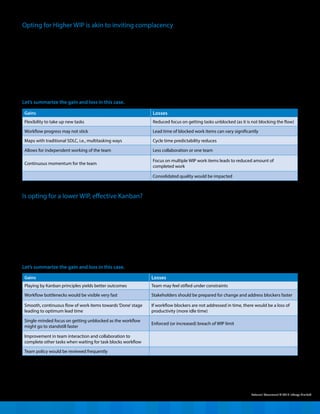

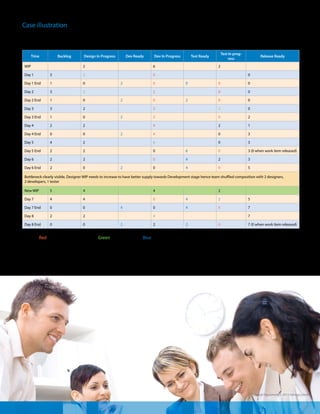




This document discusses optimizing work-in-progress (WIP) limits in Kanban workflows to achieve shorter lead times and better flow rates. It explains that the first step is visualizing workflow stages and setting a WIP limit for each stage based on factors like team composition and constraints. Lower WIP limits focus work and uncover bottlenecks faster, while higher limits allow for more multitasking but can lead to delays and reduced collaboration. The document provides a case study example to illustrate how tracking WIP utilization over time can help optimize limits.


