PEPFAR,
Local Partner Transition, and
Faith Based Organizations and
Community Initiative
Deborah Kaliel
June 6, 2019
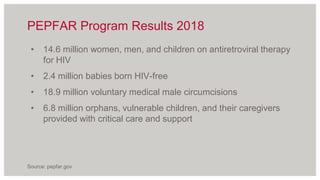
• 14.6 million women, men, and children on antiretroviral therapy
for HIV
• 2.4 million babies born HIV-free
• 18.9 million voluntary medical male circumcisions
• 6.8 million orphans, vulnerable children, and their caregivers
provided with critical care and support
Source: pepfar.gov
PEPFAR Program Results 2018
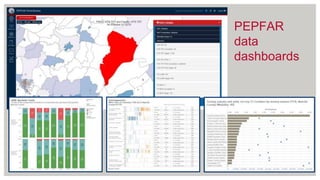
PEPFAR
data
dashboards
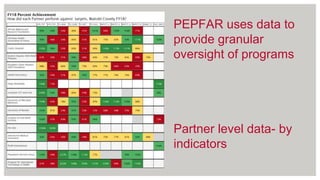
PEPFAR uses data to
provide granular
oversight of programs
Partner level data- by
indicators
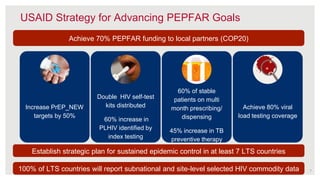
USAID Strategy for Advancing PEPFAR Goals
Increase PrEP_NEW
targets by 50%
Double HIV self-test
kits distributed
60% increase in
PLHIV identified by
index testing
60% of stable
patients on multi
month prescribing/
dispensing
45% increase in TB
preventive therapy
Achieve 80% viral
load testing coverage
Establish strategic plan for sustained epidemic control in at least 7 LTS countries
Achieve 70% PEPFAR funding to local partners (COP20)
100% of LTS countries will report subnational and site-level selected HIV commodity data 7
8
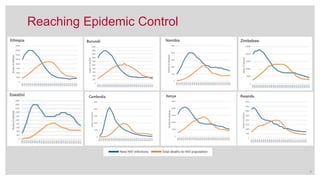
Reaching Epidemic Control
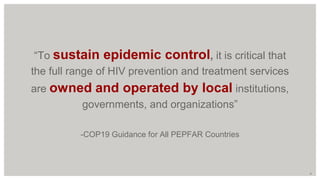
“To sustain epidemic control, it is critical that
the full range of HIV prevention and treatment services
are owned and operated by local institutions,
governments, and organizations”
-COP19 Guidance for All PEPFAR Countries
9
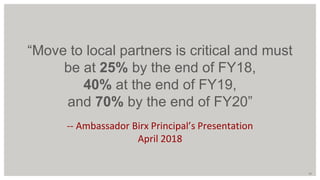
“Move to local partners is critical and must
be at 25% by the end of FY18,
40% at the end of FY19,
and 70% by the end of FY20”
-- Ambassador Birx Principal’s Presentation
April 2018
10
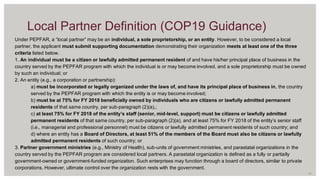
Under PEPFAR, a “local partner” may be an individual, a sole proprietorship, or an entity. However, to be considered a local
partner, the applicant must submit supporting documentation demonstrating their organization meets at least one of the three
criteria listed below.
1. An individual must be a citizen or lawfully admitted permanent resident of and have his/her principal place of business in the
country served by the PEPFAR program with which the individual is or may become involved, and a sole proprietorship must be owned
by such an individual; or
2. An entity (e.g., a corporation or partnership):
a) must be incorporated or legally organized under the laws of, and have its principal place of business in, the country
served by the PEPFAR program with which the entity is or may become involved;
b) must be at 75% for FY 2018 beneficially owned by individuals who are citizens or lawfully admitted permanent
residents of that same country, per sub-paragraph (2)(a),;
c) at least 75% for FY 2018 of the entity’s staff (senior, mid-level, support) must be citizens or lawfully admitted
permanent residents of that same country, per sub-paragraph (2)(a), and at least 75% for FY 2018 of the entity’s senior staff
(i.e., managerial and professional personnel) must be citizens or lawfully admitted permanent residents of such country; and
d) where an entity has a Board of Directors, at least 51% of the members of the Board must also be citizens or lawfully
admitted permanent residents of such country; or
3. Partner government ministries (e.g., Ministry of Health), sub-units of government ministries, and parastatal organizations in the
country served by the PEPFAR program are considered local partners. A parastatal organization is defined as a fully or partially
government-owned or government-funded organization. Such enterprises may function through a board of directors, similar to private
corporations. However, ultimate control over the organization rests with the government.
11
Local Partner Definition (COP19 Guidance)
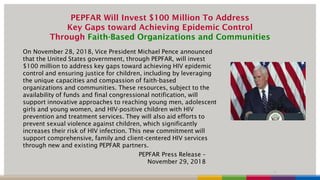
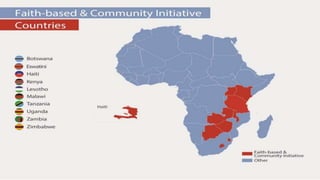
PEPFAR Will Invest $100 Million To Address
Key Gaps toward Achieving Epidemic Control
Through Faith-Based Organizations and Communities
On November 28, 2018, Vice President Michael Pence announced
that the United States government, through PEPFAR, will invest
$100 million to address key gaps toward achieving HIV epidemic
control and ensuring justice for children, including by leveraging
the unique capacities and compassion of faith-based
organizations and communities. These resources, subject to the
availability of funds and final congressional notification, will
support innovative approaches to reaching young men, adolescent
girls and young women, and HIV-positive children with HIV
prevention and treatment services. They will also aid efforts to
prevent sexual violence against children, which significantly
increases their risk of HIV infection. This new commitment will
support comprehensive, family and client-centered HIV services
through new and existing PEPFAR partners.
7
PEPFAR Press Release –
November 29, 2018
COP19 Faith and Community Initiative: 3 Priorities
#1. Ensure appropriate funding for services provided by FBOs In
countries where funding was reduced from COP17 to COP18, it should be restored and
maintained.
#2. Engaging communities of faith to understand the epidemic, raise
community awareness, and bring critical prevention and treatment
interventions to and through communities of faith, through existing and additional FBO
partners, to reach men and children with testing and services
#3. Strengthening justice for children through preventing sexual
violence in 9-14 year old girls and boys through integration of faith leaders, traditional
leaders, other community leaders, and faith-based organizations, into work on primary
prevention of sexual violence that is being implemented by DREAMS and OVC platforms, as
well as linkage to the justice sector
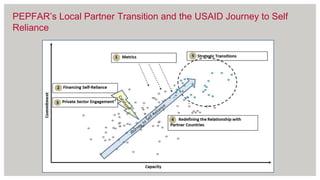
PEPFAR’s Local Partner Transition and the USAID Journey to Self
Reliance
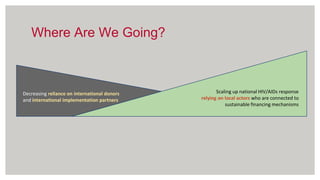
Decreasing reliance on international donors
and international implementation partners
Scaling up national HIV/AIDs response
relying on local actors who are connected to
sustainable financing mechanisms
Where Are We Going?
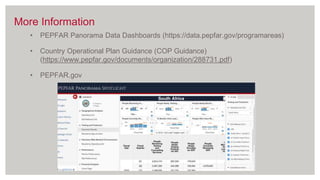
More Information
• PEPFAR Panorama Data Dashboards (https://data.pepfar.gov/programareas)
• Country Operational Plan Guidance (COP Guidance)
(https://www.pepfar.gov/documents/organization/288731.pdf)
• PEPFAR.gov
Thank You
Any questions:
dkaliel@usaid.gov

Ccih2019 pepfar-deborah-kaliel

  • 1.
    PEPFAR, Local Partner Transition,and Faith Based Organizations and Community Initiative Deborah Kaliel June 6, 2019
  • 4.
    • 14.6 millionwomen, men, and children on antiretroviral therapy for HIV • 2.4 million babies born HIV-free • 18.9 million voluntary medical male circumcisions • 6.8 million orphans, vulnerable children, and their caregivers provided with critical care and support Source: pepfar.gov PEPFAR Program Results 2018
  • 5.
  • 6.
    PEPFAR uses datato provide granular oversight of programs Partner level data- by indicators
  • 7.
    USAID Strategy forAdvancing PEPFAR Goals Increase PrEP_NEW targets by 50% Double HIV self-test kits distributed 60% increase in PLHIV identified by index testing 60% of stable patients on multi month prescribing/ dispensing 45% increase in TB preventive therapy Achieve 80% viral load testing coverage Establish strategic plan for sustained epidemic control in at least 7 LTS countries Achieve 70% PEPFAR funding to local partners (COP20) 100% of LTS countries will report subnational and site-level selected HIV commodity data 7
  • 8.
  • 9.
    “To sustain epidemiccontrol, it is critical that the full range of HIV prevention and treatment services are owned and operated by local institutions, governments, and organizations” -COP19 Guidance for All PEPFAR Countries 9
  • 10.
    “Move to localpartners is critical and must be at 25% by the end of FY18, 40% at the end of FY19, and 70% by the end of FY20” -- Ambassador Birx Principal’s Presentation April 2018 10
  • 11.
    Under PEPFAR, a“local partner” may be an individual, a sole proprietorship, or an entity. However, to be considered a local partner, the applicant must submit supporting documentation demonstrating their organization meets at least one of the three criteria listed below. 1. An individual must be a citizen or lawfully admitted permanent resident of and have his/her principal place of business in the country served by the PEPFAR program with which the individual is or may become involved, and a sole proprietorship must be owned by such an individual; or 2. An entity (e.g., a corporation or partnership): a) must be incorporated or legally organized under the laws of, and have its principal place of business in, the country served by the PEPFAR program with which the entity is or may become involved; b) must be at 75% for FY 2018 beneficially owned by individuals who are citizens or lawfully admitted permanent residents of that same country, per sub-paragraph (2)(a),; c) at least 75% for FY 2018 of the entity’s staff (senior, mid-level, support) must be citizens or lawfully admitted permanent residents of that same country, per sub-paragraph (2)(a), and at least 75% for FY 2018 of the entity’s senior staff (i.e., managerial and professional personnel) must be citizens or lawfully admitted permanent residents of such country; and d) where an entity has a Board of Directors, at least 51% of the members of the Board must also be citizens or lawfully admitted permanent residents of such country; or 3. Partner government ministries (e.g., Ministry of Health), sub-units of government ministries, and parastatal organizations in the country served by the PEPFAR program are considered local partners. A parastatal organization is defined as a fully or partially government-owned or government-funded organization. Such enterprises may function through a board of directors, similar to private corporations. However, ultimate control over the organization rests with the government. 11 Local Partner Definition (COP19 Guidance)
  • 12.
    PEPFAR Will Invest$100 Million To Address Key Gaps toward Achieving Epidemic Control Through Faith-Based Organizations and Communities On November 28, 2018, Vice President Michael Pence announced that the United States government, through PEPFAR, will invest $100 million to address key gaps toward achieving HIV epidemic control and ensuring justice for children, including by leveraging the unique capacities and compassion of faith-based organizations and communities. These resources, subject to the availability of funds and final congressional notification, will support innovative approaches to reaching young men, adolescent girls and young women, and HIV-positive children with HIV prevention and treatment services. They will also aid efforts to prevent sexual violence against children, which significantly increases their risk of HIV infection. This new commitment will support comprehensive, family and client-centered HIV services through new and existing PEPFAR partners. 7 PEPFAR Press Release – November 29, 2018
  • 14.
    COP19 Faith andCommunity Initiative: 3 Priorities #1. Ensure appropriate funding for services provided by FBOs In countries where funding was reduced from COP17 to COP18, it should be restored and maintained. #2. Engaging communities of faith to understand the epidemic, raise community awareness, and bring critical prevention and treatment interventions to and through communities of faith, through existing and additional FBO partners, to reach men and children with testing and services #3. Strengthening justice for children through preventing sexual violence in 9-14 year old girls and boys through integration of faith leaders, traditional leaders, other community leaders, and faith-based organizations, into work on primary prevention of sexual violence that is being implemented by DREAMS and OVC platforms, as well as linkage to the justice sector
  • 15.
    PEPFAR’s Local PartnerTransition and the USAID Journey to Self Reliance
  • 16.
    Decreasing reliance oninternational donors and international implementation partners Scaling up national HIV/AIDs response relying on local actors who are connected to sustainable financing mechanisms Where Are We Going?
  • 17.
    More Information • PEPFARPanorama Data Dashboards (https://data.pepfar.gov/programareas) • Country Operational Plan Guidance (COP Guidance) (https://www.pepfar.gov/documents/organization/288731.pdf) • PEPFAR.gov
  • 18.