Chapter 3
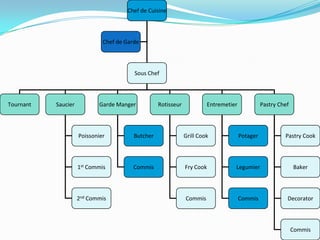
Chef de Cuisine


                              Chef de Garde


                                         Sous Chef


Tournant   Saucier          Garde Manger           Rotisseur            Entremetier             Pastry Chef


                     Poissonier          Butcher               Grill Cook             Potager            Pastry Cook


                     1st Commis          Commis                Fry Cook           Legumier                    Baker


                     2nd Commis                                Commis                 Commis              Decorator


                                                                                                              Commis
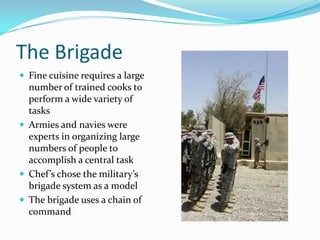
The Brigade
 Fine cuisine requires a large
  number of trained cooks to
  perform a wide variety of
  tasks
 Armies and navies were
  experts in organizing large
  numbers of people to
  accomplish a central task
 Chef’s chose the military’s
  brigade system as a model
 The brigade uses a chain of
  command
Brigade System
 Chef de cuisine
    Chief of the kitchen, supervises all positions
 Sous Chef
     Second in command, responsible when Chef is gone
 Chef de Garde
     Night chef, takes control when the other chefs have left
 Tournant
     Swing chef, fills in on other chef’s days off
 Saucier
     Makes sauces, prepares sautéed or pan fried items
 Garde manger
     Cold food station, salads, dressings, fruit plates, buffet platters
 Poissonier
     Fish cook
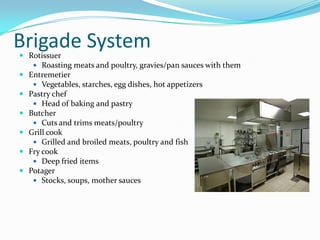
Brigade System
 Rotissuer
    Roasting meats and poultry, gravies/pan sauces with them
 Entremetier
    Vegetables, starches, egg dishes, hot appetizers
 Pastry chef
    Head of baking and pastry
 Butcher
    Cuts and trims meats/poultry
 Grill cook
    Grilled and broiled meats, poultry and fish
 Fry cook
    Deep fried items
 Potager
    Stocks, soups, mother sauces
Brigade System
 Legumier
    Prepares and cooks veggies
 Pastry cook
    Prepares sweets and pastries
 Baker
    Makes breads
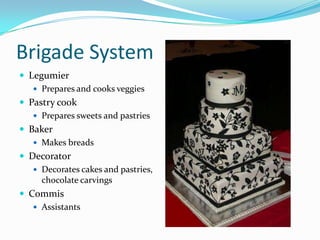
 Decorator
    Decorates cakes and pastries,
     chocolate carvings
 Commis
    Assistants
The Operation
 The foodservice establishment menu determines the staff
 size and organization of the kitchen
   A fish restaurant would need a larger fish station but
    maybe a smaller rotisserie station
 In the case of large hotels, where they might have many
 different dining places, each would have it’s own chef de
 cuisine but there would be an executive chef in charge of
 all the restaurants inside that hotel
   Executive chef roles are managerial, oversee cooking of all
    other chefs
   Hotels with large banquet facilities might employ a
    banquet chef for the banquets
Cross Training
 Scheduling staff is easier when each person knows
  how to do more than one thing
 Cross training allows people to learn different skills to
  work in other areas
 Some restaurants might even cross train cooks to be
  servers and hosts
Departments Beyond the
Kitchen
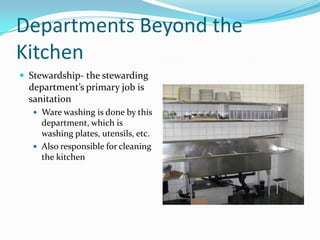
 Stewardship- the stewarding
  department’s primary job is
  sanitation
    Ware washing is done by this
     department, which is
     washing plates, utensils, etc.
    Also responsible for cleaning
     the kitchen
Departments Beyond the
Kitchen
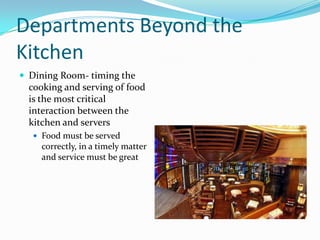
 Dining Room- timing the
  cooking and serving of food
  is the most critical
  interaction between the
  kitchen and servers
   Food must be served
    correctly, in a timely matter
    and service must be great
Departments Beyond the
Kitchen
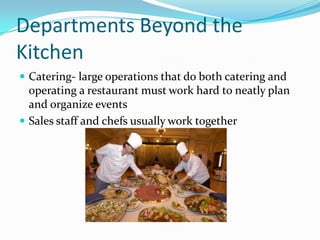
 Catering- large operations that do both catering and
  operating a restaurant must work hard to neatly plan
  and organize events
 Sales staff and chefs usually work together
Departments Beyond the
Kitchen
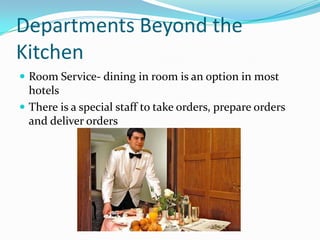
 Room Service- dining in room is an option in most
  hotels
 There is a special staff to take orders, prepare orders
  and deliver orders
Departments Beyond the
Kitchen
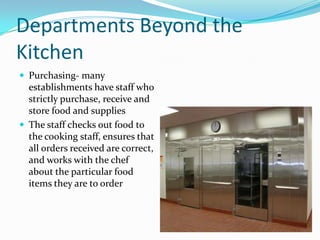
 Purchasing- many
  establishments have staff who
  strictly purchase, receive and
  store food and supplies
 The staff checks out food to
  the cooking staff, ensures that
  all orders received are correct,
  and works with the chef
  about the particular food
  items they are to order
Labor Saving Trends
 Labor is one of the largest costs in the foodservice
  industry, the trends in the industry are to cut labor
  costs
 Technology allows one chef to do the job that used to
  make many chefs to do
    Food processor can chop, puree’, grind, etc
    Vacuum packing
 Prepared foods
   Precut veggies, pre-butchered meats, powders soup bases, ready
    made breads, etc.

Workstations in the professional kitchen

  • 1.
  • 2.
    Chef de Cuisine Chef de Garde Sous Chef Tournant Saucier Garde Manger Rotisseur Entremetier Pastry Chef Poissonier Butcher Grill Cook Potager Pastry Cook 1st Commis Commis Fry Cook Legumier Baker 2nd Commis Commis Commis Decorator Commis
  • 3.
    The Brigade  Finecuisine requires a large number of trained cooks to perform a wide variety of tasks  Armies and navies were experts in organizing large numbers of people to accomplish a central task  Chef’s chose the military’s brigade system as a model  The brigade uses a chain of command
  • 4.
    Brigade System  Chefde cuisine  Chief of the kitchen, supervises all positions  Sous Chef  Second in command, responsible when Chef is gone  Chef de Garde  Night chef, takes control when the other chefs have left  Tournant  Swing chef, fills in on other chef’s days off  Saucier  Makes sauces, prepares sautéed or pan fried items  Garde manger  Cold food station, salads, dressings, fruit plates, buffet platters  Poissonier  Fish cook
  • 5.
    Brigade System  Rotissuer  Roasting meats and poultry, gravies/pan sauces with them  Entremetier  Vegetables, starches, egg dishes, hot appetizers  Pastry chef  Head of baking and pastry  Butcher  Cuts and trims meats/poultry  Grill cook  Grilled and broiled meats, poultry and fish  Fry cook  Deep fried items  Potager  Stocks, soups, mother sauces
  • 6.
    Brigade System  Legumier  Prepares and cooks veggies  Pastry cook  Prepares sweets and pastries  Baker  Makes breads  Decorator  Decorates cakes and pastries, chocolate carvings  Commis  Assistants
  • 7.
    The Operation  Thefoodservice establishment menu determines the staff size and organization of the kitchen  A fish restaurant would need a larger fish station but maybe a smaller rotisserie station  In the case of large hotels, where they might have many different dining places, each would have it’s own chef de cuisine but there would be an executive chef in charge of all the restaurants inside that hotel  Executive chef roles are managerial, oversee cooking of all other chefs  Hotels with large banquet facilities might employ a banquet chef for the banquets
  • 8.
    Cross Training  Schedulingstaff is easier when each person knows how to do more than one thing  Cross training allows people to learn different skills to work in other areas  Some restaurants might even cross train cooks to be servers and hosts
  • 9.
    Departments Beyond the Kitchen Stewardship- the stewarding department’s primary job is sanitation  Ware washing is done by this department, which is washing plates, utensils, etc.  Also responsible for cleaning the kitchen
  • 10.
    Departments Beyond the Kitchen Dining Room- timing the cooking and serving of food is the most critical interaction between the kitchen and servers  Food must be served correctly, in a timely matter and service must be great
  • 11.
    Departments Beyond the Kitchen Catering- large operations that do both catering and operating a restaurant must work hard to neatly plan and organize events  Sales staff and chefs usually work together
  • 12.
    Departments Beyond the Kitchen Room Service- dining in room is an option in most hotels  There is a special staff to take orders, prepare orders and deliver orders
  • 13.
    Departments Beyond the Kitchen Purchasing- many establishments have staff who strictly purchase, receive and store food and supplies  The staff checks out food to the cooking staff, ensures that all orders received are correct, and works with the chef about the particular food items they are to order
  • 14.
    Labor Saving Trends Labor is one of the largest costs in the foodservice industry, the trends in the industry are to cut labor costs  Technology allows one chef to do the job that used to make many chefs to do  Food processor can chop, puree’, grind, etc  Vacuum packing  Prepared foods  Precut veggies, pre-butchered meats, powders soup bases, ready made breads, etc.