Working through the Crisis
Jobs and Policies in Developing Countries
During the Great Recession
Arup Banerji
David Newhouse
Pierella Paci
David Robalino
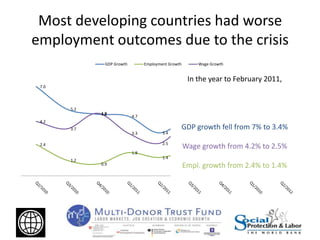
Most developing countries had worse
employment outcomes due to the crisis
7.0
5.2
4.8 4.7
3.4
4.5
4.7
3.9
3.6
2.4
1.2
0.9
1.8
1.4
1.9
2.2 2.1
2.3
4.2
3.7
4.9
3.3
2.5
4.0
2.9
3.4
4.0
GDP Growth Employment Growth Wage Growth
In the year to February 2011,
GDP growth fell from 7% to 3.4%
Wage growth from 4.2% to 2.5%
Empl. growth from 2.4% to 1.4%
Summary: Overall Impact
• Mostly reductions in earnings growth rather than
employment growth.
• But for youth, both increased unemployment and
reduced wages.
• Men seemingly more affected than women.
• In most countries, no major differences between:
– skilled vs. unskilled workers or
– urban vs. rural areas.
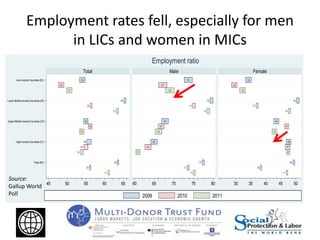
Employment rates fell, especially for men
in LICs and women in MICs
63
54
65
55
55
56
48
56
56
54
61
51
63
54
54
77
74
79
68
65
73
67
75
67
63
75
69
78
66
61
49
34
50
44
48
38
30
37
47
47
47
32
48
43
47
Low-Income Countries (20)
Lower Middle-Income Countries (35)
Upper Middle Income Countries (27)
High-Income Countries (37)
Total (90)
45 50 55 60 65 60 65 70 75 80 30 35 40 45 50
Total Male Female
2009 2010 2011
Employment ratio
Source:
Gallup World
Poll
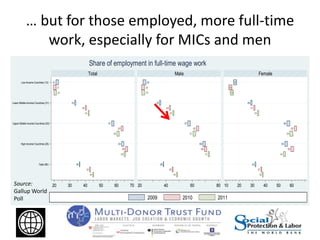
… but for those employed, more full-time
work, especially for MICs and men
36
21
33
57
63
43
21
40
63
66
45
22
42
60
65
38
25
35
57
68
45
24
43
63
69
48
24
45
61
72
32
17
29
56
55
37
13
31
62
59
38
14
34
59
54
Low-Income Countries (13)
Lower Middle-Income Countries (31)
Upper Middle Income Countries (20)
High-Income Countries (26)
Total (90)
20 30 40 50 60 70 20 40 60 80 10 20 30 40 50 60
Total Male Female
2009 2010 2011
Share of employment in full-time wage work
Source:
Gallup World
Poll
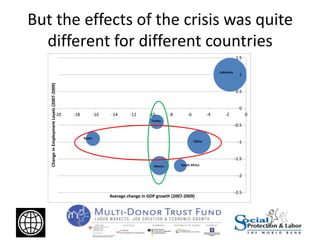
But the effects of the crisis was quite
different for different countries
-2.5
-2
-1.5
-1
-0.5
0
0.5
1
1.5
-20 -18 -16 -14 -12 -10 -8 -6 -4 -2 0
ChangeinEmploymentLevels(2007-2009)
Average change in GDP growth (2007-2009)
Indonesia
Turkey
Russia
China
South AfricaMexico
New Policy
Measures
Undertaken
Specific
Trans-
Mission
Channels
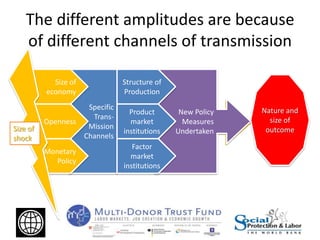
The different amplitudes are because
of different channels of transmission
Nature and
size of
outcome
Size of
economy
Openness
Monetary
Policy
Structure of
Production
Product
market
institutions
Factor
market
institutions
Size of
shock
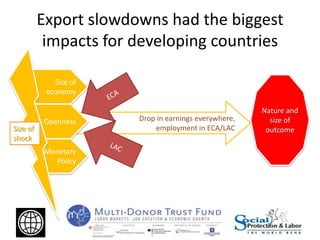
Drop in earnings everywhere,
employment in ECA/LAC
Export slowdowns had the biggest
impacts for developing countries
Nature and
size of
outcome
Size of
economy
Openness
Monetary
Policy
Size of
shock
Specific
Trans-
Mission
Channels
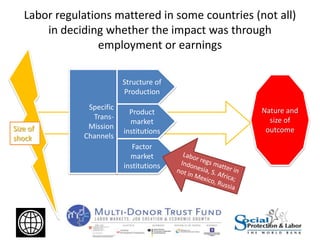
Labor regulations mattered in some countries (not all)
in deciding whether the impact was through
employment or earnings
Nature and
size of
outcome
Structure of
Production
Product
market
institutions
Factor
market
institutions
Size of
shock
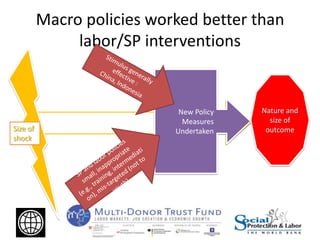
New Policy
Measures
Undertaken
Macro policies worked better than
labor/SP interventions
Nature and
size of
outcomeSize of
shock
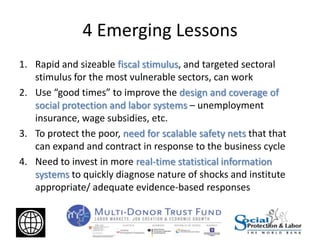
4 Emerging Lessons
1. Rapid and sizeable fiscal stimulus, and targeted sectoral
stimulus for the most vulnerable sectors, can work
2. Use “good times” to improve the design and coverage of
social protection and labor systems – unemployment
insurance, wage subsidies, etc.
3. To protect the poor, need for scalable safety nets that that
can expand and contract in response to the business cycle
4. Need to invest in more real-time statistical information
systems to quickly diagnose nature of shocks and institute
appropriate/ adequate evidence-based responses

Multi-Donor Trust Fund on Labor Markets, Job Creation and Economic Growth: Working through the Crisis

  • 1.
    Working through theCrisis Jobs and Policies in Developing Countries During the Great Recession Arup Banerji David Newhouse Pierella Paci David Robalino
  • 2.
    Most developing countrieshad worse employment outcomes due to the crisis 7.0 5.2 4.8 4.7 3.4 4.5 4.7 3.9 3.6 2.4 1.2 0.9 1.8 1.4 1.9 2.2 2.1 2.3 4.2 3.7 4.9 3.3 2.5 4.0 2.9 3.4 4.0 GDP Growth Employment Growth Wage Growth In the year to February 2011, GDP growth fell from 7% to 3.4% Wage growth from 4.2% to 2.5% Empl. growth from 2.4% to 1.4%
  • 3.
    Summary: Overall Impact •Mostly reductions in earnings growth rather than employment growth. • But for youth, both increased unemployment and reduced wages. • Men seemingly more affected than women. • In most countries, no major differences between: – skilled vs. unskilled workers or – urban vs. rural areas.
  • 4.
    Employment rates fell,especially for men in LICs and women in MICs 63 54 65 55 55 56 48 56 56 54 61 51 63 54 54 77 74 79 68 65 73 67 75 67 63 75 69 78 66 61 49 34 50 44 48 38 30 37 47 47 47 32 48 43 47 Low-Income Countries (20) Lower Middle-Income Countries (35) Upper Middle Income Countries (27) High-Income Countries (37) Total (90) 45 50 55 60 65 60 65 70 75 80 30 35 40 45 50 Total Male Female 2009 2010 2011 Employment ratio Source: Gallup World Poll
  • 5.
    … but forthose employed, more full-time work, especially for MICs and men 36 21 33 57 63 43 21 40 63 66 45 22 42 60 65 38 25 35 57 68 45 24 43 63 69 48 24 45 61 72 32 17 29 56 55 37 13 31 62 59 38 14 34 59 54 Low-Income Countries (13) Lower Middle-Income Countries (31) Upper Middle Income Countries (20) High-Income Countries (26) Total (90) 20 30 40 50 60 70 20 40 60 80 10 20 30 40 50 60 Total Male Female 2009 2010 2011 Share of employment in full-time wage work Source: Gallup World Poll
  • 6.
    But the effectsof the crisis was quite different for different countries -2.5 -2 -1.5 -1 -0.5 0 0.5 1 1.5 -20 -18 -16 -14 -12 -10 -8 -6 -4 -2 0 ChangeinEmploymentLevels(2007-2009) Average change in GDP growth (2007-2009) Indonesia Turkey Russia China South AfricaMexico
  • 7.
    New Policy Measures Undertaken Specific Trans- Mission Channels The differentamplitudes are because of different channels of transmission Nature and size of outcome Size of economy Openness Monetary Policy Structure of Production Product market institutions Factor market institutions Size of shock
  • 8.
    Drop in earningseverywhere, employment in ECA/LAC Export slowdowns had the biggest impacts for developing countries Nature and size of outcome Size of economy Openness Monetary Policy Size of shock
  • 9.
    Specific Trans- Mission Channels Labor regulations matteredin some countries (not all) in deciding whether the impact was through employment or earnings Nature and size of outcome Structure of Production Product market institutions Factor market institutions Size of shock
  • 10.
    New Policy Measures Undertaken Macro policiesworked better than labor/SP interventions Nature and size of outcomeSize of shock
  • 11.
    4 Emerging Lessons 1.Rapid and sizeable fiscal stimulus, and targeted sectoral stimulus for the most vulnerable sectors, can work 2. Use “good times” to improve the design and coverage of social protection and labor systems – unemployment insurance, wage subsidies, etc. 3. To protect the poor, need for scalable safety nets that that can expand and contract in response to the business cycle 4. Need to invest in more real-time statistical information systems to quickly diagnose nature of shocks and institute appropriate/ adequate evidence-based responses