Global Employment Trends 2012
Preventing a deeper jobs crisis
INTERNATIONAL LABOUR OFFICE • GENEVA
Copyright © International Labour Organization 2012
First published 2012
Publications of the International Labour Office enjoy copyright under Protocol 2 of the Universal Copyright Conven-
tion. Nevertheless, short excerpts from them may be reproduced without authorization, on condition that the source is
indicated. For rights of reproduction or translation, application should be made to ILO Publications (Rights and Permis-
sions), International Labour Office, CH-1211 Geneva 22, Switzerland, or by email: pubdroit@ilo.org. The International
Labour Office welcomes such applications.
Libraries, institutions and other users registered with reproduction rights organizations may make copies in accordance
with the licences issued to them for this purpose. Visit www.ifrro.org to find the reproduction rights organization in
your country.
The designations employed in ILO publications, which are in conformity with United Nations practice, and the presen-
tation of material therein do not imply the expression of any opinion whatsoever on the part of the International Labour
Office concerning the legal status of any country, area or territory or of its authorities, or concerning the delimitation of
its frontiers.
The responsibility for opinions expressed in signed articles, studies and other contributions rests solely with their authors,
and publication does not constitute an endorsement by the International Labour Office of the opinions expressed in them.
Reference to names of firms and commercial products and processes does not imply their endorsement by the International
Labour Office, and any failure to mention a particular firm, commercial product or process is not a sign of disapproval.
ILO publications and electronic products can be obtained through major booksellers or ILO local offices in many coun-
tries, or direct from ILO Publications, International Labour Office, CH-1211 Geneva 22, Switzerland. Catalogues or lists
of new publications are available free of charge from the above address, or by email: pubvente@ilo.org
Visit our website: www.ilo.org/publns
Photocomposed in Switzerland WEI
Printed in Switzerland SRO
Global Employment Trends 2012 / International Labour Office – Geneva: ILO, 2012
1 v.
ISBN  
978-92-2-124924-5 (print)
ISBN  
978-92-2-124925-2 (web pdf)
International Labour Office
employment / unemployment / labour force participation / economic recession / developed countries /
developing countries
13.01.3
Also available in French, Tendances mondiales de l’emploi 2012 (978-92-2-224924-4), Geneva, 2012, and Spanish,
­Tendencias Mundiales del Empleo 2012 (978-92-2-324924-3), Geneva, 2012.
ILO Cataloguing in Publication Data
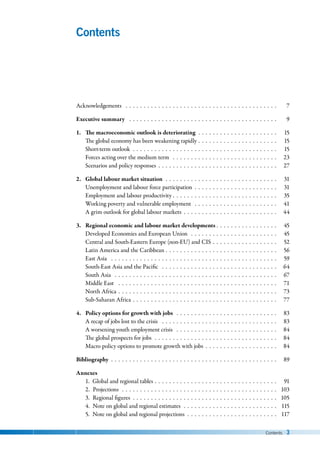
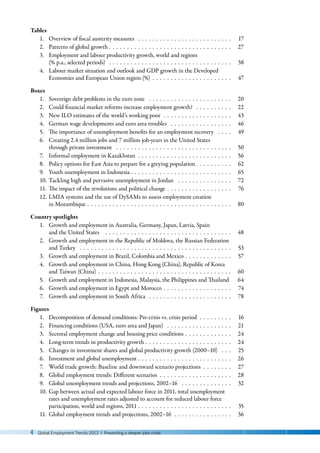
Contents 3
Acknowledgements  . . . . . . . . . . . . . . . . . . . . . . . . . . . . . . . . . . . . . . . . . . 7
Executive summary  . . . . . . . . . . . . . . . . . . . . . . . . . . . . . . . . . . . . . . . . . 9
1. The macroeconomic outlook is deteriorating  . . . . . . . . . . . . . . . . . . . . . . 15
The global economy has been weakening rapidly . . . . . . . . . . . . . . . . . . . . . . 15
Short-term outlook  . . . . . . . . . . . . . . . . . . . . . . . . . . . . . . . . . . . . . . . . 15
Forces acting over the medium term  . . . . . . . . . . . . . . . . . . . . . . . . . . . . . 23
Scenarios and policy responses  . . . . . . . . . . . . . . . . . . . . . . . . . . . . . . . . . 27
2. Global labour market situation  . . . . . . . . . . . . . . . . . . . . . . . . . . . . . . . 31
Unemployment and labour force participation  . . . . . . . . . . . . . . . . . . . . . . . 31
Employment and labour productivity . . . . . . . . . . . . . . . . . . . . . . . . . . . . . 35
Working poverty and vulnerable employment  . . . . . . . . . . . . . . . . . . . . . . . 41
A grim outlook for global labour markets  . . . . . . . . . . . . . . . . . . . . . . . . . . 44
3. Regional economic and labour market developments . . . . . . . . . . . . . . . . . 45
Developed Economies and European Union  . . . . . . . . . . . . . . . . . . . . . . . . 45
Central and South-Eastern Europe (non-EU) and CIS  . . . . . . . . . . . . . . . . . . 52
Latin America and the Caribbean . . . . . . . . . . . . . . . . . . . . . . . . . . . . . . . 56
East Asia  . . . . . . . . . . . . . . . . . . . . . . . . . . . . . . . . . . . . . . . . . . . . . . 59
South-East Asia and the Pacific  . . . . . . . . . . . . . . . . . . . . . . . . . . . . . . . . 64
South Asia  . . . . . . . . . . . . . . . . . . . . . . . . . . . . . . . . . . . . . . . . . . . . . 67
Middle East  . . . . . . . . . . . . . . . . . . . . . . . . . . . . . . . . . . . . . . . . . . . . 71
North Africa  . . . . . . . . . . . . . . . . . . . . . . . . . . . . . . . . . . . . . . . . . . . . 73
Sub-Saharan Africa  . . . . . . . . . . . . . . . . . . . . . . . . . . . . . . . . . . . . . . . . 77
4. Policy options for growth with jobs  . . . . . . . . . . . . . . . . . . . . . . . . . . . . 83
A recap of jobs lost to the crisis  . . . . . . . . . . . . . . . . . . . . . . . . . . . . . . . . 83
A worsening youth employment crisis  . . . . . . . . . . . . . . . . . . . . . . . . . . . . 84
The global prospects for jobs  . . . . . . . . . . . . . . . . . . . . . . . . . . . . . . . . . . 84
Macro policy options to promote growth with jobs  . . . . . . . . . . . . . . . . . . . . 84
Bibliography  . . . . . . . . . . . . . . . . . . . . . . . . . . . . . . . . . . . . . . . . . . . . . . 89
Annexes
1. Global and regional tables . . . . . . . . . . . . . . . . . . . . . . . . . . . . . . . . . . 91
2. Projections  . . . . . . . . . . . . . . . . . . . . . . . . . . . . . . . . . . . . . . . . . . . 103
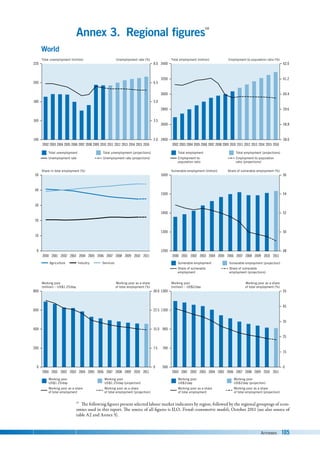
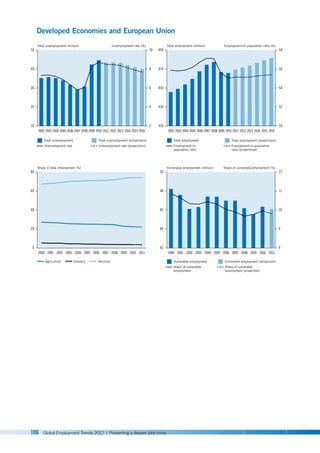
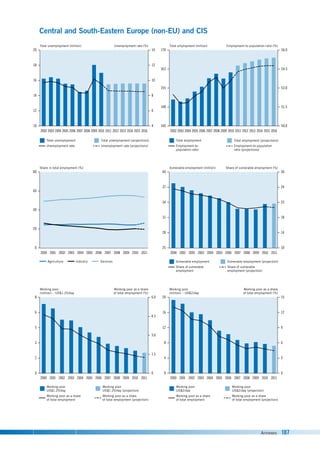
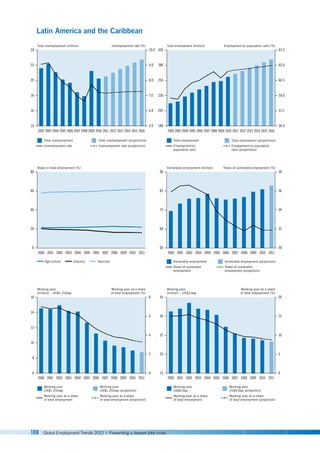
3. Regional figures  . . . . . . . . . . . . . . . . . . . . . . . . . . . . . . . . . . . . . . . . 105
4. Note on global and regional estimates  . . . . . . . . . . . . . . . . . . . . . . . . . . 115
5. Note on global and regional projections  . . . . . . . . . . . . . . . . . . . . . . . . . 117
Contents
4 Global Employment Trends 2012 | Preventing a deeper jobs crisis
Tables
1. Overview of fiscal austerity measures  . . . . . . . . . . . . . . . . . . . . . . . . . . 17
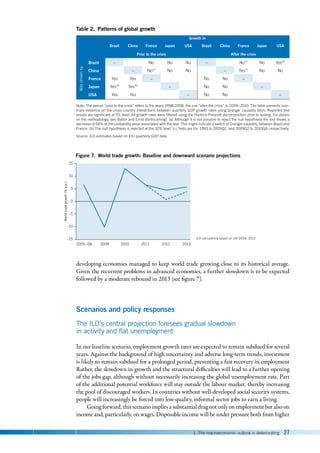
2. Patterns of global growth . . . . . . . . . . . . . . . . . . . . . . . . . . . . . . . . . . 27
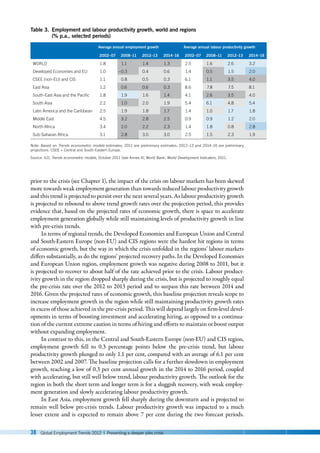
3. Employment and labour productivity growth, world and regions
(% p.a., selected periods)  . . . . . . . . . . . . . . . . . . . . . . . . . . . . . . . . . . 38
4. Labour market situation and outlook and GDP growth in the Developed
Economies and European Union region (%)  . . . . . . . . . . . . . . . . . . . . . . 47
Boxes
1. Sovereign debt problems in the euro zone  . . . . . . . . . . . . . . . . . . . . . . . 20
2. Could financial market reforms increase employment growth?  . . . . . . . . . . 22
3. New ILO estimates of the world’s working poor  . . . . . . . . . . . . . . . . . . . 43
4. German wage developments and euro area troubles  . . . . . . . . . . . . . . . . . 46
5. The importance of unemployment benefits for an employment recovery  . . . . 49
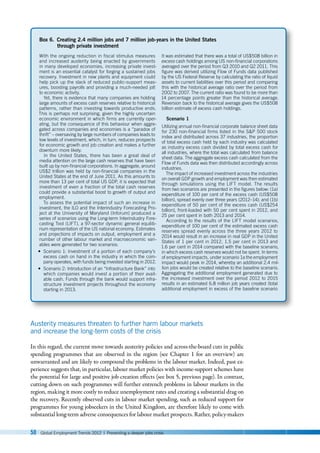
6. Creating 2.4 million jobs and 7 million job-years in the United States
through private investment  . . . . . . . . . . . . . . . . . . . . . . . . . . . . . . . . 50
7. Informal employment in Kazakhstan  . . . . . . . . . . . . . . . . . . . . . . . . . . 56
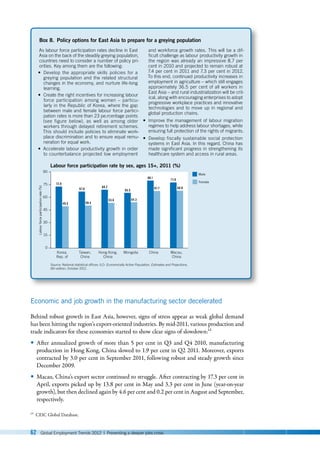
8. Policy options for East Asia to prepare for a greying population . . . . . . . . . . 62
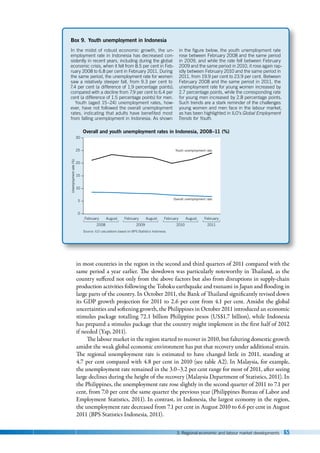
9. Youth unemployment in Indonesia . . . . . . . . . . . . . . . . . . . . . . . . . . . . 65
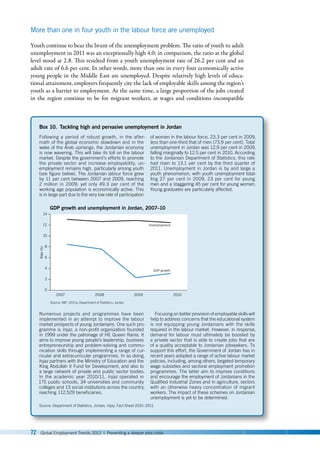
10. Tackling high and pervasive unemployment in Jordan  . . . . . . . . . . . . . . . 72
11. The impact of the revolutions and political change  . . . . . . . . . . . . . . . . . . 76
12. LMIA systems and the use of DySAMs to assess employment creation
in Mozambique . . . . . . . . . . . . . . . . . . . . . . . . . . . . . . . . . . . . . . . . 80
Country spotlights
1. Growth and employment in Australia, Germany, Japan, Latvia, Spain
and the United States   . . . . . . . . . . . . . . . . . . . . . . . . . . . . . . . . . . . 48
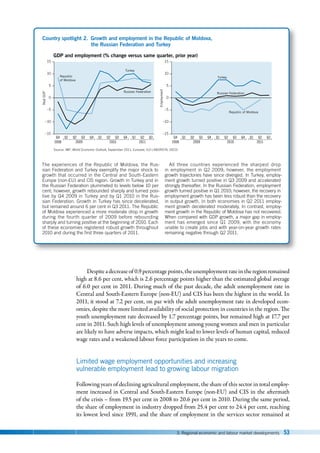
2. Growth and employment in the Republic of Moldova, the Russian Federation
and Turkey  . . . . . . . . . . . . . . . . . . . . . . . . . . . . . . . . . . . . . . . . . . 53
3. Growth and employment in Brazil, Colombia and Mexico . . . . . . . . . . . . . 57
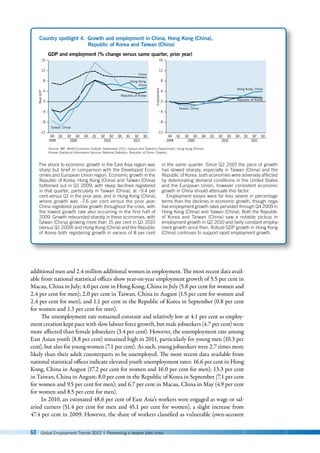
4. Growth and employment in China, Hong Kong (China), Republic of Korea
and Taiwan (China)  . . . . . . . . . . . . . . . . . . . . . . . . . . . . . . . . . . . . . 60
5. Growth and employment in Indonesia, Malaysia, the Philippines and Thailand  64
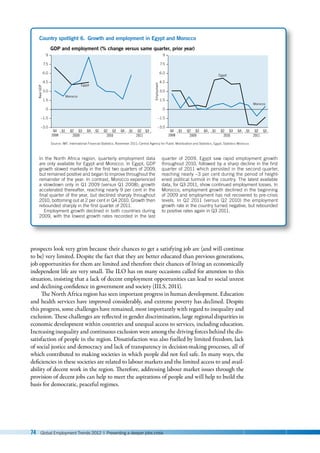
6. Growth and employment in Egypt and Morocco . . . . . . . . . . . . . . . . . . . 74
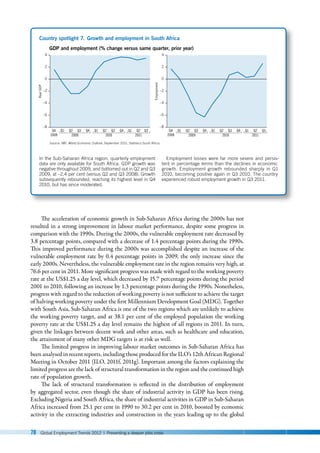
7. Growth and employment in South Africa  . . . . . . . . . . . . . . . . . . . . . . . 78
Figures
1. Decomposition of demand conditions: Pre-crisis vs. crisis period  . . . . . . . . . 16
2. Financing conditions (USA, euro area and Japan)  . . . . . . . . . . . . . . . . . . 21
3. Sectoral employment change and housing price conditions . . . . . . . . . . . . . 24
4. Long-term trends in productivity growth . . . . . . . . . . . . . . . . . . . . . . . . 24
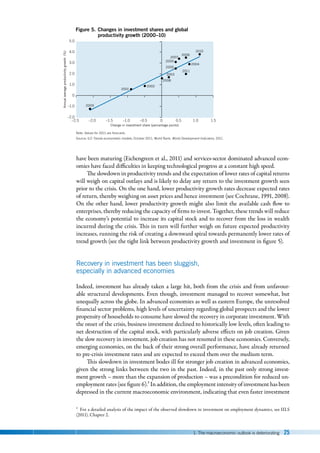
5. Changes in investment shares and global productivity growth (2000–10)  . . . 25
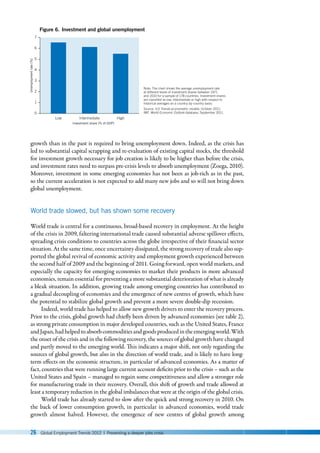
6. Investment and global unemployment . . . . . . . . . . . . . . . . . . . . . . . . . . 26
7. World trade growth: Baseline and downward scenario projections  . . . . . . . . 27
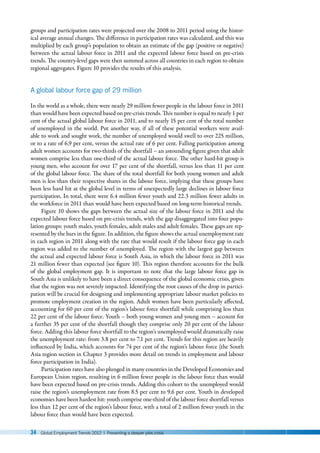
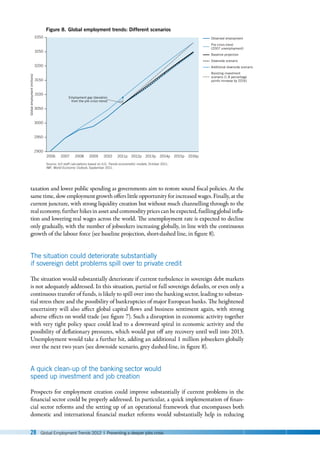
8. Global employment trends: Different scenarios  . . . . . . . . . . . . . . . . . . . . 28
9. Global unemployment trends and projections, 2002–16  . . . . . . . . . . . . . . 32
10. Gap between actual and expected labour force in 2011, total unemployment
rates and unemployment rates adjusted to account for reduced labour force
participation, world and regions, 2011 . . . . . . . . . . . . . . . . . . . . . . . . . . 35
11. Global employment trends and projections, 2002–16  . . . . . . . . . . . . . . . . 36
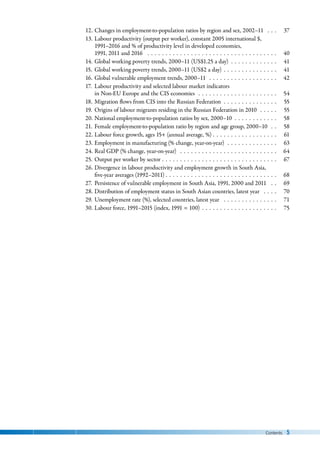
Contents 5
12. Changes in employment-to-population ratios by region and sex, 2002–11  . . . 37
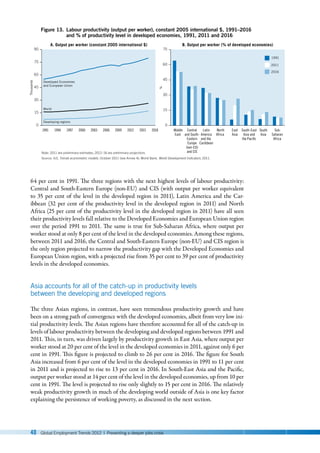
13. Labour productivity (output per worker), constant 2005 international $,
1991–2016 and % of productivity level in developed economies,
1991, 2011 and 2016  . . . . . . . . . . . . . . . . . . . . . . . . . . . . . . . . . . . . 40
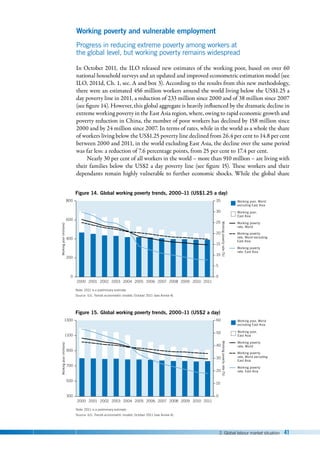
14. Global working poverty trends, 2000–11 (US$1.25 a day)  . . . . . . . . . . . . . 41
15. Global working poverty trends, 2000–11 (US$2 a day)  . . . . . . . . . . . . . . . 41
16. Global vulnerable employment trends, 2000–11  . . . . . . . . . . . . . . . . . . . 42
17. Labour productivity and selected labour market indicators
in Non-EU Europe and the CIS economies  . . . . . . . . . . . . . . . . . . . . . . 54
18. Migration flows from CIS into the Russian Federation  . . . . . . . . . . . . . . . 55
19. Origins of labour migrants residing in the Russian Federation in 2010  . . . . . 55
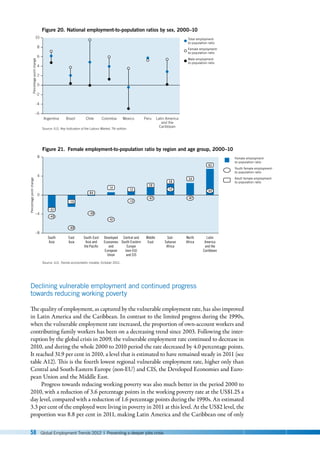
20. National employment-to-population ratios by sex, 2000–10  . . . . . . . . . . . . 58
21. Female employment-to-population ratio by region and age group, 2000–10  . . 58
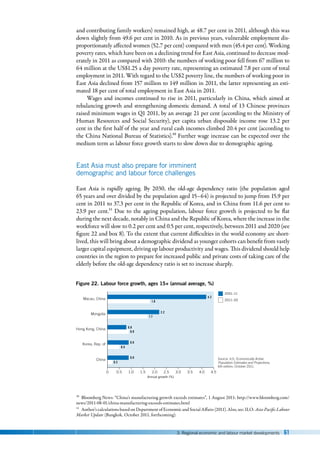
22. Labour force growth, ages 15+ (annual average, %) . . . . . . . . . . . . . . . . . . 61
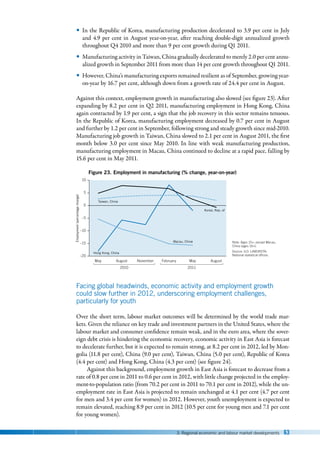
23. Employment in manufacturing (% change, year-on-year)  . . . . . . . . . . . . . . 63
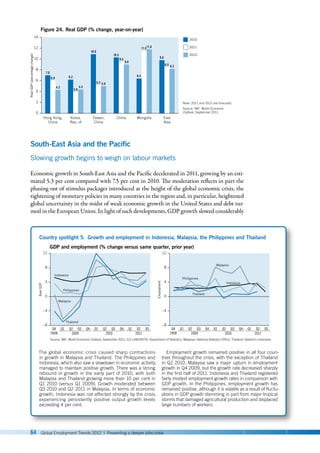
24. Real GDP (% change, year-on-year)  . . . . . . . . . . . . . . . . . . . . . . . . . . . 64
25. Output per worker by sector . . . . . . . . . . . . . . . . . . . . . . . . . . . . . . . . 67
26. Divergence in labour productivity and employment growth in South Asia,
five-year averages (1992–2011) . . . . . . . . . . . . . . . . . . . . . . . . . . . . . . . 68
27. Persistence of vulnerable employment in South Asia, 1991, 2000 and 2011  . . 69
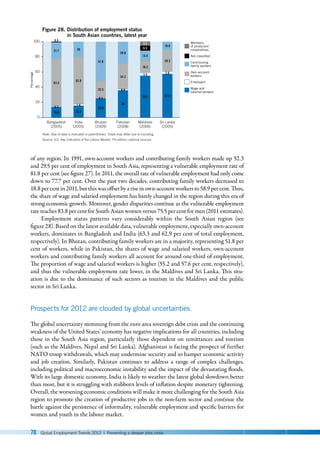
28. Distribution of employment status in South Asian countries, latest year  . . . . 70
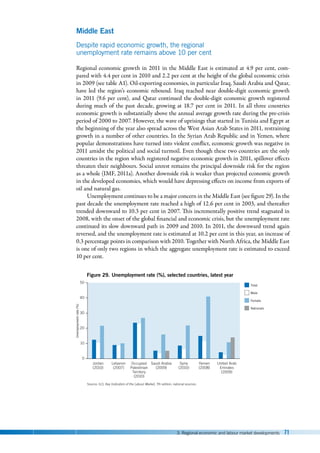
29. Unemployment rate (%), selected countries, latest year  . . . . . . . . . . . . . . . 71
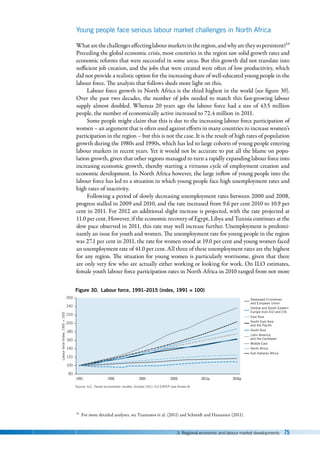
30. Labour force, 1991–2015 (index, 1991 = 100)  . . . . . . . . . . . . . . . . . . . . . 75
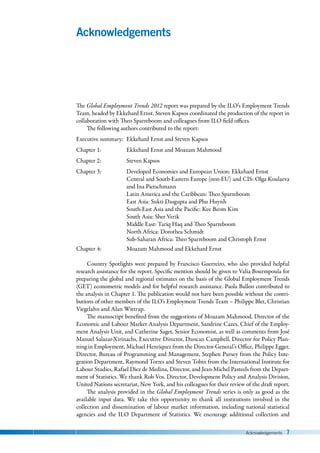
Acknowledgements 7
Acknowledgements
The Global Employment Trends 2012 report was prepared by the ILO’s Employment Trends
Team, headed by Ekkehard Ernst. Steven Kapsos coordinated the production of the report in
collaboration with Theo Sparreboom and colleagues from ILO field offices.
The following authors contributed to the report:
Executive summary: Ekkehard Ernst and Steven Kapsos
Chapter 1: Ekkehard Ernst and Moazam Mahmood
Chapter 2: Steven Kapsos
Chapter 3: Developed Economies and European Union: Ekkehard Ernst
Central and South-Eastern Europe (non-EU) and CIS: Olga Koulaeva
and Ina Pietschmann
Latin America and the Caribbean: Theo Sparreboom
East Asia: Sukti Dasgupta and Phu Huynh
South-East Asia and the Pacific: Kee Beom Kim
South Asia: Sher Verik
Middle East: Tariq Haq and Theo Sparreboom
North Africa: Dorothea Schmidt
Sub-Saharan Africa: Theo Sparreboom and Christoph Ernst
Chapter 4: Moazam Mahmood and Ekkehard Ernst
Country Spotlights were prepared by Francisco Guerreiro, who also provided helpful
research assistance for the report. Specific mention should be given to Valia Bourmpoula for
preparing the global and regional estimates on the basis of the Global Employment Trends
(GET) econometric models and for helpful research assistance. Paola Ballon contributed to
the analysis in Chapter 1. The publication would not have been possible without the contri-
butions of other members of the ILO’s Employment Trends Team – Philippe Blet, Christian
Viegelahn and Alan Wittrup.
The manuscript benefited from the suggestions of Moazam Mahmood, Director of the
Economic and Labour Market Analysis Department, Sandrine Cazes, Chief of the Employ-
ment Analysis Unit, and Catherine Saget, Senior Economist, as well as comments from José
Manuel Salazar-Xirinachs, Executive Director, Duncan Campbell, Director for Policy Plan-
ning in Employment, Michael Henriquez from the Director-General’s Office, Philippe Egger,
Director, Bureau of Programming and Management, Stephen Pursey from the Policy Inte-
gration Department, Raymond Torres and Steven Tobin from the International Institute for
Labour Studies, Rafael Diez de Medina, Director, and Jean-Michel Pasteels from the Depart-
ment of Statistics. We thank Rob Vos, Director, Development Policy and Analysis Division,
United Nations secretariat, New York, and his colleagues for their review of the draft report.
The analysis provided in the Global Employment Trends series is only as good as the
available input data. We take this opportunity to thank all institutions involved in the
collection and dissemination of labour market information, including national statistical
agencies and the ILO Department of Statistics. We encourage additional collection and
8 Global Employment Trends 2012 | Preventing a deeper jobs crisis
dissemination of country-level data in order to improve the analysis of employment trends
provided in future updates of this report.
We would like to express our thanks to colleagues in the ILO Department of Commu-
nication and Public Information for their continued collaboration and support in bringing
the Global Employment Trends to the media’s attention worldwide.
Executive summary 9
Executive summary
The world faces a challenge of creating 600 million jobs over the next decade
The world enters the year 2012 facing a serious jobs challenge and widespread decent work
deficits. After three years of continuous crisis conditions in global labour markets and against
the prospect of a further deterioration of economic activity, there is a backlog of global un-
employment of 200 million – an increase of 27 million since the start of the crisis. In add-
ition, more than 400 million new jobs will be needed over the next decade to avoid a further
increase in unemployment. Hence, to generate sustainable growth while maintaining social
cohesion, the world must rise to the urgent challenge of creating 600 million productive jobs
over the next decade, which would still leave 900 million workers living with their families
below the US$2 a day poverty line, largely in developing countries.
Global labour markets show little improvement
Against these labour market challenges, the outlook for global job creation has been wors-
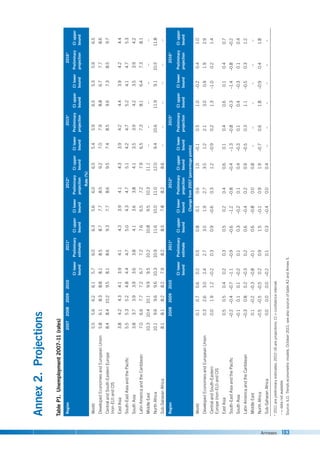
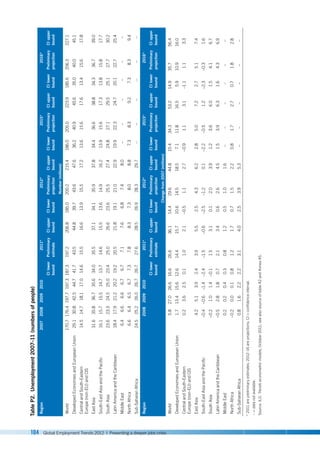
ening. The baseline projection shows no change in the global unemployment rate between
now and 2016, remaining at 6 per cent of the global labour force. This would lead to an addi-
tional 3 million unemployed around the world in 2012, or a total of 200 million, rising to
206 million by 2016. If downside risks materialize and global growth falls to below 2 per cent
in 2012, global unemployment would rise more rapidly to more than 204 million in 2012, at
least 4 million more than under the baseline scenario, with a further increase to 209 million
in 2013, 6 million more than under the baseline scenario. Alternatively, under a more benign
scenario – which assumes a quick resolution of the euro debt crisis – global unemployment
would be around 1 million lower than under the baseline scenario in 2012, and 1.7 million
lower in 2013. This would still not be sufficient to significantly alter the trajectory of the
global unemployment rate, which is projected to remain stuck at around 6 per cent.
Youth are particularly hard hit by the crisis
In 2011, 74.8 million youth aged 15–24 were unemployed, an increase of more than 4 million
since 2007. The global youth unemployment rate, at 12.7 per cent, remains a full percentage
point higher than the pre-crisis level. Globally, young people are nearly three times as likely
as adults to be unemployed. In addition, an estimated 6.4 million young people have given
up hope of finding a job and have dropped out of the labour market altogether. Even those
young people who are employed are increasingly likely to find themselves in part-time employ-
ment and often on temporary contracts. In developing countries, youth are disproportion-
ately among the working poor. As the number and share of unemployed youth is projected to
remain essentially unchanged in 2012, and as the share of young people withdrawing from
the labour market altogether continues to rise, on the present course there is little hope for a
substantial improvement in near-term employment prospects for young people.
10 Global Employment Trends 2012 | Preventing a deeper jobs crisis
Falling labour force participation masks an even worse global unemployment situation
In the world as a whole, there were nearly 29 million fewer people in the labour force in 2011
than expected based on pre-crisis trends, with 6.4 million fewer youth and 22.3 million fewer
adults. This is equal to nearly 1 per cent of the actual global labour force in 2011, and nearly
15 per cent of the total number of unemployed in the world. If all of these potential workers
were available to work and sought work, the number of unemployed would swell to over
225 million, or to a rate of 6.9 per cent, versus the actual rate of 6 per cent. Participation rates
have plunged in many countries in the Developed Economies and European Union region,
resulting in there being 6 million fewer people in the workforce than expected based on pre-
crisis trends. Adding this cohort to the unemployed would raise the region’s unemployment
rate from 8.5 per cent to 9.6 per cent.
The global economy has substantially reduced its capacity to add new jobs
Globally, the employment-to-population ratio declined sharply during the crisis, from
61.2 per cent in 2007 to 60.2 per cent in 2010. This represents the largest such decline on
record (since 1991). Based on current macroeconomic forecasts, the ILO’s baseline projection
for the employment-to-population ratio is not encouraging, with a flat to slightly declining
trend projected to 2016. The ILO’s downside scenario would result in a double dip in the
global employment-to-population ratio, with the ratio likely to fall to the lowest rate on record
around 2013. The upside scenario also would not result in growth rates sufficient to bring
about a substantial rise in the global employment-to-population ratio, which would remain
well below pre-crisis levels for the next several years.
Outside of Asia, developing regions have lagged behind developed economies in labour productivity growth,
raising the risk of a further divergence in living standards and limiting prospects for poverty reduction
As the global economy is slowing down again, the convergence of living standards across
countries has also been slowing. The labour productivity gap between the developed and the
developing world – an important indicator for the convergence of income levels across coun-
tries – has narrowed over the past two decades, but remains substantial: output per worker
in the Developed Economies and European Union region was US$72,900 in 2011 versus
an average of US$13,600 in developing regions. This means that, adjusted for differences in
prices across countries, the average worker in a developing country produces less than one-
fifth of the output of the average worker in a developed country. The three Asian regions
have accounted for all of the catch-up in levels of labour productivity between the developing
and developed world between 1991 and 2011, with other developing regions lagging behind.
Progress has been made in reducing extreme poverty among workers
at the global level, but working poverty remains widespread
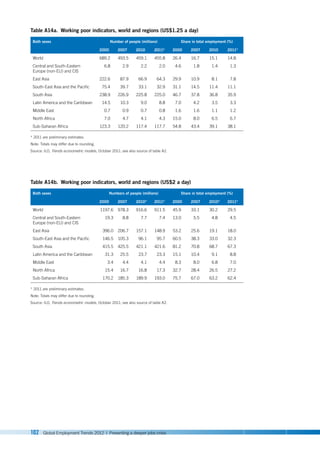
Among the 900 million working poor, there were an estimated 456 million workers around the
world living in extreme poverty below the US$1.25 a day poverty line in 2011, a reduction of
233 million since 2000 and a decline of 38 million since 2007. However, this global aggregate is
heavily influenced by the dramatic decline in extreme working poverty in the East Asia region,
where, owing to rapid economic growth and poverty reduction in China, the number of poor
workers has declined by 158 million since 2000 and by 24 million since 2007. Moreover, there
has been a marked slowdown in the rate of progress in reducing working poverty since 2008.
A projection of pre-crisis (2002 to 2007) trends shows 50 million more working poor in 2011
than expected on the basis of pre-crisis trends. Similarly, there are an estimated 55 million more
workers in 2011 living with their families below the US$2 a day poverty line than expected.
Executive summary 11
Vulnerable employment has increased by 23 million since 2009
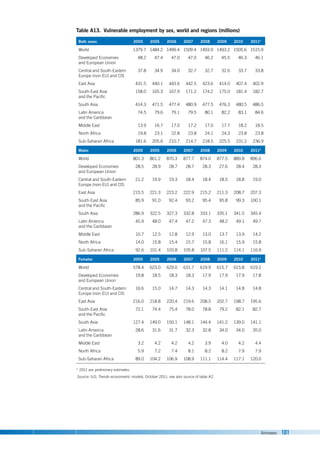
The number of workers in vulnerable employment globally in 2011 is estimated at 1.52 bil-
lion, an increase of 136 million since 2000 and of nearly 23 million since 2009. The East
Asia region has seen a reduction in vulnerable employment of 40 million since 2007, versus
increases of 22 million in Sub-Saharan Africa, 12 million in South Asia, nearly 6 million in
South-East Asia and the Pacific, 5 million in Latin America and the Caribbean and more
than 1 million in the Middle East. The share of women in vulnerable employment (50.5 per
cent) exceeds the corresponding share for men (48.2 per cent). Women are far more likely
than men to be in vulnerable employment in North Africa (55 per cent versus 32 per cent),
the Middle East (42 per cent versus 27 per cent) and Sub-Saharan Africa (nearly 85 per cent
versus 70 per cent).
Job-poor growth in the developed world and weak productivity in developing regions
threaten a broader recovery and limit economic development prospects
There is growing evidence of a negative feedback loop between the labour market and the
macro-economy, particularly in developed economies: high unemployment and low wage
growth are reducing demand for goods and services, which further damages business confi-
dence and leaves firms hesitant to invest and hire. Breaking this negative loop will be essen-
tial if a sustainable recovery is to take root. In much of the developing world, such sustainable
increases in productivity will require accelerated structural transformation  –  shifting to
higher value added activities while moving away from subsistence agriculture as a main source
of employment and reducing reliance on volatile commodity markets for export earnings.
Further gains in education and skills development, adequate social protection schemes that
ensure a basic standard of living for the most vulnerable, and strengthened dialogue between
workers, employers and governments are needed to ensure broad-based development built on
a fair and just distribution of economic gains.
Global growth is set to weaken in 2012
The recovery that started in 2009 has been short-lived and shallow and a large employment
gap remains. Since summer 2011, macroeconomic woes in some advanced economies have
worsened as investment and global job creation have remained weak. Financial sector insta-
bility and rising risk premiums on the back of an uncertain outlook on sovereign debt have
limited private sector access to credit and have cast shadows over business and consumer senti-
ment. Even though only a few countries are facing serious and long-term economic and fiscal
challenges, the global economy has weakened rapidly as uncertainty spread beyond advanced
economies. As a result, the world economy has moved even further away from the pre-crisis
trend path and, at the current juncture, even a double dip remains a distinct possibility.
A three-stage crisis
Entering the fourth year of global economic turmoil, there is now evidence of a three-stage
crisis. The initial shock of the crisis was met by coordinated fiscal and monetary stimulus,
which led to recovery in growth and avoided further contraction and higher unemployment,
but proved insufficient to bring about a sustainable jobs recovery, most notably in advanced
economies.
In the second stage, higher public deficits and sovereign debt problems led to increased
austerity measures in an attempt to bring confidence to capital markets. As a consequence,
fiscal stimuli started to wane, and support of economic activity in advanced economies con-
centrated on quantitative easing monetary policies. The combined impact appears to have
12 Global Employment Trends 2012 | Preventing a deeper jobs crisis
been a weakening of both GDP growth and employment. GDP growth dropped globally,
from 5 per cent in 2010 to 4 per cent over 2011, led by advanced economies, whose forecast
for 2011 was revised downwards by the IMF in September 2011 to 1.4 per cent. In the mean-
time, this also affected emerging economies, where growth remained strong throughout 2011,
although the first signs of weakness were seen in the last quarter of 2011 with lower indus-
trial orders.
The tightening of policies and the persistently high levels of unemployment have increased
the potential for a dangerous third stage, characterized by increased risk of a second dip in
growth and employment in some of the advanced economies, exacerbating the severe labour
market distress that has emerged since the onset of the crisis.
Policy space has been diminished
In this third stage of the crisis, policy space has been seriously limited, making it difficult
to stop, or even to slow down, the further weakening of economic conditions. At the initial
stage of the global crisis, countries had been quick to set up financial sector support measures,
as well as stimulus packages. Despite much effort – in some cases up to 90 per cent of addi-
tional public spending went into bailing out banks – the financial industry remains highly
vulnerable, weakening its capacity to lend to the real economy. Credit conditions have become
tighter again in recent months, partly related to the high level of uncertainty about the global
economic outlook. At the same time, high levels of sovereign debt in advanced economies
have limited the capacity of governments in these countries to implement a further round of
stimulus programmes.
Economic conditions have proved to be more resilient in emerging economies in East
Asia and Latin America, leaving more policy space there. Nevertheless, some spillover effects
resulting from the difficulties in advanced economies are already visible there as well. Sources
of global growth have been shifting substantially since the beginning of the crisis, with
emerging economies increasingly contributing to world demand. Growing trade between
emerging economies has contributed to this gradual decoupling and to the emergence of
new centres of growth, which have the potential to stabilize global growth and prevent a
double-dip recession. In these countries, favourable economic conditions pushed job creation
rates above labour force growth, thereby supporting domestic demand, particularly in larger
emerging economies in Latin America and East Asia. However, as emerging economies con-
tinue to rely on exports to advanced economies, they too saw their growth rates decelerate in
the last quarter of 2011. In this regard, a coordinated effort by policy-makers in both advanced
and emerging economies could help benefit the global economy from these new centres of
growth and prevent a further global economic slowdown.
Investment remains depressed, weighing on job creation
With growing uncertainty over the global outlook, investment has developed unequally
across the globe. In advanced economies and Eastern Europe, the unresolved financial sector
problems, high levels of uncertainty regarding global prospects and a lower propensity of
households to consume have slowed the recovery in corporate investment. At the begin-
ning of the crisis, business investment declined to historically low levels, often leading to
net destruction of the capital stock, with particularly adverse effects on job creation. Given
the slow recovery in investment, job creation has been unable to resume, further adding to
employment losses. Conversely, emerging economies, on the back of their strong overall per-
formance, have already returned to pre-crisis investment rates and are expected to exceed
those rates over the medium term. This slowdown in investment bodes ill for stronger job
creation in advanced economies, given the strong links between the two in the past. Indeed,
strong investment growth – more than the expansion of production – was a leading indicator
Executive summary 13
for falling unemployment rates. In this regard, the ILO estimates that strengthening incen-
tives for a faster recovery in investment – increasing it by an additional 2 percentage points
of global GDP, or US$1,200 billion worldwide – is necessary to fully absorb the employment
gap that has been opened by the crisis.
Structural imbalances are dragging down medium-term trends in employment growth
Structural imbalances that have built up over the past decade are further worsening the employ-
ment outlook. Housing and other asset price bubbles prior to the crisis created substantial sec-
toral misalignments that need to be fixed and which will require lengthy and costly job shifts,
both across the economy and across countries. Strong liquidity growth created housing and
financial sector booms, which are still ongoing in some economies, leading to misallocation
of resources and creating structural problems in the labour market that are likely to take time
to be fully absorbed. These structural frictions are also responsible for the low employment
response to growth, particularly in those economies where the boom has already been followed
by a bust, such as the United States, Spain and Ireland. Going forward, the re-adjustment of
these imbalances is likely to limit the effectiveness of policy interventions as traditional macro-
economic policies may be less effective when it comes to rebalancing sectoral growth patterns.
To address these obstacles, additional policy levers are needed in order to allow a more rapid
reallocation of jobs and workers across the economy to allow for faster job growth.
To address these issues, policies need to coordinate globally, …
To address the protracted labour market recession and put the world economy on a more sus-
tainable recovery path, several policy changes are necessary. First, global policies need to be co-
ordinated more firmly. Deficit-financed public spending and monetary easing simultaneously
implemented by many advanced and emerging economies at the beginning of the crisis is no
longer a feasible option for all of them. Indeed, the large increase in public debt and ensuing
concerns about the sustainability of public finances in some countries have forced those most
exposed to rising sovereign debt risk premiums to implement strict belt-tightening. However,
cross-country spillover effects from fiscal spending and liquidity creation can be substantial
and – if used in a coordinated way – could allow countries that still have room for manoeuvre
to support both their own economies as well as the global economy. It is such coordinated
public finance measures that are now necessary to support global aggregate demand and stim-
ulate job creation going forward.
…repair and regulate the financial system, …
Second, more substantial repair and regulation of the financial system would restore cred-
ibility and confidence, allowing banks to overcome the credit risk that has dogged this crisis.
All firms would gain from this, but especially SMEs, which not only need the credit more,
but also end up creating more than 70 per cent of jobs. An encompassing reform of financial
markets, including larger safety margins in the domestic banking sector, would substantially
help the labour market and could add up to half a percentage point in employment growth,
depending on country circumstances.
…target stimulus measures to employment…
Third, what is most needed now is to target the real economy to support job growth. Faltering
employment creation and ensuing weak growth in labour incomes have been at the heart
of the slowdown in global economic activity and the further worsening of public finances.
The ILO’s particular concern is that despite large stimulus packages, these measures have not
14 Global Employment Trends 2012 | Preventing a deeper jobs crisis
managed to roll back the 27 million increase in unemployed since the initial impact of the
crisis. Clearly, the policy measures have not been well targeted and need reassessment in terms
of their effectiveness. Indeed, estimates for advanced economies regarding different labour
market instruments show that both active and passive labour market policies have proven
very effective in stimulating job creation and supporting incomes. Country evidence across
a range of labour market policies – including the extension of unemployment benefits and
work sharing programmes, the re-evaluation of minimum wages and wage subsidies as well
as enhancing public employment services, public works programmes and entrepreneurship
incentives – show impacts on employment and incomes.
…and encourage the private sector to invest…
Fourth, additional public support measures alone will not be sufficient to foster a sustain-
able jobs recovery. Policy-makers must act decisively and in a coordinated fashion to reduce
the fear and uncertainty that is hindering private investment so that the private sector can
restart the main engine of global job creation. Incentives to businesses to invest in plant and
equipment and to expand their payrolls will be essential to stimulate a strong and sustainable
recovery in employment.
…without putting fiscal stability at risk
Fifth, to be effective, additional stimulus packages must not put the sustainability of public
finances at risk by further raising public debt. In this respect, public spending fully matched
by revenue increases can still provide a stimulus to the real economy, thanks to the balanced-
budget multiplier. In times of faltering demand, expanding the role of government in aggre-
gate demand helps stabilize the economy and sets forth a new stimulus, even if the spending
increase is fully matched by simultaneous rises in tax revenues. As argued in this report,
balanced-budget multipliers can be large, especially in the current environment of massively
underutilized capacities and high unemployment rates. At the same time, balancing spending
with higher revenues ensures that budgetary risk is kept low enough to satisfy capital markets.
Interest rates are therefore likely to remain unaffected by such a policy option, allowing the
stimulus to develop its full effect on the economy.
1. The macroeconomic outlook is deteriorating 15
1. The macroeconomic outlook
is deteriorating
The global economy has been weakening rapidly
Global growth has decelerated rapidly, increasing the threat of a prolonged jobs recession.
Following the deepest global recession since the end of the Second World War, the recovery
has been short lived and shallow, barely recovering to rates prior to the crisis and unable
to close the gap that has opened up. In the meantime, the macroeconomic woes in some
advanced economies have worsened, increasing global uncertainty. While only a few countries
have been facing serious and long-term economic and fiscal challenges, the global economy
has cooled down fast as uncertainty has spread beyond the advanced economies, moving the
world economy even further away from the pre-crisis trend path. At the current juncture, even
a double dip remains a distinct possibility.1
Partly, the protracted nature of the recovery is due to the nature and depth of the crisis as
well as its synchronized impact, which required policy action and economic adjustments on
several fronts. A combination of unresolved financial market problems and financial reforms
that have not yet been fully operationalized, a shift of private debt into public debt and sub-
sequent sovereign debt sustainability issues, an ongoing process of private sector deleveraging
and a global and sectoral restructuring of activities triggered by the crisis has put the brakes
on global growth.
As a result of the weaker than expected recovery, labour markets are unlikely to recover
from the strain they have suffered since the beginning of the crisis. Globally, nearly 27 million
new jobseekers have been added to the already high global unemployment figure of almost
171 million prior to the crisis, and this gap is expected to open gradually further as new
entrants into the labour market struggle to find gainful employment. Under current trends,
unemployment will be a reality for more than 200 million people in 2012; and if the situation
aggravates further, more than 209 million workers may be affected by 2013. The return of new
uncertainty, in particular the risk of another recession in advanced economies during the first
half of 2012, pushes further back any strong uptick in employment creation.
Short-term outlook
The outlook for a self-sustained global recovery worsened considerably during the summer
months of 2011. After a V-shaped recovery in output, the mounting sovereign debt problems
in some advanced economies have raised worries about a double dip in economic activity
throughout the world. High levels of volatility have returned to financial markets which,
combined with the continuing deleveraging in the private sector in advanced economies and
the effects of fiscal austerity measures on global demand, have lowered expectations of a quick
return to pre-crisis trends.
1 There is no generally agreed definition of a global recession or a global double dip in economic activity. In the past,
the International Monetary Fund (IMF) has considered global growth of less than 3 per cent to be the equivalent of a
global recession (IMF, 2008).
16 Global Employment Trends 2012 | Preventing a deeper jobs crisis
Crisis conditions are spreading out again from advanced economies
Global economic growth has decelerated sharply, falling to 4 per cent in 2011 from 5.1 per
cent in the previous year, and is projected to decelerate further over the medium term (IMF,
2011a). In part this is related to the still lacklustre growth in advanced economies. As a conse-
quence, job creation in this region has been slow, limiting disposable income growth, putting
substantial strain on public finances and depressing private consumption, business invest-
ment and trade in these countries. At the same time, emerging economies that managed to
return to pre-crisis trend growth rates continue to rely heavily on demand conditions in more
advanced economies, which has left them exposed to deterioration in economic conditions in
this region. This vulnerability stems partly from the continued reliance of these economies
on export-oriented growth. However, their recoveries also seem to have been driven by addi-
tional liquidity from central bank interventions around the globe which have led to asset price
booms, although these are likely to be unsustainable over the medium term.
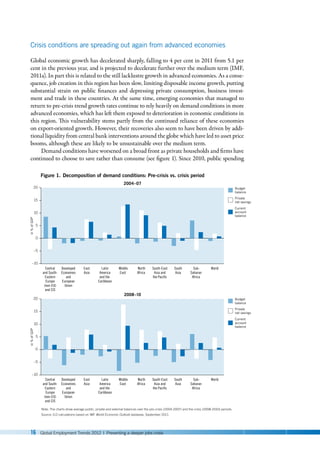
Demand conditions have worsened on a broad front as private households and firms have
continued to choose to save rather than consume (see figure 1). Since 2010, public spending
Note: The charts show average public, private and external balances over the pre-crisis (2004-2007) and the crisis (2008-2010) periods.
Source: ILO calculations based on IMF World Economic Outlook database, September 2011.
in
%
of
GDP
Figure 1. Decomposition of demand conditions: Pre-crisis vs. crisis period
–10
–5
0
10
5
15
20
2004–07
in
%
of
GDP
–10
–5
5
0
10
15
20
2008–10
Central
and South-
Eastern
Europe
(non-EU)
and CIS
Developed
Economies
and
European
Union
East
Asia
Latin
America
and the
Caribbean
Middle
East
North
Africa
South-East
Asia and
the Pacific
South
Asia
Sub-
Saharan
Africa
World
Central
and South-
Eastern
Europe
(non-EU)
and CIS
Developed
Economies
and
European
Union
East
Asia
Latin
America
and the
Caribbean
Middle
East
North
Africa
South-East
Asia and
the Pacific
South
Asia
Sub-
Saharan
Africa
World
Budget
balance
Private
net savings
Current
account
balance
Budget
balance
Private
net savings
Current
account
balance
1. The macroeconomic outlook is deteriorating 17
has lost substantial momentum. After having prevented a worse decline in output and employ-
ment through a decisive, albeit short-lived, fiscal stimulus, governments around the globe have
felt the need to enact austerity measures that further depress GDP growth and job creation.
At the same time, private sector demand has not reached a sustainable trajectory that would
help pick up the slack caused by reduced public sector stimulus. Private spending has taken a
hit from efforts to deleverage and is unlikely to return to pre-crisis levels (which were in any
case unsustainable, at least in those countries where it had been supported by strong credit
expansion). In this environment of heightened insecurity and depressed consumer confidence,
business investment has also not recovered to pre-crisis levels, further dragging down aggre-
gate demand. In particular, non-financial sector firms have accumulated substantial amounts
of cash without injecting new funds into the economy.
Against this gloomy outlook, the risk now is that growth will remain below the job cre-
ation threshold necessary for continuous and self-sustained employment generation, locking
countries into an adverse equilibrium in which low output growth and subdued job creation
reinforce each other. Given the need for the world economy to absorb an average of 40 million
new labour market entrants each year, even a modest weakening in global economic activity
of 0.2 percentage points would lead to an increase in the number of unemployed of 1.7 mil-
lion by 2013.
Overly tight fiscal policies weigh on aggregate demand
Before the recent return of crisis conditions, most governments around the world turned
towards a less accommodative policy stance, under the rationale of bringing public debt devel-
opments under control. However, the uncoordinated manner in which fiscal tightening has
been carried out has led to an overly tight stance on budgetary positions, at least from a
global standpoint. Indeed, even though budget deficits are still large, particularly in advanced
economies, most of the budget shortfalls have been predominantly driven by reduced tax rev-
enues rather than by additional expenditures from fiscal stimulus packages (IMF, 2010a). Pro-
vided that activity resumes sufficiently, some of these large deficits can be expected to shrink
automatically. In addition, sovereign debt positions have worsened substantially following a
transfer of private debt (banking sector) to public debt, as governments tried to prevent large-
scale banking failures at the beginning of the crisis. In order to address mounting concerns
about the sustainability of government budget positions and rising sovereign debt risk pre-
miums, many countries have started implementing substantial spending cuts which are likely
to depress activity further, leading to a downward spiral of worsening growth and deterio-
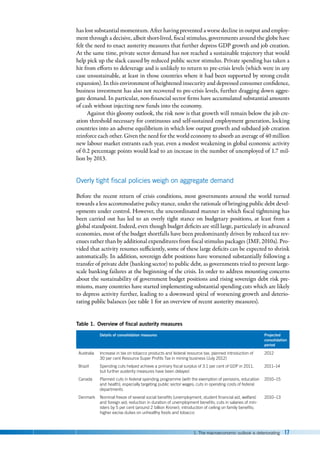
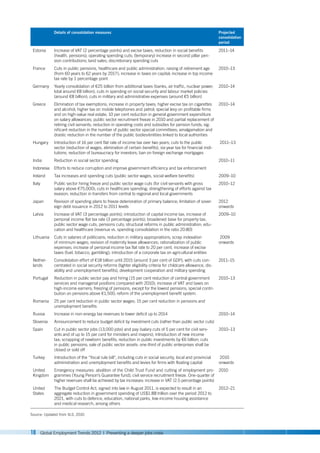
rating public balances (see table 1 for an overview of recent austerity measures).
Table 1. Overview of fiscal austerity measures
Details of consolidation measures Projected
consolidation
period
Australia Increase in tax on tobacco products and federal resource tax; planned introduction of
30 per cent Resource Super Profits Tax in mining business (July 2012)
2012
Brazil Spending cuts helped achieve a primary fiscal surplus of 3.1 per cent of GDP in 2011,
but further austerity measures have been delayed
2011–14 
Canada Planned cuts in federal spending programme (with the exemption of pensions, education
and health), especially targeting public sector wages; cuts in operating costs of federal
departments
2010–15
Denmark Nominal freeze of several social benefits (unemployment, student financial aid, welfare)
and foreign aid; reduction in duration of unemployment benefits; cuts in salaries of min-
isters by 5 per cent (around 2 billion Kroner); introduction of ceiling on family benefits;
higher excise duties on unhealthy foods and tobacco
2010–13
18 Global Employment Trends 2012 | Preventing a deeper jobs crisis
Details of consolidation measures Projected
consolidation
period
Estonia Increase of VAT (2 percentage points) and excise taxes; reduction in social benefits
(health, pensions); operating spending cuts; (temporary) increase in second pillar pen-
sion contributions; land sales; discretionary spending cuts
2011–14
France Cuts in public pensions, healthcare and public administration; raising of retirement age
(from 60 years to 62 years by 2017); increase in taxes on capital; increase in top income
tax rate by 1 percentage point
2010–13
Germany Yearly consolidation of €25 billion from additional taxes (banks, air traffic, nuclear power;
total around €8 billion); cuts in spending on social security and labour market policies
(around €8 billion); cuts in military and administrative expenses (around €5 billion)
2010–14
Greece Elimination of tax exemptions; increase in property taxes; higher excise tax on cigarettes
and alcohol; higher tax on mobile telephones and petrol; special levy on profitable firms
and on high-value real estate; 10 per cent reduction in general government expenditure
on salary allowances; public sector recruitment freeze in 2010 and partial replacement of
retiring civil servants; reduction in operating costs and subsidies for pension funds; sig-
nificant reduction in the number of public sector special committees; amalgamation and
drastic reduction in the number of the public bodies/entities linked to local authorities
2010–14
Hungary Introduction of 16 per cent flat rate of income tax over two years; cuts to the public
sector (reduction of wages, elimination of certain benefits); six-year tax for financial insti-
tutions; reduction of bureaucracy for investors; ban on foreign exchange mortgages
 2011–13
India Reduction in social sector spending 2010–11
Indonesia Efforts to reduce corruption and improve government efficiency and tax enforcement  
Ireland Tax increases and spending cuts (public sector wages, social welfare benefits) 2009–10
Italy Public sector hiring freeze and public sector wage cuts (for civil servants with gross
salary above €75,000); cuts in healthcare spending; strengthening of efforts against tax
evasion; reduction in transfers from central to regional and local governments
2010–12
Japan Revision of spending plans to freeze deterioration of primary balance; limitation of sover-
eign debt issuance in 2012 to 2011 levels
2012
onwards
Latvia Increase of VAT (3 percentage points); introduction of capital income tax; increase of
personal income flat tax rate (3 percentage points); broadened base for property tax;
public sector wage cuts; pensions cuts; structural reforms in public administration; edu-
cation and healthcare (revenue vs. spending consolidation in the ratio 20:80)
2009–10
Lithuania Cuts in salaries of politicians; reduction in military appropriations; scrap indexation
of minimum wages; revision of maternity leave allowances; rationalization of public
expenses; increase of personal income tax flat rate to 20 per cent; increase of excise
taxes (fuel, tobacco, gambling); introduction of a corporate tax on agricultural entities
 2009
onwards
Nether-
lands
Consolidation effort of €18 billion until 2015 (around 3 per cent of GDP), with cuts con-
centrated in social security reforms (tighter eligibility criteria for childcare allowance, dis-
ability and unemployment benefits), development cooperation and military spending
2011–15
Portugal Reduction in public sector pay and hiring (15 per cent reduction of central government
services and managerial positions compared with 2010); increase of VAT and taxes on
high-income earners; freezing of pensions, except for the lowest pensions; special contri-
bution on pensions above €1,500; reform of the unemployment benefit system.
2010–13
Romania 25 per cent reduction in public sector wages; 15 per cent reduction in pensions and
unemployment benefits
 
Russia Increase in non-energy tax revenues to lower deficit up to 2014 2010–14
Slovenia Announcement to reduce budget deficit by investment cuts (rather than public sector cuts)  
Spain Cut in public sector jobs (13,000 jobs) and pay (salary cuts of 5 per cent for civil serv-
ants and of up to 15 per cent for ministers and mayors); introduction of new income
tax; scrapping of newborn benefits; reduction in public investments by €6 billion; cuts
in public pensions; sale of public sector assets: one-third of public enterprises shall be
closed or sold off
2010–13
Turkey Introduction of the “fiscal rule bill”, including cuts in social security, local and provincial
administration and unemployment benefits and levies for firms with floating capital
 2010
onwards
United
Kingdom
Emergency measures: abolition of the Child Trust Fund and cutting of employment pro-
grammes (Young Person’s Guarantee fund), civil service recruitment freeze. One-quarter of
higher revenues shall be achieved by tax increases: increase in VAT (2.5 percentage points)
2010
United
States
The Budget Control Act, signed into law in August 2011, is expected to result in an
aggregate reduction in government spending of US$1.88 trillion over the period 2012 to
2021, with cuts to defence, education, national parks, low-income housing assistance
and medical research, among others
2012–21
Source: Updated from IILS, 2010.
1. The macroeconomic outlook is deteriorating 19
Fiscal positions have been weakened by financial sector support
Fiscal deficits can largely be explained by the fall in tax revenue associated with the eco-
nomic contraction or slower growth. In addition, an important contribution to the increased
expenditures is related to the substantial financial sector support measures implemented
at the beginning of the crisis, in particular in some European countries. Due to the finan-
cial sector origins of the crisis, these support programmes have targeted the banking sector
in advanced economies, in some cases channelling up to 90 per cent of additional public
spending into bailing out banks and buying up distressed financial assets (IILS, 2009). In a
survey of 77 countries (ILO and World Bank, forthcoming), the total budget for additional
fiscal spending of US$2.4 trillion during the crisis years was accounted for largely by the
high-income countries, whose share came to US$1.9 trillion, while the share of middle- and
low-income countries came to US$520 billion. Of the US$1.9 trillion sectoral budget for
high-income countries, US$1.2 trillion (almost two-thirds) went to the financial sector. This
financial bailout dwarfed all other sectoral support in high-income countries, far greater than
spending on healthcare (8 per cent), education and infrastructure (5 per cent each).
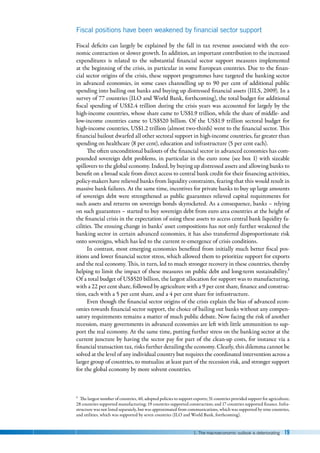
The often unconditional bailouts of the financial sector in advanced economies has com-
pounded sovereign debt problems, in particular in the euro zone (see box 1) with sizeable
spillovers to the global economy. Indeed, by buying up distressed assets and allowing banks to
benefit on a broad scale from direct access to central bank credit for their financing activities,
policy-makers have relieved banks from liquidity constraints, fearing that this would result in
massive bank failures. At the same time, incentives for private banks to buy up large amounts
of sovereign debt were strengthened as public guarantees relieved capital requirements for
such assets and returns on sovereign bonds skyrocketed. As a consequence, banks – relying
on such guarantees – started to buy sovereign debt from euro area countries at the height of
the financial crisis in the expectation of using these assets to access central bank liquidity fa-
cilities. The ensuing change in banks’ asset compositions has not only further weakened the
banking sector in certain advanced economies, it has also transferred disproportionate risk
onto sovereigns, which has led to the current re-emergence of crisis conditions.
In contrast, most emerging economies benefited from initially much better fiscal pos-
itions and lower financial sector stress, which allowed them to prioritize support for exports
and the real economy. This, in turn, led to much stronger recovery in these countries, thereby
helping to limit the impact of these measures on public debt and long-term sustainability.2
Of a total budget of US$520 billion, the largest allocation for support was to manufacturing,
with a 22 per cent share, followed by agriculture with a 9 per cent share, finance and construc-
tion, each with a 5 per cent share, and a 4 per cent share for infrastructure.
Even though the financial sector origins of the crisis explain the bias of advanced econ-
omies towards financial sector support, the choice of bailing out banks without any compen-
satory requirements remains a matter of much public debate. Now facing the risk of another
recession, many governments in advanced economies are left with little ammunition to sup-
port the real economy. At the same time, putting further stress on the banking sector at the
current juncture by having the sector pay for part of the clean-up costs, for instance via a
financial transaction tax, risks further derailing the economy. Clearly, this dilemma cannot be
solved at the level of any individual country but requires the coordinated intervention across a
larger group of countries, to mutualize at least part of the recession risk, and stronger support
for the global economy by more solvent countries.
2 The largest number of countries, 40, adopted policies to support exports; 31 countries provided support for agriculture;
28 countries supported manufacturing; 19 countries supported construction; and 17 countries supported finance. Infra-
structure was not listed separately, but was approximated from communications, which was supported by nine countries,
and utilities, which was supported by seven countries (ILO and World Bank, forthcoming).
20 Global Employment Trends 2012 | Preventing a deeper jobs crisis
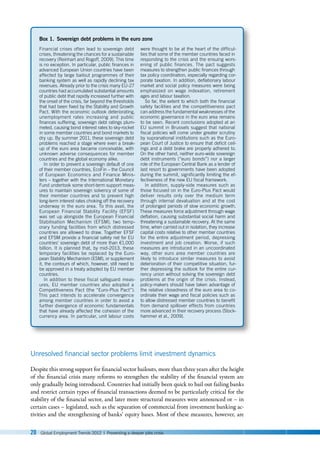
Unresolved financial sector problems limit investment dynamics
Despite this strong support for financial sector bailouts, more than three years after the height
of the financial crisis many reforms to strengthen the stability of the financial system are
only gradually being introduced. Countries had initially been quick to bail out failing banks
and restrict certain types of financial transactions deemed to be particularly critical for the
stability of the financial sector, and later more structural measures were announced or – in
certain cases – legislated, such as the separation of commercial from investment banking ac-
tivities and the strengthening of banks’ equity bases. Most of these measures, however, are
Box 1. Sovereign debt problems in the euro zone
Financial crises often lead to sovereign debt
crises, threatening the chances for a sustainable
recovery (Reinhart and Rogoff, 2009). This time
is no exception. In particular, public finances in
advanced European Union countries have been
affected by large bailout programmes of their
banking system as well as rapidly declining tax
revenues. Already prior to the crisis many EU-27
countries had accumulated substantial amounts
of public debt that rapidly increased further with
the onset of the crisis, far beyond the thresholds
that had been fixed by the Stability and Growth
Pact. With the economic outlook deteriorating,
unemployment rates increasing and public
finances suffering, sovereign debt ratings plum-
meted, causing bond interest rates to sky-rocket
in some member countries and bond markets to
dry up. By summer 2011, these sovereign debt
problems reached a stage where even a break-
up of the euro area became conceivable, with
unknown adverse consequences for member
countries and the global economy alike.
In order to prevent a sovereign default of one
of their member countries, EcoFin – the Council
of European Economics and Finance Minis-
ters – together with the International Monetary
Fund undertook some short-term support meas-
ures to maintain sovereign solvency of some of
their member countries and to prevent high
long-term interest rates choking off the recovery
underway in the euro area. To this avail, the
European Financial Stability Facility (EFSF)
was set up alongside the European Financial
Stabilisation Mechanism (EFSM), two temp-
orary funding facilities from which distressed
countries are allowed to draw. Together EFSF
and EFSM provide a financial safety net for EU
countries’ sovereign debt of more than €1,000
billion. It is planned that, by mid-2013, these
temporary facilities be replaced by the Euro-
pean Stability Mechanism (ESM), or supplement
it, the contours of which, however, still need to
be approved in a treaty adopted by EU member
countries.
In addition to these fiscal safeguard meas-
ures, EU member countries also adopted a
Competitiveness Pact (the “Euro-Plus Pact”).
This pact intends to accelerate convergence
among member countries in order to avoid a
further divergence of economic fundamentals
that have already affected the cohesion of the
currency area. In particular, unit labour costs
were thought to be at the heart of the difficul-
ties that some of the member countries faced in
responding to the crisis and the ensuing wors-
ening of public finances. The pact suggests
measures to strengthen public finances through
tax policy coordination, especially regarding cor-
porate taxation. In addition, deflationary labour
market and social policy measures were being
emphasized on wage indexation, retirement
ages and labour taxation.
So far, the extent to which both the financial
safety facilities and the competitiveness pact
can address the fundamental weaknesses of the
economic governance in the euro area remains
to be seen. Recent conclusions adopted at an
EU summit in Brussels suggest that national
fiscal policies will come under greater scrutiny
by supranational institutions such as the Euro-
pean Court of Justice to ensure that deficit ceil-
ings and a debt brake are properly adhered to.
On the other hand, neither euro-wide sovereign
debt instruments (“euro bonds”) nor a larger
role of the European Central Bank as a lender of
last resort to governments have been adopted
during the summit, significantly limiting the ef-
fectiveness of the new EU fiscal framework.
In addition, supply-side measures such as
those focused on in the Euro-Plus Pact would
deliver results only over the medium term
through internal devaluation and at the cost
of prolonged periods of slow economic growth.
These measures force adjustment through wage
deflation, causing substantial social harm and
threatening a sustainable recovery. At the same
time, when carried out in isolation, they increase
capital costs relative to other member countries
for the entire adjustment period, depressing
investment and job creation. Worse, if such
measures are introduced in an uncoordinated
way, other euro area member countries are
likely to introduce similar measures to avoid
deterioration of their competitive situation, fur-
ther depressing the outlook for the entire cur-
rency union without solving the sovereign debt
problems at the origin of the crisis. Instead,
policy-makers should have taken advantage of
the relative closedness of the euro area to co-
ordinate their wage and fiscal policies such as
to allow distressed member countries to benefit
from demand spillover effects from countries
more advanced in their recovery process (Stock-
hammer et al., 2009).
1. The macroeconomic outlook is deteriorating 21
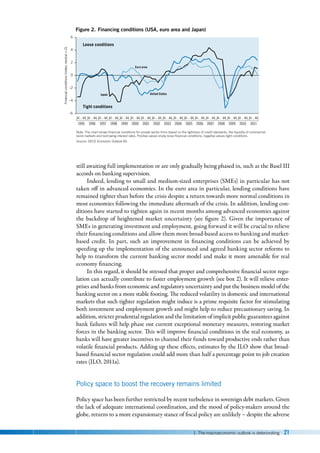
still awaiting full implementation or are only gradually being phased in, such as the Basel III
accords on banking supervision.
Indeed, lending to small and medium-sized enterprises (SMEs) in particular has not
taken off in advanced economies. In the euro area in particular, lending conditions have
remained tighter than before the crisis despite a return towards more normal conditions in
most economies following the immediate aftermath of the crisis. In addition, lending con-
ditions have started to tighten again in recent months among advanced economies against
the backdrop of heightened market uncertainty (see figure  2). Given the importance of
SMEs in generating investment and employment, going forward it will be crucial to relieve
their financing conditions and allow them more broad-based access to banking and market-
based credit. In part, such an improvement in financing conditions can be achieved by
speeding up the implementation of the announced and agreed banking sector reforms to
help to transform the current banking sector model and make it more amenable for real
economy financing.
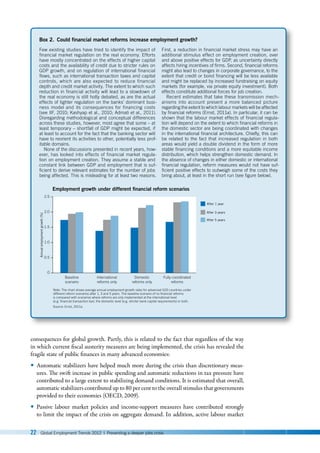
In this regard, it should be stressed that proper and comprehensive financial sector regu-
lation can actually contribute to faster employment growth (see box 2). It will relieve enter-
prises and banks from economic and regulatory uncertainty and put the business model of the
banking sector on a more stable footing. The reduced volatility in domestic and international
markets that such tighter regulation might induce is a prime requisite factor for stimulating
both investment and employment growth and might help to reduce precautionary saving. In
addition, stricter prudential regulation and the limitation of implicit public guarantees against
bank failures will help phase out current exceptional monetary measures, restoring market
forces in the banking sector. This will improve financial conditions in the real economy, as
banks will have greater incentives to channel their funds toward productive ends rather than
volatile financial products. Adding up these effects, estimates by the ILO show that broad-
based financial sector regulation could add more than half a percentage point to job creation
rates (ILO, 2011a).
Policy space to boost the recovery remains limited
Policy space has been further restricted by recent turbulence in sovereign debt markets. Given
the lack of adequate international coordination, and the mood of policy-makers around the
globe, returns to a more expansionary stance of fiscal policy are unlikely – despite the adverse
Note: The chart shows financial conditions for private sector firms based on the tightness of credit standards, the liquidity of commercial
bond markets and borrowing interest rates. Positive values imply loose financial conditions, negative values tight conditions.
Source: OECD Economic Outlook 90.
Financial
conditions
(index;
neutral
=
0)
Figure 2. Financing conditions (USA, euro area and Japan)
–6
–2
–4
0
2
4
6
United States
Japan
Euro area
1995
Q1…Q4
1996
Q1…Q4
1997
Q1…Q4
1998
Q1…Q4
1999
Q1…Q4
2000
Q1…Q4
2001
Q1…Q4
2002
Q1…Q4
2003
Q1…Q4
2004
Q1…Q4
2005
Q1…Q4
2006
Q1…Q4
2007
Q1…Q4
2008
Q1…Q4
2009
Q1…Q4
2010
Q1…Q4
2011
Q1…Q4
Loose conditions
Tight conditions
22 Global Employment Trends 2012 | Preventing a deeper jobs crisis
Box 2. Could financial market reforms increase employment growth?
Few existing studies have tried to identify the impact of
financial market regulation on the real economy. Efforts
have mostly concentrated on the effects of higher capital
costs and the availability of credit due to stricter rules on
GDP growth, and on regulation of international financial
flows, such as international transaction taxes and capital
controls, which are also expected to reduce financial
depth and credit market activity. The extent to which such
reduction in financial activity will lead to a slowdown of
the real economy is still hotly debated, as are the actual
effects of tighter regulation on the banks’ dominant busi-
ness model and its consequences for financing costs
(see IIF, 2010; Kashyap et al., 2010; Admati et al., 2011).
Disregarding methodological and conceptual differences
across these studies, however, most agree that some – at
least temporary – shortfall of GDP might be expected, if
at least to account for the fact that the banking sector will
have to reorient its activities to other, potentially less prof-
itable domains.
None of the discussions presented in recent years, how-
ever, has looked into effects of financial market regula-
tion on employment creation. They assume a stable and
constant link between GDP and employment that is suf-
ficient to derive relevant estimates for the number of jobs
being affected. This is misleading for at least two reasons.
First, a reduction in financial market stress may have an
additional stimulus effect on employment creation, over
and above positive effects for GDP, as uncertainty directly
affects hiring incentives of firms. Second, financial reforms
might also lead to changes in corporate governance, to the
extent that credit or bond financing will be less available
and might be replaced by increased fundraising on equity
markets (for example, via private equity investment). Both
effects constitute additional forces for job creation.
Recent estimates that take these transmission mech-
anisms into account present a more balanced picture
regarding the extent to which labour markets will be affected
by financial reforms (Ernst, 2011a). In particular, it can be
shown that the labour market effects of financial regula-
tion will depend on the extent to which financial reforms in
the domestic sector are being coordinated with changes
in the international financial architecture. Chiefly, this can
be related to the fact that increased regulation in both
areas would yield a double dividend in the form of more
stable financing conditions and a more equitable income
distribution, which helps strengthen domestic demand. In
the absence of changes in either domestic or international
financial regulation, reform measures would not have suf-
ficient positive effects to outweigh some of the costs they
bring about, at least in the short run (see figure below).
Note: The chart shows average annual employment growth rates for advanced G20 countries under
different reform scenarios after 1, 3 and 5 years. The baseline scenario of no financial reforms
is compared with scenarios where reforms are only implemented at the international level
(e.g. financial transaction tax), the domestic level (e.g. stricter bank capital requirements) or both.
Source: Ernst, 2011a.
Annual
employment
growth
(%)
Employment growth under different financial reform scenarios
0
1.0
0.5
1.5
2.0
2.5
After 1 year
After 3 years
After 5 years
Baseline
scenario
International
reforms only
Domestic
reforms only
Fully coordinated
reforms
consequences for global growth. Partly, this is related to the fact that regardless of the way
in which current fiscal austerity measures are being implemented, the crisis has revealed the
fragile state of public finances in many advanced economies:
y
y Automatic stabilizers have helped much more during the crisis than discretionary meas-
ures. The swift increase in public spending and automatic reductions in tax pressure have
contributed to a large extent to stabilizing demand conditions. It is estimated that overall,
automatic stabilizers contributed up to 80 per cent to the overall stimulus that governments
provided to their economies (OECD, 2009).
y
y Passive labour market policies and income-support measures have contributed strongly
to limit the impact of the crisis on aggregate demand. In addition, active labour market
1. The macroeconomic outlook is deteriorating 23
policies have acted as important flanking policies on the labour market, supporting job-
seekers in finding new opportunities in alternative sectors or firms.
y
y Tax breaks on hiring for private businesses to create employment do seem to provide some
relief despite the severe macroeconomic adversity. However, the deadweight costs of these
tax breaks have proven to limit their potential benefits. In a weak macroeconomic envir-
onment, many businesses simply will not hire. Earlier experiences already demonstrated
that these measures have been found to be very costly with only little additional effect on
employment creation (Hungerford and Gravelle, 2010).
Implementing these insights more broadly would substantially enhance the balanced-budget
multiplier, i.e. the capacity of governments to expand private demand even in the absence of
deficit spending. It is estimated that under the current conditions of ineffective monetary
policy, such reorientation of fiscal objectives (“smart spending”) could yield multiplier effects
of over 2, i.e. private demand would expand by more than two dollars for each dollar on the
public balance sheet (e.g. Woodford, 2010).
Monetary policy also will need to be adjusted soon. Central banks have little ammuni-
tion left for guaranteeing liquidity provision to the real economy, despite the tightening finan-
cial conditions observed in many advanced economies. Quantitative easing and the attempts
by both the Federal Reserve and the European Central Bank to lower long-term interest rates
by buying up sovereign debt has so far not satisfied expectations by policy-makers and market
participants. Risk premia, in particular on sovereign bonds of some countries, continue to be
unsustainably high and show no signs of receding without major policy actions – such as a
partial default by some sovereigns within the euro area.
Forces acting over the medium term
Underlying the weaker than expected recovery of global activity and the short-run downside
risks are structural changes that have been fuelling the crisis. In particular, the slowdown of
productivity growth in advanced economies and the concomitant shift of global activity to the
emerging world have opened up imbalances that have not yet been taken up in a satisfactory
manner. This has resulted in a gradual and – due to the crisis – permanent decline in poten-
tial output growth, which will further weigh on policy-makers’ options.
Structural imbalances have weighed upon the recovery
Structural imbalances that have built up over the past decade are likely to worsen the employ-
ment outlook. Housing and asset price bubbles as well as the ensuing crisis have created sub-
stantial sectoral misalignments that need to be fixed; this will require lengthy and costly
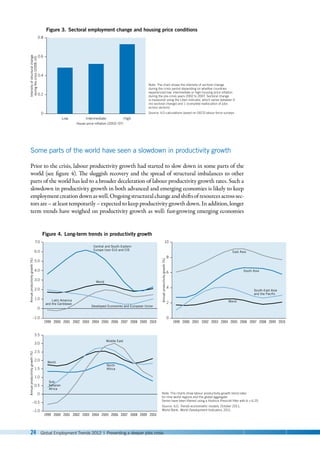
shifts in employment, not only across the economy, but also across countries (see figure 3).
Strong liquidity growth has created a boom in the housing and financial sectors, which is
still ongoing in some economies, leading to misallocation of resources and generating struc-
tural unemployment in the labour market that are likely to take time to be fully resolved.
These structural frictions are also responsible for a low employment response to growth, in
particular in those economies where the boom has already been followed by a bust, such as
the United States, Spain and Ireland. Going forward, the readjustment of these imbalances is
likely to limit the effectiveness of policy interventions as traditional macroeconomic policies
may be of limited help when it comes to rebalancing sectoral growth patterns. Additional
policy levers, therefore, are needed to allow a more rapid reallocation of jobs and workers
across the economy to promote faster employment growth.
24 Global Employment Trends 2012 | Preventing a deeper jobs crisis
Note: The chart shows the intensity of sectoral change
during the crisis period depending on whether countries
experienced low, intermediate or high housing price inflation
during the pre-crisis years 2002 to 2007. Sectoral change
is measured using the Lilien indicator, which varies between 0
(no sectoral change) and 1 (complete reallocation of jobs
across sectors).
Source: ILO calculations based on OECD labour force surveys.
Intensity
of
structural
change
during
the
crisis
(2008–10)
House price inflation (2002–07)
Figure 3. Sectoral employment change and housing price conditions
0
0.4
0.2
0.6
0.8
Low Intermediate High
Note: The charts show labour productivity growth trend rates
for nine world regions and the global aggregate.
Series have been filtered using a Hodrick-Prescott filter with λ = 6.25.
Source: ILO, Trends econometric models, October 2011;
World Bank, World Development Indicators, 2011.
Annual
productivity
growth
(%)
Figure 4. Long-term trends in productivity growth
–1.0
1.0
2.0
3.0
4.0
5.0
6.0
0
7.0
1999 2000 2001 2002 2003 2004 2005 2006 2007 2008 2009 2010
Annual
productivity
growth
(%)
–1.0
0.5
–0.5
1.0
1.5
2.0
2.5
3.0
0
3.5
1999 2000 2001 2002 2003 2004 2005 2006 2007 2008 2009 2010
Annual
productivity
growth
(%)
0
4
6
8
2
10
1999 2000 2001 2002 2003 2004 2005 2006 2007 2008 2009 2010
World
World
Developed Economies and European Union
Central and South-Eastern
Europe (non-EU) and CIS
Latin America
and the Caribbean
South Asia
East Asia
South-East Asia
and the Pacific
World
North
Africa
Middle East
Sub-
Saharan
Africa
Some parts of the world have seen a slowdown in productivity growth
Prior to the crisis, labour productivity growth had started to slow down in some parts of the
world (see figure 4). The sluggish recovery and the spread of structural imbalances to other
parts of the world has led to a broader deceleration of labour productivity growth rates. Such a
slowdown in productivity growth in both advanced and emerging economies is likely to keep
employmentcreationdownaswell.Ongoingstructuralchangeandshiftsofresourcesacrosssec-
tors are – at least temporarily – expected to keep productivity growth down. In addition, longer
term trends have weighed on productivity growth as well: fast-growing emerging economies
1. The macroeconomic outlook is deteriorating 25
have been maturing (Eichengreen et al., 2011) and services-sector dominated advanced econ-
omies have faced difficulties in keeping technological progress at a constant high speed.
The slowdown in productivity trends and the expectation of lower rates of capital returns
will weigh on capital outlays and is likely to delay any return to the investment growth seen
prior to the crisis. On the one hand, lower productivity growth rates decrease expected rates
of return, thereby weighing on asset prices and hence investment (see Cochrane, 1991, 2008).
On the other hand, lower productivity growth might also limit the available cash flow to
enterprises, thereby reducing the capacity of firms to invest. Together, these trends will reduce
the economy’s potential to increase its capital stock and to recover from the loss in wealth
incurred during the crisis. This in turn will further weigh on future expected productivity
increases, running the risk of creating a downward spiral towards permanently lower rates of
trend growth (see the tight link between productivity growth and investment in figure 5).
Recovery in investment has been sluggish,
especially in advanced economies
Indeed, investment has already taken a large hit, both from the crisis and from unfavour-
able structural developments. Even though, investment managed to recover somewhat, but
unequally across the globe. In advanced economies as well as eastern Europe, the unresolved
financial sector problems, high levels of uncertainty regarding global prospects and the lower
propensity of households to consume have slowed the recovery in corporate investment. With
the onset of the crisis, business investment declined to historically low levels, often leading to
net destruction of the capital stock, with particularly adverse effects on job creation. Given
the slow recovery in investment, job creation has not resumed in these economies. Conversely,
emerging economies, on the back of their strong overall performance, have already returned
to pre-crisis investment rates and are expected to exceed them over the medium term.
This slowdown in investment bodes ill for stronger job creation in advanced economies,
given the strong links between the two in the past. Indeed, in the past only strong invest-
ment growth – more than the expansion of production – was a precondition for reduced un-
employment rates (see figure 6).3 In addition, the employment intensity of investment has been
depressed in the current macroeconomic environment, indicating that even faster investment
3 For a detailed analysis of the impact of the observed slowdown in investment on employment dynamics, see IILS
(2011), Chapter 2.
Note: Values for 2011 are forecasts.
Source: ILO Trends econometric models, October 2011; World Bank, World Development Indicators, 2011.
Annual
average
productivity
growth
(%)
Change in investment share (percentage points)
Figure 5. Changes in investment shares and global
productivity growth (2000–10)
–2.5 –2.0 –1.5 –1.0 –0.5 0.5
0 1.0 1.5
–2.0
–1.0
1.0
0
2.0
3.0
4.0
5.0
2000
2001
2002
2003
2004
2005
2006
2007
2008
2009
2010
2011
26 Global Employment Trends 2012 | Preventing a deeper jobs crisis
growth than in the past is required to bring unemployment down. Indeed, as the crisis has
led to substantial capital scrapping and re-evaluation of existing capital stocks, the threshold
for investment growth necessary for job creation is likely to be higher than before the crisis,
and investment rates need to surpass pre-crisis levels to absorb unemployment (Zoega, 2010).
Moreover, investment in some emerging economies has not been as job-rich as in the past,
so the current acceleration is not expected to add many new jobs and so will not bring down
global unemployment.
World trade slowed, but has shown some recovery
World trade is central for a continuous, broad-based recovery in employment. At the height
of the crisis in 2009, faltering international trade caused substantial adverse spillover effects,
spreading crisis conditions to countries across the globe irrespective of their financial sector
situation. At the same time, once uncertainty dissipated, the strong recovery of trade also sup-
ported the global revival of economic activity and employment growth experienced between
the second half of 2009 and the beginning of 2011. Going forward, open world markets, and
especially the capacity for emerging economies to market their products in more advanced
economies, remain essential for preventing a more substantial deterioration of what is already
a bleak situation. In addition, growing trade among emerging countries has contributed to
a gradual decoupling of economies and the emergence of new centres of growth, which have
the potential to stabilize global growth and prevent a more severe double-dip recession.
Indeed, world trade has helped to allow new growth drivers to enter the recovery process.
Prior to the crisis, global growth had chiefly been driven by advanced economies (see table 2),
as strong private consumption in major developed countries, such as the United States, France
andJapan,hadhelpedtoabsorbcommoditiesandgoodsproducedintheemergingworld.With
the onset of the crisis and in the following recovery, the sources of global growth have changed
and partly moved to the emerging world. This indicates a major shift, not only regarding the
sources of global growth, but also in the direction of world trade, and is likely to have long-
term effects on the economic structure, in particular of advanced economies. As a matter of
fact, countries that were running large current account deficits prior to the crisis – such as the
United States and Spain – managed to regain some competitiveness and allow a stronger role
for manufacturing trade in their recovery. Overall, this shift of growth and trade allowed at
least a temporary reduction in the global imbalances that were at the origin of the global crisis.
World trade has already started to slow after the quick and strong recovery in 2010. On
the back of lower consumption growth, in particular in advanced economies, world trade
growth almost halved. However, the emergence of new centres of global growth among
Note: The chart shows the average unemployment rate
at different levels of investment shares between 1971
and 2010 for a sample of 178 countries. Investment shares
are classified as low, intermediate or high with respect to
historical averages on a country-by-country basis.
Source: ILO Trends econometric models, October 2011;
IMF, World Economic Outlook database, September 2011.
Unemployment
rate
(%)
Investment share (% of GDP)
Figure 6. Investment and global unemployment
0
2
1
3
4
5
6
7
Low Intermediate High
1. The macroeconomic outlook is deteriorating 27
developing economies managed to keep world trade growing close to its historical average.
Given the recurrent problems in advanced economies, a further slowdown is to be expected
followed by a moderate rebound in 2013 (see figure 7).
Scenarios and policy responses
The ILO’s central projection foresees gradual slowdown
in activity and flat unemployment
In our baseline scenario, employment growth rates are expected to remain subdued for several
years. Against the background of high uncertainty and adverse long-term trends, investment
is likely to remain subdued for a prolonged period, preventing a fast recovery in employment
Rather, the slowdown in growth and the structural difficulties will lead to a further opening
of the jobs gap, although without necessarily increasing the global unemployment rate. Part
of the additional potential workforce will stay outside the labour market, thereby increasing
the pool of discouraged workers. In countries without well-developed social security systems,
people will increasingly be forced into low-quality, informal sector jobs to earn a living.
Going forward, this scenario implies a substantial drag not only on employment but also on
income and, particularly, on wages. Disposable income will be under pressure both from higher
Table 2. Patterns of global growth
Growth in
Brazil China France Japan USA Brazil China France Japan USA
Prior to the crisis After the crisis
Was
driven
by
Brazil –   No No No –   No(a)
No Yes(b)
China   – No(c)
No No   – Yes(c)
No No
France Yes Yes –     No No –    
Japan Yes(b)
Yes(b)
  –   No No   –  
USA Yes Yes     – No No     –
Note: The period “prior to the crisis” refers to the years 1998-2008, the one “after the crisis” to 2009–2010. The table presents sum-
mary evidence on the cross-country interactions between quarterly GDP growth rates using Granger causality tests. Reported test
results are significant at 5% level. All growth rates were filtered using the Hodrick-Prescott decomposition prior to testing. For details
on the methodology, see Ballon and Ernst (forthcoming). (a) Although it is not possible to reject the null hypothesis the test shows a
decrease of 66% of the probability value associated with the test. This might indicate a switch of Granger causality between Brazil and
France. (b) The null hypothesis is rejected at the 10% level. (c) Tests are for: 1993 to 2009Q1, and 2009Q2 to 2010Q4, respectively.
Source: ILO estimates based on EIU quarterly GDP data.
ILO calculations based on UN DESA, 2012.
World
trade
growth
(%
p.a.)
Figure 7. World trade growth: Baseline and downward scenario projections
–15
–5
–10
0
5
10
15
2005–08 2009 2010 2011 2012 2013
28 Global Employment Trends 2012 | Preventing a deeper jobs crisis
taxation and lower public spending as governments aim to restore sound fiscal policies. At the
same time, slow employment growth offers little opportunity for increased wages. Finally, at the
current juncture, with strong liquidity creation but without much channelling through to the
real economy, further hikes in asset and commodity prices can be expected, fuelling global infla-
tion and lowering real wages across the world. The unemployment rate is expected to decline
only gradually, with the number of jobseekers increasing globally, in line with the continuous
growth of the labour force (see baseline projection, short-dashed line, in figure 8).
The situation could deteriorate substantially
if sovereign debt problems spill over to private credit
The situation would substantially deteriorate if current turbulence in sovereign debt markets
is not adequately addressed. In this situation, partial or full sovereign defaults, or even only a
continuous transfer of funds, is likely to spill over into the banking sector, leading to substan-
tial stress there and the possibility of bankruptcies of major European banks. The heightened
uncertainty will also affect global capital flows and business sentiment again, with strong
adverse effects on world trade (see figure 7). Such a disruption in economic activity together
with very tight policy space could lead to a downward spiral in economic activity and the
possibility of deflationary pressures, which would put off any recovery until well into 2013.
Unemployment would take a further hit, adding an additional 1 million jobseekers globally
over the next two years (see downside scenario, grey dashed-line, in figure 8).
A quick clean-up of the banking sector would
speed up investment and job creation
Prospects for employment creation could improve substantially if current problems in the
financial sector could be properly addressed. In particular, a quick implementation of finan-
cial sector reforms and the setting up of an operational framework that encompasses both
domestic and international financial market reforms would substantially help in reducing
Source: ILO staff calculations based on ILO, Trends econometric models, October 2011;
IMF, World Economic Outlook, September 2011.
Global
employment
(millions)
Figure 8. Global employment trends: Different scenarios
2900
3000
2950
3050
3100
3150
3200
3250
3350
2006 2007 2008 2009 2010 2011p 2012p 2013p 2014p 2015p 2016p
Observed employment
Pre-crisis trend
(2007 unemployment)
Baseline projection
Downside scenario
Additional downside scenario
Boosting investment
scenario (1.8 percentage
points increase by 2016)
Employment gap (deviation
from the pre-crisis trend) 27
1. The macroeconomic outlook is deteriorating 29
financial market volatility and stimulating employment growth. At the same time, a credible
announcement of medium-term fiscal policy reforms, in particular in those countries where
sovereign debt has reached critical levels, would ease market uncertainty and lower risk premia
and interest rates. This, in turn, could contribute to a more rapid normalization of central
bank activities, which would help restore confidence in the stability of the banking sector and
lead a return to more normal lending conditions.
Under such a scenario, investment growth could resume more strongly, helping to accel-
erate job creation. To the extent that global investment shares increase by an additional 2 per-
centage points up to 2016, this would close the employment gap that was opened by the crisis
and allow unemployment to decline to levels seen prior to the crisis (see boosting investment
scenario, long dashed line, in figure 8). Unemployment rates would trend downward – instead
of the current stagnation – and could reach pre-crisis levels before the end of 2013. At the
same time, with most unemployed people looking for jobs in advanced economies, this reduc-
tion would lead to a substantial expansion of gainful employment and an ensuing increase in
market incomes and aggregate demand, providing further stimulus to the global recovery.
At the current juncture, however, such a scenario has only a slim chance of materializing.
2. Global labour market situation 31
2. Global labour market situation
The world enters the year 2012 facing a stark reality: one in three workers in the labour force
is currently either unemployed or poor. That is, out of a global labour force of 3.3 billion,
200 million are unemployed and a further 900 million are living with their families below
the US$2 a day poverty line. In fact, as these poverty estimates do not include the poor in
developed economies, this estimate actually understates the extent of the decent work deficit.
If current economic and labour market trends persist, there is a risk that the deficit will
rise further. The ILO projects 400 million new entrants into labour markets over the next ten
years. As a result, on top of the challenge of improving labour productivity in developing coun-
tries to lift the world’s 900 million working poor out of poverty, 400 million new jobs will be
needed simply to avoid a further increase in global unemployment. The situation is especially
desperate for the world’s youth: 75 million young people around the world are unemployed,
with the highest youth unemployment rates observed in precisely those regions of the world
facing the fastest growth in the labour force. A continuation of current trends risks further
undermining the already dim prospects and aspirations of the world’s youth, sowing the seeds
for continued social unrest and further weakening global economic prospects.
Unemployment and labour force participation
Following four years of elevated unemployment, the ILO’s central
forecast shows little improvement and significant downside risks
For the fourth consecutive year, global unemployment remained elevated in 2011, with more
than 197 million unemployed around the world, a figure unchanged from the year before
and still nearly 27 million more than in 2007 (see figure 9 and table A4). The number of
unemployed around the world increased by 5.8 million in 2008 and then surged by more
than 21 million in 2009, an increase from a rate of 5.5 per cent to 6.2 per cent. Global un-
employment remains stuck at a rate of around 6.0 per cent, despite rapid economic growth of
5.1 per cent in 2010 and 4 per cent in 2011. The baseline projection shows no change in the
global unemployment rate, which would lead to an additional 3 million unemployed around
the world, giving a total of 200 million in 2012.
Downside risks to economic activity have increased substantially since mid-2011, with
global growth of below 2 per cent in 2012 a growing possibility (IMF, 2011b). The most
notable risks are: the question of debt sustainability in weak sovereigns and exposure of banks
in a number of advanced economies, which could spark contagion; in countries such as Japan,
the United States and many in the euro area, policies that are insufficiently strong to address
the effects of the crisis on the major advanced economies; vulnerabilities (including risks of
overheating from surging credit growth) in some emerging market economies; and volatile
commodity prices and geopolitical tensions (IMF, 2011b).
As described in Chapter 1, the ILO has produced downside and upside scenarios for
global unemployment and employment, in addition to the baseline scenario (Annex 5 provides
32 Global Employment Trends 2012 | Preventing a deeper jobs crisis
a detailed description of the methodology and assumptions).4 The downside scenario assumes
negative shocks in the euro area (primarily through bank capital reflecting losses on holdings
of public debt), the United States (through slower potential output growth and increasing
loan losses on mortgage portfolios) and emerging Asia (through losses on non-performing
loans). The scenario assumes fallout effects in other regions, for instance through a decline
in commodity prices, which impacts commodity exporters. In this scenario, global growth
would fall to 1.6 per cent in 2012 and then rise to around 5 per cent in 2013, versus the base-
line projection of 4 per cent growth in 2012 and 4.5 per cent in 2013.
In the downside scenario, global unemployment would rise to 204  million in 2012,
4 million more than under the baseline scenario, with a further increase to 209 million in
2013, 6 million more than in the baseline scenario. The largest impact is projected for the
Developed Economies and European Union region, which would have an additional 3 mil-
lion unemployed in 2012 and an additional 4 million unemployed in 2013 versus the base-
line scenario. This region’s unemployment rate would rise to 9 per cent in 2012 and edge up
to 9.1 per cent in 2013, versus projections of 8.5 per cent for 2012 and 8.4 per cent under the
baseline scenario. The three Asian regions would together have 1.4 million (nearly 2 per cent)
more unemployed in 2013 than under the baseline forecast.
The additional downside scenario presented in figure 9 shows the impact of global growth
decelerating to 1 per cent in 2012. In this scenario, global unemployment would rise by an
additional 2 million in 2012 (5 million more than in the baseline scenario), and by an addi-
tional 3 million in 2013 (9 million more than in the baseline scenario). Global unemployment
would rise to 212 million by 2014 and remain elevated through at least 2016.
The upside scenario for global unemployment and employment assumes a relatively
benign outcome from the euro debt crisis, which would lead to growth acceleration in the
Developed Economies and European Union region (from 1.4 per cent in 2011 to 2.5 per cent
in 2012), which in turn would lead to somewhat faster growth in regions with strong ties to
Europe and the United States, namely Central and South-Eastern Europe (non-EU) and CIS,
Latin America and the Caribbean and the Asian regions.
In the upside scenario, global unemployment would be around 1  million lower than
in the baseline scenario in 2012 and 1.7 million lower in 2013, however this would not be
4 Tables in Annex 1 include confidence intervals around the ILO’s central estimates for employment and unemployment,
while tables in Annex 2 provide confidence intervals around the ILO’s central projections for these indicators.
Note: 2011 are preliminary estimates; 2012–2016 are preliminary projections.
Source: ILO Trends econometric models, October 2011 (see Annex 4); IMF, World Economic Outlook, September 2011.
Total
unemployment
(millions)
Unemployment
rate
(%)
Figure 9. Global unemployment trends and projections, 2002–16
140
150
145
155
160
165
170
175
180
185
190
195
200
205
210
215
5.0
5.2
5.1
5.3
5.4
5.5
5.6
5.7
5.8
5.9
6.0
6.1
6.2
6.3
6.4
6.5
2006
2002 2003 2004 2005 2007 2008 2009 2010 2011 2012 2013 2014 2015 2016
Total unemployment
Total unemployment –
downside scenario
Total unemployment –
additional downside scenario
Unemployment rate
Unemployment rate –
downside scenario
Unemployment rate –
upside scenario
Unemployment
rate – additional
downside scenario
2. Global labour market situation 33
sufficient to significantly alter the trajectory of the global unemployment rate, which is pro-
jected to remain stuck at around 6 per cent. The reduction in unemployment would largely
occur in the Developed Economies and European Union region, where the unemployment
rate would fall from 8.5 per cent in 2011 to 8.3 per cent in 2012 and to 8.2 per cent in 2013.
Youth have been hard hit by the crisis
In 2011, 74.8 million youth aged 15–24 were unemployed, an increase of more than 4 million
since 2007. The global youth unemployment rate, at 12.7 per cent, remains a full percentage
point above the pre-crisis level. Globally, young people are nearly three times as likely as adults
to be unemployed. In this light, the increase in social unrest in many countries and regions
around the world is of little surprise (see IILS, 2011, Ch. 1). In the Middle East and North
Africa regions, for example, youth are around four times as likely as adults to be unemployed,
with youth unemployment rates well in excess of 25 per cent in both regions.
High youth unemployment is likely to cause long-term damage to labour market pro-
spects and potential growth. As noted in a recent ILO report on the topic, “the bad luck of
the generation entering the labour market in the years of the Great Recession brings not only
current discomfort (from unemployment, underemployment, and the stress and social haz-
ards associated with joblessness and prolonged inactivity), but also possible longer term con-
sequences in terms of lower future wages and distrust of the political and economic system”
(ILO, 2011b). As the number and share of unemployed youth is projected to remain essen-
tially unchanged in 2012, and as the share of young people withdrawing from the labour
market altogether continues to rise (see discussion below), if the present course is maintained
there is unfortunately little hope for a substantial improvement in near-term employment
prospects for young people.
Falling labour force participation masks
an even worse global unemployment situation
The increase in global unemployment of nearly 27 million since 2007 is unprecedented, and
this headline figure provides an indication of the severity of the shock to many labour markets
around the world. Nevertheless, the figure substantially understates the extent of the global
employment shortfall. In many countries there is evidence of an accelerated decline in labour
force participation.5 In the five years from 2002 to 2007, the global labour force participation
rate declined from 65.1 per cent to 64.8 per cent, a drop of 0.3 percentage points. In the four
years from 2007 to 2011, the rate dropped to 64.1 per cent, a decline of 0.7 percentage points.
The pace of decline in labour force participation at the global level since 2007 has been two-
and-a-half times greater than in the five years leading up to the crisis.
In order to gauge the extent of falling participation around the world and to estimate
the size of the employment gap that has resulted from this, a scenario was constructed in
which labour force participation rates at the country level for four groups (youth males, youth
females, adult males and adult females) were projected forward from 2007 to 2011 based on
historical trends over the 2002 to 2007 period. Specifically, the average annual change in
labour force participation rates between 2002 and 2007 was calculated for each of these four
5 A country’s labour force is equal to the sum of persons in employment and unemployed persons. In order to be counted
among the unemployed, an individual must not have worked (even for one hour) during the reference period and must
have been actively seeking and available to take up employment. A person who has decided to stop looking for work be-
cause they feel they have no chance at finding a job is considered economically inactive (i.e. outside the labour force) and
is therefore not counted among the unemployed. This also applies to young people who choose to remain in schooling
longer than they had intended and delay seeking employment because of the perceived lack of job opportunities.
34 Global Employment Trends 2012 | Preventing a deeper jobs crisis
groups and participation rates were projected over the 2008 to 2011 period using the histor-
ical average annual changes. The difference in participation rates was calculated, and this was
multiplied by each group’s population to obtain an estimate of the gap (positive or negative)
between the actual labour force in 2011 and the expected labour force based on pre-crisis
trends. The country-level gaps were then summed across all countries in each region to obtain
regional aggregates. Figure 10 provides the results of this analysis.
A global labour force gap of 29 million
In the world as a whole, there were nearly 29 million fewer people in the labour force in 2011
than would have been expected based on pre-crisis trends. This number is equal to nearly 1 per
cent of the actual global labour force in 2011, and to nearly 15 per cent of the total number
of unemployed in the world. Put another way, if all of these potential workers were avail-
able to work and sought work, the number of unemployed would swell to over 225 million,
or to a rate of 6.9 per cent, versus the actual rate of 6 per cent. Falling participation among
adult women accounts for two-thirds of the shortfall – an astounding figure given that adult
women comprise less than one-third of the actual labour force. The other hard-hit group is
young men, who account for over 17 per cent of the shortfall, versus less than 11 per cent
of the global labour force. The share of the total shortfall for both young women and adult
men is less than their respective shares in the labour force, implying that these groups have
been less hard hit at the global level in terms of unexpectedly large declines in labour force
participation. In total, there were 6.4 million fewer youth and 22.3 million fewer adults in
the workforce in 2011 than would have been expected based on long-term historical trends.
Figure 10 shows the gaps between the actual size of the labour force in 2011 and the
expected labour force based on pre-crisis trends, with the gap disaggregated into four popu-
lation groups: youth males, youth females, adult males and adult females. These gaps are rep-
resented by the bars in the figure. In addition, the figure shows the actual unemployment rate
in each region in 2011 along with the rate that would result if the labour force gap in each
region was added to the number of unemployed. The region with the largest gap between
the actual and expected labour force is South Asia, in which the labour force in 2011 was
21 million fewer than expected (see figure 10). This region therefore accounts for the bulk
of the global employment gap. It is important to note that the large labour force gap in
South Asia is unlikely to have been a direct consequence of the global economic crisis, given
that the region was not severely impacted. Identifying the root causes of the drop in partici-
pation will be crucial for designing and implementing appropriate labour market policies to
promote employment creation in the region. Adult women have been particularly affected,
accounting for 60 per cent of the region’s labour force shortfall while comprising less than
22 per cent of the labour force. Youth – both young women and young men – account for
a further 35 per cent of the shortfall though they comprise only 20 per cent of the labour
force. Adding this labour force shortfall to the region’s unemployed would dramatically raise
the unemployment rate: from 3.8 per cent to 7.1 per cent. Trends for this region are heavily
influenced by India, which accounts for 74 per cent of the region’s labour force (the South
Asia region section in Chapter 3 provides more detail on trends in employment and labour
force participation in India).
Participation rates have also plunged in many countries in the Developed Economies and
European Union region, resulting in 6 million fewer people in the labour force than would
have been expected based on pre-crisis trends. Adding this cohort to the unemployed would
raise the region’s unemployment rate from 8.5 per cent to 9.6 per cent. Youth in developed
economies have been hardest hit: youth comprise one-third of the labour force shortfall versus
less than 12 per cent of the region’s labour force, with a total of 2 million fewer youth in the
labour force than would have been expected.
2. Global labour market situation 35
The Middle East and North Africa regions have also seen falling participation rates,
which could raise unemployment rates by as much as 1 percentage point if this cohort of in-
active persons were added to the ranks of the unemployed. In both regions, the most affected
group is adult women, which is disconcerting given the very low female participation rates in
the regions and is potentially indicative of women being locked out of a labour market that
was already very difficult for them to enter.
In East Asia, South-East Asia and the Pacific, Latin America and the Caribbean and
Sub-Saharan Africa, changes in participation were not far from expectations based on pre-
crisis trends. The outlier is Central and South-Eastern Europe (non-EU) and CIS, where par-
ticipation rates among youth in the Russian Federation and, to a lesser extent, in Turkey rose
between 2007 and 2011, leading to more young workers in the labour market.
While participation rates have declined in many countries as discouragement has been
on the rise, it is important to note that the global labour force is projected to expand by
400 million over the decade beginning in 2012 (ILO, 2011c). The Middle East, North Africa
and Sub-Saharan African regions are projected to experience the fastest growth in the labour
force. In these regions nearly 15 million new jobs will be needed each year to avoid a further
increase in unemployment. In South Asia, over 12 million new jobs will be needed each year.
Employment and labour productivity
A sharp decline in the employment-generating
capacity of the global economy
The number of workers around the world continues to increase, though the pace of increase
has slowed in recent years (see figure 11). After an average increase in global employment of
52 million workers each year over the four years from 2004 to 2007, job expansion decel-
erated sharply to an average of only 33 million over the crisis years from 2008 to 2011. In
2008, it reached a record low of only 14.2 million, which is the lowest level of global employ-
ment growth ever recorded (with estimates available since 1991). The number of workers
Source: Authors' calculations based on ILO, Trends Econometric Models, October 2011 (see Annex 4);
and ILO, Economically Active Population Estimates and Projections database, Version 6.
Gap
between
expected
and
actual
labour
force
in
2011
(millions)
Unemployment
rate
(%)
Figure 10. Gap between actual and expected labour force in 2011, total
unemployment rates and unemployment rates adjusted to account
for reduced labour force participation, world and regions, 2011
–5
5
0
10
15
20
25
30
0
4
2
6
8
10
12
14
World South
Asia
Developed
Economies
and European
Union
North
Africa
Middle
East
East
Asia
Sub-
Saharan
Africa
Latin
America
and the
Caribbean
South-East
Asia and
the Pacific
Central
and South-
Eastern
Europe
(non-EU)
and CIS
Youth male labour force gap
Youth female
labour force gap
Adult male labour force gap
Adult female
labour force gap
Total unemployment rate (%)
Total unemployment rate
adjusted for labour force gap (%)
6.0%
6.9%
3.8%
7.1%
8.5%
9.6%
11.3%
10.2%
12.9%
10.9%
4.1%
4.3%
8.2%
7.2%
4.7%
8.6%
7.1%
4.4%
7.9%
36 Global Employment Trends 2012 | Preventing a deeper jobs crisis
around the world grew by 38.1 million in 2009, the year in which global economic growth
contracted by 0.7 per cent. Despite the sharp upturn in global economic growth in 2010, to
a rate of 5.1 per cent, the number of employed around the world increased by only 37.5 mil-
lion – still well below the pre-crisis trend. While employment growth picked up somewhat
in 2011, thus far the world has failed to return employment generation to the levels achieved
before the crisis.
The stagnation in global employment generation is made clearer by an examination of
the employment-to-population ratio. The employment-to-population ratio is the proportion
of the working-age population (aged 15 and above) in employment and provides a picture of
the employment-generating capacity of economies. Globally, the employment-to-population
ratio declined sharply during the crisis, from 61.2 per cent in 2007 to 60.2 per cent in 2010.
This represents the largest such decline on record (since 1991). As shown in figure 11, based
on current macroeconomic forecasts, the ILO’s baseline projection for the employment-to-
population ratio is not encouraging, with a flat to slightly declining ratio projected to 2016.
The ILO’s downside scenario would result in a double dip in the global employment-to-
population ratio, with the ratio likely to fall to the lowest rate on record around 2013. The
upside scenario also would not result in growth rates sufficient to bring about a substantial
rise in the global employment-to-population ratio, which would remain well below pre-crisis
levels for the next several years.
Employment trends differ widely across regions and between the sexes
While the global employment-to-population ratio has declined sharply in recent years, looking
at longer term trends from 2002 to 2011 reveals substantial heterogeneity in trends across
regions as well as between the sexes (see figure 12). Over this period, the decline in the global
employment-to-population ratio was driven by declines in three regions: the Developed Econ-
omies and European Union, East Asia and South Asia, with the latter two regions having
registered particularly large drops.
In the other regions of the world, employment-to-population ratios actually rose after
2002,driveninpartbyincreasingnumbersofwomenintheworkforce.Infourofthesixregions
with rising employment-to-population ratios  –  Latin America and the Caribbean, North
Africa, South-East Asia and the Pacific and Sub-Saharan Africa, employment-to-population
Note: 2011 are preliminary estimates; 2012–2016 are preliminary projections.
Source: ILO, Trends econometric models, October 2011 (see Annex 4).
Total
employment
(billions)
Employment-to-population
ratio
(%)
Figure 11. Global employment trends and projections, 2002–16
2.5
2.7
2.6
2.8
2.9
3.0
3.1
3.2
3.3
59.2
59.4
59.6
60.2
60.0
59.8
60.6
60.4
61.0
61.2
60.8
61.4
2006
2002 2003 2004 2005 2007 2008 2009 2010 2011 2012 2013 2014 2015 2016
Total employment
Employment-
to-population
ratio
Employment-to-
population ratio –
downside scenario
Employment-to-
population ratio –
additional downside
scenario
Employment-to-
population ratio –
upside scenario
2. Global labour market situation 37
ratios for women rose faster than the corresponding ratios for men, resulting in a narrowing
of the gender employment gap. This was particularly noteworthy in Latin America and the
Caribbean, in which the employment-to-population ratio among women rose by 5 percentage
points between 2002 and 2011.
In most regions, the crisis has impacted on employment
to a greater extent than on labour productivity – a key factor
behind the sharp rise in unemployment
GDP growth can be broken down into employment growth and changes in labour product-
ivity, measured as the average output per worker. Viewing employment and productivity
growth rates together sheds light on whether the economic downturn has been characterized
more by impacts on employment or by impacts on productivity and whether employment
growth or productivity growth are likely to lead a recovery. Table 3 provides average annual
growth rates in employment and labour productivity for the world as a whole and for the
nine major regional groupings, over the pre-crisis period from 2002 to 2007, the crisis period
from 2008 to 2011, short-run projections for the 2012 to 2013 period and longer run projec-
tions for the 2014 to 2016 period. Cells are coloured according to the extent to which growth
rates deviate from historical trends over the 2002 to 2007 period. Dark grey indicates growth
rates more than one standard deviation below the average annual growth rate achieved over
the 2002 to 2007 period, light grey indicates growth that is less than one standard deviation
below trend, light blue indicates growth that is less than one standard deviation above trend
and dark blue indicates growth that is more than one standard deviation above trend.
Below trend employment growth is the predominant trend across regions and over time.
Globally, employment grew at an average annual rate of 1.1 per cent between 2008 and 2011
and is projected to accelerate to 1.4 per cent growth in 2012–13, compared with historical
growth of 1.8 per cent. The longer run projection over 2014 to 2016 is for continued slug-
gish growth of 1.3 per cent. These figures provide further evidence of a global slowdown in
employment generation – one that is expected to persist for the foreseeable future based on
current macroeconomic forecasts.
In contrast to this, while labour productivity growth for the world as a whole did decel-
erate – averaging only 1.6 per cent between 2008 and 2011 – and was on a decelerating trend
Source: ILO, Trends econometric models, October 2011 (see Annex 4).
Employment-to-population
ratio
(percentage
point
change)
Figure 12. Changes in employment-to-population ratios
by region and sex, 2002–11
–4.5
–3.0
0
–1.5
1.5
3.0
4.5
6.0
World
South
Asia
Developed
Economies
and
European
Union
North
Africa
Middle
East
East
Asia
Sub-
Saharan
Africa
Latin
America
and the
Caribbean
South-East
Asia and
the Pacific
Central and
South-
Eastern
Europe
(non-EU)
and CIS
–3.9
–1.4
–2.1
–1.7
–0.7
–0.6
0.9
2.8
0.9
–2.5
1.1
0.3
1.3
1.5 1.7
0.4
2.9
1.9
5.0
0.5
Total employment-
to-population ratio
Male employment-
to-population ratio
Female employment-
to-population ratio
38 Global Employment Trends 2012 | Preventing a deeper jobs crisis
prior to the crisis (see Chapter 1), the impact of the crisis on labour markets has been skewed
more towards weak employment generation than towards reduced labour productivity growth
and this trend is projected to persist over the next several years. As labour productivity growth
is projected to rebound to above trend growth rates over the projection period, this provides
evidence that, based on the projected rates of economic growth, there is space to accelerate
employment generation globally while still maintaining levels of productivity growth in line
with pre-crisis trends.
In terms of regional trends, the Developed Economies and European Union and Central
and South-Eastern Europe (non-EU) and CIS regions were the hardest hit regions in terms
of economic growth, but the way in which the crisis unfolded in the regions’ labour markets
differs substantially, as do the regions’ projected recovery paths. In the Developed Economies
and European Union region, employment growth was negative during 2008 to 2011, but it
is projected to recover to about half of the rate achieved prior to the crisis. Labour product-
ivity growth in the region dropped sharply during the crisis, but is projected to roughly equal
the pre-crisis rate over the 2012 to 2013 period and to surpass this rate between 2014 and
2016. Given the projected rates of economic growth, this baseline projection reveals scope to
increase employment growth in the region while still maintaining productivity growth rates
in excess of those achieved in the pre-crisis period. This will depend largely on firm-level devel-
opments in terms of boosting investment and accelerating hiring, as opposed to a continua-
tion of the current extreme caution in terms of hiring and efforts to maintain or boost output
without expanding employment.
In contrast to this, in the Central and South-Eastern Europe (non-EU) and CIS region,
employment growth fell to 0.3  percentage points below the pre-crisis trend, but labour
productivity growth plunged to only 1.1 per cent, compared with an average of 6.1 per cent
between 2002 and 2007. The baseline projection calls for a further slowdown in employment
growth, reaching a low of 0.3 per cent annual growth in the 2014 to 2016 period, coupled
with accelerating, but still well below trend, labour productivity growth. The outlook for the
region in both the short term and longer term is for a sluggish recovery, with weak employ-
ment generation and slowly accelerating labour productivity growth.
In East Asia, employment growth fell sharply during the downturn and is projected to
remain well below pre-crisis trends. Labour productivity growth was impacted to a much
lesser extent and is expected to remain above 7 per cent during the two forecast periods.
Table 3. Employment and labour productivity growth, world and regions
(% p.a., selected periods)
  Average annual employment growth Average annual labour productivity growth
  2002–07 2008–11 2012–13 2014–16 2002–07 2008–11 2012–13 2014–16
WORLD 1.8 1.1 1.4 1.3 2.5 1.6 2.6 3.2
Developed Economies and EU 1.0 –0.3 0.4 0.6 1.4 0.5 1.5 2.0
CSEE (non-EU) and CIS 1.1 0.8 0.5 0.3 6.1 1.1 3.5 4.0
East Asia 1.2 0.6 0.6 0.3 8.6 7.8 7.5 8.1
South-East Asia and the Pacific 1.8 1.9 1.6 1.4 4.1 2.6 3.5 4.0
South Asia 2.2 1.0 2.0 1.9 5.4 6.1 4.8 5.4
Latin America and the Caribbean 2.5 1.9 1.8 1.7 1.4 1.0 1.7 1.8
Middle East 4.5 3.2 2.8 2.5 0.9 0.9 1.2 2.0
North Africa 3.4 2.0 2.2 2.3 1.4 1.8 0.8 2.8
Sub-Saharan Africa 3.1 2.8 3.0 3.0 2.5 1.5 2.3 1.9
Note: Based on Trends econometric models estimates; 2011 are preliminary estimates; 2012–13 and 2014–16 are preliminary
projections. CSEE = Central and South-Eastern Europe.
Source: ILO, Trends econometric models, October 2011 (see Annex 4); World Bank, World Development Indicators, 2011.
2. Global labour market situation 39
Annual employment growth is projected to fall to only 0.3 per cent between 2014 and 2016,
which raises some concerns; however, this fall is due in part to changing demographics in the
region, coupled with a decline in labour force participation from the previous historically high
rates, which is occurring alongside the region’s rapid development.
The South-East Asia and the Pacific region achieved slightly faster employment growth
over the 2008 to 2011 period than in the period from 2002 to 2007 and is the only region to
have seen employment growth accelerate during the crisis. Employment growth is expected
to decelerate steadily during the projection periods. Labour productivity growth fell sharply
in the region during the crisis and is projected to remain well below the pre-crisis level during
the 2012 to 2013 period before recovering in the longer term.
The South Asia region saw a sharp reduction in employment growth in 2010, owing
largely to trends in labour force participation and employment in India (see the South Asia
region section in Chapter 3), but employment growth is projected to be just slightly below the
pre-crisis growth rate over both the short-term and longer term projection periods. Labour
productivity growth in the region actually accelerated during the crisis, as the region’s eco-
nomic growth bounced back strongly in 2010 and 2011, but it is expected to moderate over
the projection period.
In Latin America and the Caribbean, the reduction in output growth between 2008 and
2011 was reflected in a deceleration in both employment and productivity growth. Product-
ivity growth is projected to rebound faster than employment growth in the region, with pro-
jected productivity growth rates in excess of rates achieved before the onset of the crisis.
In both the Middle East and North Africa regions, employment growth fell sharply
during the downturn and is projected to remain well below pre-crisis trends. Labour product-
ivity growth was not adversely impacted during the crisis in either region. In the Middle East,
productivity growth is projected to accelerate over the forecast period. In North Africa, with
the ongoing political upheavals, productivity growth is expected to fall over 2012 to 2013, but
subsequently to rise faster than trend.
In Sub-Saharan Africa, both employment and productivity growth decelerated during
the crisis. However, the region has rebounded sharply, beginning in 2010, and is projected
to register economic growth rates of over 5 per cent throughout the forecast period. In this
baseline scenario, employment growth would nearly return to pre-crisis levels. Productivity
growth is projected to average 2.3 per cent over the 2012 to 2013 period, decelerating to
1.9 per cent over the period 2014 to 2016.
Outside of Asia, developing regions have lagged behind
developed economies in labour productivity growth,
raising the risk of a further divergence in living standards
and limiting prospects for poverty reduction
In terms of labour productivity levels, the gap between labour productivity in the developed
and developing regions has narrowed over the past two decades, but it remains substantial:
output per worker in the Developed Economies and European Union region was US$72,900
in 2011, compared with an average of US$13,600 in developing regions. This means that,
adjusted for differences in prices across countries, the average worker in a developing country
produces less than one-fifth of the output of the average worker in a developed country (see
figure 13, panel A).
However, the developing world is not homogeneous: there are large differences in product-
ivity levels and growth rates across the developing regions (see figure 13, panel B). The level
of output per worker in the Middle East region was 53 per cent of the corresponding level in
the developed economies region in 2011; however, the Middle East has had slower product-
ivity growth than the developed economies region and consequently the ratio has fallen from
40 Global Employment Trends 2012 | Preventing a deeper jobs crisis
64 per cent in 1991. The three regions with the next highest levels of labour productivity:
Central and South-Eastern Europe (non-EU) and CIS (with output per worker equivalent
to 35 per cent of the level in the developed region in 2011), Latin America and the Car-
ibbean (32 per cent of the productivity level in the developed region in 2011) and North
Africa (25 per cent of the productivity level in the developed region in 2011) have all seen
their productivity levels fall relative to the Developed Economies and European Union region
over the period 1991 to 2011. The same is true for Sub-Saharan Africa, where output per
worker stood at only 8 per cent of the level in the developed economies. Among these regions,
between 2011 and 2016, the Central and South-Eastern Europe (non-EU) and CIS region is
the only region projected to narrow the productivity gap with the Developed Economies and
European Union region, with a projected rise from 35 per cent to 39 per cent of productivity
levels in the developed economies.
Asia accounts for all of the catch-up in productivity levels
between the developing and developed regions
The three Asian regions, in contrast, have seen tremendous productivity growth and have
been on a strong path of convergence with the developed economies, albeit from very low ini-
tial productivity levels. The Asian regions have therefore accounted for all of the catch-up in
levels of labour productivity between the developing and developed regions between 1991 and
2011. This, in turn, was driven largely by productivity growth in East Asia, where output per
worker stood at 20 per cent of the level in the developed economies in 2011, against only 6 per
cent in 1991. This figure is projected to climb to 26 per cent in 2016. The figure for South
Asia increased from 6 per cent of the level in the developed economies in 1991 to 11 per cent
in 2011 and is projected to rise to 13 per cent in 2016. In South-East Asia and the Pacific,
output per worker stood at 14 per cent of the level in the developed economies, up from 10 per
cent in 1991. The level is projected to rise only slightly to 15 per cent in 2016. The relatively
weak productivity growth in much of the developing world outside of Asia is one key factor
explaining the persistence of working poverty, as discussed in the next section.
Note: 2011 are preliminary estimates; 2012–16 are preliminary projections.
Source: ILO, Trends econometric models, October 2011 (see Annex 4); World Bank, World Development Indicators, 2011.
Thousands
%
Figure 13. Labour productivity (output per worker), constant 2005 international $, 1991–2016
and % of productivity level in developed economies, 1991, 2011 and 2016
0
15
30
45
60
75
90
1991 1994 1997 2000 2003 2006 2009 2012 2015 2018
0
30
45
60
15
75
World
Developed Economies
and European Union
Developing regions
A. Output per worker (constant 2005 international $) B. Output per worker (% of developed economies)
1991
2011
2016
Central
and South-
Eastern
Europe
(non-EU)
and CIS
East
Asia
Latin
America
and the
Caribbean
Middle
East
North
Africa
South-East
Asia and
the Pacific
South
Asia
Sub-
Saharan
Africa
2. Global labour market situation 41
Working poverty and vulnerable employment
Progress in reducing extreme poverty among workers at
the global level, but working poverty remains widespread
In October 2011, the ILO released new estimates of the working poor, based on over 60
national household surveys and an updated and improved econometric estimation model (see
ILO, 2011d, Ch. 1, sec. A and box 3). According to the results from this new methodology,
there were an estimated 456 million workers around the world living below the US$1.25 a
day poverty line in 2011, a reduction of 233 million since 2000 and of 38 million since 2007
(see figure 14). However, this global aggregate is heavily influenced by the dramatic decline in
extreme working poverty in the East Asia region, where, owing to rapid economic growth and
poverty reduction in China, the number of poor workers has declined by 158 million since
2000 and by 24 million since 2007. In terms of rates, while in the world as a whole the share
of workers living below the US$1.25 poverty line declined from 26.4 per cent to 14.8 per cent
between 2000 and 2011, in the world excluding East Asia, the decline over the same period
was far less: a reduction of 7.6 percentage points, from 25 per cent to 17.4 per cent.
Nearly 30 per cent of all workers in the world – more than 910 million – are living with
their families below the US$2 a day poverty line (see figure 15). These workers and their
dependants remain highly vulnerable to further economic shocks. While the global share
Note: 2011 is a preliminary estimate.
Source: ILO, Trends econometric models, October 2011 (see Annex 4).
Working
poor
(millions)
Working
poverty
rate
(%)
Figure 14. Global working poverty trends, 2000–11 (US$1.25 a day)
0
400
200
600
800
0
10
5
15
20
25
30
35
2000 2001
Working poor, World
excluding East Asia
Working poor,
East Asia
Working poverty
rate, World
Working poverty
rate, East Asia
Working poverty
rate, World excluding
East Asia
2006
2002 2003 2004 2005 2007 2008 2009 2010 2011
Note: 2011 is a preliminary estimate.
Source: ILO, Trends econometric models, October 2011 (see Annex 4).
Working
poor
(millions)
Working
poverty
rate
(%)
Figure 15. Global working poverty trends, 2000–11 (US$2 a day)
300
700
500
900
1100
1300
0
20
10
30
40
50
60
2000 2001
Working poor, World
excluding East Asia
Working poor,
East Asia
Working poverty
rate, World
Working poverty
rate, East Asia
Working poverty
rate, World excluding
East Asia
2006
2002 2003 2004 2005 2007 2008 2009 2010 2011
42 Global Employment Trends 2012 | Preventing a deeper jobs crisis
has declined from 46 per cent in 2000, progress has again been far faster in East Asia than
in the rest of the developing world. East Asia has managed to reduce the number of working
poor that live below the US$2 poverty line by 247 million since 2000, which is more than six
times the level of poverty reduction in the developing world excluding East Asia, where the
rate of poverty reduction has been mixed. In Sub-Saharan Africa, North Africa, South Asia
and the Middle East, the number of workers living with their families on less than US$2 a
day continues to grow.
While working poverty has been on the decline, there has been a marked slowdown
in progress since 2008. A projection of pre-crisis (2002 to 2007) trends in the incidence of
working poverty shows a difference of 1.6 percentage points in 2011. This amounts to 50 mil-
lion more working poor in 2011 than projected based on pre-crisis trends. Similarly, there
are an estimated 55 million more workers in 2011 living with their families below the US$2
poverty line than expected on the basis of pre-crisis trends.
Vulnerable employment increases by 23 million since 2009
Strongly linked to the working poverty indicator is the indicator on “vulnerable employment”,
defined as the sum of own-account workers and unpaid family workers. This indicator pro-
vides valuable insights into trends in overall employment quality, as a high share of workers in
vulnerable employment indicates widespread informal work arrangements, whereby workers
typically lack adequate social protection and coverage by social dialogue arrangements.6
Vulnerable employment is also often characterized by low pay and difficult working condi-
tions, in which workers’ fundamental rights may be undermined.7 As shown in figure 16, the
number of workers in vulnerable employment globally in 2011 is estimated at 1.52 billion, an
increase of 136 million since 2000. This corresponds to a trend decline of the global vulnerable
employment rate to 49.1 per cent, down from 52.8 per cent in 2000. This moderate decline
6 The vulnerable employment indicator is one of the official Millennium Development Goals (MDG) employment in-
dicators, under “Goal 1: Eradicate extreme poverty and hunger”, together with the employment-to-population ratio, the
labour productivity growth rate and the share of the working poor in total employment. For a full list of indicators, see:
http://unstats.un.org/unsd/mdg/Host.aspx?Content=Indicators/OfficialList.htm. The MDG employment indicators
are described in detail in ILO, Guide to the new Millennium Development Goals Employment Indicators (Geneva, 2009);
www.ilo.org/wcmsp5/groups/public/---ed_emp/documents/publication/wcms_110511.pdf.
7 As noted in Global Employment Trends 2010, the vulnerable employment indicator has some limitations: (1) wage and
salary employment is not synonymous with decent work, as workers may carry a high economic risk despite the fact that
they are in wage employment; (2) the unemployed are not included in the indicator, though they are vulnerable; (3) a
worker may be classified in one of the two vulnerable status groups but still not carry a high economic risk, especially in
the developed economies (see ILO, 2010).
Note: 2011 is a preliminary estimate.
Source: ILO, Trends econometric models, October 2011 (see Annex 4).
Vulnerable
employment
(billions)
Vulnerable
employment
rate
(%)
Figure 16. Global vulnerable employment trends, 2000–11
1.30
1.40
1.35
1.45
1.50
1.55
45
49
47
51
53
55
2000 2001
Vulnerable
employment
Vulnerable
employment
rate
2006
2002 2003 2004 2005 2007 2008 2009 2010 2011
2. Global labour market situation 43
was, however, not sufficient to prevent the absolute number of workers in vulnerable employ-
ment from increasing by nearly 23 million since 2009 due to a continuous expansion of the
labour force in those countries most heavily affected by vulnerable employment conditions.
There is wide regional variation in both the incidence of vulnerable employment and the
extent to which overall employment generation is occurring in the vulnerable employment
groups. The East Asia region has seen a reduction in vulnerable employment of 40 million
since 2007, compared with increases of 22 million in Sub-Saharan Africa, 12 million in South
Asia, nearly 6 million in South-East Asia and the Pacific, 5 million in Latin America and the
Caribbean and more than 1 million in the Middle East. Vulnerable employment accounted
for nearly 70 per cent of all employment growth in Sub-Saharan Africa since 2007, for more
than half of all employment growth in South-East Asia and the Pacific and for more than a
Box 3. New ILO estimates of the world’s working poor
The ILO’s Key Indicators of the Labour Market
(KILM), 7th edition, released in October 2011,
includes new estimates of the working poor for
54 countries, based on national household sur-
veys. Table 18b in the KILM provides estimates
of the number of working poor and their share
in total employment, with all estimates disag-
gregated by age group (total, youth and adult)
and sex. Being the first international database
of national working poverty estimates, the data
series is intended to improve the understanding
of the linkages between poverty, employment
and decent work around the world. It also rep-
resents a new set of information to monitor pro-
gress toward the Millennium Development Goals
(MDGs). One of the four indicators under MDG
1B to “achieve full and productive employment
and decent work for all, including women and
young people” is the proportion of the working
poor in total employment.
Chapter 1a in the KILM, entitled “Working pov-
erty in the world: Introducing new estimates using
household survey data”, serves two main pur-
poses: (1) to utilize household survey data to iden-
tify some of the key characteristics of the world’s
working poor; and (2) to present an updated set
of global and regional estimates of the working
poor and to provide an updated report of pro-
gress being made to achieve MDG 1B.
Withregardtokeycharacteristicsoftheworking
poor, the chapter finds that young people aged
15–24 account for a disproportionate share of
poor workers – comprising 23.5 per cent of the
working poor in the countries with available data,
compared with only 18.6 per cent of non-poor
workers. Nearly eight out of ten working poor at
the US$1.25 level live in rural areas, compared
with four out of ten non-poor workers. The bulk
of these workers are employed in the agricultural
sector and in own-account or unpaid family work.
Although educational data are more limited, it
is clear that the working poor are trapped in a
vicious circle of low levels of education and low-
productivity employment.
The data also provide a glimpse of a large
cohort of children in employment  –  nearly
50 million in the 48 countries with available
data. More than four out of five of these chil-
dren are estimated by the surveys to be among
the working poor at the US$2 level. Importantly,
these poor working children are not counted
among the global and regional estimates of the
working poor, which are based on the working-
age population (aged 15 and above).
The new global estimates of the working poor
presented in the paper were 140 million lower
than the previous estimate at the US$1.25 level
and 233 million lower at the US$2 level for the
year 2010. The differences are primarily due
to two factors: (1) the extensive use of newly
available household survey-based estimates of
the working poor produced using a consistent
methodology; and (2) the development of an
improved econometric model for estimating
poverty rates among workers, made possible
because of the newly available data.
The new econometric model introduced in the
paper utilizes labour productivity, population age
structure and the share of workers in agricultural
employment as explanatory variables to estimate
and project working poverty rates in countries
and years for which data are unavailable. The
paper finds that labour productivity growth is
strongly associated with declining poverty among
workers, and the relationship was found to be par-
ticularly strong in the Asian regions and in sub-
Saharan Africa. A larger share of the prime-age
population in the total population is associated
with a reduction in the incidence of working pov-
erty, particularly extreme working poverty at the
US$1.25 level – indicating that countries with the
largest shares of working poor and at the lowest
stages of economic development have the most
to gain from a demographic transition. This also
points to significant benefits in terms of poverty
reduction from factors that can lead to favourable
demographic trends, such as reduced child and
maternal mortality. A reduction in the share of
workers in agriculture – typically representative of
a structural shift in the labour market into higher
value added activities – is associated with reduc-
tions in working poverty. Thus, policies that can
serve as a catalyst for this type of shift – among
them investments in basic education and skills
training, so that workers are equipped to take up
new employment opportunities in the industrial
and services sectors – can also help to reduce
poverty among workers and their families.
Source: ILO, 2011d, Ch. 1, sec. A.
44 Global Employment Trends 2012 | Preventing a deeper jobs crisis
quarter of all new employment in Latin America and the Caribbean. Overall in the world
excluding East Asia, vulnerable employment has increased by 34 million since 2009.
Theshareofwomeninvulnerableemployment,at50.5 percent,exceedsthecorresponding
share for men (48.2). Women are far more likely than men to be in vulnerable employment
in North Africa (55 per cent versus 32 per cent), the Middle East (42 per cent versus 27 per
cent) and Sub-Saharan Africa (nearly 85 per cent versus 70 per cent).
Ahighincidenceofvulnerableemploymentisoftenassociatedwithalargeshareofworkers
in (often subsistence) agriculture. Indeed, in South Asia, the region with the highest vulner-
able employment rate in 2011 (at 77.7 per cent), 51 per cent of workers are in the agricultural
sector. In the two regions with the next highest shares of vulnerable employment, Sub-Saharan
Africa (76.6 per cent) and South-East Asia and the Pacific (61.6 per cent), the agricultural
sector remains the largest in terms of employment. While vulnerable employment is also wide-
spread in the services sector in many developing economies, a major reduction in the incidence
of vulnerable employment in developing regions will require a further shift of employment out
of agriculture and into higher value added manufacturing and services sector activities.
A grim outlook for global labour markets
Job-poor growth in the developed world and weak productivity
in developing regions threatens a broader recovery and limits
economic development prospects
Based on the above analysis of trends in unemployment and participation, employment and
labour productivity, and working poverty and vulnerable employment, two particularly dis-
concerting trends become apparent. First, especially in many developed economies, economic
growth remains painfully weak, and the little growth that is being achieved is being driven
more and more by increased labour productivity rather than by employment creation. Essen-
tially, output is growing because firms have been able to produce the same or more output
without increasing employment, by squeezing more out of the existing workforce (for instance,
workers working longer hours). This, in turn, has resulted in a massive jobs gap, which has
remained despite a pickup in economic activity.
The persistence of this problem has led to a negative feedback loop between the labour
market and the macro-economy: high unemployment and low wage growth adversely affect
both consumption and investment – two main drivers of economic growth. Workers are con-
sumers, and as they suffer from increased unemployment and have less disposable income,
their demand for goods and services is reduced. This further reduces business confidence and
firms remain hesitant to invest and hire. Breaking this negative loop will be essential for a
sustainable recovery.
The second disconcerting trend is that productivity growth in much of the developing
world remains below what is needed in order to have convergence with developed economies
and to foster widespread increases in job quality and reduced poverty and vulnerability. Sus-
tainable increases in productivity will require accelerated structural transformation in much
of the developing world – shifting to higher value added activities while reducing subsistence
agriculture as a main source of employment and reducing reliance on volatile commodity mar-
kets for export earnings. This, in turn, calls for further gains in education and skills develop-
ment, social protection schemes that ensure a basic standard of living for the most vulnerable,
and strengthened dialogue between workers, employers and governments to ensure broad-
based development underscored by a fair and just distribution of economic gains.
3. Regional economic and labour market developments 45
3. Regional economic
and labour market developments
Developed Economies and European Union
Unemployment remains elevated amidst fear of further deterioration
The macroeconomic situation deteriorated substantially over the summer months of 2011. As
described in Chapter 1, mounting turbulence in sovereign debt markets, persistent difficul-
ties in jump-starting the recovery, in order to boost output and employment growth, as well
as high and rising uncertainties regarding the sustainability of banks, in particular in Euro-
pean countries, weakened whatever remained of the growth momentum that had developed
at the beginning of the year. Economic activity has decelerated substantially, further low-
ering growth expectations, particularly for the more advanced economies in the region, some
of which now risk falling back into recession, most notably Germany, the United Kingdom
and Spain. The spillover effects on the rest of the region, as well as on the global economy, are
substantial given that advanced economies and the European Union represent 50 per cent of
global output. At best, recovery will have been put on hold before crisis conditions gradually
dissipate at the end of the year; at worst, a further weakening and recession can be expected
from the current gloom.
Among European economies, structural factors are further adding to recessionary risks.
Large differences across countries regarding their external competitiveness have prevented
countries at risk from benefitting from the recovery in world trade. In particular those with
serious shortfalls of domestic demand due to housing and banking sector problems were
hoping to turn to external demand to make up the difference. At the same time, growth
spillover effects within the euro area have been weak despite the fact that some member coun-
tries have been doing relatively well as they recovered from the 2009 shock (see box 4). This
has compounded the already difficult situation on European job markets and further deterio-
rated public finances. More importantly, it has forced several European countries into early
austerity measures, seriously damaging job creation and employment prospects, in particular
for younger people.
This bodes ill for reducing the jobs gap in the region (see table 4). Job losses during the
crisis and the ensuing slow recovery resulted in a widening of unemployment gaps in developed
economies and the European Union to historically high levels, reaching 45 million unem-
ployed in 2010. With few exceptions, employment has dropped far below pre-crisis levels and
this gap is unlikely to be closed in the short term (see country spotlight 1). Among developed
economies, only Germany and Australia managed to increase employment in 2011 to above
pre-crisis levels. In the remaining countries, despite the massive support of macroeconomic
policies during the early part of the crisis, which helped push up aggregate demand, a highly
uncertain outlook due to the recent international turmoil and a rebalancing of activities across
different sectors has prevented the emergence of a sustainable job recovery. As a consequence,
labour market slack remains high – the slow pace of job creation has failed to recover the job
losses incurred during the crisis. The risk is that unemployment in the developed economies is
becoming entrenched, and with long-term unemployment rates on the rise it is harder for job-
seekers to return to gainful employment and for new entrants to quickly find adequate jobs.
46 Global Employment Trends 2012 | Preventing a deeper jobs crisis
Box 4. German wage developments and euro area troubles
Rising competitiveness of German exporters has
increasingly been identified as the structural cause
underlying the recent difficulties in the euro area. As
German unit labour costs were falling relative to those
of competitors over the past decade, growth came
under pressure in these economies, with adverse
consequences for the sustainability of public finances.
More importantly, crisis countries were barred from
using the export route to make up for the shortfall in
domestic demand as their manufacturing sector could
not benefit from stronger aggregate demand in Ger-
many. This box argues that the current problems are
an inheritance from the past, when ill-designed pol-
icies during the period of German reunification led to
a substantial increase in unemployment which subse-
quently was addressed by deflationary wage policies.
In the aftermath of German reunification, manufac-
turing industries suffered a substantial loss in com-
petitiveness. Not only were East German companies
less productive, the cash changeover rate was fixed
at a rate 1:1 in comparison to an official exchange
rate between the West and East German mark of
around 1:4.3. As a consequence, inflation started to
accelerate, in particular in the eastern part, pushing
the Bundesbank to tighten monetary policy from
1991 onwards. In turn, the Deutschmark appreciated
against the other European currencies leading to the
demise of the European Monetary System in 1993
and a substantial loss in competitiveness with severe
effects on Germany’s domestic demand as well. In
fact, German firms substantially reduced their invest-
ments during the second half of the 1990s, lagging
the euro area average by almost 3 percentage points
annually. At the same time, job creation fell dramati-
cally, affecting wage growth and hence disposable
income of households, who reduced their private
consumption.
Under the impression of high and sticky un-
employment, the Schröder Government initiated
a series of labour market reforms starting in 2003,
effectively reducing entry wages at the lower end of
the labour market. Already starting in 2000, several
tripartite negotiations had been undertaken in an
attempt to lower wage growth and to restore price
competitiveness. Partly, these reforms had been trig-
gered by the fact that nominal exchange rates had
been effectively fixed since 1995 in preparation for
setting up the euro area three years later. This was
also the year when the Deutschmark had reached a
high point relative to currencies in main competing
European countries as a result of the earlier policies
enacted during reunification. Internal devaluation was,
therefore, seen as the only means of restoring what
was seen as a more equitable situation. However,
most of the reforms essentially led to wage deflation
in the services industries where new, predominantly
low-wage jobs appeared. Such an approach sub-
stantially prolonged the adjustment period and until
today, hourly wage costs remain among the highest
in German manufacturing. At the same time, little was
done to restore competitiveness through increases in
productivity (see figure below). Indeed, productivity
developments remained in line with other euro area
countries.
Source: OECD, Economic Outlook database.
Productivity and real wage developments: Germany versus
the rest of the euro area (index, 1995 = 100)
80
90
85
95
100
105
1995 1998 2001 2004 2007 2010
Relative productivity
Relative real wages
These wage deflation policies have not only impacted
private consumption, which lagged behind that of
other euro area countries by more than 1 percentage
point over the period 1995 to 2001. They have also
led to widening income inequalities, at a speed
unseen even in the aftermath of reunification, when
several million people lost their jobs in East Germany
(see OECD, 2011). At the European level it has cre-
ated conditions for a prolonged economic slump as
other member countries increasingly see only even
harsher wage deflation policies as a solution to their
lack of competitiveness. This is all the more discom-
forting as it is unclear to what extent these wage defla-
tion policies in Germany have contributed to higher
employment levels, which in 2006 were barely higher
than in 1991. As a matter of fact, recent export suc-
cesses owe little to these wage policies and more to
the geographical orientation of German exporters to
dynamic emerging economies (see OECD, 2010). At
the same time, low domestic demand has held back
stronger services sector growth with adverse conse-
quences for labour productivity in that sector and
the aggregate economy as a consequence. Indeed,
faster productivity growth in German services would
not only allow an end to the current wage defla-
tion policies – with positive spillover effects to the
rest of Europe – it would also help restore a more
equitable income distribution across wage earners.
3. Regional economic and labour market developments 47
Table 4. Labour market situation and outlook and GDP growth in
the Developed Economies and European Union region (%)
  2008 2009 2010 2011p 2012p 2013p 2014p 2015p 2016p
GDP annual growth rate 0.1 –3.9 2.6 1.4 1.7 2.2 2.5 2.6 2.6
Labour force participation rate 60.8 60.5 60.3 60.3 60.2 60.2 60.1 60.1 60.0
Unemployment rate


Total 6.1 8.3 8.8 8.5 8.5 8.4 8.1 7.9 7.7
Male 6.0 8.7 9.1 8.7 8.7 8.5 8.2 7.9 7.6
Female 6.2 7.9 8.4 8.2 8.3 8.2 8.0 7.9 7.7
Youth 13.3 17.3 18.1 17.9 17.5 17.0 16.5 16.0 15.6
Adult 5.0 7.1 7.5 7.2 7.3 7.2 7.0 6.8 6.7
Employment annual
growth rate


Total 0.6 –2.2 –0.2 0.8 0.4 0.5 0.6 0.6 0.5
Male 0.3 –3.1 –0.4 0.8 0.5 0.5 0.7 0.6 0.5
Female 1.1 –1.1 0.0 0.7 0.4 0.4 0.5 0.5 0.5
Youth –1.4 –7.4 –4.0 –0.1 0.0 –0.1 0.0 –0.1 –0.3
Adult 0.9 –1.5 0.2 0.9 0.5 0.5 0.7 0.6 0.6
Notes: 2011 are preliminary estimates; 2012–16 are preliminary projections.
Source: ILO, Trends econometric models, October 2011 (see Annexes 4 and 5); IMF, World Economic Outlook, September 2011.
Young people have been particularly hard hit by the crisis. Prior to the crisis, in most advanced
economies and European Union countries, youth unemployment rates were already higher
than adult unemployment rates (see also ILO, 2011b). This situation worsened substantially
with the onset of the crisis and has not been resolved since, in line with the persistent and high
unemployment rates among adults. In Spain, Ireland and Greece, unemployment rates for
youth almost doubled, reaching more than 40 per cent in the case of Spain and reversing all
of the earlier positive trends experienced over the 2000s. In other countries, such as Sweden,
the United Kingdom and Portugal, youth unemployment was already on the rise prior to the
crisis, but the slowdown in activity further worsened employment opportunities for younger
people. With the exception of Austria, Germany and Switzerland, none of the advanced econ-
omies saw a return of unemployment rates for younger people to pre-crisis levels in 2011. This
will have substantial long-term consequences, lowering the career path expectations of young
entrants into the labour market and diminishing the incentives for the coming generation to
take up long and expensive studies.
Long-term consequences are also visible for the adult active population. With un-
employment high and persistent, jobseekers remain unemployed for ever longer periods of
time, further eroding their job chances. Currently, some 35 per cent of all jobseekers in the
Developed Economies and European Union region have been unemployed for 12 months
or longer. Many of those long-term jobseekers have actually given up looking for employ-
ment altogether, further worsening the labour market picture. Indeed, inactivity rates have
increased since the beginning of the crisis by 2 percentage points in advanced economies and
have so far not shown any signs of falling. Such developments worsen chances for a quick
recovery: with ever more people being removed from the labour market and seeing their quali-
fications erode, it will be increasingly difficult for firms to find the right people. More impor-
tantly, policy-makers will find it increasingly difficult to bring unemployment rates down as
reactivating long-term unemployed and inactive people entails substantial fiscal costs, often
with only limited success.
48 Global Employment Trends 2012 | Preventing a deeper jobs crisis
Country spotlight 1. Growth and employment in Australia, Germany, Japan,* Latvia,
Spain and the United States
Each country spotlight on growth and employment shows annual changes in real GDP (left-hand figures) and employ-
ment (right-hand figures) from the quarter listed on the x-axis versus the same quarter one year earlier. Positive growth is
denoted as points above the zero line, whereas values below the zero line depict a contraction.
GDP fell sharply in the Developed Economies and European
Union region during the global economic crisis, culminating
in a contraction of almost 20 per cent in Latvia in Q3 2009
(versus Q3 2008) and a drop of more than 4 per cent in
Germany and Spain. All three economies registered positive
GDP growth rates beginning in 2010. Growth rebounded
sharply in Germany and Latvia toward the end of 2010,
although growth decelerated in Germany in Q2 2011 and
further in Q3 2011. The recovery in growth has been very
weak in Spain, with positive growth rates beginning only in
Q2 2010 and with levels below 1 per cent through Q3 2011.
In Japan and the United States GDP growth bottomed
out in Q1 and Q2 2009, respectively, with contractions
of 9.9 per cent and 5 per cent, and remained negative
through Q4 2009. In both economies growth rebounded
sharply, and has remained positive since Q1 2010. How-
ever, in the first half of 2011, GDP once again contracted
substantially in Japan, a period which included the tragic
Tohoku earthquake and tsunami. In mid-2010 the United
States experienced a deceleration in output growth, which
has been gradually decreasing through Q3 2011. The crisis
had a less severe impact on Australia’s GDP growth rate,
with year-on-year quarterly growth rates remaining positive,
although its current levels are modestly below the peak of
3.1 per cent registered in mid-2010.
Major contractions in employment occurred in Latvia and
Spain, especially in Latvia, where employment declined
by 15.8 per cent in Q3 2009 (versus Q3 2008). However,
Latvia’s employment growth turned positive in Q3 2010,
the same quarter as GDP growth resumed. Employment
losses were even greater than GDP losses in Spain, where
a recovery in job creation has not yet taken hold, with
year-on-year growth rates in employment remaining nega-
tive through Q3 2011. Based on pre-crisis trends, a gap
of 2.2 million jobs has opened up in Spain. Germany did
not experience a major contraction in employment levels,
although employment growth in 2010 was far from robust.
In the first half of 2011, employment growth accelerated to
over 3 per cent in Latvia and reached 2.7 per cent in Q2
2011 in Germany.
Employment growth was already negative in Japan
and the United States in Q4 2008, and remained nega-
tive through Q2 2010 in Japan and through Q3 2010 in
the United States. In both economies, the recovery in job
creation has been weak, with employment growth turning
negative once again in Japan in 2011. Employment growth
has remained positive in Australia, but has been deceler-
ating moderately since the beginning of 2011.
*For Japan, employment figures in Q1 and Q2 2011 do not include the prefectures devastated by the Tohoku earthquake and tsunami (Iwate, Miyagi
and Fukushima).
Source: IMF, World Economic Outlook, September 2011; Australian Bureau of Statistics; Eurostat; OECD; Statistics Bureau, Japan; US Bureau of Labor Statistics.
Real
GDP
GDP and employment (% change versus same quarter, prior year)
–20
–16
–12
–8
–4
4
0
8
Q4
2008
Q1 Q2 Q3 Q4 Q1 Q2 Q3 Q4 Q1 Q2 Q3
2009 2010 2011
Employment
–20
–16
–12
–8
–4
4
0
8
Q4
2008
Q1 Q2 Q3 Q4 Q1 Q2 Q3 Q4 Q1 Q2 Q3
2009 2010 2011
Real
GDP
–10
–8
–6
–4
–2
4
2
0
6
Q4
2008
Q1 Q2 Q3 Q4 Q1 Q2 Q3 Q4 Q1 Q2 Q3
2009 2010 2011
–10
–8
–6
–4
–2
4
2
0
6
Q4
2008
Q1 Q2 Q3 Q4 Q1 Q2 Q3 Q4 Q1 Q2 Q3
2009 2010 2011
Employment
Germany
Germany
Spain Spain
Latvia
Latvia
Australia
Australia
Japan
United States
United States
3. Regional economic and labour market developments 49
Box 5. The importance of unemployment benefits for an employment recovery
Reforms of passive income-support measures – such as
unemployment benefits – have taken centre stage in the
discussion on measures to strengthen both employment
creation and fiscal sustainability. Indeed, at the onset of
the crisis, several countries – including the United States,
Canada and Japan – decided to lengthen unemployment
benefit duration and to increase the coverage ratio (for
instance, prior to the crisis only 50 per cent of jobseekers
in Japan were eligible to receive benefits; see IILS, 2009).
This triggered a lively debate as to the potential adverse
effects that such increases in “generosity” might have on
unemployment persistence and public finances. Indeed,
earlier evidence presented by international observers such
as the OECD and the World Bank had suggested that un-
employment benefit rates have a strongly positive effect on
average unemployment rates (Bassanini and Duval, 2006).
In particular, some analysts have emphasized the adverse
effects of extended unemployment benefits for job search
incentives (Rothstein, 2011). Others have stressed that to
assess the full impact of unemployment insurance on the
level and duration of unemployment, the financing of the
insurance scheme also needs to be taken into account
(Spiezia, 2000). Moreover, recent evidence presented in
IILS (2010) suggests that spending on passive income-
support measures helped encourage labour market flows
from unemployment into employment, in contrast to these
earlier claims that were looking exclusively at benefit
replacement rates.
Part of the problem in identifying properly the impact
of passive income-support measures on the stock of un-
employment lies with the fact that spending on benefits
typically increases during downswings, in line with the un-
employment rate. Often, this is accompanied by an increase
in benefit replacement rates. This increase may be because
countries choose to extend unemployment benefits in par-
ticularly severe downturns to prevent a dramatic deteriora-
tion of the social environment, such as in the United States,
Japan and Canada. Alternatively, it may be due to a relax-
ation of job search requirements by public employment
services, which have to take the overall macroeconomic
situation into account when deciding whether or not job
search efforts have been sufficient, such as in Germany.
A simple statistical analysis is therefore likely to reveal a
positive correlation between unemployment benefits and
the unemployment stock, but for reasons unrelated to the
presumed incentive effect (where higher benefits are pre-
sumed to reduce job search activities by the unemployed).
As a consequence, austerity measures targeting income-
support schemes for jobseekers are not only unlikely to
lower the unemployment rate, they are also ineffective at
maintaining or restoring long-term fiscal sustainability.
The assessment of policy instruments large enough to
have sizeable aggregate spending effects always needs
to take account of the macroeconomic interactions. In a
recent study, Ernst (2011b) compared the effectiveness of
different passive and active labour market policies on both
job creation and job destruction rates in a panel of advanced
OECD countries. All policy measures had spending effects
of between 0.5 per cent and 2 per cent of GDP, depending
on the measure and the country under consideration.
Besides their microeconomic incentive effects on job
search intensity and job matching quality, their aggregate
demand effects were also taken into account. The results
demonstrate that the overall effect can be sizeable both in
the short term and over the long term, suggesting that pas-
sive income-support measures can strengthen job creation
rates and limit job destruction, in particular during times of
faltering aggregate demand (see figure below).
Note: The charts present the contributions (in percentages) to job creation (measured by outflow rates out of unemployment) and job destruction
(measured by inflow rates into unemployment) of different labour market policies in a panel of 14 OECD countries. Contributions are measured relative
to the total variance of cross-country job creation/destruction rates and are calculated with respect to the average spending shock across the country
sample for each individual policy. Each bar corresponds to a single estimate of the respective policy, taking several control variables into account.
The estimates are based on a reduced-form macroeconomic model with an aggregate supply curve. Short-term effects describe the policy impact
in the first year after implementation, long-term effects refer to steady-state policy contributions.
Source: Ernst, 2011b.
Contributions
(%)
Policy contributions to job creation and destruction
Labour market spending: Contributions to job creation
(short- vs. long-term)
Labour market spending: Contributions to job destruction
(short- vs. long-term)
0
10
20
30
40
50
Contributions
(%)
–15
–10
–5
5
10
15
Unemployment
benefits
Unemployment
benefits
Hiring
incentives
Hiring
incentives
Training
expenditures
Training
expenditures
Public
employment
services
Public
employment
services
Direct
job
creation
Direct
job
creation
39.2
5.3
25.7
4.0
15.7
3.5
15.6
3.5
7.5
2.8
Short-term effects on outflows
Long-term effects on outflows
Short-term effects on outflows
Long-term effects on outflows
9.5
–3.9
6.1
–5.7
0.8
–5.7
–1.6
–6.7
–12.9
–6.6
0
50 Global Employment Trends 2012 | Preventing a deeper jobs crisis
Austerity measures threaten to further harm labour markets
and increase the long-term costs of the crisis
In this regard, the current move towards austerity policies and across-the-board cuts in public
spending programmes that are observed in the region (see Chapter 1 for an overview) are
unwarranted and are likely to compound the problems in the labour market. Indeed, past ex-
perience suggests that, in particular, labour market policies with income-support schemes have
the potential for large and positive job creation effects (see box 5, previous page). In contrast,
cutting down on such programmes will further entrench problems in labour markets in the
region, making it more costly to reduce unemployment rates and creating a substantial drag on
the recovery. Recently observed cuts in labour market spending, such as reduced support for
programmes for young jobseekers in the United Kingdom, are therefore likely to come with
substantial long-term adverse consequences for labour market prospects. Rather, policy-makers
Box 6. Creating 2.4 million jobs and 7 million job-years in the United States
through private investment
With the ongoing reduction in fiscal stimulus measures
and increased austerity being enacted by governments
in many developed economies, increasing private invest-
ment is an essential catalyst for forging a sustained jobs
recovery. Investment in new plants and equipment could
help pick up the slack of reduced public-support meas-
ures, boosting payrolls and providing a much-needed jolt
to economic activity.
Yet, there is evidence that many companies are holding
large amounts of excess cash reserves relative to historical
patterns, rather than investing towards productive ends.
This is perhaps not surprising, given the highly uncertain
economic environment in which firms are currently oper-
ating, but the consequence of this behaviour when aggre-
gated across companies and economies is a “paradox of
thrift” – oversaving by large numbers of companies leads to
low levels of investment, which, in turn, reduces prospects
for economic growth and job creation and makes a further
downturn more likely.
In the United States, there has been a great deal of
media attention on the large cash reserves that have been
built up by non-financial corporations. In aggregate, around
US$2 trillion was held by non-financial companies in the
United States at the end of June 2011. As this amounts to
more than 13 per cent of total US GDP, it is expected that
investment of even a fraction of the total cash reserves
could provide a substantial boost to growth of output and
employment.
To assess the potential impact of such an increase in
investment, the ILO and the Interindustry Forecasting Pro-
ject at the University of Maryland (Inforum) produced a
series of scenarios using the Long-term Interindustry Fore-
casting Tool (LIFT), a 97-sector dynamic general equilib-
rium representation of the US national economy. Estimates
and projections of impacts on output, employment and a
number of other labour market and macroeconomic vari-
ables were generated for two scenarios:
y Scenario 1: Investment of a portion of each company’s
excess cash on hand in the industry in which the com-
pany operates, with funds being invested starting in 2012.
y Scenario 2: Introduction of an “Infrastructure Bank” into
which companies would invest a portion of their avail-
able cash. Funds through the bank would support infra-
structure investment projects throughout the economy
starting in 2013.
It was estimated that there was a total of US$508 billion in
excess cash holdings among US non-financial corporations
averaged over the period from Q3 2010 and Q2 2011. This
figure was derived utilizing Flow of Funds data published
by the US Federal Reserve by calculating the ratio of liquid
assets to current liabilities over this period and comparing
this with the historical average ratio over the period from
2002 to 2007. The current ratio was found to be more than
14 percentage points greater than the historical average.
Reversion back to the historical average gives the US$508
billion estimate of excess cash holdings.
Scenario 1
Utilizing annual non-financial corporate balance sheet data
for 230 non-financial firms listed in the SP 500 stock
index and distributed across 37 industries, the proportion
of total excess cash held by each industry was calculated
as industry excess cash divided by total excess cash for
all industries, where the total was calculated from balance
sheet data. The aggregate excess cash calculated from the
Flow of Funds data was then distributed accordingly across
industries.
The impact of increased investment across the industries
on overall GDP growth and employment was then estimated
through simulations using the LIFT model. The results
from two scenarios are presented in the figures below: (1a)
expenditure of 100 per cent of the excess cash (US$508
billion), spread evenly over three years (2012–14); and (1b)
expenditure of 50 per cent of the excess cash (US$254
billion), front-loaded with 50 per cent spent in 2012, and
25 per cent spent in both 2013 and 2014.
According to the results of the LIFT model scenarios,
expenditure of 100 per cent of the estimated excess cash
reserves spread evenly across the three years 2012 to
2014 would result in an increase in real GDP in the United
States of 1 per cent in 2012, 1.5 per cent in 2013 and
1.6 per cent in 2014 compared with the baseline scenario,
in which excess cash reserves would not be spent. In terms
of employment impacts, under scenario 1a the employment
impact would peak in 2014, whereby an additional 2.4 mil-
lion jobs would be created relative to the baseline scenario.
Aggregating the additional employment generated due to
the increased investment over the period 2012 to 2015
results in an estimated 6.8 million job years created (total
additional employment in excess of the baseline scenario
3. Regional economic and labour market developments 51
in the region who are concerned with large budget deficits and unsustainable sovereign debt
levels should aim at reorienting their spending outlays towards those areas with greatest poten-
tial to support job creation and to cut down on inefficient tax expenditures and subsidies.
A slowdown in productivity reduces investment,
further depressing job growth
Part of the weak recovery prospects in the Developed Economies and European Union region
has to do with long-term structural imbalances and a trend decline in productivity growth, as
described in Chapter 1. This decline has gone hand-in-hand with a slowdown in investment,
with adverse consequences for long-term employment growth. Even though a cyclical turna-
round in productivity has been observed during the recovery in 2010, investment rates are
over the period). This would result in a 0.8 percentage point
reduction in the unemployment rate in the country in 2012
compared with the baseline scenario, with a peak effect
of a 1.5 percentage point reduction in the unemployment
rate in 2014. According to the results, effective incentives
to companies to deploy their excess capital into productive
investment could yield large-scale benefits for growth and
employment in the United States.
Even a more conservative assumption of expenditure
of half of the excess cash reserves, with spending front-
loaded in 2012 (scenario 1b), is projected to result in a large
stimulus to growth and employment, with an estimated
1 million jobs created in 2012 and more than 3 million job
years created between 2012 and 2015. The boost to output
under this scenario would be around 0.7 per cent in both
2012 and 2013, with a smaller boost in 2014 and 2015.
Scenario 2
The second scenario introduces an “infrastructure bank”
into which companies will invest a portion of their cash
holdings. The basis for this scenario is a hypothetical intro-
duction of a tax amnesty programme for companies’ over-
seas cash, enacted with a requirement that companies
invest repatriated funds in an infrastructure bank for three
years. The bank will allocate its resources to a variety of
public infrastructure improvement projects throughout the
economy, starting in 2013. The assumption is that invest-
ment in state, local and federal structures would increase
by a total of US$250 billion between 2013 and 2016, with
US$50 billion spent in 2013, US$75 billion in 2014 and
2015 and US$50 billion in 2016.
This investment is projected to boost GDP by around
0.8 per cent in 2014 and 2015, with additional employ-
ment of around 1.1 million relative to the baseline scenario
in each year. In aggregate, the infrastructure bank scenario
would result in 3.9 million job-years created between 2013
and 2017.
Source: Casselman and Lahart, 2011; Interindustry Economic Research Fund, 2011.
GDP
level
(in
percentage
above
baseline)
Impact of increased investment on the level
of real GDP in the United States,
percentage difference, 2011–15
Impact of increased investment
on employment in the United States,
millions of jobs, 2011–15
0
0.2
0.4
0.6
0.8
1.0
1.2
1.4
1.6
1.8
Difference
from
baseline
(millions)
0
0.5
1.0
1.5
2.0
2.5
2011 2012 2013 2014 2015 2011 2012 2013 2014 2015
100 per cent spent evenly 100 per cent spent evenly
50 per cent front-loaded 50 per cent front-loaded
52 Global Employment Trends 2012 | Preventing a deeper jobs crisis
still far below pre-crisis levels in most countries in the region, with the exception of Canada,
Germany, Italy and Sweden, where investment shares exceeded those observed a year earlier.
This can only partly be explained by the financial condition of enterprises, as especially
large firms had amassed sufficient free cash flow to allow them to jump-start their invest-
ment programmes quickly. Indeed, estimates show that large reservoirs of unused funds lie in
the business sector (see box 6, pp. 50–51), which could be mobilized to add substantially to
job creation, particularly among those advanced economies that are currently suffering from
severely depressed investment rates. High uncertainty regarding the future outlook of the
economy and depressed aggregate demand are holding private companies back in investing
more thoroughly. This could be stimulated through public policies, for instance the set-up of
an infrastructure bank, to complement private with public investment and hence increase the
investment returns for private businesses.
The outlook for employment creation has substantially worsened over the second half
of 2011. With growth rates stalling and the return of recessionary conditions in some of
the advanced economies, unemployment is on the rise again, projected to reach 43.6 million
or 8.5 per cent of the region’s labour force in 2012. Should growth prospects further dete-
riorate, already weak labour markets would take additional strain and unemployment rates
could rise beyond 9 per cent by 2013, the highest rate on record. Even under more favourable
macroeconomic conditions, however, and with a quicker return of recovery, it is unlikely that
the region would revert to pre-crisis unemployment rates before the end of the projection
period in 2016. The region is projected to experience faster reductions in male unemployment
rates than female unemployment rates, but this follows a larger increase in unemployment
for men than for women at the beginning of the crisis. Youth unemployment is expected to
remain elevated, not falling back to pre-crisis rates before the end of the projection period,
even if the more favourable conditions in the upside scenario were to prevail. Finally, the weak
labour market situation continues to depress labour supply, with labour force participation
rates dropping, in particular for adult males and younger workers. The ILO projects a further
decline in the overall labour participation rate of almost 1 percentage point by the end of the
projection period in the region.
Central and South-Eastern Europe (non-EU) and CIS
Unemployment remained high in 2011 and is expected
to show little change in 2012
The countries of Central and South-Eastern Europe (non-EU) and CIS experienced some
of the most serious economic shocks during the global economic crisis, but also managed an
exceptionally strong recovery. Between 2008 and 2009, regional economic growth dropped
10.2 percentage points to –5.9 per cent, but then recovered to reach 5.3 per cent in 2010 (a
difference in annual growth rates of more than 11 percentage points in one year). Since then,
the economic recovery of the region has slowed down. In 2011, regional growth was projected
at 4.9 per cent, a decrease of 0.4 percentage points in comparison with the previous year. How-
ever, growth prospects vary significantly across the region. For the Russian Federation, growth
is expected to be moderate, averaging 4.2 per cent during 2011 and 2012. At the other end
of the spectrum, Belarus is expected to experience a sharp slowdown in growth, from 5.0 per
cent to 1.2 per cent during the same period, due to contracting domestic demand caused by
a currency crisis and a reversal in capital flows. For most of the energy-exporting economies
in the region, growth is also projected to moderate as energy prices are expected to recede in
2012. Commodity prices significantly affect the economic prospects of the larger economies
in the region (IMF, 2011a).
3. Regional economic and labour market developments 53
Despiteadecreaseof 0.9 percentagepoints,theunemploymentrateintheregionremained
high at 8.6 per cent, which is 2.6 percentage points higher than the estimated global average
of 6.0 per cent in 2011. During much of the past decade, the adult unemployment rate in
Central and South-Eastern Europe (non-EU) and CIS has been the highest in the world. In
2011, it stood at 7.2 per cent, on par with the adult unemployment rate in developed econ-
omies, despite the more limited availability of social protection in countries in the region. The
youth unemployment rate decreased by 1.7 percentage points, but remained high at 17.7 per
cent in 2011. Such high levels of unemployment among young women and men in particular
are likely to have adverse impacts, which might lead to lower levels of human capital, reduced
wage rates and a weakened labour force participation in the years to come.
Limited wage employment opportunities and increasing
vulnerable employment lead to growing labour migration
Following years of declining agricultural employment, the share of this sector in total employ-
ment increased in Central and South-Eastern Europe (non-EU) and CIS in the aftermath
of the crisis – from 19.5 per cent in 2008 to 20.6 per cent in 2010. During the same period,
the share of employment in industry dropped from 25.4 per cent to 24.4 per cent, reaching
its lowest level since 1991, and the share of employment in the services sector remained at
Country spotlight 2. Growth and employment in the Republic of Moldova,
the Russian Federation and Turkey
The experiences of the Republic of Moldova, the Rus-
sian Federation and Turkey exemplify the major shock to
growth that occurred in the Central and South-Eastern
Europe (non-EU) and CIS region. Growth in Turkey and in
the Russian Federation plummeted to levels below 10 per
cent; however, growth rebounded sharply and turned posi-
tive by Q4 2009 in Turkey and by Q1 2010 in the Rus-
sian Federation. Growth in Turkey has since decelerated,
but remained around 6 per cent in Q3 2011. The Republic
of Moldova experienced a more moderate drop in growth
during the fourth quarter of 2009 before rebounding
sharply and turning positive at the beginning of 2010. Each
of these economies registered robust growth throughout
2010 and during the first three quarters of 2011.
All three countries experienced the sharpest drop
in employment in Q2 2009; however, the employment
growth trajectories have since diverged. In Turkey, employ-
ment growth turned positive in Q3 2009 and accelerated
strongly thereafter. In the Russian Federation, employment
growth turned positive in Q1 2010; however, the recovery in
employment growth has been less robust than the recovery
in output growth. In both economies in Q2 2011 employ-
ment growth decelerated moderately. In contrast, employ-
ment growth in the Republic of Moldova has not recovered.
When compared with GDP growth, a major gap in employ-
ment has emerged since Q1 2009, with the economy
unable to create jobs and with year-on-year growth rates
remaining negative through Q2 2011.
Real
GDP
GDP and employment (% change versus same quarter, prior year)
–15
–10
–5
10
5
0
15
–15
–10
–5
10
5
15
Q4
2008
Q1 Q2 Q3 Q4 Q1 Q2 Q3 Q4 Q1 Q2 Q3
2009 2010 2011
Employment
Q4
2008
Q1 Q2 Q3 Q4 Q1 Q2 Q3 Q4 Q1 Q2 Q3
2009 2010 2011
0
Republic of Moldova
Republic
of Moldova
Russian Federation Russian Federation
Turkey
Turkey
Source: IMF, World Economic Outlook, September 2011; Eurostat; ILO LABORSTA; OECD.
54 Global Employment Trends 2012 | Preventing a deeper jobs crisis
55.1 per cent. Several studies conducted by the World Bank and the ILO on the informal
economy in the region indicate that most employment in agriculture in the region is informal
employment. This suggests that employment losses in the aftermath of the crisis have been
absorbed by the informal economy, and that the post-crisis labour market situation might
have been worse than the unemployment figures suggest (see box 7).
Furthermore, in line with the increased share of agricultural employment, the share
of workers in vulnerable employment (the sum of own-account and contributing family
workers as a proportion of total employment) increased slightly, from 20.4 per cent in 2008
to 20.9 per cent in 2010, and is more than twice as high as in the Developed Economies and
European Union region. The increasing vulnerable employment rate points to significant
challenges among economies in the region in terms of creating a sufficient number of quality
jobs (see figure 17).
Despite the increase in vulnerable employment, the share of working poor living below
the US$1.25 a day poverty line in total employment stood only at 1.4 per cent in 2010, the
second lowest rate in the world. However, while necessary for international comparisons,
the US$1.25 a day threshold is viewed by many researchers and analysts as inappropriate for
measuring extreme poverty in this region. Due to the harsh climate, people need to spend
more on housing, heating, food and clothing. Therefore, the World Bank has proposed a
higher threshold of US$2.50 a day for the definition of extreme poverty. It should also be
noted that the regional working poverty rate does not reflect disparities in working pov-
erty rates across countries. For countries with national estimates available for 2008, working
poverty at the US$1.25 a day level ranged from 10.7 per cent in Georgia to 0.7 per cent in
Azerbaijan.
The slow recovery of employment opportunities together with increased vulnerability
among those who are still employed has led many men and women to seek employment abroad,
as is illustrated in figure 18. The Statistics Office of the Russian Federation (ROSSTAT) esti-
mates that in 2010, out of all registered labour migrants in Russia, 17.6 per cent came from
the Ukraine, 16.3 per cent from Uzbekistan and 14.8 from Kazakhstan (see figure 19). The
Russian Federation remains the key receiving country for labour migrants in the region, fol-
lowed by Kazakhstan and Azerbaijan. As foreign workers are often employed in precarious
and/or informal work situations, they are frequently among the first to be laid off.
Significant efforts have been made by governments in the region to maintain employ-
ment levels and combat the effects of the global economic crisis, especially in Azerbaijan,
Kazakhstan and the Russian Federation. According to the Ministry of Healthcare and Social
Development of Russia, over 21.8 million persons benefited from active labour market pro-
grammes between 2009 and 2010.
Source: ILO, Trends econometric models, October 2011 (see Annex 4).
Index
(2000
=
100)
Figure 17. Labour productivity and selected labour market indicators
in Non-EU Europe and the CIS economies
75
125
100
150
2000 2001 2006
2002 2003 2004 2005 2007 2008 2009 2010
Employment
Labour productivity
Vulnerable employment
Labour force
Employment in agriculture
3. Regional economic and labour market developments 55
In accordance with the resurgence in output and declining unemployment rates since
2009, the growth rate of labour productivity in the region increased from –5.0 per cent in
2009 to 3.6 per cent in 2010 (see figure 17). However, preliminary estimates for 2011 show
little change, with productivity growing steadily at between 2.5 and 3.6 per cent.
Looking ahead, the region’s economic growth is expected to slow to 3.8 per cent in 2012,
while the unemployment rate is expected to show little change at 8.6 per cent. The moder-
ation in growth reflects the region’s increased economic vulnerability, brought about by the
global slowdown.
Note: Arrows represent migration streams. Thick, 3000,000 persons; thin, 40,000 persons.
Source: World Bank: http://siteresources.worldbank.org/INTECA/Resources/257896-1167856389505/migration-pop-slide1.htm
Figure 18. Migration flows from CIS into the Russian Federation
Uzbekistan
Ukraine
Turkmenistan
Russian Federation
Russian Fed.
Turkey Tajikistan
Slovenia
Slovakia
Romania
Poland
Moldova
FYR
Macedonia
Lithuania
Latvia
Kyrgyzstan
Kazakhstan
Hungary
Germany
Georgia
Black Sea
C
a
s
p
ia
n
S
e
a
Aral Sea
North
Sea
Mediterranean
Sea
Estonia
Denmark
Czech Rep.
Croatia
Bulgaria
Bosnia
 Herz.
Belarus
Azerbaijan
Armenia
Albania
S
e
r
b
i
a
Montenegro
Kosovo
0 1000 miles
0 1000 km
Source: ROSSTAT, 2010: http://www.gks.ru/
wps/wcm/connect/rosstat/rosstatsite.eng/
Figure 19. Origins of labour migrants residing in the Russian Federation in 2010
Ukraine (17.6%)
Uzbekistan
(16.3%)
Kazakhstan (14.8)
Armenia (13.7%)
Tajikistan
(10.3%)
Kyrgyzstan
(8.9%)
Azerbaijan (8.7%)
Moldova (6.3%) Belarus (2.1%)
56 Global Employment Trends 2012 | Preventing a deeper jobs crisis
Box 7. Informal employment in Kazakhstan
According to World Bank estimates based on the
latest available labour force survey in Kazakhstan,
informal employment* represented 33.2 per cent
of total employment in 2009. Out of all informal
workers in the country, the majority (62 per cent)
were employed in the agricultural sector. There-
fore, informal employment was mainly a rural
phenomenon and agricultural employment and
informal employment largely overlapped.
Four out of ten informal workers held a job
outside the agricultural sector in 2009. Just
more than half of these were wage and sala-
ried workers, who predominantly work in formal
enterprises (60 per cent), and the remainder
in informal enterprises (40 per cent). The self-
employed represent just below half of non-agri-
cultural informal employment (47 per cent). This
finding confutes the common perception that all
informal employment in Kazakhstan equates to
self-employment.
Nevertheless, the incidence of informal employ-
ment is indeed much higher among the self-
employed than among wage and salaried workers.
Only 12 per cent of wage and salaried employees
worked informally, compared with as much as
44 per cent of the self-employed, in 2009.
Informal employment in Kazakhstan
Informal employment (33.2%)
Non-agricultural (38%)
Agricultural (62%)
Wage and salaried workers (53%) Self-employed
(47%)
Formal enterprises (60%) Informal enterprises (40%)
Source: Labour Force Survey 2009; World Bank staff calculations.
* For a comprehensive description of the conceptual framework of employment in the informal economy,
see http://www.ilo.org/wcmsp5/groups/public/---dgreports/---stat/documents/presentation/wcms_157467.pdf
Source: Report produced for the World Bank: Promoting Formal Employment in Kazakhstan (May 2011): http://www.iza.
org/conference_files/InfoETE2011/rutkowski_j1928.pdf
Latin America and the Caribbean
Employment opportunities are expanding, in particular for women
The Latin America and the Caribbean region returned to pre-crisis economic growth rates in
2010 and continued its strong performance in 2011, albeit at a slower pace. Economic growth
for the region is estimated at 4.5 per cent in 2011, compared with 6.1 per cent in 2010 and
an average annual rate of 3.6 per cent for the period 2000 to 2007 (see table A1). The highest
economic growth rate in the region was registered in Argentina, which achieved 8.0 per cent
in 2011. Other large Latin American economies, including Brazil, Colombia and Mexico, also
achieved growth rates at or above pre-crisis trends, while Venezuela returned to positive terri-
tory in 2011 at 2.8 per cent economic growth, after two consecutive years of negative growth.
In contrast, many of the Caribbean economies continue to struggle, with a range of countries
registering growth rates below 2 per cent, including Barbados, Dominica, Jamaica, Saint Kitts
and Nevis and Trinidad and Tobago. Saint Vincent and the Grenadines was the only economy
in the region with negative economic growth in 2011. Economic growth in the Caribbean is
constrained by its linkages with the slowly growing economy of the United States, as well as
the slow recovery in remittances and tourism.
Nevertheless, short-term labour market indicators, such as monthly and quarterly un-
employment rates, show positive trends in many countries in Latin America and the Carib-
bean. The unemployment rate measured in Brazil’s monthly survey of six metropolitan areas
dropped by 0.7 percentage points between August 2010 and August 2011, reaching 6.0 per
cent in the latter month. In Argentina, the quarterly unemployment rate decreased to 7.4 per
cent in the first quarter of 2011, compared with 8.3 per cent in the first quarter of 2010.8
However, in other countries, including Mexico, unemployment rates have remained above
pre-crisis levels (see country spotlight 3).
8 See ILO, Short term indicators of the labour market: http://laborsta.ilo.org/sti/sti_E.html
3. Regional economic and labour market developments 57
Turning to longer term trends in Latin America and the Caribbean as a whole, employ-
ment opportunities have expanded considerably in the past ten years (see table A5). Despite
the negative impact of the global economic crisis on the employment-to-population ratio in
2009, this indicator increased by 2.9 percentage points between 2000 and 2010, which is
the largest increase of all regions during this period. The male employment-to-population
ratio in Latin America and the Caribbean increased slightly between 2000 and 2010 (by
0.2 percentage points), but, as discussed in Chapter 2, the expansion of employment oppor-
tunities mostly benefited women. The increase in the female employment-to-population ratio
was much greater, at 5.5 percentage points, which reduced the gender gap in employment-to-
population ratios to 26.7 percentage points (compared with 32.0 percentage points in 2000).
Figure 20 illustrates the increase in female employment-to-population ratios for selected
countries in Latin America and the Caribbean. The female employment-to-population ratio
in Brazil, which due to the size of its population is an important driver of regional move-
ments in indicators, increased by 3.8 percentage points between 2000 and 2010. In Chile, the
increase was 9.6 percentage points. In contrast to Brazil and Chile, the male employment-to-
population ratio also increased strongly in Argentina and Peru. In terms of age groups, the
increase in female employment-to-population ratios in Latin America and the Caribbean is
driven by adult ratios more than by youth ratios. The regional increase in the female adult
employment-to-population ratio was 6.3 percentage points, more than twice the movement
observed in the region with the second largest increase, i.e. North Africa (see figure 21).
Country spotlight 3. Growth and employment in Brazil*, Colombia and Mexico
Owing to its close ties with the United States’ economy,
Mexico was hard hit by the global economic crisis, with
GDP contracting severely, by almost 9 per cent (versus the
prior year) in Q1 2009. The shock to growth was also signif-
icant in Brazil, where growth bottomed out in Q1 2009 and
remained negative through Q2 and Q3 2009. Both econ-
omies began a gradual recovery that accelerated at the
end of 2009 and into 2010; however, since Q3 2010 the
recovery has decelerated sharply to more modest growth
rates. The crisis had a less severe impact on Colombia’s
growth rate, with year-on-year quarterly growth rates
remaining positive and accelerating during 2011.
Employment growth was already negative in Mexico
in Q4 2008, and remained negative through the second
quarter of 2009. Colombia saw a significant increase in
employment growth in 2009, which has somewhat mod-
erated in 2010 and 2011. The urban areas of Brazil have
experienced year-on-year quarterly positive growth rates
since Q3 2009; however, employment growth decelerated
in the first three quarters of 2011.
* For Brazil, employment figures correspond to urban areas, while GDP figures are national.
Real
GDP
GDP and employment (% change versus same quarter, prior year)
–10.0
–7.5
–5.0
–2.5
7.5
5.0
2.5
0
10.0
–10.0
–7.5
–5.0
–2.5
7.5
5.0
2.5
10.0
Q4
2008
Q1 Q2 Q3 Q4 Q1 Q2 Q3 Q4 Q1 Q2 Q3
2009 2010 2011
Employment
Q4
2008
Q1 Q2 Q3 Q4 Q1 Q2 Q3 Q4 Q1 Q2 Q3
2009 2010 2011
Source: IMF, World Economic Outlook, September 2011; Departamento Administrativo Nacional de Estadística, Colombia;
Instituto Brasileiro de Geografia e Estatistica; ILO LABORSTA; OECD.
Brazil
Brazil
Colombia
Colombia
Mexico
Mexico
0
58 Global Employment Trends 2012 | Preventing a deeper jobs crisis
Declining vulnerable employment and continued progress
towards reducing working poverty
The quality of employment, as captured by the vulnerable employment rate, has also improved
in Latin America and the Caribbean. In contrast to the limited progress during the 1990s,
when the vulnerable employment rate increased, the proportion of own-account workers and
contributing family workers has been on a decreasing trend since 2003. Following the inter-
ruption by the global crisis in 2009, the vulnerable employment rate continued to decrease in
2010, and during the whole 2000 to 2010 period the rate decreased by 4.0 percentage points.
It reached 31.9 per cent in 2010, a level that is estimated to have remained steady in 2011 (see
table A12). This is the fourth lowest regional vulnerable employment rate, higher only than
Central and South-Eastern Europe (non-EU) and CIS, the Developed Economies and Euro-
pean Union and the Middle East.
Progress towards reducing working poverty was also much better in the period 2000 to
2010, with a reduction of 3.6 percentage points in the working poverty rate at the US$1.25 a
day level, compared with a reduction of 1.6 percentage points during the 1990s. An estimated
3.3 per cent of the employed were living in poverty in 2011 at this level. At the US$2 level, the
proportion was 8.8 per cent in 2011, making Latin America and the Caribbean one of only
Source: ILO, Key Indicators of the Labour Market, 7th edition.
Percentage
point
change
Figure 20. National employment-to-population ratios by sex, 2000–10
–6
8
6
4
2
0
-4
-2
10
Argentina Brazil Chile Colombia Mexico Peru Latin America
and the
Caribbean
Total employment-
to-population ratio
Female employment-
to-population ratio
Male employment-
to-population ratio
Source: ILO, Trends econometric models, October 2011.
Percentage
point
change
Figure 21. Female employment-to-population ratio by region and age group, 2000–10
–8
–4
4
8
South-East
Asia and
the Pacific
South
Asia
Central and
South-Eastern
Europe
(non-EU)
and CIS
Sub-
Saharan
Africa
East
Asia
North
Africa
Latin
America
and the
Caribbean
Middle
East
Developed
Economies
and
European
Union
–3.1
–1.5
0.4
1.4
1.2
2.0
2.8
3.4
6.3
–4.5
–6.9
–3.9
–5.1
–1.3
–0.7
1.2
–0.7
0.9
Female employment-
to-population ratio
Adult female employment-
to-population ratio
Youth female employment-
to-population ratio
0
3. Regional economic and labour market developments 59
three regions with a working poverty rate at the US$2 level of below 10 per cent (the other
two regions are Central and South-Eastern Europe (non-EU) and CIS and North Africa).
Latin America and the Caribbean experienced an increase in the share of industrial
employment during the period 2004 to 2008, but this trend was interrupted by the global
economic crisis. Between 2008 and 2011, industrial employment decreased by 0.8 percentage
points, and during the period since 2000 the share of employment in industry registered
only a small increase, 0.7 percentage points. Most of the new jobs in Latin America and the
Caribbean continue to be created in the services sector. Between 2000 and 2011, the share
of services in total employment increased by 3.6 percentage points, to 62.0 per cent in 2011.
This is the highest share of services in total employment of all regions except the Developed
Economies and European Union.
Despite the fact that Latin America and the Caribbean has a similar share in industrial
employment to the Developed Economies and the European Union, output per worker is less
than one-third of the level in the developed economies. This is not only due to a much larger
share of employment in agriculture, but also to lower average productivity levels in the ser-
vices sector. Improved employment quality and lower rates of vulnerable employment are cer-
tainly contributing to higher productivity levels, but an important concern remains the lack
of convergence with productivity levels in the developed economies, which stems from a lack
of convergence in services sector productivity levels (see figure 13 in Chapter 2). There are also
important differences in productivity levels and growth rates within the region, with Brazil’s
productivity level considerably lower than levels in other large economies, such as Argentina
and Venezuela, and with very low levels in some of the countries in the Caribbean (see ILO,
2011d, Ch. 1, sec. C). Although recent years have seen productivity growth (except in 2009) in
many countries in Latin America and the Caribbean, convergence requires further improve-
ments in education and skills of the regional labour force.
Continued growth is expected for 2012, albeit at a lower rate of 4.0 per cent. The un-
employment rate is projected to remain steady at 7.2 per cent. Despite the favourable economic
environment, young people face relatively high unemployment rates. The regional youth un-
employment rate may even slightly rise in 2012, while the adult unemployment rate may
decrease, in particular for adult men. In accordance with longer term trends, adult women
will continue to benefit from new employment opportunities, resulting in a further rise of
the female employment-to-population ratio. However, due to the growth of the female adult
labour force, this is not likely to be reflected in a lower unemployment rate for this group.
East Asia
Economic activity in 2011 remained strong and labour market
performance was also notable
Following a remarkable rebound in 2010 (9.8 per cent), economic activity in East Asia in 2011
decelerated but remained robust (8.5 per cent), led by Mongolia (11.5 per cent), China (9.5 per
cent), Hong Kong, China (6.0 per cent) and Taiwan, China (5.2 per cent). However, high con-
sumer price inflation in much of East Asia was a significant concern for policy-makers, par-
ticularly in China (6.1 per cent in September), Hong Kong, China (5.7 per cent in August),
the Republic of Korea (4.3 per cent in September), Macau, China (6.1 per cent in September)
and Mongolia (10.5 per cent in September).9
Strongeconomicgrowthhascontinuedtofuelemployment growth.In 2011,employment
in East Asia increased by an estimated 6.5 million, or 0.8 per cent, consisting of 4.1 million
9 All figures on economic activity are from the CEIC Global Database: http://www.ceicdata.com/Regional.html
60 Global Employment Trends 2012 | Preventing a deeper jobs crisis
additional men and 2.4 million additional women in employment. The most recent data avail-
able from national statistical offices show year-on-year employment growth of 5.5 per cent in
Macau, China in July; 4.0 per cent in Hong Kong, China in July (5.8 per cent for women and
2.4 per cent for men); 2.0 per cent in Taiwan, China in August (1.5 per cent for women and
2.4 per cent for men); and 1.1 per cent in the Republic of Korea in September (0.8 per cent
for women and 1.3 per cent for men).
The unemployment rate remained constant and relatively low at 4.1 per cent as employ-
ment creation kept pace with slow labour force growth, but male jobseekers (4.7 per cent) were
more affected than female jobseekers (3.4 per cent). However, the unemployment rate among
East Asian youth (8.8 per cent) remained high in 2011, particularly for young men (10.3 per
cent), but also for young women (7.1 per cent). As such, young jobseekers were 2.7 times more
likely than their adult counterparts to be unemployed. The most recent data available from
national statistical offices indicate elevated youth unemployment rates: 16.6 per cent in Hong
Kong, China in August (17.2 per cent for women and 16.0 per cent for men); 13.3 per cent
in Taiwan, China in August; 8.0 per cent in the Republic of Korea in September (7.1 per cent
for women and 9.5 per cent for men); and 6.7 per cent in Macau, China in May (4.9 per cent
for women and 8.5 per cent for men).
In 2010, an estimated 48.6 per cent of East Asia’s workers were engaged as wage or sal-
aried earners (51.4 per cent for men and 45.1 per cent for women), a slight increase from
47.4 per cent in 2009. However, the share of workers classified as vulnerable (own-account
Country spotlight 4. Growth and employment in China, Hong Kong (China),
Republic of Korea and Taiwan (China)
The shock to economic growth in the East Asia region was
sharp but brief in comparison with the Developed Econ-
omies and European Union region. Economic growth in the
Republic of Korea, Hong Kong (China) and Taiwan (China)
bottomed out in Q1 2009, with steep declines registered
in that quarter, particularly in Taiwan (China), at –9.4 per
cent versus Q1 in the prior year, and in Hong Kong (China),
where growth was –7.6 per cent versus the prior year.
China registered positive growth throughout the crisis, with
the lowest growth rate also occurring in the first half of
2009. Growth rebounded sharply in these economies, with
Taiwan (China) growing more than 15 per cent in Q1 2010
(versus Q1 2009) and Hong Kong (China) and the Republic
of Korea both registering growth in excess of 8 per cent
in the same quarter. Since Q2 2010 the pace of growth
has slowed sharply, especially in Taiwan (China) and the
Republic of Korea; both economies were adversely affected
by deteriorating demand conditions in the United States
and the European Union, however consistent economic
growth in China should attenuate this factor.
Employment losses were far less severe in percentage
terms than the declines in economic growth, though nega-
tive employment growth rates persisted through Q4 2009 in
Hong Kong (China) and Taiwan (China). Both the Republic
of Korea and Taiwan (China) saw a notable pickup in
employment growth in Q2 2010 and fairly constant employ-
ment growth since then. Robust GDP growth in Hong Kong
(China) continues to support rapid employment growth.
Real
GDP
GDP and employment (% change versus same quarter, prior year)
–12
–8
–4
8
4
0
16
–12
–8
–4
8
12 12
4
16
Q4
2008
Q1 Q2 Q3 Q4 Q1 Q2 Q3 Q4 Q1 Q2 Q3
2009 2010 2011
Employment
Q4
2008
Q1 Q2 Q3 Q4 Q1 Q2 Q3 Q4 Q1 Q2 Q3
2009 2010 2011
Source: IMF, World Economic Outlook, September 2011; Census and Statistics Department, Hong Kong (China);
Korean Statistical Information Service; National Statistics, Republic of China (Taiwan).
China
Hong Kong,
China
Republic of Korea
Taiwan, China
Hong Kong, China
Republic of Korea
Taiwan, China
0
3. Regional economic and labour market developments 61
and contributing family workers) remained high, at 48.7 per cent in 2011, although this was
down slightly from 49.6 per cent in 2010. As in previous years, vulnerable employment dis-
proportionately affected women (52.7 per cent) compared with men (45.4 per cent). Working
poverty rates, which have been on a declining trend for East Asia, continued to decrease mod-
erately in 2011 as compared with 2010: the numbers of working poor fell from 67 million to
64 million at the US$1.25 a day poverty rate, representing an estimated 7.8 per cent of total
employment in 2011. With regard to the US$2 poverty line, the numbers of working poor in
East Asia declined from 157 million to 149 million in 2011, the latter representing an esti-
mated 18 per cent of total employment in East Asia in 2011.
Wages and incomes continued to rise in 2011, particularly in China, which aimed at
rebalancing growth and strengthening domestic demand. A total of 13 Chinese provinces
raised minimum wages in Q1 2011, by an average 21 per cent (according to the Ministry of
Human Resources and Social Security), per capita urban disposable income rose 13.2 per
cent in the first half of the year and rural cash incomes climbed 20.4 per cent (according to
the China National Bureau of Statistics).10 Further wage increase can be expected over the
medium term as labour force growth starts to slow down due to demographic ageing.
East Asia must also prepare for imminent
demographic and labour force challenges
East Asia is rapidly ageing. By 2030, the old-age dependency ratio (the population aged
65 years and over divided by the population aged 15–64) is projected to jump from 15.9 per
cent in 2011 to 37.3 per cent in the Republic of Korea, and in China from 11.6 per cent to
23.9 per cent.11 Due to the ageing population, labour force growth is projected to be flat
during the next decade, notably in China and the Republic of Korea, where the increase in the
workforce will slow to 0.2 per cent and 0.5 per cent, respectively, between 2011 and 2020 (see
figure 22 and box 8). To the extent that current difficulties in the world economy are short-
lived, this will bring about a demographic dividend as younger cohorts can benefit from vastly
larger capital equipment, driving up labour productivity and wages. This dividend should help
countries in the region to prepare for increased public and private costs of taking care of the
elderly before the old-age dependency ratio is set to increase sharply.
10 Bloomberg News: “China’s manufacturing growth exceeds estimates”, 1 August 2011: http://www.bloomberg.com/
news/2011-08-01/china-manufacturing-exceeds-estimates.html
11 Author’s calculations based on Department of Economic and Social Affairs (2011). Also, see: ILO: Asia-Pacific Labour
Market Update (Bangkok, October 2011, forthcoming).
Source: ILO, Economically Active
Population Estimates and Projections,
6th edition, October 2011.
Figure 22. Labour force growth, ages 15+ (annual average, %)
0 0.5 1.0 1.5 2.0 2.5 3.0 3.5 4.0 4.5
China
Korea, Rep. of
Hong Kong, China
Mongolia
Macau, China
0.2
0.9
0.5
0.9
0.9
0.8
1.7
2.2
1.8
4.2
2011–20
Annual growth (%)
2001–11
62 Global Employment Trends 2012 | Preventing a deeper jobs crisis
Economic and job growth in the manufacturing sector decelerated
Behind robust growth in East Asia, however, signs of stress appear as weak global demand
has been hitting the region’s export-oriented industries. By mid-2011, various production and
trade indicators for these economies started to show clear signs of slowdown:12
y
y After annualized growth of more than 5 per cent in Q3 and Q4 2010, manufacturing
production in Hong Kong, China slowed to 1.9 per cent in Q2 2011. Moreover, exports
contracted by 3.0 per cent in September 2011, following robust and steady growth since
December 2009.
y
y Macau, China’s export sector continued to struggle. After contracting by 17.3 per cent in
April, exports picked up by 13.8 per cent in May and 3.3 per cent in June (year-on-year
growth), but then declined again by 4.6 per cent and 0.2 per cent in August and September,
respectively.
12 CEIC Global Database.
Box 8. Policy options for East Asia to prepare for a greying population
As labour force participation rates decline in East
Asia on the back of the steadily greying population,
countries need to consider a number of policy pri-
orities. Key among them are the following:
y Develop the appropriate skills policies for a
greying population and the related structural
changes in the economy, and nurture life-long
learning.
y Create the right incentives for increasing labour
force participation among women  –  particu-
larly in the Republic of Korea, where the gap
between male and female labour force partici-
pation rates is more than 23 pe.rcentage points
(see figure below), as well as among older
workers through delayed retirement schemes.
This should include policies to eliminate work-
place discrimination and to ensure equal remu-
neration for equal work.
y Accelerate labour productivity growth in order
to counterbalance projected low employment
and workforce growth rates. This will be a dif-
ficult challenge as labour productivity growth in
the region was already an impressive 8.7 per
cent in 2010 and projected to remain robust at
7.4 per cent in 2011 and 7.3 per cent in 2012.
To this end, continued productivity increases in
employment in agriculture – which still engages
approximately 36.5 per cent of all workers in
East Asia – and rural industrialization will be crit-
ical, along with encouraging enterprises to adopt
progressive workplace practices and innovative
technologies and to move up in regional and
global production chains.
y Improve the management of labour migration
regimes to help address labour shortages, while
ensuring full protection of the rights of migrants.
y Develop fiscally sustainable social protection
systems in East Asia. In this regard, China has
made significant progress in strengthening its
healthcare system and access in rural areas.
Source: National statistical offices; ILO: Economically Active Population, Estimates and Projections,
6th edition, October 2011.
Labour force participation rate by sex, ages 15+, 2011 (%)
0
30
15
45
60
75
90
Korea,
Rep. of
Taiwan,
China
Hong Kong,
China
Mongolia China Macau,
China
72.9
49.5
67.0
50.4
69.2
53.6
65.5
54.3
80.1
67.7
77.9
68.0
Male
Female
Labour
force
participation
rate
(%)
3. Regional economic and labour market developments 63
y
y In the Republic of Korea, manufacturing production decelerated to 3.9 per cent in July
and 4.9 per cent in August year-on-year, after reaching double-digit annualized growth
throughout Q4 2010 and more than 9 per cent growth during Q1 2011.
y
y Manufacturing activity in Taiwan, China gradually decelerated to merely 2.0 per cent annu-
alized growth in September 2011 from more than 14 per cent growth throughout Q1 2011.
y
y However, China’s manufacturing exports remained resilient as of September, growing year-
on-year by 16.7 per cent, although down from a growth rate of 24.4 per cent in August.
Against this context, employment growth in manufacturing also slowed (see figure 23). After
expanding by 8.2 per cent in Q2 2011, manufacturing employment in Hong Kong, China
again contracted by 1.9 per cent, a sign that the job recovery in this sector remains tenuous.
In the Republic of Korea, manufacturing employment decreased by 0.7 per cent in August
and further by 1.2 per cent in September, following strong and steady growth since mid-2010.
Manufacturing job growth in Taiwan, China slowed to 2.1 per cent in August 2011, the first
month below 3.0 per cent since May 2010. In line with weak manufacturing production,
manufacturing employment in Macau, China continued to decline at a rapid pace, falling by
15.6 per cent in May 2011.
Facing global headwinds, economic activity and employment growth
could slow further in 2012, underscoring employment challenges,
particularly for youth
Over the short term, labour market outcomes will be determined by the world trade mar-
kets. Given the reliance on key trade and investment partners in the United States, where the
labour market and consumer confidence remain weak, and in the euro area, where the sover-
eign debt crisis is hindering the economic recovery, economic activity in East Asia is forecast
to decelerate further, but it is expected to remain strong, at 8.2 per cent in 2012, led by Mon-
golia (11.8 per cent), China (9.0 per cent), Taiwan, China (5.0 per cent), Republic of Korea
(4.4 per cent) and Hong Kong, China (4.3 per cent) (see figure 24).
Against this background, employment growth in East Asia is forecast to decrease from a
rate of 0.8 per cent in 2011 to 0.6 per cent in 2012, with little change projected in the employ-
ment-to-population ratio (from 70.2 per cent in 2011 to 70.1 per cent in 2012), while the un-
employment rate in East Asia is projected to remain unchanged at 4.1 per cent (4.7 per cent
for men and 3.4 per cent for women) in 2012. However, youth unemployment is expected to
remain elevated, reaching 8.9 per cent in 2012 (10.5 per cent for young men and 7.1 per cent
for young women).
Note: Ages 15+, except Macau,
China (ages 16+).
Source: ILO: LABORSTA;
National statistical offices.
Employment
(percentage
change)
Figure 23. Employment in manufacturing (% change, year-on-year)
–20
5
–5
0
–15
–10
10
May August November February May
2010 2011
August
Hong Kong, China
Korea, Rep. of
Macau, China
Taiwan, China
64 Global Employment Trends 2012 | Preventing a deeper jobs crisis
South-East Asia and the Pacific
Slowing growth begins to weigh on labour markets
Economic growth in South-East Asia and the Pacific decelerated in 2011, growing by an esti-
mated 5.3 per cent compared with 7.5 per cent in 2010. The moderation reflects in part the
phasing out of stimulus packages introduced at the height of the global economic crisis, the
tightening of monetary policies in many countries in the region and, in particular, heightened
global uncertainty in the midst of weak economic growth in the United States and debt tur-
moil in the European Union. In light of such developments, GDP growth slowed considerably
Note: 2011 and 2012 are forecasts.
Source: IMF, World Economic
Outlook, September 2011.
Real
GDP
(percentage
change)
Figure 24. Real GDP (% change, year-on-year)
0
8
10
12
6
2
4
14
Hong Kong,
China
Korea,
Rep. of
China
Taiwan,
China
Mongolia East
Asia
7.0
6.0
4.3
6.2
3.9
4.4
10.9
5.2 5.0
10.3
9.5
9.0
6.4
11.511.8
9.8
8.5 8.2
2010
2011
2012
Country spotlight 5. Growth and employment in Indonesia, Malaysia, the Philippines and Thailand
The global economic crisis caused sharp contractions
in growth in Malaysia and Thailand. The Philippines and
Indonesia, which also saw a slowdown in economic activity,
managed to maintain positive growth. There was a strong
rebound in growth in the early part of 2010, with both
Malaysia and Thailand growing more than 10 per cent in
Q1 2010 (versus Q1 2009). Growth moderated between
Q3 2010 and Q2 2011 in Malaysia. In terms of economic
growth, Indonesia was not affected strongly by the crisis,
experiencing persistently positive output growth levels
exceeding 4 per cent.
Employment growth remained positive in all four coun-
tries throughout the crisis, with the exception of Thailand
in Q2 2010. Malaysia saw a major upturn in employment
growth in Q4 2009, but the growth rate decreased sharply
in the first half of 2011. Indonesia and Thailand registered
fairly modest employment growth rates in comparison with
GDP growth. In the Philippines, employment growth has
remained positive, although it is volatile as a result of fluctu-
ations in GDP growth stemming in part from major tropical
storms that damaged agricultural production and displaced
large numbers of workers.
Real
GDP
GDP and employment (% change versus same quarter, prior year)
–8
–4
8
4
0
12
Q4
2008
Q1 Q2 Q3 Q4 Q1 Q2 Q3 Q4 Q1 Q2 Q3
2009 2010 2011
Employment
Q4
2008
Q1 Q2 Q3 Q4 Q1 Q2 Q3 Q4 Q1 Q2 Q3
2009 2010 2011
Source: IMF, World Economic Outlook, September 2011; ILO LABORSTA; Department of Statistics, Malaysia; National Statistics Office, Thailand; Statistics Indonesia.
–8
–4
8
4
0
12
Indonesia
Malaysia
Philippines
Thailand
Indonesia
Malaysia
Philippines
Thailand
3. Regional economic and labour market developments 65
in most countries in the region in the second and third quarters of 2011 compared with the
same period a year earlier. The slowdown was particularly noteworthy in Thailand, as the
country suffered not only from the above factors but also from disruptions in supply-chain
production activities following the Tohoku earthquake and tsunami in Japan and flooding in
large parts of the country. In October 2011, the Bank of Thailand significantly revised down
its GDP growth projection for 2011 to 2.6 per cent from 4.1 per cent. Amidst the global
uncertainties and softening growth, the Philippines in October 2011 introduced an economic
stimulus package totalling 72.1 billion Philippine pesos (US$1.7 billion), while Indonesia
has prepared a stimulus package that the country might implement in the first half of 2012
if needed (Yap, 2011).
The labour market in the region started to recover in 2010, but faltering domestic growth
amidst the weak global economic environment has put that recovery under additional strain.
The regional unemployment rate is estimated to have changed little in 2011, standing at
4.7 per cent compared with 4.8 per cent in 2010 (see table A2). In Malaysia, for example,
the unemployment rate remained in the 3.0–3.2 per cent range for most of 2011, after seeing
large declines during the height of the recovery (Malaysia Department of Statistics, 2011). In
the Philippines, the unemployment rate rose slightly in the second quarter of 2011 to 7.1 per
cent, from 7.0 per cent the same quarter the previous year (Philippines Bureau of Labor and
Employment Statistics, 2011). In contrast, in Indonesia, the largest economy in the region,
the unemployment rate decreased from 7.1 per cent in August 2010 to 6.6 per cent in August
2011 (BPS Statistics Indonesia, 2011).
Box 9. Youth unemployment in Indonesia
In the midst of robust economic growth, the un-
employment rate in Indonesia has decreased con-
sistently in recent years, including during the global
economic crisis, when it fell from 8.5 per cent in Feb-
ruary 2008 to 6.8 per cent in February 2011. During
the same period, the unemployment rate for women
saw a relatively steeper fall, from 9.3 per cent to
7.4 per cent (a difference of 1.9 percentage points),
compared with a decline from 7.9 per cent to 6.4 per
cent (a difference of 1.5 percentage points) for men.
Youth (aged 15–24) unemployment rates, how-
ever, have not followed the overall unemployment
rates, indicating that adults have benefited most
from falling unemployment in Indonesia. As shown
in the figure below, the youth unemployment rate
rose between February 2008 and the same period
in 2009, and while the rate fell between February
2009 and the same period in 2010, it rose again rap-
idly between February 2010 and the same period in
2011, from 19.9 per cent to 23.9 per cent. Between
February 2008 and the same period in 2011, the
unemployment rate for young women increased by
2.7 percentage points, while the corresponding rate
for young men increased by 2.8 percentage points.
Such trends are a stark reminder of the challenges
young women and men face in the labour market,
as has been highlighted in ILO’s Global Employment
Trends for Youth.
Source: ILO calculations based on BPS Statistics Indonesia.
Overall and youth unemployment rates in Indonesia, 2008–11 (%)
0
10
5
15
20
25
30
Unemployment
rate
(%)
February August February August February August February
Youth unemployment rate
Overall unemployment rate
2008 2009 2010 2011
66 Global Employment Trends 2012 | Preventing a deeper jobs crisis
Unemployment rates for women in the region continue to remain higher than for
men, estimated at 5.1 per cent for women in 2011 compared with 4.4 per cent for men. A
number of countries in the region where data are available buck this trend, however, with
men being more likely to be unemployed than women in the Philippines and Thailand.
Youth unemployment also continues to remain a major challenge in the region; the youth
unemployment rate of 13.4 per cent in 2011 is five times higher than that for adults. In
Indonesia, for instance, youth unemployment increased in recent years against an overall
downward trending unemployment rate (see box 9, previous page). The youth employment
challenge in the region is explained in part by the inability of education and training systems
in the region to keep pace with the rapid structural transformation taking place and hence
the changing skills requirements. The changes in this region are illustrated by the fall in the
share of workers in agriculture from 49.7 per cent in 2000 to 42.5 per cent in 2010, while the
share of workers in services during this period increased from 33.9 per cent to 39.2 per cent.
The share of workers in industry saw a more modest increase, from 16.4 per cent to 18.2 per
cent during the same time (see table A10).
Employment in the region is estimated to have increased by 1.8 per cent in 2011, slower
than the 2.2 per cent increase in 2010, and the employment-to-population ratio is estimated
to have remained largely unchanged at 66.8 per cent in 2011. The employment-to-population
ratio for women is significantly lower than that for men (with a gap of 22.5 percentage points
in 2011).
Rising vulnerable employment and slowed progress
towards reducing working poverty
Another critical challenge in the region remains the large number of workers who are in
poor quality and low-paid jobs, with intermittent and insecure work arrangements and
poor working conditions, including in the informal economy. Some 181 million people, or
62.3 per cent of the region’s workers, were in vulnerable employment in 2010. This represents
an increase of 6.2 million workers from the levels in 2009 and a 0.8 percentage point increase
in the share of vulnerable workers between 2009 and 2010. The share of workers in vulner-
able employment in the region ranges from 20.8 per cent in Malaysia to 40.2 per cent in the
Philippines, 53.2 per cent in Thailand and 60.7 per cent in Indonesia.13
The South-East Asia and the Pacific region has made tremendous progress in recent years
in reducing working poverty. While some 75 million workers in the region (accounting for
31.1 per cent of the region’s workers) were living with their families on less than US$1.25 a day
in 2000, the corresponding number in 2011 is estimated to have fallen to 33 million (11.1 per
cent of the region’s workers). The share of workers living on less than US$2 a day is also esti-
mated to have fallen from 60.5 per cent in 2000 (146 million workers) to 32.3 per cent in 2011
(96 million workers). The key challenge for the region, however, is that the pace of decline has
slowed considerably in recent years: between 2004 and 2007 the number of working poor at
the US$1.25 a day level fell by around 27.6 per cent, but between 2008 and 2011 the number
is estimated to have fallen by a comparatively modest 10.1 per cent.
In 2012, economic growth in the region is projected to pick up slightly to 5.5 per cent
(from 5.3 per cent in 2011) and the unemployment rate is projected to remain unchanged at
4.7 per cent. As countries in the region seek to sustain the recovery amidst an uncertain and
fragile global economic environment and protect the crucial gains made in recent decades,
a number of challenges are likely to come to the forefront of the policy agenda. The first of
these is increasing labour productivity, the gains from which can be translated into better
quality jobs, including better wages and working conditions. While labour productivity in
13 Figures refer to the latest official monthly/quarterly data for 2011 available as of October 2011.
3. Regional economic and labour market developments 67
the region grew at an annual average rate of 4.1 per cent between 2002 and 2007 and an
annual average rate of 2.6 per cent between 2008 and 2011, these rates have been much
slower than in other Asian regions (see table 3). The productivity level in South Asia was
only 65 per cent of the level in the South-East Asia and the Pacific region in 2000, but stood
at 81 per cent in 2011. The ratio of the productivity level in East Asia to that of South-East
Asia and the Pacific is projected to widen from 1.4 in 2011 to 1.7 in 2016. A starting point
in this regard is to focus on sectors in which productivity levels are lowest. In all countries
in figure 25, productivity levels are significantly lower in agriculture than in services – in
Thailand, the productivity level in agriculture was only 15 per cent of that in services. Fur-
thermore, productivity levels in industry dwarf those in services – in Indonesia, Philippines,
Thailand and Malaysia, levels of productivity in industry are more than or close to double
the levels in services.
Another key challenge for the region will be to find new sources of growth to drive
employment creation and productivity growth, which can be facilitated by sector or industry
policies. For the least developed countries in the region, facilitating structural transforma-
tion, export diversification and employment growth remains a key challenge (ILO, 2011e). In
Samoa, for example, two products, “insulated wire and cable, optical cable” and “fish , frozen,
whole”, accounted for 83.7 per cent of Samoa’s total exports, while 88.1 per cent of Samoa’s
exports go to only two countries: Australia and New Zealand (United Nations Statistics Divi-
sion, 2011). In Fiji, exports are relatively more diversified in terms of products, with the two
top products accounting for 35.4 per cent of all exports, but the proportion of exports that
go to Australia and New Zealand is nearly the same as for Samoa (United Nations Statistics
Division, 2011).
South Asia
Strong economic growth due to improving labour productivity,
but considerable divergence within the region
Following a temporary slowdown during the global financial crisis, growth in the South Asia
region bounced back in 2010, averaging 9.2 per cent, which was only surpassed by East Asia.
Overall, South Asia has averaged almost 8 per cent growth over the past five years (7.9 per cent
for 2006 to 2010). However, in line with deteriorating global economic conditions, growth is
estimated to have slowed down to 7.2 per cent in 2011.
Source: ILO calculations based on World Bank, World Development Indicators, 2011
and national statistical offices.
Output
per
worker
(constant
2000
US$)
Figure 25. Output per worker by sector
0
16000
12000
4000
8000
20000
Cambodia
(2009)
Viet Nam
(2009)
Indonesia
(2010)
Philippines
(2010)
Thailand
(2010)
Malaysia
(2009)
Agriculture
Industry
Services
68 Global Employment Trends 2012 | Preventing a deeper jobs crisis
Behind these aggregate figures, there are considerable disparities within the region:
growth has been most robust in India, Sri Lanka and Bangladesh, which are estimated to have
expanded by 7.8, 7.0 and 6.1 per cent in 2011, respectively. The Maldives has also recovered
from the substantial contraction in 2009 (–7.5 per cent), reaching growth figures of 7.1 and
6.5 per cent in 2010 and 2011. In contrast, Pakistan is estimated to have grown by only 2.6 per
cent in 2011, which was due to the impact of the floods (both in 2010 and 2011), political
instability, growing security concerns and high inflation, along with long-term challenges
such as inadequate infrastructure. Political factors have also hampered recovery in Nepal,
which was hit relatively hard during the global financial crisis as a result of weakening trade
and remittances; consequently, the Nepalese economy grew by just 3.5 per cent in 2011.
The robust growth witnessed in the region, driven largely by India, has been mostly asso-
ciated with a rapid rise in labour productivity rather than an expansion in employment. Until
the 2000s, employment and labour productivity grew at similar rates (see figure 26). However,
in the past decade, as global and domestic economic conditions improved, increased labour
productivity took over as the driver of growth in the region. Between 2007 and 2011, labour
productivity increased by 6.4 per cent on average, while employment expanded by just 1.0 per
cent. This situation is prominent in India, where total employment grew by only 0.1 per cent
over the five years to 2009/10 (from 457.9 million in 2004/05 to 458.4 million in 2009/10),
while labour productivity grew by more than 34 per cent in total over this period (Chowd-
hury, 2011).
A major reason for the slow growth in employment in recent years is the fall in female
labour force participation that has occurred in the region. This has been most pronounced in
India, where the participation rate for women fell from 49.4 per cent in 2004/05 to 37.8 per
cent in 2009/10 for rural females and from 24.4 per cent to 19.4 per cent for urban females.
This drop in participation can only partly be explained by the strong increase in enrolment
in education because it has been evident across all age groups.
The main labour market challenges in South Asia are therefore twofold and consist of
achieving the twin goals of increasing labour productivity, to ensure that incomes are rising
and poverty is falling, and creating enough jobs for a growing working-age population, which
is expanding by around 2 per cent each year. With almost 60 per cent of the population under
the age of 30, governments are seeking to take advantage of this demographic dividend and
not let it become a cause of poor labour market outcomes and, ultimately, conflict and inse-
curity (Department of Economic and Social Affairs, 2011).
Source: ILO, Trends econometric models,
October 2011 (see Annex 4).
Growth
rate
(%)
Figure 26. Divergence in labour productivity and employment
growth in South Asia, five-year averages (1992–2011)
0
6
2
4
8
1992–96 1997–2001 2002–06 2007–11
Labour productivity growth rate
Employment growth rate
3. Regional economic and labour market developments 69
The main challenge is not unemployment, but rather the high degree
of informality that persists despite strong growth
As stressed in the 2011 Global Employment Trends report, unemployment is not the main
labour market challenge in the region. The unemployment rate in South Asia is estimated to
have been just 3.6 per cent in 2011, down from 3.8 per cent a year before. Similar to other
regions, the unemployment rate is higher for youth (9.9 per cent in 2011) and women (4.8 per
cent). At the country level, the unemployment rate fell fastest in Sri Lanka in recent years,
from 8.5 per cent in 2004 to 4.9 per cent in 2010, reflecting a peace dividend (see Sri Lanka
Department of Census and Statistics, 2011, various issues).
Far more important in the South Asian context is the persistence of low-productivity,
low-pay jobs, which are mostly located in the agricultural and urban informal sectors. In
this respect, most of the population in South Asia continues to derive a livelihood from agri-
culture. In 2010, this sector accounted for 51.4 per cent of employment, although this is down
by almost 11 percentage points from the share in 1991 (62.2 per cent). In comparison, the
share of workers in agriculture in East Asia fell from 56.9 per cent to 34.9 per cent over the
same period. As of 2010, industry and services accounted for just 20.7 and 27.9 per cent of
workers in South Asia, respectively. Structural transformation is taking place in some coun-
tries: for example, in India the share of employment in agriculture decreased from 59.8 per
cent in 2000 to 51.1 per cent in 2010. In Bangladesh, this share has come down even faster,
from 62.1 per cent in 2000 to 48.1 per cent in 2006. Therefore, accelerating the movement of
poor people out of agriculture into more productive jobs in the non-farm sector remains one
of the most critical priorities for the region.
Reflecting the high share of employment in agriculture, working poverty persists at very
high levels. Indeed, based on the US$2 a day international poverty line, South Asia has glob-
ally the highest proportion of working poor at 67.3 per cent (estimate for 2011), down from
86.0 per cent in 1991 (in absolute terms, the number of working poor according to the US$2
a day definition has gone up from 361 million in 1991 to 422 million in 2011). The fall in
working poverty in South Asia is due in part to a rise in real wages over the past decades. For
example, real wages in India have increased between 2004/05 and 2009/10 for males and
females in both rural and urban areas in India; moreover, wages have improved not only for
regular wage and salaried workers but also for casual ones. However, due to the unprecedented
drop in poverty in East Asia over the past decades (the share of working poor decreased from
83.4 per cent to 18.0 per cent over this period), South Asia now accounts for almost half of
the world’s working poor (estimated to be 46.2 per cent in 2011).
Other decent work deficits are looming large in the region as well. South Asia has the
highest rate of vulnerable employment (own-account workers plus contributing family workers)
Note: 2011 are preliminary estimates.
Source: ILO, Trends econometric models,
October 2011 (see Annex 4).
Percentage
Figure 27. Persistence of vulnerable employment
in South Asia, 1991, 2000 and 2011
0
60
80
20
40
100
1991 2000 2011
16.4
1.8
52.3
29.5
17.7
1.3
59.5
21.4
20.9
1.4
58.9
18.8
Wage and
salaried workers
Employers
Own-account
workers
Contributing
family workers
70 Global Employment Trends 2012 | Preventing a deeper jobs crisis
of any region. In 1991, own-account workers and contributing family workers made up 52.3
and 29.5 per cent of employment in South Asia, representing a vulnerable employment rate of
81.8 per cent (see figure 27). In 2011, the overall rate of vulnerable employment had only come
down to 77.7 per cent. Over the past two decades, contributing family workers decreased to
18.8 per cent in 2011, but this was offset by a rise in own-account workers to 58.9 per cent. Thus,
the share of wage and salaried employment has barely changed in the region during this era of
strong economic growth. Moreover, gender disparities continue as the vulnerable employment
rate reaches 83.8 per cent for South Asian women versus 75.5 per cent for men (2011 estimates).
Employment status patterns vary considerably within the South Asian region (see
figure 28). Based on the latest available data, vulnerable employment, especially own-account
workers, dominates in Bangladesh and India (63.3 and 62.9 per cent of total employment,
respectively). In Bhutan, contributing family workers are in a majority, representing 51.8 per
cent of workers, while in Pakistan, the shares of wage and salaried workers, own-account
workers and contributing family workers all account for around one-third of employment.
The proportion of wage and salaried workers is higher (55.2 and 57.6 per cent, respectively),
and thus the vulnerable employment rate lower, in the Maldives and Sri Lanka. This situ-
ation is due to the dominance of such sectors as tourism in the Maldives and the public
sector in Sri Lanka.
Prospects for 2012 are clouded by global uncertainties
The global uncertainty stemming from the euro area sovereign debt crisis and the continuing
weakness of the United States’ economy has negative implications for all countries, including
those in the South Asia region, particularly those dependent on remittances and tourism
(such as the Maldives, Nepal and Sri Lanka). Afghanistan is facing the prospect of further
NATO troop withdrawals, which may undermine security and so hamper economic activity
and job creation. Similarly, Pakistan continues to address a range of complex challenges,
including political and macroeconomic instability and the impact of the devastating floods.
With its large domestic economy, India is likely to weather the latest global slowdown better
than most, but it is struggling with stubborn levels of inflation despite monetary tightening.
Overall, the worsening economic conditions will make it more challenging for the South Asia
region to promote the creation of productive jobs in the non-farm sector and continue the
battle against the persistence of informality, vulnerable employment and specific barriers for
women and youth in the labour market.
Note: Year of data is indicated in parentheses. Totals may differ due to rounding.
Source: ILO, Key Indicators of the Labour Market, 7th edition; national sources.
Percentage
Figure 28. Distribution of employment status
in South Asian countries, latest year
0
60
80
20
40
100
Bangladesh
(2005)
India
(2005)
Bhutan
(2009)
Pakistan
(2008)
Maldives
(2006)
Sri Lanka
(2009)
13.9
0.3
63.3
21.7
0.9
15.8
1.4
62.9
20
25.5
0.2
22.5
51.8
36
0.9
34.2
28.9
55.2
3.5
16.2
13.4
5.2
6.5
57.6
2.6
29.2
10.6
Wage and
salaried workers
Employers
Own-account
workers
Contributing
family workers
Not classified
Members
of producers’
cooperatives
3. Regional economic and labour market developments 71
Middle East
Despite rapid economic growth, the regional
unemployment rate remains above 10 per cent
Regional economic growth in 2011 in the Middle East is estimated at 4.9 per cent, com-
pared with 4.4 per cent in 2010 and 2.2 per cent at the height of the global economic crisis
in 2009 (see table A1). Oil-exporting economies, in particular Iraq, Saudi Arabia and Qatar,
have led the region’s economic rebound. Iraq reached near double-digit economic growth
in 2011 (9.6 per cent), and Qatar continued the double-digit economic growth registered
during much of the past decade, growing at 18.7 per cent in 2011. In all three countries
economic growth is substantially above the annual average growth rate during the pre-crisis
period of 2000 to 2007. However, the wave of uprisings that started in Tunisia and Egypt at
the beginning of the year also spread across the West Asian Arab States in 2011, restraining
growth in a number of other countries. In the Syrian Arab Republic and in Yemen, where
popular demonstrations have turned into violent conflict, economic growth was negative in
2011 amidst the political and social turmoil. Even though these two countries are the only
countries in the region which registered negative economic growth in 2011, spillover effects
threaten their neighbours. Social unrest remains the principal downside risk for the region
as a whole (IMF, 2011a). Another downside risk is weaker than projected economic growth
in the developed economies, which would have depressing effects on income from exports of
oil and natural gas.
Unemployment continues to be a major concern in the Middle East (see figure 29). In the
past decade the unemployment rate reached a high of 12.6 per cent in 2003, and thereafter
trended downward to 10.3 per cent in 2007. This incrementally positive trend stagnated in
2008, with the onset of the global financial and economic crisis, but the unemployment rate
continued its slow downward path in 2009 and 2010. In 2011, the downward trend again
reversed, and the unemployment rate is estimated at 10.2 per cent in this year, an increase of
0.3 percentage points in comparison with 2010. Together with North Africa, the Middle East
is one of only two regions in which the aggregate unemployment rate is estimated to exceed
10 per cent.
Source: ILO, Key Indicators of the Labour Market, 7th edition; national sources.
Unemployment
rate
(%)
Figure 29. Unemployment rate (%), selected countries, latest year
0
40
30
10
20
50
Jordan
(2010)
Lebanon
(2007)
Occupied
Palestinian
Territory
(2010)
Saudi Arabia
(2009)
Syria
(2010)
Yemen
(2008)
United Arab
Emirates
(2009)
Total
Male
Female
Nationals
72 Global Employment Trends 2012 | Preventing a deeper jobs crisis
More than one in four youth in the labour force are unemployed
Youth continue to bear the brunt of the unemployment problem. The ratio of youth to adult
unemployment in 2011 was an exceptionally high 4.0; in comparison, the ratio at the global
level stood at 2.8. This resulted from a youth unemployment rate of 26.2 per cent and an
adult rate of 6.6 per cent. In other words, more than one in every four economically active
young people in the Middle East are unemployed. Despite relatively high levels of educa-
tional attainment, employers frequently cite the lack of employable skills among the region’s
youth as a barrier to employment. At the same time, a large proportion of the jobs created
in the region continue to be for migrant workers, at wages and conditions incompatible
Box 10. Tackling high and pervasive unemployment in Jordan
Following a period of robust growth, in the after-
math of the global economic slowdown and in the
wake of the Arab uprisings, the Jordanian economy
is now wavering. This will take its toll on the labour
market. Despite the government’s efforts to promote
the private sector and increase employability, un-
employment remains high, particularly among youth
(see figure below). The Jordanian labour force grew
by 11 per cent between 2007 and 2009, reaching
2  million in 2009; yet only 49.3  per cent of the
working age population is economically active. This
is in large part due to the very low rate of participation
of women in the labour force, 23.3 per cent in 2009,
less than one-third that of men (73.9 per cent). Total
unemployment in Jordan was 12.9 per cent in 2009,
falling marginally to 12.5 per cent in 2010. According
to the Jordanian Department of Statistics, this rate
had risen to 13.1 per cent by the third quarter of
2011. Unemployment in Jordan is by and large a
youth phenomenon, with youth unemployment total-
ling 27 per cent in 2009, 23 per cent for young
men and a staggering 45 per cent for young women.
Young graduates are particularly affected.
Source: IMF, 2011a; Department of Statistics, Jordan.
GDP growth and unemployment in Jordan, 2007–10
0
4
2
6
8
10
12
14
Rate
(%)
2007 2008 2009 2010
GDP growth
Unemployment
Numerous projects and programmes have been
implemented in an attempt to improve the labour
market prospects of young Jordanians. One such pro-
gramme is Injaz, a non-profit organization founded
in 1999 under the patronage of HE Queen Rania. It
aims to improve young people’s leadership, business
entrepreneurship and problem-solving and commu-
nication skills through implementing a range of cur-
ricular and extracurricular programmes. In so doing,
Injaz partners with the Ministry of Education and the
King Abdullah II Fund for Development, and also to
a large network of private and public sector bodies.
In the academic year 2010/11, Injaz operated in
175 public schools, 34 universities and community
colleges and 13 social institutions across the country,
reaching 112,529 beneficiaries.
Focusing on better provision of employable skills will
help to address concerns that the educational system
is not equipping young Jordanians with the skills
required in the labour market. However, in response,
demand for labour must ultimately be boosted by
a private sector that is able to create jobs that are
of a quality acceptable to Jordanian jobseekers. To
support this effort, the Government of Jordan has in
recent years adopted a range of active labour market
policies, including, among others, targeted temporary
wage subsidies and sectoral employment promotion
programmes. The latter aim to improve conditions
and encourage the employment of Jordanians in the
Qualified Industrial Zones and in agriculture, sectors
with an otherwise heavy concentration of migrant
workers. The impact of these schemes on Jordanian
unemployment is yet to be determined.
Source: Department of Statistics, Jordan; Injaz, Fact Sheet 2010–2011.
3. Regional economic and labour market developments 73
with the expectations of the national labour forces. As a result, labour market dualities are
prominent in the region, raising questions about the quality of employment that the region
is generating and the attendant need to create jobs that are acceptable to jobseekers. Lack of
economic opportunity for young people cannot be decoupled from the wave of social unrest
sweeping the region.
Women face a particularly difficult labour market situation. The ratio of female to male
unemployment rates in most regions exceeds 1.0, but in the Middle East the regional ratio
was as high as 2.3 in 2011. Such an elevated ratio is only matched by that in North Africa.
The large discrepancy between male and female labour market indicators is not just limited to
unemployment rates. Indeed, women’s participation in the labour force is projected at a mere
18.4 per cent in 2011, the lowest such aggregate rate in the world, compared with 74 per cent
for men. The compounding of cultural, social and economic gender divisions represents a sub-
stantial loss of economic potential in the Middle East.
Levels of vulnerable employment and working poverty in the Middle East are relatively
low. The vulnerable employment rate was just below 30 per cent in 2010, which is the second
lowest level among the developing regions, higher only that that in Central and South-Eastern
Europe (non-EU) and CIS. Nonetheless, the rate was significantly higher for women (at
42.7 per cent) than for men (27.3 per cent). During the period 2000 to 2008 the vulnerable
employment rate decreased by 3.7 percentage points, but the rate has stabilized since 2008 at
around 30 per cent of employed workers (see table A12). Working poverty at the US$1.25 a
day level was around 1 per cent in 2010, but working poverty at the US$2 a day level affected
a far greater proportion of the employed, and stood at 6.8 per cent in 2010 (see tables A14a
and A14b).
Economic growth in 2012 is projected to reach 4.0 per cent, subject to the downside risks
in the global economy. The outlook for unemployment is a slight rise to 10.3 per cent in 2012.
The combination of continued political turmoil, slowing economic growth and a less than
healthy labour market situation in the Middle East underlines the urgent need for inclusive
decent work policies.
North Africa
Despite the Arab Spring, long-standing labour market
challenges remain – such as high unemployment
and low female labour market participation
The world was taken by surprise when, at the end of 2010, the suicide of a young Tunisian
brought thousands of young people on the streets of Tunis. These people were willing to
defend their rights and called for the end of a regime that for years had been acting without
having to face any major opposition – or, rather, was able to suppress any opposition and
keep people under tight control. This was the starting point of what is now called the Arab
Spring. In January 2011, Egyptians (mainly young people from various backgrounds) started
their revolution, and Libyans followed. Under this rising pressure governments of other coun-
tries in the North Africa region immediately acted to avoid revolutionary developments and
social uprisings. Morocco, for example, adopted a new constitution which introduced more
freedoms and gender equality.
Important questions concern the underlying causes of the Arab Spring and why so many
people remained silent for so many years. Why have so many young people been participating,
suddenly becoming politically engaged and active and willing to defend their rights, even
with their lives? The answers to these questions are manifold, but one common factor can
be identified across all countries in the region: young people are feeling that their future
74 Global Employment Trends 2012 | Preventing a deeper jobs crisis
prospects look very grim because their chances to get a satisfying job are (and will continue
to be) very limited. Despite the fact that they are better educated than previous generations,
job opportunities for them are limited and therefore their chances of living an economically
independent life are very small. The ILO has on many occasions called for attention to this
situation, insisting that a lack of decent employment opportunities can lead to social unrest
and declining confidence in government and society (IILS, 2011).
The North Africa region has seen important progress in human development. Education
and health services have improved considerably, and extreme poverty has declined. Despite
this progress, some challenges have remained, most importantly with regard to inequality and
exclusion. These challenges are reflected in gender discrimination, large regional disparities in
economic development within countries and unequal access to services, including education.
Increasing inequality and continuous exclusion were among the driving forces behind the dis-
satisfaction of people in the region. Dissatisfaction was also fuelled by limited freedom, lack
of social justice and democracy and lack of transparency in decision-making processes, all of
which contributed to making societies in which people did not feel safe. In many ways, the
deficiencies in these societies are related to labour markets and the limited access to and avail-
ability of decent work in the region. Therefore, addressing labour market issues through the
provision of decent jobs can help to meet the aspirations of people and will help to build the
basis for democratic, peaceful regimes.
Country spotlight 6. Growth and employment in Egypt and Morocco
In the North Africa region, quarterly employment data
are only available for Egypt and Morocco. In Egypt, GDP
growth slowed markedly in the first two quarters of 2009,
but remained positive and began to improve throughout the
remainder of the year. In contrast, Morocco experienced
a slowdown only in Q1 2009 (versus Q1 2008); growth
accelerated thereafter, reaching nearly 9 per cent in the
final quarter of the year, but declined sharply throughout
2010, bottoming out at 2 per cent in Q4 2010. Growth then
rebounded sharply in the first quarter of 2011.
Employment growth declined in both countries during
2009, with the lowest growth rates recorded in the last
quarter of 2009. Egypt saw rapid employment growth
throughout 2010, followed by a sharp decline in the first
quarter of 2011 which persisted in the second quarter,
reaching nearly –3 per cent during the period of height-
ened political turmoil in the country. The latest available
data, for Q3 2011, show continued employment losses. In
Morocco, employment growth declined in the beginning
of 2009 and employment has not recovered to pre-crisis
levels. In Q2 2011 (versus Q2 2010) the employment
growth rate in the country turned negative, but rebounded
to positive rates again in Q3 2011.
Real
GDP
GDP and employment (% change versus same quarter, prior year)
–3.0
–1.5
3.0
4.5
6.0
7.5
1.5
0
9
Q4
2008
Q1 Q2 Q3 Q4 Q1 Q2 Q3 Q4 Q1 Q2 Q3
2009 2010 2011
Employment
Q4
2008
Q1 Q2 Q3 Q4 Q1 Q2 Q3 Q4 Q1 Q2 Q3
2009 2010 2011
Source: IMF, International Financial Statistics, November 2011; Central Agency for Public Mobilization and Statistics, Egypt; Statistics Morocco.
–3.0
–1.5
3.0
4.5
6.0
7.5
1.5
0
9
Egypt
Egypt
Morocco
Morocco
3. Regional economic and labour market developments 75
Young people face serious labour market challenges in North Africa
Whatarethechallengesaffectinglabourmarketsintheregion,andwhyaretheysopersistent?14
Preceding the global economic crisis, most countries in the region saw solid growth rates and
economic reforms that were successful in some areas. But this growth did not translate into
sufficient job creation, and the jobs that were created were often of low productivity, which
did not provide a realistic option for the increasing share of well-educated young people in the
labour force. The analysis that follows sheds more light on this.
Labour force growth in North Africa is the third highest in the world (see figure 30).
Over the past two decades, the number of jobs needed to match this fast-growing labour
supply almost doubled. Whereas 20 years ago the labour force had a size of 43.5 million
people, the number of economically active increased to 72.4 million in 2011.
Some people might claim that this is due to the increasing labour force participation of
women – an argument that is often used against efforts in many countries to increase women’s
participation in the region – but this is not the case. It is the result of high rates of population
growth during the 1980s and 1990s, which has led to large cohorts of young people entering
labour markets in recent years. Yet it would not be accurate to put all the blame on popu-
lation growth, given that other regions managed to turn a rapidly expanding labour force into
increasing economic growth, thereby starting a virtuous cycle of employment creation and
economic development. In North Africa however, the large inflow of young people into the
labour force has led to a situation in which young people face high unemployment rates and
high rates of inactivity.
Following a period of slowly decreasing unemployment rates between 2000 and 2008,
progress stalled in 2009 and 2010, and the rate increased from 9.6 per cent 2010 to 10.9 per
cent in 2011. For 2012 an additional slight increase is projected, with the rate projected at
11.0 per cent. However, if the economic recovery of Egypt, Libya and Tunisia continues at the
slow pace observed in 2011, this rate may well increase further. Unemployment is predomi-
nantly an issue for youth and women. The unemployment rate for young people in the region
was 27.1 per cent in 2011, the rate for women stood at 19.0 per cent and young women faced
an unemployment rate of 41.0 per cent. All three of these unemployment rates are the highest
for any region. The situation for young women is particularly worrisome, given that there
are only very few who are actually either working or looking for work. On ILO estimates,
female youth labour force participation rates in North Africa in 2010 ranged from not more
14 For more detailed analyses, see Tzannatos et al. (2011) and Schmidt and Hassanien (2011).
Source: ILO, Trends econometric models, October 2011; ILO EAPEP (see Annex 4).
Labour
force
(index,
1991
=
100)
Figure 30. Labour force, 1991–2015 (index, 1991 = 100)
80
120
100
140
160
180
200
220
240
260
1991 1996 2001 2006 2011p 2016p
Developed Economies
and European Union
Central and South-Eastern
Europe (non-EU) and CIS
East Asia
South-East Asia
and the Pacific
South Asia
Latin America
and the Caribbean
Middle East
North Africa
Sub-Saharan Africa
76 Global Employment Trends 2012 | Preventing a deeper jobs crisis
than 8.9 per cent in Algeria to a still very low 26.9 per cent in (former) Sudan (ILO, 2011d).
It is also important to note that unemployment is similar across income groups. Given that
educational level and income per household are closely linked, this suggests that those with a
higher level of educational attainment are not protected from unemployment. In some coun-
tries in the region, unemployment among the high-skilled is even higher than among those
with lower levels of skills.
Low labour force participation rates for women, and generally high unemployment rates
across all population groups, have resulted in low employment-to-population ratios. The
employment-to-population ratio, which is an indicator of how effective a country utilizes its
productive potential, stood at 43.6 per cent in North Africa in 2011 (compared with a world
average of 60.3 per cent). Even though some of those who are not employed may be engaged
in education, such a low employment-to-population ratio creates an unnaturally high employ-
ment dependency ratio, which means that too many people are economically dependent on
those few who have secured a job.
Unemployment and inactivity are only part of the labour market challenges facing North
African countries. An additional major challenge is the reduction of decent work deficits
among the employed. Almost four in ten employed persons in North Africa in 2011 were
in vulnerable employment, either working as an own-account worker or an unpaid family
worker. In all countries the vulnerable employment rate is considerably higher for women
than for men. Similarly, the share of working poor at the US$2 a day level stood at 27.2 per
cent in 2011. An important cause of the shortfall in high-quality jobs has been the limited
increase in productivity. Over two decades labour productivity in the region (measured as
output per person employed) increased by only around 20 per cent, whereas in East Asia, the
region that saw the highest increase during the same period, productivity grew by more than
300 per cent. East Asia’s level of productivity has almost reached the level of North Africa,
and is expected to overtake this level in the next five years (see figure 13). In turn, product-
ivity gains are constrained by limited structural change in the region. Agriculture continues
to play a major role, accounting for 28.4 per cent of the employed in 2011. The largest sector is
the services sector, which accounts for close to half of employment. For the majority of coun-
tries, working in this sector is not at all a guarantee of decent employment as many services
sector jobs are of very poor quality and with low salaries, such as informal jobs in the tourism
sector and domestic workers. Furthermore, services sector jobs such as teachers, nurses and
other education and healthcare jobs are very poorly paid compared with international stand-
ards. Given that these jobs are predominately occupied by women, this has become another
Box 11. The impact of the revolutions and political change
It is widely recognized that labour market chal-
lenges in North Africa are structural in nature
rather than cyclical. However, recent events
have put additional pressure on labour mar-
kets through their negative impact on eco-
nomic growth. In Libya and Tunisia, production
sites and infrastructure were destroyed and
need to be rebuilt. In these countries, as well
as in Egypt, serious disruptions in production
and exports took place and are still continuing.
Stock market turbulence, weakening of curren-
cies, inflation and capital flight took their toll on
economies, and so did the outflow of people
that resulted from the events. It was initially
anticipated that the economic disruption would
quickly be resolved, but it has become clear
that it will impact on growth at least until mid-
2012. The greatest concern is that, due to both
economic disruption and continuing security
concerns, investors’ confidence will remain low
for a long period. This would be challenging in
particular for Egypt and Tunisia, countries which
heavily depend on foreign direct investment and
receipts from tourism. Lack of investment would
further limit job creation, and unemployment
may continue to increase, as was the case in
the first half of 2011.
Despite these short to medium-term chal-
lenges, there remains hope that the unfolding
political transformation processes will lay the
foundations for improved employment and
labour market policies, especially in the areas
of social dialogue, the inclusion of vulnerable
groups through improved social protection
systems and greater economic and social em-
powerment of women.
3. Regional economic and labour market developments 77
area of gender concerns. Another contributing factor to the slow increases in productivity is
the continuously high share of public sector employment (which in some countries has even
increased due to the events of the Arab Spring).
Other challenges which hinder the development of decent work include weak social se-
curity systems and weak performance of public employment services and other labour market
institutions. In addition, the environment is not favourable for small and medium-sized busi-
ness development in most countries, which limits options for many young people to create
new businesses. Prior to the Arab Spring, social dialogue was either weak or non-existent, and
until now has not been strong enough to have a clear impact. Finally, the limited availability
of solid analyses of labour markets and labour market policies impedes good policy-making.
A favourable factor in North Africa’s socio-economic position at the beginning of the
twenty-first century is the maturing of the region’s age structure. Between 1990 and 2020,
the growth of the economically active population (aged 15–64) far exceeds that of the eco-
nomically dependent population. This potential demographic dividend provides the region
with an opportunity to accelerate economic growth, particularly in view of the fact that the
current younger generation is the best educated ever. However, unless the creation of decent
work keeps up with the increase in labour supply, this opportunity will increasingly become
a burden and will continue to threaten social peace. The detrimental economic impact of
recent political events has further aggravated the outlook for the region in the short term (see
box 11). However, hope remains that in the long run a process towards democracy will have
a positive impact on reducing decent work deficits in North Africa.
Sub-Saharan Africa
Lack of structural transformation and high population
growth limit opportunities for decent work
Economic growth in the Sub-Saharan Africa region slowed down to 2.8 per cent at the
height of the economic crisis in 2009, but rebounded strongly to 5.4 per cent in 2010. The
region continued its recovery in 2011, growing at 5.2 per cent. Many low-income countries,
which make up the majority of the region’s economies, weathered the crisis well, mainly
due to their more limited trade and financial linkages with the global economy, but also
thanks to larger fiscal space, which was used for countercyclical measures (see IMF, 2011a,
figure 2.14; IMF, 2010b). Several countries showed a marked acceleration of growth rates to
above pre-crisis levels, including Eritrea, Ghana and Zimbabwe. Economic growth in Eritrea
accelerated from 2.2 per cent in 2010 to 8.2 per cent in 2011, while growth in Zimbabwe is
estimated at 6.0 per cent in 2011, following 9.0 per cent in 2010. Both countries registered
several years of negative growth during the 2000s, and in the case of Zimbabwe growth
was negative for all years from 2002 to 2008. Ghana is one of only three countries globally
with an estimated double-digit growth rate in 2011, together with Mongolia and Qatar.
Economic growth in Ghana reached 13.5 per cent in 2011, far exceeding the average during
2000 to 2007 of just above 5 per cent.
In all three countries with double-digit economic growth in 2011, this growth has been
boosted by oil exports, which started in Ghana in 2011 and has helped lift the country from
low-income to lower middle-income status according to the World Bank country classifications.
MostofSub-SaharanAfrica’shighermiddle-incomeeconomiesalsoregisteredeconomicgrowth
in excess of pre-crisis trends, with the exceptions of Namibia and the region’s largest economy,
South Africa. Economic growth in South Africa accelerated from 2.8 per cent in 2010 to 3.4 per
cent in 2011, but remained below the pre-crisis trend of 4.3 per cent. Similarly, economic growth
in Namibia, at 3.6 per cent in 2011, was well below the pre-crisis trend of 5.2 per cent.
78 Global Employment Trends 2012 | Preventing a deeper jobs crisis
The acceleration of economic growth in Sub-Saharan Africa during the 2000s has not
resulted in a strong improvement in labour market performance, despite some progress in
comparison with the 1990s. During the 2000s, the vulnerable employment rate decreased by
3.8 percentage points, compared with a decrease of 1.4 percentage points during the 1990s.
This improved performance during the 2000s was accomplished despite an increase of the
vulnerable employment rate by 0.4 percentage points in 2009, the only increase since the
early 2000s. Nevertheless, the vulnerable employment rate in the region remains very high, at
76.6 per cent in 2011. More significant progress was made with regard to the working poverty
rate at the US$1.25 a day level, which decreased by 15.7 percentage points during the period
2001 to 2010, following an increase by 1.3 percentage points during the 1990s. Nonetheless,
progress with regard to the reduction of working poverty is not sufficient to achieve the target
of halving working poverty under the first Millennium Development Goal (MDG). Together
with South Asia, Sub-Saharan Africa is one of the two regions which are unlikely to achieve
the working poverty target, and at 38.1 per cent of the employed population the working
poverty rate at the US$1.25 a day level remains the highest of all regions in 2011. In turn,
given the linkages between decent work and other areas, such as healthcare and education,
the attainment of many other MDG targets is at risk as well.
The limited progress in improving labour market outcomes in Sub-Saharan Africa has
been analysed in recent reports, including those produced for the ILO’s 12th African Regional
Meeting in October 2011 (ILO, 2011f, 2011g). Important among the factors explaining the
limited progress are the lack of structural transformation in the region and the continued high
rate of population growth.
The lack of structural transformation is reflected in the distribution of employment
by aggregated sector, even though the share of industrial activity in GDP has been rising.
Excluding Nigeria and South Africa, the share of industrial activities in GDP in Sub-Saharan
Africa increased from 25.1 per cent in 1990 to 30.2 per cent in 2010, boosted by economic
activity in the extracting industries and construction in the years leading up to the global
Country spotlight 7. Growth and employment in South Africa
In the Sub-Saharan Africa region, quarterly employment
data are only available for South Africa. GDP growth was
negative throughout 2009, and bottomed out in Q2 and Q3
2009, at –2.4 per cent (versus Q2 and Q3 2008). Growth
subsequently rebounded, reaching its highest level in Q4
2010, but has since moderated.
Employment losses were far more severe and persis-
tent in percentage terms than the declines in economic
growth. Employment growth rebounded sharply in Q1
2010, becoming positive again in Q3 2010. The country
experienced robust employment growth in Q3 2011.
Real
GDP
GDP and employment (% change versus same quarter, prior year)
Q4
2008
Q1 Q2 Q3 Q4 Q1 Q2 Q3 Q4 Q1 Q2 Q3
2009 2010 2011
Employment
Q4
2008
Q1 Q2 Q3 Q4 Q1 Q2 Q3 Q4 Q1 Q2 Q3
2009 2010 2011
Source: IMF, World Economic Outlook, September 2011; Statistics South Africa.
–8
–4
–2
–6
2
0
4
–8
–4
–2
–6
2
0
4
3. Regional economic and labour market developments 79
economic crisis. However, the share of manufacturing activities in GDP decreased during the
same period, from 12.2 per cent to 9.8 per cent (World Bank, 2011). Employment in industry
accounts for not more than 8.5 per cent of the employed in Sub-Saharan Africa, and the share
slightly decreased during the 1990s. The 2000s witnessed some growth in this share, 0.6 per-
centage points in ten years, but the level remains very low in comparison with other regions.
Only in South-East Asia and the Pacific is this share below 20 per cent of the employed. This
means that the decrease in the share of employment in agriculture in Sub-Saharan Africa, by
5.8 percentage points since the early 1990s, translated almost fully into an increase of employ-
ment in services. The services sector accounted for almost 30 per cent of employment in Sub-
Saharan Africa in 2010.
The growth rate in Sub-Saharan Africa’s working-age population averaged 2.8 per cent
during the 2000s, and is projected to remain at this high level between 2010 and 2015. During
this period, Sub-Saharan Africa is overtaking the Middle East as the region with the highest
rate of growth in the working-age population. Population growth puts strong pressure on
labour markets for youth, and in particular in an environment in which decent work oppor-
tunities are in short supply. In addition, youth often have more difficulties in securing decent
work than adults for reasons including their more limited experience and professional net-
works. This is reflected in the relatively high working poverty rates for youth in comparison
with adults in the large majority of countries for which working poverty rates are available.
For example, in Senegal, Sierra Leone and the Democratic Republic of Congo the difference
between youth and adult working poverty rates at the US$1.25 a day level exceeds 8 per-
centage points, and in each of these countries more than half of the youth are counted among
the working poor. In Burundi and Liberia more than 85 per cent of the employed youth are
among the working poor, but in these countries the differences between youth and adult rates
are small. In other words, labour market challenges in Sub-Saharan African countries are not
necessarily specific to youth, but youth tend to be affected disproportionally in an already
extremely difficult labour market.
In much of Sub-Saharan Africa the quality of employment is a more important issue
than the quantity (the lack of employment altogether). As was mentioned before, the share
of the working poor in total employment is 39.1 per cent, and is slightly lower if the working
poverty rate is calculated as a proportion of the labour force (35.9 per cent). The latter per-
centage may be compared with the proportion the labour force that is unemployed, which at
8.2 per cent is much lower. In some countries, unemployment rates are indeed low, such as
Benin (2002), Burkina Faso (2006) and Uganda (2005). In these countries both the youth
and adult unemployment rates were below 5 per cent in the year of measurement. However,
in other countries unemployment is as important as the quality of employment in terms of
the number of economically active persons affected. In several countries, unemployment
rates exceed 25  per cent of the labour force, including Djibouti (2002), Lesotho (2008),
Mauritania (2004) and Namibia (2008). In South Africa, the unemployment rate in 2010
reached 24.9 per cent, up from 22.3 per cent preceding the global economic crisis. In the
same year, more than half of the economically active youth were unemployed in this country.
To mitigate the impact of the crisis the government introduced new measures to bring down
levels of poverty and inequality through social transfers, and launched a new policy frame-
work at the end of 2010. The so-called New Growth Path (NGP) builds on previous initia-
tives, and seeks to promote economic transformation and inclusive growth that translates
into sustained job creation (ILO, 2011h). The NGP aims to reduce the unemployment rate
by 10 percentage points by 2020.
The conclusions of the 12th African Regional Meeting highlighted the need for the adop-
tion of pro-employment macro-economic frameworks and the setting of explicit and quanti-
tative employment targets in national and international policies (ILO, 2011i). The Regional
Meeting also noted that government had a paramount role in designing policies that accelerate
economic growth and transform the quality of that growth. In many countries, incorporation
80 Global Employment Trends 2012 | Preventing a deeper jobs crisis
Box 12. LMIA systems and the use of DySAMs to assess employment creation in Mozambique
Labour market information and analysis (LMIA) systems are
often weak in Sub-Saharan Africa, in part due to the more
limited availability of labour market data in the region. This
hampers the monitoring of labour markets and restricts the
use and applicability of more advanced analytical methods,
including econometric models. Such methods and models
are used to inform policy decisions around the world, but
the quality of the results hinges on the availability of high-
quality statistics, in particular on time series data for labour
market indicators. For example, the LIFT model that was
used to assess the employment effects of additional invest-
ment in the United States is highly data-intensive (see box
6), although more limited models based on similar tech-
niques have been used for developing economies.
One way to analyse labour markets in the presence of
data limitations is by making use of a so-called dynamic
social accounting matrix (DySAM). A social accounting
matrix (SAM) traces all transactions and transfers that
take place across different market participants within an
economy, and in particular the sales of products and ser-
vices from any one industry to other industries, final con-
sumers and the government. While the usual SAM gives a
snapshot of the economy for a single year, a DySAM shows
developments for several years. This allows DySAMs to illus-
trate the effects of changing relationships between sectors
of the economy or alternative developments of prices. More
importantly, DySAMs allow assessments of the impact of
economic and policy changes on both the level of job cre-
ation and the distribution of employment across different
industries and occupations.
With the aim of analysing the employment impact of public
policies, the ILO has developed a DySAM for Mozambique.
This DySAM includes 27 groups of activities (production
of commodities, goods and services), 33 factors of pro-
duction and 43 institutions, and allows for breakdowns by
rural/urban area and a separate breakdown for Maputo, the
capital. The DySAM also includes an employment account
with data from the 2004/05 labour force survey. Employ-
ment–output multipliers have been calculated to improve
understanding of the importance of particular activities for
job creation. These multipliers show the combined effect of
the integration of the production of goods and services with
the rest of the economy (i.e. the economic multiplier) and
the labour-intensity of the production process.
The figure below shows that the production of goods
and services dominated by informal and low productivity
activities such as commerce and vehicle repairs and sub-
sistence farming-products (e.g. cassava, beans, maize)
are relatively labour intensive. The employment–output
multipliers are high for these activities, even though their
economic multipliers (which reflect forward and backward
linkages with the economy) are rather low. Formal jobs
are mostly found in the production of goods and services
among the top bars of the figure, such as in metal and
mining industries, administration and education. However,
the employment-output multipliers for these activities are
low, even though they have a higher economic multiplier
than primary activities such as agriculture.
The DySAM has been used to examine how deforestation
could best be reduced while taking social and economic
concerns into account. Based on this analysis, a twofold
strategy was proposed: (1) sustainable forestry manage-
ment, including more labour-intensive forestry management,
which creates jobs mostly for rural unskilled workers; and (2)
installation of solar panels, which have stronger backward
linkages in the economy in the long run and help create jobs
for more highly skilled workers. This strategy would take the
weak labour market position of unskilled workers into account
and simultaneously contribute to a reduction in carbon
emissions and reduced vulnerability to natural disasters.
Note: An employment–output multiplier is defined as employment per unit of output times the economic multiplier.
The economic multiplier shows how much a sector is integrated with the rest of the economy through forward and backward linkages.
Example: An injection of 1 billion meticais would generate 2,829 jobs in commerce and vehicle repairs and 36 jobs in metal industries.
Source: Based on Ernst and Iturriza, 2011; National Centre for Labour Market Forecast and Information, 2011;
Sparreboom and Albee, 2011.
Employment multipliers by sector in Mozambique
0 500 1000 1500 2000 2500 3000
Number of jobs
Commerce and vehicle repairs
Food and beverages processing
Other services (undefined)
Transport and communication
Maize
Beans
Cassava
Cotton
Manufacturing
Other grains
Other crops
Other basic food crops
Rice
Forestry
Other export crops
Livestock and hunting
Fisheries
Hotels and restaurants
Construction
Energy and water
Education and health and social action
Mining industry
Administration
Metal industries
3. Regional economic and labour market developments 81
of employment policy objectives and targets is, however, hampered by limitations in labour
market data and analysis, as labour market information and analysis systems in Sub-Saharan
Africa are often weak. Box 12 provides an example of a tool to assess the impact of economic
and social policies on the creation of decent work, which can be also be used if only limited
labour market information is available.
Economic growth in 2012 in Sub-Saharan Africa is projected at 5.8 per cent, which is
close to the pre-crisis average during 2000 to 2007, but – as in other regions – this benign
outlook depends to a large extent on the dynamics of the global economy and, in particular,
on growth in middle-income countries and oil exporters. Current projections of the un-
employment rate show little change between 2011 and 2012 (8.2 per cent in both years; see
table P1 and Annex 5 on the methodology underlying unemployment projections).
4. Policy options for growth with jobs 83
4. Policy options for growth with jobs
A recap of jobs lost to the crisis
The world faces a serious jobs challenge and widespread decent work deficits. As the world
enters 2012, 1.1 billion people – one out of every three people in the labour force – are either
unemployed or living in poverty. After three years of continuous crisis conditions in global
labour markets and against the prospect of a further deterioration of economic activity, global
unemployment has increased by 27 million, and more than 400 million new jobs will be
needed over the next decade merely to avoid a further increase in unemployment. Half of the
jobs lost were in the advanced economies, 5 million in East Asia, 3 million in Latin America
and the Caribbean and 1 million in South Asia. At the same time, the global unemployment
rate rose from 5.5 per cent in 2007 to 6.2 per cent in 2009, with advanced economies the
hardest hit as their unemployment rate rose from 5.8 per cent to 8.3 per cent over this period.
In Central and South-Eastern Europe (non-EU) and CIS the unemployment rate rose from
8.4 per cent to 10.2 per cent, whereas in East Asia it rose from 3.8 per cent to 4.3 per cent,
and in Latin America and the Caribbean from 7.0 per cent to 7.7 per cent. Also, discourage-
ment has risen sharply, with 29 million fewer people in the labour force than expected. As
a consequence, the employment-to-population ratio went down globally from 61.2 per cent
to 60.3 per cent, and more dramatically for the advanced economies, where it dropped from
57.1 per cent to 55.5 per cent, implying that current global unemployment figures actually
understate the extent of labour market distress.
Entering the fourth year of global economic turmoil, there is now evidence of a three-
stage crisis. The initial shock of the crisis was met by coordinated fiscal and monetary stim-
ulus, which led to recovery in growth but proved insufficient to bring about a sustainable
jobs recovery, most notably in advanced economies. In fact, between 2009 and 2010 a fur-
ther 2 million jobs were lost in advanced economies and, globally, job creation barely kept
pace with labour force growth. In developing economies, the number of working poor – a
better indicator for the state of the labour market in these countries than registered un-
employment – had stopped its downward trend, with 50 million more working poor in 2011.
Also, vulnerable employment, comprising unpaid family labour and own-account workers,
whose increase in absolute numbers to 1.52 billion had arrested at 2007, began increasing
again after the crisis, with 23 million added since 2009. Evidence cited in this report shows
that the failure of growth to create more employment is related to the targeting of the stimulus
towards a rescue of the financial sector, especially in the advanced economies. This may have
been much needed, but prevented targeting the real economy and jobs.
In the second stage, burdened public deficits and debt, combined with weak growth, led
to calls for increased austerity measures to pacify capital markets and counter rising bond
yields. As a consequence, fiscal stimuli started to wane, and support of economic activity in
advanced economies concentrated on quantitative easing monetary policies. The combined
impact appears to have been a weakening of both GDP growth and employment. GDP growth
dropped globally, from 5 per cent in 2010 to 4 per cent over 2011, led by advanced economies,
whose forecast for 2011 was revised downwards by the IMF in September 2011 to 1.4 per cent.
In the meantime, this has also started affecting emerging economies, where growth remained
strong throughout 2011, although the first signs of weakness were seen in the last quarter
84 Global Employment Trends 2012 | Preventing a deeper jobs crisis
of 2011 with lower industrial orders. The deceleration of growth also meant that the un-
employment rate remained elevated throughout 2011, further increasing the number of jobs
required to return to pre-crisis unemployment rates.
The tightening of policies and the persistently high levels of unemployment have increased
the potential for a dangerous third stage, characterized by a second dip in growth and employ-
ment in the advanced economies, exacerbating the severe labour market distress that has
emerged since the onset of the crisis. In such a double-dip scenario, the global unemployment
rate would raise again to 6.2 per cent in 2013, where it had been in 2009, after a moderate
drop to 6 per cent in 2011.
A worsening youth employment crisis
Young people have suffered particularly heavily from the deterioration in labour market con-
ditions. The rate of youth unemployment rose globally from 11.7 per cent in 2007 to 12.7 per
cent in 2011, the advanced economies being particularly hard hit, where this rate jumped
from 12.5 per cent to 17.9 per cent over this period. In addition to the 74.7 million unem-
ployed youth around the world in 2011 – a growing number of whom are in long-term un-
employment – an estimated 6.4 million young people have given up hope of finding a job
and have dropped out of the labour market altogether. Young people who are employed are
increasingly likely to find themselves in part-time employment and often on temporary con-
tracts. In developing countries, youth are disproportionately among the working poor.15
The global prospects for jobs
Against this gloomy outlook, the G20 Cannes summit in September 2011 noted the mounting
downside risks of a slowdown in recovery of GDP, which would leave unemployment at unac-
ceptably high levels. In the summit declaration, G20 countries committed to combating un-
employment and promoting decent jobs, especially for youth and others most affected by the
crisis. To this end it set up a G20 Task Force on Employment, calling on the IMF, OECD,
ILO and World Bank to report to the Finance Ministers on a global employment outlook, and
how an economic reform agenda under the G20 framework would contribute to job creation.
Macro policy options to promote growth with jobs
The crucial policy question of the moment then is: Does revival of growth and jobs require a
revival of stimulus measures? When considering this question, it needs to be borne in mind
that at current levels of stress on international sovereign bond markets, nearly any country
that undertakes uncoordinated stimulus is likely to face immediately high costs of borrowing,
independently of the concrete policy action. At the same time, it appears that targeting job
growth with stimulus measures has a particularly strong impact on the long-term chances for
recovery. Indeed, the evidence presented in this report shows that the recovery in emerging and
developing economies has been strong not only thanks to their lower initial impact from the
crisis, but also due to the fact that a greater proportion of fiscal stimulus in developing coun-
tries was spent on supporting the real economy, while advanced economies, in contrast, largely
supported the financial sector. This underlines the efficacy of appropriately targeted stimulus
measures in reviving both growth and jobs, and the policy option of a stimulus remains valid
and important, albeit bounded by budgetary macro prudence in the medium term.
15 The youth employment crisis will be the subject of the ILO’s International Labour Conference in June 2012.
4. Policy options for growth with jobs 85
At the same time, policy space has reduced substantially since the beginning of the crisis,
particularly in advanced economies. With most of the available public money used up to safe-
guard the financial sector – with, as argued in Chapter 1, only limited success – public finances
have been seriously depleted, leaving little room to initiate a second round of stimulus meas-
ures. More importantly, this transfer of debt from private to public hands has led to another
build-up of crisis conditions as governments face serious challenges in paying back their debt
without further harming the economy. The irony of the earlier public intervention is therefore
that it perpetuated an environment of high uncertainty without paving the way for a more sus-
tainable recovery, leaving the world now facing a jobs double dip with limited capacity to react.
1. Global policy coordination is key
In this environment of reduced policy space and daunting economic challenges, a recollec-
tion of the experiences at the beginning of the crisis might be useful. Indeed, the initial policy
response to the crisis was unprecedentedly coordinated, with the G20 group of advanced and
emerging economies substantially gaining importance. Monetary policy reacted first, with
a slashing of interest rates and the opening of special liquidity facilities for banks to avoid a
financial sector meltdown. As regards public finances, the overwhelming policy response took
the form of fiscal stimulus undertaken by the G20 countries and, through a strong demon-
stration effect, other affected economies, advanced, emerging and developing. A final policy
response came in the form of automatic stabilizers to cushion the unemployed in advanced
economies, and extending and devising protection for jobs and incomes in advanced, emerging
and some developing economies. Both fiscal forms of policy response led to deficit-financed
public stimulus that helped stabilize the global economy and engineered a quick recovery in
economic activity, if not in job growth.
As argued in Chapter 1, this simultaneous use of deficit-financed public spending and
monetary easing is no longer a feasible option for all countries concerned. Indeed, following the
first stages of the crisis, recent developments have been marked by increasing risk of default on
sovereign debt. This risk has raised bond yields – the borrowing costs – for countries perceived
by capital markets as having a higher risk of default on their debt. The initial list of such vulner-
able countries – Greece, Ireland, Portugal and Spain – now includes Italy, with yields rising per-
ceptibly in France as well. In contrast, several large economies still have room for manoeuvre,
including Germany, which weathered the crisis well, the United States, despite its recent sover-
eign debt downgrade, and China, which benefits from a low public debt-to-GDP ratio.
What is therefore needed now is a consensus among the countries that still have room for
manoeuvre to resist any further uncoordinated austerity measures and rather to allow for addi-
tional public spending to support both the domestic and the global economies. Global spillover
effects from these large economies can be substantial and need to be taken into account by
domestic policy-makers to avoid further deterioration in global economic conditions (IMF,
2011b). Such analysis also shows that monetary policy is most likely to play a lesser role in sup-
porting global economic activity at the current juncture, not only because of its already very
accommodative stance in many advanced economies, but also because liquidity creation has
triggered some unbalanced developments in emerging economies. Instead, it will be up to co-
ordinated public finance measures to support the global economy going forward.
2. Repair and regulation of the financial system
Financial sector difficulties have reappeared in the private sector, after public bailouts pro-
vided only temporary relief. Banks  –  having used public support to buy up public sector
debt – find themselves again under stress as sovereign debt has reached unsustainable levels
86 Global Employment Trends 2012 | Preventing a deeper jobs crisis
in many countries. The crisis has gone full circle, leaving banks increasingly unwilling and in
no position to lend to the private sector. As a consequence, large firms are building up cash
reserves to protect themselves against heightened uncertainty, whereas small and medium-
sized enterprises (SMEs) face mounting difficulties in financing their businesses as credit lines
dwindle and credit standards tighten. Some have claimed that the difficulties experienced by
non-financial firms in accessing credit are related to recent changes in financial market regula-
tion, but most of these changes – such as the higher capital adequacy ratios laid down by Basel
III – are only gradually being implemented or are still awaiting an operational framework
before being effective. Rather, the bailout process itself and the substantial amount of risk that
sovereigns took over from the private sector have led to a serious deterioration of the outlook.
In this respect, this report has argued that more substantial repair and regulation of the
financial system would restore credibility and confidence, allowing banks to overcome the
credit risk that has dogged this crisis. All firms would gain from this, but especially SMEs,
which not only need the credit more, but also end up creating more than 70 per cent of jobs.
An encompassing reform of financial markets, including both larger safety margins in the
domestic banking sector and stricter rules regarding international financial flows, would sub-
stantially help the labour market and could add up to half a percentage point in employment
growth, depending on country circumstances.
3. Stimulus measures need to target employment,
while increased private investment will be essential
for new job creation
This report has also shown that targeting the real economy to support job growth is what
is now needed most. Faltering employment creation and ensuing weak growth in labour
incomes has been at the heart of the slowdown of global economic activity and the further
worsening of public finances. The ILO’s concern is in particular that despite large stimulus
packages, these measures have not worked to roll back the increase of 27 million unemployed
from the initial impact of the crisis. Clearly, the policy measures have not been well targeted
and need some reassessment in terms of their effectiveness.
The analysis presented in this report has demonstrated that targeting spending meas-
ures on the labour market can actually be very effective. Indeed, estimates for advanced
economies regarding different labour market instruments show that both active and passive
labour market policies have proven very effective in stimulating job creation and supporting
incomes. Country evidence across a range of labour market policies – including the exten-
sion of unemployment benefits and work sharing programmes, the re-evaluation of minimum
wages and wage subsidies as well as enhancing public employment services, public works pro-
grammes and entrepreneurship incentives – show impacts on employment and incomes (ILO,
2009). Hence, countries should target such spending items, reducing – if needed – spending
on other, less employment-rich instruments.
At the same time, additional public-support measures alone will not be sufficient to foster
a sustainable jobs recovery. Policy-makers must act decisively and in a coordinated fashion to
reduce the fear and uncertainty that is hindering private investment so that the private sector
can restart the main engine of global job creation. Incentives to businesses to invest in plants
and equipment and to expand their payrolls will be essential to jump-start a strong and sus-
tainable recovery in employment.
In this respect, this report has reiterated that investment is essential for growth and for a
sustainable recovery in jobs. As Chapter 1 has argued, to generate employment for the 27 mil-
lion additional jobseekers created by the crisis, the investment share needs to increase by a
further 1.8 percentage points over the next five years to fill that gap. Partly, this will require
a more pronounced uptick in productivity – in particular in the tradable sector – such as by
4. Policy options for growth with jobs 87
strengthening incentives for businesses to invest. So far, however, the faltering recovery and
the gloomy outlook have coincided with weak productivity trends. In addition, heightened
uncertainties regarding the macroeconomic outlook, evidenced by high volatility in finan-
cial markets, have made investors reluctant to commit themselves to investment projects. As
discussed in Chapter 3, in advanced economies a massive amount of money is being held in
short-term facilities by large companies, limiting the near-term investment outlook, which, in
turn, limits job creation.
4. Higher government spending does not
need to increase public debt
In examining the policy options between austerity and stimulus, the efficacy of stimulus in
generating growth and jobs has not been well tested in the advanced economies, where the
lion’s share of the sectoral stimulus budgets went to bail out the financial sector. While this
may have been absolutely critical in preventing a financial meltdown, it left little budget for
the real economy, where output and employment are generated. Conversely, the efficacy of
the stimulus in generating growth and jobs is demonstrated for the emerging and developing
economies, where the bulk of the stimulus went to the real sectors of the economy, and where
growth and employment rebounded much more than in the advanced economies. Hence
there is evidence for the efficacy of stimulus in generating growth and jobs.
Three caveats apply to the stimulus policy logic. First, stimulus-based recovery of growth
and jobs in the emerging and developing economies might not be able to substitute for lack
of demand in the advanced economies. On the demand side, the marginal propensity to con-
sume out of lower incomes in the emerging and developing economies is not sufficient to
substitute for the quantum of global demand generated by advanced economies. In addition,
as global investment flows remain largely from advanced to developing regions, it is unlikely
that developing economies could make up for the shortfall in investment in advanced econ-
omies within the near term. Hence, even though emerging economies have started to play
a larger role in driving the global economy, as discussed in Chapter 1, this is still not suffi-
cient to raise global growth and employment, given the large deceleration taking place in the
advanced economies.
Second, austerity parameters will inevitably restrict the effect of any stimulus measures.
If borrowing costs in the form of bond yields escalate, then the impact of stimulus on the
demand side will not be met by adequate investment response on the supply side, leading to
inflation rather than growth in output and employment. Setting up a sound, medium-term
fiscal adjustment plan could go a long way in securing lower borrowing costs and reassuring
markets. Part of the current uncertainty in sovereign bond markets also has to do with the fact
that further strain on public finances lies ahead in many advanced economies, principally due
to demographic ageing. A swift implementation of reforms that help restrict further spending
pressures – without actually lowering spending today – will allow countries to continue to
benefit from more benign financing conditions.
Third, public spending fully matched by revenue increases can still provide a stimulus
to the real economy, thanks to the balanced-budget multiplier. In times of faltering demand,
expanding the role of governments in aggregate demand helps stabilize the economy and sets
forth a new stimulus, even if the spending increase is fully matched by simultaneous rises in
tax revenues. Among others, Joseph Stiglitz has argued that such balanced-budget multipliers
can be large, especially in the current environment of massively underutilized capacities and
high unemployment rates (Stiglitz, 2011). At the same time, balancing spending with higher
revenues ensures that budgetary risk is kept low to satisfy capital markets. Interest rates will
therefore remain unaffected by such a policy choice, allowing the stimulus to develop its full
effect on the economy.
Bibliography 89
Bibliography
Admati, A.R. et al. 2011. Fallacies, irrelevant facts, and myths in the discussion of capital regulation:
Why bank equity is not expensive (Stanford, CA, Stanford Graduate School of Business).
Ballon, P.; Ernst, E. Forthcoming. Patterns of global growth (Geneva, ILO).
Bassanini, A.; Duval, R. 2006. “The determinants of unemployment across OECD countries”, in
OECD Economic Studies, Vol. 42, No. 1, pp. 7–86.
BPS Statistics Indonesia. 2011. “Labor force situation in Indonesia, Jakarta”. Available at: http://
www.bps.go.id/brs_file/naker_07nov11.pdf [Nov. 2011].
Casselman, B.; Lahart, J. 2011. “Companies shun investment, hoard cash”, in Wall Street Journal.
Available at: http://online.wsj.com/article/SB10001424053111903927204576574720017009
568.html [17 Sep. 2011].
Chowdhury, S. 2011. “Employment in India: What does the latest data show?”, in Economic and
Political Weekly, Vol. XLVI, No. 32, pp. 23–26.
Cochrane, J.H. 2008. “Financial markets and the real economy”, in R. Mehra (ed.): Handbook of the
equity risk premium (Elsevier Science), pp. 237–330.
—. 1991. “Production-based asset pricing and the link between stock returns and economic
fluctuations”, in Journal of Finance, Vol. 46, No. 1, pp. 207–234.
Eichengreen, B.; Park, D.; Shin, K. 2011. When fast growing economies slow down: International
evidence and implications for China (Cambridge, MA, National Bureau of Economic Research).
Ernst, C.; Iturriza, A. 2011. Tackling deforestation in Mozambique: Reconciling the social, economic
and environmental agenda, paper presented at the 14th ILO Regional Seminar for Labour
Based Practitioners, Accra, Ghana, 5–9 Sept.
Ernst, E. 2011a. “The future of finance: Scenarios of financial sector reforms and their labour market
implications”, in The global crisis. Causes, responses and challenges (Geneva, International Labour
Office) pp. 223–240.
—. 2011b. Determinants of unemployment dynamics. Economic factors, labour market institutions and
financial development (Geneva, International Institute for Labour Studies).
Hungerford, T.; Gravelle, J.G. 2010. Business investment and employment tax incentives to stimulate
the economy (Washington, DC, Congressional Research Service).
Institute of International Finance (IIF). 2010. Interim report on the cumulative impact on the global
economy of proposed changes in the banking regulatory framework (Washington, DC).
Interindustry Economic Research Fund. 2011. Development of scenarios gauging the effects of
increased investment in the United States on growth and employment (Washington, DC).
Background paper produced for this report.
International Institute for Labour Studies (IILS). 2011. World of Work Report 2011: Making
markets work for jobs (Geneva, ILO).
—. 2010. World of Work Report 2010: From one crisis to the next? (Geneva, ILO).
—. 2009. The financial and economic crisis: A decent work response (Geneva).
International Labour Office (ILO). 2011a. The global crisis. Causes, responses and challenges (Geneva).
—. 2011b. Global Employment Trends for Youth: 2011 update (Geneva).
—. 2011c. Economically Active Population Estimates and Projections, 6th edition. Available at:
http://laborsta.ilo.org/applv8/data/EAPEP/eapep_E.html.
—. 2011d. Key Indicators of the Labour Market, 7th edition (Geneva).
—. 2011e. Growth, productive employment and decent work in the least developed countries (Geneva).
—. 2011f. Efficient growth, employment and decent work in Africa: Time for a new vision (Geneva).
—. 2011g. Empowering Africa’s peoples with decent work. Report of the Director General (Geneva).
—. 2011h. South Africa. Growth and equity through social protection and policy coherence (G20
reports) (Geneva). Available at: http://www.ilo.org/global/about-the-ilo/how-the-ilo-works/
multilateral-system/g20/lang--en/index.htm.
90 Global Employment Trends 2012 | Preventing a deeper jobs crisis
—. 2011i. Conclusions of the 12th African Regional Meeting (Johannesburg, South Africa, 11–14 Oct.).
Available at: http://www.ilo.org/wcmsp5/groups/public/---ed_norm/---relconf/documents/
meetingdocument/wcms_165250.pdf.
—. 2010. Global Employment Trends 2010 (Geneva).
—. 2009. Protecting people and promoting jobs. A survey of country employment and social protection
policy responses to the global economic crisis (Geneva).
—. World Bank. Forthcoming. Policy responses to the global financial crisis (Geneva, ILO).
International Monetary Fund (IMF). 2011a. World Economic Outlook (September). Slowing growth,
rising risks (Washington, DC).
—. 2011b. Consolidated Spillover Report. Implications from the analysis of the systemic-5
(Washington, DC).
—. 2010a. Fiscal Monitor. Navigating the fiscal challenges ahead (Washington, DC).
—. 2010b. Regional Economic Outlook: Sub-Saharan Africa (April) (Washington, DC).
—. 2008. World Economic Outlook (April). Housing and the business cycle (Washington, DC).
Kashyap, A.K.; Stein, J.C.; Hanson, S. 2010. An analysis of the impact of “substantially heightened”
capital requirements on large financial institutions (Chicago, IL, University of Chicago).
Malaysia Department of Statistics. 2011. “Principal statistics of labour force, Kuala Lumpur”.
Available at: http://www.statistics.gov.my/portal/images/stories/files/LatestReleases/
employment/Labour_Force_Indicator_Malaysia_Aug2011_BI.pdf.
National Centre for Labour Market Forecast and Information. 2011. Viet Nam Employment Trends
2010 (Hanoi, Ministry of Labour, Invalids and Social Affairs).
OECD. 2011. Divided we stand: Why inequality keeps rising (Paris).
—. 2010. Economic Survey: Germany (Paris).
—. 2009. Economic Outlook (Paris).
Philippines Bureau of Labor and Employment Statistics. 2011. “Current labor statistics” (Manila).
Available at: http://www.bles.dole.gov.ph/PUBLICATIONS/Current%20Labor%20Statistics/
index.html.
Reinhart, C.M.; Rogoff, K.S. 2009. This time is different: A panoramic view of eight centuries of
financial crises (Princeton, NJ, Princeton University Press).
Rothstein, J. 2011. Unemployment insurance and job search in the Great Recession (Cambridge, MA,
National Bureau of Economic Research).
Schmidt, D.; Hassanien, D. 2011. “In need of a future. Causes and consequences of high youth
unemployment – the case of North Africa”, in Youth for Democracy – Learning from nonviolent
struggles around the world (Copenhagen, Humanity in Action Denmark). Available at: http://
www.apply.humanityinaction.org/files/101-YouthinNorthAfrica-Abstract.pdf.
Sparreboom, T.; Albee, A., 2011. Towards decent work in sub-Saharan Africa. Monitoring MDG
employment indicators (Geneva, ILO).
Spiezia, V. 2000. “The effects of benefits on unemployment and wages: A comparison of
unemployment compensation systems”, in International Labour Review, Vol. 139, No. 1,
pp. 73–90.
Sri Lanka Department of Census and Statistics. 2011. Quarterly Labour Force Surveys (Colombo).
Stiglitz, J. 2011. “After-shocks of the global financial crisis and the way forward”, UNDESA Expert
Group Meeting on the World Economy, 24 October.
Stockhammer, E.; Onaran, O.; Ederer, S. 2009. “Functional income distribution and aggregate
demand in the Euro area”, in Cambridge Journal of Economics, Vol. 33, No. 1, pp. 139–159.
Tzannatos, Z.; Haq, T.; Schmidt, D. 2011. “The labour market in the Arab States: Recent trends,
policy responses and future challenges”, in ILO (ed.): The global crisis. Causes, responses and
challenges (Geneva, ILO), pp. 51–65.
UN Department of Economic and Social Affairs. 2012. World Economic and Social Prospects (New York)
—. 2011. World Population Prospects: The 2010 revision (New York, NY, United Nations).
Available at: http://esa.un.org/unpd/wpp/index.htm.
United Nations Statistics Division. 2011. International Merchandise Trade Statistics (New York).
Woodford, M. 2010. Simple analytics of the government expenditure multiplier (Cambridge, MA,
National Bureau of Economic Research).
World Bank. 2011. Africa Development Indicators 2011 (Washington, DC).
Yap, K. 2011. “Aquino unveils stimulus plan as Philippine growth forecasts cut”, Bloomberg.
Zoega, G. 2010. “The financial crisis: Joblessness and investmentlessness”, in Capitalism and Society,
Vol. 5, No. 2. Available at: http://www.bepress.com/cas/vol5/iss2/art3.
Annexes 91
Annex 1. Global and regional tables15
Table A1. Annual real GDP growth rates, world and regions (%)
Region 2006 2007 2008 2009 2010 2011* 2012* 2013* 2014* 2015* 2016*
World 5.3 5.4 2.8 –0.7 5.1 4.0 4.0 4.5 4.7 4.8 4.9
Developed
Economies
and European
Union
3.0 2.6 0.1 –3.9 2.6 1.4 1.7 2.2 2.5 2.6 2.6
Central and South-
Eastern Europe
(non-EU) and CIS
8.2 7.8 4.2 –5.9 5.3 4.9 3.8 4.1 4.1 4.2 4.2
East Asia 10.9 12.1 7.8 7.1 9.8 8.5 8.2 8.6 8.6 8.6 8.6
South-East Asia
and the Pacific
6.2 6.7 4.5 1.6 7.5 5.3 5.5 5.7 5.8 6.0 5.9
South Asia 8.9 9.4 5.9 6.2 9.2 7.2 7.1 7.6 7.8 7.8 7.8
Latin America
and the Caribbean
5.6 5.8 4.3 –1.7 6.1 4.5 4.0 4.1 4.1 4.0 3.9
Middle East 6.0 7.1 4.4 2.2 4.4 4.9 4.0 4.4 4.7 4.7 4.8
North Africa 5.9 5.8 5.0 3.5 4.4 1.9 2.5 4.0 5.0 5.5 5.8
Sub-Saharan Africa 6.5 7.1 5.6 2.8 5.4 5.2 5.8 5.5 5.4 5.2 5.1
* 2011 are preliminary estimates; 2012-16 are projections.
Source: IMF, World Economic Outlook, September 2011.
16
16 Unless otherwise specified, the source of tables shown here and analysed in this report is: ILO, Trends econometric
models, October 2011. For more information regarding the methodology for estimation of the world and regional aggre-
gates of labour market indicators used here and in other Global Employment Trends reports, see Annex 4.
92 Global Employment Trends 2012 | Preventing a deeper jobs crisis
Table A2. Unemployment rate by sex, world and regions (%)
Both sexes 2000 2005 2006 2007 2008 2009 2010 2011*
CI lower
bound
Preliminary
estimate
CI upper
bound
World 6.3 6.2 5.8 5.5 5.6 6.2 6.1 5.7 6.0 6.3
Developed Economies
and European Union
6.7 6.9 6.3 5.8 6.1 8.3 8.8 8.1 8.5 8.7
Central and South-Eastern Europe
(non-EU) and CIS
10.8 9.2 9.1 8.4 8.4 10.2 9.5 8.1 8.6 9.3
East Asia 4.4 4.1 3.9 3.8 4.2 4.3 4.1 3.9 4.1 4.3
South-East Asia and the Pacific 5.0 6.4 6.1 5.5 5.3 5.2 4.8 4.4 4.7 5.0
South Asia 4.4 4.7 4.2 3.8 3.7 3.9 3.9 3.6 3.8 4.1
Latin America and the Caribbean 8.6 7.9 7.6 7.0 6.6 7.7 7.2 6.7 7.2 7.6
Middle East 10.5 11.2 10.9 10.3 10.4 10.1 9.9 9.5 10.2 10.8
North Africa 13.6 11.5 10.5 10.1 9.6 9.6 9.6 10.3 10.9 11.6
Sub-Saharan Africa 9.2 8.3 8.2 8.1 8.1 8.2 8.2 7.9 8.2 8.5
Males 2000 2005 2006 2007 2008 2009 2010 2011*
CI lower
bound
Preliminary
estimate
CI upper
bound
World 6.1 5.8 5.6 5.2 5.4 6.0 5.8 5.5 5.8 6.0
Developed Economies
and European Union
6.3 6.6 6.1 5.5 6.0 8.7 9.1 8.4 8.7 9.0
Central and South-Eastern Europe
(non-EU) and CIS
10.6 9.4 9.2 8.6 8.6 10.6 9.8 8.2 8.8 9.4
East Asia 4.9 4.6 4.5 4.3 4.8 4.9 4.7 4.5 4.7 4.9
South-East Asia and the Pacific 5.1 6.0 5.7 5.3 5.2 5.2 4.5 4.2 4.4 4.7
South Asia 4.4 4.2 4.1 3.6 3.5 3.7 3.5 3.3 3.5 3.7
Latin America and the Caribbean 7.3 6.4 6.1 5.6 5.3 6.4 5.9 5.8 6.2 6.6
Middle East 8.8 9.3 9.0 8.4 8.6 8.2 8.1 7.8 8.3 8.8
North Africa 11.5 9.0 8.2 8.1 7.5 7.3 7.4 7.7 8.2 8.8
Sub-Saharan Africa 8.5 7.8 7.7 7.6 7.6 7.7 7.7 7.4 7.7 7.9
Females 2000 2005 2006 2007 2008 2009 2010 2011*
CI lower
bound
Preliminary
estimate
CI upper
bound
World 6.6 6.6 6.2 5.8 5.9 6.4 6.5 6.1 6.4 6.7
Developed Economies
and European Union
7.3 7.3 6.7 6.1 6.2 7.9 8.4 7.9 8.2 8.5
Central and South-Eastern Europe
(non-EU) and CIS
11.0 9.0 8.8 8.0 8.1 9.7 9.2 8.0 8.5 9.1
East Asia 3.8 3.4 3.3 3.1 3.6 3.6 3.5 3.3 3.4 3.6
South-East Asia and the Pacific 4.9 7.0 6.6 5.8 5.5 5.2 5.2 4.8 5.1 5.4
South Asia 4.6 5.7 4.4 4.3 4.2 4.4 5.0 4.5 4.8 5.1
Latin America and the Caribbean 10.8 10.1 9.8 9.0 8.6 9.6 9.1 8.0 8.5 9.0
Middle East 18.9 19.3 19.3 18.6 18.9 18.7 18.5 17.4 18.7 20.0
North Africa 20.8 19.6 18.0 16.1 16.0 16.5 16.4 18.0 19.0 20.1
Sub-Saharan Africa 10.0 9.0 8.9 8.8 8.8 8.7 8.7 8.5 8.8 9.1
* 2011 are preliminary estimates; CI = confidence interval.
Source: ILO, Trends econometric models, October 2011; for further information see Annex 4 and ‘Estimates and projections of labour
market indicators’, in particular Trends Econometric Models: A Review of Methodology, available at: http://www.ilo.org/empelm/what/
projects/lang--en/WCMS_114246/index.htm. Differences from earlier estimates are due to revisions of World Bank and IMF estimates
of GDP and its components that are used in the models, as well as updates of the labour market information used. The latter is based
on ILO, Key Indicators of the Labour Market, 7th Edition, 2011.
Annexes 93
Table A3. Unemployment rate for youth and adults, world and regions (%)
Youth 2000 2005 2006 2007 2008 2009 2010 2011*
CI lower
bound
Preliminary
estimate
CI upper
bound
World 12.8 12.9 12.4 11.7 11.9 12.8 12.8 12.0 12.7 13.3
Developed Economies
and European Union
13.5 14.2 13.3 12.5 13.3 17.3 18.1 17.1 17.9 18.4
Central and South-Eastern Europe
(non-EU) and CIS
20.0 18.7 18.6 17.6 17.0 20.5 19.5 16.7 17.7 18.9
East Asia 9.1 8.5 8.3 8.0 8.9 9.0 8.8 8.4 8.8 9.2
South-East Asia and the Pacific 13.2 17.7 17.0 14.9 14.2 13.9 13.6 12.6 13.4 14.3
South Asia 10.2 10.0 9.3 8.6 8.6 9.1 10.2 9.3 9.9 10.6
Latin America and the Caribbean 15.8 15.7 15.3 14.1 13.7 15.7 14.6 12.5 13.3 14.2
Middle East 23.8 25.4 25.5 24.9 25.7 25.2 25.4 24.5 26.2 27.9
North Africa 28.8 27.2 25.2 23.8 23.0 23.6 23.0 25.7 27.1 28.6
Sub-Saharan Africa 14.2 12.9 12.8 12.8 12.8 12.9 12.8 12.4 12.8 13.2
Adults 2000 2005 2006 2007 2008 2009 2010 2011*
CI lower
bound
Preliminary
estimate
CI upper
bound
World 4.6 4.5 4.2 4.0 4.1 4.7 4.6 4.3 4.6 4.8
Developed Economies
and European Union
5.6 5.8 5.3 4.8 5.0 7.1 7.5 6.9 7.2 7.5
Central and South-Eastern Europe
(non-EU) and CIS
8.9 7.4 7.3 6.7 6.8 8.4 7.9 6.7 7.2 7.7
East Asia 3.4 3.1 3.0 2.9 3.3 3.3 3.2 3.1 3.2 3.3
South-East Asia and the Pacific 2.6 3.3 3.2 3.1 3.1 3.0 2.7 2.5 2.7 2.8
South Asia 2.6 3.0 2.6 2.4 2.3 2.4 2.3 2.2 2.3 2.4
Latin America and the Caribbean 6.3 5.6 5.4 5.1 4.8 5.7 5.4 5.3 5.7 6.0
Middle East 6.1 6.8 6.6 6.3 6.5 6.3 6.3 6.1 6.6 7.0
North Africa 8.7 6.5 6.2 6.2 6.0 6.0 6.3 6.6 7.0 7.5
Sub-Saharan Africa 7.3 6.6 6.5 6.4 6.4 6.4 6.5 6.3 6.5 6.7
* 2011 are preliminary estimates; CI = confidence interval.
Source: ILO, Trends econometric models, October 2011; see also source of table A2.
Table A4. Unemployment in the world (millions)
  2000 2005 2006 2007 2008 2009 2010 2011*
CI lower
bound
Preliminary
estimate
CI upper
bound
Total 175.5 187.5 180.0 170.7 176.4 197.7 197.3 187.3 197.2 206.8
Male 101.8 106.2 103.1 97.6 101.4 115.3 113.2 107.8 113.5 119.0
Female 73.6 81.3 76.9 73.0 75.0 82.4 84.1 79.5 83.7 87.8
Youth 73.4 78.7 75.5 70.7 71.6 76.3 75.8 70.9 74.7 78.5
Adult 102.0 108.8 104.5 99.9 104.8 121.4 121.5 116.4 122.5 128.3
* 2011 are preliminary estimates; CI = confidence interval.
Note: Totals may differ due to rounding.
Source: ILO, Trends econometric models, October 2011; see also source of table A2.
94 Global Employment Trends 2012 | Preventing a deeper jobs crisis
Table A5. Employment-to-population ratio by sex, world and regions (%)
Both sexes 2000 2005 2006 2007 2008 2009 2010 2011*
CI lower
bound
Preliminary
estimate
CI upper
bound
World 61.2 61.1 61.2 61.2 61.0 60.3 60.2 60.1 60.3 60.5
Developed Economies
and European Union
56.6 56.2 56.7 57.1 57.1 55.5 55.0 55.0 55.2 55.4
Central and South-Eastern Europe
(non-EU) and CIS
52.5 52.4 52.7 53.5 53.8 53.0 53.5 53.9 54.3 54.6
East Asia 72.7 71.4 71.4 71.3 70.6 70.4 70.4 70.1 70.2 70.4
South-East Asia and the Pacific 66.9 65.9 65.9 66.2 66.4 66.4 66.7 66.6 66.8 67.0
South Asia 57.2 58.2 57.8 57.2 56.5 55.6 54.9 54.8 54.9 55.1
Latin America and the Caribbean 58.5 60.3 60.5 60.9 61.3 60.7 61.4 61.2 61.5 61.8
Middle East 41.1 42.5 42.4 42.6 41.9 42.3 42.7 42.6 42.9 43.3
North Africa 41.8 43.2 43.2 43.8 44.1 44.1 44.2 43.3 43.6 43.9
Sub-Saharan Africa 63.3 64.1 64.2 64.4 64.5 64.5 64.4 64.3 64.5 64.7
Males 2000 2005 2006 2007 2008 2009 2010 2011*
CI lower
bound
Preliminary
estimate
CI upper
bound
World 73.8 73.4 73.4 73.6 73.4 72.6 72.6 72.5 72.7 72.9
Developed Economies
and European Union
65.8 64.4 64.9 65.2 64.9 62.5 61.8 61.8 62.0 62.2
Central and South-Eastern Europe
(non-EU) and CIS
62.1 61.8 62.0 63.0 63.6 62.3 63.1 63.7 64.1 64.5
East Asia 78.1 76.9 76.9 76.9 76.2 75.9 75.9 75.7 75.8 76.0
South-East Asia and the Pacific 78.6 77.7 77.7 77.7 77.6 77.6 78.2 78.0 78.2 78.4
South Asia 79.6 79.9 79.7 79.7 79.3 78.7 78.5 78.3 78.5 78.7
Latin America and the Caribbean 74.8 75.1 75.2 75.4 75.7 74.6 75.1 74.5 74.7 75.1
Middle East 67.4 67.1 67.0 67.3 66.6 67.1 67.6 67.4 67.8 68.2
North Africa 66.3 68.4 68.1 68.1 68.6 68.7 68.6 67.6 68.0 68.4
Sub-Saharan Africa 70.4 70.0 70.1 70.3 70.4 70.3 70.2 70.2 70.4 70.5
Females 2000 2005 2006 2007 2008 2009 2010 2011*
CI lower
bound
Preliminary
estimate
CI upper
bound
World 48.6 48.9 48.9 48.9 48.6 48.1 47.8 47.7 47.9 48.0
Developed Economies
and European Union
48.0 48.4 49.0 49.5 49.7 48.9 48.6 48.6 48.7 48.9
Central and South-Eastern Europe
(non-EU) and CIS
44.0 44.1 44.5 45.1 45.3 44.7 45.1 45.3 45.6 45.9
East Asia 67.1 65.7 65.6 65.6 64.8 64.6 64.6 64.3 64.4 64.5
South-East Asia and the Pacific 55.6 54.3 54.4 55.1 55.5 55.5 55.5 55.5 55.7 55.9
South Asia 33.4 35.2 34.7 33.6 32.5 31.4 30.1 30.2 30.3 30.4
Latin America and the Caribbean 42.9 46.1 46.5 47.2 47.7 47.5 48.4 48.7 48.9 49.2
Middle East 13.2 15.3 15.1 15.1 14.3 14.5 14.8 14.7 15.0 15.2
North Africa 17.5 18.2 18.6 19.8 19.9 19.8 20.0 19.3 19.6 19.8
Sub-Saharan Africa 56.4 58.3 58.5 58.6 58.8 58.8 58.7 58.6 58.8 59.0
* 2011 are preliminary estimates; CI = confidence interval.
Source: ILO, Trends econometric models, October 2011; see also source of table A2.
Annexes 95
Table A6. Annual employment growth, world and regions (%)
Region 2001–06 2007 2008 2009 2010 2011*
CI lower
bound
Preliminary
estimate
CI upper
bound
World 1.8 1.7 1.1 0.5 1.3 1.2 1.6 1.9
Developed Economies
and European Union
0.9 1.5 0.6 –2.2 –0.2 0.5 0.8 1.2
Central and South-Eastern
Europe (non-EU) and CIS
0.9 2.1 1.2 –1.2 1.5 1.0 1.7 2.3
East Asia 1.2 1.2 0.1 0.7 0.9 0.6 0.8 1.0
South-East Asia
and the Pacific
1.7 2.4 2.0 1.7 2.2 1.5 1.8 2.1
South Asia 2.5 1.1 0.8 0.6 0.7 1.9 2.1 2.4
Latin America
and the Caribbean
2.5 2.4 2.4 0.7 2.8 1.4 1.9 2.4
Middle East 4.6 3.9 1.7 4.0 3.8 2.3 3.1 3.9
North Africa 3.4 3.7 2.9 2.2 2.2 0.0 0.8 1.5
Sub-Saharan Africa 3.1 3.0 3.0 2.7 2.7 2.6 2.9 3.2
* 2011 are preliminary estimates; CI = confidence interval.
Source: ILO, Trends econometric models, October 2011; see also source of Table A2.
Table A7. Output per worker, level and annual growth
  Output
per worker
2010
2001–06 2007 2008 2009 2010 2011*
CI lower
bound
Preliminary
estimate
CI upper
bound
World 22213 2.3 3.4 1.6 –1.1 3.7 1.7 2.1 2.4
Developed Economies
and European Union
72467 1.5 1.0 –0.3 –1.4 3.0 0.2 0.6 0.9
Central and South-Eastern
Europe (non-EU) and CIS
24925 6.1 5.6 3.0 –5.0 3.6 2.5 3.1 3.8
East Asia 13347 8.1 11.3 8.3 6.9 8.7 7.2 7.4 7.6
South-East Asia
and the Pacific
9722 4.1 4.2 2.2 –0.3 5.4 2.7 3.0 3.3
South Asia 7782 4.9 8.1 4.0 7.7 8.2 4.3 4.5 4.8
Latin America
and the Caribbean
22847 1.1 3.1 1.7 –2.5 2.9 1.5 2.0 2.5
Middle East 38184 0.7 2.1 3.5 –1.9 0.7 0.5 1.3 2.0
North Africa 17912 1.4 1.8 2.3 2.4 1.9 0.1 0.8 1.5
Sub-Saharan Africa 5435 2.2 3.6 2.2 –0.2 2.1 1.5 1.8 2.1
* 2011 are preliminary estimates; CI = confidence interval.
Note: Output calculated on the basis of constant 2005 PPP-adjusted international dollars.
Source: ILO, Trends econometric models, October 2011; see also source of table A2.
96 Global Employment Trends 2012 | Preventing a deeper jobs crisis
Table A8. Labour force participation rate by sex, world and regions (%)
Both sexes 2000 2001 2002 2003 2004 2005 2006 2007 2008 2009 2010 2011*
World 65.3 65.2 65.1 65.0 65.1 65.2 65.0 64.8 64.6 64.3 64.1 64.1
Developed Economies
and European Union
60.7 60.5 60.3 60.2 60.2 60.3 60.6 60.6 60.8 60.5 60.3 60.3
Central and South-Eastern
Europe (non-EU) and CIS
58.8 58.2 58.2 57.5 57.4 57.7 57.9 58.4 58.7 59.0 59.2 59.4
East Asia 76.0 75.7 75.4 75.0 74.7 74.5 74.3 74.1 73.8 73.6 73.4 73.3
South-East Asia
and the Pacific
70.5 70.8 70.5 70.6 70.6 70.4 70.2 70.1 70.1 70.0 70.1 70.1
South Asia 59.9 60.1 60.3 60.5 60.7 61.0 60.3 59.5 58.6 57.9 57.1 57.1
Latin America
and the Caribbean
64.0 64.3 64.6 64.5 65.2 65.4 65.5 65.5 65.7 65.8 66.2 66.3
Middle East 46.0 46.2 46.5 46.9 47.4 47.9 47.6 47.5 46.8 47.1 47.5 47.8
North Africa 48.4 47.8 47.5 48.1 48.5 48.8 48.3 48.7 48.8 48.8 48.8 48.9
Sub-Saharan Africa 69.7 69.8 69.9 69.9 69.9 69.9 70.0 70.1 70.2 70.2 70.2 70.3
Males 2000 2001 2002 2003 2004 2005 2006 2007 2008 2009 2010 2011*
World 78.6 78.4 78.2 78.0 78.0 78.0 77.8 77.6 77.5 77.3 77.1 77.1
Developed Economies
and European Union
70.2 69.8 69.4 69.1 69.0 69.0 69.1 69.1 69.0 68.4 68.0 67.9
Central and South-Eastern
Europe (non-EU) and CIS
69.4 68.6 68.1 67.5 67.8 68.2 68.3 68.9 69.5 69.7 70.0 70.3
East Asia 82.1 81.7 81.5 81.2 80.9 80.7 80.5 80.3 80.0 79.8 79.6 79.6
South-East Asia
and the Pacific
82.8 83.1 82.8 83.1 83.2 82.7 82.4 82.1 81.9 81.8 81.9 81.8
South Asia 83.3 83.3 83.3 83.3 83.3 83.4 83.1 82.6 82.2 81.7 81.4 81.3
Latin America
and the Caribbean
80.7 80.5 80.3 80.0 80.2 80.2 80.1 79.9 80.0 79.7 79.8 79.7
Middle East 74.0 73.8 73.7 73.8 73.8 74.0 73.6 73.5 72.8 73.1 73.6 74.0
North Africa 74.9 74.2 74.1 74.5 75.0 75.2 74.1 74.1 74.1 74.1 74.1 74.1
Sub-Saharan Africa 77.0 76.7 76.5 76.2 75.9 75.9 75.9 76.0 76.2 76.1 76.1 76.2
Females 2000 2001 2002 2003 2004 2005 2006 2007 2008 2009 2010 2011*
World 52.0 52.0 52.1 52.1 52.2 52.4 52.2 52.0 51.7 51.4 51.2 51.1
Developed Economies
and European Union
51.8 51.7 51.7 51.9 52.0 52.2 52.5 52.7 53.0 53.0 53.0 53.1
Central and South-Eastern
Europe (non-EU) and CIS
49.4 49.0 49.4 48.6 48.3 48.5 48.8 49.1 49.2 49.6 49.7 49.9
East Asia 69.7 69.4 69.1 68.7 68.3 68.0 67.8 67.7 67.2 67.0 66.9 66.7
South-East Asia
and the Pacific
58.5 58.8 58.4 58.4 58.4 58.5 58.3 58.5 58.7 58.5 58.6 58.7
South Asia 35.0 35.4 35.8 36.3 36.8 37.4 36.3 35.1 33.9 32.8 31.7 31.8
Latin America
and the Caribbean
48.1 48.7 49.6 49.8 50.8 51.3 51.5 51.8 52.1 52.6 53.2 53.5
Middle East 16.3 16.7 17.2 17.8 18.4 19.0 18.7 18.5 17.7 17.8 18.1 18.4
North Africa 22.1 21.7 21.2 21.9 22.4 22.6 22.7 23.6 23.7 23.8 24.0 24.2
Sub-Saharan Africa 62.7 63.1 63.5 63.8 64.0 64.1 64.2 64.2 64.4 64.4 64.4 64.5
* 2011 are preliminary estimates.
Source: ILO, Trends econometric models, October 2011; ILO EAPEP; see also source of table A2.
Annexes 97
Table A9. Labour force participation rate for adults and youth, world and regions (%)
Youth 2000 2001 2002 2003 2004 2005 2006 2007 2008 2009 2010 2011*
World 52.9 52.5 52.2 51.9 51.9 51.9 51.3 50.7 50.1 49.4 48.8 48.7
Developed Economies
and European Union
52.7 51.8 50.9 50.0 49.9 50.0 50.4 50.1 50.0 48.8 47.5 47.7
Central and South-Eastern
Europe (non-EU) and CIS
43.5 42.2 41.8 40.2 40.0 40.0 40.2 40.6 42.1 42.3 42.0 42.3
East Asia 65.6 64.4 63.6 62.9 62.4 62.1 61.8 61.6 60.8 60.6 60.3 60.2
South-East Asia
and the Pacific
56.3 56.8 55.9 56.0 55.9 55.3 54.3 53.5 53.0 52.7 52.5 52.3
South Asia 48.0 48.1 48.3 48.4 48.5 48.6 47.3 45.6 44.1 42.7 41.3 41.2
Latin America
and the Caribbean
54.6 54.5 54.4 53.6 54.1 54.2 53.7 53.4 53.3 52.7 52.8 52.7
Middle East 32.7 32.8 32.9 33.1 33.1 33.3 32.3 31.5 30.4 30.2 30.3 30.4
North Africa 36.1 34.2 34.9 35.7 36.5 36.8 34.9 34.3 34.1 33.7 33.6 33.5
Sub-Saharan Africa 53.9 54.0 54.1 54.1 54.2 54.1 54.0 53.9 53.9 53.7 53.6 53.6
Adults 2000 2001 2002 2003 2004 2005 2006 2007 2008 2009 2010 2011*
World 69.5 69.5 69.5 69.5 69.5 69.6 69.5 69.5 69.3 69.1 69.0 68.9
Developed Economies
and European Union
62.3 62.2 62.1 62.2 62.2 62.3 62.4 62.6 62.7 62.6 62.6 62.5
Central and South-Eastern
Europe (non-EU) and CIS
63.2 62.8 63.0 62.5 62.5 62.8 63.1 63.4 63.3 63.4 63.6 63.6
East Asia 78.8 78.7 78.5 78.3 78.1 77.9 77.7 77.6 77.3 77.0 76.8 76.5
South-East Asia
and the Pacific
76.2 76.4 76.2 76.3 76.2 76.1 76.1 76.2 76.2 76.0 76.1 76.0
South Asia 65.2 65.3 65.5 65.8 66.0 66.3 65.9 65.2 64.6 64.0 63.4 63.4
Latin America
and the Caribbean
67.8 68.1 68.6 68.7 69.3 69.5 69.7 69.7 70.0 70.3 70.6 70.7
Middle East 53.2 53.5 53.9 54.3 54.8 55.3 55.2 55.2 54.4 54.5 54.7 54.9
North Africa 54.4 54.4 53.6 54.0 54.2 54.3 54.4 55.1 55.1 55.1 55.1 55.0
Sub-Saharan Africa 78.5 78.6 78.7 78.7 78.7 78.7 78.8 79.0 79.2 79.2 79.1 79.2
* 2011 are preliminary estimates.
Source: ILO, Trends econometric models, October 2011; ILO EAPEP; see also source of table A2.
98 Global Employment Trends 2012 | Preventing a deeper jobs crisis
Table A10. Employment shares by sector and sex, world and regions (%)
Both sexes Agriculture Industry Services
2000 2007 2010 2011* 2000 2007 2010 2011* 2000 2007 2010 2011*
World 40.5 35.5 34.0 34.1 20.4 22.1 22.1 22.1 39.1 42.4 43.9 43.8
Developed Economies
and European Union
5.5 3.9 3.7 3.8 27.3 25.0 22.4 22.1 67.3 71.1 73.8 74.1
Central and South-Eastern
Europe (non-EU) and CIS
25.8 19.8 20.6 19.9 24.7 25.6 24.4 26.3 49.6 54.6 55.1 53.8
East Asia 47.7 38.9 34.9 35.4 23.4 27.2 28.6 28.2 29.0 33.9 36.4 36.4
South-East Asia
and the Pacific
49.7 44.2 42.5 43.1 16.4 18.3 18.2 18.4 33.9 37.5 39.2 38.4
South Asia 59.5 53.1 51.4 51.0 15.6 19.5 20.7 21.0 24.9 27.4 27.9 28.0
Latin America
and the Caribbean
20.5 17.1 16.2 16.0 21.6 22.5 22.2 22.0 58.0 60.4 61.6 62.0
Middle East 22.4 19.1 16.9 16.7 24.4 25.8 25.7 25.7 53.2 55.1 57.4 57.6
North Africa 30.5 29.2 28.5 28.4 19.4 21.0 21.8 21.9 50.1 49.8 49.7 49.6
Sub-Saharan Africa 66.3 62.9 62.0 62.0 7.9 8.5 8.5 8.5 25.9 28.6 29.6 29.5
Males Agriculture Industry Services
2000 2007 2010 2011* 2000 2007 2010 2011* 2000 2007 2010 2011*
World 38.1 33.4 32.4 32.8 24.0 26.2 26.1 25.9 37.9 40.4 41.5 41.3
Developed Economies
and European Union
6.0 4.5 4.4 4.4 36.4 34.8 32.0 31.5 57.6 60.7 63.7 64.0
Central and South-Eastern
Europe (non-EU) and CIS
26.0 20.2 21.2 19.7 30.1 32.4 29.9 32.9 43.9 47.5 48.9 47.5
East Asia 41.0 33.7 30.6 32.2 27.0 31.0 32.3 31.0 32.1 35.3 37.1 36.7
South-East Asia
and the Pacific
48.6 43.5 41.6 42.5 18.4 20.9 20.7 20.9 33.1 35.6 37.6 36.6
South Asia 53.4 46.3 44.9 44.4 17.3 21.6 22.8 23.0 29.3 32.1 32.4 32.5
Latin America
and the Caribbean
25.2 21.6 20.9 20.8 26.2 28.2 28.1 27.9 48.6 50.2 51.0 51.3
Middle East 20.0 16.4 14.3 14.1 26.6 28.0 28.1 28.2 53.5 55.6 57.5 57.7
North Africa 29.9 27.5 27.1 27.2 21.6 23.9 25.0 25.1 48.5 48.6 47.9 47.7
Sub-Saharan Africa 65.2 62.5 61.6 61.9 9.7 10.5 10.4 10.4 25.1 27.0 28.0 27.7
Females Agriculture Industry Services
2000 2007 2010 2011* 2000 2007 2010 2011* 2000 2007 2010 2011*
World 44.1 38.6 36.4 36.2 14.9 15.9 16.0 16.2 41.0 45.5 47.5 47.6
Developed Economies
and European Union
4.7 3.2 2.9 2.9 15.5 12.8 11.0 10.7 79.7 84.0 86.1 86.3
Central and South-Eastern
Europe (non-EU) and CIS
25.5 19.3 19.8 20.3 17.9 17.3 17.6 18.2 56.6 63.5 62.7 61.6
East Asia 55.8 45.3 40.3 39.3 19.0 22.6 24.1 24.7 25.2 32.2 35.6 36.0
South-East Asia
and the Pacific
51.2 45.0 43.8 43.9 13.7 14.8 14.8 15.0 35.1 40.2 41.4 41.0
South Asia 74.9 70.1 69.1 68.8 11.3 14.2 15.1 15.3 13.8 15.7 15.8 15.9
Latin America
and the Caribbean
12.5 10.3 9.1 9.0 13.8 13.8 13.6 13.5 73.7 75.8 77.3 77.5
Middle East 35.6 32.2 29.8 29.9 12.6 15.2 13.2 13.1 51.8 52.7 56.9 57.0
North Africa 32.8 35.2 33.3 32.7 10.9 11.1 10.9 11.0 56.3 53.8 55.8 56.4
Sub-Saharan Africa 67.5 63.5 62.4 62.1 5.7 6.2 6.2 6.2 26.7 30.4 31.4 31.7
* 2011 are preliminary estimates.
Source: ILO, Trends econometric models, October 2011; see also source of table A2.
Annexes 99
Table A11. Employment by sector and sex, world and regions (millions)
Both sexes Agriculture Industry Services
2000 2007 2010 2011* 2000 2007 2010 2011* 2000 2007 2010 2011*
World 1056.8 1048.2 1032.7 1053.1 532.8 651.7 671.9 680.8 1021.7 1252.7 1332.9 1’350.9
Developed Economies
and European Union
24.3 18.5 17.4 17.7 121.2 118.7 104.5 103.8 299.2 337.4 343.9 348.0
Central and South-Eastern
Europe (non-EU) and CIS
38.1 31.4 33.1 32.7 36.5 40.6 39.3 43.1 73.3 86.7 88.7 88.1
East Asia 354.5 314.1 286.9 293.0 174.0 219.4 235.2 233.3 215.5 273.6 299.1 301.4
South-East Asia
and the Pacific
120.3 121.3 123.9 127.8 39.7 50.3 53.1 54.6 82.1 103.1 114.2 114.0
South Asia 304.4 319.0 314.8 319.2 79.8 117.2 126.9 131.2 127.7 164.6 171.3 175.6
Latin America
and the Caribbean
42.5 42.1 42.2 42.5 44.8 55.4 58.0 58.5 120.3 148.6 160.6 164.7
Middle East 9.2 10.6 10.3 10.5 10.0 14.3 15.7 16.1 21.9 30.6 35.0 36.2
North Africa 14.3 17.2 18.0 18.1 9.1 12.3 13.7 13.9 23.5 29.2 31.4 31.6
Sub-Saharan Africa 149.0 174.2 186.2 191.7 17.7 23.5 25.5 26.2 58.2 79.1 88.8 91.3
Males Agriculture Industry Services
2000 2007 2010 2011* 2000 2007 2010 2011* 2000 2007 2010 2011*
World 599.0 592.3 592.7 609.5 378.0 464.5 478.3 482.0 595.5 715.0 759.2 767.3
Developed Economies
and European Union
15.1 11.8 11.1 11.4 91.0 91.5 81.4 81.0 143.9 159.7 162.0 164.3
Central and South-Eastern
Europe (non-EU) and CIS
21.3 17.7 18.9 17.8 24.7 28.3 26.6 29.8 35.9 41.5 43.4 43.0
East Asia 167.2 149.7 138.4 147.2 110.0 137.4 146.2 141.7 130.9 156.7 167.8 167.7
South-East Asia
and the Pacific
68.1 69.1 70.0 72.7 25.7 33.2 34.9 35.8 46.3 56.5 63.3 62.5
South Asia 196.1 198.6 201.3 203.4 63.5 92.8 102.1 105.4 107.8 137.7 145.3 148.9
Latin America
and the Caribbean
32.8 32.0 32.6 32.7 34.1 41.9 43.7 43.9 63.1 74.6 79.3 80.8
Middle East 6.9 7.6 7.3 7.4 9.2 12.9 14.4 14.8 18.6 25.7 29.3 30.3
North Africa 11.1 12.5 13.2 13.4 8.0 10.8 12.2 12.4 18.0 22.1 23.3 23.5
Sub-Saharan Africa 80.4 93.4 100.0 103.5 11.9 15.6 16.9 17.3 31.0 40.4 45.5 46.3
Females Agriculture Industry Services
2000 2007 2010 2011* 2000 2007 2010 2011* 2000 2007 2010 2011*
World 457.7 455.9 440.0 443.7 154.8 187.2 193.6 198.8 426.3 537.8 573.7 583.6
Developed Economies
and European Union
9.2 6.7 6.2 6.3 30.3 27.2 23.2 22.8 155.3 177.6 181.9 183.7
Central and South-Eastern
Europe (non-EU) and CIS
16.8 13.7 14.3 14.8 11.8 12.3 12.7 13.3 37.3 45.2 45.3 45.1
East Asia 187.3 164.4 148.5 145.8 64.0 82.0 89.0 91.6 84.5 116.9 131.3 133.8
South-East Asia
and the Pacific
52.2 52.2 53.9 55.1 13.9 17.1 18.2 18.8 35.8 46.6 50.9 51.5
South Asia 108.3 120.4 113.5 115.8 16.4 24.4 24.8 25.8 19.9 26.9 26.0 26.7
Latin America
and the Caribbean
9.7 10.1 9.6 9.8 10.7 13.5 14.3 14.6 57.3 73.9 81.3 83.9
Middle East 2.3 3.0 3.0 3.1 0.8 1.4 1.3 1.4 3.3 4.9 5.6 5.9
North Africa 3.2 4.7 4.8 4.7 1.1 1.5 1.6 1.6 5.6 7.2 8.0 8.1
Sub-Saharan Africa 68.6 80.8 86.2 88.2 5.8 7.9 8.6 8.9 27.1 38.6 43.4 45.0
* 2011 are preliminary estimates.
Source: ILO, Trends econometric models, October 2011; see also source of table A2.
100 Global Employment Trends 2012 | Preventing a deeper jobs crisis
Table A12. Vulnerable employment shares by sex, world and regions (%)
Both sexes 2000 2005 2006 2007 2008 2009 2010 2011*
World 52.8 52.0 51.7 51.1 50.0 49.8 49.6 49.1
Developed Economies
and European Union
10.8 10.3 10.0 9.9 9.7 9.8 10.0 9.8
Central and South-Eastern
Europe (non-EU) and CIS
25.5 22.7 21.9 20.6 20.4 20.6 20.9 20.6
East Asia 58.0 55.8 55.6 54.8 52.4 50.9 49.6 48.7
South-East Asia
and the Pacific
65.3 62.8 62.6 62.3 62.2 61.4 62.3 61.6
South Asia 80.9 80.6 80.3 80.0 78.9 78.2 78.4 77.7
Latin America
and the Caribbean
35.9 33.9 32.9 32.3 31.8 32.4 31.9 31.9
Middle East 33.8 32.4 31.8 31.0 30.1 30.1 29.8 29.5
North Africa 42.2 41.8 40.3 40.5 39.8 39.4 37.7 37.4
Sub-Saharan Africa 80.7 78.7 78.4 77.6 76.7 77.1 76.9 76.6
Males 2000 2005 2006 2007 2008 2009 2010 2011*
World 51.0 50.4 50.0 49.5 48.7 48.7 48.6 48.2
Developed Economies
and European Union
11.4 11.3 11.0 10.9 10.7 10.8 11.2 11.0
Central and South-Eastern
Europe (non-EU) and CIS
25.9 23.4 22.5 21.1 20.7 21.2 21.2 20.9
East Asia 52.8 51.1 50.9 50.2 48.4 47.2 46.1 45.4
South-East Asia
and the Pacific
61.3 59.4 59.3 58.7 59.1 58.3 59.1 58.5
South Asia 78.1 78.1 77.8 77.5 76.5 75.9 76.1 75.5
Latin America
and the Caribbean
35.4 33.6 32.5 31.8 31.2 31.7 31.6 31.6
Middle East 30.9 29.2 28.8 28.0 27.5 27.7 27.3 27.0
North Africa 37.7 36.4 34.8 34.6 33.9 33.7 32.6 32.2
Sub-Saharan Africa 75.1 71.9 71.6 70.8 69.8 70.4 70.3 70.0
Females 2000 2005 2006 2007 2008 2009 2010 2011*
World 55.7 54.5 54.1 53.5 52.0 51.5 51.0 50.5
Developed Economies
and European Union
10.2 9.1 8.8 8.6 8.4 8.5 8.5 8.4
Central and South-Eastern
Europe (non-EU) and CIS
25.1 21.8 21.1 20.1 19.9 19.8 20.5 20.2
East Asia 64.3 61.6 61.4 60.5 57.4 55.5 53.9 52.7
South-East Asia
and the Pacific
70.7 67.5 67.1 67.3 66.3 65.6 66.7 65.9
South Asia 88.1 86.5 86.4 86.3 85.0 84.3 84.6 83.8
Latin America
and the Caribbean
36.8 34.3 33.6 33.1 32.7 33.4 32.3 32.3
Middle East 49.3 47.6 46.6 45.8 43.3 42.7 42.7 42.1
North Africa 59.2 61.7 60.2 60.7 60.0 59.0 55.0 55.1
Sub-Saharan Africa 87.6 86.7 86.4 85.5 84.8 85.0 84.7 84.5
* 2011 are preliminary estimates.
Source: ILO, Trends econometric models, October 2011; see also source of table A2.
Annexes 101
Table A13. Vulnerable employment by sex, world and regions (millions)
Both sexes 2000 2005 2006 2007 2008 2009 2010 2011*
World 1379.7 1484.2 1499.4 1509.4 1493.9 1493.2 1505.6 1515.9
Developed Economies
and European Union
48.2 47.4 47.0 47.0 46.2 45.5 46.3 46.1
Central and South-Eastern
Europe (non-EU) and CIS
37.8 34.9 34.0 32.7 32.7 32.6 33.7 33.8
East Asia 431.5 440.1 443.6 442.5 423.6 414.0 407.4 402.9
South-East Asia
and the Pacific
158.0 165.3 167.9 171.2 174.2 175.0 181.4 182.7
South Asia 414.3 471.5 477.4 480.9 477.5 476.3 480.5 486.5
Latin America
and the Caribbean
74.5 79.6 79.1 79.5 80.1 82.2 83.1 84.6
Middle East 13.9 16.7 17.0 17.2 17.0 17.7 18.2 18.5
North Africa 19.8 23.1 22.8 23.8 24.1 24.3 23.8 23.8
Sub-Saharan Africa 181.6 205.6 210.7 214.7 218.5 225.5 231.2 236.9
Males 2000 2005 2006 2007 2008 2009 2010 2011*
World 801.3 861.2 870.3 877.7 874.0 877.5 889.8 896.6
Developed Economies
and European Union
28.5 28.9 28.7 28.7 28.3 27.6 28.4 28.3
Central and South-Eastern
Europe (non-EU) and CIS
21.2 19.9 19.3 18.4 18.4 18.5 18.8 19.0
East Asia 215.5 221.3 223.2 222.9 215.2 211.3 208.7 207.3
South-East Asia
and the Pacific
85.9 91.0 92.4 93.2 95.4 95.8 99.3 100.1
South Asia 286.9 322.5 327.3 332.8 333.1 335.1 341.5 345.4
Latin America
and the Caribbean
45.9 48.0 47.4 47.2 47.3 48.2 49.1 49.7
Middle East 10.7 12.5 12.8 12.9 13.0 13.7 13.9 14.2
North Africa 14.0 15.8 15.4 15.7 15.8 16.1 15.9 15.8
Sub-Saharan Africa 92.6 101.4 103.8 105.8 107.5 111.2 114.1 116.9
Females 2000 2005 2006 2007 2008 2009 2010 2011*
World 578.4 623.0 629.0 631.7 619.9 615.7 615.8 619.2
Developed Economies
and European Union
19.8 18.5 18.3 18.3 17.9 17.9 17.9 17.8
Central and South-Eastern
Europe (non-EU) and CIS
16.6 15.0 14.7 14.3 14.3 14.1 14.8 14.8
East Asia 216.0 218.8 220.4 219.6 208.5 202.7 198.7 195.6
South-East Asia
and the Pacific
72.1 74.4 75.4 78.0 78.8 79.2 82.1 82.7
South Asia 127.4 149.0 150.1 148.1 144.4 141.2 139.0 141.1
Latin America
and the Caribbean
28.6 31.6 31.7 32.3 32.8 34.0 34.0 35.0
Middle East 3.2 4.2 4.2 4.2 3.9 4.0 4.2 4.4
North Africa 5.9 7.2 7.4 8.1 8.2 8.2 7.9 7.9
Sub-Saharan Africa 89.0 104.2 106.9 108.9 111.1 114.4 117.1 120.0
* 2011 are preliminary estimates.
Source: ILO, Trends econometric models, October 2011; see also source of table A2.
102 Global Employment Trends 2012 | Preventing a deeper jobs crisis
Table A14a. Working poor indicators, world and regions (US$1.25 a day)
Both sexes Number of people (millions) Share in total employment (%)
2000 2007 2010 2011* 2000 2007 2010 2011*
World 689.2 493.5 459.1 455.8 26.4 16.7 15.1 14.8
Central and South-Eastern
Europe (non-EU) and CIS
6.8 2.9 2.2 2.0 4.6 1.8 1.4 1.3
East Asia 222.6 87.9 66.9 64.3 29.9 10.9 8.1 7.8
South-East Asia and the Pacific 75.4 39.7 33.1 32.9 31.1 14.5 11.4 11.1
South Asia 238.9 226.9 225.8 225.0 46.7 37.8 36.8 35.9
Latin America and the Caribbean 14.5 10.3 9.0 8.8 7.0 4.2 3.5 3.3
Middle East 0.7 0.9 0.7 0.8 1.6 1.6 1.1 1.2
North Africa 7.0 4.7 4.1 4.3 15.0 8.0 6.5 6.7
Sub-Saharan Africa 123.3 120.2 117.4 117.7 54.8 43.4 39.1 38.1
* 2011 are preliminary estimates.
Note: Totals may differ due to rounding.
Source: ILO, Trends econometric models, October 2011; see also source of table A2.
Table A14b. Working poor indicators, world and regions (US$2 a day)
Both sexes Numbers of people (millions) Share in total employment (%)
2000 2007 2010* 2011* 2000 2007 2010* 2011*
World 1197.6 978.3 916.6 911.5 45.9 33.1 30.2 29.5
Central and South-Eastern
Europe (non-EU) and CIS
19.3 8.8 7.7 7.4 13.0 5.5 4.8 4.5
East Asia 396.0 206.7 157.1 148.9 53.2 25.6 19.1 18.0
South-East Asia and the Pacific 146.5 105.3 96.1 95.7 60.5 38.3 33.0 32.3
South Asia 415.5 425.5 421.1 421.6 81.2 70.8 68.7 67.3
Latin America and the Caribbean 31.3 25.5 23.7 23.3 15.1 10.4 9.1 8.8
Middle East 3.4 4.4 4.1 4.4 8.3 8.0 6.8 7.0
North Africa 15.4 16.7 16.8 17.3 32.7 28.4 26.5 27.2
Sub-Saharan Africa 170.2 185.3 189.9 193.0 75.7 67.0 63.2 62.4
* 2011 are preliminary estimates.
Note: Totals may differ due to rounding.
Source: ILO, Trends econometric models, October 2011; see also source of table A2.
Annexes 103
Annex
2.
Projections
Table
P1.
Unemployment
2007–11
(rates)
Region
2007
2008
2009
2010
2011*
2012*
2015*
2016*
CI
lower
bound
Preliminary
estimate
CI
upper
bound
CI
lower
bound
Preliminary
projection
CI
upper
bound
CI
lower
bound
Preliminary
projection
CI
upper
bound
CI
lower
bound
Preliminary
projection
CI
upper
bound
Rate
(%)
World
5.5
5.6
6.2
6.1
5.7
6.0
6.3
5.6
6.0
6.5
5.4
5.9
6.5
5.3
5.9
6.5
Developed
Economies
and
European
Union
5.8
6.1
8.3
8.8
8.1
8.5
8.7
7.7
8.5
9.2
7.0
7.9
8.8
6.7
7.7
8.6
Central
and
South-Eastern
Europe
(non-EU)
and
CIS
8.4
8.4
10.2
9.5
8.1
8.6
9.3
7.7
8.6
9.5
7.4
8.5
9.6
7.3
8.5
9.7
East
Asia
3.8
4.2
4.3
4.1
3.9
4.1
4.3
3.9
4.1
4.3
3.9
4.2
4.4
3.9
4.2
4.4
South-East
Asia
and
the
Pacific
5.5
5.3
5.2
4.8
4.4
4.7
5.0
4.3
4.7
5.1
4.2
4.7
5.2
4.1
4.7
5.3
South
Asia
3.8
3.7
3.9
3.9
3.6
3.8
4.1
3.6
3.8
4.1
3.5
3.9
4.2
3.5
3.9
4.2
Latin
America
and
the
Caribbean
7.0
6.6
7.7
7.2
6.7
7.2
7.6
6.5
7.2
7.9
6.5
7.3
8.1
6.4
7.3
8.1
Middle
East
10.3
10.4
10.1
9.9
9.5
10.2
10.8
9.5
10.3
11.1
–
–
–
–
–
–
North
Africa
10.1
9.6
9.6
9.6
10.3
10.9
11.6
10.0
11.0
12.0
9.4
10.6
11.9
9.1
10.5
11.8
Sub-Saharan
Africa
8.1
8.1
8.2
8.2
7.9
8.2
8.5
7.8
8.2
8.6
–
–
–
–
–
–
Region
 
2008
2009
2010
2011*
2012*
2015*
2016*
CI
lower
bound
Preliminary
estimate
CI
upper
bound
CI
lower
bound
Preliminary
projection
CI
upper
bound
CI
lower
bound
Preliminary
projection
CI
upper
bound
CI
lower
bound
Preliminary
projection
CI
upper
bound
 Change
from
2007
(percentage
points)
World
0.1
0.7
0.6
0.2
0.5
0.8
0.1
0.6
1.0
–0.1
0.5
1.0
–0.2
0.4
1.0
Developed
Economies
and
European
Union
0.3
2.6
3.0
2.4
2.7
3.0
1.9
2.7
3.5
1.2
2.1
3.0
0.9
1.9
2.9
Central
and
South-Eastern
Europe
(non-EU)
and
CIS
0.0
1.9
1.2
–0.2
0.3
0.9
–0.6
0.3
1.2
–0.9
0.2
1.3
–1.0
0.2
1.4
East
Asia
0.5
0.5
0.4
0.2
0.3
0.5
0.2
0.4
0.6
0.1
0.4
0.6
0.1
0.4
0.7
South-East
Asia
and
the
Pacific
–0.2
–0.4
–0.7
–1.1
–0.9
–0.6
–1.2
–0.8
–0.4
–1.3
–0.8
–0.3
–1.4
–0.8
–0.2
South
Asia
–0.1
0.1
0.1
–0.2
0.1
0.3
–0.2
0.1
0.4
–0.3
0.1
0.4
–0.3
0.1
0.4
Latin
America
and
the
Caribbean
–0.3
0.8
0.2
–0.3
0.2
0.6
–0.4
0.2
0.9
–0.5
0.3
1.1
–0.5
0.3
1.2
Middle
East
0.1
–0.2
–0.3
–0.8
–0.1
0.6
–0.8
0.0
0.8
–
–
–
–
–
–
North
Africa
–0.5
–0.5
–0.5
0.2
0.9
1.5
–0.1
0.9
1.9
–0.7
0.6
1.8
–0.9
0.4
1.8
Sub-Saharan
Africa
0.0
0.0
0.0
–0.2
0.1
0.3
–0.4
0.0
0.4
–
–
–
–
–
–
*
2011
are
preliminary
estimates;
2012–16
are
projections;
CI
=
confidence
interval.
 – =
data
not
available.
Source:
ILO,
Trends
econometric
models,
October
2011;
see
also
source
of
table
A2
and
Annex
5.
104 Global Employment Trends 2012 | Preventing a deeper jobs crisis
Table
P2.
Unemployment
2007–11
(numbers
of
people)
Region
2007
2008
2009
2010
2011*
2012*
2015*
2016*
CI
lower
bound
Preliminary
estimate
CI
upper
bound
CI
lower
bound
Preliminary
projection
CI
upper
bound
CI
lower
bound
Preliminary
projection
CI
upper
bound
CI
lower
bound
Preliminary
projection
CI
upper
bound
Number
(millions)
World
170.7
176.4
197.7
197.3
187.3
197.2
206.8
185.0
200.2
215.4
186.0
205.0
223.9
185.6
206.3
227.1
Developed
Economies
and
European
Union
29.1
30.8
42.5
44.7
41.7
43.5
44.8
39.7
43.6
47.6
36.2
40.9
45.6
35.0
40.0
45.1
Central
and
South-Eastern
Europe
(non-EU)
and
CIS
14.5
14.7
18.1
17.0
14.6
15.5
16.6
13.9
15.5
17.2
13.6
15.6
17.6
13.4
15.6
17.8
East
Asia
31.6
35.8
36.7
35.6
34.0
35.5
37.1
34.1
35.9
37.8
34.4
36.6
38.8
34.3
36.7
39.0
South-East
Asia
and
the
Pacific
16.1
15.7
15.5
14.7
13.7
14.6
15.5
13.6
14.9
16.2
13.9
15.6
17.3
13.8
15.8
17.7
South
Asia
23.6
23.3
24.5
25.0
23.4
25.0
26.6
23.6
25.5
27.4
24.8
27.1
29.5
25.1
27.7
30.2
Latin
America
and
the
Caribbean
18.4
17.9
21.2
20.2
19.2
20.5
21.8
19.1
21.0
22.9
19.9
22.3
24.7
20.1
22.7
25.4
Middle
East
6.4
6.6
6.6
6.7
6.7
7.1
7.6
6.8
7.4
8.0
–
–
–
–
–
–
North
Africa
6.6
6.4
6.5
6.7
7.3
7.8
8.3
7.3
8.0
8.8
7.3
8.3
9.2
7.3
8.3
9.4
Sub-Saharan
Africa
24.5
25.2
26.0
26.7
26.7
27.6
28.5
26.9
28.3
29.7
–
–
–
–
–
–
Region
 
2008
2009
2010
2011*
2012*
2015*
2016*
CI
lower
bound
Preliminary
estimate
CI
upper
bound
CI
lower
bound
Preliminary
projection
CI
upper
bound
CI
lower
bound
Preliminary
projection
CI
upper
bound
CI
lower
bound
Preliminary
projection
CI
upper
bound
 Change
from
2007
(millions)
World
 
5.8
27.0
26.6
16.6
26.6
36.1
14.4
29.6
44.8
15.4
34.3
53.2
14.9
35.7
56.4
Developed
Economies
and
European
Union
1.7
13.4
15.6
12.6
14.4
15.7
10.6
14.5
18.5
7.1
11.8
16.5
5.9
10.9
16.0
Central
and
South-Eastern
Europe
(non-EU)
and
CIS
0.2
3.6
2.5
0.1
1.0
2.1
–0.5
1.1
2.7
–0.9
1.1
3.1
–1.1
1.1
3.3
East
Asia
4.2
5.1
3.9
2.4
3.9
5.5
2.5
4.3
6.2
2.8
5.0
7.2
2.7
5.1
7.4
South-East
Asia
and
the
Pacific
–0.4
–0.6
–1.4
–2.4
–1.5
–0.6
–2.5
–1.2
0.1
–2.2
–0.5
1.2
–2.3
–0.3
1.6
South
Asia
–0.2
1.0
1.4
–0.1
1.5
3.1
0.1
2.0
3.9
1.2
3.6
6.0
1.5
4.1
6.7
Latin
America
and
the
Caribbean
–0.5
2.8
1.8
0.7
2.1
3.4
0.6
2.6
4.5
1.5
3.9
6.3
1.6
4.3
6.9
Middle
East
0.2
0.2
0.4
0.3
0.8
1.2
0.5
1.0
1.6
–
–
–
–
–
–
North
Africa
–0.2
0.0
0.1
0.8
1.2
1.7
0.7
1.5
2.2
0.8
1.7
2.7
0.7
1.8
2.8
Sub-Saharan
Africa
 
0.8
1.6
2.2
2.2
3.1
4.0
2.5
3.9
5.3
–
–
–
–
–
–
*
2011
are
preliminary
estimates;
2012–16
are
projections;
CI
=
confidence
interval.
 – =
data
not
available.
Source:
ILO,
Trends
econometric
models,
October
2011;
see
also
source
of
table
A2
and
Annex
A5.
Annexes 105
Annex 3. Regional figures16
17 The following figures present selected labour market indicators by region, followed by the regional groupings of econ-
omies used in this report. The source of all figures is ILO, Trends econometric models, October 2011 (see also source of
table A2 and Annex 5).
Total unemployment (million)
Total unemployment
Unemployment rate
Total unemployment (projections)
Unemployment rate (projections)
Unemployment rate (%)
World
140
160
180
200
220
2.0
3.5
5.0
6.5
8.0
2002 2003 2004 2005 2006 2007 2008 2009 2010 2011 2012 2013 2014 2015 2016
Total employment (million) Employment-to-population ratio (%)
2400
2600
2800
3000
3200
3400
58.0
58.8
59.6
60.4
61.2
62.0
2002 2003 2004 2005 2006 2007 2008 2009 2010 2011 2012 2013 2014 2015 2016
Share in total employment (%)
0
10
20
30
40
50
2000 2003
2002
2001 2004 2005 2006 2007 2008 2009 2010 2011
Vulnerable employment (million) Share of vulnerable employment (%)
1200
1300
1400
1500
1600
48
50
52
54
56
Working poor
(million) – US$2/day
Working poor
(million) – US$1.25/day
Working poor as a share
of total employment (%)
Working poor as a share
of total employment (%)
Working poor
US$1.25/day
Working poor as a share
of total employment
Working poor
US$1.25/day (projection)
Working poor as a share
of total employment (projection)
0
200
400
600
800
0
7.5
15.0
22.5
30.0
500
700
900
1100
1300
0
15
25
35
45
55
Total employment
Employment-to-
population ratio
Total employment (projections)
Employment-to-population
ratio (projections)
Vulnerable employment
Share of vulnerable
employment
Vulnerable employment (projection)
Share of vulnerable
employment (projections)
Working poor
US$2/day
Working poor as a share
of total employment
Working poor
US$2/day (projection)
Working poor as a share
of total employment (projection)
2000 2003
2002
2001 2004 2005 2006 2007 2008 2009 2010 2011
Agriculture Industry Services
2000 2003
2002
2001 2004 2005 2006 2007 2008 2009 2010 2011 2000 2003
2002
2001 2004 2005 2006 2007 2008 2009 2010 2011
106 Global Employment Trends 2012 | Preventing a deeper jobs crisis
Total unemployment (million)
Total unemployment
Unemployment rate
Total unemployment (projections)
Unemployment rate (projections)
Unemployment rate (%)
Developed Economies and European Union
10
20
30
40
50
2
4
6
8
10
2002 2003 2004 2005 2006 2007 2008 2009 2010 2011 2012 2013 2014 2015 2016
Total employment (million) Employment-to-population ratio (%)
410
430
450
470
490
50
52
54
56
58
2002 2003 2004 2005 2006 2007 2008 2009 2010 2011 2012 2013 2014 2015 2016
Share in total employment (%)
0
20
40
60
80
2000 2003
2002
2001 2004 2005 2006 2007 2008 2009 2010 2011
Vulnerable employment (million) Share of vulnerable employment (%)
42
44
46
48
50
9
9
10
11
12
Total employment
Employment-to-
population ratio
Total employment (projections)
Employment-to-population
ratio (projections)
Vulnerable employment
Share of vulnerable
employment
Vulnerable employment (projection)
Share of vulnerable
employment (projection)
2000 2003
2002
2001 2004 2005 2006 2007 2008 2009 2010 2011
Agriculture Industry Services
Annexes 107
Total unemployment (million)
Total unemployment
Unemployment rate
Total unemployment (projections)
Unemployment rate (projections)
Unemployment rate (%)
Central and South-Eastern Europe (non-EU) and CIS
10
12
14
16
18
20
4
6
8
10
12
14
2002 2003 2004 2005 2006 2007 2008 2009 2010 2011 2012 2013 2014 2015 2016
Total employment (million) Employment-to-population ratio (%)
140
148
155
163
170
50.0
51.5
53.0
54.5
56.0
2002 2003 2004 2005 2006 2007 2008 2009 2010 2011 2012 2013 2014 2015 2016
Share in total employment (%)
0
20
40
60
80
2000 2003
2002
2001 2004 2005 2006 2007 2008 2009 2010 2011
Vulnerable employment (million) Share of vulnerable employment (%)
25
28
31
34
37
40
10
14
18
22
24
30
Total employment
Employment-to-
population ratio
Total employment (projections)
Employment-to-population
ratio (projections)
Vulnerable employment
Share of vulnerable
employment
Vulnerable employment (projection)
Share of vulnerable
employment (projection)
2000 2003
2002
2001 2004 2005 2006 2007 2008 2009 2010 2011
Agriculture Industry Services
Working poor
(million) – US$2/day
Working poor
(million) – US$1.25/day
Working poor as a share
of total employment (%)
Working poor as a share
of total employment (%)
Working poor
US$1.25/day
Working poor as a share
of total employment
Working poor
US$1.25/day (projection)
Working poor as a share
of total employment (projection)
0
2
3
5
6
8
0
1.5
3.0
4.5
6.0
0
4
8
12
16
20
0
3
6
9
12
15
Working poor
US$2/day
Working poor as a share
of total employment
Working poor
US$2/day (projection)
Working poor as a share
of total employment (projection)
2000 2003
2002
2001 2004 2005 2006 2007 2008 2009 2010 2011 2000 2003
2002
2001 2004 2005 2006 2007 2008 2009 2010 2011
108 Global Employment Trends 2012 | Preventing a deeper jobs crisis
Total unemployment (million)
Total unemployment
Unemployment rate
Total unemployment (projections)
Unemployment rate (projections)
Unemployment rate (%)
Latin America and the Caribbean
14
16
18
20
22
24
5.0
6.0
7.0
8.0
9.0
10.0
2002 2003 2004 2005 2006 2007 2008 2009 2010 2011 2012 2013 2014 2015 2016
Total employment (million) Employment-to-population ratio (%)
180
205
230
255
280
305
56.0
57.5
59.0
60.5
62.0
63.5
2002 2003 2004 2005 2006 2007 2008 2009 2010 2011 2012 2013 2014 2015 2016
Share in total employment (%)
0
20
40
60
80
2000 2003
2002
2001 2004 2005 2006 2007 2008 2009 2010 2011
Vulnerable employment (million) Share of vulnerable employment (%)
60
68
75
83
90
30
32
34
36
38
Total employment
Employment-to-
population ratio
Total employment (projections)
Employment-to-population
ratio (projections)
Vulnerable employment
Share of vulnerable
employment
Vulnerable employment (projection)
Share of vulnerable
employment (projection)
2000 2003
2002
2001 2004 2005 2006 2007 2008 2009 2010 2011
Agriculture Industry Services
Working poor
(million) – US$2/day
Working poor
(million) – US$1.25/day
Working poor as a share
of total employment (%)
Working poor as a share
of total employment (%)
Working poor
US$1.25/day
Working poor as a share
of total employment
Working poor
US$1.25/day (projection)
Working poor as a share
of total employment (projection)
6
8
10
12
14
16
0
2
4
6
8
15
20
25
30
35
0
5
10
15
20
Working poor
US$2/day
Working poor as a share
of total employment
Working poor
US$2/day (projection)
Working poor as a share
of total employment (projection)
2000 2003
2002
2001 2004 2005 2006 2007 2008 2009 2010 2011 2000 2003
2002
2001 2004 2005 2006 2007 2008 2009 2010 2011
Annexes 109
Total unemployment (million)
Total unemployment
Unemployment rate
Total unemployment (projections)
Unemployment rate (projections)
Unemployment rate (%)
East Asia
30
32
34
36
38
2
3
4
5
6
2002 2003 2004 2005 2006 2007 2008 2009 2010 2011 2012 2013 2014 2015 2016
Total employment (million) Employment-to-population ratio (%)
690
735
780
825
870
66
68
70
72
74
2002 2003 2004 2005 2006 2007 2008 2009 2010 2011 2012 2013 2014 2015 2016
Share in total employment (%)
0
20
40
60
80
2000 2003
2002
2001 2004 2005 2006 2007 2008 2009 2010 2011
Vulnerable employment (million) Share of vulnerable employment (%)
380
400
420
440
460
44
48
52
56
60
Total employment
Employment-to-
population ratio
Total employment (projections)
Employment-to-population
ratio (projections)
Vulnerable employment
Share of vulnerable
employment
Vulnerable employment (projection)
Share of vulnerable
employment (projection)
2000 2003
2002
2001 2004 2005 2006 2007 2008 2009 2010 2011
Agriculture Industry Services
Working poor
(million) – US$1.25/day
Working poor as a share
of total employment (%)
Working poor
US$1.25/day
Working poor as a share
of total employment
Working poor
US$1.25/day (projection)
Working poor as a share
of total employment (projection)
0
50
100
150
200
250
0
10
20
30
40
2000 2003
2002
2001 2004 2005 2006 2007 2008 2009 2010 2011
Working poor
(million) – US$2/day
Working poor as a share
of total employment (%)
50
150
250
350
450
10
20
30
40
50
60
Working poor
US$2/day
Working poor as a share
of total employment
Working poor
US$2/day (projection)
Working poor as a share
of total employment (projection)
2000 2003
2002
2001 2004 2005 2006 2007 2008 2009 2010 2011
110 Global Employment Trends 2012 | Preventing a deeper jobs crisis
Total unemployment (million)
Total unemployment
Unemployment rate
Total unemployment (projections)
Unemployment rate (projections)
Unemployment rate (%)
South-East Asia and the Pacific
8
10
12
14
16
18
20
3
4
5
6
7
2002 2003 2004 2005 2006 2007 2008 2009 2010 2011 2012 2013 2014 2015 2016
Total employment (million) Employment-to-population ratio (%)
190
230
270
310
350
64
65
66
67
68
2002 2003 2004 2005 2006 2007 2008 2009 2010 2011 2012 2013 2014 2015 2016
Share in total employment (%)
0
20
40
60
80
2000 2003
2002
2001 2004 2005 2006 2007 2008 2009 2010 2011
Vulnerable employment (million) Share of vulnerable employment (%)
140
150
160
170
180
190
58
60
62
64
66
68
Total employment
Employment-to-
population ratio
Total employment (projections)
Employment-to-population
ratio (projections)
Vulnerable employment
Share of vulnerable
employment
Vulnerable employment (projection)
Share of vulnerable
employment (projection)
2000 2003
2002
2001 2004 2005 2006 2007 2008 2009 2010 2011
Agriculture Industry Services
Working poor
(million) – US$1.25/day
Working poor as a share
of total employment (%)
Working poor
US$1.25/day
Working poor as a share
of total employment
Working poor
US$1.25/day (projection)
Working poor as a share
of total employment (projection)
0
20
40
60
80
0
7.5
15.0
22.5
37.5
30.0
2000 2003
2002
2001 2004 2005 2006 2007 2008 2009 2010 2011
Working poor
(million) – US$2/day
Working poor as a share
of total employment (%)
60
80
100
120
140
160
0
15
30
45
60
75
Working poor
US$2/day
Working poor as a share
of total employment
Working poor
US$2/day (projection)
Working poor as a share
of total employment (projection)
2000 2003
2002
2001 2004 2005 2006 2007 2008 2009 2010 2011
Annexes 111
Total unemployment (million)
Total unemployment
Unemployment rate
Total unemployment (projections)
Unemployment rate (projections)
Unemployment rate (%)
South Asia
15
18
21
24
27
30
3.0
3.5
4.0
4.5
5.0
2002 2003 2004 2005 2006 2007 2008 2009 2010 2011 2012 2013 2014 2015 2016
Total employment (million) Employment-to-population ratio (%)
450
500
550
600
650
700
53
54
55
56
57
58
59
2002 2003 2004 2005 2006 2007 2008 2009 2010 2011 2012 2013 2014 2015 2016
Share in total employment (%)
0
20
40
60
80
2000 2003
2002
2001 2004 2005 2006 2007 2008 2009 2010 2011
Vulnerable employment (million) Share of vulnerable employment (%)
375
400
425
450
475
500
74
76
78
80
82
84
Total employment
Employment-to-
population ratio
Total employment (projections)
Employment-to-population
ratio (projections)
Vulnerable employment
Share of vulnerable
employment
Vulnerable employment (projection)
Share of vulnerable
employment (projection)
2000 2003
2002
2001 2004 2005 2006 2007 2008 2009 2010 2011
Agriculture Industry Services
Working poor
(million) – US$1.25/day
Working poor as a share
of total employment (%)
Working poor
US$1.25/day
Working poor as a share
of total employment
Working poor
US$1.25/day (projection)
Working poor as a share
of total employment (projection)
200
210
220
230
240
0
15
60
30
45
2000 2003
2002
2001 2004 2005 2006 2007 2008 2009 2010 2011
Working poor
(million) – US$2/day
Working poor as a share
of total employment (%)
400
408
415
423
430
40
55
70
85
100
Working poor
US$2/day
Working poor as a share
of total employment
Working poor
US$2/day (projection)
Working poor as a share
of total employment (projection)
2000 2003
2002
2001 2004 2005 2006 2007 2008 2009 2010 2011
112 Global Employment Trends 2012 | Preventing a deeper jobs crisis
Total unemployment (million)
Total unemployment
Unemployment rate
Total unemployment (projections)
Unemployment rate (projections)
Unemployment rate (%)
Middle East
4
5
6
7
8
7.0
8.5
10.0
11.5
13.0
2002 2003 2004 2005 2006 2007 2008 2009 2010 2011
Total employment (million)
35
42
49
56
63
70
40
41
42
43
44
Share in total employment (%)
0
20
40
60
80
2000 2003
2002
2001 2004 2005 2006 2007 2008 2009 2010 2011
Vulnerable employment (million) Share of vulnerable employment (%)
10
12
14
16
18
20
25
28
31
34
37
40
Total employment
Employment-to-
population ratio
Total employment (projections)
Employment-to-population
ratio (projections)
Vulnerable employment
Share of vulnerable
employment
Vulnerable employment (projection)
Share of vulnerable
employment (projection)
2000 2003
2002
2001 2004 2005 2006 2007 2008 2009 2010 2011
Agriculture Industry Services
Working poor
(million) – US$1.25/day
Working poor as a share
of total employment (%)
Working poor
US$1.25/day
Working poor as a share
of total employment
Working poor
US$1.25/day (projection)
Working poor as a share
of total employment (projection)
0
0.3
0.6
0.9
1.2
0
0.4
2.0
0.8
1.2
1.6
2000 2003
2002
2001 2004 2005 2006 2007 2008 2009 2010 2011
Working poor
(million) – US$2/day
Working poor as a share
of total employment (%)
2
3
4
5
6
4.0
5.5
7.0
8.5
10.0
Working poor
US$2/day
Working poor as a share
of total employment
Working poor
US$2/day (projection)
Working poor as a share
of total employment (projection)
2000 2003
2002
2001 2004 2005 2006 2007 2008 2009 2010 2011
2012 2002 2003 2004 2005 2006 2007 2008 2009 2010 2011 2012
Annexes 113
Total unemployment (million)
Total unemployment
Unemployment rate
Total unemployment (projections)
Unemployment rate (projections)
Unemployment rate (%)
North Africa
4
5
6
7
8
9
6
8
10
12
14
16
2002 2003 2004 2005 2006 2007 2008 2009 2010 2011 2012 2013 2014 2015 2016
Total employment (million) Employment-to-population ratio (%)
40
48
55
63
70
78
36.5
39.0
41.5
44.0
46.5
49.0
2002 2003 2004 2005 2006 2007 2008 2009 2010 2011 2012 2013 2014 2015 2016
Share in total employment (%)
0
20
40
60
80
2000 2003
2002
2001 2004 2005 2006 2007 2008 2009 2010 2011
Vulnerable employment (million) Share of vulnerable employment (%)
14
16
18
20
22
24
26
30
35
40
45
50
Total employment
Employment-to-
population ratio
Total employment (projections)
Employment-to-population
ratio (projections)
Vulnerable employment
Share of vulnerable
employment
Vulnerable employment (projection)
Share of vulnerable
employment (projection)
2000 2003
2002
2001 2004 2005 2006 2007 2008 2009 2010 2011
Agriculture Industry Services
Working poor
(million) – US$1.25/day
Working poor as a share
of total employment (%)
Working poor
US$1.25/day
Working poor as a share
of total employment
Working poor
US$1.25/day (projection)
Working poor as a share
of total employment (projection)
0
2
4
6
8
0
4
16
8
12
2000 2003
2002
2001 2004 2005 2006 2007 2008 2009 2010 2011
Working poor
(million) – US$2/day
Working poor as a share
of total employment (%)
14
15
16
17
18
15
20
25
30
35
40
Working poor
US$2/day
Working poor as a share
of total employment
Working poor
US$2/day (projection)
Working poor as a share
of total employment (projection)
2000 2003
2002
2001 2004 2005 2006 2007 2008 2009 2010 2011
114 Global Employment Trends 2012 | Preventing a deeper jobs crisis
Total unemployment (million)
Total unemployment
Unemployment rate
Total unemployment (projections)
Unemployment rate (projections)
Unemployment rate (%)
14
18
22
26
30
6
7
8
9
10
2002 2003 2004 2005 2006 2007 2008 2009 2010 2011
Total employment (million)
180
220
260
300
340
62
63
64
65
66
Share in total employment (%)
0
20
40
60
80
2000 2003
2002
2001 2004 2005 2006 2007 2008 2009 2010 2011
Vulnerable employment (million) Share of vulnerable employment (%)
100
140
180
220
260
74
76
78
80
82
Total employment
Employment-to-
population ratio
Total employment (projections)
Employment-to-population
ratio (projections)
Vulnerable employment
Share of vulnerable
employment
Vulnerable employment (projection)
Share of vulnerable
employment (projection)
2000 2003
2002
2001 2004 2005 2006 2007 2008 2009 2010 2011
Agriculture Industry Services
Working poor
(million) – US$1.25/day
Working poor as a share
of total employment (%)
Working poor
US$1.25/day
Working poor as a share
of total employment
Working poor
US$1.25/day (projection)
Working poor as a share
of total employment (projection)
112
116
120
124
128
10
25
70
40
55
2000 2003
2002
2001 2004 2005 2006 2007 2008 2009 2010 2011
Working poor
(million) – US$2/day
Working poor as a share
of total employment (%)
150
160
170
180
190
200
20
40
60
80
100
Working poor
US$2/day
Working poor as a share
of total employment
Working poor
US$2/day (projection)
Working poor as a share
of total employment (projection)
2000 2003
2002
2001 2004 2005 2006 2007 2008 2009 2010 2011
2012 2002 2003 2004 2005 2006 2007 2008 2009 2010 2011 2012
Sub-Saharan Africa
Annexes 115
Annex 4. Note on global
and regional estimates
The source of all global and regional labour market estimates in this Global Employment
Trends report is ILO, Trends econometric models, October 2011. The ILO Employment Trends
Unit has designed and actively maintains econometric models which are used to produce esti-
mates of labour market indicators in the countries and years for which country-reported data
are unavailable. These give the ILO the ability to produce and analyse global and regional
estimates of key labour market indicators and the related trends.
The Global Employment Trends Model (GET Model) is used to produce estimates – dis-
aggregated by age and sex as appropriate – of unemployment, employment, status in employ-
ment and employment by sector. The output of the model is a complete matrix of data for
178 countries. The country-level data can then be aggregated to produce regional and global
estimates of labour market indicators such as the unemployment rate, the employment-to-
population ratio, sector-level employment shares, status in employment shares and vulnerable
employment.
Prior to running the GET Model, labour market information specialists in the Employ-
ment Trends Unit, in cooperation with specialists in ILO field offices, evaluate existing
country-reported data and select only those observations deemed sufficiently comparable
across countries – with criteria including: (1) type of data source; (2) geographic coverage;
and (3) age group coverage.
y
y With regard to the first criterion, in order for data to be included in the model, they must
be derived from either a labour force survey or population census. National labour force
surveys are typically similar across countries, and the data derived from these surveys are
more comparable than data obtained from other sources. A strict preference is therefore
given to labour force survey-based data in the selection process. Yet many developing coun-
tries without adequate resources to carry out a labour force survey do report labour market
information based on population censuses. Consequently, due to the need to balance the
competing goals of data comparability and data coverage, some population census-based
data are included in the model.
y
y The second criterion is that only nationally representative (i.e. not prohibitively geograph-
ically limited) labour market indicators are included. Observations corresponding to only
urban or only rural areas are not included, as large differences typically exist between rural
and urban labour markets, and using only rural or urban data would not be consistent with
benchmark files such as GDP.
y
y The third criterion is that the age groups covered by the observed data must be sufficiently
comparable across countries. Countries report labour market information for a variety of
age groups and the age group selected can have an influence on the observed value of a given
labour market indicator.
116 Global Employment Trends 2012 | Preventing a deeper jobs crisis
Apart from country-reported labour market information, the GET Model uses the following
benchmark files:
y
y United Nations World Population Prospects, 2010 revision, for population estimates and
projections.
y
y ILO Economically Active Population, Estimates and Projections (6th edition) for labour
force estimates and projections.
y
y IMF/World Bank data on GDP (PPP, per capita GDP and GDP growth rates) from
the World Development Indicators and the World Economic Outlook September 2011
database.
y
y World Bank poverty estimates from the PovcalNet database.
The first phase of the GET Model produces estimates of unemployment rates, which also
allows for the calculation of total employment and unemployment and employment-to-popu-
lation ratios. After all comparable unemployment rates are compiled, multivariate regressions
are run separately for different regions in the world, in which unemployment rates broken
down by age and sex (youth male, youth female, adult male, adult female) are regressed on
GDP growth rates. Weights are used in the regressions to correct for biases that may result
from the fact that countries that report unemployment rates tend to be different (in statisti-
cally important respects) than countries that do not report unemployment rates.18 The regres-
sions, together with considerations based on regional proximity, are used to fill in missing
values in the countries and years for which country-reported data are unavailable.
During subsequent phases, employment by sector and status in employment are esti-
mated. Additional econometric models are used to produce global and regional estimates
of labour force participation, working poverty and employment elasticities. The models use
similar techniques to the GET Model to impute missing values at the country level.
For more information on the methodology of producing world and regional estimates,
see www.ilo.org/trends.
18 For instance, if simple averages of unemployment rates in reporting countries in a given region were used to estimate
the unemployment rate in that region, and the countries that do not report unemployment rates are different with re-
spect to unemployment rates than reporting countries, without such a correction mechanism, the resulting estimated
regional unemployment rate would be biased. The “weighted least squares” approach taken up in the GET Model serves
to correct for this potential problem.
Annexes 117
Annex 5. Note on global
and regional projections
Unemployment rate projections are obtained using the historical relationship between un-
employment rates and GDP growth during the worst crisis/downturn period for each country
between1991and2005andduringthecorrespondingrecoveryperiod.19Thiswasdonethrough
the inclusion of interaction terms of crisis and recovery dummy variables with GDP growth in
fixed effects panel regressions.20 Specifically, the logistically transformed unemployment rate
was regressed on a set of covariates, including the lagged unemployment rate, the GDP growth
rate, the lagged GDP growth rate and a set of covariates consisting of the interaction of the
crisis dummy, and of the interaction of the recovery dummy with each of the other variables.
Separate panel regressions were run across three different groupings of countries, based on:
(1) geographic proximity and economic/institutional similarities;
(2) income levels;21
(3) level of export dependence (measured as exports as a percentage of GDP).22
The rationale behind these groupings is the following. Countries within the same geographic
area or with similar economic/institutional characteristics are likely to be similarly affected
by the crisis and have similar mechanisms to attenuate the crisis impact on their labour mar-
kets. Furthermore, because countries within geographic areas often have strong trade and
financial linkages, the crisis is likely to spill over from one economy to its neighbour (e.g.
Canada’s economy and labour market developments are intricately linked to developments in
the United States). Countries with similar income levels are also likely to have more similar
labour market institutions (e.g. social protection measures) and similar capacities to imple-
ment fiscal stimulus and other policies to counter the crisis impact. Finally, as the decline in
exports was the primary crisis transmission channel from developed to developing economies,
countries were grouped according to their level of exposure to this channel, as measured by
their exports as a percentage of GDP. The impact of the crisis on labour markets through the
export channel also depends on the type of exports (the affected sectors of the economy), the
share of domestic value added in exports and the relative importance of domestic consump-
tion (for instance, countries such as India or Indonesia with a large domestic market were
19 The crisis period comprises the span between the year in which a country experienced the largest drop in GDP growth,
and the “turning point year”, when growth reached its lowest level following the crisis, before starting to climb back to
its pre-crisis level. The recovery period comprises the years between the “turning point year” and the year when growth
has returned to its pre-crisis level.
20 In order to project unemployment during the current recovery period, the crisis-year and recovery-year dummies were
adjusted based on the following definition: a country was considered “currently in crisis” if the drop in GDP growth after
2007 was larger than 75 per cent of the absolute value of the standard deviation of GDP growth over the 1991–2008
period and/or larger than 3 percentage points.
21 The income groups correspond to the World Bank income group classification of four income categories, based
on countries’ 2008 GNI per capita (calculated using the Atlas method): low-income countries, US$975 or less; lower
middle-income countries, US$976–3,855; upper middle-income countries, US$3,856–11,905; and high-income coun-
tries, US$11,906 or more.
22 The export dependence-based groups are: highest exports (exports ≥70 per cent of GDP); high exports (exports 70 per
cent but ≥50 per cent of GDP); medium exports (exports 50 per cent but ≥20 per cent of GDP); and low exports (ex-
ports 20 per cent of GDP).
118 Global Employment Trends 2012 | Preventing a deeper jobs crisis
less vulnerable than countries such as Singapore and Thailand). These characteristics are con-
trolled for by using fixed effects in the regressions.
In addition to the panel regressions, country-level regressions were run for countries with
sufficient data. The ordinary least squares country-level regressions included the same variables
as the panel regressions. The final projection was generated as a simple average of the estimates
obtained from the three group panel regressions and, for countries with sufficient data, the
country-level regressions as well.
Refinement of the global and regional projections
In Q4 2011, at the time of production of the Global Employment Trends 2012 report, 67 out
of a total sample of 178 countries had released monthly or quarterly unemployment estimates
for a portion of 2011. In seven countries, estimates were available through March (Q1); in
21 countries, estimates were available through June (Q2); in five countries, estimates were
available through July; in 29 countries, estimates were available through August; and in five
countries, estimates were available through September (Q3). These monthly/quarterly data are
utilized in order to generate an estimate of the 2011 annual unemployment rate. The 2011
projection for the rest of the sample (countries without any data for 2011), as well as pro-
jections for 2012 onwards are produced by the extension of the GET Model using the rela-
tionship between economic growth and unemployment during countries’ previous recovery
periods, as described above.
In generating the 2011 point estimate for the 67 countries for which 2011 data are avail-
able, the first step is to take an unweighted average of the (seasonally adjusted) unemployment
rate over the available months or quarters of 2011, which is defined as the point estimate.
Around this point estimate a confidence interval is generated, based on the standard devia-
tion of the monthly or quarterly unemployment rate since the beginning of 2008, multiplied
by the ratio of the remaining months or quarters to 12 (for monthly estimates) or 4 (for quar-
terly estimates).23 Thus, all else being equal, the more months of data that are available for a
country, the more certain is the estimate of the annual unemployment rate, with uncertainty
declining in proportion to the months of available data.
In order to integrate the short-term and medium-term trends in the movement of un-
employment rates, the above point estimate is adjusted according to whether the two trends
are in agreement.24 Specifically,
y
y ifbothtrendsarepositive(negative),thentheabovepointestimateisrecalculatedasaweighted
average of 60 (40) per cent of the upper bound and 40 (60) per cent of the lower bound;
y
y if the two trends are in opposite directions, the unemployment rate of the latest month
or quarter available is assigned to the remaining months or quarters of the 2011, and the
above point estimate is recalculated as an unweighted average over the 12 months or four
quarters of 2011.
The underlying assumption is that in cases where there is a clear upward (downward) trend
overtwoconsecutiveperiods,thetendencywillbeforsomewhathigher(lower)unemployment
23 In cases where the ratio of the point estimate and the standard deviation is less than or equal to 5, the standard de-
viation is instead constructed from the beginning of 2009. The rationale is that the exceptionally high volatility of un-
employment rates during the early period of the global financial crisis is unlikely to persist over the short-to-medium
term. Rather, the most recent level of volatility can be expected to persist.
24 The short-term and the longer term trend are defined, respectively, as the percentage point differences between the
unemployment rate of the latest month M (or quarter Q) available and the unemployment rate of the month M–3 (or
quarter Q–1), and of the month M–6 (or quarter Q–2), respectively.
Annexes 119
rates than in the latest month of available data. In cases in which there is no discernible
trend over the past two periods, unemployment is expected to remain at the most recent
rate, and therefore more weight is given to the latest information available. The final 2011
unemployment rate estimate for these 67 countries is equal to the adjusted point estimate.
The same procedure is followed for the unemployment rate of the youth sub-components
for the countries with at least two quarters available in 2011 (43 out of 67 countries). The
projections for the unemployment rate of the rest of the sub-components for 2011 onwards
are produced with the extension of the GET Model, using separately for each sub-compo-
nent the same model specifications as for the total unemployment rate. The nominal un-
employment for the various sub-components estimated with the extension of the GET Model
is aggregated to produce a nominal total unemployment, which may differ from what the
above procedure estimates for total nominal unemployment. The difference between the total
nominal unemployment produced as the sum of the sub-components and the total nominal
unemployment estimated separately is distributed among the sub-components in proportion
to each sub-component’s share of total unemployment.25 These adjusted point estimates are
the final point estimates for the sub-components.
For the 67 countries for which 2011 data are available, the confidence interval remains
as described above. For the rest of the countries and for the projections for 2012 onwards,
the confidence intervals around the projections are generated with progressively smaller
(more restrictive) significance levels the longer the projection period is, in order to reflect an
increasing level of uncertainty with respect to labour market conditions over time. Specifi-
cally, countries are divided into three groups based on the ratio of the standard deviation of
their unemployment rate during the period from 1998 to 2008 to their 2011 unemployment
rate estimate. A lower significance level (and therefore a wider confidence interval) is ascribed
to countries with lower ratios to reflect the higher uncertainty associated with labour market
conditions in these countries. Countries with ratios less than 0.06 are given a significance level
of 20 per cent in 2011, decreasing progressively to 5 per cent by 2016 (15 per cent in 2012);
countries with ratios between 0.06 and 0.20 inclusively are assigned a significance level of
50 per cent in 2011, decreasing progressively to 35 per cent in 2016 (45 per cent in 2012); and
countries with the highest ratios (historical standard deviation greater than 20 per cent of
the 2011 unemployment rate) are given an 80 per cent significance level in 2011, decreasing
progressively to 65 per cent in 2016 (75 per cent in 2012).
In order to construct the confidence interval for each sub-component, the ratio of the
sub-component unemployment rate to total unemployment rate is applied to the upper- and
lower-bound estimates of the total unemployment rate.
Downside and upside scenarios
In its latest World Economic Outlook (WEO),26 the International Monetary Fund (IMF)
finds that downside risks to economic activity have increased substantially since mid-2011,
stating that “the probability of global growth below 2 per cent is appreciably higher than
in the April 2011 World Economic Outlook”. The ILO has produced downside and upside
scenarios for global unemployment based on GDP growth estimates from the IMF down-
side scenario. This scenario is based on a six-region version of the Global Economy Model
(GEM) calibrated to represent the United States, Japan, the euro area, emerging Asia, Latin
25 The underlying assumption is that the relationship between the total unemployment rate and GDP growth is better
understood than the relationship between unemployment rates of sub-groups of workers and GDP growth.
26 See IMF: World Economic Outlook: Slowing growth, rising risks (Washington, DC, September 2011); http://www.imf.
org/external/pubs/ft/weo/2011/02/pdf/text.pdf
120 Global Employment Trends 2012 | Preventing a deeper jobs crisis
America, and the rest of the world. The downside scenario assumes negative shocks in the euro
area (primarily through bank capital reflecting losses on holdings of public debt and other
losses on loans arising from the macroeconomic fallout), the United States (through slower
potential output growth and increasing loan losses on mortgage portfolios) and emerging
Asia (through loan losses on non-performing loans). The scenario has further knock-on effects
in other regions, for instance through a sharp decline in commodity prices, which adversely
impacts commodity exporters.
This scenario is implemented in the GET Model by introducing the corresponding
changes to the annual GDP growth rates, and running the extension of the GET Model
as described above. In order to adjust the country-level GDP growth rates according to the
downside scenario, an index is calculated which equals 100 for 2011. For example, for the euro
area, the WEO GDP growth rate projection for 2012 is 1.1 per cent, for 2013 it is 1.5 per
cent and for 2014 until 2016 it is 1.7 per cent. Based on these WEO projections, the index
is extrapolated up to 2016. According to the scenario’s projections, the euro area would fall
back into recession, with output in 2012 more than 3 per cent below WEO projections. For
2013, the downside scenario projects GDP more than 3 per cent lower than the WEO, while
for 2014 and 2015, it projects GDP lower than the WEO by less than 3 per cent and for
2016, the projected GDP is less than 2 per cent lower than the WEO projection. Therefore,
using the above index and based on these projections, a downsized GDP index is projected
for the euro area. Using the latter index, the resulting downsized GDP growth rate for the
euro area in 2012 is –2.6 per cent, for 2013 it is 1.9 per cent, for 2014 it is 2.3 per cent and for
both 2015 and 2016 it is 2.2 per cent. Hence, for the countries into the euro area, the WEO
GDP growth rate used in the GET Model is reduced by 3.6 percentage points for 2012, and
it is increased by 0.3 percentage points for 2013, by 0.6 percentage points for 2014 and by
0.4 percentage points for 2015 and 2016. The same rationale is applied for the other regions
and countries presented in figure 1.16 of the WEO. In addition, for the rest of the countries
in the same regions the GDP growth rates change by half of the change which occurred in
the region. For example, for the rest of European economies outside of the euro area, the 2012
GDP growth rate is reduced by 1.8 percentage points. The exceptions are Canada, for which
the same adjustment as for the United States is applied, and Middle East, North Africa,
Sub-Saharan Africa and Israel, for which the GDP growth rate for 2012 is shocked by 1 per-
centage point and the 2013 growth rate is revised upwards by 0.5 percentage points in order
to roughly represent 50 per cent of the shock to GDP growth observed during the economic
downturn in 2009.
The upside scenario assumes GDP growth rates from 2012 to 2016 based on the IMF’s
April 2011 WEO, which represents the macroeconomic picture prior to the deterioration that
took place later in the year. Hence, the upside scenarios for unemployment and employment
are derived by the extension of the GET Model, as described above, keeping all else equal and
replacing the country level GDP growth rates with the growth rates based on the IMF’s April
2011 WEO for the projection period.

International labour office report 2012

  • 2.
    Global Employment Trends2012 Preventing a deeper jobs crisis INTERNATIONAL LABOUR OFFICE • GENEVA
  • 3.
    Copyright © InternationalLabour Organization 2012 First published 2012 Publications of the International Labour Office enjoy copyright under Protocol 2 of the Universal Copyright Conven- tion. Nevertheless, short excerpts from them may be reproduced without authorization, on condition that the source is indicated. For rights of reproduction or translation, application should be made to ILO Publications (Rights and Permis- sions), International Labour Office, CH-1211 Geneva 22, Switzerland, or by email: pubdroit@ilo.org. The International Labour Office welcomes such applications. Libraries, institutions and other users registered with reproduction rights organizations may make copies in accordance with the licences issued to them for this purpose. Visit www.ifrro.org to find the reproduction rights organization in your country. The designations employed in ILO publications, which are in conformity with United Nations practice, and the presen- tation of material therein do not imply the expression of any opinion whatsoever on the part of the International Labour Office concerning the legal status of any country, area or territory or of its authorities, or concerning the delimitation of its frontiers. The responsibility for opinions expressed in signed articles, studies and other contributions rests solely with their authors, and publication does not constitute an endorsement by the International Labour Office of the opinions expressed in them. Reference to names of firms and commercial products and processes does not imply their endorsement by the International Labour Office, and any failure to mention a particular firm, commercial product or process is not a sign of disapproval. ILO publications and electronic products can be obtained through major booksellers or ILO local offices in many coun- tries, or direct from ILO Publications, International Labour Office, CH-1211 Geneva 22, Switzerland. Catalogues or lists of new publications are available free of charge from the above address, or by email: pubvente@ilo.org Visit our website: www.ilo.org/publns Photocomposed in Switzerland WEI Printed in Switzerland SRO Global Employment Trends 2012 / International Labour Office – Geneva: ILO, 2012 1 v. ISBN   978-92-2-124924-5 (print) ISBN   978-92-2-124925-2 (web pdf) International Labour Office employment / unemployment / labour force participation / economic recession / developed countries / developing countries 13.01.3 Also available in French, Tendances mondiales de l’emploi 2012 (978-92-2-224924-4), Geneva, 2012, and Spanish, ­Tendencias Mundiales del Empleo 2012 (978-92-2-324924-3), Geneva, 2012. ILO Cataloguing in Publication Data
  • 4.
    Contents 3 Acknowledgements  .. . . . . . . . . . . . . . . . . . . . . . . . . . . . . . . . . . . . . . . . . 7 Executive summary  . . . . . . . . . . . . . . . . . . . . . . . . . . . . . . . . . . . . . . . . . 9 1. The macroeconomic outlook is deteriorating  . . . . . . . . . . . . . . . . . . . . . . 15 The global economy has been weakening rapidly . . . . . . . . . . . . . . . . . . . . . . 15 Short-term outlook  . . . . . . . . . . . . . . . . . . . . . . . . . . . . . . . . . . . . . . . . 15 Forces acting over the medium term  . . . . . . . . . . . . . . . . . . . . . . . . . . . . . 23 Scenarios and policy responses  . . . . . . . . . . . . . . . . . . . . . . . . . . . . . . . . . 27 2. Global labour market situation  . . . . . . . . . . . . . . . . . . . . . . . . . . . . . . . 31 Unemployment and labour force participation  . . . . . . . . . . . . . . . . . . . . . . . 31 Employment and labour productivity . . . . . . . . . . . . . . . . . . . . . . . . . . . . . 35 Working poverty and vulnerable employment  . . . . . . . . . . . . . . . . . . . . . . . 41 A grim outlook for global labour markets  . . . . . . . . . . . . . . . . . . . . . . . . . . 44 3. Regional economic and labour market developments . . . . . . . . . . . . . . . . . 45 Developed Economies and European Union  . . . . . . . . . . . . . . . . . . . . . . . . 45 Central and South-Eastern Europe (non-EU) and CIS  . . . . . . . . . . . . . . . . . . 52 Latin America and the Caribbean . . . . . . . . . . . . . . . . . . . . . . . . . . . . . . . 56 East Asia  . . . . . . . . . . . . . . . . . . . . . . . . . . . . . . . . . . . . . . . . . . . . . . 59 South-East Asia and the Pacific  . . . . . . . . . . . . . . . . . . . . . . . . . . . . . . . . 64 South Asia  . . . . . . . . . . . . . . . . . . . . . . . . . . . . . . . . . . . . . . . . . . . . . 67 Middle East  . . . . . . . . . . . . . . . . . . . . . . . . . . . . . . . . . . . . . . . . . . . . 71 North Africa  . . . . . . . . . . . . . . . . . . . . . . . . . . . . . . . . . . . . . . . . . . . . 73 Sub-Saharan Africa  . . . . . . . . . . . . . . . . . . . . . . . . . . . . . . . . . . . . . . . . 77 4. Policy options for growth with jobs  . . . . . . . . . . . . . . . . . . . . . . . . . . . . 83 A recap of jobs lost to the crisis  . . . . . . . . . . . . . . . . . . . . . . . . . . . . . . . . 83 A worsening youth employment crisis  . . . . . . . . . . . . . . . . . . . . . . . . . . . . 84 The global prospects for jobs  . . . . . . . . . . . . . . . . . . . . . . . . . . . . . . . . . . 84 Macro policy options to promote growth with jobs  . . . . . . . . . . . . . . . . . . . . 84 Bibliography  . . . . . . . . . . . . . . . . . . . . . . . . . . . . . . . . . . . . . . . . . . . . . . 89 Annexes 1. Global and regional tables . . . . . . . . . . . . . . . . . . . . . . . . . . . . . . . . . . 91 2. Projections  . . . . . . . . . . . . . . . . . . . . . . . . . . . . . . . . . . . . . . . . . . . 103 3. Regional figures  . . . . . . . . . . . . . . . . . . . . . . . . . . . . . . . . . . . . . . . . 105 4. Note on global and regional estimates  . . . . . . . . . . . . . . . . . . . . . . . . . . 115 5. Note on global and regional projections  . . . . . . . . . . . . . . . . . . . . . . . . . 117 Contents
  • 5.
    4 Global EmploymentTrends 2012 | Preventing a deeper jobs crisis Tables 1. Overview of fiscal austerity measures  . . . . . . . . . . . . . . . . . . . . . . . . . . 17 2. Patterns of global growth . . . . . . . . . . . . . . . . . . . . . . . . . . . . . . . . . . 27 3. Employment and labour productivity growth, world and regions (% p.a., selected periods)  . . . . . . . . . . . . . . . . . . . . . . . . . . . . . . . . . . 38 4. Labour market situation and outlook and GDP growth in the Developed Economies and European Union region (%)  . . . . . . . . . . . . . . . . . . . . . . 47 Boxes 1. Sovereign debt problems in the euro zone  . . . . . . . . . . . . . . . . . . . . . . . 20 2. Could financial market reforms increase employment growth?  . . . . . . . . . . 22 3. New ILO estimates of the world’s working poor  . . . . . . . . . . . . . . . . . . . 43 4. German wage developments and euro area troubles  . . . . . . . . . . . . . . . . . 46 5. The importance of unemployment benefits for an employment recovery  . . . . 49 6. Creating 2.4 million jobs and 7 million job-years in the United States through private investment  . . . . . . . . . . . . . . . . . . . . . . . . . . . . . . . . 50 7. Informal employment in Kazakhstan  . . . . . . . . . . . . . . . . . . . . . . . . . . 56 8. Policy options for East Asia to prepare for a greying population . . . . . . . . . . 62 9. Youth unemployment in Indonesia . . . . . . . . . . . . . . . . . . . . . . . . . . . . 65 10. Tackling high and pervasive unemployment in Jordan  . . . . . . . . . . . . . . . 72 11. The impact of the revolutions and political change  . . . . . . . . . . . . . . . . . . 76 12. LMIA systems and the use of DySAMs to assess employment creation in Mozambique . . . . . . . . . . . . . . . . . . . . . . . . . . . . . . . . . . . . . . . . 80 Country spotlights 1. Growth and employment in Australia, Germany, Japan, Latvia, Spain and the United States   . . . . . . . . . . . . . . . . . . . . . . . . . . . . . . . . . . . 48 2. Growth and employment in the Republic of Moldova, the Russian Federation and Turkey  . . . . . . . . . . . . . . . . . . . . . . . . . . . . . . . . . . . . . . . . . . 53 3. Growth and employment in Brazil, Colombia and Mexico . . . . . . . . . . . . . 57 4. Growth and employment in China, Hong Kong (China), Republic of Korea and Taiwan (China)  . . . . . . . . . . . . . . . . . . . . . . . . . . . . . . . . . . . . . 60 5. Growth and employment in Indonesia, Malaysia, the Philippines and Thailand  64 6. Growth and employment in Egypt and Morocco . . . . . . . . . . . . . . . . . . . 74 7. Growth and employment in South Africa  . . . . . . . . . . . . . . . . . . . . . . . 78 Figures 1. Decomposition of demand conditions: Pre-crisis vs. crisis period  . . . . . . . . . 16 2. Financing conditions (USA, euro area and Japan)  . . . . . . . . . . . . . . . . . . 21 3. Sectoral employment change and housing price conditions . . . . . . . . . . . . . 24 4. Long-term trends in productivity growth . . . . . . . . . . . . . . . . . . . . . . . . 24 5. Changes in investment shares and global productivity growth (2000–10)  . . . 25 6. Investment and global unemployment . . . . . . . . . . . . . . . . . . . . . . . . . . 26 7. World trade growth: Baseline and downward scenario projections  . . . . . . . . 27 8. Global employment trends: Different scenarios  . . . . . . . . . . . . . . . . . . . . 28 9. Global unemployment trends and projections, 2002–16  . . . . . . . . . . . . . . 32 10. Gap between actual and expected labour force in 2011, total unemployment rates and unemployment rates adjusted to account for reduced labour force participation, world and regions, 2011 . . . . . . . . . . . . . . . . . . . . . . . . . . 35 11. Global employment trends and projections, 2002–16  . . . . . . . . . . . . . . . . 36
  • 6.
    Contents 5 12. Changesin employment-to-population ratios by region and sex, 2002–11  . . . 37 13. Labour productivity (output per worker), constant 2005 international $, 1991–2016 and % of productivity level in developed economies, 1991, 2011 and 2016  . . . . . . . . . . . . . . . . . . . . . . . . . . . . . . . . . . . . 40 14. Global working poverty trends, 2000–11 (US$1.25 a day)  . . . . . . . . . . . . . 41 15. Global working poverty trends, 2000–11 (US$2 a day)  . . . . . . . . . . . . . . . 41 16. Global vulnerable employment trends, 2000–11  . . . . . . . . . . . . . . . . . . . 42 17. Labour productivity and selected labour market indicators in Non-EU Europe and the CIS economies  . . . . . . . . . . . . . . . . . . . . . . 54 18. Migration flows from CIS into the Russian Federation  . . . . . . . . . . . . . . . 55 19. Origins of labour migrants residing in the Russian Federation in 2010  . . . . . 55 20. National employment-to-population ratios by sex, 2000–10  . . . . . . . . . . . . 58 21. Female employment-to-population ratio by region and age group, 2000–10  . . 58 22. Labour force growth, ages 15+ (annual average, %) . . . . . . . . . . . . . . . . . . 61 23. Employment in manufacturing (% change, year-on-year)  . . . . . . . . . . . . . . 63 24. Real GDP (% change, year-on-year)  . . . . . . . . . . . . . . . . . . . . . . . . . . . 64 25. Output per worker by sector . . . . . . . . . . . . . . . . . . . . . . . . . . . . . . . . 67 26. Divergence in labour productivity and employment growth in South Asia, five-year averages (1992–2011) . . . . . . . . . . . . . . . . . . . . . . . . . . . . . . . 68 27. Persistence of vulnerable employment in South Asia, 1991, 2000 and 2011  . . 69 28. Distribution of employment status in South Asian countries, latest year  . . . . 70 29. Unemployment rate (%), selected countries, latest year  . . . . . . . . . . . . . . . 71 30. Labour force, 1991–2015 (index, 1991 = 100)  . . . . . . . . . . . . . . . . . . . . . 75
  • 8.
    Acknowledgements 7 Acknowledgements The GlobalEmployment Trends 2012 report was prepared by the ILO’s Employment Trends Team, headed by Ekkehard Ernst. Steven Kapsos coordinated the production of the report in collaboration with Theo Sparreboom and colleagues from ILO field offices. The following authors contributed to the report: Executive summary: Ekkehard Ernst and Steven Kapsos Chapter 1: Ekkehard Ernst and Moazam Mahmood Chapter 2: Steven Kapsos Chapter 3: Developed Economies and European Union: Ekkehard Ernst Central and South-Eastern Europe (non-EU) and CIS: Olga Koulaeva and Ina Pietschmann Latin America and the Caribbean: Theo Sparreboom East Asia: Sukti Dasgupta and Phu Huynh South-East Asia and the Pacific: Kee Beom Kim South Asia: Sher Verik Middle East: Tariq Haq and Theo Sparreboom North Africa: Dorothea Schmidt Sub-Saharan Africa: Theo Sparreboom and Christoph Ernst Chapter 4: Moazam Mahmood and Ekkehard Ernst Country Spotlights were prepared by Francisco Guerreiro, who also provided helpful research assistance for the report. Specific mention should be given to Valia Bourmpoula for preparing the global and regional estimates on the basis of the Global Employment Trends (GET) econometric models and for helpful research assistance. Paola Ballon contributed to the analysis in Chapter 1. The publication would not have been possible without the contri- butions of other members of the ILO’s Employment Trends Team – Philippe Blet, Christian Viegelahn and Alan Wittrup. The manuscript benefited from the suggestions of Moazam Mahmood, Director of the Economic and Labour Market Analysis Department, Sandrine Cazes, Chief of the Employ- ment Analysis Unit, and Catherine Saget, Senior Economist, as well as comments from José Manuel Salazar-Xirinachs, Executive Director, Duncan Campbell, Director for Policy Plan- ning in Employment, Michael Henriquez from the Director-General’s Office, Philippe Egger, Director, Bureau of Programming and Management, Stephen Pursey from the Policy Inte- gration Department, Raymond Torres and Steven Tobin from the International Institute for Labour Studies, Rafael Diez de Medina, Director, and Jean-Michel Pasteels from the Depart- ment of Statistics. We thank Rob Vos, Director, Development Policy and Analysis Division, United Nations secretariat, New York, and his colleagues for their review of the draft report. The analysis provided in the Global Employment Trends series is only as good as the available input data. We take this opportunity to thank all institutions involved in the collection and dissemination of labour market information, including national statistical agencies and the ILO Department of Statistics. We encourage additional collection and
  • 9.
    8 Global EmploymentTrends 2012 | Preventing a deeper jobs crisis dissemination of country-level data in order to improve the analysis of employment trends provided in future updates of this report. We would like to express our thanks to colleagues in the ILO Department of Commu- nication and Public Information for their continued collaboration and support in bringing the Global Employment Trends to the media’s attention worldwide.
  • 10.
    Executive summary 9 Executivesummary The world faces a challenge of creating 600 million jobs over the next decade The world enters the year 2012 facing a serious jobs challenge and widespread decent work deficits. After three years of continuous crisis conditions in global labour markets and against the prospect of a further deterioration of economic activity, there is a backlog of global un- employment of 200 million – an increase of 27 million since the start of the crisis. In add- ition, more than 400 million new jobs will be needed over the next decade to avoid a further increase in unemployment. Hence, to generate sustainable growth while maintaining social cohesion, the world must rise to the urgent challenge of creating 600 million productive jobs over the next decade, which would still leave 900 million workers living with their families below the US$2 a day poverty line, largely in developing countries. Global labour markets show little improvement Against these labour market challenges, the outlook for global job creation has been wors- ening. The baseline projection shows no change in the global unemployment rate between now and 2016, remaining at 6 per cent of the global labour force. This would lead to an addi- tional 3 million unemployed around the world in 2012, or a total of 200 million, rising to 206 million by 2016. If downside risks materialize and global growth falls to below 2 per cent in 2012, global unemployment would rise more rapidly to more than 204 million in 2012, at least 4 million more than under the baseline scenario, with a further increase to 209 million in 2013, 6 million more than under the baseline scenario. Alternatively, under a more benign scenario – which assumes a quick resolution of the euro debt crisis – global unemployment would be around 1 million lower than under the baseline scenario in 2012, and 1.7 million lower in 2013. This would still not be sufficient to significantly alter the trajectory of the global unemployment rate, which is projected to remain stuck at around 6 per cent. Youth are particularly hard hit by the crisis In 2011, 74.8 million youth aged 15–24 were unemployed, an increase of more than 4 million since 2007. The global youth unemployment rate, at 12.7 per cent, remains a full percentage point higher than the pre-crisis level. Globally, young people are nearly three times as likely as adults to be unemployed. In addition, an estimated 6.4 million young people have given up hope of finding a job and have dropped out of the labour market altogether. Even those young people who are employed are increasingly likely to find themselves in part-time employ- ment and often on temporary contracts. In developing countries, youth are disproportion- ately among the working poor. As the number and share of unemployed youth is projected to remain essentially unchanged in 2012, and as the share of young people withdrawing from the labour market altogether continues to rise, on the present course there is little hope for a substantial improvement in near-term employment prospects for young people.
  • 11.
    10 Global EmploymentTrends 2012 | Preventing a deeper jobs crisis Falling labour force participation masks an even worse global unemployment situation In the world as a whole, there were nearly 29 million fewer people in the labour force in 2011 than expected based on pre-crisis trends, with 6.4 million fewer youth and 22.3 million fewer adults. This is equal to nearly 1 per cent of the actual global labour force in 2011, and nearly 15 per cent of the total number of unemployed in the world. If all of these potential workers were available to work and sought work, the number of unemployed would swell to over 225 million, or to a rate of 6.9 per cent, versus the actual rate of 6 per cent. Participation rates have plunged in many countries in the Developed Economies and European Union region, resulting in there being 6 million fewer people in the workforce than expected based on pre- crisis trends. Adding this cohort to the unemployed would raise the region’s unemployment rate from 8.5 per cent to 9.6 per cent. The global economy has substantially reduced its capacity to add new jobs Globally, the employment-to-population ratio declined sharply during the crisis, from 61.2 per cent in 2007 to 60.2 per cent in 2010. This represents the largest such decline on record (since 1991). Based on current macroeconomic forecasts, the ILO’s baseline projection for the employment-to-population ratio is not encouraging, with a flat to slightly declining trend projected to 2016. The ILO’s downside scenario would result in a double dip in the global employment-to-population ratio, with the ratio likely to fall to the lowest rate on record around 2013. The upside scenario also would not result in growth rates sufficient to bring about a substantial rise in the global employment-to-population ratio, which would remain well below pre-crisis levels for the next several years. Outside of Asia, developing regions have lagged behind developed economies in labour productivity growth, raising the risk of a further divergence in living standards and limiting prospects for poverty reduction As the global economy is slowing down again, the convergence of living standards across countries has also been slowing. The labour productivity gap between the developed and the developing world – an important indicator for the convergence of income levels across coun- tries – has narrowed over the past two decades, but remains substantial: output per worker in the Developed Economies and European Union region was US$72,900 in 2011 versus an average of US$13,600 in developing regions. This means that, adjusted for differences in prices across countries, the average worker in a developing country produces less than one- fifth of the output of the average worker in a developed country. The three Asian regions have accounted for all of the catch-up in levels of labour productivity between the developing and developed world between 1991 and 2011, with other developing regions lagging behind. Progress has been made in reducing extreme poverty among workers at the global level, but working poverty remains widespread Among the 900 million working poor, there were an estimated 456 million workers around the world living in extreme poverty below the US$1.25 a day poverty line in 2011, a reduction of 233 million since 2000 and a decline of 38 million since 2007. However, this global aggregate is heavily influenced by the dramatic decline in extreme working poverty in the East Asia region, where, owing to rapid economic growth and poverty reduction in China, the number of poor workers has declined by 158 million since 2000 and by 24 million since 2007. Moreover, there has been a marked slowdown in the rate of progress in reducing working poverty since 2008. A projection of pre-crisis (2002 to 2007) trends shows 50 million more working poor in 2011 than expected on the basis of pre-crisis trends. Similarly, there are an estimated 55 million more workers in 2011 living with their families below the US$2 a day poverty line than expected.
  • 12.
    Executive summary 11 Vulnerableemployment has increased by 23 million since 2009 The number of workers in vulnerable employment globally in 2011 is estimated at 1.52 bil- lion, an increase of 136 million since 2000 and of nearly 23 million since 2009. The East Asia region has seen a reduction in vulnerable employment of 40 million since 2007, versus increases of 22 million in Sub-Saharan Africa, 12 million in South Asia, nearly 6 million in South-East Asia and the Pacific, 5 million in Latin America and the Caribbean and more than 1 million in the Middle East. The share of women in vulnerable employment (50.5 per cent) exceeds the corresponding share for men (48.2 per cent). Women are far more likely than men to be in vulnerable employment in North Africa (55 per cent versus 32 per cent), the Middle East (42 per cent versus 27 per cent) and Sub-Saharan Africa (nearly 85 per cent versus 70 per cent). Job-poor growth in the developed world and weak productivity in developing regions threaten a broader recovery and limit economic development prospects There is growing evidence of a negative feedback loop between the labour market and the macro-economy, particularly in developed economies: high unemployment and low wage growth are reducing demand for goods and services, which further damages business confi- dence and leaves firms hesitant to invest and hire. Breaking this negative loop will be essen- tial if a sustainable recovery is to take root. In much of the developing world, such sustainable increases in productivity will require accelerated structural transformation  –  shifting to higher value added activities while moving away from subsistence agriculture as a main source of employment and reducing reliance on volatile commodity markets for export earnings. Further gains in education and skills development, adequate social protection schemes that ensure a basic standard of living for the most vulnerable, and strengthened dialogue between workers, employers and governments are needed to ensure broad-based development built on a fair and just distribution of economic gains. Global growth is set to weaken in 2012 The recovery that started in 2009 has been short-lived and shallow and a large employment gap remains. Since summer 2011, macroeconomic woes in some advanced economies have worsened as investment and global job creation have remained weak. Financial sector insta- bility and rising risk premiums on the back of an uncertain outlook on sovereign debt have limited private sector access to credit and have cast shadows over business and consumer senti- ment. Even though only a few countries are facing serious and long-term economic and fiscal challenges, the global economy has weakened rapidly as uncertainty spread beyond advanced economies. As a result, the world economy has moved even further away from the pre-crisis trend path and, at the current juncture, even a double dip remains a distinct possibility. A three-stage crisis Entering the fourth year of global economic turmoil, there is now evidence of a three-stage crisis. The initial shock of the crisis was met by coordinated fiscal and monetary stimulus, which led to recovery in growth and avoided further contraction and higher unemployment, but proved insufficient to bring about a sustainable jobs recovery, most notably in advanced economies. In the second stage, higher public deficits and sovereign debt problems led to increased austerity measures in an attempt to bring confidence to capital markets. As a consequence, fiscal stimuli started to wane, and support of economic activity in advanced economies con- centrated on quantitative easing monetary policies. The combined impact appears to have
  • 13.
    12 Global EmploymentTrends 2012 | Preventing a deeper jobs crisis been a weakening of both GDP growth and employment. GDP growth dropped globally, from 5 per cent in 2010 to 4 per cent over 2011, led by advanced economies, whose forecast for 2011 was revised downwards by the IMF in September 2011 to 1.4 per cent. In the mean- time, this also affected emerging economies, where growth remained strong throughout 2011, although the first signs of weakness were seen in the last quarter of 2011 with lower indus- trial orders. The tightening of policies and the persistently high levels of unemployment have increased the potential for a dangerous third stage, characterized by increased risk of a second dip in growth and employment in some of the advanced economies, exacerbating the severe labour market distress that has emerged since the onset of the crisis. Policy space has been diminished In this third stage of the crisis, policy space has been seriously limited, making it difficult to stop, or even to slow down, the further weakening of economic conditions. At the initial stage of the global crisis, countries had been quick to set up financial sector support measures, as well as stimulus packages. Despite much effort – in some cases up to 90 per cent of addi- tional public spending went into bailing out banks – the financial industry remains highly vulnerable, weakening its capacity to lend to the real economy. Credit conditions have become tighter again in recent months, partly related to the high level of uncertainty about the global economic outlook. At the same time, high levels of sovereign debt in advanced economies have limited the capacity of governments in these countries to implement a further round of stimulus programmes. Economic conditions have proved to be more resilient in emerging economies in East Asia and Latin America, leaving more policy space there. Nevertheless, some spillover effects resulting from the difficulties in advanced economies are already visible there as well. Sources of global growth have been shifting substantially since the beginning of the crisis, with emerging economies increasingly contributing to world demand. Growing trade between emerging economies has contributed to this gradual decoupling and to the emergence of new centres of growth, which have the potential to stabilize global growth and prevent a double-dip recession. In these countries, favourable economic conditions pushed job creation rates above labour force growth, thereby supporting domestic demand, particularly in larger emerging economies in Latin America and East Asia. However, as emerging economies con- tinue to rely on exports to advanced economies, they too saw their growth rates decelerate in the last quarter of 2011. In this regard, a coordinated effort by policy-makers in both advanced and emerging economies could help benefit the global economy from these new centres of growth and prevent a further global economic slowdown. Investment remains depressed, weighing on job creation With growing uncertainty over the global outlook, investment has developed unequally across the globe. In advanced economies and Eastern Europe, the unresolved financial sector problems, high levels of uncertainty regarding global prospects and a lower propensity of households to consume have slowed the recovery in corporate investment. At the begin- ning of the crisis, business investment declined to historically low levels, often leading to net destruction of the capital stock, with particularly adverse effects on job creation. Given the slow recovery in investment, job creation has been unable to resume, further adding to employment losses. Conversely, emerging economies, on the back of their strong overall per- formance, have already returned to pre-crisis investment rates and are expected to exceed those rates over the medium term. This slowdown in investment bodes ill for stronger job creation in advanced economies, given the strong links between the two in the past. Indeed, strong investment growth – more than the expansion of production – was a leading indicator
  • 14.
    Executive summary 13 forfalling unemployment rates. In this regard, the ILO estimates that strengthening incen- tives for a faster recovery in investment – increasing it by an additional 2 percentage points of global GDP, or US$1,200 billion worldwide – is necessary to fully absorb the employment gap that has been opened by the crisis. Structural imbalances are dragging down medium-term trends in employment growth Structural imbalances that have built up over the past decade are further worsening the employ- ment outlook. Housing and other asset price bubbles prior to the crisis created substantial sec- toral misalignments that need to be fixed and which will require lengthy and costly job shifts, both across the economy and across countries. Strong liquidity growth created housing and financial sector booms, which are still ongoing in some economies, leading to misallocation of resources and creating structural problems in the labour market that are likely to take time to be fully absorbed. These structural frictions are also responsible for the low employment response to growth, particularly in those economies where the boom has already been followed by a bust, such as the United States, Spain and Ireland. Going forward, the re-adjustment of these imbalances is likely to limit the effectiveness of policy interventions as traditional macro- economic policies may be less effective when it comes to rebalancing sectoral growth patterns. To address these obstacles, additional policy levers are needed in order to allow a more rapid reallocation of jobs and workers across the economy to allow for faster job growth. To address these issues, policies need to coordinate globally, … To address the protracted labour market recession and put the world economy on a more sus- tainable recovery path, several policy changes are necessary. First, global policies need to be co- ordinated more firmly. Deficit-financed public spending and monetary easing simultaneously implemented by many advanced and emerging economies at the beginning of the crisis is no longer a feasible option for all of them. Indeed, the large increase in public debt and ensuing concerns about the sustainability of public finances in some countries have forced those most exposed to rising sovereign debt risk premiums to implement strict belt-tightening. However, cross-country spillover effects from fiscal spending and liquidity creation can be substantial and – if used in a coordinated way – could allow countries that still have room for manoeuvre to support both their own economies as well as the global economy. It is such coordinated public finance measures that are now necessary to support global aggregate demand and stim- ulate job creation going forward. …repair and regulate the financial system, … Second, more substantial repair and regulation of the financial system would restore cred- ibility and confidence, allowing banks to overcome the credit risk that has dogged this crisis. All firms would gain from this, but especially SMEs, which not only need the credit more, but also end up creating more than 70 per cent of jobs. An encompassing reform of financial markets, including larger safety margins in the domestic banking sector, would substantially help the labour market and could add up to half a percentage point in employment growth, depending on country circumstances. …target stimulus measures to employment… Third, what is most needed now is to target the real economy to support job growth. Faltering employment creation and ensuing weak growth in labour incomes have been at the heart of the slowdown in global economic activity and the further worsening of public finances. The ILO’s particular concern is that despite large stimulus packages, these measures have not
  • 15.
    14 Global EmploymentTrends 2012 | Preventing a deeper jobs crisis managed to roll back the 27 million increase in unemployed since the initial impact of the crisis. Clearly, the policy measures have not been well targeted and need reassessment in terms of their effectiveness. Indeed, estimates for advanced economies regarding different labour market instruments show that both active and passive labour market policies have proven very effective in stimulating job creation and supporting incomes. Country evidence across a range of labour market policies – including the extension of unemployment benefits and work sharing programmes, the re-evaluation of minimum wages and wage subsidies as well as enhancing public employment services, public works programmes and entrepreneurship incentives – show impacts on employment and incomes. …and encourage the private sector to invest… Fourth, additional public support measures alone will not be sufficient to foster a sustain- able jobs recovery. Policy-makers must act decisively and in a coordinated fashion to reduce the fear and uncertainty that is hindering private investment so that the private sector can restart the main engine of global job creation. Incentives to businesses to invest in plant and equipment and to expand their payrolls will be essential to stimulate a strong and sustainable recovery in employment. …without putting fiscal stability at risk Fifth, to be effective, additional stimulus packages must not put the sustainability of public finances at risk by further raising public debt. In this respect, public spending fully matched by revenue increases can still provide a stimulus to the real economy, thanks to the balanced- budget multiplier. In times of faltering demand, expanding the role of government in aggre- gate demand helps stabilize the economy and sets forth a new stimulus, even if the spending increase is fully matched by simultaneous rises in tax revenues. As argued in this report, balanced-budget multipliers can be large, especially in the current environment of massively underutilized capacities and high unemployment rates. At the same time, balancing spending with higher revenues ensures that budgetary risk is kept low enough to satisfy capital markets. Interest rates are therefore likely to remain unaffected by such a policy option, allowing the stimulus to develop its full effect on the economy.
  • 16.
    1. The macroeconomicoutlook is deteriorating 15 1. The macroeconomic outlook is deteriorating The global economy has been weakening rapidly Global growth has decelerated rapidly, increasing the threat of a prolonged jobs recession. Following the deepest global recession since the end of the Second World War, the recovery has been short lived and shallow, barely recovering to rates prior to the crisis and unable to close the gap that has opened up. In the meantime, the macroeconomic woes in some advanced economies have worsened, increasing global uncertainty. While only a few countries have been facing serious and long-term economic and fiscal challenges, the global economy has cooled down fast as uncertainty has spread beyond the advanced economies, moving the world economy even further away from the pre-crisis trend path. At the current juncture, even a double dip remains a distinct possibility.1 Partly, the protracted nature of the recovery is due to the nature and depth of the crisis as well as its synchronized impact, which required policy action and economic adjustments on several fronts. A combination of unresolved financial market problems and financial reforms that have not yet been fully operationalized, a shift of private debt into public debt and sub- sequent sovereign debt sustainability issues, an ongoing process of private sector deleveraging and a global and sectoral restructuring of activities triggered by the crisis has put the brakes on global growth. As a result of the weaker than expected recovery, labour markets are unlikely to recover from the strain they have suffered since the beginning of the crisis. Globally, nearly 27 million new jobseekers have been added to the already high global unemployment figure of almost 171 million prior to the crisis, and this gap is expected to open gradually further as new entrants into the labour market struggle to find gainful employment. Under current trends, unemployment will be a reality for more than 200 million people in 2012; and if the situation aggravates further, more than 209 million workers may be affected by 2013. The return of new uncertainty, in particular the risk of another recession in advanced economies during the first half of 2012, pushes further back any strong uptick in employment creation. Short-term outlook The outlook for a self-sustained global recovery worsened considerably during the summer months of 2011. After a V-shaped recovery in output, the mounting sovereign debt problems in some advanced economies have raised worries about a double dip in economic activity throughout the world. High levels of volatility have returned to financial markets which, combined with the continuing deleveraging in the private sector in advanced economies and the effects of fiscal austerity measures on global demand, have lowered expectations of a quick return to pre-crisis trends. 1 There is no generally agreed definition of a global recession or a global double dip in economic activity. In the past, the International Monetary Fund (IMF) has considered global growth of less than 3 per cent to be the equivalent of a global recession (IMF, 2008).
  • 17.
    16 Global EmploymentTrends 2012 | Preventing a deeper jobs crisis Crisis conditions are spreading out again from advanced economies Global economic growth has decelerated sharply, falling to 4 per cent in 2011 from 5.1 per cent in the previous year, and is projected to decelerate further over the medium term (IMF, 2011a). In part this is related to the still lacklustre growth in advanced economies. As a conse- quence, job creation in this region has been slow, limiting disposable income growth, putting substantial strain on public finances and depressing private consumption, business invest- ment and trade in these countries. At the same time, emerging economies that managed to return to pre-crisis trend growth rates continue to rely heavily on demand conditions in more advanced economies, which has left them exposed to deterioration in economic conditions in this region. This vulnerability stems partly from the continued reliance of these economies on export-oriented growth. However, their recoveries also seem to have been driven by addi- tional liquidity from central bank interventions around the globe which have led to asset price booms, although these are likely to be unsustainable over the medium term. Demand conditions have worsened on a broad front as private households and firms have continued to choose to save rather than consume (see figure 1). Since 2010, public spending Note: The charts show average public, private and external balances over the pre-crisis (2004-2007) and the crisis (2008-2010) periods. Source: ILO calculations based on IMF World Economic Outlook database, September 2011. in % of GDP Figure 1. Decomposition of demand conditions: Pre-crisis vs. crisis period –10 –5 0 10 5 15 20 2004–07 in % of GDP –10 –5 5 0 10 15 20 2008–10 Central and South- Eastern Europe (non-EU) and CIS Developed Economies and European Union East Asia Latin America and the Caribbean Middle East North Africa South-East Asia and the Pacific South Asia Sub- Saharan Africa World Central and South- Eastern Europe (non-EU) and CIS Developed Economies and European Union East Asia Latin America and the Caribbean Middle East North Africa South-East Asia and the Pacific South Asia Sub- Saharan Africa World Budget balance Private net savings Current account balance Budget balance Private net savings Current account balance
  • 18.
    1. The macroeconomicoutlook is deteriorating 17 has lost substantial momentum. After having prevented a worse decline in output and employ- ment through a decisive, albeit short-lived, fiscal stimulus, governments around the globe have felt the need to enact austerity measures that further depress GDP growth and job creation. At the same time, private sector demand has not reached a sustainable trajectory that would help pick up the slack caused by reduced public sector stimulus. Private spending has taken a hit from efforts to deleverage and is unlikely to return to pre-crisis levels (which were in any case unsustainable, at least in those countries where it had been supported by strong credit expansion). In this environment of heightened insecurity and depressed consumer confidence, business investment has also not recovered to pre-crisis levels, further dragging down aggre- gate demand. In particular, non-financial sector firms have accumulated substantial amounts of cash without injecting new funds into the economy. Against this gloomy outlook, the risk now is that growth will remain below the job cre- ation threshold necessary for continuous and self-sustained employment generation, locking countries into an adverse equilibrium in which low output growth and subdued job creation reinforce each other. Given the need for the world economy to absorb an average of 40 million new labour market entrants each year, even a modest weakening in global economic activity of 0.2 percentage points would lead to an increase in the number of unemployed of 1.7 mil- lion by 2013. Overly tight fiscal policies weigh on aggregate demand Before the recent return of crisis conditions, most governments around the world turned towards a less accommodative policy stance, under the rationale of bringing public debt devel- opments under control. However, the uncoordinated manner in which fiscal tightening has been carried out has led to an overly tight stance on budgetary positions, at least from a global standpoint. Indeed, even though budget deficits are still large, particularly in advanced economies, most of the budget shortfalls have been predominantly driven by reduced tax rev- enues rather than by additional expenditures from fiscal stimulus packages (IMF, 2010a). Pro- vided that activity resumes sufficiently, some of these large deficits can be expected to shrink automatically. In addition, sovereign debt positions have worsened substantially following a transfer of private debt (banking sector) to public debt, as governments tried to prevent large- scale banking failures at the beginning of the crisis. In order to address mounting concerns about the sustainability of government budget positions and rising sovereign debt risk pre- miums, many countries have started implementing substantial spending cuts which are likely to depress activity further, leading to a downward spiral of worsening growth and deterio- rating public balances (see table 1 for an overview of recent austerity measures). Table 1. Overview of fiscal austerity measures Details of consolidation measures Projected consolidation period Australia Increase in tax on tobacco products and federal resource tax; planned introduction of 30 per cent Resource Super Profits Tax in mining business (July 2012) 2012 Brazil Spending cuts helped achieve a primary fiscal surplus of 3.1 per cent of GDP in 2011, but further austerity measures have been delayed 2011–14  Canada Planned cuts in federal spending programme (with the exemption of pensions, education and health), especially targeting public sector wages; cuts in operating costs of federal departments 2010–15 Denmark Nominal freeze of several social benefits (unemployment, student financial aid, welfare) and foreign aid; reduction in duration of unemployment benefits; cuts in salaries of min- isters by 5 per cent (around 2 billion Kroner); introduction of ceiling on family benefits; higher excise duties on unhealthy foods and tobacco 2010–13
  • 19.
    18 Global EmploymentTrends 2012 | Preventing a deeper jobs crisis Details of consolidation measures Projected consolidation period Estonia Increase of VAT (2 percentage points) and excise taxes; reduction in social benefits (health, pensions); operating spending cuts; (temporary) increase in second pillar pen- sion contributions; land sales; discretionary spending cuts 2011–14 France Cuts in public pensions, healthcare and public administration; raising of retirement age (from 60 years to 62 years by 2017); increase in taxes on capital; increase in top income tax rate by 1 percentage point 2010–13 Germany Yearly consolidation of €25 billion from additional taxes (banks, air traffic, nuclear power; total around €8 billion); cuts in spending on social security and labour market policies (around €8 billion); cuts in military and administrative expenses (around €5 billion) 2010–14 Greece Elimination of tax exemptions; increase in property taxes; higher excise tax on cigarettes and alcohol; higher tax on mobile telephones and petrol; special levy on profitable firms and on high-value real estate; 10 per cent reduction in general government expenditure on salary allowances; public sector recruitment freeze in 2010 and partial replacement of retiring civil servants; reduction in operating costs and subsidies for pension funds; sig- nificant reduction in the number of public sector special committees; amalgamation and drastic reduction in the number of the public bodies/entities linked to local authorities 2010–14 Hungary Introduction of 16 per cent flat rate of income tax over two years; cuts to the public sector (reduction of wages, elimination of certain benefits); six-year tax for financial insti- tutions; reduction of bureaucracy for investors; ban on foreign exchange mortgages  2011–13 India Reduction in social sector spending 2010–11 Indonesia Efforts to reduce corruption and improve government efficiency and tax enforcement   Ireland Tax increases and spending cuts (public sector wages, social welfare benefits) 2009–10 Italy Public sector hiring freeze and public sector wage cuts (for civil servants with gross salary above €75,000); cuts in healthcare spending; strengthening of efforts against tax evasion; reduction in transfers from central to regional and local governments 2010–12 Japan Revision of spending plans to freeze deterioration of primary balance; limitation of sover- eign debt issuance in 2012 to 2011 levels 2012 onwards Latvia Increase of VAT (3 percentage points); introduction of capital income tax; increase of personal income flat tax rate (3 percentage points); broadened base for property tax; public sector wage cuts; pensions cuts; structural reforms in public administration; edu- cation and healthcare (revenue vs. spending consolidation in the ratio 20:80) 2009–10 Lithuania Cuts in salaries of politicians; reduction in military appropriations; scrap indexation of minimum wages; revision of maternity leave allowances; rationalization of public expenses; increase of personal income tax flat rate to 20 per cent; increase of excise taxes (fuel, tobacco, gambling); introduction of a corporate tax on agricultural entities  2009 onwards Nether- lands Consolidation effort of €18 billion until 2015 (around 3 per cent of GDP), with cuts con- centrated in social security reforms (tighter eligibility criteria for childcare allowance, dis- ability and unemployment benefits), development cooperation and military spending 2011–15 Portugal Reduction in public sector pay and hiring (15 per cent reduction of central government services and managerial positions compared with 2010); increase of VAT and taxes on high-income earners; freezing of pensions, except for the lowest pensions; special contri- bution on pensions above €1,500; reform of the unemployment benefit system. 2010–13 Romania 25 per cent reduction in public sector wages; 15 per cent reduction in pensions and unemployment benefits   Russia Increase in non-energy tax revenues to lower deficit up to 2014 2010–14 Slovenia Announcement to reduce budget deficit by investment cuts (rather than public sector cuts)   Spain Cut in public sector jobs (13,000 jobs) and pay (salary cuts of 5 per cent for civil serv- ants and of up to 15 per cent for ministers and mayors); introduction of new income tax; scrapping of newborn benefits; reduction in public investments by €6 billion; cuts in public pensions; sale of public sector assets: one-third of public enterprises shall be closed or sold off 2010–13 Turkey Introduction of the “fiscal rule bill”, including cuts in social security, local and provincial administration and unemployment benefits and levies for firms with floating capital  2010 onwards United Kingdom Emergency measures: abolition of the Child Trust Fund and cutting of employment pro- grammes (Young Person’s Guarantee fund), civil service recruitment freeze. One-quarter of higher revenues shall be achieved by tax increases: increase in VAT (2.5 percentage points) 2010 United States The Budget Control Act, signed into law in August 2011, is expected to result in an aggregate reduction in government spending of US$1.88 trillion over the period 2012 to 2021, with cuts to defence, education, national parks, low-income housing assistance and medical research, among others 2012–21 Source: Updated from IILS, 2010.
  • 20.
    1. The macroeconomicoutlook is deteriorating 19 Fiscal positions have been weakened by financial sector support Fiscal deficits can largely be explained by the fall in tax revenue associated with the eco- nomic contraction or slower growth. In addition, an important contribution to the increased expenditures is related to the substantial financial sector support measures implemented at the beginning of the crisis, in particular in some European countries. Due to the finan- cial sector origins of the crisis, these support programmes have targeted the banking sector in advanced economies, in some cases channelling up to 90 per cent of additional public spending into bailing out banks and buying up distressed financial assets (IILS, 2009). In a survey of 77 countries (ILO and World Bank, forthcoming), the total budget for additional fiscal spending of US$2.4 trillion during the crisis years was accounted for largely by the high-income countries, whose share came to US$1.9 trillion, while the share of middle- and low-income countries came to US$520 billion. Of the US$1.9 trillion sectoral budget for high-income countries, US$1.2 trillion (almost two-thirds) went to the financial sector. This financial bailout dwarfed all other sectoral support in high-income countries, far greater than spending on healthcare (8 per cent), education and infrastructure (5 per cent each). The often unconditional bailouts of the financial sector in advanced economies has com- pounded sovereign debt problems, in particular in the euro zone (see box 1) with sizeable spillovers to the global economy. Indeed, by buying up distressed assets and allowing banks to benefit on a broad scale from direct access to central bank credit for their financing activities, policy-makers have relieved banks from liquidity constraints, fearing that this would result in massive bank failures. At the same time, incentives for private banks to buy up large amounts of sovereign debt were strengthened as public guarantees relieved capital requirements for such assets and returns on sovereign bonds skyrocketed. As a consequence, banks – relying on such guarantees – started to buy sovereign debt from euro area countries at the height of the financial crisis in the expectation of using these assets to access central bank liquidity fa- cilities. The ensuing change in banks’ asset compositions has not only further weakened the banking sector in certain advanced economies, it has also transferred disproportionate risk onto sovereigns, which has led to the current re-emergence of crisis conditions. In contrast, most emerging economies benefited from initially much better fiscal pos- itions and lower financial sector stress, which allowed them to prioritize support for exports and the real economy. This, in turn, led to much stronger recovery in these countries, thereby helping to limit the impact of these measures on public debt and long-term sustainability.2 Of a total budget of US$520 billion, the largest allocation for support was to manufacturing, with a 22 per cent share, followed by agriculture with a 9 per cent share, finance and construc- tion, each with a 5 per cent share, and a 4 per cent share for infrastructure. Even though the financial sector origins of the crisis explain the bias of advanced econ- omies towards financial sector support, the choice of bailing out banks without any compen- satory requirements remains a matter of much public debate. Now facing the risk of another recession, many governments in advanced economies are left with little ammunition to sup- port the real economy. At the same time, putting further stress on the banking sector at the current juncture by having the sector pay for part of the clean-up costs, for instance via a financial transaction tax, risks further derailing the economy. Clearly, this dilemma cannot be solved at the level of any individual country but requires the coordinated intervention across a larger group of countries, to mutualize at least part of the recession risk, and stronger support for the global economy by more solvent countries. 2 The largest number of countries, 40, adopted policies to support exports; 31 countries provided support for agriculture; 28 countries supported manufacturing; 19 countries supported construction; and 17 countries supported finance. Infra- structure was not listed separately, but was approximated from communications, which was supported by nine countries, and utilities, which was supported by seven countries (ILO and World Bank, forthcoming).
  • 21.
    20 Global EmploymentTrends 2012 | Preventing a deeper jobs crisis Unresolved financial sector problems limit investment dynamics Despite this strong support for financial sector bailouts, more than three years after the height of the financial crisis many reforms to strengthen the stability of the financial system are only gradually being introduced. Countries had initially been quick to bail out failing banks and restrict certain types of financial transactions deemed to be particularly critical for the stability of the financial sector, and later more structural measures were announced or – in certain cases – legislated, such as the separation of commercial from investment banking ac- tivities and the strengthening of banks’ equity bases. Most of these measures, however, are Box 1. Sovereign debt problems in the euro zone Financial crises often lead to sovereign debt crises, threatening the chances for a sustainable recovery (Reinhart and Rogoff, 2009). This time is no exception. In particular, public finances in advanced European Union countries have been affected by large bailout programmes of their banking system as well as rapidly declining tax revenues. Already prior to the crisis many EU-27 countries had accumulated substantial amounts of public debt that rapidly increased further with the onset of the crisis, far beyond the thresholds that had been fixed by the Stability and Growth Pact. With the economic outlook deteriorating, unemployment rates increasing and public finances suffering, sovereign debt ratings plum- meted, causing bond interest rates to sky-rocket in some member countries and bond markets to dry up. By summer 2011, these sovereign debt problems reached a stage where even a break- up of the euro area became conceivable, with unknown adverse consequences for member countries and the global economy alike. In order to prevent a sovereign default of one of their member countries, EcoFin – the Council of European Economics and Finance Minis- ters – together with the International Monetary Fund undertook some short-term support meas- ures to maintain sovereign solvency of some of their member countries and to prevent high long-term interest rates choking off the recovery underway in the euro area. To this avail, the European Financial Stability Facility (EFSF) was set up alongside the European Financial Stabilisation Mechanism (EFSM), two temp- orary funding facilities from which distressed countries are allowed to draw. Together EFSF and EFSM provide a financial safety net for EU countries’ sovereign debt of more than €1,000 billion. It is planned that, by mid-2013, these temporary facilities be replaced by the Euro- pean Stability Mechanism (ESM), or supplement it, the contours of which, however, still need to be approved in a treaty adopted by EU member countries. In addition to these fiscal safeguard meas- ures, EU member countries also adopted a Competitiveness Pact (the “Euro-Plus Pact”). This pact intends to accelerate convergence among member countries in order to avoid a further divergence of economic fundamentals that have already affected the cohesion of the currency area. In particular, unit labour costs were thought to be at the heart of the difficul- ties that some of the member countries faced in responding to the crisis and the ensuing wors- ening of public finances. The pact suggests measures to strengthen public finances through tax policy coordination, especially regarding cor- porate taxation. In addition, deflationary labour market and social policy measures were being emphasized on wage indexation, retirement ages and labour taxation. So far, the extent to which both the financial safety facilities and the competitiveness pact can address the fundamental weaknesses of the economic governance in the euro area remains to be seen. Recent conclusions adopted at an EU summit in Brussels suggest that national fiscal policies will come under greater scrutiny by supranational institutions such as the Euro- pean Court of Justice to ensure that deficit ceil- ings and a debt brake are properly adhered to. On the other hand, neither euro-wide sovereign debt instruments (“euro bonds”) nor a larger role of the European Central Bank as a lender of last resort to governments have been adopted during the summit, significantly limiting the ef- fectiveness of the new EU fiscal framework. In addition, supply-side measures such as those focused on in the Euro-Plus Pact would deliver results only over the medium term through internal devaluation and at the cost of prolonged periods of slow economic growth. These measures force adjustment through wage deflation, causing substantial social harm and threatening a sustainable recovery. At the same time, when carried out in isolation, they increase capital costs relative to other member countries for the entire adjustment period, depressing investment and job creation. Worse, if such measures are introduced in an uncoordinated way, other euro area member countries are likely to introduce similar measures to avoid deterioration of their competitive situation, fur- ther depressing the outlook for the entire cur- rency union without solving the sovereign debt problems at the origin of the crisis. Instead, policy-makers should have taken advantage of the relative closedness of the euro area to co- ordinate their wage and fiscal policies such as to allow distressed member countries to benefit from demand spillover effects from countries more advanced in their recovery process (Stock- hammer et al., 2009).
  • 22.
    1. The macroeconomicoutlook is deteriorating 21 still awaiting full implementation or are only gradually being phased in, such as the Basel III accords on banking supervision. Indeed, lending to small and medium-sized enterprises (SMEs) in particular has not taken off in advanced economies. In the euro area in particular, lending conditions have remained tighter than before the crisis despite a return towards more normal conditions in most economies following the immediate aftermath of the crisis. In addition, lending con- ditions have started to tighten again in recent months among advanced economies against the backdrop of heightened market uncertainty (see figure  2). Given the importance of SMEs in generating investment and employment, going forward it will be crucial to relieve their financing conditions and allow them more broad-based access to banking and market- based credit. In part, such an improvement in financing conditions can be achieved by speeding up the implementation of the announced and agreed banking sector reforms to help to transform the current banking sector model and make it more amenable for real economy financing. In this regard, it should be stressed that proper and comprehensive financial sector regu- lation can actually contribute to faster employment growth (see box 2). It will relieve enter- prises and banks from economic and regulatory uncertainty and put the business model of the banking sector on a more stable footing. The reduced volatility in domestic and international markets that such tighter regulation might induce is a prime requisite factor for stimulating both investment and employment growth and might help to reduce precautionary saving. In addition, stricter prudential regulation and the limitation of implicit public guarantees against bank failures will help phase out current exceptional monetary measures, restoring market forces in the banking sector. This will improve financial conditions in the real economy, as banks will have greater incentives to channel their funds toward productive ends rather than volatile financial products. Adding up these effects, estimates by the ILO show that broad- based financial sector regulation could add more than half a percentage point to job creation rates (ILO, 2011a). Policy space to boost the recovery remains limited Policy space has been further restricted by recent turbulence in sovereign debt markets. Given the lack of adequate international coordination, and the mood of policy-makers around the globe, returns to a more expansionary stance of fiscal policy are unlikely – despite the adverse Note: The chart shows financial conditions for private sector firms based on the tightness of credit standards, the liquidity of commercial bond markets and borrowing interest rates. Positive values imply loose financial conditions, negative values tight conditions. Source: OECD Economic Outlook 90. Financial conditions (index; neutral = 0) Figure 2. Financing conditions (USA, euro area and Japan) –6 –2 –4 0 2 4 6 United States Japan Euro area 1995 Q1…Q4 1996 Q1…Q4 1997 Q1…Q4 1998 Q1…Q4 1999 Q1…Q4 2000 Q1…Q4 2001 Q1…Q4 2002 Q1…Q4 2003 Q1…Q4 2004 Q1…Q4 2005 Q1…Q4 2006 Q1…Q4 2007 Q1…Q4 2008 Q1…Q4 2009 Q1…Q4 2010 Q1…Q4 2011 Q1…Q4 Loose conditions Tight conditions
  • 23.
    22 Global EmploymentTrends 2012 | Preventing a deeper jobs crisis Box 2. Could financial market reforms increase employment growth? Few existing studies have tried to identify the impact of financial market regulation on the real economy. Efforts have mostly concentrated on the effects of higher capital costs and the availability of credit due to stricter rules on GDP growth, and on regulation of international financial flows, such as international transaction taxes and capital controls, which are also expected to reduce financial depth and credit market activity. The extent to which such reduction in financial activity will lead to a slowdown of the real economy is still hotly debated, as are the actual effects of tighter regulation on the banks’ dominant busi- ness model and its consequences for financing costs (see IIF, 2010; Kashyap et al., 2010; Admati et al., 2011). Disregarding methodological and conceptual differences across these studies, however, most agree that some – at least temporary – shortfall of GDP might be expected, if at least to account for the fact that the banking sector will have to reorient its activities to other, potentially less prof- itable domains. None of the discussions presented in recent years, how- ever, has looked into effects of financial market regula- tion on employment creation. They assume a stable and constant link between GDP and employment that is suf- ficient to derive relevant estimates for the number of jobs being affected. This is misleading for at least two reasons. First, a reduction in financial market stress may have an additional stimulus effect on employment creation, over and above positive effects for GDP, as uncertainty directly affects hiring incentives of firms. Second, financial reforms might also lead to changes in corporate governance, to the extent that credit or bond financing will be less available and might be replaced by increased fundraising on equity markets (for example, via private equity investment). Both effects constitute additional forces for job creation. Recent estimates that take these transmission mech- anisms into account present a more balanced picture regarding the extent to which labour markets will be affected by financial reforms (Ernst, 2011a). In particular, it can be shown that the labour market effects of financial regula- tion will depend on the extent to which financial reforms in the domestic sector are being coordinated with changes in the international financial architecture. Chiefly, this can be related to the fact that increased regulation in both areas would yield a double dividend in the form of more stable financing conditions and a more equitable income distribution, which helps strengthen domestic demand. In the absence of changes in either domestic or international financial regulation, reform measures would not have suf- ficient positive effects to outweigh some of the costs they bring about, at least in the short run (see figure below). Note: The chart shows average annual employment growth rates for advanced G20 countries under different reform scenarios after 1, 3 and 5 years. The baseline scenario of no financial reforms is compared with scenarios where reforms are only implemented at the international level (e.g. financial transaction tax), the domestic level (e.g. stricter bank capital requirements) or both. Source: Ernst, 2011a. Annual employment growth (%) Employment growth under different financial reform scenarios 0 1.0 0.5 1.5 2.0 2.5 After 1 year After 3 years After 5 years Baseline scenario International reforms only Domestic reforms only Fully coordinated reforms consequences for global growth. Partly, this is related to the fact that regardless of the way in which current fiscal austerity measures are being implemented, the crisis has revealed the fragile state of public finances in many advanced economies: y y Automatic stabilizers have helped much more during the crisis than discretionary meas- ures. The swift increase in public spending and automatic reductions in tax pressure have contributed to a large extent to stabilizing demand conditions. It is estimated that overall, automatic stabilizers contributed up to 80 per cent to the overall stimulus that governments provided to their economies (OECD, 2009). y y Passive labour market policies and income-support measures have contributed strongly to limit the impact of the crisis on aggregate demand. In addition, active labour market
  • 24.
    1. The macroeconomicoutlook is deteriorating 23 policies have acted as important flanking policies on the labour market, supporting job- seekers in finding new opportunities in alternative sectors or firms. y y Tax breaks on hiring for private businesses to create employment do seem to provide some relief despite the severe macroeconomic adversity. However, the deadweight costs of these tax breaks have proven to limit their potential benefits. In a weak macroeconomic envir- onment, many businesses simply will not hire. Earlier experiences already demonstrated that these measures have been found to be very costly with only little additional effect on employment creation (Hungerford and Gravelle, 2010). Implementing these insights more broadly would substantially enhance the balanced-budget multiplier, i.e. the capacity of governments to expand private demand even in the absence of deficit spending. It is estimated that under the current conditions of ineffective monetary policy, such reorientation of fiscal objectives (“smart spending”) could yield multiplier effects of over 2, i.e. private demand would expand by more than two dollars for each dollar on the public balance sheet (e.g. Woodford, 2010). Monetary policy also will need to be adjusted soon. Central banks have little ammuni- tion left for guaranteeing liquidity provision to the real economy, despite the tightening finan- cial conditions observed in many advanced economies. Quantitative easing and the attempts by both the Federal Reserve and the European Central Bank to lower long-term interest rates by buying up sovereign debt has so far not satisfied expectations by policy-makers and market participants. Risk premia, in particular on sovereign bonds of some countries, continue to be unsustainably high and show no signs of receding without major policy actions – such as a partial default by some sovereigns within the euro area. Forces acting over the medium term Underlying the weaker than expected recovery of global activity and the short-run downside risks are structural changes that have been fuelling the crisis. In particular, the slowdown of productivity growth in advanced economies and the concomitant shift of global activity to the emerging world have opened up imbalances that have not yet been taken up in a satisfactory manner. This has resulted in a gradual and – due to the crisis – permanent decline in poten- tial output growth, which will further weigh on policy-makers’ options. Structural imbalances have weighed upon the recovery Structural imbalances that have built up over the past decade are likely to worsen the employ- ment outlook. Housing and asset price bubbles as well as the ensuing crisis have created sub- stantial sectoral misalignments that need to be fixed; this will require lengthy and costly shifts in employment, not only across the economy, but also across countries (see figure 3). Strong liquidity growth has created a boom in the housing and financial sectors, which is still ongoing in some economies, leading to misallocation of resources and generating struc- tural unemployment in the labour market that are likely to take time to be fully resolved. These structural frictions are also responsible for a low employment response to growth, in particular in those economies where the boom has already been followed by a bust, such as the United States, Spain and Ireland. Going forward, the readjustment of these imbalances is likely to limit the effectiveness of policy interventions as traditional macroeconomic policies may be of limited help when it comes to rebalancing sectoral growth patterns. Additional policy levers, therefore, are needed to allow a more rapid reallocation of jobs and workers across the economy to promote faster employment growth.
  • 25.
    24 Global EmploymentTrends 2012 | Preventing a deeper jobs crisis Note: The chart shows the intensity of sectoral change during the crisis period depending on whether countries experienced low, intermediate or high housing price inflation during the pre-crisis years 2002 to 2007. Sectoral change is measured using the Lilien indicator, which varies between 0 (no sectoral change) and 1 (complete reallocation of jobs across sectors). Source: ILO calculations based on OECD labour force surveys. Intensity of structural change during the crisis (2008–10) House price inflation (2002–07) Figure 3. Sectoral employment change and housing price conditions 0 0.4 0.2 0.6 0.8 Low Intermediate High Note: The charts show labour productivity growth trend rates for nine world regions and the global aggregate. Series have been filtered using a Hodrick-Prescott filter with λ = 6.25. Source: ILO, Trends econometric models, October 2011; World Bank, World Development Indicators, 2011. Annual productivity growth (%) Figure 4. Long-term trends in productivity growth –1.0 1.0 2.0 3.0 4.0 5.0 6.0 0 7.0 1999 2000 2001 2002 2003 2004 2005 2006 2007 2008 2009 2010 Annual productivity growth (%) –1.0 0.5 –0.5 1.0 1.5 2.0 2.5 3.0 0 3.5 1999 2000 2001 2002 2003 2004 2005 2006 2007 2008 2009 2010 Annual productivity growth (%) 0 4 6 8 2 10 1999 2000 2001 2002 2003 2004 2005 2006 2007 2008 2009 2010 World World Developed Economies and European Union Central and South-Eastern Europe (non-EU) and CIS Latin America and the Caribbean South Asia East Asia South-East Asia and the Pacific World North Africa Middle East Sub- Saharan Africa Some parts of the world have seen a slowdown in productivity growth Prior to the crisis, labour productivity growth had started to slow down in some parts of the world (see figure 4). The sluggish recovery and the spread of structural imbalances to other parts of the world has led to a broader deceleration of labour productivity growth rates. Such a slowdown in productivity growth in both advanced and emerging economies is likely to keep employmentcreationdownaswell.Ongoingstructuralchangeandshiftsofresourcesacrosssec- tors are – at least temporarily – expected to keep productivity growth down. In addition, longer term trends have weighed on productivity growth as well: fast-growing emerging economies
  • 26.
    1. The macroeconomicoutlook is deteriorating 25 have been maturing (Eichengreen et al., 2011) and services-sector dominated advanced econ- omies have faced difficulties in keeping technological progress at a constant high speed. The slowdown in productivity trends and the expectation of lower rates of capital returns will weigh on capital outlays and is likely to delay any return to the investment growth seen prior to the crisis. On the one hand, lower productivity growth rates decrease expected rates of return, thereby weighing on asset prices and hence investment (see Cochrane, 1991, 2008). On the other hand, lower productivity growth might also limit the available cash flow to enterprises, thereby reducing the capacity of firms to invest. Together, these trends will reduce the economy’s potential to increase its capital stock and to recover from the loss in wealth incurred during the crisis. This in turn will further weigh on future expected productivity increases, running the risk of creating a downward spiral towards permanently lower rates of trend growth (see the tight link between productivity growth and investment in figure 5). Recovery in investment has been sluggish, especially in advanced economies Indeed, investment has already taken a large hit, both from the crisis and from unfavour- able structural developments. Even though, investment managed to recover somewhat, but unequally across the globe. In advanced economies as well as eastern Europe, the unresolved financial sector problems, high levels of uncertainty regarding global prospects and the lower propensity of households to consume have slowed the recovery in corporate investment. With the onset of the crisis, business investment declined to historically low levels, often leading to net destruction of the capital stock, with particularly adverse effects on job creation. Given the slow recovery in investment, job creation has not resumed in these economies. Conversely, emerging economies, on the back of their strong overall performance, have already returned to pre-crisis investment rates and are expected to exceed them over the medium term. This slowdown in investment bodes ill for stronger job creation in advanced economies, given the strong links between the two in the past. Indeed, in the past only strong invest- ment growth – more than the expansion of production – was a precondition for reduced un- employment rates (see figure 6).3 In addition, the employment intensity of investment has been depressed in the current macroeconomic environment, indicating that even faster investment 3 For a detailed analysis of the impact of the observed slowdown in investment on employment dynamics, see IILS (2011), Chapter 2. Note: Values for 2011 are forecasts. Source: ILO Trends econometric models, October 2011; World Bank, World Development Indicators, 2011. Annual average productivity growth (%) Change in investment share (percentage points) Figure 5. Changes in investment shares and global productivity growth (2000–10) –2.5 –2.0 –1.5 –1.0 –0.5 0.5 0 1.0 1.5 –2.0 –1.0 1.0 0 2.0 3.0 4.0 5.0 2000 2001 2002 2003 2004 2005 2006 2007 2008 2009 2010 2011
  • 27.
    26 Global EmploymentTrends 2012 | Preventing a deeper jobs crisis growth than in the past is required to bring unemployment down. Indeed, as the crisis has led to substantial capital scrapping and re-evaluation of existing capital stocks, the threshold for investment growth necessary for job creation is likely to be higher than before the crisis, and investment rates need to surpass pre-crisis levels to absorb unemployment (Zoega, 2010). Moreover, investment in some emerging economies has not been as job-rich as in the past, so the current acceleration is not expected to add many new jobs and so will not bring down global unemployment. World trade slowed, but has shown some recovery World trade is central for a continuous, broad-based recovery in employment. At the height of the crisis in 2009, faltering international trade caused substantial adverse spillover effects, spreading crisis conditions to countries across the globe irrespective of their financial sector situation. At the same time, once uncertainty dissipated, the strong recovery of trade also sup- ported the global revival of economic activity and employment growth experienced between the second half of 2009 and the beginning of 2011. Going forward, open world markets, and especially the capacity for emerging economies to market their products in more advanced economies, remain essential for preventing a more substantial deterioration of what is already a bleak situation. In addition, growing trade among emerging countries has contributed to a gradual decoupling of economies and the emergence of new centres of growth, which have the potential to stabilize global growth and prevent a more severe double-dip recession. Indeed, world trade has helped to allow new growth drivers to enter the recovery process. Prior to the crisis, global growth had chiefly been driven by advanced economies (see table 2), as strong private consumption in major developed countries, such as the United States, France andJapan,hadhelpedtoabsorbcommoditiesandgoodsproducedintheemergingworld.With the onset of the crisis and in the following recovery, the sources of global growth have changed and partly moved to the emerging world. This indicates a major shift, not only regarding the sources of global growth, but also in the direction of world trade, and is likely to have long- term effects on the economic structure, in particular of advanced economies. As a matter of fact, countries that were running large current account deficits prior to the crisis – such as the United States and Spain – managed to regain some competitiveness and allow a stronger role for manufacturing trade in their recovery. Overall, this shift of growth and trade allowed at least a temporary reduction in the global imbalances that were at the origin of the global crisis. World trade has already started to slow after the quick and strong recovery in 2010. On the back of lower consumption growth, in particular in advanced economies, world trade growth almost halved. However, the emergence of new centres of global growth among Note: The chart shows the average unemployment rate at different levels of investment shares between 1971 and 2010 for a sample of 178 countries. Investment shares are classified as low, intermediate or high with respect to historical averages on a country-by-country basis. Source: ILO Trends econometric models, October 2011; IMF, World Economic Outlook database, September 2011. Unemployment rate (%) Investment share (% of GDP) Figure 6. Investment and global unemployment 0 2 1 3 4 5 6 7 Low Intermediate High
  • 28.
    1. The macroeconomicoutlook is deteriorating 27 developing economies managed to keep world trade growing close to its historical average. Given the recurrent problems in advanced economies, a further slowdown is to be expected followed by a moderate rebound in 2013 (see figure 7). Scenarios and policy responses The ILO’s central projection foresees gradual slowdown in activity and flat unemployment In our baseline scenario, employment growth rates are expected to remain subdued for several years. Against the background of high uncertainty and adverse long-term trends, investment is likely to remain subdued for a prolonged period, preventing a fast recovery in employment Rather, the slowdown in growth and the structural difficulties will lead to a further opening of the jobs gap, although without necessarily increasing the global unemployment rate. Part of the additional potential workforce will stay outside the labour market, thereby increasing the pool of discouraged workers. In countries without well-developed social security systems, people will increasingly be forced into low-quality, informal sector jobs to earn a living. Going forward, this scenario implies a substantial drag not only on employment but also on income and, particularly, on wages. Disposable income will be under pressure both from higher Table 2. Patterns of global growth Growth in Brazil China France Japan USA Brazil China France Japan USA Prior to the crisis After the crisis Was driven by Brazil –   No No No –   No(a) No Yes(b) China   – No(c) No No   – Yes(c) No No France Yes Yes –     No No –     Japan Yes(b) Yes(b)   –   No No   –   USA Yes Yes     – No No     – Note: The period “prior to the crisis” refers to the years 1998-2008, the one “after the crisis” to 2009–2010. The table presents sum- mary evidence on the cross-country interactions between quarterly GDP growth rates using Granger causality tests. Reported test results are significant at 5% level. All growth rates were filtered using the Hodrick-Prescott decomposition prior to testing. For details on the methodology, see Ballon and Ernst (forthcoming). (a) Although it is not possible to reject the null hypothesis the test shows a decrease of 66% of the probability value associated with the test. This might indicate a switch of Granger causality between Brazil and France. (b) The null hypothesis is rejected at the 10% level. (c) Tests are for: 1993 to 2009Q1, and 2009Q2 to 2010Q4, respectively. Source: ILO estimates based on EIU quarterly GDP data. ILO calculations based on UN DESA, 2012. World trade growth (% p.a.) Figure 7. World trade growth: Baseline and downward scenario projections –15 –5 –10 0 5 10 15 2005–08 2009 2010 2011 2012 2013
  • 29.
    28 Global EmploymentTrends 2012 | Preventing a deeper jobs crisis taxation and lower public spending as governments aim to restore sound fiscal policies. At the same time, slow employment growth offers little opportunity for increased wages. Finally, at the current juncture, with strong liquidity creation but without much channelling through to the real economy, further hikes in asset and commodity prices can be expected, fuelling global infla- tion and lowering real wages across the world. The unemployment rate is expected to decline only gradually, with the number of jobseekers increasing globally, in line with the continuous growth of the labour force (see baseline projection, short-dashed line, in figure 8). The situation could deteriorate substantially if sovereign debt problems spill over to private credit The situation would substantially deteriorate if current turbulence in sovereign debt markets is not adequately addressed. In this situation, partial or full sovereign defaults, or even only a continuous transfer of funds, is likely to spill over into the banking sector, leading to substan- tial stress there and the possibility of bankruptcies of major European banks. The heightened uncertainty will also affect global capital flows and business sentiment again, with strong adverse effects on world trade (see figure 7). Such a disruption in economic activity together with very tight policy space could lead to a downward spiral in economic activity and the possibility of deflationary pressures, which would put off any recovery until well into 2013. Unemployment would take a further hit, adding an additional 1 million jobseekers globally over the next two years (see downside scenario, grey dashed-line, in figure 8). A quick clean-up of the banking sector would speed up investment and job creation Prospects for employment creation could improve substantially if current problems in the financial sector could be properly addressed. In particular, a quick implementation of finan- cial sector reforms and the setting up of an operational framework that encompasses both domestic and international financial market reforms would substantially help in reducing Source: ILO staff calculations based on ILO, Trends econometric models, October 2011; IMF, World Economic Outlook, September 2011. Global employment (millions) Figure 8. Global employment trends: Different scenarios 2900 3000 2950 3050 3100 3150 3200 3250 3350 2006 2007 2008 2009 2010 2011p 2012p 2013p 2014p 2015p 2016p Observed employment Pre-crisis trend (2007 unemployment) Baseline projection Downside scenario Additional downside scenario Boosting investment scenario (1.8 percentage points increase by 2016) Employment gap (deviation from the pre-crisis trend) 27
  • 30.
    1. The macroeconomicoutlook is deteriorating 29 financial market volatility and stimulating employment growth. At the same time, a credible announcement of medium-term fiscal policy reforms, in particular in those countries where sovereign debt has reached critical levels, would ease market uncertainty and lower risk premia and interest rates. This, in turn, could contribute to a more rapid normalization of central bank activities, which would help restore confidence in the stability of the banking sector and lead a return to more normal lending conditions. Under such a scenario, investment growth could resume more strongly, helping to accel- erate job creation. To the extent that global investment shares increase by an additional 2 per- centage points up to 2016, this would close the employment gap that was opened by the crisis and allow unemployment to decline to levels seen prior to the crisis (see boosting investment scenario, long dashed line, in figure 8). Unemployment rates would trend downward – instead of the current stagnation – and could reach pre-crisis levels before the end of 2013. At the same time, with most unemployed people looking for jobs in advanced economies, this reduc- tion would lead to a substantial expansion of gainful employment and an ensuing increase in market incomes and aggregate demand, providing further stimulus to the global recovery. At the current juncture, however, such a scenario has only a slim chance of materializing.
  • 32.
    2. Global labourmarket situation 31 2. Global labour market situation The world enters the year 2012 facing a stark reality: one in three workers in the labour force is currently either unemployed or poor. That is, out of a global labour force of 3.3 billion, 200 million are unemployed and a further 900 million are living with their families below the US$2 a day poverty line. In fact, as these poverty estimates do not include the poor in developed economies, this estimate actually understates the extent of the decent work deficit. If current economic and labour market trends persist, there is a risk that the deficit will rise further. The ILO projects 400 million new entrants into labour markets over the next ten years. As a result, on top of the challenge of improving labour productivity in developing coun- tries to lift the world’s 900 million working poor out of poverty, 400 million new jobs will be needed simply to avoid a further increase in global unemployment. The situation is especially desperate for the world’s youth: 75 million young people around the world are unemployed, with the highest youth unemployment rates observed in precisely those regions of the world facing the fastest growth in the labour force. A continuation of current trends risks further undermining the already dim prospects and aspirations of the world’s youth, sowing the seeds for continued social unrest and further weakening global economic prospects. Unemployment and labour force participation Following four years of elevated unemployment, the ILO’s central forecast shows little improvement and significant downside risks For the fourth consecutive year, global unemployment remained elevated in 2011, with more than 197 million unemployed around the world, a figure unchanged from the year before and still nearly 27 million more than in 2007 (see figure 9 and table A4). The number of unemployed around the world increased by 5.8 million in 2008 and then surged by more than 21 million in 2009, an increase from a rate of 5.5 per cent to 6.2 per cent. Global un- employment remains stuck at a rate of around 6.0 per cent, despite rapid economic growth of 5.1 per cent in 2010 and 4 per cent in 2011. The baseline projection shows no change in the global unemployment rate, which would lead to an additional 3 million unemployed around the world, giving a total of 200 million in 2012. Downside risks to economic activity have increased substantially since mid-2011, with global growth of below 2 per cent in 2012 a growing possibility (IMF, 2011b). The most notable risks are: the question of debt sustainability in weak sovereigns and exposure of banks in a number of advanced economies, which could spark contagion; in countries such as Japan, the United States and many in the euro area, policies that are insufficiently strong to address the effects of the crisis on the major advanced economies; vulnerabilities (including risks of overheating from surging credit growth) in some emerging market economies; and volatile commodity prices and geopolitical tensions (IMF, 2011b). As described in Chapter 1, the ILO has produced downside and upside scenarios for global unemployment and employment, in addition to the baseline scenario (Annex 5 provides
  • 33.
    32 Global EmploymentTrends 2012 | Preventing a deeper jobs crisis a detailed description of the methodology and assumptions).4 The downside scenario assumes negative shocks in the euro area (primarily through bank capital reflecting losses on holdings of public debt), the United States (through slower potential output growth and increasing loan losses on mortgage portfolios) and emerging Asia (through losses on non-performing loans). The scenario assumes fallout effects in other regions, for instance through a decline in commodity prices, which impacts commodity exporters. In this scenario, global growth would fall to 1.6 per cent in 2012 and then rise to around 5 per cent in 2013, versus the base- line projection of 4 per cent growth in 2012 and 4.5 per cent in 2013. In the downside scenario, global unemployment would rise to 204  million in 2012, 4 million more than under the baseline scenario, with a further increase to 209 million in 2013, 6 million more than in the baseline scenario. The largest impact is projected for the Developed Economies and European Union region, which would have an additional 3 mil- lion unemployed in 2012 and an additional 4 million unemployed in 2013 versus the base- line scenario. This region’s unemployment rate would rise to 9 per cent in 2012 and edge up to 9.1 per cent in 2013, versus projections of 8.5 per cent for 2012 and 8.4 per cent under the baseline scenario. The three Asian regions would together have 1.4 million (nearly 2 per cent) more unemployed in 2013 than under the baseline forecast. The additional downside scenario presented in figure 9 shows the impact of global growth decelerating to 1 per cent in 2012. In this scenario, global unemployment would rise by an additional 2 million in 2012 (5 million more than in the baseline scenario), and by an addi- tional 3 million in 2013 (9 million more than in the baseline scenario). Global unemployment would rise to 212 million by 2014 and remain elevated through at least 2016. The upside scenario for global unemployment and employment assumes a relatively benign outcome from the euro debt crisis, which would lead to growth acceleration in the Developed Economies and European Union region (from 1.4 per cent in 2011 to 2.5 per cent in 2012), which in turn would lead to somewhat faster growth in regions with strong ties to Europe and the United States, namely Central and South-Eastern Europe (non-EU) and CIS, Latin America and the Caribbean and the Asian regions. In the upside scenario, global unemployment would be around 1  million lower than in the baseline scenario in 2012 and 1.7 million lower in 2013, however this would not be 4 Tables in Annex 1 include confidence intervals around the ILO’s central estimates for employment and unemployment, while tables in Annex 2 provide confidence intervals around the ILO’s central projections for these indicators. Note: 2011 are preliminary estimates; 2012–2016 are preliminary projections. Source: ILO Trends econometric models, October 2011 (see Annex 4); IMF, World Economic Outlook, September 2011. Total unemployment (millions) Unemployment rate (%) Figure 9. Global unemployment trends and projections, 2002–16 140 150 145 155 160 165 170 175 180 185 190 195 200 205 210 215 5.0 5.2 5.1 5.3 5.4 5.5 5.6 5.7 5.8 5.9 6.0 6.1 6.2 6.3 6.4 6.5 2006 2002 2003 2004 2005 2007 2008 2009 2010 2011 2012 2013 2014 2015 2016 Total unemployment Total unemployment – downside scenario Total unemployment – additional downside scenario Unemployment rate Unemployment rate – downside scenario Unemployment rate – upside scenario Unemployment rate – additional downside scenario
  • 34.
    2. Global labourmarket situation 33 sufficient to significantly alter the trajectory of the global unemployment rate, which is pro- jected to remain stuck at around 6 per cent. The reduction in unemployment would largely occur in the Developed Economies and European Union region, where the unemployment rate would fall from 8.5 per cent in 2011 to 8.3 per cent in 2012 and to 8.2 per cent in 2013. Youth have been hard hit by the crisis In 2011, 74.8 million youth aged 15–24 were unemployed, an increase of more than 4 million since 2007. The global youth unemployment rate, at 12.7 per cent, remains a full percentage point above the pre-crisis level. Globally, young people are nearly three times as likely as adults to be unemployed. In this light, the increase in social unrest in many countries and regions around the world is of little surprise (see IILS, 2011, Ch. 1). In the Middle East and North Africa regions, for example, youth are around four times as likely as adults to be unemployed, with youth unemployment rates well in excess of 25 per cent in both regions. High youth unemployment is likely to cause long-term damage to labour market pro- spects and potential growth. As noted in a recent ILO report on the topic, “the bad luck of the generation entering the labour market in the years of the Great Recession brings not only current discomfort (from unemployment, underemployment, and the stress and social haz- ards associated with joblessness and prolonged inactivity), but also possible longer term con- sequences in terms of lower future wages and distrust of the political and economic system” (ILO, 2011b). As the number and share of unemployed youth is projected to remain essen- tially unchanged in 2012, and as the share of young people withdrawing from the labour market altogether continues to rise (see discussion below), if the present course is maintained there is unfortunately little hope for a substantial improvement in near-term employment prospects for young people. Falling labour force participation masks an even worse global unemployment situation The increase in global unemployment of nearly 27 million since 2007 is unprecedented, and this headline figure provides an indication of the severity of the shock to many labour markets around the world. Nevertheless, the figure substantially understates the extent of the global employment shortfall. In many countries there is evidence of an accelerated decline in labour force participation.5 In the five years from 2002 to 2007, the global labour force participation rate declined from 65.1 per cent to 64.8 per cent, a drop of 0.3 percentage points. In the four years from 2007 to 2011, the rate dropped to 64.1 per cent, a decline of 0.7 percentage points. The pace of decline in labour force participation at the global level since 2007 has been two- and-a-half times greater than in the five years leading up to the crisis. In order to gauge the extent of falling participation around the world and to estimate the size of the employment gap that has resulted from this, a scenario was constructed in which labour force participation rates at the country level for four groups (youth males, youth females, adult males and adult females) were projected forward from 2007 to 2011 based on historical trends over the 2002 to 2007 period. Specifically, the average annual change in labour force participation rates between 2002 and 2007 was calculated for each of these four 5 A country’s labour force is equal to the sum of persons in employment and unemployed persons. In order to be counted among the unemployed, an individual must not have worked (even for one hour) during the reference period and must have been actively seeking and available to take up employment. A person who has decided to stop looking for work be- cause they feel they have no chance at finding a job is considered economically inactive (i.e. outside the labour force) and is therefore not counted among the unemployed. This also applies to young people who choose to remain in schooling longer than they had intended and delay seeking employment because of the perceived lack of job opportunities.
  • 35.
    34 Global EmploymentTrends 2012 | Preventing a deeper jobs crisis groups and participation rates were projected over the 2008 to 2011 period using the histor- ical average annual changes. The difference in participation rates was calculated, and this was multiplied by each group’s population to obtain an estimate of the gap (positive or negative) between the actual labour force in 2011 and the expected labour force based on pre-crisis trends. The country-level gaps were then summed across all countries in each region to obtain regional aggregates. Figure 10 provides the results of this analysis. A global labour force gap of 29 million In the world as a whole, there were nearly 29 million fewer people in the labour force in 2011 than would have been expected based on pre-crisis trends. This number is equal to nearly 1 per cent of the actual global labour force in 2011, and to nearly 15 per cent of the total number of unemployed in the world. Put another way, if all of these potential workers were avail- able to work and sought work, the number of unemployed would swell to over 225 million, or to a rate of 6.9 per cent, versus the actual rate of 6 per cent. Falling participation among adult women accounts for two-thirds of the shortfall – an astounding figure given that adult women comprise less than one-third of the actual labour force. The other hard-hit group is young men, who account for over 17 per cent of the shortfall, versus less than 11 per cent of the global labour force. The share of the total shortfall for both young women and adult men is less than their respective shares in the labour force, implying that these groups have been less hard hit at the global level in terms of unexpectedly large declines in labour force participation. In total, there were 6.4 million fewer youth and 22.3 million fewer adults in the workforce in 2011 than would have been expected based on long-term historical trends. Figure 10 shows the gaps between the actual size of the labour force in 2011 and the expected labour force based on pre-crisis trends, with the gap disaggregated into four popu- lation groups: youth males, youth females, adult males and adult females. These gaps are rep- resented by the bars in the figure. In addition, the figure shows the actual unemployment rate in each region in 2011 along with the rate that would result if the labour force gap in each region was added to the number of unemployed. The region with the largest gap between the actual and expected labour force is South Asia, in which the labour force in 2011 was 21 million fewer than expected (see figure 10). This region therefore accounts for the bulk of the global employment gap. It is important to note that the large labour force gap in South Asia is unlikely to have been a direct consequence of the global economic crisis, given that the region was not severely impacted. Identifying the root causes of the drop in partici- pation will be crucial for designing and implementing appropriate labour market policies to promote employment creation in the region. Adult women have been particularly affected, accounting for 60 per cent of the region’s labour force shortfall while comprising less than 22 per cent of the labour force. Youth – both young women and young men – account for a further 35 per cent of the shortfall though they comprise only 20 per cent of the labour force. Adding this labour force shortfall to the region’s unemployed would dramatically raise the unemployment rate: from 3.8 per cent to 7.1 per cent. Trends for this region are heavily influenced by India, which accounts for 74 per cent of the region’s labour force (the South Asia region section in Chapter 3 provides more detail on trends in employment and labour force participation in India). Participation rates have also plunged in many countries in the Developed Economies and European Union region, resulting in 6 million fewer people in the labour force than would have been expected based on pre-crisis trends. Adding this cohort to the unemployed would raise the region’s unemployment rate from 8.5 per cent to 9.6 per cent. Youth in developed economies have been hardest hit: youth comprise one-third of the labour force shortfall versus less than 12 per cent of the region’s labour force, with a total of 2 million fewer youth in the labour force than would have been expected.
  • 36.
    2. Global labourmarket situation 35 The Middle East and North Africa regions have also seen falling participation rates, which could raise unemployment rates by as much as 1 percentage point if this cohort of in- active persons were added to the ranks of the unemployed. In both regions, the most affected group is adult women, which is disconcerting given the very low female participation rates in the regions and is potentially indicative of women being locked out of a labour market that was already very difficult for them to enter. In East Asia, South-East Asia and the Pacific, Latin America and the Caribbean and Sub-Saharan Africa, changes in participation were not far from expectations based on pre- crisis trends. The outlier is Central and South-Eastern Europe (non-EU) and CIS, where par- ticipation rates among youth in the Russian Federation and, to a lesser extent, in Turkey rose between 2007 and 2011, leading to more young workers in the labour market. While participation rates have declined in many countries as discouragement has been on the rise, it is important to note that the global labour force is projected to expand by 400 million over the decade beginning in 2012 (ILO, 2011c). The Middle East, North Africa and Sub-Saharan African regions are projected to experience the fastest growth in the labour force. In these regions nearly 15 million new jobs will be needed each year to avoid a further increase in unemployment. In South Asia, over 12 million new jobs will be needed each year. Employment and labour productivity A sharp decline in the employment-generating capacity of the global economy The number of workers around the world continues to increase, though the pace of increase has slowed in recent years (see figure 11). After an average increase in global employment of 52 million workers each year over the four years from 2004 to 2007, job expansion decel- erated sharply to an average of only 33 million over the crisis years from 2008 to 2011. In 2008, it reached a record low of only 14.2 million, which is the lowest level of global employ- ment growth ever recorded (with estimates available since 1991). The number of workers Source: Authors' calculations based on ILO, Trends Econometric Models, October 2011 (see Annex 4); and ILO, Economically Active Population Estimates and Projections database, Version 6. Gap between expected and actual labour force in 2011 (millions) Unemployment rate (%) Figure 10. Gap between actual and expected labour force in 2011, total unemployment rates and unemployment rates adjusted to account for reduced labour force participation, world and regions, 2011 –5 5 0 10 15 20 25 30 0 4 2 6 8 10 12 14 World South Asia Developed Economies and European Union North Africa Middle East East Asia Sub- Saharan Africa Latin America and the Caribbean South-East Asia and the Pacific Central and South- Eastern Europe (non-EU) and CIS Youth male labour force gap Youth female labour force gap Adult male labour force gap Adult female labour force gap Total unemployment rate (%) Total unemployment rate adjusted for labour force gap (%) 6.0% 6.9% 3.8% 7.1% 8.5% 9.6% 11.3% 10.2% 12.9% 10.9% 4.1% 4.3% 8.2% 7.2% 4.7% 8.6% 7.1% 4.4% 7.9%
  • 37.
    36 Global EmploymentTrends 2012 | Preventing a deeper jobs crisis around the world grew by 38.1 million in 2009, the year in which global economic growth contracted by 0.7 per cent. Despite the sharp upturn in global economic growth in 2010, to a rate of 5.1 per cent, the number of employed around the world increased by only 37.5 mil- lion – still well below the pre-crisis trend. While employment growth picked up somewhat in 2011, thus far the world has failed to return employment generation to the levels achieved before the crisis. The stagnation in global employment generation is made clearer by an examination of the employment-to-population ratio. The employment-to-population ratio is the proportion of the working-age population (aged 15 and above) in employment and provides a picture of the employment-generating capacity of economies. Globally, the employment-to-population ratio declined sharply during the crisis, from 61.2 per cent in 2007 to 60.2 per cent in 2010. This represents the largest such decline on record (since 1991). As shown in figure 11, based on current macroeconomic forecasts, the ILO’s baseline projection for the employment-to- population ratio is not encouraging, with a flat to slightly declining ratio projected to 2016. The ILO’s downside scenario would result in a double dip in the global employment-to- population ratio, with the ratio likely to fall to the lowest rate on record around 2013. The upside scenario also would not result in growth rates sufficient to bring about a substantial rise in the global employment-to-population ratio, which would remain well below pre-crisis levels for the next several years. Employment trends differ widely across regions and between the sexes While the global employment-to-population ratio has declined sharply in recent years, looking at longer term trends from 2002 to 2011 reveals substantial heterogeneity in trends across regions as well as between the sexes (see figure 12). Over this period, the decline in the global employment-to-population ratio was driven by declines in three regions: the Developed Econ- omies and European Union, East Asia and South Asia, with the latter two regions having registered particularly large drops. In the other regions of the world, employment-to-population ratios actually rose after 2002,driveninpartbyincreasingnumbersofwomenintheworkforce.Infourofthesixregions with rising employment-to-population ratios  –  Latin America and the Caribbean, North Africa, South-East Asia and the Pacific and Sub-Saharan Africa, employment-to-population Note: 2011 are preliminary estimates; 2012–2016 are preliminary projections. Source: ILO, Trends econometric models, October 2011 (see Annex 4). Total employment (billions) Employment-to-population ratio (%) Figure 11. Global employment trends and projections, 2002–16 2.5 2.7 2.6 2.8 2.9 3.0 3.1 3.2 3.3 59.2 59.4 59.6 60.2 60.0 59.8 60.6 60.4 61.0 61.2 60.8 61.4 2006 2002 2003 2004 2005 2007 2008 2009 2010 2011 2012 2013 2014 2015 2016 Total employment Employment- to-population ratio Employment-to- population ratio – downside scenario Employment-to- population ratio – additional downside scenario Employment-to- population ratio – upside scenario
  • 38.
    2. Global labourmarket situation 37 ratios for women rose faster than the corresponding ratios for men, resulting in a narrowing of the gender employment gap. This was particularly noteworthy in Latin America and the Caribbean, in which the employment-to-population ratio among women rose by 5 percentage points between 2002 and 2011. In most regions, the crisis has impacted on employment to a greater extent than on labour productivity – a key factor behind the sharp rise in unemployment GDP growth can be broken down into employment growth and changes in labour product- ivity, measured as the average output per worker. Viewing employment and productivity growth rates together sheds light on whether the economic downturn has been characterized more by impacts on employment or by impacts on productivity and whether employment growth or productivity growth are likely to lead a recovery. Table 3 provides average annual growth rates in employment and labour productivity for the world as a whole and for the nine major regional groupings, over the pre-crisis period from 2002 to 2007, the crisis period from 2008 to 2011, short-run projections for the 2012 to 2013 period and longer run projec- tions for the 2014 to 2016 period. Cells are coloured according to the extent to which growth rates deviate from historical trends over the 2002 to 2007 period. Dark grey indicates growth rates more than one standard deviation below the average annual growth rate achieved over the 2002 to 2007 period, light grey indicates growth that is less than one standard deviation below trend, light blue indicates growth that is less than one standard deviation above trend and dark blue indicates growth that is more than one standard deviation above trend. Below trend employment growth is the predominant trend across regions and over time. Globally, employment grew at an average annual rate of 1.1 per cent between 2008 and 2011 and is projected to accelerate to 1.4 per cent growth in 2012–13, compared with historical growth of 1.8 per cent. The longer run projection over 2014 to 2016 is for continued slug- gish growth of 1.3 per cent. These figures provide further evidence of a global slowdown in employment generation – one that is expected to persist for the foreseeable future based on current macroeconomic forecasts. In contrast to this, while labour productivity growth for the world as a whole did decel- erate – averaging only 1.6 per cent between 2008 and 2011 – and was on a decelerating trend Source: ILO, Trends econometric models, October 2011 (see Annex 4). Employment-to-population ratio (percentage point change) Figure 12. Changes in employment-to-population ratios by region and sex, 2002–11 –4.5 –3.0 0 –1.5 1.5 3.0 4.5 6.0 World South Asia Developed Economies and European Union North Africa Middle East East Asia Sub- Saharan Africa Latin America and the Caribbean South-East Asia and the Pacific Central and South- Eastern Europe (non-EU) and CIS –3.9 –1.4 –2.1 –1.7 –0.7 –0.6 0.9 2.8 0.9 –2.5 1.1 0.3 1.3 1.5 1.7 0.4 2.9 1.9 5.0 0.5 Total employment- to-population ratio Male employment- to-population ratio Female employment- to-population ratio
  • 39.
    38 Global EmploymentTrends 2012 | Preventing a deeper jobs crisis prior to the crisis (see Chapter 1), the impact of the crisis on labour markets has been skewed more towards weak employment generation than towards reduced labour productivity growth and this trend is projected to persist over the next several years. As labour productivity growth is projected to rebound to above trend growth rates over the projection period, this provides evidence that, based on the projected rates of economic growth, there is space to accelerate employment generation globally while still maintaining levels of productivity growth in line with pre-crisis trends. In terms of regional trends, the Developed Economies and European Union and Central and South-Eastern Europe (non-EU) and CIS regions were the hardest hit regions in terms of economic growth, but the way in which the crisis unfolded in the regions’ labour markets differs substantially, as do the regions’ projected recovery paths. In the Developed Economies and European Union region, employment growth was negative during 2008 to 2011, but it is projected to recover to about half of the rate achieved prior to the crisis. Labour product- ivity growth in the region dropped sharply during the crisis, but is projected to roughly equal the pre-crisis rate over the 2012 to 2013 period and to surpass this rate between 2014 and 2016. Given the projected rates of economic growth, this baseline projection reveals scope to increase employment growth in the region while still maintaining productivity growth rates in excess of those achieved in the pre-crisis period. This will depend largely on firm-level devel- opments in terms of boosting investment and accelerating hiring, as opposed to a continua- tion of the current extreme caution in terms of hiring and efforts to maintain or boost output without expanding employment. In contrast to this, in the Central and South-Eastern Europe (non-EU) and CIS region, employment growth fell to 0.3  percentage points below the pre-crisis trend, but labour productivity growth plunged to only 1.1 per cent, compared with an average of 6.1 per cent between 2002 and 2007. The baseline projection calls for a further slowdown in employment growth, reaching a low of 0.3 per cent annual growth in the 2014 to 2016 period, coupled with accelerating, but still well below trend, labour productivity growth. The outlook for the region in both the short term and longer term is for a sluggish recovery, with weak employ- ment generation and slowly accelerating labour productivity growth. In East Asia, employment growth fell sharply during the downturn and is projected to remain well below pre-crisis trends. Labour productivity growth was impacted to a much lesser extent and is expected to remain above 7 per cent during the two forecast periods. Table 3. Employment and labour productivity growth, world and regions (% p.a., selected periods)   Average annual employment growth Average annual labour productivity growth   2002–07 2008–11 2012–13 2014–16 2002–07 2008–11 2012–13 2014–16 WORLD 1.8 1.1 1.4 1.3 2.5 1.6 2.6 3.2 Developed Economies and EU 1.0 –0.3 0.4 0.6 1.4 0.5 1.5 2.0 CSEE (non-EU) and CIS 1.1 0.8 0.5 0.3 6.1 1.1 3.5 4.0 East Asia 1.2 0.6 0.6 0.3 8.6 7.8 7.5 8.1 South-East Asia and the Pacific 1.8 1.9 1.6 1.4 4.1 2.6 3.5 4.0 South Asia 2.2 1.0 2.0 1.9 5.4 6.1 4.8 5.4 Latin America and the Caribbean 2.5 1.9 1.8 1.7 1.4 1.0 1.7 1.8 Middle East 4.5 3.2 2.8 2.5 0.9 0.9 1.2 2.0 North Africa 3.4 2.0 2.2 2.3 1.4 1.8 0.8 2.8 Sub-Saharan Africa 3.1 2.8 3.0 3.0 2.5 1.5 2.3 1.9 Note: Based on Trends econometric models estimates; 2011 are preliminary estimates; 2012–13 and 2014–16 are preliminary projections. CSEE = Central and South-Eastern Europe. Source: ILO, Trends econometric models, October 2011 (see Annex 4); World Bank, World Development Indicators, 2011.
  • 40.
    2. Global labourmarket situation 39 Annual employment growth is projected to fall to only 0.3 per cent between 2014 and 2016, which raises some concerns; however, this fall is due in part to changing demographics in the region, coupled with a decline in labour force participation from the previous historically high rates, which is occurring alongside the region’s rapid development. The South-East Asia and the Pacific region achieved slightly faster employment growth over the 2008 to 2011 period than in the period from 2002 to 2007 and is the only region to have seen employment growth accelerate during the crisis. Employment growth is expected to decelerate steadily during the projection periods. Labour productivity growth fell sharply in the region during the crisis and is projected to remain well below the pre-crisis level during the 2012 to 2013 period before recovering in the longer term. The South Asia region saw a sharp reduction in employment growth in 2010, owing largely to trends in labour force participation and employment in India (see the South Asia region section in Chapter 3), but employment growth is projected to be just slightly below the pre-crisis growth rate over both the short-term and longer term projection periods. Labour productivity growth in the region actually accelerated during the crisis, as the region’s eco- nomic growth bounced back strongly in 2010 and 2011, but it is expected to moderate over the projection period. In Latin America and the Caribbean, the reduction in output growth between 2008 and 2011 was reflected in a deceleration in both employment and productivity growth. Product- ivity growth is projected to rebound faster than employment growth in the region, with pro- jected productivity growth rates in excess of rates achieved before the onset of the crisis. In both the Middle East and North Africa regions, employment growth fell sharply during the downturn and is projected to remain well below pre-crisis trends. Labour product- ivity growth was not adversely impacted during the crisis in either region. In the Middle East, productivity growth is projected to accelerate over the forecast period. In North Africa, with the ongoing political upheavals, productivity growth is expected to fall over 2012 to 2013, but subsequently to rise faster than trend. In Sub-Saharan Africa, both employment and productivity growth decelerated during the crisis. However, the region has rebounded sharply, beginning in 2010, and is projected to register economic growth rates of over 5 per cent throughout the forecast period. In this baseline scenario, employment growth would nearly return to pre-crisis levels. Productivity growth is projected to average 2.3 per cent over the 2012 to 2013 period, decelerating to 1.9 per cent over the period 2014 to 2016. Outside of Asia, developing regions have lagged behind developed economies in labour productivity growth, raising the risk of a further divergence in living standards and limiting prospects for poverty reduction In terms of labour productivity levels, the gap between labour productivity in the developed and developing regions has narrowed over the past two decades, but it remains substantial: output per worker in the Developed Economies and European Union region was US$72,900 in 2011, compared with an average of US$13,600 in developing regions. This means that, adjusted for differences in prices across countries, the average worker in a developing country produces less than one-fifth of the output of the average worker in a developed country (see figure 13, panel A). However, the developing world is not homogeneous: there are large differences in product- ivity levels and growth rates across the developing regions (see figure 13, panel B). The level of output per worker in the Middle East region was 53 per cent of the corresponding level in the developed economies region in 2011; however, the Middle East has had slower product- ivity growth than the developed economies region and consequently the ratio has fallen from
  • 41.
    40 Global EmploymentTrends 2012 | Preventing a deeper jobs crisis 64 per cent in 1991. The three regions with the next highest levels of labour productivity: Central and South-Eastern Europe (non-EU) and CIS (with output per worker equivalent to 35 per cent of the level in the developed region in 2011), Latin America and the Car- ibbean (32 per cent of the productivity level in the developed region in 2011) and North Africa (25 per cent of the productivity level in the developed region in 2011) have all seen their productivity levels fall relative to the Developed Economies and European Union region over the period 1991 to 2011. The same is true for Sub-Saharan Africa, where output per worker stood at only 8 per cent of the level in the developed economies. Among these regions, between 2011 and 2016, the Central and South-Eastern Europe (non-EU) and CIS region is the only region projected to narrow the productivity gap with the Developed Economies and European Union region, with a projected rise from 35 per cent to 39 per cent of productivity levels in the developed economies. Asia accounts for all of the catch-up in productivity levels between the developing and developed regions The three Asian regions, in contrast, have seen tremendous productivity growth and have been on a strong path of convergence with the developed economies, albeit from very low ini- tial productivity levels. The Asian regions have therefore accounted for all of the catch-up in levels of labour productivity between the developing and developed regions between 1991 and 2011. This, in turn, was driven largely by productivity growth in East Asia, where output per worker stood at 20 per cent of the level in the developed economies in 2011, against only 6 per cent in 1991. This figure is projected to climb to 26 per cent in 2016. The figure for South Asia increased from 6 per cent of the level in the developed economies in 1991 to 11 per cent in 2011 and is projected to rise to 13 per cent in 2016. In South-East Asia and the Pacific, output per worker stood at 14 per cent of the level in the developed economies, up from 10 per cent in 1991. The level is projected to rise only slightly to 15 per cent in 2016. The relatively weak productivity growth in much of the developing world outside of Asia is one key factor explaining the persistence of working poverty, as discussed in the next section. Note: 2011 are preliminary estimates; 2012–16 are preliminary projections. Source: ILO, Trends econometric models, October 2011 (see Annex 4); World Bank, World Development Indicators, 2011. Thousands % Figure 13. Labour productivity (output per worker), constant 2005 international $, 1991–2016 and % of productivity level in developed economies, 1991, 2011 and 2016 0 15 30 45 60 75 90 1991 1994 1997 2000 2003 2006 2009 2012 2015 2018 0 30 45 60 15 75 World Developed Economies and European Union Developing regions A. Output per worker (constant 2005 international $) B. Output per worker (% of developed economies) 1991 2011 2016 Central and South- Eastern Europe (non-EU) and CIS East Asia Latin America and the Caribbean Middle East North Africa South-East Asia and the Pacific South Asia Sub- Saharan Africa
  • 42.
    2. Global labourmarket situation 41 Working poverty and vulnerable employment Progress in reducing extreme poverty among workers at the global level, but working poverty remains widespread In October 2011, the ILO released new estimates of the working poor, based on over 60 national household surveys and an updated and improved econometric estimation model (see ILO, 2011d, Ch. 1, sec. A and box 3). According to the results from this new methodology, there were an estimated 456 million workers around the world living below the US$1.25 a day poverty line in 2011, a reduction of 233 million since 2000 and of 38 million since 2007 (see figure 14). However, this global aggregate is heavily influenced by the dramatic decline in extreme working poverty in the East Asia region, where, owing to rapid economic growth and poverty reduction in China, the number of poor workers has declined by 158 million since 2000 and by 24 million since 2007. In terms of rates, while in the world as a whole the share of workers living below the US$1.25 poverty line declined from 26.4 per cent to 14.8 per cent between 2000 and 2011, in the world excluding East Asia, the decline over the same period was far less: a reduction of 7.6 percentage points, from 25 per cent to 17.4 per cent. Nearly 30 per cent of all workers in the world – more than 910 million – are living with their families below the US$2 a day poverty line (see figure 15). These workers and their dependants remain highly vulnerable to further economic shocks. While the global share Note: 2011 is a preliminary estimate. Source: ILO, Trends econometric models, October 2011 (see Annex 4). Working poor (millions) Working poverty rate (%) Figure 14. Global working poverty trends, 2000–11 (US$1.25 a day) 0 400 200 600 800 0 10 5 15 20 25 30 35 2000 2001 Working poor, World excluding East Asia Working poor, East Asia Working poverty rate, World Working poverty rate, East Asia Working poverty rate, World excluding East Asia 2006 2002 2003 2004 2005 2007 2008 2009 2010 2011 Note: 2011 is a preliminary estimate. Source: ILO, Trends econometric models, October 2011 (see Annex 4). Working poor (millions) Working poverty rate (%) Figure 15. Global working poverty trends, 2000–11 (US$2 a day) 300 700 500 900 1100 1300 0 20 10 30 40 50 60 2000 2001 Working poor, World excluding East Asia Working poor, East Asia Working poverty rate, World Working poverty rate, East Asia Working poverty rate, World excluding East Asia 2006 2002 2003 2004 2005 2007 2008 2009 2010 2011
  • 43.
    42 Global EmploymentTrends 2012 | Preventing a deeper jobs crisis has declined from 46 per cent in 2000, progress has again been far faster in East Asia than in the rest of the developing world. East Asia has managed to reduce the number of working poor that live below the US$2 poverty line by 247 million since 2000, which is more than six times the level of poverty reduction in the developing world excluding East Asia, where the rate of poverty reduction has been mixed. In Sub-Saharan Africa, North Africa, South Asia and the Middle East, the number of workers living with their families on less than US$2 a day continues to grow. While working poverty has been on the decline, there has been a marked slowdown in progress since 2008. A projection of pre-crisis (2002 to 2007) trends in the incidence of working poverty shows a difference of 1.6 percentage points in 2011. This amounts to 50 mil- lion more working poor in 2011 than projected based on pre-crisis trends. Similarly, there are an estimated 55 million more workers in 2011 living with their families below the US$2 poverty line than expected on the basis of pre-crisis trends. Vulnerable employment increases by 23 million since 2009 Strongly linked to the working poverty indicator is the indicator on “vulnerable employment”, defined as the sum of own-account workers and unpaid family workers. This indicator pro- vides valuable insights into trends in overall employment quality, as a high share of workers in vulnerable employment indicates widespread informal work arrangements, whereby workers typically lack adequate social protection and coverage by social dialogue arrangements.6 Vulnerable employment is also often characterized by low pay and difficult working condi- tions, in which workers’ fundamental rights may be undermined.7 As shown in figure 16, the number of workers in vulnerable employment globally in 2011 is estimated at 1.52 billion, an increase of 136 million since 2000. This corresponds to a trend decline of the global vulnerable employment rate to 49.1 per cent, down from 52.8 per cent in 2000. This moderate decline 6 The vulnerable employment indicator is one of the official Millennium Development Goals (MDG) employment in- dicators, under “Goal 1: Eradicate extreme poverty and hunger”, together with the employment-to-population ratio, the labour productivity growth rate and the share of the working poor in total employment. For a full list of indicators, see: http://unstats.un.org/unsd/mdg/Host.aspx?Content=Indicators/OfficialList.htm. The MDG employment indicators are described in detail in ILO, Guide to the new Millennium Development Goals Employment Indicators (Geneva, 2009); www.ilo.org/wcmsp5/groups/public/---ed_emp/documents/publication/wcms_110511.pdf. 7 As noted in Global Employment Trends 2010, the vulnerable employment indicator has some limitations: (1) wage and salary employment is not synonymous with decent work, as workers may carry a high economic risk despite the fact that they are in wage employment; (2) the unemployed are not included in the indicator, though they are vulnerable; (3) a worker may be classified in one of the two vulnerable status groups but still not carry a high economic risk, especially in the developed economies (see ILO, 2010). Note: 2011 is a preliminary estimate. Source: ILO, Trends econometric models, October 2011 (see Annex 4). Vulnerable employment (billions) Vulnerable employment rate (%) Figure 16. Global vulnerable employment trends, 2000–11 1.30 1.40 1.35 1.45 1.50 1.55 45 49 47 51 53 55 2000 2001 Vulnerable employment Vulnerable employment rate 2006 2002 2003 2004 2005 2007 2008 2009 2010 2011
  • 44.
    2. Global labourmarket situation 43 was, however, not sufficient to prevent the absolute number of workers in vulnerable employ- ment from increasing by nearly 23 million since 2009 due to a continuous expansion of the labour force in those countries most heavily affected by vulnerable employment conditions. There is wide regional variation in both the incidence of vulnerable employment and the extent to which overall employment generation is occurring in the vulnerable employment groups. The East Asia region has seen a reduction in vulnerable employment of 40 million since 2007, compared with increases of 22 million in Sub-Saharan Africa, 12 million in South Asia, nearly 6 million in South-East Asia and the Pacific, 5 million in Latin America and the Caribbean and more than 1 million in the Middle East. Vulnerable employment accounted for nearly 70 per cent of all employment growth in Sub-Saharan Africa since 2007, for more than half of all employment growth in South-East Asia and the Pacific and for more than a Box 3. New ILO estimates of the world’s working poor The ILO’s Key Indicators of the Labour Market (KILM), 7th edition, released in October 2011, includes new estimates of the working poor for 54 countries, based on national household sur- veys. Table 18b in the KILM provides estimates of the number of working poor and their share in total employment, with all estimates disag- gregated by age group (total, youth and adult) and sex. Being the first international database of national working poverty estimates, the data series is intended to improve the understanding of the linkages between poverty, employment and decent work around the world. It also rep- resents a new set of information to monitor pro- gress toward the Millennium Development Goals (MDGs). One of the four indicators under MDG 1B to “achieve full and productive employment and decent work for all, including women and young people” is the proportion of the working poor in total employment. Chapter 1a in the KILM, entitled “Working pov- erty in the world: Introducing new estimates using household survey data”, serves two main pur- poses: (1) to utilize household survey data to iden- tify some of the key characteristics of the world’s working poor; and (2) to present an updated set of global and regional estimates of the working poor and to provide an updated report of pro- gress being made to achieve MDG 1B. Withregardtokeycharacteristicsoftheworking poor, the chapter finds that young people aged 15–24 account for a disproportionate share of poor workers – comprising 23.5 per cent of the working poor in the countries with available data, compared with only 18.6 per cent of non-poor workers. Nearly eight out of ten working poor at the US$1.25 level live in rural areas, compared with four out of ten non-poor workers. The bulk of these workers are employed in the agricultural sector and in own-account or unpaid family work. Although educational data are more limited, it is clear that the working poor are trapped in a vicious circle of low levels of education and low- productivity employment. The data also provide a glimpse of a large cohort of children in employment  –  nearly 50 million in the 48 countries with available data. More than four out of five of these chil- dren are estimated by the surveys to be among the working poor at the US$2 level. Importantly, these poor working children are not counted among the global and regional estimates of the working poor, which are based on the working- age population (aged 15 and above). The new global estimates of the working poor presented in the paper were 140 million lower than the previous estimate at the US$1.25 level and 233 million lower at the US$2 level for the year 2010. The differences are primarily due to two factors: (1) the extensive use of newly available household survey-based estimates of the working poor produced using a consistent methodology; and (2) the development of an improved econometric model for estimating poverty rates among workers, made possible because of the newly available data. The new econometric model introduced in the paper utilizes labour productivity, population age structure and the share of workers in agricultural employment as explanatory variables to estimate and project working poverty rates in countries and years for which data are unavailable. The paper finds that labour productivity growth is strongly associated with declining poverty among workers, and the relationship was found to be par- ticularly strong in the Asian regions and in sub- Saharan Africa. A larger share of the prime-age population in the total population is associated with a reduction in the incidence of working pov- erty, particularly extreme working poverty at the US$1.25 level – indicating that countries with the largest shares of working poor and at the lowest stages of economic development have the most to gain from a demographic transition. This also points to significant benefits in terms of poverty reduction from factors that can lead to favourable demographic trends, such as reduced child and maternal mortality. A reduction in the share of workers in agriculture – typically representative of a structural shift in the labour market into higher value added activities – is associated with reduc- tions in working poverty. Thus, policies that can serve as a catalyst for this type of shift – among them investments in basic education and skills training, so that workers are equipped to take up new employment opportunities in the industrial and services sectors – can also help to reduce poverty among workers and their families. Source: ILO, 2011d, Ch. 1, sec. A.
  • 45.
    44 Global EmploymentTrends 2012 | Preventing a deeper jobs crisis quarter of all new employment in Latin America and the Caribbean. Overall in the world excluding East Asia, vulnerable employment has increased by 34 million since 2009. Theshareofwomeninvulnerableemployment,at50.5 percent,exceedsthecorresponding share for men (48.2). Women are far more likely than men to be in vulnerable employment in North Africa (55 per cent versus 32 per cent), the Middle East (42 per cent versus 27 per cent) and Sub-Saharan Africa (nearly 85 per cent versus 70 per cent). Ahighincidenceofvulnerableemploymentisoftenassociatedwithalargeshareofworkers in (often subsistence) agriculture. Indeed, in South Asia, the region with the highest vulner- able employment rate in 2011 (at 77.7 per cent), 51 per cent of workers are in the agricultural sector. In the two regions with the next highest shares of vulnerable employment, Sub-Saharan Africa (76.6 per cent) and South-East Asia and the Pacific (61.6 per cent), the agricultural sector remains the largest in terms of employment. While vulnerable employment is also wide- spread in the services sector in many developing economies, a major reduction in the incidence of vulnerable employment in developing regions will require a further shift of employment out of agriculture and into higher value added manufacturing and services sector activities. A grim outlook for global labour markets Job-poor growth in the developed world and weak productivity in developing regions threatens a broader recovery and limits economic development prospects Based on the above analysis of trends in unemployment and participation, employment and labour productivity, and working poverty and vulnerable employment, two particularly dis- concerting trends become apparent. First, especially in many developed economies, economic growth remains painfully weak, and the little growth that is being achieved is being driven more and more by increased labour productivity rather than by employment creation. Essen- tially, output is growing because firms have been able to produce the same or more output without increasing employment, by squeezing more out of the existing workforce (for instance, workers working longer hours). This, in turn, has resulted in a massive jobs gap, which has remained despite a pickup in economic activity. The persistence of this problem has led to a negative feedback loop between the labour market and the macro-economy: high unemployment and low wage growth adversely affect both consumption and investment – two main drivers of economic growth. Workers are con- sumers, and as they suffer from increased unemployment and have less disposable income, their demand for goods and services is reduced. This further reduces business confidence and firms remain hesitant to invest and hire. Breaking this negative loop will be essential for a sustainable recovery. The second disconcerting trend is that productivity growth in much of the developing world remains below what is needed in order to have convergence with developed economies and to foster widespread increases in job quality and reduced poverty and vulnerability. Sus- tainable increases in productivity will require accelerated structural transformation in much of the developing world – shifting to higher value added activities while reducing subsistence agriculture as a main source of employment and reducing reliance on volatile commodity mar- kets for export earnings. This, in turn, calls for further gains in education and skills develop- ment, social protection schemes that ensure a basic standard of living for the most vulnerable, and strengthened dialogue between workers, employers and governments to ensure broad- based development underscored by a fair and just distribution of economic gains.
  • 46.
    3. Regional economicand labour market developments 45 3. Regional economic and labour market developments Developed Economies and European Union Unemployment remains elevated amidst fear of further deterioration The macroeconomic situation deteriorated substantially over the summer months of 2011. As described in Chapter 1, mounting turbulence in sovereign debt markets, persistent difficul- ties in jump-starting the recovery, in order to boost output and employment growth, as well as high and rising uncertainties regarding the sustainability of banks, in particular in Euro- pean countries, weakened whatever remained of the growth momentum that had developed at the beginning of the year. Economic activity has decelerated substantially, further low- ering growth expectations, particularly for the more advanced economies in the region, some of which now risk falling back into recession, most notably Germany, the United Kingdom and Spain. The spillover effects on the rest of the region, as well as on the global economy, are substantial given that advanced economies and the European Union represent 50 per cent of global output. At best, recovery will have been put on hold before crisis conditions gradually dissipate at the end of the year; at worst, a further weakening and recession can be expected from the current gloom. Among European economies, structural factors are further adding to recessionary risks. Large differences across countries regarding their external competitiveness have prevented countries at risk from benefitting from the recovery in world trade. In particular those with serious shortfalls of domestic demand due to housing and banking sector problems were hoping to turn to external demand to make up the difference. At the same time, growth spillover effects within the euro area have been weak despite the fact that some member coun- tries have been doing relatively well as they recovered from the 2009 shock (see box 4). This has compounded the already difficult situation on European job markets and further deterio- rated public finances. More importantly, it has forced several European countries into early austerity measures, seriously damaging job creation and employment prospects, in particular for younger people. This bodes ill for reducing the jobs gap in the region (see table 4). Job losses during the crisis and the ensuing slow recovery resulted in a widening of unemployment gaps in developed economies and the European Union to historically high levels, reaching 45 million unem- ployed in 2010. With few exceptions, employment has dropped far below pre-crisis levels and this gap is unlikely to be closed in the short term (see country spotlight 1). Among developed economies, only Germany and Australia managed to increase employment in 2011 to above pre-crisis levels. In the remaining countries, despite the massive support of macroeconomic policies during the early part of the crisis, which helped push up aggregate demand, a highly uncertain outlook due to the recent international turmoil and a rebalancing of activities across different sectors has prevented the emergence of a sustainable job recovery. As a consequence, labour market slack remains high – the slow pace of job creation has failed to recover the job losses incurred during the crisis. The risk is that unemployment in the developed economies is becoming entrenched, and with long-term unemployment rates on the rise it is harder for job- seekers to return to gainful employment and for new entrants to quickly find adequate jobs.
  • 47.
    46 Global EmploymentTrends 2012 | Preventing a deeper jobs crisis Box 4. German wage developments and euro area troubles Rising competitiveness of German exporters has increasingly been identified as the structural cause underlying the recent difficulties in the euro area. As German unit labour costs were falling relative to those of competitors over the past decade, growth came under pressure in these economies, with adverse consequences for the sustainability of public finances. More importantly, crisis countries were barred from using the export route to make up for the shortfall in domestic demand as their manufacturing sector could not benefit from stronger aggregate demand in Ger- many. This box argues that the current problems are an inheritance from the past, when ill-designed pol- icies during the period of German reunification led to a substantial increase in unemployment which subse- quently was addressed by deflationary wage policies. In the aftermath of German reunification, manufac- turing industries suffered a substantial loss in com- petitiveness. Not only were East German companies less productive, the cash changeover rate was fixed at a rate 1:1 in comparison to an official exchange rate between the West and East German mark of around 1:4.3. As a consequence, inflation started to accelerate, in particular in the eastern part, pushing the Bundesbank to tighten monetary policy from 1991 onwards. In turn, the Deutschmark appreciated against the other European currencies leading to the demise of the European Monetary System in 1993 and a substantial loss in competitiveness with severe effects on Germany’s domestic demand as well. In fact, German firms substantially reduced their invest- ments during the second half of the 1990s, lagging the euro area average by almost 3 percentage points annually. At the same time, job creation fell dramati- cally, affecting wage growth and hence disposable income of households, who reduced their private consumption. Under the impression of high and sticky un- employment, the Schröder Government initiated a series of labour market reforms starting in 2003, effectively reducing entry wages at the lower end of the labour market. Already starting in 2000, several tripartite negotiations had been undertaken in an attempt to lower wage growth and to restore price competitiveness. Partly, these reforms had been trig- gered by the fact that nominal exchange rates had been effectively fixed since 1995 in preparation for setting up the euro area three years later. This was also the year when the Deutschmark had reached a high point relative to currencies in main competing European countries as a result of the earlier policies enacted during reunification. Internal devaluation was, therefore, seen as the only means of restoring what was seen as a more equitable situation. However, most of the reforms essentially led to wage deflation in the services industries where new, predominantly low-wage jobs appeared. Such an approach sub- stantially prolonged the adjustment period and until today, hourly wage costs remain among the highest in German manufacturing. At the same time, little was done to restore competitiveness through increases in productivity (see figure below). Indeed, productivity developments remained in line with other euro area countries. Source: OECD, Economic Outlook database. Productivity and real wage developments: Germany versus the rest of the euro area (index, 1995 = 100) 80 90 85 95 100 105 1995 1998 2001 2004 2007 2010 Relative productivity Relative real wages These wage deflation policies have not only impacted private consumption, which lagged behind that of other euro area countries by more than 1 percentage point over the period 1995 to 2001. They have also led to widening income inequalities, at a speed unseen even in the aftermath of reunification, when several million people lost their jobs in East Germany (see OECD, 2011). At the European level it has cre- ated conditions for a prolonged economic slump as other member countries increasingly see only even harsher wage deflation policies as a solution to their lack of competitiveness. This is all the more discom- forting as it is unclear to what extent these wage defla- tion policies in Germany have contributed to higher employment levels, which in 2006 were barely higher than in 1991. As a matter of fact, recent export suc- cesses owe little to these wage policies and more to the geographical orientation of German exporters to dynamic emerging economies (see OECD, 2010). At the same time, low domestic demand has held back stronger services sector growth with adverse conse- quences for labour productivity in that sector and the aggregate economy as a consequence. Indeed, faster productivity growth in German services would not only allow an end to the current wage defla- tion policies – with positive spillover effects to the rest of Europe – it would also help restore a more equitable income distribution across wage earners.
  • 48.
    3. Regional economicand labour market developments 47 Table 4. Labour market situation and outlook and GDP growth in the Developed Economies and European Union region (%)   2008 2009 2010 2011p 2012p 2013p 2014p 2015p 2016p GDP annual growth rate 0.1 –3.9 2.6 1.4 1.7 2.2 2.5 2.6 2.6 Labour force participation rate 60.8 60.5 60.3 60.3 60.2 60.2 60.1 60.1 60.0 Unemployment rate         Total 6.1 8.3 8.8 8.5 8.5 8.4 8.1 7.9 7.7 Male 6.0 8.7 9.1 8.7 8.7 8.5 8.2 7.9 7.6 Female 6.2 7.9 8.4 8.2 8.3 8.2 8.0 7.9 7.7 Youth 13.3 17.3 18.1 17.9 17.5 17.0 16.5 16.0 15.6 Adult 5.0 7.1 7.5 7.2 7.3 7.2 7.0 6.8 6.7 Employment annual growth rate         Total 0.6 –2.2 –0.2 0.8 0.4 0.5 0.6 0.6 0.5 Male 0.3 –3.1 –0.4 0.8 0.5 0.5 0.7 0.6 0.5 Female 1.1 –1.1 0.0 0.7 0.4 0.4 0.5 0.5 0.5 Youth –1.4 –7.4 –4.0 –0.1 0.0 –0.1 0.0 –0.1 –0.3 Adult 0.9 –1.5 0.2 0.9 0.5 0.5 0.7 0.6 0.6 Notes: 2011 are preliminary estimates; 2012–16 are preliminary projections. Source: ILO, Trends econometric models, October 2011 (see Annexes 4 and 5); IMF, World Economic Outlook, September 2011. Young people have been particularly hard hit by the crisis. Prior to the crisis, in most advanced economies and European Union countries, youth unemployment rates were already higher than adult unemployment rates (see also ILO, 2011b). This situation worsened substantially with the onset of the crisis and has not been resolved since, in line with the persistent and high unemployment rates among adults. In Spain, Ireland and Greece, unemployment rates for youth almost doubled, reaching more than 40 per cent in the case of Spain and reversing all of the earlier positive trends experienced over the 2000s. In other countries, such as Sweden, the United Kingdom and Portugal, youth unemployment was already on the rise prior to the crisis, but the slowdown in activity further worsened employment opportunities for younger people. With the exception of Austria, Germany and Switzerland, none of the advanced econ- omies saw a return of unemployment rates for younger people to pre-crisis levels in 2011. This will have substantial long-term consequences, lowering the career path expectations of young entrants into the labour market and diminishing the incentives for the coming generation to take up long and expensive studies. Long-term consequences are also visible for the adult active population. With un- employment high and persistent, jobseekers remain unemployed for ever longer periods of time, further eroding their job chances. Currently, some 35 per cent of all jobseekers in the Developed Economies and European Union region have been unemployed for 12 months or longer. Many of those long-term jobseekers have actually given up looking for employ- ment altogether, further worsening the labour market picture. Indeed, inactivity rates have increased since the beginning of the crisis by 2 percentage points in advanced economies and have so far not shown any signs of falling. Such developments worsen chances for a quick recovery: with ever more people being removed from the labour market and seeing their quali- fications erode, it will be increasingly difficult for firms to find the right people. More impor- tantly, policy-makers will find it increasingly difficult to bring unemployment rates down as reactivating long-term unemployed and inactive people entails substantial fiscal costs, often with only limited success.
  • 49.
    48 Global EmploymentTrends 2012 | Preventing a deeper jobs crisis Country spotlight 1. Growth and employment in Australia, Germany, Japan,* Latvia, Spain and the United States Each country spotlight on growth and employment shows annual changes in real GDP (left-hand figures) and employ- ment (right-hand figures) from the quarter listed on the x-axis versus the same quarter one year earlier. Positive growth is denoted as points above the zero line, whereas values below the zero line depict a contraction. GDP fell sharply in the Developed Economies and European Union region during the global economic crisis, culminating in a contraction of almost 20 per cent in Latvia in Q3 2009 (versus Q3 2008) and a drop of more than 4 per cent in Germany and Spain. All three economies registered positive GDP growth rates beginning in 2010. Growth rebounded sharply in Germany and Latvia toward the end of 2010, although growth decelerated in Germany in Q2 2011 and further in Q3 2011. The recovery in growth has been very weak in Spain, with positive growth rates beginning only in Q2 2010 and with levels below 1 per cent through Q3 2011. In Japan and the United States GDP growth bottomed out in Q1 and Q2 2009, respectively, with contractions of 9.9 per cent and 5 per cent, and remained negative through Q4 2009. In both economies growth rebounded sharply, and has remained positive since Q1 2010. How- ever, in the first half of 2011, GDP once again contracted substantially in Japan, a period which included the tragic Tohoku earthquake and tsunami. In mid-2010 the United States experienced a deceleration in output growth, which has been gradually decreasing through Q3 2011. The crisis had a less severe impact on Australia’s GDP growth rate, with year-on-year quarterly growth rates remaining positive, although its current levels are modestly below the peak of 3.1 per cent registered in mid-2010. Major contractions in employment occurred in Latvia and Spain, especially in Latvia, where employment declined by 15.8 per cent in Q3 2009 (versus Q3 2008). However, Latvia’s employment growth turned positive in Q3 2010, the same quarter as GDP growth resumed. Employment losses were even greater than GDP losses in Spain, where a recovery in job creation has not yet taken hold, with year-on-year growth rates in employment remaining nega- tive through Q3 2011. Based on pre-crisis trends, a gap of 2.2 million jobs has opened up in Spain. Germany did not experience a major contraction in employment levels, although employment growth in 2010 was far from robust. In the first half of 2011, employment growth accelerated to over 3 per cent in Latvia and reached 2.7 per cent in Q2 2011 in Germany. Employment growth was already negative in Japan and the United States in Q4 2008, and remained nega- tive through Q2 2010 in Japan and through Q3 2010 in the United States. In both economies, the recovery in job creation has been weak, with employment growth turning negative once again in Japan in 2011. Employment growth has remained positive in Australia, but has been deceler- ating moderately since the beginning of 2011. *For Japan, employment figures in Q1 and Q2 2011 do not include the prefectures devastated by the Tohoku earthquake and tsunami (Iwate, Miyagi and Fukushima). Source: IMF, World Economic Outlook, September 2011; Australian Bureau of Statistics; Eurostat; OECD; Statistics Bureau, Japan; US Bureau of Labor Statistics. Real GDP GDP and employment (% change versus same quarter, prior year) –20 –16 –12 –8 –4 4 0 8 Q4 2008 Q1 Q2 Q3 Q4 Q1 Q2 Q3 Q4 Q1 Q2 Q3 2009 2010 2011 Employment –20 –16 –12 –8 –4 4 0 8 Q4 2008 Q1 Q2 Q3 Q4 Q1 Q2 Q3 Q4 Q1 Q2 Q3 2009 2010 2011 Real GDP –10 –8 –6 –4 –2 4 2 0 6 Q4 2008 Q1 Q2 Q3 Q4 Q1 Q2 Q3 Q4 Q1 Q2 Q3 2009 2010 2011 –10 –8 –6 –4 –2 4 2 0 6 Q4 2008 Q1 Q2 Q3 Q4 Q1 Q2 Q3 Q4 Q1 Q2 Q3 2009 2010 2011 Employment Germany Germany Spain Spain Latvia Latvia Australia Australia Japan United States United States
  • 50.
    3. Regional economicand labour market developments 49 Box 5. The importance of unemployment benefits for an employment recovery Reforms of passive income-support measures – such as unemployment benefits – have taken centre stage in the discussion on measures to strengthen both employment creation and fiscal sustainability. Indeed, at the onset of the crisis, several countries – including the United States, Canada and Japan – decided to lengthen unemployment benefit duration and to increase the coverage ratio (for instance, prior to the crisis only 50 per cent of jobseekers in Japan were eligible to receive benefits; see IILS, 2009). This triggered a lively debate as to the potential adverse effects that such increases in “generosity” might have on unemployment persistence and public finances. Indeed, earlier evidence presented by international observers such as the OECD and the World Bank had suggested that un- employment benefit rates have a strongly positive effect on average unemployment rates (Bassanini and Duval, 2006). In particular, some analysts have emphasized the adverse effects of extended unemployment benefits for job search incentives (Rothstein, 2011). Others have stressed that to assess the full impact of unemployment insurance on the level and duration of unemployment, the financing of the insurance scheme also needs to be taken into account (Spiezia, 2000). Moreover, recent evidence presented in IILS (2010) suggests that spending on passive income- support measures helped encourage labour market flows from unemployment into employment, in contrast to these earlier claims that were looking exclusively at benefit replacement rates. Part of the problem in identifying properly the impact of passive income-support measures on the stock of un- employment lies with the fact that spending on benefits typically increases during downswings, in line with the un- employment rate. Often, this is accompanied by an increase in benefit replacement rates. This increase may be because countries choose to extend unemployment benefits in par- ticularly severe downturns to prevent a dramatic deteriora- tion of the social environment, such as in the United States, Japan and Canada. Alternatively, it may be due to a relax- ation of job search requirements by public employment services, which have to take the overall macroeconomic situation into account when deciding whether or not job search efforts have been sufficient, such as in Germany. A simple statistical analysis is therefore likely to reveal a positive correlation between unemployment benefits and the unemployment stock, but for reasons unrelated to the presumed incentive effect (where higher benefits are pre- sumed to reduce job search activities by the unemployed). As a consequence, austerity measures targeting income- support schemes for jobseekers are not only unlikely to lower the unemployment rate, they are also ineffective at maintaining or restoring long-term fiscal sustainability. The assessment of policy instruments large enough to have sizeable aggregate spending effects always needs to take account of the macroeconomic interactions. In a recent study, Ernst (2011b) compared the effectiveness of different passive and active labour market policies on both job creation and job destruction rates in a panel of advanced OECD countries. All policy measures had spending effects of between 0.5 per cent and 2 per cent of GDP, depending on the measure and the country under consideration. Besides their microeconomic incentive effects on job search intensity and job matching quality, their aggregate demand effects were also taken into account. The results demonstrate that the overall effect can be sizeable both in the short term and over the long term, suggesting that pas- sive income-support measures can strengthen job creation rates and limit job destruction, in particular during times of faltering aggregate demand (see figure below). Note: The charts present the contributions (in percentages) to job creation (measured by outflow rates out of unemployment) and job destruction (measured by inflow rates into unemployment) of different labour market policies in a panel of 14 OECD countries. Contributions are measured relative to the total variance of cross-country job creation/destruction rates and are calculated with respect to the average spending shock across the country sample for each individual policy. Each bar corresponds to a single estimate of the respective policy, taking several control variables into account. The estimates are based on a reduced-form macroeconomic model with an aggregate supply curve. Short-term effects describe the policy impact in the first year after implementation, long-term effects refer to steady-state policy contributions. Source: Ernst, 2011b. Contributions (%) Policy contributions to job creation and destruction Labour market spending: Contributions to job creation (short- vs. long-term) Labour market spending: Contributions to job destruction (short- vs. long-term) 0 10 20 30 40 50 Contributions (%) –15 –10 –5 5 10 15 Unemployment benefits Unemployment benefits Hiring incentives Hiring incentives Training expenditures Training expenditures Public employment services Public employment services Direct job creation Direct job creation 39.2 5.3 25.7 4.0 15.7 3.5 15.6 3.5 7.5 2.8 Short-term effects on outflows Long-term effects on outflows Short-term effects on outflows Long-term effects on outflows 9.5 –3.9 6.1 –5.7 0.8 –5.7 –1.6 –6.7 –12.9 –6.6 0
  • 51.
    50 Global EmploymentTrends 2012 | Preventing a deeper jobs crisis Austerity measures threaten to further harm labour markets and increase the long-term costs of the crisis In this regard, the current move towards austerity policies and across-the-board cuts in public spending programmes that are observed in the region (see Chapter 1 for an overview) are unwarranted and are likely to compound the problems in the labour market. Indeed, past ex- perience suggests that, in particular, labour market policies with income-support schemes have the potential for large and positive job creation effects (see box 5, previous page). In contrast, cutting down on such programmes will further entrench problems in labour markets in the region, making it more costly to reduce unemployment rates and creating a substantial drag on the recovery. Recently observed cuts in labour market spending, such as reduced support for programmes for young jobseekers in the United Kingdom, are therefore likely to come with substantial long-term adverse consequences for labour market prospects. Rather, policy-makers Box 6. Creating 2.4 million jobs and 7 million job-years in the United States through private investment With the ongoing reduction in fiscal stimulus measures and increased austerity being enacted by governments in many developed economies, increasing private invest- ment is an essential catalyst for forging a sustained jobs recovery. Investment in new plants and equipment could help pick up the slack of reduced public-support meas- ures, boosting payrolls and providing a much-needed jolt to economic activity. Yet, there is evidence that many companies are holding large amounts of excess cash reserves relative to historical patterns, rather than investing towards productive ends. This is perhaps not surprising, given the highly uncertain economic environment in which firms are currently oper- ating, but the consequence of this behaviour when aggre- gated across companies and economies is a “paradox of thrift” – oversaving by large numbers of companies leads to low levels of investment, which, in turn, reduces prospects for economic growth and job creation and makes a further downturn more likely. In the United States, there has been a great deal of media attention on the large cash reserves that have been built up by non-financial corporations. In aggregate, around US$2 trillion was held by non-financial companies in the United States at the end of June 2011. As this amounts to more than 13 per cent of total US GDP, it is expected that investment of even a fraction of the total cash reserves could provide a substantial boost to growth of output and employment. To assess the potential impact of such an increase in investment, the ILO and the Interindustry Forecasting Pro- ject at the University of Maryland (Inforum) produced a series of scenarios using the Long-term Interindustry Fore- casting Tool (LIFT), a 97-sector dynamic general equilib- rium representation of the US national economy. Estimates and projections of impacts on output, employment and a number of other labour market and macroeconomic vari- ables were generated for two scenarios: y Scenario 1: Investment of a portion of each company’s excess cash on hand in the industry in which the com- pany operates, with funds being invested starting in 2012. y Scenario 2: Introduction of an “Infrastructure Bank” into which companies would invest a portion of their avail- able cash. Funds through the bank would support infra- structure investment projects throughout the economy starting in 2013. It was estimated that there was a total of US$508 billion in excess cash holdings among US non-financial corporations averaged over the period from Q3 2010 and Q2 2011. This figure was derived utilizing Flow of Funds data published by the US Federal Reserve by calculating the ratio of liquid assets to current liabilities over this period and comparing this with the historical average ratio over the period from 2002 to 2007. The current ratio was found to be more than 14 percentage points greater than the historical average. Reversion back to the historical average gives the US$508 billion estimate of excess cash holdings. Scenario 1 Utilizing annual non-financial corporate balance sheet data for 230 non-financial firms listed in the SP 500 stock index and distributed across 37 industries, the proportion of total excess cash held by each industry was calculated as industry excess cash divided by total excess cash for all industries, where the total was calculated from balance sheet data. The aggregate excess cash calculated from the Flow of Funds data was then distributed accordingly across industries. The impact of increased investment across the industries on overall GDP growth and employment was then estimated through simulations using the LIFT model. The results from two scenarios are presented in the figures below: (1a) expenditure of 100 per cent of the excess cash (US$508 billion), spread evenly over three years (2012–14); and (1b) expenditure of 50 per cent of the excess cash (US$254 billion), front-loaded with 50 per cent spent in 2012, and 25 per cent spent in both 2013 and 2014. According to the results of the LIFT model scenarios, expenditure of 100 per cent of the estimated excess cash reserves spread evenly across the three years 2012 to 2014 would result in an increase in real GDP in the United States of 1 per cent in 2012, 1.5 per cent in 2013 and 1.6 per cent in 2014 compared with the baseline scenario, in which excess cash reserves would not be spent. In terms of employment impacts, under scenario 1a the employment impact would peak in 2014, whereby an additional 2.4 mil- lion jobs would be created relative to the baseline scenario. Aggregating the additional employment generated due to the increased investment over the period 2012 to 2015 results in an estimated 6.8 million job years created (total additional employment in excess of the baseline scenario
  • 52.
    3. Regional economicand labour market developments 51 in the region who are concerned with large budget deficits and unsustainable sovereign debt levels should aim at reorienting their spending outlays towards those areas with greatest poten- tial to support job creation and to cut down on inefficient tax expenditures and subsidies. A slowdown in productivity reduces investment, further depressing job growth Part of the weak recovery prospects in the Developed Economies and European Union region has to do with long-term structural imbalances and a trend decline in productivity growth, as described in Chapter 1. This decline has gone hand-in-hand with a slowdown in investment, with adverse consequences for long-term employment growth. Even though a cyclical turna- round in productivity has been observed during the recovery in 2010, investment rates are over the period). This would result in a 0.8 percentage point reduction in the unemployment rate in the country in 2012 compared with the baseline scenario, with a peak effect of a 1.5 percentage point reduction in the unemployment rate in 2014. According to the results, effective incentives to companies to deploy their excess capital into productive investment could yield large-scale benefits for growth and employment in the United States. Even a more conservative assumption of expenditure of half of the excess cash reserves, with spending front- loaded in 2012 (scenario 1b), is projected to result in a large stimulus to growth and employment, with an estimated 1 million jobs created in 2012 and more than 3 million job years created between 2012 and 2015. The boost to output under this scenario would be around 0.7 per cent in both 2012 and 2013, with a smaller boost in 2014 and 2015. Scenario 2 The second scenario introduces an “infrastructure bank” into which companies will invest a portion of their cash holdings. The basis for this scenario is a hypothetical intro- duction of a tax amnesty programme for companies’ over- seas cash, enacted with a requirement that companies invest repatriated funds in an infrastructure bank for three years. The bank will allocate its resources to a variety of public infrastructure improvement projects throughout the economy, starting in 2013. The assumption is that invest- ment in state, local and federal structures would increase by a total of US$250 billion between 2013 and 2016, with US$50 billion spent in 2013, US$75 billion in 2014 and 2015 and US$50 billion in 2016. This investment is projected to boost GDP by around 0.8 per cent in 2014 and 2015, with additional employ- ment of around 1.1 million relative to the baseline scenario in each year. In aggregate, the infrastructure bank scenario would result in 3.9 million job-years created between 2013 and 2017. Source: Casselman and Lahart, 2011; Interindustry Economic Research Fund, 2011. GDP level (in percentage above baseline) Impact of increased investment on the level of real GDP in the United States, percentage difference, 2011–15 Impact of increased investment on employment in the United States, millions of jobs, 2011–15 0 0.2 0.4 0.6 0.8 1.0 1.2 1.4 1.6 1.8 Difference from baseline (millions) 0 0.5 1.0 1.5 2.0 2.5 2011 2012 2013 2014 2015 2011 2012 2013 2014 2015 100 per cent spent evenly 100 per cent spent evenly 50 per cent front-loaded 50 per cent front-loaded
  • 53.
    52 Global EmploymentTrends 2012 | Preventing a deeper jobs crisis still far below pre-crisis levels in most countries in the region, with the exception of Canada, Germany, Italy and Sweden, where investment shares exceeded those observed a year earlier. This can only partly be explained by the financial condition of enterprises, as especially large firms had amassed sufficient free cash flow to allow them to jump-start their invest- ment programmes quickly. Indeed, estimates show that large reservoirs of unused funds lie in the business sector (see box 6, pp. 50–51), which could be mobilized to add substantially to job creation, particularly among those advanced economies that are currently suffering from severely depressed investment rates. High uncertainty regarding the future outlook of the economy and depressed aggregate demand are holding private companies back in investing more thoroughly. This could be stimulated through public policies, for instance the set-up of an infrastructure bank, to complement private with public investment and hence increase the investment returns for private businesses. The outlook for employment creation has substantially worsened over the second half of 2011. With growth rates stalling and the return of recessionary conditions in some of the advanced economies, unemployment is on the rise again, projected to reach 43.6 million or 8.5 per cent of the region’s labour force in 2012. Should growth prospects further dete- riorate, already weak labour markets would take additional strain and unemployment rates could rise beyond 9 per cent by 2013, the highest rate on record. Even under more favourable macroeconomic conditions, however, and with a quicker return of recovery, it is unlikely that the region would revert to pre-crisis unemployment rates before the end of the projection period in 2016. The region is projected to experience faster reductions in male unemployment rates than female unemployment rates, but this follows a larger increase in unemployment for men than for women at the beginning of the crisis. Youth unemployment is expected to remain elevated, not falling back to pre-crisis rates before the end of the projection period, even if the more favourable conditions in the upside scenario were to prevail. Finally, the weak labour market situation continues to depress labour supply, with labour force participation rates dropping, in particular for adult males and younger workers. The ILO projects a further decline in the overall labour participation rate of almost 1 percentage point by the end of the projection period in the region. Central and South-Eastern Europe (non-EU) and CIS Unemployment remained high in 2011 and is expected to show little change in 2012 The countries of Central and South-Eastern Europe (non-EU) and CIS experienced some of the most serious economic shocks during the global economic crisis, but also managed an exceptionally strong recovery. Between 2008 and 2009, regional economic growth dropped 10.2 percentage points to –5.9 per cent, but then recovered to reach 5.3 per cent in 2010 (a difference in annual growth rates of more than 11 percentage points in one year). Since then, the economic recovery of the region has slowed down. In 2011, regional growth was projected at 4.9 per cent, a decrease of 0.4 percentage points in comparison with the previous year. How- ever, growth prospects vary significantly across the region. For the Russian Federation, growth is expected to be moderate, averaging 4.2 per cent during 2011 and 2012. At the other end of the spectrum, Belarus is expected to experience a sharp slowdown in growth, from 5.0 per cent to 1.2 per cent during the same period, due to contracting domestic demand caused by a currency crisis and a reversal in capital flows. For most of the energy-exporting economies in the region, growth is also projected to moderate as energy prices are expected to recede in 2012. Commodity prices significantly affect the economic prospects of the larger economies in the region (IMF, 2011a).
  • 54.
    3. Regional economicand labour market developments 53 Despiteadecreaseof 0.9 percentagepoints,theunemploymentrateintheregionremained high at 8.6 per cent, which is 2.6 percentage points higher than the estimated global average of 6.0 per cent in 2011. During much of the past decade, the adult unemployment rate in Central and South-Eastern Europe (non-EU) and CIS has been the highest in the world. In 2011, it stood at 7.2 per cent, on par with the adult unemployment rate in developed econ- omies, despite the more limited availability of social protection in countries in the region. The youth unemployment rate decreased by 1.7 percentage points, but remained high at 17.7 per cent in 2011. Such high levels of unemployment among young women and men in particular are likely to have adverse impacts, which might lead to lower levels of human capital, reduced wage rates and a weakened labour force participation in the years to come. Limited wage employment opportunities and increasing vulnerable employment lead to growing labour migration Following years of declining agricultural employment, the share of this sector in total employ- ment increased in Central and South-Eastern Europe (non-EU) and CIS in the aftermath of the crisis – from 19.5 per cent in 2008 to 20.6 per cent in 2010. During the same period, the share of employment in industry dropped from 25.4 per cent to 24.4 per cent, reaching its lowest level since 1991, and the share of employment in the services sector remained at Country spotlight 2. Growth and employment in the Republic of Moldova, the Russian Federation and Turkey The experiences of the Republic of Moldova, the Rus- sian Federation and Turkey exemplify the major shock to growth that occurred in the Central and South-Eastern Europe (non-EU) and CIS region. Growth in Turkey and in the Russian Federation plummeted to levels below 10 per cent; however, growth rebounded sharply and turned posi- tive by Q4 2009 in Turkey and by Q1 2010 in the Rus- sian Federation. Growth in Turkey has since decelerated, but remained around 6 per cent in Q3 2011. The Republic of Moldova experienced a more moderate drop in growth during the fourth quarter of 2009 before rebounding sharply and turning positive at the beginning of 2010. Each of these economies registered robust growth throughout 2010 and during the first three quarters of 2011. All three countries experienced the sharpest drop in employment in Q2 2009; however, the employment growth trajectories have since diverged. In Turkey, employ- ment growth turned positive in Q3 2009 and accelerated strongly thereafter. In the Russian Federation, employment growth turned positive in Q1 2010; however, the recovery in employment growth has been less robust than the recovery in output growth. In both economies in Q2 2011 employ- ment growth decelerated moderately. In contrast, employ- ment growth in the Republic of Moldova has not recovered. When compared with GDP growth, a major gap in employ- ment has emerged since Q1 2009, with the economy unable to create jobs and with year-on-year growth rates remaining negative through Q2 2011. Real GDP GDP and employment (% change versus same quarter, prior year) –15 –10 –5 10 5 0 15 –15 –10 –5 10 5 15 Q4 2008 Q1 Q2 Q3 Q4 Q1 Q2 Q3 Q4 Q1 Q2 Q3 2009 2010 2011 Employment Q4 2008 Q1 Q2 Q3 Q4 Q1 Q2 Q3 Q4 Q1 Q2 Q3 2009 2010 2011 0 Republic of Moldova Republic of Moldova Russian Federation Russian Federation Turkey Turkey Source: IMF, World Economic Outlook, September 2011; Eurostat; ILO LABORSTA; OECD.
  • 55.
    54 Global EmploymentTrends 2012 | Preventing a deeper jobs crisis 55.1 per cent. Several studies conducted by the World Bank and the ILO on the informal economy in the region indicate that most employment in agriculture in the region is informal employment. This suggests that employment losses in the aftermath of the crisis have been absorbed by the informal economy, and that the post-crisis labour market situation might have been worse than the unemployment figures suggest (see box 7). Furthermore, in line with the increased share of agricultural employment, the share of workers in vulnerable employment (the sum of own-account and contributing family workers as a proportion of total employment) increased slightly, from 20.4 per cent in 2008 to 20.9 per cent in 2010, and is more than twice as high as in the Developed Economies and European Union region. The increasing vulnerable employment rate points to significant challenges among economies in the region in terms of creating a sufficient number of quality jobs (see figure 17). Despite the increase in vulnerable employment, the share of working poor living below the US$1.25 a day poverty line in total employment stood only at 1.4 per cent in 2010, the second lowest rate in the world. However, while necessary for international comparisons, the US$1.25 a day threshold is viewed by many researchers and analysts as inappropriate for measuring extreme poverty in this region. Due to the harsh climate, people need to spend more on housing, heating, food and clothing. Therefore, the World Bank has proposed a higher threshold of US$2.50 a day for the definition of extreme poverty. It should also be noted that the regional working poverty rate does not reflect disparities in working pov- erty rates across countries. For countries with national estimates available for 2008, working poverty at the US$1.25 a day level ranged from 10.7 per cent in Georgia to 0.7 per cent in Azerbaijan. The slow recovery of employment opportunities together with increased vulnerability among those who are still employed has led many men and women to seek employment abroad, as is illustrated in figure 18. The Statistics Office of the Russian Federation (ROSSTAT) esti- mates that in 2010, out of all registered labour migrants in Russia, 17.6 per cent came from the Ukraine, 16.3 per cent from Uzbekistan and 14.8 from Kazakhstan (see figure 19). The Russian Federation remains the key receiving country for labour migrants in the region, fol- lowed by Kazakhstan and Azerbaijan. As foreign workers are often employed in precarious and/or informal work situations, they are frequently among the first to be laid off. Significant efforts have been made by governments in the region to maintain employ- ment levels and combat the effects of the global economic crisis, especially in Azerbaijan, Kazakhstan and the Russian Federation. According to the Ministry of Healthcare and Social Development of Russia, over 21.8 million persons benefited from active labour market pro- grammes between 2009 and 2010. Source: ILO, Trends econometric models, October 2011 (see Annex 4). Index (2000 = 100) Figure 17. Labour productivity and selected labour market indicators in Non-EU Europe and the CIS economies 75 125 100 150 2000 2001 2006 2002 2003 2004 2005 2007 2008 2009 2010 Employment Labour productivity Vulnerable employment Labour force Employment in agriculture
  • 56.
    3. Regional economicand labour market developments 55 In accordance with the resurgence in output and declining unemployment rates since 2009, the growth rate of labour productivity in the region increased from –5.0 per cent in 2009 to 3.6 per cent in 2010 (see figure 17). However, preliminary estimates for 2011 show little change, with productivity growing steadily at between 2.5 and 3.6 per cent. Looking ahead, the region’s economic growth is expected to slow to 3.8 per cent in 2012, while the unemployment rate is expected to show little change at 8.6 per cent. The moder- ation in growth reflects the region’s increased economic vulnerability, brought about by the global slowdown. Note: Arrows represent migration streams. Thick, 3000,000 persons; thin, 40,000 persons. Source: World Bank: http://siteresources.worldbank.org/INTECA/Resources/257896-1167856389505/migration-pop-slide1.htm Figure 18. Migration flows from CIS into the Russian Federation Uzbekistan Ukraine Turkmenistan Russian Federation Russian Fed. Turkey Tajikistan Slovenia Slovakia Romania Poland Moldova FYR Macedonia Lithuania Latvia Kyrgyzstan Kazakhstan Hungary Germany Georgia Black Sea C a s p ia n S e a Aral Sea North Sea Mediterranean Sea Estonia Denmark Czech Rep. Croatia Bulgaria Bosnia Herz. Belarus Azerbaijan Armenia Albania S e r b i a Montenegro Kosovo 0 1000 miles 0 1000 km Source: ROSSTAT, 2010: http://www.gks.ru/ wps/wcm/connect/rosstat/rosstatsite.eng/ Figure 19. Origins of labour migrants residing in the Russian Federation in 2010 Ukraine (17.6%) Uzbekistan (16.3%) Kazakhstan (14.8) Armenia (13.7%) Tajikistan (10.3%) Kyrgyzstan (8.9%) Azerbaijan (8.7%) Moldova (6.3%) Belarus (2.1%)
  • 57.
    56 Global EmploymentTrends 2012 | Preventing a deeper jobs crisis Box 7. Informal employment in Kazakhstan According to World Bank estimates based on the latest available labour force survey in Kazakhstan, informal employment* represented 33.2 per cent of total employment in 2009. Out of all informal workers in the country, the majority (62 per cent) were employed in the agricultural sector. There- fore, informal employment was mainly a rural phenomenon and agricultural employment and informal employment largely overlapped. Four out of ten informal workers held a job outside the agricultural sector in 2009. Just more than half of these were wage and sala- ried workers, who predominantly work in formal enterprises (60 per cent), and the remainder in informal enterprises (40 per cent). The self- employed represent just below half of non-agri- cultural informal employment (47 per cent). This finding confutes the common perception that all informal employment in Kazakhstan equates to self-employment. Nevertheless, the incidence of informal employ- ment is indeed much higher among the self- employed than among wage and salaried workers. Only 12 per cent of wage and salaried employees worked informally, compared with as much as 44 per cent of the self-employed, in 2009. Informal employment in Kazakhstan Informal employment (33.2%) Non-agricultural (38%) Agricultural (62%) Wage and salaried workers (53%) Self-employed (47%) Formal enterprises (60%) Informal enterprises (40%) Source: Labour Force Survey 2009; World Bank staff calculations. * For a comprehensive description of the conceptual framework of employment in the informal economy, see http://www.ilo.org/wcmsp5/groups/public/---dgreports/---stat/documents/presentation/wcms_157467.pdf Source: Report produced for the World Bank: Promoting Formal Employment in Kazakhstan (May 2011): http://www.iza. org/conference_files/InfoETE2011/rutkowski_j1928.pdf Latin America and the Caribbean Employment opportunities are expanding, in particular for women The Latin America and the Caribbean region returned to pre-crisis economic growth rates in 2010 and continued its strong performance in 2011, albeit at a slower pace. Economic growth for the region is estimated at 4.5 per cent in 2011, compared with 6.1 per cent in 2010 and an average annual rate of 3.6 per cent for the period 2000 to 2007 (see table A1). The highest economic growth rate in the region was registered in Argentina, which achieved 8.0 per cent in 2011. Other large Latin American economies, including Brazil, Colombia and Mexico, also achieved growth rates at or above pre-crisis trends, while Venezuela returned to positive terri- tory in 2011 at 2.8 per cent economic growth, after two consecutive years of negative growth. In contrast, many of the Caribbean economies continue to struggle, with a range of countries registering growth rates below 2 per cent, including Barbados, Dominica, Jamaica, Saint Kitts and Nevis and Trinidad and Tobago. Saint Vincent and the Grenadines was the only economy in the region with negative economic growth in 2011. Economic growth in the Caribbean is constrained by its linkages with the slowly growing economy of the United States, as well as the slow recovery in remittances and tourism. Nevertheless, short-term labour market indicators, such as monthly and quarterly un- employment rates, show positive trends in many countries in Latin America and the Carib- bean. The unemployment rate measured in Brazil’s monthly survey of six metropolitan areas dropped by 0.7 percentage points between August 2010 and August 2011, reaching 6.0 per cent in the latter month. In Argentina, the quarterly unemployment rate decreased to 7.4 per cent in the first quarter of 2011, compared with 8.3 per cent in the first quarter of 2010.8 However, in other countries, including Mexico, unemployment rates have remained above pre-crisis levels (see country spotlight 3). 8 See ILO, Short term indicators of the labour market: http://laborsta.ilo.org/sti/sti_E.html
  • 58.
    3. Regional economicand labour market developments 57 Turning to longer term trends in Latin America and the Caribbean as a whole, employ- ment opportunities have expanded considerably in the past ten years (see table A5). Despite the negative impact of the global economic crisis on the employment-to-population ratio in 2009, this indicator increased by 2.9 percentage points between 2000 and 2010, which is the largest increase of all regions during this period. The male employment-to-population ratio in Latin America and the Caribbean increased slightly between 2000 and 2010 (by 0.2 percentage points), but, as discussed in Chapter 2, the expansion of employment oppor- tunities mostly benefited women. The increase in the female employment-to-population ratio was much greater, at 5.5 percentage points, which reduced the gender gap in employment-to- population ratios to 26.7 percentage points (compared with 32.0 percentage points in 2000). Figure 20 illustrates the increase in female employment-to-population ratios for selected countries in Latin America and the Caribbean. The female employment-to-population ratio in Brazil, which due to the size of its population is an important driver of regional move- ments in indicators, increased by 3.8 percentage points between 2000 and 2010. In Chile, the increase was 9.6 percentage points. In contrast to Brazil and Chile, the male employment-to- population ratio also increased strongly in Argentina and Peru. In terms of age groups, the increase in female employment-to-population ratios in Latin America and the Caribbean is driven by adult ratios more than by youth ratios. The regional increase in the female adult employment-to-population ratio was 6.3 percentage points, more than twice the movement observed in the region with the second largest increase, i.e. North Africa (see figure 21). Country spotlight 3. Growth and employment in Brazil*, Colombia and Mexico Owing to its close ties with the United States’ economy, Mexico was hard hit by the global economic crisis, with GDP contracting severely, by almost 9 per cent (versus the prior year) in Q1 2009. The shock to growth was also signif- icant in Brazil, where growth bottomed out in Q1 2009 and remained negative through Q2 and Q3 2009. Both econ- omies began a gradual recovery that accelerated at the end of 2009 and into 2010; however, since Q3 2010 the recovery has decelerated sharply to more modest growth rates. The crisis had a less severe impact on Colombia’s growth rate, with year-on-year quarterly growth rates remaining positive and accelerating during 2011. Employment growth was already negative in Mexico in Q4 2008, and remained negative through the second quarter of 2009. Colombia saw a significant increase in employment growth in 2009, which has somewhat mod- erated in 2010 and 2011. The urban areas of Brazil have experienced year-on-year quarterly positive growth rates since Q3 2009; however, employment growth decelerated in the first three quarters of 2011. * For Brazil, employment figures correspond to urban areas, while GDP figures are national. Real GDP GDP and employment (% change versus same quarter, prior year) –10.0 –7.5 –5.0 –2.5 7.5 5.0 2.5 0 10.0 –10.0 –7.5 –5.0 –2.5 7.5 5.0 2.5 10.0 Q4 2008 Q1 Q2 Q3 Q4 Q1 Q2 Q3 Q4 Q1 Q2 Q3 2009 2010 2011 Employment Q4 2008 Q1 Q2 Q3 Q4 Q1 Q2 Q3 Q4 Q1 Q2 Q3 2009 2010 2011 Source: IMF, World Economic Outlook, September 2011; Departamento Administrativo Nacional de Estadística, Colombia; Instituto Brasileiro de Geografia e Estatistica; ILO LABORSTA; OECD. Brazil Brazil Colombia Colombia Mexico Mexico 0
  • 59.
    58 Global EmploymentTrends 2012 | Preventing a deeper jobs crisis Declining vulnerable employment and continued progress towards reducing working poverty The quality of employment, as captured by the vulnerable employment rate, has also improved in Latin America and the Caribbean. In contrast to the limited progress during the 1990s, when the vulnerable employment rate increased, the proportion of own-account workers and contributing family workers has been on a decreasing trend since 2003. Following the inter- ruption by the global crisis in 2009, the vulnerable employment rate continued to decrease in 2010, and during the whole 2000 to 2010 period the rate decreased by 4.0 percentage points. It reached 31.9 per cent in 2010, a level that is estimated to have remained steady in 2011 (see table A12). This is the fourth lowest regional vulnerable employment rate, higher only than Central and South-Eastern Europe (non-EU) and CIS, the Developed Economies and Euro- pean Union and the Middle East. Progress towards reducing working poverty was also much better in the period 2000 to 2010, with a reduction of 3.6 percentage points in the working poverty rate at the US$1.25 a day level, compared with a reduction of 1.6 percentage points during the 1990s. An estimated 3.3 per cent of the employed were living in poverty in 2011 at this level. At the US$2 level, the proportion was 8.8 per cent in 2011, making Latin America and the Caribbean one of only Source: ILO, Key Indicators of the Labour Market, 7th edition. Percentage point change Figure 20. National employment-to-population ratios by sex, 2000–10 –6 8 6 4 2 0 -4 -2 10 Argentina Brazil Chile Colombia Mexico Peru Latin America and the Caribbean Total employment- to-population ratio Female employment- to-population ratio Male employment- to-population ratio Source: ILO, Trends econometric models, October 2011. Percentage point change Figure 21. Female employment-to-population ratio by region and age group, 2000–10 –8 –4 4 8 South-East Asia and the Pacific South Asia Central and South-Eastern Europe (non-EU) and CIS Sub- Saharan Africa East Asia North Africa Latin America and the Caribbean Middle East Developed Economies and European Union –3.1 –1.5 0.4 1.4 1.2 2.0 2.8 3.4 6.3 –4.5 –6.9 –3.9 –5.1 –1.3 –0.7 1.2 –0.7 0.9 Female employment- to-population ratio Adult female employment- to-population ratio Youth female employment- to-population ratio 0
  • 60.
    3. Regional economicand labour market developments 59 three regions with a working poverty rate at the US$2 level of below 10 per cent (the other two regions are Central and South-Eastern Europe (non-EU) and CIS and North Africa). Latin America and the Caribbean experienced an increase in the share of industrial employment during the period 2004 to 2008, but this trend was interrupted by the global economic crisis. Between 2008 and 2011, industrial employment decreased by 0.8 percentage points, and during the period since 2000 the share of employment in industry registered only a small increase, 0.7 percentage points. Most of the new jobs in Latin America and the Caribbean continue to be created in the services sector. Between 2000 and 2011, the share of services in total employment increased by 3.6 percentage points, to 62.0 per cent in 2011. This is the highest share of services in total employment of all regions except the Developed Economies and European Union. Despite the fact that Latin America and the Caribbean has a similar share in industrial employment to the Developed Economies and the European Union, output per worker is less than one-third of the level in the developed economies. This is not only due to a much larger share of employment in agriculture, but also to lower average productivity levels in the ser- vices sector. Improved employment quality and lower rates of vulnerable employment are cer- tainly contributing to higher productivity levels, but an important concern remains the lack of convergence with productivity levels in the developed economies, which stems from a lack of convergence in services sector productivity levels (see figure 13 in Chapter 2). There are also important differences in productivity levels and growth rates within the region, with Brazil’s productivity level considerably lower than levels in other large economies, such as Argentina and Venezuela, and with very low levels in some of the countries in the Caribbean (see ILO, 2011d, Ch. 1, sec. C). Although recent years have seen productivity growth (except in 2009) in many countries in Latin America and the Caribbean, convergence requires further improve- ments in education and skills of the regional labour force. Continued growth is expected for 2012, albeit at a lower rate of 4.0 per cent. The un- employment rate is projected to remain steady at 7.2 per cent. Despite the favourable economic environment, young people face relatively high unemployment rates. The regional youth un- employment rate may even slightly rise in 2012, while the adult unemployment rate may decrease, in particular for adult men. In accordance with longer term trends, adult women will continue to benefit from new employment opportunities, resulting in a further rise of the female employment-to-population ratio. However, due to the growth of the female adult labour force, this is not likely to be reflected in a lower unemployment rate for this group. East Asia Economic activity in 2011 remained strong and labour market performance was also notable Following a remarkable rebound in 2010 (9.8 per cent), economic activity in East Asia in 2011 decelerated but remained robust (8.5 per cent), led by Mongolia (11.5 per cent), China (9.5 per cent), Hong Kong, China (6.0 per cent) and Taiwan, China (5.2 per cent). However, high con- sumer price inflation in much of East Asia was a significant concern for policy-makers, par- ticularly in China (6.1 per cent in September), Hong Kong, China (5.7 per cent in August), the Republic of Korea (4.3 per cent in September), Macau, China (6.1 per cent in September) and Mongolia (10.5 per cent in September).9 Strongeconomicgrowthhascontinuedtofuelemployment growth.In 2011,employment in East Asia increased by an estimated 6.5 million, or 0.8 per cent, consisting of 4.1 million 9 All figures on economic activity are from the CEIC Global Database: http://www.ceicdata.com/Regional.html
  • 61.
    60 Global EmploymentTrends 2012 | Preventing a deeper jobs crisis additional men and 2.4 million additional women in employment. The most recent data avail- able from national statistical offices show year-on-year employment growth of 5.5 per cent in Macau, China in July; 4.0 per cent in Hong Kong, China in July (5.8 per cent for women and 2.4 per cent for men); 2.0 per cent in Taiwan, China in August (1.5 per cent for women and 2.4 per cent for men); and 1.1 per cent in the Republic of Korea in September (0.8 per cent for women and 1.3 per cent for men). The unemployment rate remained constant and relatively low at 4.1 per cent as employ- ment creation kept pace with slow labour force growth, but male jobseekers (4.7 per cent) were more affected than female jobseekers (3.4 per cent). However, the unemployment rate among East Asian youth (8.8 per cent) remained high in 2011, particularly for young men (10.3 per cent), but also for young women (7.1 per cent). As such, young jobseekers were 2.7 times more likely than their adult counterparts to be unemployed. The most recent data available from national statistical offices indicate elevated youth unemployment rates: 16.6 per cent in Hong Kong, China in August (17.2 per cent for women and 16.0 per cent for men); 13.3 per cent in Taiwan, China in August; 8.0 per cent in the Republic of Korea in September (7.1 per cent for women and 9.5 per cent for men); and 6.7 per cent in Macau, China in May (4.9 per cent for women and 8.5 per cent for men). In 2010, an estimated 48.6 per cent of East Asia’s workers were engaged as wage or sal- aried earners (51.4 per cent for men and 45.1 per cent for women), a slight increase from 47.4 per cent in 2009. However, the share of workers classified as vulnerable (own-account Country spotlight 4. Growth and employment in China, Hong Kong (China), Republic of Korea and Taiwan (China) The shock to economic growth in the East Asia region was sharp but brief in comparison with the Developed Econ- omies and European Union region. Economic growth in the Republic of Korea, Hong Kong (China) and Taiwan (China) bottomed out in Q1 2009, with steep declines registered in that quarter, particularly in Taiwan (China), at –9.4 per cent versus Q1 in the prior year, and in Hong Kong (China), where growth was –7.6 per cent versus the prior year. China registered positive growth throughout the crisis, with the lowest growth rate also occurring in the first half of 2009. Growth rebounded sharply in these economies, with Taiwan (China) growing more than 15 per cent in Q1 2010 (versus Q1 2009) and Hong Kong (China) and the Republic of Korea both registering growth in excess of 8 per cent in the same quarter. Since Q2 2010 the pace of growth has slowed sharply, especially in Taiwan (China) and the Republic of Korea; both economies were adversely affected by deteriorating demand conditions in the United States and the European Union, however consistent economic growth in China should attenuate this factor. Employment losses were far less severe in percentage terms than the declines in economic growth, though nega- tive employment growth rates persisted through Q4 2009 in Hong Kong (China) and Taiwan (China). Both the Republic of Korea and Taiwan (China) saw a notable pickup in employment growth in Q2 2010 and fairly constant employ- ment growth since then. Robust GDP growth in Hong Kong (China) continues to support rapid employment growth. Real GDP GDP and employment (% change versus same quarter, prior year) –12 –8 –4 8 4 0 16 –12 –8 –4 8 12 12 4 16 Q4 2008 Q1 Q2 Q3 Q4 Q1 Q2 Q3 Q4 Q1 Q2 Q3 2009 2010 2011 Employment Q4 2008 Q1 Q2 Q3 Q4 Q1 Q2 Q3 Q4 Q1 Q2 Q3 2009 2010 2011 Source: IMF, World Economic Outlook, September 2011; Census and Statistics Department, Hong Kong (China); Korean Statistical Information Service; National Statistics, Republic of China (Taiwan). China Hong Kong, China Republic of Korea Taiwan, China Hong Kong, China Republic of Korea Taiwan, China 0
  • 62.
    3. Regional economicand labour market developments 61 and contributing family workers) remained high, at 48.7 per cent in 2011, although this was down slightly from 49.6 per cent in 2010. As in previous years, vulnerable employment dis- proportionately affected women (52.7 per cent) compared with men (45.4 per cent). Working poverty rates, which have been on a declining trend for East Asia, continued to decrease mod- erately in 2011 as compared with 2010: the numbers of working poor fell from 67 million to 64 million at the US$1.25 a day poverty rate, representing an estimated 7.8 per cent of total employment in 2011. With regard to the US$2 poverty line, the numbers of working poor in East Asia declined from 157 million to 149 million in 2011, the latter representing an esti- mated 18 per cent of total employment in East Asia in 2011. Wages and incomes continued to rise in 2011, particularly in China, which aimed at rebalancing growth and strengthening domestic demand. A total of 13 Chinese provinces raised minimum wages in Q1 2011, by an average 21 per cent (according to the Ministry of Human Resources and Social Security), per capita urban disposable income rose 13.2 per cent in the first half of the year and rural cash incomes climbed 20.4 per cent (according to the China National Bureau of Statistics).10 Further wage increase can be expected over the medium term as labour force growth starts to slow down due to demographic ageing. East Asia must also prepare for imminent demographic and labour force challenges East Asia is rapidly ageing. By 2030, the old-age dependency ratio (the population aged 65 years and over divided by the population aged 15–64) is projected to jump from 15.9 per cent in 2011 to 37.3 per cent in the Republic of Korea, and in China from 11.6 per cent to 23.9 per cent.11 Due to the ageing population, labour force growth is projected to be flat during the next decade, notably in China and the Republic of Korea, where the increase in the workforce will slow to 0.2 per cent and 0.5 per cent, respectively, between 2011 and 2020 (see figure 22 and box 8). To the extent that current difficulties in the world economy are short- lived, this will bring about a demographic dividend as younger cohorts can benefit from vastly larger capital equipment, driving up labour productivity and wages. This dividend should help countries in the region to prepare for increased public and private costs of taking care of the elderly before the old-age dependency ratio is set to increase sharply. 10 Bloomberg News: “China’s manufacturing growth exceeds estimates”, 1 August 2011: http://www.bloomberg.com/ news/2011-08-01/china-manufacturing-exceeds-estimates.html 11 Author’s calculations based on Department of Economic and Social Affairs (2011). Also, see: ILO: Asia-Pacific Labour Market Update (Bangkok, October 2011, forthcoming). Source: ILO, Economically Active Population Estimates and Projections, 6th edition, October 2011. Figure 22. Labour force growth, ages 15+ (annual average, %) 0 0.5 1.0 1.5 2.0 2.5 3.0 3.5 4.0 4.5 China Korea, Rep. of Hong Kong, China Mongolia Macau, China 0.2 0.9 0.5 0.9 0.9 0.8 1.7 2.2 1.8 4.2 2011–20 Annual growth (%) 2001–11
  • 63.
    62 Global EmploymentTrends 2012 | Preventing a deeper jobs crisis Economic and job growth in the manufacturing sector decelerated Behind robust growth in East Asia, however, signs of stress appear as weak global demand has been hitting the region’s export-oriented industries. By mid-2011, various production and trade indicators for these economies started to show clear signs of slowdown:12 y y After annualized growth of more than 5 per cent in Q3 and Q4 2010, manufacturing production in Hong Kong, China slowed to 1.9 per cent in Q2 2011. Moreover, exports contracted by 3.0 per cent in September 2011, following robust and steady growth since December 2009. y y Macau, China’s export sector continued to struggle. After contracting by 17.3 per cent in April, exports picked up by 13.8 per cent in May and 3.3 per cent in June (year-on-year growth), but then declined again by 4.6 per cent and 0.2 per cent in August and September, respectively. 12 CEIC Global Database. Box 8. Policy options for East Asia to prepare for a greying population As labour force participation rates decline in East Asia on the back of the steadily greying population, countries need to consider a number of policy pri- orities. Key among them are the following: y Develop the appropriate skills policies for a greying population and the related structural changes in the economy, and nurture life-long learning. y Create the right incentives for increasing labour force participation among women  –  particu- larly in the Republic of Korea, where the gap between male and female labour force partici- pation rates is more than 23 pe.rcentage points (see figure below), as well as among older workers through delayed retirement schemes. This should include policies to eliminate work- place discrimination and to ensure equal remu- neration for equal work. y Accelerate labour productivity growth in order to counterbalance projected low employment and workforce growth rates. This will be a dif- ficult challenge as labour productivity growth in the region was already an impressive 8.7 per cent in 2010 and projected to remain robust at 7.4 per cent in 2011 and 7.3 per cent in 2012. To this end, continued productivity increases in employment in agriculture – which still engages approximately 36.5 per cent of all workers in East Asia – and rural industrialization will be crit- ical, along with encouraging enterprises to adopt progressive workplace practices and innovative technologies and to move up in regional and global production chains. y Improve the management of labour migration regimes to help address labour shortages, while ensuring full protection of the rights of migrants. y Develop fiscally sustainable social protection systems in East Asia. In this regard, China has made significant progress in strengthening its healthcare system and access in rural areas. Source: National statistical offices; ILO: Economically Active Population, Estimates and Projections, 6th edition, October 2011. Labour force participation rate by sex, ages 15+, 2011 (%) 0 30 15 45 60 75 90 Korea, Rep. of Taiwan, China Hong Kong, China Mongolia China Macau, China 72.9 49.5 67.0 50.4 69.2 53.6 65.5 54.3 80.1 67.7 77.9 68.0 Male Female Labour force participation rate (%)
  • 64.
    3. Regional economicand labour market developments 63 y y In the Republic of Korea, manufacturing production decelerated to 3.9 per cent in July and 4.9 per cent in August year-on-year, after reaching double-digit annualized growth throughout Q4 2010 and more than 9 per cent growth during Q1 2011. y y Manufacturing activity in Taiwan, China gradually decelerated to merely 2.0 per cent annu- alized growth in September 2011 from more than 14 per cent growth throughout Q1 2011. y y However, China’s manufacturing exports remained resilient as of September, growing year- on-year by 16.7 per cent, although down from a growth rate of 24.4 per cent in August. Against this context, employment growth in manufacturing also slowed (see figure 23). After expanding by 8.2 per cent in Q2 2011, manufacturing employment in Hong Kong, China again contracted by 1.9 per cent, a sign that the job recovery in this sector remains tenuous. In the Republic of Korea, manufacturing employment decreased by 0.7 per cent in August and further by 1.2 per cent in September, following strong and steady growth since mid-2010. Manufacturing job growth in Taiwan, China slowed to 2.1 per cent in August 2011, the first month below 3.0 per cent since May 2010. In line with weak manufacturing production, manufacturing employment in Macau, China continued to decline at a rapid pace, falling by 15.6 per cent in May 2011. Facing global headwinds, economic activity and employment growth could slow further in 2012, underscoring employment challenges, particularly for youth Over the short term, labour market outcomes will be determined by the world trade mar- kets. Given the reliance on key trade and investment partners in the United States, where the labour market and consumer confidence remain weak, and in the euro area, where the sover- eign debt crisis is hindering the economic recovery, economic activity in East Asia is forecast to decelerate further, but it is expected to remain strong, at 8.2 per cent in 2012, led by Mon- golia (11.8 per cent), China (9.0 per cent), Taiwan, China (5.0 per cent), Republic of Korea (4.4 per cent) and Hong Kong, China (4.3 per cent) (see figure 24). Against this background, employment growth in East Asia is forecast to decrease from a rate of 0.8 per cent in 2011 to 0.6 per cent in 2012, with little change projected in the employ- ment-to-population ratio (from 70.2 per cent in 2011 to 70.1 per cent in 2012), while the un- employment rate in East Asia is projected to remain unchanged at 4.1 per cent (4.7 per cent for men and 3.4 per cent for women) in 2012. However, youth unemployment is expected to remain elevated, reaching 8.9 per cent in 2012 (10.5 per cent for young men and 7.1 per cent for young women). Note: Ages 15+, except Macau, China (ages 16+). Source: ILO: LABORSTA; National statistical offices. Employment (percentage change) Figure 23. Employment in manufacturing (% change, year-on-year) –20 5 –5 0 –15 –10 10 May August November February May 2010 2011 August Hong Kong, China Korea, Rep. of Macau, China Taiwan, China
  • 65.
    64 Global EmploymentTrends 2012 | Preventing a deeper jobs crisis South-East Asia and the Pacific Slowing growth begins to weigh on labour markets Economic growth in South-East Asia and the Pacific decelerated in 2011, growing by an esti- mated 5.3 per cent compared with 7.5 per cent in 2010. The moderation reflects in part the phasing out of stimulus packages introduced at the height of the global economic crisis, the tightening of monetary policies in many countries in the region and, in particular, heightened global uncertainty in the midst of weak economic growth in the United States and debt tur- moil in the European Union. In light of such developments, GDP growth slowed considerably Note: 2011 and 2012 are forecasts. Source: IMF, World Economic Outlook, September 2011. Real GDP (percentage change) Figure 24. Real GDP (% change, year-on-year) 0 8 10 12 6 2 4 14 Hong Kong, China Korea, Rep. of China Taiwan, China Mongolia East Asia 7.0 6.0 4.3 6.2 3.9 4.4 10.9 5.2 5.0 10.3 9.5 9.0 6.4 11.511.8 9.8 8.5 8.2 2010 2011 2012 Country spotlight 5. Growth and employment in Indonesia, Malaysia, the Philippines and Thailand The global economic crisis caused sharp contractions in growth in Malaysia and Thailand. The Philippines and Indonesia, which also saw a slowdown in economic activity, managed to maintain positive growth. There was a strong rebound in growth in the early part of 2010, with both Malaysia and Thailand growing more than 10 per cent in Q1 2010 (versus Q1 2009). Growth moderated between Q3 2010 and Q2 2011 in Malaysia. In terms of economic growth, Indonesia was not affected strongly by the crisis, experiencing persistently positive output growth levels exceeding 4 per cent. Employment growth remained positive in all four coun- tries throughout the crisis, with the exception of Thailand in Q2 2010. Malaysia saw a major upturn in employment growth in Q4 2009, but the growth rate decreased sharply in the first half of 2011. Indonesia and Thailand registered fairly modest employment growth rates in comparison with GDP growth. In the Philippines, employment growth has remained positive, although it is volatile as a result of fluctu- ations in GDP growth stemming in part from major tropical storms that damaged agricultural production and displaced large numbers of workers. Real GDP GDP and employment (% change versus same quarter, prior year) –8 –4 8 4 0 12 Q4 2008 Q1 Q2 Q3 Q4 Q1 Q2 Q3 Q4 Q1 Q2 Q3 2009 2010 2011 Employment Q4 2008 Q1 Q2 Q3 Q4 Q1 Q2 Q3 Q4 Q1 Q2 Q3 2009 2010 2011 Source: IMF, World Economic Outlook, September 2011; ILO LABORSTA; Department of Statistics, Malaysia; National Statistics Office, Thailand; Statistics Indonesia. –8 –4 8 4 0 12 Indonesia Malaysia Philippines Thailand Indonesia Malaysia Philippines Thailand
  • 66.
    3. Regional economicand labour market developments 65 in most countries in the region in the second and third quarters of 2011 compared with the same period a year earlier. The slowdown was particularly noteworthy in Thailand, as the country suffered not only from the above factors but also from disruptions in supply-chain production activities following the Tohoku earthquake and tsunami in Japan and flooding in large parts of the country. In October 2011, the Bank of Thailand significantly revised down its GDP growth projection for 2011 to 2.6 per cent from 4.1 per cent. Amidst the global uncertainties and softening growth, the Philippines in October 2011 introduced an economic stimulus package totalling 72.1 billion Philippine pesos (US$1.7 billion), while Indonesia has prepared a stimulus package that the country might implement in the first half of 2012 if needed (Yap, 2011). The labour market in the region started to recover in 2010, but faltering domestic growth amidst the weak global economic environment has put that recovery under additional strain. The regional unemployment rate is estimated to have changed little in 2011, standing at 4.7 per cent compared with 4.8 per cent in 2010 (see table A2). In Malaysia, for example, the unemployment rate remained in the 3.0–3.2 per cent range for most of 2011, after seeing large declines during the height of the recovery (Malaysia Department of Statistics, 2011). In the Philippines, the unemployment rate rose slightly in the second quarter of 2011 to 7.1 per cent, from 7.0 per cent the same quarter the previous year (Philippines Bureau of Labor and Employment Statistics, 2011). In contrast, in Indonesia, the largest economy in the region, the unemployment rate decreased from 7.1 per cent in August 2010 to 6.6 per cent in August 2011 (BPS Statistics Indonesia, 2011). Box 9. Youth unemployment in Indonesia In the midst of robust economic growth, the un- employment rate in Indonesia has decreased con- sistently in recent years, including during the global economic crisis, when it fell from 8.5 per cent in Feb- ruary 2008 to 6.8 per cent in February 2011. During the same period, the unemployment rate for women saw a relatively steeper fall, from 9.3 per cent to 7.4 per cent (a difference of 1.9 percentage points), compared with a decline from 7.9 per cent to 6.4 per cent (a difference of 1.5 percentage points) for men. Youth (aged 15–24) unemployment rates, how- ever, have not followed the overall unemployment rates, indicating that adults have benefited most from falling unemployment in Indonesia. As shown in the figure below, the youth unemployment rate rose between February 2008 and the same period in 2009, and while the rate fell between February 2009 and the same period in 2010, it rose again rap- idly between February 2010 and the same period in 2011, from 19.9 per cent to 23.9 per cent. Between February 2008 and the same period in 2011, the unemployment rate for young women increased by 2.7 percentage points, while the corresponding rate for young men increased by 2.8 percentage points. Such trends are a stark reminder of the challenges young women and men face in the labour market, as has been highlighted in ILO’s Global Employment Trends for Youth. Source: ILO calculations based on BPS Statistics Indonesia. Overall and youth unemployment rates in Indonesia, 2008–11 (%) 0 10 5 15 20 25 30 Unemployment rate (%) February August February August February August February Youth unemployment rate Overall unemployment rate 2008 2009 2010 2011
  • 67.
    66 Global EmploymentTrends 2012 | Preventing a deeper jobs crisis Unemployment rates for women in the region continue to remain higher than for men, estimated at 5.1 per cent for women in 2011 compared with 4.4 per cent for men. A number of countries in the region where data are available buck this trend, however, with men being more likely to be unemployed than women in the Philippines and Thailand. Youth unemployment also continues to remain a major challenge in the region; the youth unemployment rate of 13.4 per cent in 2011 is five times higher than that for adults. In Indonesia, for instance, youth unemployment increased in recent years against an overall downward trending unemployment rate (see box 9, previous page). The youth employment challenge in the region is explained in part by the inability of education and training systems in the region to keep pace with the rapid structural transformation taking place and hence the changing skills requirements. The changes in this region are illustrated by the fall in the share of workers in agriculture from 49.7 per cent in 2000 to 42.5 per cent in 2010, while the share of workers in services during this period increased from 33.9 per cent to 39.2 per cent. The share of workers in industry saw a more modest increase, from 16.4 per cent to 18.2 per cent during the same time (see table A10). Employment in the region is estimated to have increased by 1.8 per cent in 2011, slower than the 2.2 per cent increase in 2010, and the employment-to-population ratio is estimated to have remained largely unchanged at 66.8 per cent in 2011. The employment-to-population ratio for women is significantly lower than that for men (with a gap of 22.5 percentage points in 2011). Rising vulnerable employment and slowed progress towards reducing working poverty Another critical challenge in the region remains the large number of workers who are in poor quality and low-paid jobs, with intermittent and insecure work arrangements and poor working conditions, including in the informal economy. Some 181 million people, or 62.3 per cent of the region’s workers, were in vulnerable employment in 2010. This represents an increase of 6.2 million workers from the levels in 2009 and a 0.8 percentage point increase in the share of vulnerable workers between 2009 and 2010. The share of workers in vulner- able employment in the region ranges from 20.8 per cent in Malaysia to 40.2 per cent in the Philippines, 53.2 per cent in Thailand and 60.7 per cent in Indonesia.13 The South-East Asia and the Pacific region has made tremendous progress in recent years in reducing working poverty. While some 75 million workers in the region (accounting for 31.1 per cent of the region’s workers) were living with their families on less than US$1.25 a day in 2000, the corresponding number in 2011 is estimated to have fallen to 33 million (11.1 per cent of the region’s workers). The share of workers living on less than US$2 a day is also esti- mated to have fallen from 60.5 per cent in 2000 (146 million workers) to 32.3 per cent in 2011 (96 million workers). The key challenge for the region, however, is that the pace of decline has slowed considerably in recent years: between 2004 and 2007 the number of working poor at the US$1.25 a day level fell by around 27.6 per cent, but between 2008 and 2011 the number is estimated to have fallen by a comparatively modest 10.1 per cent. In 2012, economic growth in the region is projected to pick up slightly to 5.5 per cent (from 5.3 per cent in 2011) and the unemployment rate is projected to remain unchanged at 4.7 per cent. As countries in the region seek to sustain the recovery amidst an uncertain and fragile global economic environment and protect the crucial gains made in recent decades, a number of challenges are likely to come to the forefront of the policy agenda. The first of these is increasing labour productivity, the gains from which can be translated into better quality jobs, including better wages and working conditions. While labour productivity in 13 Figures refer to the latest official monthly/quarterly data for 2011 available as of October 2011.
  • 68.
    3. Regional economicand labour market developments 67 the region grew at an annual average rate of 4.1 per cent between 2002 and 2007 and an annual average rate of 2.6 per cent between 2008 and 2011, these rates have been much slower than in other Asian regions (see table 3). The productivity level in South Asia was only 65 per cent of the level in the South-East Asia and the Pacific region in 2000, but stood at 81 per cent in 2011. The ratio of the productivity level in East Asia to that of South-East Asia and the Pacific is projected to widen from 1.4 in 2011 to 1.7 in 2016. A starting point in this regard is to focus on sectors in which productivity levels are lowest. In all countries in figure 25, productivity levels are significantly lower in agriculture than in services – in Thailand, the productivity level in agriculture was only 15 per cent of that in services. Fur- thermore, productivity levels in industry dwarf those in services – in Indonesia, Philippines, Thailand and Malaysia, levels of productivity in industry are more than or close to double the levels in services. Another key challenge for the region will be to find new sources of growth to drive employment creation and productivity growth, which can be facilitated by sector or industry policies. For the least developed countries in the region, facilitating structural transforma- tion, export diversification and employment growth remains a key challenge (ILO, 2011e). In Samoa, for example, two products, “insulated wire and cable, optical cable” and “fish , frozen, whole”, accounted for 83.7 per cent of Samoa’s total exports, while 88.1 per cent of Samoa’s exports go to only two countries: Australia and New Zealand (United Nations Statistics Divi- sion, 2011). In Fiji, exports are relatively more diversified in terms of products, with the two top products accounting for 35.4 per cent of all exports, but the proportion of exports that go to Australia and New Zealand is nearly the same as for Samoa (United Nations Statistics Division, 2011). South Asia Strong economic growth due to improving labour productivity, but considerable divergence within the region Following a temporary slowdown during the global financial crisis, growth in the South Asia region bounced back in 2010, averaging 9.2 per cent, which was only surpassed by East Asia. Overall, South Asia has averaged almost 8 per cent growth over the past five years (7.9 per cent for 2006 to 2010). However, in line with deteriorating global economic conditions, growth is estimated to have slowed down to 7.2 per cent in 2011. Source: ILO calculations based on World Bank, World Development Indicators, 2011 and national statistical offices. Output per worker (constant 2000 US$) Figure 25. Output per worker by sector 0 16000 12000 4000 8000 20000 Cambodia (2009) Viet Nam (2009) Indonesia (2010) Philippines (2010) Thailand (2010) Malaysia (2009) Agriculture Industry Services
  • 69.
    68 Global EmploymentTrends 2012 | Preventing a deeper jobs crisis Behind these aggregate figures, there are considerable disparities within the region: growth has been most robust in India, Sri Lanka and Bangladesh, which are estimated to have expanded by 7.8, 7.0 and 6.1 per cent in 2011, respectively. The Maldives has also recovered from the substantial contraction in 2009 (–7.5 per cent), reaching growth figures of 7.1 and 6.5 per cent in 2010 and 2011. In contrast, Pakistan is estimated to have grown by only 2.6 per cent in 2011, which was due to the impact of the floods (both in 2010 and 2011), political instability, growing security concerns and high inflation, along with long-term challenges such as inadequate infrastructure. Political factors have also hampered recovery in Nepal, which was hit relatively hard during the global financial crisis as a result of weakening trade and remittances; consequently, the Nepalese economy grew by just 3.5 per cent in 2011. The robust growth witnessed in the region, driven largely by India, has been mostly asso- ciated with a rapid rise in labour productivity rather than an expansion in employment. Until the 2000s, employment and labour productivity grew at similar rates (see figure 26). However, in the past decade, as global and domestic economic conditions improved, increased labour productivity took over as the driver of growth in the region. Between 2007 and 2011, labour productivity increased by 6.4 per cent on average, while employment expanded by just 1.0 per cent. This situation is prominent in India, where total employment grew by only 0.1 per cent over the five years to 2009/10 (from 457.9 million in 2004/05 to 458.4 million in 2009/10), while labour productivity grew by more than 34 per cent in total over this period (Chowd- hury, 2011). A major reason for the slow growth in employment in recent years is the fall in female labour force participation that has occurred in the region. This has been most pronounced in India, where the participation rate for women fell from 49.4 per cent in 2004/05 to 37.8 per cent in 2009/10 for rural females and from 24.4 per cent to 19.4 per cent for urban females. This drop in participation can only partly be explained by the strong increase in enrolment in education because it has been evident across all age groups. The main labour market challenges in South Asia are therefore twofold and consist of achieving the twin goals of increasing labour productivity, to ensure that incomes are rising and poverty is falling, and creating enough jobs for a growing working-age population, which is expanding by around 2 per cent each year. With almost 60 per cent of the population under the age of 30, governments are seeking to take advantage of this demographic dividend and not let it become a cause of poor labour market outcomes and, ultimately, conflict and inse- curity (Department of Economic and Social Affairs, 2011). Source: ILO, Trends econometric models, October 2011 (see Annex 4). Growth rate (%) Figure 26. Divergence in labour productivity and employment growth in South Asia, five-year averages (1992–2011) 0 6 2 4 8 1992–96 1997–2001 2002–06 2007–11 Labour productivity growth rate Employment growth rate
  • 70.
    3. Regional economicand labour market developments 69 The main challenge is not unemployment, but rather the high degree of informality that persists despite strong growth As stressed in the 2011 Global Employment Trends report, unemployment is not the main labour market challenge in the region. The unemployment rate in South Asia is estimated to have been just 3.6 per cent in 2011, down from 3.8 per cent a year before. Similar to other regions, the unemployment rate is higher for youth (9.9 per cent in 2011) and women (4.8 per cent). At the country level, the unemployment rate fell fastest in Sri Lanka in recent years, from 8.5 per cent in 2004 to 4.9 per cent in 2010, reflecting a peace dividend (see Sri Lanka Department of Census and Statistics, 2011, various issues). Far more important in the South Asian context is the persistence of low-productivity, low-pay jobs, which are mostly located in the agricultural and urban informal sectors. In this respect, most of the population in South Asia continues to derive a livelihood from agri- culture. In 2010, this sector accounted for 51.4 per cent of employment, although this is down by almost 11 percentage points from the share in 1991 (62.2 per cent). In comparison, the share of workers in agriculture in East Asia fell from 56.9 per cent to 34.9 per cent over the same period. As of 2010, industry and services accounted for just 20.7 and 27.9 per cent of workers in South Asia, respectively. Structural transformation is taking place in some coun- tries: for example, in India the share of employment in agriculture decreased from 59.8 per cent in 2000 to 51.1 per cent in 2010. In Bangladesh, this share has come down even faster, from 62.1 per cent in 2000 to 48.1 per cent in 2006. Therefore, accelerating the movement of poor people out of agriculture into more productive jobs in the non-farm sector remains one of the most critical priorities for the region. Reflecting the high share of employment in agriculture, working poverty persists at very high levels. Indeed, based on the US$2 a day international poverty line, South Asia has glob- ally the highest proportion of working poor at 67.3 per cent (estimate for 2011), down from 86.0 per cent in 1991 (in absolute terms, the number of working poor according to the US$2 a day definition has gone up from 361 million in 1991 to 422 million in 2011). The fall in working poverty in South Asia is due in part to a rise in real wages over the past decades. For example, real wages in India have increased between 2004/05 and 2009/10 for males and females in both rural and urban areas in India; moreover, wages have improved not only for regular wage and salaried workers but also for casual ones. However, due to the unprecedented drop in poverty in East Asia over the past decades (the share of working poor decreased from 83.4 per cent to 18.0 per cent over this period), South Asia now accounts for almost half of the world’s working poor (estimated to be 46.2 per cent in 2011). Other decent work deficits are looming large in the region as well. South Asia has the highest rate of vulnerable employment (own-account workers plus contributing family workers) Note: 2011 are preliminary estimates. Source: ILO, Trends econometric models, October 2011 (see Annex 4). Percentage Figure 27. Persistence of vulnerable employment in South Asia, 1991, 2000 and 2011 0 60 80 20 40 100 1991 2000 2011 16.4 1.8 52.3 29.5 17.7 1.3 59.5 21.4 20.9 1.4 58.9 18.8 Wage and salaried workers Employers Own-account workers Contributing family workers
  • 71.
    70 Global EmploymentTrends 2012 | Preventing a deeper jobs crisis of any region. In 1991, own-account workers and contributing family workers made up 52.3 and 29.5 per cent of employment in South Asia, representing a vulnerable employment rate of 81.8 per cent (see figure 27). In 2011, the overall rate of vulnerable employment had only come down to 77.7 per cent. Over the past two decades, contributing family workers decreased to 18.8 per cent in 2011, but this was offset by a rise in own-account workers to 58.9 per cent. Thus, the share of wage and salaried employment has barely changed in the region during this era of strong economic growth. Moreover, gender disparities continue as the vulnerable employment rate reaches 83.8 per cent for South Asian women versus 75.5 per cent for men (2011 estimates). Employment status patterns vary considerably within the South Asian region (see figure 28). Based on the latest available data, vulnerable employment, especially own-account workers, dominates in Bangladesh and India (63.3 and 62.9 per cent of total employment, respectively). In Bhutan, contributing family workers are in a majority, representing 51.8 per cent of workers, while in Pakistan, the shares of wage and salaried workers, own-account workers and contributing family workers all account for around one-third of employment. The proportion of wage and salaried workers is higher (55.2 and 57.6 per cent, respectively), and thus the vulnerable employment rate lower, in the Maldives and Sri Lanka. This situ- ation is due to the dominance of such sectors as tourism in the Maldives and the public sector in Sri Lanka. Prospects for 2012 are clouded by global uncertainties The global uncertainty stemming from the euro area sovereign debt crisis and the continuing weakness of the United States’ economy has negative implications for all countries, including those in the South Asia region, particularly those dependent on remittances and tourism (such as the Maldives, Nepal and Sri Lanka). Afghanistan is facing the prospect of further NATO troop withdrawals, which may undermine security and so hamper economic activity and job creation. Similarly, Pakistan continues to address a range of complex challenges, including political and macroeconomic instability and the impact of the devastating floods. With its large domestic economy, India is likely to weather the latest global slowdown better than most, but it is struggling with stubborn levels of inflation despite monetary tightening. Overall, the worsening economic conditions will make it more challenging for the South Asia region to promote the creation of productive jobs in the non-farm sector and continue the battle against the persistence of informality, vulnerable employment and specific barriers for women and youth in the labour market. Note: Year of data is indicated in parentheses. Totals may differ due to rounding. Source: ILO, Key Indicators of the Labour Market, 7th edition; national sources. Percentage Figure 28. Distribution of employment status in South Asian countries, latest year 0 60 80 20 40 100 Bangladesh (2005) India (2005) Bhutan (2009) Pakistan (2008) Maldives (2006) Sri Lanka (2009) 13.9 0.3 63.3 21.7 0.9 15.8 1.4 62.9 20 25.5 0.2 22.5 51.8 36 0.9 34.2 28.9 55.2 3.5 16.2 13.4 5.2 6.5 57.6 2.6 29.2 10.6 Wage and salaried workers Employers Own-account workers Contributing family workers Not classified Members of producers’ cooperatives
  • 72.
    3. Regional economicand labour market developments 71 Middle East Despite rapid economic growth, the regional unemployment rate remains above 10 per cent Regional economic growth in 2011 in the Middle East is estimated at 4.9 per cent, com- pared with 4.4 per cent in 2010 and 2.2 per cent at the height of the global economic crisis in 2009 (see table A1). Oil-exporting economies, in particular Iraq, Saudi Arabia and Qatar, have led the region’s economic rebound. Iraq reached near double-digit economic growth in 2011 (9.6 per cent), and Qatar continued the double-digit economic growth registered during much of the past decade, growing at 18.7 per cent in 2011. In all three countries economic growth is substantially above the annual average growth rate during the pre-crisis period of 2000 to 2007. However, the wave of uprisings that started in Tunisia and Egypt at the beginning of the year also spread across the West Asian Arab States in 2011, restraining growth in a number of other countries. In the Syrian Arab Republic and in Yemen, where popular demonstrations have turned into violent conflict, economic growth was negative in 2011 amidst the political and social turmoil. Even though these two countries are the only countries in the region which registered negative economic growth in 2011, spillover effects threaten their neighbours. Social unrest remains the principal downside risk for the region as a whole (IMF, 2011a). Another downside risk is weaker than projected economic growth in the developed economies, which would have depressing effects on income from exports of oil and natural gas. Unemployment continues to be a major concern in the Middle East (see figure 29). In the past decade the unemployment rate reached a high of 12.6 per cent in 2003, and thereafter trended downward to 10.3 per cent in 2007. This incrementally positive trend stagnated in 2008, with the onset of the global financial and economic crisis, but the unemployment rate continued its slow downward path in 2009 and 2010. In 2011, the downward trend again reversed, and the unemployment rate is estimated at 10.2 per cent in this year, an increase of 0.3 percentage points in comparison with 2010. Together with North Africa, the Middle East is one of only two regions in which the aggregate unemployment rate is estimated to exceed 10 per cent. Source: ILO, Key Indicators of the Labour Market, 7th edition; national sources. Unemployment rate (%) Figure 29. Unemployment rate (%), selected countries, latest year 0 40 30 10 20 50 Jordan (2010) Lebanon (2007) Occupied Palestinian Territory (2010) Saudi Arabia (2009) Syria (2010) Yemen (2008) United Arab Emirates (2009) Total Male Female Nationals
  • 73.
    72 Global EmploymentTrends 2012 | Preventing a deeper jobs crisis More than one in four youth in the labour force are unemployed Youth continue to bear the brunt of the unemployment problem. The ratio of youth to adult unemployment in 2011 was an exceptionally high 4.0; in comparison, the ratio at the global level stood at 2.8. This resulted from a youth unemployment rate of 26.2 per cent and an adult rate of 6.6 per cent. In other words, more than one in every four economically active young people in the Middle East are unemployed. Despite relatively high levels of educa- tional attainment, employers frequently cite the lack of employable skills among the region’s youth as a barrier to employment. At the same time, a large proportion of the jobs created in the region continue to be for migrant workers, at wages and conditions incompatible Box 10. Tackling high and pervasive unemployment in Jordan Following a period of robust growth, in the after- math of the global economic slowdown and in the wake of the Arab uprisings, the Jordanian economy is now wavering. This will take its toll on the labour market. Despite the government’s efforts to promote the private sector and increase employability, un- employment remains high, particularly among youth (see figure below). The Jordanian labour force grew by 11 per cent between 2007 and 2009, reaching 2  million in 2009; yet only 49.3  per cent of the working age population is economically active. This is in large part due to the very low rate of participation of women in the labour force, 23.3 per cent in 2009, less than one-third that of men (73.9 per cent). Total unemployment in Jordan was 12.9 per cent in 2009, falling marginally to 12.5 per cent in 2010. According to the Jordanian Department of Statistics, this rate had risen to 13.1 per cent by the third quarter of 2011. Unemployment in Jordan is by and large a youth phenomenon, with youth unemployment total- ling 27 per cent in 2009, 23 per cent for young men and a staggering 45 per cent for young women. Young graduates are particularly affected. Source: IMF, 2011a; Department of Statistics, Jordan. GDP growth and unemployment in Jordan, 2007–10 0 4 2 6 8 10 12 14 Rate (%) 2007 2008 2009 2010 GDP growth Unemployment Numerous projects and programmes have been implemented in an attempt to improve the labour market prospects of young Jordanians. One such pro- gramme is Injaz, a non-profit organization founded in 1999 under the patronage of HE Queen Rania. It aims to improve young people’s leadership, business entrepreneurship and problem-solving and commu- nication skills through implementing a range of cur- ricular and extracurricular programmes. In so doing, Injaz partners with the Ministry of Education and the King Abdullah II Fund for Development, and also to a large network of private and public sector bodies. In the academic year 2010/11, Injaz operated in 175 public schools, 34 universities and community colleges and 13 social institutions across the country, reaching 112,529 beneficiaries. Focusing on better provision of employable skills will help to address concerns that the educational system is not equipping young Jordanians with the skills required in the labour market. However, in response, demand for labour must ultimately be boosted by a private sector that is able to create jobs that are of a quality acceptable to Jordanian jobseekers. To support this effort, the Government of Jordan has in recent years adopted a range of active labour market policies, including, among others, targeted temporary wage subsidies and sectoral employment promotion programmes. The latter aim to improve conditions and encourage the employment of Jordanians in the Qualified Industrial Zones and in agriculture, sectors with an otherwise heavy concentration of migrant workers. The impact of these schemes on Jordanian unemployment is yet to be determined. Source: Department of Statistics, Jordan; Injaz, Fact Sheet 2010–2011.
  • 74.
    3. Regional economicand labour market developments 73 with the expectations of the national labour forces. As a result, labour market dualities are prominent in the region, raising questions about the quality of employment that the region is generating and the attendant need to create jobs that are acceptable to jobseekers. Lack of economic opportunity for young people cannot be decoupled from the wave of social unrest sweeping the region. Women face a particularly difficult labour market situation. The ratio of female to male unemployment rates in most regions exceeds 1.0, but in the Middle East the regional ratio was as high as 2.3 in 2011. Such an elevated ratio is only matched by that in North Africa. The large discrepancy between male and female labour market indicators is not just limited to unemployment rates. Indeed, women’s participation in the labour force is projected at a mere 18.4 per cent in 2011, the lowest such aggregate rate in the world, compared with 74 per cent for men. The compounding of cultural, social and economic gender divisions represents a sub- stantial loss of economic potential in the Middle East. Levels of vulnerable employment and working poverty in the Middle East are relatively low. The vulnerable employment rate was just below 30 per cent in 2010, which is the second lowest level among the developing regions, higher only that that in Central and South-Eastern Europe (non-EU) and CIS. Nonetheless, the rate was significantly higher for women (at 42.7 per cent) than for men (27.3 per cent). During the period 2000 to 2008 the vulnerable employment rate decreased by 3.7 percentage points, but the rate has stabilized since 2008 at around 30 per cent of employed workers (see table A12). Working poverty at the US$1.25 a day level was around 1 per cent in 2010, but working poverty at the US$2 a day level affected a far greater proportion of the employed, and stood at 6.8 per cent in 2010 (see tables A14a and A14b). Economic growth in 2012 is projected to reach 4.0 per cent, subject to the downside risks in the global economy. The outlook for unemployment is a slight rise to 10.3 per cent in 2012. The combination of continued political turmoil, slowing economic growth and a less than healthy labour market situation in the Middle East underlines the urgent need for inclusive decent work policies. North Africa Despite the Arab Spring, long-standing labour market challenges remain – such as high unemployment and low female labour market participation The world was taken by surprise when, at the end of 2010, the suicide of a young Tunisian brought thousands of young people on the streets of Tunis. These people were willing to defend their rights and called for the end of a regime that for years had been acting without having to face any major opposition – or, rather, was able to suppress any opposition and keep people under tight control. This was the starting point of what is now called the Arab Spring. In January 2011, Egyptians (mainly young people from various backgrounds) started their revolution, and Libyans followed. Under this rising pressure governments of other coun- tries in the North Africa region immediately acted to avoid revolutionary developments and social uprisings. Morocco, for example, adopted a new constitution which introduced more freedoms and gender equality. Important questions concern the underlying causes of the Arab Spring and why so many people remained silent for so many years. Why have so many young people been participating, suddenly becoming politically engaged and active and willing to defend their rights, even with their lives? The answers to these questions are manifold, but one common factor can be identified across all countries in the region: young people are feeling that their future
  • 75.
    74 Global EmploymentTrends 2012 | Preventing a deeper jobs crisis prospects look very grim because their chances to get a satisfying job are (and will continue to be) very limited. Despite the fact that they are better educated than previous generations, job opportunities for them are limited and therefore their chances of living an economically independent life are very small. The ILO has on many occasions called for attention to this situation, insisting that a lack of decent employment opportunities can lead to social unrest and declining confidence in government and society (IILS, 2011). The North Africa region has seen important progress in human development. Education and health services have improved considerably, and extreme poverty has declined. Despite this progress, some challenges have remained, most importantly with regard to inequality and exclusion. These challenges are reflected in gender discrimination, large regional disparities in economic development within countries and unequal access to services, including education. Increasing inequality and continuous exclusion were among the driving forces behind the dis- satisfaction of people in the region. Dissatisfaction was also fuelled by limited freedom, lack of social justice and democracy and lack of transparency in decision-making processes, all of which contributed to making societies in which people did not feel safe. In many ways, the deficiencies in these societies are related to labour markets and the limited access to and avail- ability of decent work in the region. Therefore, addressing labour market issues through the provision of decent jobs can help to meet the aspirations of people and will help to build the basis for democratic, peaceful regimes. Country spotlight 6. Growth and employment in Egypt and Morocco In the North Africa region, quarterly employment data are only available for Egypt and Morocco. In Egypt, GDP growth slowed markedly in the first two quarters of 2009, but remained positive and began to improve throughout the remainder of the year. In contrast, Morocco experienced a slowdown only in Q1 2009 (versus Q1 2008); growth accelerated thereafter, reaching nearly 9 per cent in the final quarter of the year, but declined sharply throughout 2010, bottoming out at 2 per cent in Q4 2010. Growth then rebounded sharply in the first quarter of 2011. Employment growth declined in both countries during 2009, with the lowest growth rates recorded in the last quarter of 2009. Egypt saw rapid employment growth throughout 2010, followed by a sharp decline in the first quarter of 2011 which persisted in the second quarter, reaching nearly –3 per cent during the period of height- ened political turmoil in the country. The latest available data, for Q3 2011, show continued employment losses. In Morocco, employment growth declined in the beginning of 2009 and employment has not recovered to pre-crisis levels. In Q2 2011 (versus Q2 2010) the employment growth rate in the country turned negative, but rebounded to positive rates again in Q3 2011. Real GDP GDP and employment (% change versus same quarter, prior year) –3.0 –1.5 3.0 4.5 6.0 7.5 1.5 0 9 Q4 2008 Q1 Q2 Q3 Q4 Q1 Q2 Q3 Q4 Q1 Q2 Q3 2009 2010 2011 Employment Q4 2008 Q1 Q2 Q3 Q4 Q1 Q2 Q3 Q4 Q1 Q2 Q3 2009 2010 2011 Source: IMF, International Financial Statistics, November 2011; Central Agency for Public Mobilization and Statistics, Egypt; Statistics Morocco. –3.0 –1.5 3.0 4.5 6.0 7.5 1.5 0 9 Egypt Egypt Morocco Morocco
  • 76.
    3. Regional economicand labour market developments 75 Young people face serious labour market challenges in North Africa Whatarethechallengesaffectinglabourmarketsintheregion,andwhyaretheysopersistent?14 Preceding the global economic crisis, most countries in the region saw solid growth rates and economic reforms that were successful in some areas. But this growth did not translate into sufficient job creation, and the jobs that were created were often of low productivity, which did not provide a realistic option for the increasing share of well-educated young people in the labour force. The analysis that follows sheds more light on this. Labour force growth in North Africa is the third highest in the world (see figure 30). Over the past two decades, the number of jobs needed to match this fast-growing labour supply almost doubled. Whereas 20 years ago the labour force had a size of 43.5 million people, the number of economically active increased to 72.4 million in 2011. Some people might claim that this is due to the increasing labour force participation of women – an argument that is often used against efforts in many countries to increase women’s participation in the region – but this is not the case. It is the result of high rates of population growth during the 1980s and 1990s, which has led to large cohorts of young people entering labour markets in recent years. Yet it would not be accurate to put all the blame on popu- lation growth, given that other regions managed to turn a rapidly expanding labour force into increasing economic growth, thereby starting a virtuous cycle of employment creation and economic development. In North Africa however, the large inflow of young people into the labour force has led to a situation in which young people face high unemployment rates and high rates of inactivity. Following a period of slowly decreasing unemployment rates between 2000 and 2008, progress stalled in 2009 and 2010, and the rate increased from 9.6 per cent 2010 to 10.9 per cent in 2011. For 2012 an additional slight increase is projected, with the rate projected at 11.0 per cent. However, if the economic recovery of Egypt, Libya and Tunisia continues at the slow pace observed in 2011, this rate may well increase further. Unemployment is predomi- nantly an issue for youth and women. The unemployment rate for young people in the region was 27.1 per cent in 2011, the rate for women stood at 19.0 per cent and young women faced an unemployment rate of 41.0 per cent. All three of these unemployment rates are the highest for any region. The situation for young women is particularly worrisome, given that there are only very few who are actually either working or looking for work. On ILO estimates, female youth labour force participation rates in North Africa in 2010 ranged from not more 14 For more detailed analyses, see Tzannatos et al. (2011) and Schmidt and Hassanien (2011). Source: ILO, Trends econometric models, October 2011; ILO EAPEP (see Annex 4). Labour force (index, 1991 = 100) Figure 30. Labour force, 1991–2015 (index, 1991 = 100) 80 120 100 140 160 180 200 220 240 260 1991 1996 2001 2006 2011p 2016p Developed Economies and European Union Central and South-Eastern Europe (non-EU) and CIS East Asia South-East Asia and the Pacific South Asia Latin America and the Caribbean Middle East North Africa Sub-Saharan Africa
  • 77.
    76 Global EmploymentTrends 2012 | Preventing a deeper jobs crisis than 8.9 per cent in Algeria to a still very low 26.9 per cent in (former) Sudan (ILO, 2011d). It is also important to note that unemployment is similar across income groups. Given that educational level and income per household are closely linked, this suggests that those with a higher level of educational attainment are not protected from unemployment. In some coun- tries in the region, unemployment among the high-skilled is even higher than among those with lower levels of skills. Low labour force participation rates for women, and generally high unemployment rates across all population groups, have resulted in low employment-to-population ratios. The employment-to-population ratio, which is an indicator of how effective a country utilizes its productive potential, stood at 43.6 per cent in North Africa in 2011 (compared with a world average of 60.3 per cent). Even though some of those who are not employed may be engaged in education, such a low employment-to-population ratio creates an unnaturally high employ- ment dependency ratio, which means that too many people are economically dependent on those few who have secured a job. Unemployment and inactivity are only part of the labour market challenges facing North African countries. An additional major challenge is the reduction of decent work deficits among the employed. Almost four in ten employed persons in North Africa in 2011 were in vulnerable employment, either working as an own-account worker or an unpaid family worker. In all countries the vulnerable employment rate is considerably higher for women than for men. Similarly, the share of working poor at the US$2 a day level stood at 27.2 per cent in 2011. An important cause of the shortfall in high-quality jobs has been the limited increase in productivity. Over two decades labour productivity in the region (measured as output per person employed) increased by only around 20 per cent, whereas in East Asia, the region that saw the highest increase during the same period, productivity grew by more than 300 per cent. East Asia’s level of productivity has almost reached the level of North Africa, and is expected to overtake this level in the next five years (see figure 13). In turn, product- ivity gains are constrained by limited structural change in the region. Agriculture continues to play a major role, accounting for 28.4 per cent of the employed in 2011. The largest sector is the services sector, which accounts for close to half of employment. For the majority of coun- tries, working in this sector is not at all a guarantee of decent employment as many services sector jobs are of very poor quality and with low salaries, such as informal jobs in the tourism sector and domestic workers. Furthermore, services sector jobs such as teachers, nurses and other education and healthcare jobs are very poorly paid compared with international stand- ards. Given that these jobs are predominately occupied by women, this has become another Box 11. The impact of the revolutions and political change It is widely recognized that labour market chal- lenges in North Africa are structural in nature rather than cyclical. However, recent events have put additional pressure on labour mar- kets through their negative impact on eco- nomic growth. In Libya and Tunisia, production sites and infrastructure were destroyed and need to be rebuilt. In these countries, as well as in Egypt, serious disruptions in production and exports took place and are still continuing. Stock market turbulence, weakening of curren- cies, inflation and capital flight took their toll on economies, and so did the outflow of people that resulted from the events. It was initially anticipated that the economic disruption would quickly be resolved, but it has become clear that it will impact on growth at least until mid- 2012. The greatest concern is that, due to both economic disruption and continuing security concerns, investors’ confidence will remain low for a long period. This would be challenging in particular for Egypt and Tunisia, countries which heavily depend on foreign direct investment and receipts from tourism. Lack of investment would further limit job creation, and unemployment may continue to increase, as was the case in the first half of 2011. Despite these short to medium-term chal- lenges, there remains hope that the unfolding political transformation processes will lay the foundations for improved employment and labour market policies, especially in the areas of social dialogue, the inclusion of vulnerable groups through improved social protection systems and greater economic and social em- powerment of women.
  • 78.
    3. Regional economicand labour market developments 77 area of gender concerns. Another contributing factor to the slow increases in productivity is the continuously high share of public sector employment (which in some countries has even increased due to the events of the Arab Spring). Other challenges which hinder the development of decent work include weak social se- curity systems and weak performance of public employment services and other labour market institutions. In addition, the environment is not favourable for small and medium-sized busi- ness development in most countries, which limits options for many young people to create new businesses. Prior to the Arab Spring, social dialogue was either weak or non-existent, and until now has not been strong enough to have a clear impact. Finally, the limited availability of solid analyses of labour markets and labour market policies impedes good policy-making. A favourable factor in North Africa’s socio-economic position at the beginning of the twenty-first century is the maturing of the region’s age structure. Between 1990 and 2020, the growth of the economically active population (aged 15–64) far exceeds that of the eco- nomically dependent population. This potential demographic dividend provides the region with an opportunity to accelerate economic growth, particularly in view of the fact that the current younger generation is the best educated ever. However, unless the creation of decent work keeps up with the increase in labour supply, this opportunity will increasingly become a burden and will continue to threaten social peace. The detrimental economic impact of recent political events has further aggravated the outlook for the region in the short term (see box 11). However, hope remains that in the long run a process towards democracy will have a positive impact on reducing decent work deficits in North Africa. Sub-Saharan Africa Lack of structural transformation and high population growth limit opportunities for decent work Economic growth in the Sub-Saharan Africa region slowed down to 2.8 per cent at the height of the economic crisis in 2009, but rebounded strongly to 5.4 per cent in 2010. The region continued its recovery in 2011, growing at 5.2 per cent. Many low-income countries, which make up the majority of the region’s economies, weathered the crisis well, mainly due to their more limited trade and financial linkages with the global economy, but also thanks to larger fiscal space, which was used for countercyclical measures (see IMF, 2011a, figure 2.14; IMF, 2010b). Several countries showed a marked acceleration of growth rates to above pre-crisis levels, including Eritrea, Ghana and Zimbabwe. Economic growth in Eritrea accelerated from 2.2 per cent in 2010 to 8.2 per cent in 2011, while growth in Zimbabwe is estimated at 6.0 per cent in 2011, following 9.0 per cent in 2010. Both countries registered several years of negative growth during the 2000s, and in the case of Zimbabwe growth was negative for all years from 2002 to 2008. Ghana is one of only three countries globally with an estimated double-digit growth rate in 2011, together with Mongolia and Qatar. Economic growth in Ghana reached 13.5 per cent in 2011, far exceeding the average during 2000 to 2007 of just above 5 per cent. In all three countries with double-digit economic growth in 2011, this growth has been boosted by oil exports, which started in Ghana in 2011 and has helped lift the country from low-income to lower middle-income status according to the World Bank country classifications. MostofSub-SaharanAfrica’shighermiddle-incomeeconomiesalsoregisteredeconomicgrowth in excess of pre-crisis trends, with the exceptions of Namibia and the region’s largest economy, South Africa. Economic growth in South Africa accelerated from 2.8 per cent in 2010 to 3.4 per cent in 2011, but remained below the pre-crisis trend of 4.3 per cent. Similarly, economic growth in Namibia, at 3.6 per cent in 2011, was well below the pre-crisis trend of 5.2 per cent.
  • 79.
    78 Global EmploymentTrends 2012 | Preventing a deeper jobs crisis The acceleration of economic growth in Sub-Saharan Africa during the 2000s has not resulted in a strong improvement in labour market performance, despite some progress in comparison with the 1990s. During the 2000s, the vulnerable employment rate decreased by 3.8 percentage points, compared with a decrease of 1.4 percentage points during the 1990s. This improved performance during the 2000s was accomplished despite an increase of the vulnerable employment rate by 0.4 percentage points in 2009, the only increase since the early 2000s. Nevertheless, the vulnerable employment rate in the region remains very high, at 76.6 per cent in 2011. More significant progress was made with regard to the working poverty rate at the US$1.25 a day level, which decreased by 15.7 percentage points during the period 2001 to 2010, following an increase by 1.3 percentage points during the 1990s. Nonetheless, progress with regard to the reduction of working poverty is not sufficient to achieve the target of halving working poverty under the first Millennium Development Goal (MDG). Together with South Asia, Sub-Saharan Africa is one of the two regions which are unlikely to achieve the working poverty target, and at 38.1 per cent of the employed population the working poverty rate at the US$1.25 a day level remains the highest of all regions in 2011. In turn, given the linkages between decent work and other areas, such as healthcare and education, the attainment of many other MDG targets is at risk as well. The limited progress in improving labour market outcomes in Sub-Saharan Africa has been analysed in recent reports, including those produced for the ILO’s 12th African Regional Meeting in October 2011 (ILO, 2011f, 2011g). Important among the factors explaining the limited progress are the lack of structural transformation in the region and the continued high rate of population growth. The lack of structural transformation is reflected in the distribution of employment by aggregated sector, even though the share of industrial activity in GDP has been rising. Excluding Nigeria and South Africa, the share of industrial activities in GDP in Sub-Saharan Africa increased from 25.1 per cent in 1990 to 30.2 per cent in 2010, boosted by economic activity in the extracting industries and construction in the years leading up to the global Country spotlight 7. Growth and employment in South Africa In the Sub-Saharan Africa region, quarterly employment data are only available for South Africa. GDP growth was negative throughout 2009, and bottomed out in Q2 and Q3 2009, at –2.4 per cent (versus Q2 and Q3 2008). Growth subsequently rebounded, reaching its highest level in Q4 2010, but has since moderated. Employment losses were far more severe and persis- tent in percentage terms than the declines in economic growth. Employment growth rebounded sharply in Q1 2010, becoming positive again in Q3 2010. The country experienced robust employment growth in Q3 2011. Real GDP GDP and employment (% change versus same quarter, prior year) Q4 2008 Q1 Q2 Q3 Q4 Q1 Q2 Q3 Q4 Q1 Q2 Q3 2009 2010 2011 Employment Q4 2008 Q1 Q2 Q3 Q4 Q1 Q2 Q3 Q4 Q1 Q2 Q3 2009 2010 2011 Source: IMF, World Economic Outlook, September 2011; Statistics South Africa. –8 –4 –2 –6 2 0 4 –8 –4 –2 –6 2 0 4
  • 80.
    3. Regional economicand labour market developments 79 economic crisis. However, the share of manufacturing activities in GDP decreased during the same period, from 12.2 per cent to 9.8 per cent (World Bank, 2011). Employment in industry accounts for not more than 8.5 per cent of the employed in Sub-Saharan Africa, and the share slightly decreased during the 1990s. The 2000s witnessed some growth in this share, 0.6 per- centage points in ten years, but the level remains very low in comparison with other regions. Only in South-East Asia and the Pacific is this share below 20 per cent of the employed. This means that the decrease in the share of employment in agriculture in Sub-Saharan Africa, by 5.8 percentage points since the early 1990s, translated almost fully into an increase of employ- ment in services. The services sector accounted for almost 30 per cent of employment in Sub- Saharan Africa in 2010. The growth rate in Sub-Saharan Africa’s working-age population averaged 2.8 per cent during the 2000s, and is projected to remain at this high level between 2010 and 2015. During this period, Sub-Saharan Africa is overtaking the Middle East as the region with the highest rate of growth in the working-age population. Population growth puts strong pressure on labour markets for youth, and in particular in an environment in which decent work oppor- tunities are in short supply. In addition, youth often have more difficulties in securing decent work than adults for reasons including their more limited experience and professional net- works. This is reflected in the relatively high working poverty rates for youth in comparison with adults in the large majority of countries for which working poverty rates are available. For example, in Senegal, Sierra Leone and the Democratic Republic of Congo the difference between youth and adult working poverty rates at the US$1.25 a day level exceeds 8 per- centage points, and in each of these countries more than half of the youth are counted among the working poor. In Burundi and Liberia more than 85 per cent of the employed youth are among the working poor, but in these countries the differences between youth and adult rates are small. In other words, labour market challenges in Sub-Saharan African countries are not necessarily specific to youth, but youth tend to be affected disproportionally in an already extremely difficult labour market. In much of Sub-Saharan Africa the quality of employment is a more important issue than the quantity (the lack of employment altogether). As was mentioned before, the share of the working poor in total employment is 39.1 per cent, and is slightly lower if the working poverty rate is calculated as a proportion of the labour force (35.9 per cent). The latter per- centage may be compared with the proportion the labour force that is unemployed, which at 8.2 per cent is much lower. In some countries, unemployment rates are indeed low, such as Benin (2002), Burkina Faso (2006) and Uganda (2005). In these countries both the youth and adult unemployment rates were below 5 per cent in the year of measurement. However, in other countries unemployment is as important as the quality of employment in terms of the number of economically active persons affected. In several countries, unemployment rates exceed 25  per cent of the labour force, including Djibouti (2002), Lesotho (2008), Mauritania (2004) and Namibia (2008). In South Africa, the unemployment rate in 2010 reached 24.9 per cent, up from 22.3 per cent preceding the global economic crisis. In the same year, more than half of the economically active youth were unemployed in this country. To mitigate the impact of the crisis the government introduced new measures to bring down levels of poverty and inequality through social transfers, and launched a new policy frame- work at the end of 2010. The so-called New Growth Path (NGP) builds on previous initia- tives, and seeks to promote economic transformation and inclusive growth that translates into sustained job creation (ILO, 2011h). The NGP aims to reduce the unemployment rate by 10 percentage points by 2020. The conclusions of the 12th African Regional Meeting highlighted the need for the adop- tion of pro-employment macro-economic frameworks and the setting of explicit and quanti- tative employment targets in national and international policies (ILO, 2011i). The Regional Meeting also noted that government had a paramount role in designing policies that accelerate economic growth and transform the quality of that growth. In many countries, incorporation
  • 81.
    80 Global EmploymentTrends 2012 | Preventing a deeper jobs crisis Box 12. LMIA systems and the use of DySAMs to assess employment creation in Mozambique Labour market information and analysis (LMIA) systems are often weak in Sub-Saharan Africa, in part due to the more limited availability of labour market data in the region. This hampers the monitoring of labour markets and restricts the use and applicability of more advanced analytical methods, including econometric models. Such methods and models are used to inform policy decisions around the world, but the quality of the results hinges on the availability of high- quality statistics, in particular on time series data for labour market indicators. For example, the LIFT model that was used to assess the employment effects of additional invest- ment in the United States is highly data-intensive (see box 6), although more limited models based on similar tech- niques have been used for developing economies. One way to analyse labour markets in the presence of data limitations is by making use of a so-called dynamic social accounting matrix (DySAM). A social accounting matrix (SAM) traces all transactions and transfers that take place across different market participants within an economy, and in particular the sales of products and ser- vices from any one industry to other industries, final con- sumers and the government. While the usual SAM gives a snapshot of the economy for a single year, a DySAM shows developments for several years. This allows DySAMs to illus- trate the effects of changing relationships between sectors of the economy or alternative developments of prices. More importantly, DySAMs allow assessments of the impact of economic and policy changes on both the level of job cre- ation and the distribution of employment across different industries and occupations. With the aim of analysing the employment impact of public policies, the ILO has developed a DySAM for Mozambique. This DySAM includes 27 groups of activities (production of commodities, goods and services), 33 factors of pro- duction and 43 institutions, and allows for breakdowns by rural/urban area and a separate breakdown for Maputo, the capital. The DySAM also includes an employment account with data from the 2004/05 labour force survey. Employ- ment–output multipliers have been calculated to improve understanding of the importance of particular activities for job creation. These multipliers show the combined effect of the integration of the production of goods and services with the rest of the economy (i.e. the economic multiplier) and the labour-intensity of the production process. The figure below shows that the production of goods and services dominated by informal and low productivity activities such as commerce and vehicle repairs and sub- sistence farming-products (e.g. cassava, beans, maize) are relatively labour intensive. The employment–output multipliers are high for these activities, even though their economic multipliers (which reflect forward and backward linkages with the economy) are rather low. Formal jobs are mostly found in the production of goods and services among the top bars of the figure, such as in metal and mining industries, administration and education. However, the employment-output multipliers for these activities are low, even though they have a higher economic multiplier than primary activities such as agriculture. The DySAM has been used to examine how deforestation could best be reduced while taking social and economic concerns into account. Based on this analysis, a twofold strategy was proposed: (1) sustainable forestry manage- ment, including more labour-intensive forestry management, which creates jobs mostly for rural unskilled workers; and (2) installation of solar panels, which have stronger backward linkages in the economy in the long run and help create jobs for more highly skilled workers. This strategy would take the weak labour market position of unskilled workers into account and simultaneously contribute to a reduction in carbon emissions and reduced vulnerability to natural disasters. Note: An employment–output multiplier is defined as employment per unit of output times the economic multiplier. The economic multiplier shows how much a sector is integrated with the rest of the economy through forward and backward linkages. Example: An injection of 1 billion meticais would generate 2,829 jobs in commerce and vehicle repairs and 36 jobs in metal industries. Source: Based on Ernst and Iturriza, 2011; National Centre for Labour Market Forecast and Information, 2011; Sparreboom and Albee, 2011. Employment multipliers by sector in Mozambique 0 500 1000 1500 2000 2500 3000 Number of jobs Commerce and vehicle repairs Food and beverages processing Other services (undefined) Transport and communication Maize Beans Cassava Cotton Manufacturing Other grains Other crops Other basic food crops Rice Forestry Other export crops Livestock and hunting Fisheries Hotels and restaurants Construction Energy and water Education and health and social action Mining industry Administration Metal industries
  • 82.
    3. Regional economicand labour market developments 81 of employment policy objectives and targets is, however, hampered by limitations in labour market data and analysis, as labour market information and analysis systems in Sub-Saharan Africa are often weak. Box 12 provides an example of a tool to assess the impact of economic and social policies on the creation of decent work, which can be also be used if only limited labour market information is available. Economic growth in 2012 in Sub-Saharan Africa is projected at 5.8 per cent, which is close to the pre-crisis average during 2000 to 2007, but – as in other regions – this benign outlook depends to a large extent on the dynamics of the global economy and, in particular, on growth in middle-income countries and oil exporters. Current projections of the un- employment rate show little change between 2011 and 2012 (8.2 per cent in both years; see table P1 and Annex 5 on the methodology underlying unemployment projections).
  • 84.
    4. Policy optionsfor growth with jobs 83 4. Policy options for growth with jobs A recap of jobs lost to the crisis The world faces a serious jobs challenge and widespread decent work deficits. As the world enters 2012, 1.1 billion people – one out of every three people in the labour force – are either unemployed or living in poverty. After three years of continuous crisis conditions in global labour markets and against the prospect of a further deterioration of economic activity, global unemployment has increased by 27 million, and more than 400 million new jobs will be needed over the next decade merely to avoid a further increase in unemployment. Half of the jobs lost were in the advanced economies, 5 million in East Asia, 3 million in Latin America and the Caribbean and 1 million in South Asia. At the same time, the global unemployment rate rose from 5.5 per cent in 2007 to 6.2 per cent in 2009, with advanced economies the hardest hit as their unemployment rate rose from 5.8 per cent to 8.3 per cent over this period. In Central and South-Eastern Europe (non-EU) and CIS the unemployment rate rose from 8.4 per cent to 10.2 per cent, whereas in East Asia it rose from 3.8 per cent to 4.3 per cent, and in Latin America and the Caribbean from 7.0 per cent to 7.7 per cent. Also, discourage- ment has risen sharply, with 29 million fewer people in the labour force than expected. As a consequence, the employment-to-population ratio went down globally from 61.2 per cent to 60.3 per cent, and more dramatically for the advanced economies, where it dropped from 57.1 per cent to 55.5 per cent, implying that current global unemployment figures actually understate the extent of labour market distress. Entering the fourth year of global economic turmoil, there is now evidence of a three- stage crisis. The initial shock of the crisis was met by coordinated fiscal and monetary stim- ulus, which led to recovery in growth but proved insufficient to bring about a sustainable jobs recovery, most notably in advanced economies. In fact, between 2009 and 2010 a fur- ther 2 million jobs were lost in advanced economies and, globally, job creation barely kept pace with labour force growth. In developing economies, the number of working poor – a better indicator for the state of the labour market in these countries than registered un- employment – had stopped its downward trend, with 50 million more working poor in 2011. Also, vulnerable employment, comprising unpaid family labour and own-account workers, whose increase in absolute numbers to 1.52 billion had arrested at 2007, began increasing again after the crisis, with 23 million added since 2009. Evidence cited in this report shows that the failure of growth to create more employment is related to the targeting of the stimulus towards a rescue of the financial sector, especially in the advanced economies. This may have been much needed, but prevented targeting the real economy and jobs. In the second stage, burdened public deficits and debt, combined with weak growth, led to calls for increased austerity measures to pacify capital markets and counter rising bond yields. As a consequence, fiscal stimuli started to wane, and support of economic activity in advanced economies concentrated on quantitative easing monetary policies. The combined impact appears to have been a weakening of both GDP growth and employment. GDP growth dropped globally, from 5 per cent in 2010 to 4 per cent over 2011, led by advanced economies, whose forecast for 2011 was revised downwards by the IMF in September 2011 to 1.4 per cent. In the meantime, this has also started affecting emerging economies, where growth remained strong throughout 2011, although the first signs of weakness were seen in the last quarter
  • 85.
    84 Global EmploymentTrends 2012 | Preventing a deeper jobs crisis of 2011 with lower industrial orders. The deceleration of growth also meant that the un- employment rate remained elevated throughout 2011, further increasing the number of jobs required to return to pre-crisis unemployment rates. The tightening of policies and the persistently high levels of unemployment have increased the potential for a dangerous third stage, characterized by a second dip in growth and employ- ment in the advanced economies, exacerbating the severe labour market distress that has emerged since the onset of the crisis. In such a double-dip scenario, the global unemployment rate would raise again to 6.2 per cent in 2013, where it had been in 2009, after a moderate drop to 6 per cent in 2011. A worsening youth employment crisis Young people have suffered particularly heavily from the deterioration in labour market con- ditions. The rate of youth unemployment rose globally from 11.7 per cent in 2007 to 12.7 per cent in 2011, the advanced economies being particularly hard hit, where this rate jumped from 12.5 per cent to 17.9 per cent over this period. In addition to the 74.7 million unem- ployed youth around the world in 2011 – a growing number of whom are in long-term un- employment – an estimated 6.4 million young people have given up hope of finding a job and have dropped out of the labour market altogether. Young people who are employed are increasingly likely to find themselves in part-time employment and often on temporary con- tracts. In developing countries, youth are disproportionately among the working poor.15 The global prospects for jobs Against this gloomy outlook, the G20 Cannes summit in September 2011 noted the mounting downside risks of a slowdown in recovery of GDP, which would leave unemployment at unac- ceptably high levels. In the summit declaration, G20 countries committed to combating un- employment and promoting decent jobs, especially for youth and others most affected by the crisis. To this end it set up a G20 Task Force on Employment, calling on the IMF, OECD, ILO and World Bank to report to the Finance Ministers on a global employment outlook, and how an economic reform agenda under the G20 framework would contribute to job creation. Macro policy options to promote growth with jobs The crucial policy question of the moment then is: Does revival of growth and jobs require a revival of stimulus measures? When considering this question, it needs to be borne in mind that at current levels of stress on international sovereign bond markets, nearly any country that undertakes uncoordinated stimulus is likely to face immediately high costs of borrowing, independently of the concrete policy action. At the same time, it appears that targeting job growth with stimulus measures has a particularly strong impact on the long-term chances for recovery. Indeed, the evidence presented in this report shows that the recovery in emerging and developing economies has been strong not only thanks to their lower initial impact from the crisis, but also due to the fact that a greater proportion of fiscal stimulus in developing coun- tries was spent on supporting the real economy, while advanced economies, in contrast, largely supported the financial sector. This underlines the efficacy of appropriately targeted stimulus measures in reviving both growth and jobs, and the policy option of a stimulus remains valid and important, albeit bounded by budgetary macro prudence in the medium term. 15 The youth employment crisis will be the subject of the ILO’s International Labour Conference in June 2012.
  • 86.
    4. Policy optionsfor growth with jobs 85 At the same time, policy space has reduced substantially since the beginning of the crisis, particularly in advanced economies. With most of the available public money used up to safe- guard the financial sector – with, as argued in Chapter 1, only limited success – public finances have been seriously depleted, leaving little room to initiate a second round of stimulus meas- ures. More importantly, this transfer of debt from private to public hands has led to another build-up of crisis conditions as governments face serious challenges in paying back their debt without further harming the economy. The irony of the earlier public intervention is therefore that it perpetuated an environment of high uncertainty without paving the way for a more sus- tainable recovery, leaving the world now facing a jobs double dip with limited capacity to react. 1. Global policy coordination is key In this environment of reduced policy space and daunting economic challenges, a recollec- tion of the experiences at the beginning of the crisis might be useful. Indeed, the initial policy response to the crisis was unprecedentedly coordinated, with the G20 group of advanced and emerging economies substantially gaining importance. Monetary policy reacted first, with a slashing of interest rates and the opening of special liquidity facilities for banks to avoid a financial sector meltdown. As regards public finances, the overwhelming policy response took the form of fiscal stimulus undertaken by the G20 countries and, through a strong demon- stration effect, other affected economies, advanced, emerging and developing. A final policy response came in the form of automatic stabilizers to cushion the unemployed in advanced economies, and extending and devising protection for jobs and incomes in advanced, emerging and some developing economies. Both fiscal forms of policy response led to deficit-financed public stimulus that helped stabilize the global economy and engineered a quick recovery in economic activity, if not in job growth. As argued in Chapter 1, this simultaneous use of deficit-financed public spending and monetary easing is no longer a feasible option for all countries concerned. Indeed, following the first stages of the crisis, recent developments have been marked by increasing risk of default on sovereign debt. This risk has raised bond yields – the borrowing costs – for countries perceived by capital markets as having a higher risk of default on their debt. The initial list of such vulner- able countries – Greece, Ireland, Portugal and Spain – now includes Italy, with yields rising per- ceptibly in France as well. In contrast, several large economies still have room for manoeuvre, including Germany, which weathered the crisis well, the United States, despite its recent sover- eign debt downgrade, and China, which benefits from a low public debt-to-GDP ratio. What is therefore needed now is a consensus among the countries that still have room for manoeuvre to resist any further uncoordinated austerity measures and rather to allow for addi- tional public spending to support both the domestic and the global economies. Global spillover effects from these large economies can be substantial and need to be taken into account by domestic policy-makers to avoid further deterioration in global economic conditions (IMF, 2011b). Such analysis also shows that monetary policy is most likely to play a lesser role in sup- porting global economic activity at the current juncture, not only because of its already very accommodative stance in many advanced economies, but also because liquidity creation has triggered some unbalanced developments in emerging economies. Instead, it will be up to co- ordinated public finance measures to support the global economy going forward. 2. Repair and regulation of the financial system Financial sector difficulties have reappeared in the private sector, after public bailouts pro- vided only temporary relief. Banks  –  having used public support to buy up public sector debt – find themselves again under stress as sovereign debt has reached unsustainable levels
  • 87.
    86 Global EmploymentTrends 2012 | Preventing a deeper jobs crisis in many countries. The crisis has gone full circle, leaving banks increasingly unwilling and in no position to lend to the private sector. As a consequence, large firms are building up cash reserves to protect themselves against heightened uncertainty, whereas small and medium- sized enterprises (SMEs) face mounting difficulties in financing their businesses as credit lines dwindle and credit standards tighten. Some have claimed that the difficulties experienced by non-financial firms in accessing credit are related to recent changes in financial market regula- tion, but most of these changes – such as the higher capital adequacy ratios laid down by Basel III – are only gradually being implemented or are still awaiting an operational framework before being effective. Rather, the bailout process itself and the substantial amount of risk that sovereigns took over from the private sector have led to a serious deterioration of the outlook. In this respect, this report has argued that more substantial repair and regulation of the financial system would restore credibility and confidence, allowing banks to overcome the credit risk that has dogged this crisis. All firms would gain from this, but especially SMEs, which not only need the credit more, but also end up creating more than 70 per cent of jobs. An encompassing reform of financial markets, including both larger safety margins in the domestic banking sector and stricter rules regarding international financial flows, would sub- stantially help the labour market and could add up to half a percentage point in employment growth, depending on country circumstances. 3. Stimulus measures need to target employment, while increased private investment will be essential for new job creation This report has also shown that targeting the real economy to support job growth is what is now needed most. Faltering employment creation and ensuing weak growth in labour incomes has been at the heart of the slowdown of global economic activity and the further worsening of public finances. The ILO’s concern is in particular that despite large stimulus packages, these measures have not worked to roll back the increase of 27 million unemployed from the initial impact of the crisis. Clearly, the policy measures have not been well targeted and need some reassessment in terms of their effectiveness. The analysis presented in this report has demonstrated that targeting spending meas- ures on the labour market can actually be very effective. Indeed, estimates for advanced economies regarding different labour market instruments show that both active and passive labour market policies have proven very effective in stimulating job creation and supporting incomes. Country evidence across a range of labour market policies – including the exten- sion of unemployment benefits and work sharing programmes, the re-evaluation of minimum wages and wage subsidies as well as enhancing public employment services, public works pro- grammes and entrepreneurship incentives – show impacts on employment and incomes (ILO, 2009). Hence, countries should target such spending items, reducing – if needed – spending on other, less employment-rich instruments. At the same time, additional public-support measures alone will not be sufficient to foster a sustainable jobs recovery. Policy-makers must act decisively and in a coordinated fashion to reduce the fear and uncertainty that is hindering private investment so that the private sector can restart the main engine of global job creation. Incentives to businesses to invest in plants and equipment and to expand their payrolls will be essential to jump-start a strong and sus- tainable recovery in employment. In this respect, this report has reiterated that investment is essential for growth and for a sustainable recovery in jobs. As Chapter 1 has argued, to generate employment for the 27 mil- lion additional jobseekers created by the crisis, the investment share needs to increase by a further 1.8 percentage points over the next five years to fill that gap. Partly, this will require a more pronounced uptick in productivity – in particular in the tradable sector – such as by
  • 88.
    4. Policy optionsfor growth with jobs 87 strengthening incentives for businesses to invest. So far, however, the faltering recovery and the gloomy outlook have coincided with weak productivity trends. In addition, heightened uncertainties regarding the macroeconomic outlook, evidenced by high volatility in finan- cial markets, have made investors reluctant to commit themselves to investment projects. As discussed in Chapter 3, in advanced economies a massive amount of money is being held in short-term facilities by large companies, limiting the near-term investment outlook, which, in turn, limits job creation. 4. Higher government spending does not need to increase public debt In examining the policy options between austerity and stimulus, the efficacy of stimulus in generating growth and jobs has not been well tested in the advanced economies, where the lion’s share of the sectoral stimulus budgets went to bail out the financial sector. While this may have been absolutely critical in preventing a financial meltdown, it left little budget for the real economy, where output and employment are generated. Conversely, the efficacy of the stimulus in generating growth and jobs is demonstrated for the emerging and developing economies, where the bulk of the stimulus went to the real sectors of the economy, and where growth and employment rebounded much more than in the advanced economies. Hence there is evidence for the efficacy of stimulus in generating growth and jobs. Three caveats apply to the stimulus policy logic. First, stimulus-based recovery of growth and jobs in the emerging and developing economies might not be able to substitute for lack of demand in the advanced economies. On the demand side, the marginal propensity to con- sume out of lower incomes in the emerging and developing economies is not sufficient to substitute for the quantum of global demand generated by advanced economies. In addition, as global investment flows remain largely from advanced to developing regions, it is unlikely that developing economies could make up for the shortfall in investment in advanced econ- omies within the near term. Hence, even though emerging economies have started to play a larger role in driving the global economy, as discussed in Chapter 1, this is still not suffi- cient to raise global growth and employment, given the large deceleration taking place in the advanced economies. Second, austerity parameters will inevitably restrict the effect of any stimulus measures. If borrowing costs in the form of bond yields escalate, then the impact of stimulus on the demand side will not be met by adequate investment response on the supply side, leading to inflation rather than growth in output and employment. Setting up a sound, medium-term fiscal adjustment plan could go a long way in securing lower borrowing costs and reassuring markets. Part of the current uncertainty in sovereign bond markets also has to do with the fact that further strain on public finances lies ahead in many advanced economies, principally due to demographic ageing. A swift implementation of reforms that help restrict further spending pressures – without actually lowering spending today – will allow countries to continue to benefit from more benign financing conditions. Third, public spending fully matched by revenue increases can still provide a stimulus to the real economy, thanks to the balanced-budget multiplier. In times of faltering demand, expanding the role of governments in aggregate demand helps stabilize the economy and sets forth a new stimulus, even if the spending increase is fully matched by simultaneous rises in tax revenues. Among others, Joseph Stiglitz has argued that such balanced-budget multipliers can be large, especially in the current environment of massively underutilized capacities and high unemployment rates (Stiglitz, 2011). At the same time, balancing spending with higher revenues ensures that budgetary risk is kept low to satisfy capital markets. Interest rates will therefore remain unaffected by such a policy choice, allowing the stimulus to develop its full effect on the economy.
  • 90.
    Bibliography 89 Bibliography Admati, A.R.et al. 2011. Fallacies, irrelevant facts, and myths in the discussion of capital regulation: Why bank equity is not expensive (Stanford, CA, Stanford Graduate School of Business). Ballon, P.; Ernst, E. Forthcoming. Patterns of global growth (Geneva, ILO). Bassanini, A.; Duval, R. 2006. “The determinants of unemployment across OECD countries”, in OECD Economic Studies, Vol. 42, No. 1, pp. 7–86. BPS Statistics Indonesia. 2011. “Labor force situation in Indonesia, Jakarta”. Available at: http:// www.bps.go.id/brs_file/naker_07nov11.pdf [Nov. 2011]. Casselman, B.; Lahart, J. 2011. “Companies shun investment, hoard cash”, in Wall Street Journal. Available at: http://online.wsj.com/article/SB10001424053111903927204576574720017009 568.html [17 Sep. 2011]. Chowdhury, S. 2011. “Employment in India: What does the latest data show?”, in Economic and Political Weekly, Vol. XLVI, No. 32, pp. 23–26. Cochrane, J.H. 2008. “Financial markets and the real economy”, in R. Mehra (ed.): Handbook of the equity risk premium (Elsevier Science), pp. 237–330. —. 1991. “Production-based asset pricing and the link between stock returns and economic fluctuations”, in Journal of Finance, Vol. 46, No. 1, pp. 207–234. Eichengreen, B.; Park, D.; Shin, K. 2011. When fast growing economies slow down: International evidence and implications for China (Cambridge, MA, National Bureau of Economic Research). Ernst, C.; Iturriza, A. 2011. Tackling deforestation in Mozambique: Reconciling the social, economic and environmental agenda, paper presented at the 14th ILO Regional Seminar for Labour Based Practitioners, Accra, Ghana, 5–9 Sept. Ernst, E. 2011a. “The future of finance: Scenarios of financial sector reforms and their labour market implications”, in The global crisis. Causes, responses and challenges (Geneva, International Labour Office) pp. 223–240. —. 2011b. Determinants of unemployment dynamics. Economic factors, labour market institutions and financial development (Geneva, International Institute for Labour Studies). Hungerford, T.; Gravelle, J.G. 2010. Business investment and employment tax incentives to stimulate the economy (Washington, DC, Congressional Research Service). Institute of International Finance (IIF). 2010. Interim report on the cumulative impact on the global economy of proposed changes in the banking regulatory framework (Washington, DC). Interindustry Economic Research Fund. 2011. Development of scenarios gauging the effects of increased investment in the United States on growth and employment (Washington, DC). Background paper produced for this report. International Institute for Labour Studies (IILS). 2011. World of Work Report 2011: Making markets work for jobs (Geneva, ILO). —. 2010. World of Work Report 2010: From one crisis to the next? (Geneva, ILO). —. 2009. The financial and economic crisis: A decent work response (Geneva). International Labour Office (ILO). 2011a. The global crisis. Causes, responses and challenges (Geneva). —. 2011b. Global Employment Trends for Youth: 2011 update (Geneva). —. 2011c. Economically Active Population Estimates and Projections, 6th edition. Available at: http://laborsta.ilo.org/applv8/data/EAPEP/eapep_E.html. —. 2011d. Key Indicators of the Labour Market, 7th edition (Geneva). —. 2011e. Growth, productive employment and decent work in the least developed countries (Geneva). —. 2011f. Efficient growth, employment and decent work in Africa: Time for a new vision (Geneva). —. 2011g. Empowering Africa’s peoples with decent work. Report of the Director General (Geneva). —. 2011h. South Africa. Growth and equity through social protection and policy coherence (G20 reports) (Geneva). Available at: http://www.ilo.org/global/about-the-ilo/how-the-ilo-works/ multilateral-system/g20/lang--en/index.htm.
  • 91.
    90 Global EmploymentTrends 2012 | Preventing a deeper jobs crisis —. 2011i. Conclusions of the 12th African Regional Meeting (Johannesburg, South Africa, 11–14 Oct.). Available at: http://www.ilo.org/wcmsp5/groups/public/---ed_norm/---relconf/documents/ meetingdocument/wcms_165250.pdf. —. 2010. Global Employment Trends 2010 (Geneva). —. 2009. Protecting people and promoting jobs. A survey of country employment and social protection policy responses to the global economic crisis (Geneva). —. World Bank. Forthcoming. Policy responses to the global financial crisis (Geneva, ILO). International Monetary Fund (IMF). 2011a. World Economic Outlook (September). Slowing growth, rising risks (Washington, DC). —. 2011b. Consolidated Spillover Report. Implications from the analysis of the systemic-5 (Washington, DC). —. 2010a. Fiscal Monitor. Navigating the fiscal challenges ahead (Washington, DC). —. 2010b. Regional Economic Outlook: Sub-Saharan Africa (April) (Washington, DC). —. 2008. World Economic Outlook (April). Housing and the business cycle (Washington, DC). Kashyap, A.K.; Stein, J.C.; Hanson, S. 2010. An analysis of the impact of “substantially heightened” capital requirements on large financial institutions (Chicago, IL, University of Chicago). Malaysia Department of Statistics. 2011. “Principal statistics of labour force, Kuala Lumpur”. Available at: http://www.statistics.gov.my/portal/images/stories/files/LatestReleases/ employment/Labour_Force_Indicator_Malaysia_Aug2011_BI.pdf. National Centre for Labour Market Forecast and Information. 2011. Viet Nam Employment Trends 2010 (Hanoi, Ministry of Labour, Invalids and Social Affairs). OECD. 2011. Divided we stand: Why inequality keeps rising (Paris). —. 2010. Economic Survey: Germany (Paris). —. 2009. Economic Outlook (Paris). Philippines Bureau of Labor and Employment Statistics. 2011. “Current labor statistics” (Manila). Available at: http://www.bles.dole.gov.ph/PUBLICATIONS/Current%20Labor%20Statistics/ index.html. Reinhart, C.M.; Rogoff, K.S. 2009. This time is different: A panoramic view of eight centuries of financial crises (Princeton, NJ, Princeton University Press). Rothstein, J. 2011. Unemployment insurance and job search in the Great Recession (Cambridge, MA, National Bureau of Economic Research). Schmidt, D.; Hassanien, D. 2011. “In need of a future. Causes and consequences of high youth unemployment – the case of North Africa”, in Youth for Democracy – Learning from nonviolent struggles around the world (Copenhagen, Humanity in Action Denmark). Available at: http:// www.apply.humanityinaction.org/files/101-YouthinNorthAfrica-Abstract.pdf. Sparreboom, T.; Albee, A., 2011. Towards decent work in sub-Saharan Africa. Monitoring MDG employment indicators (Geneva, ILO). Spiezia, V. 2000. “The effects of benefits on unemployment and wages: A comparison of unemployment compensation systems”, in International Labour Review, Vol. 139, No. 1, pp. 73–90. Sri Lanka Department of Census and Statistics. 2011. Quarterly Labour Force Surveys (Colombo). Stiglitz, J. 2011. “After-shocks of the global financial crisis and the way forward”, UNDESA Expert Group Meeting on the World Economy, 24 October. Stockhammer, E.; Onaran, O.; Ederer, S. 2009. “Functional income distribution and aggregate demand in the Euro area”, in Cambridge Journal of Economics, Vol. 33, No. 1, pp. 139–159. Tzannatos, Z.; Haq, T.; Schmidt, D. 2011. “The labour market in the Arab States: Recent trends, policy responses and future challenges”, in ILO (ed.): The global crisis. Causes, responses and challenges (Geneva, ILO), pp. 51–65. UN Department of Economic and Social Affairs. 2012. World Economic and Social Prospects (New York) —. 2011. World Population Prospects: The 2010 revision (New York, NY, United Nations). Available at: http://esa.un.org/unpd/wpp/index.htm. United Nations Statistics Division. 2011. International Merchandise Trade Statistics (New York). Woodford, M. 2010. Simple analytics of the government expenditure multiplier (Cambridge, MA, National Bureau of Economic Research). World Bank. 2011. Africa Development Indicators 2011 (Washington, DC). Yap, K. 2011. “Aquino unveils stimulus plan as Philippine growth forecasts cut”, Bloomberg. Zoega, G. 2010. “The financial crisis: Joblessness and investmentlessness”, in Capitalism and Society, Vol. 5, No. 2. Available at: http://www.bepress.com/cas/vol5/iss2/art3.
  • 92.
    Annexes 91 Annex 1.Global and regional tables15 Table A1. Annual real GDP growth rates, world and regions (%) Region 2006 2007 2008 2009 2010 2011* 2012* 2013* 2014* 2015* 2016* World 5.3 5.4 2.8 –0.7 5.1 4.0 4.0 4.5 4.7 4.8 4.9 Developed Economies and European Union 3.0 2.6 0.1 –3.9 2.6 1.4 1.7 2.2 2.5 2.6 2.6 Central and South- Eastern Europe (non-EU) and CIS 8.2 7.8 4.2 –5.9 5.3 4.9 3.8 4.1 4.1 4.2 4.2 East Asia 10.9 12.1 7.8 7.1 9.8 8.5 8.2 8.6 8.6 8.6 8.6 South-East Asia and the Pacific 6.2 6.7 4.5 1.6 7.5 5.3 5.5 5.7 5.8 6.0 5.9 South Asia 8.9 9.4 5.9 6.2 9.2 7.2 7.1 7.6 7.8 7.8 7.8 Latin America and the Caribbean 5.6 5.8 4.3 –1.7 6.1 4.5 4.0 4.1 4.1 4.0 3.9 Middle East 6.0 7.1 4.4 2.2 4.4 4.9 4.0 4.4 4.7 4.7 4.8 North Africa 5.9 5.8 5.0 3.5 4.4 1.9 2.5 4.0 5.0 5.5 5.8 Sub-Saharan Africa 6.5 7.1 5.6 2.8 5.4 5.2 5.8 5.5 5.4 5.2 5.1 * 2011 are preliminary estimates; 2012-16 are projections. Source: IMF, World Economic Outlook, September 2011. 16 16 Unless otherwise specified, the source of tables shown here and analysed in this report is: ILO, Trends econometric models, October 2011. For more information regarding the methodology for estimation of the world and regional aggre- gates of labour market indicators used here and in other Global Employment Trends reports, see Annex 4.
  • 93.
    92 Global EmploymentTrends 2012 | Preventing a deeper jobs crisis Table A2. Unemployment rate by sex, world and regions (%) Both sexes 2000 2005 2006 2007 2008 2009 2010 2011* CI lower bound Preliminary estimate CI upper bound World 6.3 6.2 5.8 5.5 5.6 6.2 6.1 5.7 6.0 6.3 Developed Economies and European Union 6.7 6.9 6.3 5.8 6.1 8.3 8.8 8.1 8.5 8.7 Central and South-Eastern Europe (non-EU) and CIS 10.8 9.2 9.1 8.4 8.4 10.2 9.5 8.1 8.6 9.3 East Asia 4.4 4.1 3.9 3.8 4.2 4.3 4.1 3.9 4.1 4.3 South-East Asia and the Pacific 5.0 6.4 6.1 5.5 5.3 5.2 4.8 4.4 4.7 5.0 South Asia 4.4 4.7 4.2 3.8 3.7 3.9 3.9 3.6 3.8 4.1 Latin America and the Caribbean 8.6 7.9 7.6 7.0 6.6 7.7 7.2 6.7 7.2 7.6 Middle East 10.5 11.2 10.9 10.3 10.4 10.1 9.9 9.5 10.2 10.8 North Africa 13.6 11.5 10.5 10.1 9.6 9.6 9.6 10.3 10.9 11.6 Sub-Saharan Africa 9.2 8.3 8.2 8.1 8.1 8.2 8.2 7.9 8.2 8.5 Males 2000 2005 2006 2007 2008 2009 2010 2011* CI lower bound Preliminary estimate CI upper bound World 6.1 5.8 5.6 5.2 5.4 6.0 5.8 5.5 5.8 6.0 Developed Economies and European Union 6.3 6.6 6.1 5.5 6.0 8.7 9.1 8.4 8.7 9.0 Central and South-Eastern Europe (non-EU) and CIS 10.6 9.4 9.2 8.6 8.6 10.6 9.8 8.2 8.8 9.4 East Asia 4.9 4.6 4.5 4.3 4.8 4.9 4.7 4.5 4.7 4.9 South-East Asia and the Pacific 5.1 6.0 5.7 5.3 5.2 5.2 4.5 4.2 4.4 4.7 South Asia 4.4 4.2 4.1 3.6 3.5 3.7 3.5 3.3 3.5 3.7 Latin America and the Caribbean 7.3 6.4 6.1 5.6 5.3 6.4 5.9 5.8 6.2 6.6 Middle East 8.8 9.3 9.0 8.4 8.6 8.2 8.1 7.8 8.3 8.8 North Africa 11.5 9.0 8.2 8.1 7.5 7.3 7.4 7.7 8.2 8.8 Sub-Saharan Africa 8.5 7.8 7.7 7.6 7.6 7.7 7.7 7.4 7.7 7.9 Females 2000 2005 2006 2007 2008 2009 2010 2011* CI lower bound Preliminary estimate CI upper bound World 6.6 6.6 6.2 5.8 5.9 6.4 6.5 6.1 6.4 6.7 Developed Economies and European Union 7.3 7.3 6.7 6.1 6.2 7.9 8.4 7.9 8.2 8.5 Central and South-Eastern Europe (non-EU) and CIS 11.0 9.0 8.8 8.0 8.1 9.7 9.2 8.0 8.5 9.1 East Asia 3.8 3.4 3.3 3.1 3.6 3.6 3.5 3.3 3.4 3.6 South-East Asia and the Pacific 4.9 7.0 6.6 5.8 5.5 5.2 5.2 4.8 5.1 5.4 South Asia 4.6 5.7 4.4 4.3 4.2 4.4 5.0 4.5 4.8 5.1 Latin America and the Caribbean 10.8 10.1 9.8 9.0 8.6 9.6 9.1 8.0 8.5 9.0 Middle East 18.9 19.3 19.3 18.6 18.9 18.7 18.5 17.4 18.7 20.0 North Africa 20.8 19.6 18.0 16.1 16.0 16.5 16.4 18.0 19.0 20.1 Sub-Saharan Africa 10.0 9.0 8.9 8.8 8.8 8.7 8.7 8.5 8.8 9.1 * 2011 are preliminary estimates; CI = confidence interval. Source: ILO, Trends econometric models, October 2011; for further information see Annex 4 and ‘Estimates and projections of labour market indicators’, in particular Trends Econometric Models: A Review of Methodology, available at: http://www.ilo.org/empelm/what/ projects/lang--en/WCMS_114246/index.htm. Differences from earlier estimates are due to revisions of World Bank and IMF estimates of GDP and its components that are used in the models, as well as updates of the labour market information used. The latter is based on ILO, Key Indicators of the Labour Market, 7th Edition, 2011.
  • 94.
    Annexes 93 Table A3.Unemployment rate for youth and adults, world and regions (%) Youth 2000 2005 2006 2007 2008 2009 2010 2011* CI lower bound Preliminary estimate CI upper bound World 12.8 12.9 12.4 11.7 11.9 12.8 12.8 12.0 12.7 13.3 Developed Economies and European Union 13.5 14.2 13.3 12.5 13.3 17.3 18.1 17.1 17.9 18.4 Central and South-Eastern Europe (non-EU) and CIS 20.0 18.7 18.6 17.6 17.0 20.5 19.5 16.7 17.7 18.9 East Asia 9.1 8.5 8.3 8.0 8.9 9.0 8.8 8.4 8.8 9.2 South-East Asia and the Pacific 13.2 17.7 17.0 14.9 14.2 13.9 13.6 12.6 13.4 14.3 South Asia 10.2 10.0 9.3 8.6 8.6 9.1 10.2 9.3 9.9 10.6 Latin America and the Caribbean 15.8 15.7 15.3 14.1 13.7 15.7 14.6 12.5 13.3 14.2 Middle East 23.8 25.4 25.5 24.9 25.7 25.2 25.4 24.5 26.2 27.9 North Africa 28.8 27.2 25.2 23.8 23.0 23.6 23.0 25.7 27.1 28.6 Sub-Saharan Africa 14.2 12.9 12.8 12.8 12.8 12.9 12.8 12.4 12.8 13.2 Adults 2000 2005 2006 2007 2008 2009 2010 2011* CI lower bound Preliminary estimate CI upper bound World 4.6 4.5 4.2 4.0 4.1 4.7 4.6 4.3 4.6 4.8 Developed Economies and European Union 5.6 5.8 5.3 4.8 5.0 7.1 7.5 6.9 7.2 7.5 Central and South-Eastern Europe (non-EU) and CIS 8.9 7.4 7.3 6.7 6.8 8.4 7.9 6.7 7.2 7.7 East Asia 3.4 3.1 3.0 2.9 3.3 3.3 3.2 3.1 3.2 3.3 South-East Asia and the Pacific 2.6 3.3 3.2 3.1 3.1 3.0 2.7 2.5 2.7 2.8 South Asia 2.6 3.0 2.6 2.4 2.3 2.4 2.3 2.2 2.3 2.4 Latin America and the Caribbean 6.3 5.6 5.4 5.1 4.8 5.7 5.4 5.3 5.7 6.0 Middle East 6.1 6.8 6.6 6.3 6.5 6.3 6.3 6.1 6.6 7.0 North Africa 8.7 6.5 6.2 6.2 6.0 6.0 6.3 6.6 7.0 7.5 Sub-Saharan Africa 7.3 6.6 6.5 6.4 6.4 6.4 6.5 6.3 6.5 6.7 * 2011 are preliminary estimates; CI = confidence interval. Source: ILO, Trends econometric models, October 2011; see also source of table A2. Table A4. Unemployment in the world (millions)   2000 2005 2006 2007 2008 2009 2010 2011* CI lower bound Preliminary estimate CI upper bound Total 175.5 187.5 180.0 170.7 176.4 197.7 197.3 187.3 197.2 206.8 Male 101.8 106.2 103.1 97.6 101.4 115.3 113.2 107.8 113.5 119.0 Female 73.6 81.3 76.9 73.0 75.0 82.4 84.1 79.5 83.7 87.8 Youth 73.4 78.7 75.5 70.7 71.6 76.3 75.8 70.9 74.7 78.5 Adult 102.0 108.8 104.5 99.9 104.8 121.4 121.5 116.4 122.5 128.3 * 2011 are preliminary estimates; CI = confidence interval. Note: Totals may differ due to rounding. Source: ILO, Trends econometric models, October 2011; see also source of table A2.
  • 95.
    94 Global EmploymentTrends 2012 | Preventing a deeper jobs crisis Table A5. Employment-to-population ratio by sex, world and regions (%) Both sexes 2000 2005 2006 2007 2008 2009 2010 2011* CI lower bound Preliminary estimate CI upper bound World 61.2 61.1 61.2 61.2 61.0 60.3 60.2 60.1 60.3 60.5 Developed Economies and European Union 56.6 56.2 56.7 57.1 57.1 55.5 55.0 55.0 55.2 55.4 Central and South-Eastern Europe (non-EU) and CIS 52.5 52.4 52.7 53.5 53.8 53.0 53.5 53.9 54.3 54.6 East Asia 72.7 71.4 71.4 71.3 70.6 70.4 70.4 70.1 70.2 70.4 South-East Asia and the Pacific 66.9 65.9 65.9 66.2 66.4 66.4 66.7 66.6 66.8 67.0 South Asia 57.2 58.2 57.8 57.2 56.5 55.6 54.9 54.8 54.9 55.1 Latin America and the Caribbean 58.5 60.3 60.5 60.9 61.3 60.7 61.4 61.2 61.5 61.8 Middle East 41.1 42.5 42.4 42.6 41.9 42.3 42.7 42.6 42.9 43.3 North Africa 41.8 43.2 43.2 43.8 44.1 44.1 44.2 43.3 43.6 43.9 Sub-Saharan Africa 63.3 64.1 64.2 64.4 64.5 64.5 64.4 64.3 64.5 64.7 Males 2000 2005 2006 2007 2008 2009 2010 2011* CI lower bound Preliminary estimate CI upper bound World 73.8 73.4 73.4 73.6 73.4 72.6 72.6 72.5 72.7 72.9 Developed Economies and European Union 65.8 64.4 64.9 65.2 64.9 62.5 61.8 61.8 62.0 62.2 Central and South-Eastern Europe (non-EU) and CIS 62.1 61.8 62.0 63.0 63.6 62.3 63.1 63.7 64.1 64.5 East Asia 78.1 76.9 76.9 76.9 76.2 75.9 75.9 75.7 75.8 76.0 South-East Asia and the Pacific 78.6 77.7 77.7 77.7 77.6 77.6 78.2 78.0 78.2 78.4 South Asia 79.6 79.9 79.7 79.7 79.3 78.7 78.5 78.3 78.5 78.7 Latin America and the Caribbean 74.8 75.1 75.2 75.4 75.7 74.6 75.1 74.5 74.7 75.1 Middle East 67.4 67.1 67.0 67.3 66.6 67.1 67.6 67.4 67.8 68.2 North Africa 66.3 68.4 68.1 68.1 68.6 68.7 68.6 67.6 68.0 68.4 Sub-Saharan Africa 70.4 70.0 70.1 70.3 70.4 70.3 70.2 70.2 70.4 70.5 Females 2000 2005 2006 2007 2008 2009 2010 2011* CI lower bound Preliminary estimate CI upper bound World 48.6 48.9 48.9 48.9 48.6 48.1 47.8 47.7 47.9 48.0 Developed Economies and European Union 48.0 48.4 49.0 49.5 49.7 48.9 48.6 48.6 48.7 48.9 Central and South-Eastern Europe (non-EU) and CIS 44.0 44.1 44.5 45.1 45.3 44.7 45.1 45.3 45.6 45.9 East Asia 67.1 65.7 65.6 65.6 64.8 64.6 64.6 64.3 64.4 64.5 South-East Asia and the Pacific 55.6 54.3 54.4 55.1 55.5 55.5 55.5 55.5 55.7 55.9 South Asia 33.4 35.2 34.7 33.6 32.5 31.4 30.1 30.2 30.3 30.4 Latin America and the Caribbean 42.9 46.1 46.5 47.2 47.7 47.5 48.4 48.7 48.9 49.2 Middle East 13.2 15.3 15.1 15.1 14.3 14.5 14.8 14.7 15.0 15.2 North Africa 17.5 18.2 18.6 19.8 19.9 19.8 20.0 19.3 19.6 19.8 Sub-Saharan Africa 56.4 58.3 58.5 58.6 58.8 58.8 58.7 58.6 58.8 59.0 * 2011 are preliminary estimates; CI = confidence interval. Source: ILO, Trends econometric models, October 2011; see also source of table A2.
  • 96.
    Annexes 95 Table A6.Annual employment growth, world and regions (%) Region 2001–06 2007 2008 2009 2010 2011* CI lower bound Preliminary estimate CI upper bound World 1.8 1.7 1.1 0.5 1.3 1.2 1.6 1.9 Developed Economies and European Union 0.9 1.5 0.6 –2.2 –0.2 0.5 0.8 1.2 Central and South-Eastern Europe (non-EU) and CIS 0.9 2.1 1.2 –1.2 1.5 1.0 1.7 2.3 East Asia 1.2 1.2 0.1 0.7 0.9 0.6 0.8 1.0 South-East Asia and the Pacific 1.7 2.4 2.0 1.7 2.2 1.5 1.8 2.1 South Asia 2.5 1.1 0.8 0.6 0.7 1.9 2.1 2.4 Latin America and the Caribbean 2.5 2.4 2.4 0.7 2.8 1.4 1.9 2.4 Middle East 4.6 3.9 1.7 4.0 3.8 2.3 3.1 3.9 North Africa 3.4 3.7 2.9 2.2 2.2 0.0 0.8 1.5 Sub-Saharan Africa 3.1 3.0 3.0 2.7 2.7 2.6 2.9 3.2 * 2011 are preliminary estimates; CI = confidence interval. Source: ILO, Trends econometric models, October 2011; see also source of Table A2. Table A7. Output per worker, level and annual growth   Output per worker 2010 2001–06 2007 2008 2009 2010 2011* CI lower bound Preliminary estimate CI upper bound World 22213 2.3 3.4 1.6 –1.1 3.7 1.7 2.1 2.4 Developed Economies and European Union 72467 1.5 1.0 –0.3 –1.4 3.0 0.2 0.6 0.9 Central and South-Eastern Europe (non-EU) and CIS 24925 6.1 5.6 3.0 –5.0 3.6 2.5 3.1 3.8 East Asia 13347 8.1 11.3 8.3 6.9 8.7 7.2 7.4 7.6 South-East Asia and the Pacific 9722 4.1 4.2 2.2 –0.3 5.4 2.7 3.0 3.3 South Asia 7782 4.9 8.1 4.0 7.7 8.2 4.3 4.5 4.8 Latin America and the Caribbean 22847 1.1 3.1 1.7 –2.5 2.9 1.5 2.0 2.5 Middle East 38184 0.7 2.1 3.5 –1.9 0.7 0.5 1.3 2.0 North Africa 17912 1.4 1.8 2.3 2.4 1.9 0.1 0.8 1.5 Sub-Saharan Africa 5435 2.2 3.6 2.2 –0.2 2.1 1.5 1.8 2.1 * 2011 are preliminary estimates; CI = confidence interval. Note: Output calculated on the basis of constant 2005 PPP-adjusted international dollars. Source: ILO, Trends econometric models, October 2011; see also source of table A2.
  • 97.
    96 Global EmploymentTrends 2012 | Preventing a deeper jobs crisis Table A8. Labour force participation rate by sex, world and regions (%) Both sexes 2000 2001 2002 2003 2004 2005 2006 2007 2008 2009 2010 2011* World 65.3 65.2 65.1 65.0 65.1 65.2 65.0 64.8 64.6 64.3 64.1 64.1 Developed Economies and European Union 60.7 60.5 60.3 60.2 60.2 60.3 60.6 60.6 60.8 60.5 60.3 60.3 Central and South-Eastern Europe (non-EU) and CIS 58.8 58.2 58.2 57.5 57.4 57.7 57.9 58.4 58.7 59.0 59.2 59.4 East Asia 76.0 75.7 75.4 75.0 74.7 74.5 74.3 74.1 73.8 73.6 73.4 73.3 South-East Asia and the Pacific 70.5 70.8 70.5 70.6 70.6 70.4 70.2 70.1 70.1 70.0 70.1 70.1 South Asia 59.9 60.1 60.3 60.5 60.7 61.0 60.3 59.5 58.6 57.9 57.1 57.1 Latin America and the Caribbean 64.0 64.3 64.6 64.5 65.2 65.4 65.5 65.5 65.7 65.8 66.2 66.3 Middle East 46.0 46.2 46.5 46.9 47.4 47.9 47.6 47.5 46.8 47.1 47.5 47.8 North Africa 48.4 47.8 47.5 48.1 48.5 48.8 48.3 48.7 48.8 48.8 48.8 48.9 Sub-Saharan Africa 69.7 69.8 69.9 69.9 69.9 69.9 70.0 70.1 70.2 70.2 70.2 70.3 Males 2000 2001 2002 2003 2004 2005 2006 2007 2008 2009 2010 2011* World 78.6 78.4 78.2 78.0 78.0 78.0 77.8 77.6 77.5 77.3 77.1 77.1 Developed Economies and European Union 70.2 69.8 69.4 69.1 69.0 69.0 69.1 69.1 69.0 68.4 68.0 67.9 Central and South-Eastern Europe (non-EU) and CIS 69.4 68.6 68.1 67.5 67.8 68.2 68.3 68.9 69.5 69.7 70.0 70.3 East Asia 82.1 81.7 81.5 81.2 80.9 80.7 80.5 80.3 80.0 79.8 79.6 79.6 South-East Asia and the Pacific 82.8 83.1 82.8 83.1 83.2 82.7 82.4 82.1 81.9 81.8 81.9 81.8 South Asia 83.3 83.3 83.3 83.3 83.3 83.4 83.1 82.6 82.2 81.7 81.4 81.3 Latin America and the Caribbean 80.7 80.5 80.3 80.0 80.2 80.2 80.1 79.9 80.0 79.7 79.8 79.7 Middle East 74.0 73.8 73.7 73.8 73.8 74.0 73.6 73.5 72.8 73.1 73.6 74.0 North Africa 74.9 74.2 74.1 74.5 75.0 75.2 74.1 74.1 74.1 74.1 74.1 74.1 Sub-Saharan Africa 77.0 76.7 76.5 76.2 75.9 75.9 75.9 76.0 76.2 76.1 76.1 76.2 Females 2000 2001 2002 2003 2004 2005 2006 2007 2008 2009 2010 2011* World 52.0 52.0 52.1 52.1 52.2 52.4 52.2 52.0 51.7 51.4 51.2 51.1 Developed Economies and European Union 51.8 51.7 51.7 51.9 52.0 52.2 52.5 52.7 53.0 53.0 53.0 53.1 Central and South-Eastern Europe (non-EU) and CIS 49.4 49.0 49.4 48.6 48.3 48.5 48.8 49.1 49.2 49.6 49.7 49.9 East Asia 69.7 69.4 69.1 68.7 68.3 68.0 67.8 67.7 67.2 67.0 66.9 66.7 South-East Asia and the Pacific 58.5 58.8 58.4 58.4 58.4 58.5 58.3 58.5 58.7 58.5 58.6 58.7 South Asia 35.0 35.4 35.8 36.3 36.8 37.4 36.3 35.1 33.9 32.8 31.7 31.8 Latin America and the Caribbean 48.1 48.7 49.6 49.8 50.8 51.3 51.5 51.8 52.1 52.6 53.2 53.5 Middle East 16.3 16.7 17.2 17.8 18.4 19.0 18.7 18.5 17.7 17.8 18.1 18.4 North Africa 22.1 21.7 21.2 21.9 22.4 22.6 22.7 23.6 23.7 23.8 24.0 24.2 Sub-Saharan Africa 62.7 63.1 63.5 63.8 64.0 64.1 64.2 64.2 64.4 64.4 64.4 64.5 * 2011 are preliminary estimates. Source: ILO, Trends econometric models, October 2011; ILO EAPEP; see also source of table A2.
  • 98.
    Annexes 97 Table A9.Labour force participation rate for adults and youth, world and regions (%) Youth 2000 2001 2002 2003 2004 2005 2006 2007 2008 2009 2010 2011* World 52.9 52.5 52.2 51.9 51.9 51.9 51.3 50.7 50.1 49.4 48.8 48.7 Developed Economies and European Union 52.7 51.8 50.9 50.0 49.9 50.0 50.4 50.1 50.0 48.8 47.5 47.7 Central and South-Eastern Europe (non-EU) and CIS 43.5 42.2 41.8 40.2 40.0 40.0 40.2 40.6 42.1 42.3 42.0 42.3 East Asia 65.6 64.4 63.6 62.9 62.4 62.1 61.8 61.6 60.8 60.6 60.3 60.2 South-East Asia and the Pacific 56.3 56.8 55.9 56.0 55.9 55.3 54.3 53.5 53.0 52.7 52.5 52.3 South Asia 48.0 48.1 48.3 48.4 48.5 48.6 47.3 45.6 44.1 42.7 41.3 41.2 Latin America and the Caribbean 54.6 54.5 54.4 53.6 54.1 54.2 53.7 53.4 53.3 52.7 52.8 52.7 Middle East 32.7 32.8 32.9 33.1 33.1 33.3 32.3 31.5 30.4 30.2 30.3 30.4 North Africa 36.1 34.2 34.9 35.7 36.5 36.8 34.9 34.3 34.1 33.7 33.6 33.5 Sub-Saharan Africa 53.9 54.0 54.1 54.1 54.2 54.1 54.0 53.9 53.9 53.7 53.6 53.6 Adults 2000 2001 2002 2003 2004 2005 2006 2007 2008 2009 2010 2011* World 69.5 69.5 69.5 69.5 69.5 69.6 69.5 69.5 69.3 69.1 69.0 68.9 Developed Economies and European Union 62.3 62.2 62.1 62.2 62.2 62.3 62.4 62.6 62.7 62.6 62.6 62.5 Central and South-Eastern Europe (non-EU) and CIS 63.2 62.8 63.0 62.5 62.5 62.8 63.1 63.4 63.3 63.4 63.6 63.6 East Asia 78.8 78.7 78.5 78.3 78.1 77.9 77.7 77.6 77.3 77.0 76.8 76.5 South-East Asia and the Pacific 76.2 76.4 76.2 76.3 76.2 76.1 76.1 76.2 76.2 76.0 76.1 76.0 South Asia 65.2 65.3 65.5 65.8 66.0 66.3 65.9 65.2 64.6 64.0 63.4 63.4 Latin America and the Caribbean 67.8 68.1 68.6 68.7 69.3 69.5 69.7 69.7 70.0 70.3 70.6 70.7 Middle East 53.2 53.5 53.9 54.3 54.8 55.3 55.2 55.2 54.4 54.5 54.7 54.9 North Africa 54.4 54.4 53.6 54.0 54.2 54.3 54.4 55.1 55.1 55.1 55.1 55.0 Sub-Saharan Africa 78.5 78.6 78.7 78.7 78.7 78.7 78.8 79.0 79.2 79.2 79.1 79.2 * 2011 are preliminary estimates. Source: ILO, Trends econometric models, October 2011; ILO EAPEP; see also source of table A2.
  • 99.
    98 Global EmploymentTrends 2012 | Preventing a deeper jobs crisis Table A10. Employment shares by sector and sex, world and regions (%) Both sexes Agriculture Industry Services 2000 2007 2010 2011* 2000 2007 2010 2011* 2000 2007 2010 2011* World 40.5 35.5 34.0 34.1 20.4 22.1 22.1 22.1 39.1 42.4 43.9 43.8 Developed Economies and European Union 5.5 3.9 3.7 3.8 27.3 25.0 22.4 22.1 67.3 71.1 73.8 74.1 Central and South-Eastern Europe (non-EU) and CIS 25.8 19.8 20.6 19.9 24.7 25.6 24.4 26.3 49.6 54.6 55.1 53.8 East Asia 47.7 38.9 34.9 35.4 23.4 27.2 28.6 28.2 29.0 33.9 36.4 36.4 South-East Asia and the Pacific 49.7 44.2 42.5 43.1 16.4 18.3 18.2 18.4 33.9 37.5 39.2 38.4 South Asia 59.5 53.1 51.4 51.0 15.6 19.5 20.7 21.0 24.9 27.4 27.9 28.0 Latin America and the Caribbean 20.5 17.1 16.2 16.0 21.6 22.5 22.2 22.0 58.0 60.4 61.6 62.0 Middle East 22.4 19.1 16.9 16.7 24.4 25.8 25.7 25.7 53.2 55.1 57.4 57.6 North Africa 30.5 29.2 28.5 28.4 19.4 21.0 21.8 21.9 50.1 49.8 49.7 49.6 Sub-Saharan Africa 66.3 62.9 62.0 62.0 7.9 8.5 8.5 8.5 25.9 28.6 29.6 29.5 Males Agriculture Industry Services 2000 2007 2010 2011* 2000 2007 2010 2011* 2000 2007 2010 2011* World 38.1 33.4 32.4 32.8 24.0 26.2 26.1 25.9 37.9 40.4 41.5 41.3 Developed Economies and European Union 6.0 4.5 4.4 4.4 36.4 34.8 32.0 31.5 57.6 60.7 63.7 64.0 Central and South-Eastern Europe (non-EU) and CIS 26.0 20.2 21.2 19.7 30.1 32.4 29.9 32.9 43.9 47.5 48.9 47.5 East Asia 41.0 33.7 30.6 32.2 27.0 31.0 32.3 31.0 32.1 35.3 37.1 36.7 South-East Asia and the Pacific 48.6 43.5 41.6 42.5 18.4 20.9 20.7 20.9 33.1 35.6 37.6 36.6 South Asia 53.4 46.3 44.9 44.4 17.3 21.6 22.8 23.0 29.3 32.1 32.4 32.5 Latin America and the Caribbean 25.2 21.6 20.9 20.8 26.2 28.2 28.1 27.9 48.6 50.2 51.0 51.3 Middle East 20.0 16.4 14.3 14.1 26.6 28.0 28.1 28.2 53.5 55.6 57.5 57.7 North Africa 29.9 27.5 27.1 27.2 21.6 23.9 25.0 25.1 48.5 48.6 47.9 47.7 Sub-Saharan Africa 65.2 62.5 61.6 61.9 9.7 10.5 10.4 10.4 25.1 27.0 28.0 27.7 Females Agriculture Industry Services 2000 2007 2010 2011* 2000 2007 2010 2011* 2000 2007 2010 2011* World 44.1 38.6 36.4 36.2 14.9 15.9 16.0 16.2 41.0 45.5 47.5 47.6 Developed Economies and European Union 4.7 3.2 2.9 2.9 15.5 12.8 11.0 10.7 79.7 84.0 86.1 86.3 Central and South-Eastern Europe (non-EU) and CIS 25.5 19.3 19.8 20.3 17.9 17.3 17.6 18.2 56.6 63.5 62.7 61.6 East Asia 55.8 45.3 40.3 39.3 19.0 22.6 24.1 24.7 25.2 32.2 35.6 36.0 South-East Asia and the Pacific 51.2 45.0 43.8 43.9 13.7 14.8 14.8 15.0 35.1 40.2 41.4 41.0 South Asia 74.9 70.1 69.1 68.8 11.3 14.2 15.1 15.3 13.8 15.7 15.8 15.9 Latin America and the Caribbean 12.5 10.3 9.1 9.0 13.8 13.8 13.6 13.5 73.7 75.8 77.3 77.5 Middle East 35.6 32.2 29.8 29.9 12.6 15.2 13.2 13.1 51.8 52.7 56.9 57.0 North Africa 32.8 35.2 33.3 32.7 10.9 11.1 10.9 11.0 56.3 53.8 55.8 56.4 Sub-Saharan Africa 67.5 63.5 62.4 62.1 5.7 6.2 6.2 6.2 26.7 30.4 31.4 31.7 * 2011 are preliminary estimates. Source: ILO, Trends econometric models, October 2011; see also source of table A2.
  • 100.
    Annexes 99 Table A11.Employment by sector and sex, world and regions (millions) Both sexes Agriculture Industry Services 2000 2007 2010 2011* 2000 2007 2010 2011* 2000 2007 2010 2011* World 1056.8 1048.2 1032.7 1053.1 532.8 651.7 671.9 680.8 1021.7 1252.7 1332.9 1’350.9 Developed Economies and European Union 24.3 18.5 17.4 17.7 121.2 118.7 104.5 103.8 299.2 337.4 343.9 348.0 Central and South-Eastern Europe (non-EU) and CIS 38.1 31.4 33.1 32.7 36.5 40.6 39.3 43.1 73.3 86.7 88.7 88.1 East Asia 354.5 314.1 286.9 293.0 174.0 219.4 235.2 233.3 215.5 273.6 299.1 301.4 South-East Asia and the Pacific 120.3 121.3 123.9 127.8 39.7 50.3 53.1 54.6 82.1 103.1 114.2 114.0 South Asia 304.4 319.0 314.8 319.2 79.8 117.2 126.9 131.2 127.7 164.6 171.3 175.6 Latin America and the Caribbean 42.5 42.1 42.2 42.5 44.8 55.4 58.0 58.5 120.3 148.6 160.6 164.7 Middle East 9.2 10.6 10.3 10.5 10.0 14.3 15.7 16.1 21.9 30.6 35.0 36.2 North Africa 14.3 17.2 18.0 18.1 9.1 12.3 13.7 13.9 23.5 29.2 31.4 31.6 Sub-Saharan Africa 149.0 174.2 186.2 191.7 17.7 23.5 25.5 26.2 58.2 79.1 88.8 91.3 Males Agriculture Industry Services 2000 2007 2010 2011* 2000 2007 2010 2011* 2000 2007 2010 2011* World 599.0 592.3 592.7 609.5 378.0 464.5 478.3 482.0 595.5 715.0 759.2 767.3 Developed Economies and European Union 15.1 11.8 11.1 11.4 91.0 91.5 81.4 81.0 143.9 159.7 162.0 164.3 Central and South-Eastern Europe (non-EU) and CIS 21.3 17.7 18.9 17.8 24.7 28.3 26.6 29.8 35.9 41.5 43.4 43.0 East Asia 167.2 149.7 138.4 147.2 110.0 137.4 146.2 141.7 130.9 156.7 167.8 167.7 South-East Asia and the Pacific 68.1 69.1 70.0 72.7 25.7 33.2 34.9 35.8 46.3 56.5 63.3 62.5 South Asia 196.1 198.6 201.3 203.4 63.5 92.8 102.1 105.4 107.8 137.7 145.3 148.9 Latin America and the Caribbean 32.8 32.0 32.6 32.7 34.1 41.9 43.7 43.9 63.1 74.6 79.3 80.8 Middle East 6.9 7.6 7.3 7.4 9.2 12.9 14.4 14.8 18.6 25.7 29.3 30.3 North Africa 11.1 12.5 13.2 13.4 8.0 10.8 12.2 12.4 18.0 22.1 23.3 23.5 Sub-Saharan Africa 80.4 93.4 100.0 103.5 11.9 15.6 16.9 17.3 31.0 40.4 45.5 46.3 Females Agriculture Industry Services 2000 2007 2010 2011* 2000 2007 2010 2011* 2000 2007 2010 2011* World 457.7 455.9 440.0 443.7 154.8 187.2 193.6 198.8 426.3 537.8 573.7 583.6 Developed Economies and European Union 9.2 6.7 6.2 6.3 30.3 27.2 23.2 22.8 155.3 177.6 181.9 183.7 Central and South-Eastern Europe (non-EU) and CIS 16.8 13.7 14.3 14.8 11.8 12.3 12.7 13.3 37.3 45.2 45.3 45.1 East Asia 187.3 164.4 148.5 145.8 64.0 82.0 89.0 91.6 84.5 116.9 131.3 133.8 South-East Asia and the Pacific 52.2 52.2 53.9 55.1 13.9 17.1 18.2 18.8 35.8 46.6 50.9 51.5 South Asia 108.3 120.4 113.5 115.8 16.4 24.4 24.8 25.8 19.9 26.9 26.0 26.7 Latin America and the Caribbean 9.7 10.1 9.6 9.8 10.7 13.5 14.3 14.6 57.3 73.9 81.3 83.9 Middle East 2.3 3.0 3.0 3.1 0.8 1.4 1.3 1.4 3.3 4.9 5.6 5.9 North Africa 3.2 4.7 4.8 4.7 1.1 1.5 1.6 1.6 5.6 7.2 8.0 8.1 Sub-Saharan Africa 68.6 80.8 86.2 88.2 5.8 7.9 8.6 8.9 27.1 38.6 43.4 45.0 * 2011 are preliminary estimates. Source: ILO, Trends econometric models, October 2011; see also source of table A2.
  • 101.
    100 Global EmploymentTrends 2012 | Preventing a deeper jobs crisis Table A12. Vulnerable employment shares by sex, world and regions (%) Both sexes 2000 2005 2006 2007 2008 2009 2010 2011* World 52.8 52.0 51.7 51.1 50.0 49.8 49.6 49.1 Developed Economies and European Union 10.8 10.3 10.0 9.9 9.7 9.8 10.0 9.8 Central and South-Eastern Europe (non-EU) and CIS 25.5 22.7 21.9 20.6 20.4 20.6 20.9 20.6 East Asia 58.0 55.8 55.6 54.8 52.4 50.9 49.6 48.7 South-East Asia and the Pacific 65.3 62.8 62.6 62.3 62.2 61.4 62.3 61.6 South Asia 80.9 80.6 80.3 80.0 78.9 78.2 78.4 77.7 Latin America and the Caribbean 35.9 33.9 32.9 32.3 31.8 32.4 31.9 31.9 Middle East 33.8 32.4 31.8 31.0 30.1 30.1 29.8 29.5 North Africa 42.2 41.8 40.3 40.5 39.8 39.4 37.7 37.4 Sub-Saharan Africa 80.7 78.7 78.4 77.6 76.7 77.1 76.9 76.6 Males 2000 2005 2006 2007 2008 2009 2010 2011* World 51.0 50.4 50.0 49.5 48.7 48.7 48.6 48.2 Developed Economies and European Union 11.4 11.3 11.0 10.9 10.7 10.8 11.2 11.0 Central and South-Eastern Europe (non-EU) and CIS 25.9 23.4 22.5 21.1 20.7 21.2 21.2 20.9 East Asia 52.8 51.1 50.9 50.2 48.4 47.2 46.1 45.4 South-East Asia and the Pacific 61.3 59.4 59.3 58.7 59.1 58.3 59.1 58.5 South Asia 78.1 78.1 77.8 77.5 76.5 75.9 76.1 75.5 Latin America and the Caribbean 35.4 33.6 32.5 31.8 31.2 31.7 31.6 31.6 Middle East 30.9 29.2 28.8 28.0 27.5 27.7 27.3 27.0 North Africa 37.7 36.4 34.8 34.6 33.9 33.7 32.6 32.2 Sub-Saharan Africa 75.1 71.9 71.6 70.8 69.8 70.4 70.3 70.0 Females 2000 2005 2006 2007 2008 2009 2010 2011* World 55.7 54.5 54.1 53.5 52.0 51.5 51.0 50.5 Developed Economies and European Union 10.2 9.1 8.8 8.6 8.4 8.5 8.5 8.4 Central and South-Eastern Europe (non-EU) and CIS 25.1 21.8 21.1 20.1 19.9 19.8 20.5 20.2 East Asia 64.3 61.6 61.4 60.5 57.4 55.5 53.9 52.7 South-East Asia and the Pacific 70.7 67.5 67.1 67.3 66.3 65.6 66.7 65.9 South Asia 88.1 86.5 86.4 86.3 85.0 84.3 84.6 83.8 Latin America and the Caribbean 36.8 34.3 33.6 33.1 32.7 33.4 32.3 32.3 Middle East 49.3 47.6 46.6 45.8 43.3 42.7 42.7 42.1 North Africa 59.2 61.7 60.2 60.7 60.0 59.0 55.0 55.1 Sub-Saharan Africa 87.6 86.7 86.4 85.5 84.8 85.0 84.7 84.5 * 2011 are preliminary estimates. Source: ILO, Trends econometric models, October 2011; see also source of table A2.
  • 102.
    Annexes 101 Table A13.Vulnerable employment by sex, world and regions (millions) Both sexes 2000 2005 2006 2007 2008 2009 2010 2011* World 1379.7 1484.2 1499.4 1509.4 1493.9 1493.2 1505.6 1515.9 Developed Economies and European Union 48.2 47.4 47.0 47.0 46.2 45.5 46.3 46.1 Central and South-Eastern Europe (non-EU) and CIS 37.8 34.9 34.0 32.7 32.7 32.6 33.7 33.8 East Asia 431.5 440.1 443.6 442.5 423.6 414.0 407.4 402.9 South-East Asia and the Pacific 158.0 165.3 167.9 171.2 174.2 175.0 181.4 182.7 South Asia 414.3 471.5 477.4 480.9 477.5 476.3 480.5 486.5 Latin America and the Caribbean 74.5 79.6 79.1 79.5 80.1 82.2 83.1 84.6 Middle East 13.9 16.7 17.0 17.2 17.0 17.7 18.2 18.5 North Africa 19.8 23.1 22.8 23.8 24.1 24.3 23.8 23.8 Sub-Saharan Africa 181.6 205.6 210.7 214.7 218.5 225.5 231.2 236.9 Males 2000 2005 2006 2007 2008 2009 2010 2011* World 801.3 861.2 870.3 877.7 874.0 877.5 889.8 896.6 Developed Economies and European Union 28.5 28.9 28.7 28.7 28.3 27.6 28.4 28.3 Central and South-Eastern Europe (non-EU) and CIS 21.2 19.9 19.3 18.4 18.4 18.5 18.8 19.0 East Asia 215.5 221.3 223.2 222.9 215.2 211.3 208.7 207.3 South-East Asia and the Pacific 85.9 91.0 92.4 93.2 95.4 95.8 99.3 100.1 South Asia 286.9 322.5 327.3 332.8 333.1 335.1 341.5 345.4 Latin America and the Caribbean 45.9 48.0 47.4 47.2 47.3 48.2 49.1 49.7 Middle East 10.7 12.5 12.8 12.9 13.0 13.7 13.9 14.2 North Africa 14.0 15.8 15.4 15.7 15.8 16.1 15.9 15.8 Sub-Saharan Africa 92.6 101.4 103.8 105.8 107.5 111.2 114.1 116.9 Females 2000 2005 2006 2007 2008 2009 2010 2011* World 578.4 623.0 629.0 631.7 619.9 615.7 615.8 619.2 Developed Economies and European Union 19.8 18.5 18.3 18.3 17.9 17.9 17.9 17.8 Central and South-Eastern Europe (non-EU) and CIS 16.6 15.0 14.7 14.3 14.3 14.1 14.8 14.8 East Asia 216.0 218.8 220.4 219.6 208.5 202.7 198.7 195.6 South-East Asia and the Pacific 72.1 74.4 75.4 78.0 78.8 79.2 82.1 82.7 South Asia 127.4 149.0 150.1 148.1 144.4 141.2 139.0 141.1 Latin America and the Caribbean 28.6 31.6 31.7 32.3 32.8 34.0 34.0 35.0 Middle East 3.2 4.2 4.2 4.2 3.9 4.0 4.2 4.4 North Africa 5.9 7.2 7.4 8.1 8.2 8.2 7.9 7.9 Sub-Saharan Africa 89.0 104.2 106.9 108.9 111.1 114.4 117.1 120.0 * 2011 are preliminary estimates. Source: ILO, Trends econometric models, October 2011; see also source of table A2.
  • 103.
    102 Global EmploymentTrends 2012 | Preventing a deeper jobs crisis Table A14a. Working poor indicators, world and regions (US$1.25 a day) Both sexes Number of people (millions) Share in total employment (%) 2000 2007 2010 2011* 2000 2007 2010 2011* World 689.2 493.5 459.1 455.8 26.4 16.7 15.1 14.8 Central and South-Eastern Europe (non-EU) and CIS 6.8 2.9 2.2 2.0 4.6 1.8 1.4 1.3 East Asia 222.6 87.9 66.9 64.3 29.9 10.9 8.1 7.8 South-East Asia and the Pacific 75.4 39.7 33.1 32.9 31.1 14.5 11.4 11.1 South Asia 238.9 226.9 225.8 225.0 46.7 37.8 36.8 35.9 Latin America and the Caribbean 14.5 10.3 9.0 8.8 7.0 4.2 3.5 3.3 Middle East 0.7 0.9 0.7 0.8 1.6 1.6 1.1 1.2 North Africa 7.0 4.7 4.1 4.3 15.0 8.0 6.5 6.7 Sub-Saharan Africa 123.3 120.2 117.4 117.7 54.8 43.4 39.1 38.1 * 2011 are preliminary estimates. Note: Totals may differ due to rounding. Source: ILO, Trends econometric models, October 2011; see also source of table A2. Table A14b. Working poor indicators, world and regions (US$2 a day) Both sexes Numbers of people (millions) Share in total employment (%) 2000 2007 2010* 2011* 2000 2007 2010* 2011* World 1197.6 978.3 916.6 911.5 45.9 33.1 30.2 29.5 Central and South-Eastern Europe (non-EU) and CIS 19.3 8.8 7.7 7.4 13.0 5.5 4.8 4.5 East Asia 396.0 206.7 157.1 148.9 53.2 25.6 19.1 18.0 South-East Asia and the Pacific 146.5 105.3 96.1 95.7 60.5 38.3 33.0 32.3 South Asia 415.5 425.5 421.1 421.6 81.2 70.8 68.7 67.3 Latin America and the Caribbean 31.3 25.5 23.7 23.3 15.1 10.4 9.1 8.8 Middle East 3.4 4.4 4.1 4.4 8.3 8.0 6.8 7.0 North Africa 15.4 16.7 16.8 17.3 32.7 28.4 26.5 27.2 Sub-Saharan Africa 170.2 185.3 189.9 193.0 75.7 67.0 63.2 62.4 * 2011 are preliminary estimates. Note: Totals may differ due to rounding. Source: ILO, Trends econometric models, October 2011; see also source of table A2.
  • 104.
    Annexes 103 Annex 2. Projections Table P1. Unemployment 2007–11 (rates) Region 2007 2008 2009 2010 2011* 2012* 2015* 2016* CI lower bound Preliminary estimate CI upper bound CI lower bound Preliminary projection CI upper bound CI lower bound Preliminary projection CI upper bound CI lower bound Preliminary projection CI upper bound Rate (%) World 5.5 5.6 6.2 6.1 5.7 6.0 6.3 5.6 6.0 6.5 5.4 5.9 6.5 5.3 5.9 6.5 Developed Economies and European Union 5.8 6.1 8.3 8.8 8.1 8.5 8.7 7.7 8.5 9.2 7.0 7.9 8.8 6.7 7.7 8.6 Central and South-Eastern Europe (non-EU) and CIS 8.4 8.4 10.2 9.5 8.1 8.6 9.3 7.7 8.6 9.5 7.4 8.5 9.6 7.3 8.5 9.7 East Asia 3.8 4.2 4.3 4.1 3.9 4.1 4.3 3.9 4.1 4.3 3.9 4.2 4.4 3.9 4.2 4.4 South-East Asia and the Pacific 5.5 5.3 5.2 4.8 4.4 4.7 5.0 4.3 4.7 5.1 4.2 4.7 5.2 4.1 4.7 5.3 South Asia 3.8 3.7 3.9 3.9 3.6 3.8 4.1 3.6 3.8 4.1 3.5 3.9 4.2 3.5 3.9 4.2 Latin America and the Caribbean 7.0 6.6 7.7 7.2 6.7 7.2 7.6 6.5 7.2 7.9 6.5 7.3 8.1 6.4 7.3 8.1 Middle East 10.3 10.4 10.1 9.9 9.5 10.2 10.8 9.5 10.3 11.1 – – – – – – North Africa 10.1 9.6 9.6 9.6 10.3 10.9 11.6 10.0 11.0 12.0 9.4 10.6 11.9 9.1 10.5 11.8 Sub-Saharan Africa 8.1 8.1 8.2 8.2 7.9 8.2 8.5 7.8 8.2 8.6 – – – – – – Region   2008 2009 2010 2011* 2012* 2015* 2016* CI lower bound Preliminary estimate CI upper bound CI lower bound Preliminary projection CI upper bound CI lower bound Preliminary projection CI upper bound CI lower bound Preliminary projection CI upper bound  Change from 2007 (percentage points) World 0.1 0.7 0.6 0.2 0.5 0.8 0.1 0.6 1.0 –0.1 0.5 1.0 –0.2 0.4 1.0 Developed Economies and European Union 0.3 2.6 3.0 2.4 2.7 3.0 1.9 2.7 3.5 1.2 2.1 3.0 0.9 1.9 2.9 Central and South-Eastern Europe (non-EU) and CIS 0.0 1.9 1.2 –0.2 0.3 0.9 –0.6 0.3 1.2 –0.9 0.2 1.3 –1.0 0.2 1.4 East Asia 0.5 0.5 0.4 0.2 0.3 0.5 0.2 0.4 0.6 0.1 0.4 0.6 0.1 0.4 0.7 South-East Asia and the Pacific –0.2 –0.4 –0.7 –1.1 –0.9 –0.6 –1.2 –0.8 –0.4 –1.3 –0.8 –0.3 –1.4 –0.8 –0.2 South Asia –0.1 0.1 0.1 –0.2 0.1 0.3 –0.2 0.1 0.4 –0.3 0.1 0.4 –0.3 0.1 0.4 Latin America and the Caribbean –0.3 0.8 0.2 –0.3 0.2 0.6 –0.4 0.2 0.9 –0.5 0.3 1.1 –0.5 0.3 1.2 Middle East 0.1 –0.2 –0.3 –0.8 –0.1 0.6 –0.8 0.0 0.8 – – – – – – North Africa –0.5 –0.5 –0.5 0.2 0.9 1.5 –0.1 0.9 1.9 –0.7 0.6 1.8 –0.9 0.4 1.8 Sub-Saharan Africa 0.0 0.0 0.0 –0.2 0.1 0.3 –0.4 0.0 0.4 – – – – – – * 2011 are preliminary estimates; 2012–16 are projections; CI = confidence interval.  – = data not available. Source: ILO, Trends econometric models, October 2011; see also source of table A2 and Annex 5.
  • 105.
    104 Global EmploymentTrends 2012 | Preventing a deeper jobs crisis Table P2. Unemployment 2007–11 (numbers of people) Region 2007 2008 2009 2010 2011* 2012* 2015* 2016* CI lower bound Preliminary estimate CI upper bound CI lower bound Preliminary projection CI upper bound CI lower bound Preliminary projection CI upper bound CI lower bound Preliminary projection CI upper bound Number (millions) World 170.7 176.4 197.7 197.3 187.3 197.2 206.8 185.0 200.2 215.4 186.0 205.0 223.9 185.6 206.3 227.1 Developed Economies and European Union 29.1 30.8 42.5 44.7 41.7 43.5 44.8 39.7 43.6 47.6 36.2 40.9 45.6 35.0 40.0 45.1 Central and South-Eastern Europe (non-EU) and CIS 14.5 14.7 18.1 17.0 14.6 15.5 16.6 13.9 15.5 17.2 13.6 15.6 17.6 13.4 15.6 17.8 East Asia 31.6 35.8 36.7 35.6 34.0 35.5 37.1 34.1 35.9 37.8 34.4 36.6 38.8 34.3 36.7 39.0 South-East Asia and the Pacific 16.1 15.7 15.5 14.7 13.7 14.6 15.5 13.6 14.9 16.2 13.9 15.6 17.3 13.8 15.8 17.7 South Asia 23.6 23.3 24.5 25.0 23.4 25.0 26.6 23.6 25.5 27.4 24.8 27.1 29.5 25.1 27.7 30.2 Latin America and the Caribbean 18.4 17.9 21.2 20.2 19.2 20.5 21.8 19.1 21.0 22.9 19.9 22.3 24.7 20.1 22.7 25.4 Middle East 6.4 6.6 6.6 6.7 6.7 7.1 7.6 6.8 7.4 8.0 – – – – – – North Africa 6.6 6.4 6.5 6.7 7.3 7.8 8.3 7.3 8.0 8.8 7.3 8.3 9.2 7.3 8.3 9.4 Sub-Saharan Africa 24.5 25.2 26.0 26.7 26.7 27.6 28.5 26.9 28.3 29.7 – – – – – – Region   2008 2009 2010 2011* 2012* 2015* 2016* CI lower bound Preliminary estimate CI upper bound CI lower bound Preliminary projection CI upper bound CI lower bound Preliminary projection CI upper bound CI lower bound Preliminary projection CI upper bound  Change from 2007 (millions) World   5.8 27.0 26.6 16.6 26.6 36.1 14.4 29.6 44.8 15.4 34.3 53.2 14.9 35.7 56.4 Developed Economies and European Union 1.7 13.4 15.6 12.6 14.4 15.7 10.6 14.5 18.5 7.1 11.8 16.5 5.9 10.9 16.0 Central and South-Eastern Europe (non-EU) and CIS 0.2 3.6 2.5 0.1 1.0 2.1 –0.5 1.1 2.7 –0.9 1.1 3.1 –1.1 1.1 3.3 East Asia 4.2 5.1 3.9 2.4 3.9 5.5 2.5 4.3 6.2 2.8 5.0 7.2 2.7 5.1 7.4 South-East Asia and the Pacific –0.4 –0.6 –1.4 –2.4 –1.5 –0.6 –2.5 –1.2 0.1 –2.2 –0.5 1.2 –2.3 –0.3 1.6 South Asia –0.2 1.0 1.4 –0.1 1.5 3.1 0.1 2.0 3.9 1.2 3.6 6.0 1.5 4.1 6.7 Latin America and the Caribbean –0.5 2.8 1.8 0.7 2.1 3.4 0.6 2.6 4.5 1.5 3.9 6.3 1.6 4.3 6.9 Middle East 0.2 0.2 0.4 0.3 0.8 1.2 0.5 1.0 1.6 – – – – – – North Africa –0.2 0.0 0.1 0.8 1.2 1.7 0.7 1.5 2.2 0.8 1.7 2.7 0.7 1.8 2.8 Sub-Saharan Africa   0.8 1.6 2.2 2.2 3.1 4.0 2.5 3.9 5.3 – – – – – – * 2011 are preliminary estimates; 2012–16 are projections; CI = confidence interval.  – = data not available. Source: ILO, Trends econometric models, October 2011; see also source of table A2 and Annex A5.
  • 106.
    Annexes 105 Annex 3.Regional figures16 17 The following figures present selected labour market indicators by region, followed by the regional groupings of econ- omies used in this report. The source of all figures is ILO, Trends econometric models, October 2011 (see also source of table A2 and Annex 5). Total unemployment (million) Total unemployment Unemployment rate Total unemployment (projections) Unemployment rate (projections) Unemployment rate (%) World 140 160 180 200 220 2.0 3.5 5.0 6.5 8.0 2002 2003 2004 2005 2006 2007 2008 2009 2010 2011 2012 2013 2014 2015 2016 Total employment (million) Employment-to-population ratio (%) 2400 2600 2800 3000 3200 3400 58.0 58.8 59.6 60.4 61.2 62.0 2002 2003 2004 2005 2006 2007 2008 2009 2010 2011 2012 2013 2014 2015 2016 Share in total employment (%) 0 10 20 30 40 50 2000 2003 2002 2001 2004 2005 2006 2007 2008 2009 2010 2011 Vulnerable employment (million) Share of vulnerable employment (%) 1200 1300 1400 1500 1600 48 50 52 54 56 Working poor (million) – US$2/day Working poor (million) – US$1.25/day Working poor as a share of total employment (%) Working poor as a share of total employment (%) Working poor US$1.25/day Working poor as a share of total employment Working poor US$1.25/day (projection) Working poor as a share of total employment (projection) 0 200 400 600 800 0 7.5 15.0 22.5 30.0 500 700 900 1100 1300 0 15 25 35 45 55 Total employment Employment-to- population ratio Total employment (projections) Employment-to-population ratio (projections) Vulnerable employment Share of vulnerable employment Vulnerable employment (projection) Share of vulnerable employment (projections) Working poor US$2/day Working poor as a share of total employment Working poor US$2/day (projection) Working poor as a share of total employment (projection) 2000 2003 2002 2001 2004 2005 2006 2007 2008 2009 2010 2011 Agriculture Industry Services 2000 2003 2002 2001 2004 2005 2006 2007 2008 2009 2010 2011 2000 2003 2002 2001 2004 2005 2006 2007 2008 2009 2010 2011
  • 107.
    106 Global EmploymentTrends 2012 | Preventing a deeper jobs crisis Total unemployment (million) Total unemployment Unemployment rate Total unemployment (projections) Unemployment rate (projections) Unemployment rate (%) Developed Economies and European Union 10 20 30 40 50 2 4 6 8 10 2002 2003 2004 2005 2006 2007 2008 2009 2010 2011 2012 2013 2014 2015 2016 Total employment (million) Employment-to-population ratio (%) 410 430 450 470 490 50 52 54 56 58 2002 2003 2004 2005 2006 2007 2008 2009 2010 2011 2012 2013 2014 2015 2016 Share in total employment (%) 0 20 40 60 80 2000 2003 2002 2001 2004 2005 2006 2007 2008 2009 2010 2011 Vulnerable employment (million) Share of vulnerable employment (%) 42 44 46 48 50 9 9 10 11 12 Total employment Employment-to- population ratio Total employment (projections) Employment-to-population ratio (projections) Vulnerable employment Share of vulnerable employment Vulnerable employment (projection) Share of vulnerable employment (projection) 2000 2003 2002 2001 2004 2005 2006 2007 2008 2009 2010 2011 Agriculture Industry Services
  • 108.
    Annexes 107 Total unemployment(million) Total unemployment Unemployment rate Total unemployment (projections) Unemployment rate (projections) Unemployment rate (%) Central and South-Eastern Europe (non-EU) and CIS 10 12 14 16 18 20 4 6 8 10 12 14 2002 2003 2004 2005 2006 2007 2008 2009 2010 2011 2012 2013 2014 2015 2016 Total employment (million) Employment-to-population ratio (%) 140 148 155 163 170 50.0 51.5 53.0 54.5 56.0 2002 2003 2004 2005 2006 2007 2008 2009 2010 2011 2012 2013 2014 2015 2016 Share in total employment (%) 0 20 40 60 80 2000 2003 2002 2001 2004 2005 2006 2007 2008 2009 2010 2011 Vulnerable employment (million) Share of vulnerable employment (%) 25 28 31 34 37 40 10 14 18 22 24 30 Total employment Employment-to- population ratio Total employment (projections) Employment-to-population ratio (projections) Vulnerable employment Share of vulnerable employment Vulnerable employment (projection) Share of vulnerable employment (projection) 2000 2003 2002 2001 2004 2005 2006 2007 2008 2009 2010 2011 Agriculture Industry Services Working poor (million) – US$2/day Working poor (million) – US$1.25/day Working poor as a share of total employment (%) Working poor as a share of total employment (%) Working poor US$1.25/day Working poor as a share of total employment Working poor US$1.25/day (projection) Working poor as a share of total employment (projection) 0 2 3 5 6 8 0 1.5 3.0 4.5 6.0 0 4 8 12 16 20 0 3 6 9 12 15 Working poor US$2/day Working poor as a share of total employment Working poor US$2/day (projection) Working poor as a share of total employment (projection) 2000 2003 2002 2001 2004 2005 2006 2007 2008 2009 2010 2011 2000 2003 2002 2001 2004 2005 2006 2007 2008 2009 2010 2011
  • 109.
    108 Global EmploymentTrends 2012 | Preventing a deeper jobs crisis Total unemployment (million) Total unemployment Unemployment rate Total unemployment (projections) Unemployment rate (projections) Unemployment rate (%) Latin America and the Caribbean 14 16 18 20 22 24 5.0 6.0 7.0 8.0 9.0 10.0 2002 2003 2004 2005 2006 2007 2008 2009 2010 2011 2012 2013 2014 2015 2016 Total employment (million) Employment-to-population ratio (%) 180 205 230 255 280 305 56.0 57.5 59.0 60.5 62.0 63.5 2002 2003 2004 2005 2006 2007 2008 2009 2010 2011 2012 2013 2014 2015 2016 Share in total employment (%) 0 20 40 60 80 2000 2003 2002 2001 2004 2005 2006 2007 2008 2009 2010 2011 Vulnerable employment (million) Share of vulnerable employment (%) 60 68 75 83 90 30 32 34 36 38 Total employment Employment-to- population ratio Total employment (projections) Employment-to-population ratio (projections) Vulnerable employment Share of vulnerable employment Vulnerable employment (projection) Share of vulnerable employment (projection) 2000 2003 2002 2001 2004 2005 2006 2007 2008 2009 2010 2011 Agriculture Industry Services Working poor (million) – US$2/day Working poor (million) – US$1.25/day Working poor as a share of total employment (%) Working poor as a share of total employment (%) Working poor US$1.25/day Working poor as a share of total employment Working poor US$1.25/day (projection) Working poor as a share of total employment (projection) 6 8 10 12 14 16 0 2 4 6 8 15 20 25 30 35 0 5 10 15 20 Working poor US$2/day Working poor as a share of total employment Working poor US$2/day (projection) Working poor as a share of total employment (projection) 2000 2003 2002 2001 2004 2005 2006 2007 2008 2009 2010 2011 2000 2003 2002 2001 2004 2005 2006 2007 2008 2009 2010 2011
  • 110.
    Annexes 109 Total unemployment(million) Total unemployment Unemployment rate Total unemployment (projections) Unemployment rate (projections) Unemployment rate (%) East Asia 30 32 34 36 38 2 3 4 5 6 2002 2003 2004 2005 2006 2007 2008 2009 2010 2011 2012 2013 2014 2015 2016 Total employment (million) Employment-to-population ratio (%) 690 735 780 825 870 66 68 70 72 74 2002 2003 2004 2005 2006 2007 2008 2009 2010 2011 2012 2013 2014 2015 2016 Share in total employment (%) 0 20 40 60 80 2000 2003 2002 2001 2004 2005 2006 2007 2008 2009 2010 2011 Vulnerable employment (million) Share of vulnerable employment (%) 380 400 420 440 460 44 48 52 56 60 Total employment Employment-to- population ratio Total employment (projections) Employment-to-population ratio (projections) Vulnerable employment Share of vulnerable employment Vulnerable employment (projection) Share of vulnerable employment (projection) 2000 2003 2002 2001 2004 2005 2006 2007 2008 2009 2010 2011 Agriculture Industry Services Working poor (million) – US$1.25/day Working poor as a share of total employment (%) Working poor US$1.25/day Working poor as a share of total employment Working poor US$1.25/day (projection) Working poor as a share of total employment (projection) 0 50 100 150 200 250 0 10 20 30 40 2000 2003 2002 2001 2004 2005 2006 2007 2008 2009 2010 2011 Working poor (million) – US$2/day Working poor as a share of total employment (%) 50 150 250 350 450 10 20 30 40 50 60 Working poor US$2/day Working poor as a share of total employment Working poor US$2/day (projection) Working poor as a share of total employment (projection) 2000 2003 2002 2001 2004 2005 2006 2007 2008 2009 2010 2011
  • 111.
    110 Global EmploymentTrends 2012 | Preventing a deeper jobs crisis Total unemployment (million) Total unemployment Unemployment rate Total unemployment (projections) Unemployment rate (projections) Unemployment rate (%) South-East Asia and the Pacific 8 10 12 14 16 18 20 3 4 5 6 7 2002 2003 2004 2005 2006 2007 2008 2009 2010 2011 2012 2013 2014 2015 2016 Total employment (million) Employment-to-population ratio (%) 190 230 270 310 350 64 65 66 67 68 2002 2003 2004 2005 2006 2007 2008 2009 2010 2011 2012 2013 2014 2015 2016 Share in total employment (%) 0 20 40 60 80 2000 2003 2002 2001 2004 2005 2006 2007 2008 2009 2010 2011 Vulnerable employment (million) Share of vulnerable employment (%) 140 150 160 170 180 190 58 60 62 64 66 68 Total employment Employment-to- population ratio Total employment (projections) Employment-to-population ratio (projections) Vulnerable employment Share of vulnerable employment Vulnerable employment (projection) Share of vulnerable employment (projection) 2000 2003 2002 2001 2004 2005 2006 2007 2008 2009 2010 2011 Agriculture Industry Services Working poor (million) – US$1.25/day Working poor as a share of total employment (%) Working poor US$1.25/day Working poor as a share of total employment Working poor US$1.25/day (projection) Working poor as a share of total employment (projection) 0 20 40 60 80 0 7.5 15.0 22.5 37.5 30.0 2000 2003 2002 2001 2004 2005 2006 2007 2008 2009 2010 2011 Working poor (million) – US$2/day Working poor as a share of total employment (%) 60 80 100 120 140 160 0 15 30 45 60 75 Working poor US$2/day Working poor as a share of total employment Working poor US$2/day (projection) Working poor as a share of total employment (projection) 2000 2003 2002 2001 2004 2005 2006 2007 2008 2009 2010 2011
  • 112.
    Annexes 111 Total unemployment(million) Total unemployment Unemployment rate Total unemployment (projections) Unemployment rate (projections) Unemployment rate (%) South Asia 15 18 21 24 27 30 3.0 3.5 4.0 4.5 5.0 2002 2003 2004 2005 2006 2007 2008 2009 2010 2011 2012 2013 2014 2015 2016 Total employment (million) Employment-to-population ratio (%) 450 500 550 600 650 700 53 54 55 56 57 58 59 2002 2003 2004 2005 2006 2007 2008 2009 2010 2011 2012 2013 2014 2015 2016 Share in total employment (%) 0 20 40 60 80 2000 2003 2002 2001 2004 2005 2006 2007 2008 2009 2010 2011 Vulnerable employment (million) Share of vulnerable employment (%) 375 400 425 450 475 500 74 76 78 80 82 84 Total employment Employment-to- population ratio Total employment (projections) Employment-to-population ratio (projections) Vulnerable employment Share of vulnerable employment Vulnerable employment (projection) Share of vulnerable employment (projection) 2000 2003 2002 2001 2004 2005 2006 2007 2008 2009 2010 2011 Agriculture Industry Services Working poor (million) – US$1.25/day Working poor as a share of total employment (%) Working poor US$1.25/day Working poor as a share of total employment Working poor US$1.25/day (projection) Working poor as a share of total employment (projection) 200 210 220 230 240 0 15 60 30 45 2000 2003 2002 2001 2004 2005 2006 2007 2008 2009 2010 2011 Working poor (million) – US$2/day Working poor as a share of total employment (%) 400 408 415 423 430 40 55 70 85 100 Working poor US$2/day Working poor as a share of total employment Working poor US$2/day (projection) Working poor as a share of total employment (projection) 2000 2003 2002 2001 2004 2005 2006 2007 2008 2009 2010 2011
  • 113.
    112 Global EmploymentTrends 2012 | Preventing a deeper jobs crisis Total unemployment (million) Total unemployment Unemployment rate Total unemployment (projections) Unemployment rate (projections) Unemployment rate (%) Middle East 4 5 6 7 8 7.0 8.5 10.0 11.5 13.0 2002 2003 2004 2005 2006 2007 2008 2009 2010 2011 Total employment (million) 35 42 49 56 63 70 40 41 42 43 44 Share in total employment (%) 0 20 40 60 80 2000 2003 2002 2001 2004 2005 2006 2007 2008 2009 2010 2011 Vulnerable employment (million) Share of vulnerable employment (%) 10 12 14 16 18 20 25 28 31 34 37 40 Total employment Employment-to- population ratio Total employment (projections) Employment-to-population ratio (projections) Vulnerable employment Share of vulnerable employment Vulnerable employment (projection) Share of vulnerable employment (projection) 2000 2003 2002 2001 2004 2005 2006 2007 2008 2009 2010 2011 Agriculture Industry Services Working poor (million) – US$1.25/day Working poor as a share of total employment (%) Working poor US$1.25/day Working poor as a share of total employment Working poor US$1.25/day (projection) Working poor as a share of total employment (projection) 0 0.3 0.6 0.9 1.2 0 0.4 2.0 0.8 1.2 1.6 2000 2003 2002 2001 2004 2005 2006 2007 2008 2009 2010 2011 Working poor (million) – US$2/day Working poor as a share of total employment (%) 2 3 4 5 6 4.0 5.5 7.0 8.5 10.0 Working poor US$2/day Working poor as a share of total employment Working poor US$2/day (projection) Working poor as a share of total employment (projection) 2000 2003 2002 2001 2004 2005 2006 2007 2008 2009 2010 2011 2012 2002 2003 2004 2005 2006 2007 2008 2009 2010 2011 2012
  • 114.
    Annexes 113 Total unemployment(million) Total unemployment Unemployment rate Total unemployment (projections) Unemployment rate (projections) Unemployment rate (%) North Africa 4 5 6 7 8 9 6 8 10 12 14 16 2002 2003 2004 2005 2006 2007 2008 2009 2010 2011 2012 2013 2014 2015 2016 Total employment (million) Employment-to-population ratio (%) 40 48 55 63 70 78 36.5 39.0 41.5 44.0 46.5 49.0 2002 2003 2004 2005 2006 2007 2008 2009 2010 2011 2012 2013 2014 2015 2016 Share in total employment (%) 0 20 40 60 80 2000 2003 2002 2001 2004 2005 2006 2007 2008 2009 2010 2011 Vulnerable employment (million) Share of vulnerable employment (%) 14 16 18 20 22 24 26 30 35 40 45 50 Total employment Employment-to- population ratio Total employment (projections) Employment-to-population ratio (projections) Vulnerable employment Share of vulnerable employment Vulnerable employment (projection) Share of vulnerable employment (projection) 2000 2003 2002 2001 2004 2005 2006 2007 2008 2009 2010 2011 Agriculture Industry Services Working poor (million) – US$1.25/day Working poor as a share of total employment (%) Working poor US$1.25/day Working poor as a share of total employment Working poor US$1.25/day (projection) Working poor as a share of total employment (projection) 0 2 4 6 8 0 4 16 8 12 2000 2003 2002 2001 2004 2005 2006 2007 2008 2009 2010 2011 Working poor (million) – US$2/day Working poor as a share of total employment (%) 14 15 16 17 18 15 20 25 30 35 40 Working poor US$2/day Working poor as a share of total employment Working poor US$2/day (projection) Working poor as a share of total employment (projection) 2000 2003 2002 2001 2004 2005 2006 2007 2008 2009 2010 2011
  • 115.
    114 Global EmploymentTrends 2012 | Preventing a deeper jobs crisis Total unemployment (million) Total unemployment Unemployment rate Total unemployment (projections) Unemployment rate (projections) Unemployment rate (%) 14 18 22 26 30 6 7 8 9 10 2002 2003 2004 2005 2006 2007 2008 2009 2010 2011 Total employment (million) 180 220 260 300 340 62 63 64 65 66 Share in total employment (%) 0 20 40 60 80 2000 2003 2002 2001 2004 2005 2006 2007 2008 2009 2010 2011 Vulnerable employment (million) Share of vulnerable employment (%) 100 140 180 220 260 74 76 78 80 82 Total employment Employment-to- population ratio Total employment (projections) Employment-to-population ratio (projections) Vulnerable employment Share of vulnerable employment Vulnerable employment (projection) Share of vulnerable employment (projection) 2000 2003 2002 2001 2004 2005 2006 2007 2008 2009 2010 2011 Agriculture Industry Services Working poor (million) – US$1.25/day Working poor as a share of total employment (%) Working poor US$1.25/day Working poor as a share of total employment Working poor US$1.25/day (projection) Working poor as a share of total employment (projection) 112 116 120 124 128 10 25 70 40 55 2000 2003 2002 2001 2004 2005 2006 2007 2008 2009 2010 2011 Working poor (million) – US$2/day Working poor as a share of total employment (%) 150 160 170 180 190 200 20 40 60 80 100 Working poor US$2/day Working poor as a share of total employment Working poor US$2/day (projection) Working poor as a share of total employment (projection) 2000 2003 2002 2001 2004 2005 2006 2007 2008 2009 2010 2011 2012 2002 2003 2004 2005 2006 2007 2008 2009 2010 2011 2012 Sub-Saharan Africa
  • 116.
    Annexes 115 Annex 4.Note on global and regional estimates The source of all global and regional labour market estimates in this Global Employment Trends report is ILO, Trends econometric models, October 2011. The ILO Employment Trends Unit has designed and actively maintains econometric models which are used to produce esti- mates of labour market indicators in the countries and years for which country-reported data are unavailable. These give the ILO the ability to produce and analyse global and regional estimates of key labour market indicators and the related trends. The Global Employment Trends Model (GET Model) is used to produce estimates – dis- aggregated by age and sex as appropriate – of unemployment, employment, status in employ- ment and employment by sector. The output of the model is a complete matrix of data for 178 countries. The country-level data can then be aggregated to produce regional and global estimates of labour market indicators such as the unemployment rate, the employment-to- population ratio, sector-level employment shares, status in employment shares and vulnerable employment. Prior to running the GET Model, labour market information specialists in the Employ- ment Trends Unit, in cooperation with specialists in ILO field offices, evaluate existing country-reported data and select only those observations deemed sufficiently comparable across countries – with criteria including: (1) type of data source; (2) geographic coverage; and (3) age group coverage. y y With regard to the first criterion, in order for data to be included in the model, they must be derived from either a labour force survey or population census. National labour force surveys are typically similar across countries, and the data derived from these surveys are more comparable than data obtained from other sources. A strict preference is therefore given to labour force survey-based data in the selection process. Yet many developing coun- tries without adequate resources to carry out a labour force survey do report labour market information based on population censuses. Consequently, due to the need to balance the competing goals of data comparability and data coverage, some population census-based data are included in the model. y y The second criterion is that only nationally representative (i.e. not prohibitively geograph- ically limited) labour market indicators are included. Observations corresponding to only urban or only rural areas are not included, as large differences typically exist between rural and urban labour markets, and using only rural or urban data would not be consistent with benchmark files such as GDP. y y The third criterion is that the age groups covered by the observed data must be sufficiently comparable across countries. Countries report labour market information for a variety of age groups and the age group selected can have an influence on the observed value of a given labour market indicator.
  • 117.
    116 Global EmploymentTrends 2012 | Preventing a deeper jobs crisis Apart from country-reported labour market information, the GET Model uses the following benchmark files: y y United Nations World Population Prospects, 2010 revision, for population estimates and projections. y y ILO Economically Active Population, Estimates and Projections (6th edition) for labour force estimates and projections. y y IMF/World Bank data on GDP (PPP, per capita GDP and GDP growth rates) from the World Development Indicators and the World Economic Outlook September 2011 database. y y World Bank poverty estimates from the PovcalNet database. The first phase of the GET Model produces estimates of unemployment rates, which also allows for the calculation of total employment and unemployment and employment-to-popu- lation ratios. After all comparable unemployment rates are compiled, multivariate regressions are run separately for different regions in the world, in which unemployment rates broken down by age and sex (youth male, youth female, adult male, adult female) are regressed on GDP growth rates. Weights are used in the regressions to correct for biases that may result from the fact that countries that report unemployment rates tend to be different (in statisti- cally important respects) than countries that do not report unemployment rates.18 The regres- sions, together with considerations based on regional proximity, are used to fill in missing values in the countries and years for which country-reported data are unavailable. During subsequent phases, employment by sector and status in employment are esti- mated. Additional econometric models are used to produce global and regional estimates of labour force participation, working poverty and employment elasticities. The models use similar techniques to the GET Model to impute missing values at the country level. For more information on the methodology of producing world and regional estimates, see www.ilo.org/trends. 18 For instance, if simple averages of unemployment rates in reporting countries in a given region were used to estimate the unemployment rate in that region, and the countries that do not report unemployment rates are different with re- spect to unemployment rates than reporting countries, without such a correction mechanism, the resulting estimated regional unemployment rate would be biased. The “weighted least squares” approach taken up in the GET Model serves to correct for this potential problem.
  • 118.
    Annexes 117 Annex 5.Note on global and regional projections Unemployment rate projections are obtained using the historical relationship between un- employment rates and GDP growth during the worst crisis/downturn period for each country between1991and2005andduringthecorrespondingrecoveryperiod.19Thiswasdonethrough the inclusion of interaction terms of crisis and recovery dummy variables with GDP growth in fixed effects panel regressions.20 Specifically, the logistically transformed unemployment rate was regressed on a set of covariates, including the lagged unemployment rate, the GDP growth rate, the lagged GDP growth rate and a set of covariates consisting of the interaction of the crisis dummy, and of the interaction of the recovery dummy with each of the other variables. Separate panel regressions were run across three different groupings of countries, based on: (1) geographic proximity and economic/institutional similarities; (2) income levels;21 (3) level of export dependence (measured as exports as a percentage of GDP).22 The rationale behind these groupings is the following. Countries within the same geographic area or with similar economic/institutional characteristics are likely to be similarly affected by the crisis and have similar mechanisms to attenuate the crisis impact on their labour mar- kets. Furthermore, because countries within geographic areas often have strong trade and financial linkages, the crisis is likely to spill over from one economy to its neighbour (e.g. Canada’s economy and labour market developments are intricately linked to developments in the United States). Countries with similar income levels are also likely to have more similar labour market institutions (e.g. social protection measures) and similar capacities to imple- ment fiscal stimulus and other policies to counter the crisis impact. Finally, as the decline in exports was the primary crisis transmission channel from developed to developing economies, countries were grouped according to their level of exposure to this channel, as measured by their exports as a percentage of GDP. The impact of the crisis on labour markets through the export channel also depends on the type of exports (the affected sectors of the economy), the share of domestic value added in exports and the relative importance of domestic consump- tion (for instance, countries such as India or Indonesia with a large domestic market were 19 The crisis period comprises the span between the year in which a country experienced the largest drop in GDP growth, and the “turning point year”, when growth reached its lowest level following the crisis, before starting to climb back to its pre-crisis level. The recovery period comprises the years between the “turning point year” and the year when growth has returned to its pre-crisis level. 20 In order to project unemployment during the current recovery period, the crisis-year and recovery-year dummies were adjusted based on the following definition: a country was considered “currently in crisis” if the drop in GDP growth after 2007 was larger than 75 per cent of the absolute value of the standard deviation of GDP growth over the 1991–2008 period and/or larger than 3 percentage points. 21 The income groups correspond to the World Bank income group classification of four income categories, based on countries’ 2008 GNI per capita (calculated using the Atlas method): low-income countries, US$975 or less; lower middle-income countries, US$976–3,855; upper middle-income countries, US$3,856–11,905; and high-income coun- tries, US$11,906 or more. 22 The export dependence-based groups are: highest exports (exports ≥70 per cent of GDP); high exports (exports 70 per cent but ≥50 per cent of GDP); medium exports (exports 50 per cent but ≥20 per cent of GDP); and low exports (ex- ports 20 per cent of GDP).
  • 119.
    118 Global EmploymentTrends 2012 | Preventing a deeper jobs crisis less vulnerable than countries such as Singapore and Thailand). These characteristics are con- trolled for by using fixed effects in the regressions. In addition to the panel regressions, country-level regressions were run for countries with sufficient data. The ordinary least squares country-level regressions included the same variables as the panel regressions. The final projection was generated as a simple average of the estimates obtained from the three group panel regressions and, for countries with sufficient data, the country-level regressions as well. Refinement of the global and regional projections In Q4 2011, at the time of production of the Global Employment Trends 2012 report, 67 out of a total sample of 178 countries had released monthly or quarterly unemployment estimates for a portion of 2011. In seven countries, estimates were available through March (Q1); in 21 countries, estimates were available through June (Q2); in five countries, estimates were available through July; in 29 countries, estimates were available through August; and in five countries, estimates were available through September (Q3). These monthly/quarterly data are utilized in order to generate an estimate of the 2011 annual unemployment rate. The 2011 projection for the rest of the sample (countries without any data for 2011), as well as pro- jections for 2012 onwards are produced by the extension of the GET Model using the rela- tionship between economic growth and unemployment during countries’ previous recovery periods, as described above. In generating the 2011 point estimate for the 67 countries for which 2011 data are avail- able, the first step is to take an unweighted average of the (seasonally adjusted) unemployment rate over the available months or quarters of 2011, which is defined as the point estimate. Around this point estimate a confidence interval is generated, based on the standard devia- tion of the monthly or quarterly unemployment rate since the beginning of 2008, multiplied by the ratio of the remaining months or quarters to 12 (for monthly estimates) or 4 (for quar- terly estimates).23 Thus, all else being equal, the more months of data that are available for a country, the more certain is the estimate of the annual unemployment rate, with uncertainty declining in proportion to the months of available data. In order to integrate the short-term and medium-term trends in the movement of un- employment rates, the above point estimate is adjusted according to whether the two trends are in agreement.24 Specifically, y y ifbothtrendsarepositive(negative),thentheabovepointestimateisrecalculatedasaweighted average of 60 (40) per cent of the upper bound and 40 (60) per cent of the lower bound; y y if the two trends are in opposite directions, the unemployment rate of the latest month or quarter available is assigned to the remaining months or quarters of the 2011, and the above point estimate is recalculated as an unweighted average over the 12 months or four quarters of 2011. The underlying assumption is that in cases where there is a clear upward (downward) trend overtwoconsecutiveperiods,thetendencywillbeforsomewhathigher(lower)unemployment 23 In cases where the ratio of the point estimate and the standard deviation is less than or equal to 5, the standard de- viation is instead constructed from the beginning of 2009. The rationale is that the exceptionally high volatility of un- employment rates during the early period of the global financial crisis is unlikely to persist over the short-to-medium term. Rather, the most recent level of volatility can be expected to persist. 24 The short-term and the longer term trend are defined, respectively, as the percentage point differences between the unemployment rate of the latest month M (or quarter Q) available and the unemployment rate of the month M–3 (or quarter Q–1), and of the month M–6 (or quarter Q–2), respectively.
  • 120.
    Annexes 119 rates thanin the latest month of available data. In cases in which there is no discernible trend over the past two periods, unemployment is expected to remain at the most recent rate, and therefore more weight is given to the latest information available. The final 2011 unemployment rate estimate for these 67 countries is equal to the adjusted point estimate. The same procedure is followed for the unemployment rate of the youth sub-components for the countries with at least two quarters available in 2011 (43 out of 67 countries). The projections for the unemployment rate of the rest of the sub-components for 2011 onwards are produced with the extension of the GET Model, using separately for each sub-compo- nent the same model specifications as for the total unemployment rate. The nominal un- employment for the various sub-components estimated with the extension of the GET Model is aggregated to produce a nominal total unemployment, which may differ from what the above procedure estimates for total nominal unemployment. The difference between the total nominal unemployment produced as the sum of the sub-components and the total nominal unemployment estimated separately is distributed among the sub-components in proportion to each sub-component’s share of total unemployment.25 These adjusted point estimates are the final point estimates for the sub-components. For the 67 countries for which 2011 data are available, the confidence interval remains as described above. For the rest of the countries and for the projections for 2012 onwards, the confidence intervals around the projections are generated with progressively smaller (more restrictive) significance levels the longer the projection period is, in order to reflect an increasing level of uncertainty with respect to labour market conditions over time. Specifi- cally, countries are divided into three groups based on the ratio of the standard deviation of their unemployment rate during the period from 1998 to 2008 to their 2011 unemployment rate estimate. A lower significance level (and therefore a wider confidence interval) is ascribed to countries with lower ratios to reflect the higher uncertainty associated with labour market conditions in these countries. Countries with ratios less than 0.06 are given a significance level of 20 per cent in 2011, decreasing progressively to 5 per cent by 2016 (15 per cent in 2012); countries with ratios between 0.06 and 0.20 inclusively are assigned a significance level of 50 per cent in 2011, decreasing progressively to 35 per cent in 2016 (45 per cent in 2012); and countries with the highest ratios (historical standard deviation greater than 20 per cent of the 2011 unemployment rate) are given an 80 per cent significance level in 2011, decreasing progressively to 65 per cent in 2016 (75 per cent in 2012). In order to construct the confidence interval for each sub-component, the ratio of the sub-component unemployment rate to total unemployment rate is applied to the upper- and lower-bound estimates of the total unemployment rate. Downside and upside scenarios In its latest World Economic Outlook (WEO),26 the International Monetary Fund (IMF) finds that downside risks to economic activity have increased substantially since mid-2011, stating that “the probability of global growth below 2 per cent is appreciably higher than in the April 2011 World Economic Outlook”. The ILO has produced downside and upside scenarios for global unemployment based on GDP growth estimates from the IMF down- side scenario. This scenario is based on a six-region version of the Global Economy Model (GEM) calibrated to represent the United States, Japan, the euro area, emerging Asia, Latin 25 The underlying assumption is that the relationship between the total unemployment rate and GDP growth is better understood than the relationship between unemployment rates of sub-groups of workers and GDP growth. 26 See IMF: World Economic Outlook: Slowing growth, rising risks (Washington, DC, September 2011); http://www.imf. org/external/pubs/ft/weo/2011/02/pdf/text.pdf
  • 121.
    120 Global EmploymentTrends 2012 | Preventing a deeper jobs crisis America, and the rest of the world. The downside scenario assumes negative shocks in the euro area (primarily through bank capital reflecting losses on holdings of public debt and other losses on loans arising from the macroeconomic fallout), the United States (through slower potential output growth and increasing loan losses on mortgage portfolios) and emerging Asia (through loan losses on non-performing loans). The scenario has further knock-on effects in other regions, for instance through a sharp decline in commodity prices, which adversely impacts commodity exporters. This scenario is implemented in the GET Model by introducing the corresponding changes to the annual GDP growth rates, and running the extension of the GET Model as described above. In order to adjust the country-level GDP growth rates according to the downside scenario, an index is calculated which equals 100 for 2011. For example, for the euro area, the WEO GDP growth rate projection for 2012 is 1.1 per cent, for 2013 it is 1.5 per cent and for 2014 until 2016 it is 1.7 per cent. Based on these WEO projections, the index is extrapolated up to 2016. According to the scenario’s projections, the euro area would fall back into recession, with output in 2012 more than 3 per cent below WEO projections. For 2013, the downside scenario projects GDP more than 3 per cent lower than the WEO, while for 2014 and 2015, it projects GDP lower than the WEO by less than 3 per cent and for 2016, the projected GDP is less than 2 per cent lower than the WEO projection. Therefore, using the above index and based on these projections, a downsized GDP index is projected for the euro area. Using the latter index, the resulting downsized GDP growth rate for the euro area in 2012 is –2.6 per cent, for 2013 it is 1.9 per cent, for 2014 it is 2.3 per cent and for both 2015 and 2016 it is 2.2 per cent. Hence, for the countries into the euro area, the WEO GDP growth rate used in the GET Model is reduced by 3.6 percentage points for 2012, and it is increased by 0.3 percentage points for 2013, by 0.6 percentage points for 2014 and by 0.4 percentage points for 2015 and 2016. The same rationale is applied for the other regions and countries presented in figure 1.16 of the WEO. In addition, for the rest of the countries in the same regions the GDP growth rates change by half of the change which occurred in the region. For example, for the rest of European economies outside of the euro area, the 2012 GDP growth rate is reduced by 1.8 percentage points. The exceptions are Canada, for which the same adjustment as for the United States is applied, and Middle East, North Africa, Sub-Saharan Africa and Israel, for which the GDP growth rate for 2012 is shocked by 1 per- centage point and the 2013 growth rate is revised upwards by 0.5 percentage points in order to roughly represent 50 per cent of the shock to GDP growth observed during the economic downturn in 2009. The upside scenario assumes GDP growth rates from 2012 to 2016 based on the IMF’s April 2011 WEO, which represents the macroeconomic picture prior to the deterioration that took place later in the year. Hence, the upside scenarios for unemployment and employment are derived by the extension of the GET Model, as described above, keeping all else equal and replacing the country level GDP growth rates with the growth rates based on the IMF’s April 2011 WEO for the projection period.