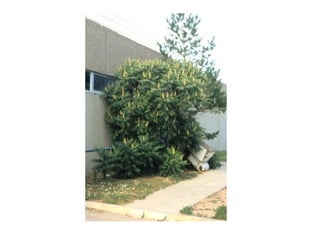
Group 2a Rhus glabra Rhus typhina  Eleagnus angustifolia Aesculus glabra Aesculus hippocastanum Ailanthus altissima Smooth Sumac Staghorn Sumac Russian Olive Ohio Buckeye Horsechestnut Tree of Heaven
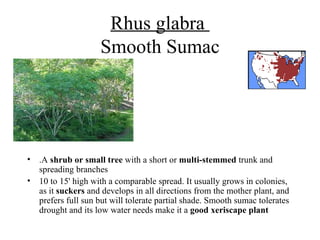
Rhus glabra  Smooth Sumac .A  shrub or small tree  with a short or  multi-stemmed  trunk and spreading branches 10 to 15' high with a comparable spread. It usually grows in colonies, as it  suckers  and develops in all directions from the mother plant, and prefers full sun but will tolerate partial shade. Smooth sumac tolerates drought and its low water needs make it a  good xeriscape plant
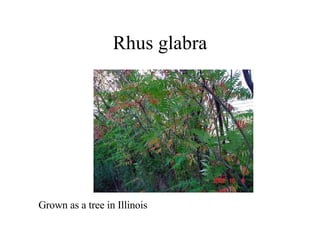
Rhus glabra Grown as a tree in Illinois
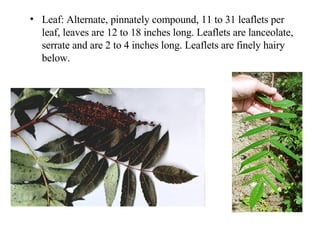
Leaf: Alternate, pinnately compound, 11 to 31 leaflets per leaf, leaves are 12 to 18 inches long. Leaflets are lanceolate, serrate and are 2 to 4 inches long. Leaflets are finely hairy below.
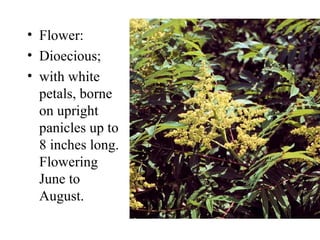
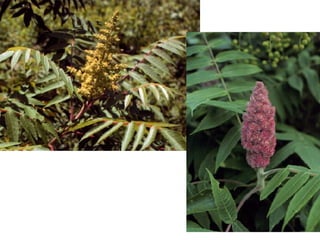
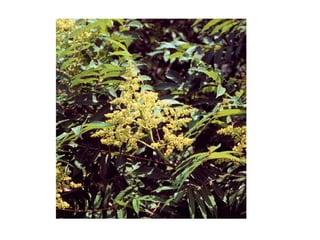
Flower Flower:  Dioecious; with white petals, borne on upright panicles up to 8 inches long. Flowering June to August.
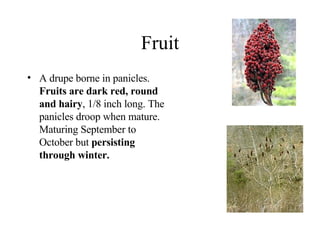
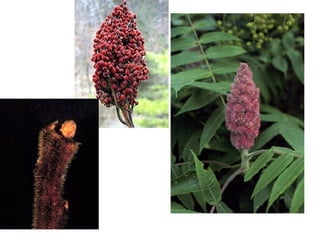
Fruit A drupe borne in panicles.  Fruits are dark red, round and hairy , 1/8 inch long. The panicles droop when mature. Maturing September to October but  persisting through winter.
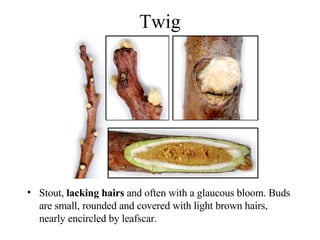
Twig Stout,  lacking hairs  and often with a glaucous bloom. Buds are small, rounded and covered with light brown hairs, nearly encircled by leafscar.
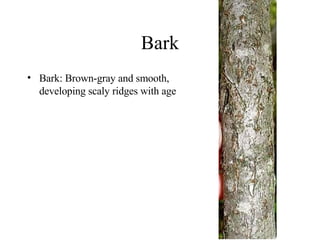
Bark Bark: Brown-gray and smooth, developing scaly ridges with age
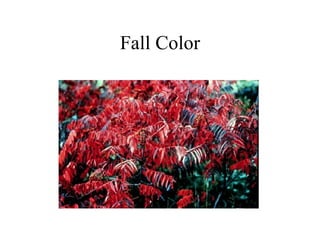
Fall Color
Rhus glabra ID no pubescence on stems   leaf scar encircles buds  greenish yellow flowers  red fruit spikes   alternate pinnately compound leaves   stout stems
Rhus glabra  liabilities Verticillium Wilt  aphids, scales, rusts and mites  suckers
Rhus glabra var.  cismontana  - Listed as a western variety of the species, this variant is supposedly more drought tolerant than the species. It is also smaller in all its features, reaching only 6' tall with smaller fruit and flower clusters.
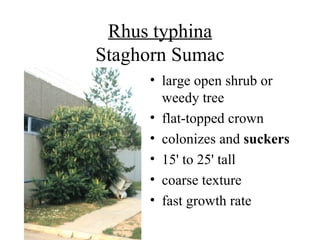
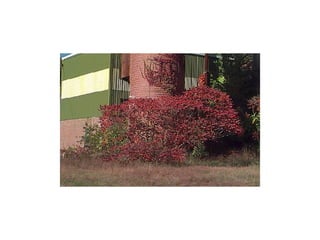
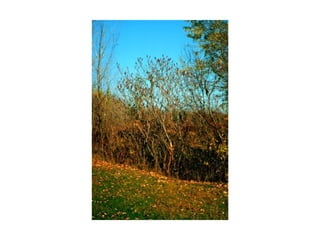
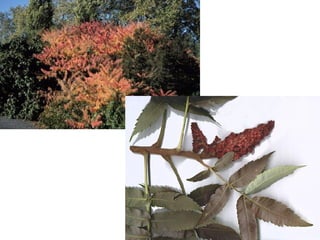
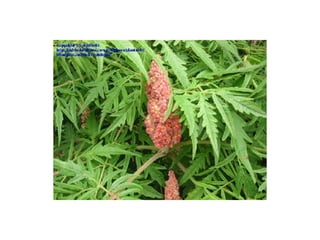
Rhus typhina Staghorn Sumac large open shrub or weedy tree  flat-topped crown  colonizes and  suckers   15' to 25' tall  coarse texture  fast growth rate


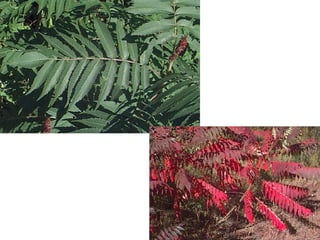
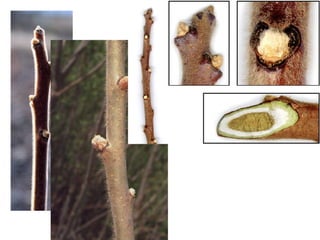
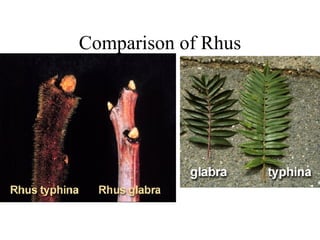
ID  Rhus typhina greenish yellow flowers  red fruit spikes   alternate pinnately compound leaves   c-shaped leaf scars  extreme pubescence  on leaves and branches  stout stems  concealed lenticels
Rhus typhina  liabilities Verticillium Wilt  aphids, scales, rusts and mites  suckers
Comparison of Rhus
 
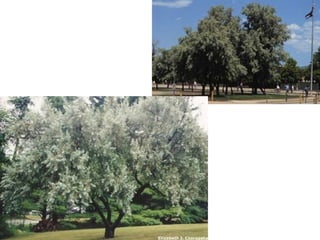
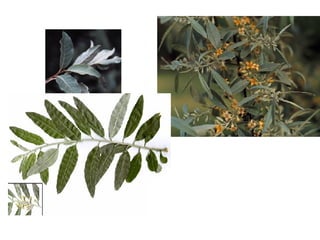
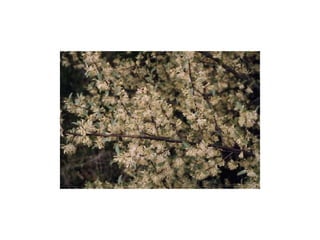
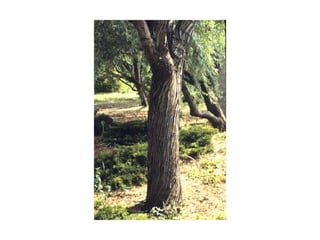
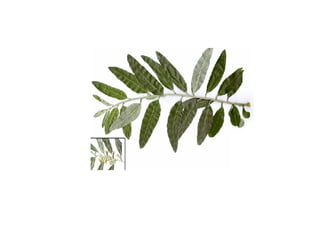
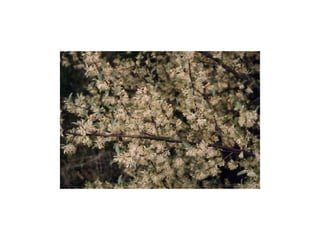
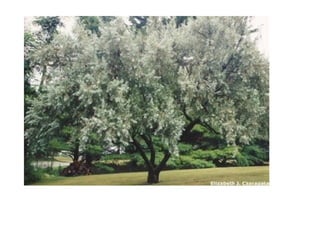
Eleagnus angustifolia Russian Olive Height 20’ Width 20’ Low water  needs Rounded, irregular outline Silver green to gray green  foliage Yellow fall color Fragrant greenish yellow flowers NOXIOUS WEED in Colorado


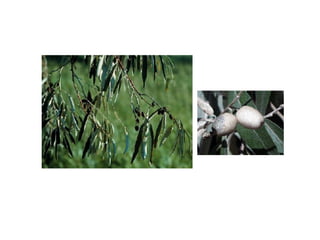
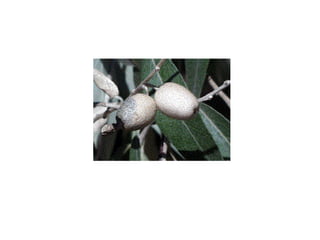
Eleagnus angustifolia  ID small, sessile, solitary, conical buds  suckers  / invasive  alternate leaf arrangement  brown lenticels cover every part of plant  silvery look to foliage, fruit and flowers  yellow fruit
Eleagnus angustifolia  liabilities thorns sometimes  present  leaf spot, canker, aphids  Verticillium wilt INVASIVE WEED
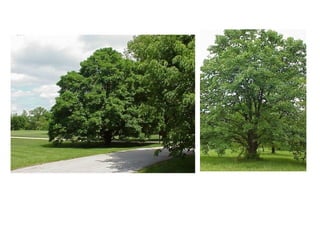
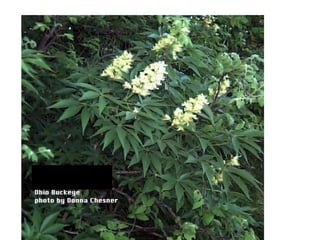
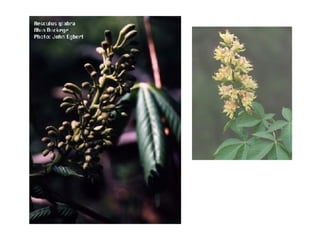
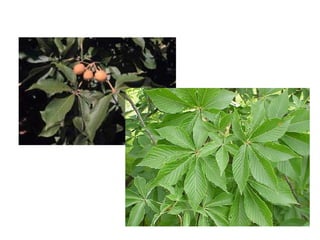
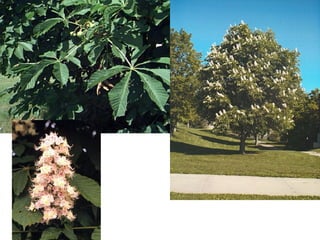
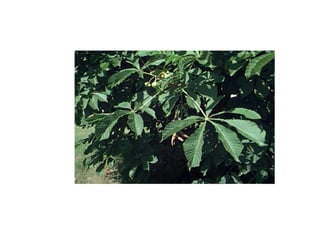
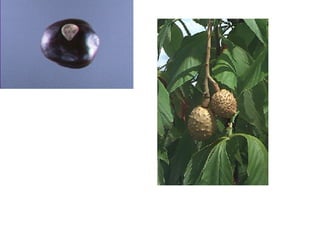
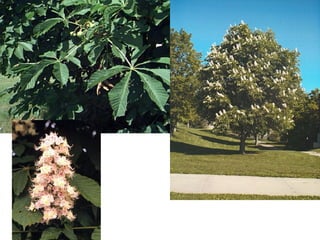
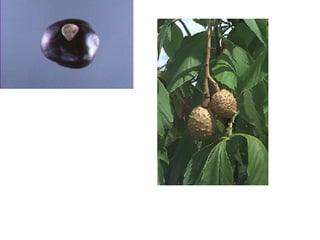
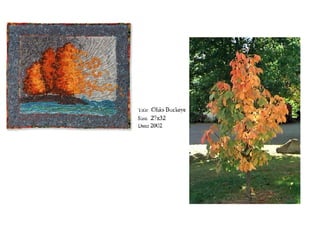
Aesculus glabra Ohio Buckeye Height 35’ Spread 35’ Medium water NO salt  tolerance Showy  yellow flowers Leaves  opposite ,  palmately compound 5 leaflets Brown 1-2” nutlets Fall color-  pumpkin orange


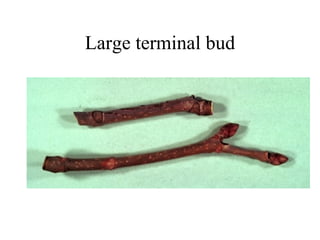
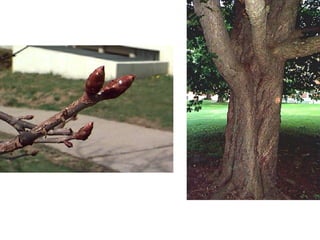
Large terminal bud
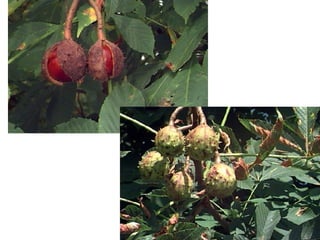
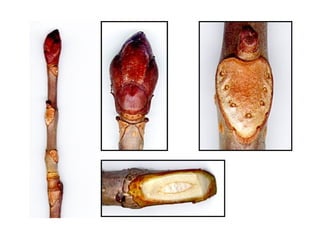
Aesculus glabra ID large, palmately compound leaves typical of  Aesculus   fruits have short prickles  A. hippocastanum  have long prickles)  large terminal bud typical of  Aesculus ; non-resinous  Droop and swoop branches Nice fall color
Liabilities dense shade  limits grass growth underneath  leaf scorch and leaf drop are problems when planted in too small an area  leaf blotch, powdery mildew, canker; also an assortment of scales, mealybugs, caterpillars and borers  this species and  A. hippocastanum  most likely to develop troubles of this genus  can be messy (leaf, twig, fruit litter
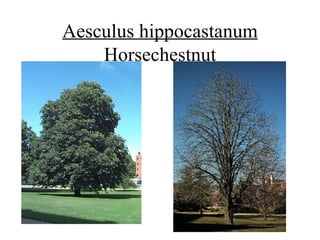
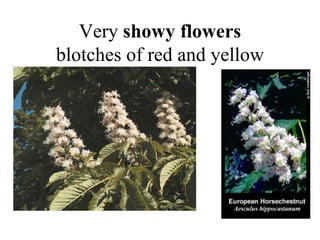
Aesculus hippocastanum  Horsechestnut
 
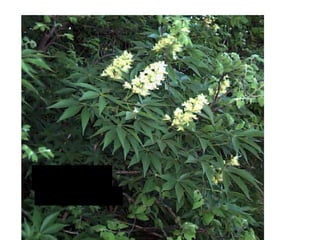
Very  showy flowers blotches of red and yellow


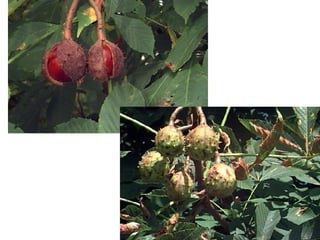
ID Features  large, resinous buds , reddish brown  large,  7-leaflet, palmately-compound leaves   leaves have impressed veins  fruits  are the most  spiny  of all  Aesculus   Avoid hot, dry locations
Liabilities fruits can be messy  large and cannot be used at small residences  leaf scorch and blotch can be serious problems and occur to some degree nearly every year  powdery mildew  young leaves and fruit are considered poisonous
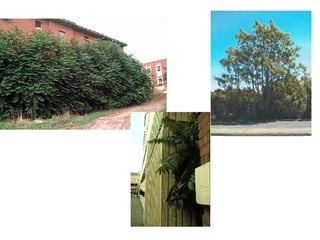
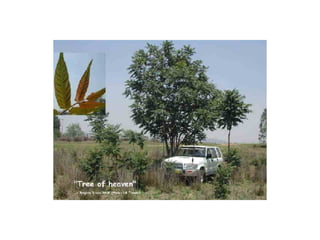
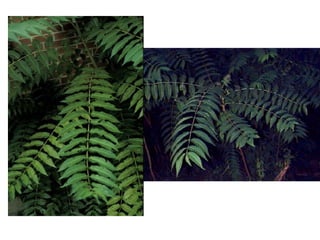
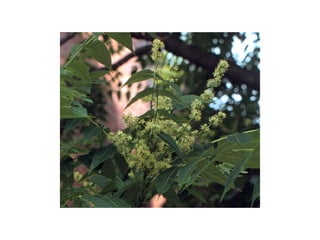
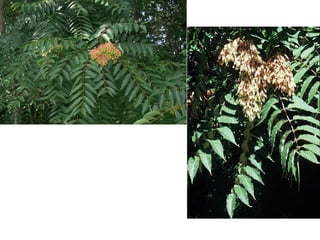
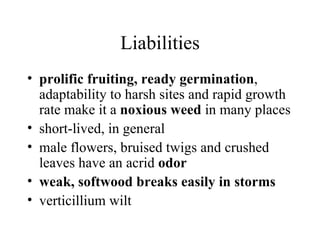
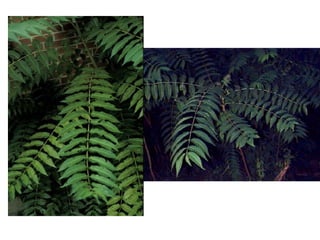
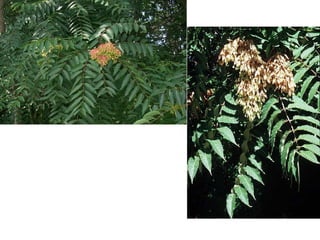
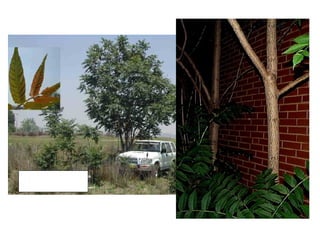
Ailanthus altissima Tree of Heaven Height 40-60’ Spread 30-40’ No water  needed after establishment Alternate, pinnately compound, 1-3 foot leaves,  11-41 leaflets , leaflets 2-6” Flowers yellow-green,  bad odor Fruit:  twisted samara  1-1 ½” long with seed in the center Twig – velvety hairs, red-brown pith
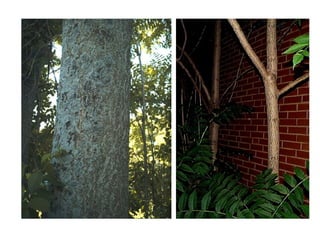
Ailanthus altissima Bark looks like the skin of a cantaloupe Form – short to medium sized tree with heavy branches Tends to droop Grows in clumps


Ailanthus altissima ID Features  very  large, pinnately compound leaves with many leaflets  general  acrid odor  to plant (male flowers, leaves, twigs)  twigs short, reddish-brown, velvety  large leaf scars with small, two-scaled buds  light brown, wide pith
Liabilities prolific fruiting, ready germination , adaptability to harsh sites and rapid growth rate make it a  noxious weed  in many places  short-lived, in general  male flowers, bruised twigs and crushed leaves have an acrid  odor   weak, softwood breaks easily in storms   verticillium wilt
ID from Photographs
ID by Leaf


ID by Flower


ID by Fruit


ID by entire tree


Woody Plants Group 2a

  • 1.
    Group 2a Rhusglabra Rhus typhina Eleagnus angustifolia Aesculus glabra Aesculus hippocastanum Ailanthus altissima Smooth Sumac Staghorn Sumac Russian Olive Ohio Buckeye Horsechestnut Tree of Heaven
  • 2.
    Rhus glabra Smooth Sumac .A shrub or small tree with a short or multi-stemmed trunk and spreading branches 10 to 15' high with a comparable spread. It usually grows in colonies, as it suckers and develops in all directions from the mother plant, and prefers full sun but will tolerate partial shade. Smooth sumac tolerates drought and its low water needs make it a good xeriscape plant
  • 3.
    Rhus glabra Grownas a tree in Illinois
  • 4.
    Leaf: Alternate, pinnatelycompound, 11 to 31 leaflets per leaf, leaves are 12 to 18 inches long. Leaflets are lanceolate, serrate and are 2 to 4 inches long. Leaflets are finely hairy below.
  • 5.
    Flower Flower: Dioecious; with white petals, borne on upright panicles up to 8 inches long. Flowering June to August.
  • 6.
    Fruit A drupeborne in panicles. Fruits are dark red, round and hairy , 1/8 inch long. The panicles droop when mature. Maturing September to October but persisting through winter.
  • 7.
    Twig Stout, lacking hairs and often with a glaucous bloom. Buds are small, rounded and covered with light brown hairs, nearly encircled by leafscar.
  • 8.
    Bark Bark: Brown-grayand smooth, developing scaly ridges with age
  • 9.
  • 10.
    Rhus glabra IDno pubescence on stems leaf scar encircles buds greenish yellow flowers red fruit spikes alternate pinnately compound leaves stout stems
  • 11.
    Rhus glabra liabilities Verticillium Wilt aphids, scales, rusts and mites suckers
  • 12.
    Rhus glabra var. cismontana - Listed as a western variety of the species, this variant is supposedly more drought tolerant than the species. It is also smaller in all its features, reaching only 6' tall with smaller fruit and flower clusters.
  • 13.
    Rhus typhina StaghornSumac large open shrub or weedy tree flat-topped crown colonizes and suckers 15' to 25' tall coarse texture fast growth rate
  • 14.
  • 15.
  • 16.
  • 17.
  • 18.
  • 19.
  • 20.
    ID Rhustyphina greenish yellow flowers red fruit spikes alternate pinnately compound leaves c-shaped leaf scars extreme pubescence on leaves and branches stout stems concealed lenticels
  • 21.
    Rhus typhina liabilities Verticillium Wilt aphids, scales, rusts and mites suckers
  • 22.
  • 23.
  • 24.
    Eleagnus angustifolia RussianOlive Height 20’ Width 20’ Low water needs Rounded, irregular outline Silver green to gray green foliage Yellow fall color Fragrant greenish yellow flowers NOXIOUS WEED in Colorado
  • 25.
  • 26.
  • 27.
  • 28.
  • 29.
  • 30.
    Eleagnus angustifolia ID small, sessile, solitary, conical buds suckers / invasive alternate leaf arrangement brown lenticels cover every part of plant silvery look to foliage, fruit and flowers yellow fruit
  • 31.
    Eleagnus angustifolia liabilities thorns sometimes present leaf spot, canker, aphids Verticillium wilt INVASIVE WEED
  • 32.
    Aesculus glabra OhioBuckeye Height 35’ Spread 35’ Medium water NO salt tolerance Showy yellow flowers Leaves opposite , palmately compound 5 leaflets Brown 1-2” nutlets Fall color- pumpkin orange
  • 33.
  • 34.
  • 35.
  • 36.
  • 37.
  • 38.
  • 39.
  • 40.
    Aesculus glabra IDlarge, palmately compound leaves typical of Aesculus fruits have short prickles A. hippocastanum have long prickles) large terminal bud typical of Aesculus ; non-resinous Droop and swoop branches Nice fall color
  • 41.
    Liabilities dense shade limits grass growth underneath leaf scorch and leaf drop are problems when planted in too small an area leaf blotch, powdery mildew, canker; also an assortment of scales, mealybugs, caterpillars and borers this species and A. hippocastanum most likely to develop troubles of this genus can be messy (leaf, twig, fruit litter
  • 42.
  • 43.
  • 44.
    Very showyflowers blotches of red and yellow
  • 45.
  • 46.
  • 47.
  • 48.
    ID Features large, resinous buds , reddish brown large, 7-leaflet, palmately-compound leaves leaves have impressed veins fruits are the most spiny of all Aesculus Avoid hot, dry locations
  • 49.
    Liabilities fruits canbe messy large and cannot be used at small residences leaf scorch and blotch can be serious problems and occur to some degree nearly every year powdery mildew young leaves and fruit are considered poisonous
  • 50.
    Ailanthus altissima Treeof Heaven Height 40-60’ Spread 30-40’ No water needed after establishment Alternate, pinnately compound, 1-3 foot leaves, 11-41 leaflets , leaflets 2-6” Flowers yellow-green, bad odor Fruit: twisted samara 1-1 ½” long with seed in the center Twig – velvety hairs, red-brown pith
  • 51.
    Ailanthus altissima Barklooks like the skin of a cantaloupe Form – short to medium sized tree with heavy branches Tends to droop Grows in clumps
  • 52.
  • 53.
  • 54.
  • 55.
  • 56.
  • 57.
  • 58.
    Ailanthus altissima IDFeatures very large, pinnately compound leaves with many leaflets general acrid odor to plant (male flowers, leaves, twigs) twigs short, reddish-brown, velvety large leaf scars with small, two-scaled buds light brown, wide pith
  • 59.
    Liabilities prolific fruiting,ready germination , adaptability to harsh sites and rapid growth rate make it a noxious weed in many places short-lived, in general male flowers, bruised twigs and crushed leaves have an acrid odor weak, softwood breaks easily in storms verticillium wilt
  • 60.
  • 61.
  • 62.
  • 63.
  • 64.
  • 65.
  • 66.
  • 67.
  • 68.
  • 69.
  • 70.
  • 71.
  • 72.
  • 73.
  • 74.
  • 75.
  • 76.
  • 77.
  • 78.
  • 79.