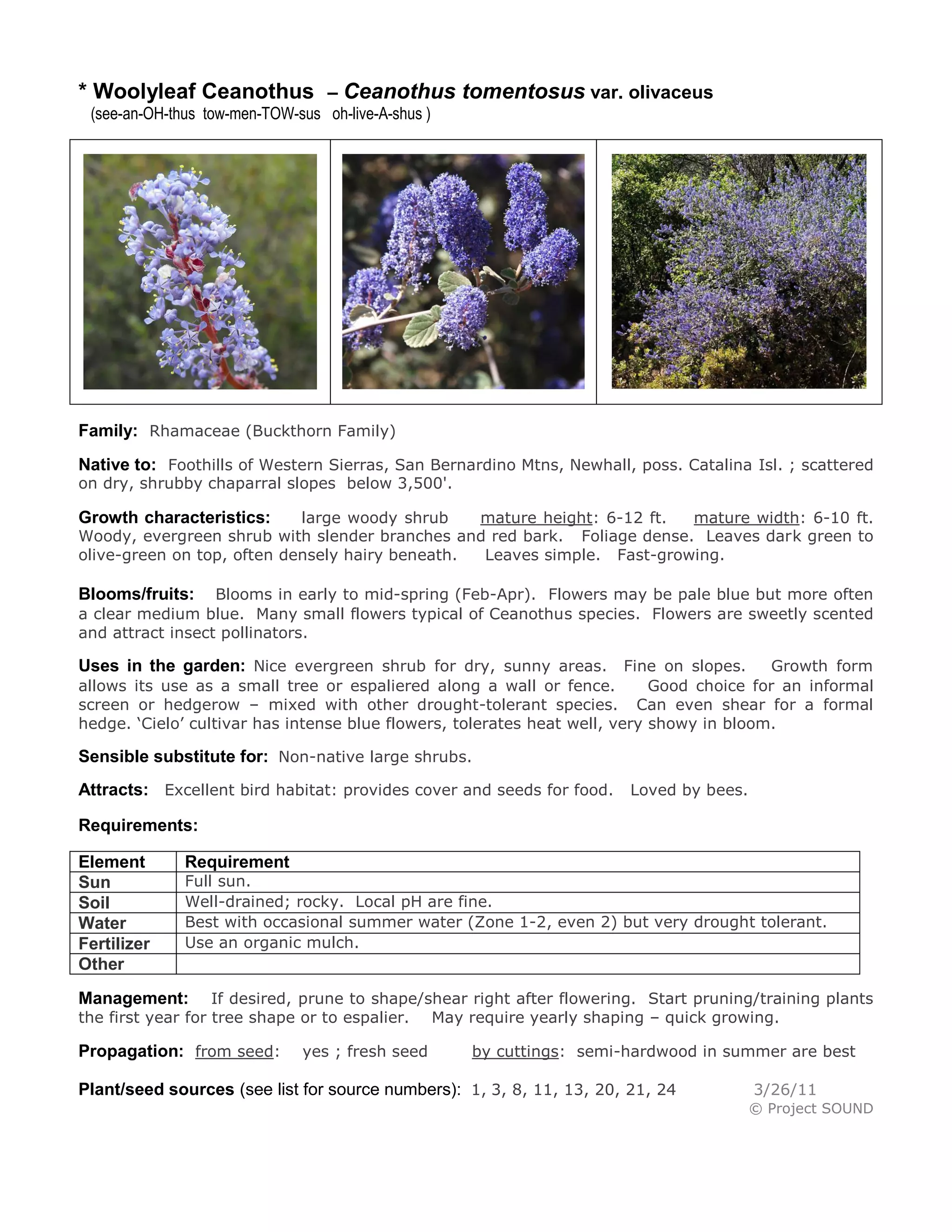
* Woolyleaf Ceanothus – Ceanothus tomentosus var. olivaceus
(see-an-OH-thus tow-men-TOW-sus oh-live-A-shus )

Family: Rhamaceae (Buckthorn Family)
Native to: Foothills of Western Sierras, San Bernardino Mtns, Newhall, poss. Catalina Isl. ; scattered
on dry, shrubby chaparral slopes below 3,500'.

large woody shrub
mature height: 6-12 ft.
mature width: 6-10 ft.
Woody, evergreen shrub with slender branches and red bark. Foliage dense. Leaves dark green to
olive-green on top, often densely hairy beneath.
Leaves simple. Fast-growing.

Growth characteristics:

Blooms in early to mid-spring (Feb-Apr). Flowers may be pale blue but more often
a clear medium blue. Many small flowers typical of Ceanothus species. Flowers are sweetly scented
and attract insect pollinators.

Blooms/fruits:

Uses in the garden: Nice evergreen shrub for dry, sunny areas. Fine on slopes.

Growth form
allows its use as a small tree or espaliered along a wall or fence.
Good choice for an informal
screen or hedgerow – mixed with other drought-tolerant species. Can even shear for a formal
hedge. ‘Cielo’ cultivar has intense blue flowers, tolerates heat well, very showy in bloom.

Sensible substitute for: Non-native large shrubs.
Attracts: Excellent bird habitat: provides cover and seeds for food. Loved by bees.
Requirements:
Element
Sun
Soil
Water
Fertilizer
Other

Requirement

Full sun.
Well-drained; rocky. Local pH are fine.
Best with occasional summer water (Zone 1-2, even 2) but very drought tolerant.
Use an organic mulch.

If desired, prune to shape/shear right after flowering. Start pruning/training plants
the first year for tree shape or to espalier. May require yearly shaping – quick growing.

Management:

Propagation: from seed:

yes ; fresh seed

by cuttings: semi-hardwood in summer are best

Plant/seed sources (see list for source numbers): 1, 3, 8, 11, 13, 20, 21, 24

3/26/11
© Project SOUND

Ceanothus tomentosus

  • 1.
    * Woolyleaf Ceanothus– Ceanothus tomentosus var. olivaceus (see-an-OH-thus tow-men-TOW-sus oh-live-A-shus ) Family: Rhamaceae (Buckthorn Family) Native to: Foothills of Western Sierras, San Bernardino Mtns, Newhall, poss. Catalina Isl. ; scattered on dry, shrubby chaparral slopes below 3,500'. large woody shrub mature height: 6-12 ft. mature width: 6-10 ft. Woody, evergreen shrub with slender branches and red bark. Foliage dense. Leaves dark green to olive-green on top, often densely hairy beneath. Leaves simple. Fast-growing. Growth characteristics: Blooms in early to mid-spring (Feb-Apr). Flowers may be pale blue but more often a clear medium blue. Many small flowers typical of Ceanothus species. Flowers are sweetly scented and attract insect pollinators. Blooms/fruits: Uses in the garden: Nice evergreen shrub for dry, sunny areas. Fine on slopes. Growth form allows its use as a small tree or espaliered along a wall or fence. Good choice for an informal screen or hedgerow – mixed with other drought-tolerant species. Can even shear for a formal hedge. ‘Cielo’ cultivar has intense blue flowers, tolerates heat well, very showy in bloom. Sensible substitute for: Non-native large shrubs. Attracts: Excellent bird habitat: provides cover and seeds for food. Loved by bees. Requirements: Element Sun Soil Water Fertilizer Other Requirement Full sun. Well-drained; rocky. Local pH are fine. Best with occasional summer water (Zone 1-2, even 2) but very drought tolerant. Use an organic mulch. If desired, prune to shape/shear right after flowering. Start pruning/training plants the first year for tree shape or to espalier. May require yearly shaping – quick growing. Management: Propagation: from seed: yes ; fresh seed by cuttings: semi-hardwood in summer are best Plant/seed sources (see list for source numbers): 1, 3, 8, 11, 13, 20, 21, 24 3/26/11 © Project SOUND