Bronze artwork was used throughout
the Kingdom of Benin in the 16th and
17th centuries. Artists of Benin
created very detailed representations
of their culture through the use of
advanced bronze and copper
smelting. The artwork that was
created during the rise of the
Kingdom of Benin is among the most
detailed and impressive
representations of Ancient African
culture on the continent.
In addition to masks, traditional African wooden art
included sculptures, plaques and even decorative doors.
Traditional sculptures represented something similar to
the traditional masks.
Some cultures, such as the Dan of present-day Ivory
Coast, created ceremonial masks made of solid wood and
decorated with gold, copper, silver, and cowrie shells.
Most of the time, the masks were worn by special people
like the king, or other important people in the society.
Wood was used to make
expressive masks, figures, doors,
and ornaments. In West Africa, for
example, many ethnic
groups created wood carvings
that were used in ceremonies.
The carvings were used to
represent animals, loved ones,
and important cultural figures.
Traditional African art combines stone, wood, clay,
iron, brass, gold, and other materials.
The items were used for different purposes in each
culture that created them. Examples of traditional
African art include masks, statues, paintings, and
fabric. African stone art is the earliest form of
traditional African art. The earliest known stone art is
a carving of giraffes found in Dabous, Niger dates
back to 6,500 BCE.
During the 17th through 19th centuries, the
ancient Kuba Kingdom was well known for
creating artwork and
decorations.
Around 1700 CE, the Kuba King introduced a
new type of wooden sculpture called Ndop.
Ndops are wooden carvings that were
created to represent the king and elements of
his personality.
The Yoruba civilization in present-day Nigeria
and Benin took metal smelting art to a higher
level. Like the Igbo Ukwu and Nok, the Ife also
used metal to represent various aspects of
their culture, society, and government. Ife
bronze art has detail that is shown in the
facial features of the subjects. Ancient African
shows scenes of the everyday life of the
people and is an important source of
historical information.
Another type of art used materials such as
gold, copper, iron, and other metals. The Nok
civilization in present-day Nigeria and Benin
created metallic art form. The Nok civilization
was one of the first civilizations on the African
continent to experiment with and eventually
begin the African Iron Age around 1,500 BCE.
The African Iron Age was not like to the Iron
Ages of other non-African cultures. In Asian
and European cultures, the Iron Age came after
the Bronze Age ended. In the ancient African
countries, iron, copper, gold, and other metals
were used at the same time.

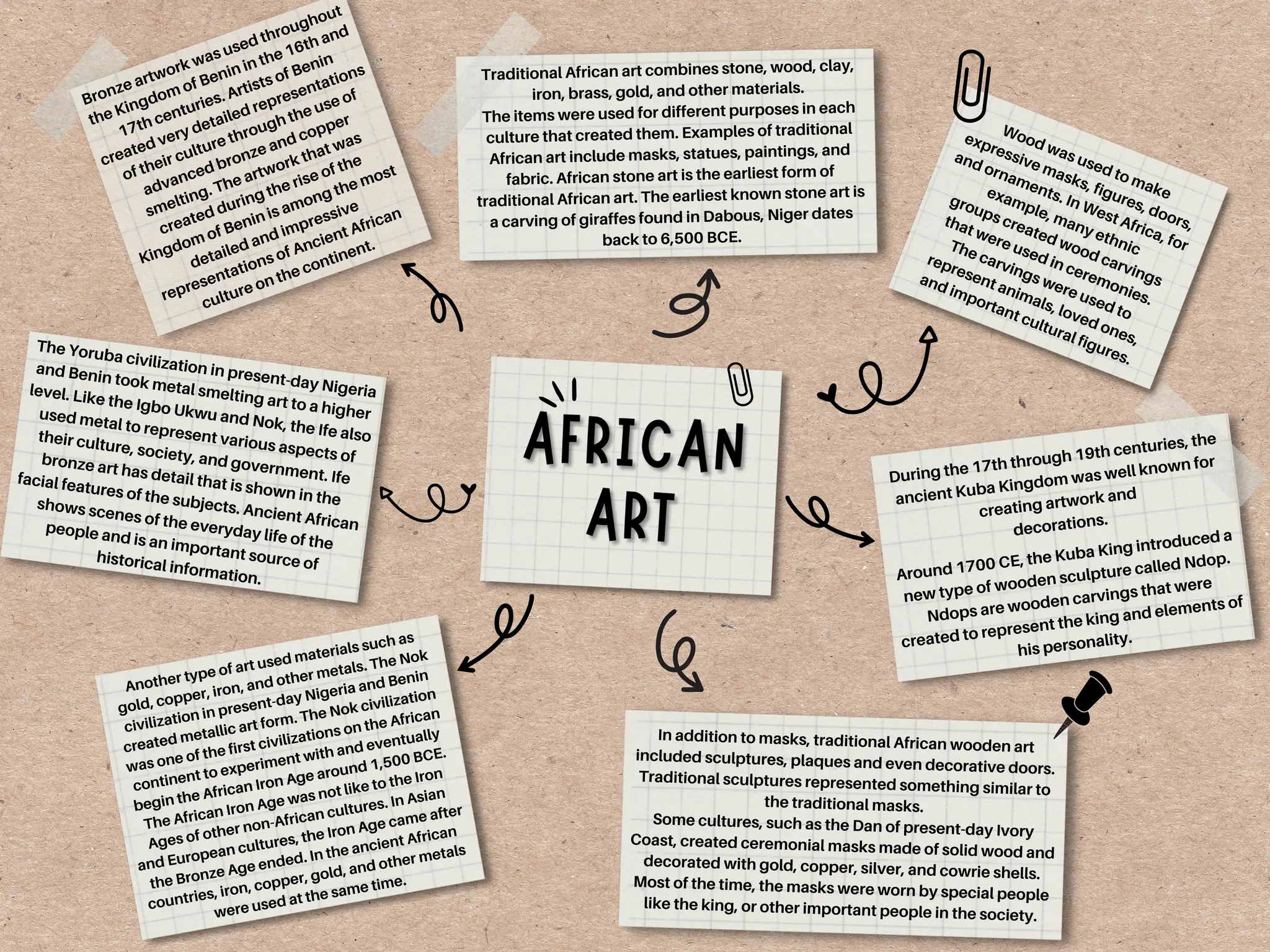
Wooden African Art Mindmap

  • 1.
    Bronze artwork wasused throughout the Kingdom of Benin in the 16th and 17th centuries. Artists of Benin created very detailed representations of their culture through the use of advanced bronze and copper smelting. The artwork that was created during the rise of the Kingdom of Benin is among the most detailed and impressive representations of Ancient African culture on the continent. In addition to masks, traditional African wooden art included sculptures, plaques and even decorative doors. Traditional sculptures represented something similar to the traditional masks. Some cultures, such as the Dan of present-day Ivory Coast, created ceremonial masks made of solid wood and decorated with gold, copper, silver, and cowrie shells. Most of the time, the masks were worn by special people like the king, or other important people in the society. Wood was used to make expressive masks, figures, doors, and ornaments. In West Africa, for example, many ethnic groups created wood carvings that were used in ceremonies. The carvings were used to represent animals, loved ones, and important cultural figures. Traditional African art combines stone, wood, clay, iron, brass, gold, and other materials. The items were used for different purposes in each culture that created them. Examples of traditional African art include masks, statues, paintings, and fabric. African stone art is the earliest form of traditional African art. The earliest known stone art is a carving of giraffes found in Dabous, Niger dates back to 6,500 BCE. During the 17th through 19th centuries, the ancient Kuba Kingdom was well known for creating artwork and decorations. Around 1700 CE, the Kuba King introduced a new type of wooden sculpture called Ndop. Ndops are wooden carvings that were created to represent the king and elements of his personality. The Yoruba civilization in present-day Nigeria and Benin took metal smelting art to a higher level. Like the Igbo Ukwu and Nok, the Ife also used metal to represent various aspects of their culture, society, and government. Ife bronze art has detail that is shown in the facial features of the subjects. Ancient African shows scenes of the everyday life of the people and is an important source of historical information. Another type of art used materials such as gold, copper, iron, and other metals. The Nok civilization in present-day Nigeria and Benin created metallic art form. The Nok civilization was one of the first civilizations on the African continent to experiment with and eventually begin the African Iron Age around 1,500 BCE. The African Iron Age was not like to the Iron Ages of other non-African cultures. In Asian and European cultures, the Iron Age came after the Bronze Age ended. In the ancient African countries, iron, copper, gold, and other metals were used at the same time.