Winning CVs and Cover Letters 
Tahira Majothi 
careers consultant 
Careers and Employability Service 
http://www.careers.salford.ac.uk/
Aims 
Identify and understand the purpose of 
different types of CVs. 
Critically reflect on and tailor your own CV and 
cover letter. 
Access support available via the Careers and 
Employability Service.
What is the purpose of a CV?
Why are CVs so challenging?
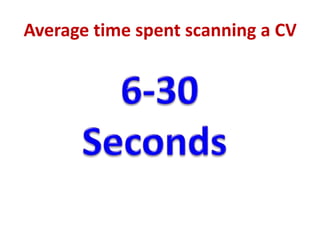
Average time spent scanning a CV
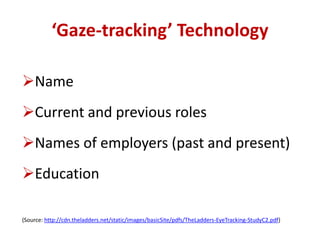
‘Gaze-tracking’ Technology 
Name 
Current and previous roles 
Names of employers (past and present) 
Education 
(Source: http://cdn.theladders.net/static/images/basicSite/pdfs/TheLadders-EyeTracking-StudyC2.pdf)
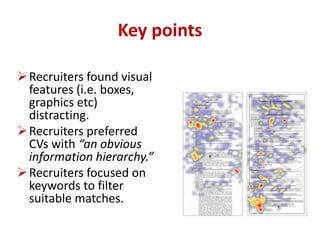
Key points 
Recruiters found visual 
features (i.e. boxes, 
graphics etc) 
distracting. 
Recruiters preferred 
CVs with “an obvious 
information hierarchy.” 
Recruiters focused on 
keywords to filter 
suitable matches.
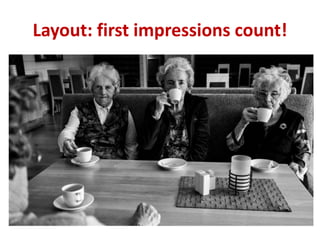
Layout: first impressions count!
There are CV variations!
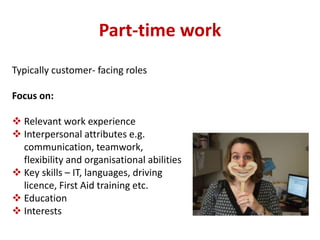
Part-time work 
Typically customer- facing roles 
Focus on: 
 Relevant work experience 
 Interpersonal attributes e.g. 
communication, teamwork, 
flexibility and organisational abilities 
 Key skills – IT, languages, driving 
licence, First Aid training etc. 
 Education 
 Interests
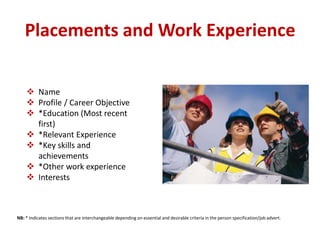
Placements and Work Experience 
 Name 
 Profile / Career Objective 
 *Education (Most recent 
first) 
 *Relevant Experience 
 *Key skills and 
achievements 
 *Other work experience 
 Interests 
NB: * Indicates sections that are interchangeable depending on essential and desirable criteria in the person specification/job advert.
Graduate-level 
 Name 
 Professional social media e.g. LinkedIn, blogs, websites etc. 
Update the following: 
 Profile / Career Objective 
 *Education (Most recent first) 
 *Relevant Experience 
 *Key skills, achievements, positions of responsibility, 
professional associations 
 *Other work experience 
 Interests 
NB: * Indicates sections that are interchangeable depending on essential and desirable criteria in the person specification/job advert.
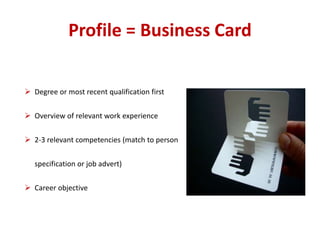
Profile = Business Card 
 Degree or most recent qualification first 
 Overview of relevant work experience 
 2-3 relevant competencies (match to person 
specification or job advert) 
 Career objective
Professional Social Media 
 Google your name – happy 
with results/images? 
 Update your privacy settings 
beforehand 
 Mention professional ‘active’ 
accounts only
Education 
 Most recent first. Reverse 
chronological order. 
 4-5 relevant module titles. 
 Include dissertation title if aligns 
with company values/mission etc. 
 Other professional training/courses 
if relevant.
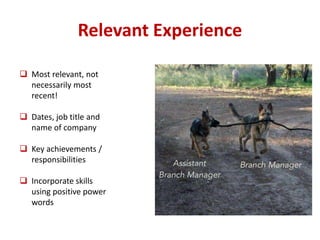
Relevant Experience 
 Most relevant, not 
necessarily most 
recent! 
 Dates, job title and 
name of company 
 Key achievements / 
responsibilities 
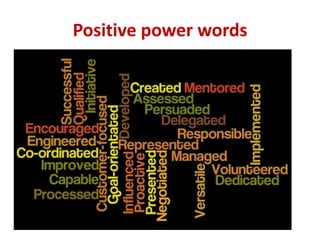
 Incorporate skills 
using positive power 
words
Positive power words
Other Work Experience 
 Quantify achievements. 
 Explain responsibilities. 
 Include charity or voluntary 
work commitments. 
 Evidence transferable 
knowledge, experience and 
skills.
Key Skills and Achievements 
 Provide evidence of 3-4 skills as required by 
employer (e.g. communication, teamwork, 
leadership, flexibility, organisational skills etc). 
 Certificates, awards, scholarships, 
professional achievements, positions of 
responsibility, membership of professional 
associations, fund raising/charity work etc. 
 If relevant, provide details of IT/technical 
skills, languages, driving licence etc.
Interests 
 Provides an insight into your 
personality. 
 Being a member of a 
club/society/charity demonstrates 
teamwork, leadership and willingness 
to learn whilst helping worthwhile 
causes. 
 Weave skills and attributes into 
interests e.g. travel/year abroad has 
enhanced international outlook as 
well as communication, budgeting, 
negotiation and organisational skills.
Summary 
 Research the employer and job 
role first. 
 Tailor order of education, 
experience and skills on CV, 
depending on role requirements. 
 Provide tangible examples of 
relevant transferable knowledge, 
experience and skills. 
 Proof-read!
Personalise cover letters
Cover letter content 
 Format – Find the right person to address the letter/email to 
 Opening – What job do you wish to apply for? When and where did you 
see it advertised? 
 Why you? – Introduce yourself, why are you the right candidate? Think 
relevant knowledge, experience and skills. 
 Why them? Demonstrate your employer research, be specific about why 
you chose to apply to them in particular. 
 The closing – Thank them for considering your application, make clear 
your availability for interview and follow-up to check on progress.
Careers and Employability Support 
CV Checks: 
University House 
Tuesdays (10am - 12pm) & Thursdays (2pm – 4pm) 
http://www.careers.salford.ac.uk/careeradvice 
CV and Cover Letter Guides: 
http://www.careers.salford.ac.uk/page/careerguides 
Salford (On-campus) Recruitment Fairs 2014-2015: 
http://www.careers.salford.ac.uk/page/meetemployers
Images CC Flickr 
1. Scott Kellum, Portfolio Mailer. https://www.flickr.com/photos/devoinregress/ 
2. David K. Puzzled Kitty. https://www.flickr.com/photos/plasticrevolver/ 
3. Charlie Baker. My mood. https://www.flickr.com/photos/charlieeclark/ 
4. lars erik skrefsrud morning coffee, http://www.flickr.com/photos/skrefsrud/14438341782 
5. Rubix Cube. Yugank Singhal. Boy Playing with a Rubix Cube. https://www.flickr.com/photos/92559412@N08/ 
6. Peas. 3.30.10 The Face of Customer Service. https://www.flickr.com/photos/iampeas/ 
7. University of Salford Press, Women in Construction. https://www.flickr.com/photos/salforduniversity/ 
8. Graduate, Am Markt, Bremen, Germany. https://www.flickr.com/photos/aluedtke/ 
9. University of Salford Press. Antonio Espingardeiro. https://www.flickr.com/photos/salforduniversity/ 
10. Popupology, 3-d business card series VIII – handshake. https://www.flickr.com/photos/popupology/ 
11. Jason Howie. Instagram and other Social Media Apps. https://www.flickr.com/photos/jasonahowie/ 
12. Lester Public Library, Study. https://www.flickr.com/photos/lesterpubliclibrary/ 
13. Branch Manager, Assistant Branch Manager Dog Meme. http://llwproductions.files.wordpress.com/2013/07/dogs-branch-managers.jpg 
14. Domenico. My new job at the call center. https://www.flickr.com/photos/kugelfisch/ 
15. Melody Joy Kramer. Rocky SWK. https://www.flickr.com/photos/mjkmjk/ 
16. Geraint Rowland. Waiting Game. https://www.flickr.com/photos/geezaweezer/ 
17. Jim Shelley. Peacock. https://www.flickr.com/photos/29154662@N08/ 
18. Luke Chapman. Gift wrapping. https://www.flickr.com/photos/s13_eisbaer/

Winning CVs and Cover Letters

  • 1.
    Winning CVs andCover Letters Tahira Majothi careers consultant Careers and Employability Service http://www.careers.salford.ac.uk/
  • 2.
    Aims Identify andunderstand the purpose of different types of CVs. Critically reflect on and tailor your own CV and cover letter. Access support available via the Careers and Employability Service.
  • 3.
    What is thepurpose of a CV?
  • 4.
    Why are CVsso challenging?
  • 5.
    Average time spentscanning a CV
  • 6.
    ‘Gaze-tracking’ Technology Name Current and previous roles Names of employers (past and present) Education (Source: http://cdn.theladders.net/static/images/basicSite/pdfs/TheLadders-EyeTracking-StudyC2.pdf)
  • 7.
    Key points Recruitersfound visual features (i.e. boxes, graphics etc) distracting. Recruiters preferred CVs with “an obvious information hierarchy.” Recruiters focused on keywords to filter suitable matches.
  • 8.
  • 9.
    There are CVvariations!
  • 10.
    Part-time work Typicallycustomer- facing roles Focus on:  Relevant work experience  Interpersonal attributes e.g. communication, teamwork, flexibility and organisational abilities  Key skills – IT, languages, driving licence, First Aid training etc.  Education  Interests
  • 11.
    Placements and WorkExperience  Name  Profile / Career Objective  *Education (Most recent first)  *Relevant Experience  *Key skills and achievements  *Other work experience  Interests NB: * Indicates sections that are interchangeable depending on essential and desirable criteria in the person specification/job advert.
  • 12.
    Graduate-level  Name  Professional social media e.g. LinkedIn, blogs, websites etc. Update the following:  Profile / Career Objective  *Education (Most recent first)  *Relevant Experience  *Key skills, achievements, positions of responsibility, professional associations  *Other work experience  Interests NB: * Indicates sections that are interchangeable depending on essential and desirable criteria in the person specification/job advert.
  • 13.
    Profile = BusinessCard  Degree or most recent qualification first  Overview of relevant work experience  2-3 relevant competencies (match to person specification or job advert)  Career objective
  • 14.
    Professional Social Media  Google your name – happy with results/images?  Update your privacy settings beforehand  Mention professional ‘active’ accounts only
  • 15.
    Education  Mostrecent first. Reverse chronological order.  4-5 relevant module titles.  Include dissertation title if aligns with company values/mission etc.  Other professional training/courses if relevant.
  • 16.
    Relevant Experience Most relevant, not necessarily most recent!  Dates, job title and name of company  Key achievements / responsibilities  Incorporate skills using positive power words
  • 17.
  • 18.
    Other Work Experience  Quantify achievements.  Explain responsibilities.  Include charity or voluntary work commitments.  Evidence transferable knowledge, experience and skills.
  • 19.
    Key Skills andAchievements  Provide evidence of 3-4 skills as required by employer (e.g. communication, teamwork, leadership, flexibility, organisational skills etc).  Certificates, awards, scholarships, professional achievements, positions of responsibility, membership of professional associations, fund raising/charity work etc.  If relevant, provide details of IT/technical skills, languages, driving licence etc.
  • 20.
    Interests  Providesan insight into your personality.  Being a member of a club/society/charity demonstrates teamwork, leadership and willingness to learn whilst helping worthwhile causes.  Weave skills and attributes into interests e.g. travel/year abroad has enhanced international outlook as well as communication, budgeting, negotiation and organisational skills.
  • 21.
    Summary  Researchthe employer and job role first.  Tailor order of education, experience and skills on CV, depending on role requirements.  Provide tangible examples of relevant transferable knowledge, experience and skills.  Proof-read!
  • 22.
  • 23.
    Cover letter content  Format – Find the right person to address the letter/email to  Opening – What job do you wish to apply for? When and where did you see it advertised?  Why you? – Introduce yourself, why are you the right candidate? Think relevant knowledge, experience and skills.  Why them? Demonstrate your employer research, be specific about why you chose to apply to them in particular.  The closing – Thank them for considering your application, make clear your availability for interview and follow-up to check on progress.
  • 24.
    Careers and EmployabilitySupport CV Checks: University House Tuesdays (10am - 12pm) & Thursdays (2pm – 4pm) http://www.careers.salford.ac.uk/careeradvice CV and Cover Letter Guides: http://www.careers.salford.ac.uk/page/careerguides Salford (On-campus) Recruitment Fairs 2014-2015: http://www.careers.salford.ac.uk/page/meetemployers
  • 25.
    Images CC Flickr 1. Scott Kellum, Portfolio Mailer. https://www.flickr.com/photos/devoinregress/ 2. David K. Puzzled Kitty. https://www.flickr.com/photos/plasticrevolver/ 3. Charlie Baker. My mood. https://www.flickr.com/photos/charlieeclark/ 4. lars erik skrefsrud morning coffee, http://www.flickr.com/photos/skrefsrud/14438341782 5. Rubix Cube. Yugank Singhal. Boy Playing with a Rubix Cube. https://www.flickr.com/photos/92559412@N08/ 6. Peas. 3.30.10 The Face of Customer Service. https://www.flickr.com/photos/iampeas/ 7. University of Salford Press, Women in Construction. https://www.flickr.com/photos/salforduniversity/ 8. Graduate, Am Markt, Bremen, Germany. https://www.flickr.com/photos/aluedtke/ 9. University of Salford Press. Antonio Espingardeiro. https://www.flickr.com/photos/salforduniversity/ 10. Popupology, 3-d business card series VIII – handshake. https://www.flickr.com/photos/popupology/ 11. Jason Howie. Instagram and other Social Media Apps. https://www.flickr.com/photos/jasonahowie/ 12. Lester Public Library, Study. https://www.flickr.com/photos/lesterpubliclibrary/ 13. Branch Manager, Assistant Branch Manager Dog Meme. http://llwproductions.files.wordpress.com/2013/07/dogs-branch-managers.jpg 14. Domenico. My new job at the call center. https://www.flickr.com/photos/kugelfisch/ 15. Melody Joy Kramer. Rocky SWK. https://www.flickr.com/photos/mjkmjk/ 16. Geraint Rowland. Waiting Game. https://www.flickr.com/photos/geezaweezer/ 17. Jim Shelley. Peacock. https://www.flickr.com/photos/29154662@N08/ 18. Luke Chapman. Gift wrapping. https://www.flickr.com/photos/s13_eisbaer/

Editor's Notes

  • #4 Professional timeline of education, work experience and key skills. Not your whole life story! Focus on relevant knowledge, experience and skills and career aspirations.
  • #5 Discussion point: What do you hate about CVs, what aspects do you find challenging, what types of CV formats are you aware of? Feedback you have had on your CVs etc.
  • #6 Average time spent scanning CVs initially as part of filtering.
  • #7 The study’s “gaze tracking” technology showed that recruiters spent almost 80% of their resume review time on the following data points: Beyond these six data points, recruiters did little more than scan for keywords to match the open position, which amounted to a very cursory “pattern matching” activity. Because decisions were based mostly on the six pieces of data listed above. *Eye Tracking Online Metacognition: Cognitive Complexity and Recruiter Decision Making. Will Evans, Head of User Experience Design, TheLadders. 2012.
  • #9 CV rules – what should be included, omitted or amended. Can use the Great little CV Quiz here.
  • #10 How many types of CV can you name? P/T jobs Placements Skills Chronological Functional Academic
  • #11 Typically customer focused roles – strong emphasis on communication, teamwork and interpersonal skills. Typical jobs within retail, admin, call centres, hospitality, sales etc. 1 page, very basic CV. Focus on work experience, key transferable skills as sought by the employer and then education and interests.
  • #12 More formal – 2 pages where possible. Targeted profile, education, technical skills (if relevant), relevant experience, other work experience, key skills and achievements including positions of responsibility, interests and references available on request line.
  • #20 Certificates, courses, professional training, quantifiable achievements in work, positions of responsibility etc.
  • #21 Draw out relevant skills whilst undertaking interests. Avoid clichés e.g. socialising with friend, travelling and going to the gym. Provide an interest and associated skill e.g. Chess allows me to use my lateral thinking skills, photography demonstrates by creativity and eye for detail etc.
  • #23 Can accompany CVs to explain to an employer what you want to apply for and why you want to work for them.