Non Cavitated Carious
Lesions
Presented By: Dr. Vini Mehta
MDS 2nd
Year
Dept. of Public Health Dentistry
1
Contents
 Introduction
 Zone of Incipient Caries
 Clinical Features
 Classification
 Detection System
 Diagnostic Protocol
 Remineralising Agents
 Treatment
 Conclusion
 References
2
Introduction
 A non-cavitated caries lesion ( an early lesion, an
incipient lesion, a white spot lesion or a surface softened
defect) is a demineralized lesion without evidence of
cavitation.
 As the lesion progresses, the outer surface, which is in
contact with plaque and is protected by the salivary
pellicle, is exposed to cycles of demineralization and
remineralization
 At this stage, the demineralization process can be
reversed or arrested
3
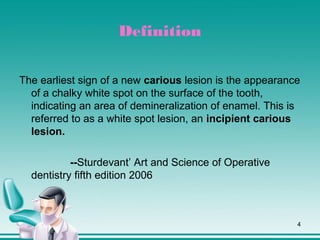
Definition
The earliest sign of a new carious lesion is the appearance
of a chalky white spot on the surface of the tooth,
indicating an area of demineralization of enamel. This is
referred to as a white spot lesion, an incipient carious
lesion.
--Sturdevant’ Art and Science of Operative
dentistry fifth edition 2006
4
Zone of Incipient Caries
5
What causes white spot lesions to
form?
6
Risk Factors
 Inadequate oral hygiene
 Existing White Spot Lesion
 New lesions start during orthodontic treatmen
 High DMFT
 Lack of preventive measures
7
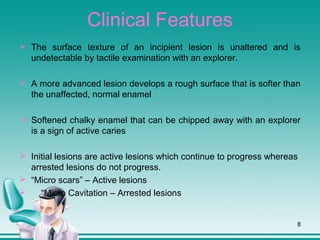
Clinical Features
 The surface texture of an incipient lesion is unaltered and is
undetectable by tactile examination with an explorer.
 A more advanced lesion develops a rough surface that is softer than
the unaffected, normal enamel
 Softened chalky enamel that can be chipped away with an explorer
is a sign of active caries
 Initial lesions are active lesions which continue to progress whereas
arrested lesions do not progress.
 “Micro scars” – Active lesions
 “Micro Cavitation – Arrested lesions
8
Smooth surface caries
9
Common Sites
Labial, buccal and lingual smooth surfaces
Proximal surfaces
10
Classification
11
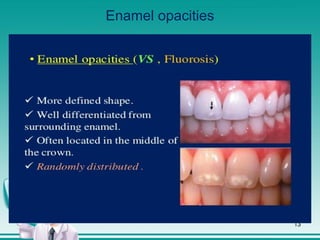
Types of White Lesions on Enamel
• According to Russell
 Dental Fluorosis
 White / yellowish lesion
 Not well defined
 Symmetrical distribution
 Affected teeth are less susceptible to dental caries .
12
Enamel opacities
13
14
15
16
Detection System
17
Pitts, 1997
18
Fyfee 2000
Permanent surface code Criteria
G Good, sound surface
W White spot lesion – visual assessment of
dried tooth indicates intact surface, no
clinically detectable loss of
substance, with a white or cream coloured
area of increased opacity presumed
carious by the trained examiner
B Brown spot lesion – visual assessment of
dried tooth indicates intact surface, no
clinically detectable loss of
substance, with a brown/black
discolouration
E Enamel cavity – in the opinion of the
trained examiner, there is a lesion with
demonstrable loss of surface
but no visual, clinical evidence of the
lesion penetrating dentine
19
D Dentine lesion (noncavitated) –there is a
carious lesion into dentine but no visible
evidence of cavitation
C dentine Cavity –there is a carious
cavity into dentine
P Pulp involved – there is a carious
cavity that involves the pulp,
necessitating an extraction or pulp
treatment
A Arrested dentinal decay – there is
arrested caries in dentine
20
21
The International Caries and Detection
and Assessment System (ICDAS)Code Description
0 Sound
1 First Visual change in Enamel (Seen only after prolonged air drying)
2 Distinct Visual Change in Enamel
3 Localized Enamel Breakdown (without clinical visual signs of dentinal involvement)
4 Underlying Dark shadow from dentin
5 Distinct Cavity with visible dentin
6 Extensive distinct cavity with visible dentin
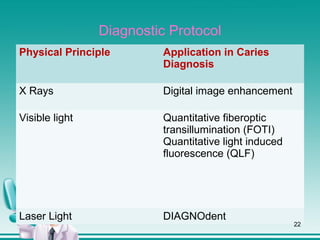
Diagnostic Protocol
Physical Principle Application in Caries
Diagnosis
X Rays Digital image enhancement
Visible light Quantitative fiberoptic
transillumination (FOTI)
Quantitative light induced
fluorescence (QLF)
Laser Light DIAGNOdent
22
23
Quantitative light fluorescence (QLF)
24
Benefits of Early Carious Lesion
Detection
25
 Increase potential to remineralize, the dimenralized non cavitated
tooth surfaces
 Decreased risk of progression to cavitated stage
 Preservation of natural esthetic appearance of tooth enamel
 Reduced treatment cost
Remineralising Agents
 Use of Fluorides
 Casein Phosphopeptide- Amorphous Calcium
Phosphate (CPP-ACP).
 Combination of CPP-ACP and fluoride
 Novamin (sodium calcium phosposilicate)
 Xylitol Carrier
26
27
Operative Treatment
Preventive Resin Restoration
Enamel microabrasion
Future Prevention Methods
Carries Vaccine
Icon
28
29
Conclusion
A clear understanding of the mechanism of subsurface
lesion formation and progression, possibilities, treatment
and their clinical applications need to be recognized to
direct preventive strategies to the high caries risk
individuals.
30
31

White spot lesion

  • 1.
    Non Cavitated Carious Lesions PresentedBy: Dr. Vini Mehta MDS 2nd Year Dept. of Public Health Dentistry 1
  • 2.
    Contents  Introduction  Zoneof Incipient Caries  Clinical Features  Classification  Detection System  Diagnostic Protocol  Remineralising Agents  Treatment  Conclusion  References 2
  • 3.
    Introduction  A non-cavitatedcaries lesion ( an early lesion, an incipient lesion, a white spot lesion or a surface softened defect) is a demineralized lesion without evidence of cavitation.  As the lesion progresses, the outer surface, which is in contact with plaque and is protected by the salivary pellicle, is exposed to cycles of demineralization and remineralization  At this stage, the demineralization process can be reversed or arrested 3
  • 4.
    Definition The earliest signof a new carious lesion is the appearance of a chalky white spot on the surface of the tooth, indicating an area of demineralization of enamel. This is referred to as a white spot lesion, an incipient carious lesion. --Sturdevant’ Art and Science of Operative dentistry fifth edition 2006 4
  • 5.
  • 6.
    What causes whitespot lesions to form? 6
  • 7.
    Risk Factors  Inadequateoral hygiene  Existing White Spot Lesion  New lesions start during orthodontic treatmen  High DMFT  Lack of preventive measures 7
  • 8.
    Clinical Features  Thesurface texture of an incipient lesion is unaltered and is undetectable by tactile examination with an explorer.  A more advanced lesion develops a rough surface that is softer than the unaffected, normal enamel  Softened chalky enamel that can be chipped away with an explorer is a sign of active caries  Initial lesions are active lesions which continue to progress whereas arrested lesions do not progress.  “Micro scars” – Active lesions  “Micro Cavitation – Arrested lesions 8
  • 9.
  • 10.
    Common Sites Labial, buccaland lingual smooth surfaces Proximal surfaces 10
  • 11.
  • 12.
    Types of WhiteLesions on Enamel • According to Russell  Dental Fluorosis  White / yellowish lesion  Not well defined  Symmetrical distribution  Affected teeth are less susceptible to dental caries . 12
  • 13.
  • 14.
  • 15.
  • 16.
  • 17.
  • 18.
  • 19.
    Fyfee 2000 Permanent surfacecode Criteria G Good, sound surface W White spot lesion – visual assessment of dried tooth indicates intact surface, no clinically detectable loss of substance, with a white or cream coloured area of increased opacity presumed carious by the trained examiner B Brown spot lesion – visual assessment of dried tooth indicates intact surface, no clinically detectable loss of substance, with a brown/black discolouration E Enamel cavity – in the opinion of the trained examiner, there is a lesion with demonstrable loss of surface but no visual, clinical evidence of the lesion penetrating dentine 19
  • 20.
    D Dentine lesion(noncavitated) –there is a carious lesion into dentine but no visible evidence of cavitation C dentine Cavity –there is a carious cavity into dentine P Pulp involved – there is a carious cavity that involves the pulp, necessitating an extraction or pulp treatment A Arrested dentinal decay – there is arrested caries in dentine 20
  • 21.
    21 The International Cariesand Detection and Assessment System (ICDAS)Code Description 0 Sound 1 First Visual change in Enamel (Seen only after prolonged air drying) 2 Distinct Visual Change in Enamel 3 Localized Enamel Breakdown (without clinical visual signs of dentinal involvement) 4 Underlying Dark shadow from dentin 5 Distinct Cavity with visible dentin 6 Extensive distinct cavity with visible dentin
  • 22.
    Diagnostic Protocol Physical PrincipleApplication in Caries Diagnosis X Rays Digital image enhancement Visible light Quantitative fiberoptic transillumination (FOTI) Quantitative light induced fluorescence (QLF) Laser Light DIAGNOdent 22
  • 23.
  • 24.
  • 25.
    Benefits of EarlyCarious Lesion Detection 25  Increase potential to remineralize, the dimenralized non cavitated tooth surfaces  Decreased risk of progression to cavitated stage  Preservation of natural esthetic appearance of tooth enamel  Reduced treatment cost
  • 26.
    Remineralising Agents  Useof Fluorides  Casein Phosphopeptide- Amorphous Calcium Phosphate (CPP-ACP).  Combination of CPP-ACP and fluoride  Novamin (sodium calcium phosposilicate)  Xylitol Carrier 26
  • 27.
  • 28.
    Operative Treatment Preventive ResinRestoration Enamel microabrasion Future Prevention Methods Carries Vaccine Icon 28
  • 29.
  • 30.
    Conclusion A clear understandingof the mechanism of subsurface lesion formation and progression, possibilities, treatment and their clinical applications need to be recognized to direct preventive strategies to the high caries risk individuals. 30
  • 31.