Joseph Chee
WHEN THE RUBBER
HITS THE ROAD:
AGILE THE
APPARENT FIRE
FIGHTER
AGENDA
 Introductions. Who Am I & What I do
 When Agile Works…
 When They Press the “Panic” Button
 Can Agile/Lean Rescue?
 Principles that Govern
 What to do?
 Results
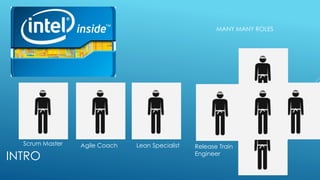
INTRO
Scrum Master Agile Coach Lean Specialist Release Train
Engineer
MANY MANY ROLES
5
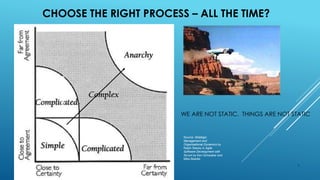
CHOOSE THE RIGHT PROCESS – ALL THE TIME?
Source: Strategic
Management and
Organizational Dynamics by
Ralph Stacey in Agile
Software Development with
Scrum by Ken Schwaber and
Mike Beedle.
Technology
Requirements
WE ARE NOT STATIC. THINGS ARE NOT STATIC
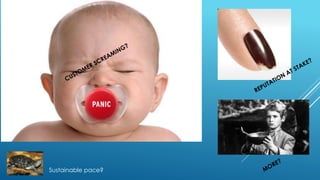
Someone Yelling?
Something Broken?
Not Enough ? More?
…
Sustainable pace?
AGILE/LEAN PRINCIPLES
1. Systematically Eliminate Waste
 See and Attack Waste. Don’t Accommodate it
2. Build Quality In and Root Cause Problems Immediately
 Work to Prevent Defects, not just Detect Them
 “Stop the Line” if you fail - Detect, Contain and Root Cause problems immediately
3. Reduce Cycle Times and Learning Cycles
 Establish a Cadence and Limit Work to Capacity
 Keep Plans Visible to Pull Work and make Knowledge Flow
 Minimize the time from any problem event to the learning being captured
4. Learn, Innovate and Improve
 Use the scientific method via PDCA and LAMDA to Learn and Innovate Rapidly
 “Go and See” for yourself – never assume
 Create Usable Knowledge through Learn – Apply – Reflect
5. Make Data Driven Decisions
 Build deep understanding before deciding by exploring multiple solutions, evaluating options thoroughly, and choosing
the best for the system
 Defer commitment while you Learn First, Then Decide at the Last Responsible Moment
6. Engage Everyone
 Respect our people by striving to systematically overcome obstacles
 Tie work to business value and drive decision-making to the lowest responsible level
 Create cross functional teams of responsible experts
 Develop leaders with system expertise that teach what they know
7. Optimize the Entire System
 Continuously improve cycle time, quality & customer satisfaction across entire value stream
 Correct governance and incentive systems that encourage local optimization.
 Focus on %Value Add Time instead of %Utilization of our resources
Lean Principles
From Implementing Lean Software Development
by Mary and Tom Poppendieck
From The Hitchhiker’s Guide to Lean
by Jamie Flinchbaugh
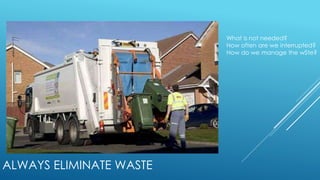
ALWAYS ELIMINATE WASTE
What is not needed?
How often are we interrupted?
How do we manage the wSte?
QUALITY QUALITY QUALITY
Never Compromise on Quality.
Defects are like Virus…
Never Release buggy codes no matter what
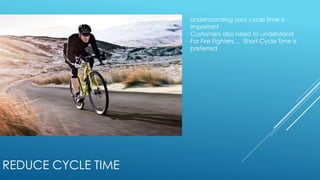
REDUCE CYCLE TIME
Understanding your cycle time is
important
Customers also need to understand
For Fire Fighters… Short Cycle Time is
preferred
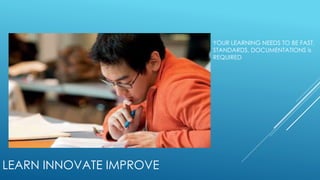
LEARN INNOVATE IMPROVE
YOUR LEARNING NEEDS TO BE FAST.
STANDARDS, DOCUMENTATIONS is
REQUIRED
MAKE DATA DRIVEN DECISIONS
DECISIONS ARE TO BE MADE FAST
NAD AT THE RIGHT LEVEL
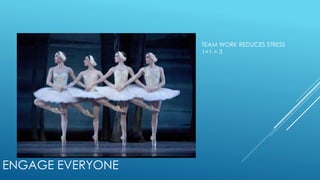
ENGAGE EVERYONE
TEAM WORK REDUCES STRESS
1+1 = 3
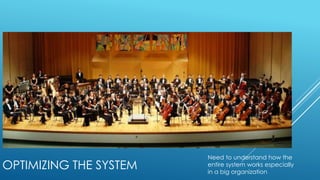
OPTIMIZING THE SYSTEM
Need to understand how the
entire system works especially
in a big organization
WHAT TO DO?
 Recognize what the needs are. DO DIRECT OBSERVATION.
 Understand the CULTURE of the Team.
 What were they doing before?
 What was the history of the team? Did they just come out of other project with similar characteristics
 What are the hot buttons
 How to engage people
 VISUALS are important.
 How can we capitalize on visuals. We’ll be sharing this.
 How do we show our progress and the effects that it gives
 Rally the MANAGEMENT
 The team needs to see the management involve. No Lip Service
 We need a CADENCE.
 Create a conducive ENVIRONMENT
 SEE the Big Picture
 Manage the CHANGES
 Manage Interrupts
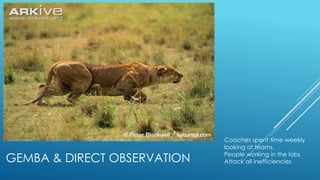
GEMBA & DIRECT OBSERVATION
Coaches spent time weekly
looking at teams.
People working in the labs
Attack all inefficiencies
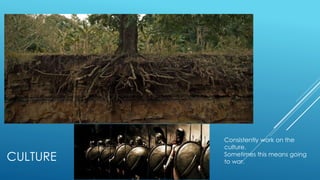
CULTURE
Consistently work on the
culture.
Sometimes this means going
to war.
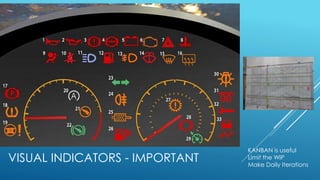
VISUAL INDICATORS - IMPORTANT
KANBAN is useful
Limit the WIP
Make Daily Iterations
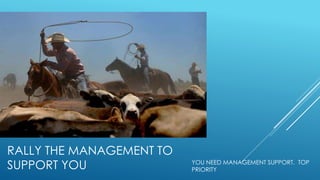
RALLY THE MANAGEMENT TO
SUPPORT YOU YOU NEED MANAGEMENT SUPPORT. TOP
PRIORITY
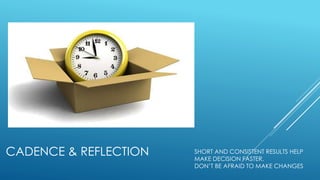
CADENCE & REFLECTION SHORT AND CONSISTENT RESULTS HELP
MAKE DECISION FASTER.
DON’T BE AFRAID TO MAKE CHANGES
ENVIRONMENT – SUSTAINABILITY VS FLEXIBILITY
WE’RE IN FOR THE LONG HAUL. NO ONE
GETS OFF UNTIL ITS DONE.
BIG PICTURE MAKE SACRIFICES AND SEE THE BIG
PICTURE
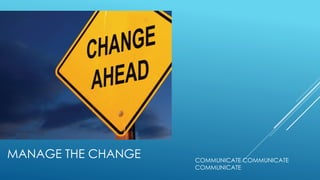
MANAGE THE CHANGE COMMUNICATE COMMUNICATE
COMMUNICATE
Channel All Interrupts and Have a
Clearing House
Have a Decision Maker
Work in a Castle not Dungeon!
MANAGE INTERRUPTS
CELEBRATE
RESULTS…. RESULTS
 TO BE FILLED.
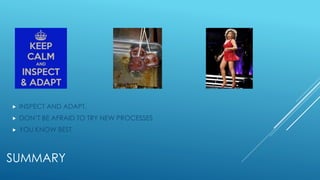
SUMMARY
 INSPECT AND ADAPT.
 DON’T BE AFRAID TO TRY NEW PROCESSES
 YOU KNOW BEST
THANK YOU

When the rubber hits the road - draft

  • 1.
    Joseph Chee WHEN THERUBBER HITS THE ROAD: AGILE THE APPARENT FIRE FIGHTER
  • 2.
    AGENDA  Introductions. WhoAm I & What I do  When Agile Works…  When They Press the “Panic” Button  Can Agile/Lean Rescue?  Principles that Govern  What to do?  Results
  • 3.
    INTRO Scrum Master AgileCoach Lean Specialist Release Train Engineer MANY MANY ROLES
  • 5.
    5 CHOOSE THE RIGHTPROCESS – ALL THE TIME? Source: Strategic Management and Organizational Dynamics by Ralph Stacey in Agile Software Development with Scrum by Ken Schwaber and Mike Beedle. Technology Requirements WE ARE NOT STATIC. THINGS ARE NOT STATIC
  • 6.
    Someone Yelling? Something Broken? NotEnough ? More? … Sustainable pace?
  • 7.
  • 8.
    1. Systematically EliminateWaste  See and Attack Waste. Don’t Accommodate it 2. Build Quality In and Root Cause Problems Immediately  Work to Prevent Defects, not just Detect Them  “Stop the Line” if you fail - Detect, Contain and Root Cause problems immediately 3. Reduce Cycle Times and Learning Cycles  Establish a Cadence and Limit Work to Capacity  Keep Plans Visible to Pull Work and make Knowledge Flow  Minimize the time from any problem event to the learning being captured 4. Learn, Innovate and Improve  Use the scientific method via PDCA and LAMDA to Learn and Innovate Rapidly  “Go and See” for yourself – never assume  Create Usable Knowledge through Learn – Apply – Reflect 5. Make Data Driven Decisions  Build deep understanding before deciding by exploring multiple solutions, evaluating options thoroughly, and choosing the best for the system  Defer commitment while you Learn First, Then Decide at the Last Responsible Moment 6. Engage Everyone  Respect our people by striving to systematically overcome obstacles  Tie work to business value and drive decision-making to the lowest responsible level  Create cross functional teams of responsible experts  Develop leaders with system expertise that teach what they know 7. Optimize the Entire System  Continuously improve cycle time, quality & customer satisfaction across entire value stream  Correct governance and incentive systems that encourage local optimization.  Focus on %Value Add Time instead of %Utilization of our resources Lean Principles From Implementing Lean Software Development by Mary and Tom Poppendieck From The Hitchhiker’s Guide to Lean by Jamie Flinchbaugh
  • 9.
    ALWAYS ELIMINATE WASTE Whatis not needed? How often are we interrupted? How do we manage the wSte?
  • 10.
    QUALITY QUALITY QUALITY NeverCompromise on Quality. Defects are like Virus… Never Release buggy codes no matter what
  • 11.
    REDUCE CYCLE TIME Understandingyour cycle time is important Customers also need to understand For Fire Fighters… Short Cycle Time is preferred
  • 12.
    LEARN INNOVATE IMPROVE YOURLEARNING NEEDS TO BE FAST. STANDARDS, DOCUMENTATIONS is REQUIRED
  • 13.
    MAKE DATA DRIVENDECISIONS DECISIONS ARE TO BE MADE FAST NAD AT THE RIGHT LEVEL
  • 14.
    ENGAGE EVERYONE TEAM WORKREDUCES STRESS 1+1 = 3
  • 15.
    OPTIMIZING THE SYSTEM Needto understand how the entire system works especially in a big organization
  • 16.
  • 17.
     Recognize whatthe needs are. DO DIRECT OBSERVATION.  Understand the CULTURE of the Team.  What were they doing before?  What was the history of the team? Did they just come out of other project with similar characteristics  What are the hot buttons  How to engage people  VISUALS are important.  How can we capitalize on visuals. We’ll be sharing this.  How do we show our progress and the effects that it gives  Rally the MANAGEMENT  The team needs to see the management involve. No Lip Service  We need a CADENCE.  Create a conducive ENVIRONMENT  SEE the Big Picture  Manage the CHANGES  Manage Interrupts
  • 18.
    GEMBA & DIRECTOBSERVATION Coaches spent time weekly looking at teams. People working in the labs Attack all inefficiencies
  • 19.
    CULTURE Consistently work onthe culture. Sometimes this means going to war.
  • 20.
    VISUAL INDICATORS -IMPORTANT KANBAN is useful Limit the WIP Make Daily Iterations
  • 21.
    RALLY THE MANAGEMENTTO SUPPORT YOU YOU NEED MANAGEMENT SUPPORT. TOP PRIORITY
  • 22.
    CADENCE & REFLECTIONSHORT AND CONSISTENT RESULTS HELP MAKE DECISION FASTER. DON’T BE AFRAID TO MAKE CHANGES
  • 23.
    ENVIRONMENT – SUSTAINABILITYVS FLEXIBILITY WE’RE IN FOR THE LONG HAUL. NO ONE GETS OFF UNTIL ITS DONE.
  • 24.
    BIG PICTURE MAKESACRIFICES AND SEE THE BIG PICTURE
  • 25.
    MANAGE THE CHANGECOMMUNICATE COMMUNICATE COMMUNICATE
  • 26.
    Channel All Interruptsand Have a Clearing House Have a Decision Maker Work in a Castle not Dungeon! MANAGE INTERRUPTS
  • 27.
  • 28.
  • 29.
    SUMMARY  INSPECT ANDADAPT.  DON’T BE AFRAID TO TRY NEW PROCESSES  YOU KNOW BEST
  • 30.