Agenda
• Background
• Scrum – An Agile Manifestation
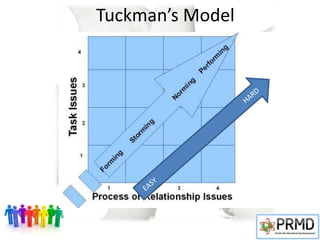
• Tuckman’s Model
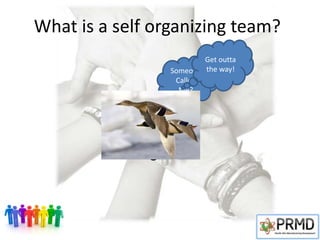
• What’s Self Organizing?
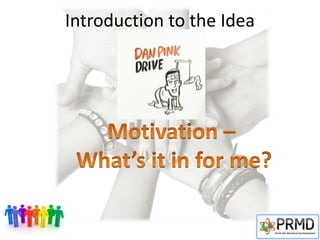
• Introduction of Idea
• DOE No.1
• Rulez!
• What types of work selected
• Results
• Elements of Self Organizing
• Things we need to know about change
• Recommendations & Conclusion
Background about PRMD - PG
• We are a team of PDE from PG
– Sized at about 85 heads. We have 7 scrum
teams
– Have been using scrum for 2 years. (0.5 on
scrum but)
– We Develop Test Programs for MIC & HSW
processors
– Team has been around almost 10 years.
Scrum – An Agile Manifestation
HARD
• Builds up teamwork
• Inspect and Adapt.
• Excellent for Empirical Movement
REALLY REALLY HARD & A BIT ABSTRACT …. BUT POSSIBLE
• SM and PO needs to build trust with Teams.
• The SUM and detailed cadential planning feels like
micromanaging
• Teams fall in the trap of depending on PO to plan and
“think” for them.
• Very often end up being spoon fed and reduce in
motivation
• We just do the sprint backlog. (any extras? Need PO
to figure out also)
Tuckman’s Model
What is a self organizing team?
Someone
Called
Me?
Get outta
the way!
Introduction to the Idea
DOE No.1 – No Management Sprint
• It’s only a sprint away. – small investment
• What were the targeted outcome?
– To Look for more self motivation from department
– Less command and control vs self organizing?
What were the rules?
• MINIMUM RULES
1. Team was briefed on No Management Sprint and
asked to think about what they needed to do
2. During Planning Meeting, Team decides what to
do and how it’s done. (what’s done normally)
3. Only Process we followed –
1. Duration
2. Review
3. Retrospective.
What kind of work was selected
• Project related stories
• Individual/team improvement – inter
department training
• Infrastructure improvement
• IDF, Process, GPTW
• Training
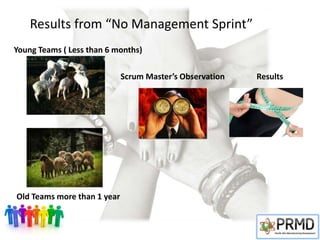
Results from “No Management Sprint”
Young Teams ( Less than 6 months)
Old Teams more than 1 year
Scrum Master’s Observation Results
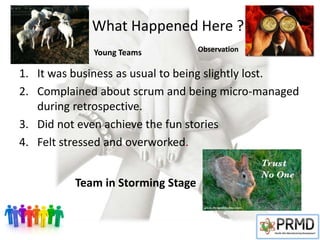
What Happened Here ?
1. It was business as usual to being slightly lost.
2. Complained about scrum and being micro-managed
during retrospective.
3. Did not even achieve the fun stories
4. Felt stressed and overworked.
Young Teams Observation
Team in Storming Stage
Low Trust Level
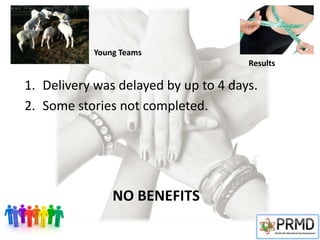
1. Delivery was delayed by up to 4 days.
2. Some stories not completed.
NO BENEFITS
Young Teams
Results
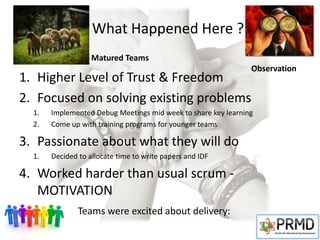
1. Higher Level of Trust & Freedom
2. Focused on solving existing problems
1. Implemented Debug Meetings mid week to share key learning
2. Come up with training programs for younger teams
3. Passionate about what they will do
1. Decided to allocate time to write papers and IDF
4. Worked harder than usual scrum -
MOTIVATION
Teams were excited about delivery:
Matured Teams
What Happened Here ?
Observation
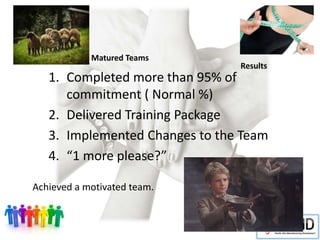
1. Completed more than 95% of
commitment ( Normal %)
2. Delivered Training Package
3. Implemented Changes to the Team
4. “1 more please?”
Achieved a motivated team.
Matured Teams
Results
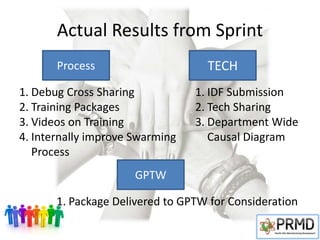
Actual Results from Sprint
Process
1. Debug Cross Sharing
2. Training Packages
3. Videos on Training
4. Internally improve Swarming
Process
GPTW
TECH
1. IDF Submission
2. Tech Sharing
3. Department Wide
Causal Diagram
1. Package Delivered to GPTW for Consideration
Elements of Self-managing
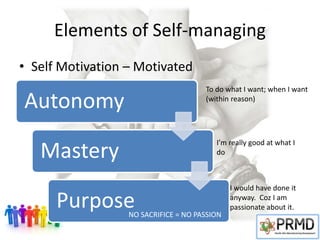
• Self Motivation – Motivated
– As Dan Pink’s Drive suggested:
Autonomy
Mastery
Purpose
To do what I want; when I want
(within reason)
I’m really good at what I
do
I would have done it
anyway. Coz I am
passionate about it.
NO SACRIFICE = NO PASSION
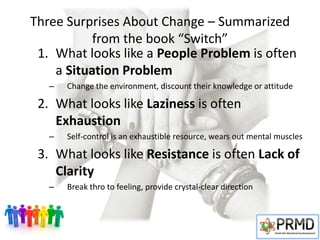
Three Surprises About Change – Summarized
from the book “Switch”
1. What looks like a People Problem is often
a Situation Problem
– Change the environment, discount their knowledge or attitude
2. What looks like Laziness is often
Exhaustion
– Self-control is an exhaustible resource, wears out mental muscles
3. What looks like Resistance is often Lack of
Clarity
– Break thro to feeling, provide crystal-clear direction
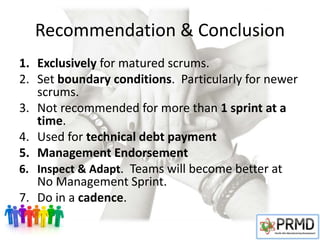
Recommendation & Conclusion
1. Exclusively for matured scrums.
2. Set boundary conditions. Particularly for newer
scrums.
3. Not recommended for more than 1 sprint at a
time.
4. Used for technical debt payment
5. Management Endorsement
6. Inspect & Adapt. Teams will become better at
No Management Sprint.
7. Do in a cadence.
No management sprint

No management sprint

  • 2.
    Agenda • Background • Scrum– An Agile Manifestation • Tuckman’s Model • What’s Self Organizing? • Introduction of Idea • DOE No.1 • Rulez! • What types of work selected • Results • Elements of Self Organizing • Things we need to know about change • Recommendations & Conclusion
  • 3.
    Background about PRMD- PG • We are a team of PDE from PG – Sized at about 85 heads. We have 7 scrum teams – Have been using scrum for 2 years. (0.5 on scrum but) – We Develop Test Programs for MIC & HSW processors – Team has been around almost 10 years.
  • 4.
    Scrum – AnAgile Manifestation HARD • Builds up teamwork • Inspect and Adapt. • Excellent for Empirical Movement REALLY REALLY HARD & A BIT ABSTRACT …. BUT POSSIBLE • SM and PO needs to build trust with Teams. • The SUM and detailed cadential planning feels like micromanaging • Teams fall in the trap of depending on PO to plan and “think” for them. • Very often end up being spoon fed and reduce in motivation • We just do the sprint backlog. (any extras? Need PO to figure out also)
  • 5.
  • 6.
    What is aself organizing team? Someone Called Me? Get outta the way!
  • 7.
  • 8.
    DOE No.1 –No Management Sprint • It’s only a sprint away. – small investment • What were the targeted outcome? – To Look for more self motivation from department – Less command and control vs self organizing?
  • 9.
    What were therules? • MINIMUM RULES 1. Team was briefed on No Management Sprint and asked to think about what they needed to do 2. During Planning Meeting, Team decides what to do and how it’s done. (what’s done normally) 3. Only Process we followed – 1. Duration 2. Review 3. Retrospective.
  • 10.
    What kind ofwork was selected • Project related stories • Individual/team improvement – inter department training • Infrastructure improvement • IDF, Process, GPTW • Training
  • 11.
    Results from “NoManagement Sprint” Young Teams ( Less than 6 months) Old Teams more than 1 year Scrum Master’s Observation Results
  • 12.
    What Happened Here? 1. It was business as usual to being slightly lost. 2. Complained about scrum and being micro-managed during retrospective. 3. Did not even achieve the fun stories 4. Felt stressed and overworked. Young Teams Observation Team in Storming Stage Low Trust Level
  • 13.
    1. Delivery wasdelayed by up to 4 days. 2. Some stories not completed. NO BENEFITS Young Teams Results
  • 14.
    1. Higher Levelof Trust & Freedom 2. Focused on solving existing problems 1. Implemented Debug Meetings mid week to share key learning 2. Come up with training programs for younger teams 3. Passionate about what they will do 1. Decided to allocate time to write papers and IDF 4. Worked harder than usual scrum - MOTIVATION Teams were excited about delivery: Matured Teams What Happened Here ? Observation
  • 15.
    1. Completed morethan 95% of commitment ( Normal %) 2. Delivered Training Package 3. Implemented Changes to the Team 4. “1 more please?” Achieved a motivated team. Matured Teams Results
  • 16.
    Actual Results fromSprint Process 1. Debug Cross Sharing 2. Training Packages 3. Videos on Training 4. Internally improve Swarming Process GPTW TECH 1. IDF Submission 2. Tech Sharing 3. Department Wide Causal Diagram 1. Package Delivered to GPTW for Consideration
  • 17.
    Elements of Self-managing •Self Motivation – Motivated – As Dan Pink’s Drive suggested: Autonomy Mastery Purpose To do what I want; when I want (within reason) I’m really good at what I do I would have done it anyway. Coz I am passionate about it. NO SACRIFICE = NO PASSION
  • 18.
    Three Surprises AboutChange – Summarized from the book “Switch” 1. What looks like a People Problem is often a Situation Problem – Change the environment, discount their knowledge or attitude 2. What looks like Laziness is often Exhaustion – Self-control is an exhaustible resource, wears out mental muscles 3. What looks like Resistance is often Lack of Clarity – Break thro to feeling, provide crystal-clear direction
  • 19.
    Recommendation & Conclusion 1.Exclusively for matured scrums. 2. Set boundary conditions. Particularly for newer scrums. 3. Not recommended for more than 1 sprint at a time. 4. Used for technical debt payment 5. Management Endorsement 6. Inspect & Adapt. Teams will become better at No Management Sprint. 7. Do in a cadence.

Editor's Notes

  • #5 What we’re going talk about is to address some of those concerns.
  • #6 What’s a performing – self organization –which is a principle of scrum
  • #9 DOE – What is it.
  • #12 arrows
  • #14 Label pictures
  • #16 Tie this back to the tuckman’s model. Performing Team…
  • #17 In addition… Normal daily operations. Some evidence… art. Change the red tags…
  • #18 Tie it to the no management sprint