WHEN ENTERPRISE
MEETS DEVOPS
May Xu
@may_ping_xu
WHAT TO EXPECT FROM THIS SESSION
2
 Business Challenges
 Enterprise Snapshot
 DevOps Adoption Model
 Case Study & Learning
 Takeaways
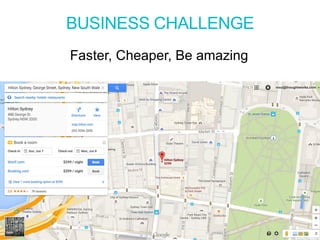
BUSINESS CHALLENGE
3
Be amazing
Faster, Cheaper, Be amazing
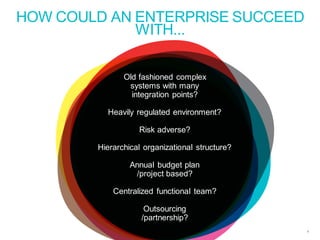
HOW COULD AN ENTERPRISE SUCCEED
WITH...
4
Old fashioned complex
systems with many
integration points?
Heavily regulated environment?
Risk adverse?
Hierarchical organizational structure?
Annual budget plan
/project based?
Centralized functional team?
Outsourcing
/partnership?
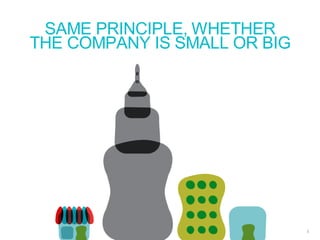
SAME PRINCIPLE, WHETHER
THE COMPANY IS SMALL OR BIG
5
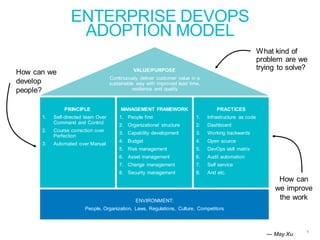
ENTERPRISE DEVOPS
ADOPTION MODEL
6
ENVIRONMENT:
People, Organization, Laws, Regulations, Culture, Competitors
PRINCIPLE
1. Self-directed team Over
Command and Control
2. Course correction over
Perfection
3. Automated over Manual
MANAGEMENT FRAMEWORK
1. People first
2. Organizational structure
3. Capability development
4. Budget
5. Risk management
6. Asset management
7. Change management
8. Security management
PRACTICES
1. Infrastructure as code
2. Dashboard
3. Working backwards
4. Open source
5. DevOps skill matrix
6. Audit automation
7. Self service
8. And etc.
VALUE/PURPOSE
Continuously deliver customer value in a
sustainable way with improved lead time,
resilience and quality
— May Xu
How can
we improve
the work
How can we
develop
people?
What kind of
problem are we
trying to solve?
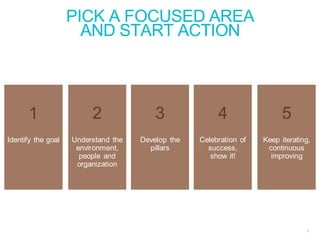
PICK A FOCUSED AREA
AND START ACTION
7
1
Identify the goal
2
Understand the
environment,
people and
organization
3
Develop the
pillars
4
Celebration of
success,
show it!
5
Keep iterating,
continuous
improving
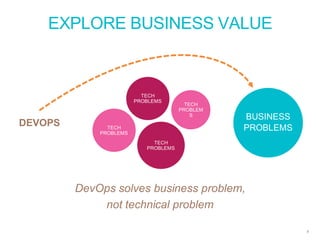
EXPLORE BUSINESS VALUE
8
DevOps solves business problem,
not technical problem
TECH
PROBLEMS
DEVOPS TECH
PROBLEMS
TECH
PROBLEMS
TECH
PROBLEM
S
BUSINESS
PROBLEMS
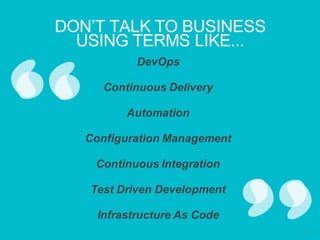
DON’T TALK TO BUSINESS
USING TERMS LIKE...
9
Continuous Delivery
Configuration Management
Automation
Test Driven Development
Infrastructure As Code
DevOps
Continuous Integration
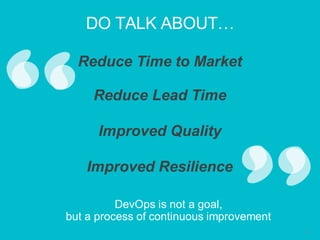
DO TALK ABOUT…
10
DevOps is not a goal,
but a process of continuous improvement
Reduce Lead Time
Improved Resilience
Improved Quality
Reduce Time to Market
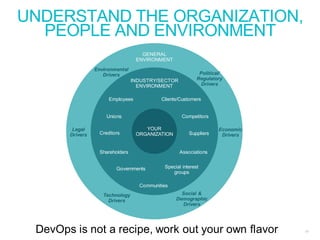
UNDERSTAND THE ORGANIZATION,
PEOPLE AND ENVIRONMENT
11DevOps is not a recipe, work out your own flavor
GENERAL
ENVIRONMENT
INDUSTRY/SECTOR
ENVIRONMENT
YOUR
ORGANIZATION
Clients/Customers
Competitors
Suppliers
Associations
Special interest
groups
Communities
Governments
Shareholders
Creditors
Unions
Employees
Environmental
Drivers
Legal
Drivers
Technology
Drivers
Social &
Demographic
Drivers
Economic
Drivers
Political/
Regulatory
Drivers
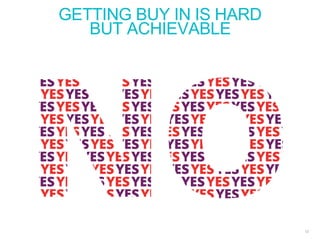
GETTING BUY IN IS HARD
BUT ACHIEVABLE
12
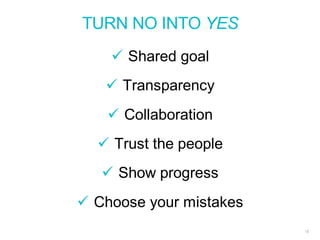
TURN NO INTO YES
13
 Shared goal
 Transparency
 Collaboration
 Trust the people
 Show progress
 Choose your mistakes
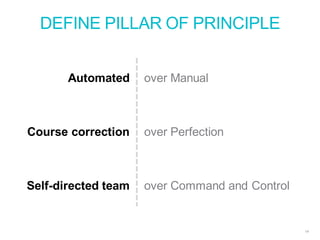
DEFINE PILLAR OF PRINCIPLE
14
Automated over Manual
Course correction over Perfection
Self-directed team over Command and Control
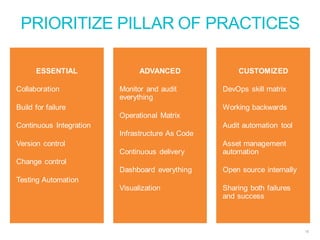
PRIORITIZE PILLAR OF PRACTICES
15
ESSENTIAL
Collaboration
Build for failure
Continuous Integration
Version control
Change control
Testing Automation
ADVANCED
Monitor and audit
everything
Operational Matrix
Infrastructure As Code
Continuous delivery
Dashboard everything
Visualization
CUSTOMIZED
DevOps skill matrix
Working backwards
Audit automation tool
Asset management
automation
Open source internally
Sharing both failures
and success
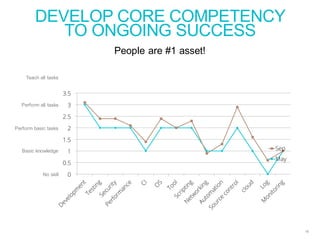
DEVELOP CORE COMPETENCY
TO ONGOING SUCCESS
16
People are #1 asset!
No skill
Basic knowledge
Perform basic tasks
Perform all tasks
Teach all tasks
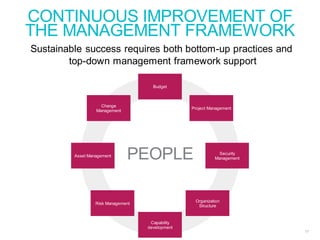
CONTINUOUS IMPROVEMENT OF
THE MANAGEMENT FRAMEWORK
17
Budget
Project Management
Security
Management
Organization
Structure
Capability
development
Risk Management
Asset Management
Change
Management
Sustainable success requires both bottom-up practices and
top-down management framework support
PEOPLE
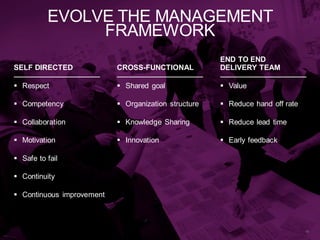
EVOLVE THE MANAGEMENT
FRAMEWORK
18
SELF DIRECTED
 Respect
 Competency
 Collaboration
 Motivation
 Safe to fail
 Continuity
 Continuous improvement
CROSS-FUNCTIONAL
 Shared goal
 Organization structure
 Knowledge Sharing
 Innovation
END TO END
DELIVERY TEAM
 Value
 Reduce hand off rate
 Reduce lead time
 Early feedback
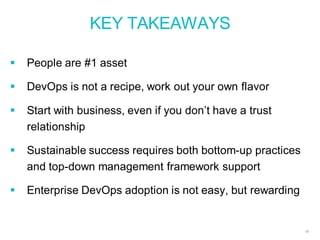
KEY TAKEAWAYS
19
 People are #1 asset
 DevOps is not a recipe, work out your own flavor
 Start with business, even if you don’t have a trust
relationship
 Sustainable success requires both bottom-up practices
and top-down management framework support
 Enterprise DevOps adoption is not easy, but rewarding
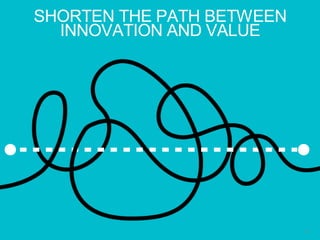
SHORTEN THE PATH BETWEEN
INNOVATION AND VALUE
20
May Xu
@may_ping_xu
THANK YOU

When Enterprise Meets DevOps

  • 1.
  • 2.
    WHAT TO EXPECTFROM THIS SESSION 2  Business Challenges  Enterprise Snapshot  DevOps Adoption Model  Case Study & Learning  Takeaways
  • 3.
  • 4.
    HOW COULD ANENTERPRISE SUCCEED WITH... 4 Old fashioned complex systems with many integration points? Heavily regulated environment? Risk adverse? Hierarchical organizational structure? Annual budget plan /project based? Centralized functional team? Outsourcing /partnership?
  • 5.
    SAME PRINCIPLE, WHETHER THECOMPANY IS SMALL OR BIG 5
  • 6.
    ENTERPRISE DEVOPS ADOPTION MODEL 6 ENVIRONMENT: People,Organization, Laws, Regulations, Culture, Competitors PRINCIPLE 1. Self-directed team Over Command and Control 2. Course correction over Perfection 3. Automated over Manual MANAGEMENT FRAMEWORK 1. People first 2. Organizational structure 3. Capability development 4. Budget 5. Risk management 6. Asset management 7. Change management 8. Security management PRACTICES 1. Infrastructure as code 2. Dashboard 3. Working backwards 4. Open source 5. DevOps skill matrix 6. Audit automation 7. Self service 8. And etc. VALUE/PURPOSE Continuously deliver customer value in a sustainable way with improved lead time, resilience and quality — May Xu How can we improve the work How can we develop people? What kind of problem are we trying to solve?
  • 7.
    PICK A FOCUSEDAREA AND START ACTION 7 1 Identify the goal 2 Understand the environment, people and organization 3 Develop the pillars 4 Celebration of success, show it! 5 Keep iterating, continuous improving
  • 8.
    EXPLORE BUSINESS VALUE 8 DevOpssolves business problem, not technical problem TECH PROBLEMS DEVOPS TECH PROBLEMS TECH PROBLEMS TECH PROBLEM S BUSINESS PROBLEMS
  • 9.
    DON’T TALK TOBUSINESS USING TERMS LIKE... 9 Continuous Delivery Configuration Management Automation Test Driven Development Infrastructure As Code DevOps Continuous Integration
  • 10.
    DO TALK ABOUT… 10 DevOpsis not a goal, but a process of continuous improvement Reduce Lead Time Improved Resilience Improved Quality Reduce Time to Market
  • 11.
    UNDERSTAND THE ORGANIZATION, PEOPLEAND ENVIRONMENT 11DevOps is not a recipe, work out your own flavor GENERAL ENVIRONMENT INDUSTRY/SECTOR ENVIRONMENT YOUR ORGANIZATION Clients/Customers Competitors Suppliers Associations Special interest groups Communities Governments Shareholders Creditors Unions Employees Environmental Drivers Legal Drivers Technology Drivers Social & Demographic Drivers Economic Drivers Political/ Regulatory Drivers
  • 12.
    GETTING BUY INIS HARD BUT ACHIEVABLE 12
  • 13.
    TURN NO INTOYES 13  Shared goal  Transparency  Collaboration  Trust the people  Show progress  Choose your mistakes
  • 14.
    DEFINE PILLAR OFPRINCIPLE 14 Automated over Manual Course correction over Perfection Self-directed team over Command and Control
  • 15.
    PRIORITIZE PILLAR OFPRACTICES 15 ESSENTIAL Collaboration Build for failure Continuous Integration Version control Change control Testing Automation ADVANCED Monitor and audit everything Operational Matrix Infrastructure As Code Continuous delivery Dashboard everything Visualization CUSTOMIZED DevOps skill matrix Working backwards Audit automation tool Asset management automation Open source internally Sharing both failures and success
  • 16.
    DEVELOP CORE COMPETENCY TOONGOING SUCCESS 16 People are #1 asset! No skill Basic knowledge Perform basic tasks Perform all tasks Teach all tasks
  • 17.
    CONTINUOUS IMPROVEMENT OF THEMANAGEMENT FRAMEWORK 17 Budget Project Management Security Management Organization Structure Capability development Risk Management Asset Management Change Management Sustainable success requires both bottom-up practices and top-down management framework support PEOPLE
  • 18.
    EVOLVE THE MANAGEMENT FRAMEWORK 18 SELFDIRECTED  Respect  Competency  Collaboration  Motivation  Safe to fail  Continuity  Continuous improvement CROSS-FUNCTIONAL  Shared goal  Organization structure  Knowledge Sharing  Innovation END TO END DELIVERY TEAM  Value  Reduce hand off rate  Reduce lead time  Early feedback
  • 19.
    KEY TAKEAWAYS 19  Peopleare #1 asset  DevOps is not a recipe, work out your own flavor  Start with business, even if you don’t have a trust relationship  Sustainable success requires both bottom-up practices and top-down management framework support  Enterprise DevOps adoption is not easy, but rewarding
  • 20.
    SHORTEN THE PATHBETWEEN INNOVATION AND VALUE 20
  • 21.