IPCC AR5 Synthesis Report
IPCC Fifth Assessment Report
Key Messages
18th June 2018, Tehran, Iran
Youba SOKONA
Vice-Chair
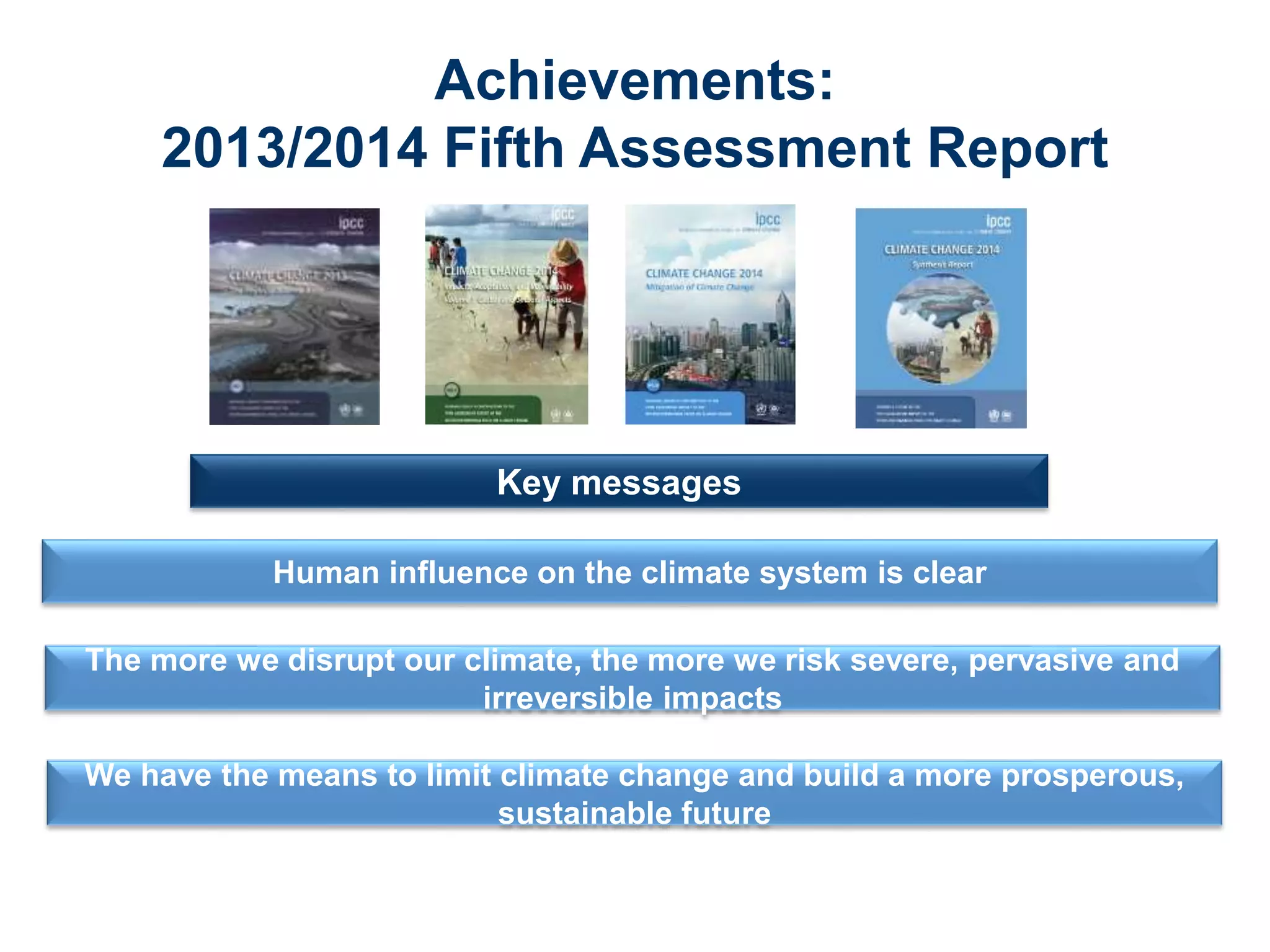
The 5th IPCC Assessment Report 2008 - 2014
Achievements:
2013/2014 Fifth Assessment Report
Human influence on the climate system is clear
Key messages
The more we disrupt our climate, the more we risk severe, pervasive and
irreversible impacts
We have the means to limit climate change and build a more prosperous,
sustainable future
©IPCC2014
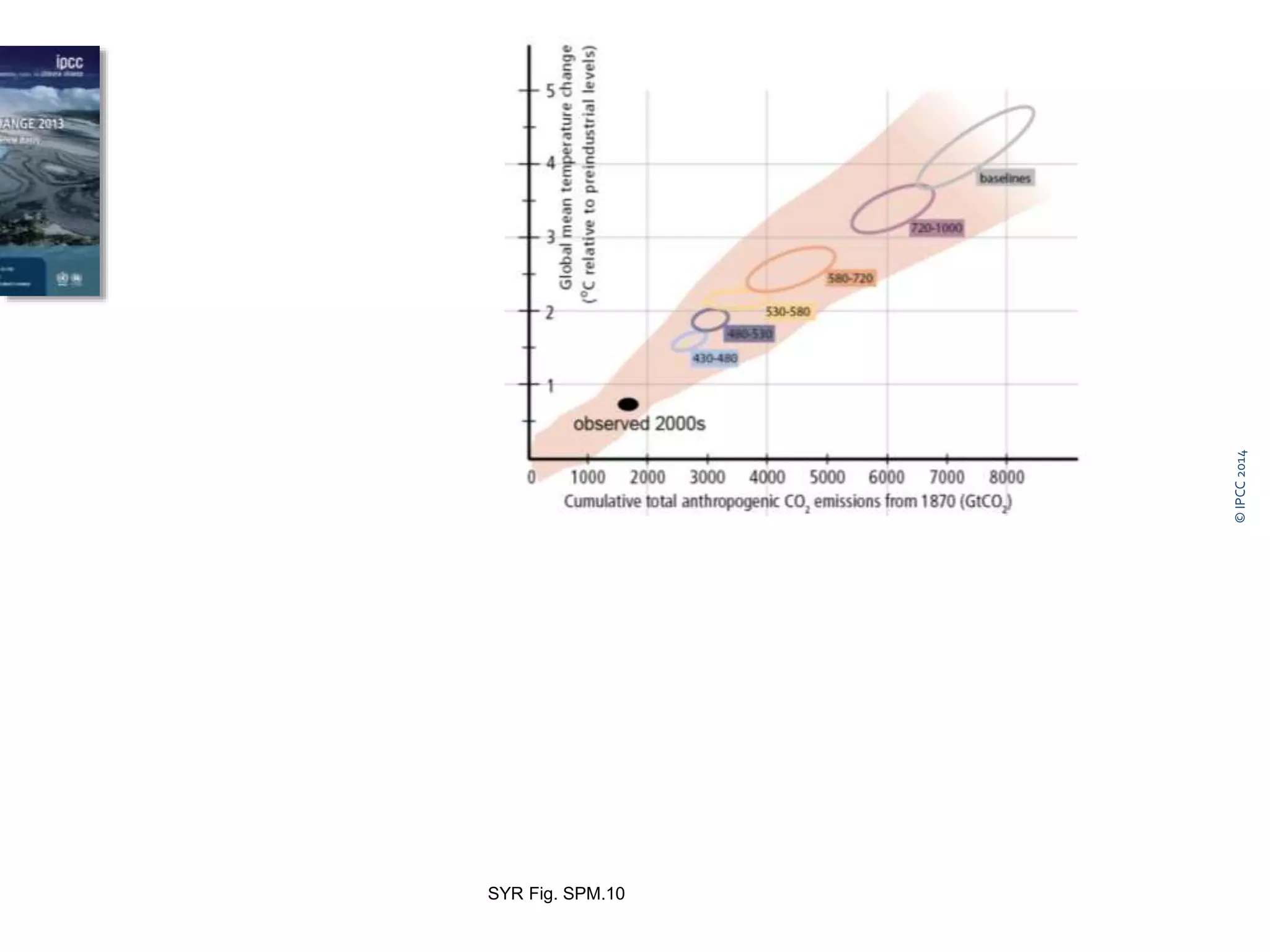
SYR Fig. SPM.10
©IPCC2014
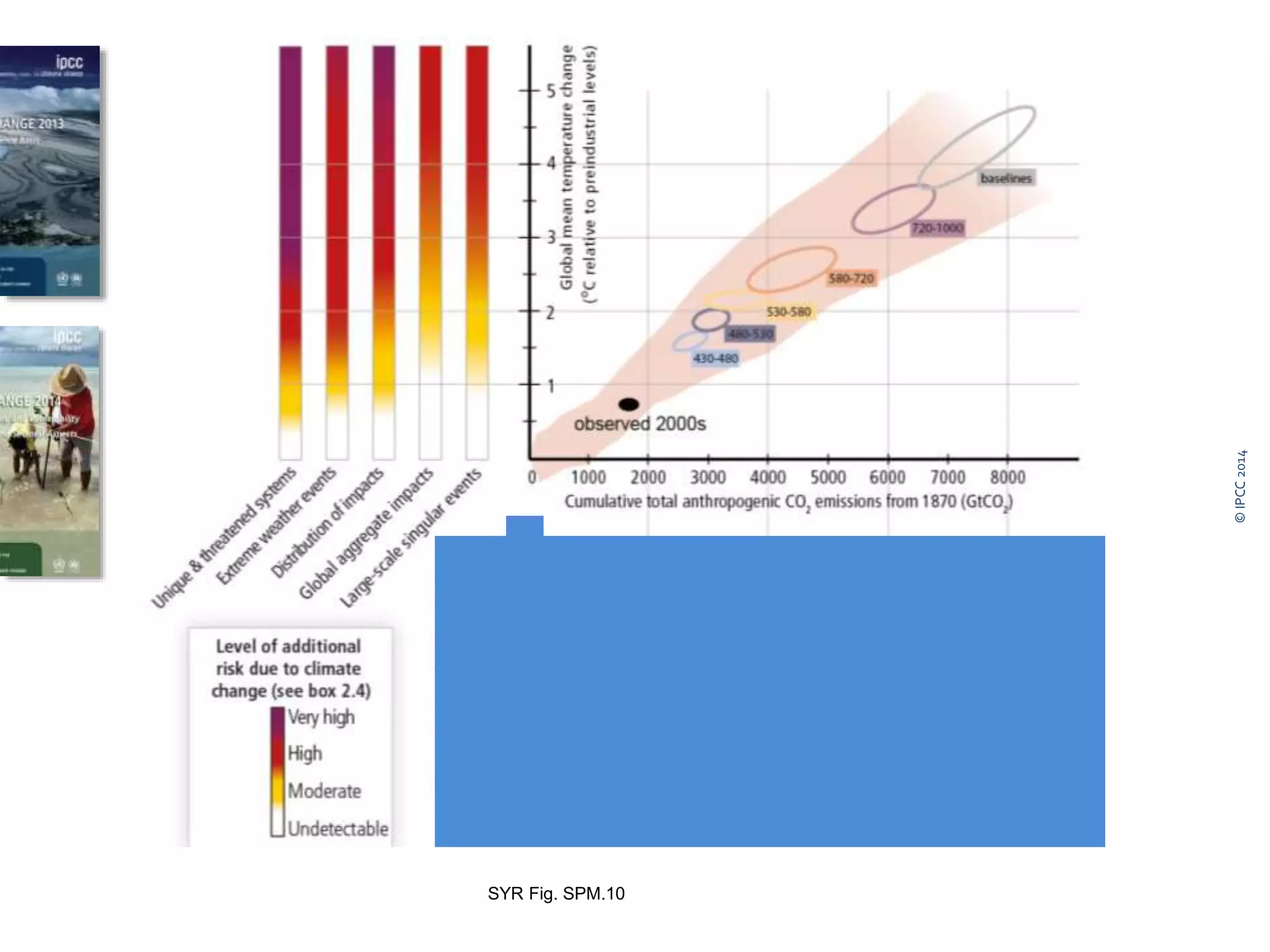
SYR Fig. SPM.10
©IPCC2014
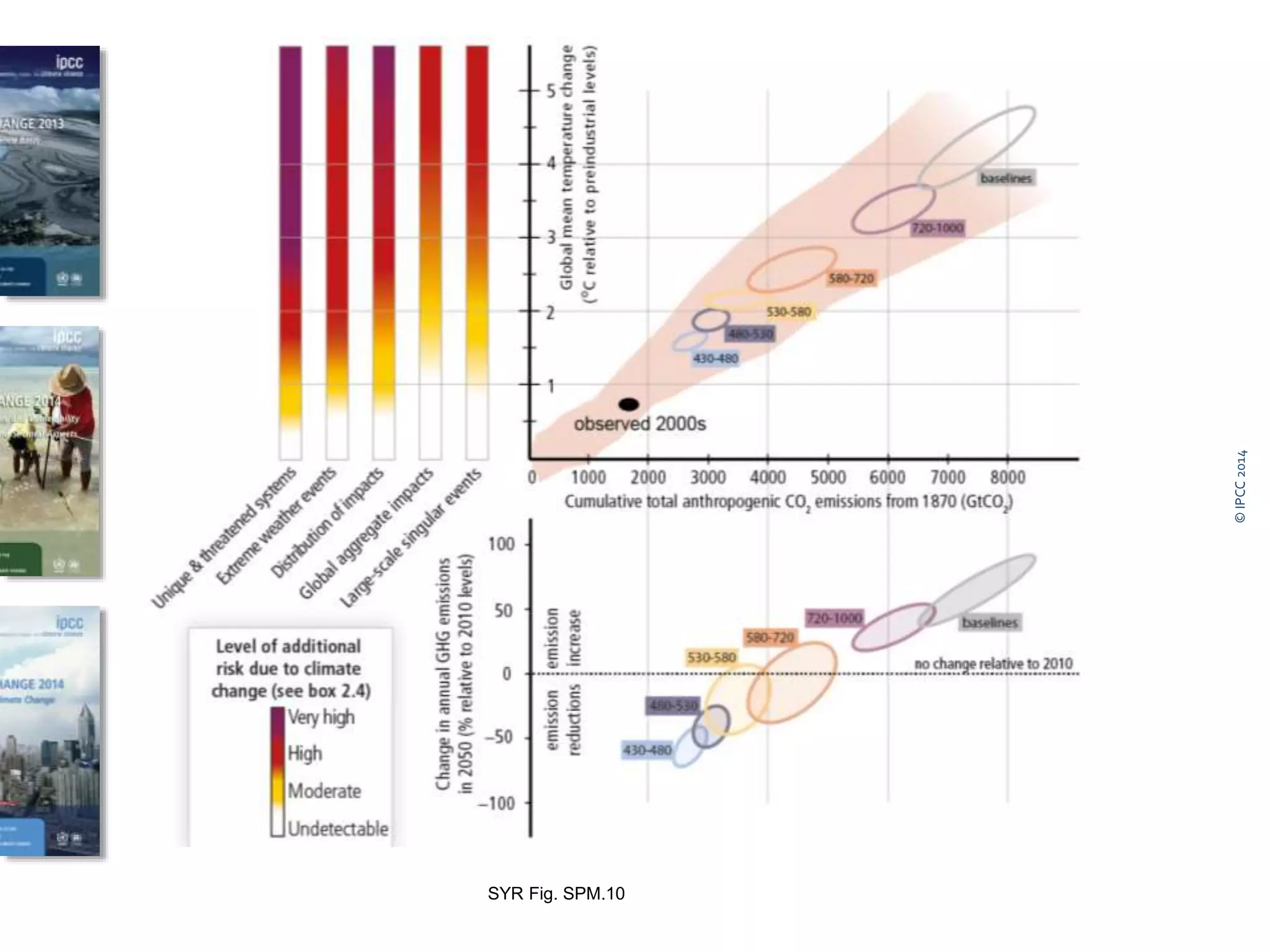
SYR Fig. SPM.10
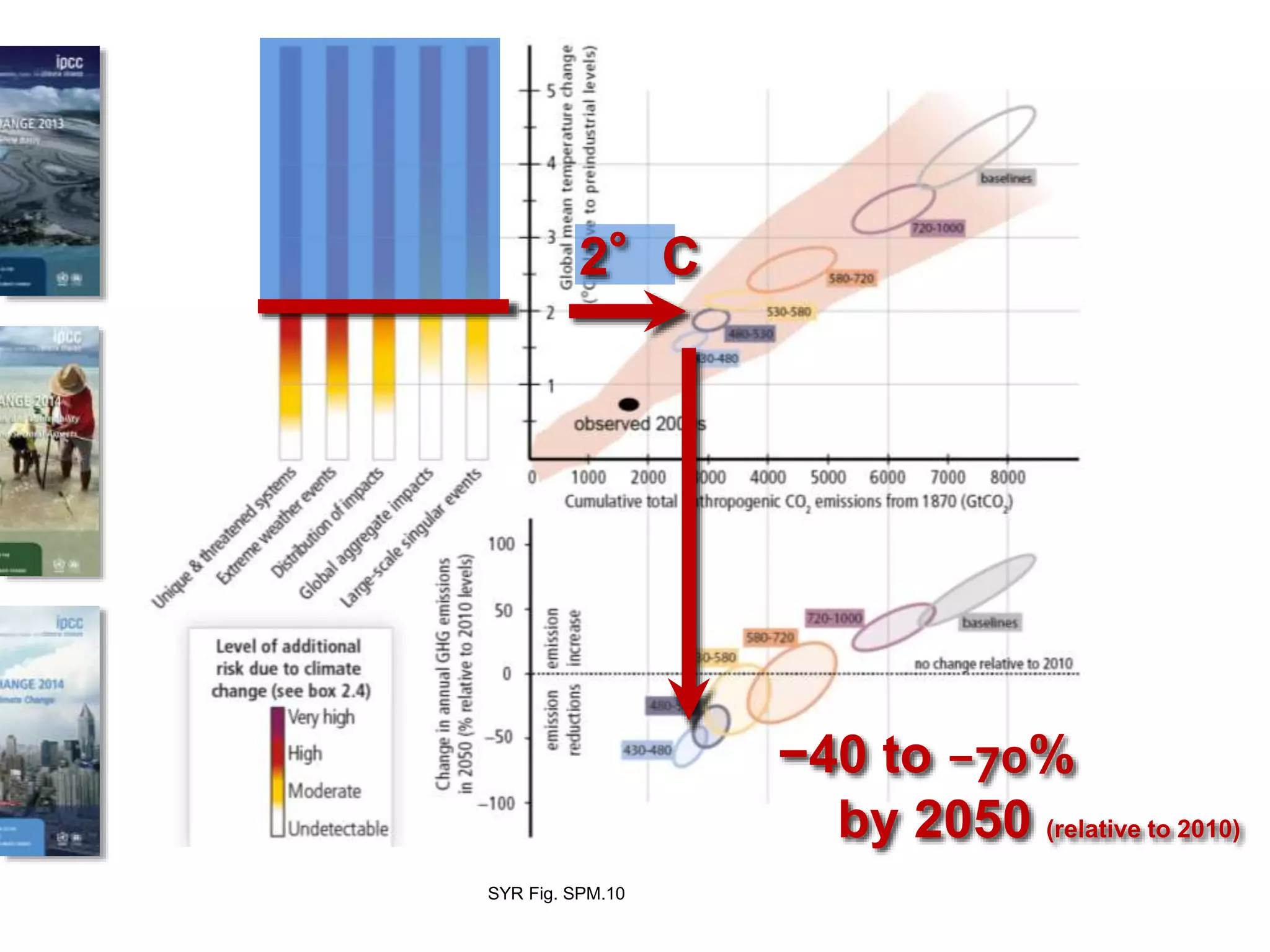
−40 to −70%
by 2050 (relative to 2010)
2°C
SYR Fig. SPM.10
IPCC AR5 Synthesis Report
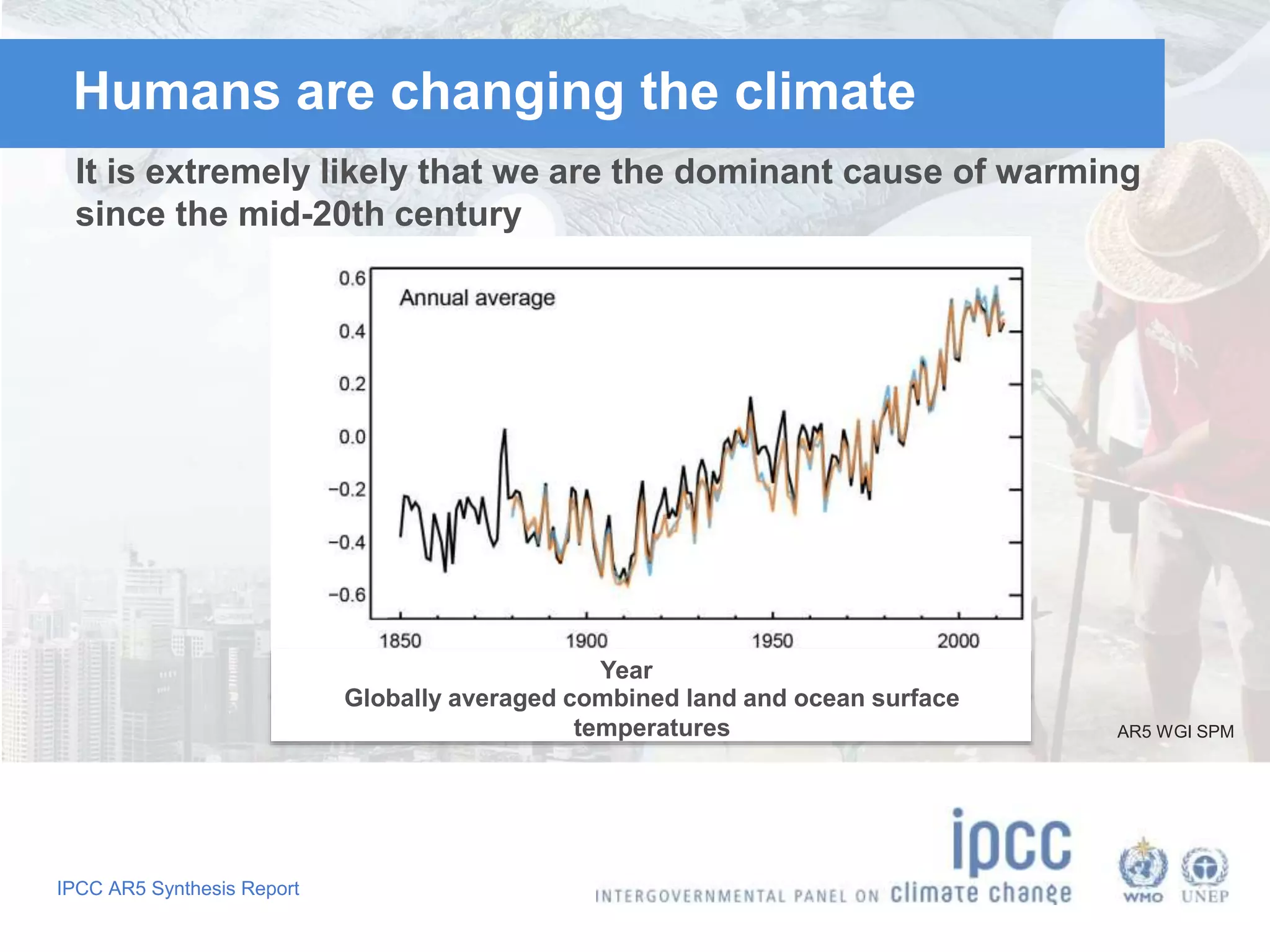
Humans are changing the climate
Year
Globally averaged combined land and ocean surface
temperatures
It is extremely likely that we are the dominant cause of warming
since the mid-20th century
AR5 WGI SPM
IPCC AR5 Synthesis Report
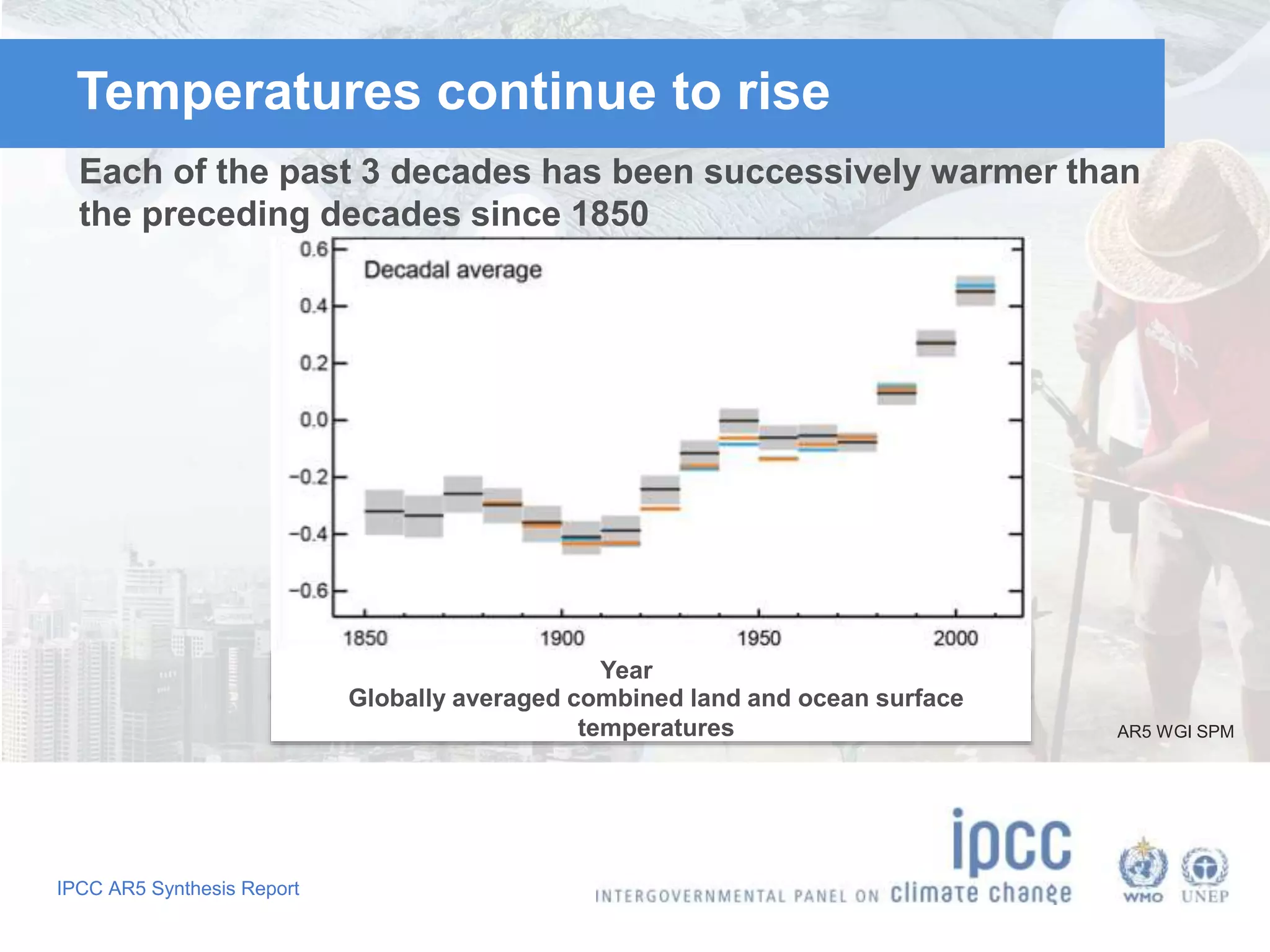
Temperatures continue to rise
Year
Globally averaged combined land and ocean surface
temperatures
Each of the past 3 decades has been successively warmer than
the preceding decades since 1850
AR5 WGI SPM
IPCC AR5 Synthesis Report
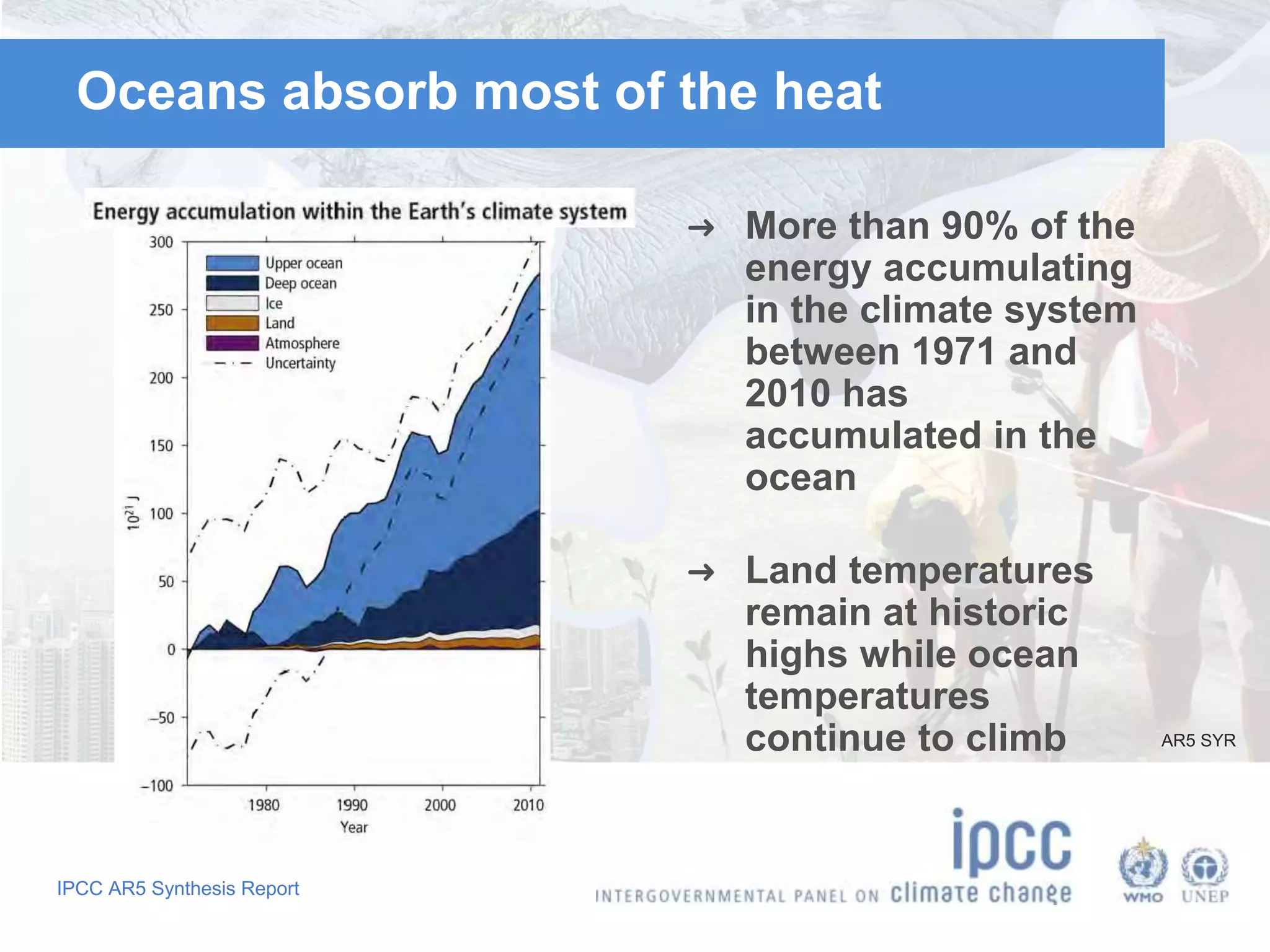
Oceans absorb most of the heat
➜ More than 90% of the
energy accumulating
in the climate system
between 1971 and
2010 has
accumulated in the
ocean
➜ Land temperatures
remain at historic
highs while ocean
temperatures
continue to climb AR5 SYR
IPCC AR5 Synthesis Report
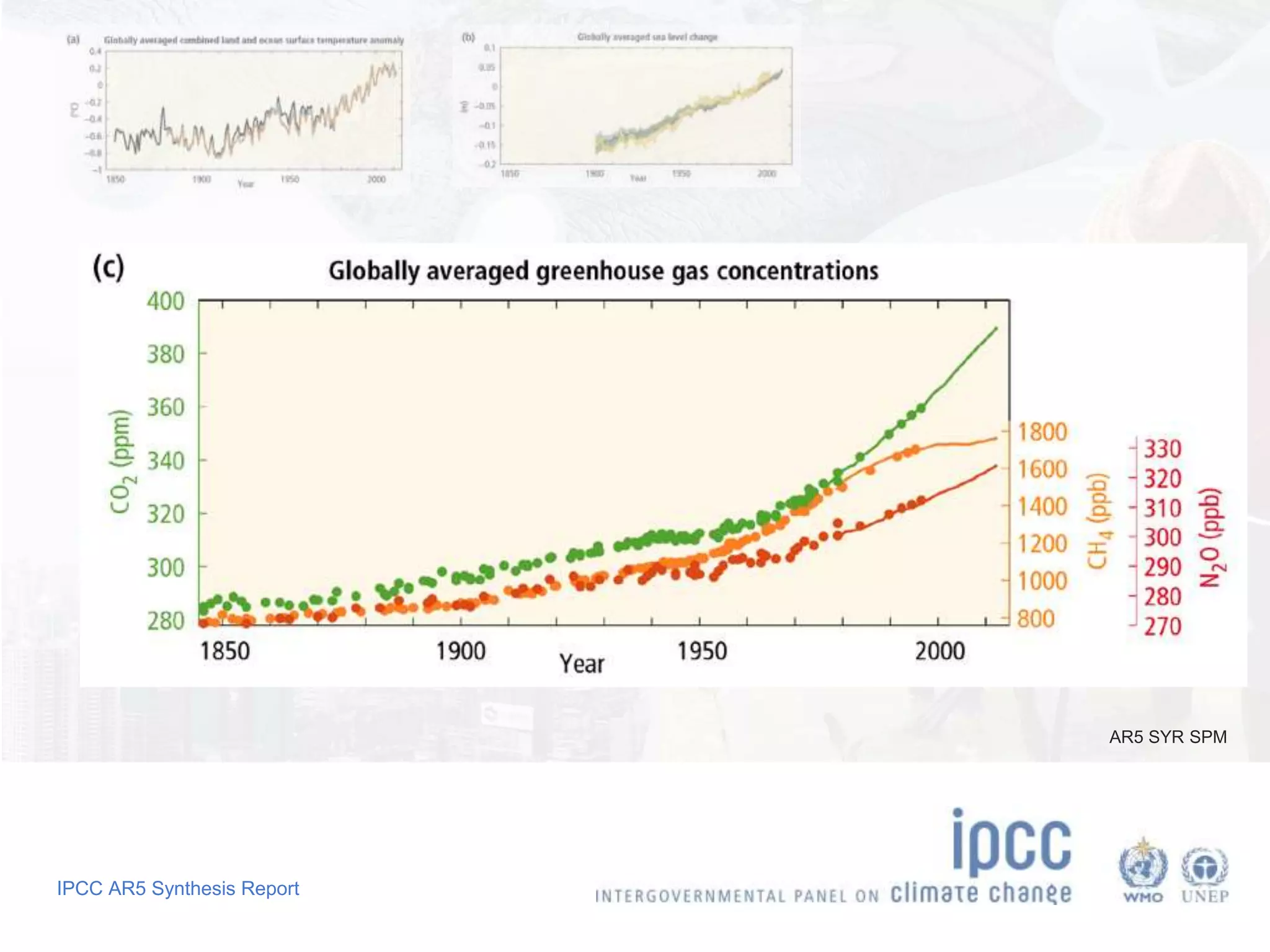
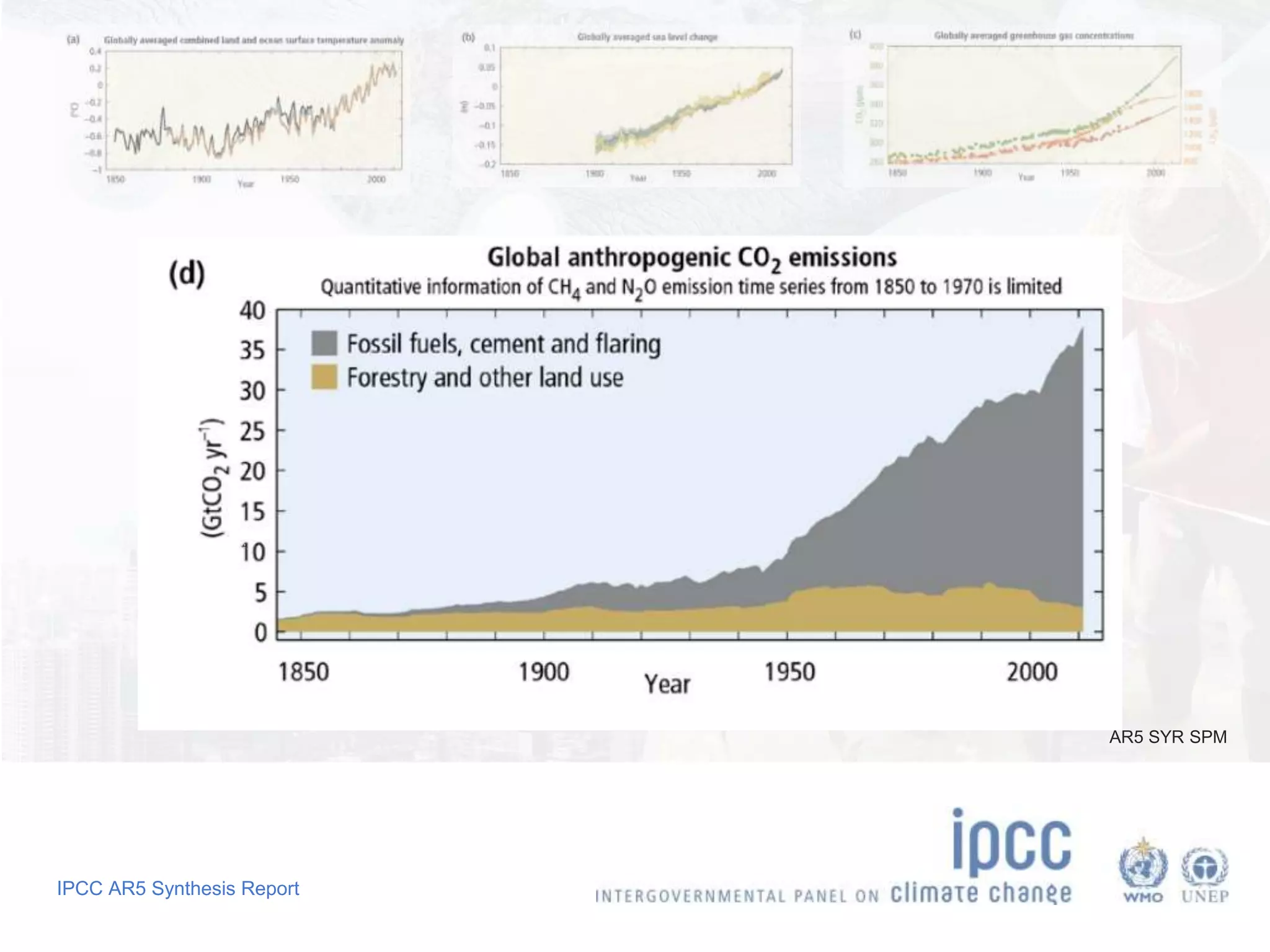
AR5 SYR SPM
IPCC AR5 Synthesis Report
AR5 SYR SPM
IPCC AR5 Synthesis Report
AR5 SYR SPM
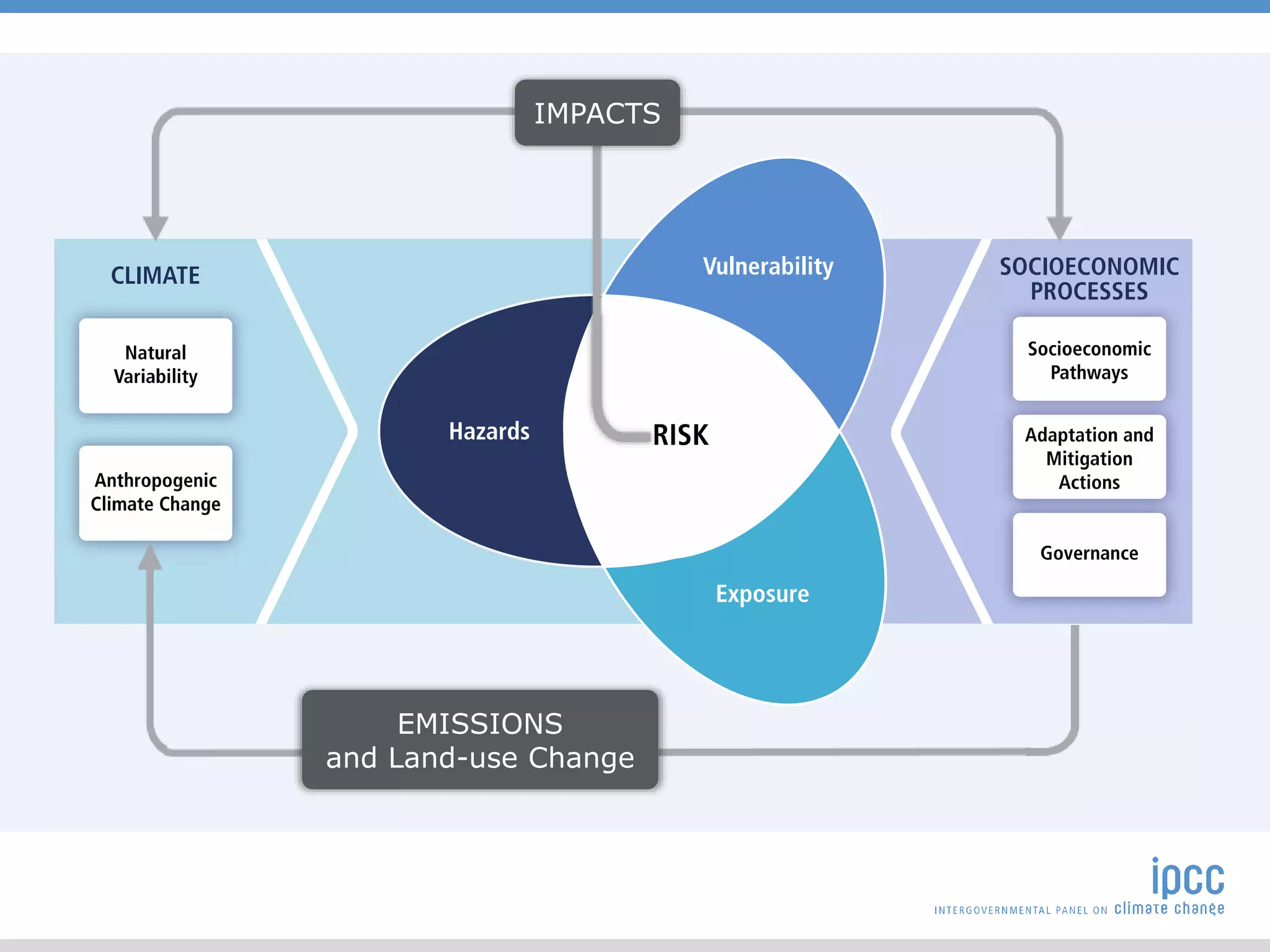
EMISSIONS
and Land-use Change
IMPACTS
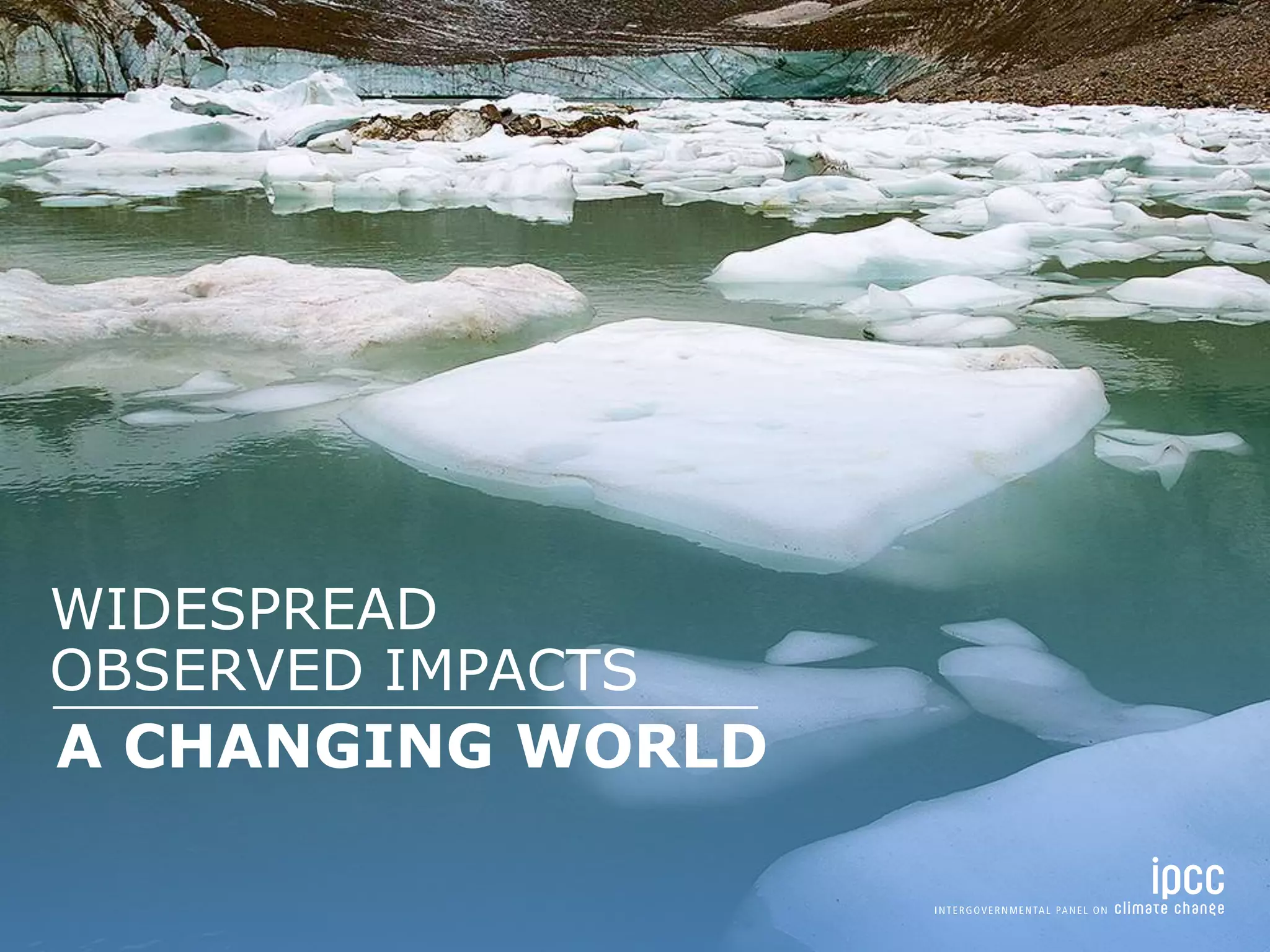
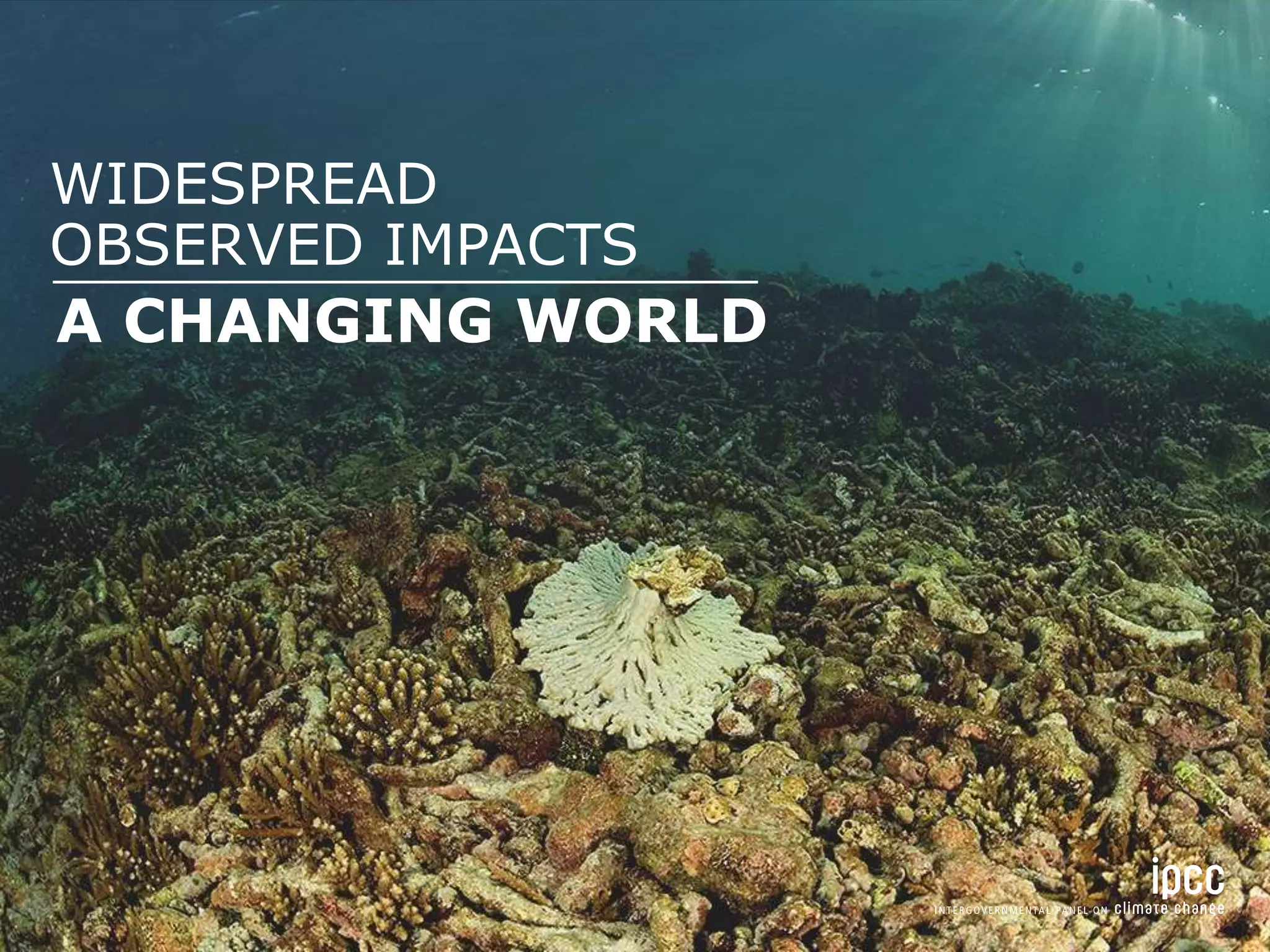
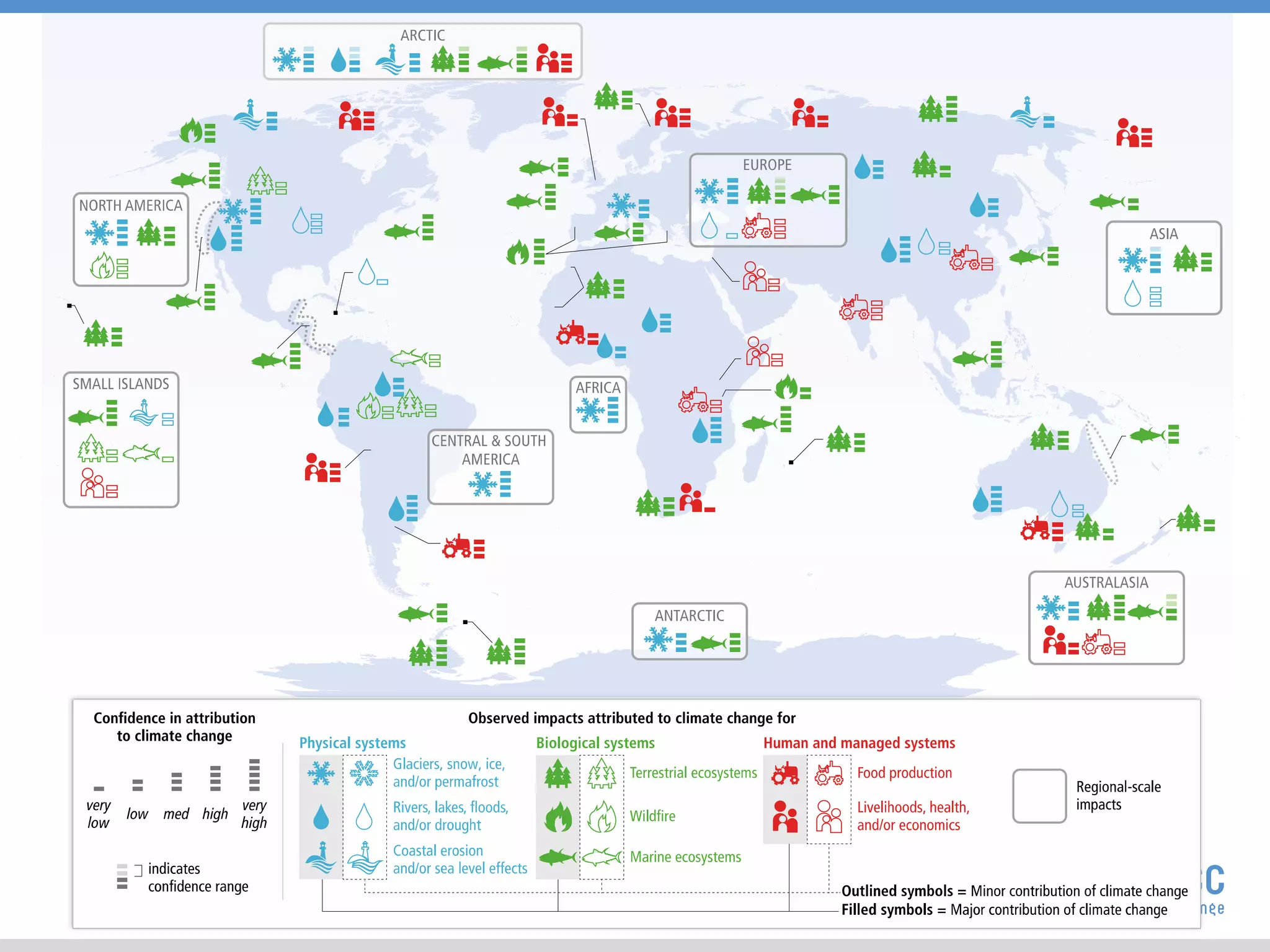
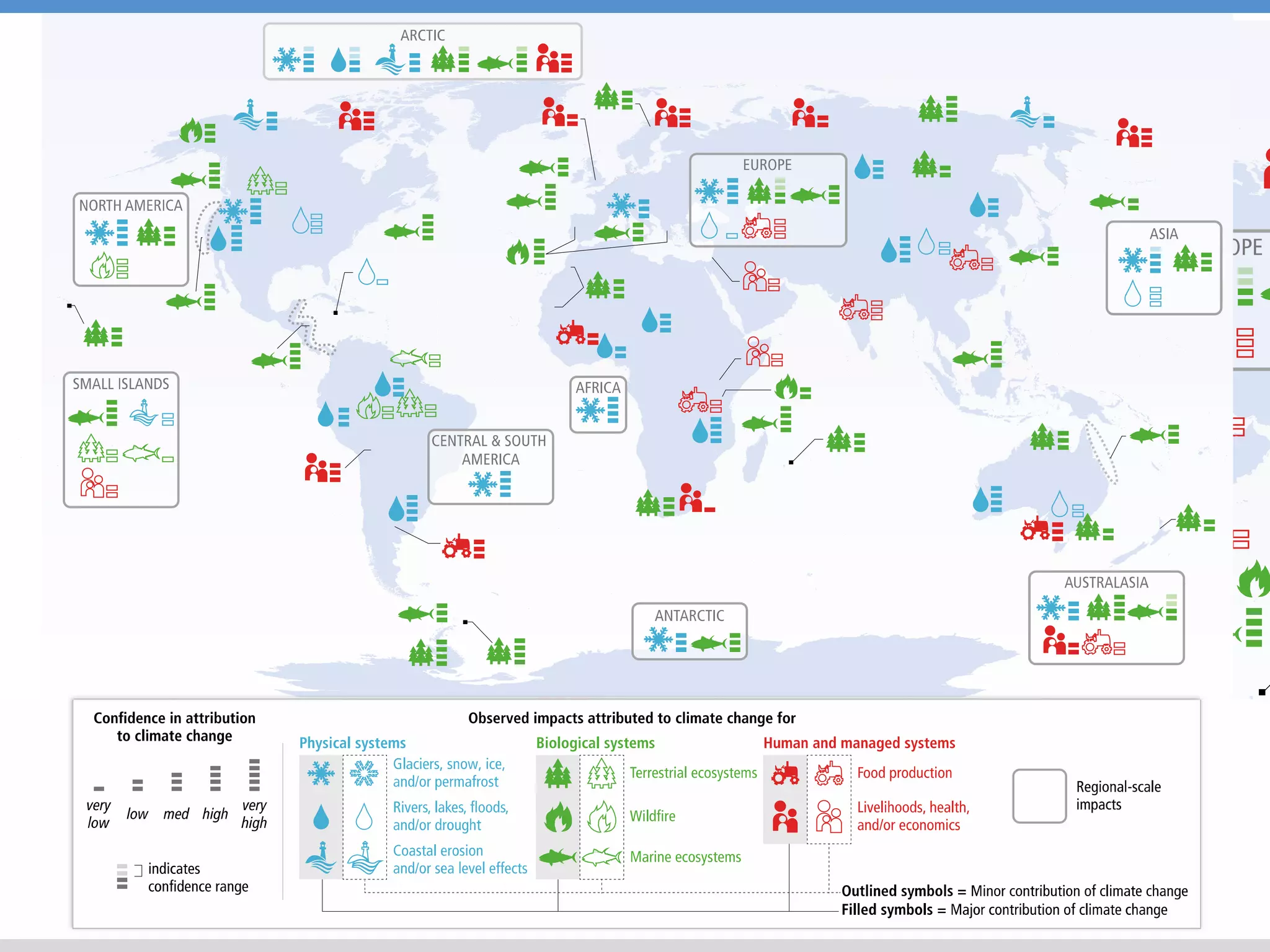
A CHANGING WORLD
WIDESPREAD
OBSERVED IMPACTS
A CHANGING WORLD
WIDESPREAD
OBSERVED IMPACTS
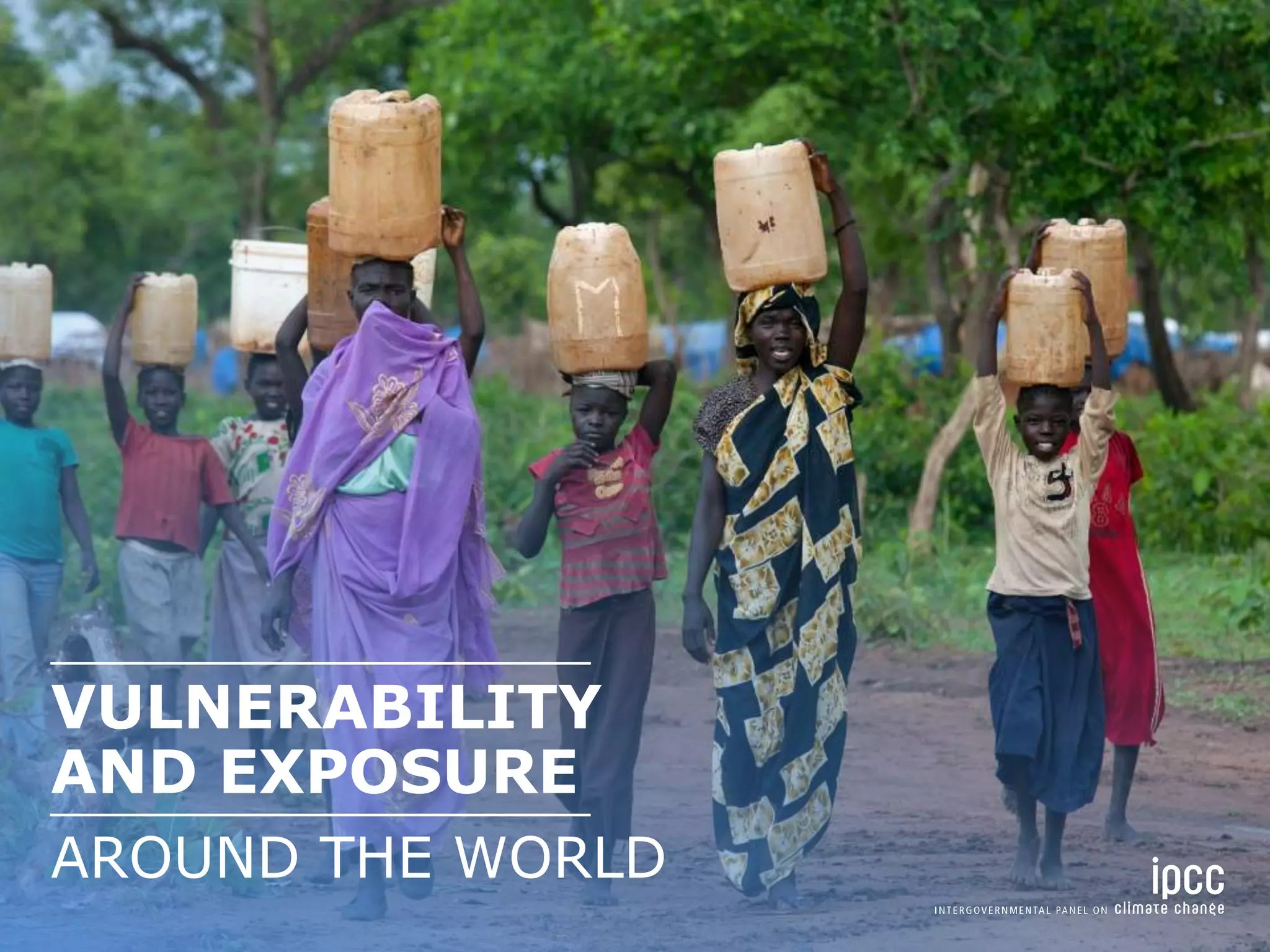
AROUND THE WORLD
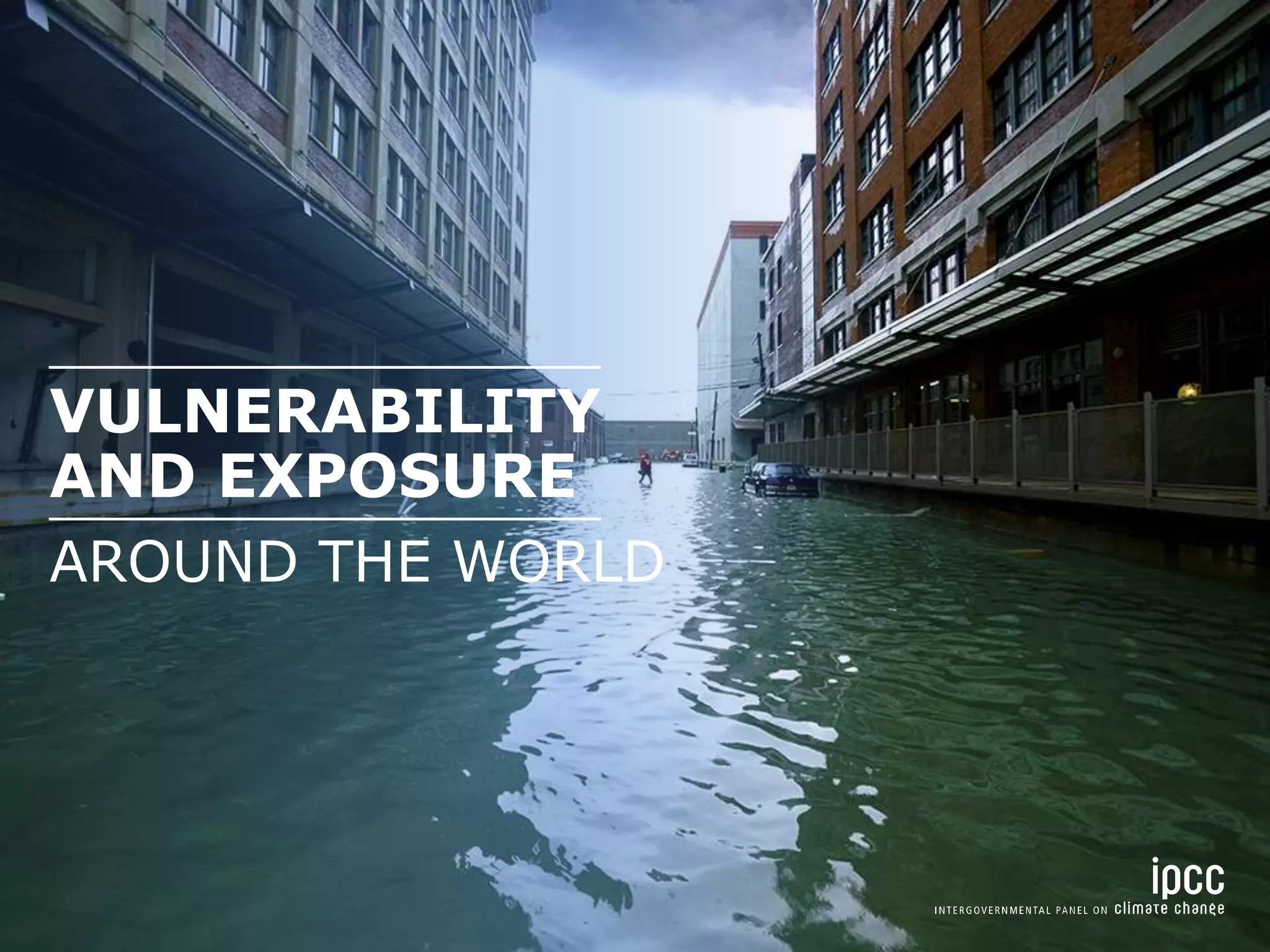
VULNERABILITY
AND EXPOSURE
AROUND THE WORLD
VULNERABILITY
AND EXPOSURE
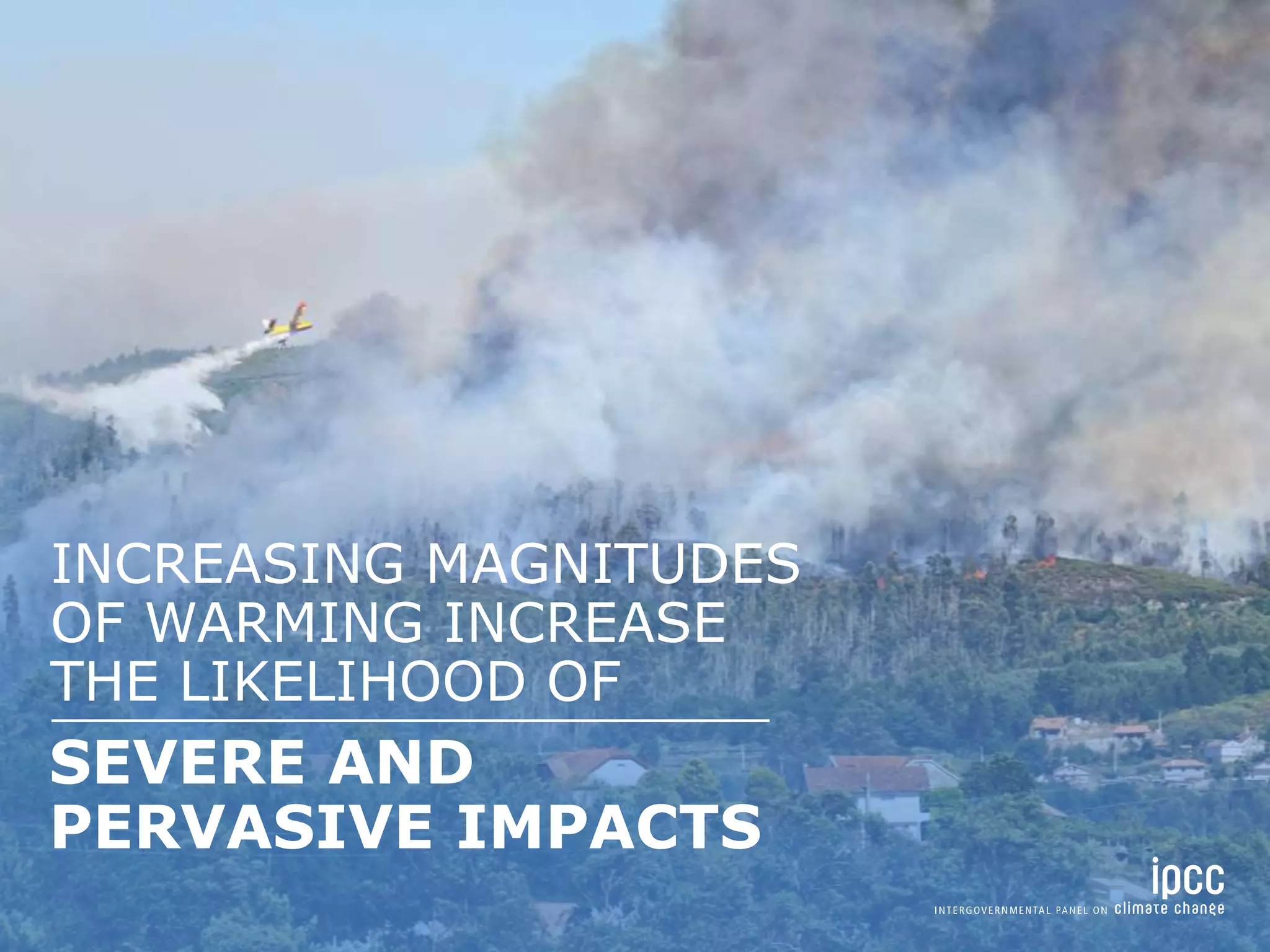
THE LIKELIHOOD OF
INCREASING MAGNITUDES
OF WARMING INCREASE
SEVERE AND
PERVASIVE IMPACTS
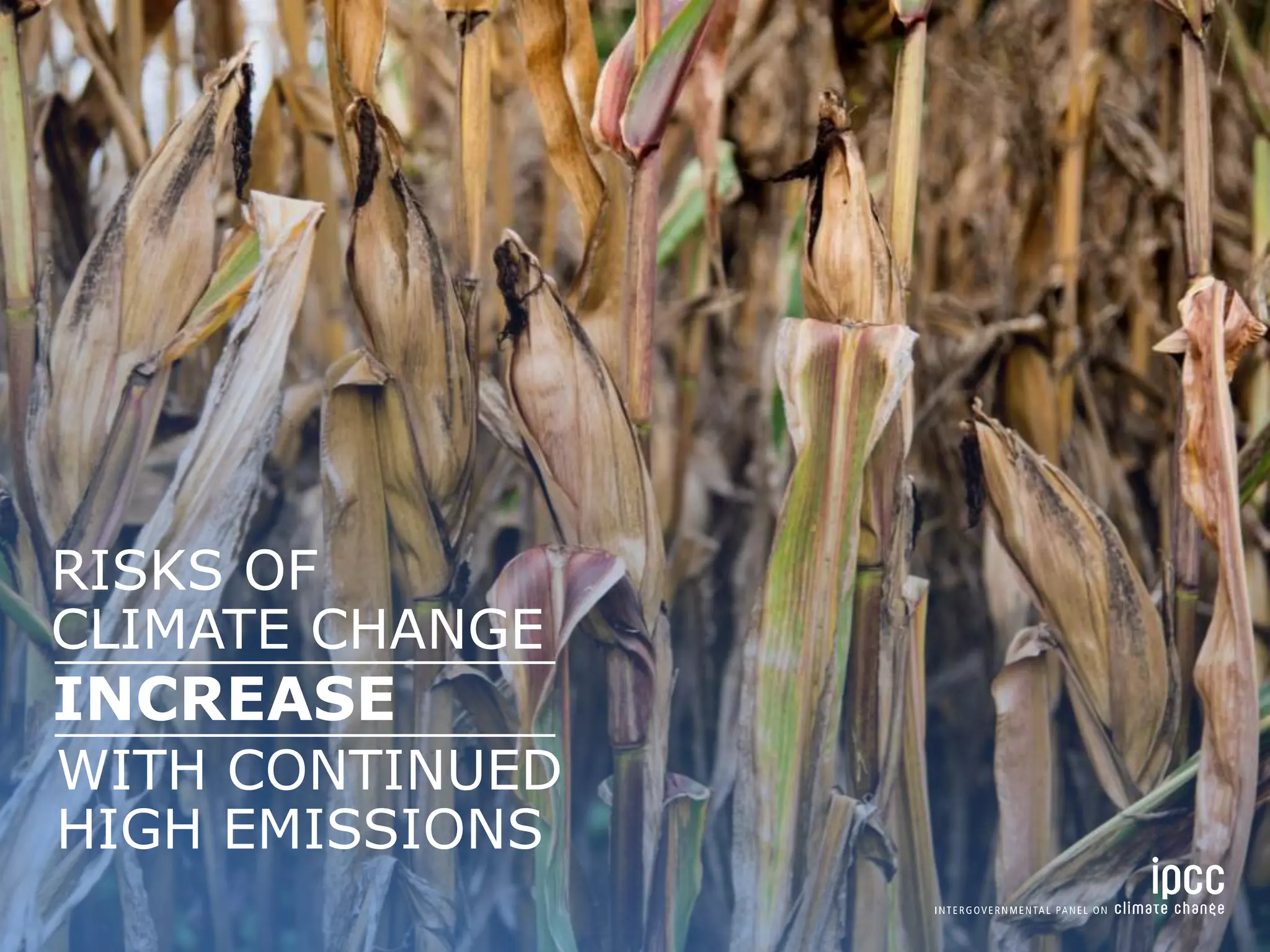
WITH CONTINUED
HIGH EMISSIONS
INCREASE
RISKS OF
CLIMATE CHANGE
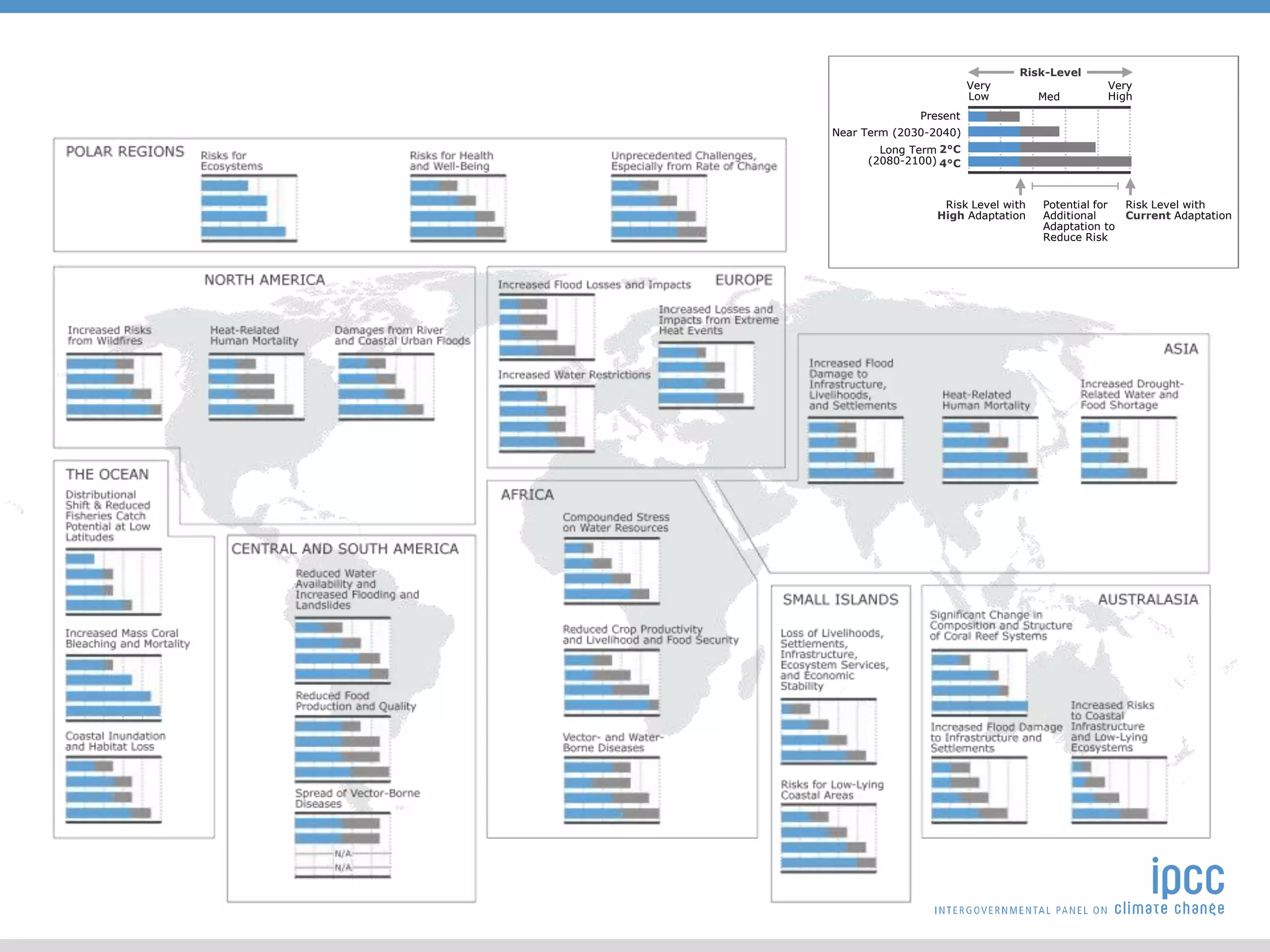
Risk Level with
Current Adaptation
Potential for
Additional
Adaptation to
Reduce Risk
Risk Level with
High Adaptation
Risk-Level
Very
Low Med
Very
High
4°C
2°C
Present
Long Term
(2080-2100)
Near Term (2030-2040)
IPCC AR5 Synthesis Report
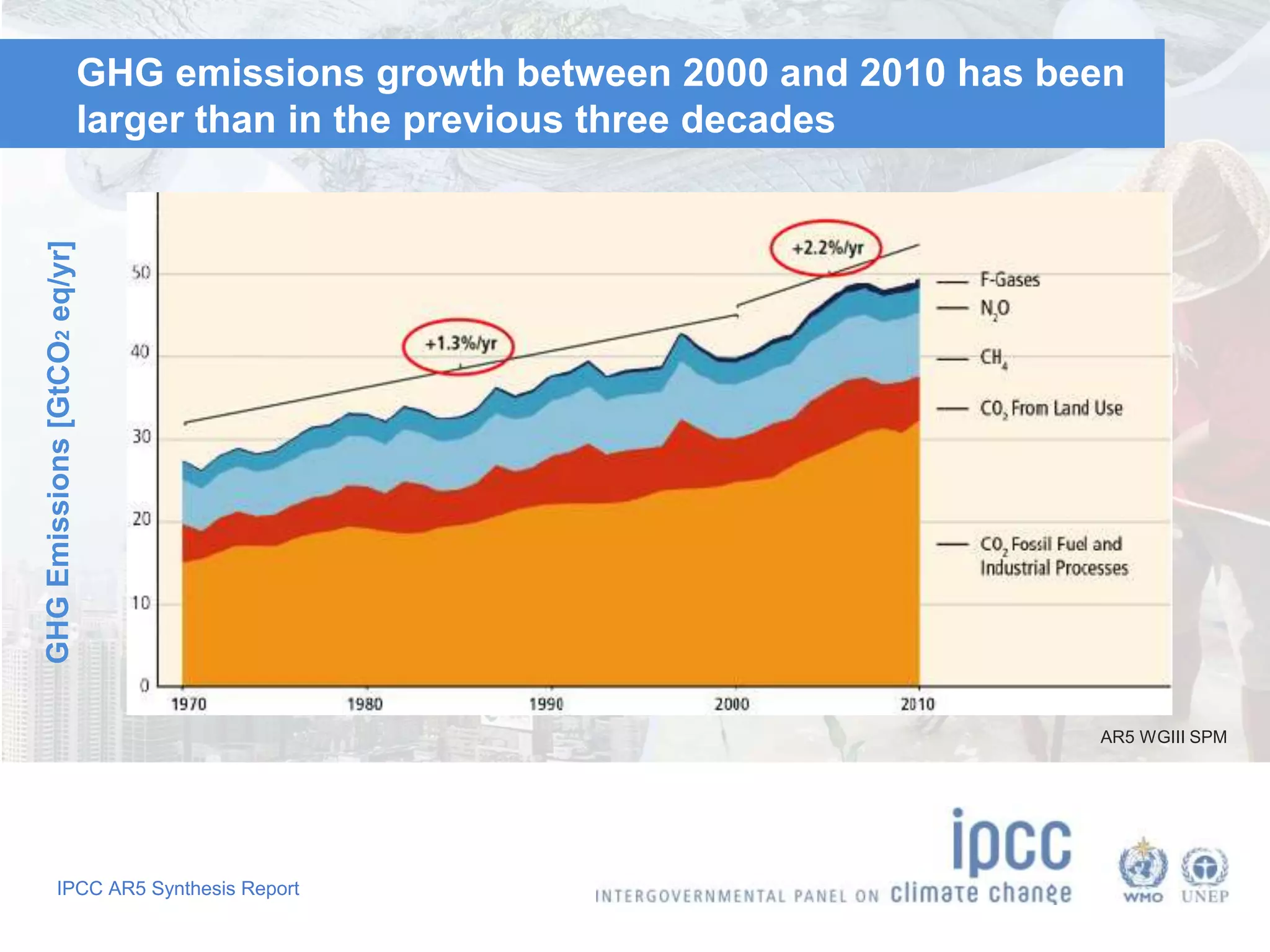
GHG emissions growth between 2000 and 2010 has been
larger than in the previous three decades
AR5 WGIII SPM
IPCC AR5 Synthesis Report
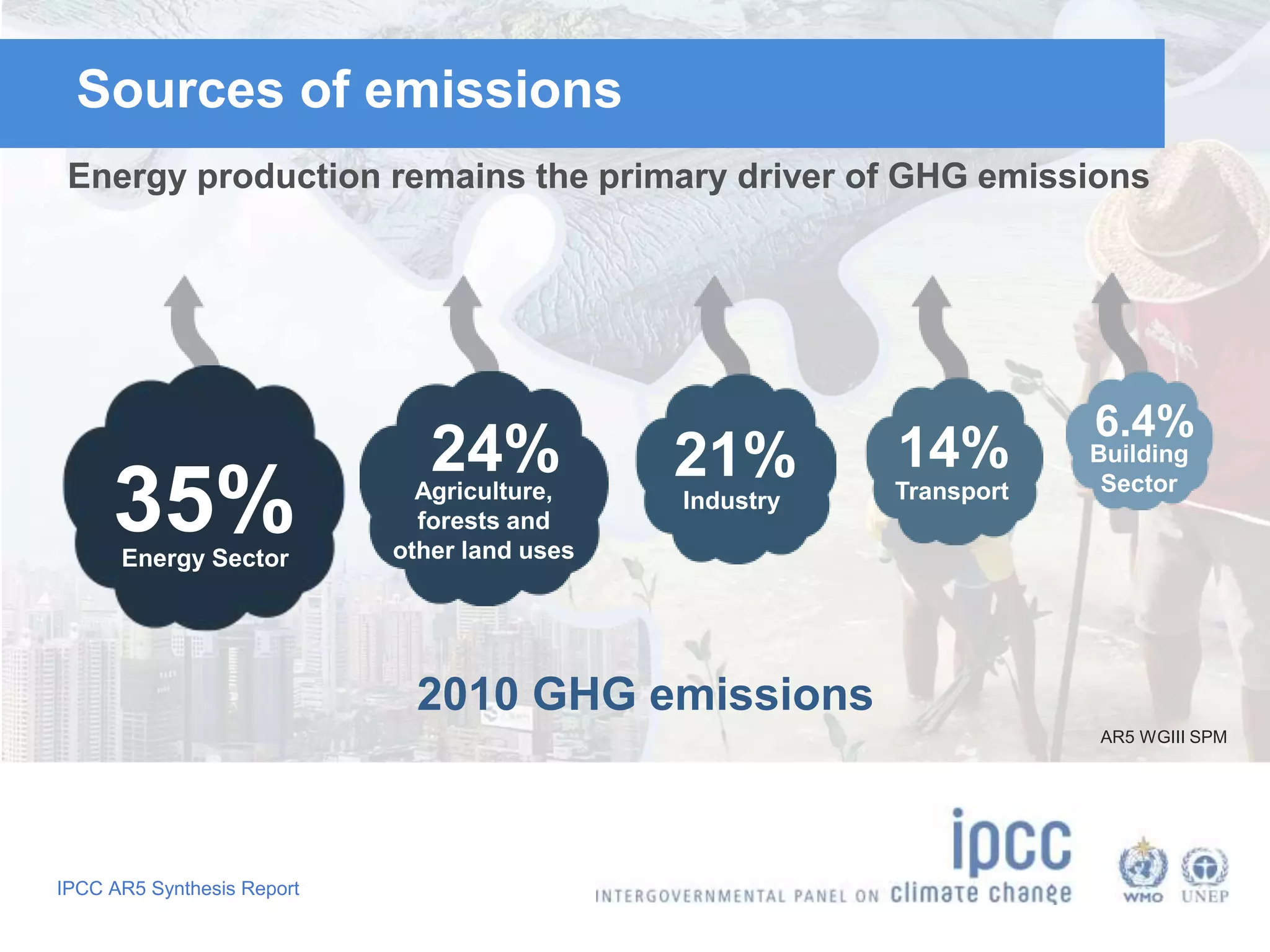
Sources of emissions
Energy production remains the primary driver of GHG emissions
35%
24% 21% 14%
6.4%
2010 GHG emissions
Energy Sector
Agriculture,
forests and
other land uses
Industry Transport
Building
Sector
AR5 WGIII SPM
IPCC AR5 Synthesis Report
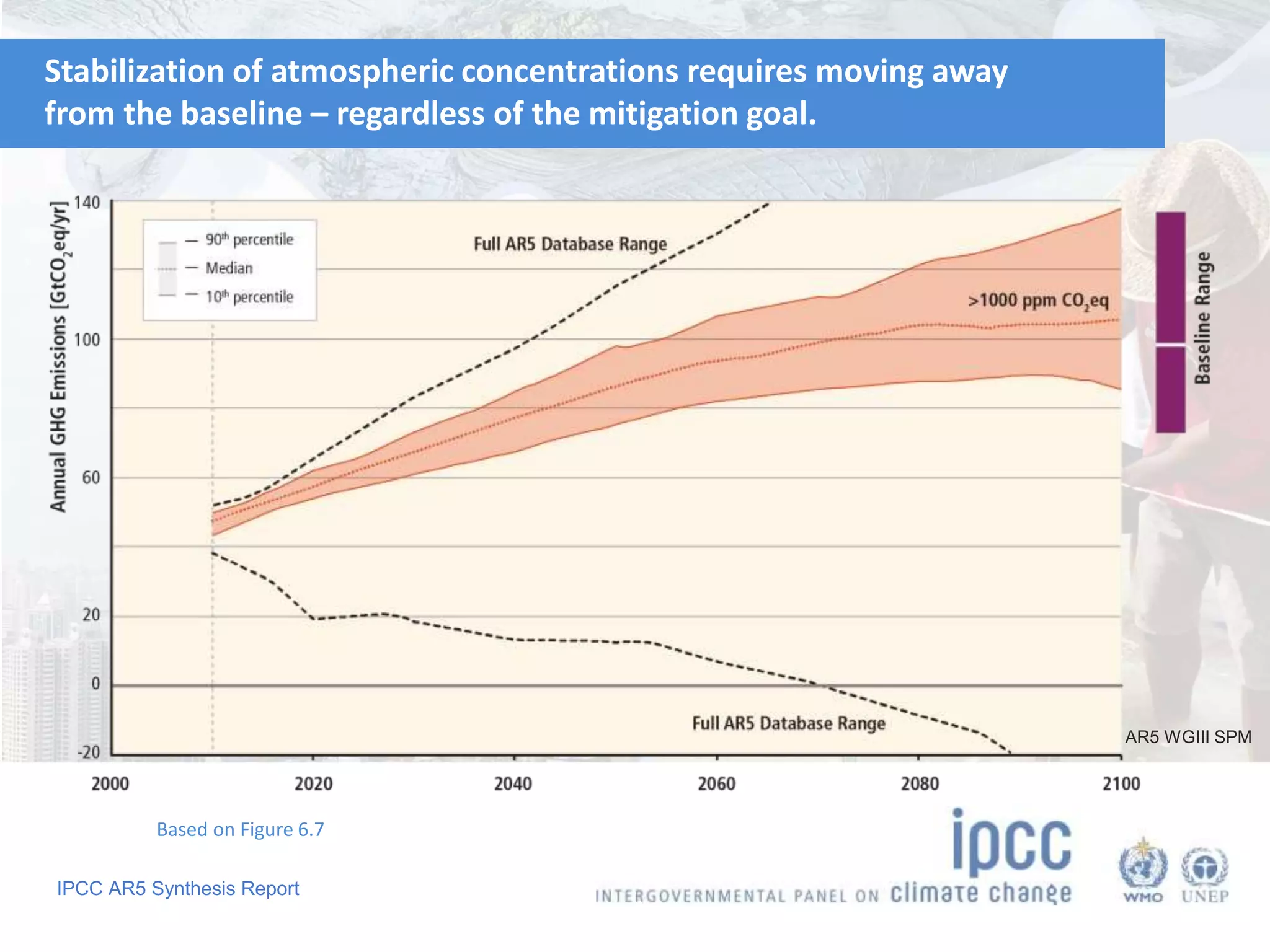
Stabilization of atmospheric concentrations requires moving away
from the baseline – regardless of the mitigation goal.
Based on Figure 6.7
AR5 WGIII SPM
IPCC AR5 Synthesis Report
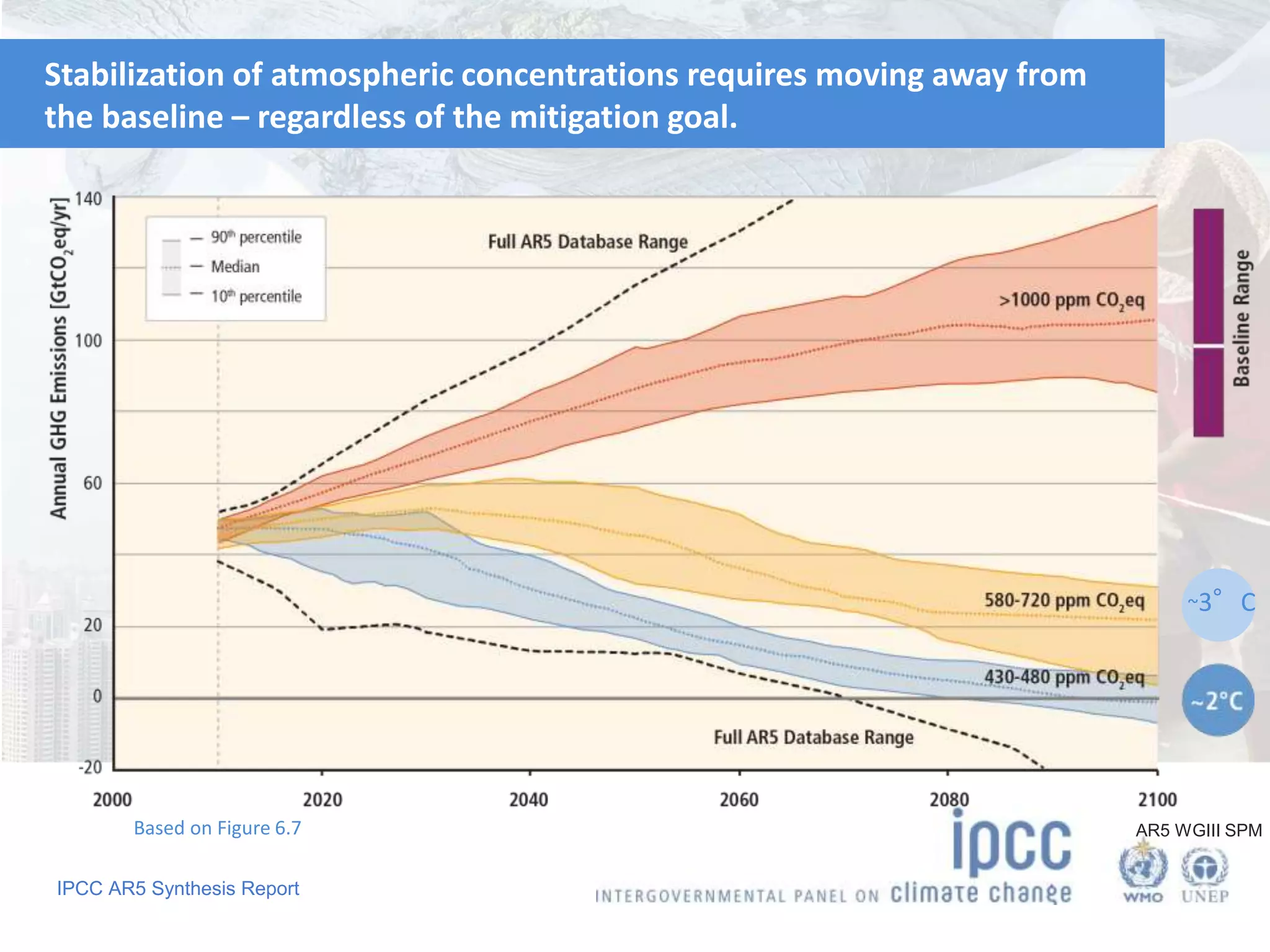
Stabilization of atmospheric concentrations requires moving away from
the baseline – regardless of the mitigation goal.
~3°C
Based on Figure 6.7 AR5 WGIII SPM
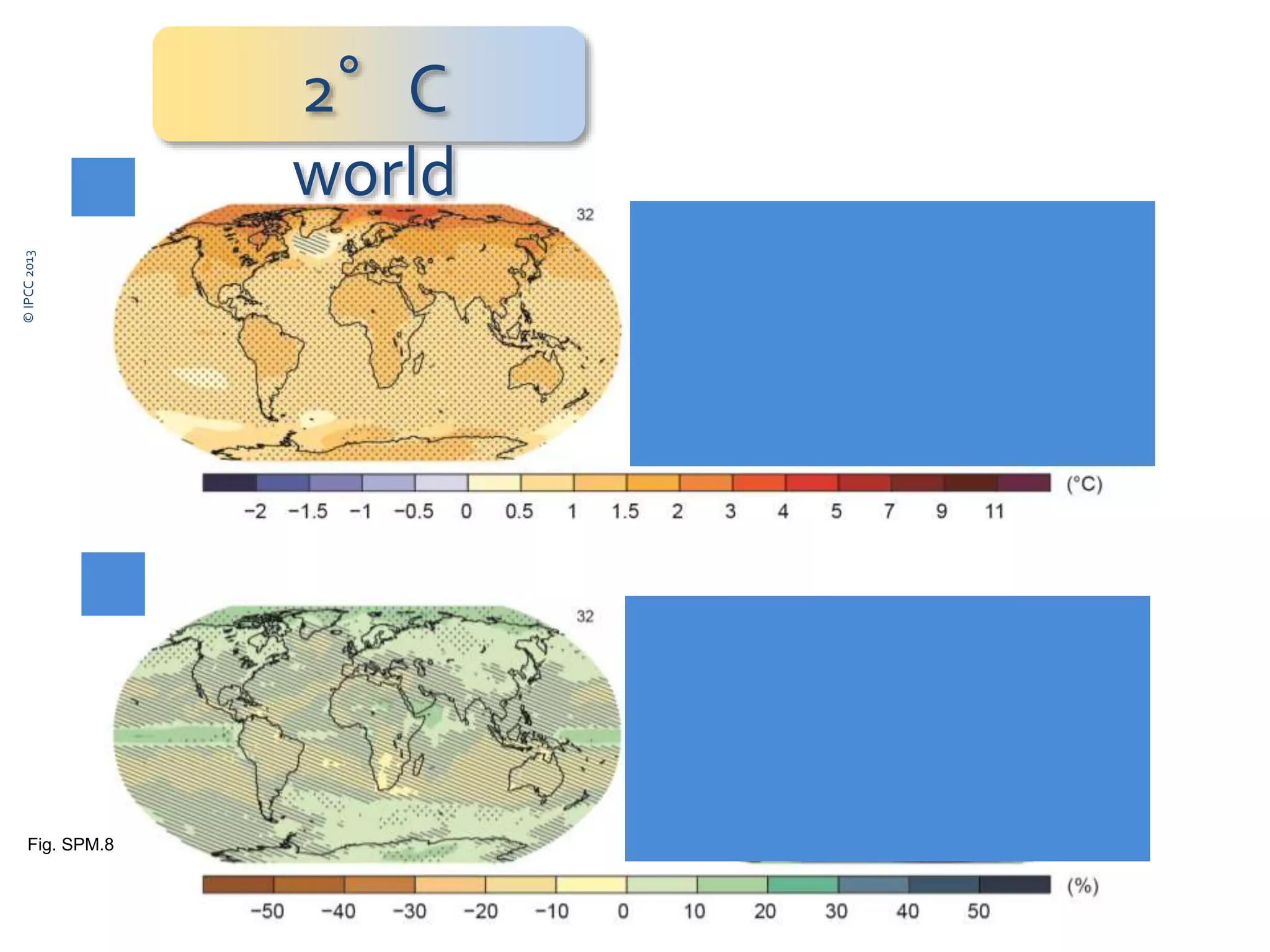
Fig. SPM.8
2°C
world
©IPCC2013
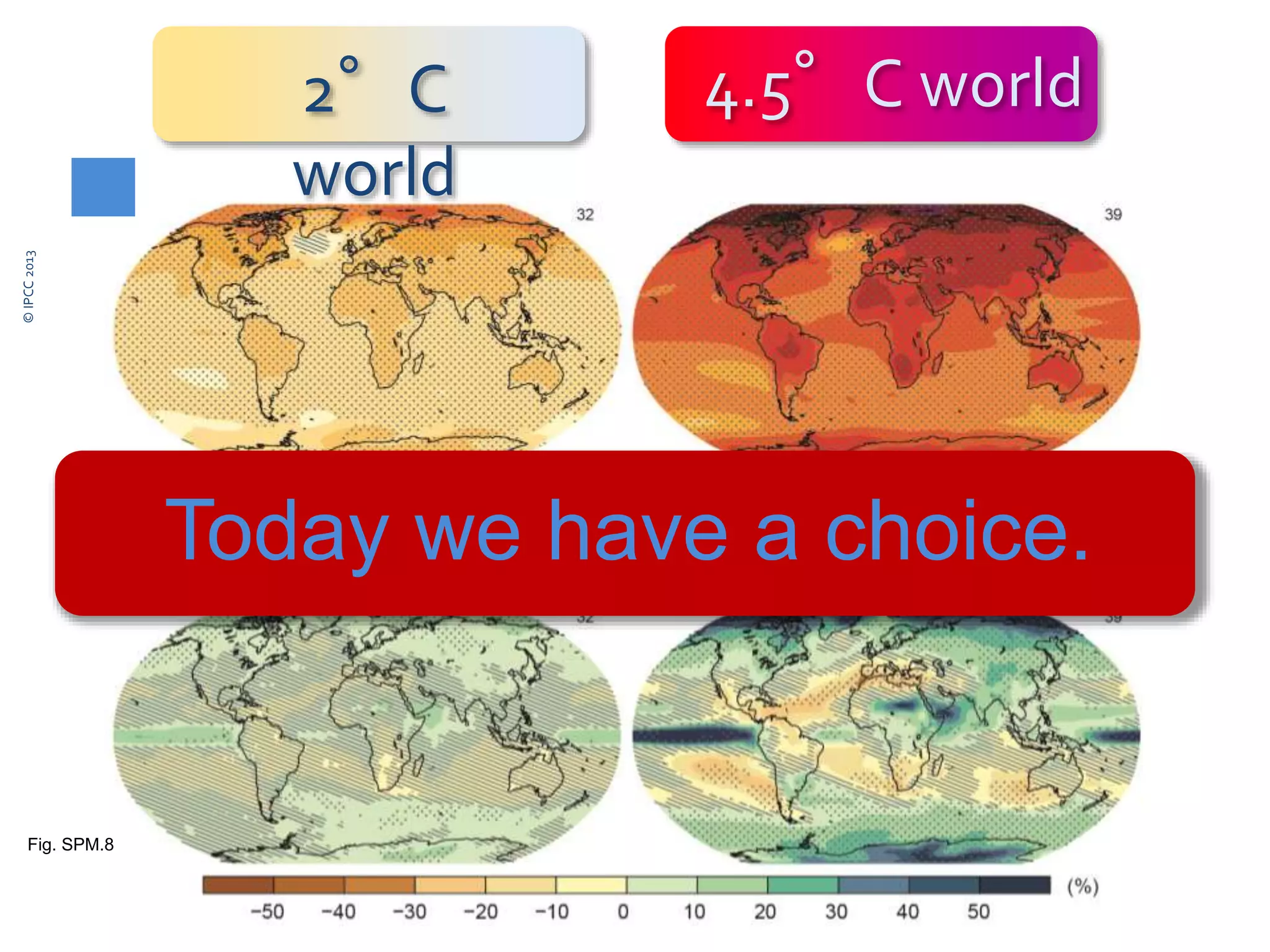
Today we have a choice.
4.5°C world2°C
world
©IPCC2013
Fig. SPM.8
IPCC AR5 Synthesis Report
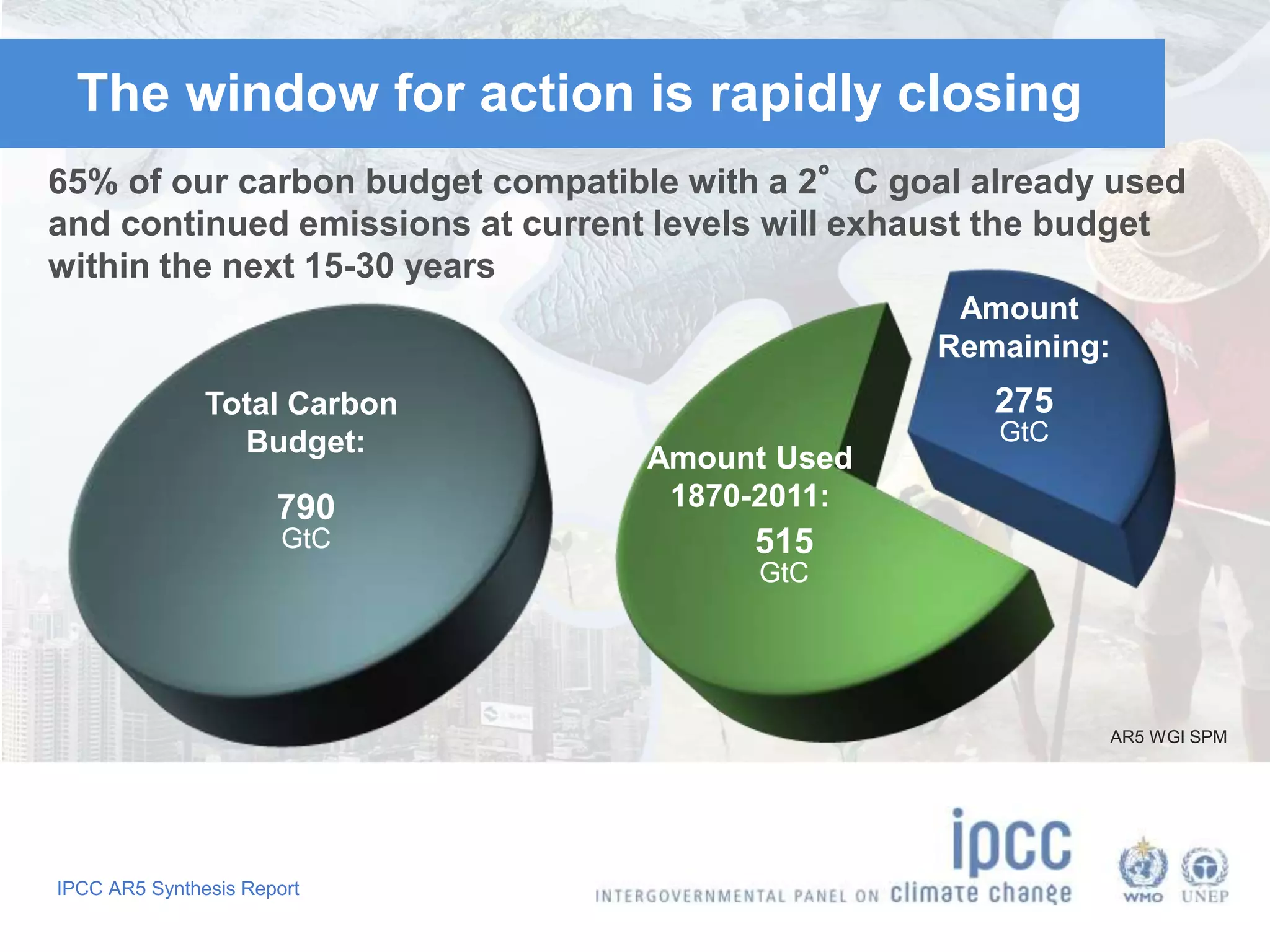
The window for action is rapidly closing
65% of our carbon budget compatible with a 2°C goal already used
and continued emissions at current levels will exhaust the budget
within the next 15-30 years
Amount Used
1870-2011:
515
GtC
Amount
Remaining:
275
GtC
Total Carbon
Budget:
790
GtC
AR5 WGI SPM
IPCC AR5 Synthesis Report
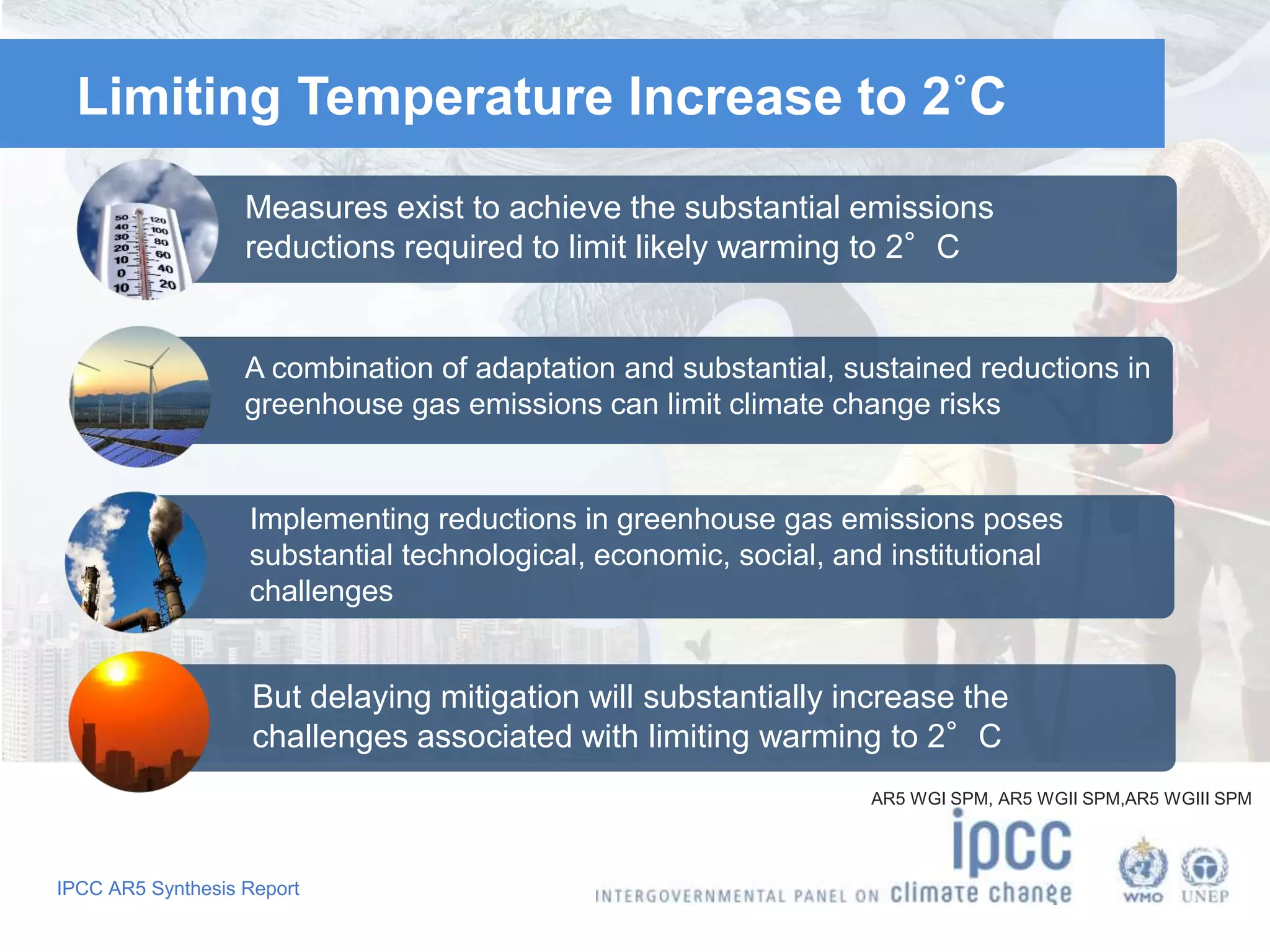
Limiting Temperature Increase to 2˚C
Measures exist to achieve the substantial emissions
reductions required to limit likely warming to 2°C
A combination of adaptation and substantial, sustained reductions in
greenhouse gas emissions can limit climate change risks
Implementing reductions in greenhouse gas emissions poses
substantial technological, economic, social, and institutional
challenges
But delaying mitigation will substantially increase the
challenges associated with limiting warming to 2°C
AR5 WGI SPM, AR5 WGII SPM,AR5 WGIII SPM
IPCC AR5 Synthesis Report
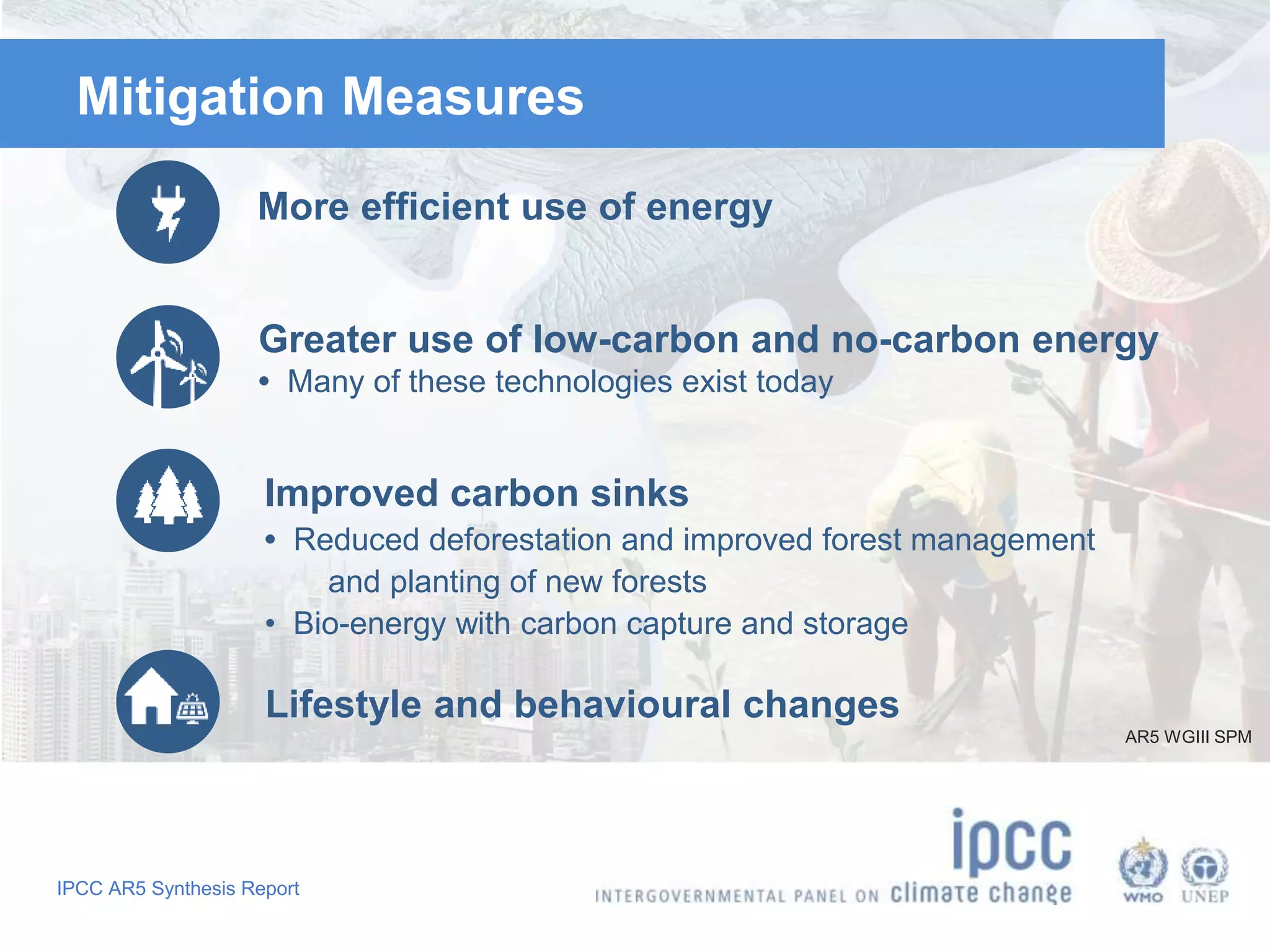
Mitigation Measures
More efficient use of energy
Greater use of low-carbon and no-carbon energy
• Many of these technologies exist today
Improved carbon sinks
• Reduced deforestation and improved forest management
and planting of new forests
• Bio-energy with carbon capture and storage
Lifestyle and behavioural changes
AR5 WGIII SPM
IPCC AR5 Synthesis Report
Ambitious Mitigation Is Affordable
➜ Economic growth reduced by ~ 0.06%
(BAU growth 1.6 - 3%)
➜ This translates into delayed and not forgone
growth
➜ Estimated cost does not account for the
benefits of reduced climate change
➜ Unmitigated climate change would create
increasing risks to economic growth
AR5 WGI SPM, AR5 WGII SPM
IPCC AR5 Synthesis Report
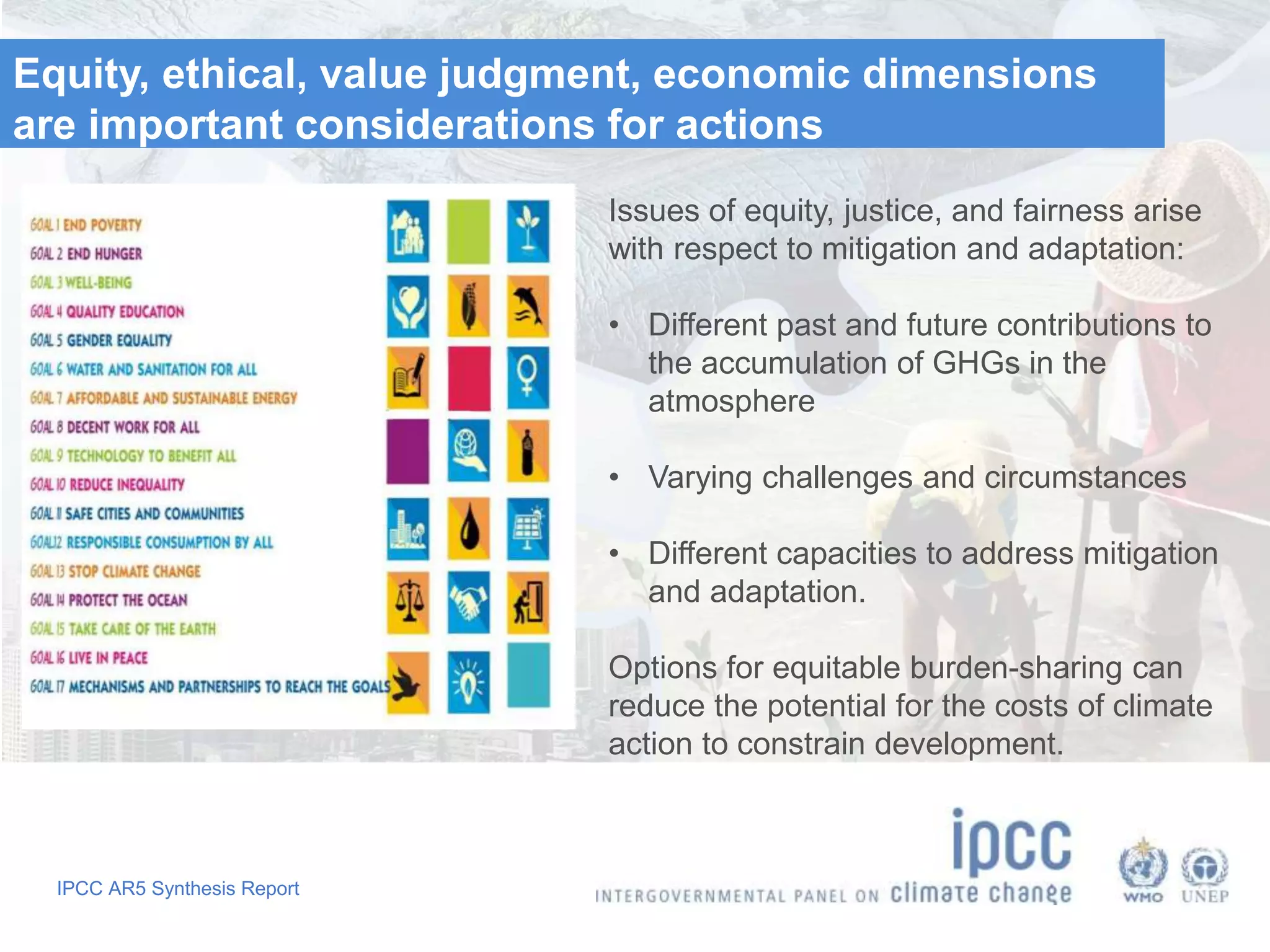
Equity, ethical, value judgment, economic dimensions
are important considerations for actions
Issues of equity, justice, and fairness arise
with respect to mitigation and adaptation:
• Different past and future contributions to
the accumulation of GHGs in the
atmosphere
• Varying challenges and circumstances
• Different capacities to address mitigation
and adaptation.
Options for equitable burden-sharing can
reduce the potential for the costs of climate
action to constrain development.
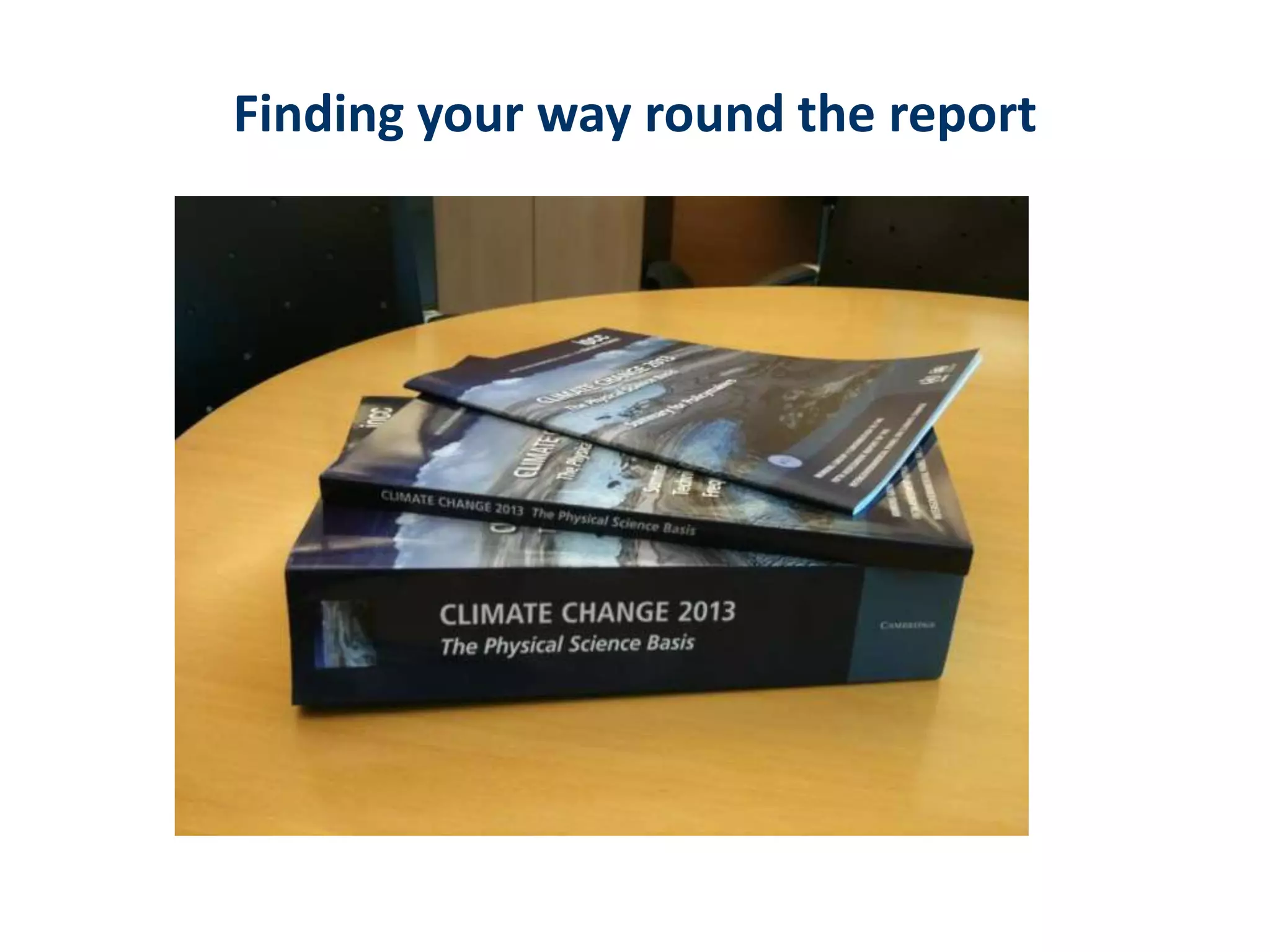
Finding your way round the report
IPCC AR5 Synthesis Report
IPCC Fifth Assessment Report
Synthesis Report

Findings - IPCC Fifth Assessment Report - Key Messages

  • 1.
    IPCC AR5 SynthesisReport IPCC Fifth Assessment Report Key Messages 18th June 2018, Tehran, Iran Youba SOKONA Vice-Chair
  • 2.
    The 5th IPCCAssessment Report 2008 - 2014
  • 3.
    The 5th IPCCAssessment Report 2008 - 2014
  • 4.
    Achievements: 2013/2014 Fifth AssessmentReport Human influence on the climate system is clear Key messages The more we disrupt our climate, the more we risk severe, pervasive and irreversible impacts We have the means to limit climate change and build a more prosperous, sustainable future
  • 5.
  • 6.
  • 7.
  • 8.
    −40 to −70% by2050 (relative to 2010) 2°C SYR Fig. SPM.10
  • 9.
    IPCC AR5 SynthesisReport Humans are changing the climate Year Globally averaged combined land and ocean surface temperatures It is extremely likely that we are the dominant cause of warming since the mid-20th century AR5 WGI SPM
  • 10.
    IPCC AR5 SynthesisReport Temperatures continue to rise Year Globally averaged combined land and ocean surface temperatures Each of the past 3 decades has been successively warmer than the preceding decades since 1850 AR5 WGI SPM
  • 11.
    IPCC AR5 SynthesisReport Oceans absorb most of the heat ➜ More than 90% of the energy accumulating in the climate system between 1971 and 2010 has accumulated in the ocean ➜ Land temperatures remain at historic highs while ocean temperatures continue to climb AR5 SYR
  • 12.
    IPCC AR5 SynthesisReport AR5 SYR SPM
  • 13.
    IPCC AR5 SynthesisReport AR5 SYR SPM
  • 14.
    IPCC AR5 SynthesisReport AR5 SYR SPM
  • 15.
  • 16.
  • 17.
  • 20.
  • 21.
  • 22.
    THE LIKELIHOOD OF INCREASINGMAGNITUDES OF WARMING INCREASE SEVERE AND PERVASIVE IMPACTS
  • 23.
  • 24.
    Risk Level with CurrentAdaptation Potential for Additional Adaptation to Reduce Risk Risk Level with High Adaptation Risk-Level Very Low Med Very High 4°C 2°C Present Long Term (2080-2100) Near Term (2030-2040)
  • 25.
    IPCC AR5 SynthesisReport GHG emissions growth between 2000 and 2010 has been larger than in the previous three decades AR5 WGIII SPM
  • 26.
    IPCC AR5 SynthesisReport Sources of emissions Energy production remains the primary driver of GHG emissions 35% 24% 21% 14% 6.4% 2010 GHG emissions Energy Sector Agriculture, forests and other land uses Industry Transport Building Sector AR5 WGIII SPM
  • 27.
    IPCC AR5 SynthesisReport Stabilization of atmospheric concentrations requires moving away from the baseline – regardless of the mitigation goal. Based on Figure 6.7 AR5 WGIII SPM
  • 28.
    IPCC AR5 SynthesisReport Stabilization of atmospheric concentrations requires moving away from the baseline – regardless of the mitigation goal. ~3°C Based on Figure 6.7 AR5 WGIII SPM
  • 29.
  • 30.
    Today we havea choice. 4.5°C world2°C world ©IPCC2013 Fig. SPM.8
  • 31.
    IPCC AR5 SynthesisReport The window for action is rapidly closing 65% of our carbon budget compatible with a 2°C goal already used and continued emissions at current levels will exhaust the budget within the next 15-30 years Amount Used 1870-2011: 515 GtC Amount Remaining: 275 GtC Total Carbon Budget: 790 GtC AR5 WGI SPM
  • 32.
    IPCC AR5 SynthesisReport Limiting Temperature Increase to 2˚C Measures exist to achieve the substantial emissions reductions required to limit likely warming to 2°C A combination of adaptation and substantial, sustained reductions in greenhouse gas emissions can limit climate change risks Implementing reductions in greenhouse gas emissions poses substantial technological, economic, social, and institutional challenges But delaying mitigation will substantially increase the challenges associated with limiting warming to 2°C AR5 WGI SPM, AR5 WGII SPM,AR5 WGIII SPM
  • 33.
    IPCC AR5 SynthesisReport Mitigation Measures More efficient use of energy Greater use of low-carbon and no-carbon energy • Many of these technologies exist today Improved carbon sinks • Reduced deforestation and improved forest management and planting of new forests • Bio-energy with carbon capture and storage Lifestyle and behavioural changes AR5 WGIII SPM
  • 34.
    IPCC AR5 SynthesisReport Ambitious Mitigation Is Affordable ➜ Economic growth reduced by ~ 0.06% (BAU growth 1.6 - 3%) ➜ This translates into delayed and not forgone growth ➜ Estimated cost does not account for the benefits of reduced climate change ➜ Unmitigated climate change would create increasing risks to economic growth AR5 WGI SPM, AR5 WGII SPM
  • 35.
    IPCC AR5 SynthesisReport Equity, ethical, value judgment, economic dimensions are important considerations for actions Issues of equity, justice, and fairness arise with respect to mitigation and adaptation: • Different past and future contributions to the accumulation of GHGs in the atmosphere • Varying challenges and circumstances • Different capacities to address mitigation and adaptation. Options for equitable burden-sharing can reduce the potential for the costs of climate action to constrain development.
  • 36.
    Finding your wayround the report
  • 37.
    IPCC AR5 SynthesisReport IPCC Fifth Assessment Report Synthesis Report