Gamification and itsimpact
on real-world issues
In 2019, GPay launched a # StampsWaliDiwali campaign where 67 million users tried to
collect all 5 Diwali stamps and win ₹251 cash reward.
Last year, eCommerce startup Pinduoduo reached 868 million+ active buyers to overtake
Alibaba as the #1 eCommerce platform in China.
Starbucks has a gamified loyalty program in its App that generates 50% of the company’s
revenue (roughly $8 billion).
There are many such examples of companies using Gamification for customer engagement
and growth.
However, one question that a lot of people keep asking me -
Can Gamification be used to solve real-world problems?
Here are 4 examples for all of them to understand how Gamification has contributed
towards a better future.
Gamification to help
children fight cancer
4 lacs children suffer from cancer every year.
To diagnose them better, doctors ask them to maintain a journal and measure their pain
levels.
The problem is - Cancer is a very lonely affair for a child. They are often extremely
exhausted after chemotherapy and the last thing they want to do is update a journal.
Dr. Jennifer Stinson from SickKids Hospital in Canada found the perfect solution. She
developed an App called Pain Squad.
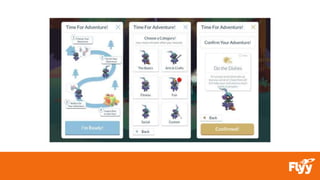
Pain Squad is a murder mystery game that turns cancer patients into detectives.
As the name suggests, the biggest villain in the game is ‘Pain’. Cancer patients aged 8-18 fill
out a pain report that helps the squad solve a murder mystery. The more reports kids
submit, the more they are rewarded with higher ranks as a detective.
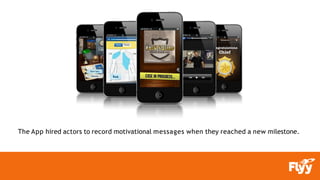
The App hired actors to record motivational messages when they reached a new milestone.
Result?
Kids no longer saw themselves as victims but heroes in the fight against cancer.
In the old journal method, 11% of kids were maintaining a journal. With Pain Squad, 90% of
the kids were actively reporting pain. The data helps doctors tell the difference between
acute changes in pain and ongoing pain, so they can be on the lookout for problems and
provide the best treatment.
It was a massive success in Canada & has moved to other hospitals to help more kids.
Gamification to save lives
In 2010, a man named Kevin Richardson won the Fun Theory Award by Volkswagen for
designing the concept of ‘Speed Camera Lottery’.
His idea was simple - Make road-safety fun.
Stockholm, Sweden implemented this idea since it faced over-speeding issues, like any
other city.
When a car passed by, traffic cameras snapped a photo of it and measured its speed.
If someone was driving over the speed limit, a fine was imposed.
Drivers under the speed limit were added to a virtual leaderboard. The most obedient
drivers were rewarded with concert and movie tickets.
Here’s the most interesting part -
Fines collected from over-speeding drivers helped to pay for these rewards.
In the test run, 24,857 cars passed by the cameras, and the average speed limit was
reduced from 32 km/h to 25 km/h.
Rewarding good behaviour worked better than punishing bad behaviour.
Gamification to save energy
The connection between saving energy and saving lives isn't as obvious, but climate
disasters are a growing threat.
On average, 115 people have lost their lives and $200 million+ worth of property was
damaged worldwide for the past 50 years in weather-related disasters, like floods and
hurricanes.
Gamification can't change the weather, but it can nudge us in the right direction by helping
us reduce energy consumption and slow climate change.
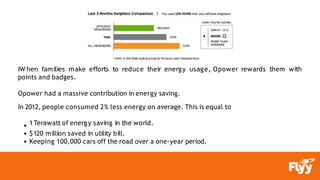
Opower adds a bit of fun and competition to the problem by -
Providing households with data on how much energy they are consuming
How they match with their neighbors, and
If they are close to any new milestone
IW hen families make efforts to reduce their energy usage, Opower rewards them with
points and badges.
Opower had a massive contribution in energy saving.
In 2012, people consumed 2% less energy on average. This is equal to
1Terawatt of energy saving in the world.
$120 million saved in utility bill.
Keeping 100,000 cars off the road over a one-year period.
Gamification to fight depression
450 million people currently suffer from mental health issues. And 67% of them never seek
help from a professional.
Self care is difficult.
There are tons of wellness Apps designed to nudge people toward healthy habits, but they
aren't very effective. Only 3% of users with depression actually stick with such apps and get
the benefits of a new routine.
However, people with severe depression enjoy playing games as much as everyone else.
So, what if you could get addicted to healthy habits by playing a video game?
Craig Ferguson and his team from MIT Media Lab developed a mobile game called
Guardians: Unite the Realms. It’s similar to Clash of Clans.
In Clash of Clans, users make numerous in-app purchases to level up their characters.
These in-app purchases are huge. Clash of Clans users made purchases worth $7 billion in
the last 7 years.
Ferguson takes a slightly new approach. Instead of making the users spend money on
microtransactions, the game urges them to perform healthy real-life activities.
For example, players could level up by -
Watching an online class
Taking a walk in nature
Knocking things off to-do list
The purpose of the Game is to engage players in their own well-being.
Conclusion
Gamification can be a really powerful tool. It’s about tapping into the intrinsic motivation of
the people. The challenge however is that most people look at it just in terms of badges,
points, leaderboard….
THANK YOU
W W W . T H E F L Y Y . C O M
Please contact for more information
www.theflyy.com
080-470-91459, hello@theflyy.com

what is gamification and its impact on real-world issues

  • 1.
  • 2.
    In 2019, GPaylaunched a # StampsWaliDiwali campaign where 67 million users tried to collect all 5 Diwali stamps and win ₹251 cash reward. Last year, eCommerce startup Pinduoduo reached 868 million+ active buyers to overtake Alibaba as the #1 eCommerce platform in China. Starbucks has a gamified loyalty program in its App that generates 50% of the company’s revenue (roughly $8 billion). There are many such examples of companies using Gamification for customer engagement and growth. However, one question that a lot of people keep asking me - Can Gamification be used to solve real-world problems? Here are 4 examples for all of them to understand how Gamification has contributed towards a better future.
  • 3.
  • 4.
    4 lacs childrensuffer from cancer every year. To diagnose them better, doctors ask them to maintain a journal and measure their pain levels. The problem is - Cancer is a very lonely affair for a child. They are often extremely exhausted after chemotherapy and the last thing they want to do is update a journal. Dr. Jennifer Stinson from SickKids Hospital in Canada found the perfect solution. She developed an App called Pain Squad. Pain Squad is a murder mystery game that turns cancer patients into detectives. As the name suggests, the biggest villain in the game is ‘Pain’. Cancer patients aged 8-18 fill out a pain report that helps the squad solve a murder mystery. The more reports kids submit, the more they are rewarded with higher ranks as a detective.
  • 5.
    The App hiredactors to record motivational messages when they reached a new milestone.
  • 6.
    Result? Kids no longersaw themselves as victims but heroes in the fight against cancer. In the old journal method, 11% of kids were maintaining a journal. With Pain Squad, 90% of the kids were actively reporting pain. The data helps doctors tell the difference between acute changes in pain and ongoing pain, so they can be on the lookout for problems and provide the best treatment. It was a massive success in Canada & has moved to other hospitals to help more kids.
  • 7.
  • 8.
    In 2010, aman named Kevin Richardson won the Fun Theory Award by Volkswagen for designing the concept of ‘Speed Camera Lottery’. His idea was simple - Make road-safety fun. Stockholm, Sweden implemented this idea since it faced over-speeding issues, like any other city. When a car passed by, traffic cameras snapped a photo of it and measured its speed. If someone was driving over the speed limit, a fine was imposed. Drivers under the speed limit were added to a virtual leaderboard. The most obedient drivers were rewarded with concert and movie tickets.
  • 9.
    Here’s the mostinteresting part - Fines collected from over-speeding drivers helped to pay for these rewards. In the test run, 24,857 cars passed by the cameras, and the average speed limit was reduced from 32 km/h to 25 km/h. Rewarding good behaviour worked better than punishing bad behaviour.
  • 10.
  • 11.
    The connection betweensaving energy and saving lives isn't as obvious, but climate disasters are a growing threat. On average, 115 people have lost their lives and $200 million+ worth of property was damaged worldwide for the past 50 years in weather-related disasters, like floods and hurricanes. Gamification can't change the weather, but it can nudge us in the right direction by helping us reduce energy consumption and slow climate change. Opower adds a bit of fun and competition to the problem by - Providing households with data on how much energy they are consuming How they match with their neighbors, and If they are close to any new milestone
  • 12.
    IW hen familiesmake efforts to reduce their energy usage, Opower rewards them with points and badges. Opower had a massive contribution in energy saving. In 2012, people consumed 2% less energy on average. This is equal to 1Terawatt of energy saving in the world. $120 million saved in utility bill. Keeping 100,000 cars off the road over a one-year period.
  • 13.
  • 14.
    450 million peoplecurrently suffer from mental health issues. And 67% of them never seek help from a professional. Self care is difficult. There are tons of wellness Apps designed to nudge people toward healthy habits, but they aren't very effective. Only 3% of users with depression actually stick with such apps and get the benefits of a new routine. However, people with severe depression enjoy playing games as much as everyone else. So, what if you could get addicted to healthy habits by playing a video game? Craig Ferguson and his team from MIT Media Lab developed a mobile game called Guardians: Unite the Realms. It’s similar to Clash of Clans.
  • 15.
    In Clash ofClans, users make numerous in-app purchases to level up their characters. These in-app purchases are huge. Clash of Clans users made purchases worth $7 billion in the last 7 years. Ferguson takes a slightly new approach. Instead of making the users spend money on microtransactions, the game urges them to perform healthy real-life activities. For example, players could level up by - Watching an online class Taking a walk in nature Knocking things off to-do list The purpose of the Game is to engage players in their own well-being.
  • 17.
  • 18.
    Gamification can bea really powerful tool. It’s about tapping into the intrinsic motivation of the people. The challenge however is that most people look at it just in terms of badges, points, leaderboard….
  • 19.
    THANK YOU W WW . T H E F L Y Y . C O M Please contact for more information www.theflyy.com 080-470-91459, hello@theflyy.com