CRITICAL THINKING
TOPIC:
SUBMITTED BY;
FAHAD ISMAIL (F23-0777)
M. USMAN (F23-0725)
HAMZA KHAN (F23-0776)
FAHAD ALI (F23-0745)
ABDULLAH ZAHID (F23-0753)
DEPARTMENT OF MLT:
BS(Hons) MLT-1 (SEC-A)
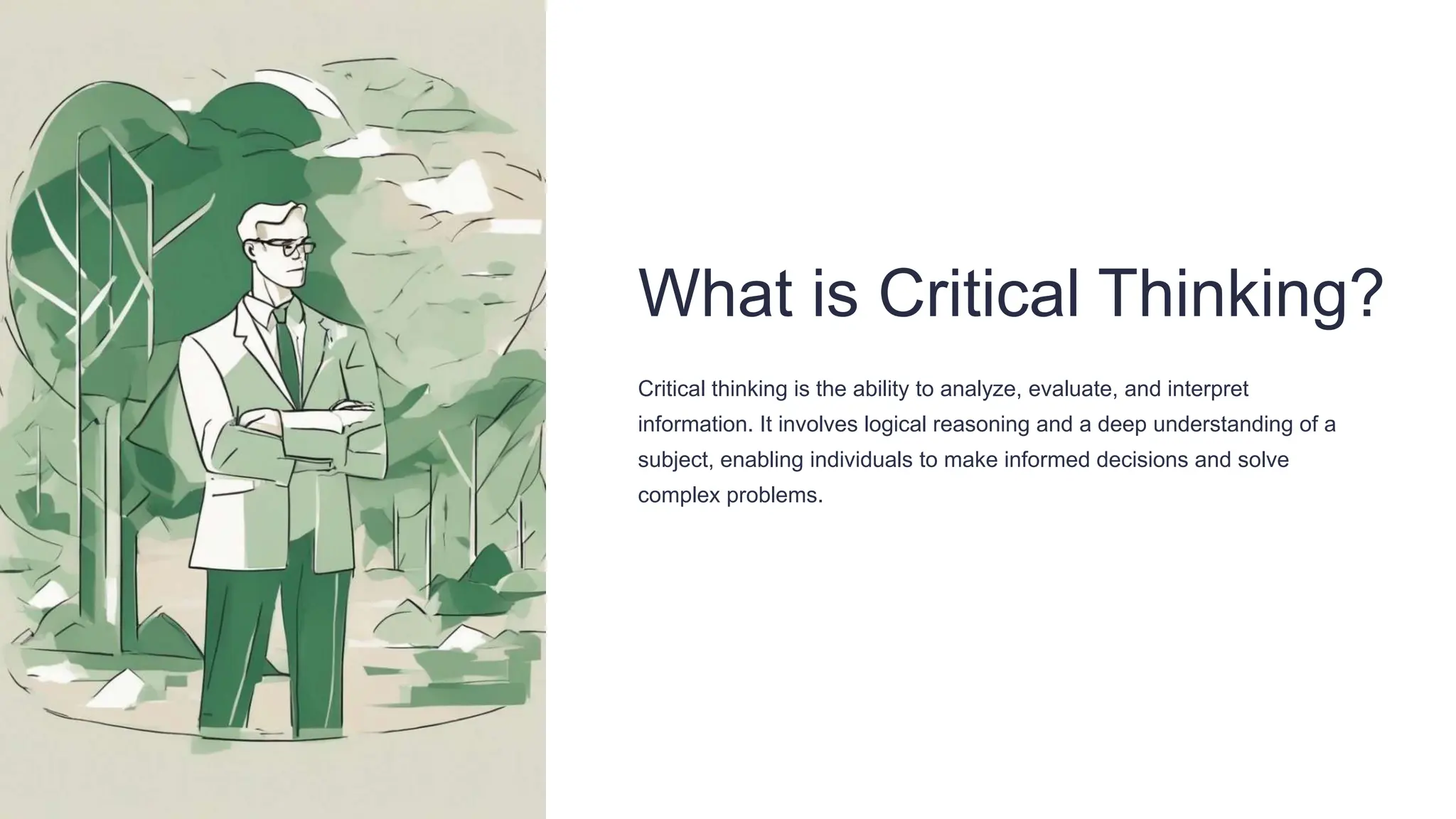
What is Critical Thinking?
Critical thinking is the ability to analyze, evaluate, and interpret
information. It involves logical reasoning and a deep understanding of a
subject, enabling individuals to make informed decisions and solve
complex problems.
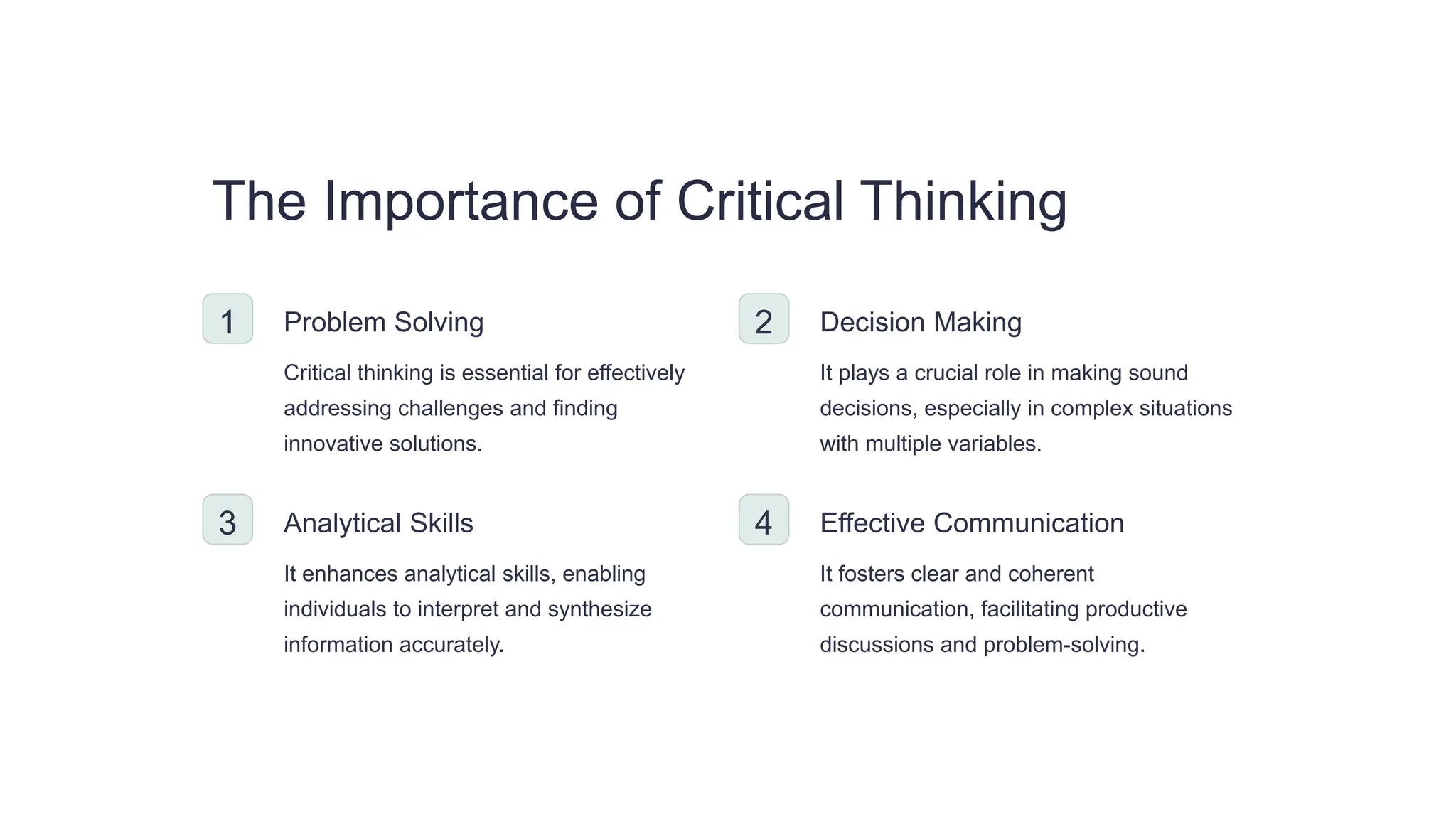
The Importance of Critical Thinking
1 Problem Solving
Critical thinking is essential for effectively
addressing challenges and finding
innovative solutions.
2 Decision Making
It plays a crucial role in making sound
decisions, especially in complex situations
with multiple variables.
3 Analytical Skills
It enhances analytical skills, enabling
individuals to interpret and synthesize
information accurately.
4 Effective Communication
It fosters clear and coherent
communication, facilitating productive
discussions and problem-solving.
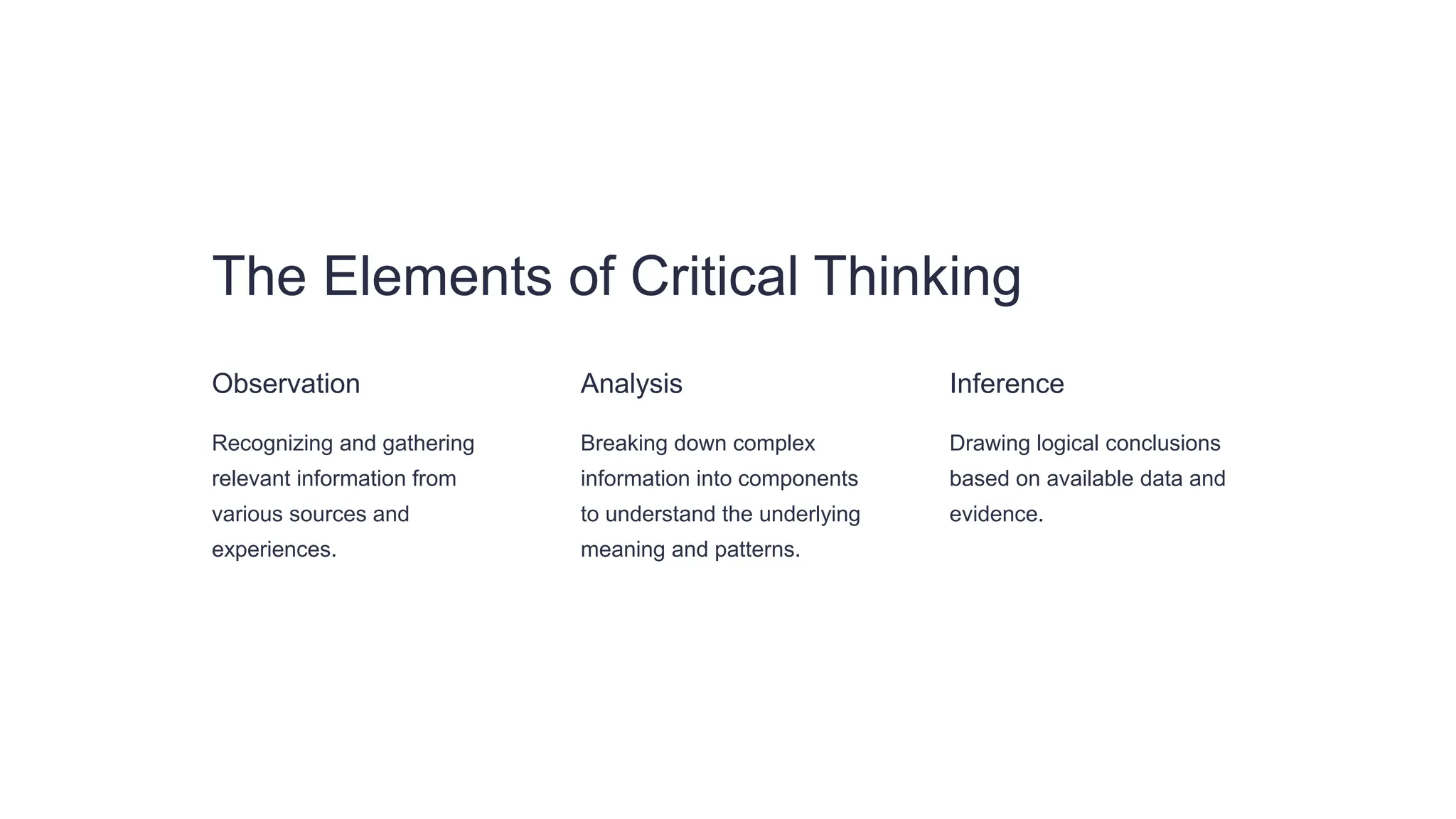
The Elements of Critical Thinking
Observation
Recognizing and gathering
relevant information from
various sources and
experiences.
Analysis
Breaking down complex
information into components
to understand the underlying
meaning and patterns.
Inference
Drawing logical conclusions
based on available data and
evidence.
The Process of Critical Thinking
Identify the Problem
Analyzing the issue or situation to fully understand the challenges involved.
Gather Information
Seeking relevant data and evidence to form a comprehensive understanding
of the problem.
Analyze and Evaluate
Examining the information critically to identify patterns, inconsistencies, and
potential solutions.
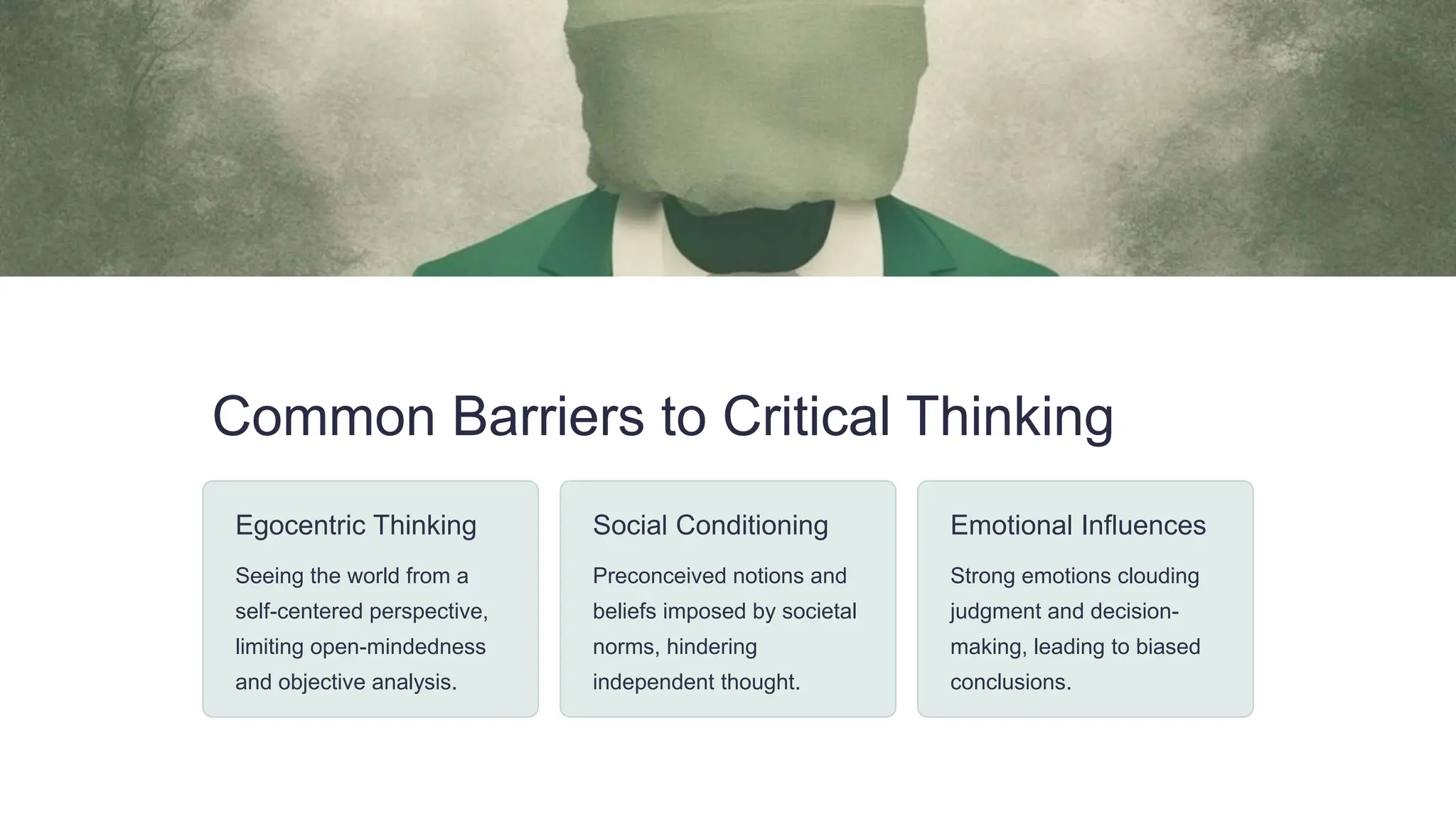
Common Barriers to Critical Thinking
Egocentric Thinking
Seeing the world from a
self-centered perspective,
limiting open-mindedness
and objective analysis.
Social Conditioning
Preconceived notions and
beliefs imposed by societal
norms, hindering
independent thought.
Emotional Influences
Strong emotions clouding
judgment and decision-
making, leading to biased
conclusions.
Strategies for Improving Critical
Thinking
1 Cultivating Curiosity
Encouraging a questioning mindset
and a thirst for knowledge and
understanding.
2 Active Listening
Engaging in attentive, non-
judgmental listening to gain diverse
perspectives and insights.
3 Practice Reflection
Regularly reflecting on experiences and decisions to gain deeper self-awareness and
insight.
Examples of Critical Thinking in Action
1 Scientific Research
Using evidence-based reasoning to draw conclusions and develop new theories.
2 Legal Analysis
Examining case law and statutes to craft compelling legal arguments and strategies.
3 Project Management
Anticipating and mitigating risks, solving problems, and making strategic decisions to
achieve project goals.
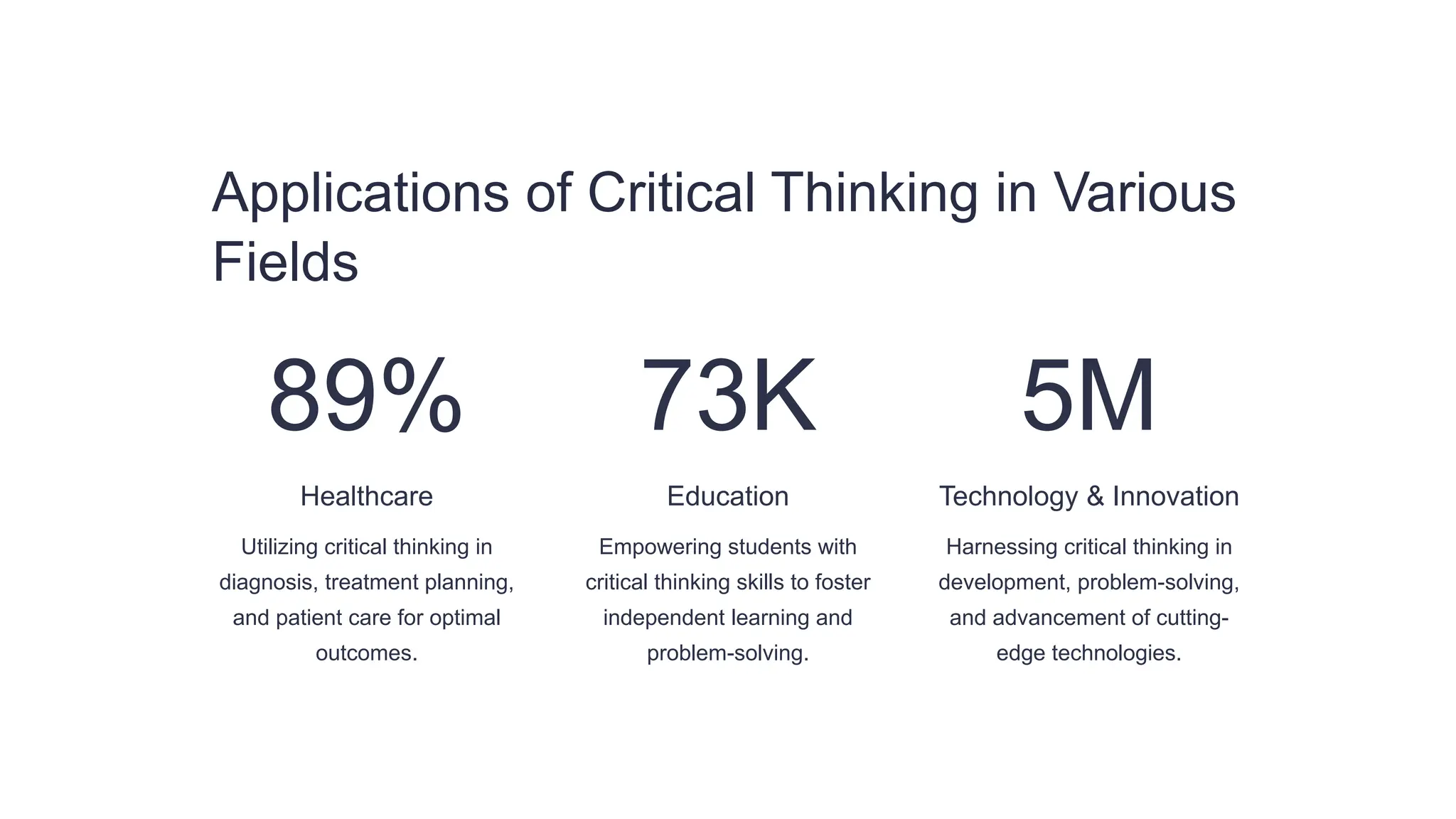
Applications of Critical Thinking in Various
Fields
89%
Healthcare
Utilizing critical thinking in
diagnosis, treatment planning,
and patient care for optimal
outcomes.
73K
Education
Empowering students with
critical thinking skills to foster
independent learning and
problem-solving.
5M
Technology & Innovation
Harnessing critical thinking in
development, problem-solving,
and advancement of cutting-
edge technologies.
Conclusion and Key Takeaways
Continuous Learning
Emphasizing the importance of lifelong
learning to enhance critical thinking
skills and adaptability.
Seeking Diverse Perspectives
Promoting openness to different
viewpoints and experiences to broaden
critical thinking capabilities.
Real-world Application
Encouraging the practical application of critical thinking in everyday decision-making
and problem-solving.

What is critical thinking and its characteristics

  • 1.
    CRITICAL THINKING TOPIC: SUBMITTED BY; FAHADISMAIL (F23-0777) M. USMAN (F23-0725) HAMZA KHAN (F23-0776) FAHAD ALI (F23-0745) ABDULLAH ZAHID (F23-0753) DEPARTMENT OF MLT: BS(Hons) MLT-1 (SEC-A)
  • 2.
    What is CriticalThinking? Critical thinking is the ability to analyze, evaluate, and interpret information. It involves logical reasoning and a deep understanding of a subject, enabling individuals to make informed decisions and solve complex problems.
  • 3.
    The Importance ofCritical Thinking 1 Problem Solving Critical thinking is essential for effectively addressing challenges and finding innovative solutions. 2 Decision Making It plays a crucial role in making sound decisions, especially in complex situations with multiple variables. 3 Analytical Skills It enhances analytical skills, enabling individuals to interpret and synthesize information accurately. 4 Effective Communication It fosters clear and coherent communication, facilitating productive discussions and problem-solving.
  • 4.
    The Elements ofCritical Thinking Observation Recognizing and gathering relevant information from various sources and experiences. Analysis Breaking down complex information into components to understand the underlying meaning and patterns. Inference Drawing logical conclusions based on available data and evidence.
  • 5.
    The Process ofCritical Thinking Identify the Problem Analyzing the issue or situation to fully understand the challenges involved. Gather Information Seeking relevant data and evidence to form a comprehensive understanding of the problem. Analyze and Evaluate Examining the information critically to identify patterns, inconsistencies, and potential solutions.
  • 6.
    Common Barriers toCritical Thinking Egocentric Thinking Seeing the world from a self-centered perspective, limiting open-mindedness and objective analysis. Social Conditioning Preconceived notions and beliefs imposed by societal norms, hindering independent thought. Emotional Influences Strong emotions clouding judgment and decision- making, leading to biased conclusions.
  • 7.
    Strategies for ImprovingCritical Thinking 1 Cultivating Curiosity Encouraging a questioning mindset and a thirst for knowledge and understanding. 2 Active Listening Engaging in attentive, non- judgmental listening to gain diverse perspectives and insights. 3 Practice Reflection Regularly reflecting on experiences and decisions to gain deeper self-awareness and insight.
  • 8.
    Examples of CriticalThinking in Action 1 Scientific Research Using evidence-based reasoning to draw conclusions and develop new theories. 2 Legal Analysis Examining case law and statutes to craft compelling legal arguments and strategies. 3 Project Management Anticipating and mitigating risks, solving problems, and making strategic decisions to achieve project goals.
  • 9.
    Applications of CriticalThinking in Various Fields 89% Healthcare Utilizing critical thinking in diagnosis, treatment planning, and patient care for optimal outcomes. 73K Education Empowering students with critical thinking skills to foster independent learning and problem-solving. 5M Technology & Innovation Harnessing critical thinking in development, problem-solving, and advancement of cutting- edge technologies.
  • 10.
    Conclusion and KeyTakeaways Continuous Learning Emphasizing the importance of lifelong learning to enhance critical thinking skills and adaptability. Seeking Diverse Perspectives Promoting openness to different viewpoints and experiences to broaden critical thinking capabilities. Real-world Application Encouraging the practical application of critical thinking in everyday decision-making and problem-solving.