ARIADNE is funded under the European Commission's Seventh Framework Programme 
What is an archaeological research infrastructure and why do we need it? Aims and challenges of ARIADNE 
Edeltraud Aspöck Guntram Geser
Content of talk 
•What is an e-infrastructure for research? 
•Why ARIADNE? 
•Challenges of data sharing
e-Infrastructures for research 
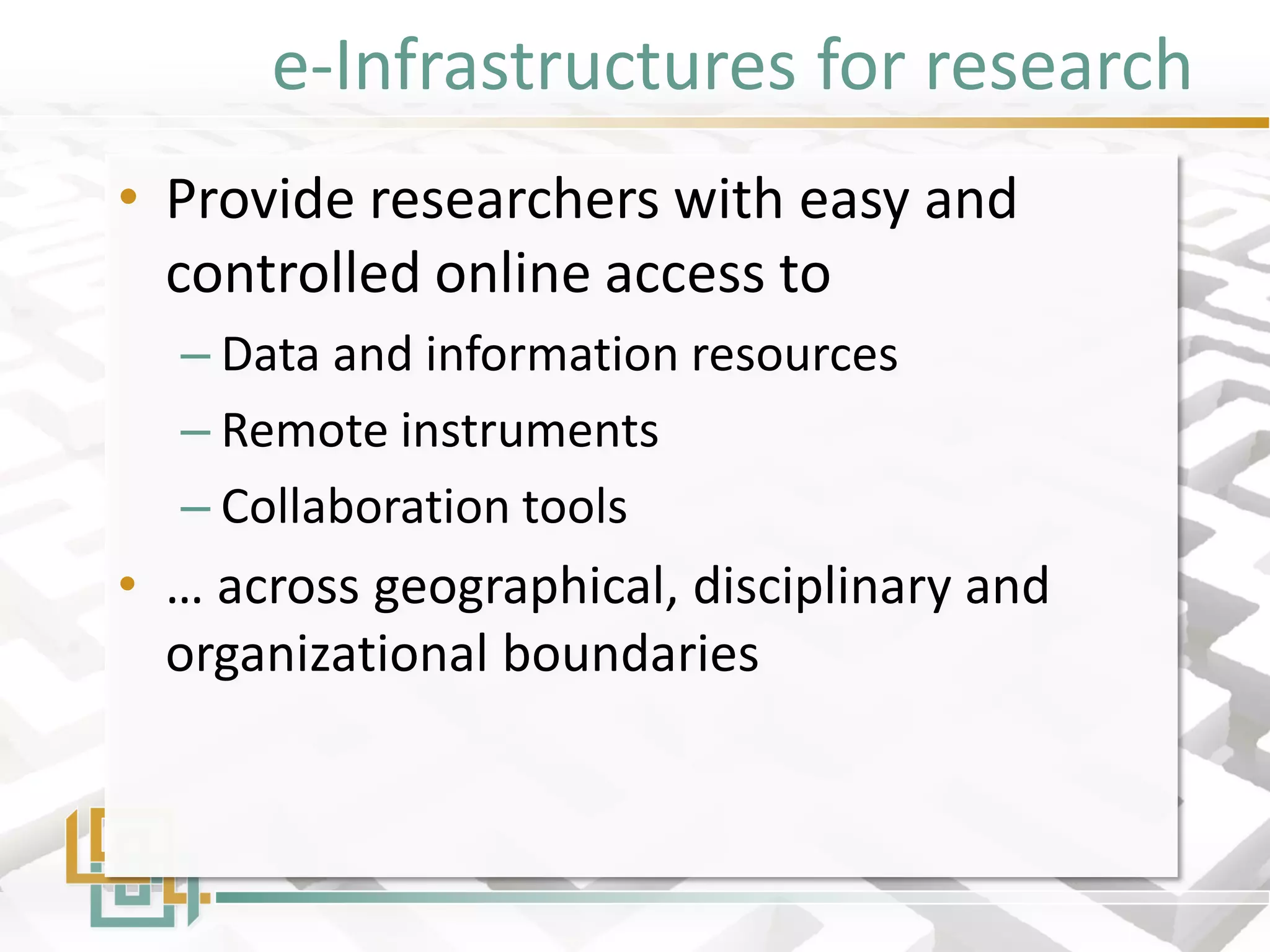
•Provide researchers with easy and controlled online access to 
–Data and information resources 
–Remote instruments 
–Collaboration tools 
•… across geographical, disciplinary and organizational boundaries
e-Infrastructures for research 
•Different focus / types 
–Data infrastructure 
–Distributed computing (Grid, Cloud) 
–Virtual research environment / community
ARIADNE (FP7-Infrastructures-2012-1-313193) 
•Runs 4 years (started 02/2013) 
•FP7 Instrument „Integrating Activity“ 
•Focus on archaeological datasets 
•Funding 6.5m € 
•Coordinators 
•Prof. Franco Niccolucci, University of Florence 
•Prof. Julian Richards, University of York 
•Website: www.ariadne-infrastructure.eu
Why ARIADNE? 
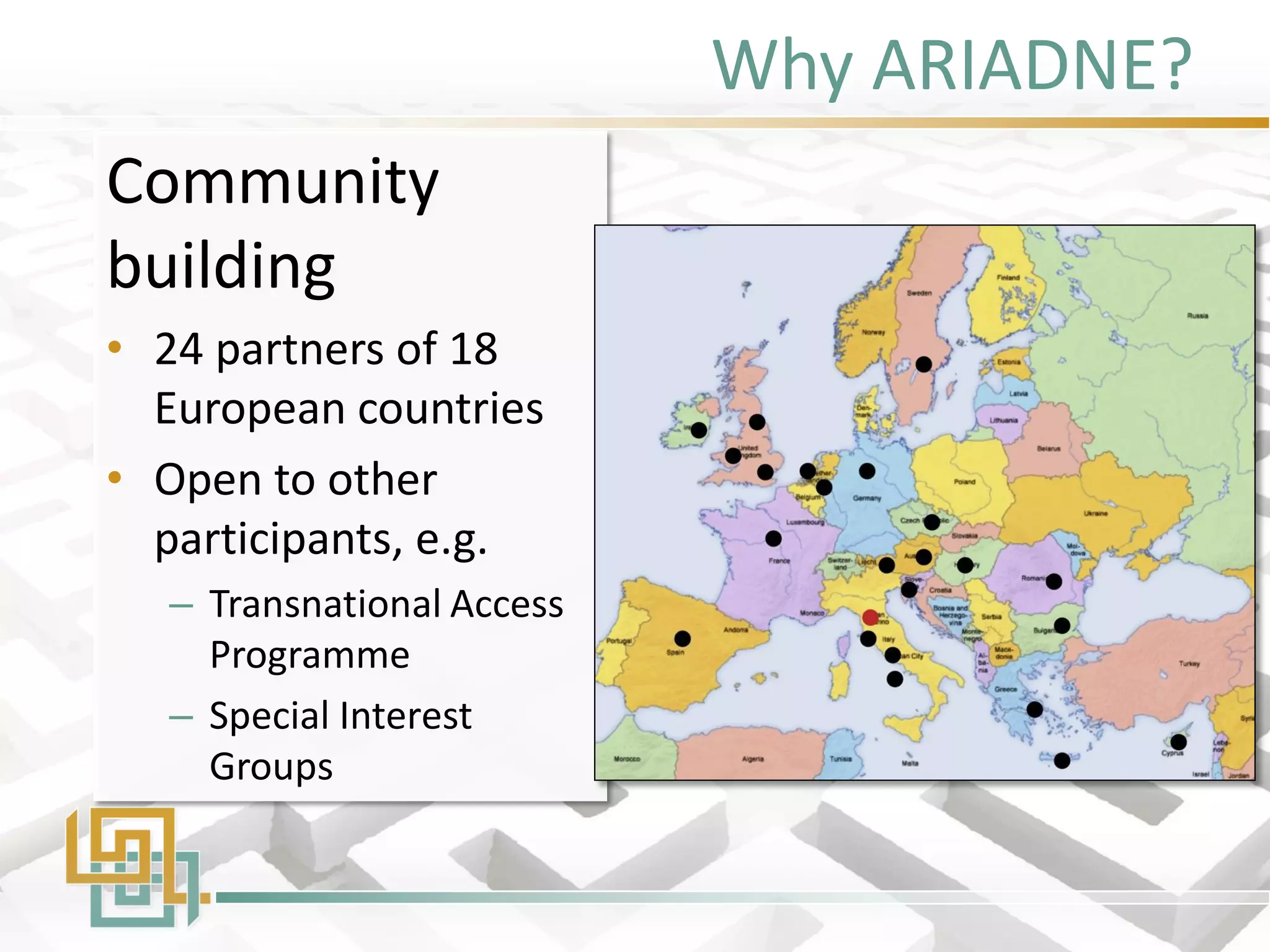
Community 
building 
•24 partners of 18 European countries 
•Open to other participants, e.g. 
–Transnational Access Programme 
–Special Interest Groups
Why ARIADNE? 
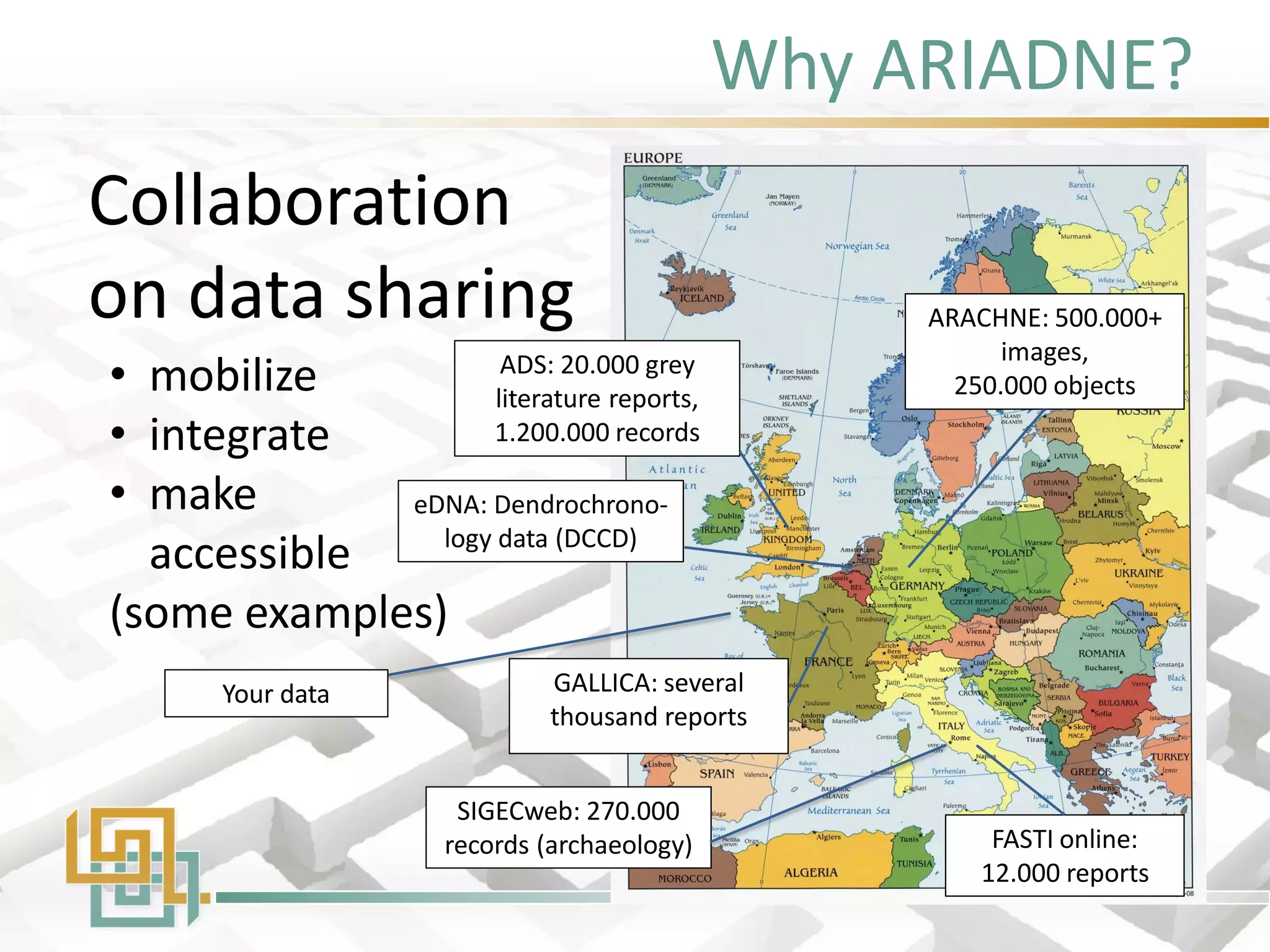
ADS: 20.000 grey literature reports, 
1.200.000 records 
ARACHNE: 500.000+ images, 250.000 objects 
GALLICA: several thousand reports 
FASTI online: 12.000 reports 
Collaboration on data sharing 
eDNA: Dendrochrono- logy data (DCCD) 
•mobilize 
•integrate 
•make accessible (some examples) 
Your data 
SIGECweb: 270.000 records (archaeology)
ARIADNE overall goals… 
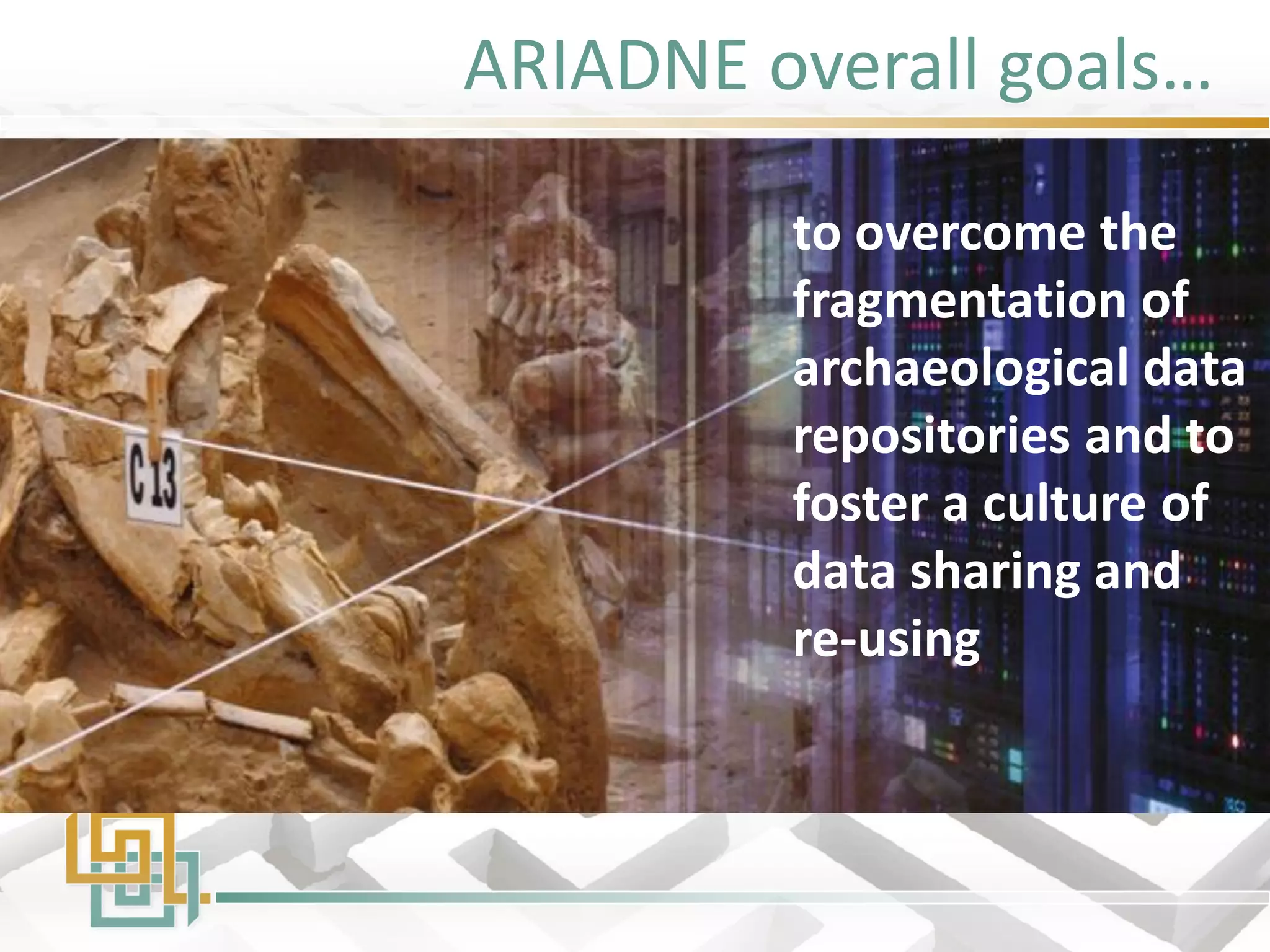
to overcome the fragmentation of archaeological data repositories and to foster a culture of data sharing and re-using
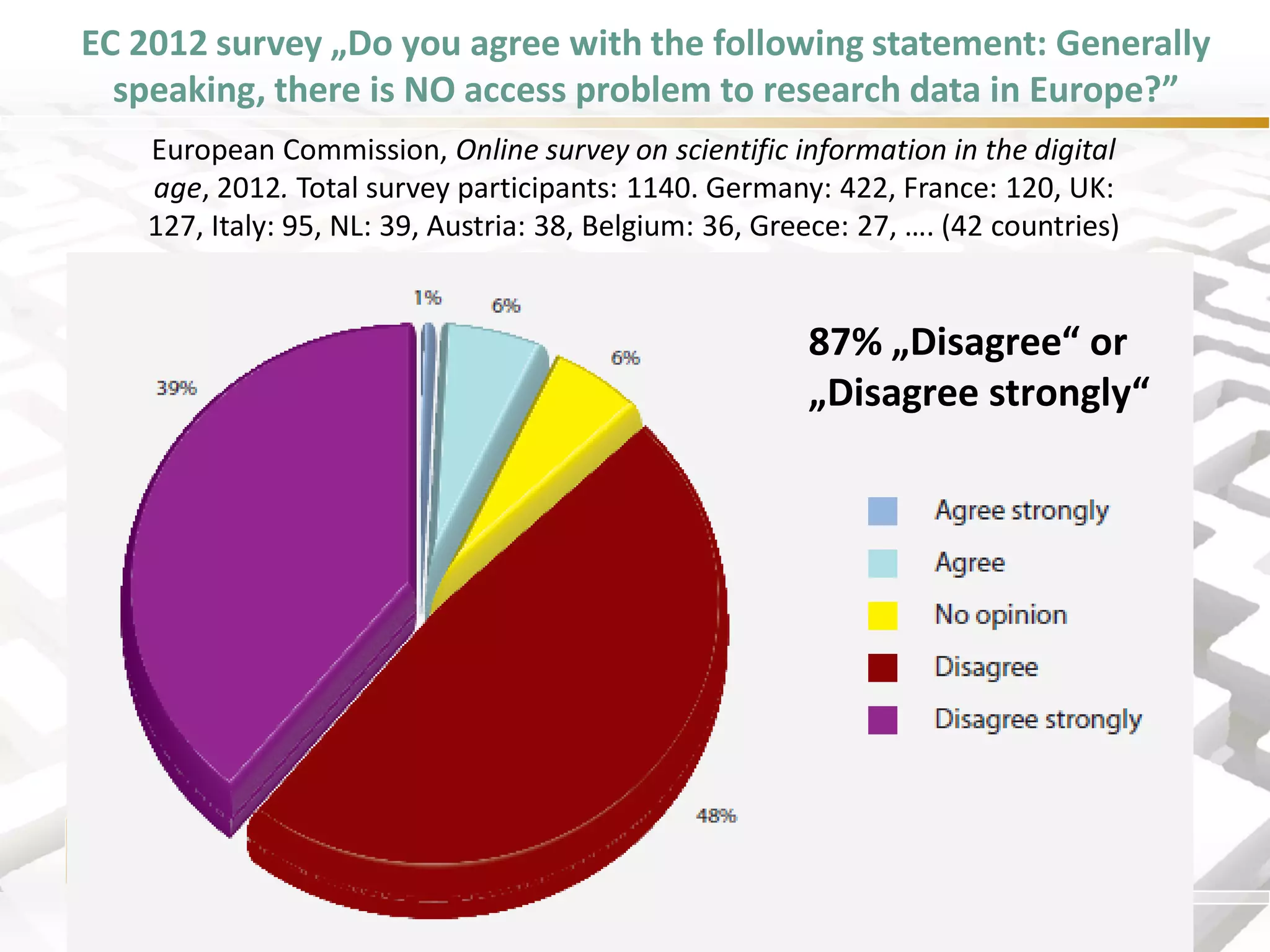
EC 2012 survey „Do you agree with the following statement: Generally speaking, there is NO access problem to research data in Europe?” 
European Commission, Online survey on scientific information in the digital age, 2012. Total survey participants: 1140. Germany: 422, France: 120, UK: 127, Italy: 95, NL: 39, Austria: 38, Belgium: 36, Greece: 27, …. (42 countries) 
87% „Disagree“ or „Disagree strongly“
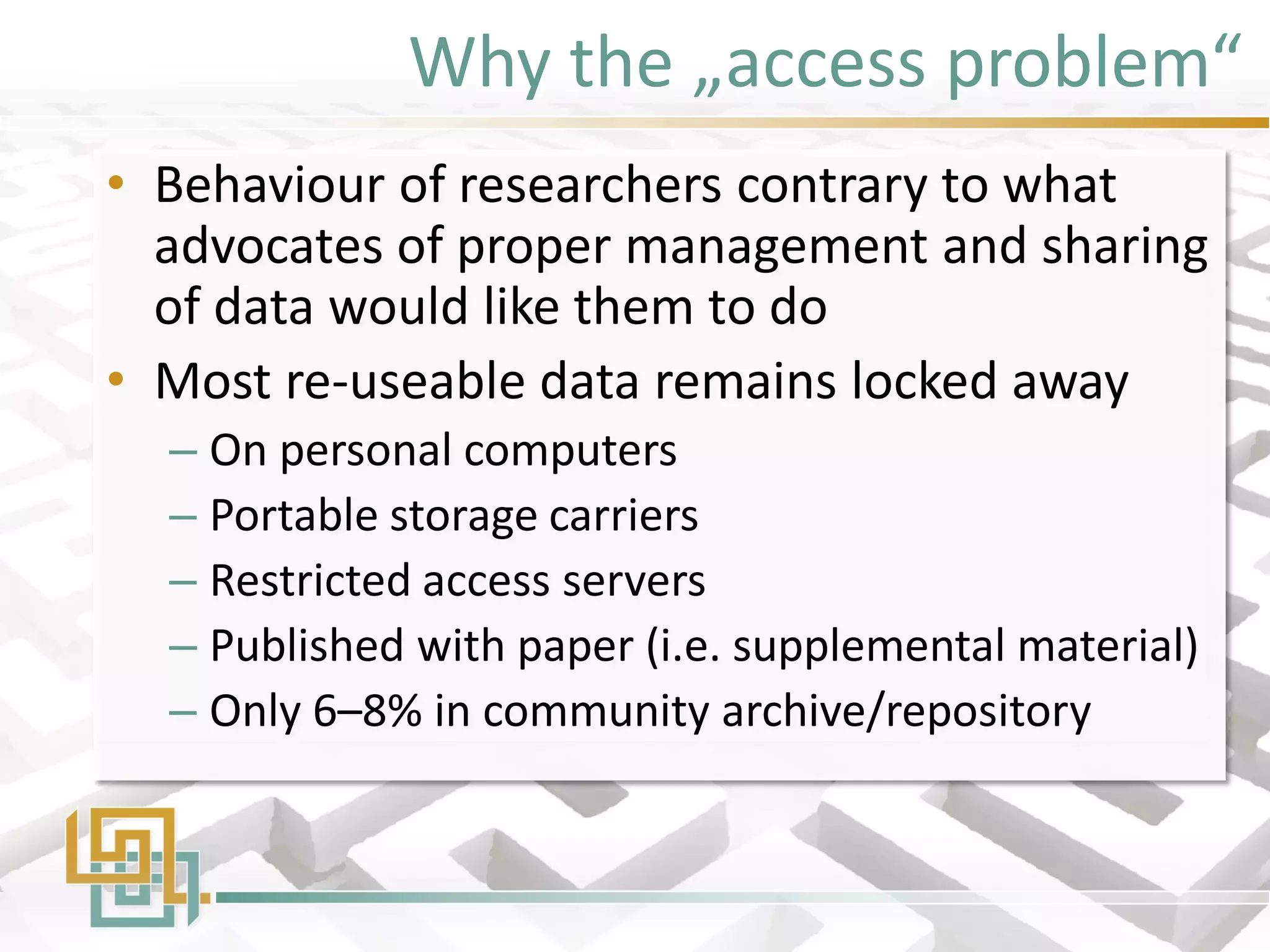
Why the „access problem“ 
•Behaviour of researchers contrary to what advocates of proper management and sharing of data would like them to do 
•Most re-useable data remains locked away 
–On personal computers 
–Portable storage carriers 
–Restricted access servers 
–Published with paper (i.e. supplemental material) 
–Only 6–8% in community archive/repository
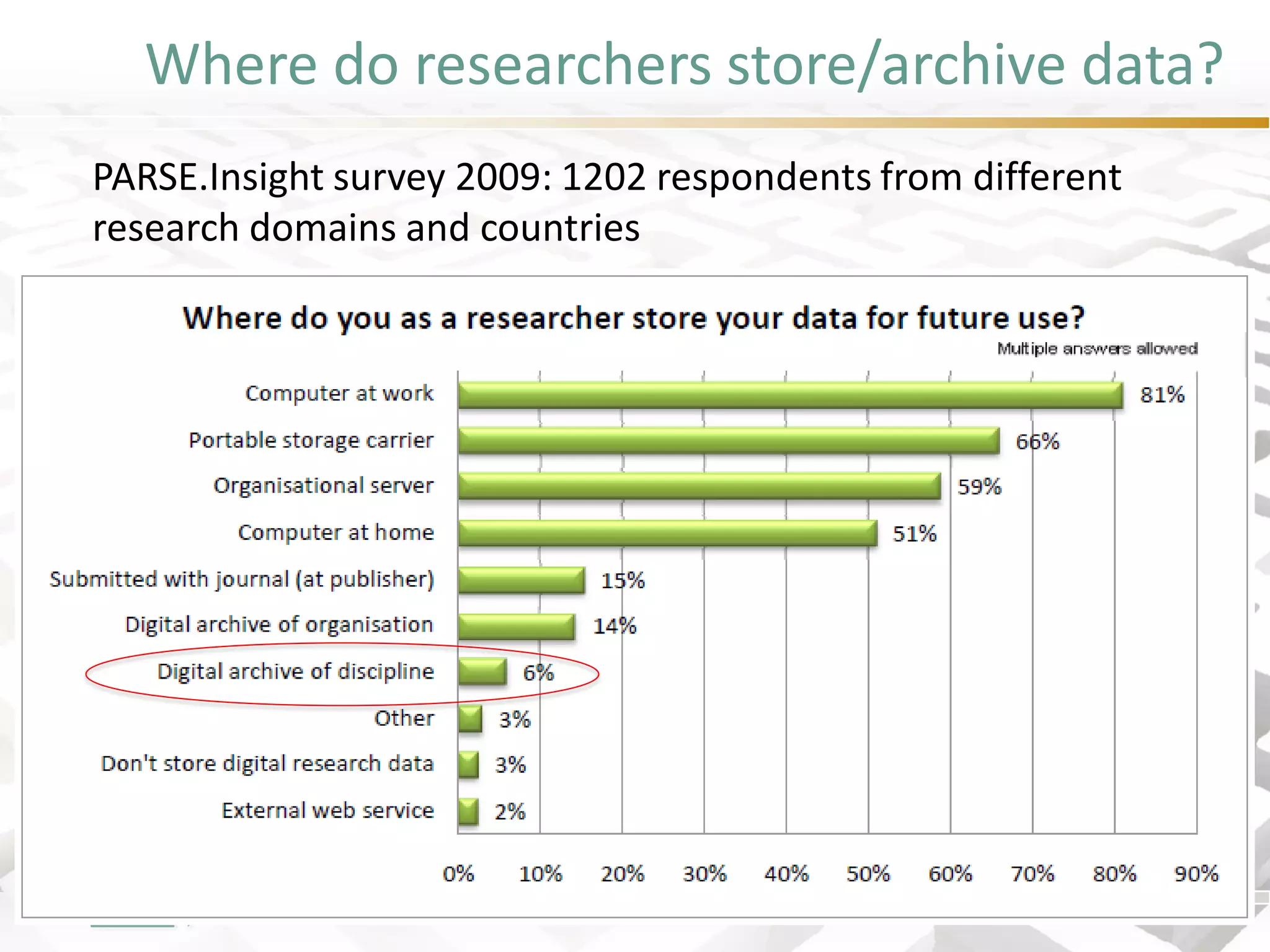
Where do researchers store/archive data? 
PARSE.Insight survey 2009: 1202 respondents from different research domains and countries
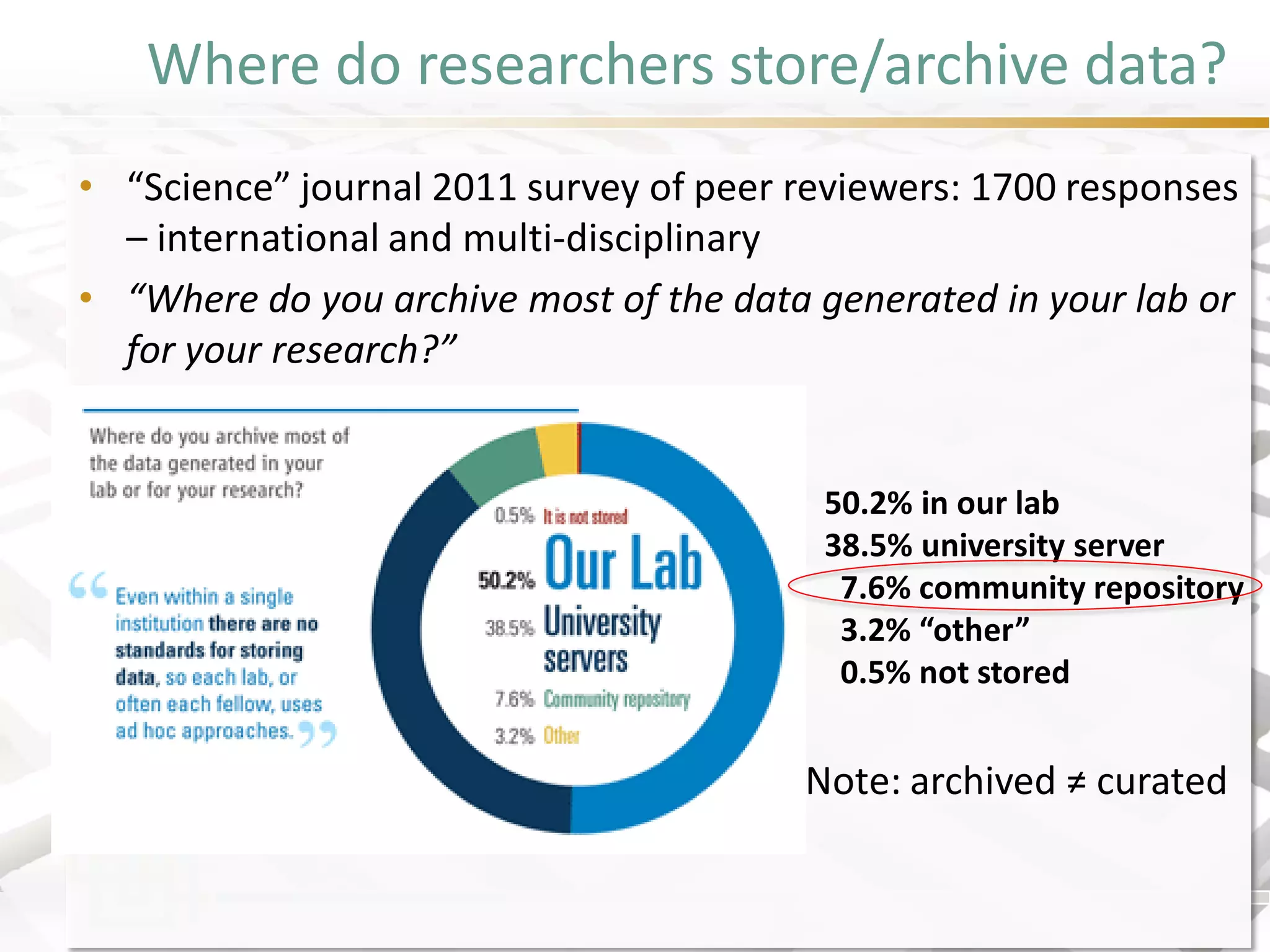
Where do researchers store/archive data? 
• “Science” journal 2011 survey of peer reviewers: 1700 responses 
– international and multi-disciplinary 
• “Where do you archive most of the data generated in your lab or 
for your research?” 
Note: archived ≠ curated 
50.2% in our lab 
38.5% university server 
7.6% community repository 
3.2% “other” 
0.5% not stored
Driver for change: Funding policies 
•High-level policies & initiatives 
–OECD, EC Communications, Research Data Alliance,… 
•National research funding agencies 
–Open Access mandates extended to data 
–Mandatory data management plans 
•Austria 
–Since 2013, Austrian Science Funds (FWF): open data mandate 
–But no national data repository for archaeology!
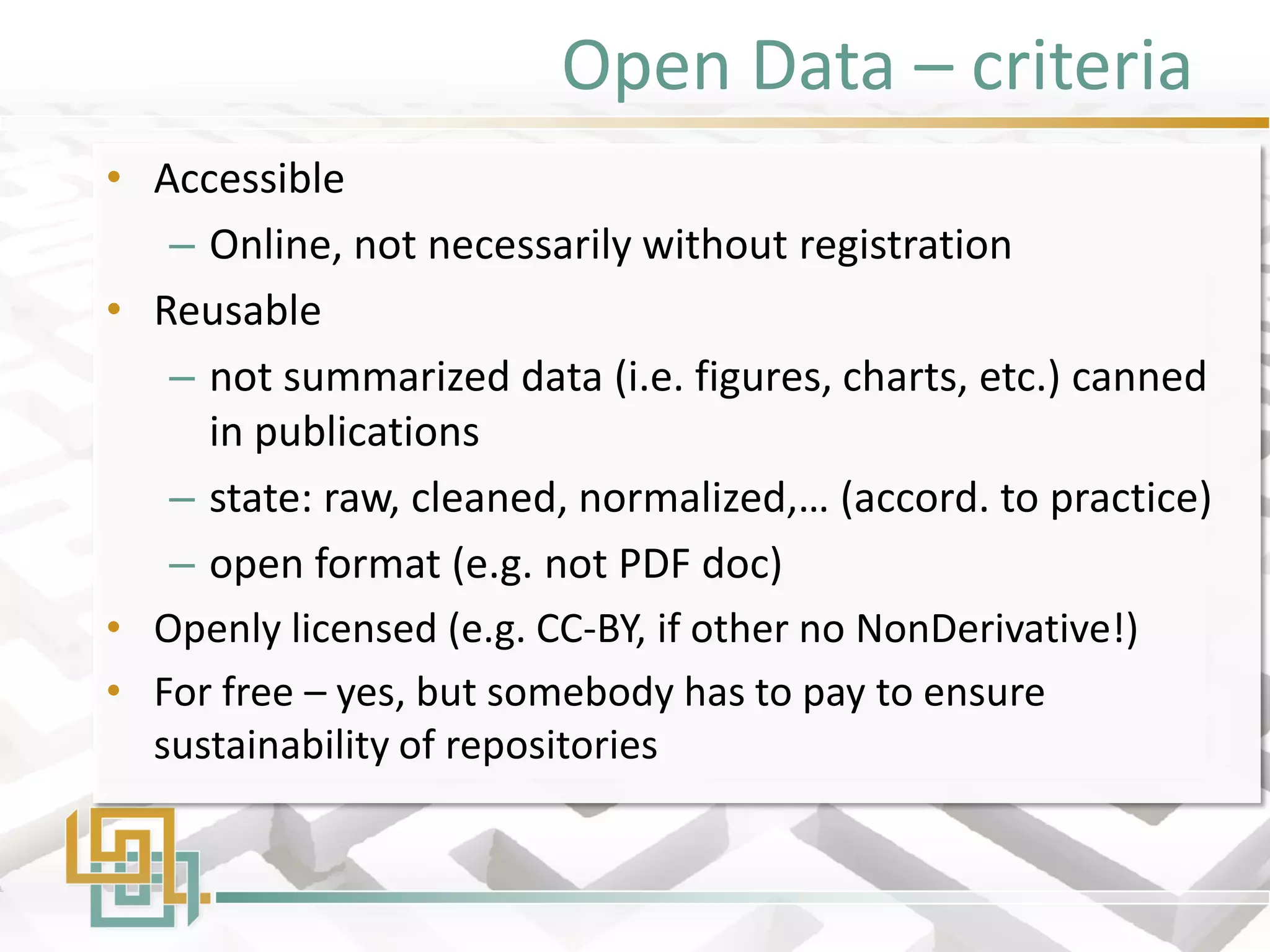
Open Data – criteria 
•Accessible 
–Online, not necessarily without registration 
•Reusable 
–not summarized data (i.e. figures, charts, etc.) canned in publications 
–state: raw, cleaned, normalized,… (accord. to practice) 
–open format (e.g. not PDF doc) 
•Openly licensed (e.g. CC-BY, if other no NonDerivative!) 
•For free – yes, but somebody has to pay to ensure sustainability of repositories
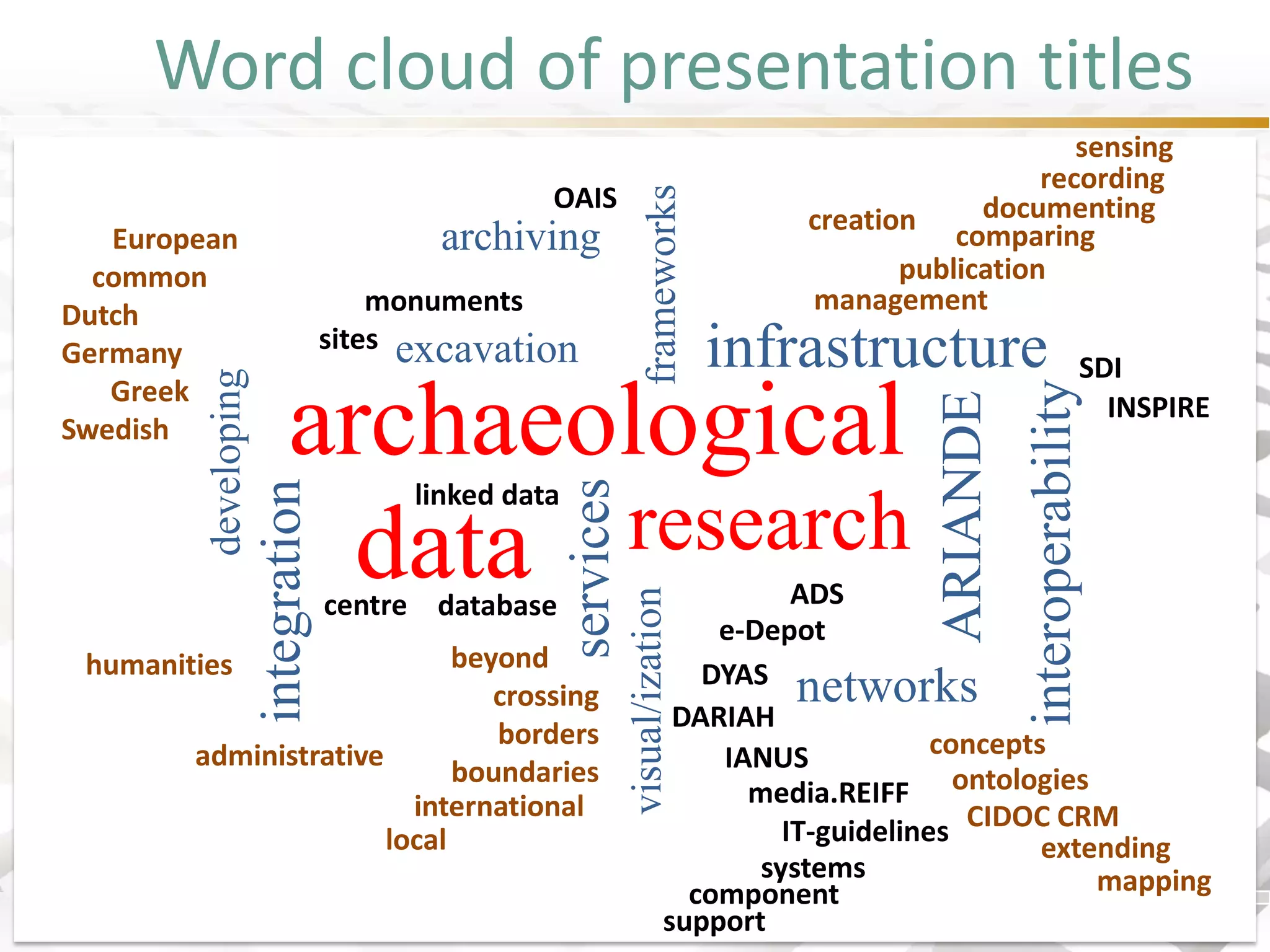
Word cloud of presentation titles 
archaeological 
data 
research 
developing 
ARIANDE 
infrastructure 
interoperability 
integration 
networks 
services 
archiving 
excavation 
frameworks 
visual/ization 
beyond 
crossing 
borders 
boundaries 
international 
administrative 
local 
media.REIFF 
DYAS 
DARIAH 
ADS 
SDI 
e-Depot 
IANUS 
INSPIRE 
linked data 
documenting 
extending 
ontologies 
concepts 
CIDOC CRM 
mapping 
database 
comparing 
recording 
publication 
management 
creation 
sensing 
European common Dutch Germany Greek Swedish 
humanities 
centre 
monuments sites 
OAIS 
support 
IT-guidelines 
component 
systems
Challenges /1 
•Documentation practices and semantics 
–different methods 
–different languages 
–different concepts / semantics 
–different definitions of time periods, … 
How to integrate data from different countries so that they can be cross-searched? 
Related presentations: 
•T. Oikarinen 
•G. Mossakowski 
•M. Doerr / G. Hiebel 
•A. Masur / K. May
Challenges /2 
•Data management & access 
–Heterogeneous data (different types) 
–Growing volumes 
–High quality data + metadata 
–Licensing 
–Open access 
How to manage data from project level to open access repositories? 
Related presentations: 
•F. Schäfer/ M. Trognitz (IANUS) 
•U. Jakobsson (SND) 
•H. Hollander (e- Depot)
Challenges /3 
•E-infrastructure components and interoperability 
–Humanities and natural sciences 
–Text and visual data (images, 3D, video,…) 
–Local and remote sensing data 
–Big and Small (“long tail”) data... 
How to make „interoperable“ data of different domains, types, scales…? 
Related presentations: 
•M. Charno / J. Richards 
•C. Dallas / D. Gavrilis 
•A. Corns / R. Shaw 
•R. Scopigno / M.Dellepiane 
•P. Constantopoulos / C.Dallas 
•A. Volkmann
ARIADNE is a project funded by the European Commission under the Community’s Seventh Framework Programme, contract no. FP7-INFRASTRUCTURES-2012-1-313193. 
The views and opinions expressed in this presentation are the sole responsibility of the authors and do not necessarily reflect the views of the European Commission.

What is an archaeological research infrastructure and why do we need it? Aims and challenges of ARIADNE

  • 1.
    ARIADNE is fundedunder the European Commission's Seventh Framework Programme What is an archaeological research infrastructure and why do we need it? Aims and challenges of ARIADNE Edeltraud Aspöck Guntram Geser
  • 2.
    Content of talk •What is an e-infrastructure for research? •Why ARIADNE? •Challenges of data sharing
  • 3.
    e-Infrastructures for research •Provide researchers with easy and controlled online access to –Data and information resources –Remote instruments –Collaboration tools •… across geographical, disciplinary and organizational boundaries
  • 4.
    e-Infrastructures for research •Different focus / types –Data infrastructure –Distributed computing (Grid, Cloud) –Virtual research environment / community
  • 5.
    ARIADNE (FP7-Infrastructures-2012-1-313193) •Runs4 years (started 02/2013) •FP7 Instrument „Integrating Activity“ •Focus on archaeological datasets •Funding 6.5m € •Coordinators •Prof. Franco Niccolucci, University of Florence •Prof. Julian Richards, University of York •Website: www.ariadne-infrastructure.eu
  • 6.
    Why ARIADNE? Community building •24 partners of 18 European countries •Open to other participants, e.g. –Transnational Access Programme –Special Interest Groups
  • 7.
    Why ARIADNE? ADS:20.000 grey literature reports, 1.200.000 records ARACHNE: 500.000+ images, 250.000 objects GALLICA: several thousand reports FASTI online: 12.000 reports Collaboration on data sharing eDNA: Dendrochrono- logy data (DCCD) •mobilize •integrate •make accessible (some examples) Your data SIGECweb: 270.000 records (archaeology)
  • 8.
    ARIADNE overall goals… to overcome the fragmentation of archaeological data repositories and to foster a culture of data sharing and re-using
  • 9.
    EC 2012 survey„Do you agree with the following statement: Generally speaking, there is NO access problem to research data in Europe?” European Commission, Online survey on scientific information in the digital age, 2012. Total survey participants: 1140. Germany: 422, France: 120, UK: 127, Italy: 95, NL: 39, Austria: 38, Belgium: 36, Greece: 27, …. (42 countries) 87% „Disagree“ or „Disagree strongly“
  • 10.
    Why the „accessproblem“ •Behaviour of researchers contrary to what advocates of proper management and sharing of data would like them to do •Most re-useable data remains locked away –On personal computers –Portable storage carriers –Restricted access servers –Published with paper (i.e. supplemental material) –Only 6–8% in community archive/repository
  • 11.
    Where do researchersstore/archive data? PARSE.Insight survey 2009: 1202 respondents from different research domains and countries
  • 12.
    Where do researchersstore/archive data? • “Science” journal 2011 survey of peer reviewers: 1700 responses – international and multi-disciplinary • “Where do you archive most of the data generated in your lab or for your research?” Note: archived ≠ curated 50.2% in our lab 38.5% university server 7.6% community repository 3.2% “other” 0.5% not stored
  • 13.
    Driver for change:Funding policies •High-level policies & initiatives –OECD, EC Communications, Research Data Alliance,… •National research funding agencies –Open Access mandates extended to data –Mandatory data management plans •Austria –Since 2013, Austrian Science Funds (FWF): open data mandate –But no national data repository for archaeology!
  • 14.
    Open Data –criteria •Accessible –Online, not necessarily without registration •Reusable –not summarized data (i.e. figures, charts, etc.) canned in publications –state: raw, cleaned, normalized,… (accord. to practice) –open format (e.g. not PDF doc) •Openly licensed (e.g. CC-BY, if other no NonDerivative!) •For free – yes, but somebody has to pay to ensure sustainability of repositories
  • 15.
    Word cloud ofpresentation titles archaeological data research developing ARIANDE infrastructure interoperability integration networks services archiving excavation frameworks visual/ization beyond crossing borders boundaries international administrative local media.REIFF DYAS DARIAH ADS SDI e-Depot IANUS INSPIRE linked data documenting extending ontologies concepts CIDOC CRM mapping database comparing recording publication management creation sensing European common Dutch Germany Greek Swedish humanities centre monuments sites OAIS support IT-guidelines component systems
  • 16.
    Challenges /1 •Documentationpractices and semantics –different methods –different languages –different concepts / semantics –different definitions of time periods, … How to integrate data from different countries so that they can be cross-searched? Related presentations: •T. Oikarinen •G. Mossakowski •M. Doerr / G. Hiebel •A. Masur / K. May
  • 17.
    Challenges /2 •Datamanagement & access –Heterogeneous data (different types) –Growing volumes –High quality data + metadata –Licensing –Open access How to manage data from project level to open access repositories? Related presentations: •F. Schäfer/ M. Trognitz (IANUS) •U. Jakobsson (SND) •H. Hollander (e- Depot)
  • 18.
    Challenges /3 •E-infrastructurecomponents and interoperability –Humanities and natural sciences –Text and visual data (images, 3D, video,…) –Local and remote sensing data –Big and Small (“long tail”) data... How to make „interoperable“ data of different domains, types, scales…? Related presentations: •M. Charno / J. Richards •C. Dallas / D. Gavrilis •A. Corns / R. Shaw •R. Scopigno / M.Dellepiane •P. Constantopoulos / C.Dallas •A. Volkmann
  • 19.
    ARIADNE is aproject funded by the European Commission under the Community’s Seventh Framework Programme, contract no. FP7-INFRASTRUCTURES-2012-1-313193. The views and opinions expressed in this presentation are the sole responsibility of the authors and do not necessarily reflect the views of the European Commission.