ARIADNE is funded by the European Commission's Seventh Framework Programme
Providing services: search and beyondProviding services: search and beyond
CNR ISTI Pisa
Carlo Meghini
CNR ISTI Pisa
Carlo Meghini
ARIADNE, The mission
• Bring together and integrate the existing
archaeological research data infrastructures so
that researchers can use the various distributed
datasets and new and powerful technologies as
an integral component of the archaeological
research methodology.
• Bring together and integrate the existing
archaeological research data infrastructures so
that researchers can use the various distributed
datasets and new and powerful technologies as
an integral component of the archaeological
research methodology.
e-infrastructures
A combination and interworking of
• digitally-based technology (hardware and software),
• resources (data, services, digital libraries),
• communications (protocols, access rights and
networks), and
• the people and organisational structures
needed to support modern, internationally leading
collaborative research be it in the arts and humanities or
the sciences
A combination and interworking of
• digitally-based technology (hardware and software),
• resources (data, services, digital libraries),
• communications (protocols, access rights and
networks), and
• the people and organisational structures
needed to support modern, internationally leading
collaborative research be it in the arts and humanities or
the sciences
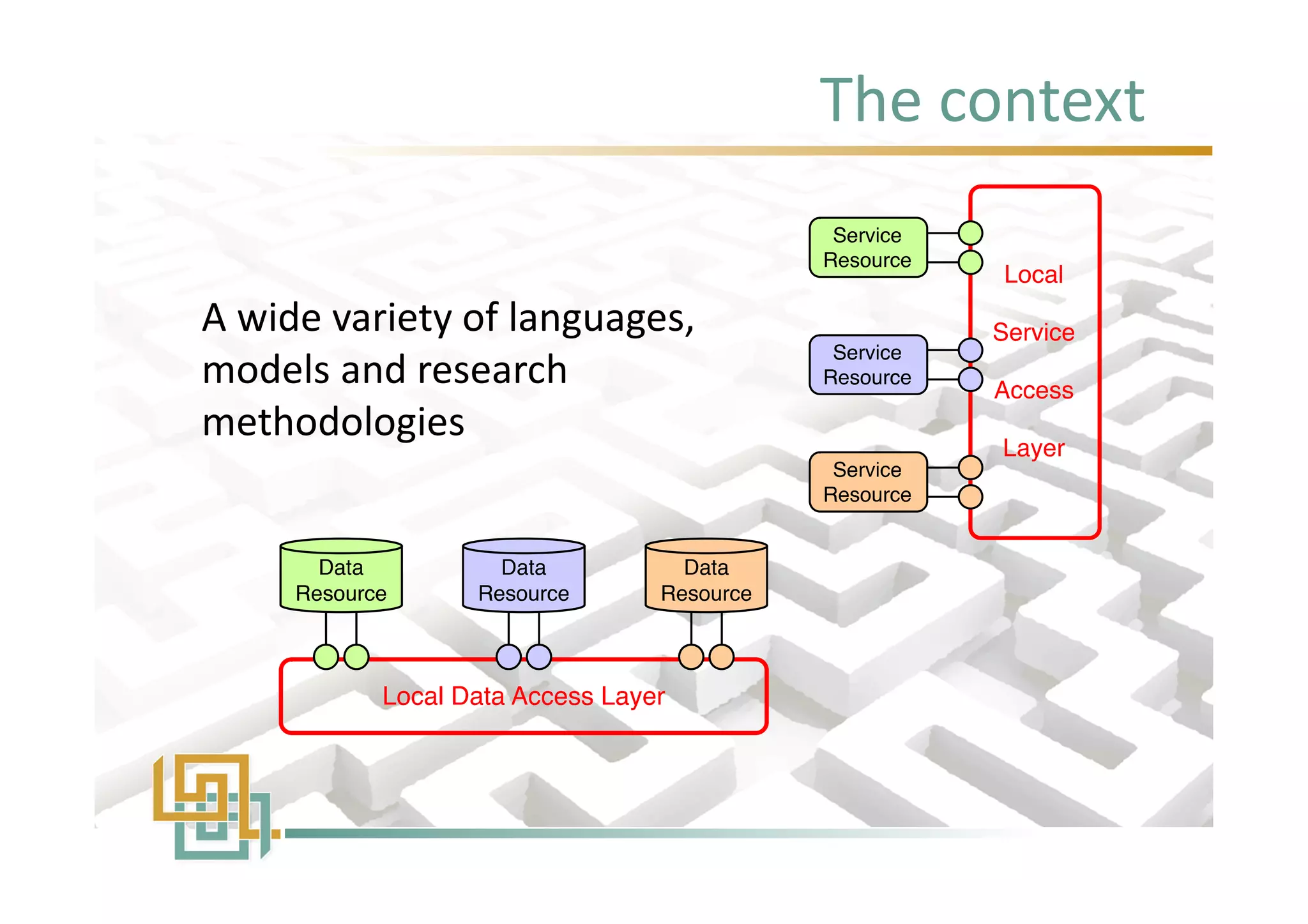
The context
A wide variety of languages,
models and research
methodologies
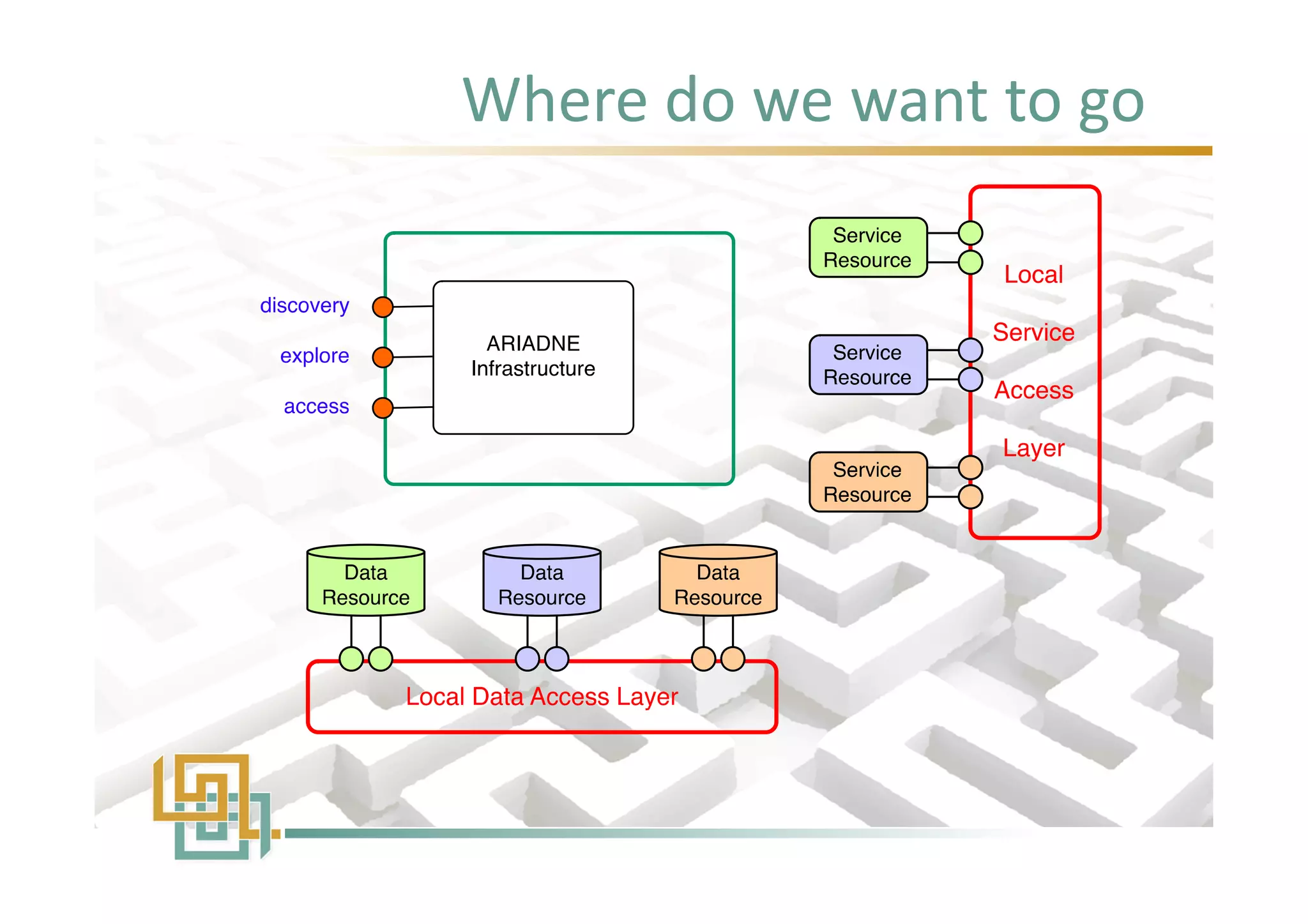
Where do we want to go
Discovery
• Semantic discovery:
– a user-centered search service for getting to
know the available data and service resources
• Challenges:
– interoperability
– information collection
– effectiveness and efficiency
• Semantic discovery:
– a user-centered search service for getting to
know the available data and service resources
• Challenges:
– interoperability
– information collection
– effectiveness and efficiency
Explore
• Navigate the information space at all levels:
– Collection description
– Item description
– Item
• multimedia object visualization
• 3D-model visualization
• Navigate the information space at all levels:
– Collection description
– Item description
– Item
• multimedia object visualization
• 3D-model visualization
Access
• Get to the data
– query the information space as a whole
– enrich with new data resources
– obtain data resources
– operate on data resources
• Virtual Research Environments
• Create new data by re-using the existing ones
• Get to the data
– query the information space as a whole
– enrich with new data resources
– obtain data resources
– operate on data resources
• Virtual Research Environments
• Create new data by re-using the existing ones
Access
• Get to the services
– use the individual services
– enrich with new services
– operate on service resources
• Virtual Research Environments
• Create new services by re-using the existing ones
• Get to the services
– use the individual services
– enrich with new services
– operate on service resources
• Virtual Research Environments
• Create new services by re-using the existing ones
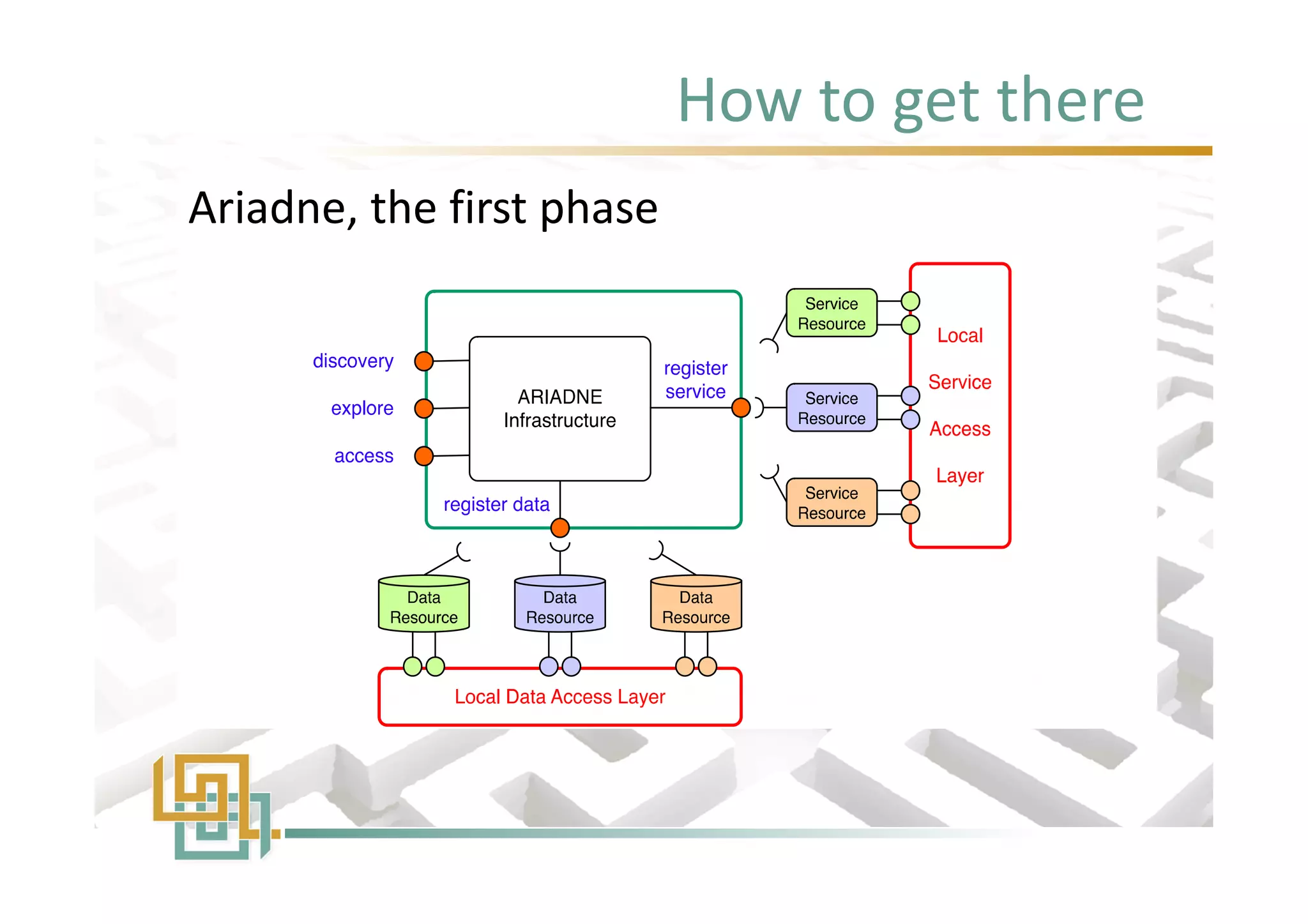
How to get there
Ariadne, the first phaseAriadne, the first phase
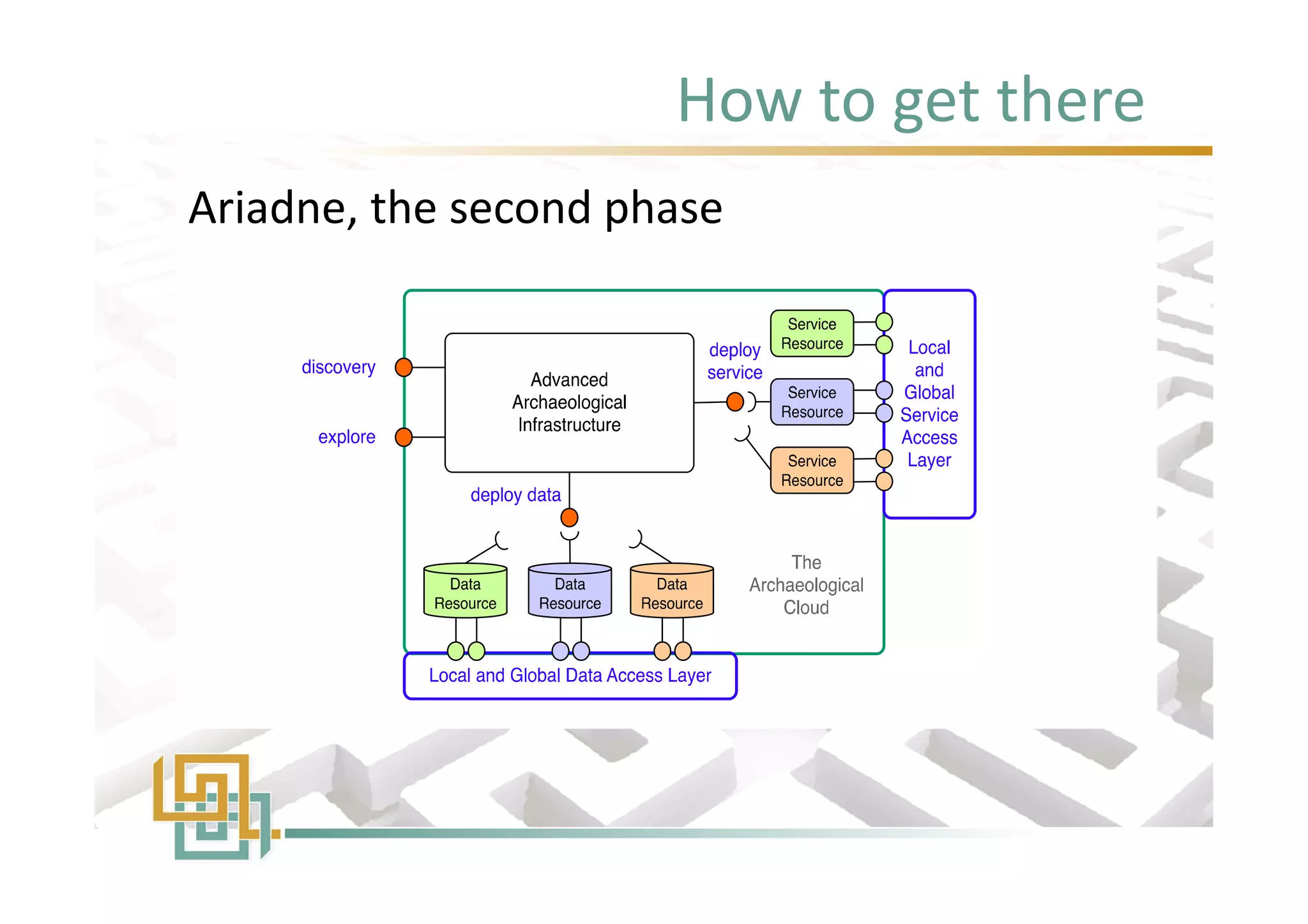
How to get there
Ariadne, the second phaseAriadne, the second phase
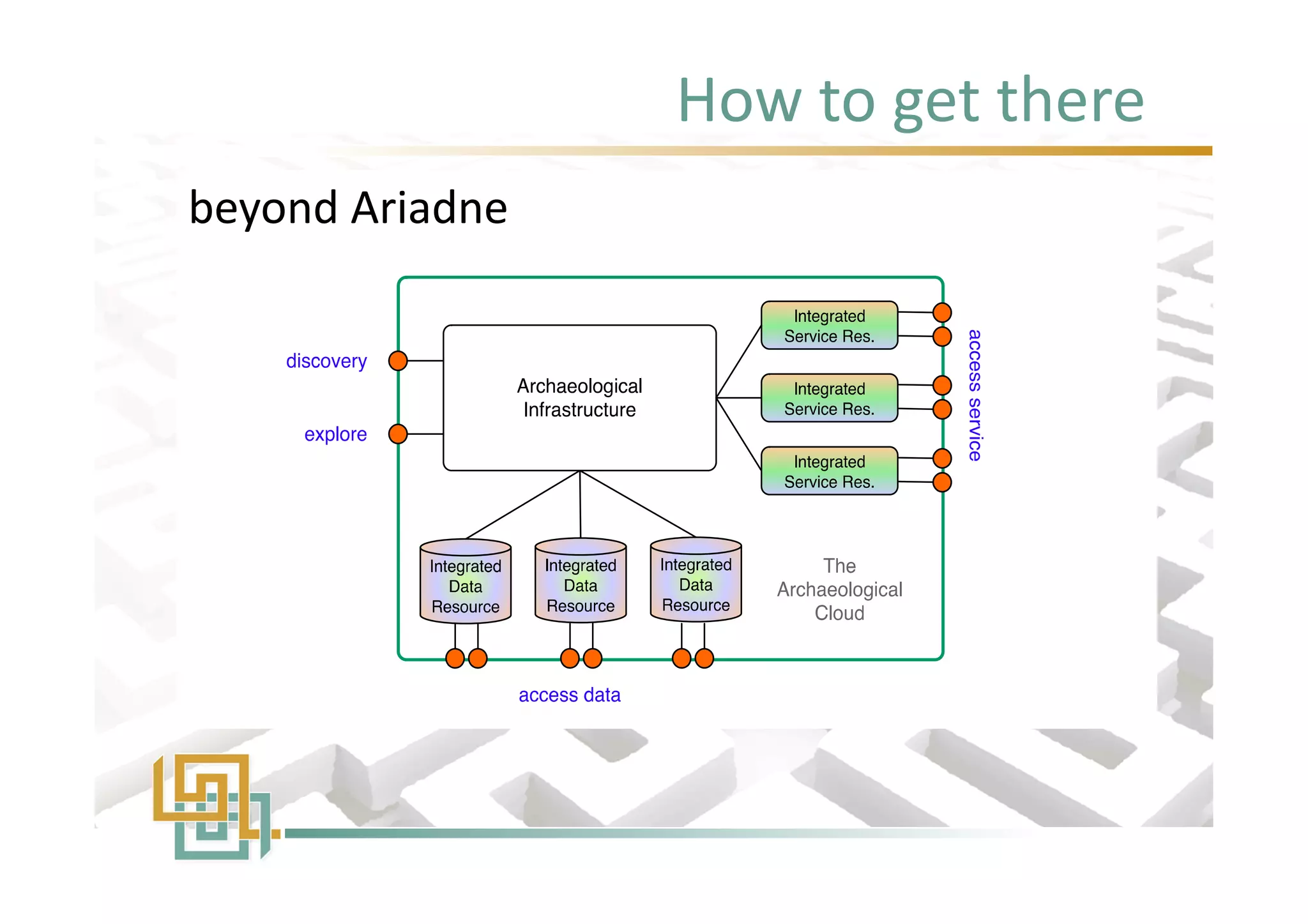
How to get there
beyond Ariadnebeyond Ariadne
Thank you
Questions?Questions?

Providing services search and beyond

  • 1.
    ARIADNE is fundedby the European Commission's Seventh Framework Programme Providing services: search and beyondProviding services: search and beyond CNR ISTI Pisa Carlo Meghini CNR ISTI Pisa Carlo Meghini
  • 2.
    ARIADNE, The mission •Bring together and integrate the existing archaeological research data infrastructures so that researchers can use the various distributed datasets and new and powerful technologies as an integral component of the archaeological research methodology. • Bring together and integrate the existing archaeological research data infrastructures so that researchers can use the various distributed datasets and new and powerful technologies as an integral component of the archaeological research methodology.
  • 3.
    e-infrastructures A combination andinterworking of • digitally-based technology (hardware and software), • resources (data, services, digital libraries), • communications (protocols, access rights and networks), and • the people and organisational structures needed to support modern, internationally leading collaborative research be it in the arts and humanities or the sciences A combination and interworking of • digitally-based technology (hardware and software), • resources (data, services, digital libraries), • communications (protocols, access rights and networks), and • the people and organisational structures needed to support modern, internationally leading collaborative research be it in the arts and humanities or the sciences
  • 4.
    The context A widevariety of languages, models and research methodologies
  • 5.
    Where do wewant to go
  • 6.
    Discovery • Semantic discovery: –a user-centered search service for getting to know the available data and service resources • Challenges: – interoperability – information collection – effectiveness and efficiency • Semantic discovery: – a user-centered search service for getting to know the available data and service resources • Challenges: – interoperability – information collection – effectiveness and efficiency
  • 7.
    Explore • Navigate theinformation space at all levels: – Collection description – Item description – Item • multimedia object visualization • 3D-model visualization • Navigate the information space at all levels: – Collection description – Item description – Item • multimedia object visualization • 3D-model visualization
  • 8.
    Access • Get tothe data – query the information space as a whole – enrich with new data resources – obtain data resources – operate on data resources • Virtual Research Environments • Create new data by re-using the existing ones • Get to the data – query the information space as a whole – enrich with new data resources – obtain data resources – operate on data resources • Virtual Research Environments • Create new data by re-using the existing ones
  • 9.
    Access • Get tothe services – use the individual services – enrich with new services – operate on service resources • Virtual Research Environments • Create new services by re-using the existing ones • Get to the services – use the individual services – enrich with new services – operate on service resources • Virtual Research Environments • Create new services by re-using the existing ones
  • 10.
    How to getthere Ariadne, the first phaseAriadne, the first phase
  • 11.
    How to getthere Ariadne, the second phaseAriadne, the second phase
  • 12.
    How to getthere beyond Ariadnebeyond Ariadne
  • 13.