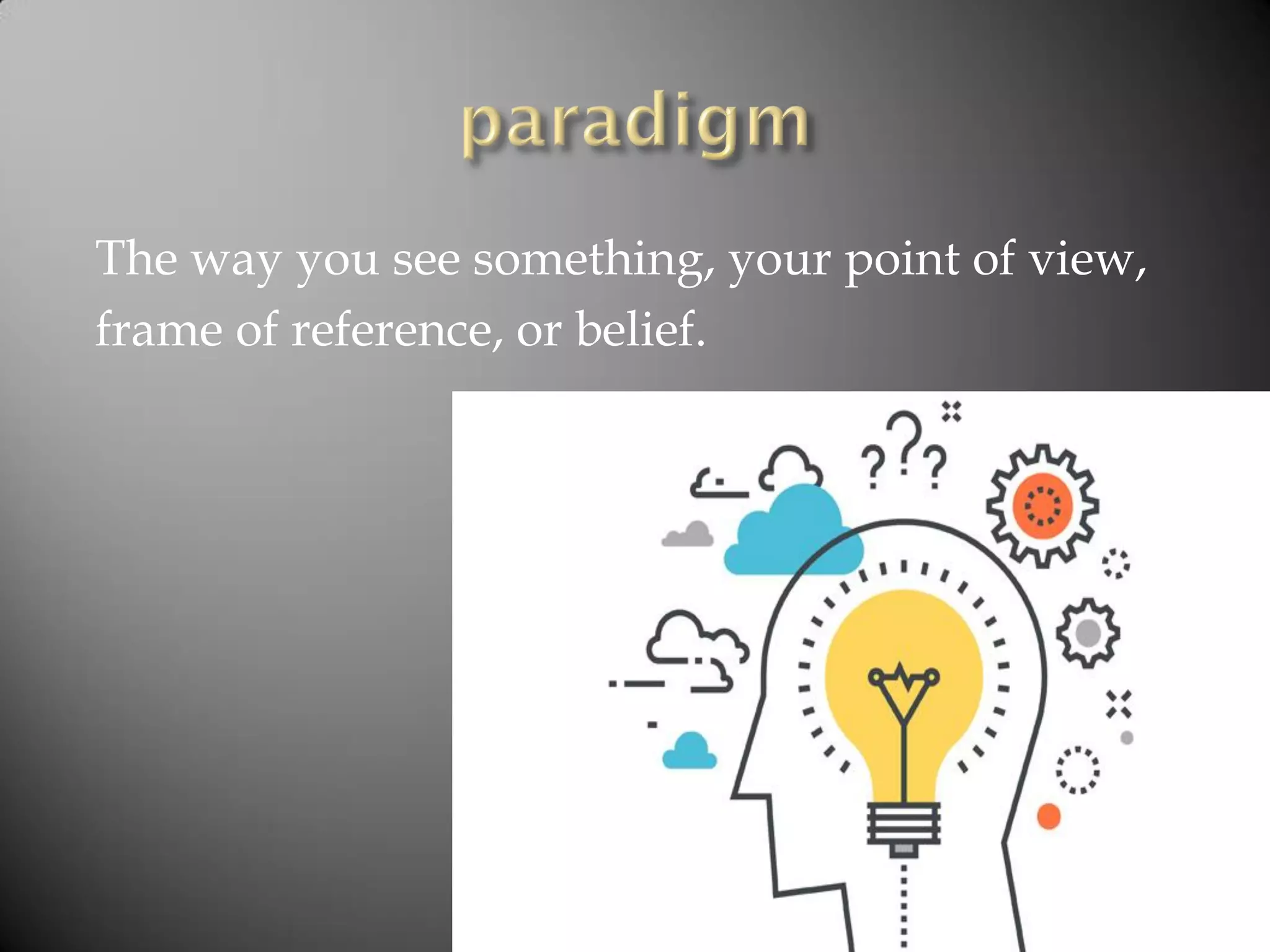
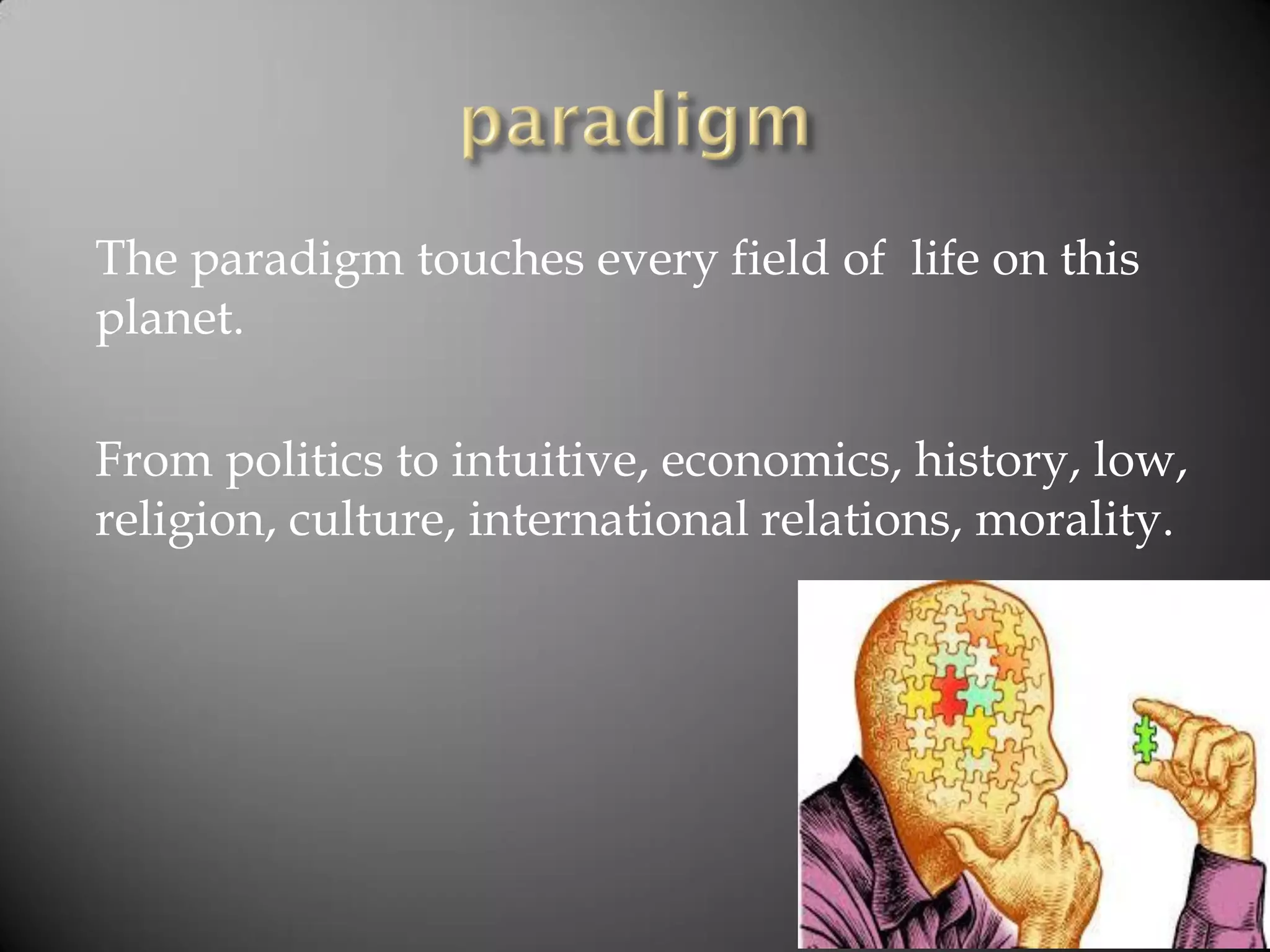
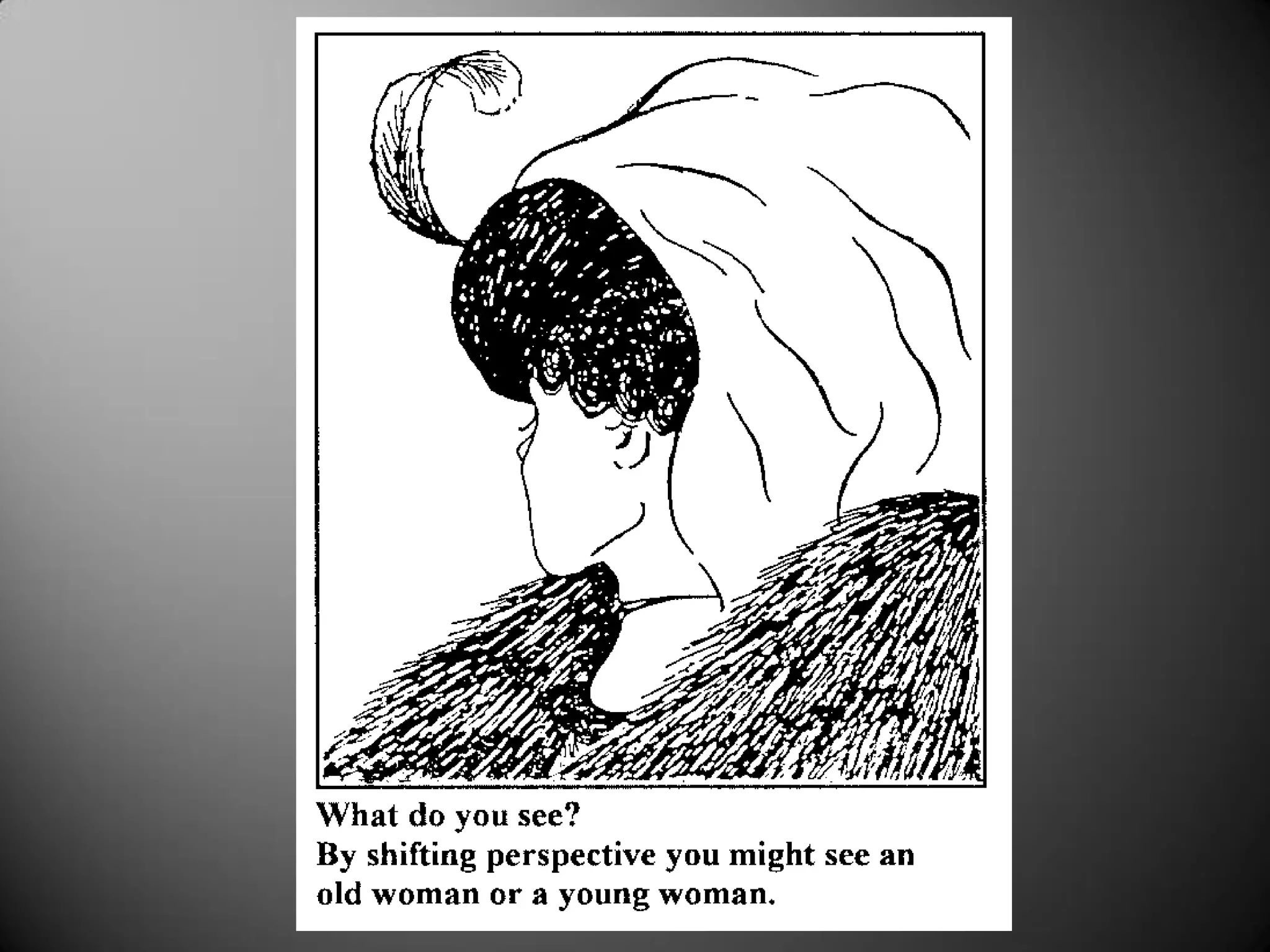
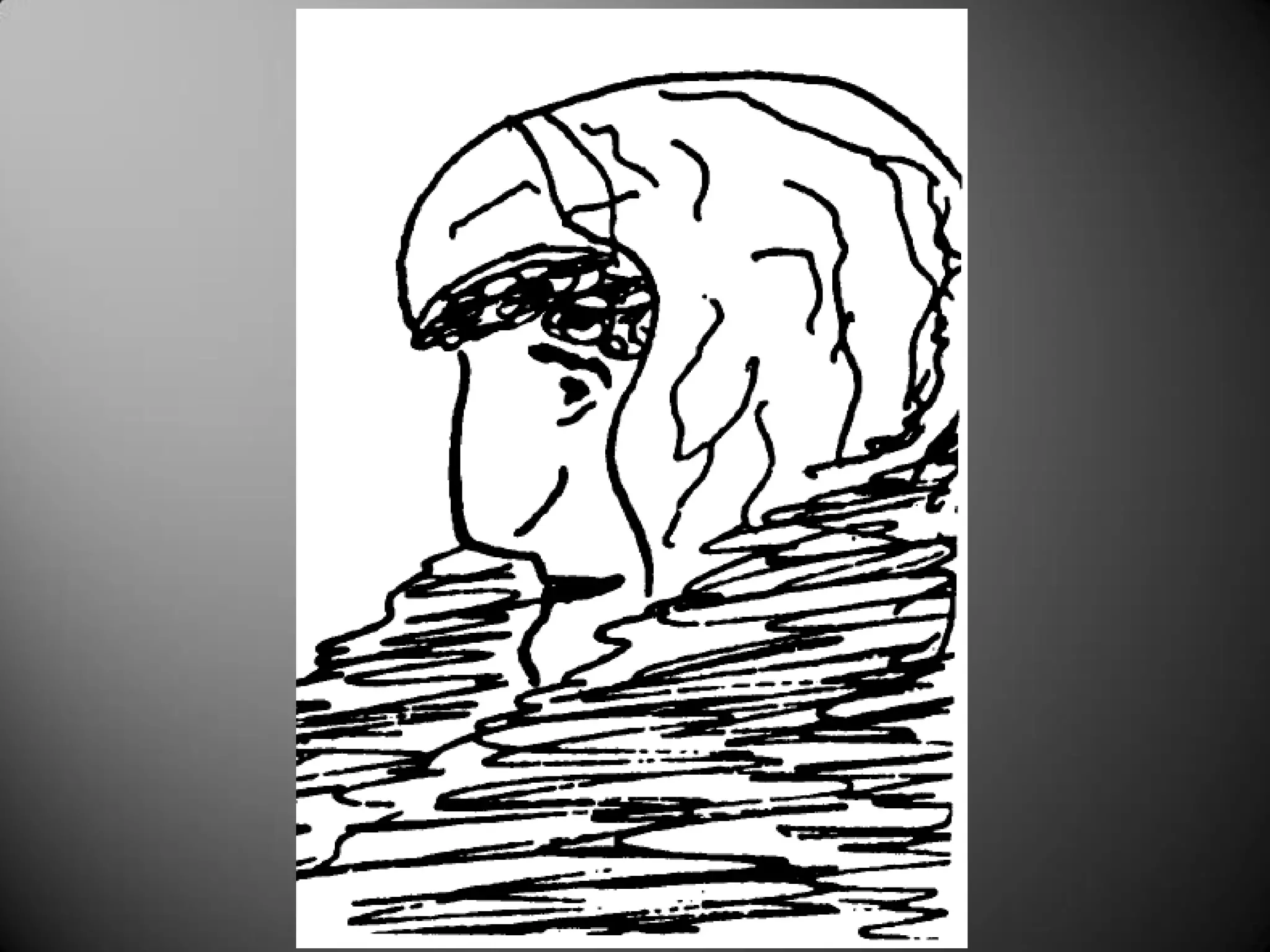
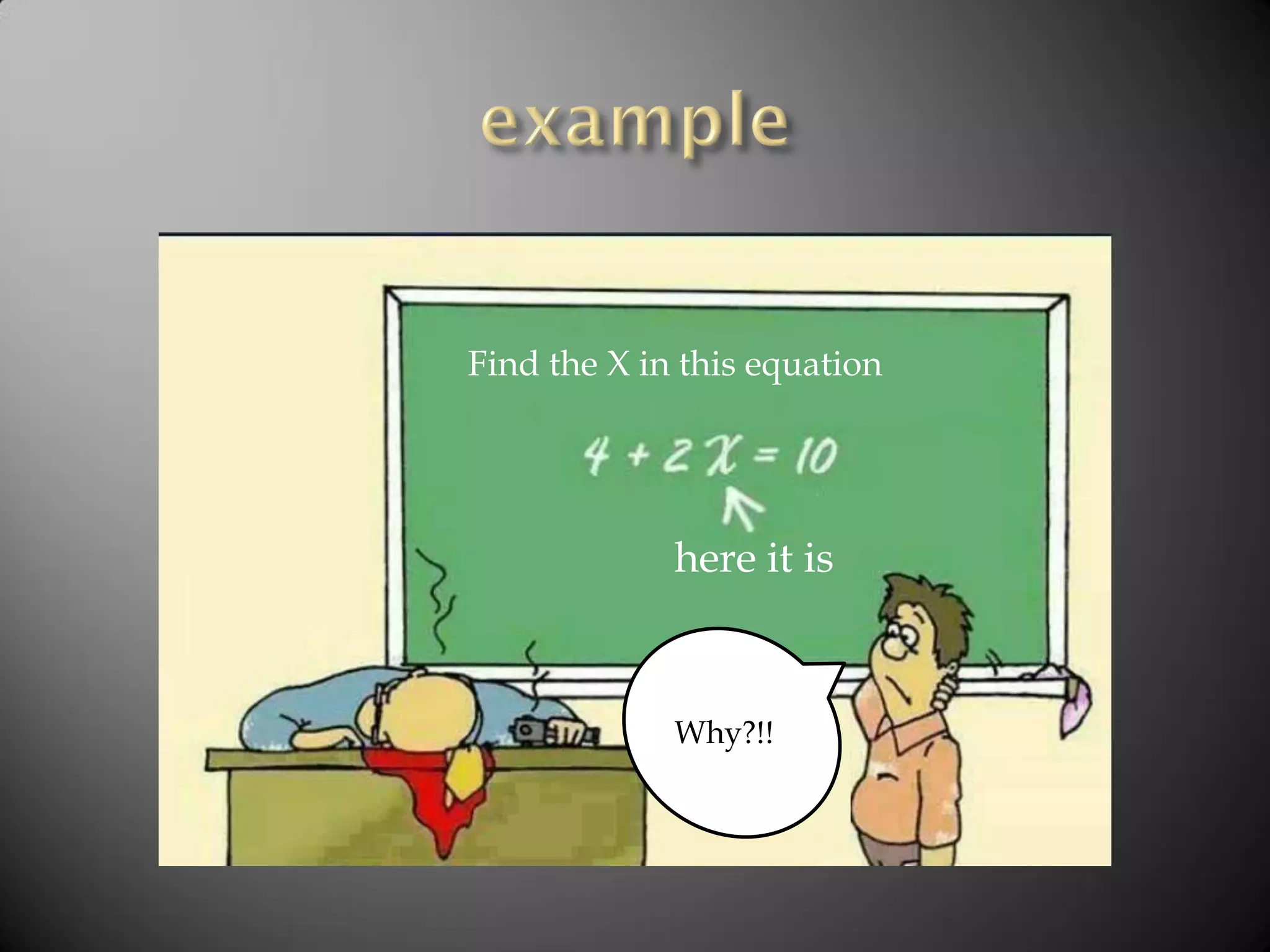
This document discusses paradigms and paradigm shifts, providing examples from mathematics. It defines a paradigm as a point of view or belief system, and a paradigm shift as seeing something differently by stepping outside existing ways of thinking. The document notes that paradigm shifts occurred when Ptolemy's earth-centered view of the universe was replaced by Copernicus' sun-centered view. It also asks the reader to consider paradigm shifts that could happen in their own life or in mathematics education. Advantages of paradigms include precision, while limitations include an inability to consider questions outside the existing framework.