What does it take to build and Online Community?   Using Social Networking to Promote the Physical Activity Guidelines Ana Tellez, APTR eHealth & Policy Fellow Office of Disease Prevention & Health Promotion (ODPHP) U.S. Department of Health & Human Services August 13, 2009
Trends and Statistics Social Networking Sites &  Online Communities
SNS Trends and Statistics One in three Americans  have a profile on a  Social Networking Site . 75% of online adults between ages 18 and 24  have a social network profile, as do  57% of wired adults between 25 and 34. Top 3 social media sites  in 2008:   Blogger   (222 million unique worldwide visitors) ,   Facebook   (200 million unique worldwide visitors) ,  and   Myspace   (126 million unique worldwide visitors).
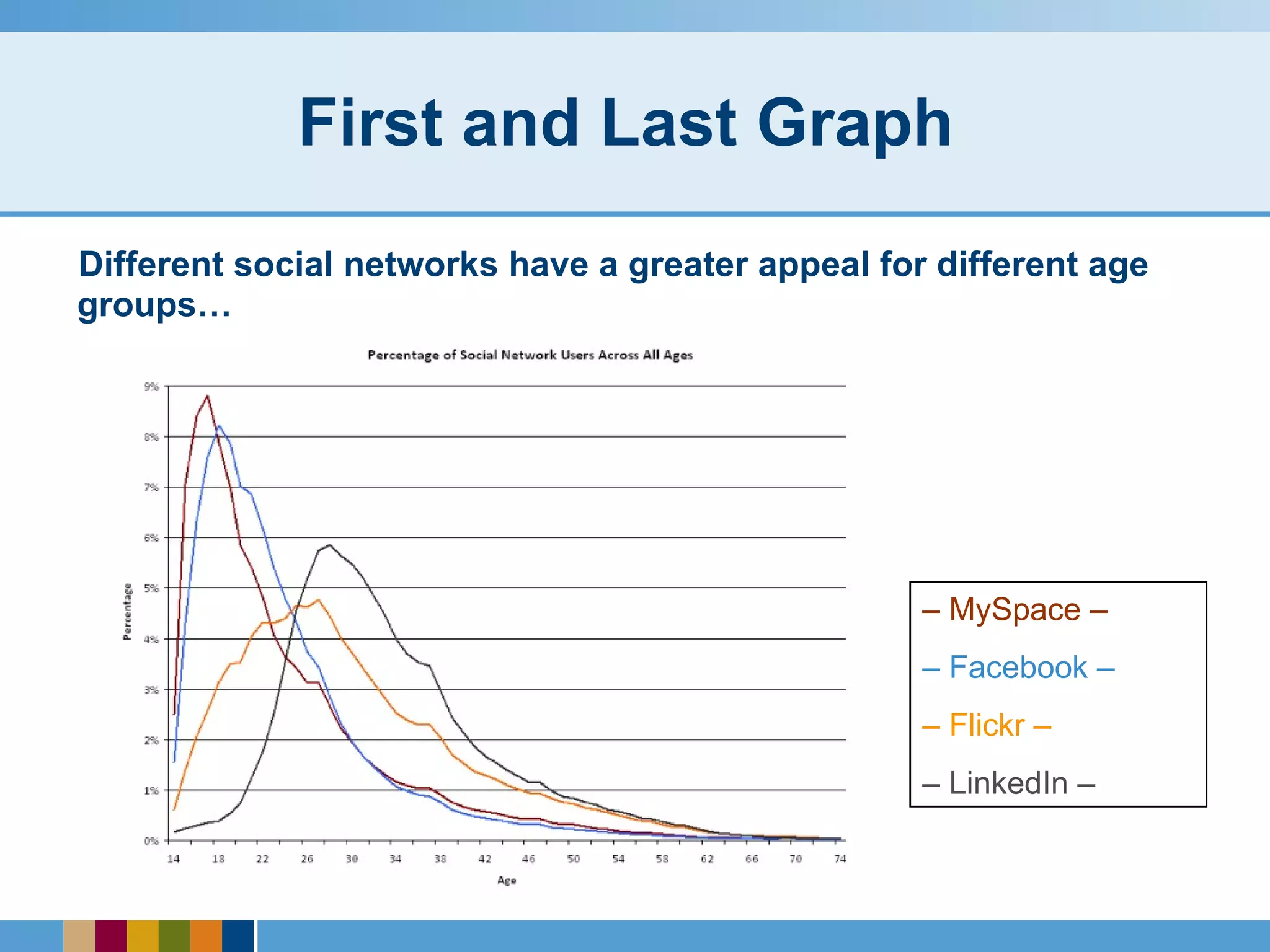
First and Last Graph  Different social networks have a greater appeal for different age groups… –   MySpace – –   Facebook – –   Flickr –   –   LinkedIn –
Characteristics of an Online Community They are continuous, not temporal - there is a core membership that interacts together over a long period of time. Communities gather around a concept or common goal. Communities take on various conversations and activities, led by different members over time. People within communities get to know each other and interact regularly without centralized facilitation. Community leaders emerge over time
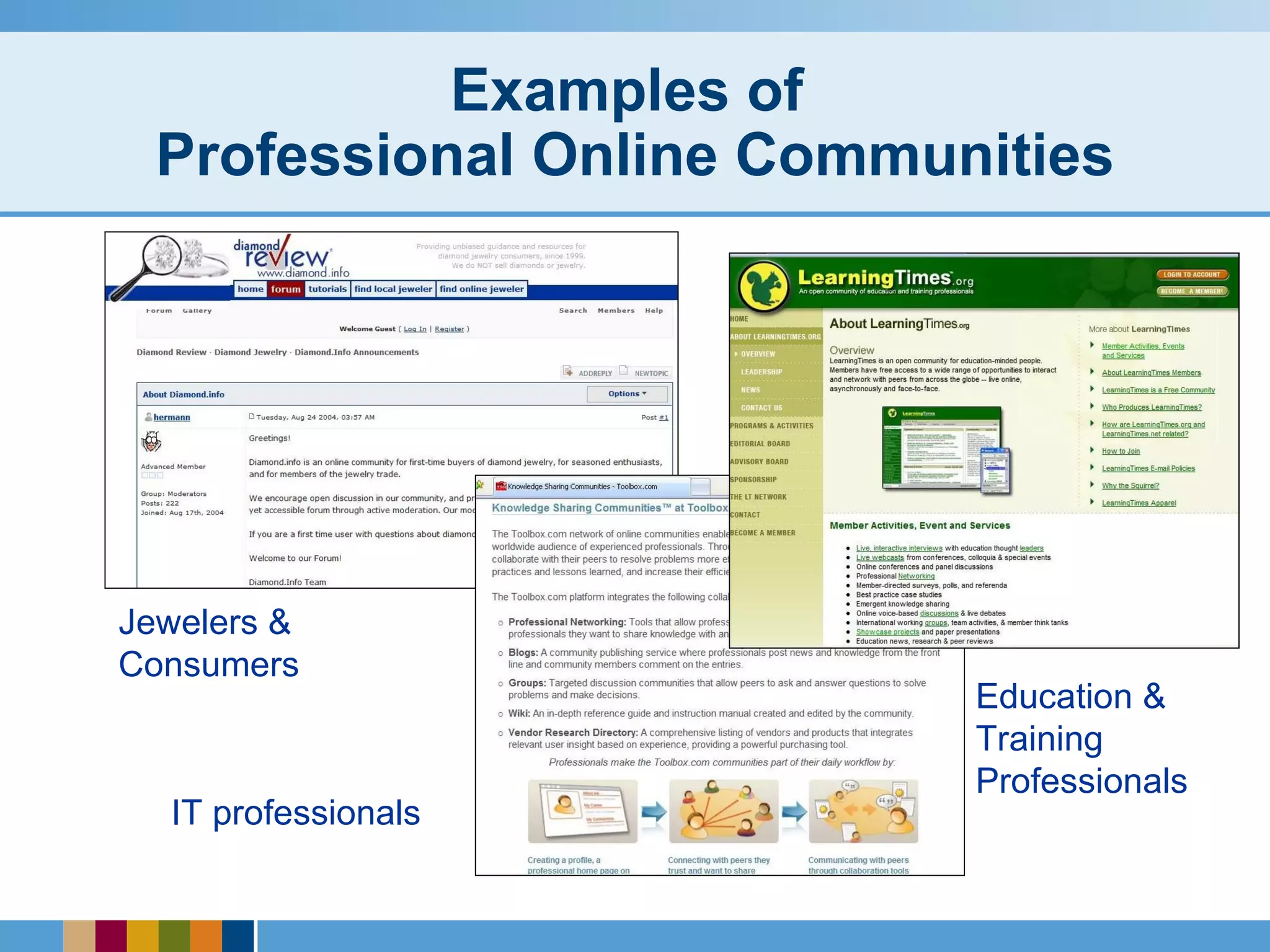
Examples of  Professional Online Communities Jewelers & Consumers IT professionals Education & Training Professionals
Nancy White, in  Online Communities “ Because of the socially constructed nature of learning, communities of practice go far beyond mere information exchange. Members take risks to share both their knowledge and challenges. Reputation places a person in either the core or periphery of a group.  Social capital is the currency.  Trust, identity and the influence of leadership all affect a learning community.” (White, 2003)
Reflections Be Active Your Way Online Community
Our Vision  Providing a virtual space for our Supporter Network to: Network  (across geographic regions and interests) Share information  (best practices, lessons learned) Collaborate  (leverage resources) Innovate  ( develop new promotion strategies) Obtain news  and information from across the federal government on physical activity
Our (iterative) Process Develop functionality requirements Conduct user-testing (2 rounds) Conduct a pilot with a cohort of established contacts Develop some more!
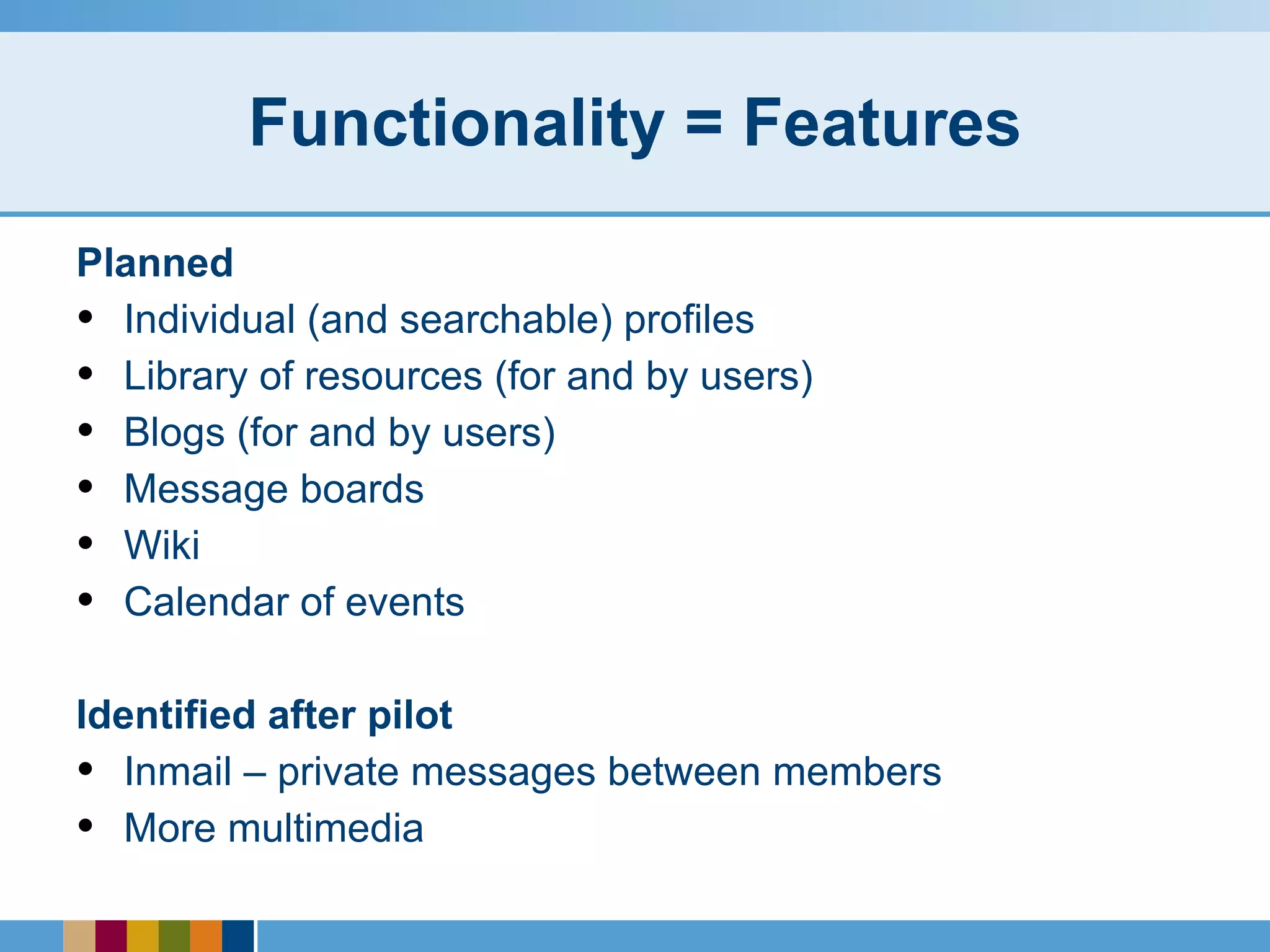
Functionality = Features Planned Individual (and searchable) profiles Library of resources (for and by users) Blogs (for and by users) Message boards Wiki Calendar of events Identified after pilot Inmail – private messages between members More multimedia
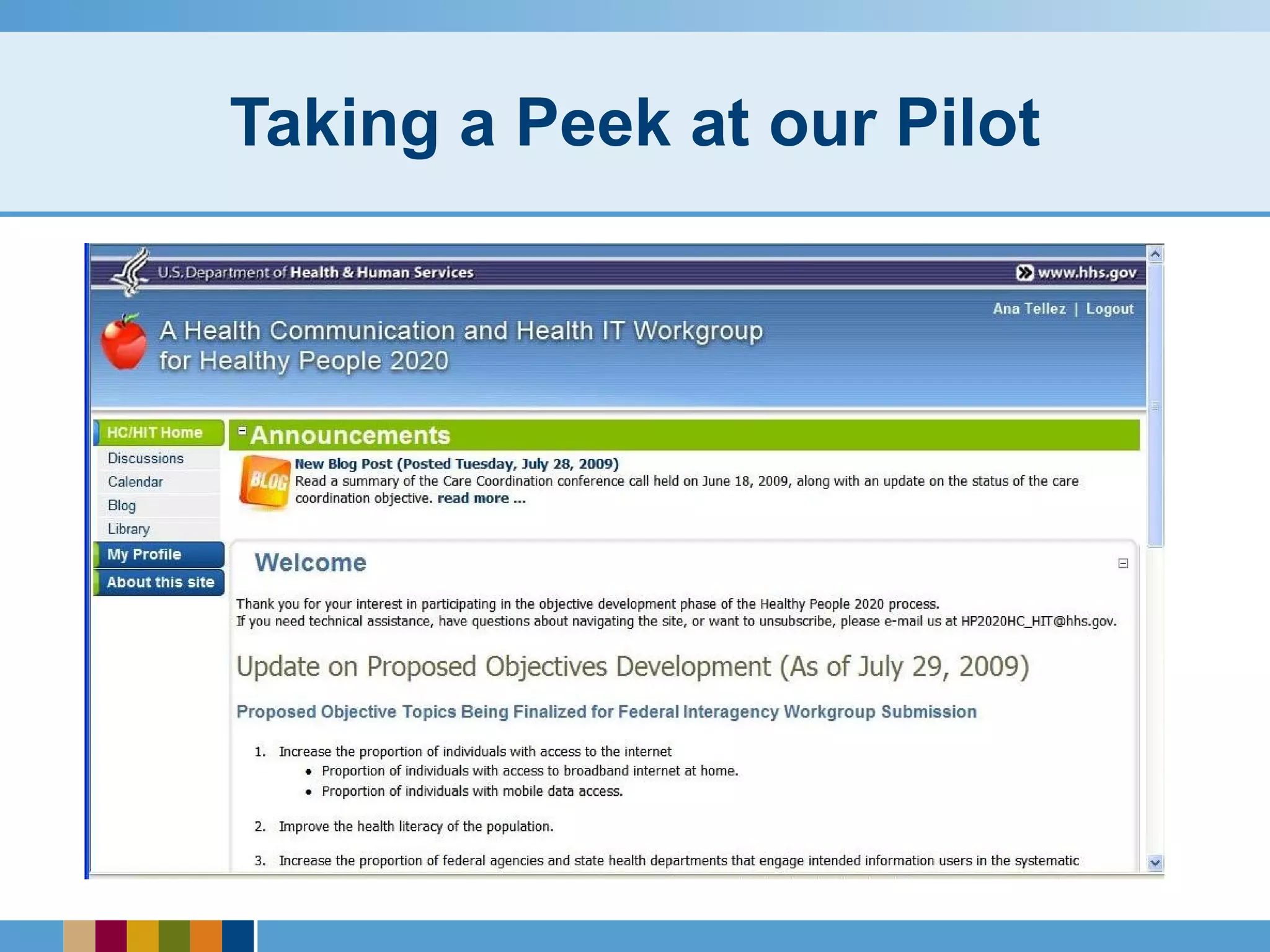
Taking a Peek at our Pilot
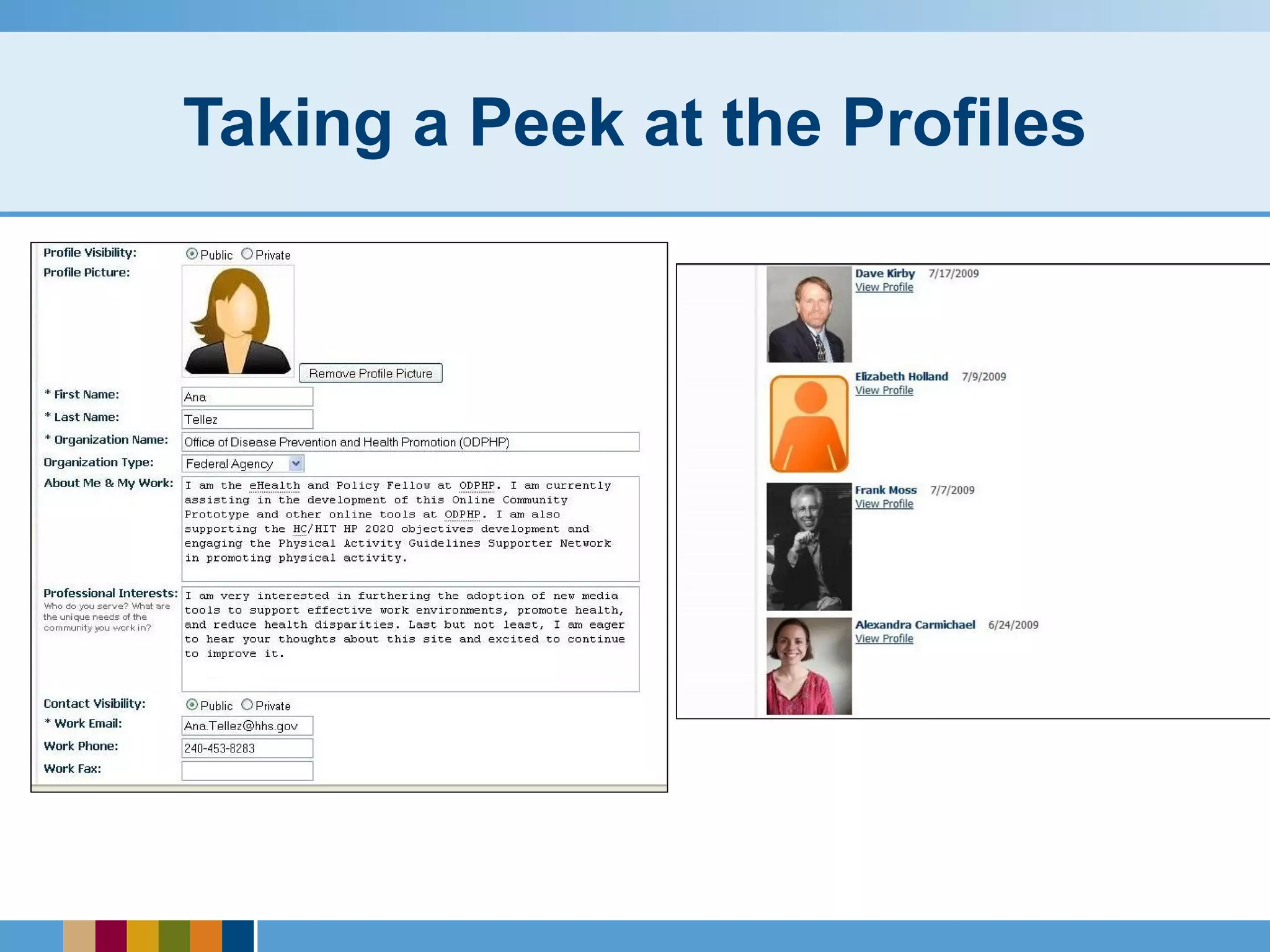
Taking a Peek at the Profiles
Lessons Learned Need to invest a LOT of time early on Usability / features just right Purpose / content drivers Users have certain expectations of Social Networking Site features Features Privacy options Multiple points of access Content and  context  management is key
Great Potential Opportunity to engage stakeholders in an ongoing basis and on a more personalized basis Opportunity to institutionalize Guidelines in messaging across a wide range of organizations Opportunity to centrally disseminate federal resources about physical activity
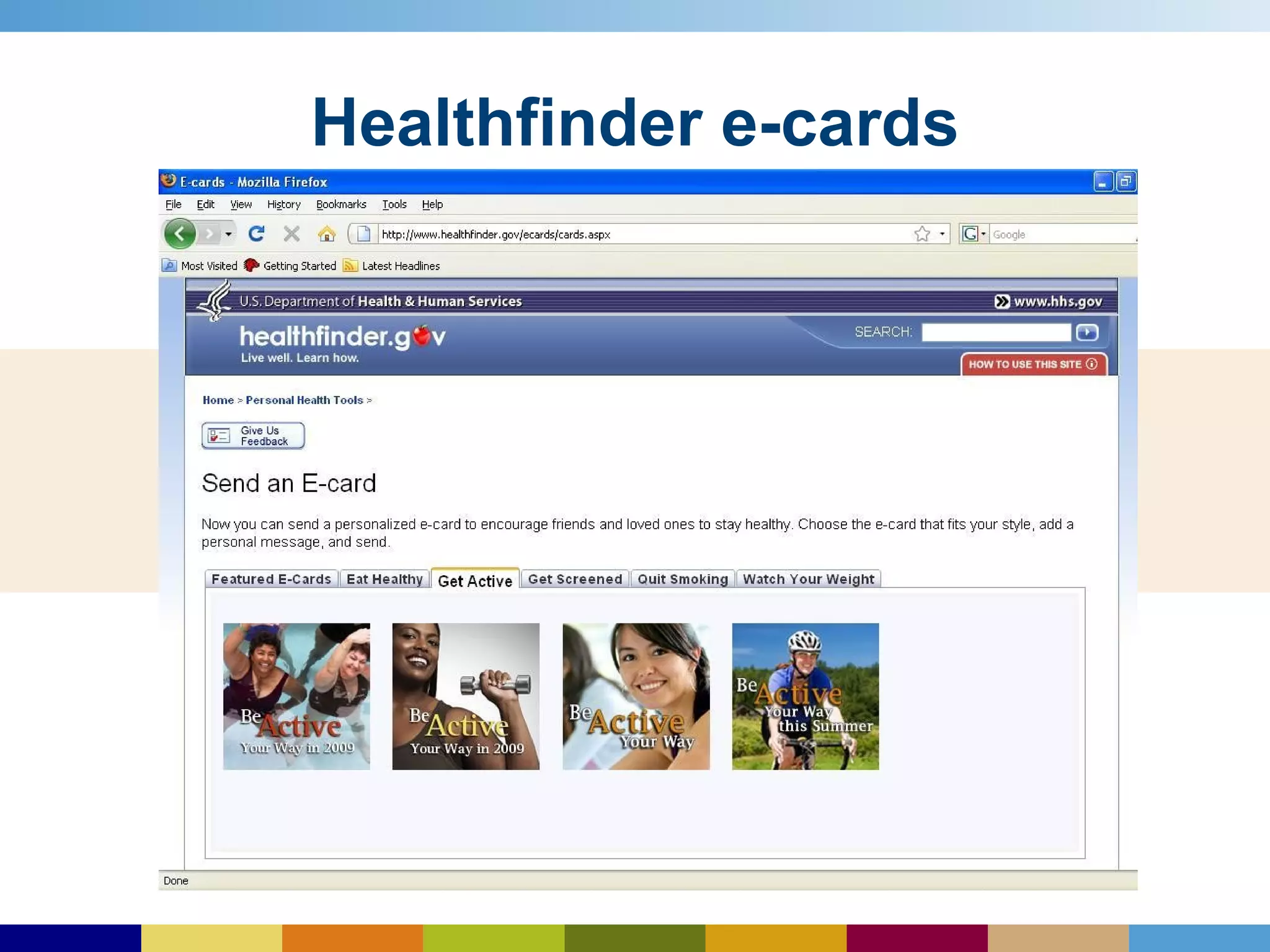
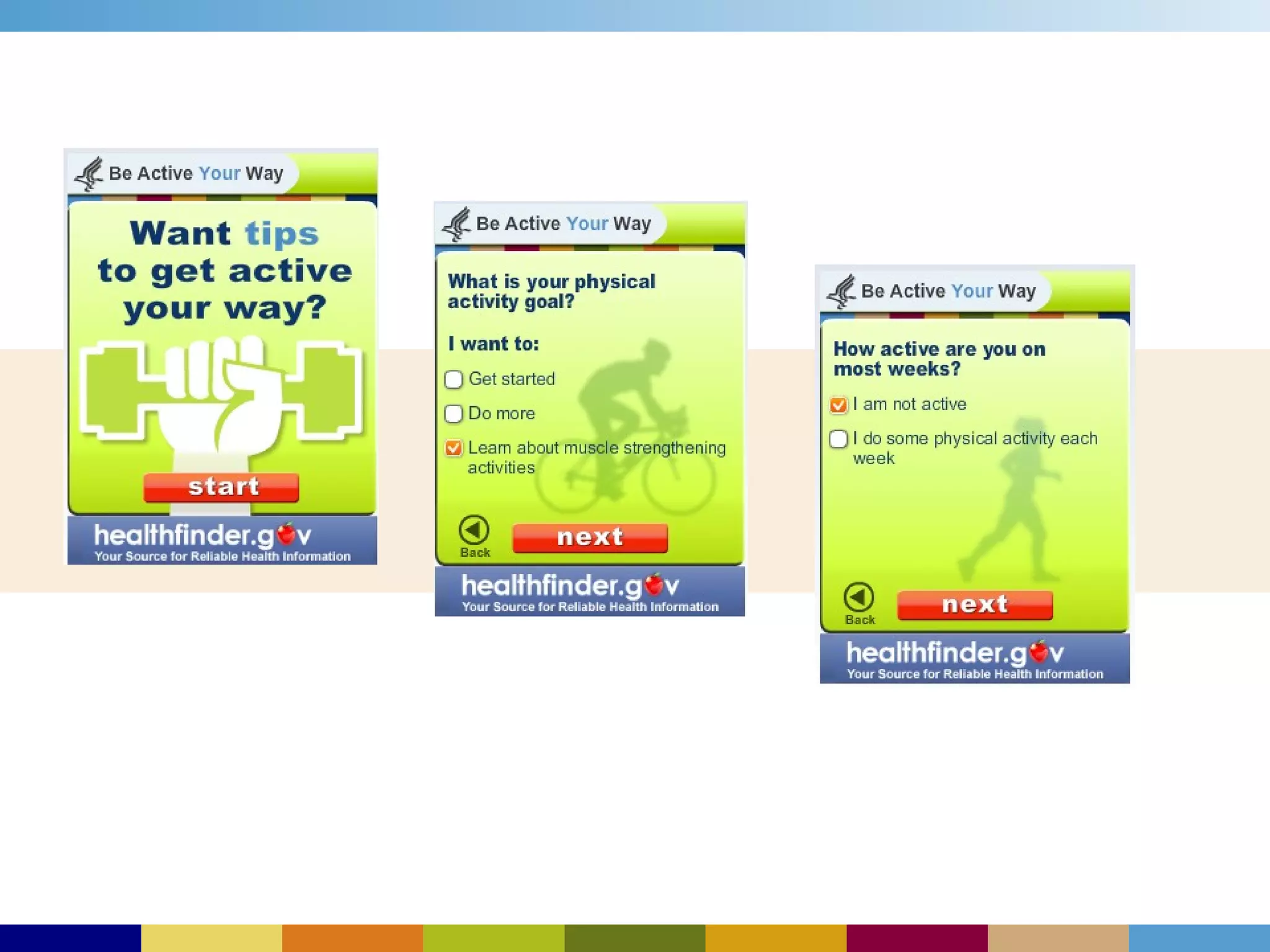
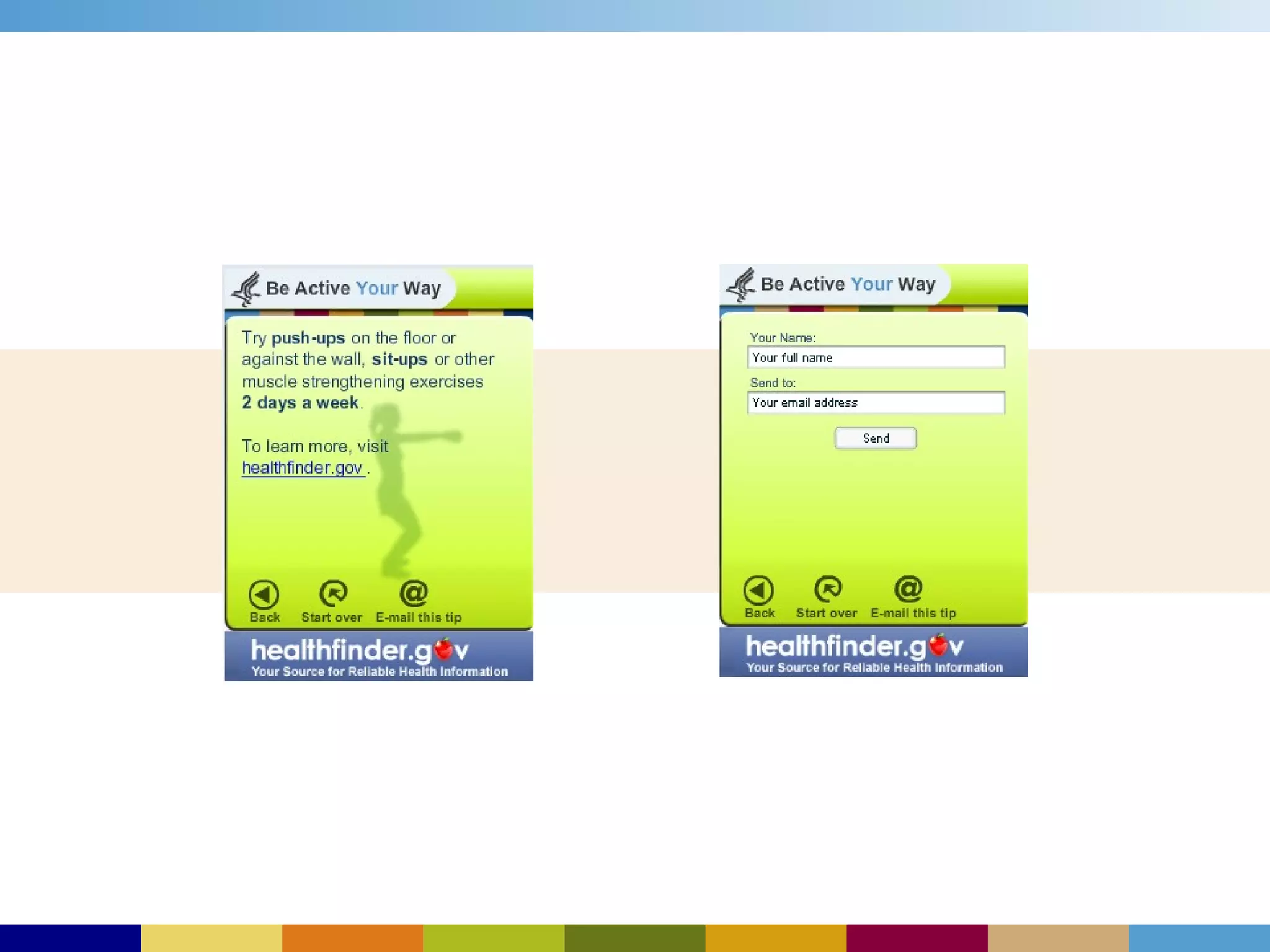
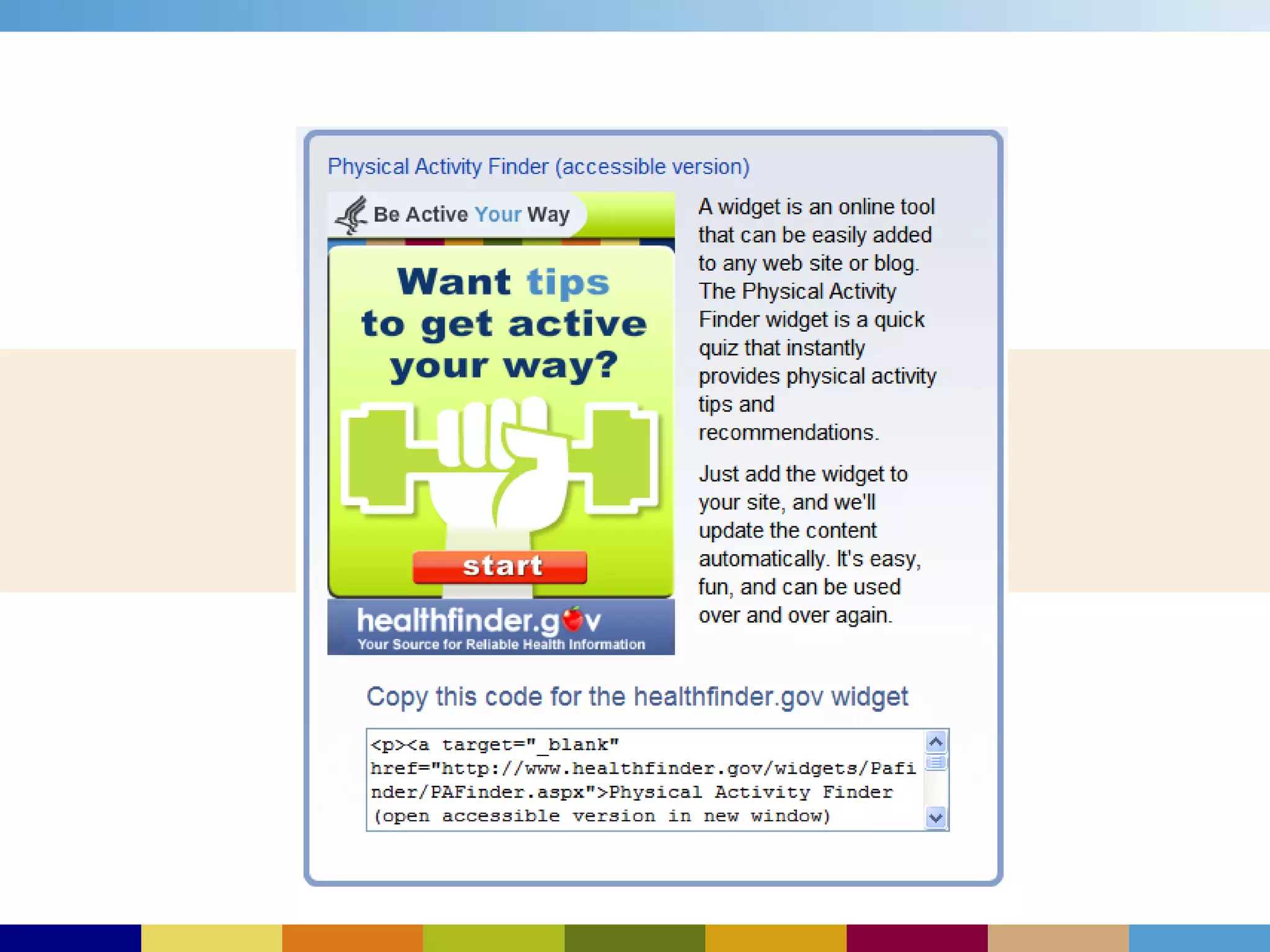
Other Social Media Tools E-cards and a widget too
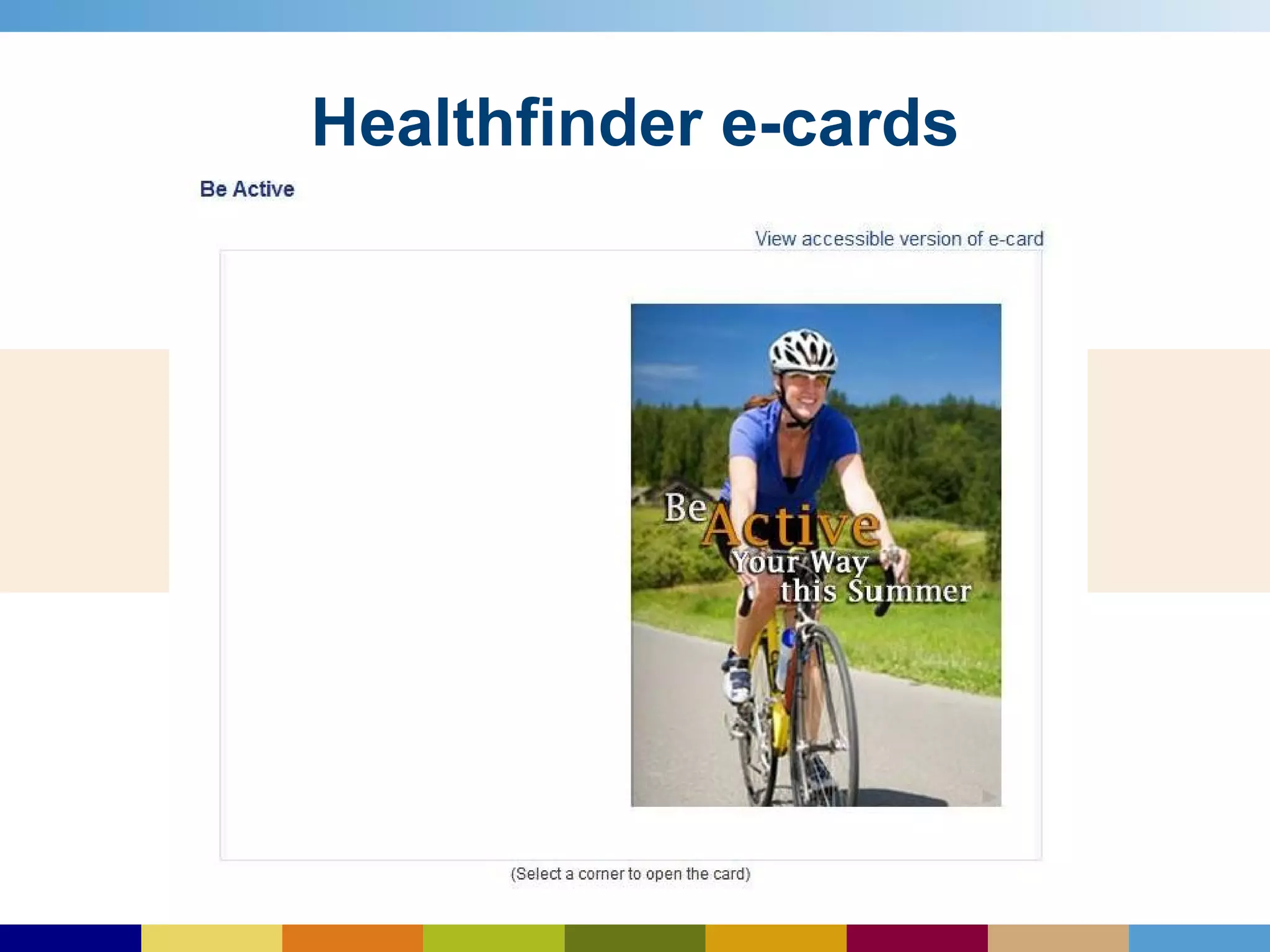
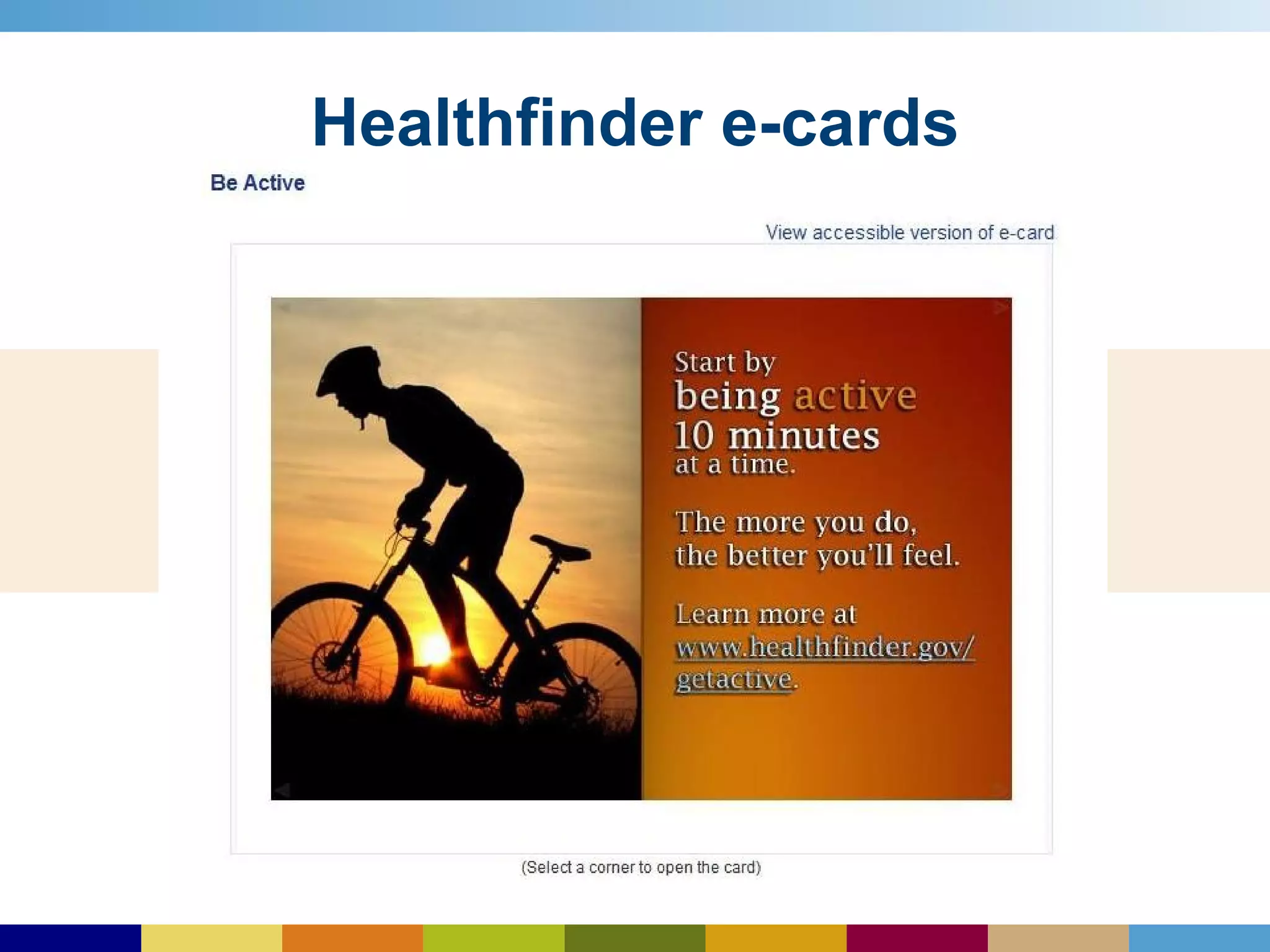
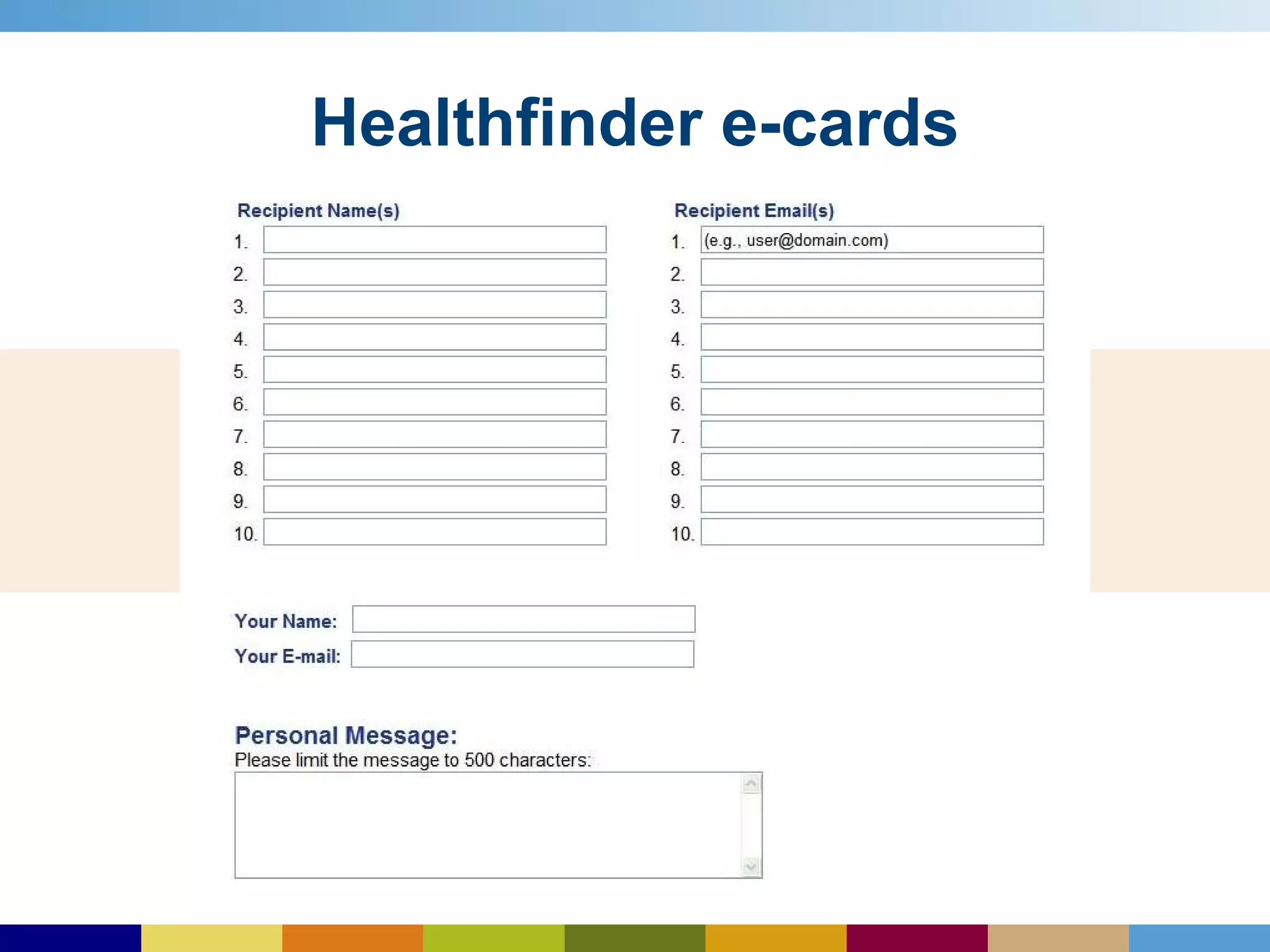
Healthfinder e-cards
Thank you  [email_address] Be Active Your Way!

What does it take to build an online community? Using Social Networking to Promote the Physical Activity Guidelines

  • 1.
    What does ittake to build and Online Community? Using Social Networking to Promote the Physical Activity Guidelines Ana Tellez, APTR eHealth & Policy Fellow Office of Disease Prevention & Health Promotion (ODPHP) U.S. Department of Health & Human Services August 13, 2009
  • 2.
    Trends and StatisticsSocial Networking Sites & Online Communities
  • 3.
    SNS Trends andStatistics One in three Americans have a profile on a Social Networking Site . 75% of online adults between ages 18 and 24 have a social network profile, as do 57% of wired adults between 25 and 34. Top 3 social media sites in 2008: Blogger (222 million unique worldwide visitors) , Facebook (200 million unique worldwide visitors) , and Myspace (126 million unique worldwide visitors).
  • 4.
    First and LastGraph Different social networks have a greater appeal for different age groups… – MySpace – – Facebook – – Flickr – – LinkedIn –
  • 5.
    Characteristics of anOnline Community They are continuous, not temporal - there is a core membership that interacts together over a long period of time. Communities gather around a concept or common goal. Communities take on various conversations and activities, led by different members over time. People within communities get to know each other and interact regularly without centralized facilitation. Community leaders emerge over time
  • 6.
    Examples of Professional Online Communities Jewelers & Consumers IT professionals Education & Training Professionals
  • 7.
    Nancy White, in Online Communities “ Because of the socially constructed nature of learning, communities of practice go far beyond mere information exchange. Members take risks to share both their knowledge and challenges. Reputation places a person in either the core or periphery of a group. Social capital is the currency. Trust, identity and the influence of leadership all affect a learning community.” (White, 2003)
  • 8.
    Reflections Be ActiveYour Way Online Community
  • 9.
    Our Vision Providing a virtual space for our Supporter Network to: Network (across geographic regions and interests) Share information (best practices, lessons learned) Collaborate (leverage resources) Innovate ( develop new promotion strategies) Obtain news and information from across the federal government on physical activity
  • 10.
    Our (iterative) ProcessDevelop functionality requirements Conduct user-testing (2 rounds) Conduct a pilot with a cohort of established contacts Develop some more!
  • 11.
    Functionality = FeaturesPlanned Individual (and searchable) profiles Library of resources (for and by users) Blogs (for and by users) Message boards Wiki Calendar of events Identified after pilot Inmail – private messages between members More multimedia
  • 12.
    Taking a Peekat our Pilot
  • 13.
    Taking a Peekat the Profiles
  • 14.
    Lessons Learned Needto invest a LOT of time early on Usability / features just right Purpose / content drivers Users have certain expectations of Social Networking Site features Features Privacy options Multiple points of access Content and context management is key
  • 15.
    Great Potential Opportunityto engage stakeholders in an ongoing basis and on a more personalized basis Opportunity to institutionalize Guidelines in messaging across a wide range of organizations Opportunity to centrally disseminate federal resources about physical activity
  • 16.
    Other Social MediaTools E-cards and a widget too
  • 17.
  • 18.
  • 19.
  • 20.
  • 24.
    Thank you [email_address] Be Active Your Way!

Editor's Notes

  • #2 Good afternoon Trends and Statistics of social networking sites overall and online communities Be Active Online Community development and lessons learned Our other social media tools
  • #4 NOTES: SOURCES: http://www.techcrunch.com/2008/12/31/top-social-media-sites-of-2008-facebook-still-rising/#comment-2581823 Top Social Media Sites of 2008, December 31, 2008. Accessed on May 5, 2009. http://www.edisonresearch.com/Infinite%20Dial%202009%20Presentation.pdf Edison Research, April 2009 report on “The Infinite Dial 2009.” Accessed on May 5, 2009. http://www.edisonresearch.com/Infinite%20Dial%202009%20Presentation.pdf Edison Research, April 2009 report on “The Infinite Dial 2009.” Accessed on May 5, 2009. http://blog.nielsen.com/nielsenwire/online_mobile/twitters-tweet-smell-of-success Twitter’s Tweet Smell of Success, March 2009. Accessed on May 5, 2009. http://blog.nielsen.com/nielsenwire/online_mobile/march-video-streaming-soars-nearly-40-compared-to-last-year/ March Video Streaming Soars 40% Compared to Last Year, April 2009. Accessed on May 5, 2009.
  • #5 NOTES: - Different social sites have different levels of use among age groups… - Interesting to note that different populations use technology in different ways – for example, Latino rates for using mobile technology are much higher than average and African American rates for using broadband (in many cases to download music or games) are much higher than average SOURCE: http://www.rapleaf.com/company_press_2008_06_18.html Published June 2008. Accessed on May 12, 2009.
  • #6 1. 2. (although content does plays a major role, it is not the impetus for the community) 3. it is not one conversation but many 4. Not necessarily in the context of what the community is discussing as a whole 5. These leaders are community members and they self-select because of their interests - not because they are told to do so...although they can be encouraged to do so.
  • #7 http://www.diamond.info http://www.toolbox.com http://www.learningtimes.org
  • #10 Aligned with our stakeholders’ vision! Networking across geographic regions (nation-wide) Sharing information about successful strategies and lessons learned in promoting the Guidelines Leveraging resources to collaborate on promotion efforts
  • #25 Happy to share resources as they are requested for specific platforms…