
What do you mean by
Universalization of Education?
Dr. Kirtiben Matliwala
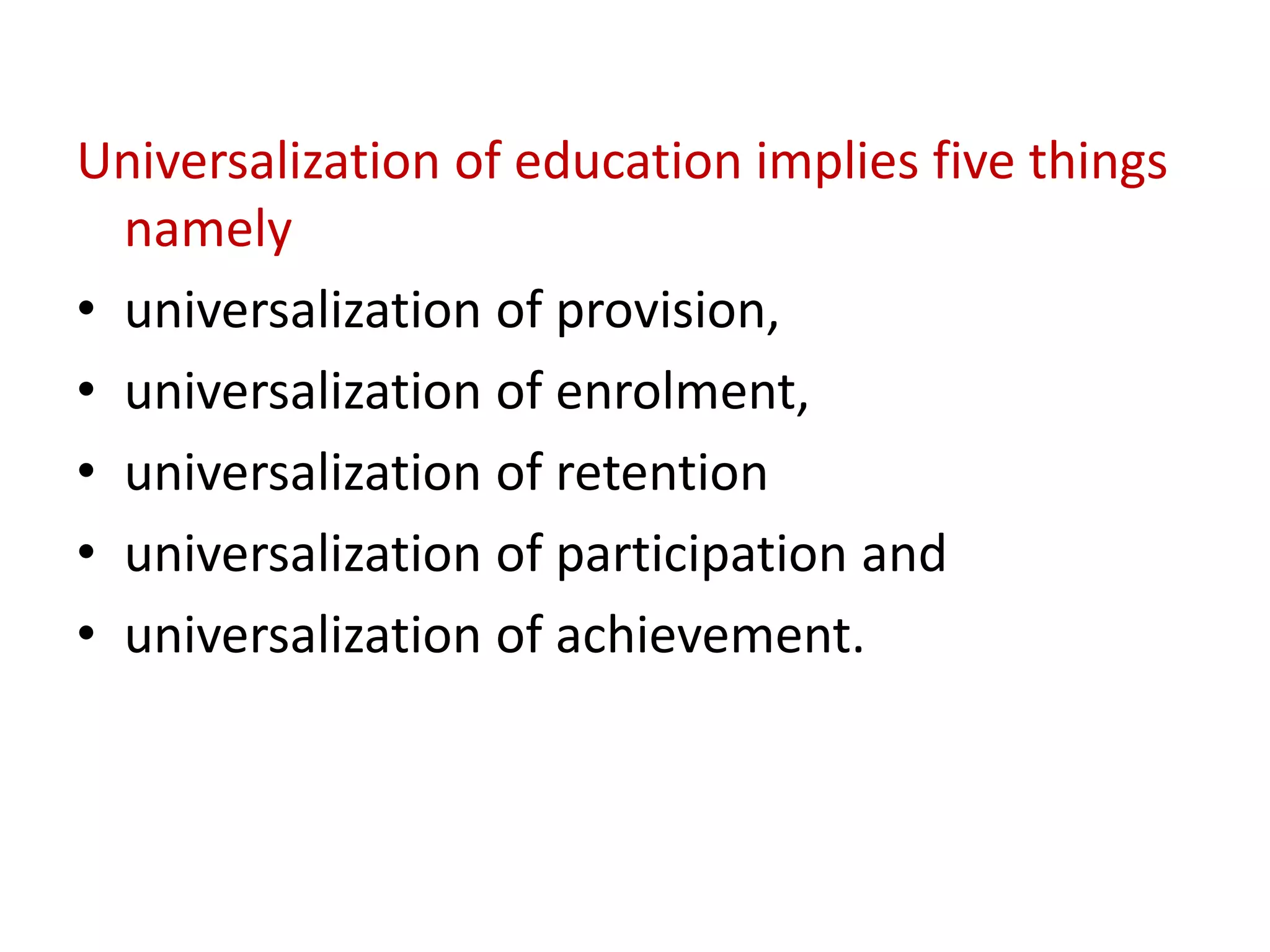
Universalization of education implies five things
namely
• universalization of provision,
• universalization of enrolment,
• universalization of retention
• universalization of participation and
• universalization of achievement.
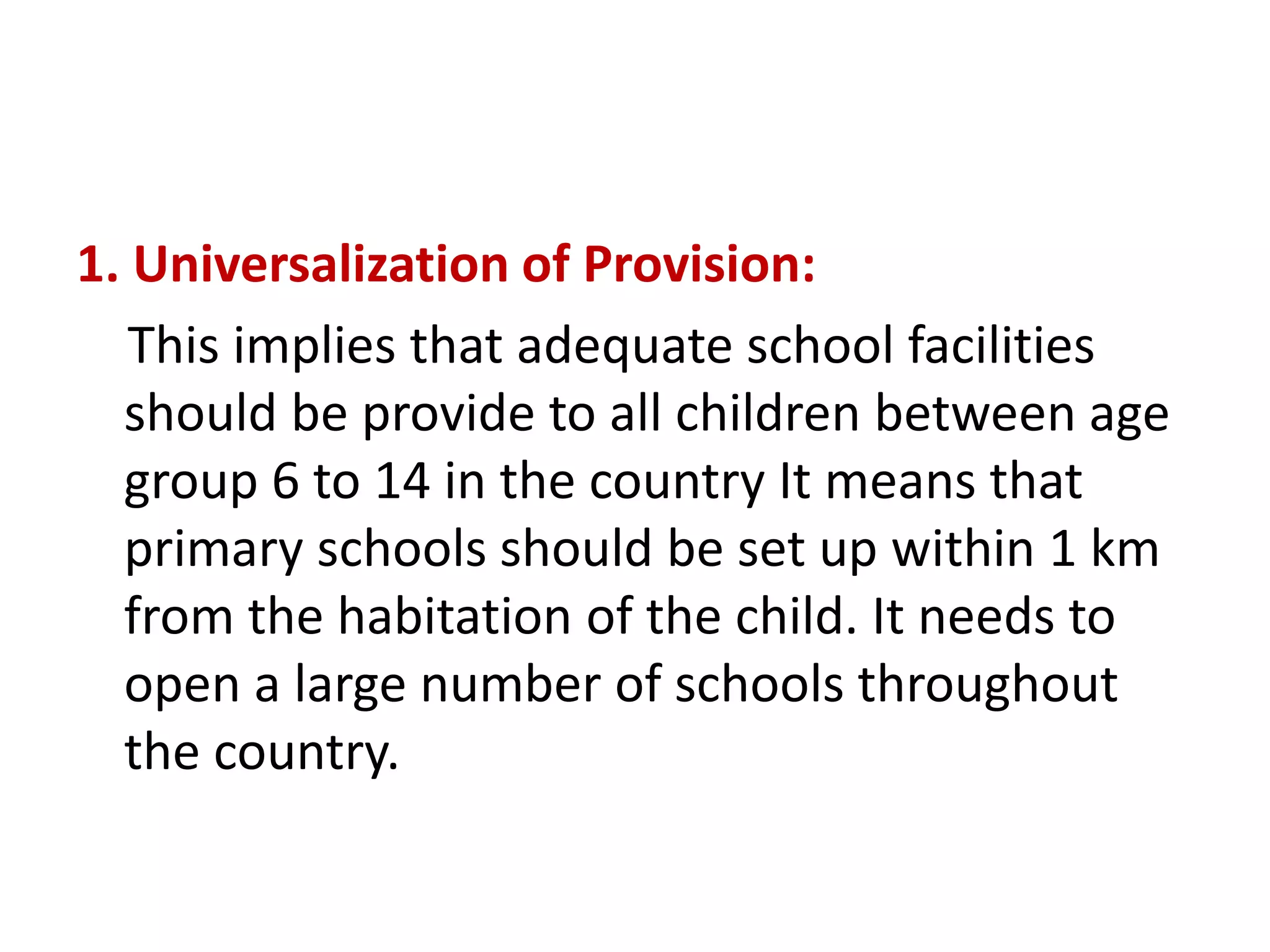
1. Universalization of Provision:
This implies that adequate school facilities
should be provide to all children between age
group 6 to 14 in the country It means that
primary schools should be set up within 1 km
from the habitation of the child. It needs to
open a large number of schools throughout
the country.
2. Universalization of Enrolment:
After making provision for children, next thing
is to see how to enrol all the students in
primary schools who attain educable age. The
Government has decided to enrol all children
of the age group 6-14 in primary schools.
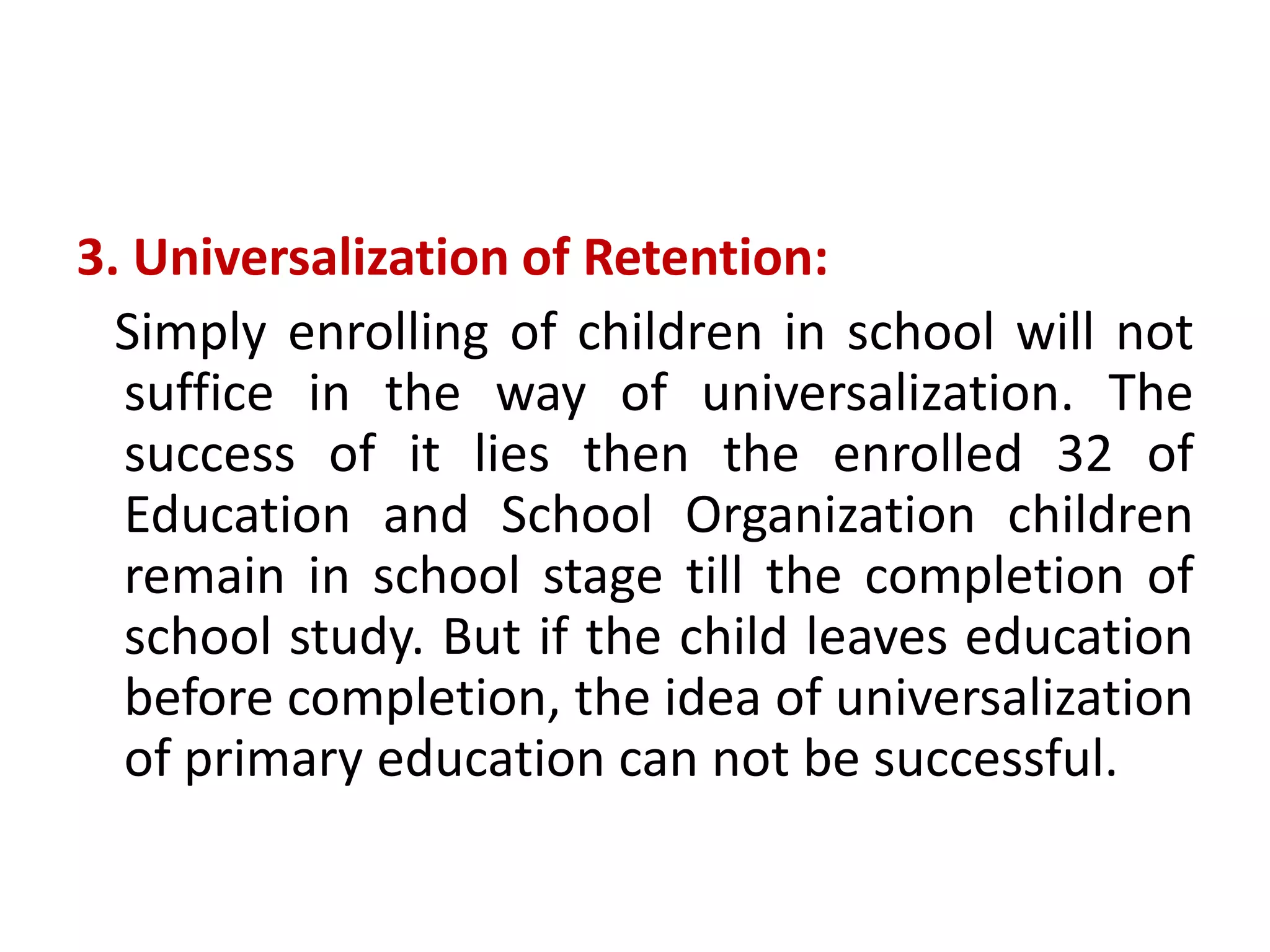
3. Universalization of Retention:
Simply enrolling of children in school will not
suffice in the way of universalization. The
success of it lies then the enrolled 32 of
Education and School Organization children
remain in school stage till the completion of
school study. But if the child leaves education
before completion, the idea of universalization
of primary education can not be successful.
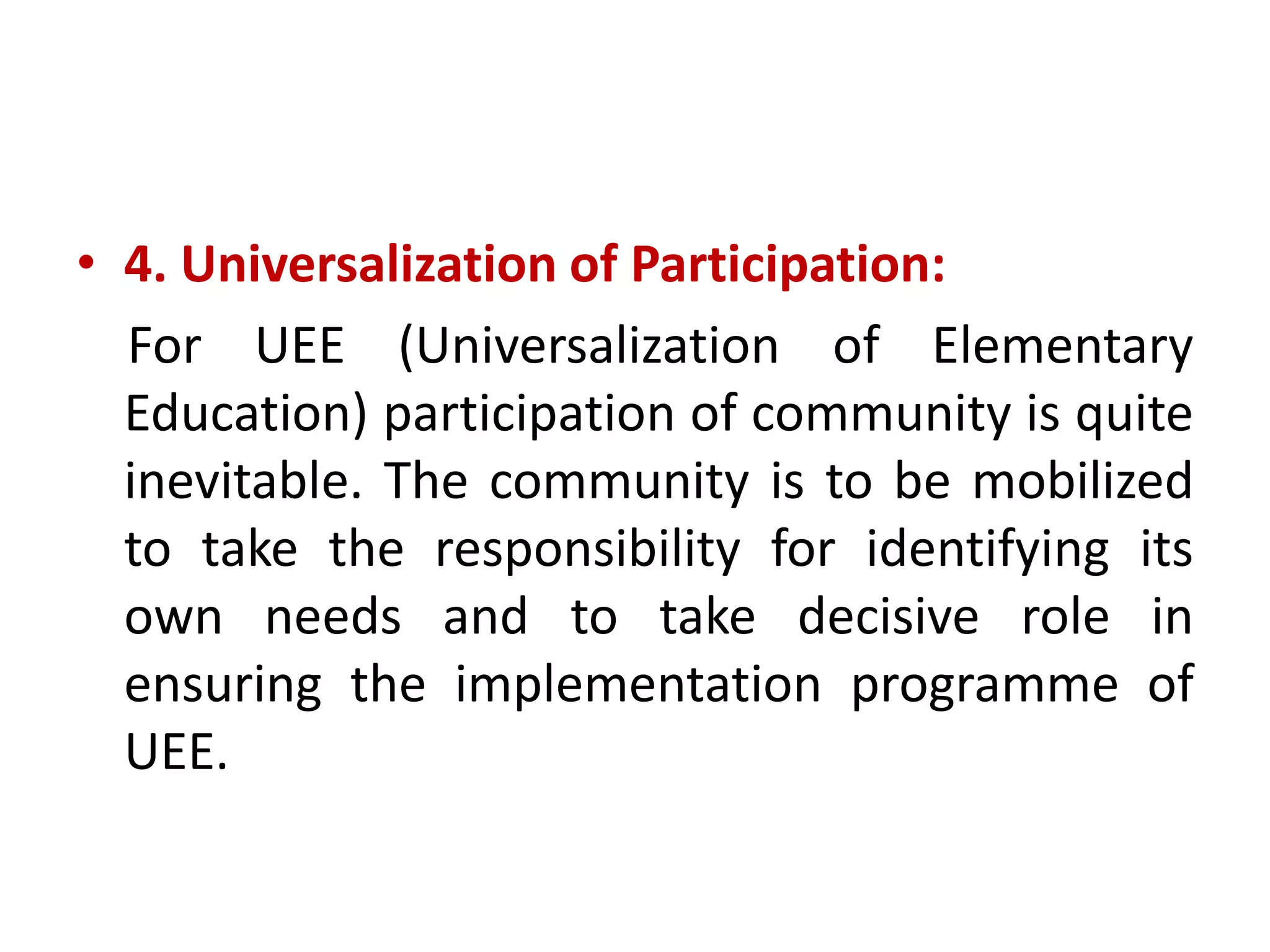
• 4. Universalization of Participation:
For UEE (Universalization of Elementary
Education) participation of community is quite
inevitable. The community is to be mobilized
to take the responsibility for identifying its
own needs and to take decisive role in
ensuring the implementation programme of
UEE.
• 5. Universalization of Achievement:
For success of UEE achievement of learners is
to be ascertained. The strategy is to lay down
learning outcomes from learners at the
elementary level. The outcome of the
education is to be based of minimum level of
learning (MLL) common to both formal and
non-formal programme.

What do you mean by universalization of education

  • 1.
    What do youmean by Universalization of Education? Dr. Kirtiben Matliwala
  • 2.
    Universalization of educationimplies five things namely • universalization of provision, • universalization of enrolment, • universalization of retention • universalization of participation and • universalization of achievement.
  • 3.
    1. Universalization ofProvision: This implies that adequate school facilities should be provide to all children between age group 6 to 14 in the country It means that primary schools should be set up within 1 km from the habitation of the child. It needs to open a large number of schools throughout the country.
  • 4.
    2. Universalization ofEnrolment: After making provision for children, next thing is to see how to enrol all the students in primary schools who attain educable age. The Government has decided to enrol all children of the age group 6-14 in primary schools.
  • 5.
    3. Universalization ofRetention: Simply enrolling of children in school will not suffice in the way of universalization. The success of it lies then the enrolled 32 of Education and School Organization children remain in school stage till the completion of school study. But if the child leaves education before completion, the idea of universalization of primary education can not be successful.
  • 6.
    • 4. Universalizationof Participation: For UEE (Universalization of Elementary Education) participation of community is quite inevitable. The community is to be mobilized to take the responsibility for identifying its own needs and to take decisive role in ensuring the implementation programme of UEE.
  • 7.
    • 5. Universalizationof Achievement: For success of UEE achievement of learners is to be ascertained. The strategy is to lay down learning outcomes from learners at the elementary level. The outcome of the education is to be based of minimum level of learning (MLL) common to both formal and non-formal programme.