Western Genre
Lacey’s Repertoire of Elements 
• Setting 
• Narrative 
• Iconography 
• Characters 
• Style
Setting 
• Western films generally are set around the 
late 1800’s, early 1900’s. 
• Typically set in American Old West in a dusty 
lonely desert. 
• Remote towns with saloons or bars are 
common.
Narrative 
• They are often set around themes such as: 
• East vs. West 
• Culture vs. Nature 
• Community vs. Individuality 
• Settlers vs. Indians 
• Train vs. Horse 
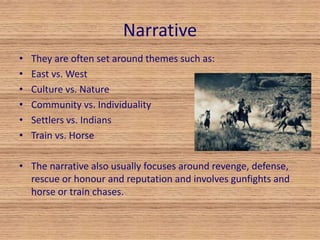
• The narrative also usually focuses around revenge, defense, 
rescue or honour and reputation and involves gunfights and 
horse or train chases.
Iconography 
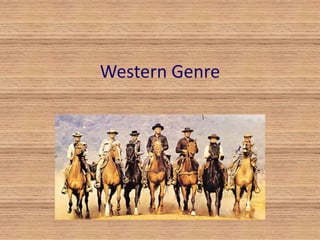
• In western films we typically expect to see cowboy 
hats, guns, horses, dusty lonely roads, sheriff badges, 
jails etc. 
• The landscape is made up of deserts, mountains, 
rivers and valleys. 
• Towns are made up of old wooden, traditional 
buildings.
Characters 
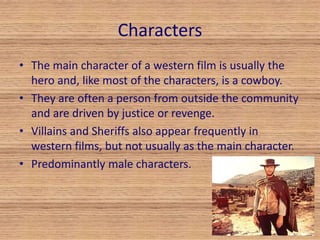
• The main character of a western film is usually the 
hero and, like most of the characters, is a cowboy. 
• They are often a person from outside the community 
and are driven by justice or revenge. 
• Villains and Sheriffs also appear frequently in 
western films, but not usually as the main character. 
• Predominantly male characters.
Style 
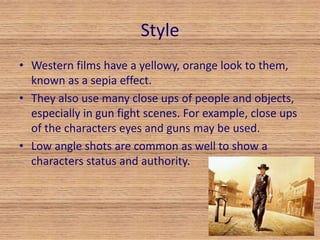
• Western films have a yellowy, orange look to them, 
known as a sepia effect. 
• They also use many close ups of people and objects, 
especially in gun fight scenes. For example, close ups 
of the characters eyes and guns may be used. 
• Low angle shots are common as well to show a 
characters status and authority.

Western Genre

  • 1.
  • 2.
    Lacey’s Repertoire ofElements • Setting • Narrative • Iconography • Characters • Style
  • 3.
    Setting • Westernfilms generally are set around the late 1800’s, early 1900’s. • Typically set in American Old West in a dusty lonely desert. • Remote towns with saloons or bars are common.
  • 4.
    Narrative • Theyare often set around themes such as: • East vs. West • Culture vs. Nature • Community vs. Individuality • Settlers vs. Indians • Train vs. Horse • The narrative also usually focuses around revenge, defense, rescue or honour and reputation and involves gunfights and horse or train chases.
  • 5.
    Iconography • Inwestern films we typically expect to see cowboy hats, guns, horses, dusty lonely roads, sheriff badges, jails etc. • The landscape is made up of deserts, mountains, rivers and valleys. • Towns are made up of old wooden, traditional buildings.
  • 6.
    Characters • Themain character of a western film is usually the hero and, like most of the characters, is a cowboy. • They are often a person from outside the community and are driven by justice or revenge. • Villains and Sheriffs also appear frequently in western films, but not usually as the main character. • Predominantly male characters.
  • 7.
    Style • Westernfilms have a yellowy, orange look to them, known as a sepia effect. • They also use many close ups of people and objects, especially in gun fight scenes. For example, close ups of the characters eyes and guns may be used. • Low angle shots are common as well to show a characters status and authority.