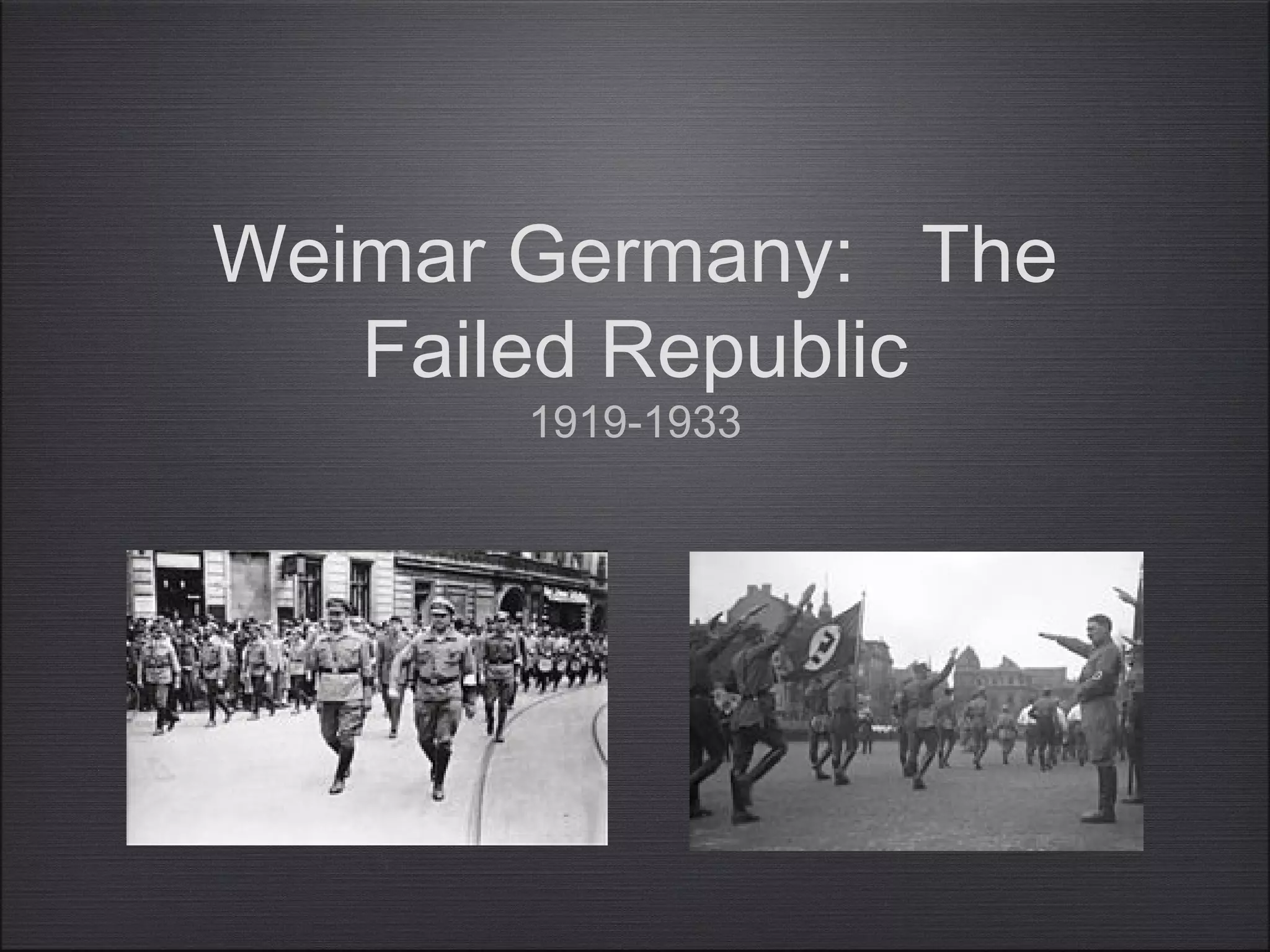
Weimar Germany: The
Failed Republic
1919-1933
Questions-Part 1A
• Was the Weimar Constitution fatally
flawed?
• What aspects of the treaty of the Treaty
of Versailles were most difficult for
Germans to accept?
• Did the Treaty of Versailles
fundamentally weaken Germany?
• “Descent into Chaos” and “The Poison
Kitchen” – What do these readings tell
you about post-war conditions in
questions-part 1B
• Assess the threats to Weimar from the
extreme left and the extreme right. Which
branch of political extremism was more
dangerous to Weimar Germany and why?
• To what extent do you agree with the
statement that the Weimar Republic was
“a republic without republicans”? Refer to
your reading in your response.
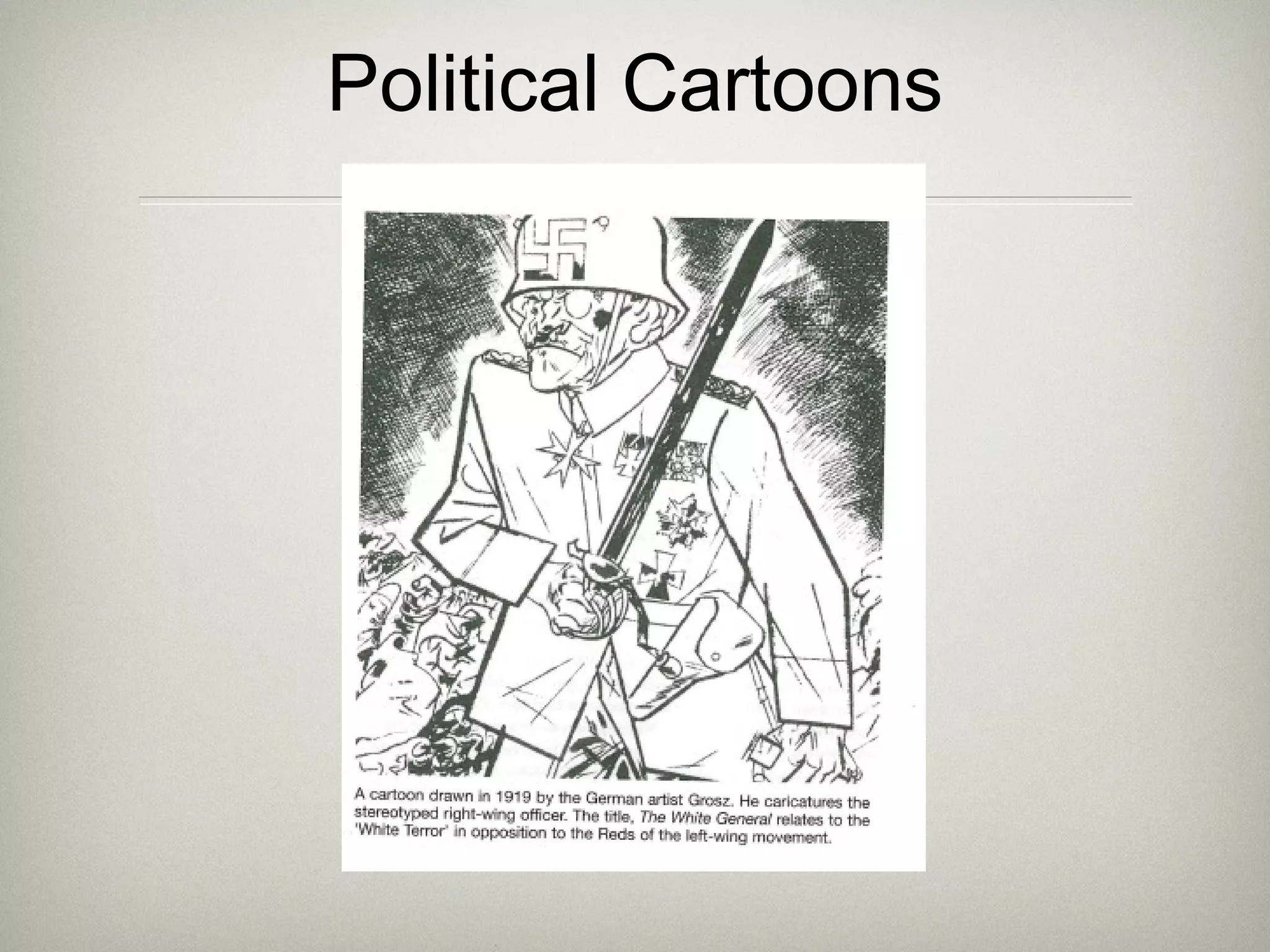
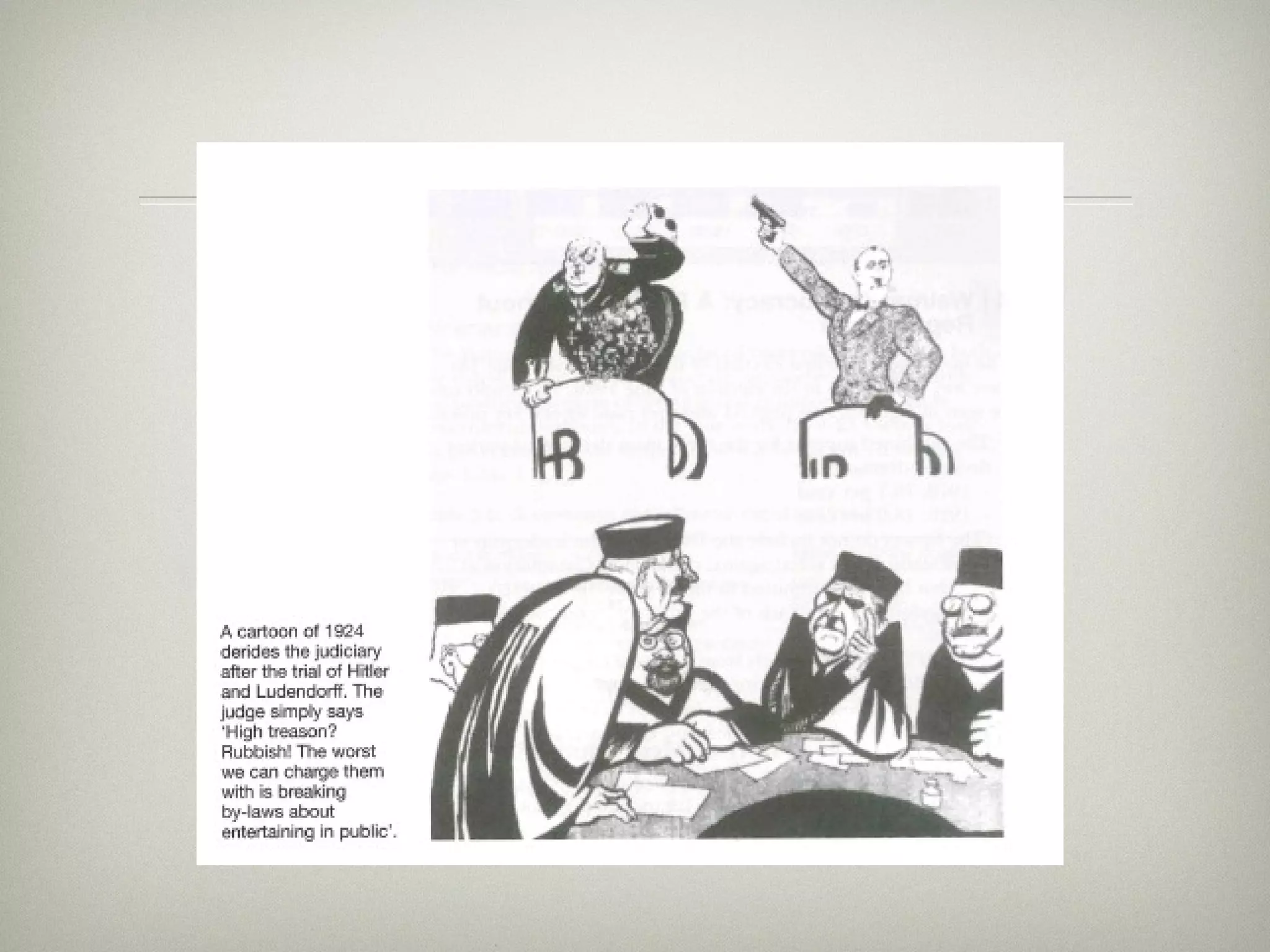
• Study the political cartoons on pages 44
and 49. What messages do they convey?
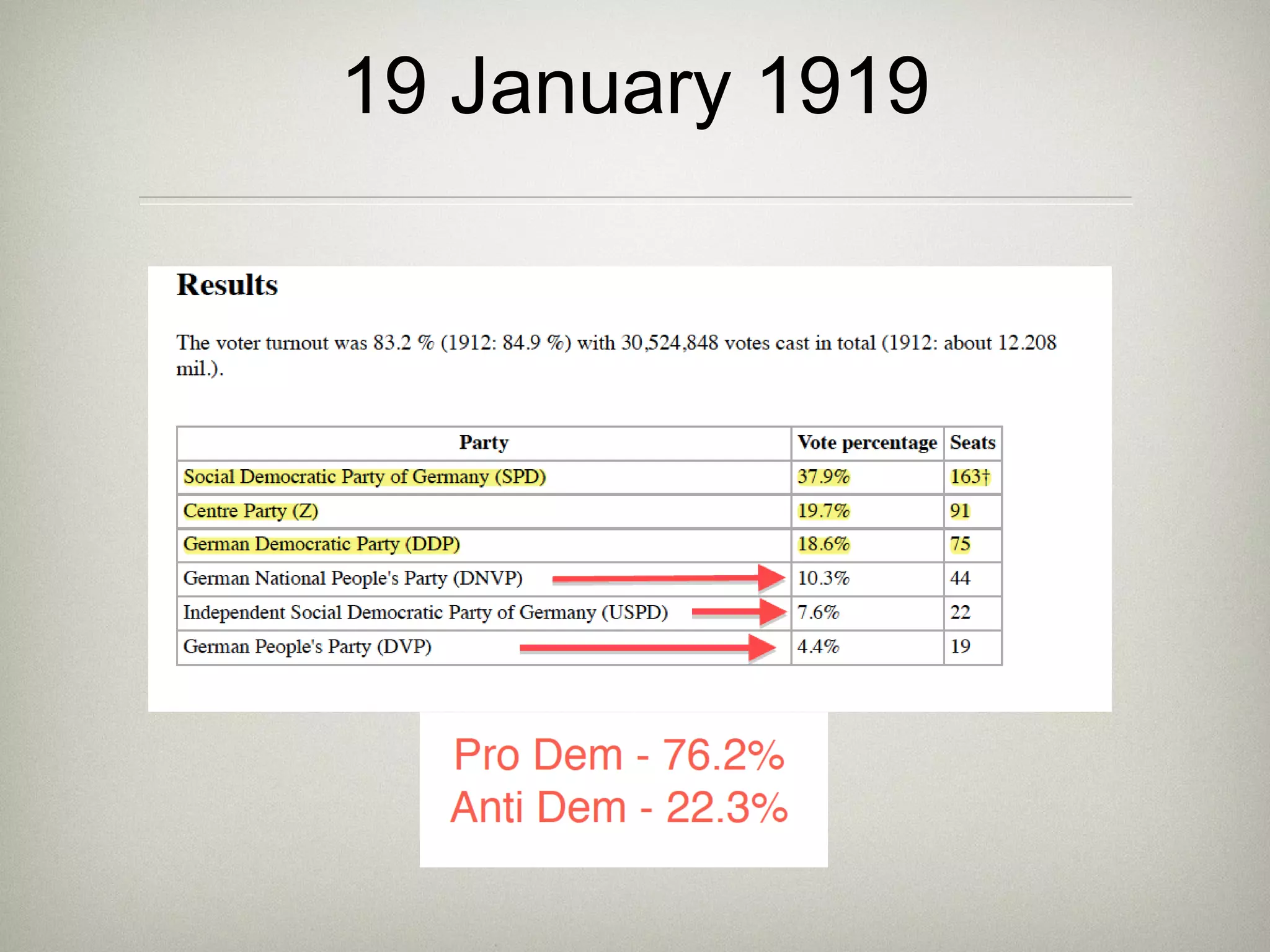
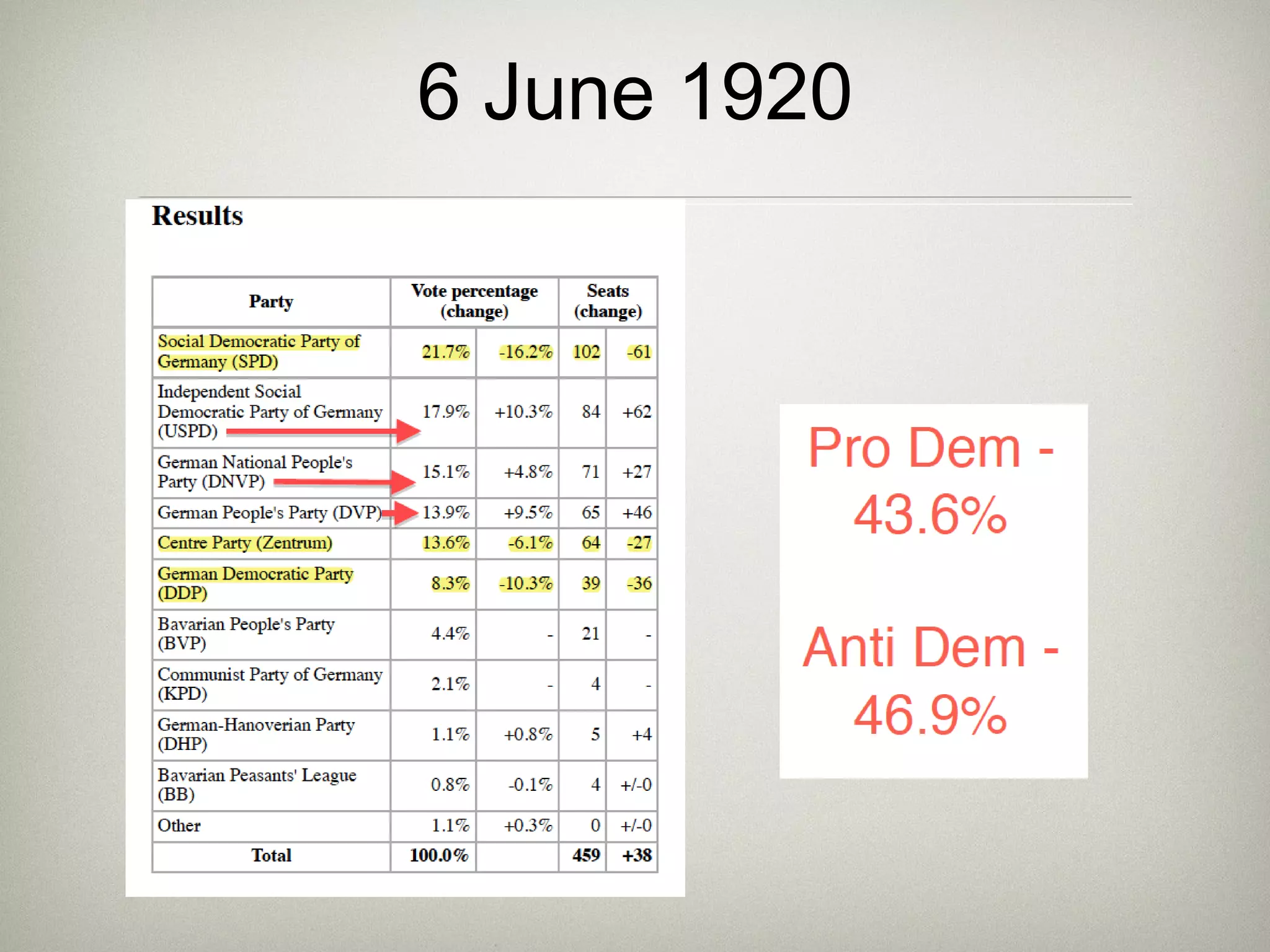
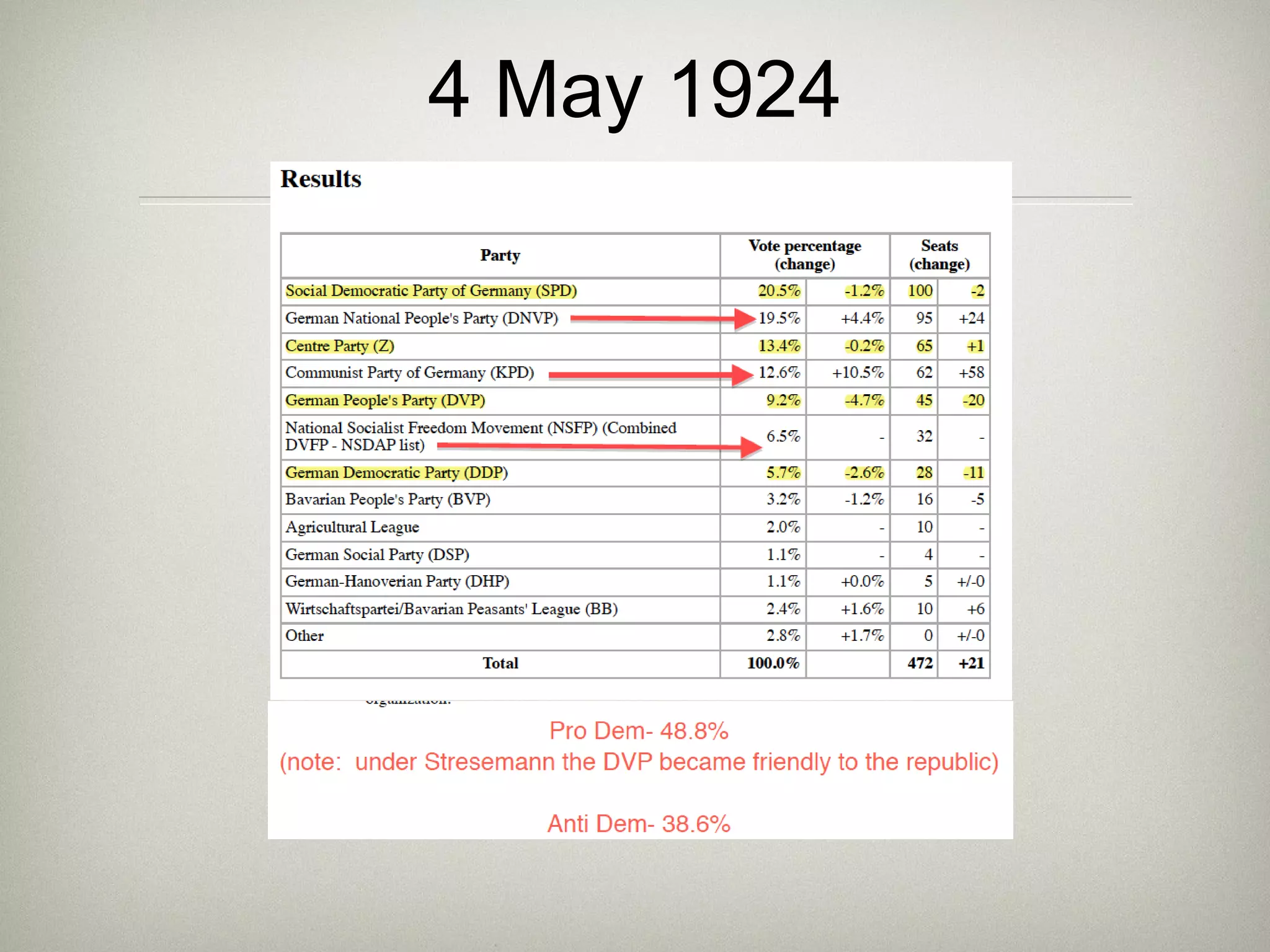
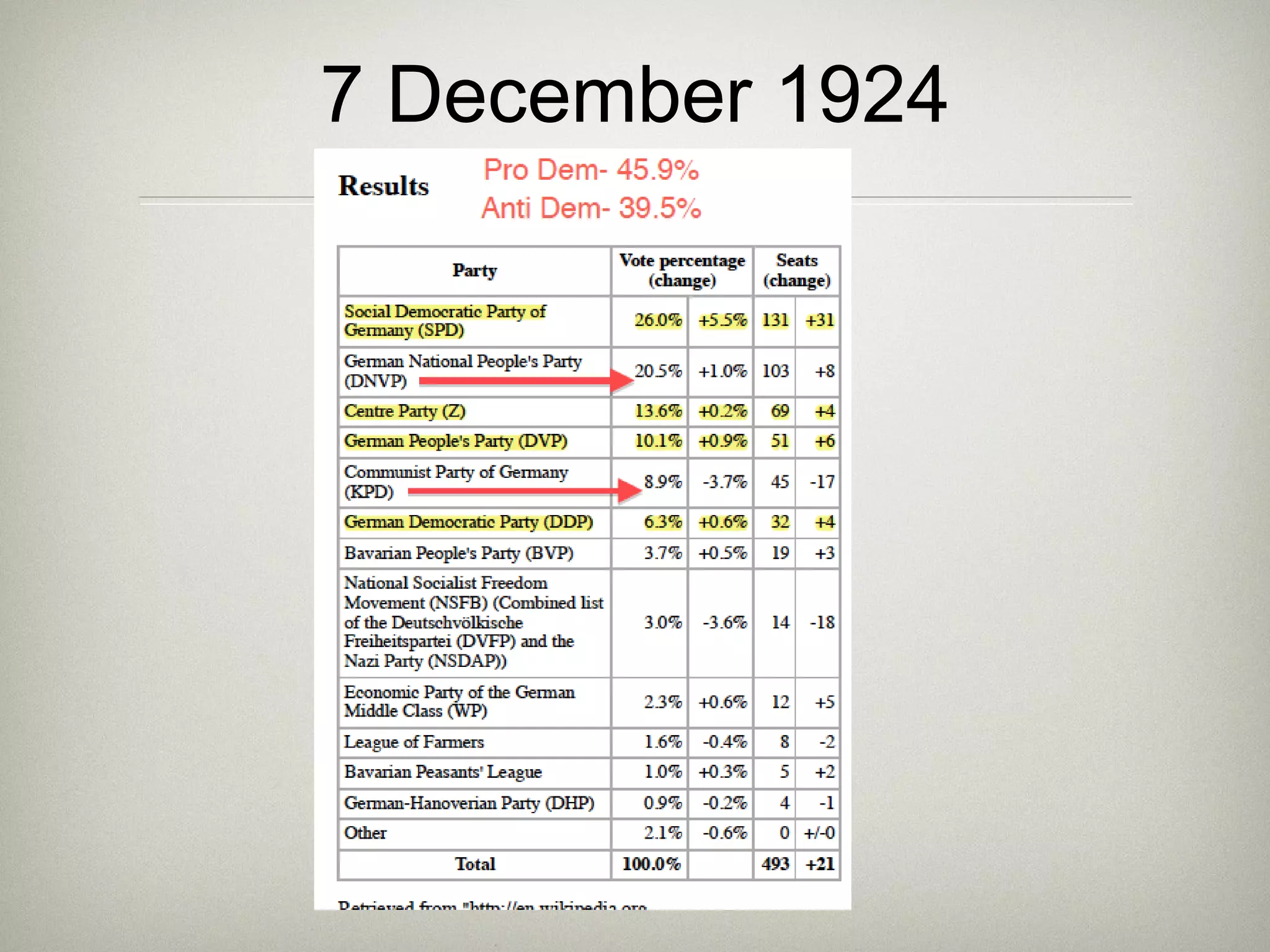
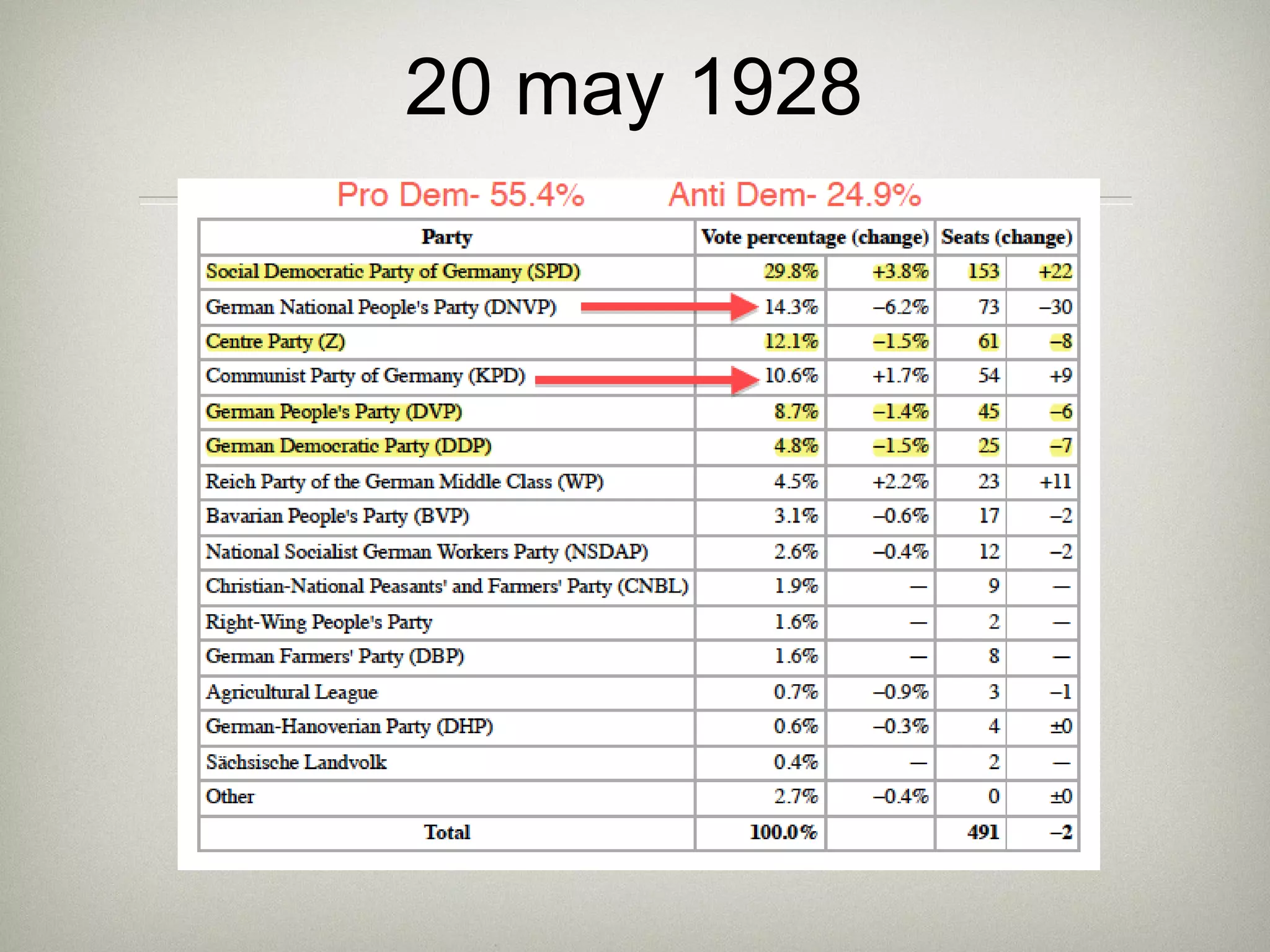
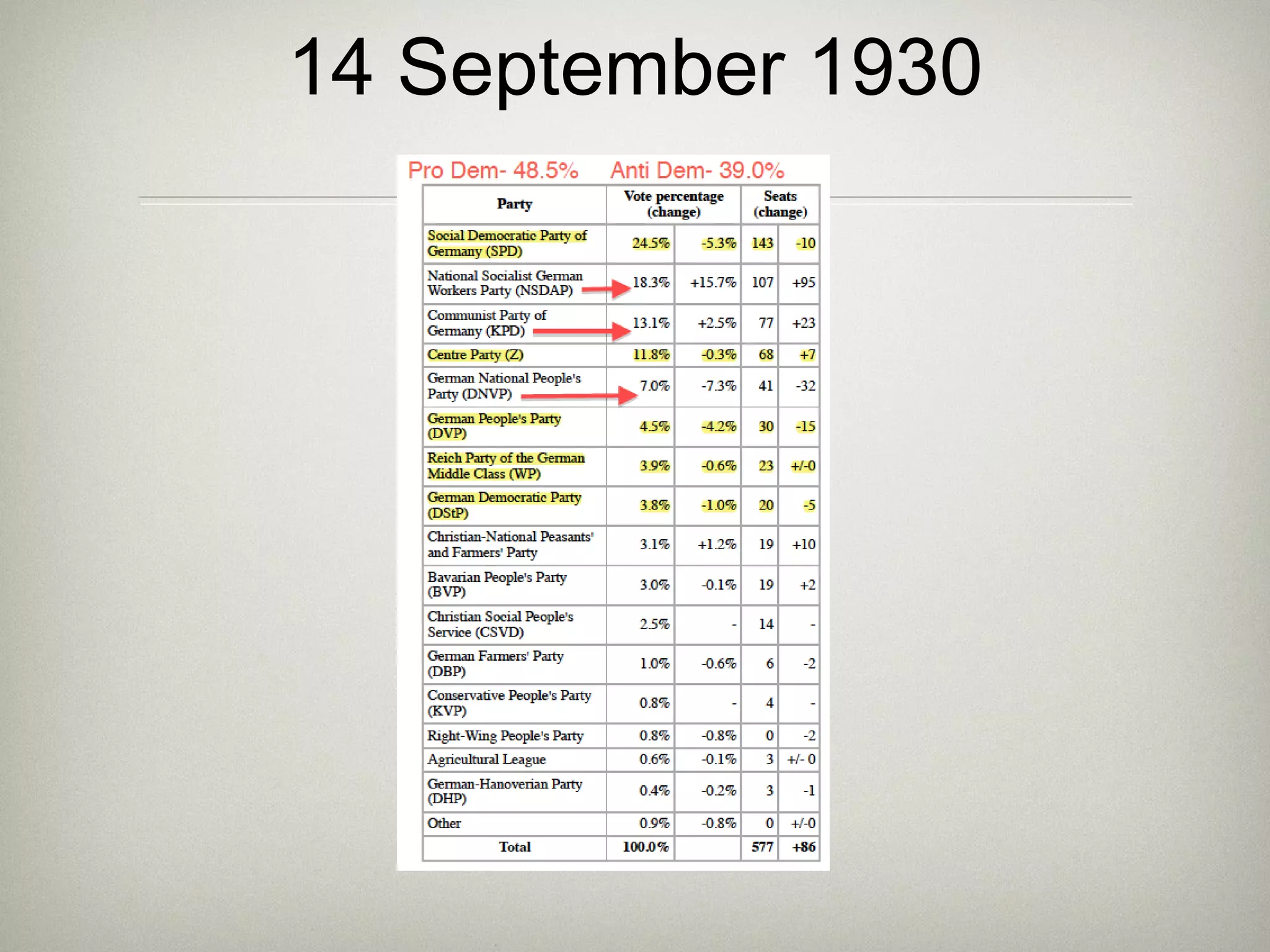
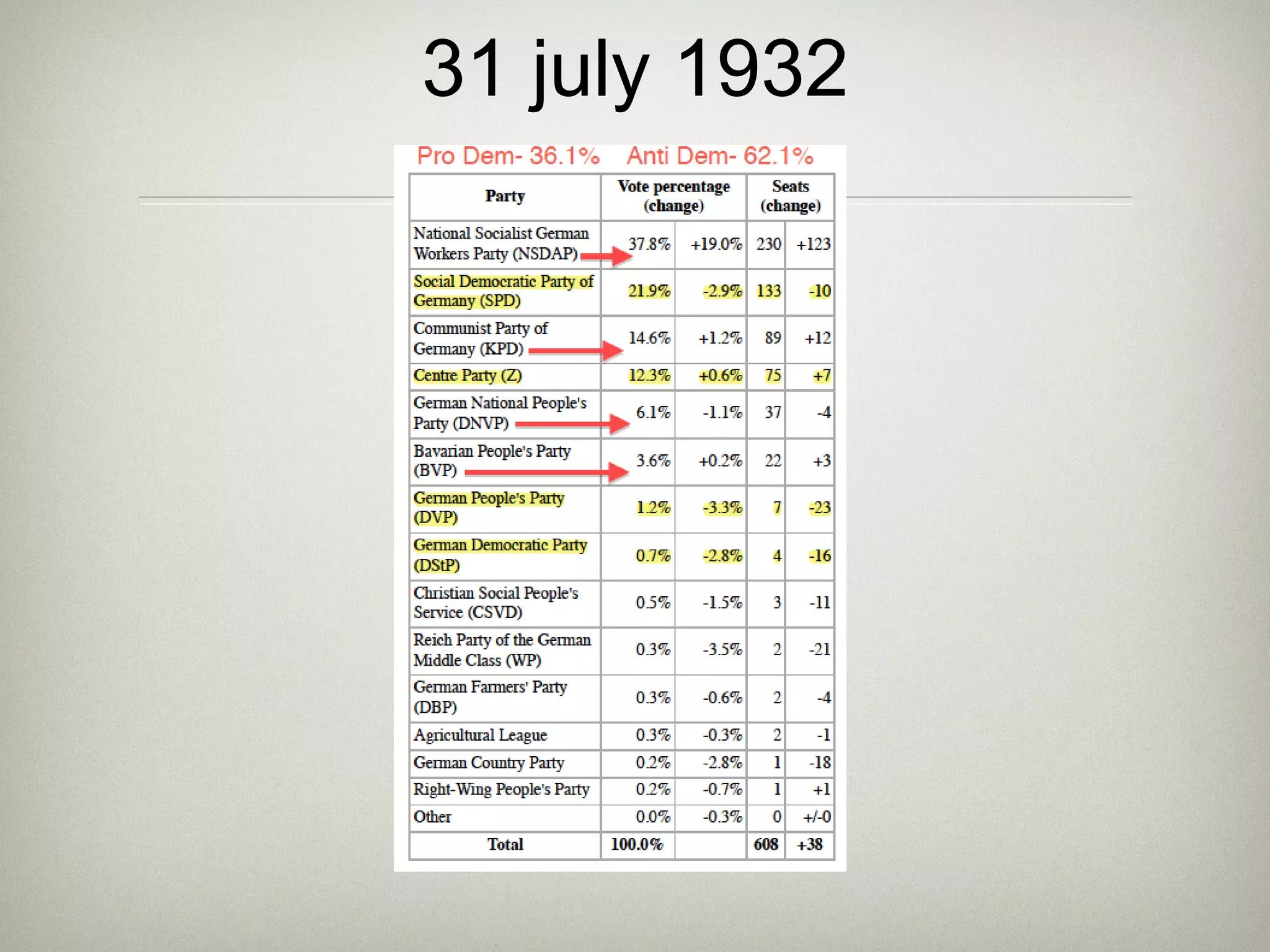
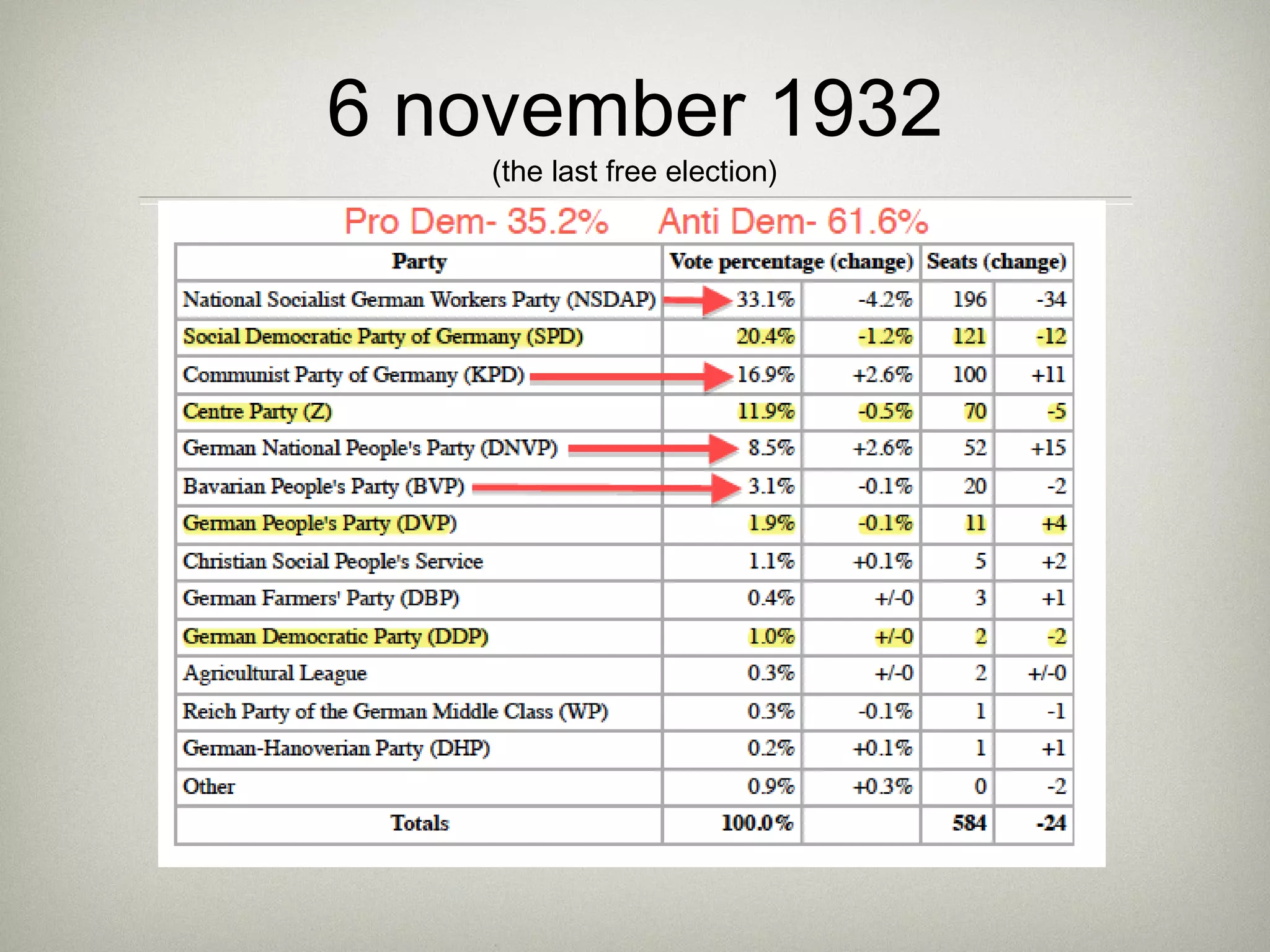
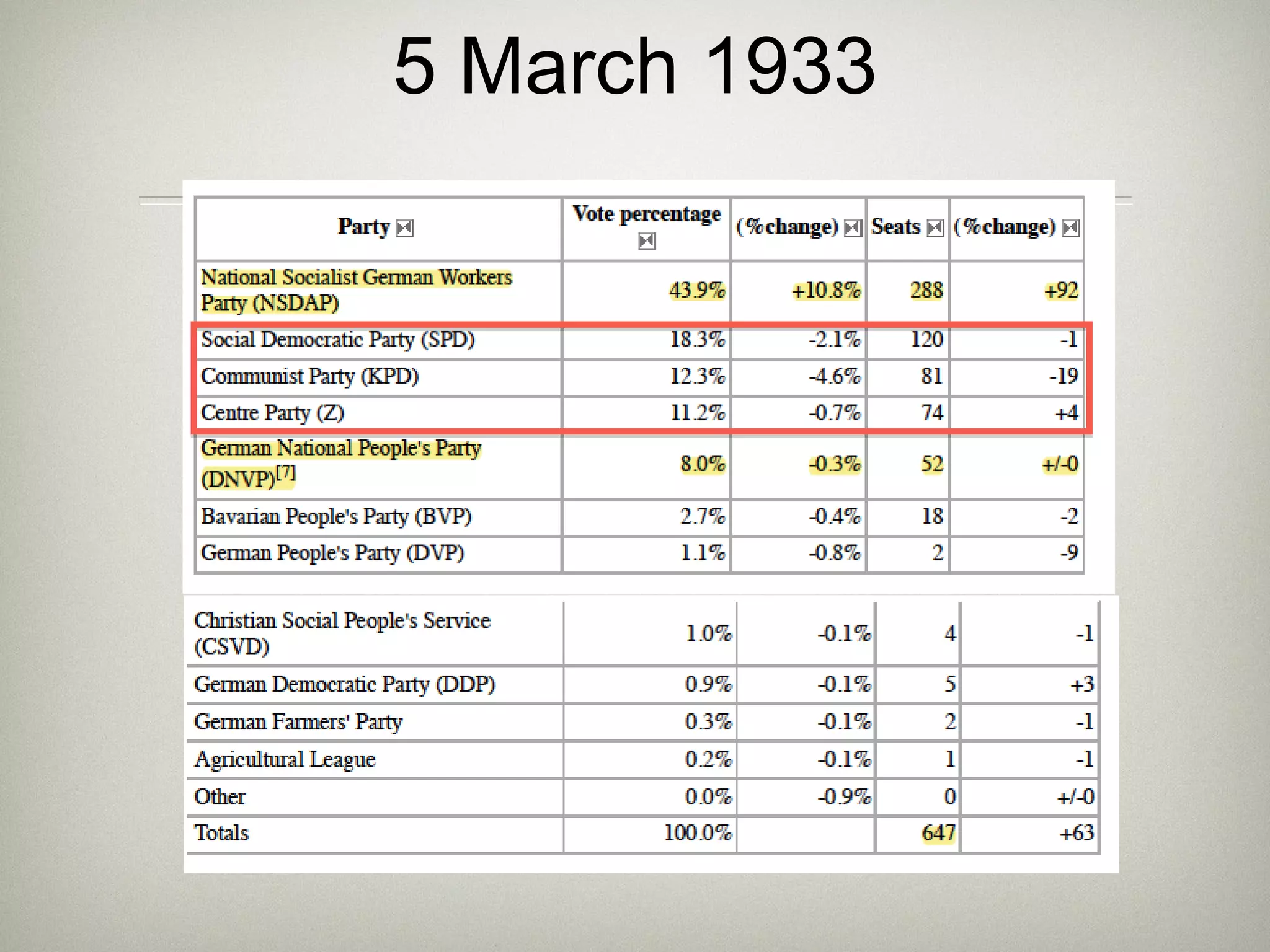
a survey of weimar election
results
19 January 1919
6 June 1920
4 May 1924
7 December 1924
20 may 1928
14 September 1930
31 july 1932
6 november 1932
(the last free election)
5 March 1933
Political Cartoons
questions-part 1C
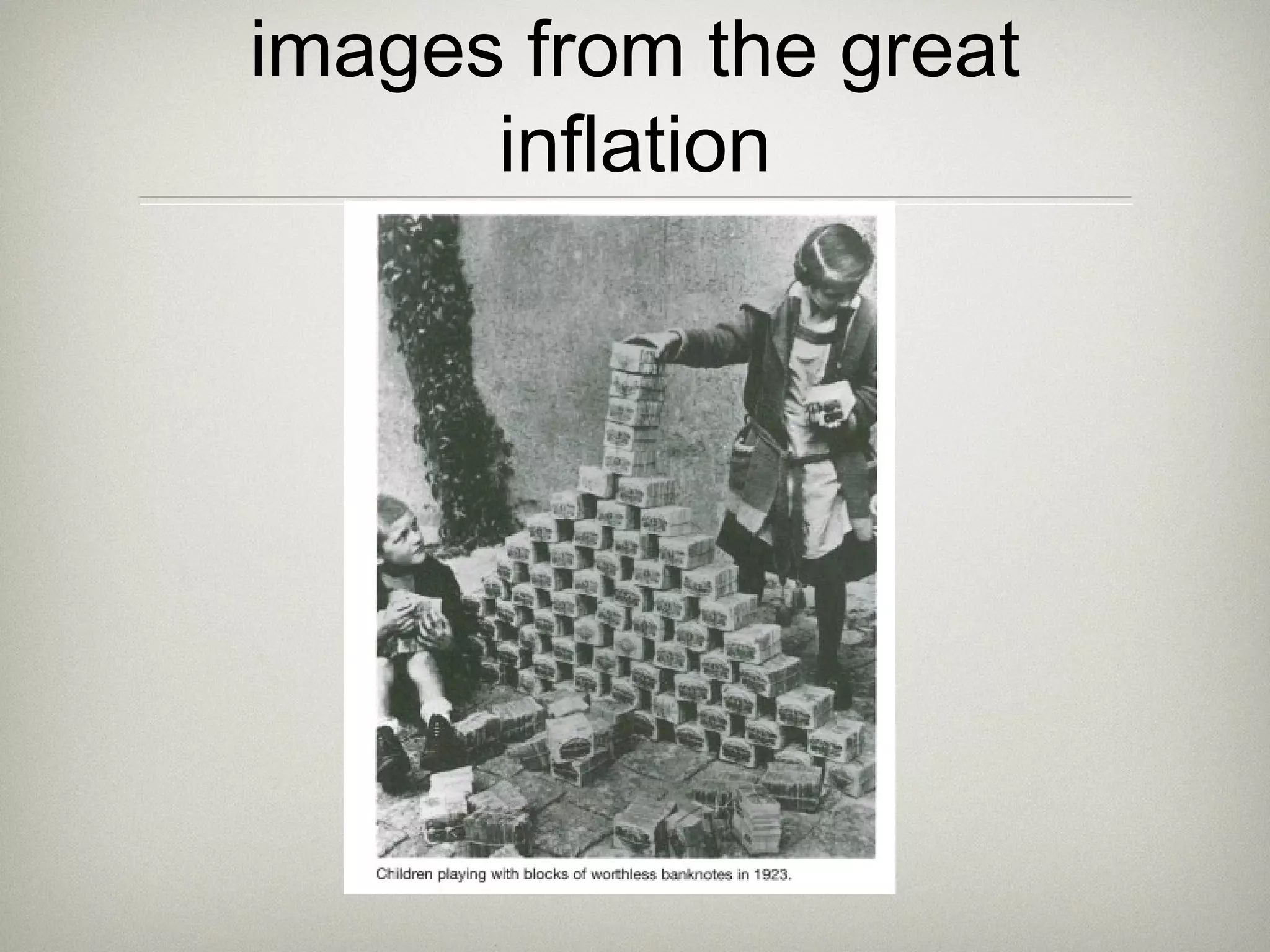
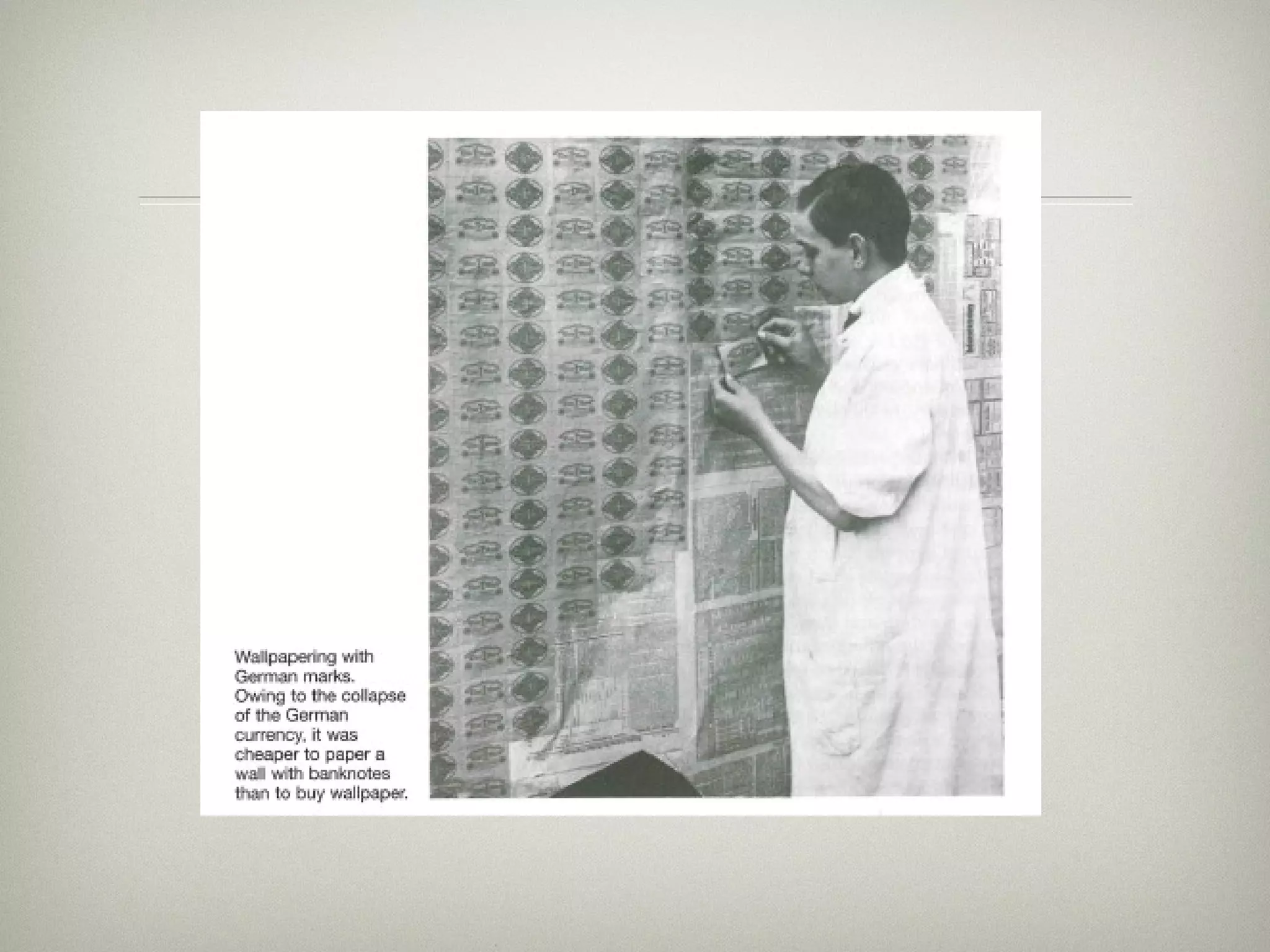
• What caused the Great Inflation of
1923?
• How great a threat did it pose for
Weimar Germany?
• What were its main effects?
• How important a figure was
Stresemann to the Weimar Republic at
this time?
images from the great
inflation
part 2
• Weimar Republic, 1924-1929: A false
stability?
• Why did the Weimar Republic collapse
in 1933 and why did it give way to
Hitler and the Nazis?
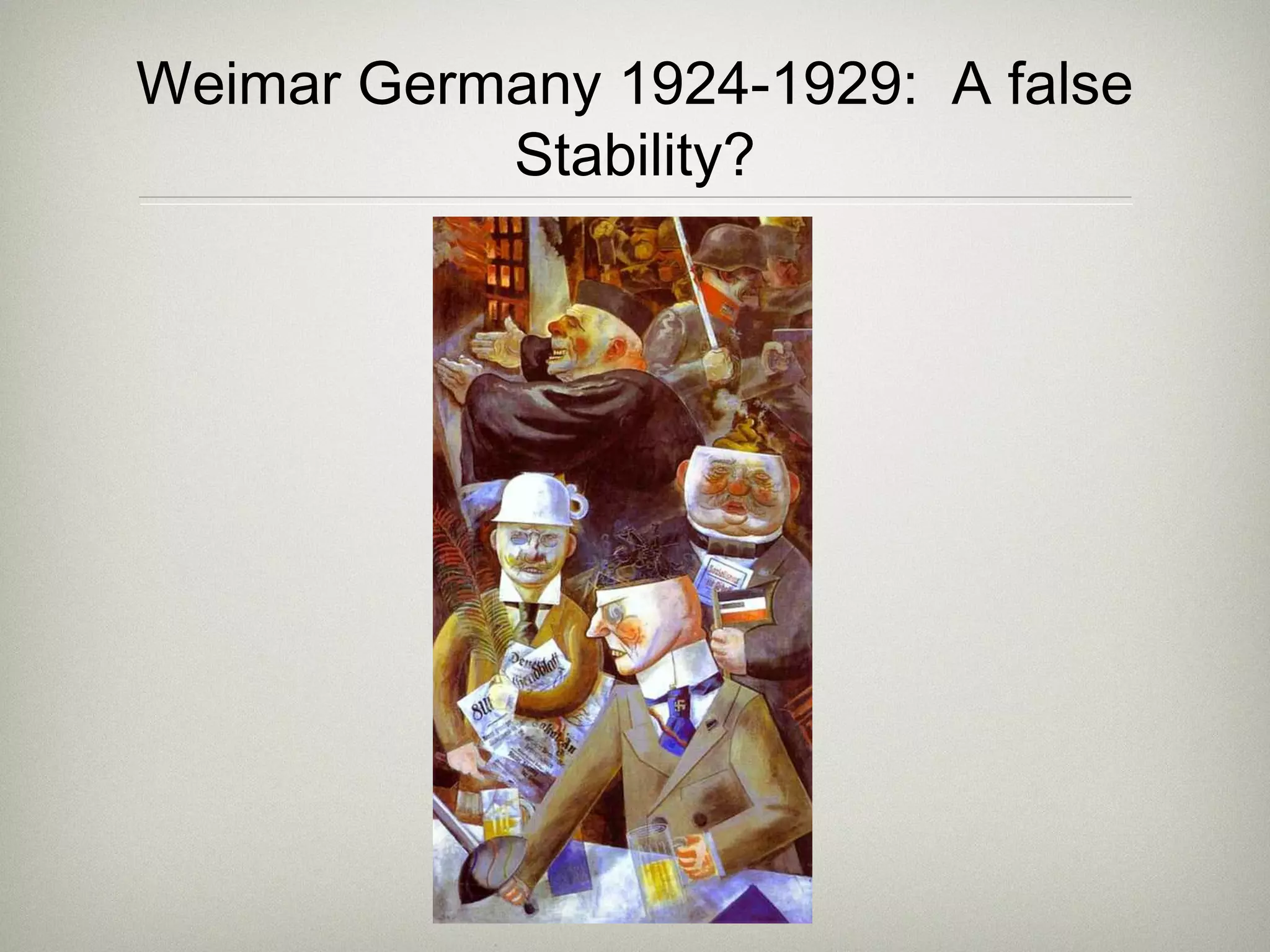
Weimar Germany 1924-1929: A false
Stability?
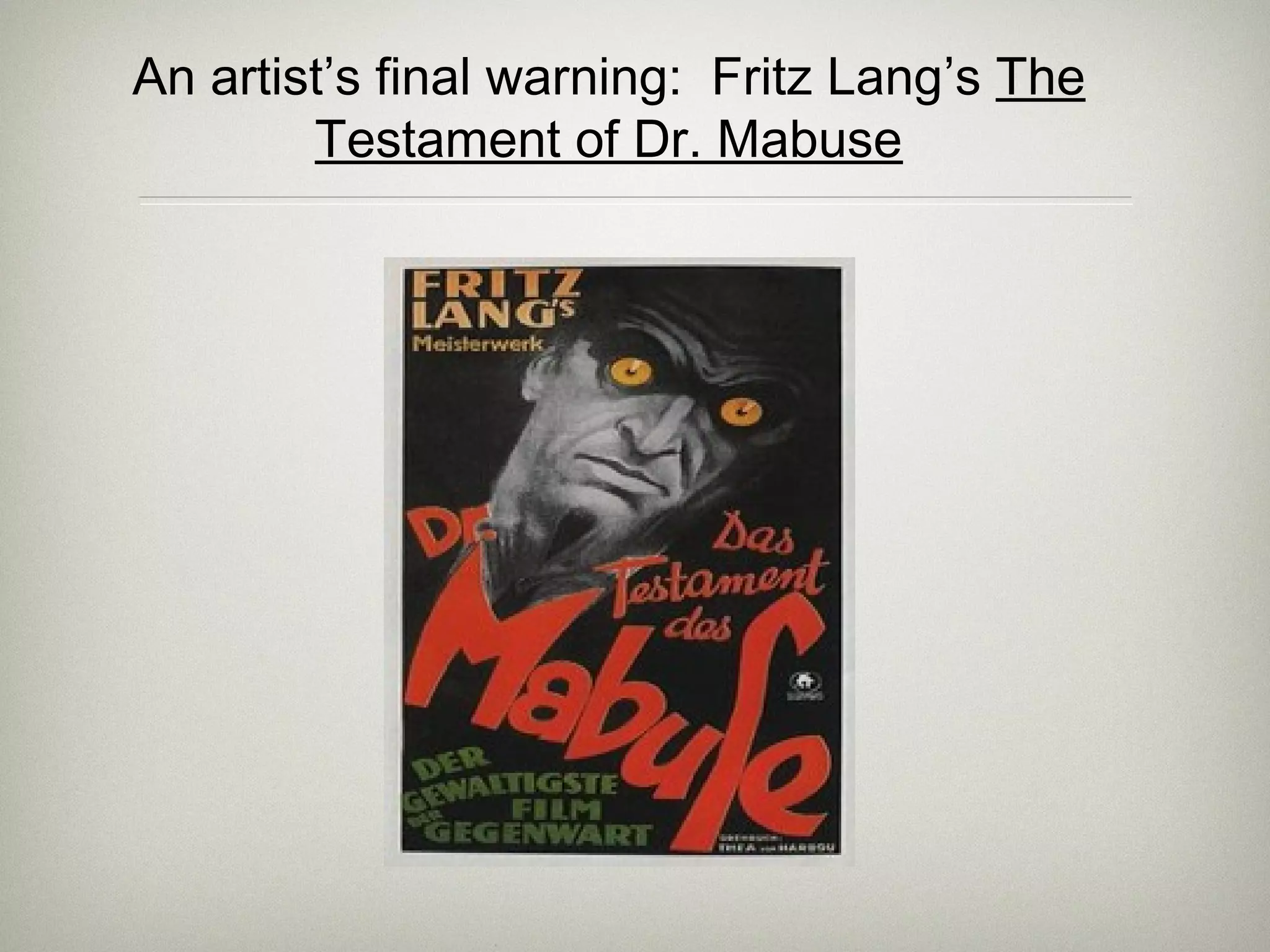
An artist’s final warning: Fritz Lang’s The
Testament of Dr. Mabuse
Formative Socratic seminar
• Why did the Weimar Republic collapse
in 1933 and why did it give way to
Hitler and the Nazis?
The Sources
• Layton, Weimar and the Rise of Nazi Germany, 1918-1933
• “Descent into Chaos” from R.J. Evans, The Coming of the Third Reich,
pp. 60-76
• “The Poison Kitchen” from R. Rosenbaum, Explaining Hitler, pp. 37-
59.
• “Weaknesses of Weimar” from R.J. Evans, The Coming of the Third
Reich, pp. 78-102
• “Fritz Gerlich and the Trial of Hitler’s Nose” from R. Rosenbaum,
Explaining Hitler, pp. 155-167.
• “The Months of Opportunity,” from Alan Bullock, Hitler: A Study in
Tyranny, pp. 210-250.
Sources (cont’d)
• The fictional Ernst Janning in Judgement at Nuremburg,
http://safeshare.tv/w/RmGVzEHSyK

Weimar germany ppt

  • 1.
    Weimar Germany: The FailedRepublic 1919-1933
  • 2.
    Questions-Part 1A • Wasthe Weimar Constitution fatally flawed? • What aspects of the treaty of the Treaty of Versailles were most difficult for Germans to accept? • Did the Treaty of Versailles fundamentally weaken Germany? • “Descent into Chaos” and “The Poison Kitchen” – What do these readings tell you about post-war conditions in
  • 3.
    questions-part 1B • Assessthe threats to Weimar from the extreme left and the extreme right. Which branch of political extremism was more dangerous to Weimar Germany and why? • To what extent do you agree with the statement that the Weimar Republic was “a republic without republicans”? Refer to your reading in your response. • Study the political cartoons on pages 44 and 49. What messages do they convey?
  • 4.
    a survey ofweimar election results
  • 5.
  • 6.
  • 7.
  • 8.
  • 9.
  • 10.
  • 11.
  • 12.
    6 november 1932 (thelast free election)
  • 13.
  • 14.
  • 16.
    questions-part 1C • Whatcaused the Great Inflation of 1923? • How great a threat did it pose for Weimar Germany? • What were its main effects? • How important a figure was Stresemann to the Weimar Republic at this time?
  • 17.
    images from thegreat inflation
  • 19.
    part 2 • WeimarRepublic, 1924-1929: A false stability? • Why did the Weimar Republic collapse in 1933 and why did it give way to Hitler and the Nazis?
  • 20.
    Weimar Germany 1924-1929:A false Stability?
  • 21.
    An artist’s finalwarning: Fritz Lang’s The Testament of Dr. Mabuse
  • 22.
    Formative Socratic seminar •Why did the Weimar Republic collapse in 1933 and why did it give way to Hitler and the Nazis?
  • 23.
    The Sources • Layton,Weimar and the Rise of Nazi Germany, 1918-1933 • “Descent into Chaos” from R.J. Evans, The Coming of the Third Reich, pp. 60-76 • “The Poison Kitchen” from R. Rosenbaum, Explaining Hitler, pp. 37- 59. • “Weaknesses of Weimar” from R.J. Evans, The Coming of the Third Reich, pp. 78-102 • “Fritz Gerlich and the Trial of Hitler’s Nose” from R. Rosenbaum, Explaining Hitler, pp. 155-167. • “The Months of Opportunity,” from Alan Bullock, Hitler: A Study in Tyranny, pp. 210-250.
  • 24.
    Sources (cont’d) • Thefictional Ernst Janning in Judgement at Nuremburg, http://safeshare.tv/w/RmGVzEHSyK