


Health Information by
oowomaniya.com
Weight Gain
Explained
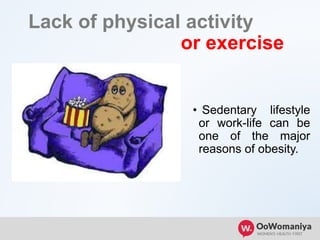
Lack of physical activity
or exercise
• Sedentary lifestyle
or work-life can be
one of the major
reasons of obesity.
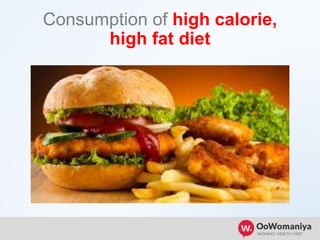
Consumption of high calorie,
high fat diet
Irregular eating habits and meal
timings.
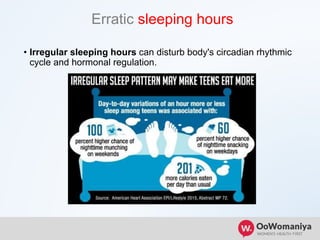
Erratic sleeping hours
• Irregular sleeping hours can disturb body's circadian rhythmic
cycle and hormonal regulation.
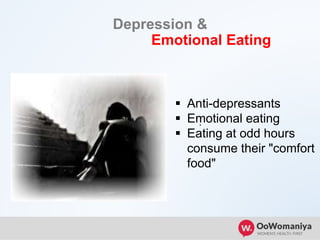
Depression &
Emotional Eating
.
 Anti-depressants
 Emotional eating
 Eating at odd hours
consume their "comfort
food"
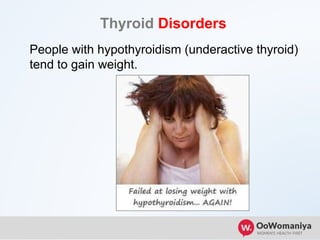
Thyroid Disorders
People with hypothyroidism (underactive thyroid)
tend to gain weight.
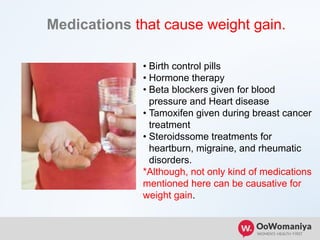
Medications that cause weight gain.
• Birth control pills
• Hormone therapy
• Beta blockers given for blood
pressure and Heart disease
• Tamoxifen given during breast cancer
treatment
• Steroidssome treatments for
heartburn, migraine, and rheumatic
disorders.
*Although, not only kind of medications
mentioned here can be causative for
weight gain.
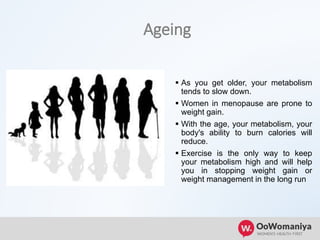
Ageing
 As you get older, your metabolism
tends to slow down.
 Women in menopause are prone to
weight gain.
 With the age, your metabolism, your
body's ability to burn calories will
reduce.
 Exercise is the only way to keep
your metabolism high and will help
you in stopping weight gain or
weight management in the long run
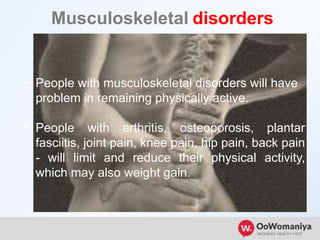
Musculoskeletal disorders
.
• People with musculoskeletal disorders will have
problem in remaining physically active.
• People with arthritis, osteoporosis, plantar
fasciitis, joint pain, knee pain, hip pain, back pain
- will limit and reduce their physical activity,
which may also weight gain.
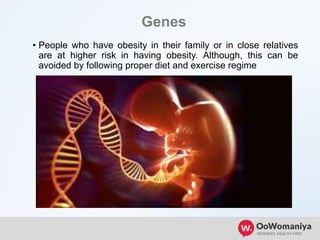
Genes
• People who have obesity in their family or in close relatives
are at higher risk in having obesity. Although, this can be
avoided by following proper diet and exercise regime
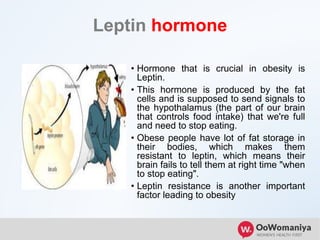
Leptin hormone
• Hormone that is crucial in obesity is
Leptin.
• This hormone is produced by the fat
cells and is supposed to send signals to
the hypothalamus (the part of our brain
that controls food intake) that we're full
and need to stop eating.
• Obese people have lot of fat storage in
their bodies, which makes them
resistant to leptin, which means their
brain fails to tell them at right time "when
to stop eating".
• Leptin resistance is another important
factor leading to obesity
Smoking
•People who quit smoking may also witness weight
gain. Smoking habit leads to "oral fixation" which
means trying to keep your mouth occupied.
•Due to this oral fixation, people who smoke or
withdraw from smoking can tend to overeat,
leading to weight gain.
Health Information reviewed by OoWomaniya
Medical Advisor
Dr. Nidhi Desai
Women's Health Counsellor
Answers in Physiotherapy, Fitness, Women's Health
Counselling, Sexology
contact@oowomaniya.com
questions?thank you
Ask a Doctor

Weight gain

  • 1.
  • 2.
    Lack of physicalactivity or exercise • Sedentary lifestyle or work-life can be one of the major reasons of obesity.
  • 3.
    Consumption of highcalorie, high fat diet
  • 4.
    Irregular eating habitsand meal timings.
  • 5.
    Erratic sleeping hours •Irregular sleeping hours can disturb body's circadian rhythmic cycle and hormonal regulation.
  • 6.
    Depression & Emotional Eating . Anti-depressants  Emotional eating  Eating at odd hours consume their "comfort food"
  • 7.
    Thyroid Disorders People withhypothyroidism (underactive thyroid) tend to gain weight.
  • 8.
    Medications that causeweight gain. • Birth control pills • Hormone therapy • Beta blockers given for blood pressure and Heart disease • Tamoxifen given during breast cancer treatment • Steroidssome treatments for heartburn, migraine, and rheumatic disorders. *Although, not only kind of medications mentioned here can be causative for weight gain.
  • 9.
    Ageing  As youget older, your metabolism tends to slow down.  Women in menopause are prone to weight gain.  With the age, your metabolism, your body's ability to burn calories will reduce.  Exercise is the only way to keep your metabolism high and will help you in stopping weight gain or weight management in the long run
  • 10.
    Musculoskeletal disorders . • Peoplewith musculoskeletal disorders will have problem in remaining physically active. • People with arthritis, osteoporosis, plantar fasciitis, joint pain, knee pain, hip pain, back pain - will limit and reduce their physical activity, which may also weight gain.
  • 11.
    Genes • People whohave obesity in their family or in close relatives are at higher risk in having obesity. Although, this can be avoided by following proper diet and exercise regime
  • 12.
    Leptin hormone • Hormonethat is crucial in obesity is Leptin. • This hormone is produced by the fat cells and is supposed to send signals to the hypothalamus (the part of our brain that controls food intake) that we're full and need to stop eating. • Obese people have lot of fat storage in their bodies, which makes them resistant to leptin, which means their brain fails to tell them at right time "when to stop eating". • Leptin resistance is another important factor leading to obesity
  • 13.
    Smoking •People who quitsmoking may also witness weight gain. Smoking habit leads to "oral fixation" which means trying to keep your mouth occupied. •Due to this oral fixation, people who smoke or withdraw from smoking can tend to overeat, leading to weight gain.
  • 14.
    Health Information reviewedby OoWomaniya Medical Advisor Dr. Nidhi Desai Women's Health Counsellor Answers in Physiotherapy, Fitness, Women's Health Counselling, Sexology
  • 15.