Entrepreneurship
BU 20: EXPLORING BUSINESS, MARKETING & ENTREPRENEURSHIP
MODULE 3:
UNDERSTAND THE CONCEPT OF ENTREPRENEURSHIP
1
3.01
Characteristics of Successful
Entrepreneurs
Recall personal characteristics and skills needed
for a successful entrepreneur.
2
What is an Entrepreneur?
An individual who undertakes the
risk associated with creating, organizing,
and owning a business.
3
Personal Characteristics of
Successful Entrepreneurs
•Persistent
•Creative
•Responsible
•Inquisitive
•Goal-oriented
•Independent
•Self-confident
•Risk taker
4
Skills Needed by Successful Entrepreneurs
•Communication skills
•Human relations skills
•Math skills
•Problem-solving & Decision-making skills
•Technical skills
•Basic Business skills
5
3.02
Entrepreneurship and the
Entrepreneurial Process
Understand entrepreneurship
and the entrepreneurial process.
6
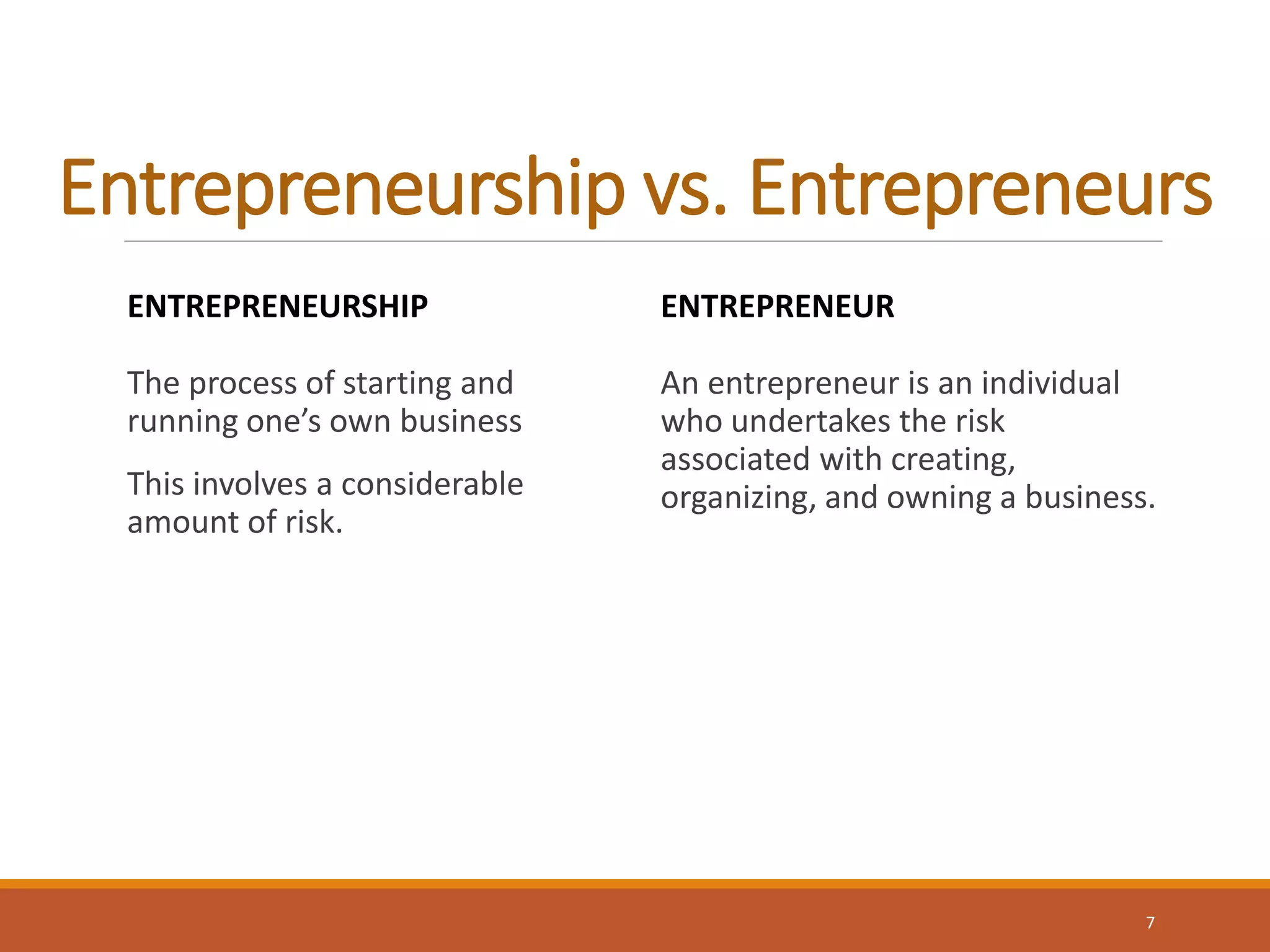
Entrepreneurship vs. Entrepreneurs
ENTREPRENEURSHIP
The process of starting and
running one’s own business
This involves a considerable
amount of risk.
ENTREPRENEUR
An entrepreneur is an individual
who undertakes the risk
associated with creating,
organizing, and owning a business.
7
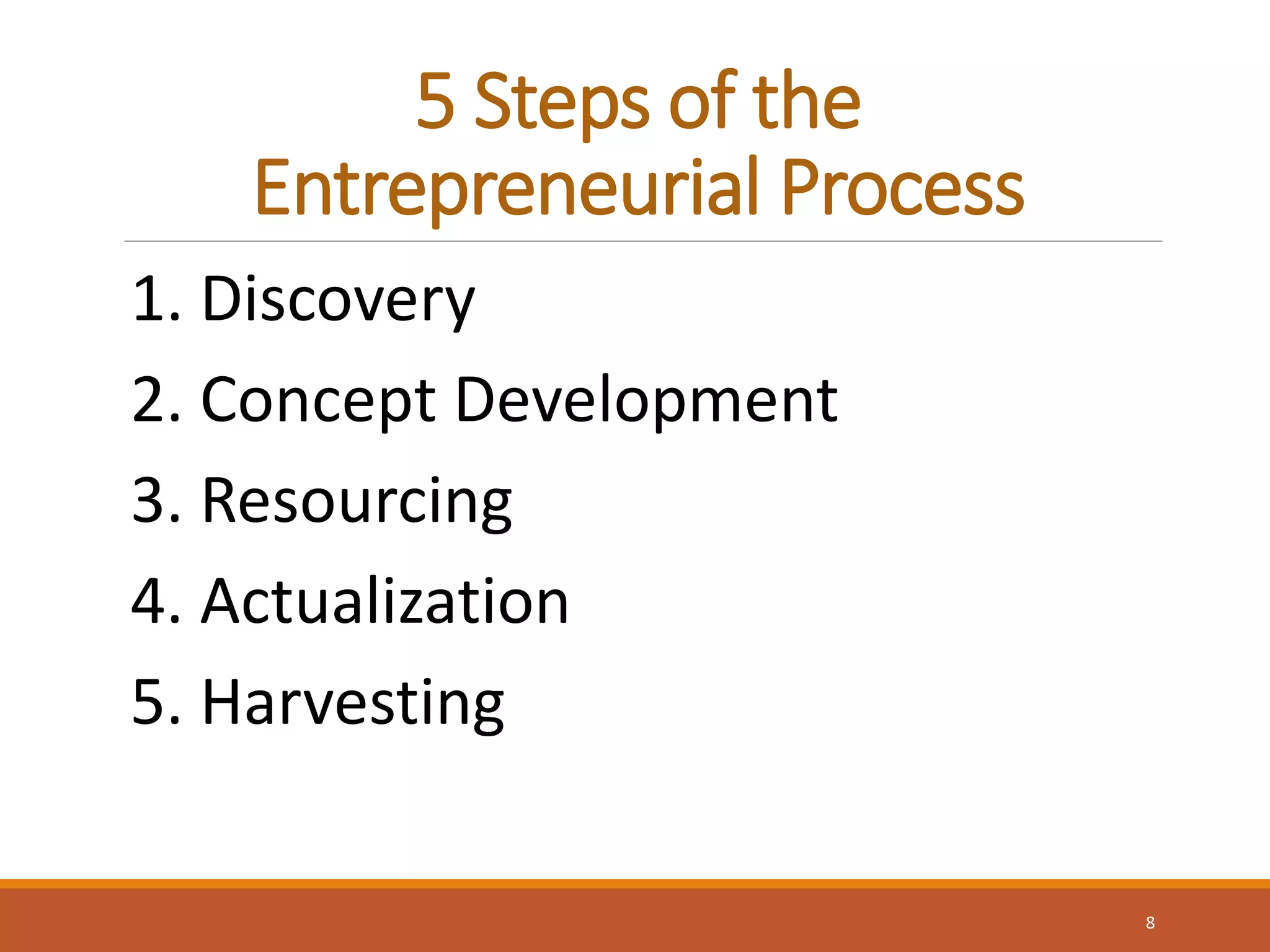
5 Steps of the
Entrepreneurial Process
1. Discovery
2. Concept Development
3. Resourcing
4. Actualization
5. Harvesting
8
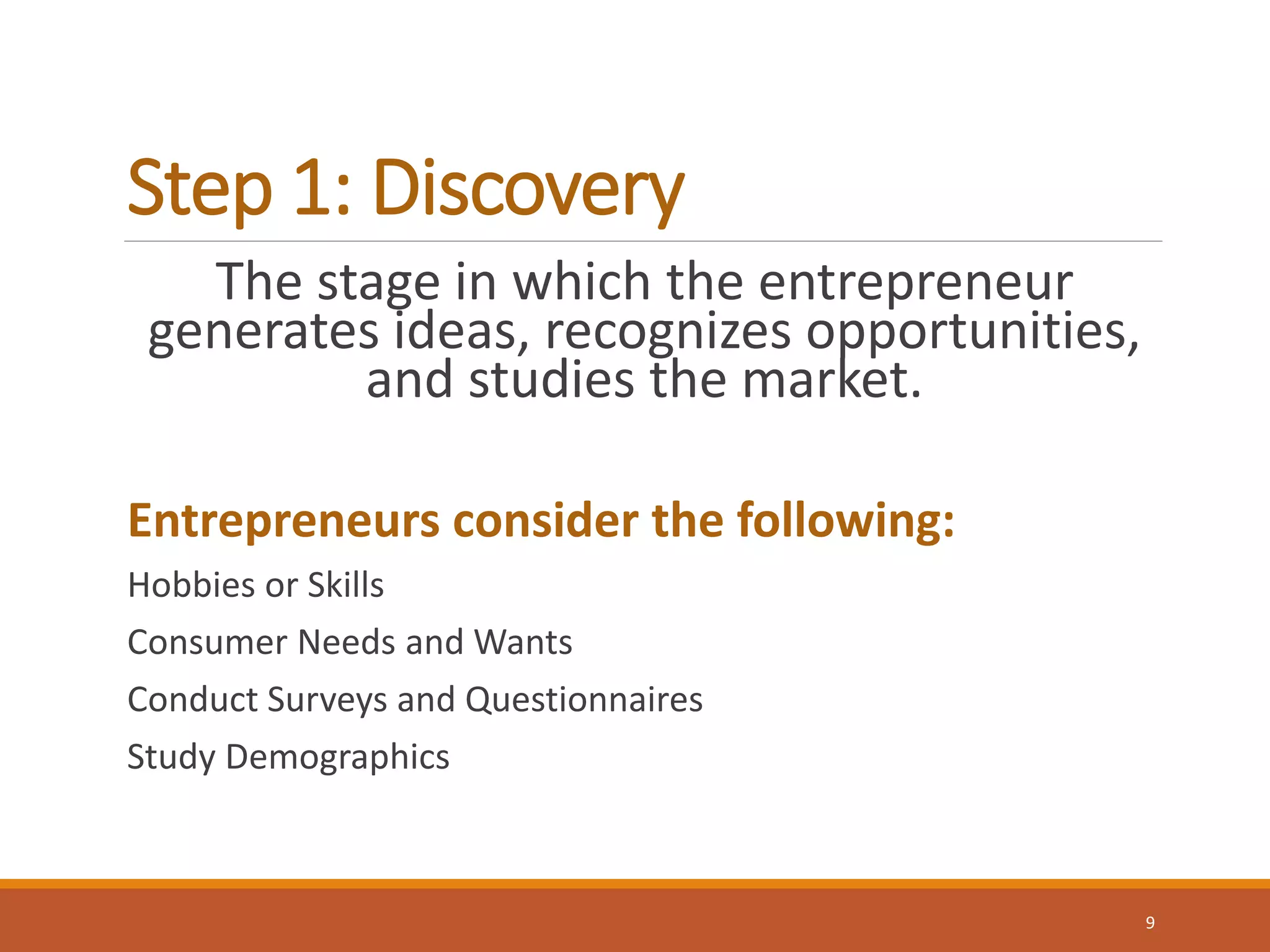
Step 1: Discovery
The stage in which the entrepreneur
generates ideas, recognizes opportunities,
and studies the market.
Entrepreneurs consider the following:
Hobbies or Skills
Consumer Needs and Wants
Conduct Surveys and Questionnaires
Study Demographics
9
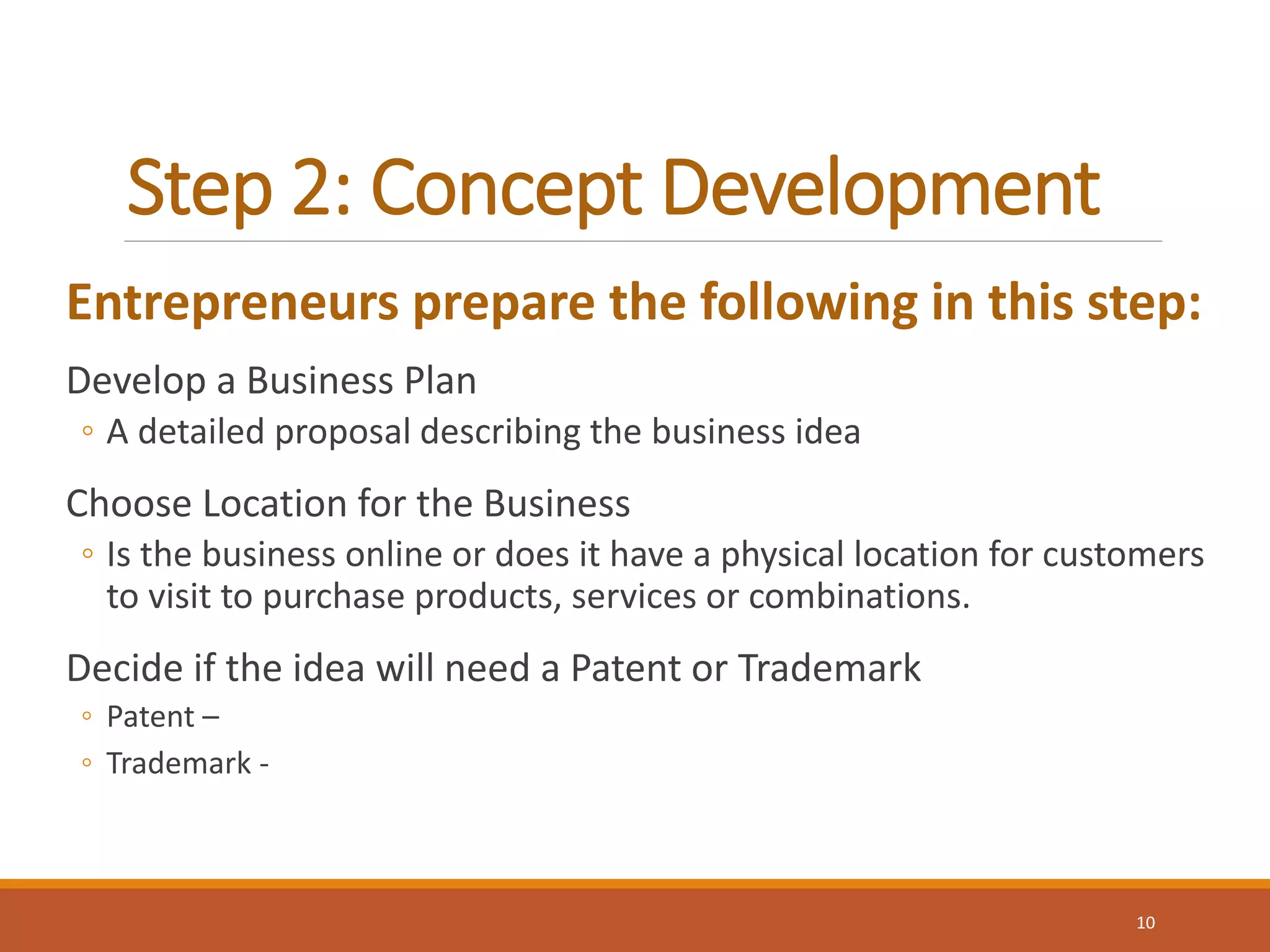
Step 2: Concept Development
Entrepreneurs prepare the following in this step:
Develop a Business Plan
◦ A detailed proposal describing the business idea
Choose Location for the Business
◦ Is the business online or does it have a physical location for customers
to visit to purchase products, services or combinations.
Decide if the idea will need a Patent or Trademark
◦ Patent –
◦ Trademark -
10
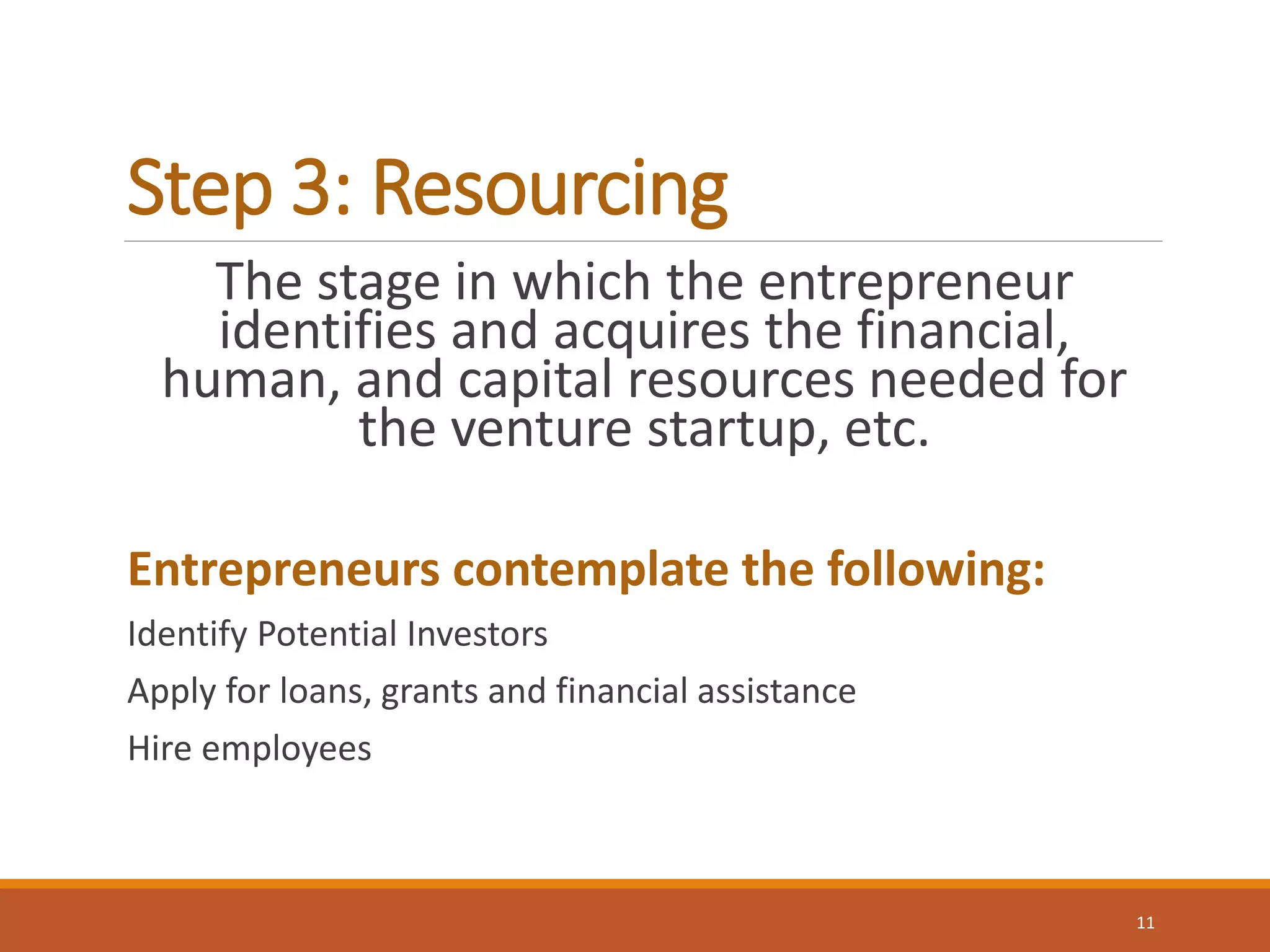
Step 3: Resourcing
The stage in which the entrepreneur
identifies and acquires the financial,
human, and capital resources needed for
the venture startup, etc.
Entrepreneurs contemplate the following:
Identify Potential Investors
Apply for loans, grants and financial assistance
Hire employees
11
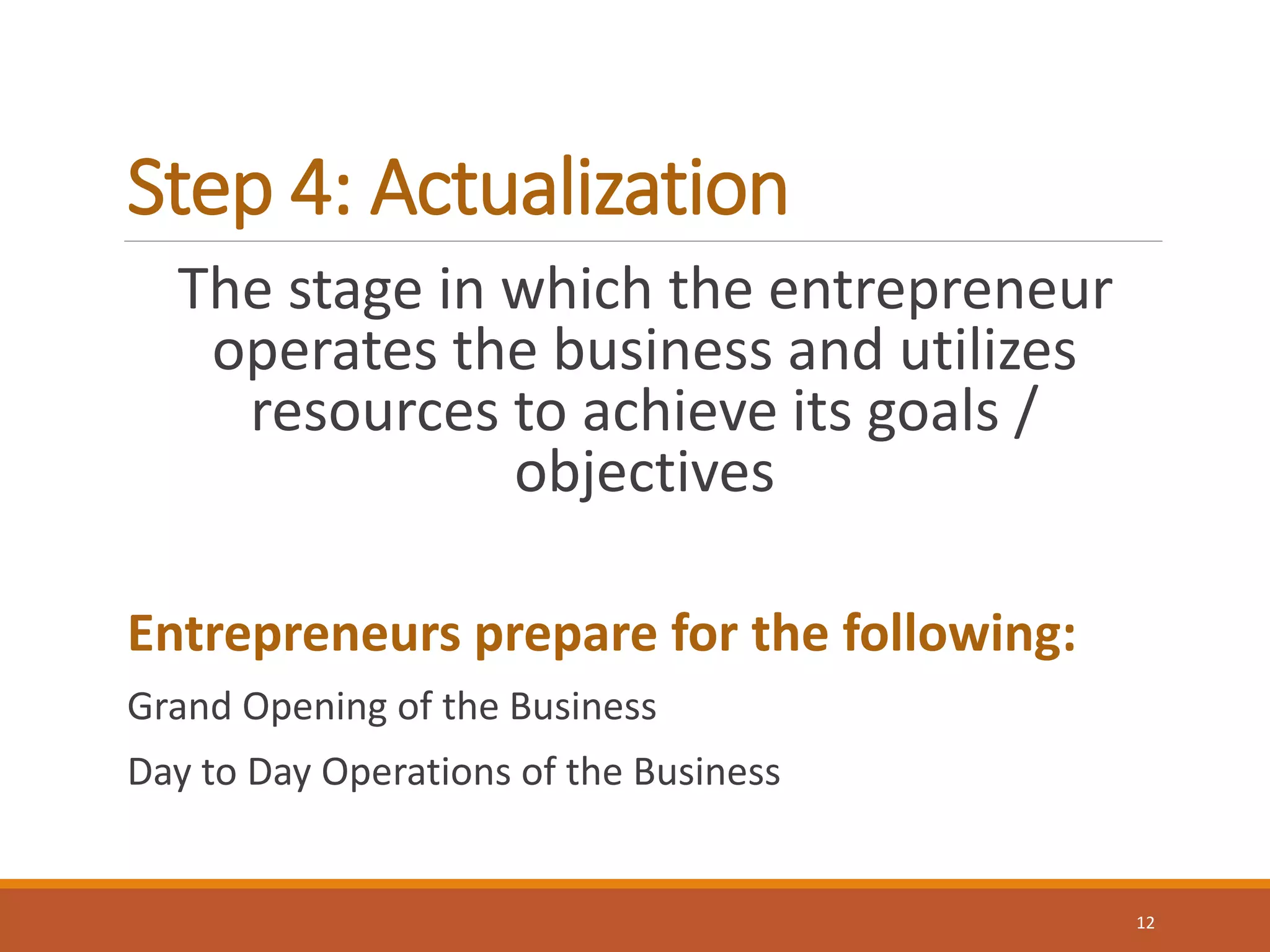
Step 4: Actualization
The stage in which the entrepreneur
operates the business and utilizes
resources to achieve its goals /
objectives
Entrepreneurs prepare for the following:
Grand Opening of the Business
Day to Day Operations of the Business
12
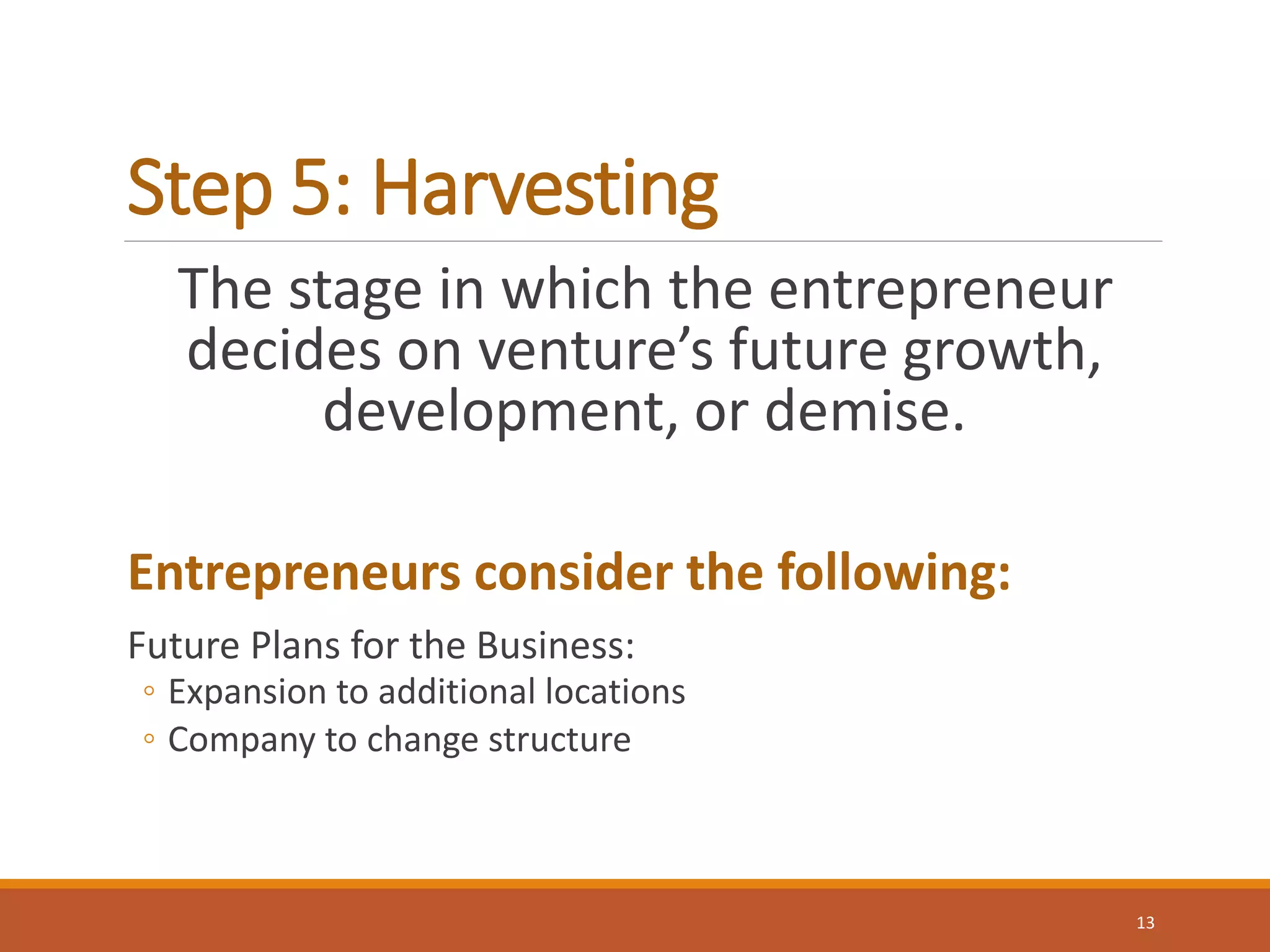
Step 5: Harvesting
The stage in which the entrepreneur
decides on venture’s future growth,
development, or demise.
Entrepreneurs consider the following:
Future Plans for the Business:
◦ Expansion to additional locations
◦ Company to change structure
13
3.03
Starting a Business
Understand the procedures and requirements
for starting a business.
14
Starting a Business
1. Develop a Business Plan
2. Acquire Finances
3. Meet Legal Requirements
15
Develop a Business Plan
A Business Plan is a detailed proposal
that describes a new business.
Business Plans are:
◦ Presented to potential investors and lenders
◦ Most business plans are 30+ pages
16
Purposes of a Business Plan
Business Plans are used to:
◦ Obtain Financing
◦ Banks and Potential Lenders require a business plan
◦ Helps organize and analyze data critical to new business.
◦ Provides a start-up proposal
◦ Provides and outline to follow when starting the business.
17
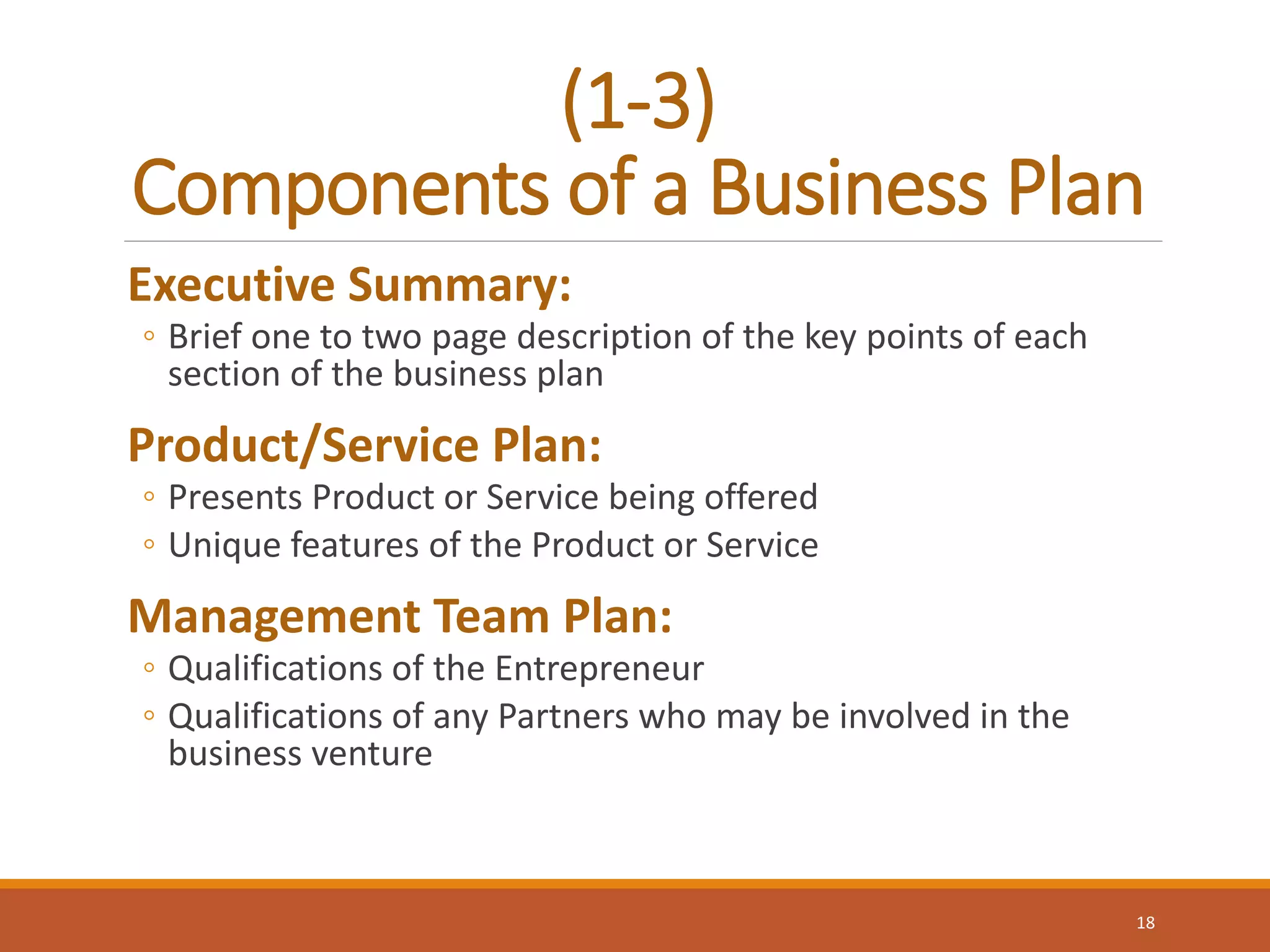
(1-3)
Components of a Business Plan
Executive Summary:
◦ Brief one to two page description of the key points of each
section of the business plan
Product/Service Plan:
◦ Presents Product or Service being offered
◦ Unique features of the Product or Service
Management Team Plan:
◦ Qualifications of the Entrepreneur
◦ Qualifications of any Partners who may be involved in the
business venture
18
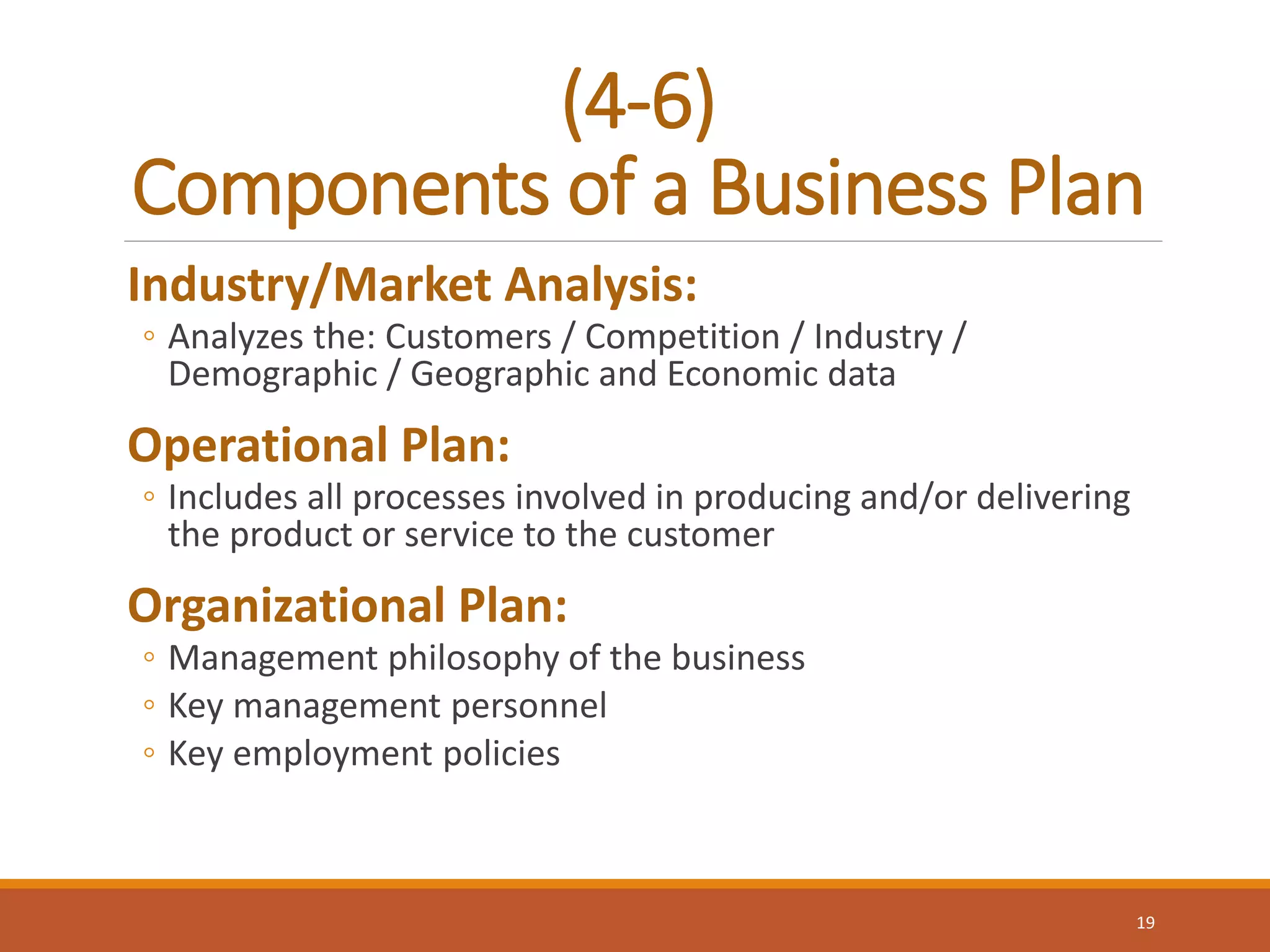
(4-6)
Components of a Business Plan
Industry/Market Analysis:
◦ Analyzes the: Customers / Competition / Industry /
Demographic / Geographic and Economic data
Operational Plan:
◦ Includes all processes involved in producing and/or delivering
the product or service to the customer
Organizational Plan:
◦ Management philosophy of the business
◦ Key management personnel
◦ Key employment policies
19
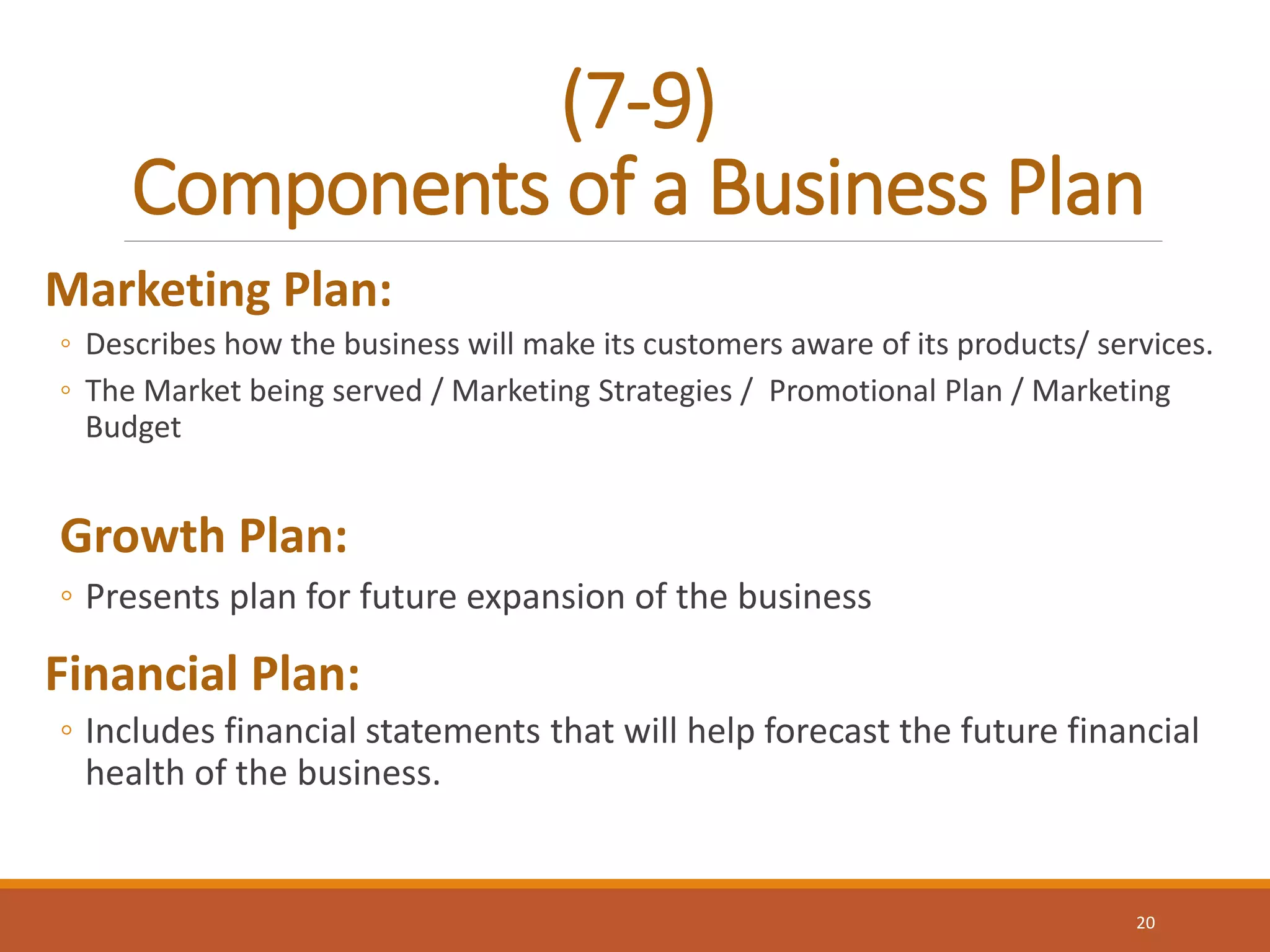
(7-9)
Components of a Business Plan
Marketing Plan:
◦ Describes how the business will make its customers aware of its products/ services.
◦ The Market being served / Marketing Strategies / Promotional Plan / Marketing
Budget
Growth Plan:
◦ Presents plan for future expansion of the business
Financial Plan:
◦ Includes financial statements that will help forecast the future financial
health of the business.
20
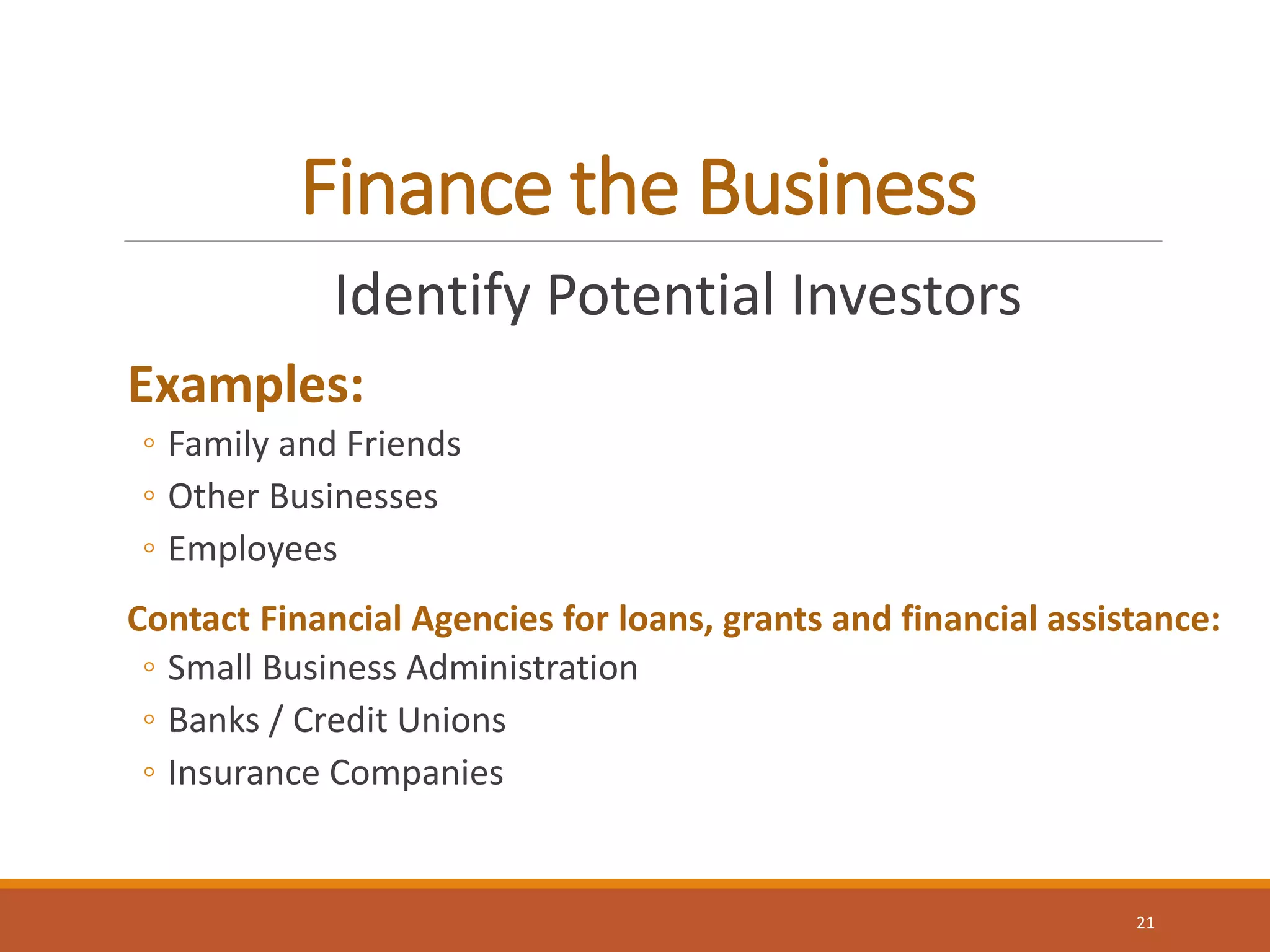
Finance the Business
Identify Potential Investors
Examples:
◦ Family and Friends
◦ Other Businesses
◦ Employees
Contact Financial Agencies for loans, grants and financial assistance:
◦ Small Business Administration
◦ Banks / Credit Unions
◦ Insurance Companies
21
The Legal Environment
Additional Legal Requirements for some businesses:
Permits, Certifications or Licenses:
◦ an official document giving someone authorization to run their business under the
extension of the direction of the Local, State and Federal Laws.
Contracts:
◦ a written or spoken agreement, especially one concerning employment, sales, or tenancy,
that is intended to be enforceable by law.
Zoning Laws:
◦ specify the areas in which residential, industrial, recreational or commercial activities may
take place.
Taxes:
◦ a enforced contribution of funds to state revenue, levied by the government on workers'
income and business profits or added to the cost of some goods, services, and transactions.
22
Protecting Your Business
More Legal Documents to Protect Your Business:
Trademarks:
◦ Protects a business’ name / logo.
Patents:
◦ Protects the invention of products or processes from theft.
Copyrights:
◦ Protects Creative Works: Literary, Musical, Dramatic, Artistic works
For More Information visit:
https://www.uspto.gov/trademarks/basics/trade_defin.jsp
23

Module 3 -_entrepreneurship (1)

  • 1.
    Entrepreneurship BU 20: EXPLORINGBUSINESS, MARKETING & ENTREPRENEURSHIP MODULE 3: UNDERSTAND THE CONCEPT OF ENTREPRENEURSHIP 1
  • 2.
    3.01 Characteristics of Successful Entrepreneurs Recallpersonal characteristics and skills needed for a successful entrepreneur. 2
  • 3.
    What is anEntrepreneur? An individual who undertakes the risk associated with creating, organizing, and owning a business. 3
  • 4.
    Personal Characteristics of SuccessfulEntrepreneurs •Persistent •Creative •Responsible •Inquisitive •Goal-oriented •Independent •Self-confident •Risk taker 4
  • 5.
    Skills Needed bySuccessful Entrepreneurs •Communication skills •Human relations skills •Math skills •Problem-solving & Decision-making skills •Technical skills •Basic Business skills 5
  • 6.
    3.02 Entrepreneurship and the EntrepreneurialProcess Understand entrepreneurship and the entrepreneurial process. 6
  • 7.
    Entrepreneurship vs. Entrepreneurs ENTREPRENEURSHIP Theprocess of starting and running one’s own business This involves a considerable amount of risk. ENTREPRENEUR An entrepreneur is an individual who undertakes the risk associated with creating, organizing, and owning a business. 7
  • 8.
    5 Steps ofthe Entrepreneurial Process 1. Discovery 2. Concept Development 3. Resourcing 4. Actualization 5. Harvesting 8
  • 9.
    Step 1: Discovery Thestage in which the entrepreneur generates ideas, recognizes opportunities, and studies the market. Entrepreneurs consider the following: Hobbies or Skills Consumer Needs and Wants Conduct Surveys and Questionnaires Study Demographics 9
  • 10.
    Step 2: ConceptDevelopment Entrepreneurs prepare the following in this step: Develop a Business Plan ◦ A detailed proposal describing the business idea Choose Location for the Business ◦ Is the business online or does it have a physical location for customers to visit to purchase products, services or combinations. Decide if the idea will need a Patent or Trademark ◦ Patent – ◦ Trademark - 10
  • 11.
    Step 3: Resourcing Thestage in which the entrepreneur identifies and acquires the financial, human, and capital resources needed for the venture startup, etc. Entrepreneurs contemplate the following: Identify Potential Investors Apply for loans, grants and financial assistance Hire employees 11
  • 12.
    Step 4: Actualization Thestage in which the entrepreneur operates the business and utilizes resources to achieve its goals / objectives Entrepreneurs prepare for the following: Grand Opening of the Business Day to Day Operations of the Business 12
  • 13.
    Step 5: Harvesting Thestage in which the entrepreneur decides on venture’s future growth, development, or demise. Entrepreneurs consider the following: Future Plans for the Business: ◦ Expansion to additional locations ◦ Company to change structure 13
  • 14.
    3.03 Starting a Business Understandthe procedures and requirements for starting a business. 14
  • 15.
    Starting a Business 1.Develop a Business Plan 2. Acquire Finances 3. Meet Legal Requirements 15
  • 16.
    Develop a BusinessPlan A Business Plan is a detailed proposal that describes a new business. Business Plans are: ◦ Presented to potential investors and lenders ◦ Most business plans are 30+ pages 16
  • 17.
    Purposes of aBusiness Plan Business Plans are used to: ◦ Obtain Financing ◦ Banks and Potential Lenders require a business plan ◦ Helps organize and analyze data critical to new business. ◦ Provides a start-up proposal ◦ Provides and outline to follow when starting the business. 17
  • 18.
    (1-3) Components of aBusiness Plan Executive Summary: ◦ Brief one to two page description of the key points of each section of the business plan Product/Service Plan: ◦ Presents Product or Service being offered ◦ Unique features of the Product or Service Management Team Plan: ◦ Qualifications of the Entrepreneur ◦ Qualifications of any Partners who may be involved in the business venture 18
  • 19.
    (4-6) Components of aBusiness Plan Industry/Market Analysis: ◦ Analyzes the: Customers / Competition / Industry / Demographic / Geographic and Economic data Operational Plan: ◦ Includes all processes involved in producing and/or delivering the product or service to the customer Organizational Plan: ◦ Management philosophy of the business ◦ Key management personnel ◦ Key employment policies 19
  • 20.
    (7-9) Components of aBusiness Plan Marketing Plan: ◦ Describes how the business will make its customers aware of its products/ services. ◦ The Market being served / Marketing Strategies / Promotional Plan / Marketing Budget Growth Plan: ◦ Presents plan for future expansion of the business Financial Plan: ◦ Includes financial statements that will help forecast the future financial health of the business. 20
  • 21.
    Finance the Business IdentifyPotential Investors Examples: ◦ Family and Friends ◦ Other Businesses ◦ Employees Contact Financial Agencies for loans, grants and financial assistance: ◦ Small Business Administration ◦ Banks / Credit Unions ◦ Insurance Companies 21
  • 22.
    The Legal Environment AdditionalLegal Requirements for some businesses: Permits, Certifications or Licenses: ◦ an official document giving someone authorization to run their business under the extension of the direction of the Local, State and Federal Laws. Contracts: ◦ a written or spoken agreement, especially one concerning employment, sales, or tenancy, that is intended to be enforceable by law. Zoning Laws: ◦ specify the areas in which residential, industrial, recreational or commercial activities may take place. Taxes: ◦ a enforced contribution of funds to state revenue, levied by the government on workers' income and business profits or added to the cost of some goods, services, and transactions. 22
  • 23.
    Protecting Your Business MoreLegal Documents to Protect Your Business: Trademarks: ◦ Protects a business’ name / logo. Patents: ◦ Protects the invention of products or processes from theft. Copyrights: ◦ Protects Creative Works: Literary, Musical, Dramatic, Artistic works For More Information visit: https://www.uspto.gov/trademarks/basics/trade_defin.jsp 23