BUSINESS ETHICS AND
SOCIAL RESPONSIBILITY
ABM
Core Principles of
Fairness, Accountability,
and Transparency
FAIRNESS
This is the standard of judging which is exempted
from bias or prejudice. When someone displays
fairness in making decision, he/she pleases all
involved parties and offers a solution that is
beneficial to everyone. In business context, fairness
means balancing the interests involved in all
decision-making including those related to hiring,
firing, and the compensation and reward system.
Examples of fairness:
1. A boss listening to both sides of the story
before judging who is right and who is
wrong.
2. An employer giving 13th month pay to
all his/her employees.
3. A person paying the right price for a
product purchased or for a service
received.
ACCOUNTABILITY
Accountability is the explication and justification process.
It is about testing, forming a judgment, and taking an
action if necessary. It also comes with responsibilities.
Holding people to account for those actions which they
are responsible for is fair. Accountability is therefore an
obligation to demonstrate that work has been carried out
in accordance with agreed rules and standards, or to
report on performance results fairly and accurately in
relation to mandated roles and/or plans.
Examples of accountability:
1. A cashier admits he/she lost the company’s
collection and it is his/her mistake.
2. An engineer who is assigned on a project is the
one to be blamed if the project did not meet the
deadlines.
3. Employee A recommended his cousin to be their
company janitor, but the latter stole the cellular
phone of their secretary. Therefore, Employee A
may be blamed for recommending his/her cousin
and should pay or replace the lost cellphone.
TRANSPARENCY
It is described as a personal quality
which is necessary to develop unity
between and among individuals. A
transparent approach makes a person
more honest and sincere in his/her
relationships, in communicating his/her
points of view, and in working actively to
find shared meanings and goals.
Foundations of the
Principle of Business Ethics
Rufus, on keeping track of one’s ethical progress
Musonius Rufus
•known as the Socrates of Rome
•keep track of your progress, to see how
you are performing.
• keeping track of ourselves means
trying to take an evidence-based
assessment of our performance.
Rufus, on keeping track of one’s ethical progress
We might say we are a green company,
but how do we know if we are making
progress? We might say we are a happy
organization, but how do we know? We
can keep track of this, for example by
asking our employees (anonymously) how
worthwhile they feel their job is. Then see if,
in a year, we have managed to enhance
their sense of purpose.
Plutarch, on being a good role model
Plutarch
•ancient Greek historian and educator
•Parallel Lives - famous work of Plutarch,
which offered biographical sketches of
some of the great Greek and Roman
heroes – Cicero, Caesar, Alexander the
Great, Pericles – to give young people
something to emulate.
Plutarch, on being a good role model
In organizational terms, what you say to
your employees is less important than
what you do. They will watch how you
behave, how you treat others, how you
cope with pressure and whether you
follow through on your promises. And
they will imitate you.
Aristotle, on letting people seek fulfillment
Aristotle
•insisted that we are naturally virtuous,
rational, social and happiness-seeking.
• Aristotle's philosophy was an influence on
Edward Deci and Richard Ryan's Self-
Determination Theory, which suggests that
employees will work harder for you, and
perform better, if you give them tasks, they
find meaningful and morally worthwhile.
Socrates, on daring to disagree
Socrates
• insisted on our right to think for
ourselves.
•he warned, humans sleepwalk through
life, simply going along with the crowd.
Epicurus, on the art of happiness
Socrates
•Taught that the aim of life was simply to
be as happy as possible here on Earth,
before we die and dissolve back into
the atomic universe.
•He warned that humans are very bad
at being happy, and very good at
inventing reasons to be miserable.
Epicurus, on the art of happiness
Socrates
•Taught that the aim of life was simply to
be as happy as possible here on Earth,
before we die and dissolve back into
the atomic universe.
•He warned that humans are very bad
at being happy, and very good at
inventing reasons to be miserable.
Belief Systems and Their
Influence in Business
Practices
CHRISTIANITY
In Christianity, human dignity and concern for people
are crucial. This religion also emphasizes a sense of
justice in business such as strict adherence to
contracts, compliance with regulations, and working
for the benefit of the common good. Christians ought
to focus on how business impacts individuals, the
workers in particular. They should be well-paid and
they should find their work meaningful and inspiring.
CHRISTIANITY
A trading Christian does not try to win another's products
or services for less than it is worth. One should not want to
get a decent deal for his own wares by using extortion. If
a person buys from a poor seller, that buyer must exercise
charity and justice. He/she must pay the full price that the
goods are worth. If friends and relatives are not interested
in what a Christian vendor sells, the latter should not break
off connection with them when they decided to choose
differently.
JUDAISM
Judaism, which for its written law relies on the
Torah, has greatly influenced marketing and
business ideology. Jewish culture, values and
ideas, including the modern market, have
penetrated many aspects of modern life. Some
important points include market honesty, fair
pricing, and business relationships.
JUDAISM
Honesty on the market.
•It is illegal for traders to falsify the
weight and measurement of the goods
or products.
JUDAISM
Fair pricing.
•There should be good value for money. You shall
not cheat each other when you sell something to
your neighbor or buy something from him or her.
Likewise, if a person is ignorant of the true worth of
an item and wants to sell it, the buyer should not
take advantage of the confusion and underpay
the seller.
JUDAISM
Business relations.
•Employers are obligated to pay workers on
schedule. One of the guiding principles for
business ethics highlighted in the Jewish
tradition is the legitimacy of business activity
and profit, conducted within a framework of
religious and ethical norms.
ISLAM
Muslims believe in the Oneness of God—-
that all things are created by God and
that He is all-powerful and all-knowing.
They further believe that God has no
offspring, sex, class, body, and He is not
affected by human life's characteristics.
ISLAM
For Islam, the source of rules is the Qur'an. Islamic
teachings place great emphasis on respect for
ethical and moral codes in human behavior.
Islamic principles prevent abusing people through
putting restrictions on misleading advertisements.
Under Islamic law, if a seller sells an item by making
false statements, the buyer shall have the right to
cancel the transactions.
Additionally, according to Hayes (1998), the following
principles are expected among Muslim businessmen:
• Contracts must be fair to both or all parties.
• Speculation, such as gambling, is not allowed. If the
money comes from the gambling industry, one will
not be allowed to invest in the Islamic Mutual Fund.
• Interest is prohibited. That is probably the most
common thing that is identified with Islamic finance.
One moral practice is that one is not allowed to
charge or take interest.
• When a business is in trouble, compassion is required. In
every country that has Islamic traditions in its legal
system, when anyone is in bankruptcy or is suffering
financial reversals, one should not put pressure on
them. Because when someone is down, it is not the
right thing to do. When they are down, one does not
kick them.
Muslims also believe that business should be conducted
in accordance with the rules of nature which God
governs.
BUDDHISM
Founded on the teachings of Siddhartha Gautama, who
is called “Buddha” or “the enlightened one”, is
Buddhism. From the beginning, the basis of Buddhist
practice was meditation and the observance of moral
precepts. The five fundamental moral precepts
practiced by members of the monastic orders and the
laity are: refraining from taking property, behaving
unchastely, speaking wrongly, stealing, and drinking
intoxicants.
In business, Buddhists are guided by the following principles:
•The goals should be defined.
The clearer the goal is, the easier it is to be
defined. Is it about gain? Is it giving satisfaction to
your customers?
•The principle of cause and effect should be
followed.
We need to use intuition in the case of a business
proposal to work out the factors that would take
us to our ultimate aim.
In business, Buddhists are guided by the following principles:
• Empathy and compassion for the customers
have to be developed.
We need to recognize and always keep in mind
the problem that our target customers have in
their life and try to solve this issue in the best
possible way based on that understanding.
Compassion is the basis for a customer-first or a
user-centered approach in business.
In business, Buddhists are guided by the following principles:
• Be flexible, innovative, and mindful of
impermanence.
Buddhist theory puts into practice
another useful insight: everything is
constantly changing—we ourselves, the
world, and all the people around us.
In business, Buddhists are guided by the following principles:
• Your team, yourself and the consumer have to be
respected.
The Buddhist ethics is based on the non-violence
principle. They know everyone deserves to be happy
and does not want to struggle. If we base our actions on
that understanding and try not to harm others, we gain
their respect and confidence. It brings trust and
understanding in the team if we respect our colleagues.
We try to stop doing something offensive behind or in
front of people and make ourselves transparent.
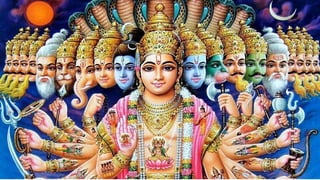
HINDUISM
Hindus believe in one true, formless,
boundless, all-inclusive and eternal God
called Brahman. Hindus have a positive
attitude towards business and wealth
creation, yet wealth is not the ultimate
goal. What is more important are ethics
(dharma), and salvation (moksha).
HINDUISM
For business, prices and profits should be
fair. Tax system should give reasonable
rates, should be economical in its
implementation, and should not have
adverse impact on economic growth. There
must be high taxes on luxury goods. Workers
should receive fair and just wages,
depending on their ability and productivity.
The Influence of Filipino
Value System to Business
Practices
The Influence of FilipinoValue System to Business Practices
Values as defined by organizational behavior are
set of shared conception of what is considered
good, desirable, proper and worthwhile in a
culture. For sociologist, values are ideals or beliefs
that connotes rightness, goodness or inherent
desirability set by the members of a culture. Filipino
practice values that are good and some are bad.
The context of these values depend on how they
are used and it differs for each person.
FilipinoValue System
Filipino values are set of values that most
Filipinos have historically considered
important in their lives which is consistent
with their ideologies, moral codes, ethical
practices, etiquette, cultural and personal
values. The sacredness of these values
may differ on their upbringing, religions
and other reasons.
Roots of Filipino Character
Most of the Filipino values can be traced
from the very own Filipino culture:
•First, though people share universal values
but there are certain values that is distinctly
Filipino values.
•Second, some Filipino values can be
traced from other cultures and value
system.
Roots of Filipino Character
•Third, there are universal human values which
have distinct meaning for Filipino people.
These values have distinct meaning for
Filipino which we commonly based on the
past experiences and our being nationalistic.
•Fourth, Filipino values evolved historically and
it emanates consciously in a given situation.
The FilipinoValue System and Its Effect on Business
• Utang na loob are often viewed as “norm of
reciprocity” which has equivalent meaning to
obligation and responsibility to repay somebody for
owing a favor. In business, utang na loob can be
good or bad depending on a given consideration. It
affects the business when the conduct defied with
ethical issues. Example, when an employee tolerates
her co-employee in doing something wrong such as
theft because it saves her when she was in terrible
situation.
The FilipinoValue System and Its Effect on Business
• Filial piety is a family-centered values that recognize
family as important structure in a society. Filial
son/daughter need to be good to their parents, obey,
takes care, respect and carry out sacrifices during
their parent`s lifetime. In business, the practice of filial
piety usually transpires when family members are
expected to work in their family-owned business. And
in the event, the management, like President or CEO,
are no longer capacitated to handle the business,
retire or die, the benefits, assets, duties and obligation
are transferred to their family heir.
The FilipinoValue System and Its Effect on Business
• Padrino system in our local word is called “palakasan”.
It is a common Filipino culture where somebody in a
position or authority intercede, back up or give favors
to someone`s endeavors usually because they are
family affiliated (nepotism) or friendship (cronyism)
(Ramos, 2018). The system was abused and became a
tool for corruption not just in politics and government
but as well as in business. Some businessman used their
connection to get involved in illegal activities such as
bribery.
The FilipinoValue System and Its Effect on Business
• Effects of nepotism and cronyism in the business.
1. Disruption of the workforce. Workers are low
morale, less motivated and dissatisfied to perform
diligently if they feel that promotion is undermined by
nepotism.
2. Loss of productivity. Usually employees who are
promoted because of their relationship with the
management are underqualified that can lead to
loss of leadership skills and eventually leads to inferior
output.
The FilipinoValue System and Its Effect on Business
•“Suki” means loyal customer. It is a system of
patronage system wherein a loyal customer,
regularly buys goods and services from a
certain seller or company because they
offer low prices, quality products/services,
and they allow credit sales. “Suki” are
beneficial for both clients and sellers. It
follows the concept of “you scratch my
back, I`ll scratch yours”.
The FilipinoValue System and Its Effect on Business
•“Bahala na” is already embedded in a
Filipino culture. Its definition may vary
depending on a situational setting. For some
they used the term “bahala na” as “come
what may” or “whatever will be, will be”
which simply means, surrendering to the
hands of fate especially if they don’t like to
control a situation.
The FilipinoValue System and Its Effect on Business
•“Manana” habit is a Spanish word, meaning
“tomorrow” which means procrastination or
deferring to do a certain thing that can be
possibly done today. Definitely, this is a bad
habit which makes Filipino less efficient in
doing task. It allows people in a workplace
to make an excuses, panic, worried, no
focus and the result is not good and many
missed opportunities.
The FilipinoValue System and Its Effect on Business
•Amor propio is a Spanish word which means,
self-love, self-esteem, personal worth and
sometimes a feeling of excessive pride as
superior to others. Hiya or shame is related to
Amor propio. Balat sibuyas is also related to
amor propio in which the person are super
sensitive to emotional imperatives. "Amor propio"
and "Balat sibuyas" traits are not as favorable
particularly if one is working in the service
business.
The FilipinoValue System and Its Effect on Business
• Humor is an amusing quality which is a positive
coping mechanism of Filipinos to difficult
circumstances. (Meriam Dictionary).
• Adaptability is the ability to adapt changes in the
environment easily. Filipinos have known to have a
high tolerance for uncertainty that enables them to
respond calmly.
• Creativity is an ability to create. Filipinos are very
innovative and often improvise and make use of
whatever is available
The FilipinoValue System and Its Effect on Business
•Faith and Religiosity
Filipinos are known for their strong faith in
God. It includes practices of Holy week,
praying at any possible times, observing
Sunday masses and many more. And in our
practice of being religious it doesn’t conflict
our work life, because we are still
hardworking and industrious.
The FilipinoValue System and Its Effect on Business
• Hard Work and Industry
Filipinos are regarded as hardworking and
industrious. We are known of our determination and
perseverance in accomplishing things that we plan
to do, we performed well in a very demanding task
such as physical labor and highly sophisticated jobs.
These traits are driven by our desire to become
economically stable. Which makes us to never give
up and keep on going to achieved a desirable end.
The FilipinoValue System and Its Effect on Business
• Bribery and Corruption
It has been observed that bribery and corruption was practice
by Filipino people. Some Filipinos are taking advantage of
abusing their power for their personal ambitions and fulfillment.
These traits are unethical business practices.
• General Disregard for Rules.
There are Filipino who fond of breaking or violating rules. Such
as jaywalking, loitering and beating the red light. In a
workplace, rules are very important to protect from legal
claims, maintained orderly and positive work environment
(Klower, 2020) . Rules are not made to be broken!
The FilipinoValue System and Its Effect on Business
• Pagtatakpan
“Pagtatakpan” is also one of a Filipino trait, that covers
the wrong doings of other person. These are negative
traits which you connive one person in doing wrong
and it has no place in a workplace.
• Gossiping
Filipinos has been observed of being found in talking
other`s business. This is unethical in the workplace
because it may inflict and destroys reputation of other
workers.
The FilipinoValue System and Its Effect on Business
•Complacency.
It was also observed that some Filipinos, though
they are aware of certain issues but choose not
to be involved especially if it doesn’t concern or
affect them. This is “walang paki alam” attitude.
According to Ruisi (2017) of Coach Zone,
complacency is one of the most dangerous
threat to any business which caused anybody to
be reluctant to change or performed better.
The FilipinoValue System and Its Effect on Business
•Crab mentality
Is a thinking of “If I can`t have it, neither can
you”? Tendency people pushed somebody
down for their own advantage. These is
undesirable traits which usually happen in a
workplace if there is a competition of position or
promotion
The Influence of Filipino
Value System to Business
Practices

BUSINESS ETHICS AND SOCIAL RESPONSIBILITY.pptx

  • 1.
    BUSINESS ETHICS AND SOCIALRESPONSIBILITY ABM
  • 2.
    Core Principles of Fairness,Accountability, and Transparency
  • 3.
    FAIRNESS This is thestandard of judging which is exempted from bias or prejudice. When someone displays fairness in making decision, he/she pleases all involved parties and offers a solution that is beneficial to everyone. In business context, fairness means balancing the interests involved in all decision-making including those related to hiring, firing, and the compensation and reward system.
  • 4.
    Examples of fairness: 1.A boss listening to both sides of the story before judging who is right and who is wrong. 2. An employer giving 13th month pay to all his/her employees. 3. A person paying the right price for a product purchased or for a service received.
  • 5.
    ACCOUNTABILITY Accountability is theexplication and justification process. It is about testing, forming a judgment, and taking an action if necessary. It also comes with responsibilities. Holding people to account for those actions which they are responsible for is fair. Accountability is therefore an obligation to demonstrate that work has been carried out in accordance with agreed rules and standards, or to report on performance results fairly and accurately in relation to mandated roles and/or plans.
  • 6.
    Examples of accountability: 1.A cashier admits he/she lost the company’s collection and it is his/her mistake. 2. An engineer who is assigned on a project is the one to be blamed if the project did not meet the deadlines. 3. Employee A recommended his cousin to be their company janitor, but the latter stole the cellular phone of their secretary. Therefore, Employee A may be blamed for recommending his/her cousin and should pay or replace the lost cellphone.
  • 7.
    TRANSPARENCY It is describedas a personal quality which is necessary to develop unity between and among individuals. A transparent approach makes a person more honest and sincere in his/her relationships, in communicating his/her points of view, and in working actively to find shared meanings and goals.
  • 8.
    Foundations of the Principleof Business Ethics
  • 9.
    Rufus, on keepingtrack of one’s ethical progress Musonius Rufus •known as the Socrates of Rome •keep track of your progress, to see how you are performing. • keeping track of ourselves means trying to take an evidence-based assessment of our performance.
  • 10.
    Rufus, on keepingtrack of one’s ethical progress We might say we are a green company, but how do we know if we are making progress? We might say we are a happy organization, but how do we know? We can keep track of this, for example by asking our employees (anonymously) how worthwhile they feel their job is. Then see if, in a year, we have managed to enhance their sense of purpose.
  • 11.
    Plutarch, on beinga good role model Plutarch •ancient Greek historian and educator •Parallel Lives - famous work of Plutarch, which offered biographical sketches of some of the great Greek and Roman heroes – Cicero, Caesar, Alexander the Great, Pericles – to give young people something to emulate.
  • 12.
    Plutarch, on beinga good role model In organizational terms, what you say to your employees is less important than what you do. They will watch how you behave, how you treat others, how you cope with pressure and whether you follow through on your promises. And they will imitate you.
  • 13.
    Aristotle, on lettingpeople seek fulfillment Aristotle •insisted that we are naturally virtuous, rational, social and happiness-seeking. • Aristotle's philosophy was an influence on Edward Deci and Richard Ryan's Self- Determination Theory, which suggests that employees will work harder for you, and perform better, if you give them tasks, they find meaningful and morally worthwhile.
  • 14.
    Socrates, on daringto disagree Socrates • insisted on our right to think for ourselves. •he warned, humans sleepwalk through life, simply going along with the crowd.
  • 15.
    Epicurus, on theart of happiness Socrates •Taught that the aim of life was simply to be as happy as possible here on Earth, before we die and dissolve back into the atomic universe. •He warned that humans are very bad at being happy, and very good at inventing reasons to be miserable.
  • 16.
    Epicurus, on theart of happiness Socrates •Taught that the aim of life was simply to be as happy as possible here on Earth, before we die and dissolve back into the atomic universe. •He warned that humans are very bad at being happy, and very good at inventing reasons to be miserable.
  • 17.
    Belief Systems andTheir Influence in Business Practices
  • 18.
    CHRISTIANITY In Christianity, humandignity and concern for people are crucial. This religion also emphasizes a sense of justice in business such as strict adherence to contracts, compliance with regulations, and working for the benefit of the common good. Christians ought to focus on how business impacts individuals, the workers in particular. They should be well-paid and they should find their work meaningful and inspiring.
  • 19.
    CHRISTIANITY A trading Christiandoes not try to win another's products or services for less than it is worth. One should not want to get a decent deal for his own wares by using extortion. If a person buys from a poor seller, that buyer must exercise charity and justice. He/she must pay the full price that the goods are worth. If friends and relatives are not interested in what a Christian vendor sells, the latter should not break off connection with them when they decided to choose differently.
  • 20.
    JUDAISM Judaism, which forits written law relies on the Torah, has greatly influenced marketing and business ideology. Jewish culture, values and ideas, including the modern market, have penetrated many aspects of modern life. Some important points include market honesty, fair pricing, and business relationships.
  • 21.
    JUDAISM Honesty on themarket. •It is illegal for traders to falsify the weight and measurement of the goods or products.
  • 22.
    JUDAISM Fair pricing. •There shouldbe good value for money. You shall not cheat each other when you sell something to your neighbor or buy something from him or her. Likewise, if a person is ignorant of the true worth of an item and wants to sell it, the buyer should not take advantage of the confusion and underpay the seller.
  • 23.
    JUDAISM Business relations. •Employers areobligated to pay workers on schedule. One of the guiding principles for business ethics highlighted in the Jewish tradition is the legitimacy of business activity and profit, conducted within a framework of religious and ethical norms.
  • 24.
    ISLAM Muslims believe inthe Oneness of God—- that all things are created by God and that He is all-powerful and all-knowing. They further believe that God has no offspring, sex, class, body, and He is not affected by human life's characteristics.
  • 25.
    ISLAM For Islam, thesource of rules is the Qur'an. Islamic teachings place great emphasis on respect for ethical and moral codes in human behavior. Islamic principles prevent abusing people through putting restrictions on misleading advertisements. Under Islamic law, if a seller sells an item by making false statements, the buyer shall have the right to cancel the transactions.
  • 26.
    Additionally, according toHayes (1998), the following principles are expected among Muslim businessmen: • Contracts must be fair to both or all parties. • Speculation, such as gambling, is not allowed. If the money comes from the gambling industry, one will not be allowed to invest in the Islamic Mutual Fund. • Interest is prohibited. That is probably the most common thing that is identified with Islamic finance. One moral practice is that one is not allowed to charge or take interest.
  • 27.
    • When abusiness is in trouble, compassion is required. In every country that has Islamic traditions in its legal system, when anyone is in bankruptcy or is suffering financial reversals, one should not put pressure on them. Because when someone is down, it is not the right thing to do. When they are down, one does not kick them. Muslims also believe that business should be conducted in accordance with the rules of nature which God governs.
  • 28.
    BUDDHISM Founded on theteachings of Siddhartha Gautama, who is called “Buddha” or “the enlightened one”, is Buddhism. From the beginning, the basis of Buddhist practice was meditation and the observance of moral precepts. The five fundamental moral precepts practiced by members of the monastic orders and the laity are: refraining from taking property, behaving unchastely, speaking wrongly, stealing, and drinking intoxicants.
  • 29.
    In business, Buddhistsare guided by the following principles: •The goals should be defined. The clearer the goal is, the easier it is to be defined. Is it about gain? Is it giving satisfaction to your customers? •The principle of cause and effect should be followed. We need to use intuition in the case of a business proposal to work out the factors that would take us to our ultimate aim.
  • 30.
    In business, Buddhistsare guided by the following principles: • Empathy and compassion for the customers have to be developed. We need to recognize and always keep in mind the problem that our target customers have in their life and try to solve this issue in the best possible way based on that understanding. Compassion is the basis for a customer-first or a user-centered approach in business.
  • 31.
    In business, Buddhistsare guided by the following principles: • Be flexible, innovative, and mindful of impermanence. Buddhist theory puts into practice another useful insight: everything is constantly changing—we ourselves, the world, and all the people around us.
  • 32.
    In business, Buddhistsare guided by the following principles: • Your team, yourself and the consumer have to be respected. The Buddhist ethics is based on the non-violence principle. They know everyone deserves to be happy and does not want to struggle. If we base our actions on that understanding and try not to harm others, we gain their respect and confidence. It brings trust and understanding in the team if we respect our colleagues. We try to stop doing something offensive behind or in front of people and make ourselves transparent.
  • 33.
    HINDUISM Hindus believe inone true, formless, boundless, all-inclusive and eternal God called Brahman. Hindus have a positive attitude towards business and wealth creation, yet wealth is not the ultimate goal. What is more important are ethics (dharma), and salvation (moksha).
  • 34.
    HINDUISM For business, pricesand profits should be fair. Tax system should give reasonable rates, should be economical in its implementation, and should not have adverse impact on economic growth. There must be high taxes on luxury goods. Workers should receive fair and just wages, depending on their ability and productivity.
  • 35.
    The Influence ofFilipino Value System to Business Practices
  • 36.
    The Influence ofFilipinoValue System to Business Practices Values as defined by organizational behavior are set of shared conception of what is considered good, desirable, proper and worthwhile in a culture. For sociologist, values are ideals or beliefs that connotes rightness, goodness or inherent desirability set by the members of a culture. Filipino practice values that are good and some are bad. The context of these values depend on how they are used and it differs for each person.
  • 37.
    FilipinoValue System Filipino valuesare set of values that most Filipinos have historically considered important in their lives which is consistent with their ideologies, moral codes, ethical practices, etiquette, cultural and personal values. The sacredness of these values may differ on their upbringing, religions and other reasons.
  • 38.
    Roots of FilipinoCharacter Most of the Filipino values can be traced from the very own Filipino culture: •First, though people share universal values but there are certain values that is distinctly Filipino values. •Second, some Filipino values can be traced from other cultures and value system.
  • 39.
    Roots of FilipinoCharacter •Third, there are universal human values which have distinct meaning for Filipino people. These values have distinct meaning for Filipino which we commonly based on the past experiences and our being nationalistic. •Fourth, Filipino values evolved historically and it emanates consciously in a given situation.
  • 40.
    The FilipinoValue Systemand Its Effect on Business • Utang na loob are often viewed as “norm of reciprocity” which has equivalent meaning to obligation and responsibility to repay somebody for owing a favor. In business, utang na loob can be good or bad depending on a given consideration. It affects the business when the conduct defied with ethical issues. Example, when an employee tolerates her co-employee in doing something wrong such as theft because it saves her when she was in terrible situation.
  • 41.
    The FilipinoValue Systemand Its Effect on Business • Filial piety is a family-centered values that recognize family as important structure in a society. Filial son/daughter need to be good to their parents, obey, takes care, respect and carry out sacrifices during their parent`s lifetime. In business, the practice of filial piety usually transpires when family members are expected to work in their family-owned business. And in the event, the management, like President or CEO, are no longer capacitated to handle the business, retire or die, the benefits, assets, duties and obligation are transferred to their family heir.
  • 42.
    The FilipinoValue Systemand Its Effect on Business • Padrino system in our local word is called “palakasan”. It is a common Filipino culture where somebody in a position or authority intercede, back up or give favors to someone`s endeavors usually because they are family affiliated (nepotism) or friendship (cronyism) (Ramos, 2018). The system was abused and became a tool for corruption not just in politics and government but as well as in business. Some businessman used their connection to get involved in illegal activities such as bribery.
  • 43.
    The FilipinoValue Systemand Its Effect on Business • Effects of nepotism and cronyism in the business. 1. Disruption of the workforce. Workers are low morale, less motivated and dissatisfied to perform diligently if they feel that promotion is undermined by nepotism. 2. Loss of productivity. Usually employees who are promoted because of their relationship with the management are underqualified that can lead to loss of leadership skills and eventually leads to inferior output.
  • 44.
    The FilipinoValue Systemand Its Effect on Business •“Suki” means loyal customer. It is a system of patronage system wherein a loyal customer, regularly buys goods and services from a certain seller or company because they offer low prices, quality products/services, and they allow credit sales. “Suki” are beneficial for both clients and sellers. It follows the concept of “you scratch my back, I`ll scratch yours”.
  • 45.
    The FilipinoValue Systemand Its Effect on Business •“Bahala na” is already embedded in a Filipino culture. Its definition may vary depending on a situational setting. For some they used the term “bahala na” as “come what may” or “whatever will be, will be” which simply means, surrendering to the hands of fate especially if they don’t like to control a situation.
  • 46.
    The FilipinoValue Systemand Its Effect on Business •“Manana” habit is a Spanish word, meaning “tomorrow” which means procrastination or deferring to do a certain thing that can be possibly done today. Definitely, this is a bad habit which makes Filipino less efficient in doing task. It allows people in a workplace to make an excuses, panic, worried, no focus and the result is not good and many missed opportunities.
  • 47.
    The FilipinoValue Systemand Its Effect on Business •Amor propio is a Spanish word which means, self-love, self-esteem, personal worth and sometimes a feeling of excessive pride as superior to others. Hiya or shame is related to Amor propio. Balat sibuyas is also related to amor propio in which the person are super sensitive to emotional imperatives. "Amor propio" and "Balat sibuyas" traits are not as favorable particularly if one is working in the service business.
  • 48.
    The FilipinoValue Systemand Its Effect on Business • Humor is an amusing quality which is a positive coping mechanism of Filipinos to difficult circumstances. (Meriam Dictionary). • Adaptability is the ability to adapt changes in the environment easily. Filipinos have known to have a high tolerance for uncertainty that enables them to respond calmly. • Creativity is an ability to create. Filipinos are very innovative and often improvise and make use of whatever is available
  • 49.
    The FilipinoValue Systemand Its Effect on Business •Faith and Religiosity Filipinos are known for their strong faith in God. It includes practices of Holy week, praying at any possible times, observing Sunday masses and many more. And in our practice of being religious it doesn’t conflict our work life, because we are still hardworking and industrious.
  • 50.
    The FilipinoValue Systemand Its Effect on Business • Hard Work and Industry Filipinos are regarded as hardworking and industrious. We are known of our determination and perseverance in accomplishing things that we plan to do, we performed well in a very demanding task such as physical labor and highly sophisticated jobs. These traits are driven by our desire to become economically stable. Which makes us to never give up and keep on going to achieved a desirable end.
  • 51.
    The FilipinoValue Systemand Its Effect on Business • Bribery and Corruption It has been observed that bribery and corruption was practice by Filipino people. Some Filipinos are taking advantage of abusing their power for their personal ambitions and fulfillment. These traits are unethical business practices. • General Disregard for Rules. There are Filipino who fond of breaking or violating rules. Such as jaywalking, loitering and beating the red light. In a workplace, rules are very important to protect from legal claims, maintained orderly and positive work environment (Klower, 2020) . Rules are not made to be broken!
  • 52.
    The FilipinoValue Systemand Its Effect on Business • Pagtatakpan “Pagtatakpan” is also one of a Filipino trait, that covers the wrong doings of other person. These are negative traits which you connive one person in doing wrong and it has no place in a workplace. • Gossiping Filipinos has been observed of being found in talking other`s business. This is unethical in the workplace because it may inflict and destroys reputation of other workers.
  • 53.
    The FilipinoValue Systemand Its Effect on Business •Complacency. It was also observed that some Filipinos, though they are aware of certain issues but choose not to be involved especially if it doesn’t concern or affect them. This is “walang paki alam” attitude. According to Ruisi (2017) of Coach Zone, complacency is one of the most dangerous threat to any business which caused anybody to be reluctant to change or performed better.
  • 54.
    The FilipinoValue Systemand Its Effect on Business •Crab mentality Is a thinking of “If I can`t have it, neither can you”? Tendency people pushed somebody down for their own advantage. These is undesirable traits which usually happen in a workplace if there is a competition of position or promotion
  • 55.
    The Influence ofFilipino Value System to Business Practices

Editor's Notes

  • #3 Employees think of their organizations as just when the rewards and the way they are distributed are fair. Fairness is giving to a person what is due to him/her. It has something to do with justice because the employer checks whether the members have the benefits and burdens distributed evenly to them.
  • #5 Employees think of their organizations as just when the rewards and the way they are distributed are fair. Fairness is giving to a person what is due to him/her. It has something to do with justice because the employer checks whether the members have the benefits and burdens distributed evenly to them.
  • #7 For example, adequate disclosure is required to inform donors of how an organization uses its money.
  • #9 Ancient Greeks learned to keep accounts of themselves. They would track their daily behavior in journals, keeping account of how many times they lost their temper, for example, or got too drunk. Then they could see if they were really improving their behavior, or just going around in circles. 
  • #10 Ancient Greeks learned to keep accounts of themselves. They would track their daily behavior in journals, keeping account of how many times they lost their temper, for example, or got too drunk. Then they could see if they were really improving their behavior, or just going around in circles. 
  • #11 understood that humans are incredibly social creatures, who constantly observe the people around them and imitate them
  • #12 If you talk about ethics and then cut corners at the first opportunity, they will follow your lead. Set a good example and they will follow it. Plutarch would also warn that your best young employees will use you as a bar to aim for and exceed. That's natural. Let them compete with you and encourage them to go further
  • #13 If you talk about ethics and then cut corners at the first opportunity, they will follow your lead. Set a good example and they will follow it. Plutarch would also warn that your best young employees will use you as a bar to aim for and exceed. That's natural. Let them compete with you and encourage them to go further
  • #14 If you talk about ethics and then cut corners at the first opportunity, they will follow your lead. Set a good example and they will follow it. Plutarch would also warn that your best young employees will use you as a bar to aim for and exceed. That's natural. Let them compete with you and encourage them to go further
  • #15 If you talk about ethics and then cut corners at the first opportunity, they will follow your lead. Set a good example and they will follow it. Plutarch would also warn that your best young employees will use you as a bar to aim for and exceed. That's natural. Let them compete with you and encourage them to go further
  • #16 Philosophy should teach us how to be happy, he suggested. For example, it could teach us how to bring our attention to the present moment, to savor it. It could also teach us to limit our desires to what is easy to get, not inflating our needs with endless artificially stimulated desires.
  • #17 Along with other influences such as our personality, genetic set-up, and behaviors, our belief system, such as religion, is one of the greatest forces influencing every decision we make. Religion highly affects our lives, whether personal or not. Some of the world’s major religions are Christianity, Judaism, Islam, Buddhism, and Hinduism. Each has its own organized system of beliefs, ceremonies, and worship, and each one offers prescriptions for a positive effort in both life and business.
  • #20 Jews believe there is one God, who not only created the world, but who every Jew should have an intimate and interpersonal relationship with. They believe that God works continuously in the world and affects all that people do.
  • #30 It is crucial to understand the challenge that our potential customers may encounter, and to have an empathic approach towards it.
  • #31 It is very easy to get caught with an idea that seems logical and solid, but it often becomes a trigger for narrow-minded thinking, stubbornness, and inflexibility in a rapidly changing reality.
  • #32 Buddhists pursue the "right livelihood" and are usually against businesses that do not really care for the environment or harm animals. 
  • #38 Example of these values are “hindi labis, hindi kulang, katamtaman lang” which corresponds to the Greek moderation called meden agan.
  • #39 Example, God fearing and family solidarity which came from other country particularly in Asia. Example, bahala na, this values can be negative and can also be positive. It became negative, if this value is used by a person in making decision without planning and evaluating or if he pushes an undertaking and become helpless or come what may. However, it became positive, if this values are used by entrepreneur in taking risk and courage to start a business. Example, bayanihan, when a disaster happens in a certain place, like what happen to Tacloban when Yolanda typhoon struck
  • #40 This favor is typically unquantifiable debt that goes into deeper personal internal dimension and oftentimes continues up to the next generation.
  • #41 Usually this values are very common in Chinese tradition and considered as a serious business for Chinese people (Waldmeir, 2020). And we Filipipo people are also practicing it. This is called family succession.
  • #43 Usually this values are very common in Chinese tradition and considered as a serious business for Chinese people (Waldmeir, 2020). And we Filipipo people are also practicing it. This is called family succession.
  • #44 Sellers are helped by easy and continuous disposal of their product, more profit, given protection and even influence. For Buyers, having a “suki” enables them to purchased goods and services on credit, availed free delivery and discounts and the assurance of quality products. 
  • #45 Others, represent this as “luck” which allow things to happen instead of doing something. Originally, the term “bahala na” came from the word “Bathala Na” or God which is deeply rooted in the religiosity of Filipino people. It adopts the idea “I have done my part, and let God do the rest”. The term “Bahala na” is good in the business if it means the attitude of courage. Entrepreneur are known for being a risk taker. And their determination to do their best in every challenges of their business endeavors makes them successful.
  • #52 Others, represent this as “luck” which allow things to happen instead of doing something. Originally, the term “bahala na” came from the word “Bathala Na” or God which is deeply rooted in the religiosity of Filipino people. It adopts the idea “I have done my part, and let God do the rest”. The term “Bahala na” is good in the business if it means the attitude of courage. Entrepreneur are known for being a risk taker. And their determination to do their best in every challenges of their business endeavors makes them successful.