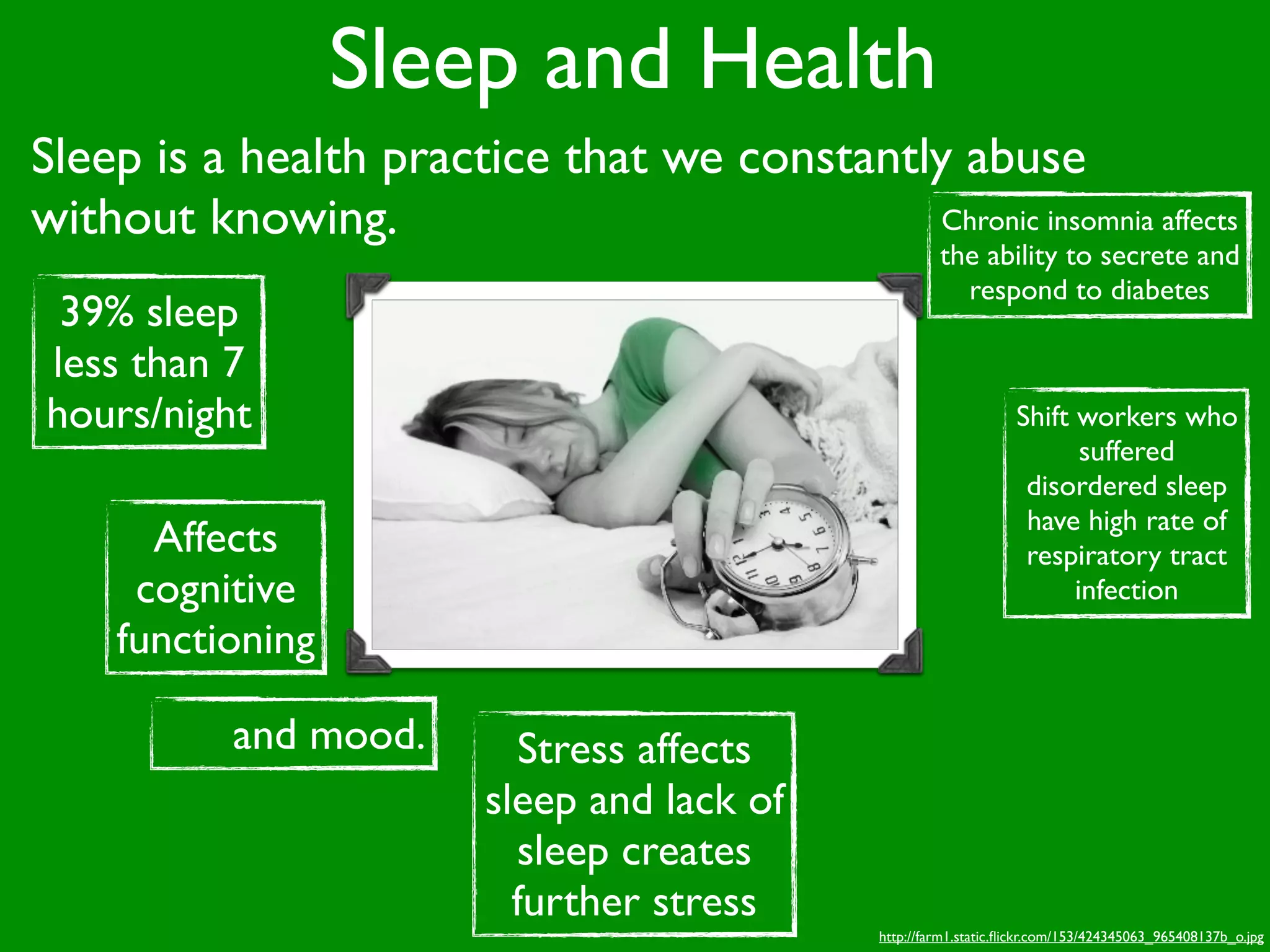
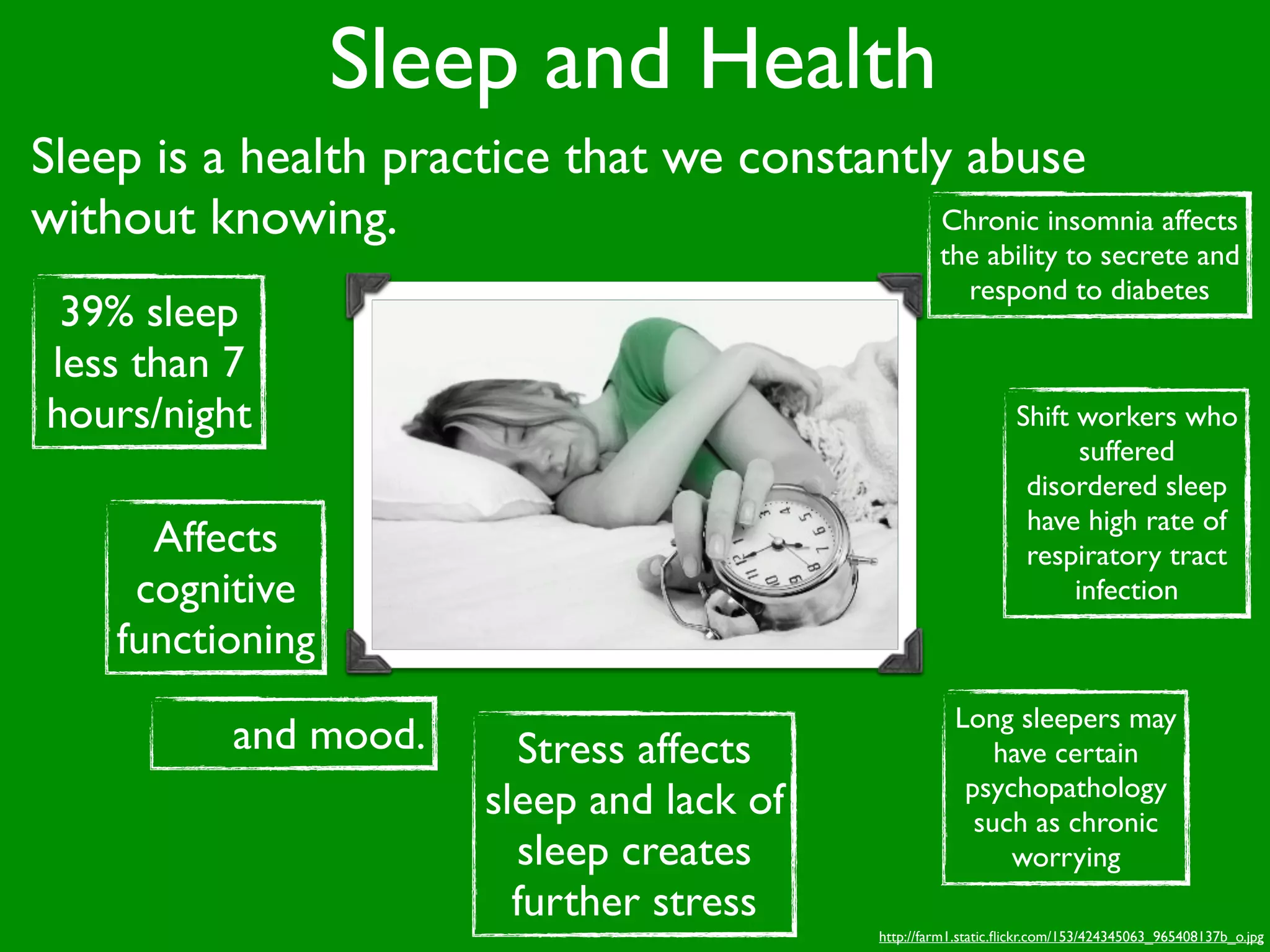
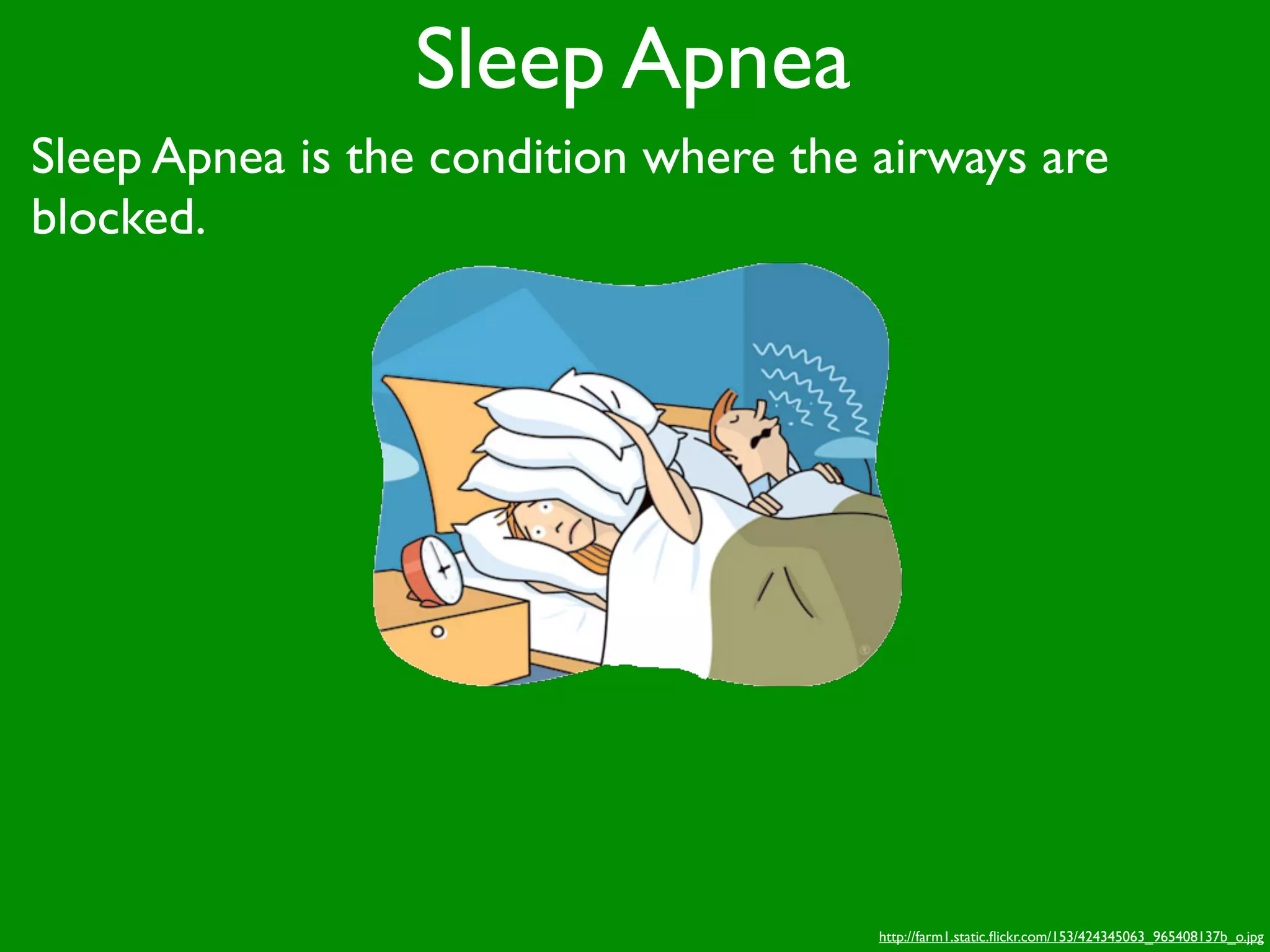
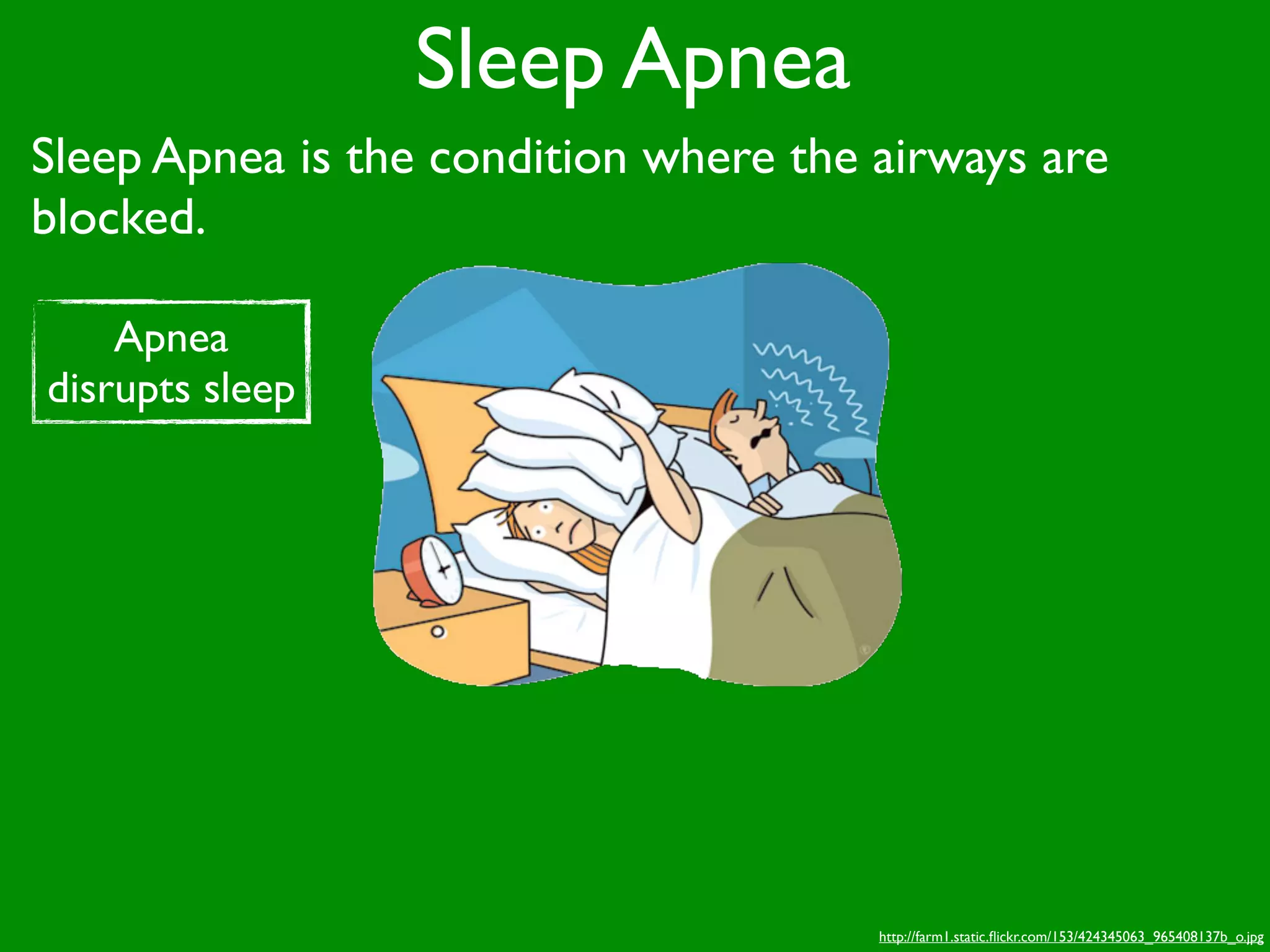
http://gnosticgirl.files.wordpress.com/2011/01/helping_hand.jpg


Specific Health-Related Behaviours


School of Health Sciences
Taylor, S. E. (2009). Health Psychology
       (7th Edn). Pages 81 - 114.
Singapore: Mcgraw-Hill International.
                                                              http://pedpsych.coe.uh.edu/Future.jpg
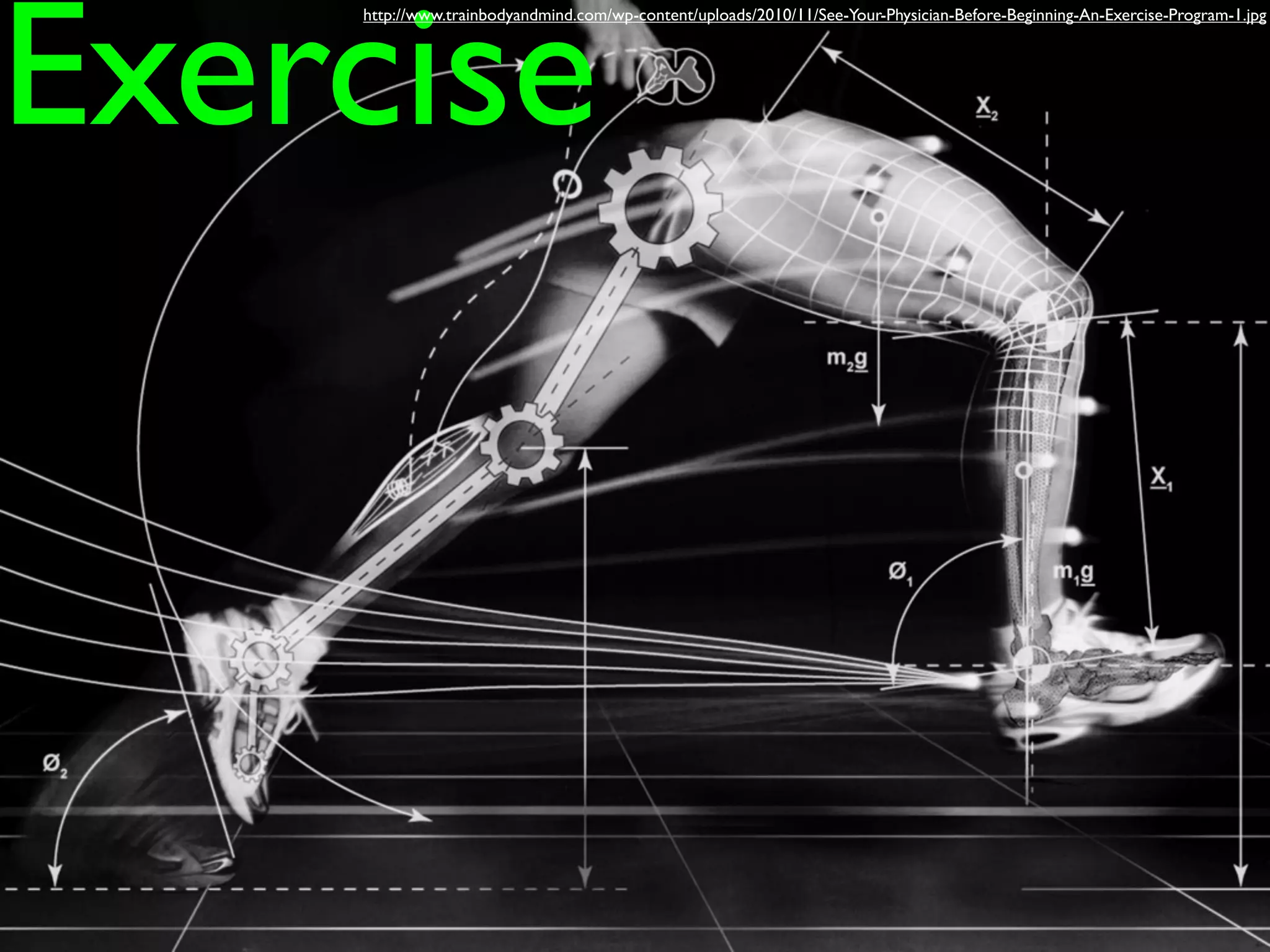
Exercise
    http://www.trainbodyandmind.com/wp-content/uploads/2010/11/See-Your-Physician-Before-Beginning-An-Exercise-Program-1.jpg
Exercise
Exercise
Benefits:
Exercise
Benefits:
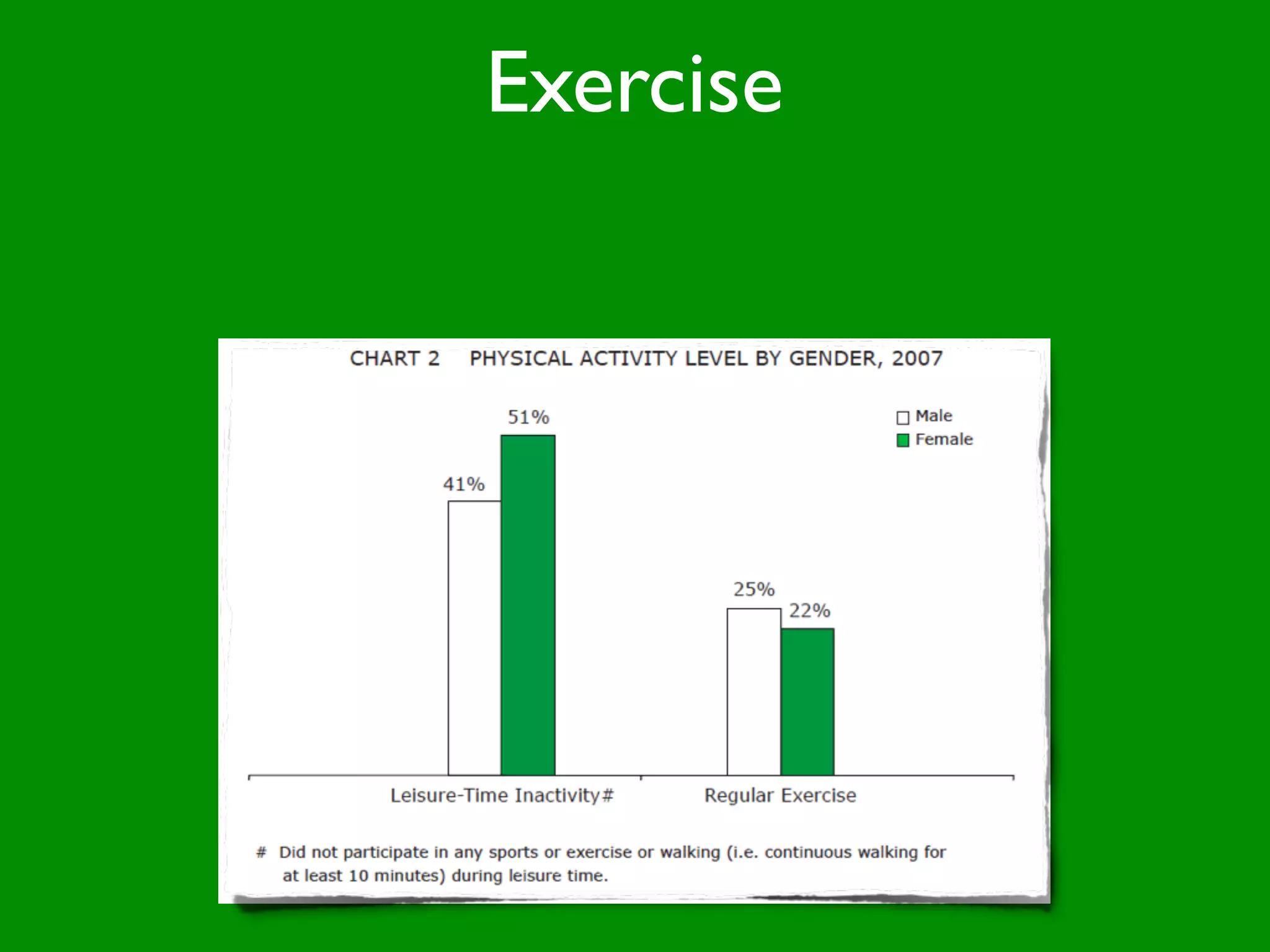
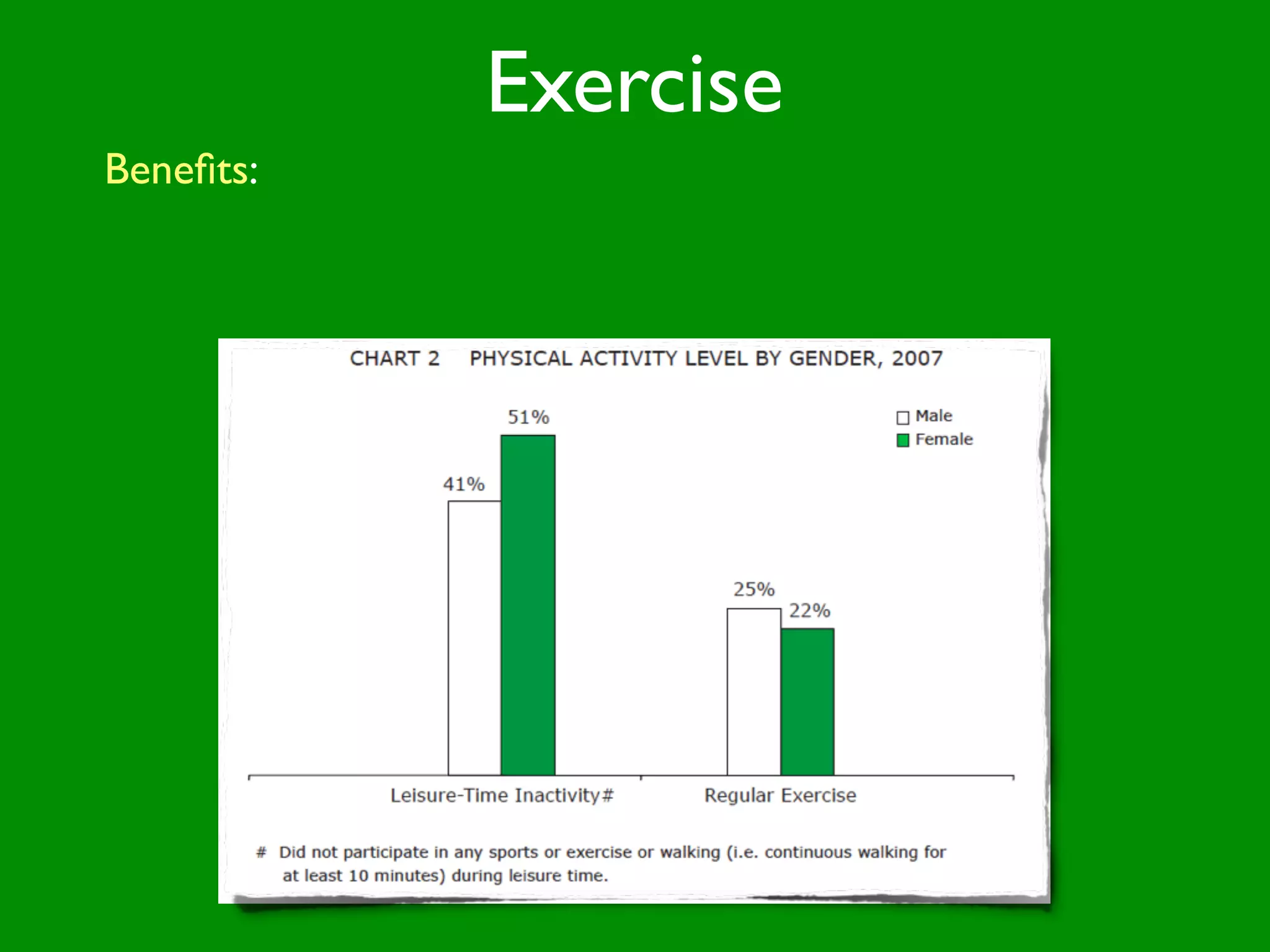
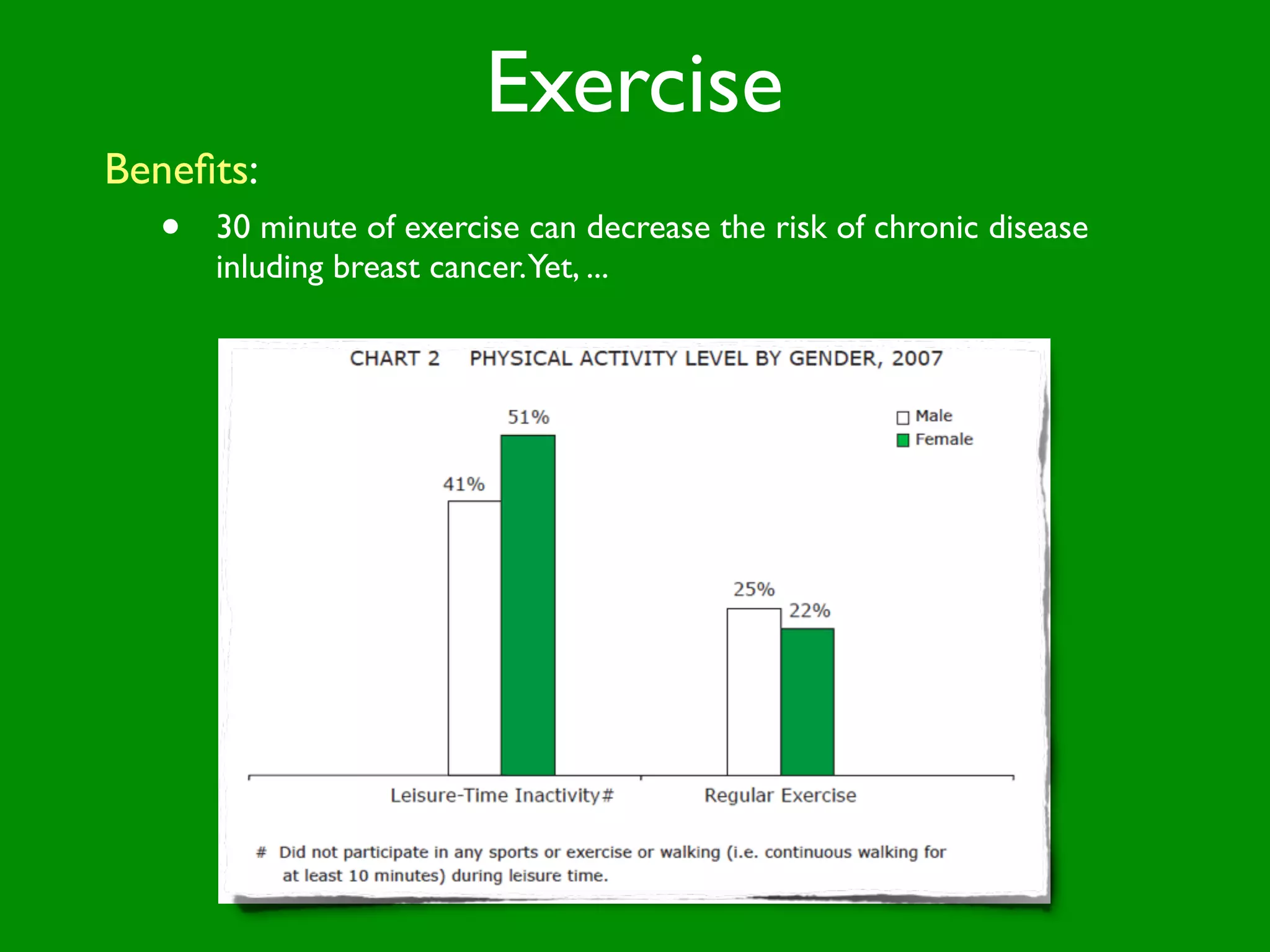
  •   30 minute of exercise can decrease the risk of chronic disease
      inluding breast cancer.Yet, ...
Determinants of Regular Exercise
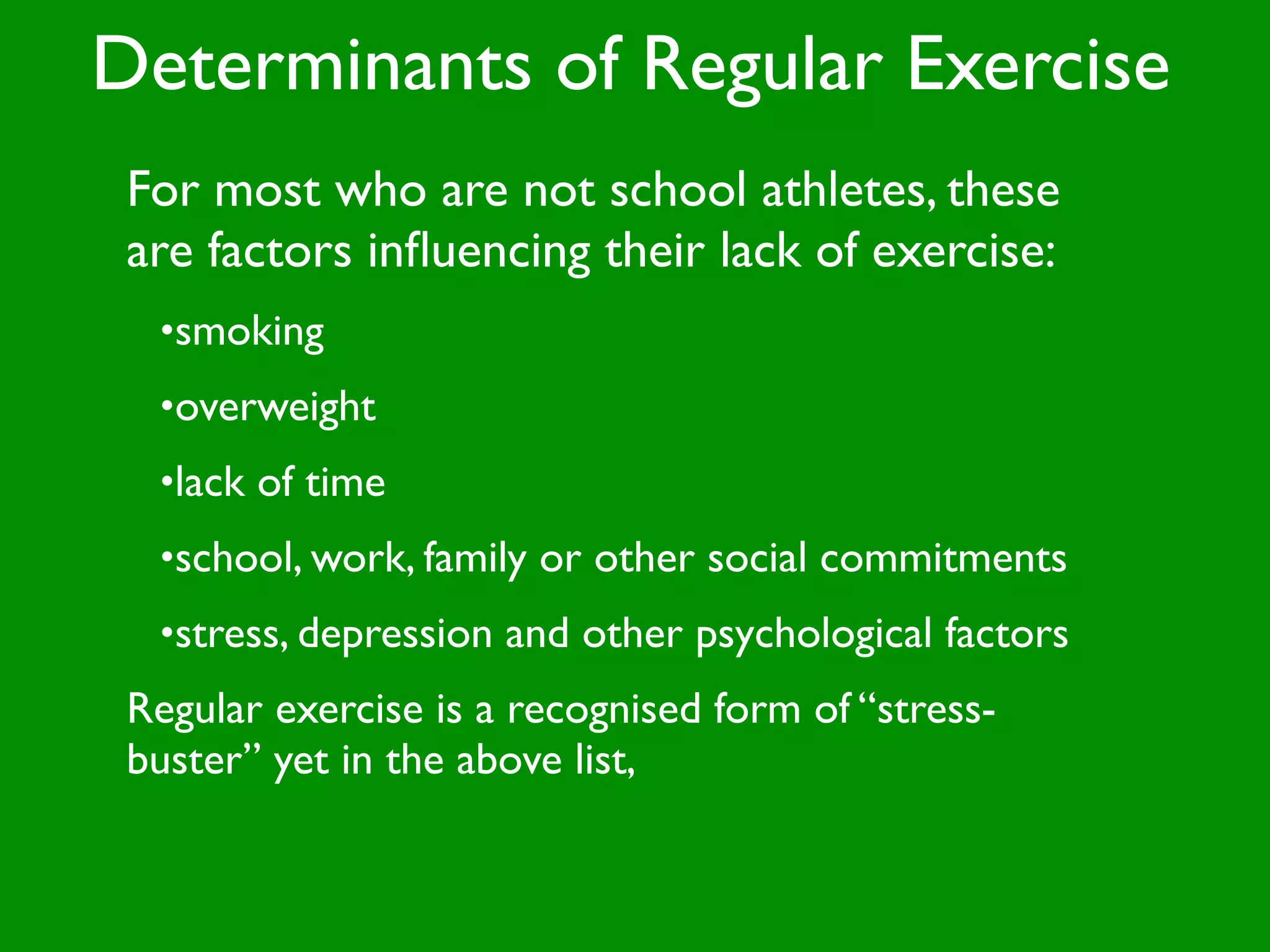
 For most who are not school athletes, these
 are factors influencing their lack of exercise:
Determinants of Regular Exercise
 For most who are not school athletes, these
 are factors influencing their lack of exercise:
  •smoking
Determinants of Regular Exercise
 For most who are not school athletes, these
 are factors influencing their lack of exercise:
  •smoking
  •overweight
Determinants of Regular Exercise
 For most who are not school athletes, these
 are factors influencing their lack of exercise:
  •smoking
  •overweight
  •lack of time
Determinants of Regular Exercise
 For most who are not school athletes, these
 are factors influencing their lack of exercise:
  •smoking
  •overweight
  •lack of time
  •school, work, family or other social commitments
Determinants of Regular Exercise
 For most who are not school athletes, these
 are factors influencing their lack of exercise:
  •smoking
  •overweight
  •lack of time
  •school, work, family or other social commitments
  •stress, depression and other psychological factors
Determinants of Regular Exercise
 For most who are not school athletes, these
 are factors influencing their lack of exercise:
  •smoking
  •overweight
  •lack of time
  •school, work, family or other social commitments
  •stress, depression and other psychological factors
 Regular exercise is a recognised form of “stress-
 buster” yet in the above list,
Determinants of Regular Exercise
 For most who are not school athletes, these
 are factors influencing their lack of exercise:
  •smoking
  •overweight
  •lack of time
  •school, work, family or other social commitments
  •stress, depression and other psychological factors
 Regular exercise is a recognised form of “stress-
 buster” yet in the above list,
 stress is the main reason why people DON’T
 exercise.
Characteristics Influencing
    Regular Exercise
Characteristics Influencing
       Regular Exercise
Convenient and Easy Access
Characteristics Influencing
       Regular Exercise
Convenient and Easy Access
 •people are more likely to work out if the exercise takes
  place near home.
Characteristics Influencing
       Regular Exercise
Convenient and Easy Access
 •people are more likely to work out if the exercise takes
  place near home.
Regular exercise breeds more regular exercise
Characteristics Influencing
       Regular Exercise
Convenient and Easy Access
 •people are more likely to work out if the exercise takes
  place near home.
Regular exercise breeds more regular exercise
 •people usually drop out within 6 months of a regular
  exercise regime. Beyond 6 months, most continued with
  routine.
Characteristics Influencing
       Regular Exercise
Convenient and Easy Access
 •people are more likely to work out if the exercise takes
  place near home.
Regular exercise breeds more regular exercise
 •people usually drop out within 6 months of a regular
  exercise regime. Beyond 6 months, most continued with
  routine.
Strong will-power needed
Characteristics Influencing
       Regular Exercise
Convenient and Easy Access
 •people are more likely to work out if the exercise takes
  place near home.
Regular exercise breeds more regular exercise
 •people usually drop out within 6 months of a regular
  exercise regime. Beyond 6 months, most continued with
  routine.
Strong will-power needed
 •exercise is not easy and will-power is needed to sustain
  individual for the first 6 months and beyond.
Intervention
Intervention
Theory of Planned Behaviour
Intervention
Theory of Planned Behaviour
 •I think I can do it, I want to do it, I will do it.
Intervention
Theory of Planned Behaviour
 •I think I can do it, I want to do it, I will do it.
 •continency contracting, self-reinforcing and goal setting are
  important
Intervention
Theory of Planned Behaviour
 •I think I can do it, I want to do it, I will do it.
 •continency contracting, self-reinforcing and goal setting are
  important
Spiral model of the Stages of Change Theory
Intervention
Theory of Planned Behaviour
 •I think I can do it, I want to do it, I will do it.
 •continency contracting, self-reinforcing and goal setting are
  important
Spiral model of the Stages of Change Theory
 •pre-contemplative and contemplative may envelope people
  with self-doubt about their ability to exercise.
Intervention
Theory of Planned Behaviour
 •I think I can do it, I want to do it, I will do it.
 •continency contracting, self-reinforcing and goal setting are
  important
Spiral model of the Stages of Change Theory
 •pre-contemplative and contemplative may envelope people
  with self-doubt about their ability to exercise.
 •removing these real or perceive obstacles will push the
  individual towards action stage.
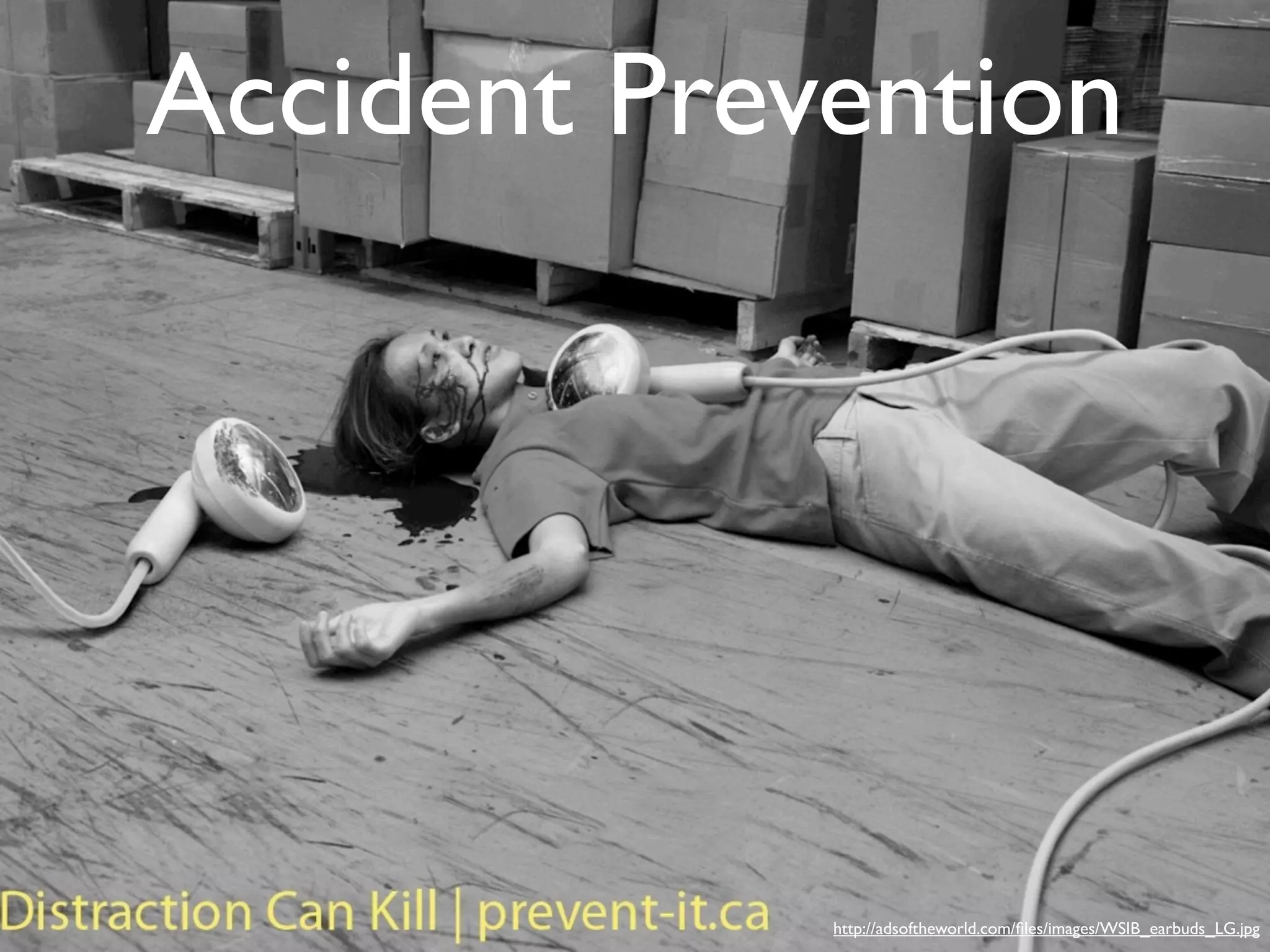
Accident Prevention


             http://adsoftheworld.com/files/images/WSIB_earbuds_LG.jpg
Home Accidents
Home Accidents
In the US, accidents in the home are one of the leading
causes of deaths for children under 5 through:
Home Accidents
In the US, accidents in the home are one of the leading
causes of deaths for children under 5 through:
 •falls and accidental poisoning.
Home Accidents
In the US, accidents in the home are one of the leading
causes of deaths for children under 5 through:
 •falls and accidental poisoning.
 •Ages 0-4 are the most accident-prone
Home Accidents
In the US, accidents in the home are one of the leading
causes of deaths for children under 5 through:
 •falls and accidental poisoning.
 •Ages 0-4 are the most accident-prone

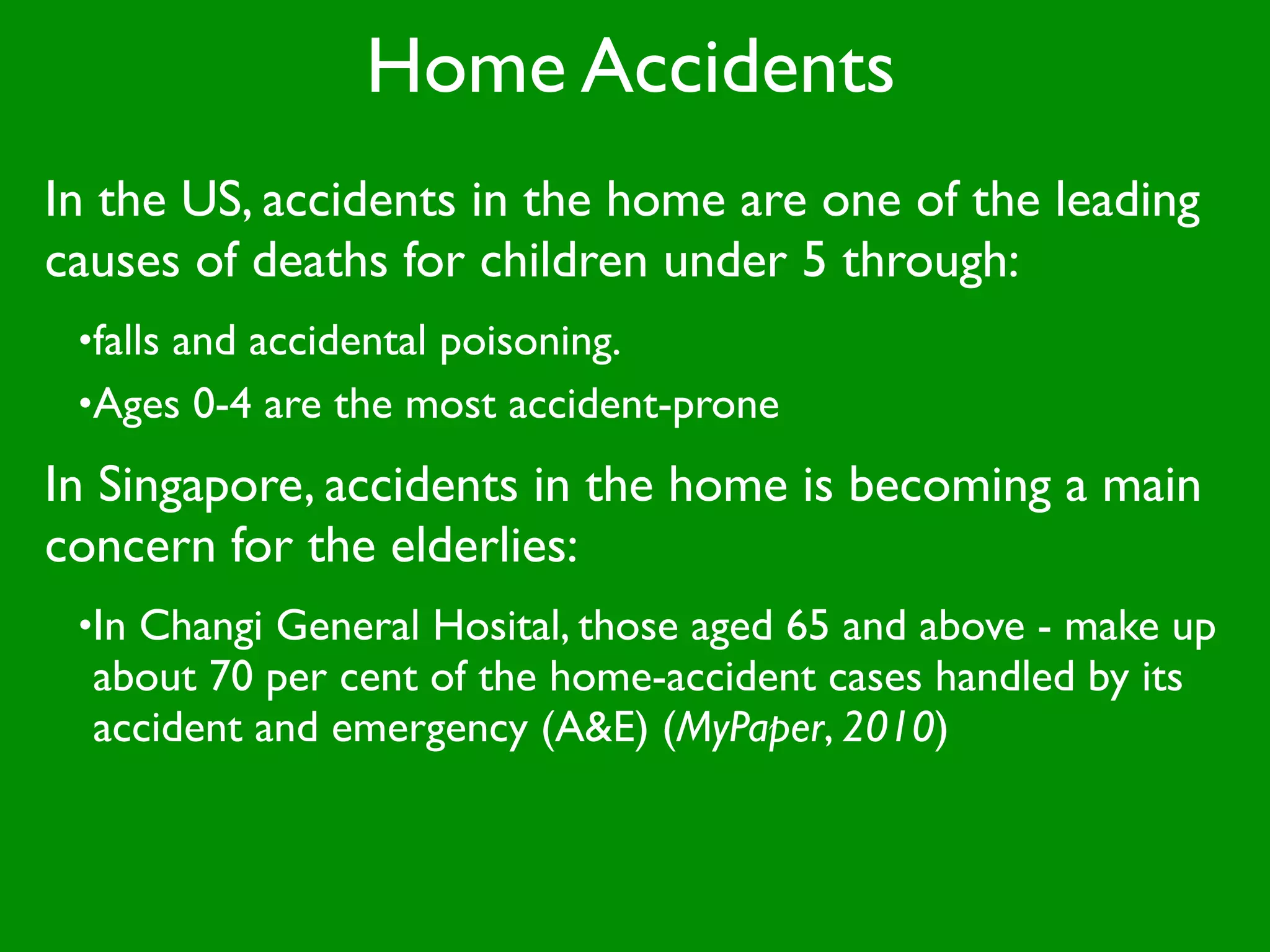
In Singapore, accidents in the home is becoming a main
concern for the elderlies:
Home Accidents
In the US, accidents in the home are one of the leading
causes of deaths for children under 5 through:
 •falls and accidental poisoning.
 •Ages 0-4 are the most accident-prone

In Singapore, accidents in the home is becoming a main
concern for the elderlies:
 •In Changi General Hosital, those aged 65 and above - make up
  about 70 per cent of the home-accident cases handled by its
  accident and emergency (A&E) (MyPaper, 2010)
Home Accidents
In the US, accidents in the home are one of the leading
causes of deaths for children under 5 through:
 •falls and accidental poisoning.
 •Ages 0-4 are the most accident-prone

In Singapore, accidents in the home is becoming a main
concern for the elderlies:
 •In Changi General Hosital, those aged 65 and above - make up
  about 70 per cent of the home-accident cases handled by its
  accident and emergency (A&E) (MyPaper, 2010)
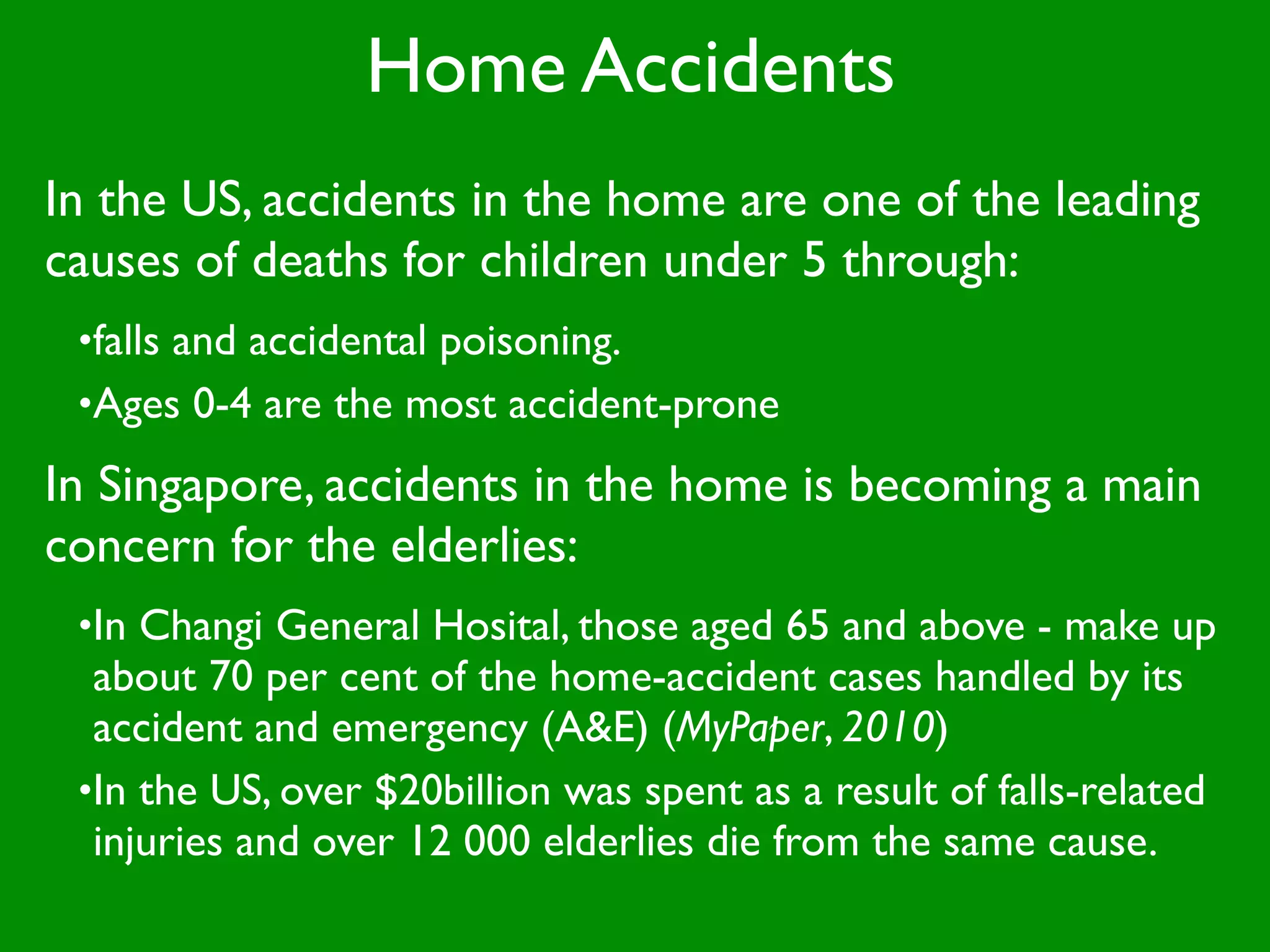
 •In the US, over $20billion was spent as a result of falls-related
  injuries and over 12 000 elderlies die from the same cause.
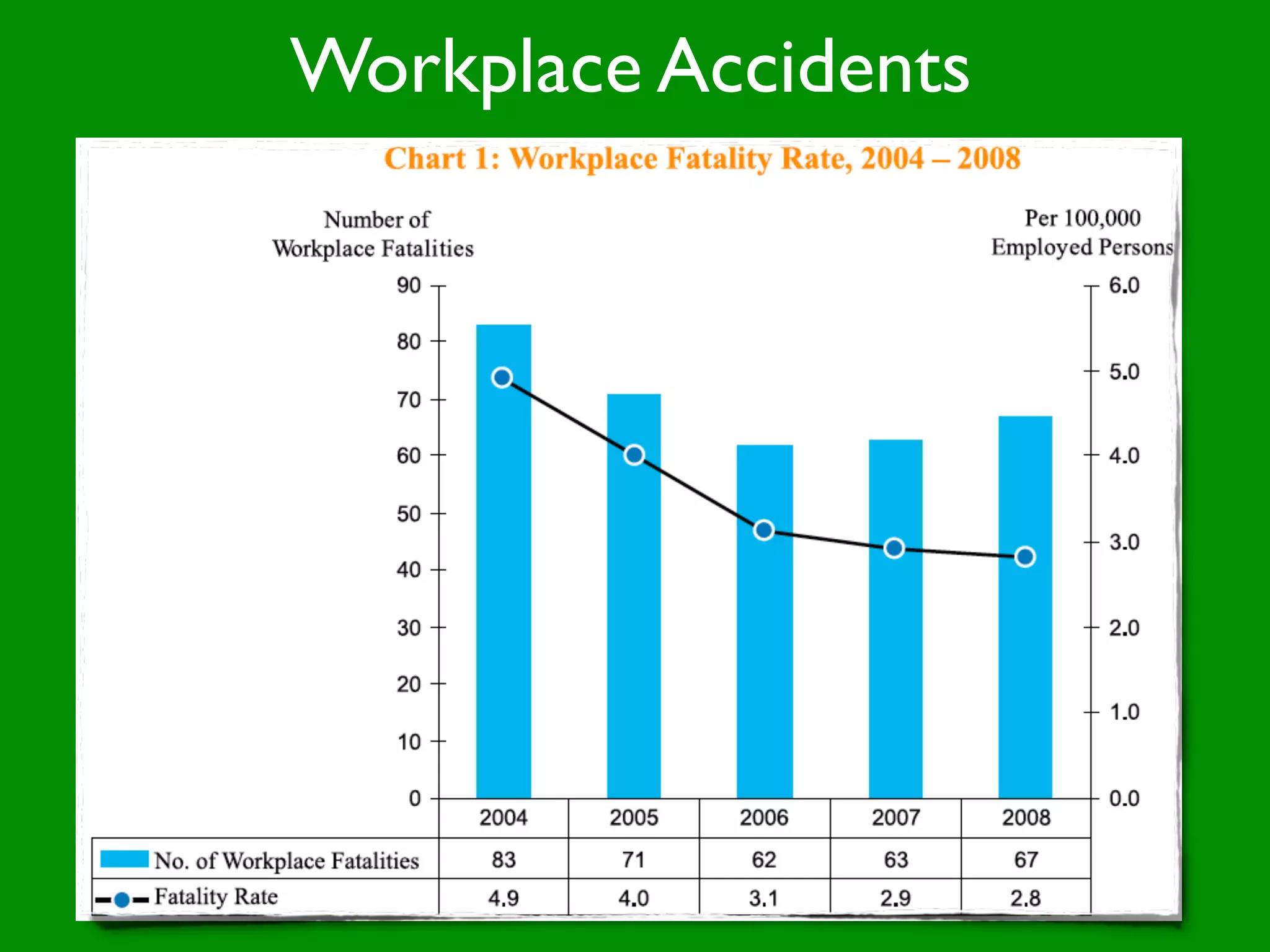
Workplace Accidents
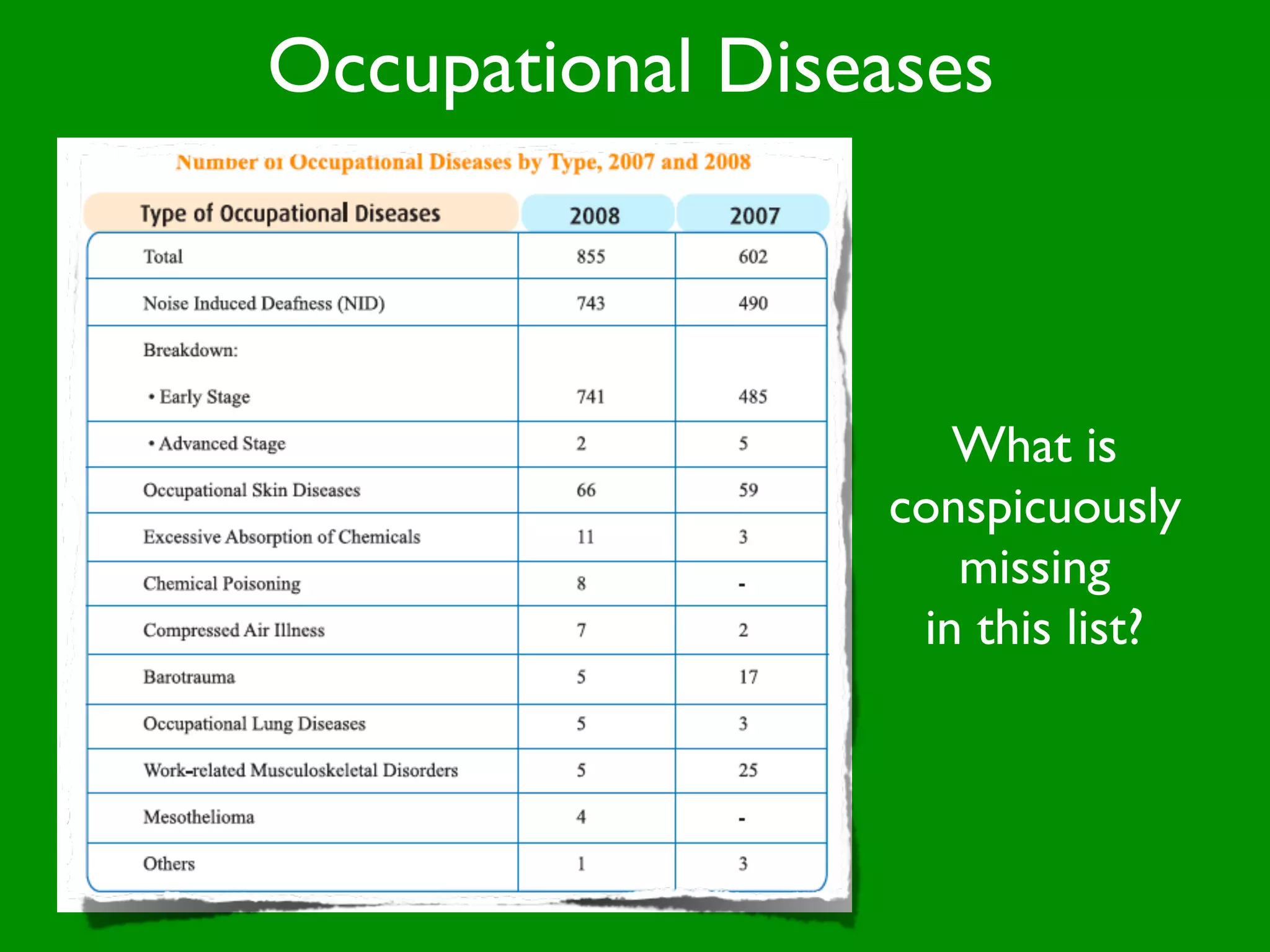
Occupational Diseases


                    What is
                 conspicuously
                    missing
                  in this list?
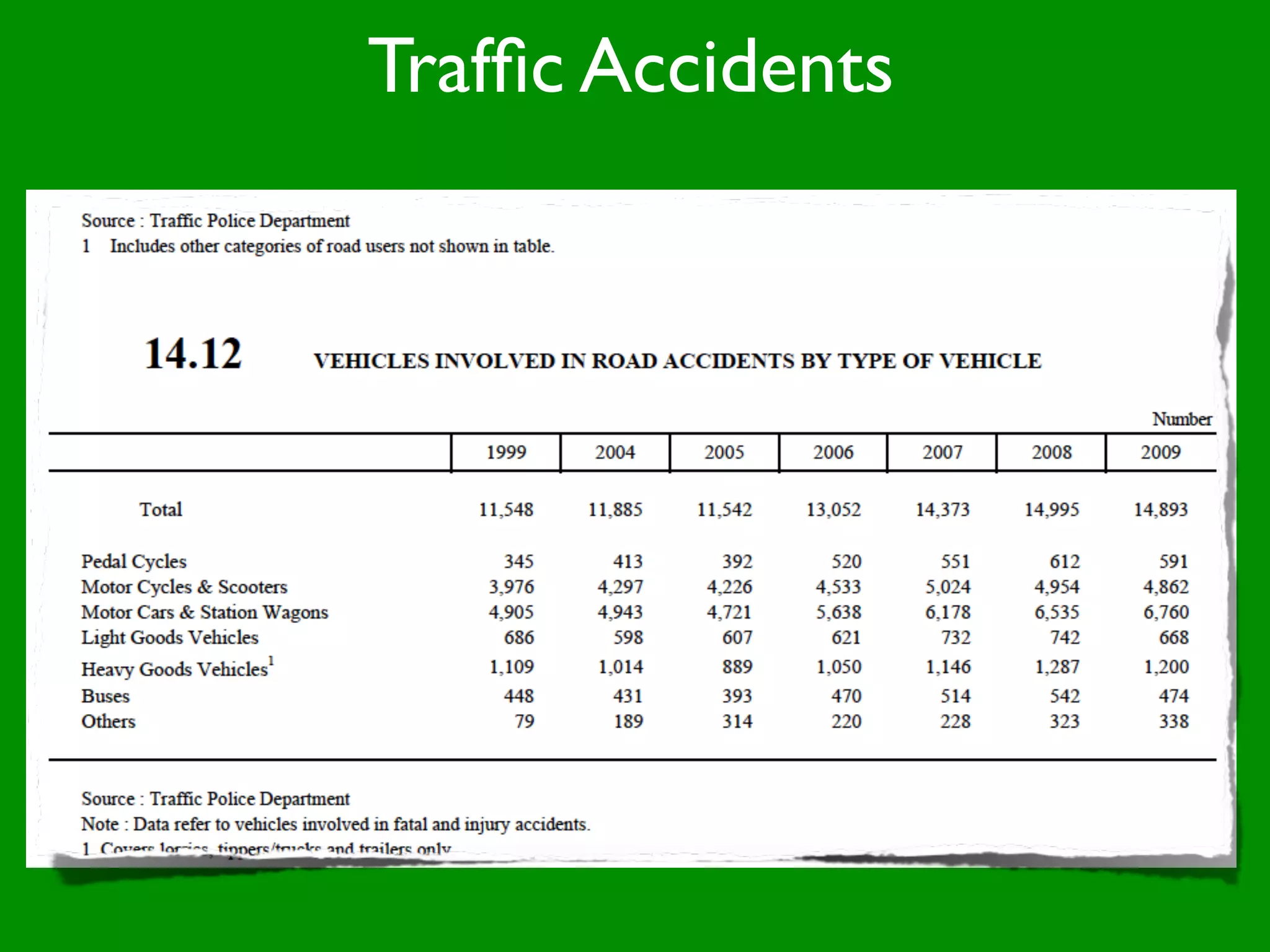
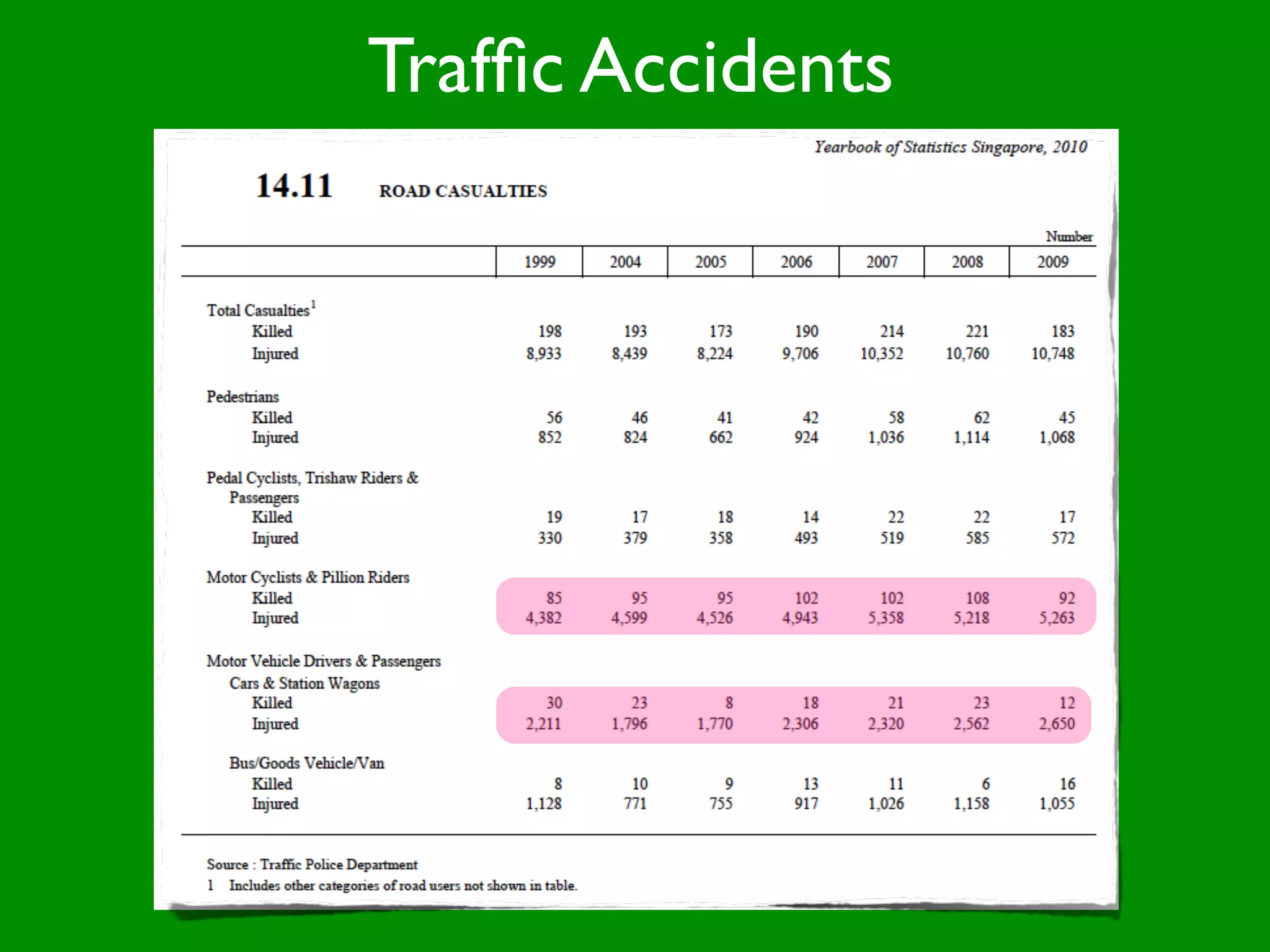
Traffic Accidents
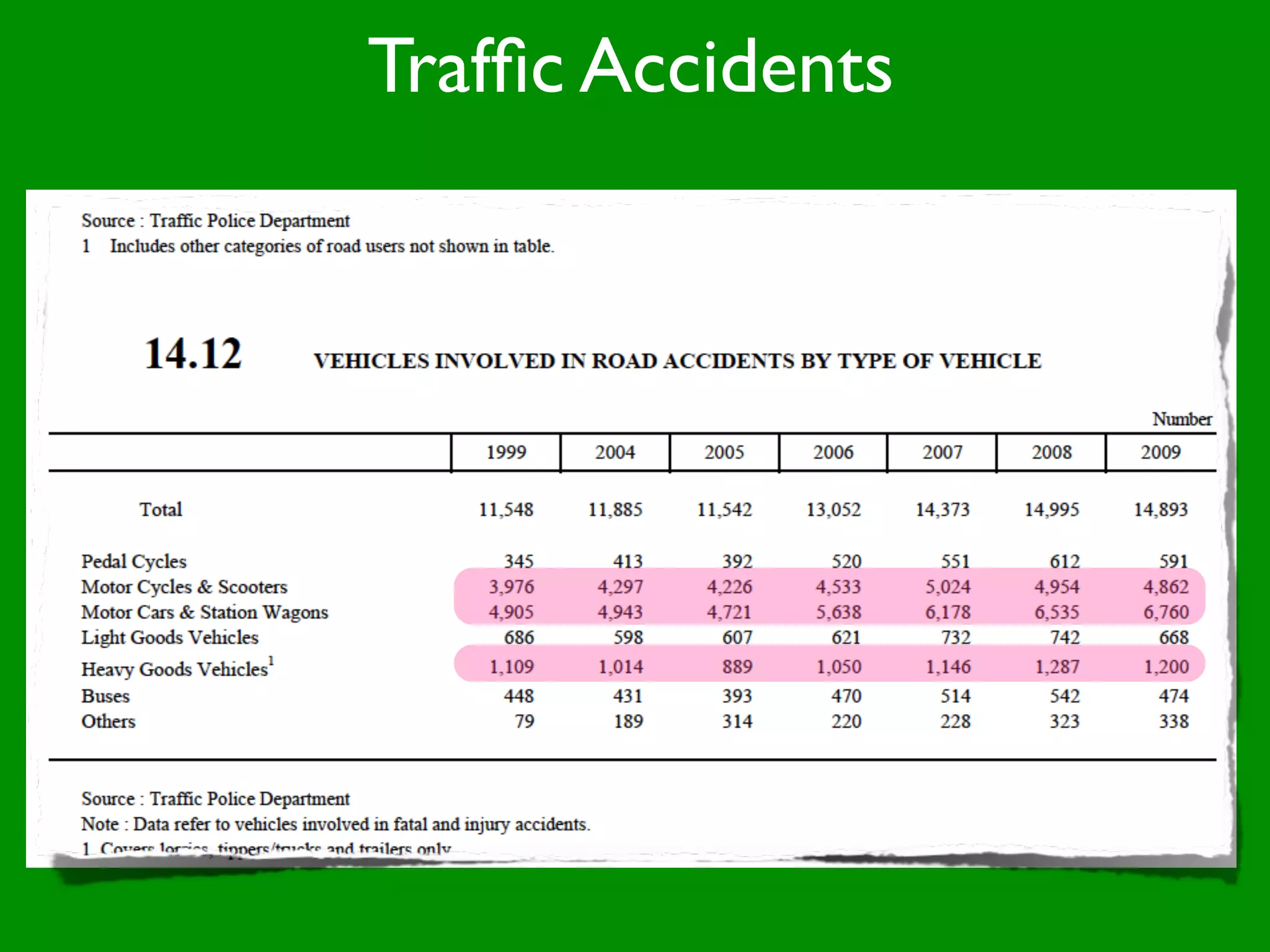
Traffic Accidents
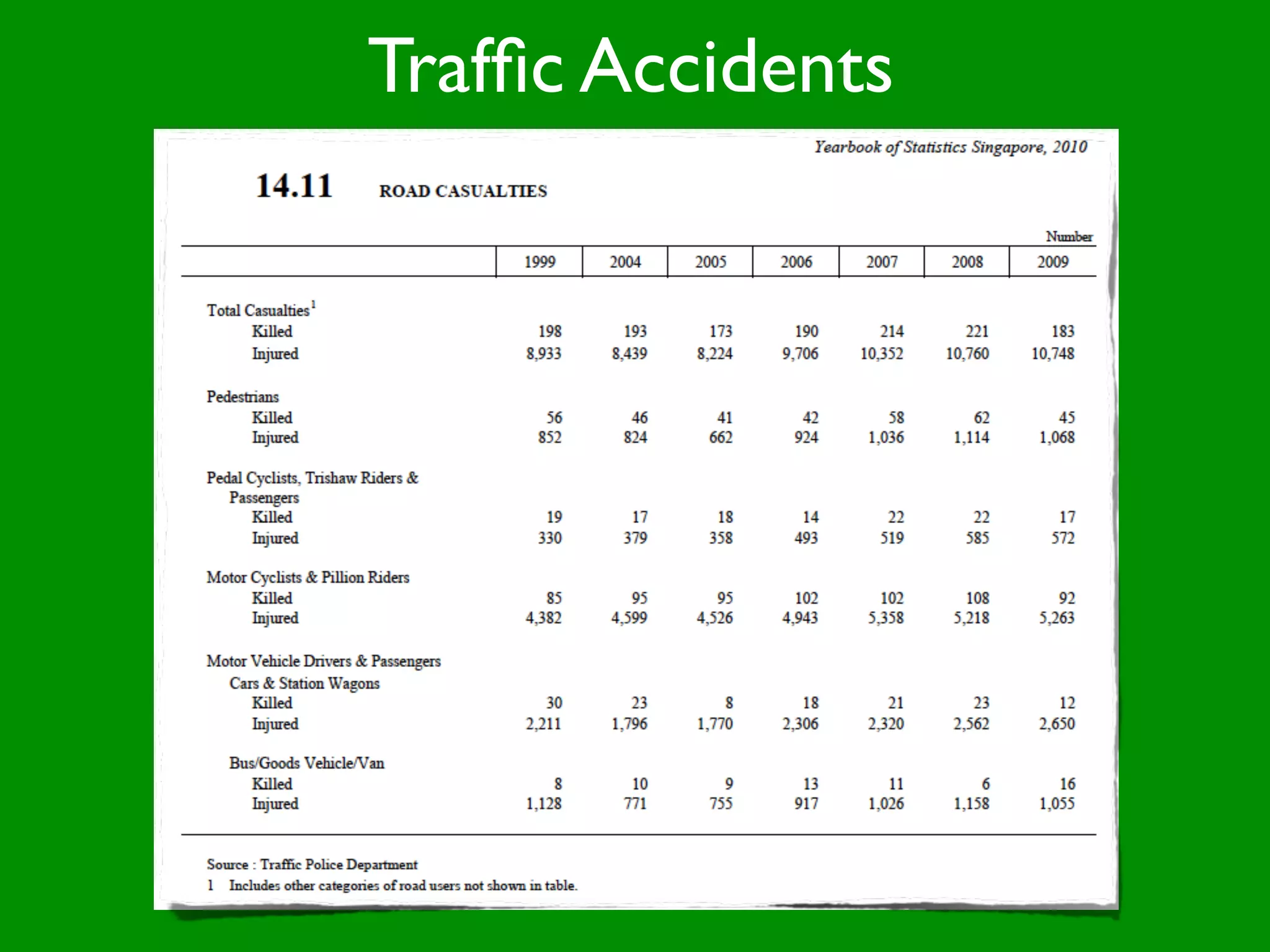
Traffic Accidents
Traffic Accidents
Reducing Accidents
Reducing Accidents
Reduction of Risky Health Behaviours must
be multi-factorials.
Reducing Accidents
Reduction of Risky Health Behaviours must
be multi-factorials.
•inthe case of workplace and traffic accidents, the
government employs operant conditioning. fines for
safety violations, rewards for zero accidents.
Reducing Accidents
Reduction of Risky Health Behaviours must
be multi-factorials.
•inthe case of workplace and traffic accidents, the
government employs operant conditioning. fines for
safety violations, rewards for zero accidents.
•inthe case of childhood accidents, theory of
planned behaviour may explained why parents are
now better equipped to implement child safety at
home.
Reducing Accidents
Reduction of Risky Health Behaviours must
be multi-factorials.
•inthe case of workplace and traffic accidents, the
government employs operant conditioning. fines for
safety violations, rewards for zero accidents.
•inthe case of childhood accidents, theory of
planned behaviour may explained why parents are
now better equipped to implement child safety at
home.
•in
  the case of elderly casualties at home, both social
engineering and cognitive re-adjustment may go
hand in hand.
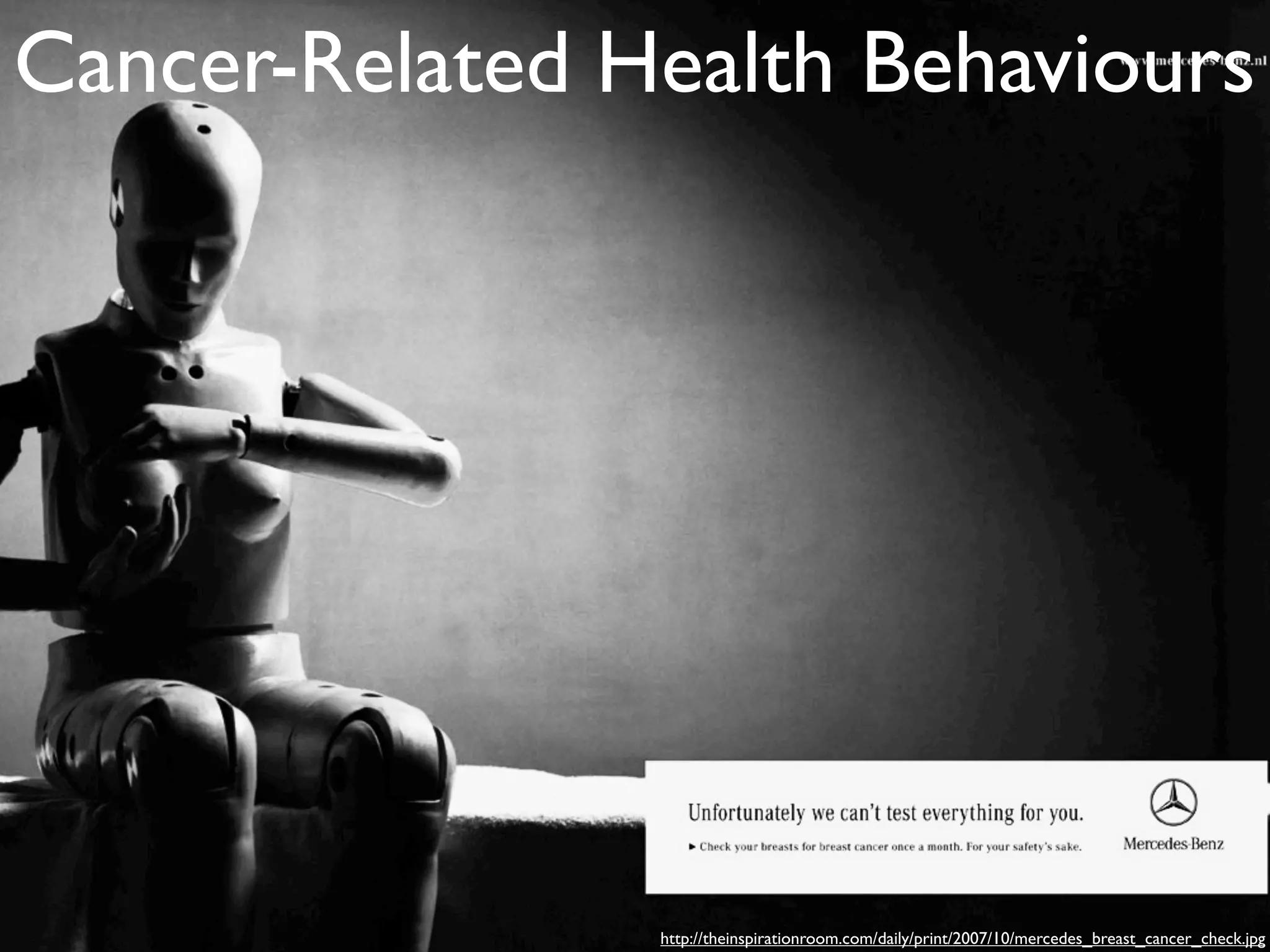
Cancer-Related Health Behaviours


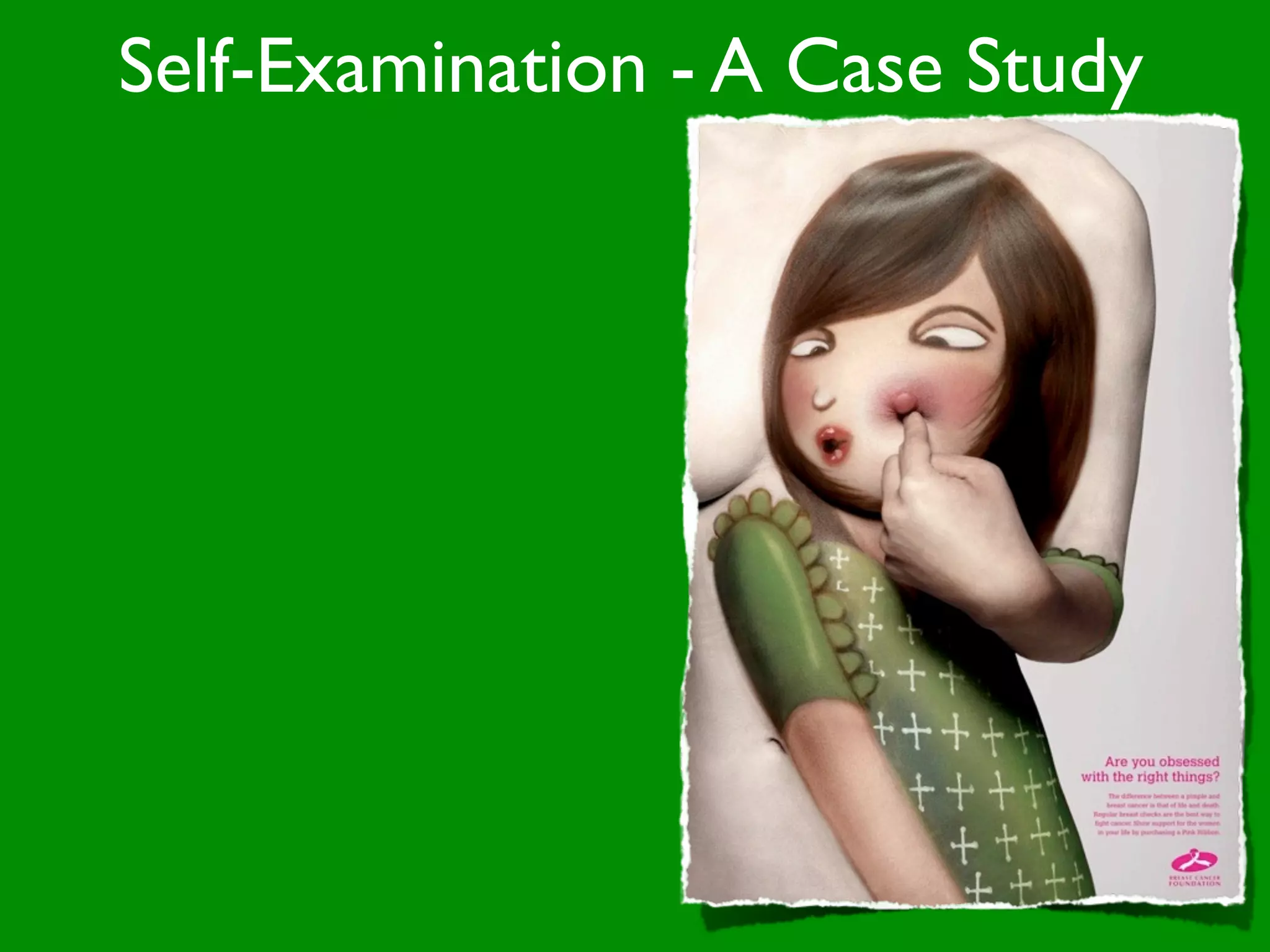
                http://theinspirationroom.com/daily/print/2007/10/mercedes_breast_cancer_check.jpg
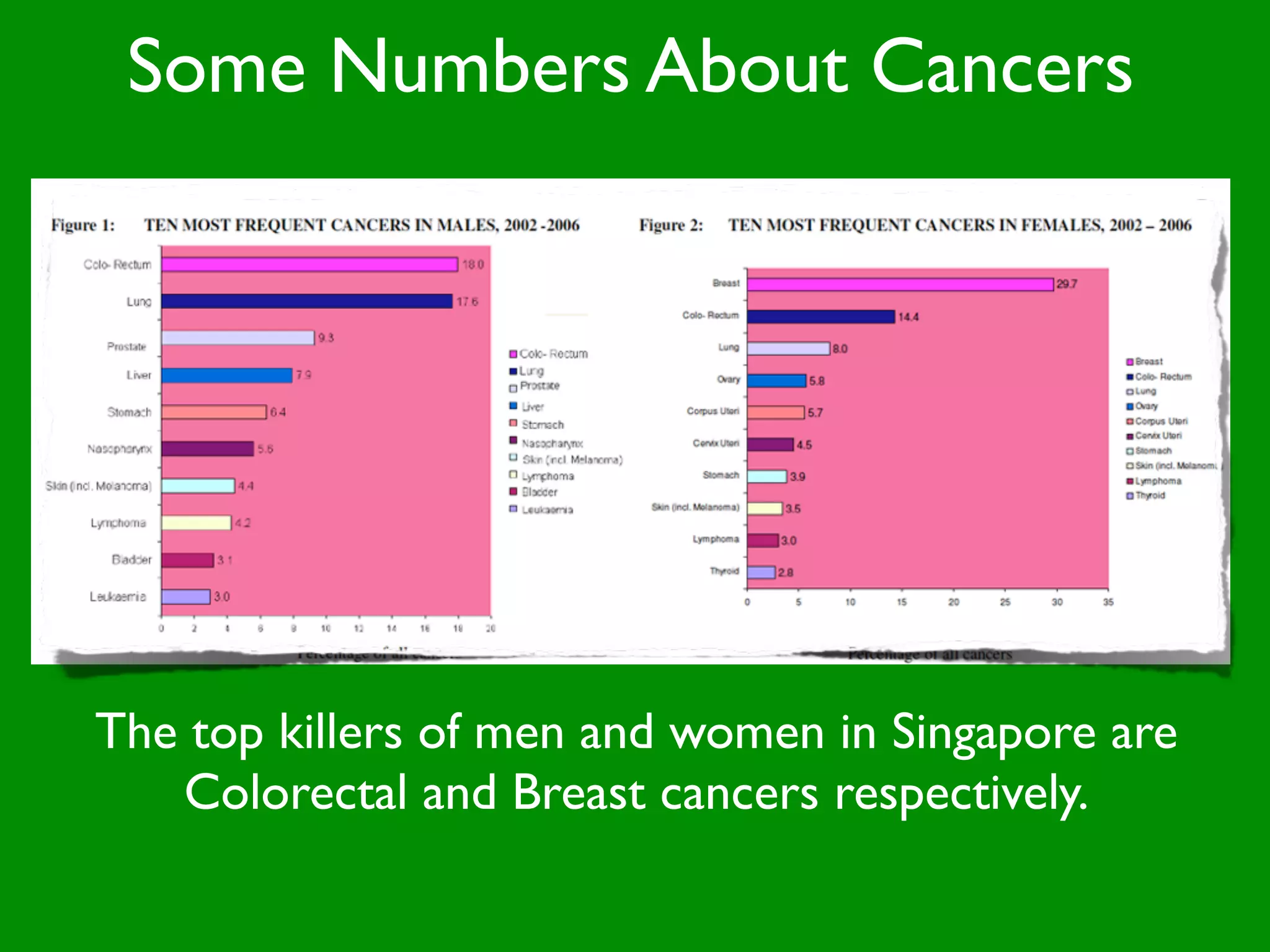
Some Numbers About Cancers


The top killers of men and women in Singapore are
   Colorectal and Breast cancers respectively.
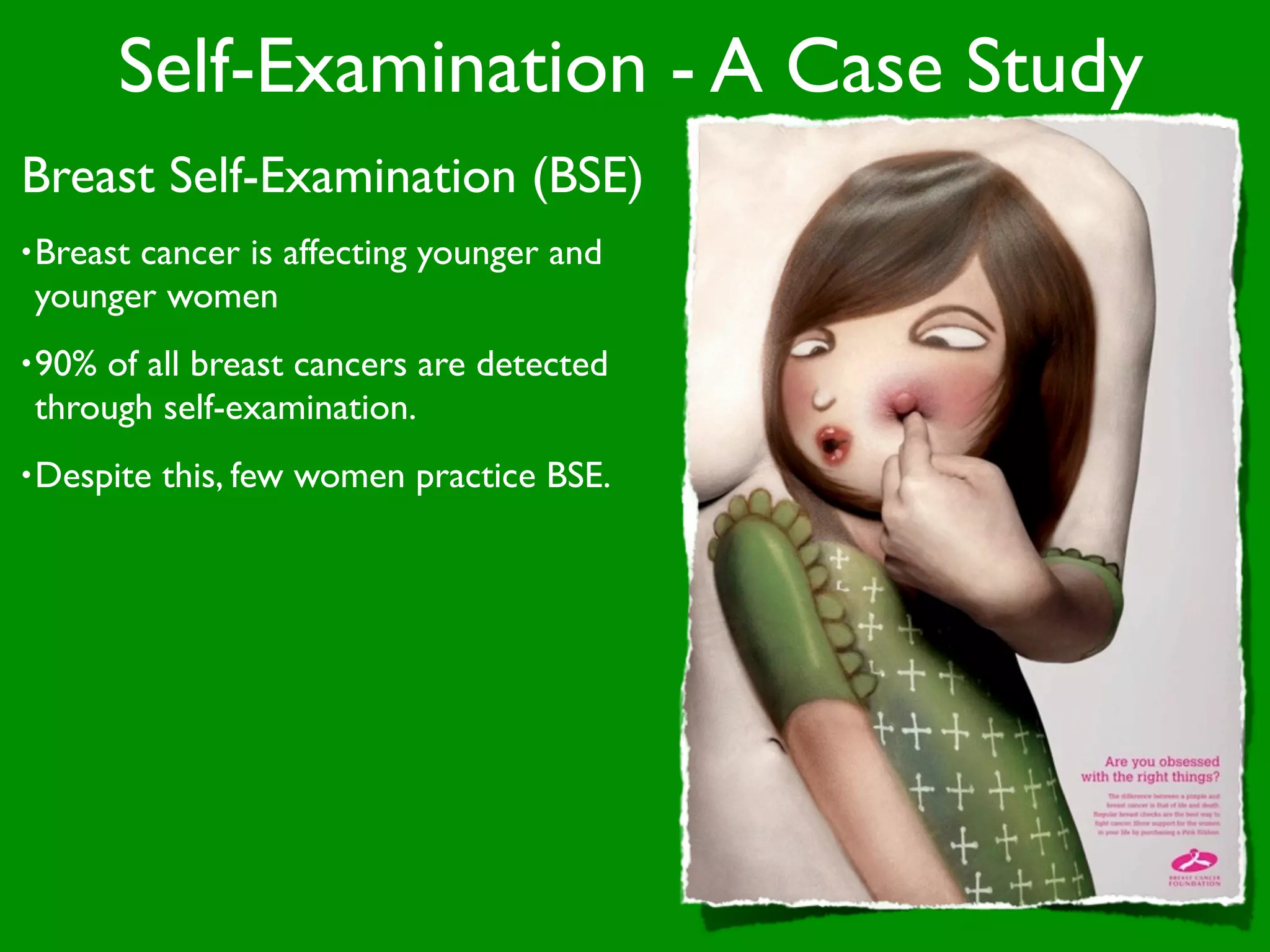
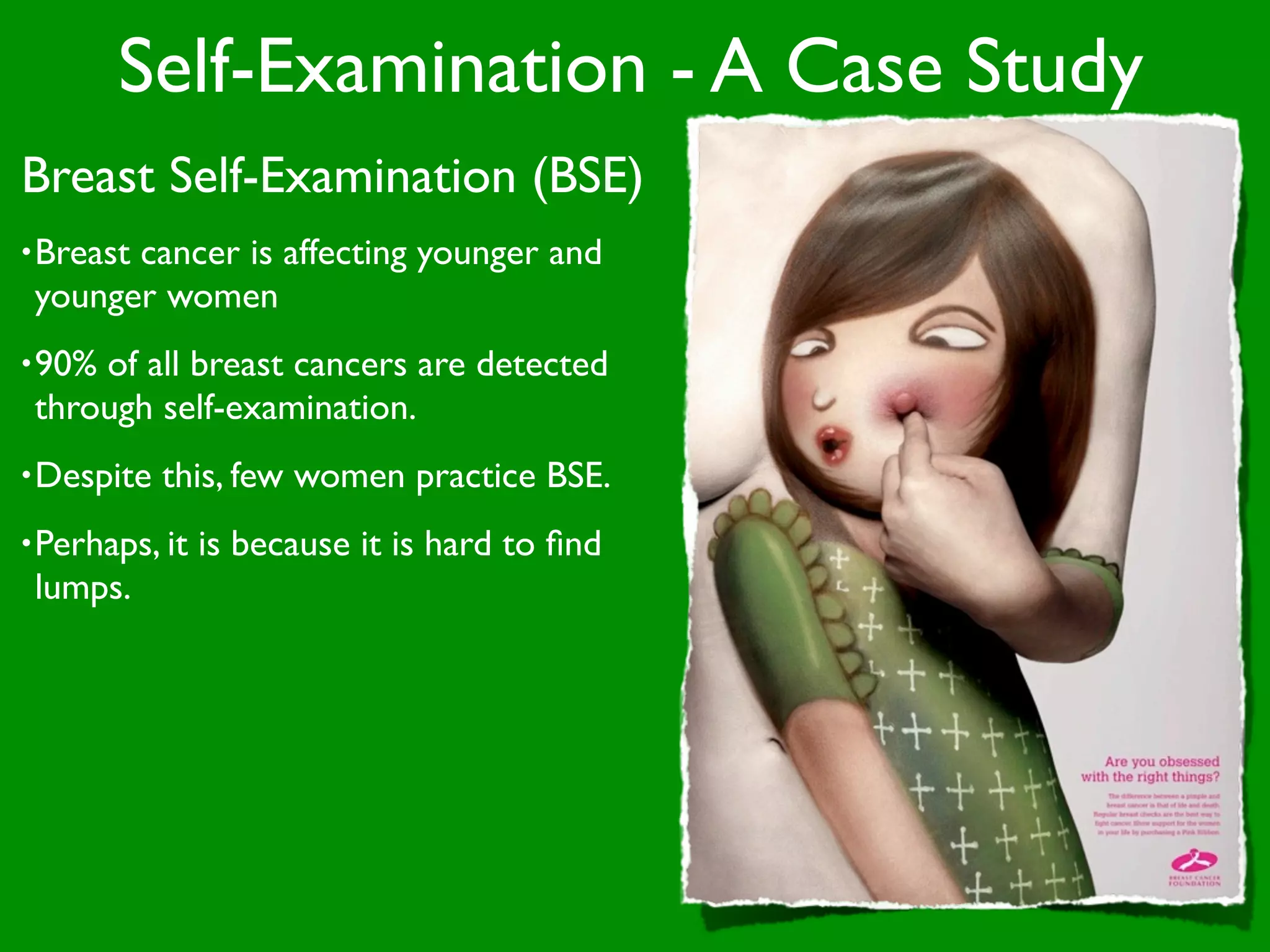
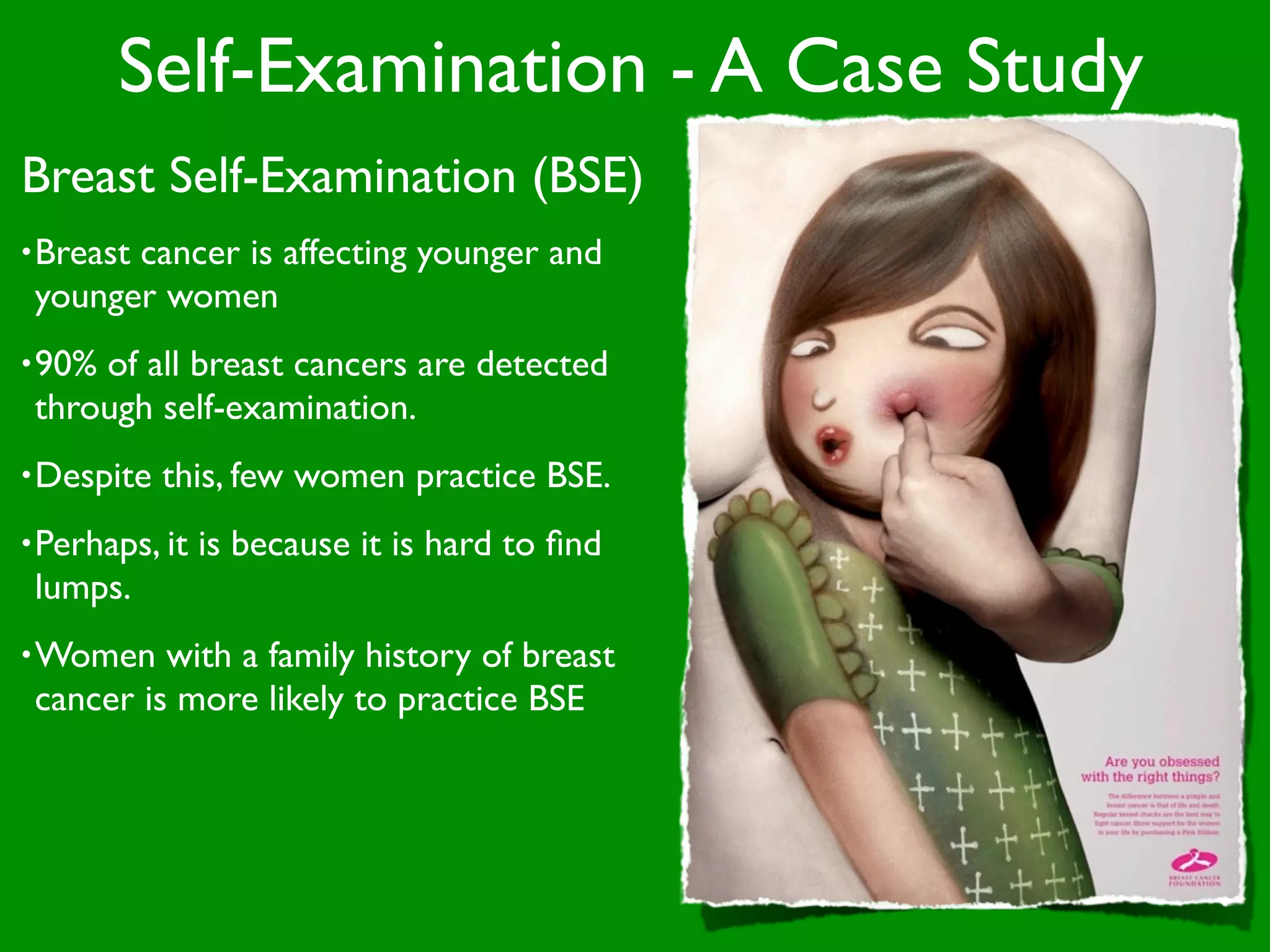
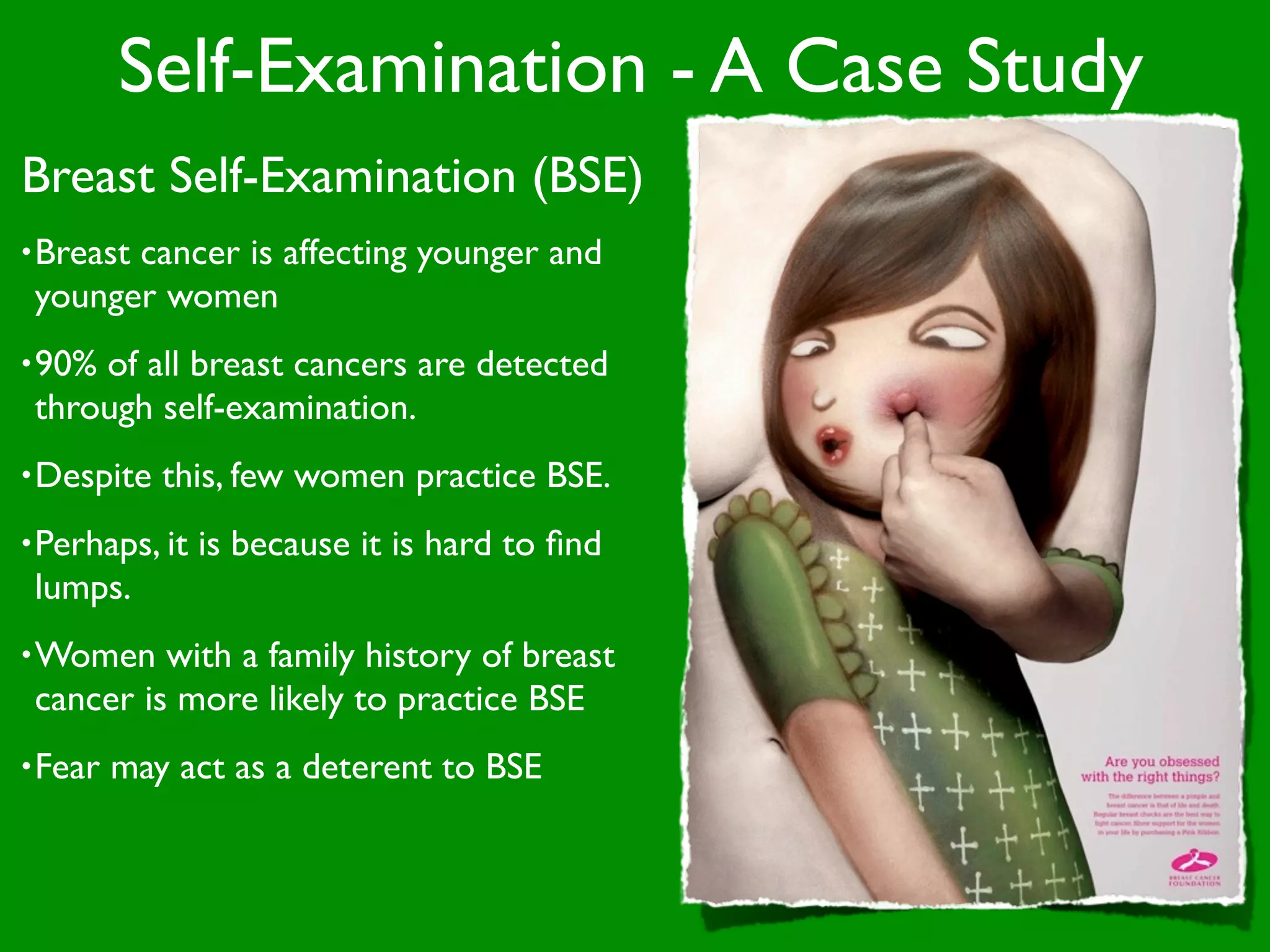
Self-Examination - A Case Study
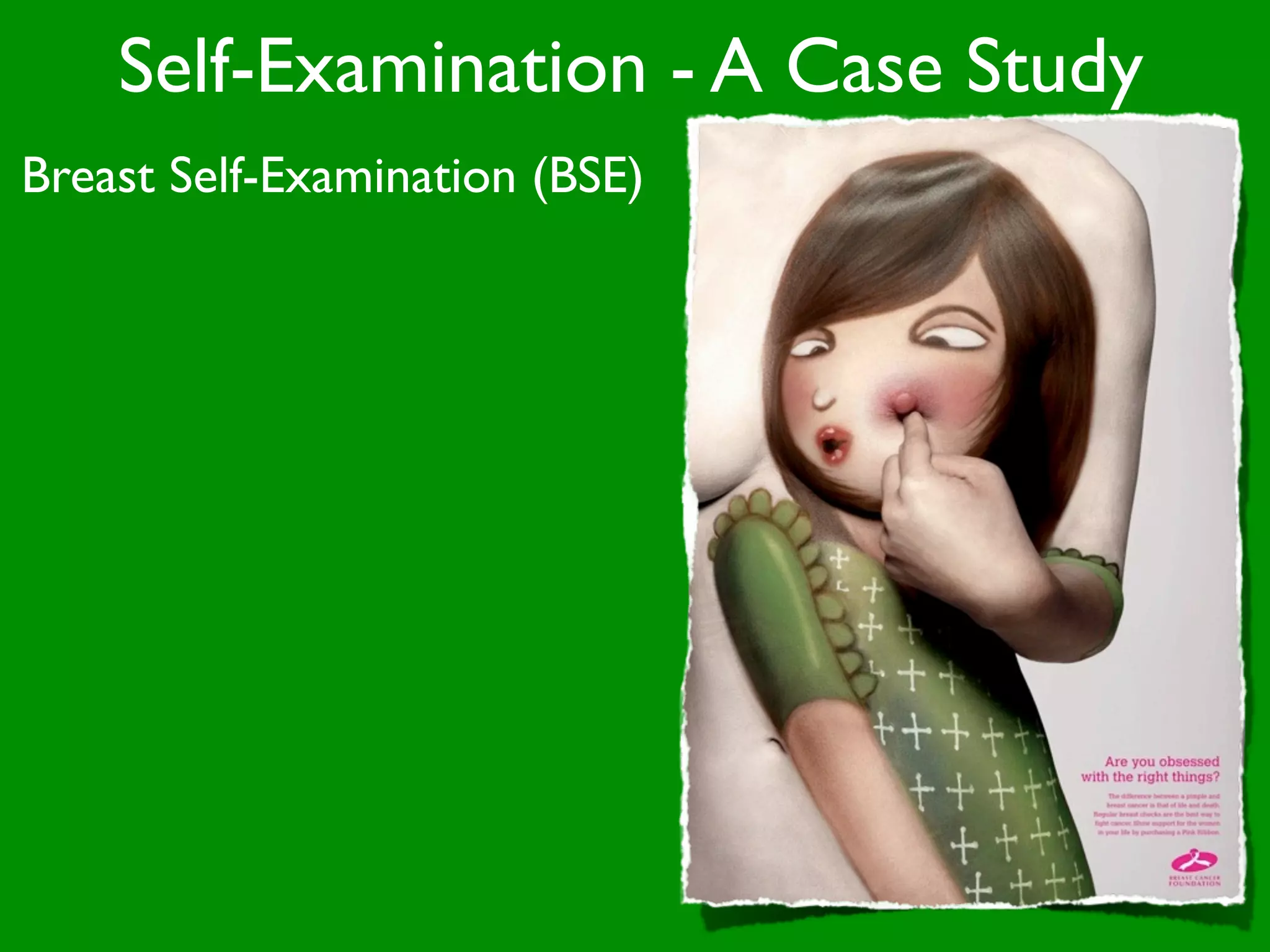
Breast Self-Examination (BSE)
Self-Examination - A Case Study
Breast Self-Examination (BSE)
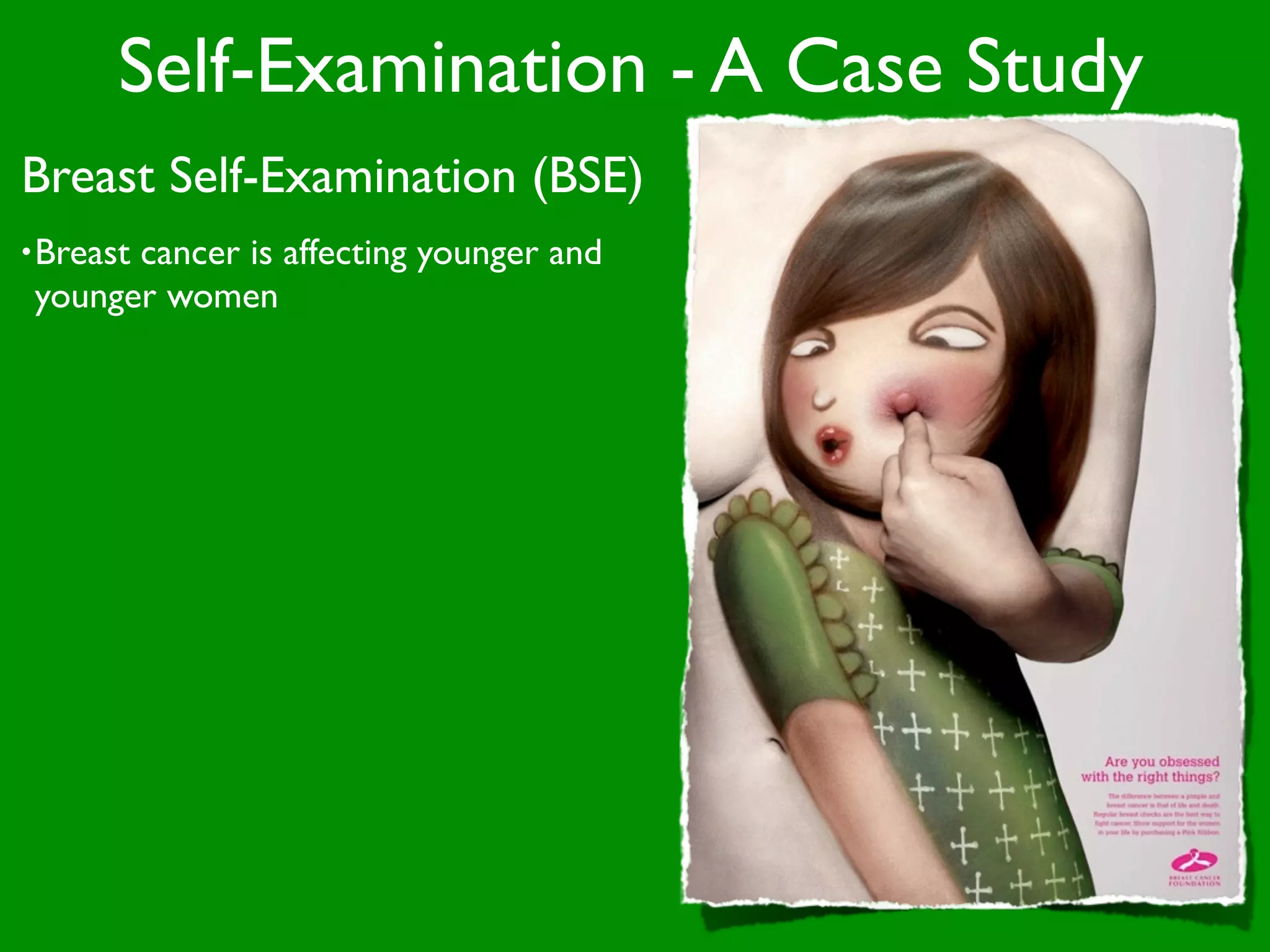
• Breast
       cancer is affecting younger and
 younger women
Self-Examination - A Case Study
Breast Self-Examination (BSE)
• Breast
       cancer is affecting younger and
 younger women
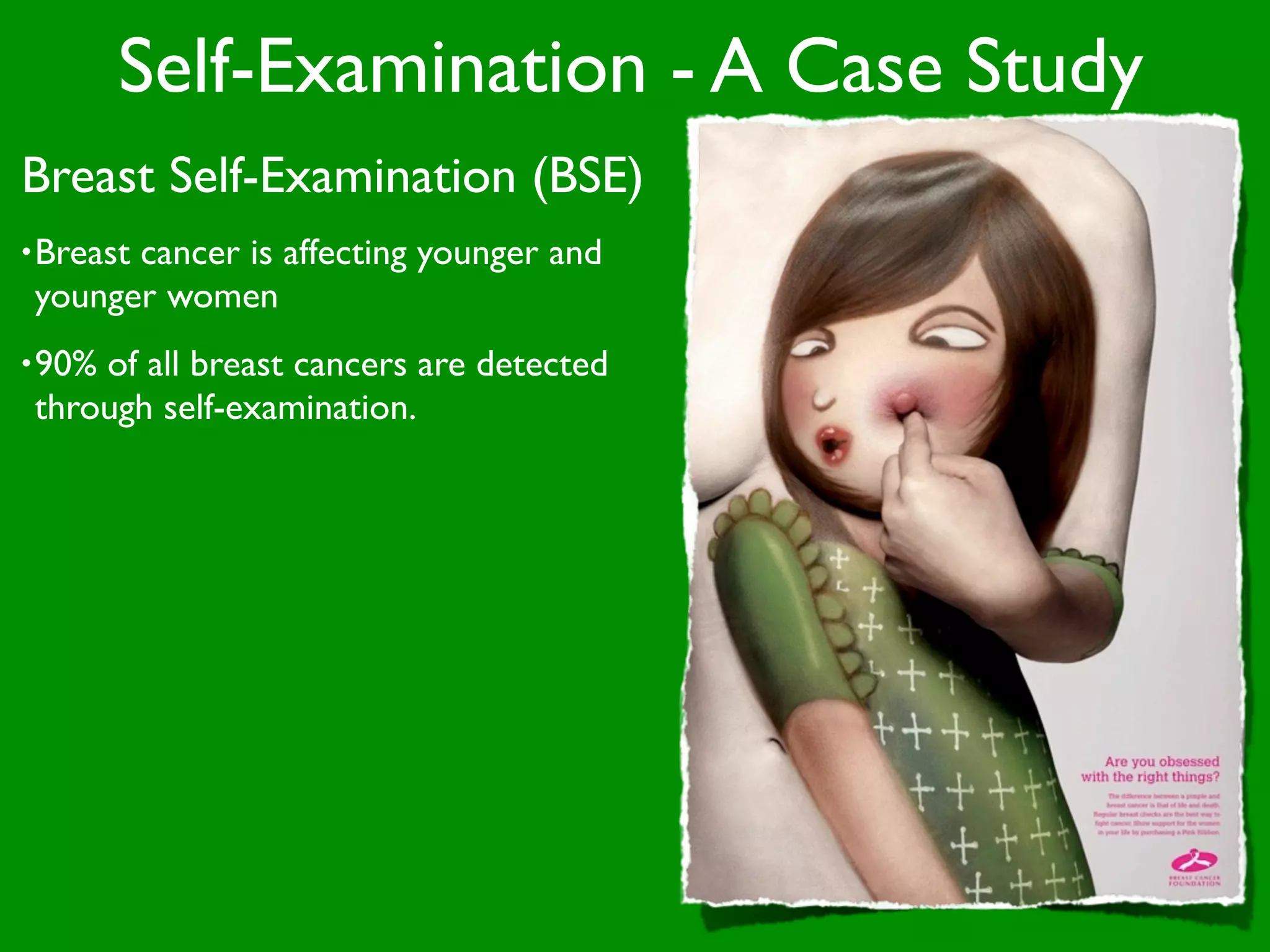
• 90%of all breast cancers are detected
 through self-examination.
Self-Examination - A Case Study
Breast Self-Examination (BSE)
• Breast
       cancer is affecting younger and
 younger women
• 90%of all breast cancers are detected
 through self-examination.
• Despite   this, few women practice BSE.
Self-Examination - A Case Study
Breast Self-Examination (BSE)
• Breast
       cancer is affecting younger and
 younger women
• 90%of all breast cancers are detected
 through self-examination.
• Despite   this, few women practice BSE.
• Perhaps, it   is because it is hard to find
 lumps.
Self-Examination - A Case Study
Breast Self-Examination (BSE)
• Breast
       cancer is affecting younger and
 younger women
• 90%of all breast cancers are detected
 through self-examination.
• Despite   this, few women practice BSE.
• Perhaps, it   is because it is hard to find
 lumps.
• Women   with a family history of breast
 cancer is more likely to practice BSE
Self-Examination - A Case Study
Breast Self-Examination (BSE)
• Breast
       cancer is affecting younger and
 younger women
• 90%of all breast cancers are detected
 through self-examination.
• Despite   this, few women practice BSE.
• Perhaps, it   is because it is hard to find
 lumps.
• Women   with a family history of breast
 cancer is more likely to practice BSE
• Fear   may act as a deterent to BSE
Self-Examination - A Case Study
Breast Self-Examination (BSE)
• Breast
       cancer is affecting younger and
 younger women
• 90%of all breast cancers are detected
 through self-examination.
• Despite   this, few women practice BSE.
• Perhaps, it   is because it is hard to find
 lumps.
• Women   with a family history of breast
 cancer is more likely to practice BSE
• Fear   may act as a deterent to BSE
• Other
     forms of screening such as
 mammogram might be an alternative.
Developing a Healthy Diet


                  http://www.zerofrictionfatlossx.net/images/eating.jpg
The Case for Healthy Eating
•American   health researchers
 estimated that unhealthy eating claims
 300,000 lives annually in the US
The Case for Healthy Eating
•American   health researchers
 estimated that unhealthy eating claims
 300,000 lives annually in the US
•Dietary  change is critical for people
 with chronic diseases such as
 diabetes, hypertension and cancer
 (colon, stomach, pancreas, and
 breast)etc.
The Case for Healthy Eating
•American   health researchers
 estimated that unhealthy eating claims
 300,000 lives annually in the US
•Dietary  change is critical for people
 with chronic diseases such as
 diabetes, hypertension and cancer
 (colon, stomach, pancreas, and
 breast)etc.
•Change    to a healthy diet increases
 health.
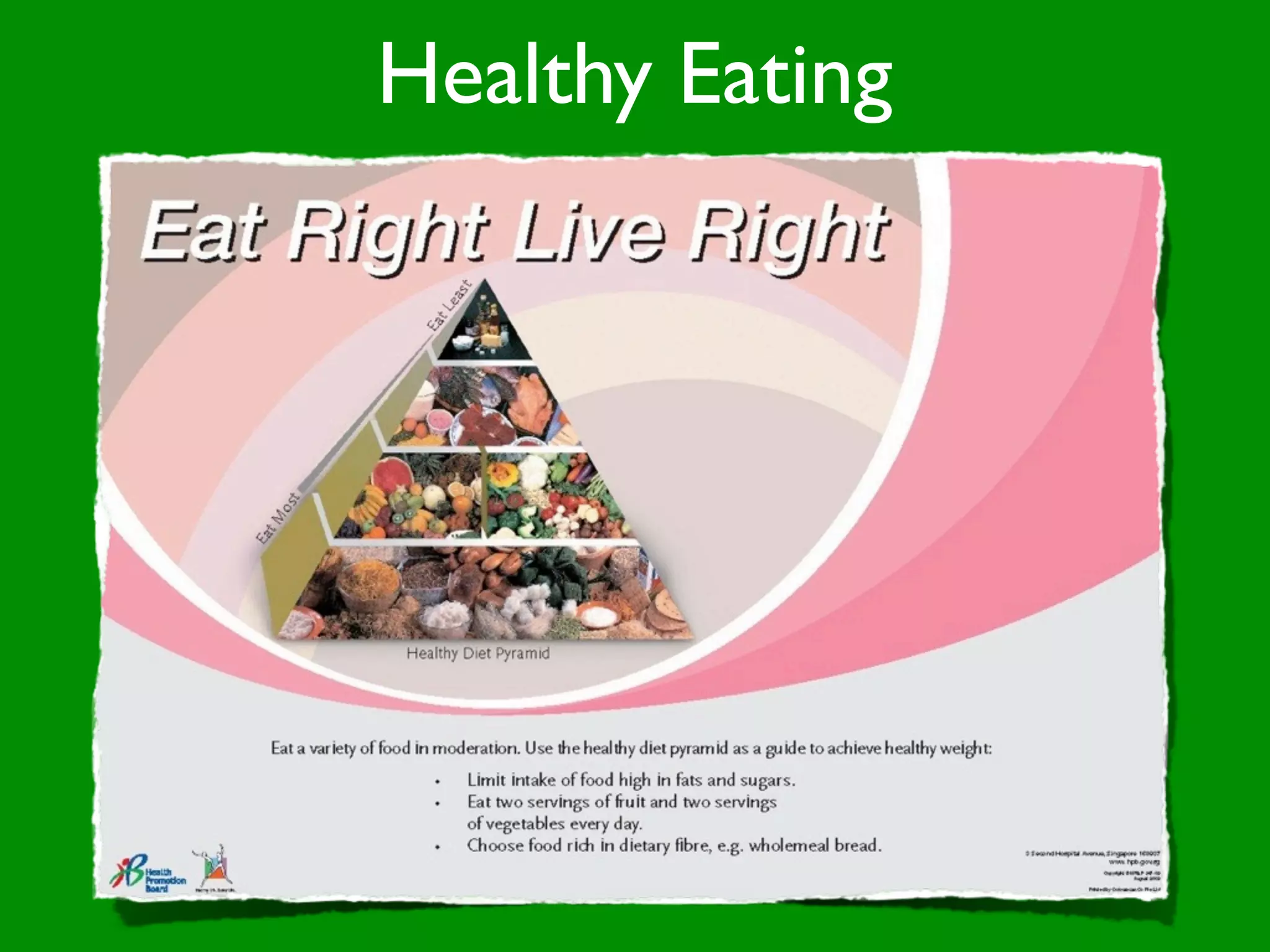
Healthy Eating
Resistance to Healthy Eating
•Difficult   to get people to modify their eating
habits
Resistance to Healthy Eating
•Difficult   to get people to modify their eating
 habits
•Dietary switch if done is often no tfor health
 but for looks.
Resistance to Healthy Eating
•Difficult   to get people to modify their eating
 habits
•Dietary switch if done is often no tfor health
 but for looks.
•Not easy to maintain change.
Resistance to Healthy Eating
•Difficult   to get people to modify their eating
 habits
•Dietary switch if done is often no tfor health
 but for looks.
•Not easy to maintain change.
•Family and social supported may not always be
 there.
Resistance to Healthy Eating
•Difficult   to get people to modify their eating
 habits
•Dietary switch if done is often no tfor health
 but for looks.
•Not easy to maintain change.
•Family and social supported may not always be
 there.
•Dietary change may be too extreme.
Resistance to Healthy Eating
•Difficult   to get people to modify their eating
 habits
•Dietary switch if done is often no tfor health
 but for looks.
•Not easy to maintain change.
•Family and social supported may not always be
 there.
•Dietary change may be too extreme.
•Daily life is stressful leading to indulgence.
Resistance to Healthy Eating
•Difficult   to get people to modify their eating
 habits
•Dietary switch if done is often no tfor health
 but for looks.
•Not easy to maintain change.
•Family and social supported may not always be
 there.
•Dietary change may be too extreme.
•Daily life is stressful leading to indulgence.
•Not knowing which diet to follow.
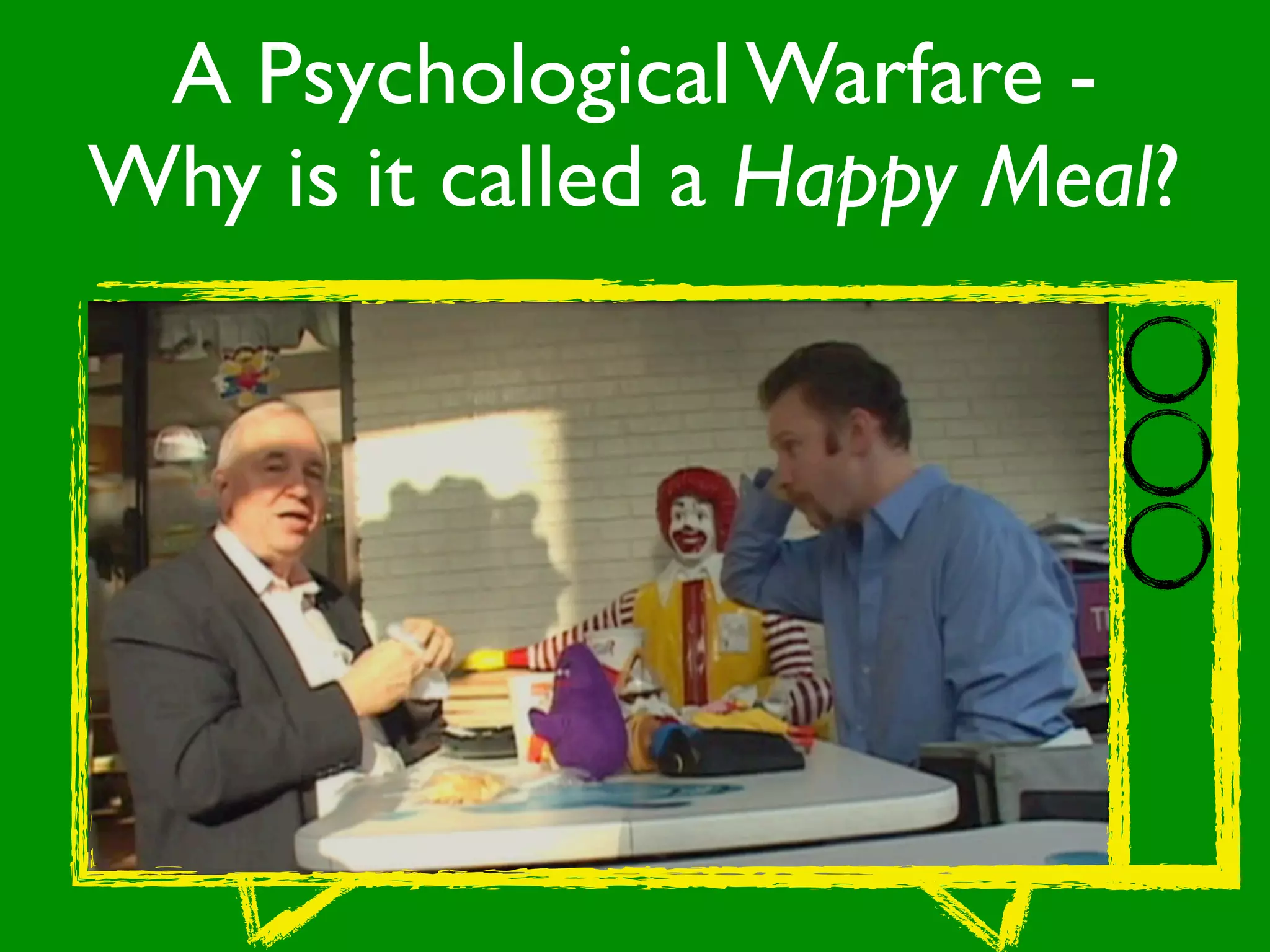
A Psychological Warfare -
Why is it called a Happy Meal?
The Science of Eating
•Taste   is the chemical gatekeeper of eating.
The Science of Eating
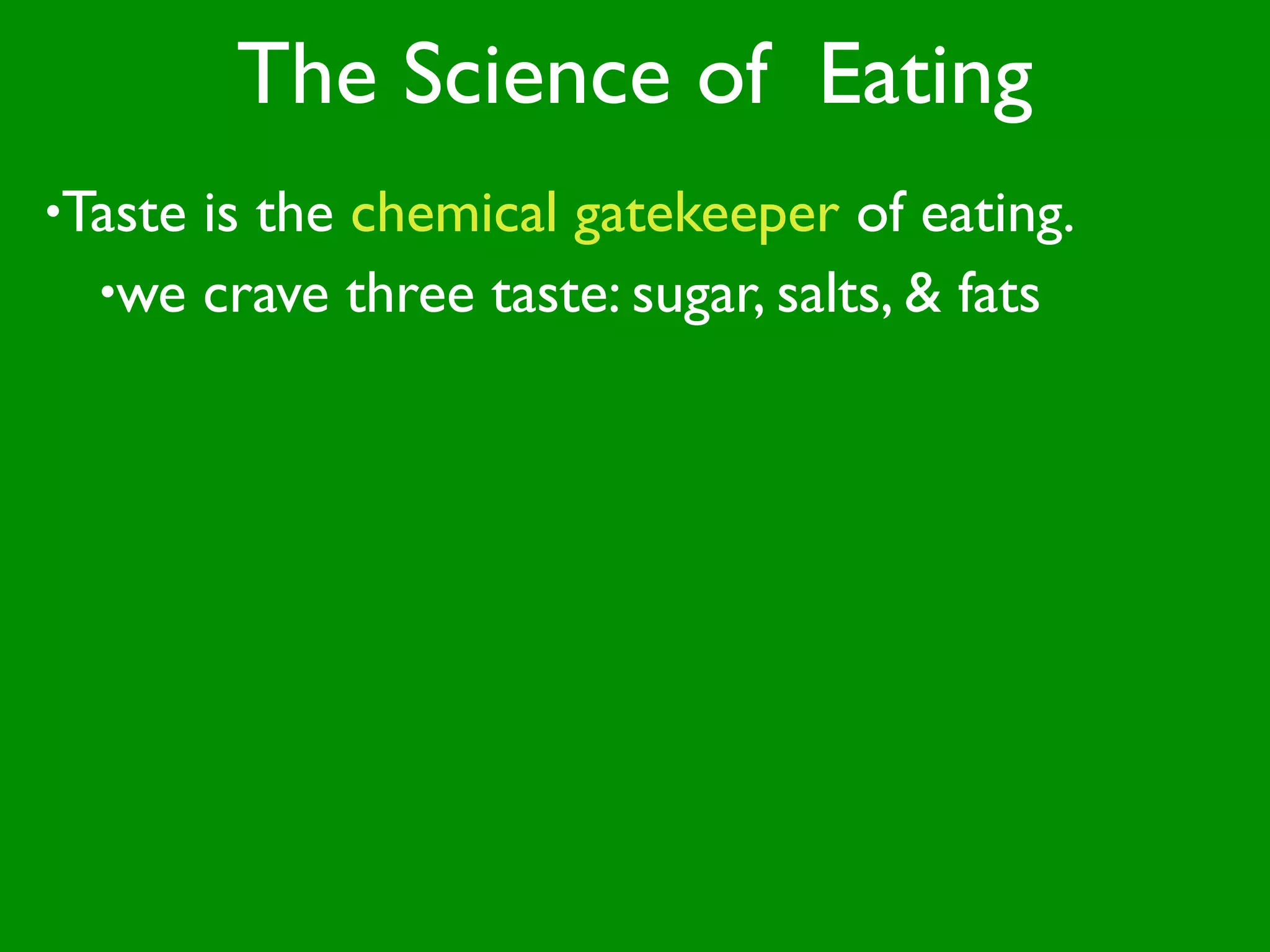
•Tasteis the chemical gatekeeper of eating.
  •we crave three taste: sugar, salts, & fats
The Science of Eating
•Taste is the chemical gatekeeper of eating.
   •we crave three taste: sugar, salts, & fats
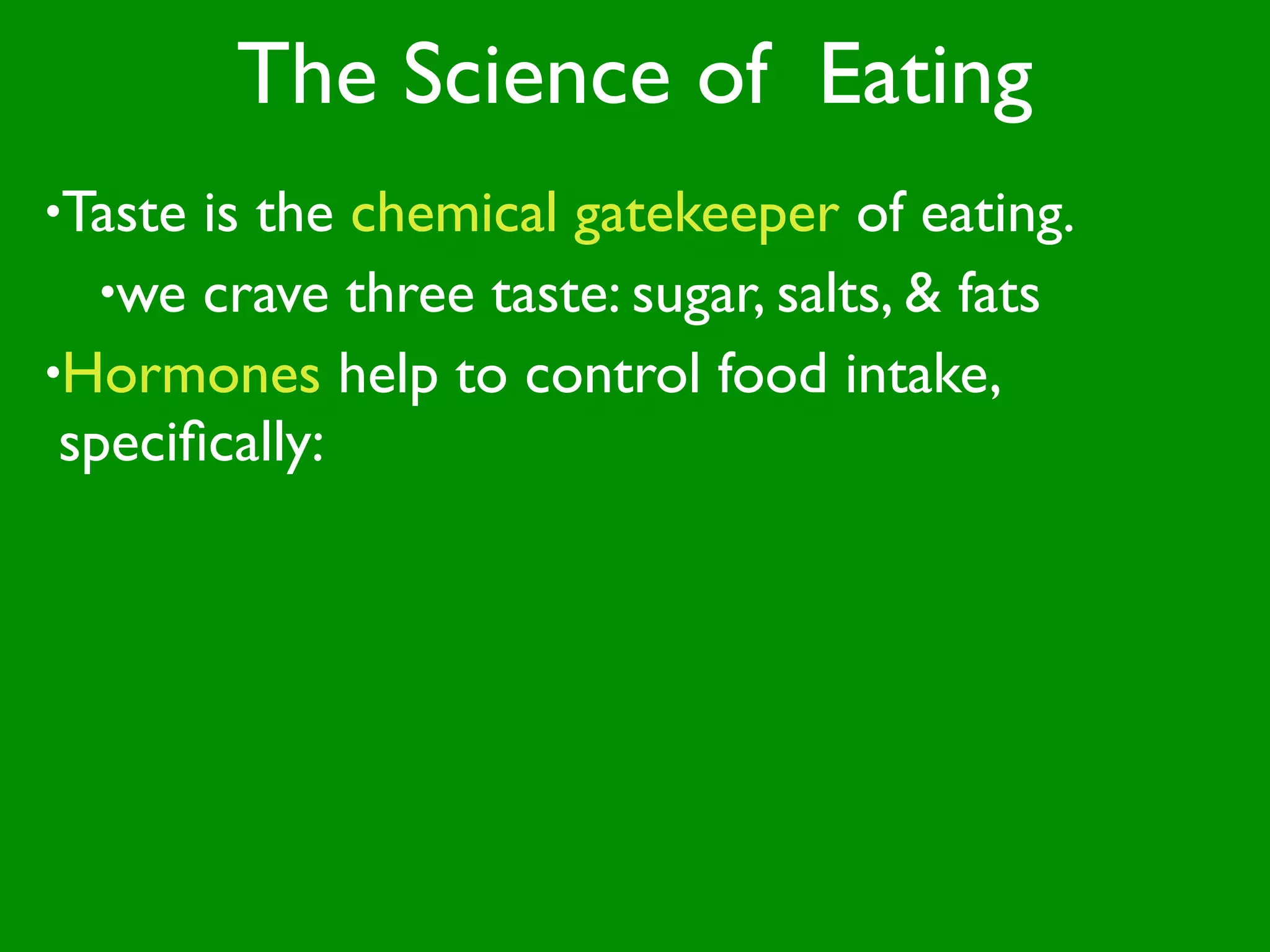
•Hormones help to control food intake,
 specifically:
The Science of Eating
•Taste  is the chemical gatekeeper of eating.
   •we crave three taste: sugar, salts, & fats
•Hormones help to control food intake,
 specifically:
   •Insulin: regulate sugar level
The Science of Eating
•Taste  is the chemical gatekeeper of eating.
   •we crave three taste: sugar, salts, & fats
•Hormones help to control food intake,
 specifically:
   •Insulin: regulate sugar level
   •Leptin: Signal to our brains whether or not
    we have sufficient fat reserves. Inhibits
    appetite.
The Science of Eating
•Taste  is the chemical gatekeeper of eating.
   •we crave three taste: sugar, salts, & fats
•Hormones help to control food intake,
 specifically:
   •Insulin: regulate sugar level
   •Leptin: Signal to our brains whether or not
    we have sufficient fat reserves. Inhibits
    appetite.
   •Ghrelin: Secreted by specialised cells in the
    stomach. Makes us feel hungry.
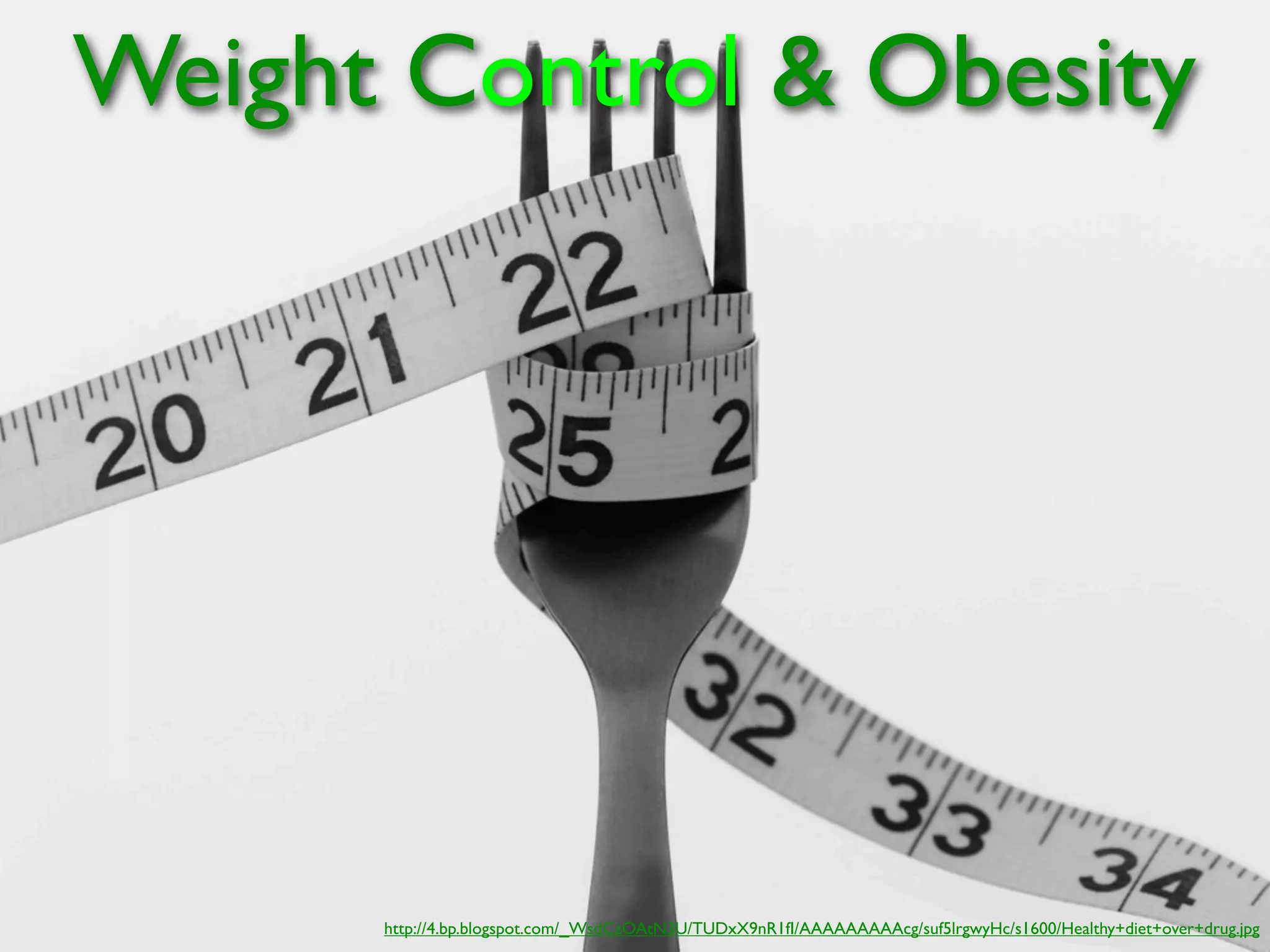
Weight Control & Obesity


      http://4.bp.blogspot.com/_WsdCzOAtN3U/TUDxX9nR1fI/AAAAAAAAAcg/suf5lrgwyHc/s1600/Healthy+diet+over+drug.jpg
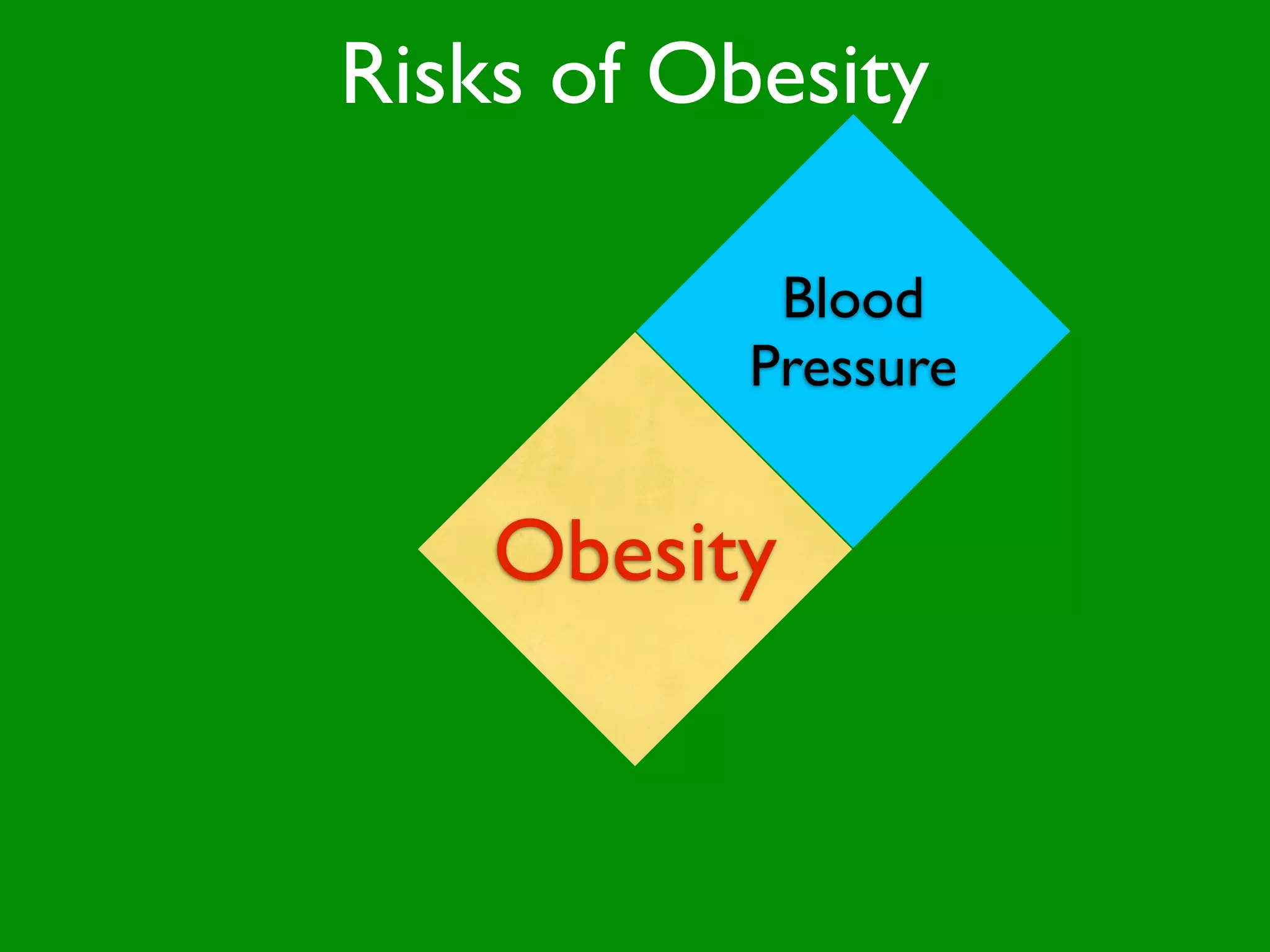
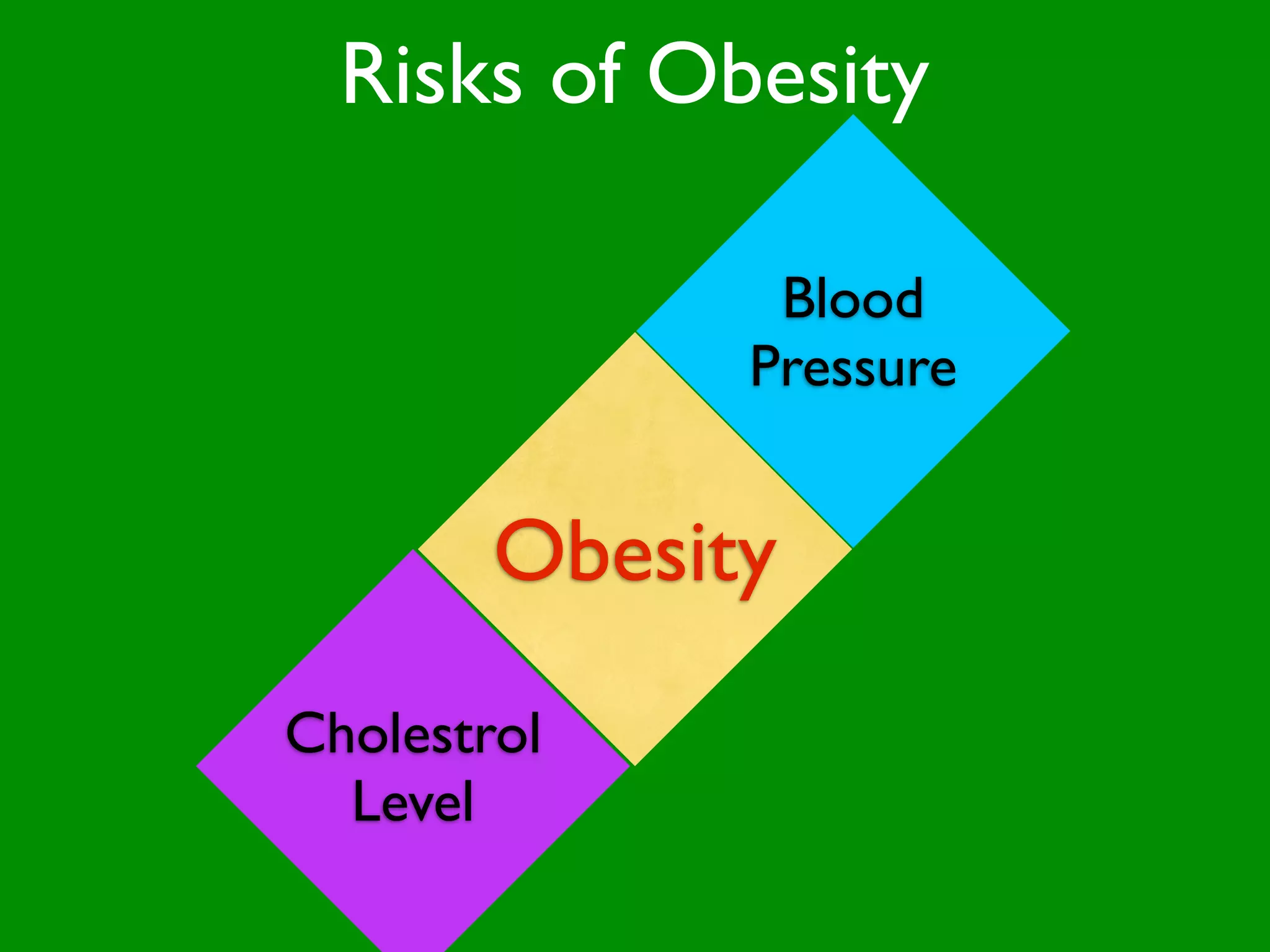
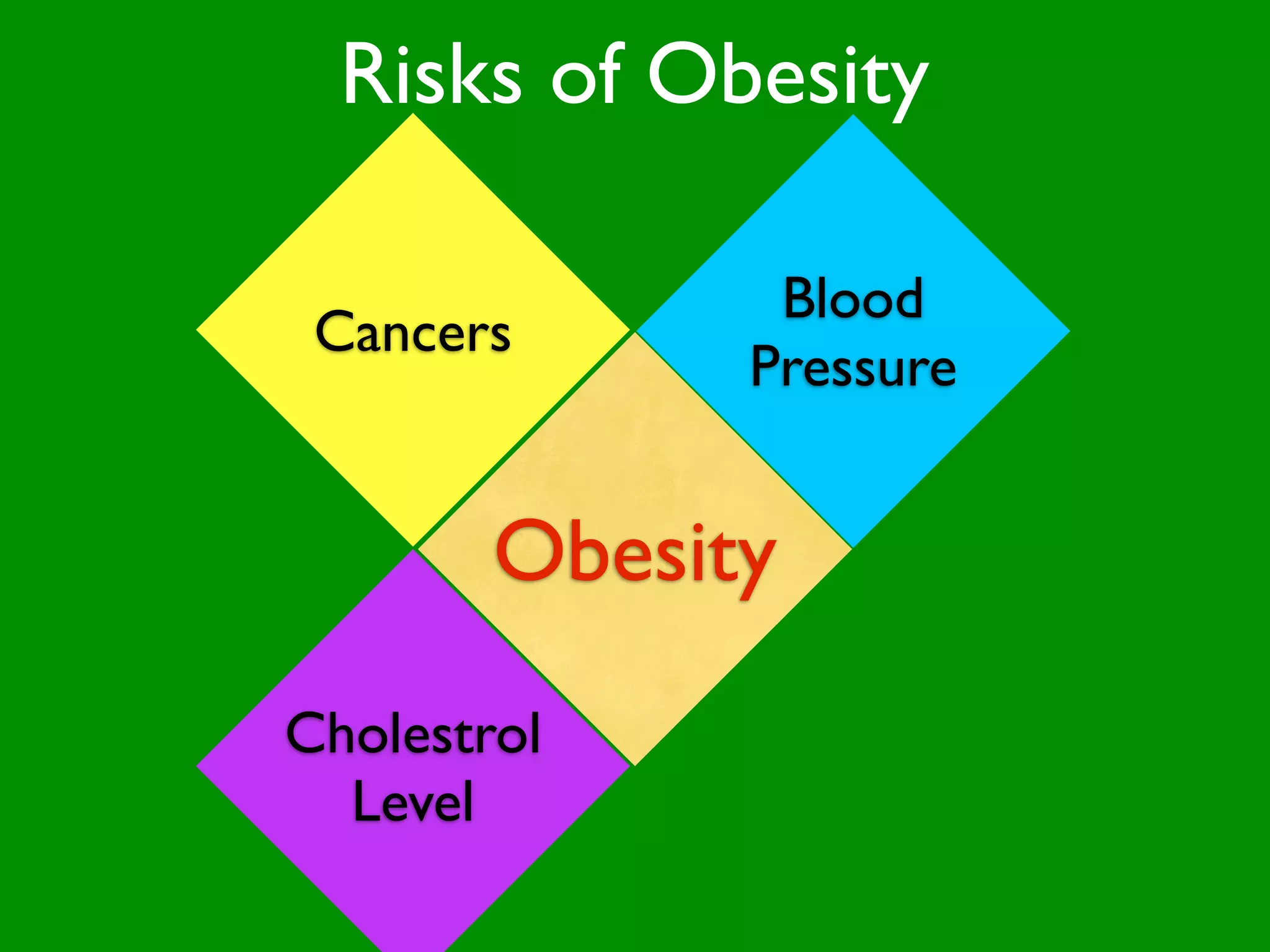
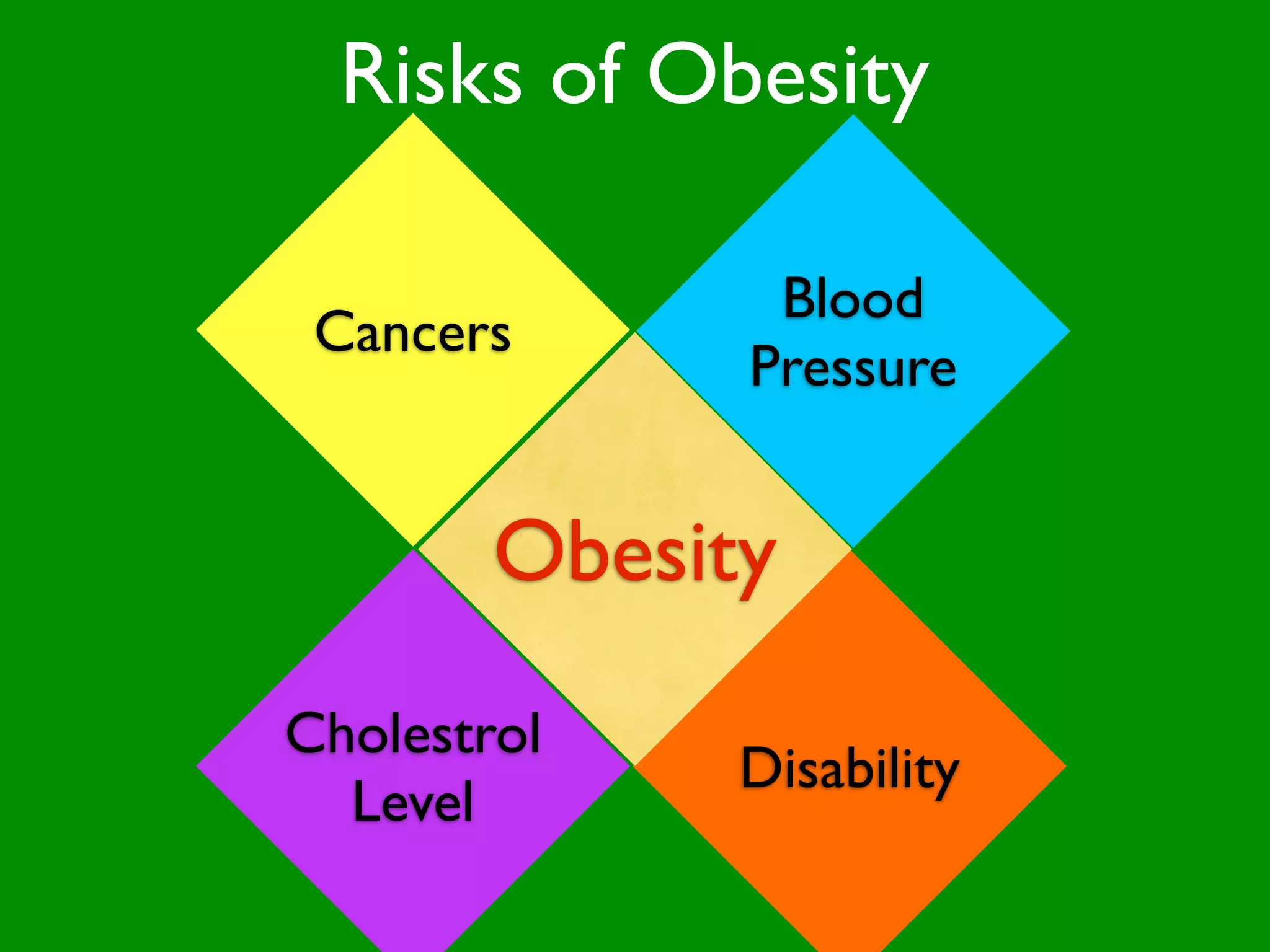
Risks of Obesity


    Cholestrol
     Chronic
      Blood
    Obesity
    Disability
     Cancers
     Diseases
     Pressure
       Level
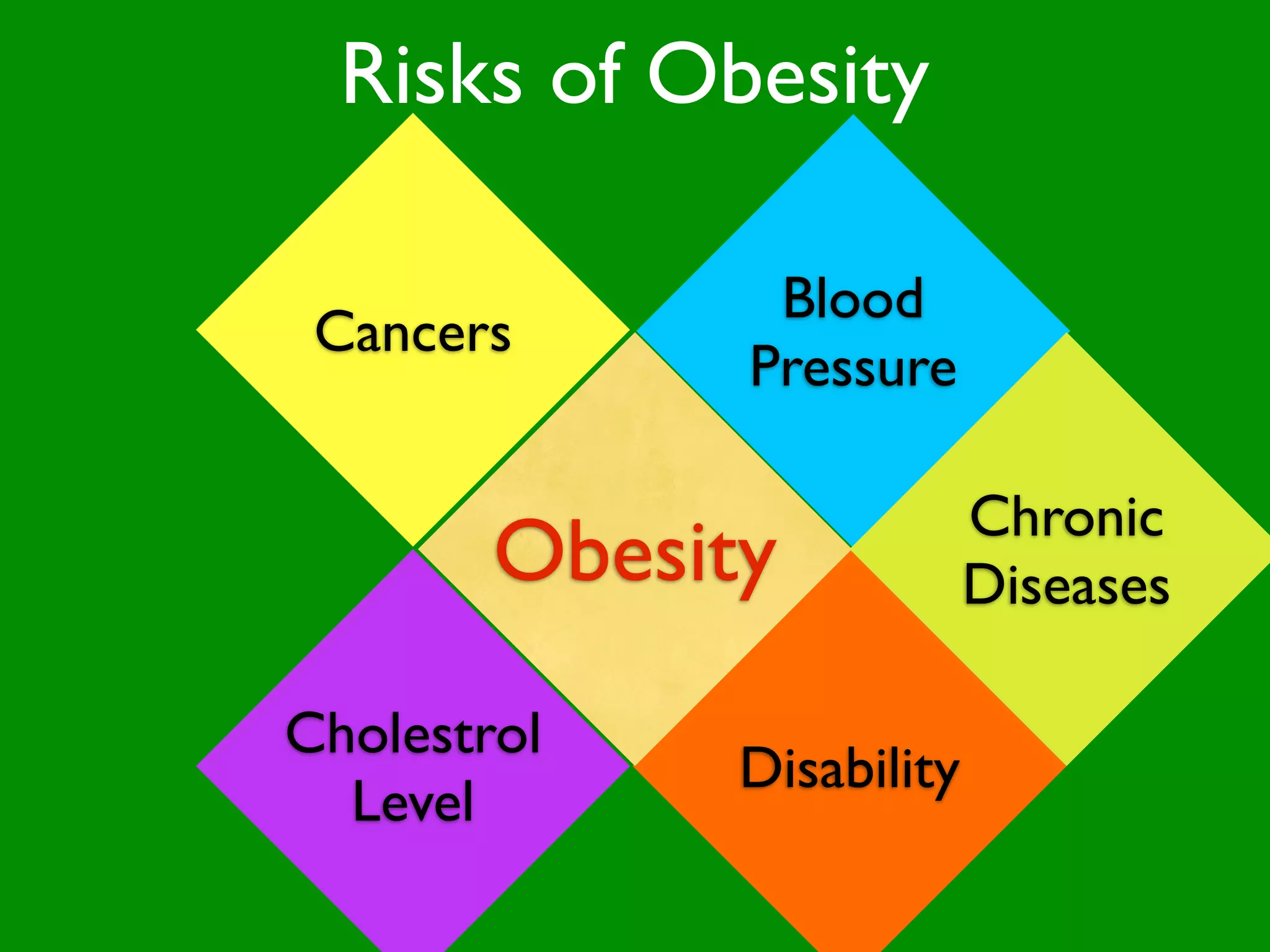
Risks of Obesity

              Blood
             Pressure

    Cholestrol
     Chronic
    Obesity
    Disability
     Cancers
     Diseases
      Level
Risks of Obesity

                  Blood
                 Pressure

         Chronic
        Obesity
        Disability
         Cancers
         Diseases

Cholestrol
  Level
Risks of Obesity

                  Blood
 Cancers
                 Pressure

         Chronic
        Obesity
        Disability
         Diseases

Cholestrol
  Level
Risks of Obesity

                 Blood
 Cancers
                Pressure

         Chronic
        Obesity
         Diseases

Cholestrol
               Disability
  Level
Risks of Obesity

               Blood
 Cancers
              Pressure

                           Chronic
        Obesity            Diseases

Cholestrol
              Disability
  Level
Consequences of Obesity

•If
  I am fat at 40, I am more likely to die 3 years
younger than someone who is thin.
Consequences of Obesity

•If
  I am fat at 40, I am more likely to die 3 years
younger than someone who is thin.
•Thefatter I am, the more difficult it is for me to
exercise.
Consequences of Obesity

•If
  I am fat at 40, I am more likely to die 3 years
younger than someone who is thin.
•Thefatter I am, the more difficult it is for me to
exercise.
•I
 am more likely to encounter problems in
surgery, anaesthesia and childbearing.
Consequences of Obesity

•If
  I am fat at 40, I am more likely to die 3 years
younger than someone who is thin.
•Thefatter I am, the more difficult it is for me to
exercise.
•I
 am more likely to encounter problems in
surgery, anaesthesia and childbearing.
•InUSA, obesity accounts for 14% of all deaths
from cancer for men, and 20% for women.
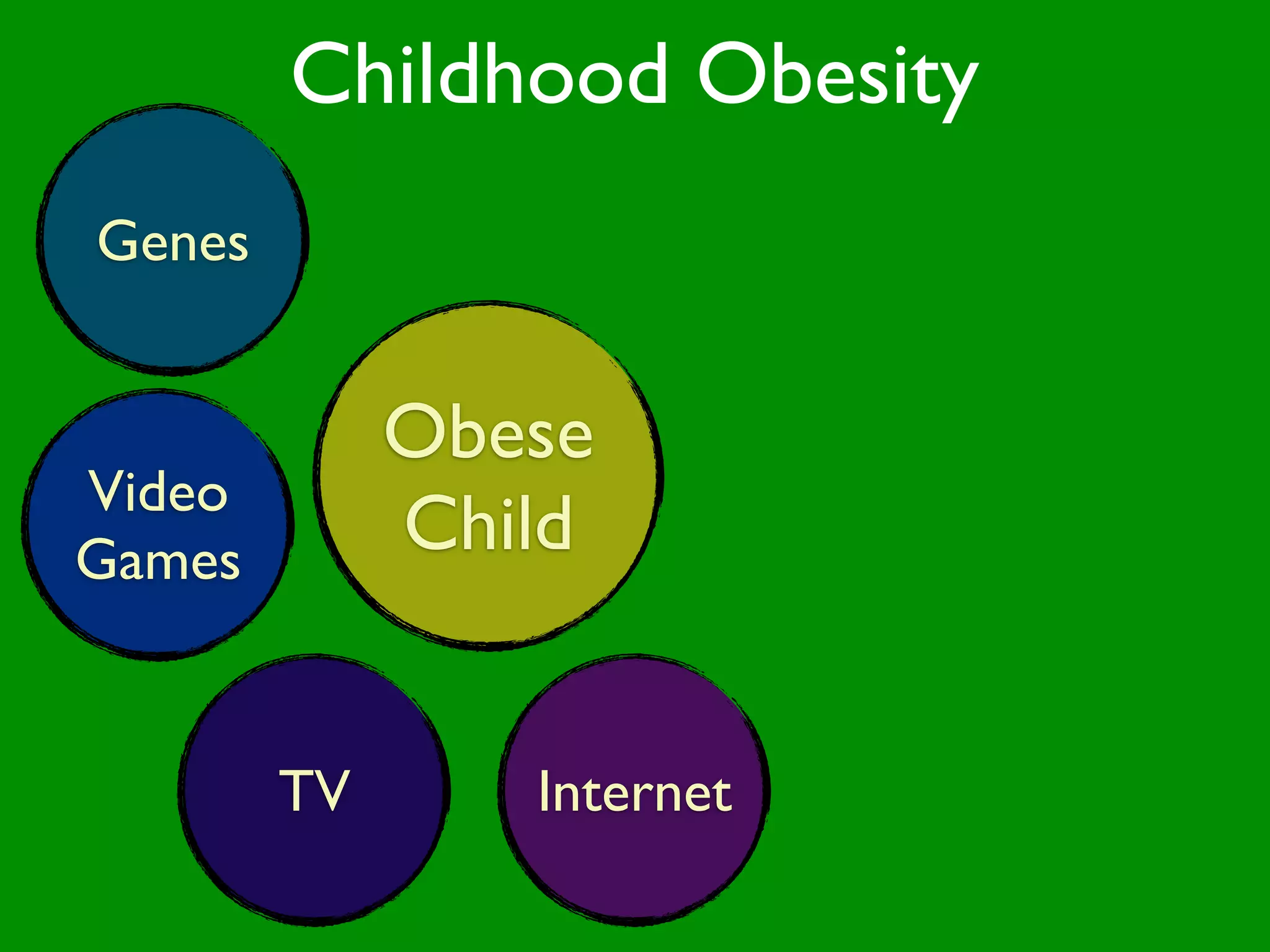
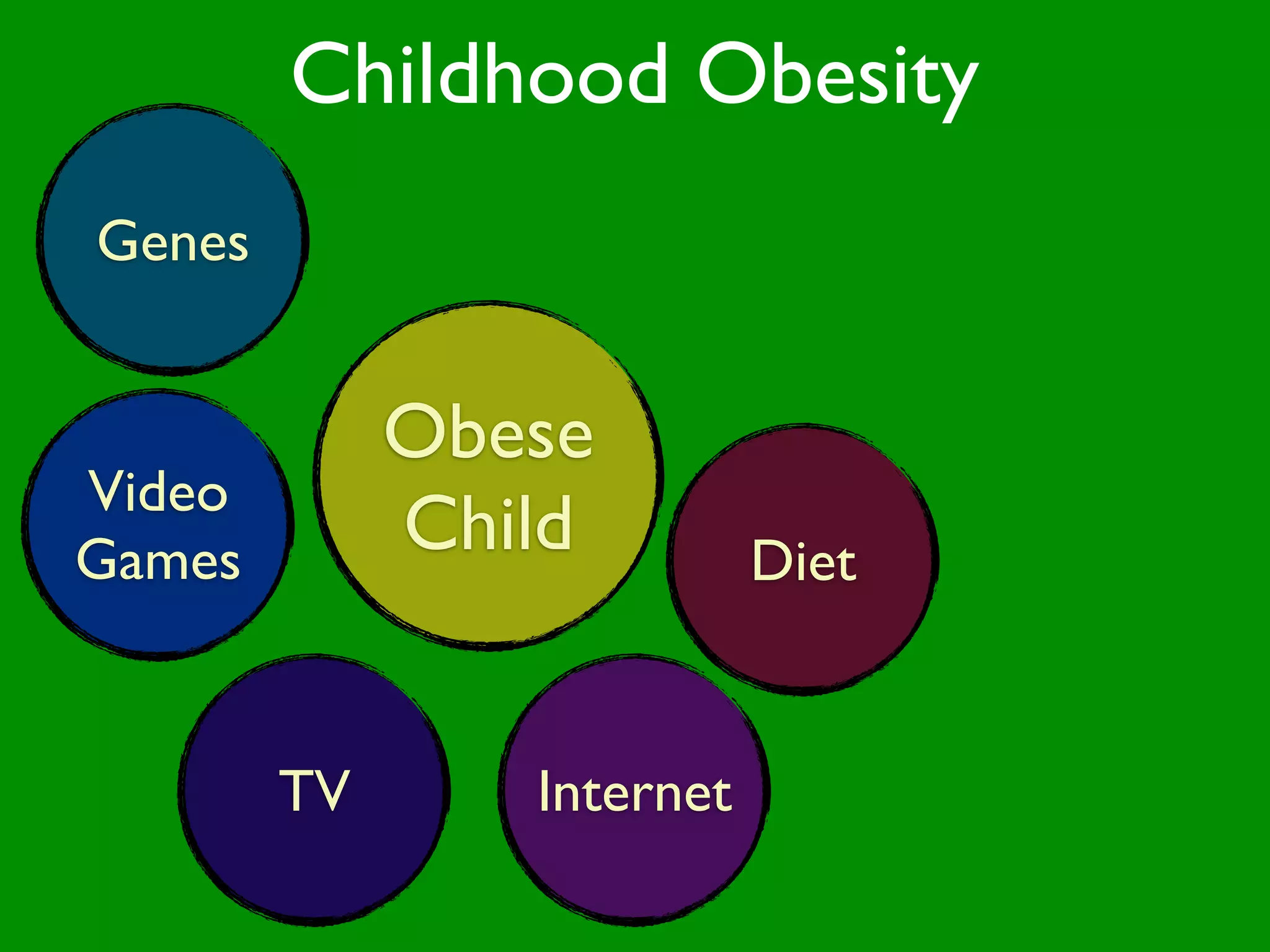
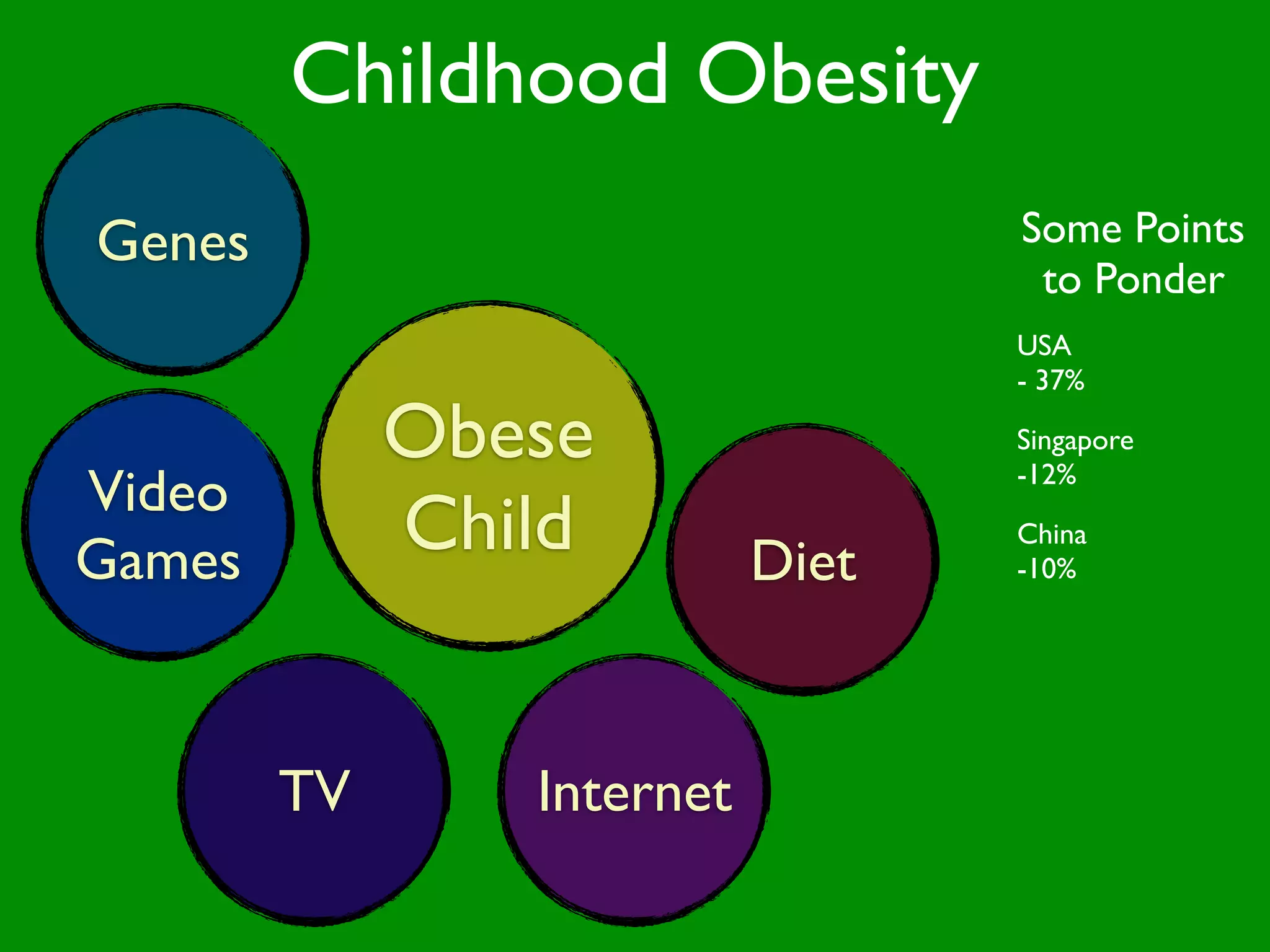
Childhood Obesity


  Obese
   Video
  Internet
   Genes
    Diet
     TV
   Games
   Child
Childhood Obesity
Genes


          Obese
           Video
          Internet
            Diet
             TV
           Games
           Child
Childhood Obesity
Genes


          Obese
          Internet
            Diet
             TV
Video
Games      Child
Childhood Obesity
Genes


             Obese
             Internet
               Diet
Video
Games         Child


        TV
Childhood Obesity
Genes


             Obese
              Diet
Video
Games        Child


        TV      Internet
Childhood Obesity
Genes


             Obese
Video
Games        Child         Diet


        TV      Internet
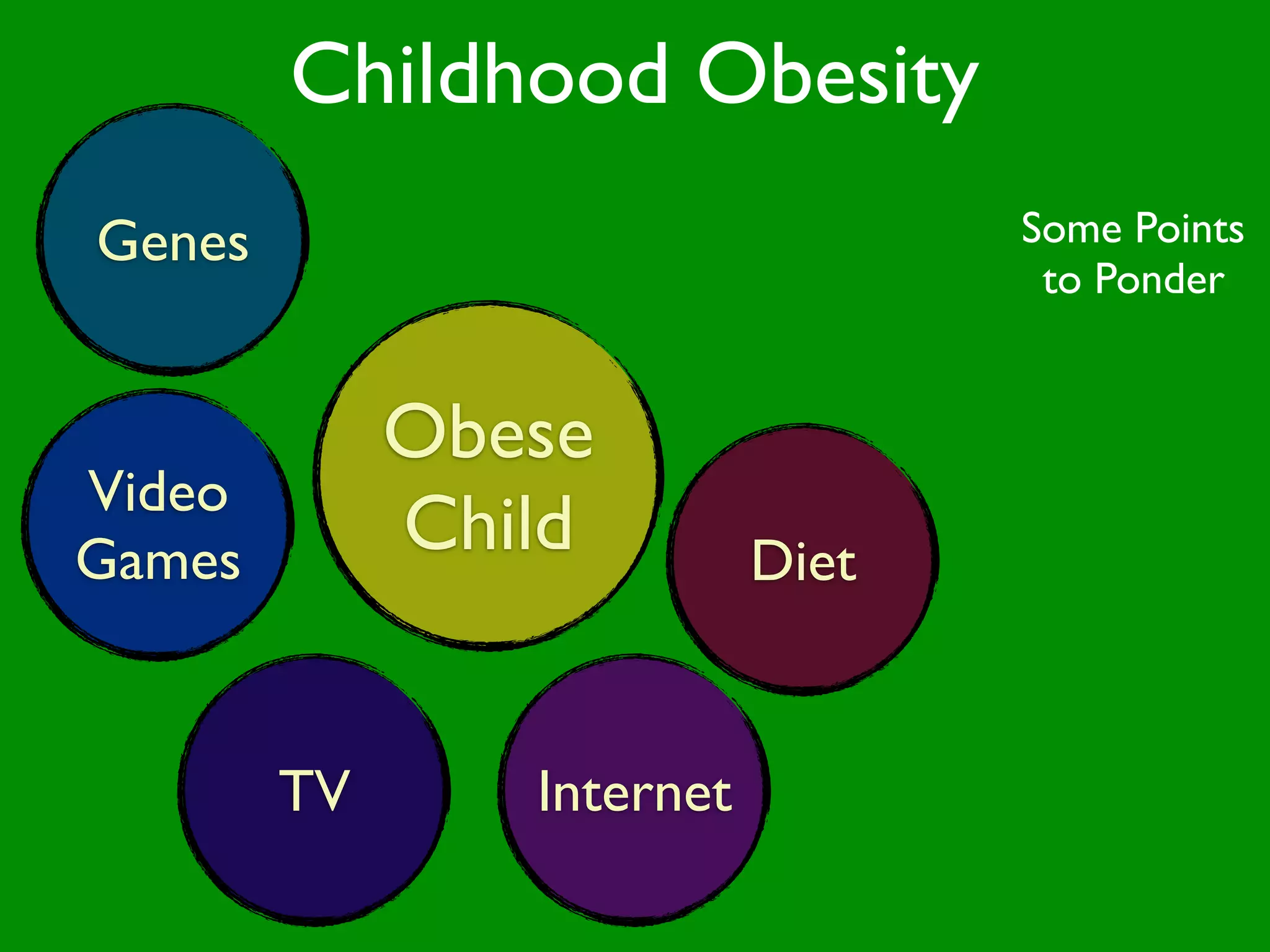
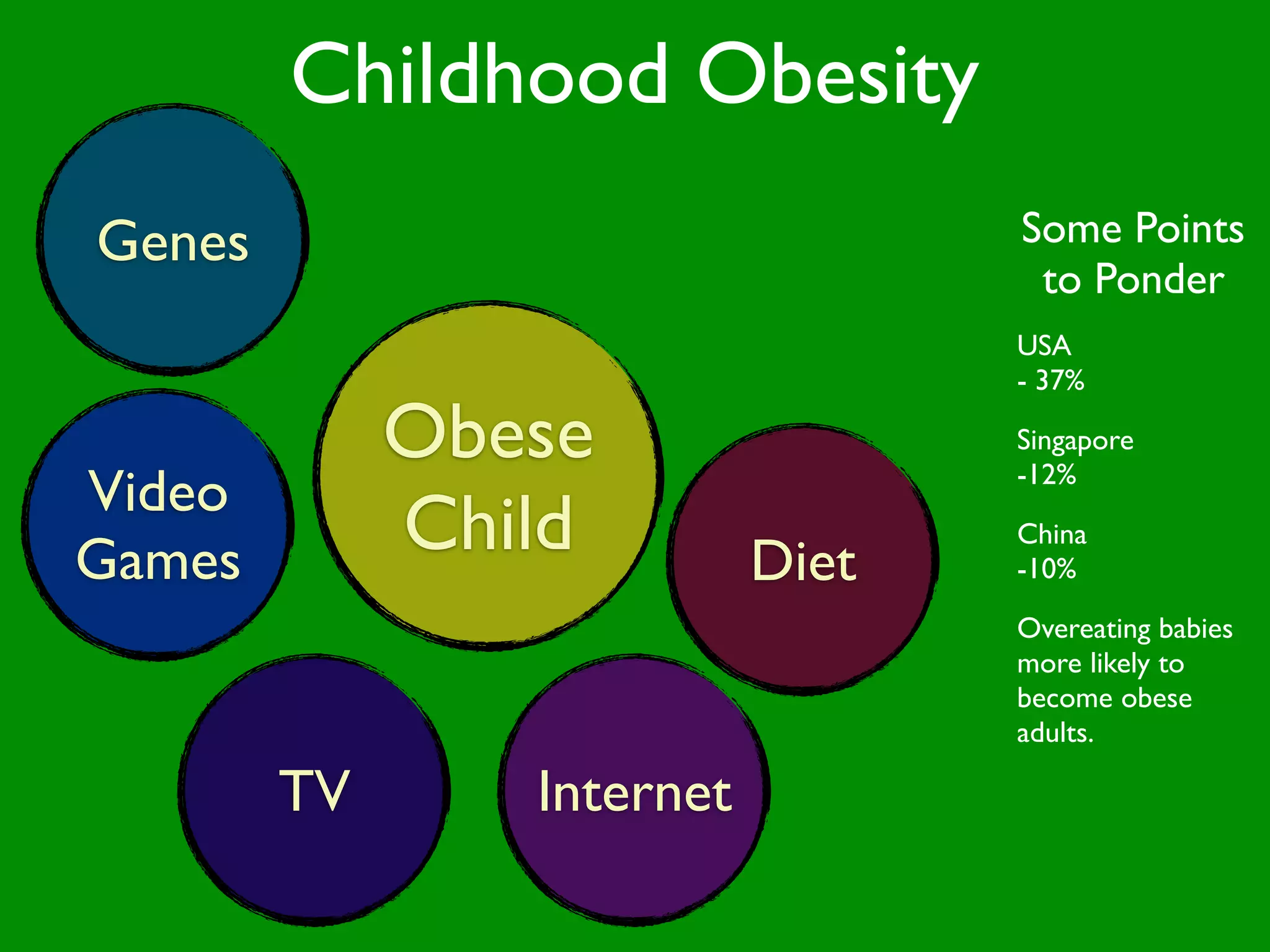
Childhood Obesity
Genes                             Some Points
                                   to Ponder


             Obese
Video
Games        Child         Diet


        TV      Internet
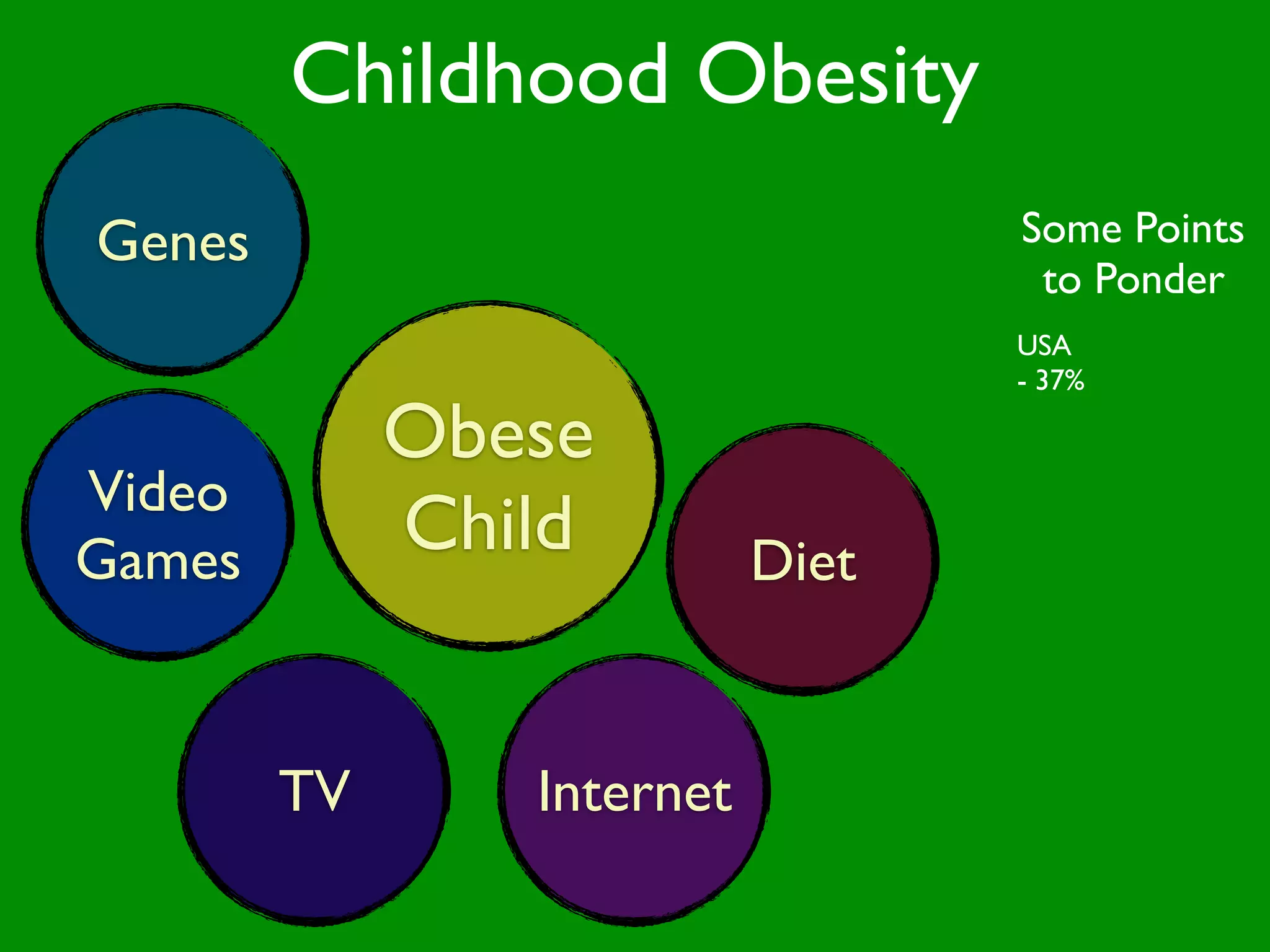
Childhood Obesity
Genes                             Some Points
                                   to Ponder
                                  USA
                                  - 37%

             Obese
Video
Games        Child         Diet


        TV      Internet
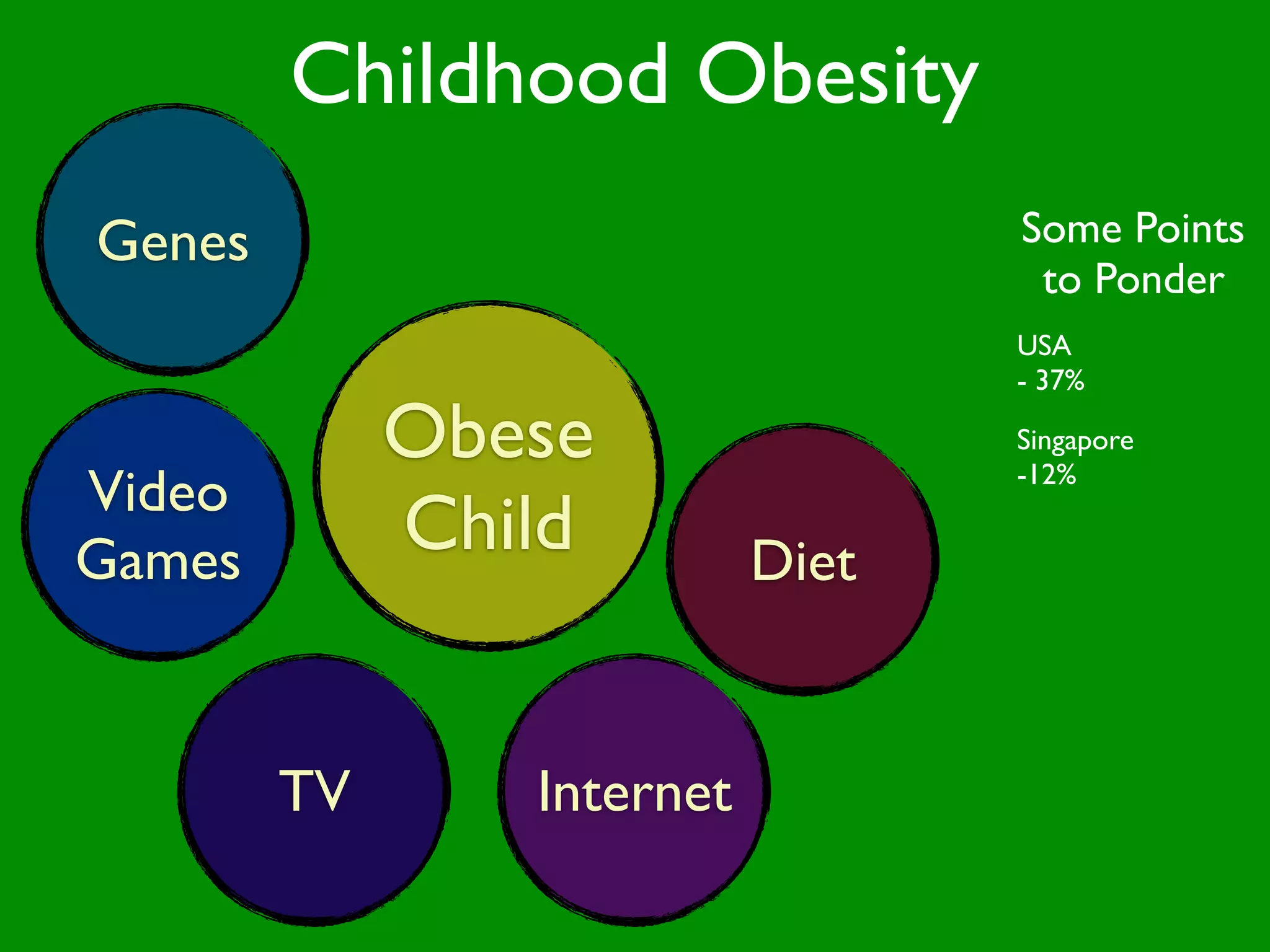
Childhood Obesity
Genes                             Some Points
                                   to Ponder
                                  USA
                                  - 37%

             Obese                Singapore

Video                             -12%


Games        Child         Diet


        TV      Internet
Childhood Obesity
Genes                             Some Points
                                   to Ponder
                                  USA
                                  - 37%

             Obese                Singapore

Video                             -12%


Games        Child         Diet
                                  China
                                  -10%


        TV      Internet
Childhood Obesity
Genes                             Some Points
                                   to Ponder
                                  USA
                                  - 37%

             Obese                Singapore

Video                             -12%


Games        Child         Diet
                                  China
                                  -10%

                                  Overeating babies
                                  more likely to
                                  become obese
                                  adults.

        TV      Internet
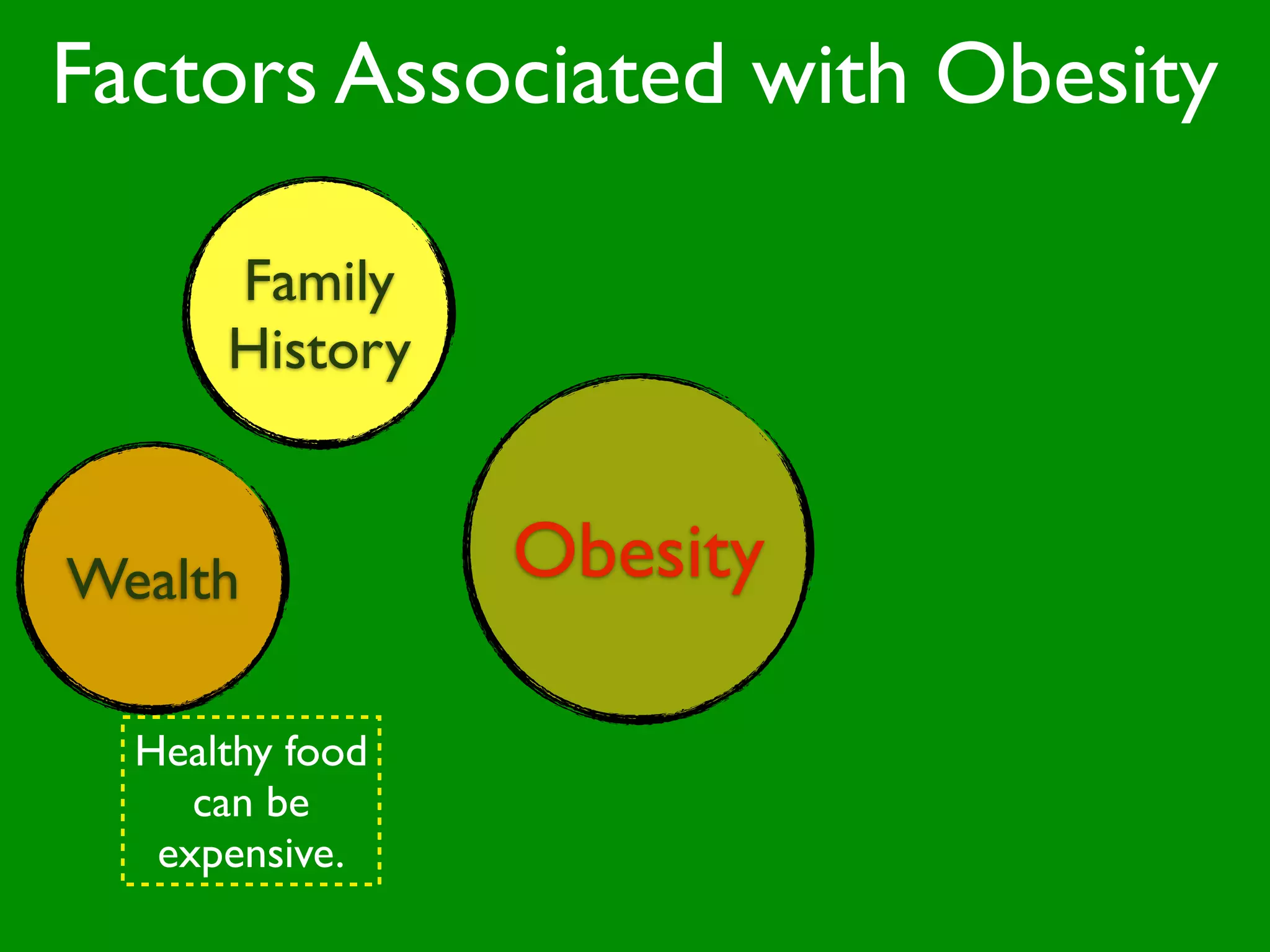
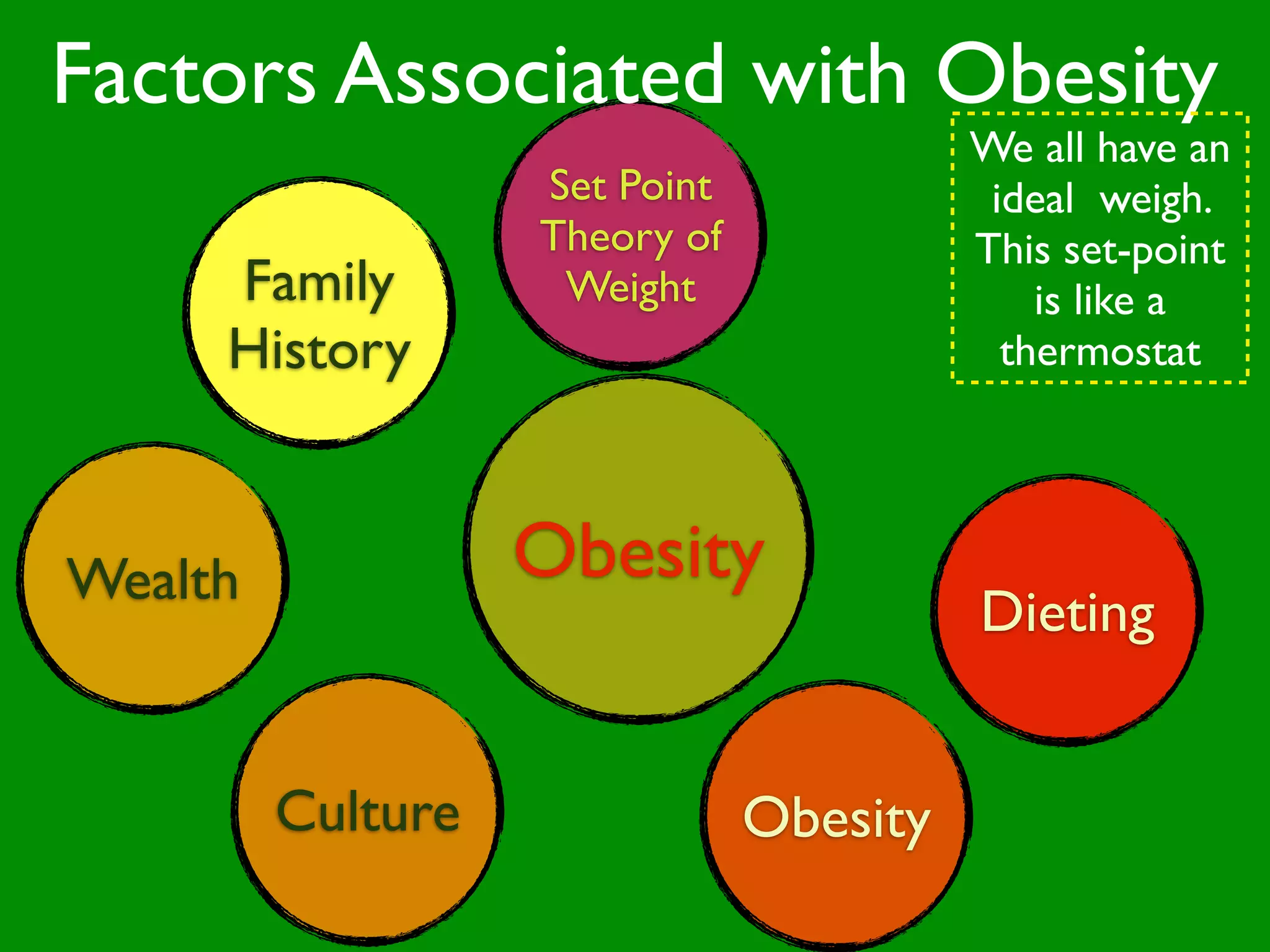
Factors Associated with Obesity


            Set Point
            Family
            Obesity
            Stress
            Obesity
            Culture
            Dieting
            Wealth
            Theory of
            History
             Weight
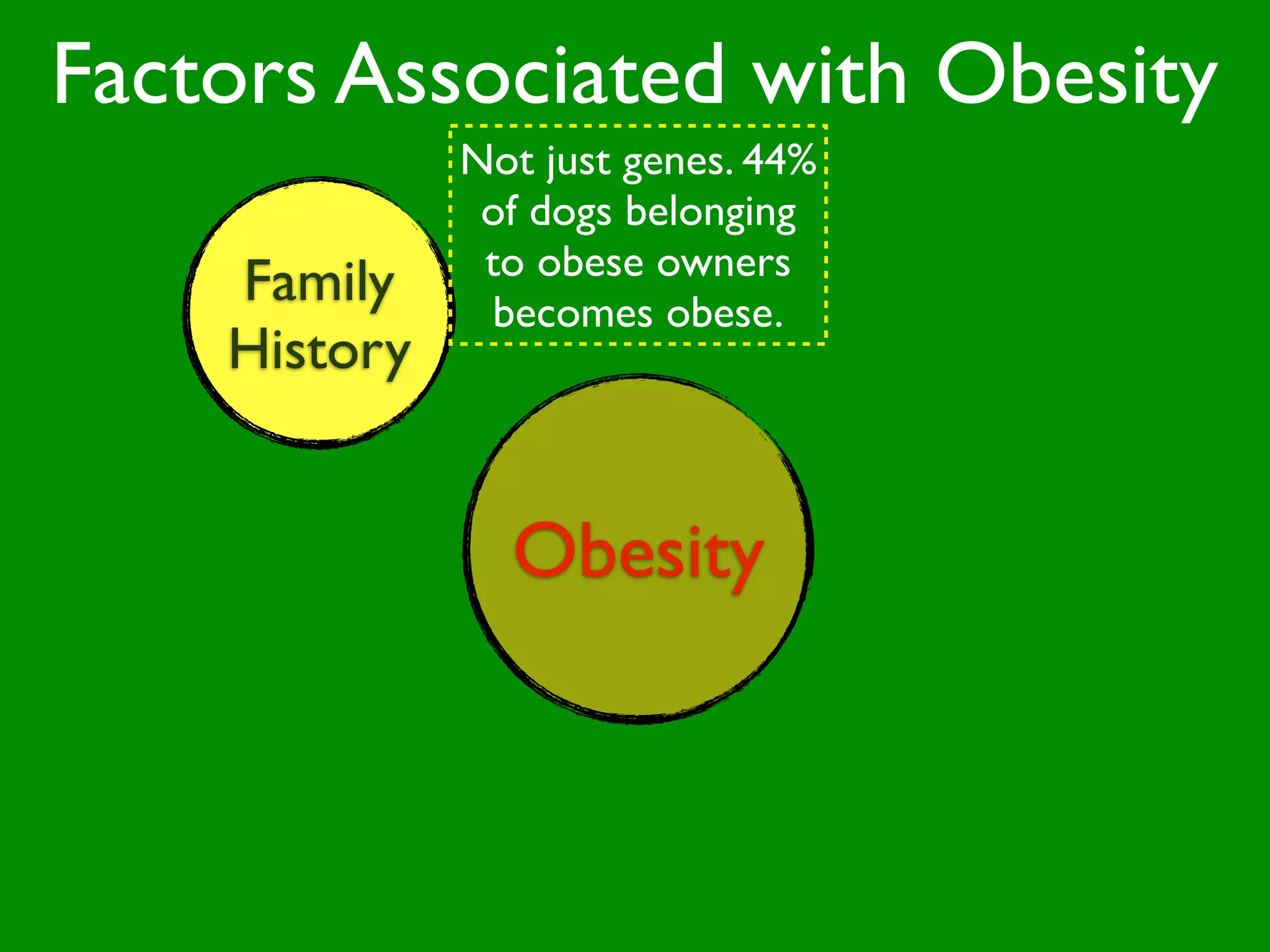
Factors Associated with Obesity
              Not just genes. 44%
               of dogs belonging
               to obese owners
    Family      becomes obese.
    History

                  Set Point
                Obesity
                Stress
                  Obesity
                  Culture
                  Dieting
                  Wealth
                  Theory of
                   Weight
Factors Associated with Obesity

      Family
      History

                 Set Point
Wealth           Obesity
                 Stress
                 Obesity
                 Culture
                 Dieting
                 Theory of
                  Weight


  Healthy food
     can be
   expensive.
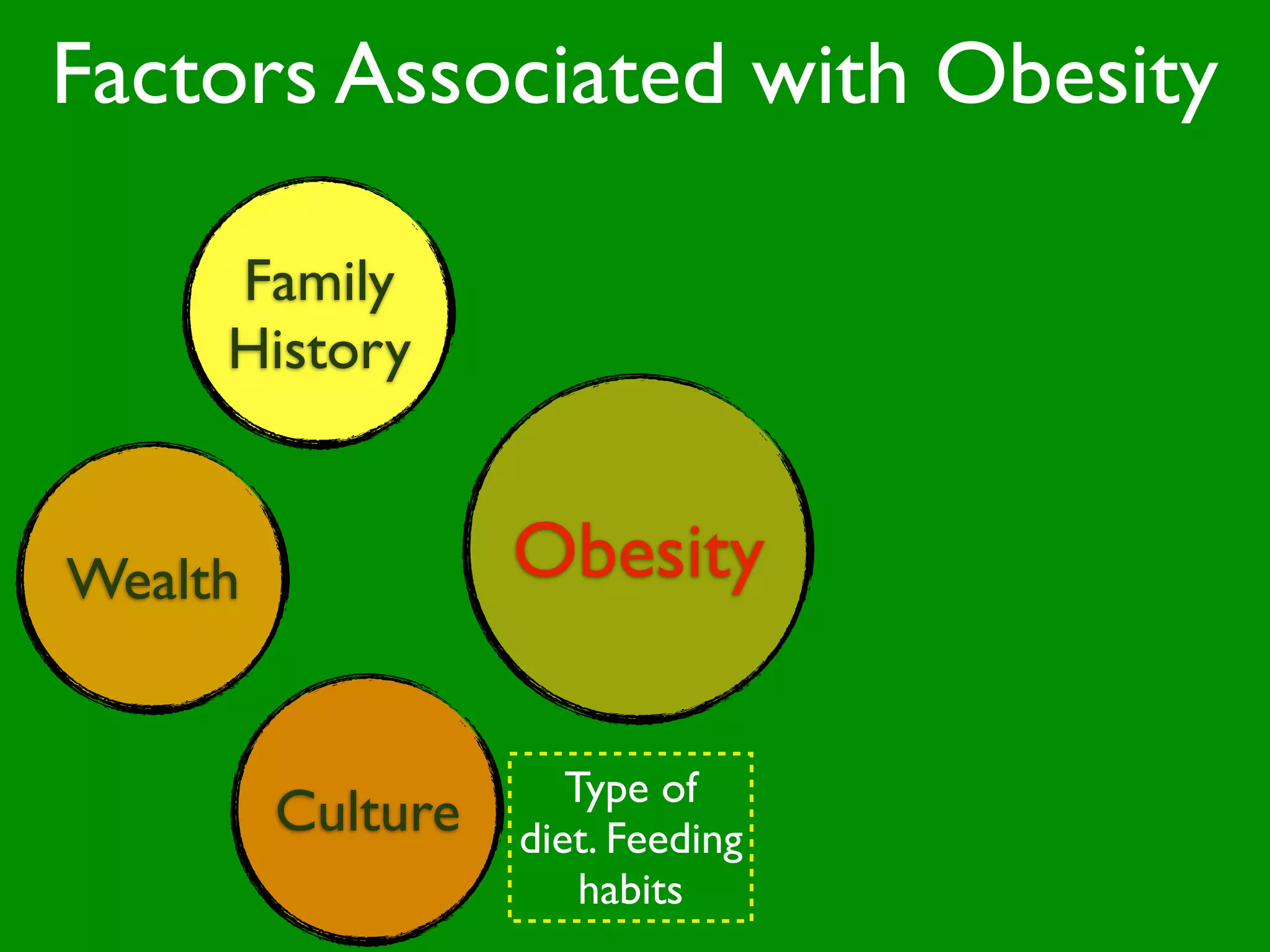
Factors Associated with Obesity

     Family
     History

                   Set Point
Wealth             Obesity
                   Stress
                   Obesity
                   Dieting
                   Theory of
                    Weight


                      Type of
         Culture   diet. Feeding
                       habits
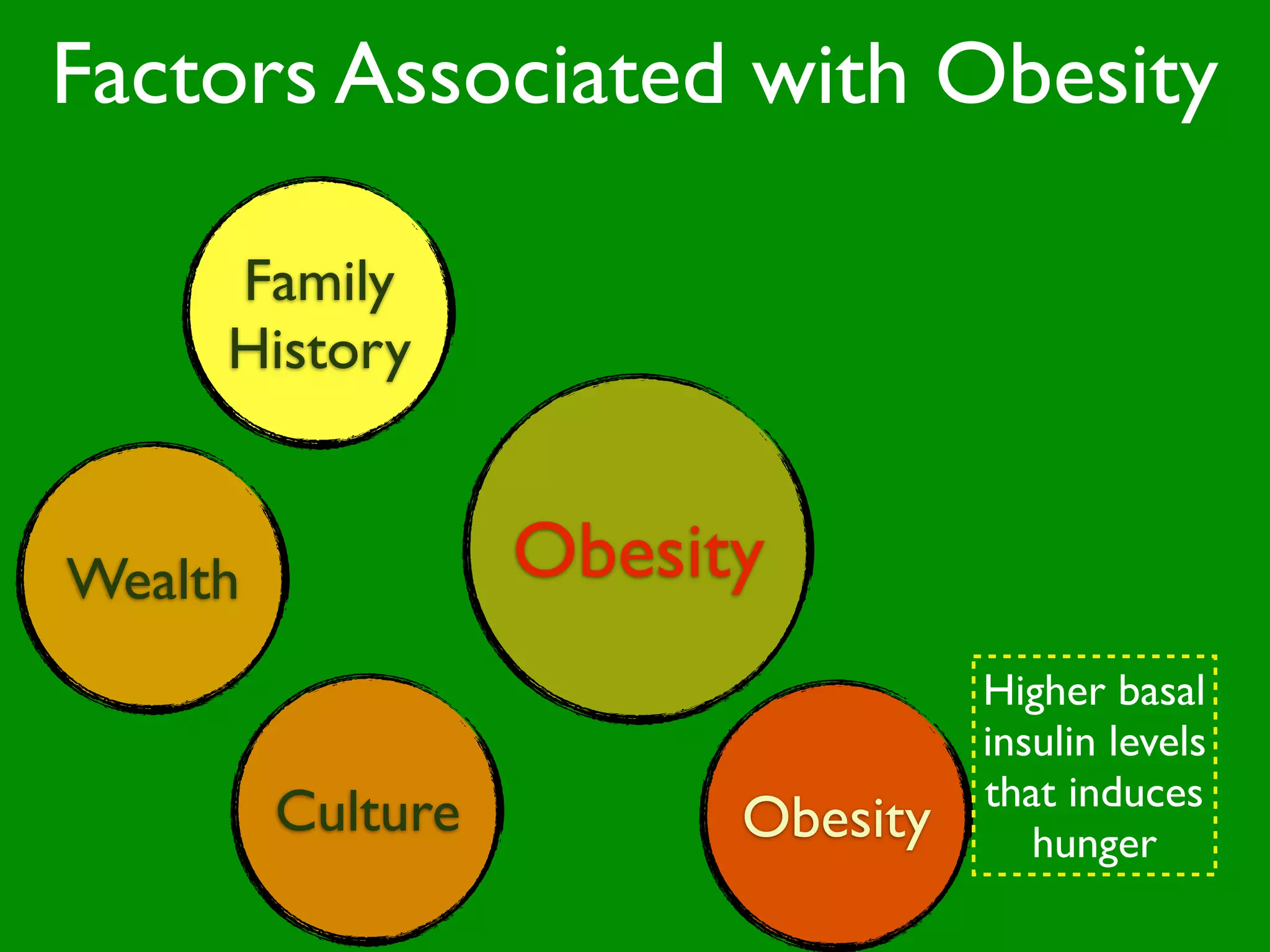
Factors Associated with Obesity

     Family
     History

                   Set Point
Wealth             Obesity
                   Stress
                   Dieting
                   Theory of
                    Weight

                                         Higher basal
                                         insulin levels
                                         that induces
         Culture               Obesity      hunger
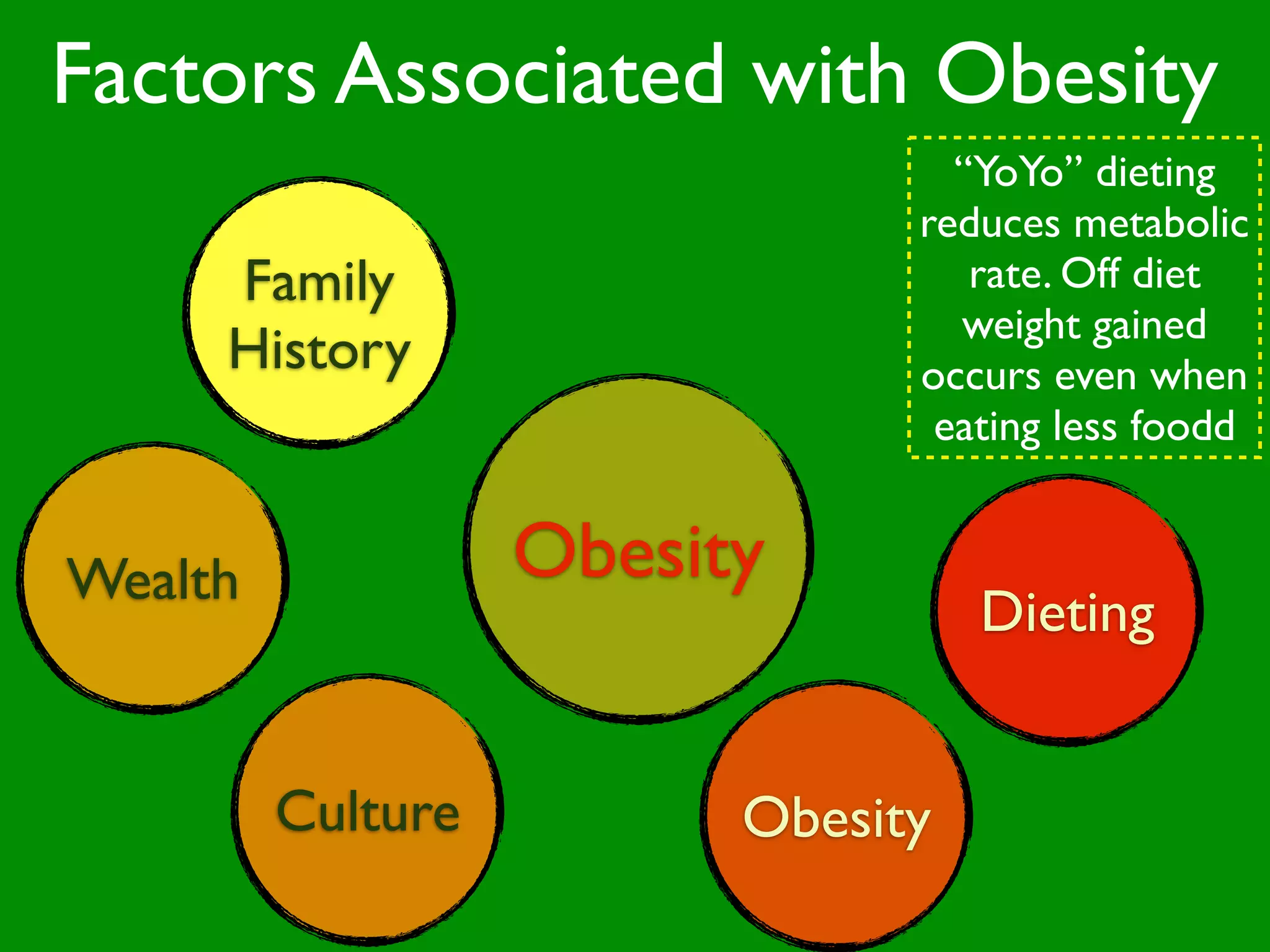
Factors Associated with Obesity
                                       “YoYo” dieting
                                     reduces metabolic
     Family                             rate. Off diet
                                       weight gained
     History                         occurs even when
                                      eating less foodd
                   Set Point
Wealth             Obesity
                   Stress
                   Theory of
                    Weight               Dieting


         Culture               Obesity
Factors Associated with Obesity
                                         We all have an
                   Set Point              ideal weigh.
                   Theory of             This set-point
     Family         Weight                   is like a
     History                               thermostat


Wealth             Obesity
                   Stress
                                         Dieting


         Culture               Obesity
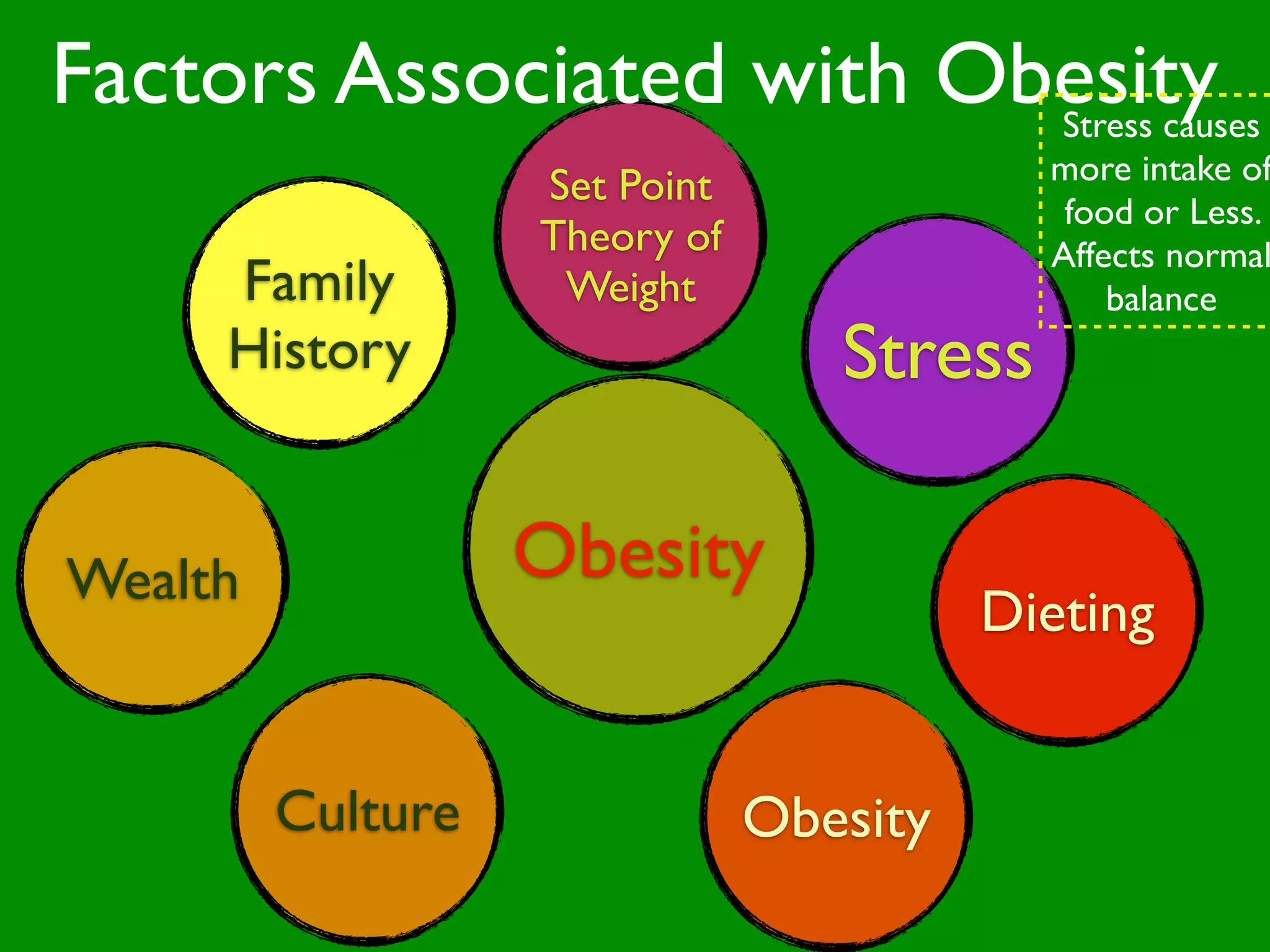
Factors Associated with Obesity
                          Stress causes
                                           more intake of
                   Set Point
                                            food or Less.
                   Theory of               Affects normal
     Family         Weight                     balance
     History                      Stress

Wealth             Obesity
                                         Dieting


         Culture               Obesity
Treatment of Obesity


Dieting
Treatment of Obesity


Dieting


          Surgery
Treatment of Obesity

           Appetite
          Suppressing
            Drugs

Dieting


            Surgery
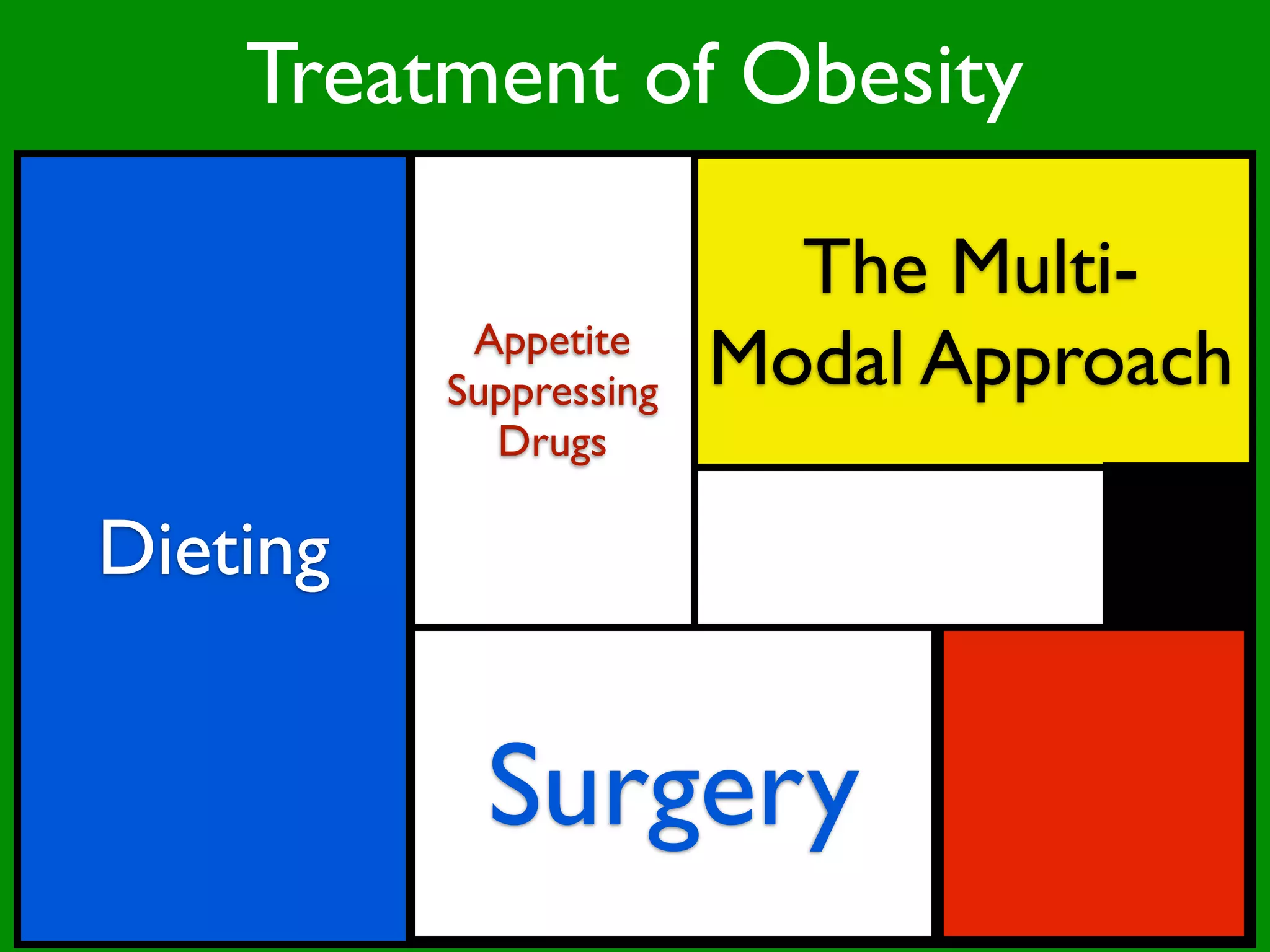
Treatment of Obesity

                          The Multi-
           Appetite
          Suppressing   Modal Approach
            Drugs

Dieting


            Surgery
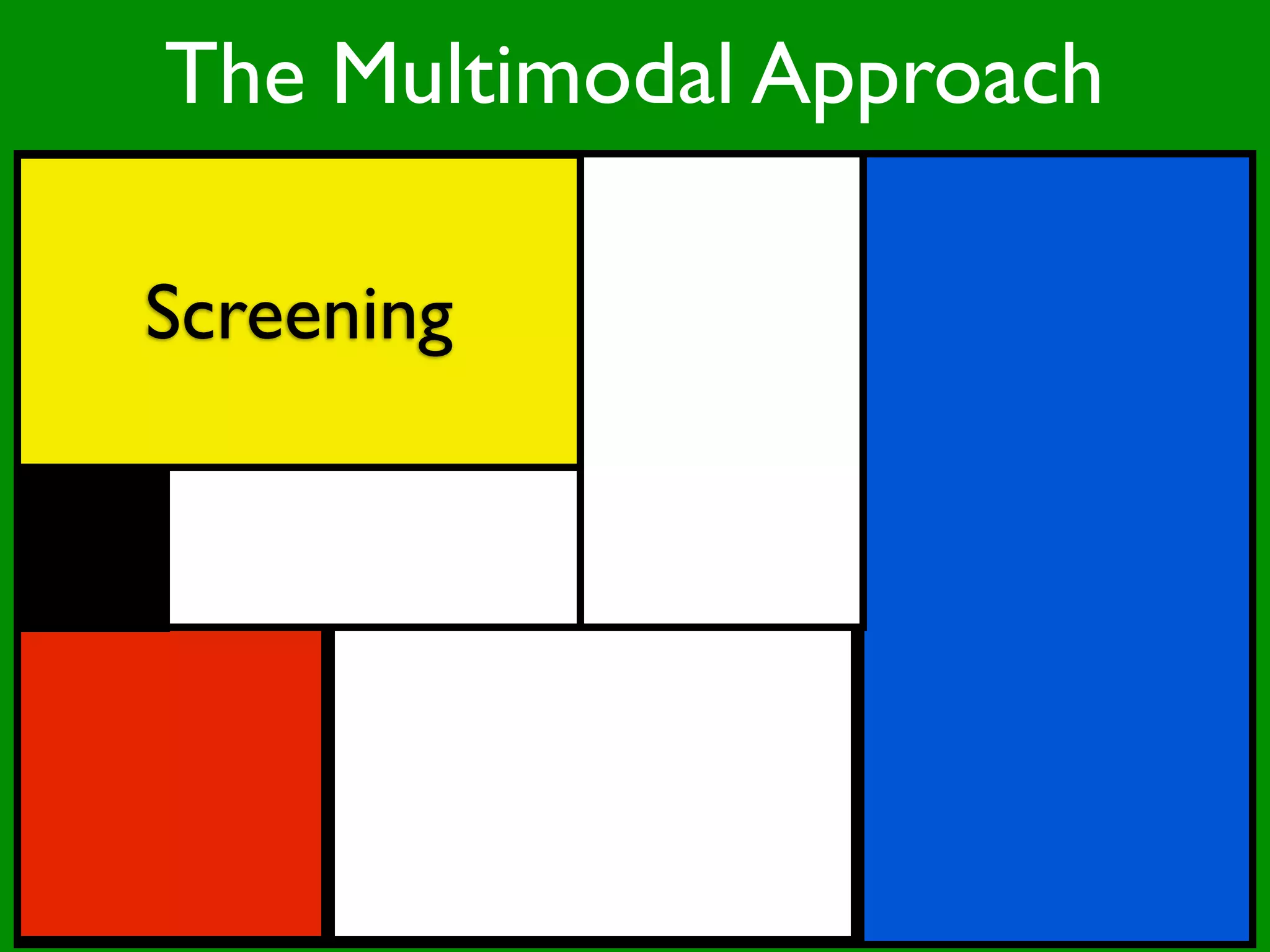
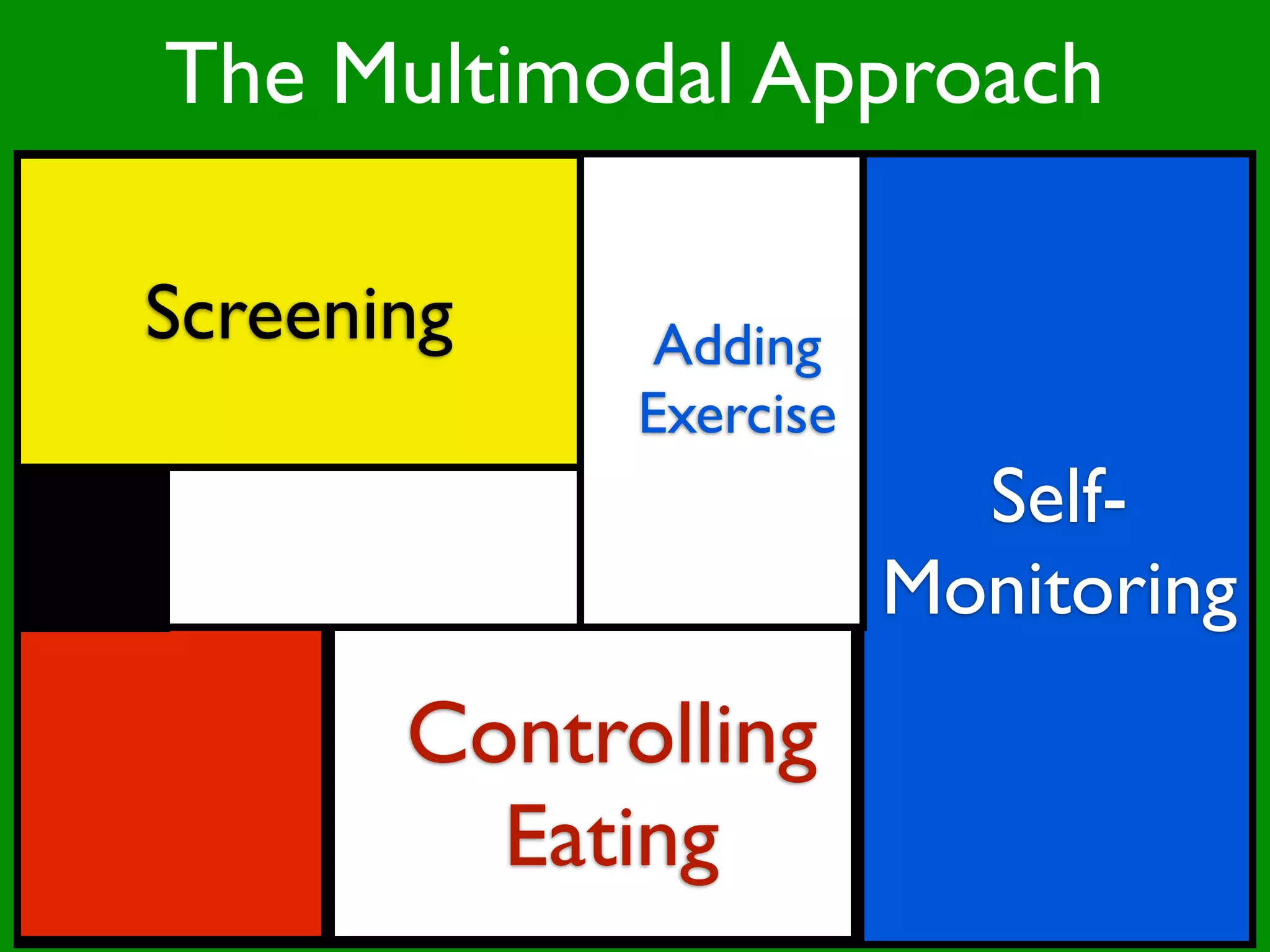
The Multimodal Approach

Screening
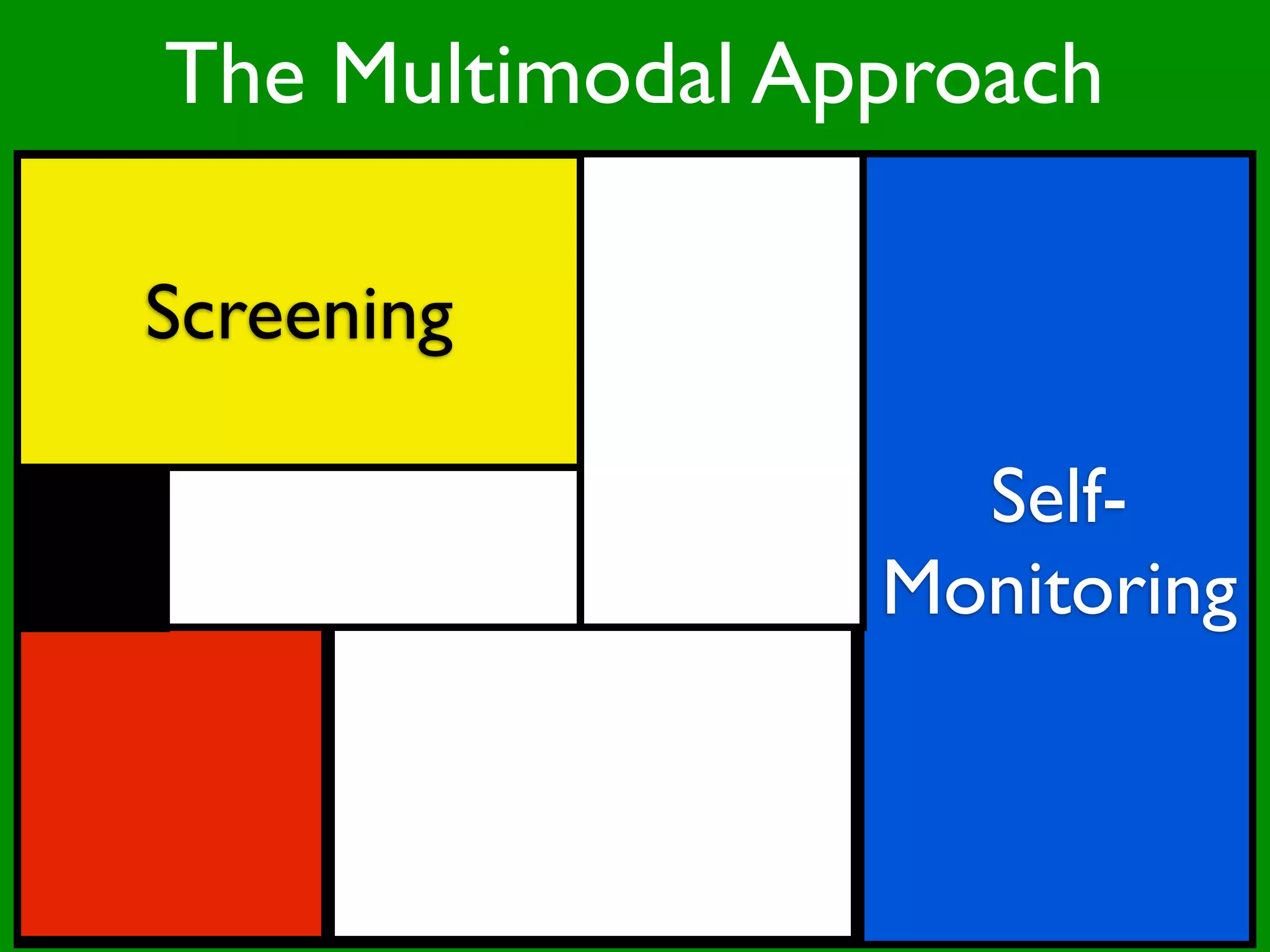
The Multimodal Approach

Screening

                   Self-
                 Monitoring
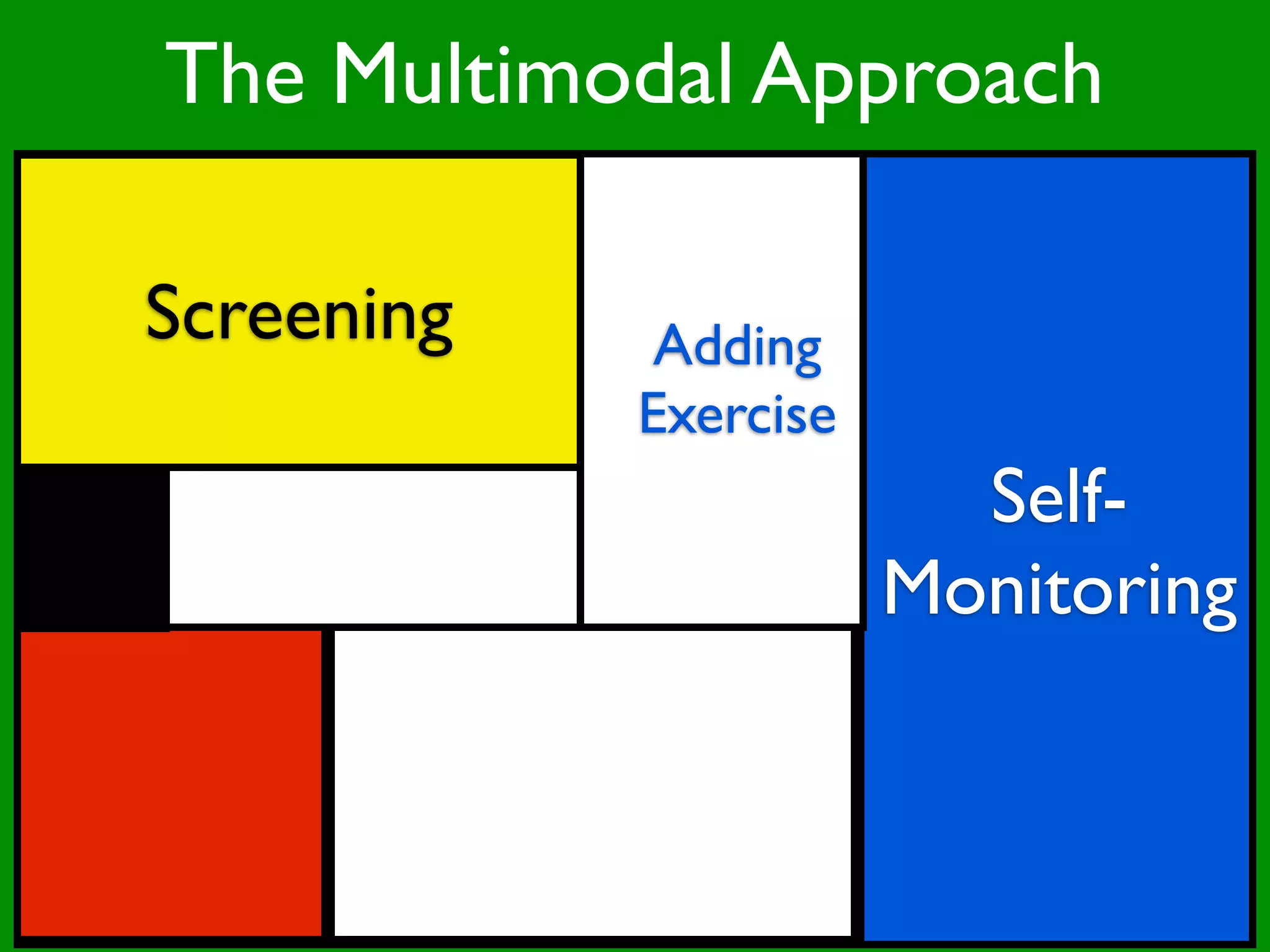
The Multimodal Approach

Screening    Adding
            Exercise
                         Self-
                       Monitoring
The Multimodal Approach

Screening     Adding
             Exercise
                          Self-
                        Monitoring
       Controlling
         Eating
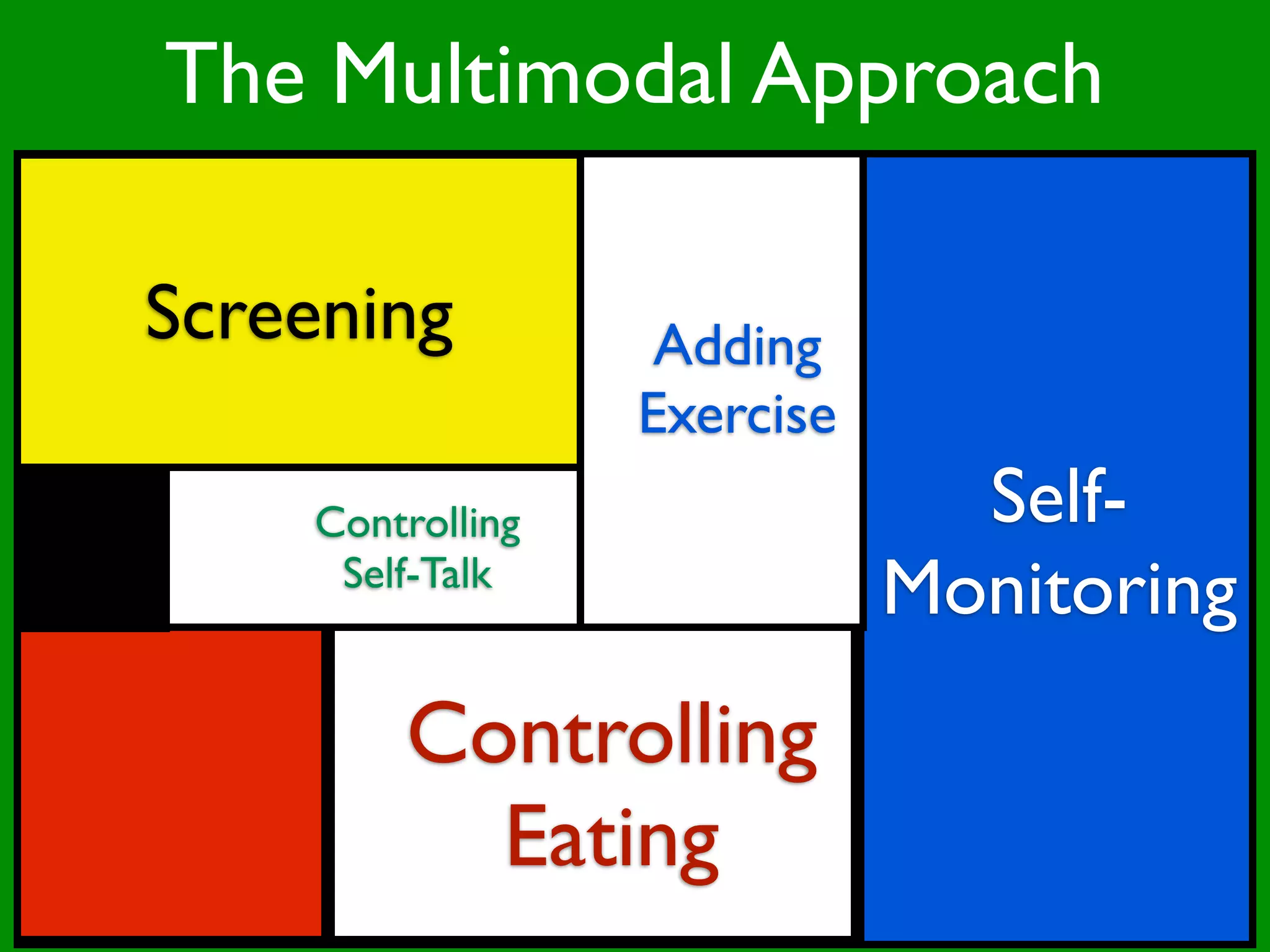
The Multimodal Approach

Screening          Adding
                  Exercise
    Controlling                Self-
     Self-Talk
                             Monitoring
        Controlling
          Eating
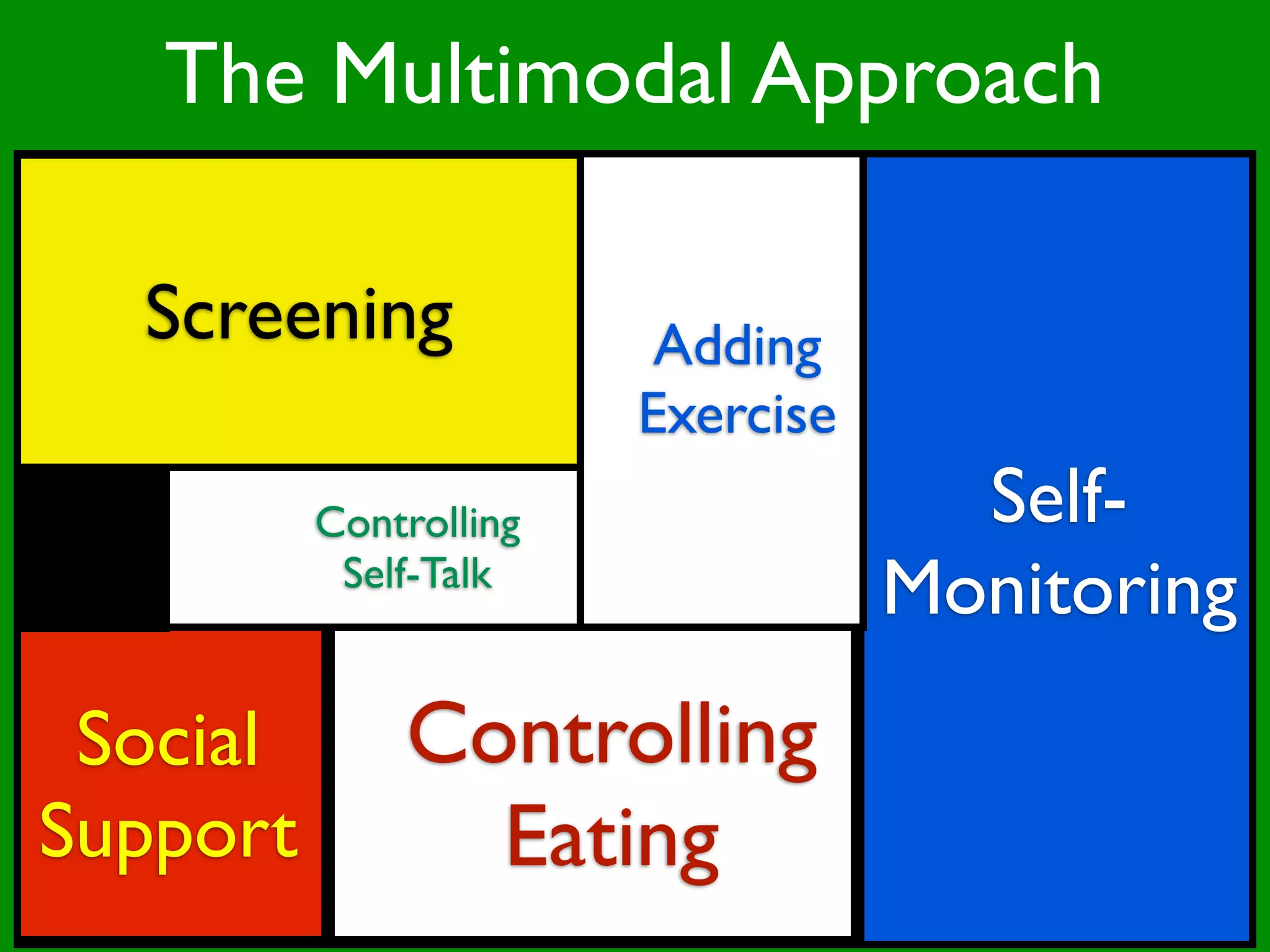
The Multimodal Approach

  Screening              Adding
                        Exercise
          Controlling                Self-
           Self-Talk
                                   Monitoring
 Social       Controlling
Support         Eating
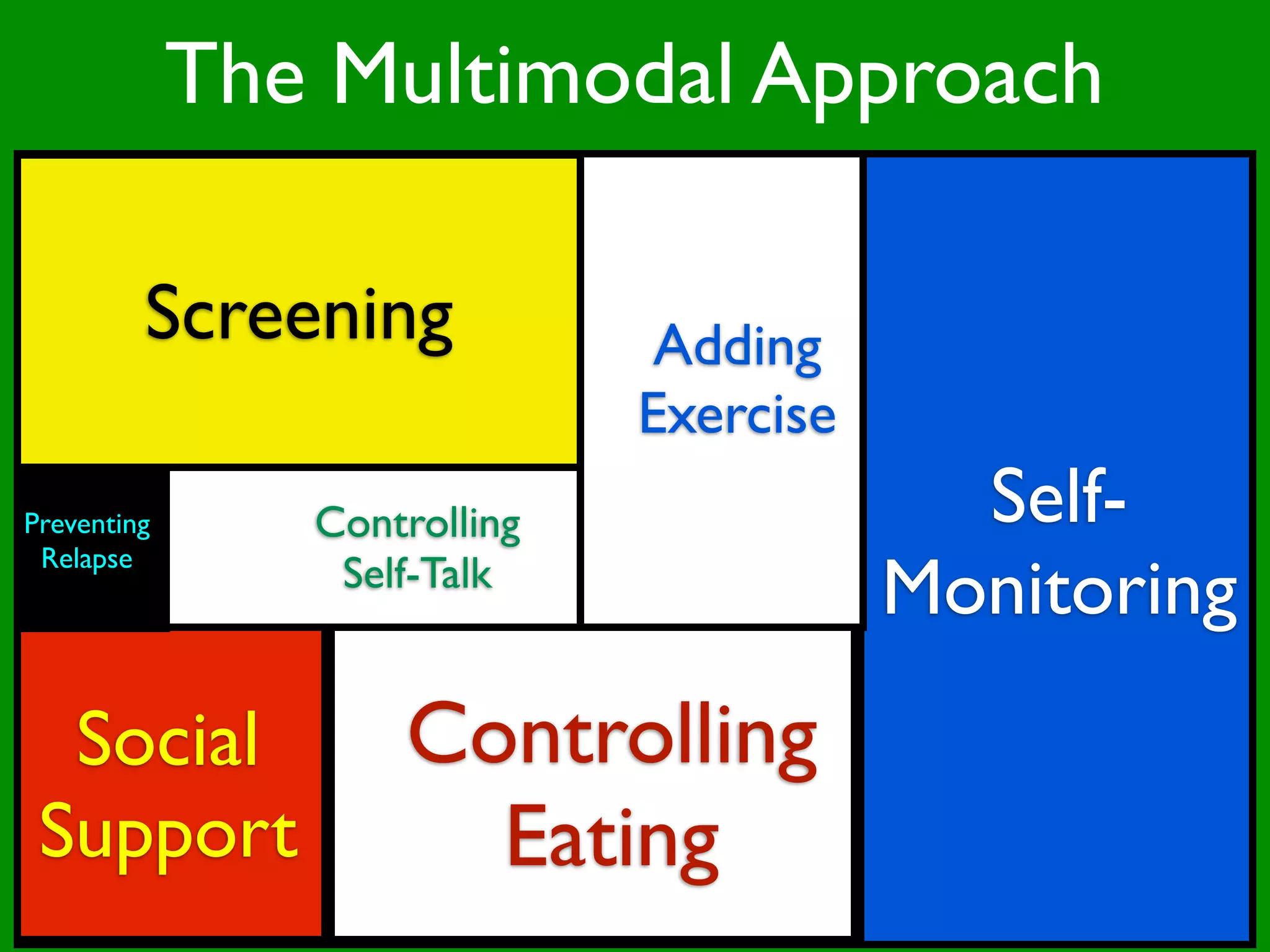
The Multimodal Approach

         Screening             Adding
                              Exercise
Preventing      Controlling                Self-
 Relapse
                 Self-Talk
                                         Monitoring
  Social            Controlling
 Support              Eating
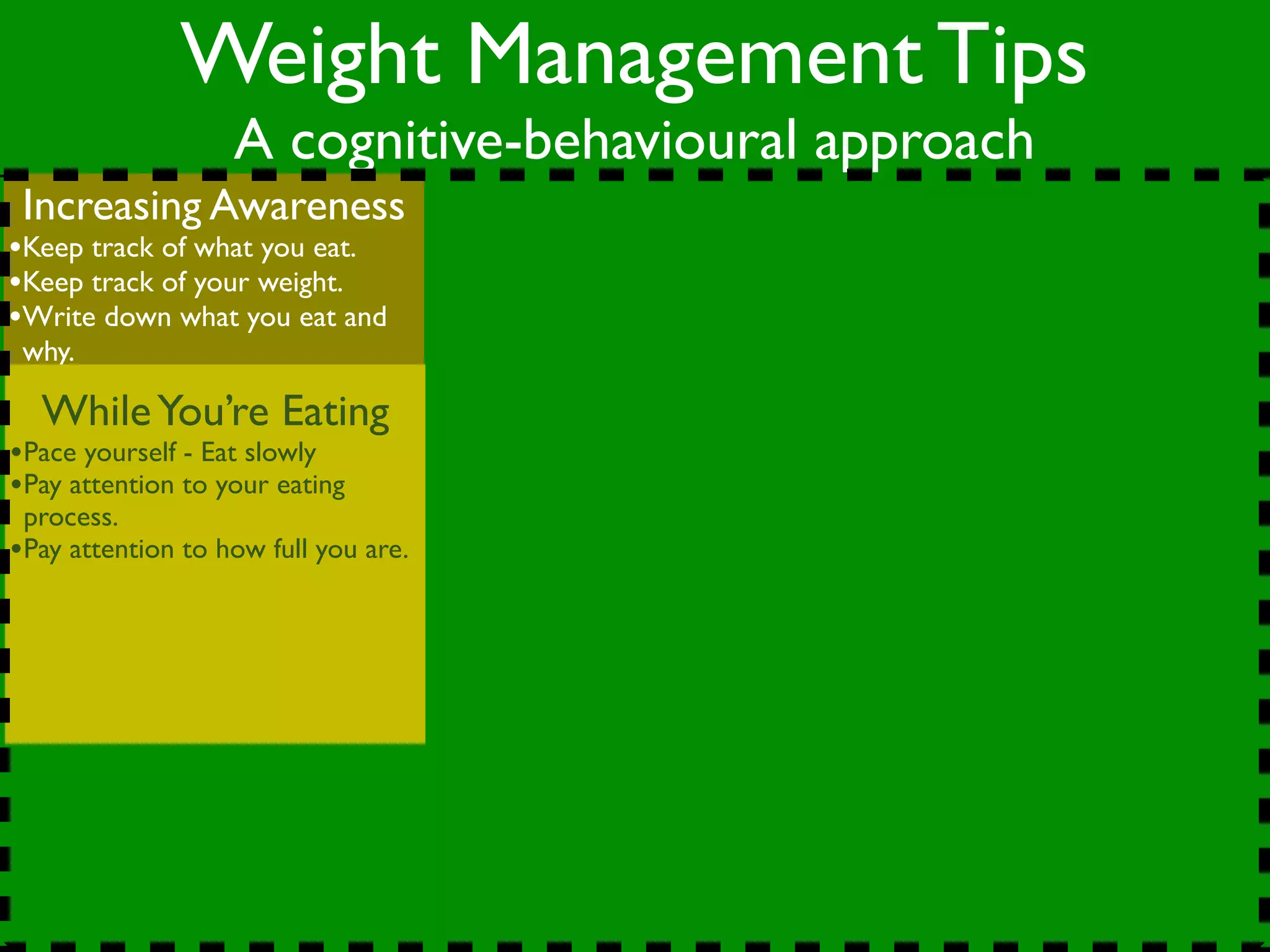
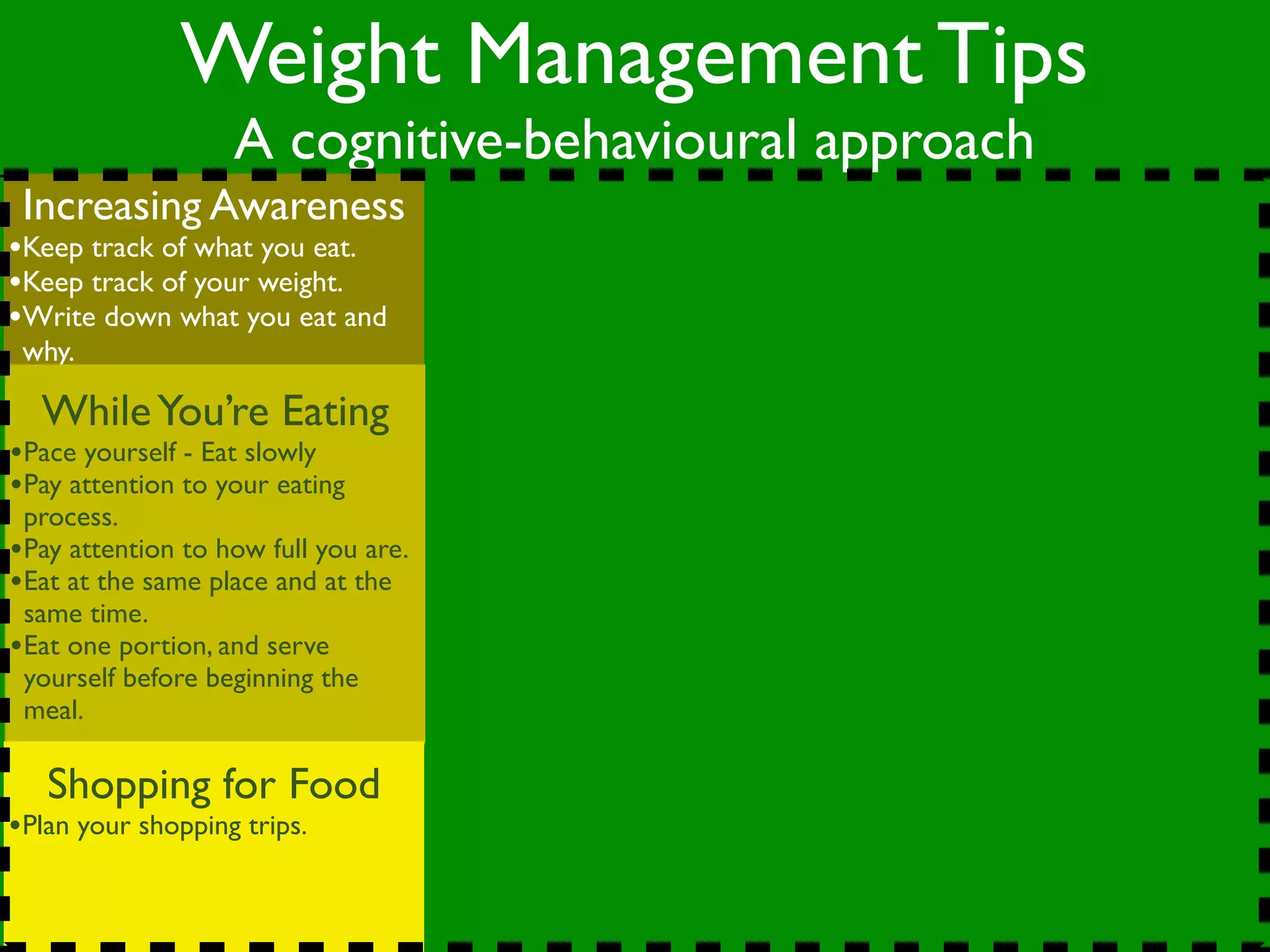
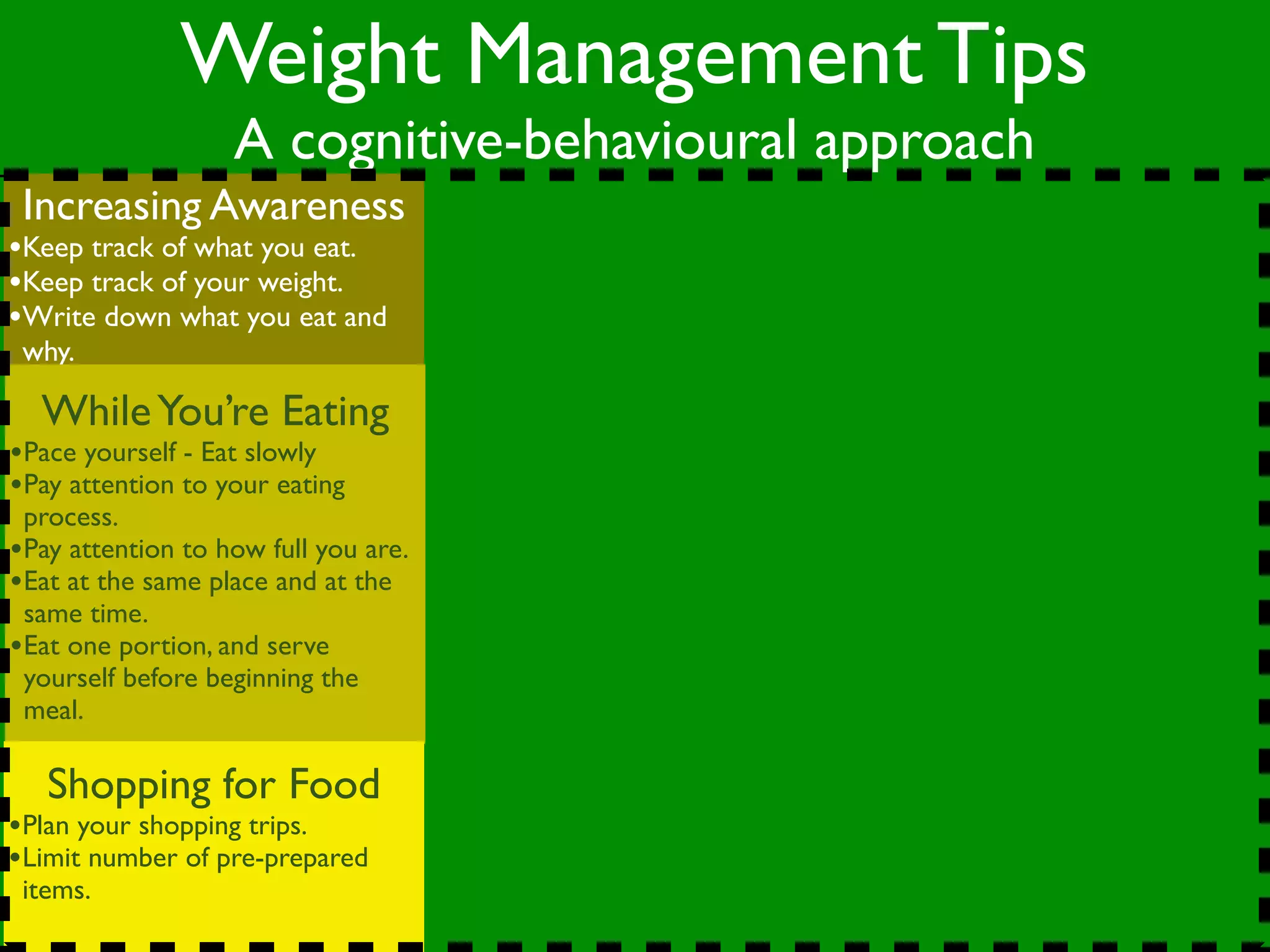
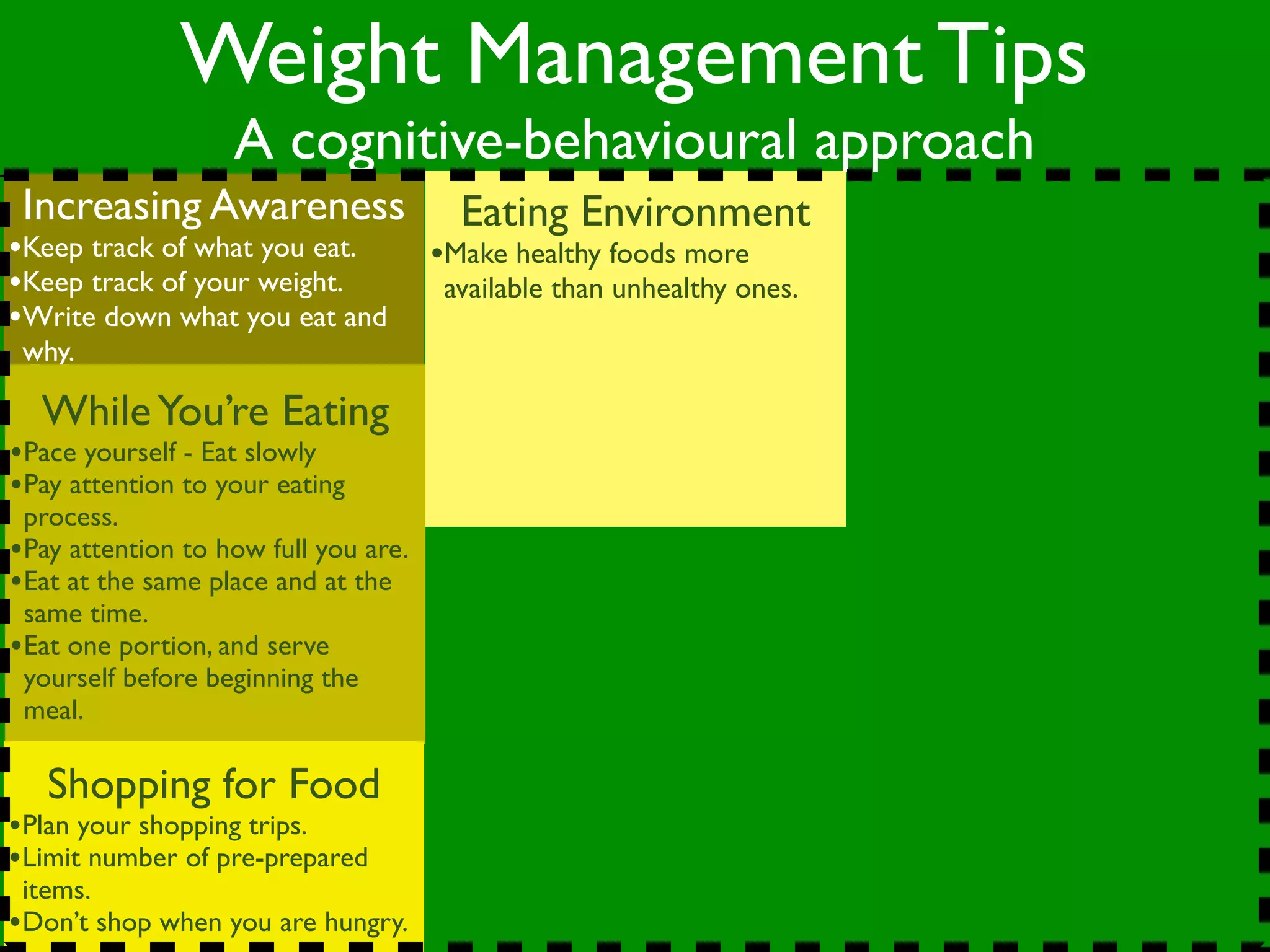
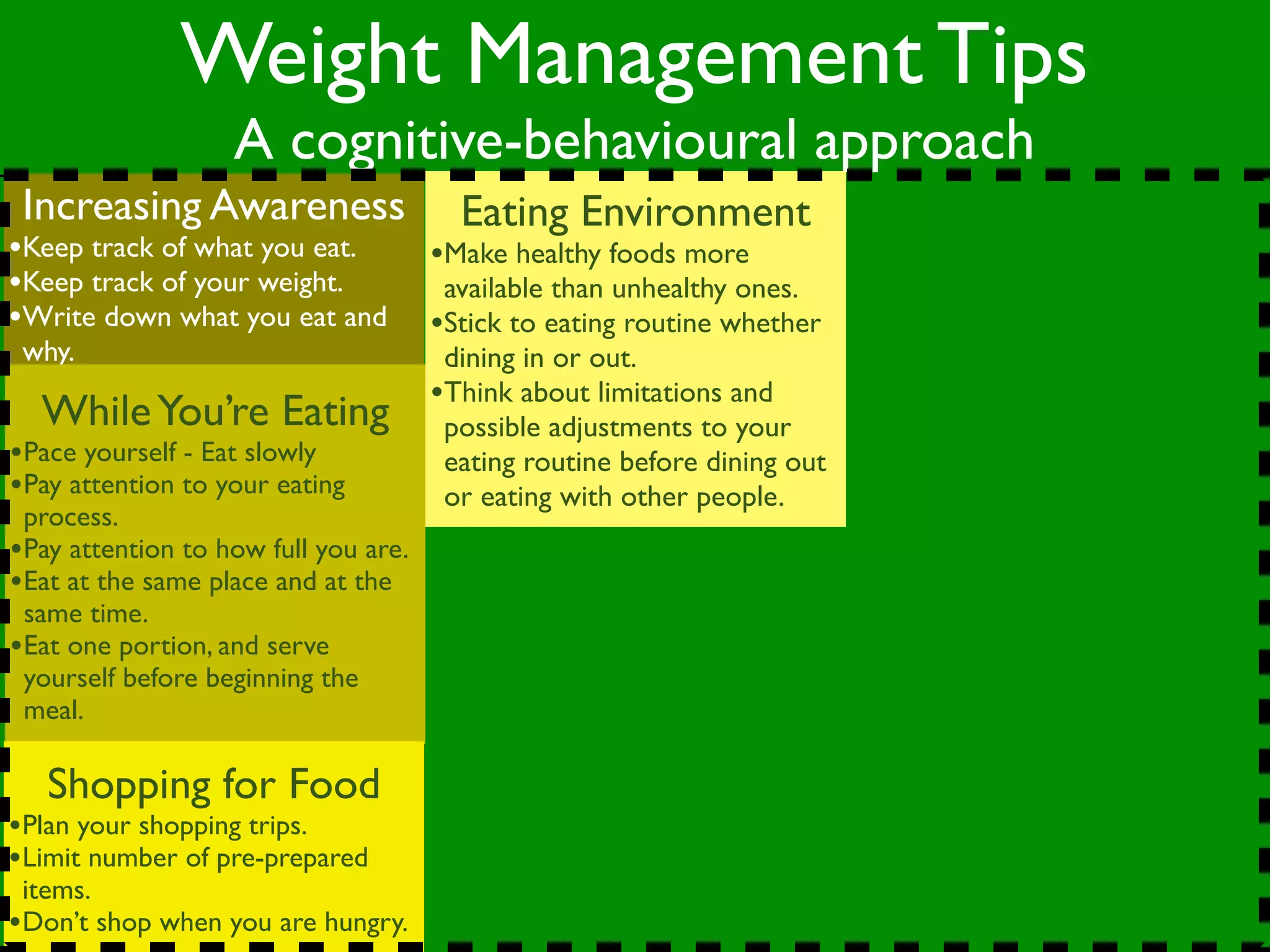
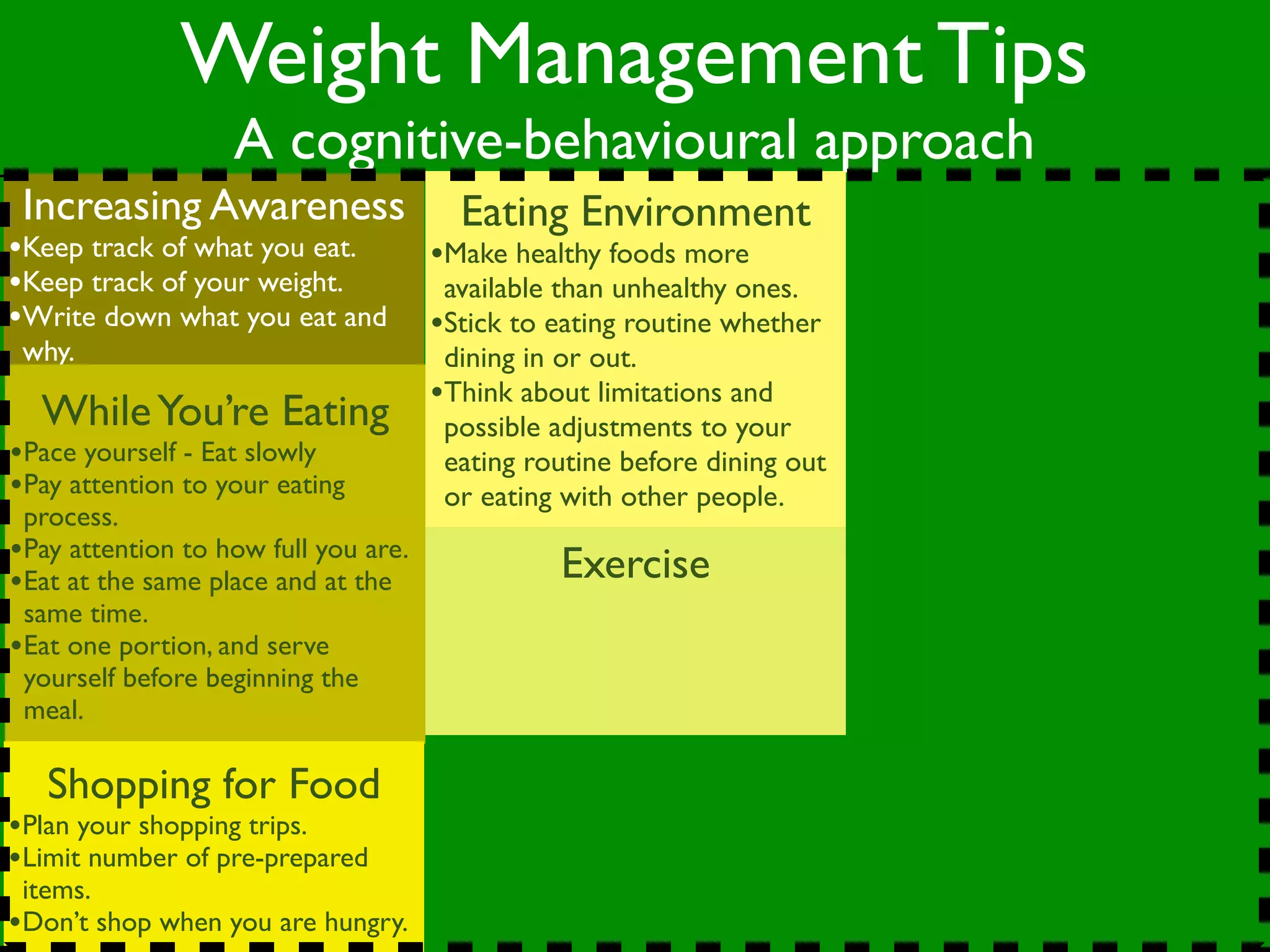
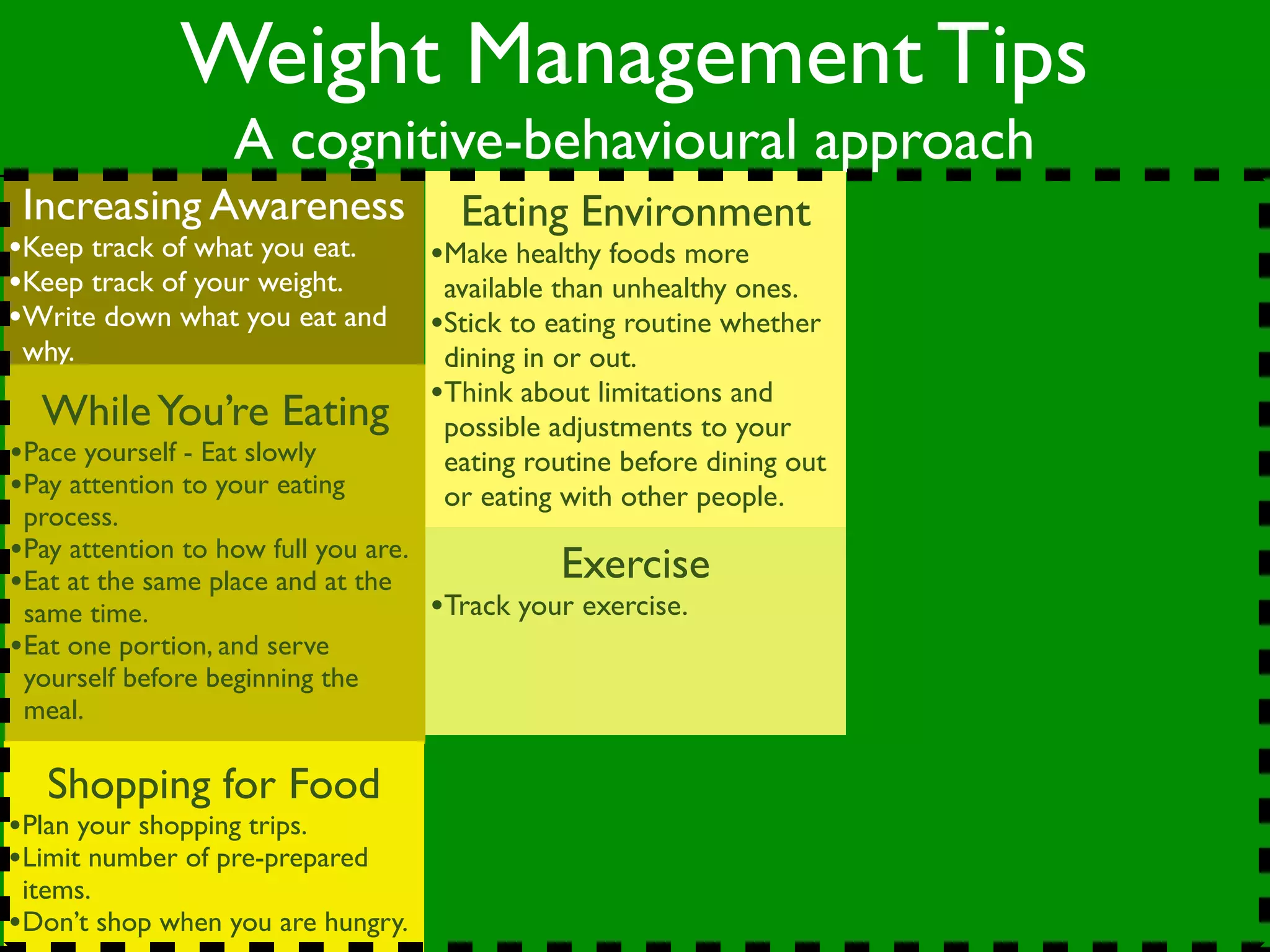
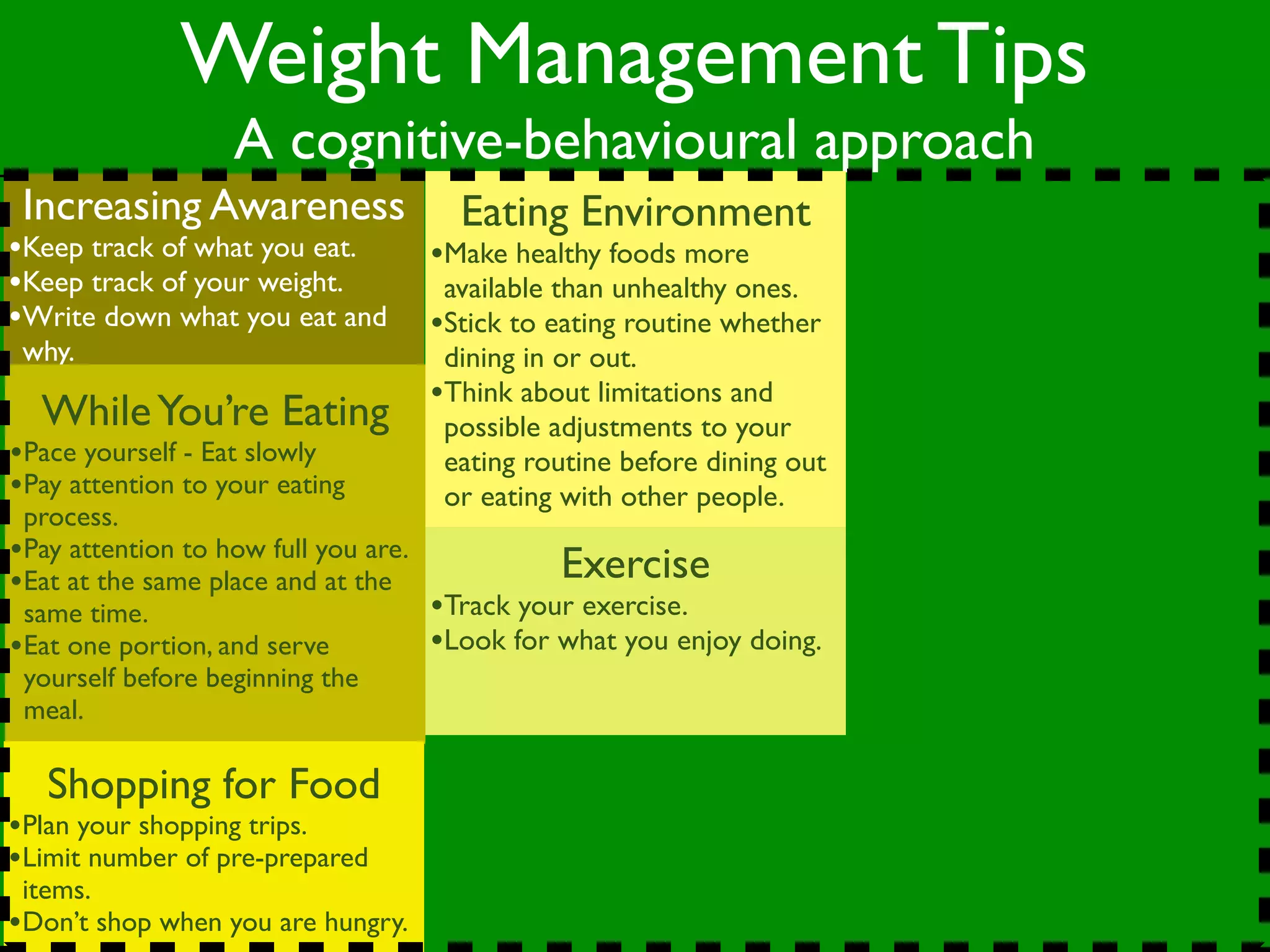
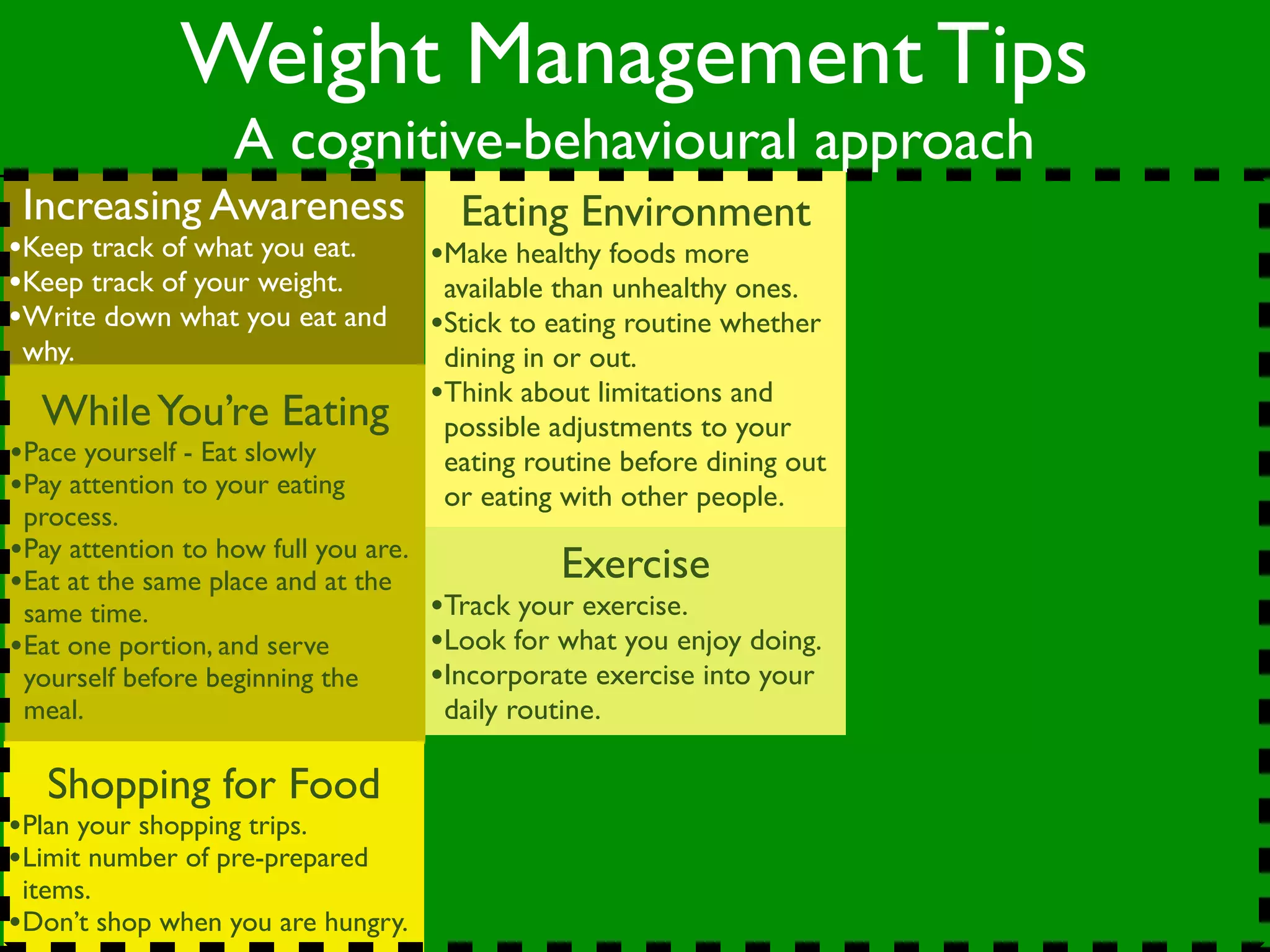
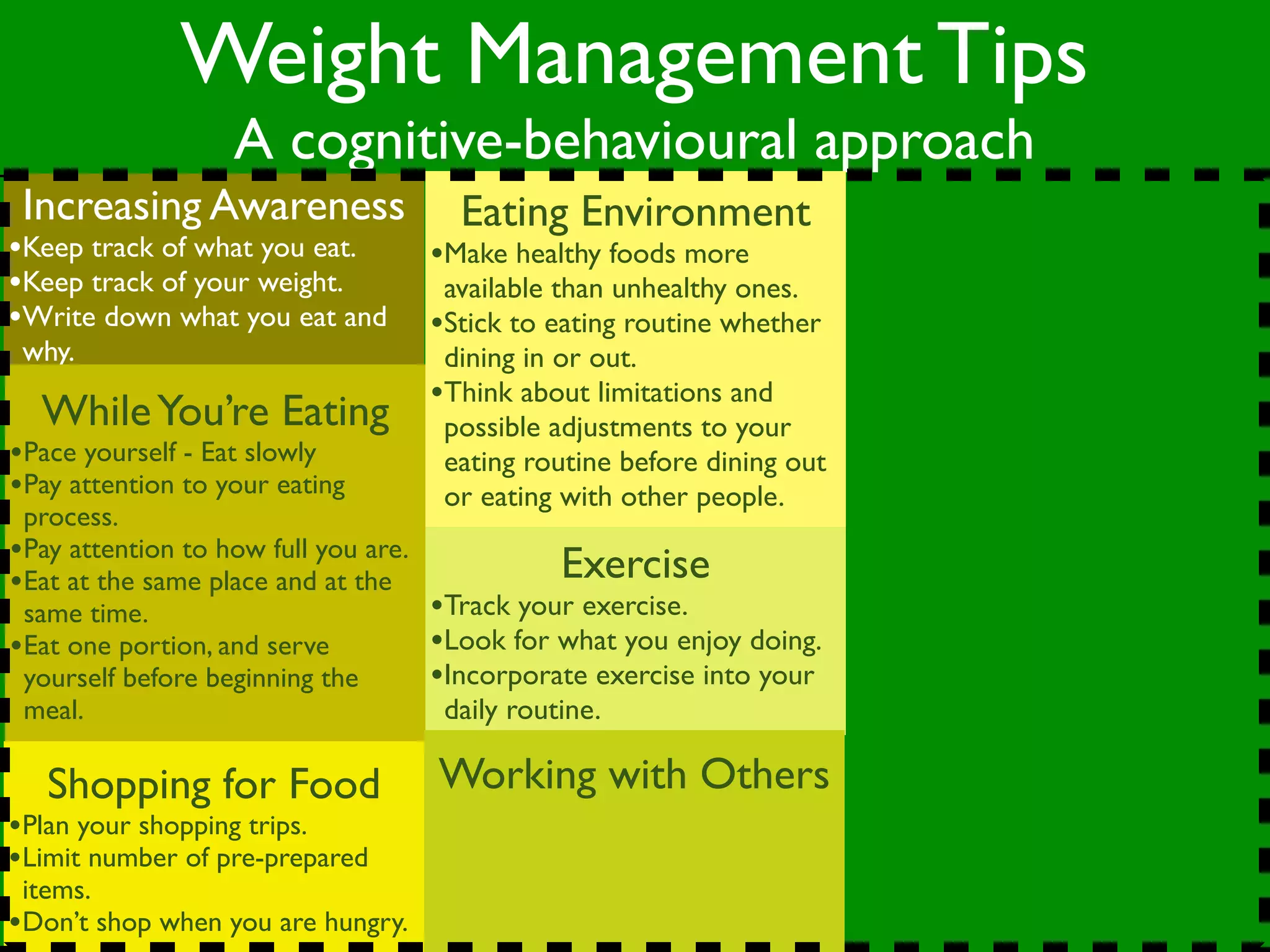
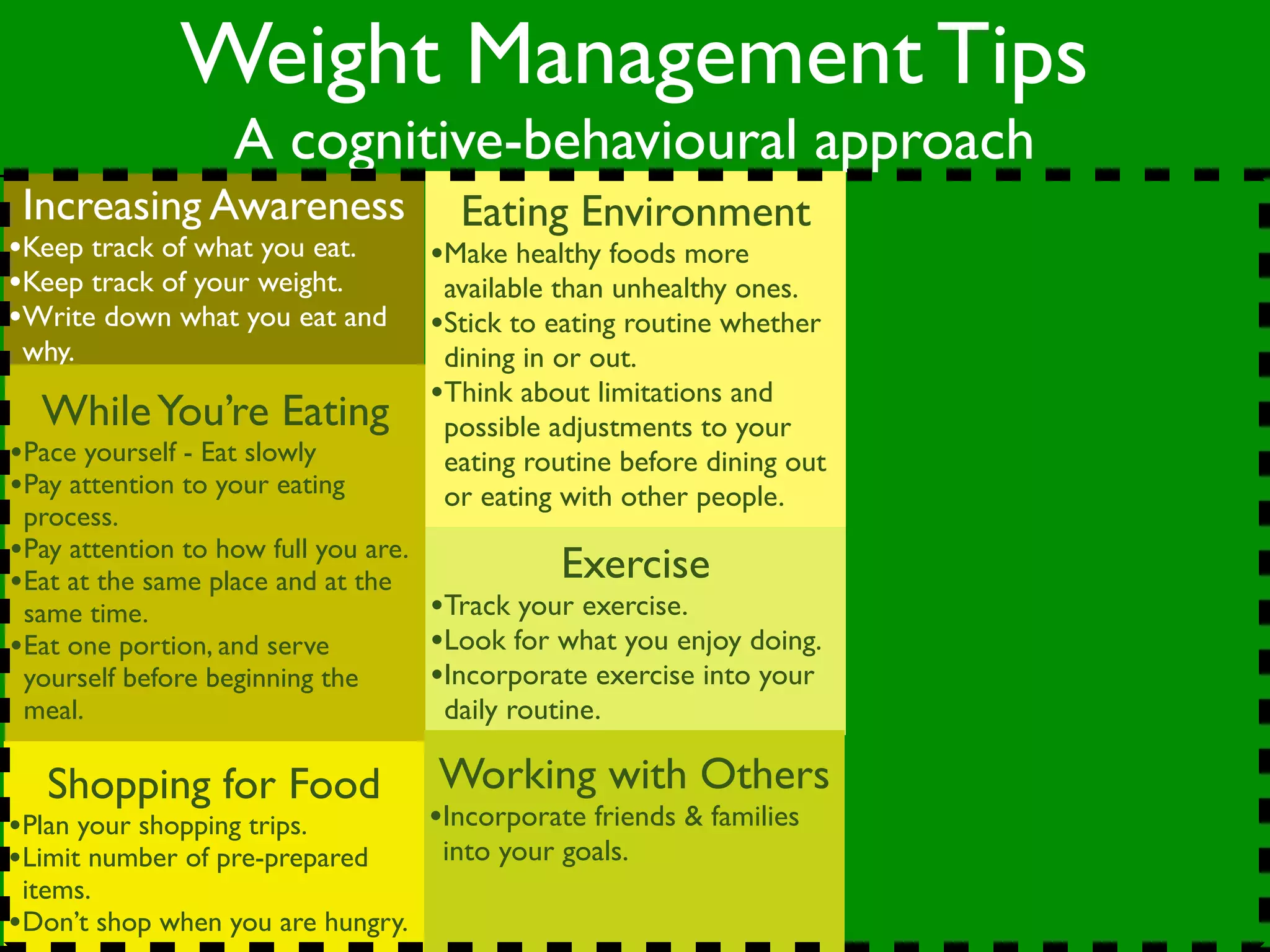
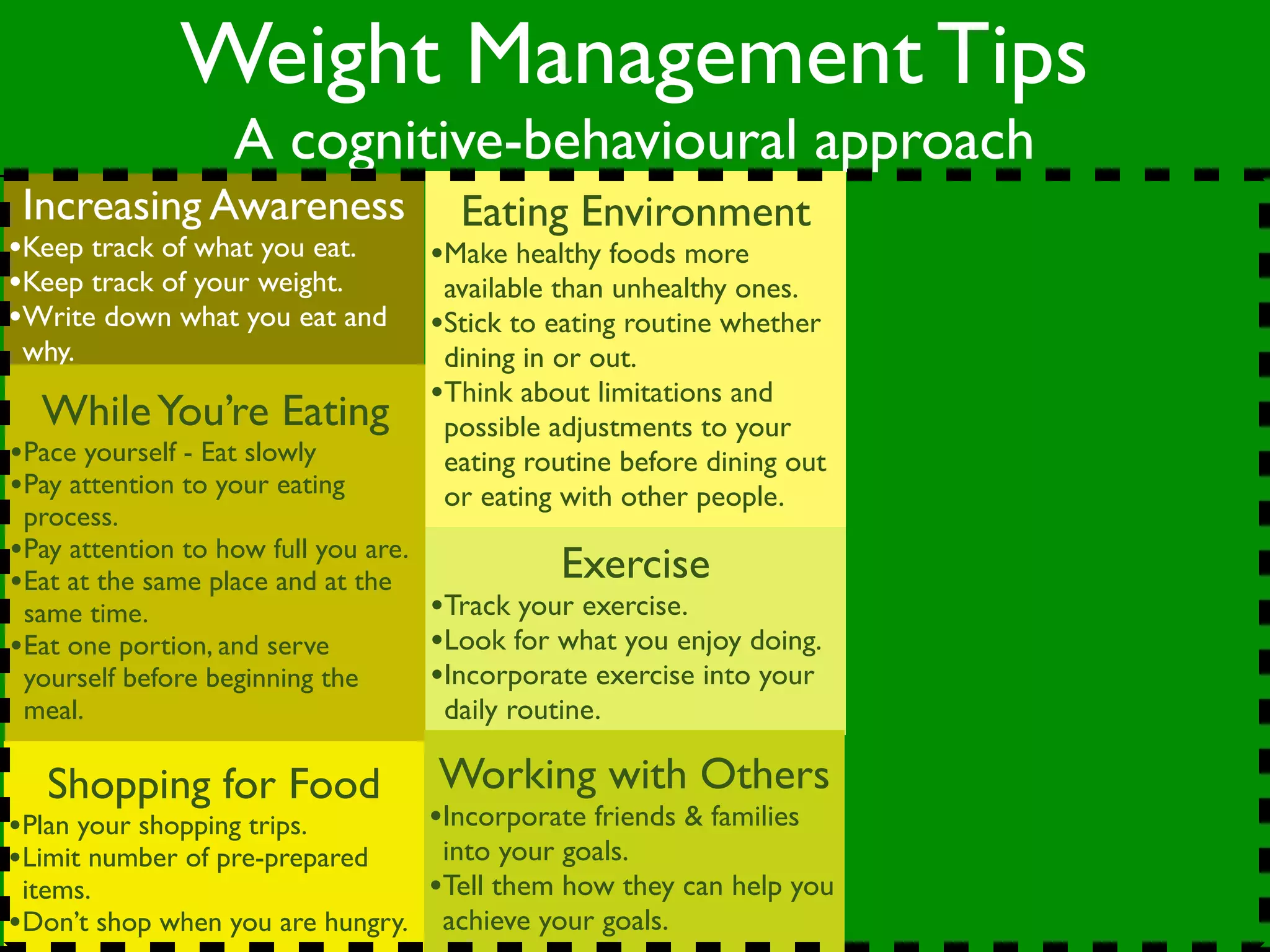
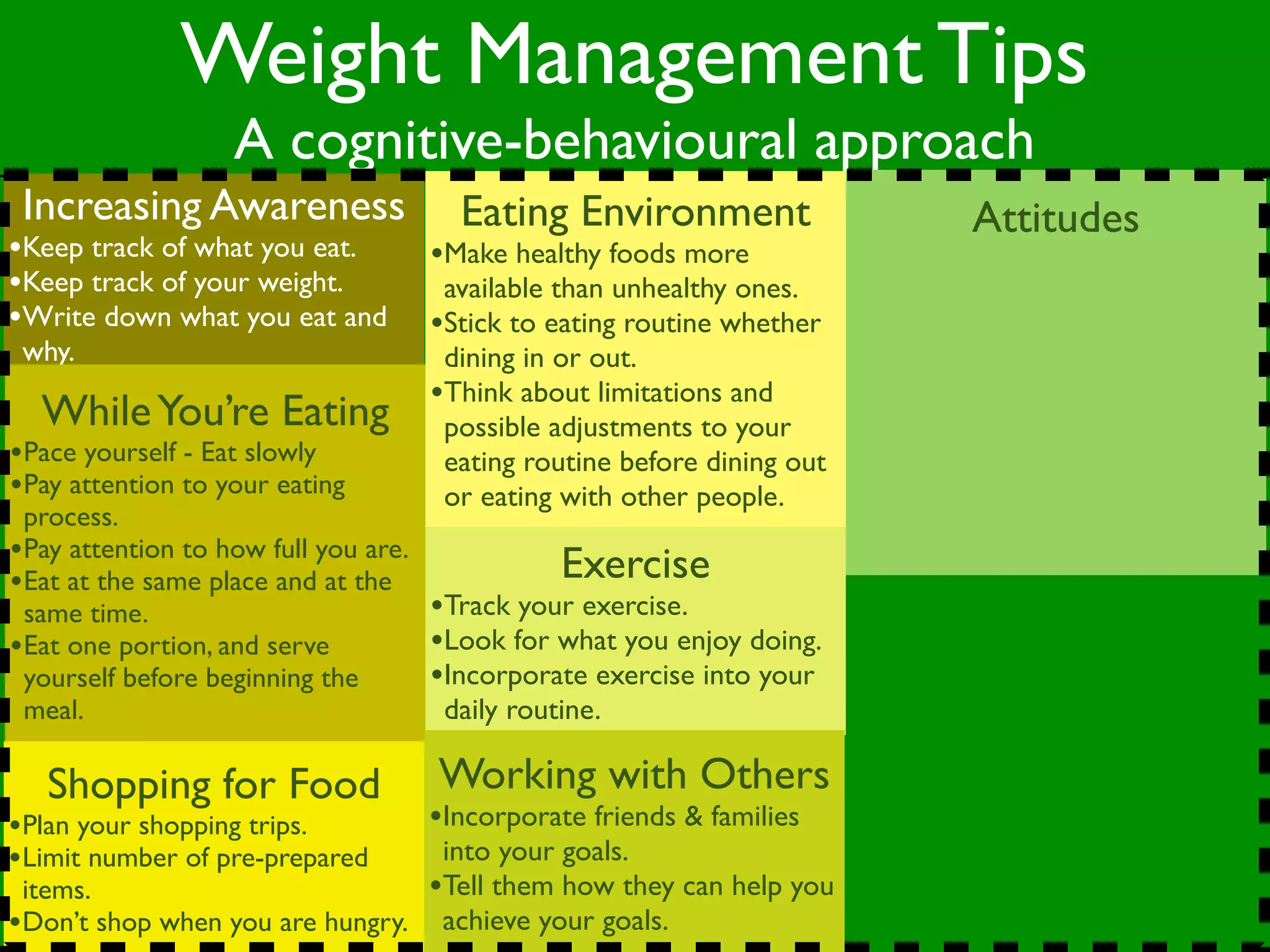
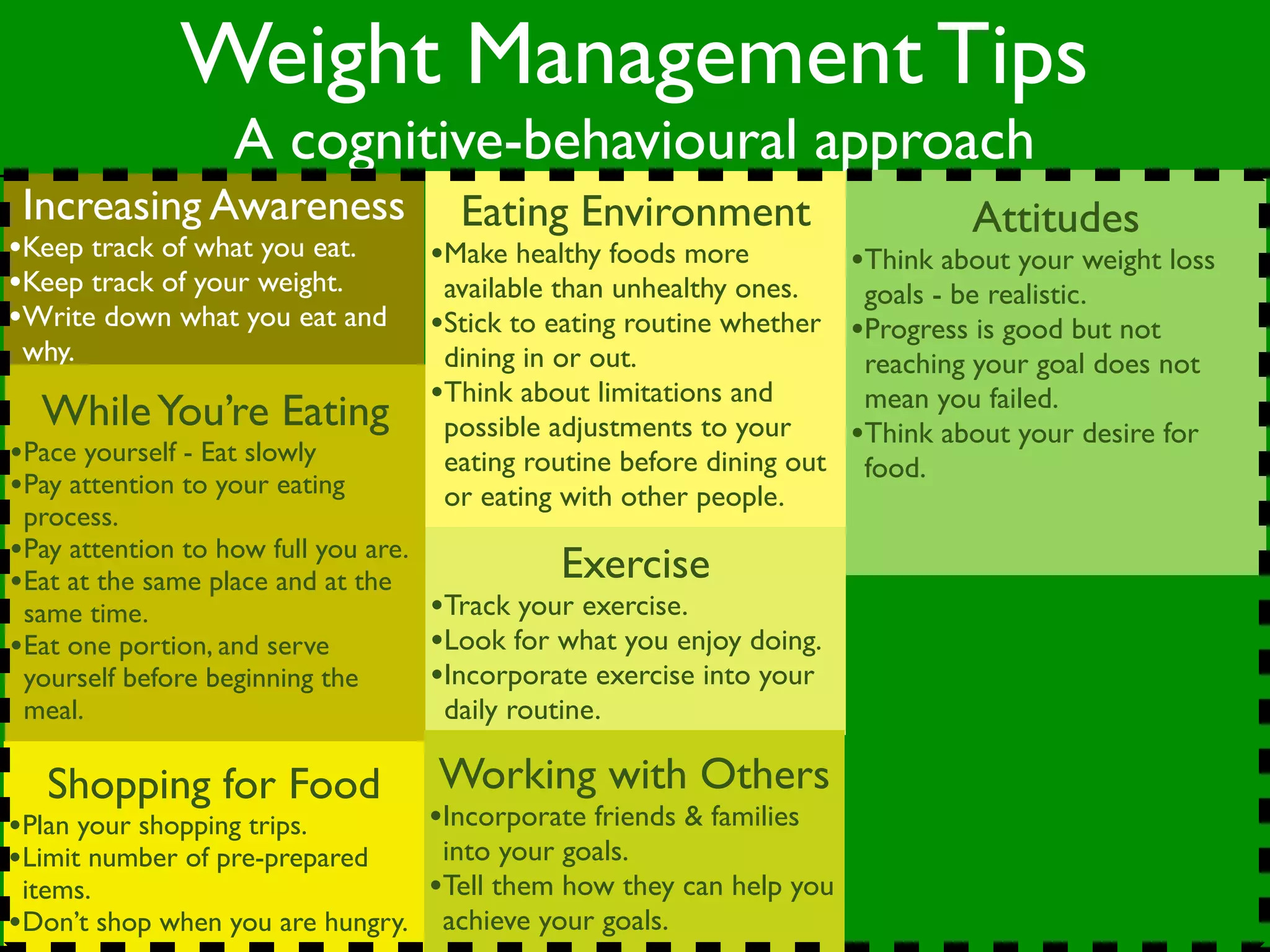
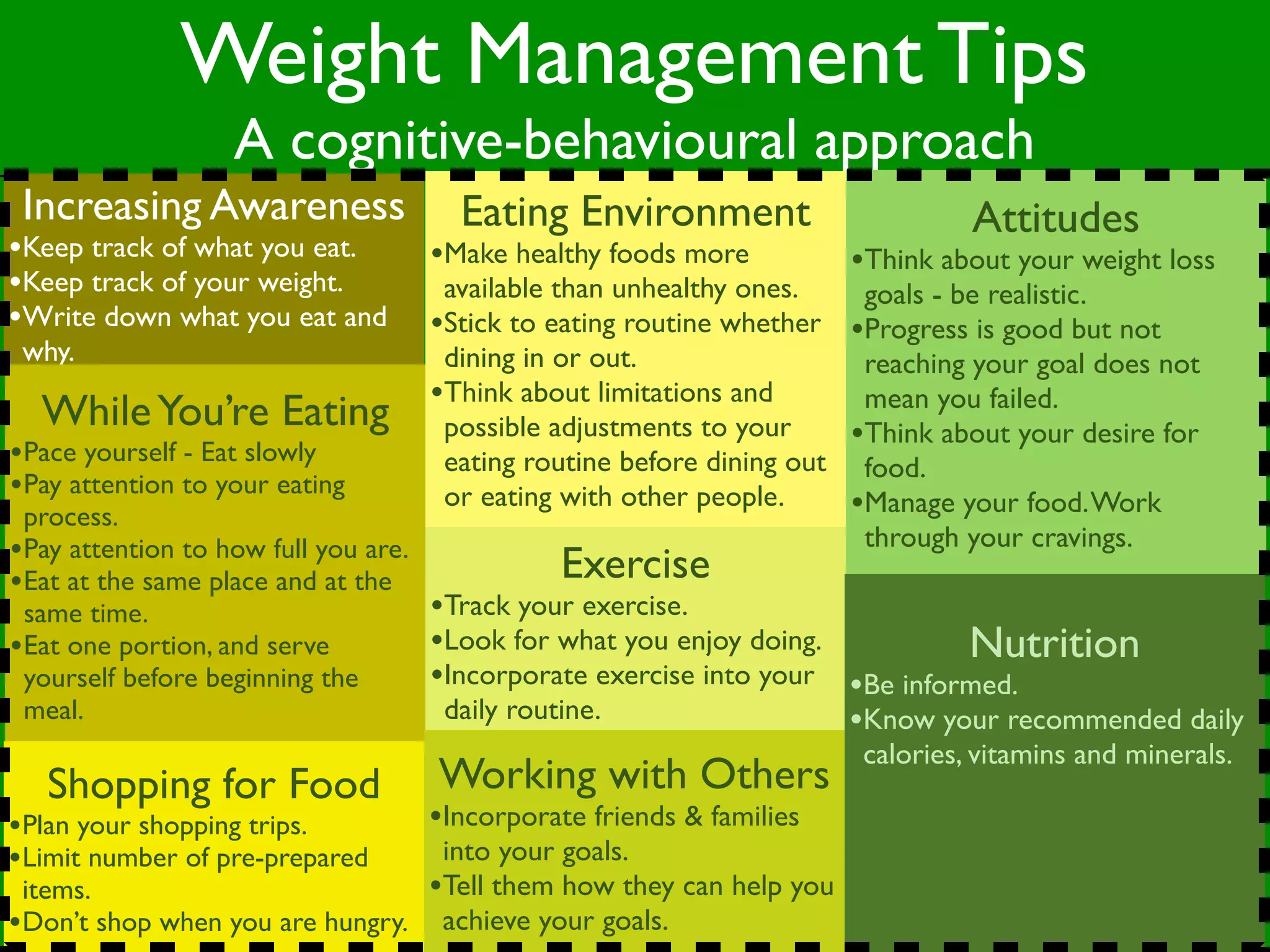
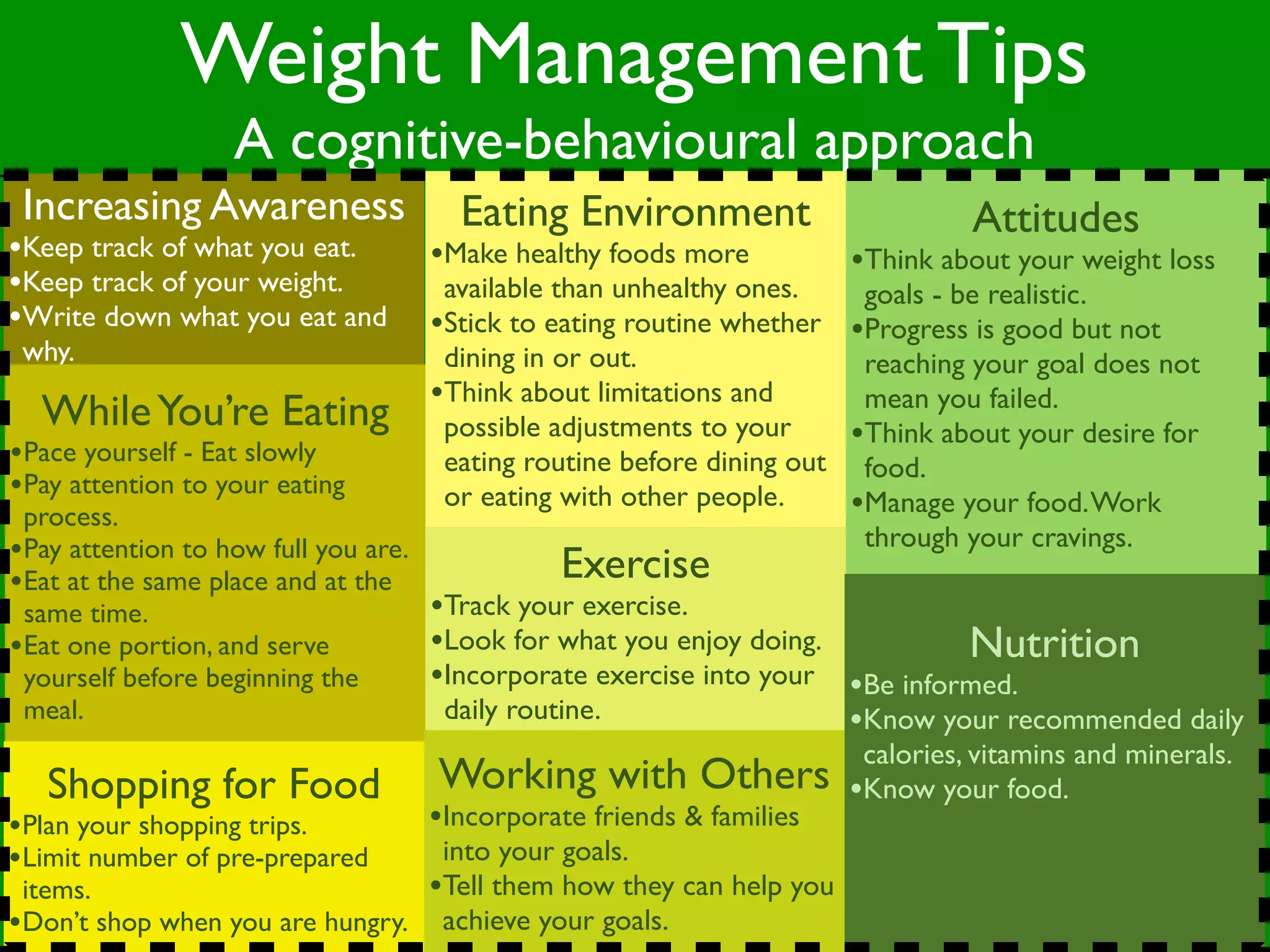
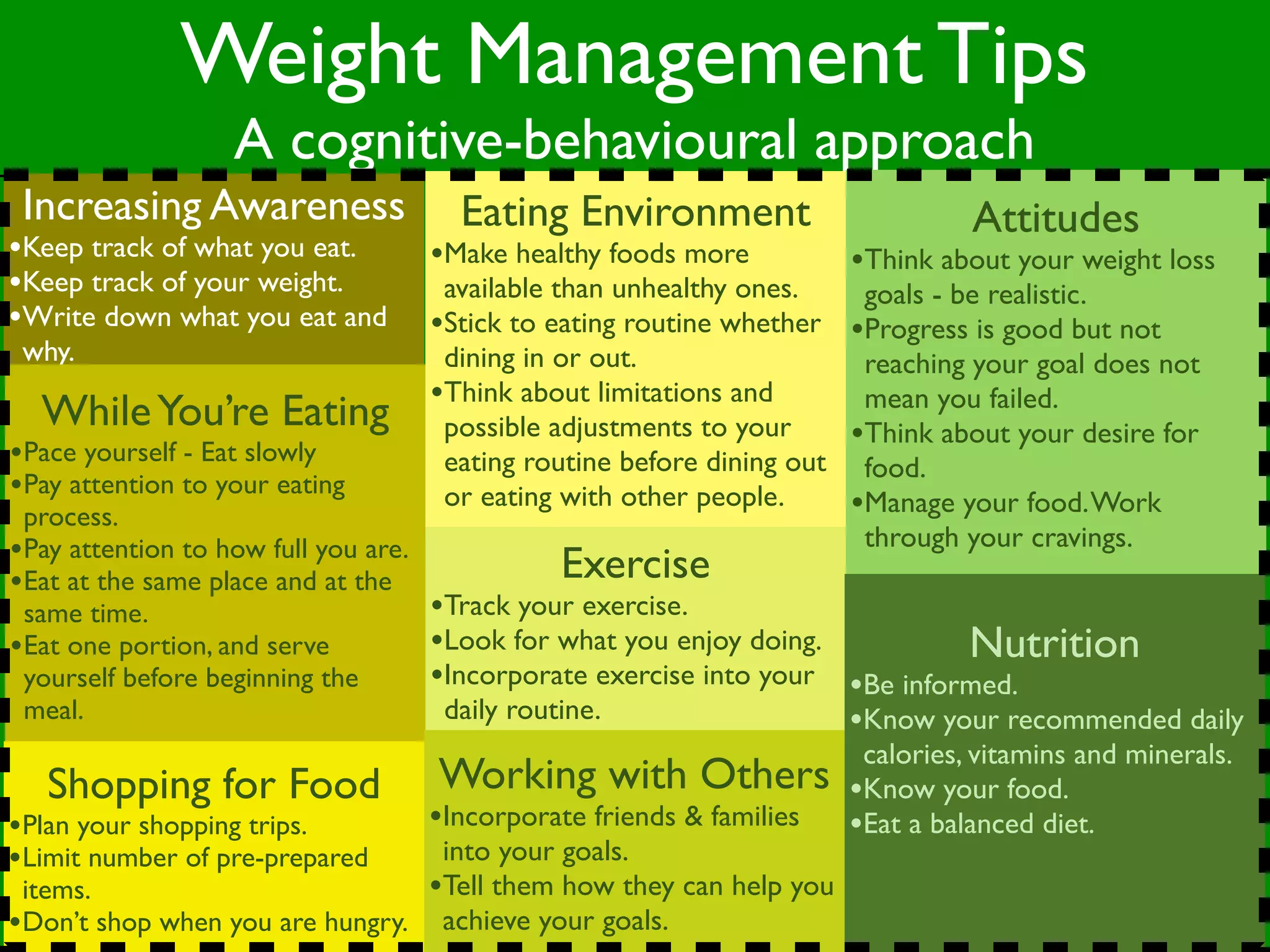
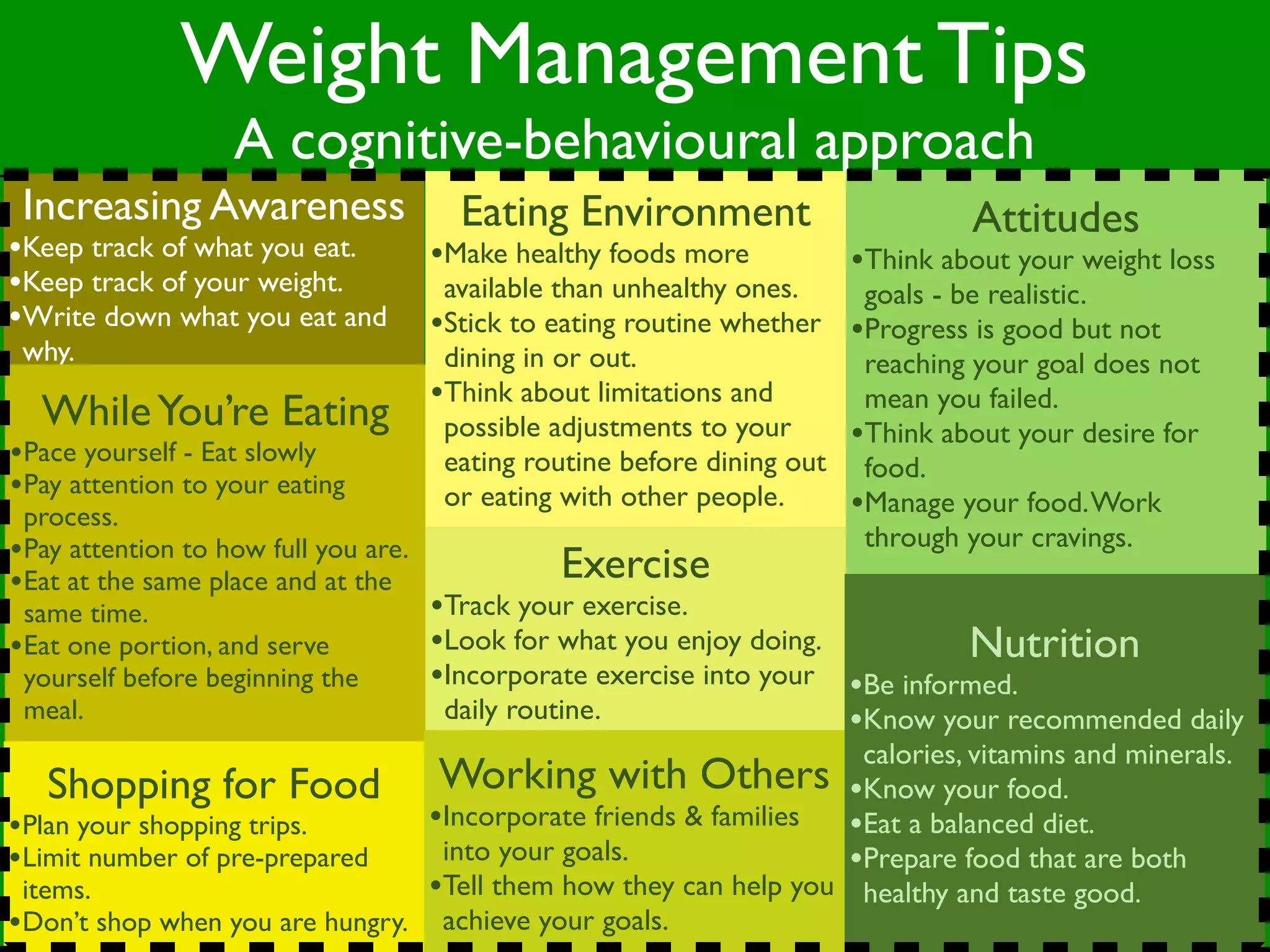
Weight Management Tips
 A cognitive-behavioural approach
Weight Management Tips
           A cognitive-behavioural approach
Increasing Awareness
Weight Management Tips
                  A cognitive-behavioural approach
 Increasing Awareness
•Keep track of what you eat.
Weight Management Tips
                  A cognitive-behavioural approach
 Increasing Awareness
•Keep track of what you eat.
•Keep track of your weight.
Weight Management Tips
                A cognitive-behavioural approach
 Increasing Awareness
•Keep track of what you eat.
•Keep track of your weight.
•Write down what you eat and
 why.
Weight Management Tips
                A cognitive-behavioural approach
 Increasing Awareness
•Keep track of what you eat.
•Keep track of your weight.
•Write down what you eat and
 why.

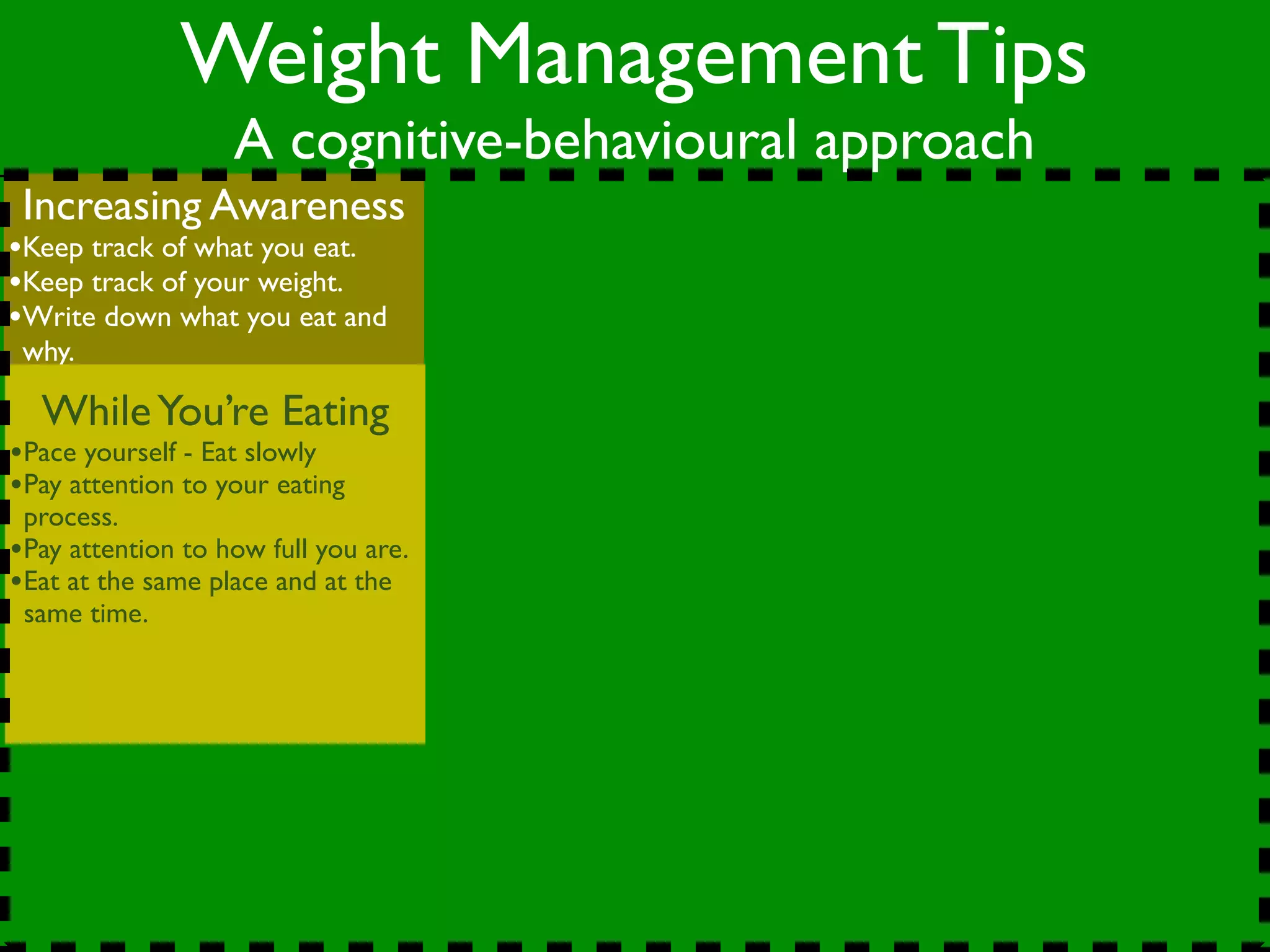
  While You’re Eating
Weight Management Tips
                   A cognitive-behavioural approach
 Increasing Awareness
•Keep track of what you eat.
•Keep track of your weight.
•Write down what you eat and
 why.

  While You’re Eating
•Pace yourself - Eat slowly
Weight Management Tips
                   A cognitive-behavioural approach
 Increasing Awareness
•Keep track of what you eat.
•Keep track of your weight.
•Write down what you eat and
 why.

  While You’re Eating
•Pace yourself - Eat slowly
•Pay attention to your eating
 process.
Weight Management Tips
                   A cognitive-behavioural approach
 Increasing Awareness
•Keep track of what you eat.
•Keep track of your weight.
•Write down what you eat and
 why.

  While You’re Eating
•Pace yourself - Eat slowly
•Pay attention to your eating
 process.
•Pay attention to how full you are.
Weight Management Tips
                   A cognitive-behavioural approach
 Increasing Awareness
•Keep track of what you eat.
•Keep track of your weight.
•Write down what you eat and
 why.

  While You’re Eating
•Pace yourself - Eat slowly
•Pay attention to your eating
 process.
•Pay attention to how full you are.
•Eat at the same place and at the
 same time.
Weight Management Tips
                   A cognitive-behavioural approach
 Increasing Awareness
•Keep track of what you eat.
•Keep track of your weight.
•Write down what you eat and
 why.

  While You’re Eating
•Pace yourself - Eat slowly
•Pay attention to your eating
 process.
•Pay attention to how full you are.
•Eat at the same place and at the
 same time.
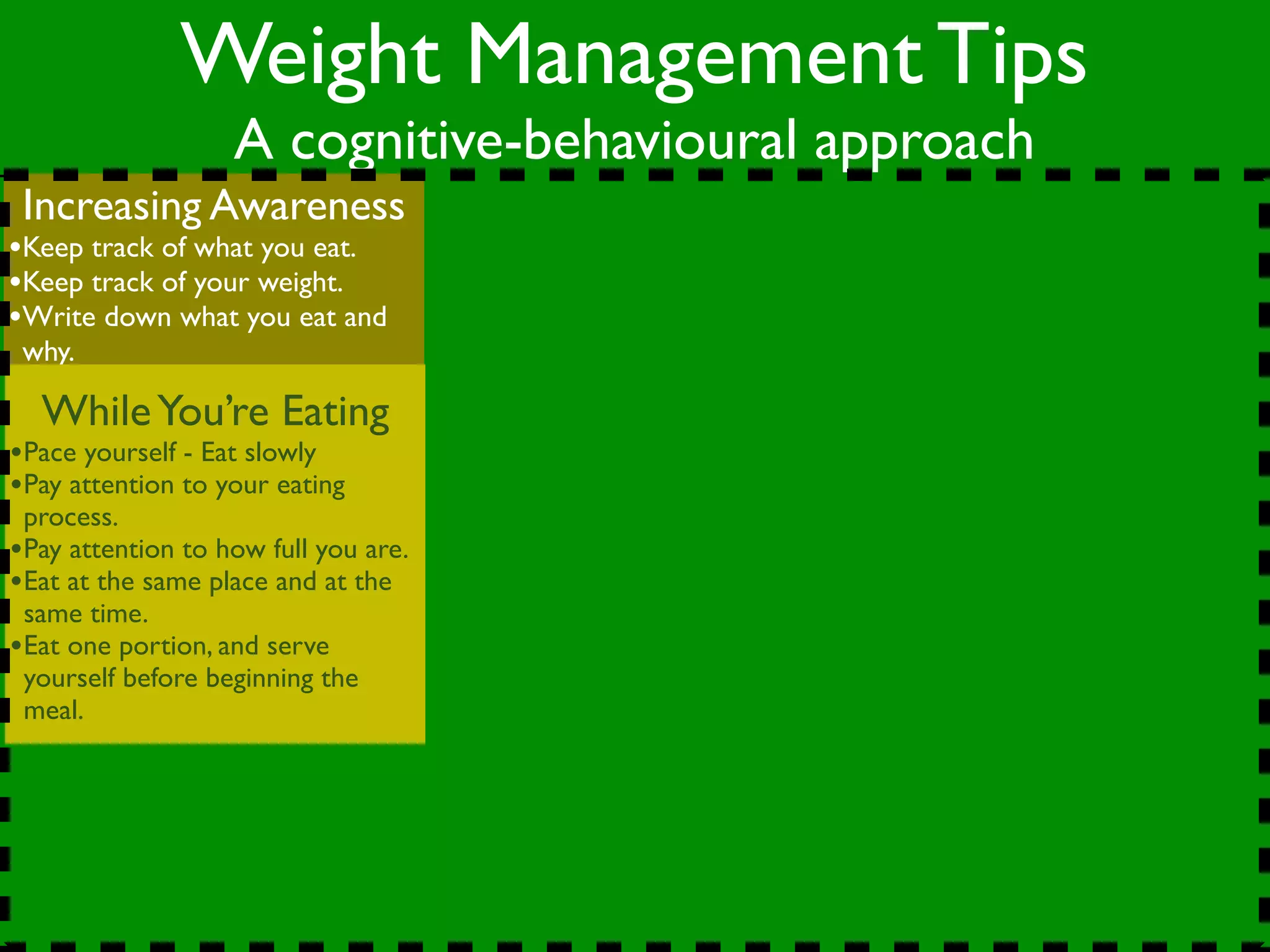
•Eat one portion, and serve
 yourself before beginning the
 meal.
Weight Management Tips
                   A cognitive-behavioural approach
 Increasing Awareness
•Keep track of what you eat.
•Keep track of your weight.
•Write down what you eat and
 why.

  While You’re Eating
•Pace yourself - Eat slowly
•Pay attention to your eating
 process.
•Pay attention to how full you are.
•Eat at the same place and at the
 same time.
•Eat one portion, and serve
 yourself before beginning the
 meal.

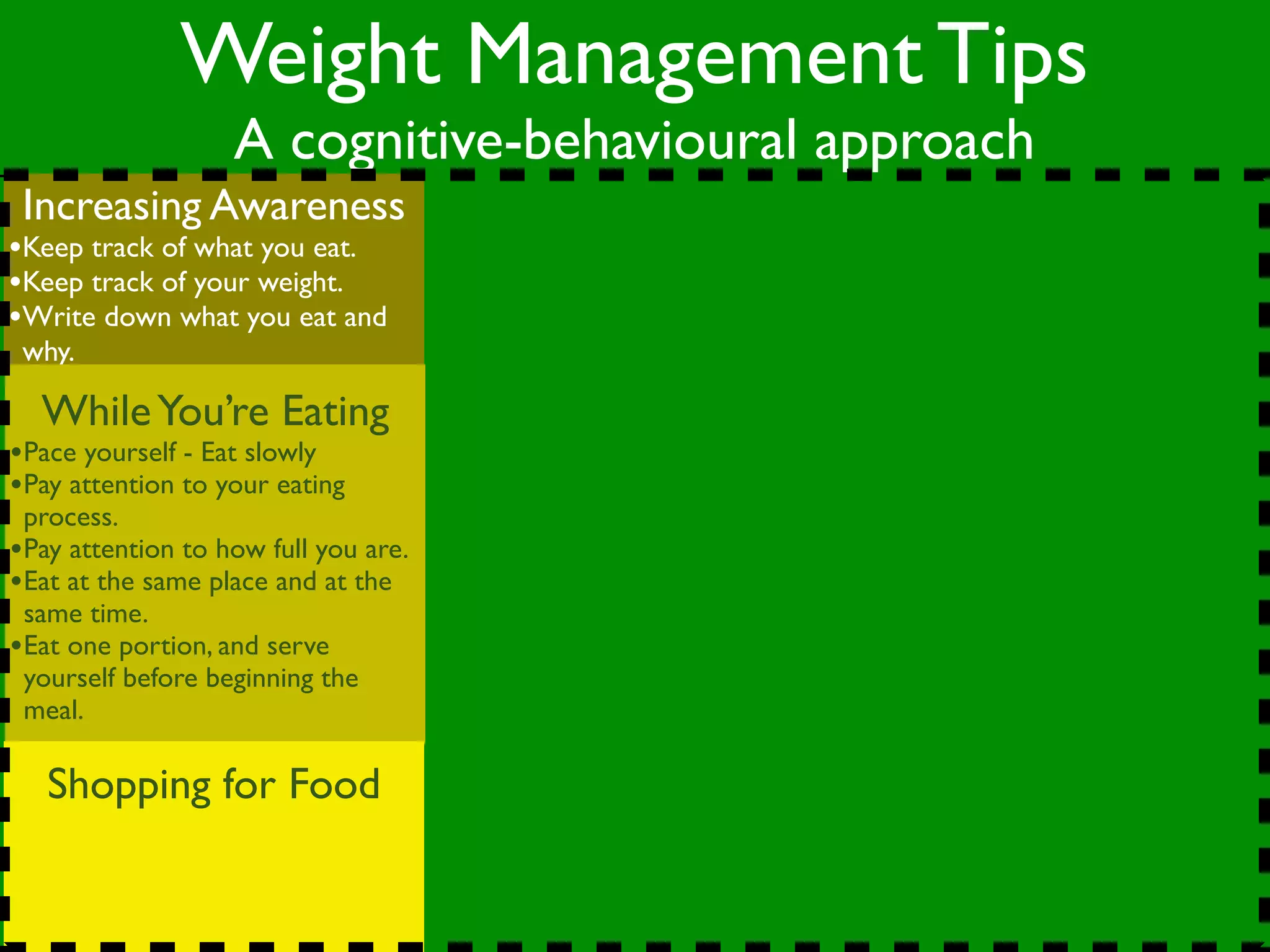
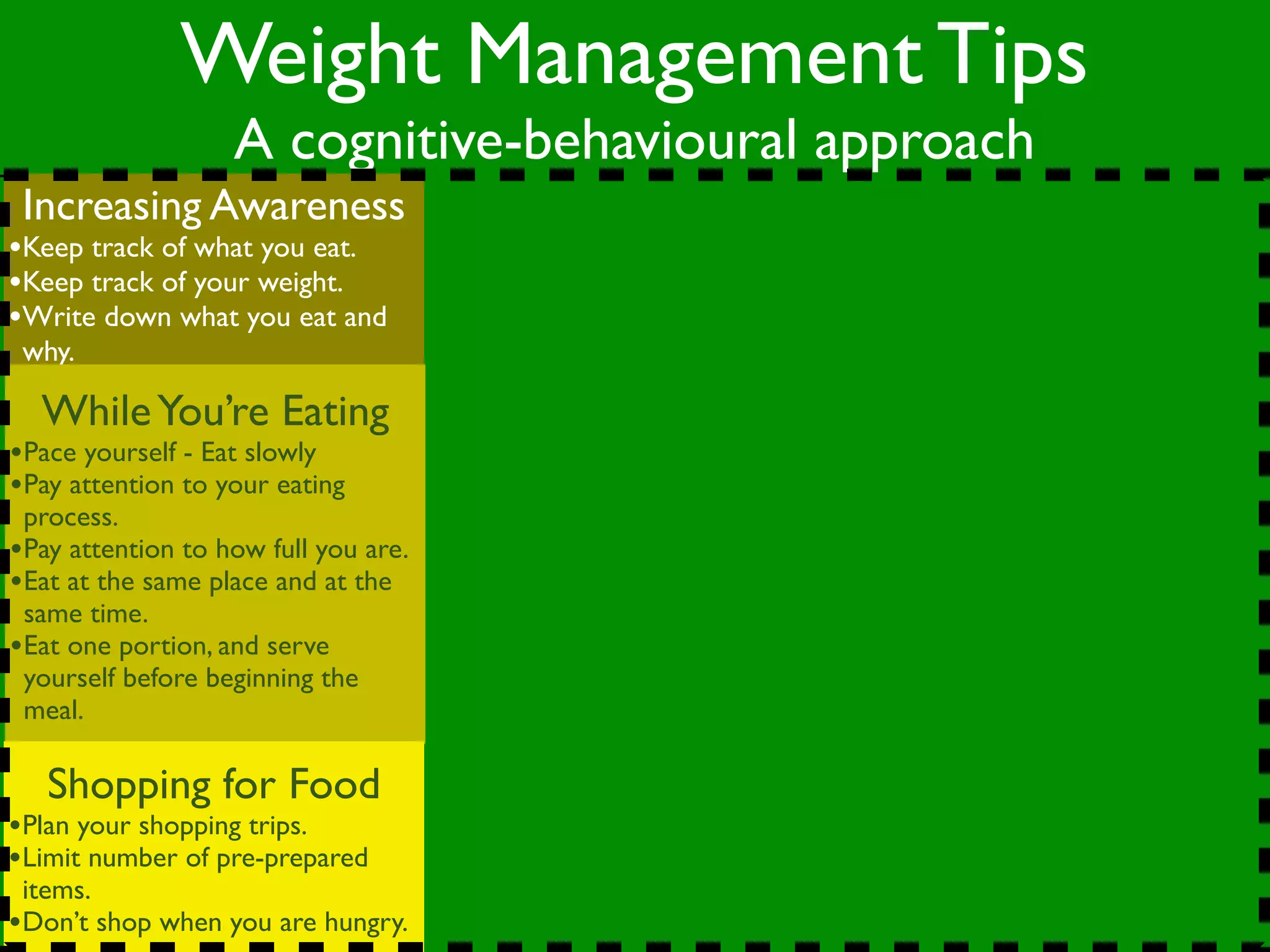
   Shopping for Food
Weight Management Tips
                   A cognitive-behavioural approach
 Increasing Awareness
•Keep track of what you eat.
•Keep track of your weight.
•Write down what you eat and
 why.

  While You’re Eating
•Pace yourself - Eat slowly
•Pay attention to your eating
 process.
•Pay attention to how full you are.
•Eat at the same place and at the
 same time.
•Eat one portion, and serve
 yourself before beginning the
 meal.

   Shopping for Food
•Plan your shopping trips.
Weight Management Tips
                   A cognitive-behavioural approach
 Increasing Awareness
•Keep track of what you eat.
•Keep track of your weight.
•Write down what you eat and
 why.

  While You’re Eating
•Pace yourself - Eat slowly
•Pay attention to your eating
 process.
•Pay attention to how full you are.
•Eat at the same place and at the
 same time.
•Eat one portion, and serve
 yourself before beginning the
 meal.

   Shopping for Food
•Plan your shopping trips.
•Limit number of pre-prepared
 items.
Weight Management Tips
                   A cognitive-behavioural approach
 Increasing Awareness
•Keep track of what you eat.
•Keep track of your weight.
•Write down what you eat and
 why.

  While You’re Eating
•Pace yourself - Eat slowly
•Pay attention to your eating
 process.
•Pay attention to how full you are.
•Eat at the same place and at the
 same time.
•Eat one portion, and serve
 yourself before beginning the
 meal.

   Shopping for Food
•Plan your shopping trips.
•Limit number of pre-prepared
 items.
•Don’t shop when you are hungry.
Weight Management Tips
                   A cognitive-behavioural approach
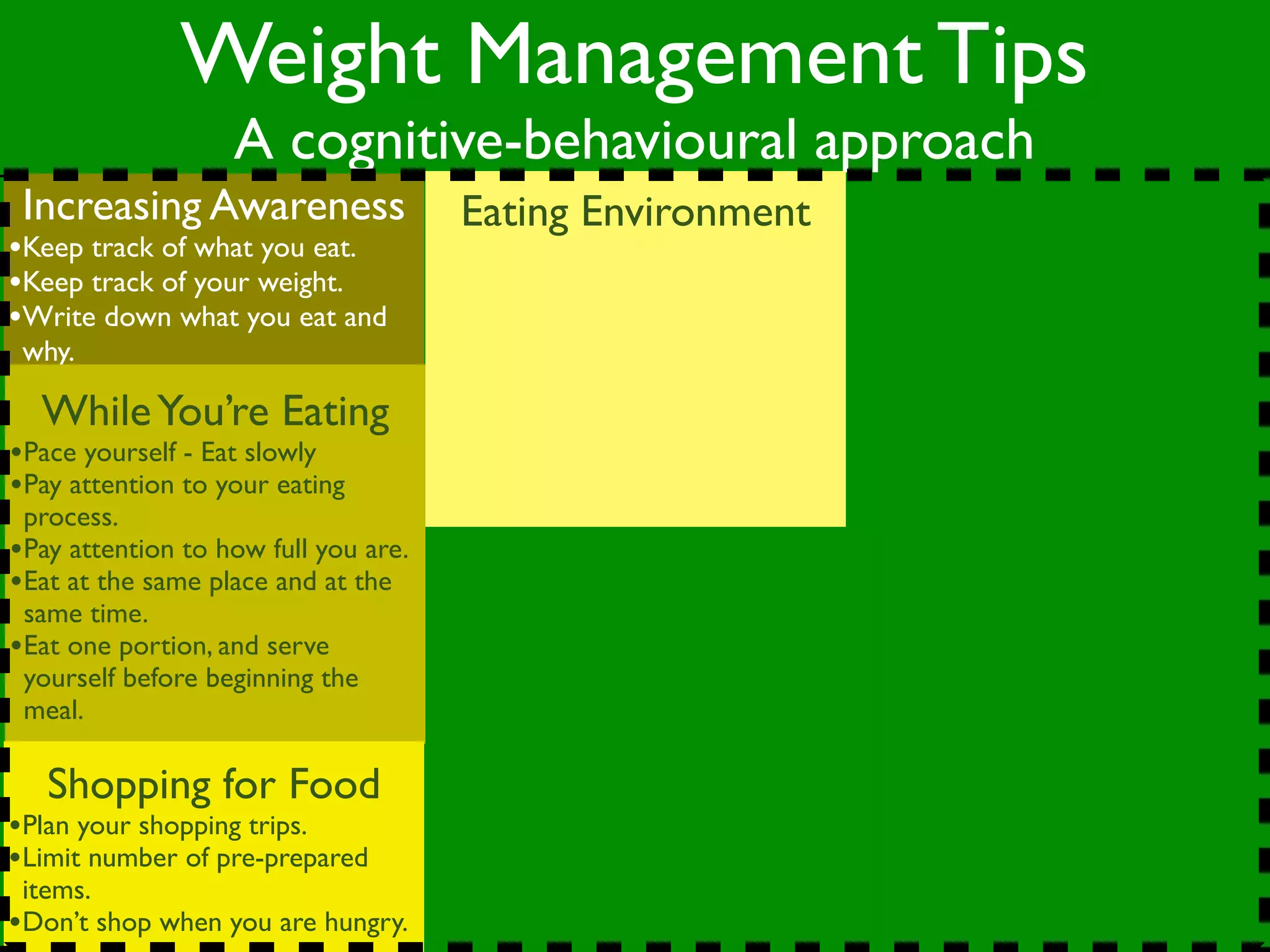
 Increasing Awareness                 Eating Environment
•Keep track of what you eat.
•Keep track of your weight.
•Write down what you eat and
 why.

  While You’re Eating
•Pace yourself - Eat slowly
•Pay attention to your eating
 process.
•Pay attention to how full you are.
•Eat at the same place and at the
 same time.
•Eat one portion, and serve
 yourself before beginning the
 meal.

   Shopping for Food
•Plan your shopping trips.
•Limit number of pre-prepared
 items.
•Don’t shop when you are hungry.
Weight Management Tips
                   A cognitive-behavioural approach
 Increasing Awareness                   Eating Environment
•Keep track of what you eat.          •Make healthy foods more
•Keep track of your weight.            available than unhealthy ones.
•Write down what you eat and
 why.

  While You’re Eating
•Pace yourself - Eat slowly
•Pay attention to your eating
 process.
•Pay attention to how full you are.
•Eat at the same place and at the
 same time.
•Eat one portion, and serve
 yourself before beginning the
 meal.

   Shopping for Food
•Plan your shopping trips.
•Limit number of pre-prepared
 items.
•Don’t shop when you are hungry.
Weight Management Tips
                   A cognitive-behavioural approach
 Increasing Awareness                   Eating Environment
•Keep track of what you eat.          •Make healthy foods more
•Keep track of your weight.            available than unhealthy ones.
•Write down what you eat and          •Stick to eating routine whether
 why.                                  dining in or out.
  While You’re Eating
•Pace yourself - Eat slowly
•Pay attention to your eating
 process.
•Pay attention to how full you are.
•Eat at the same place and at the
 same time.
•Eat one portion, and serve
 yourself before beginning the
 meal.

   Shopping for Food
•Plan your shopping trips.
•Limit number of pre-prepared
 items.
•Don’t shop when you are hungry.
Weight Management Tips
                   A cognitive-behavioural approach
 Increasing Awareness                   Eating Environment
•Keep track of what you eat.          •Make healthy foods more
•Keep track of your weight.            available than unhealthy ones.
•Write down what you eat and          •Stick to eating routine whether
 why.                                  dining in or out.
                                      •Think about limitations and
  While You’re Eating                  possible adjustments to your
•Pace yourself - Eat slowly            eating routine before dining out
•Pay attention to your eating          or eating with other people.
 process.
•Pay attention to how full you are.
•Eat at the same place and at the
 same time.
•Eat one portion, and serve
 yourself before beginning the
 meal.

   Shopping for Food
•Plan your shopping trips.
•Limit number of pre-prepared
 items.
•Don’t shop when you are hungry.
Weight Management Tips
                   A cognitive-behavioural approach
 Increasing Awareness                   Eating Environment
•Keep track of what you eat.          •Make healthy foods more
•Keep track of your weight.            available than unhealthy ones.
•Write down what you eat and          •Stick to eating routine whether
 why.                                  dining in or out.
                                      •Think about limitations and
  While You’re Eating                  possible adjustments to your
•Pace yourself - Eat slowly            eating routine before dining out
•Pay attention to your eating          or eating with other people.
 process.
•Pay attention to how full you are.             Exercise
•Eat at the same place and at the
 same time.
•Eat one portion, and serve
 yourself before beginning the
 meal.

   Shopping for Food
•Plan your shopping trips.
•Limit number of pre-prepared
 items.
•Don’t shop when you are hungry.
Weight Management Tips
                   A cognitive-behavioural approach
 Increasing Awareness                   Eating Environment
•Keep track of what you eat.          •Make healthy foods more
•Keep track of your weight.            available than unhealthy ones.
•Write down what you eat and          •Stick to eating routine whether
 why.                                  dining in or out.
                                      •Think about limitations and
  While You’re Eating                  possible adjustments to your
•Pace yourself - Eat slowly            eating routine before dining out
•Pay attention to your eating          or eating with other people.
 process.
•Pay attention to how full you are.             Exercise
•Eat at the same place and at the
 same time.                           •Track your exercise.
•Eat one portion, and serve
 yourself before beginning the
 meal.

   Shopping for Food
•Plan your shopping trips.
•Limit number of pre-prepared
 items.
•Don’t shop when you are hungry.
Weight Management Tips
                   A cognitive-behavioural approach
 Increasing Awareness                   Eating Environment
•Keep track of what you eat.          •Make healthy foods more
•Keep track of your weight.            available than unhealthy ones.
•Write down what you eat and          •Stick to eating routine whether
 why.                                  dining in or out.
                                      •Think about limitations and
  While You’re Eating                  possible adjustments to your
•Pace yourself - Eat slowly            eating routine before dining out
•Pay attention to your eating          or eating with other people.
 process.
•Pay attention to how full you are.             Exercise
•Eat at the same place and at the
 same time.                           •Track your exercise.
•Eat one portion, and serve           •Look for what you enjoy doing.
 yourself before beginning the
 meal.

   Shopping for Food
•Plan your shopping trips.
•Limit number of pre-prepared
 items.
•Don’t shop when you are hungry.
Weight Management Tips
                   A cognitive-behavioural approach
 Increasing Awareness                   Eating Environment
•Keep track of what you eat.          •Make healthy foods more
•Keep track of your weight.            available than unhealthy ones.
•Write down what you eat and          •Stick to eating routine whether
 why.                                  dining in or out.
                                      •Think about limitations and
  While You’re Eating                  possible adjustments to your
•Pace yourself - Eat slowly            eating routine before dining out
•Pay attention to your eating          or eating with other people.
 process.
•Pay attention to how full you are.              Exercise
•Eat at the same place and at the
 same time.                           •Track your exercise.
•Eat one portion, and serve           •Look for what you enjoy doing.
 yourself before beginning the        •Incorporate exercise into your
 meal.                                 daily routine.

   Shopping for Food
•Plan your shopping trips.
•Limit number of pre-prepared
 items.
•Don’t shop when you are hungry.
Weight Management Tips
                   A cognitive-behavioural approach
 Increasing Awareness                   Eating Environment
•Keep track of what you eat.          •Make healthy foods more
•Keep track of your weight.            available than unhealthy ones.
•Write down what you eat and          •Stick to eating routine whether
 why.                                  dining in or out.
                                      •Think about limitations and
  While You’re Eating                  possible adjustments to your
•Pace yourself - Eat slowly            eating routine before dining out
•Pay attention to your eating          or eating with other people.
 process.
•Pay attention to how full you are.              Exercise
•Eat at the same place and at the
 same time.                           •Track your exercise.
•Eat one portion, and serve           •Look for what you enjoy doing.
 yourself before beginning the        •Incorporate exercise into your
 meal.                                 daily routine.

   Shopping for Food                  Working with Others
•Plan your shopping trips.
•Limit number of pre-prepared
 items.
•Don’t shop when you are hungry.
Weight Management Tips
                   A cognitive-behavioural approach
 Increasing Awareness                   Eating Environment
•Keep track of what you eat.          •Make healthy foods more
•Keep track of your weight.            available than unhealthy ones.
•Write down what you eat and          •Stick to eating routine whether
 why.                                  dining in or out.
                                      •Think about limitations and
  While You’re Eating                  possible adjustments to your
•Pace yourself - Eat slowly            eating routine before dining out
•Pay attention to your eating          or eating with other people.
 process.
•Pay attention to how full you are.              Exercise
•Eat at the same place and at the
 same time.                           •Track your exercise.
•Eat one portion, and serve           •Look for what you enjoy doing.
 yourself before beginning the        •Incorporate exercise into your
 meal.                                 daily routine.

   Shopping for Food                  Working with Others
•Plan your shopping trips.            •Incorporate friends & families
•Limit number of pre-prepared          into your goals.
 items.
•Don’t shop when you are hungry.
Weight Management Tips
                   A cognitive-behavioural approach
 Increasing Awareness                   Eating Environment
•Keep track of what you eat.          •Make healthy foods more
•Keep track of your weight.            available than unhealthy ones.
•Write down what you eat and          •Stick to eating routine whether
 why.                                  dining in or out.
                                      •Think about limitations and
  While You’re Eating                  possible adjustments to your
•Pace yourself - Eat slowly            eating routine before dining out
•Pay attention to your eating          or eating with other people.
 process.
•Pay attention to how full you are.              Exercise
•Eat at the same place and at the
 same time.                           •Track your exercise.
•Eat one portion, and serve           •Look for what you enjoy doing.
 yourself before beginning the        •Incorporate exercise into your
 meal.                                 daily routine.

   Shopping for Food                  Working with Others
•Plan your shopping trips.            •Incorporate friends & families
•Limit number of pre-prepared     into your goals.
 items.                          •Tell them how they can help you
•Don’t shop when you are hungry. achieve your goals.
Weight Management Tips
                   A cognitive-behavioural approach
 Increasing Awareness                   Eating Environment                Attitudes
•Keep track of what you eat.          •Make healthy foods more
•Keep track of your weight.            available than unhealthy ones.
•Write down what you eat and          •Stick to eating routine whether
 why.                                  dining in or out.
                                      •Think about limitations and
  While You’re Eating                  possible adjustments to your
•Pace yourself - Eat slowly            eating routine before dining out
•Pay attention to your eating          or eating with other people.
 process.
•Pay attention to how full you are.              Exercise
•Eat at the same place and at the
 same time.                           •Track your exercise.
•Eat one portion, and serve           •Look for what you enjoy doing.
 yourself before beginning the        •Incorporate exercise into your
 meal.                                 daily routine.

   Shopping for Food                  Working with Others
•Plan your shopping trips.            •Incorporate friends & families
•Limit number of pre-prepared     into your goals.
 items.                          •Tell them how they can help you
•Don’t shop when you are hungry. achieve your goals.
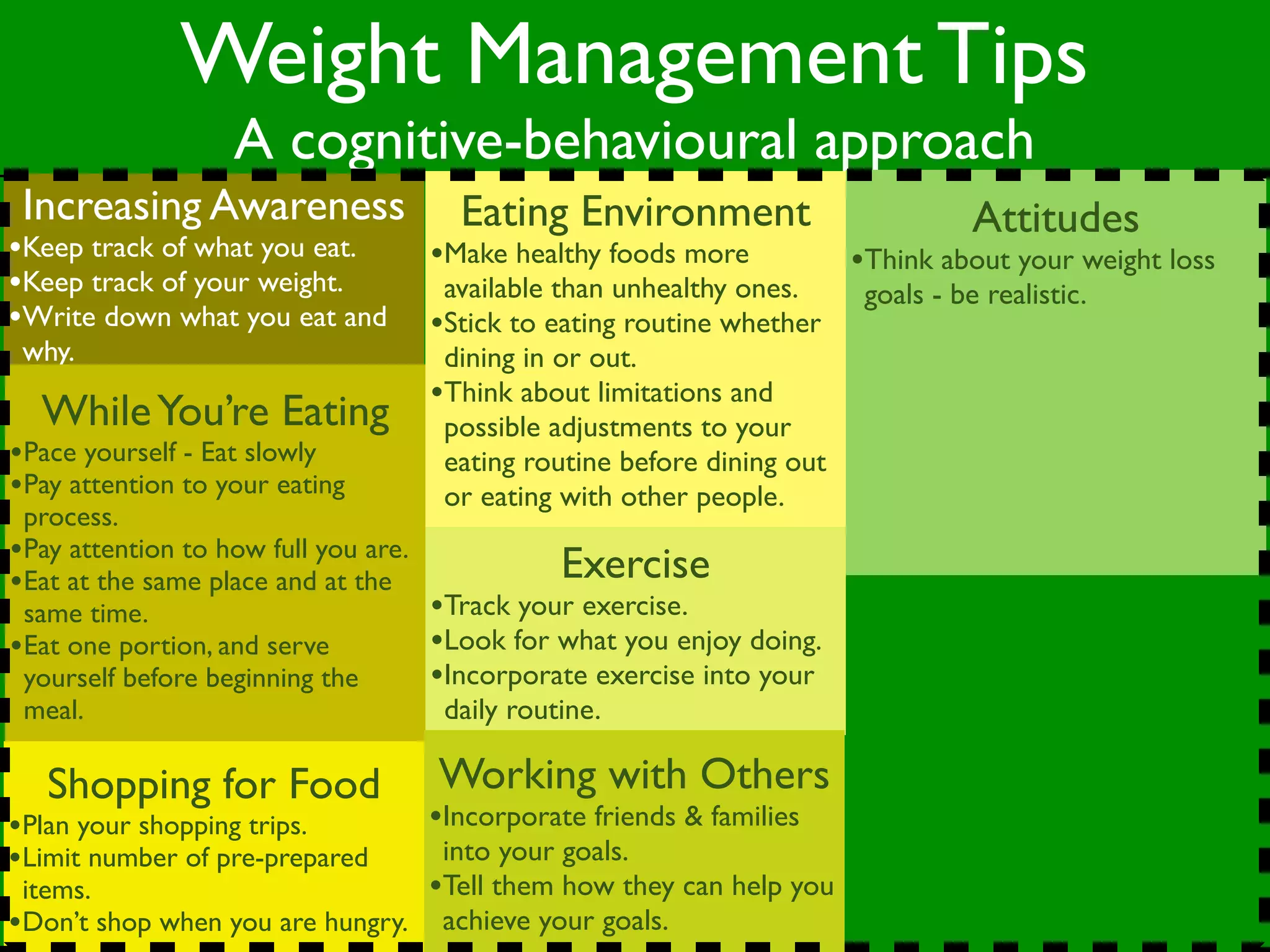
Weight Management Tips
                   A cognitive-behavioural approach
 Increasing Awareness                   Eating Environment                           Attitudes
•Keep track of what you eat.          •Make healthy foods more            •Think about your weight loss
•Keep track of your weight.            available than unhealthy ones.      goals - be realistic.
•Write down what you eat and          •Stick to eating routine whether
 why.                                  dining in or out.
                                      •Think about limitations and
  While You’re Eating                  possible adjustments to your
•Pace yourself - Eat slowly            eating routine before dining out
•Pay attention to your eating          or eating with other people.
 process.
•Pay attention to how full you are.              Exercise
•Eat at the same place and at the
 same time.                           •Track your exercise.
•Eat one portion, and serve           •Look for what you enjoy doing.
 yourself before beginning the        •Incorporate exercise into your
 meal.                                 daily routine.

   Shopping for Food                  Working with Others
•Plan your shopping trips.            •Incorporate friends & families
•Limit number of pre-prepared     into your goals.
 items.                          •Tell them how they can help you
•Don’t shop when you are hungry. achieve your goals.
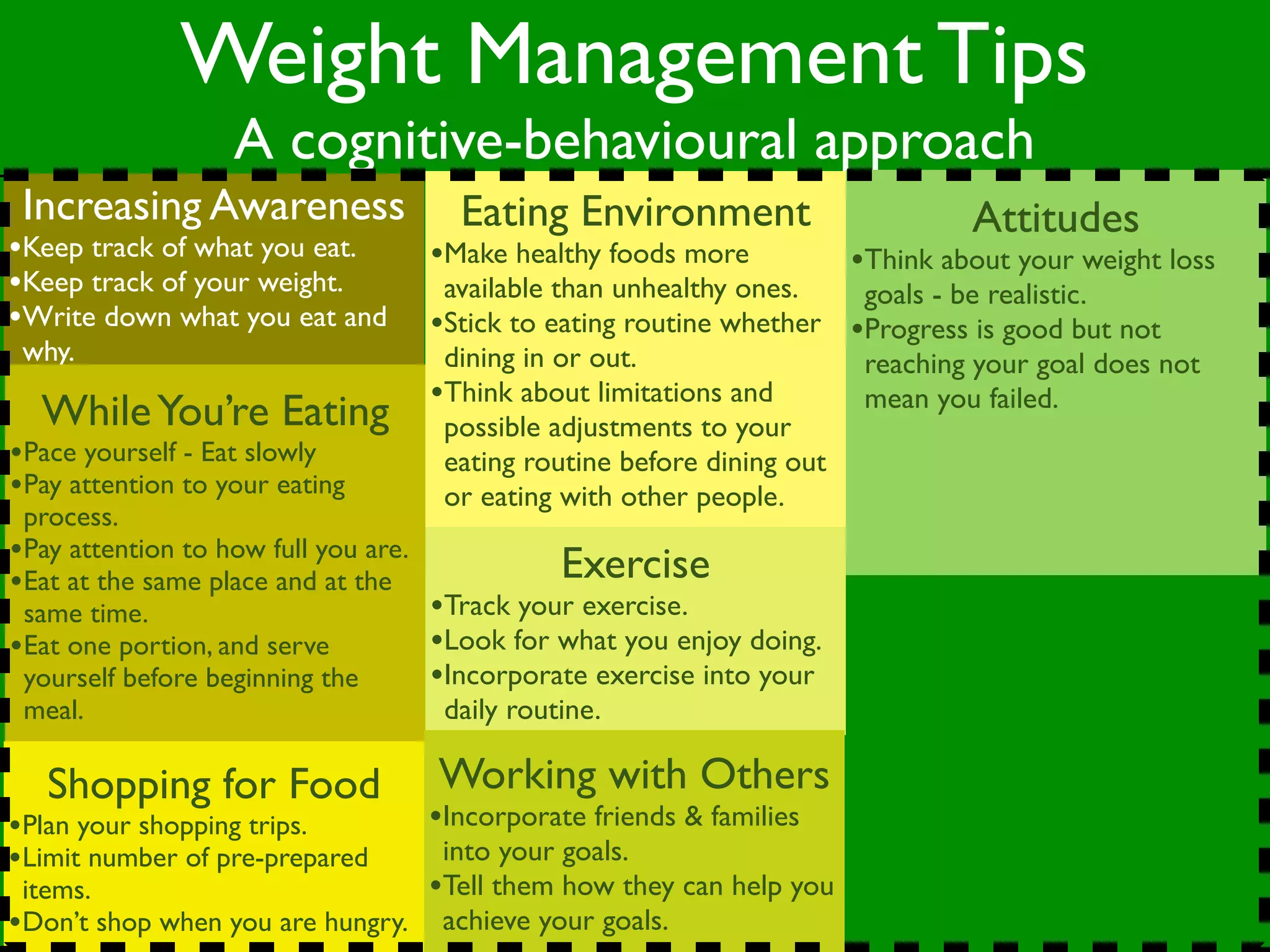
Weight Management Tips
                   A cognitive-behavioural approach
 Increasing Awareness                   Eating Environment                         Attitudes
•Keep track of what you eat.          •Make healthy foods more            •Think about your weight loss
•Keep track of your weight.            available than unhealthy ones.      goals - be realistic.
•Write down what you eat and          •Stick to eating routine whether    •Progress is good but not
 why.                                  dining in or out.                   reaching your goal does not
                                      •Think about limitations and         mean you failed.
  While You’re Eating                  possible adjustments to your
•Pace yourself - Eat slowly            eating routine before dining out
•Pay attention to your eating          or eating with other people.
 process.
•Pay attention to how full you are.              Exercise
•Eat at the same place and at the
 same time.                           •Track your exercise.
•Eat one portion, and serve           •Look for what you enjoy doing.
 yourself before beginning the        •Incorporate exercise into your
 meal.                                 daily routine.

   Shopping for Food                  Working with Others
•Plan your shopping trips.            •Incorporate friends & families
•Limit number of pre-prepared     into your goals.
 items.                          •Tell them how they can help you
•Don’t shop when you are hungry. achieve your goals.
Weight Management Tips
                   A cognitive-behavioural approach
 Increasing Awareness                   Eating Environment                         Attitudes
•Keep track of what you eat.          •Make healthy foods more            •Think about your weight loss
•Keep track of your weight.            available than unhealthy ones.      goals - be realistic.
•Write down what you eat and          •Stick to eating routine whether    •Progress is good but not
 why.                                  dining in or out.                   reaching your goal does not
                                      •Think about limitations and         mean you failed.
  While You’re Eating                  possible adjustments to your       •Think about your desire for
•Pace yourself - Eat slowly            eating routine before dining out    food.
•Pay attention to your eating          or eating with other people.
 process.
•Pay attention to how full you are.              Exercise
•Eat at the same place and at the
 same time.                           •Track your exercise.
•Eat one portion, and serve           •Look for what you enjoy doing.
 yourself before beginning the        •Incorporate exercise into your
 meal.                                 daily routine.

   Shopping for Food                  Working with Others
•Plan your shopping trips.            •Incorporate friends & families
•Limit number of pre-prepared     into your goals.
 items.                          •Tell them how they can help you
•Don’t shop when you are hungry. achieve your goals.
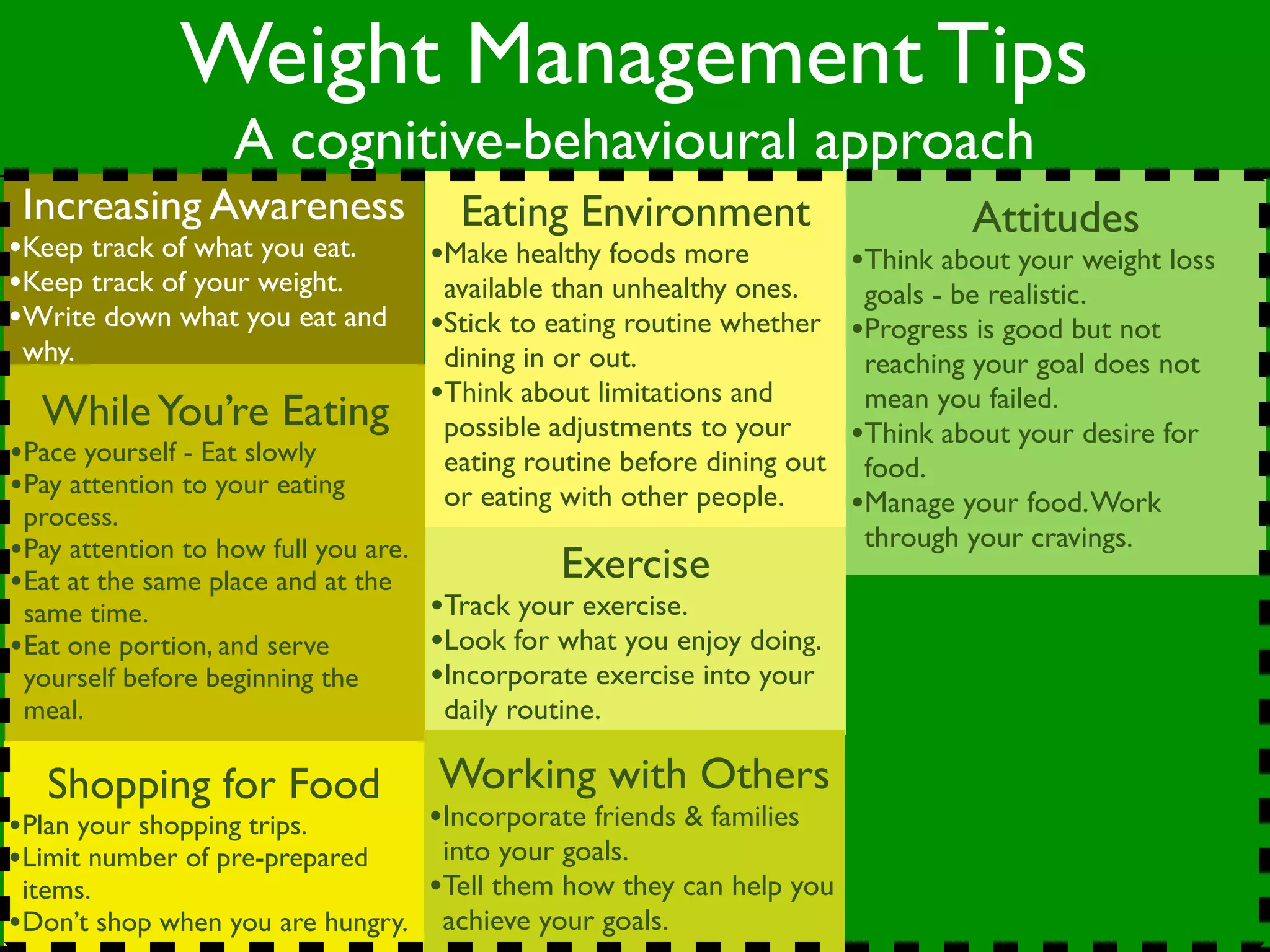
Weight Management Tips
                   A cognitive-behavioural approach
 Increasing Awareness                   Eating Environment                         Attitudes
•Keep track of what you eat.          •Make healthy foods more            •Think about your weight loss
•Keep track of your weight.            available than unhealthy ones.      goals - be realistic.
•Write down what you eat and          •Stick to eating routine whether    •Progress is good but not
 why.                                  dining in or out.                   reaching your goal does not
                                      •Think about limitations and         mean you failed.
  While You’re Eating                  possible adjustments to your       •Think about your desire for
•Pace yourself - Eat slowly            eating routine before dining out    food.
•Pay attention to your eating          or eating with other people.
 process.                                                                 •Manage your food. Work
•Pay attention to how full you are.                                        through your cravings.
•Eat at the same place and at the                Exercise
 same time.                           •Track your exercise.
•Eat one portion, and serve           •Look for what you enjoy doing.
 yourself before beginning the        •Incorporate exercise into your
 meal.                                 daily routine.

   Shopping for Food                  Working with Others
•Plan your shopping trips.            •Incorporate friends & families
•Limit number of pre-prepared     into your goals.
 items.                          •Tell them how they can help you
•Don’t shop when you are hungry. achieve your goals.
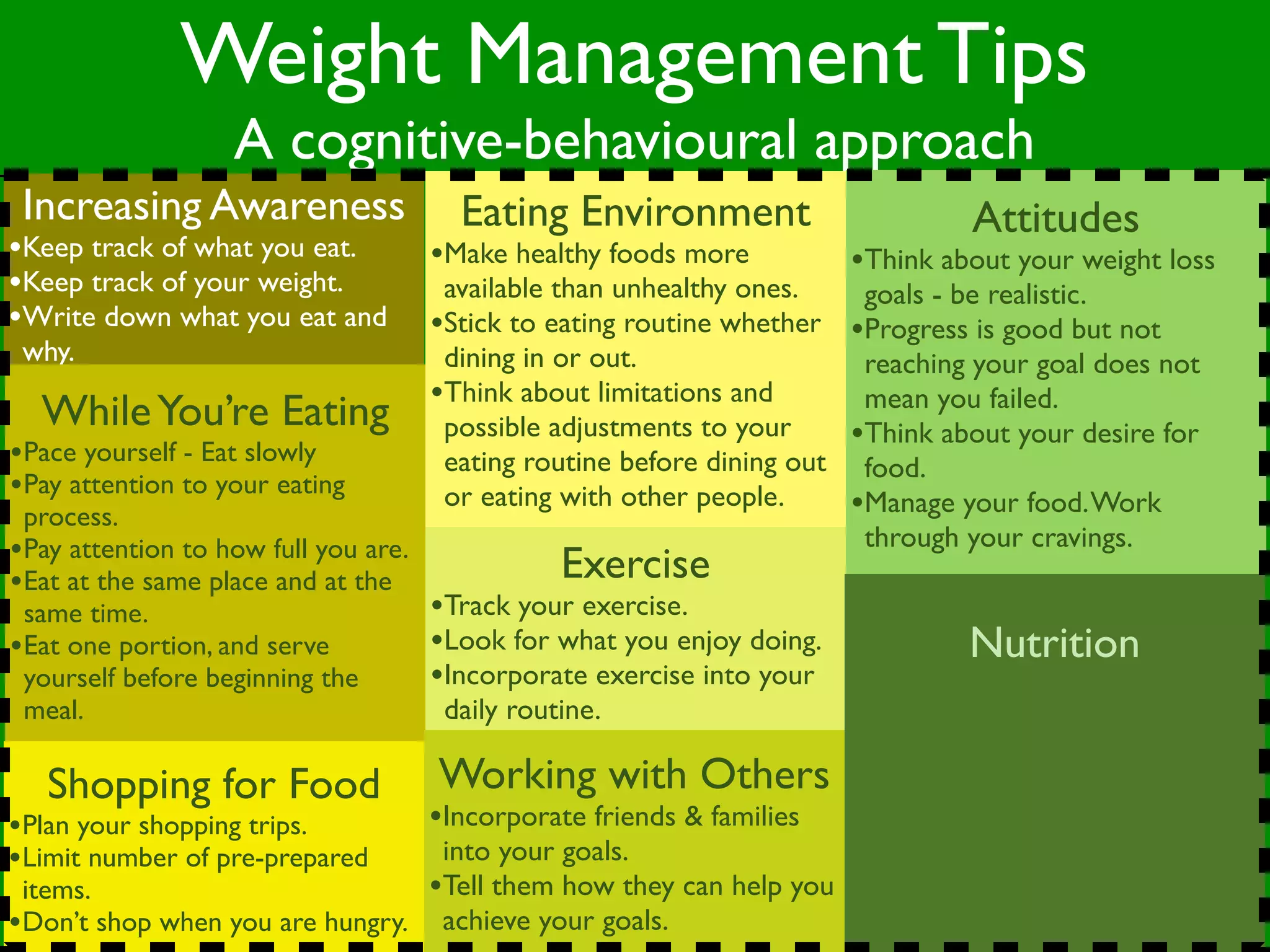
Weight Management Tips
                   A cognitive-behavioural approach
 Increasing Awareness                   Eating Environment                         Attitudes
•Keep track of what you eat.          •Make healthy foods more            •Think about your weight loss
•Keep track of your weight.            available than unhealthy ones.      goals - be realistic.
•Write down what you eat and          •Stick to eating routine whether    •Progress is good but not
 why.                                  dining in or out.                   reaching your goal does not
                                      •Think about limitations and         mean you failed.
  While You’re Eating                  possible adjustments to your       •Think about your desire for
•Pace yourself - Eat slowly            eating routine before dining out    food.
•Pay attention to your eating          or eating with other people.
 process.                                                                 •Manage your food. Work
•Pay attention to how full you are.                                        through your cravings.
•Eat at the same place and at the                Exercise
 same time.                           •Track your exercise.
•Eat one portion, and serve           •Look for what you enjoy doing.              Nutrition
 yourself before beginning the        •Incorporate exercise into your
 meal.                                 daily routine.

   Shopping for Food                  Working with Others
•Plan your shopping trips.            •Incorporate friends & families
•Limit number of pre-prepared     into your goals.
 items.                          •Tell them how they can help you
•Don’t shop when you are hungry. achieve your goals.
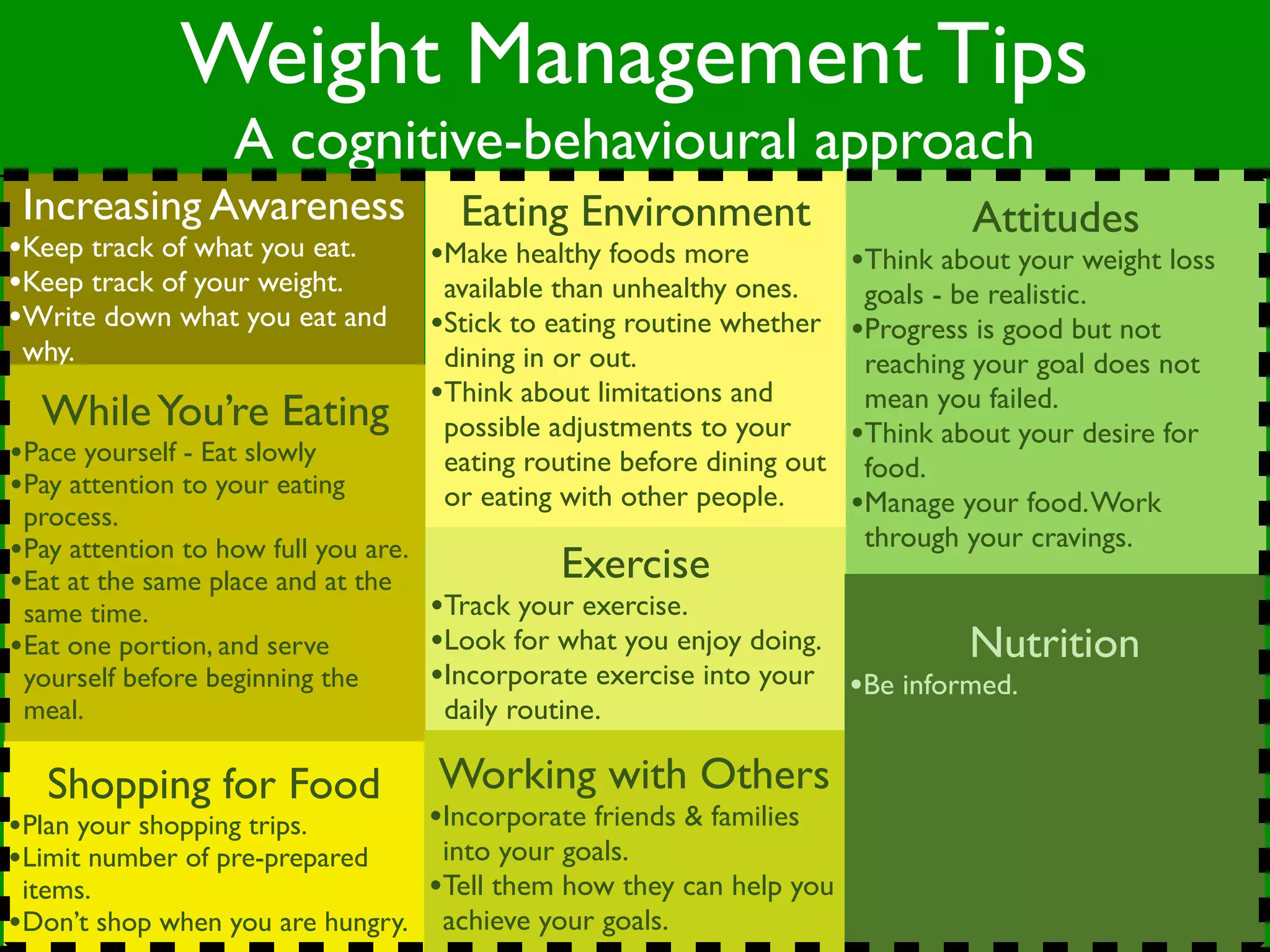
Weight Management Tips
                   A cognitive-behavioural approach
 Increasing Awareness                   Eating Environment                         Attitudes
•Keep track of what you eat.          •Make healthy foods more            •Think about your weight loss
•Keep track of your weight.            available than unhealthy ones.      goals - be realistic.
•Write down what you eat and          •Stick to eating routine whether    •Progress is good but not
 why.                                  dining in or out.                   reaching your goal does not
                                      •Think about limitations and         mean you failed.
  While You’re Eating                  possible adjustments to your       •Think about your desire for
•Pace yourself - Eat slowly            eating routine before dining out    food.
•Pay attention to your eating          or eating with other people.
 process.                                                                 •Manage your food. Work
•Pay attention to how full you are.                                        through your cravings.
•Eat at the same place and at the                Exercise
 same time.                           •Track your exercise.
•Eat one portion, and serve           •Look for what you enjoy doing.          Nutrition
 yourself before beginning the        •Incorporate exercise into your •Be informed.
 meal.                                 daily routine.

   Shopping for Food                  Working with Others
•Plan your shopping trips.            •Incorporate friends & families
•Limit number of pre-prepared     into your goals.
 items.                          •Tell them how they can help you
•Don’t shop when you are hungry. achieve your goals.
Weight Management Tips
                   A cognitive-behavioural approach
 Increasing Awareness                   Eating Environment                         Attitudes
•Keep track of what you eat.          •Make healthy foods more            •Think about your weight loss
•Keep track of your weight.            available than unhealthy ones.      goals - be realistic.
•Write down what you eat and          •Stick to eating routine whether    •Progress is good but not
 why.                                  dining in or out.                   reaching your goal does not
                                      •Think about limitations and         mean you failed.
  While You’re Eating                  possible adjustments to your       •Think about your desire for
•Pace yourself - Eat slowly            eating routine before dining out    food.
•Pay attention to your eating          or eating with other people.
 process.                                                                 •Manage your food. Work
•Pay attention to how full you are.                                        through your cravings.
•Eat at the same place and at the                Exercise
 same time.                           •Track your exercise.
•Eat one portion, and serve           •Look for what you enjoy doing.          Nutrition
 yourself before beginning the        •Incorporate exercise into your •Be informed.
 meal.                                 daily routine.                 •Know your recommended daily
                                                                          calories, vitamins and minerals.
   Shopping for Food                  Working with Others
•Plan your shopping trips.            •Incorporate friends & families
•Limit number of pre-prepared     into your goals.
 items.                          •Tell them how they can help you
•Don’t shop when you are hungry. achieve your goals.
Weight Management Tips
                   A cognitive-behavioural approach
 Increasing Awareness                   Eating Environment                          Attitudes
•Keep track of what you eat.          •Make healthy foods more            •Think about your weight loss
•Keep track of your weight.            available than unhealthy ones.      goals - be realistic.
•Write down what you eat and          •Stick to eating routine whether    •Progress is good but not
 why.                                  dining in or out.                   reaching your goal does not
                                      •Think about limitations and         mean you failed.
  While You’re Eating                  possible adjustments to your       •Think about your desire for
•Pace yourself - Eat slowly            eating routine before dining out    food.
•Pay attention to your eating          or eating with other people.
 process.                                                                 •Manage your food. Work
•Pay attention to how full you are.                                        through your cravings.
•Eat at the same place and at the                Exercise
 same time.                           •Track your exercise.
•Eat one portion, and serve           •Look for what you enjoy doing.          Nutrition
 yourself before beginning the        •Incorporate exercise into your •Be informed.
 meal.                                 daily routine.                 •Know your recommended daily
                                                                           calories, vitamins and minerals.
   Shopping for Food                  Working with Others                 •Know your food.
•Plan your shopping trips.            •Incorporate friends & families
•Limit number of pre-prepared     into your goals.
 items.                          •Tell them how they can help you
•Don’t shop when you are hungry. achieve your goals.
Weight Management Tips
                   A cognitive-behavioural approach
 Increasing Awareness                   Eating Environment                          Attitudes
•Keep track of what you eat.          •Make healthy foods more            •Think about your weight loss
•Keep track of your weight.            available than unhealthy ones.      goals - be realistic.
•Write down what you eat and          •Stick to eating routine whether    •Progress is good but not
 why.                                  dining in or out.                   reaching your goal does not
                                      •Think about limitations and         mean you failed.
  While You’re Eating                  possible adjustments to your       •Think about your desire for
•Pace yourself - Eat slowly            eating routine before dining out    food.
•Pay attention to your eating          or eating with other people.
 process.                                                                 •Manage your food. Work
•Pay attention to how full you are.                                        through your cravings.
•Eat at the same place and at the                Exercise
 same time.                           •Track your exercise.
•Eat one portion, and serve           •Look for what you enjoy doing.          Nutrition
 yourself before beginning the        •Incorporate exercise into your •Be informed.
 meal.                                 daily routine.                 •Know your recommended daily
                                                                           calories, vitamins and minerals.
   Shopping for Food                  Working with Others                 •Know your food.
•Plan your shopping trips.            •Incorporate friends & families     •Eat a balanced diet.
•Limit number of pre-prepared     into your goals.
 items.                          •Tell them how they can help you
•Don’t shop when you are hungry. achieve your goals.
Weight Management Tips
                   A cognitive-behavioural approach
 Increasing Awareness                   Eating Environment                         Attitudes
•Keep track of what you eat.          •Make healthy foods more            •Think about your weight loss
•Keep track of your weight.            available than unhealthy ones.      goals - be realistic.
•Write down what you eat and          •Stick to eating routine whether    •Progress is good but not
 why.                                  dining in or out.                   reaching your goal does not
                                      •Think about limitations and         mean you failed.
  While You’re Eating                  possible adjustments to your       •Think about your desire for
•Pace yourself - Eat slowly            eating routine before dining out    food.
•Pay attention to your eating          or eating with other people.
 process.                                                                 •Manage your food. Work
•Pay attention to how full you are.                                        through your cravings.
•Eat at the same place and at the               Exercise
 same time.                           •Track your exercise.
•Eat one portion, and serve           •Look for what you enjoy doing.          Nutrition
 yourself before beginning the        •Incorporate exercise into your •Be informed.
 meal.                                 daily routine.                 •Know your recommended daily
                                                                   calories, vitamins and minerals.
    Shopping for Food Working with Others •Know your food.
•Plan your shopping trips.       •Incorporate friends & families •Eat a balanced diet.
•Limit number of pre-prepared     into your goals.                •Prepare food that are both
 items.                          •Tell them how they can help you healthy and taste good.
•Don’t shop when you are hungry. achieve your goals.
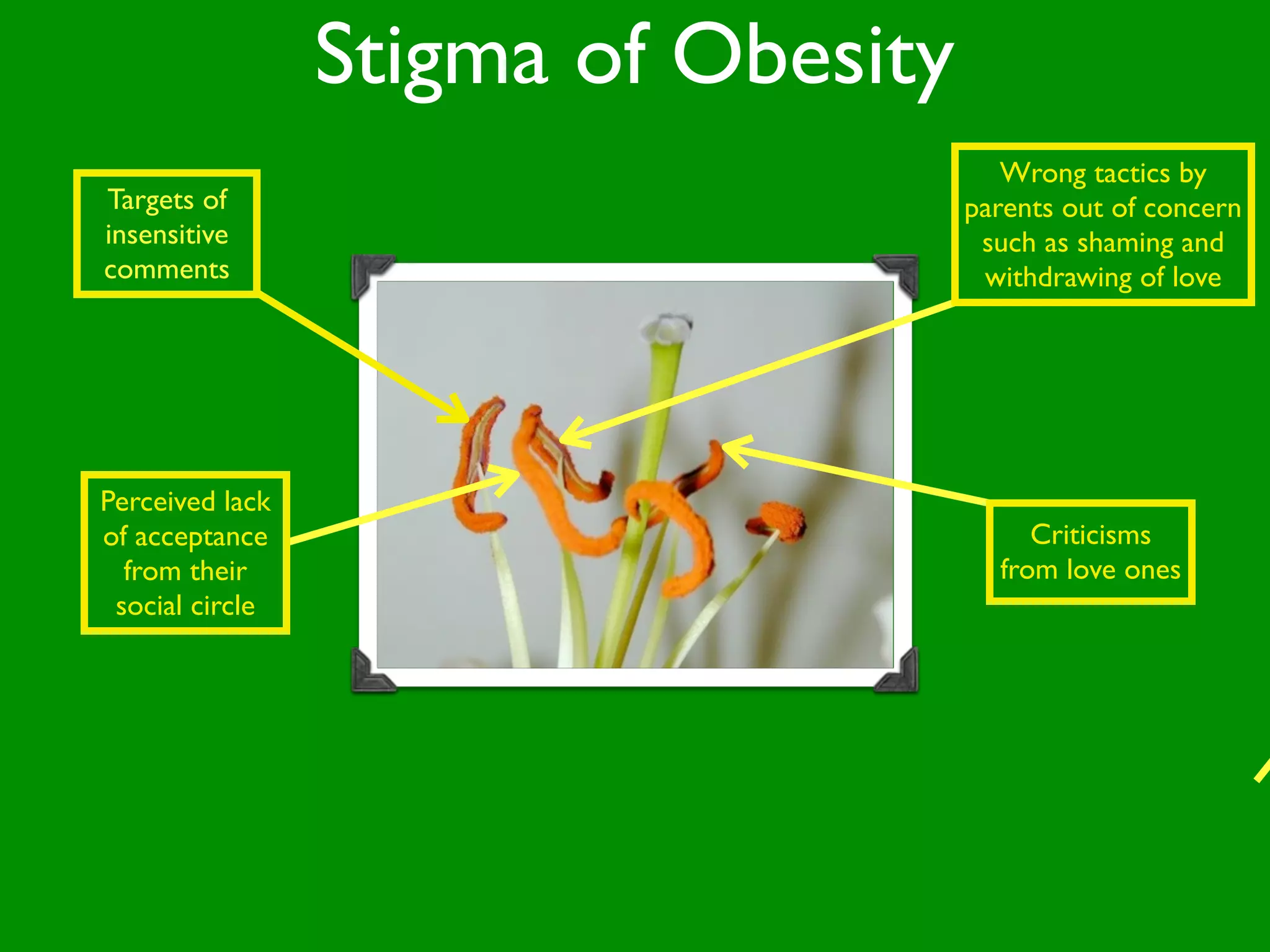
Stigma of Obesity
Stigma of Obesity


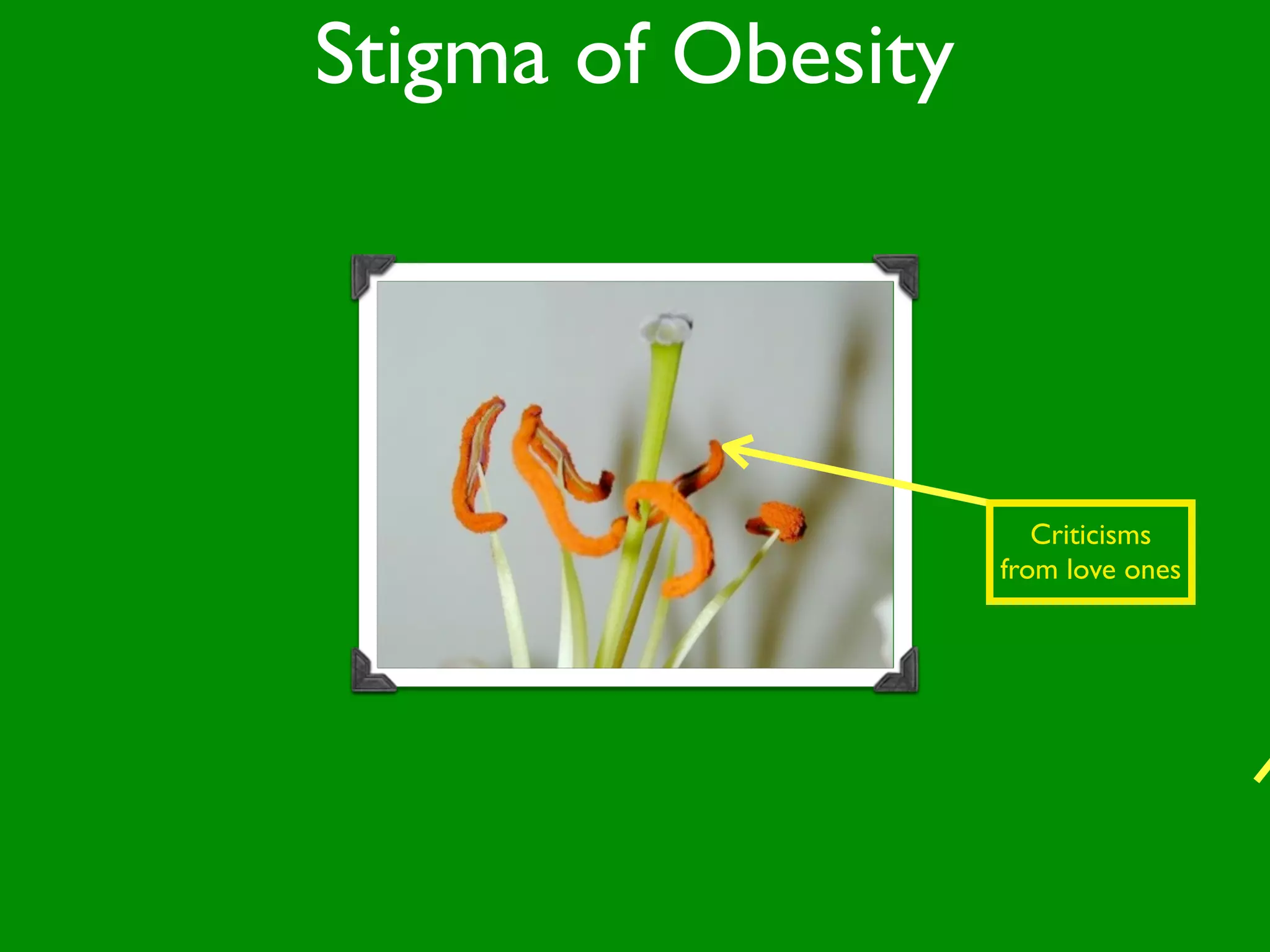
                       Criticisms
                    from love ones
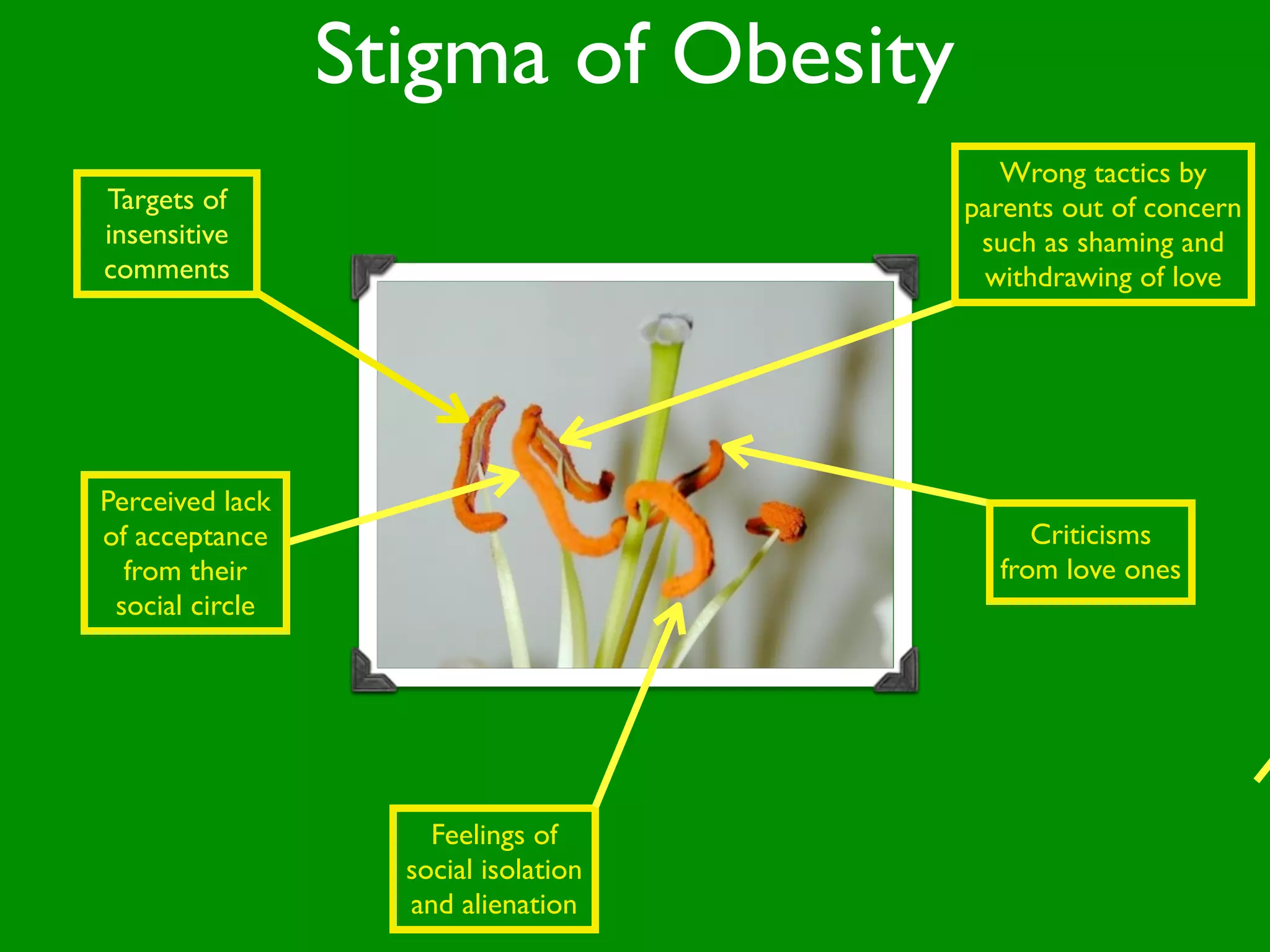
Stigma of Obesity
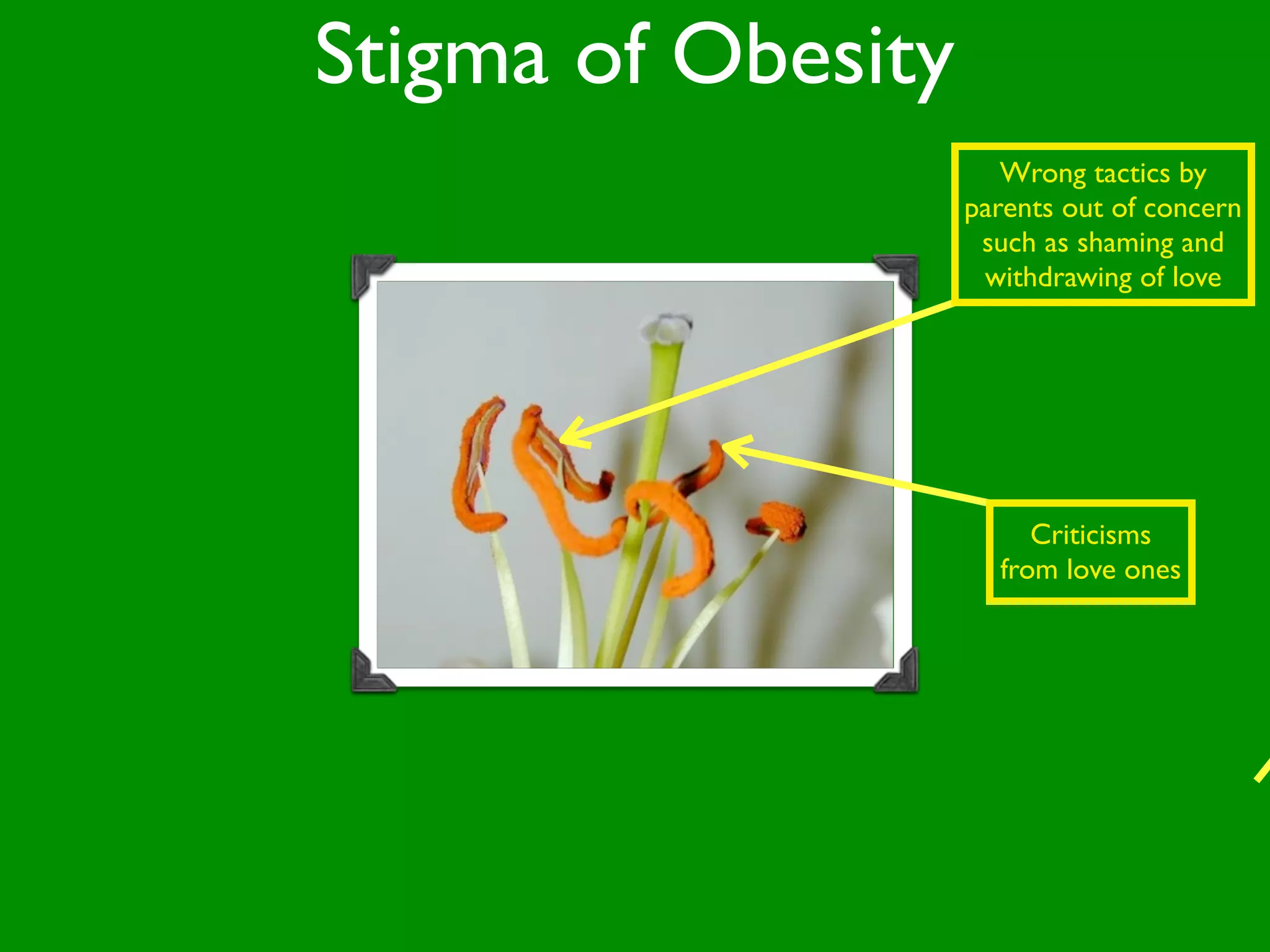
                       Wrong tactics by
                    parents out of concern
                     such as shaming and
                     withdrawing of love


                         Criticisms
                      from love ones
Stigma of Obesity
                                     Wrong tactics by
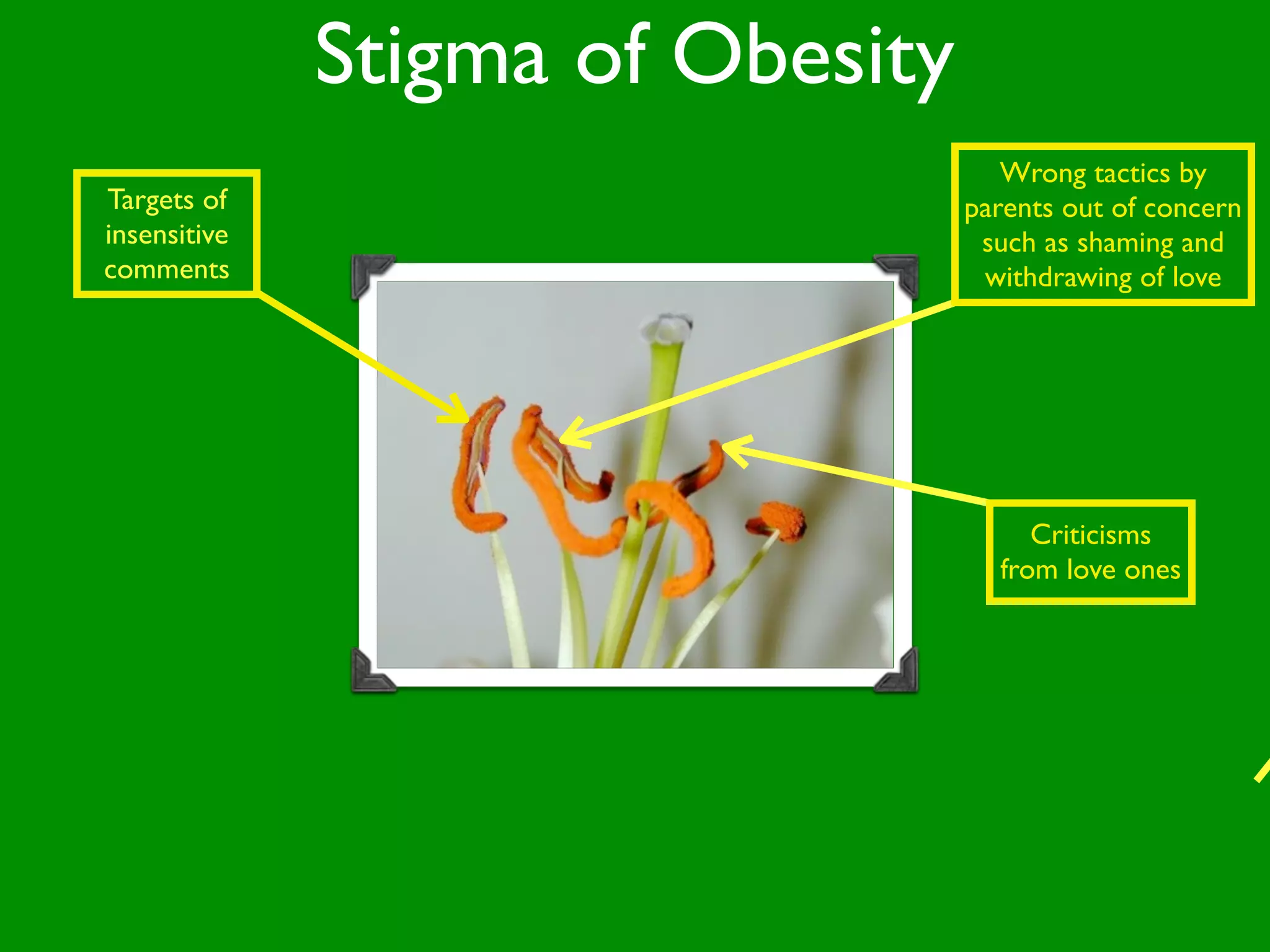
Targets of                        parents out of concern
insensitive                        such as shaming and
comments                           withdrawing of love


                                       Criticisms
                                    from love ones
Stigma of Obesity
                                        Wrong tactics by
Targets of                           parents out of concern
insensitive                           such as shaming and
comments                              withdrawing of love


Perceived lack
of acceptance                             Criticisms
  from their                           from love ones
 social circle
Stigma of Obesity
                                         Wrong tactics by
Targets of                            parents out of concern
insensitive                            such as shaming and
comments                               withdrawing of love


Perceived lack
of acceptance                              Criticisms
  from their                            from love ones
 social circle


                     Feelings of
                   social isolation
                   and alienation
Stigma of Obesity
                                                      Wrong tactics by
Targets of                                         parents out of concern
insensitive                                         such as shaming and
comments                                            withdrawing of love


Perceived lack
of acceptance                                            Criticisms
  from their                                          from love ones
 social circle


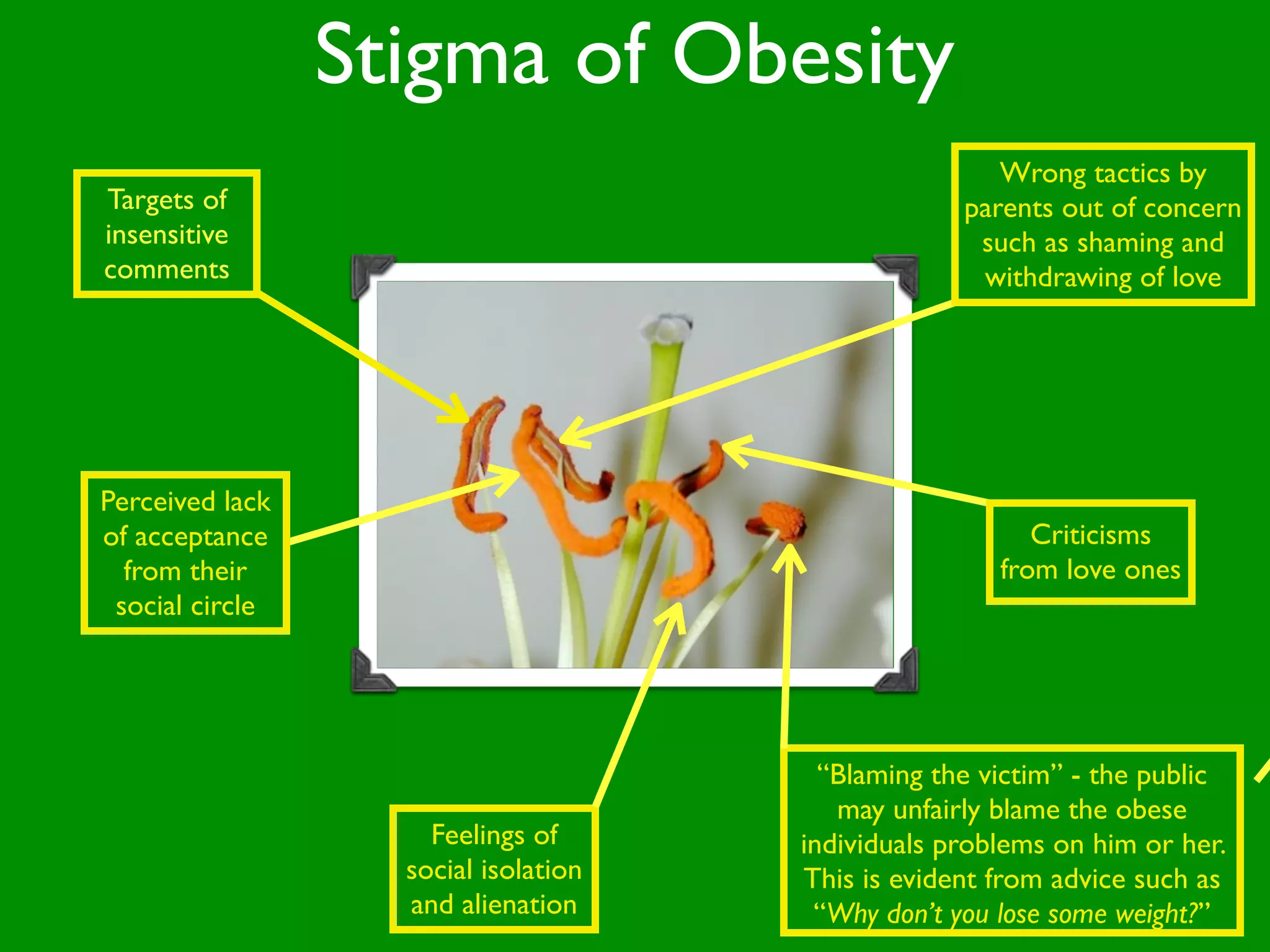
                                        “Blaming the victim” - the public
                                         may unfairly blame the obese
                     Feelings of      individuals problems on him or her.
                   social isolation   This is evident from advice such as
                   and alienation      “Why don’t you lose some weight?”
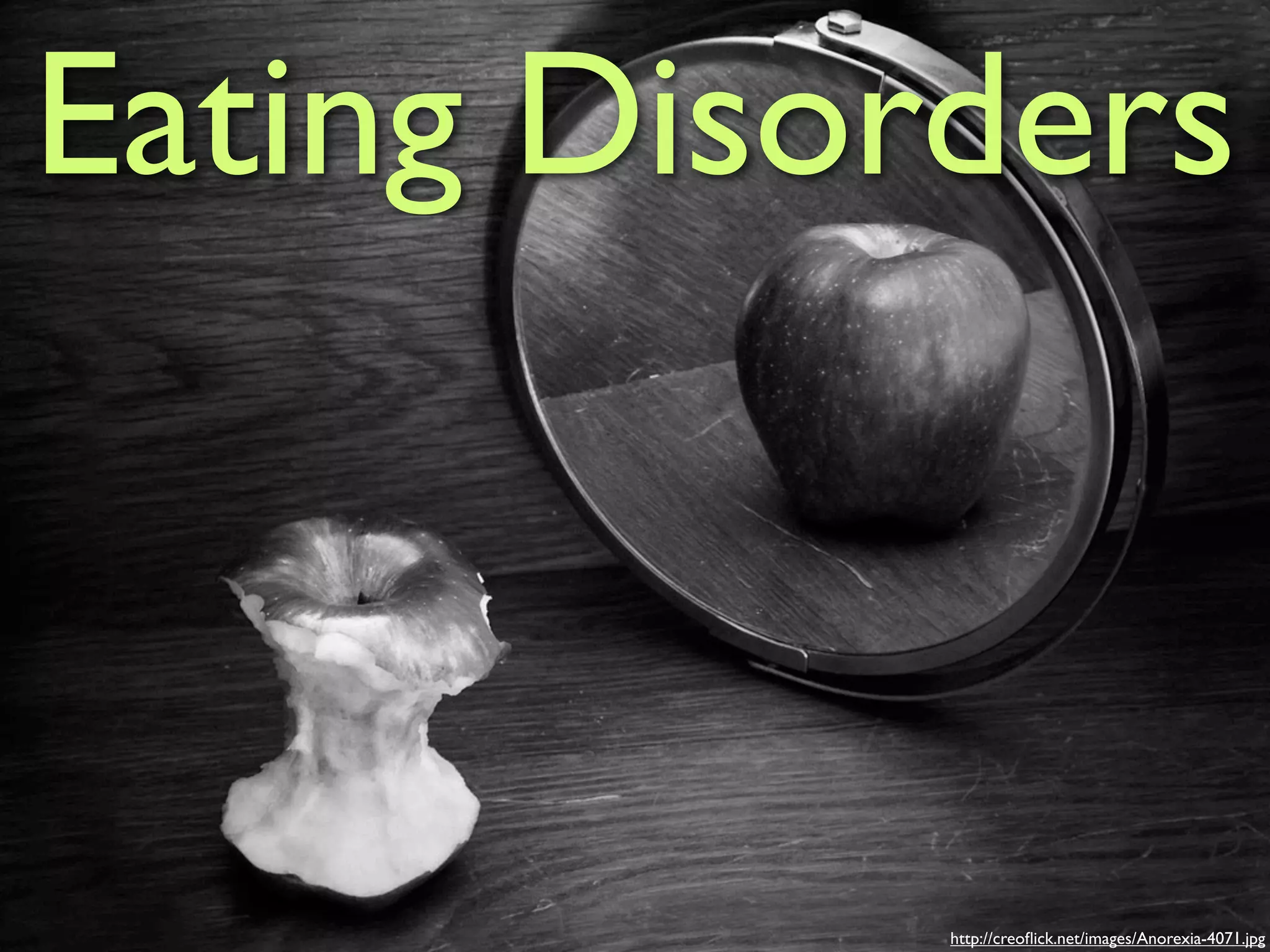
Eating Disorders


            http://creoflick.net/images/Anorexia-4071.jpg
What You See Isn’t What You Want
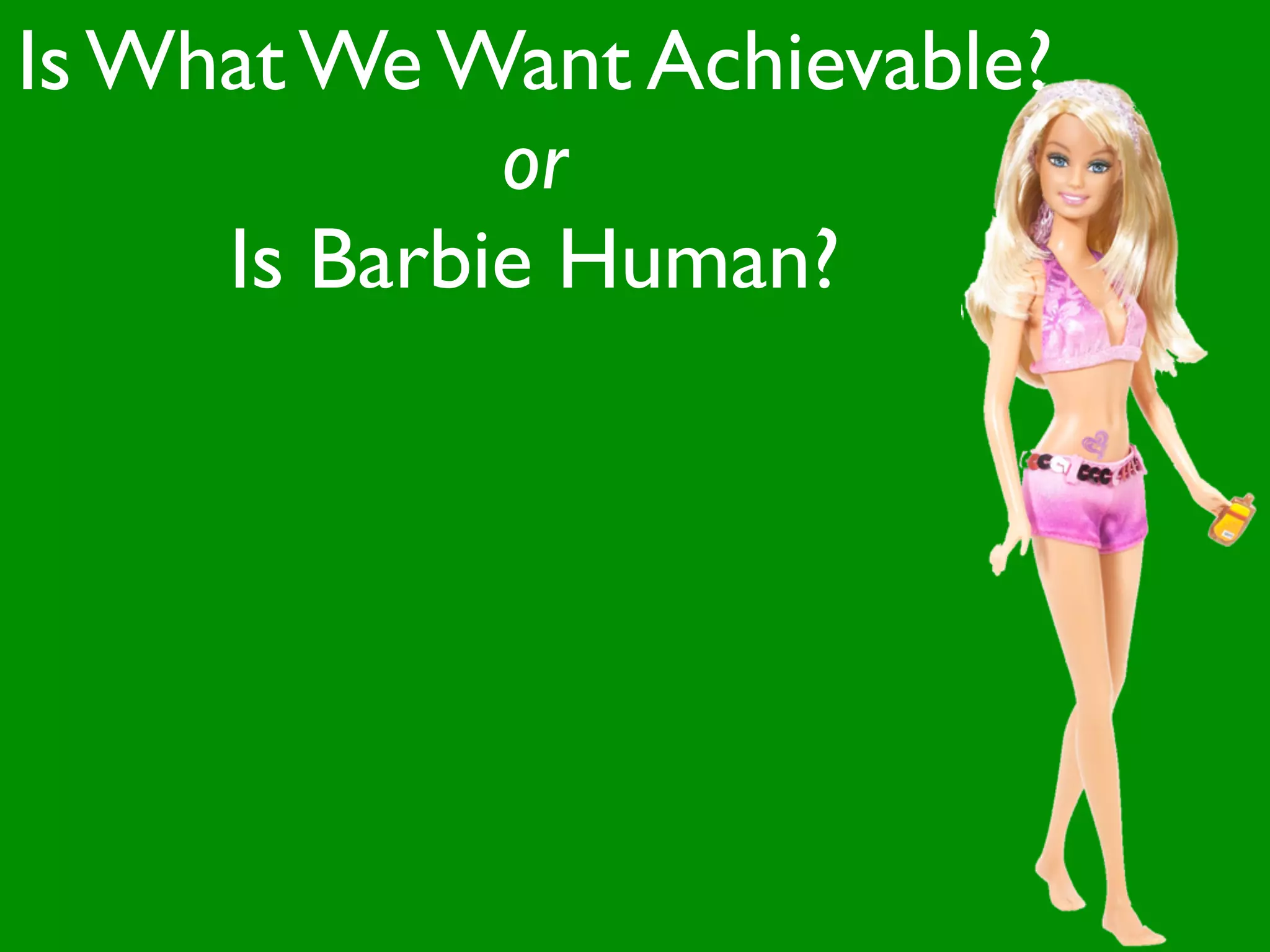
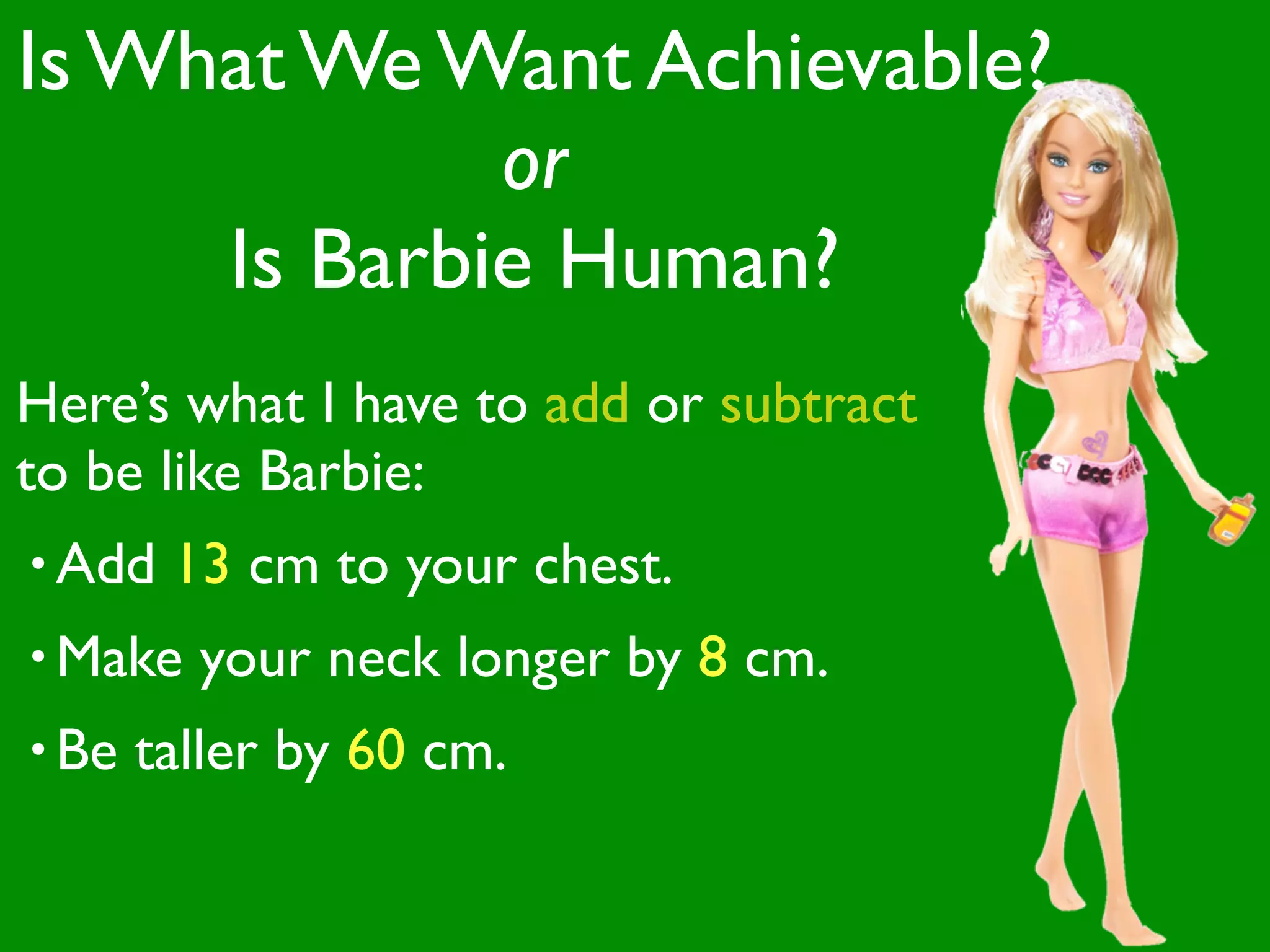
Is What We Want Achievable?
             or
     Is Barbie Human?
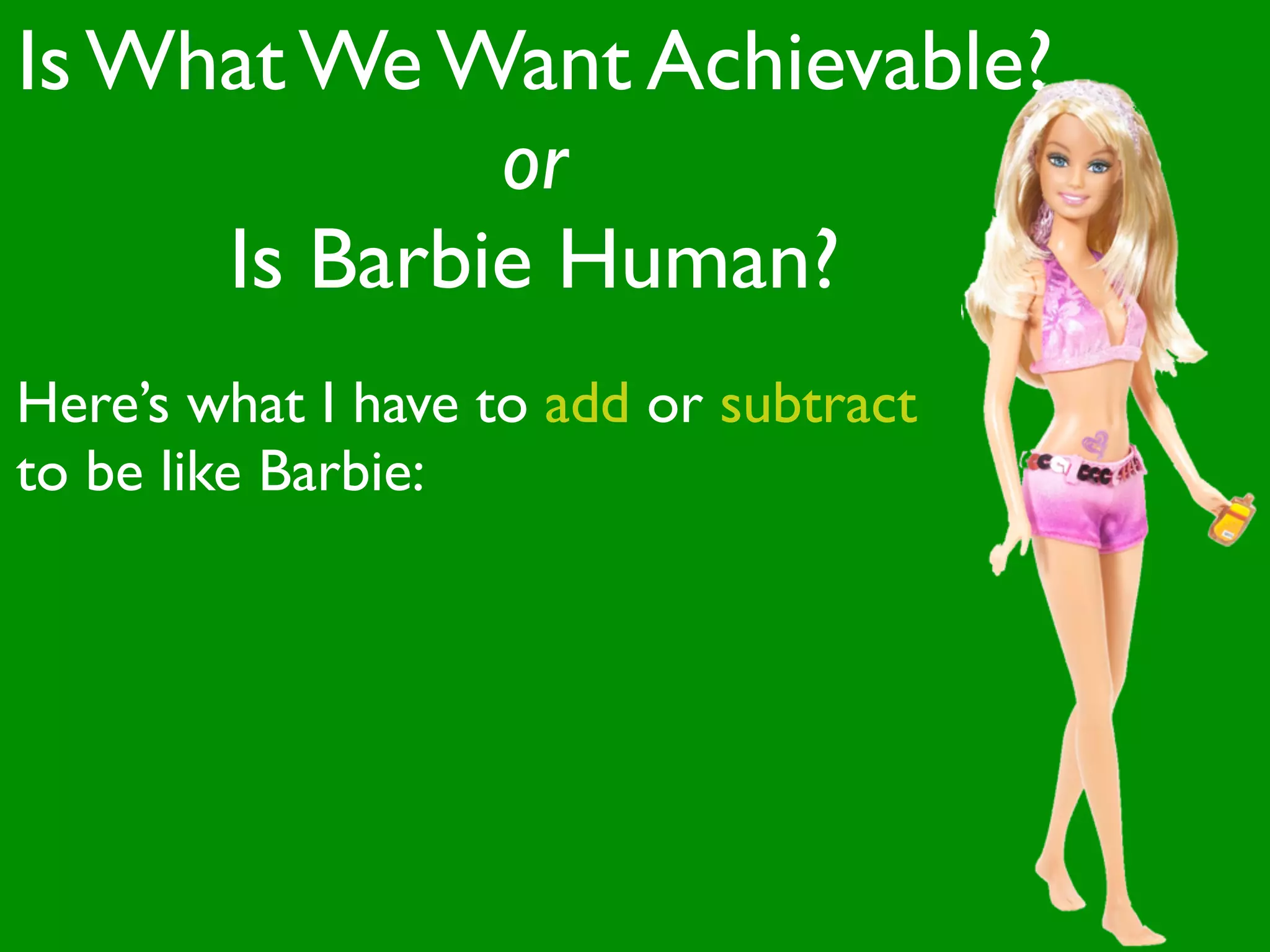
Is What We Want Achievable?
             or
     Is Barbie Human?
Here’s what I have to add or subtract
to be like Barbie:
Is What We Want Achievable?
             or
     Is Barbie Human?
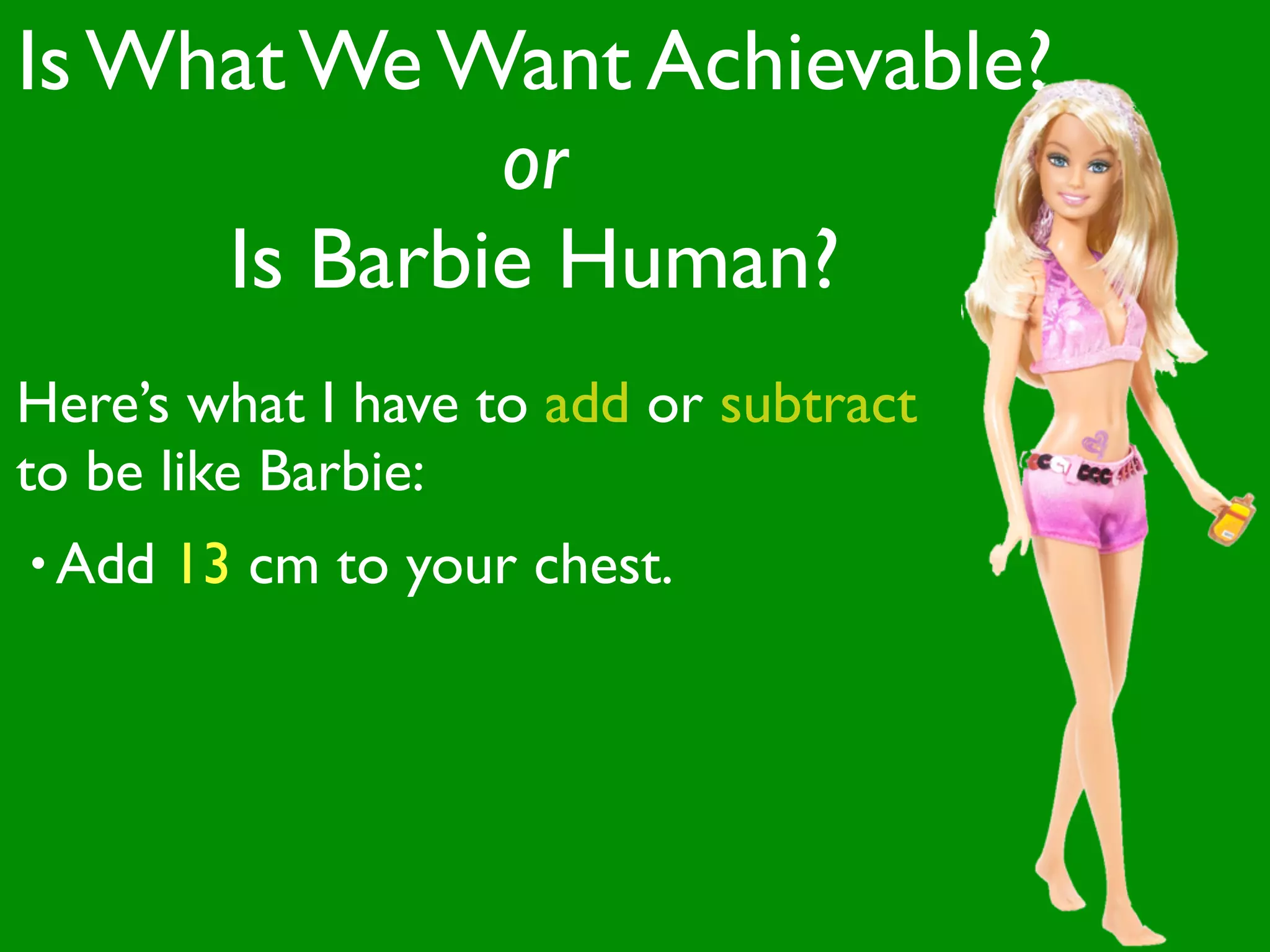
Here’s what I have to add or subtract
to be like Barbie:
• Add   13 cm to your chest.
Is What We Want Achievable?
             or
     Is Barbie Human?
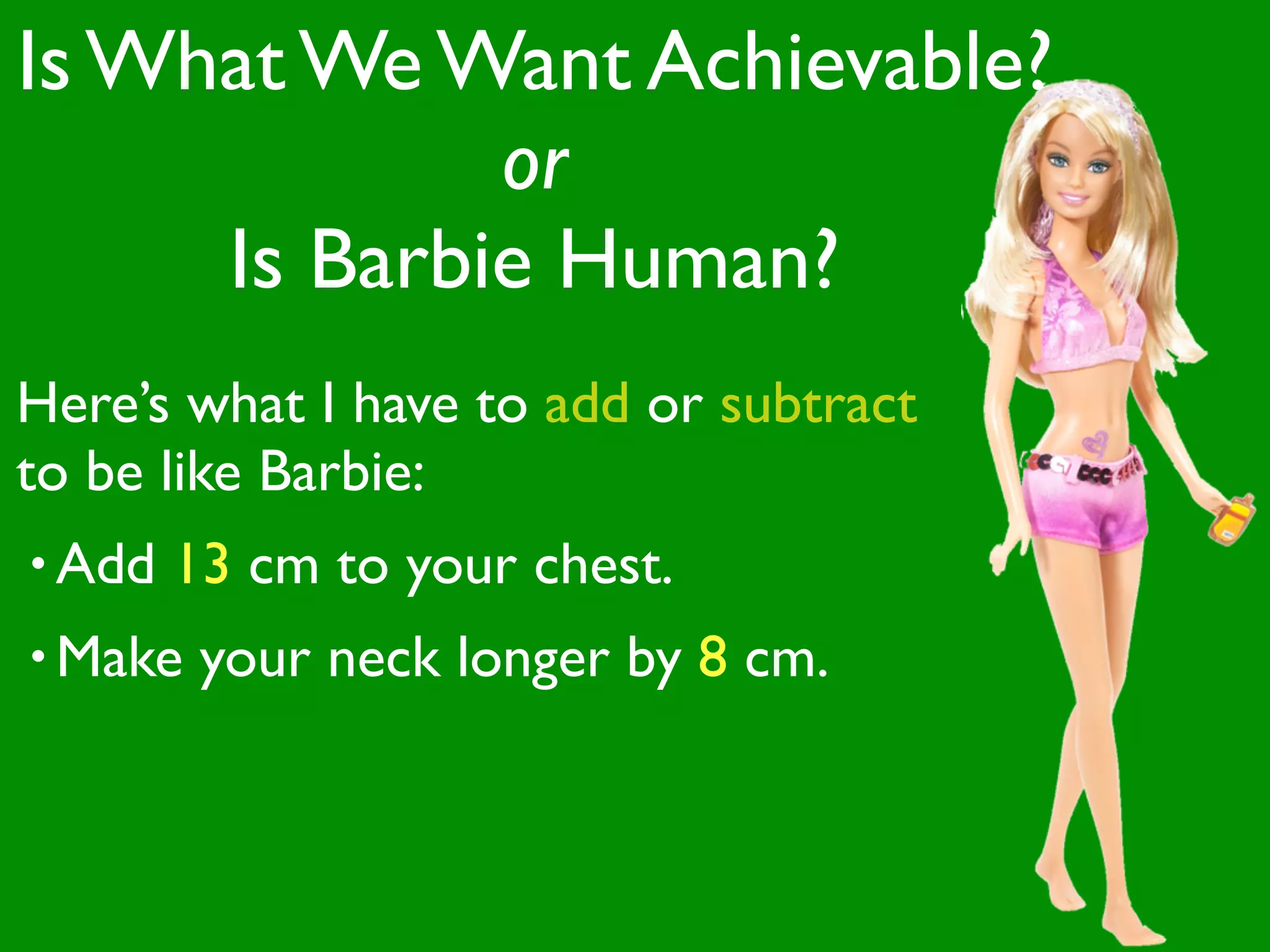
Here’s what I have to add or subtract
to be like Barbie:
• Add   13 cm to your chest.
• Make   your neck longer by 8 cm.
Is What We Want Achievable?
             or
     Is Barbie Human?
Here’s what I have to add or subtract
to be like Barbie:
• Add   13 cm to your chest.
• Make   your neck longer by 8 cm.
• Be   taller by 60 cm.
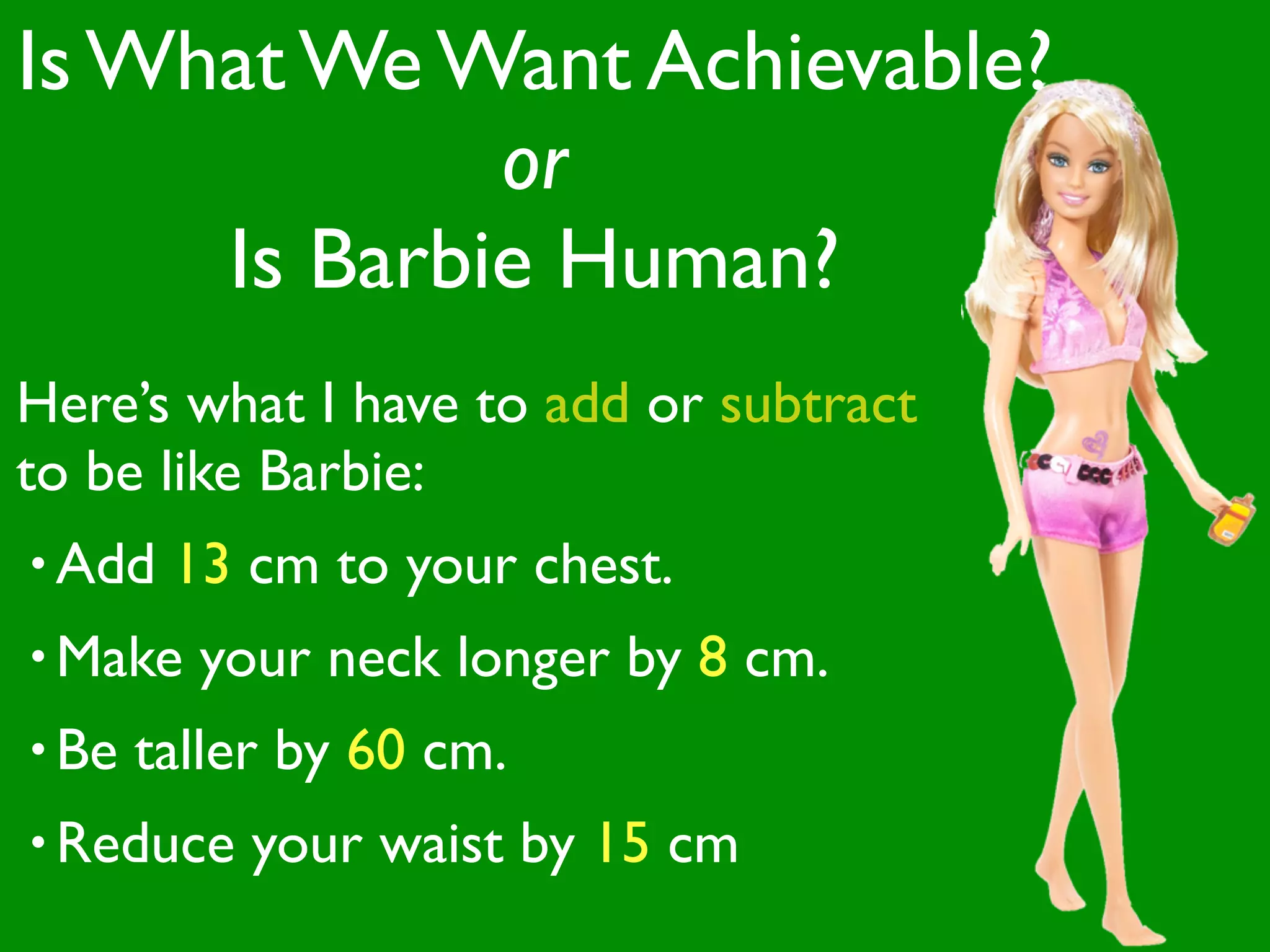
Is What We Want Achievable?
             or
     Is Barbie Human?
Here’s what I have to add or subtract
to be like Barbie:
• Add   13 cm to your chest.
• Make   your neck longer by 8 cm.
• Be   taller by 60 cm.
• Reduce    your waist by 15 cm
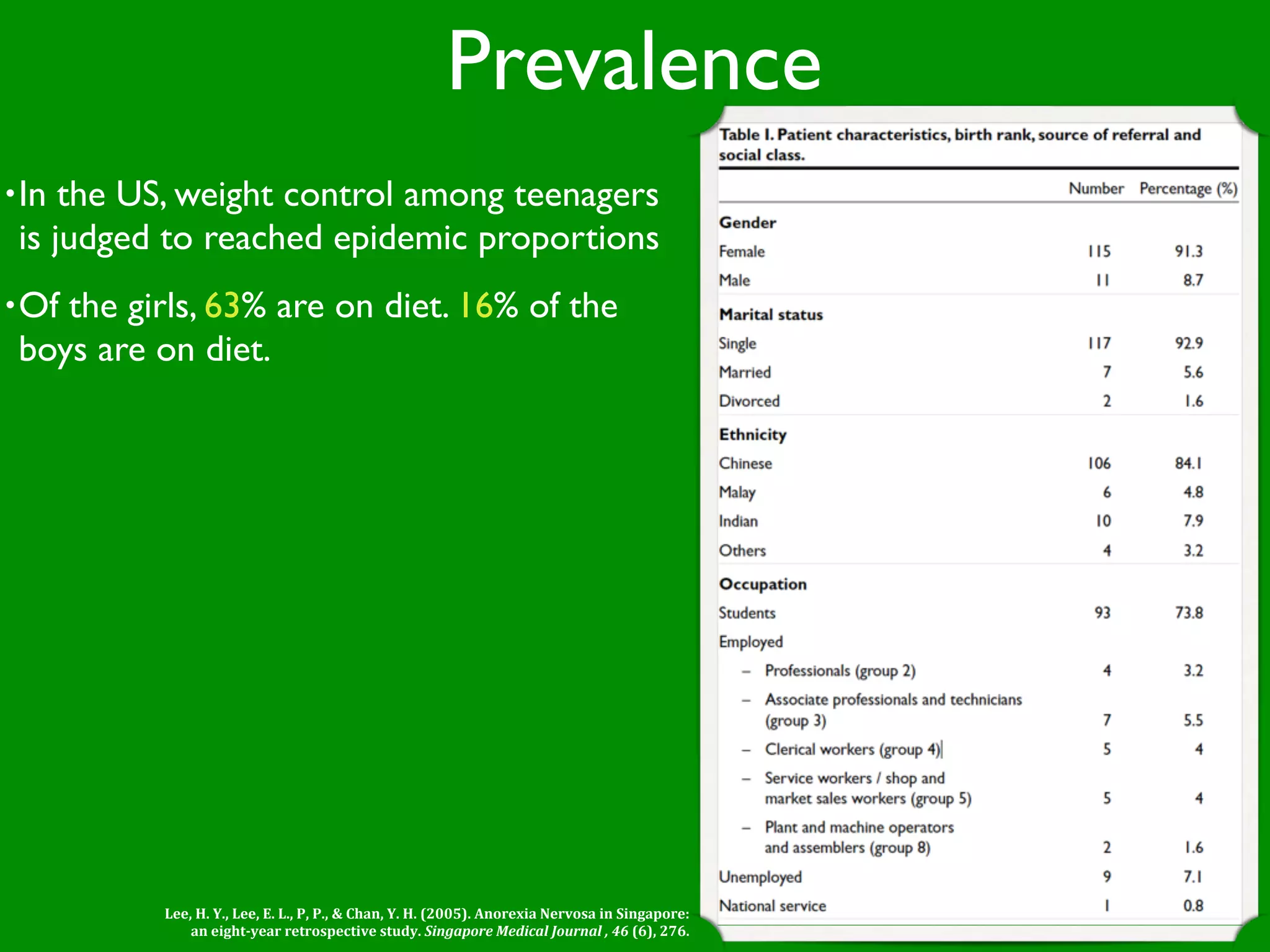
Prevalence


Lee,
H.
Y.,
Lee,
E.
L.,
P,
P.,
&
Chan,
Y.
H.
(2005).
Anorexia
Nervosa
in
Singapore:

    an
eight­year
retrospective
study.
Singapore
Medical
Journal
,
46
(6),
276.
Prevalence
• In the US, weight control among teenagers
 is judged to reached epidemic proportions


          Lee,
H.
Y.,
Lee,
E.
L.,
P,
P.,
&
Chan,
Y.
H.
(2005).
Anorexia
Nervosa
in
Singapore:

              an
eight­year
retrospective
study.
Singapore
Medical
Journal
,
46
(6),
276.
Prevalence
• In the US, weight control among teenagers
 is judged to reached epidemic proportions
• Ofthe girls, 63% are on diet. 16% of the
 boys are on diet.


          Lee,
H.
Y.,
Lee,
E.
L.,
P,
P.,
&
Chan,
Y.
H.
(2005).
Anorexia
Nervosa
in
Singapore:

              an
eight­year
retrospective
study.
Singapore
Medical
Journal
,
46
(6),
276.
Prevalence
• In the US, weight control among teenagers
 is judged to reached epidemic proportions
• Ofthe girls, 63% are on diet. 16% of the
 boys are on diet.
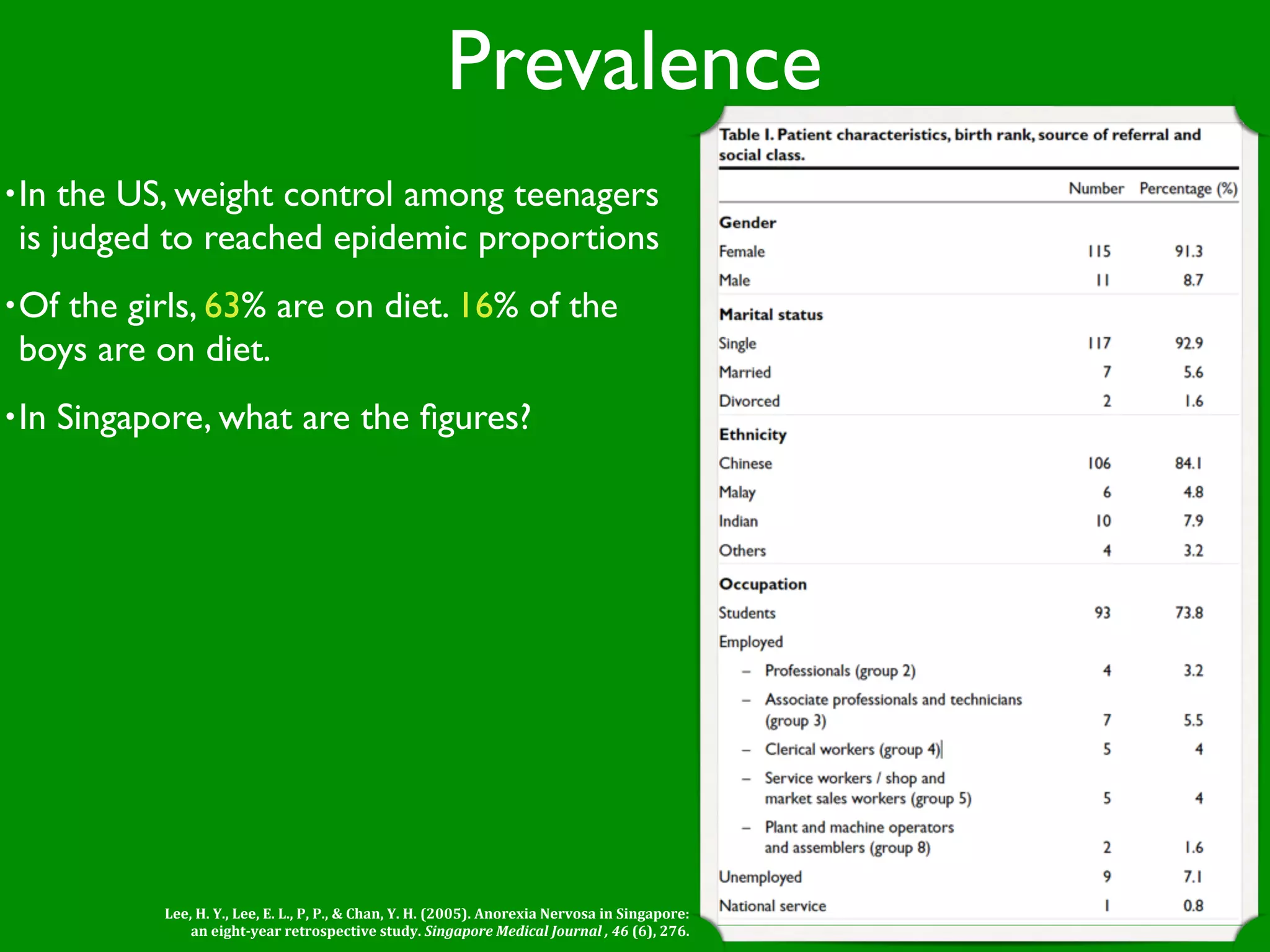
• In   Singapore, what are the figures?


              Lee,
H.
Y.,
Lee,
E.
L.,
P,
P.,
&
Chan,
Y.
H.
(2005).
Anorexia
Nervosa
in
Singapore:

                  an
eight­year
retrospective
study.
Singapore
Medical
Journal
,
46
(6),
276.
Prevalence
• In the US, weight control among teenagers
 is judged to reached epidemic proportions
• Ofthe girls, 63% are on diet. 16% of the
 boys are on diet.
• In   Singapore, what are the figures?
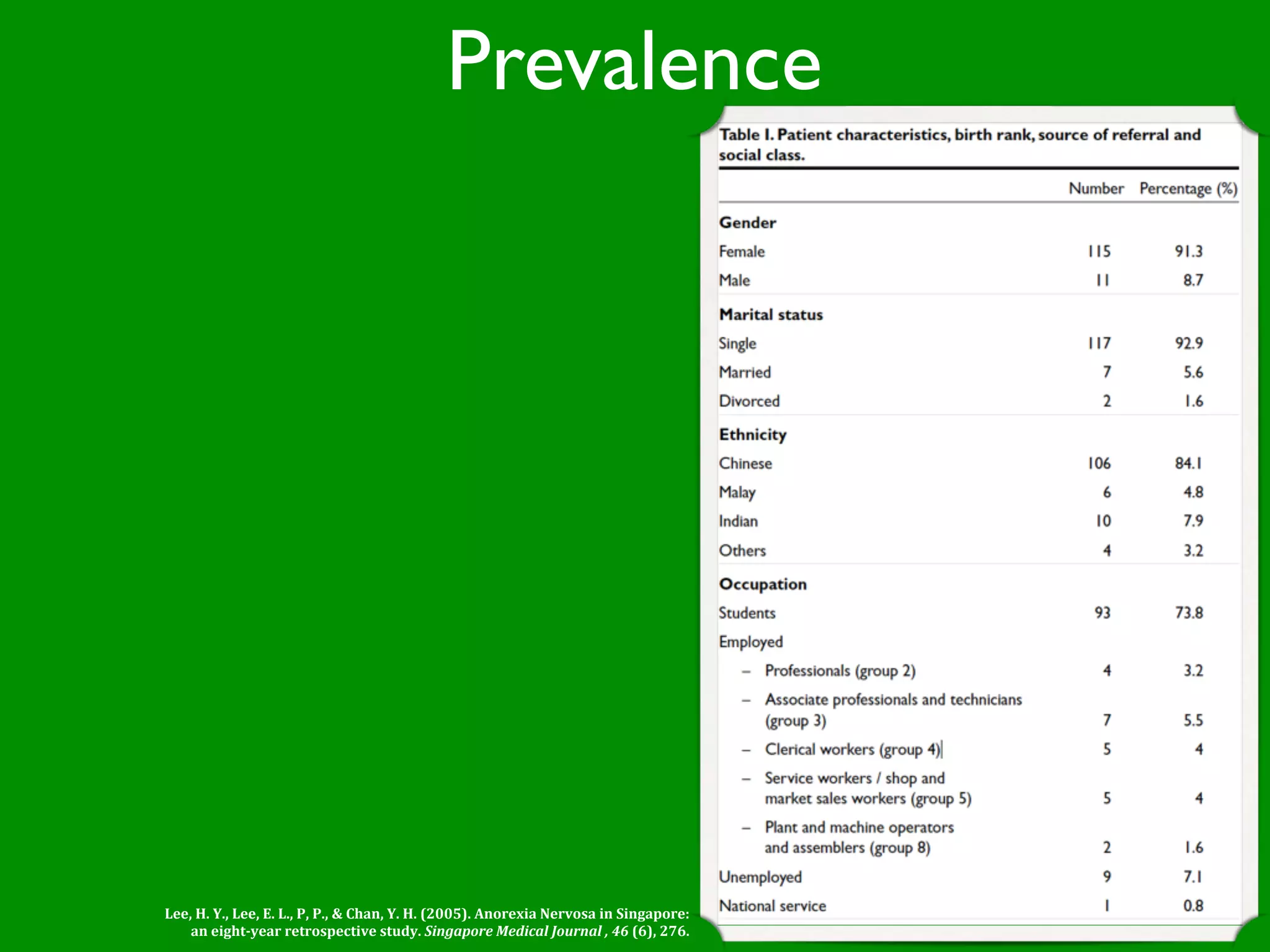
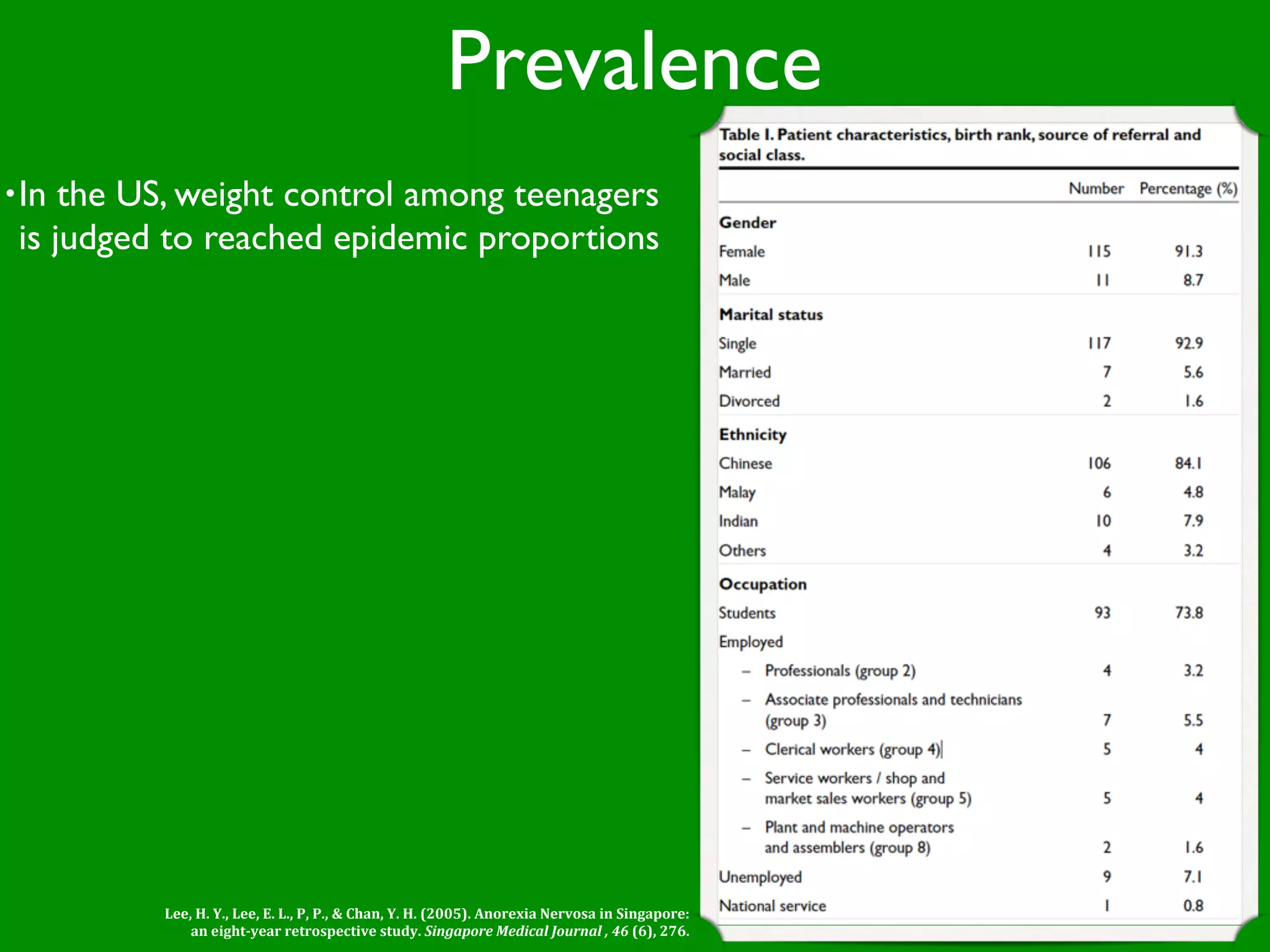
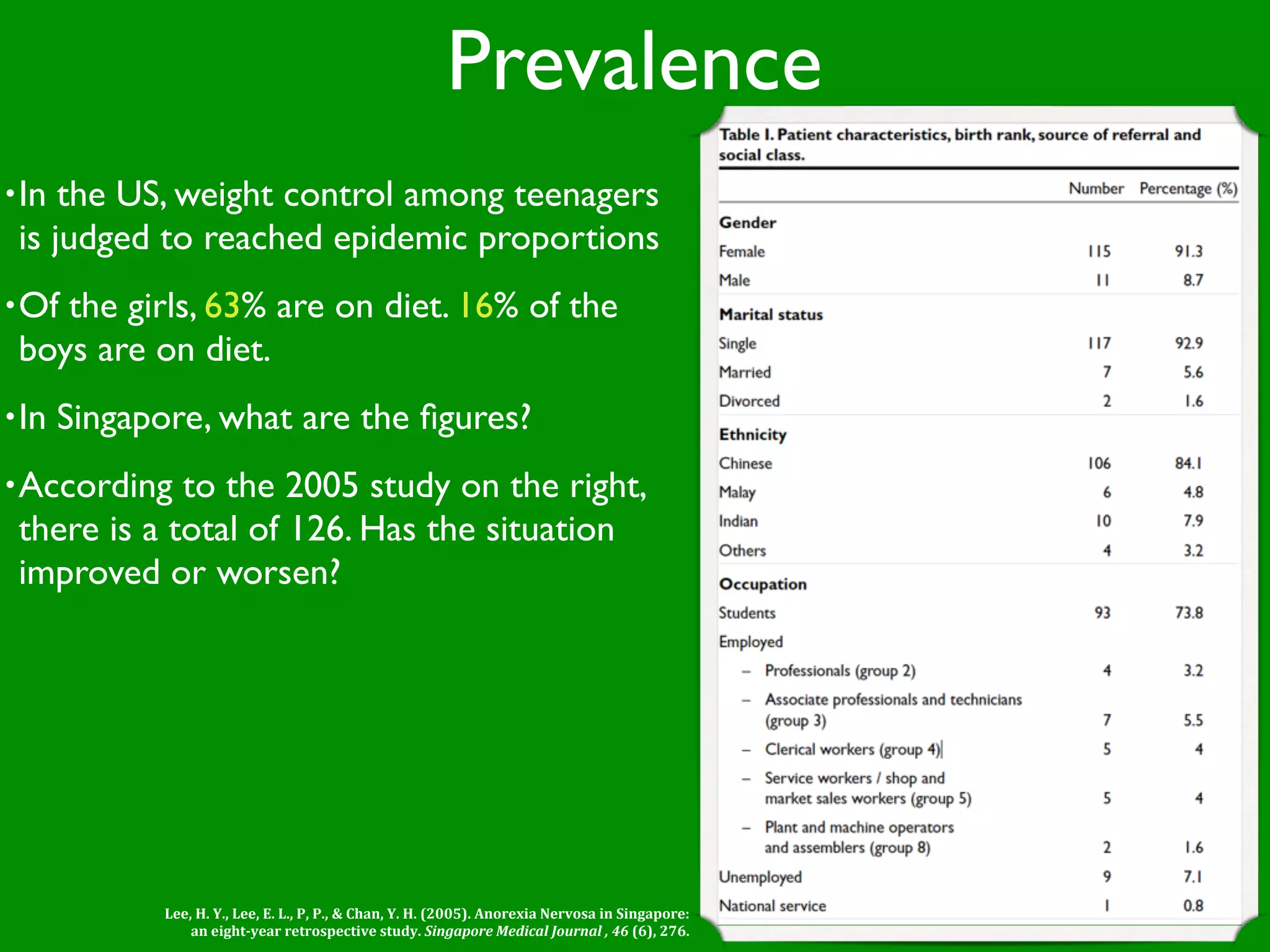
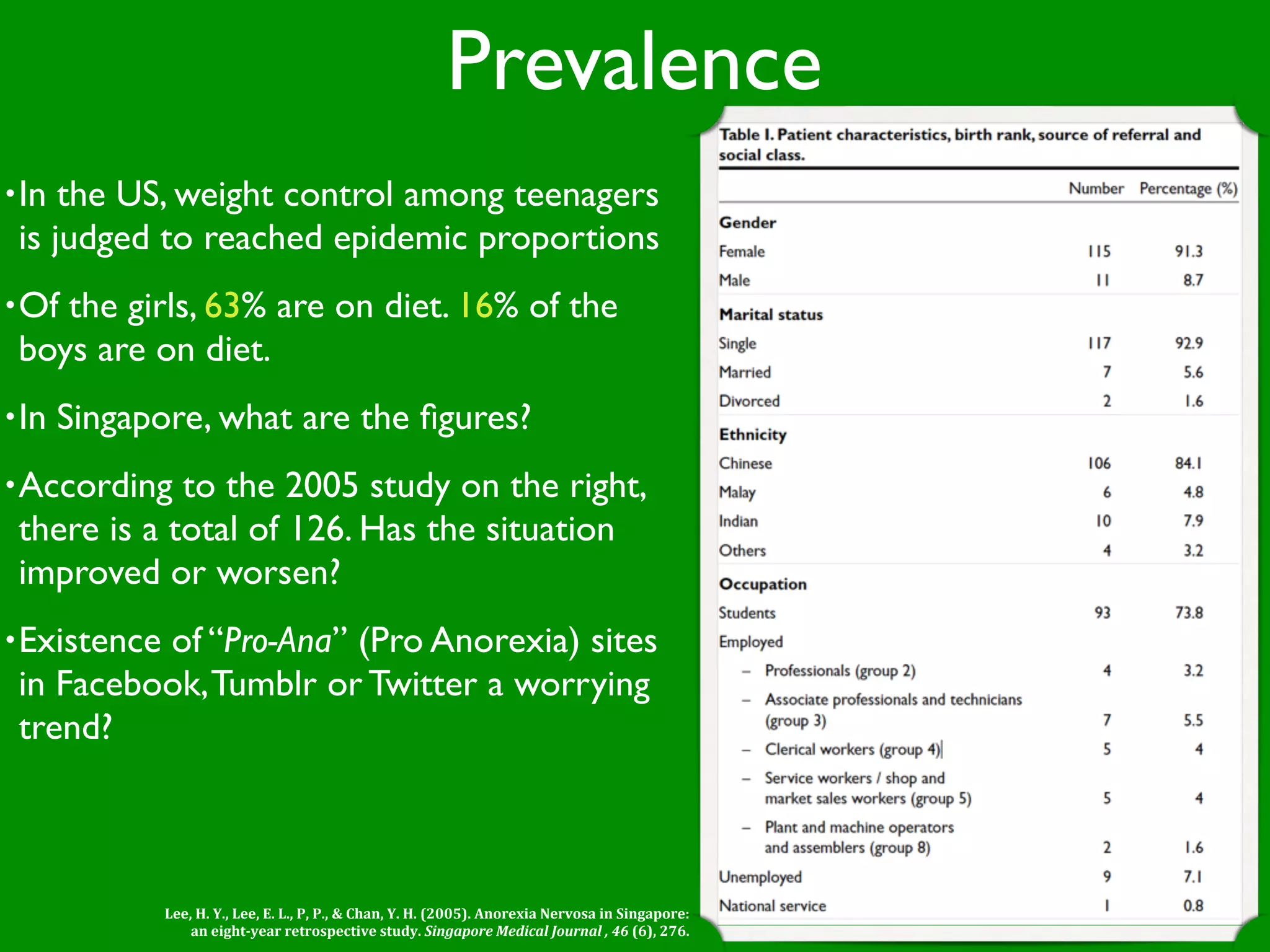
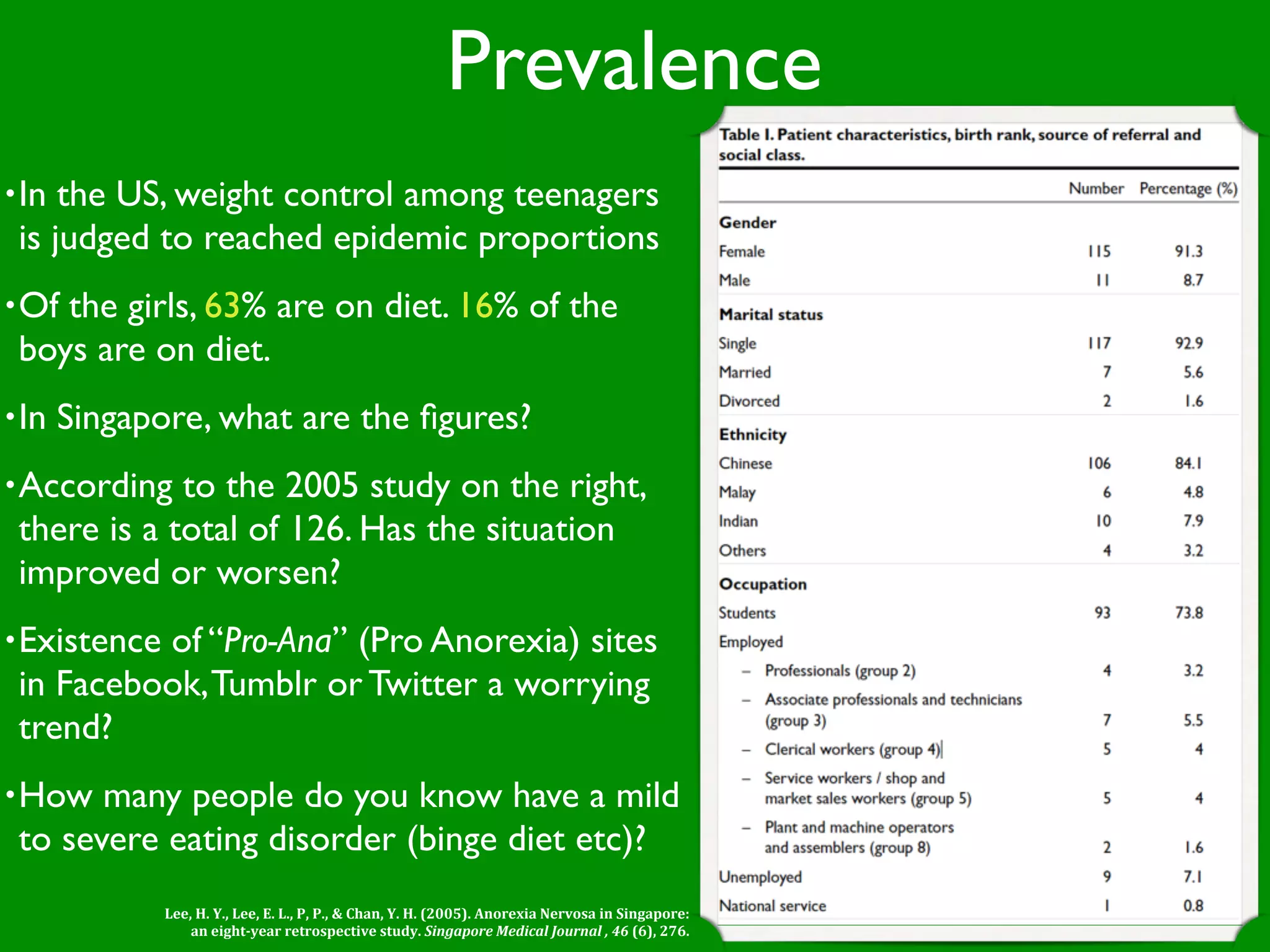
• According  to the 2005 study on the right,
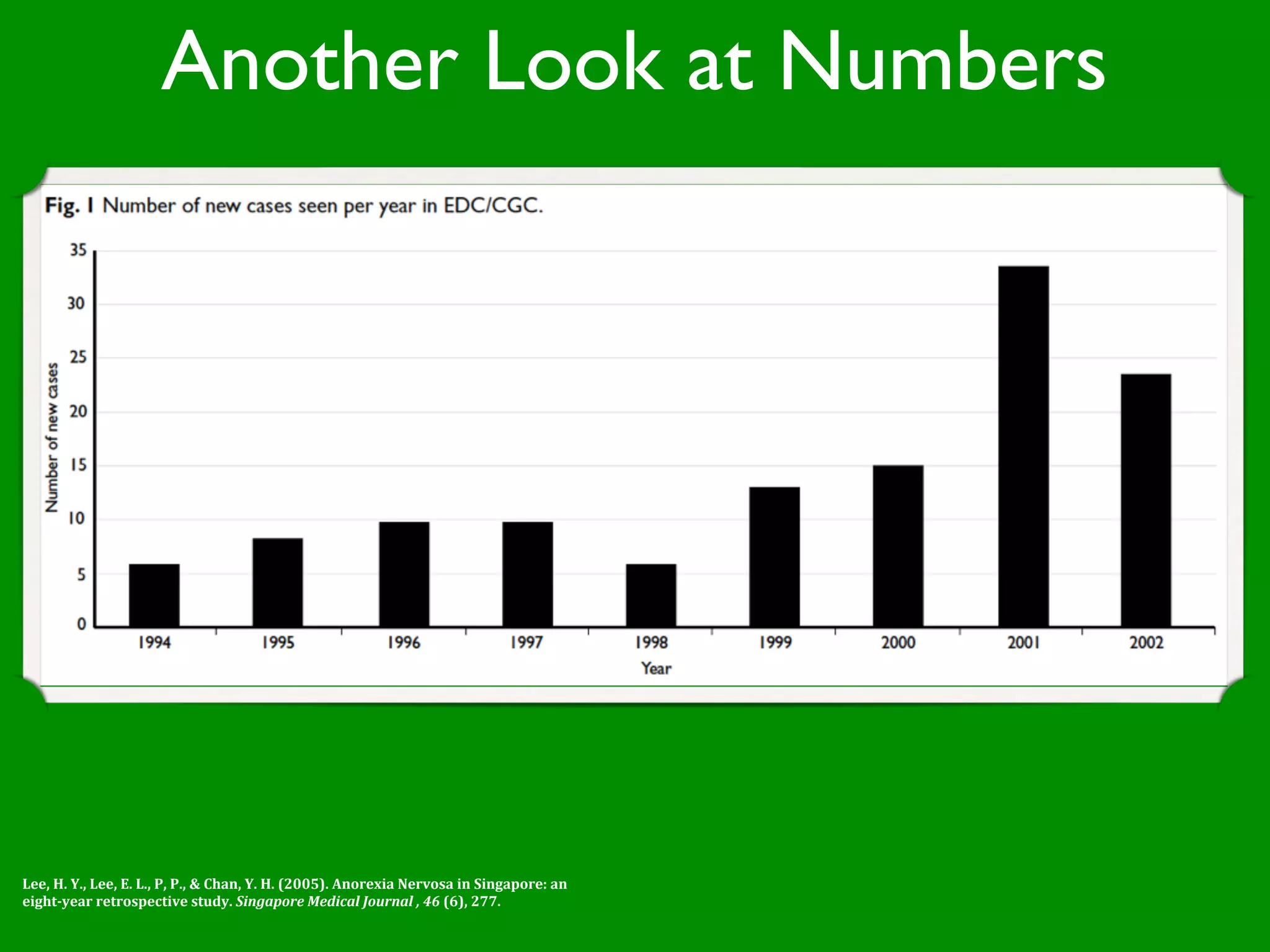
 there is a total of 126. Has the situation
 improved or worsen?


              Lee,
H.
Y.,
Lee,
E.
L.,
P,
P.,
&
Chan,
Y.
H.
(2005).
Anorexia
Nervosa
in
Singapore:

                  an
eight­year
retrospective
study.
Singapore
Medical
Journal
,
46
(6),
276.
Prevalence
• In the US, weight control among teenagers
 is judged to reached epidemic proportions
• Ofthe girls, 63% are on diet. 16% of the
 boys are on diet.
• In   Singapore, what are the figures?
• According  to the 2005 study on the right,
 there is a total of 126. Has the situation
 improved or worsen?
• Existence
          of “Pro-Ana” (Pro Anorexia) sites
 in Facebook, Tumblr or Twitter a worrying
 trend?


              Lee,
H.
Y.,
Lee,
E.
L.,
P,
P.,
&
Chan,
Y.
H.
(2005).
Anorexia
Nervosa
in
Singapore:

                  an
eight­year
retrospective
study.
Singapore
Medical
Journal
,
46
(6),
276.
Prevalence
• In the US, weight control among teenagers
 is judged to reached epidemic proportions
• Ofthe girls, 63% are on diet. 16% of the
 boys are on diet.
• In   Singapore, what are the figures?
• According  to the 2005 study on the right,
 there is a total of 126. Has the situation
 improved or worsen?
• Existence
          of “Pro-Ana” (Pro Anorexia) sites
 in Facebook, Tumblr or Twitter a worrying
 trend?
• How  many people do you know have a mild
 to severe eating disorder (binge diet etc)?
              Lee,
H.
Y.,
Lee,
E.
L.,
P,
P.,
&
Chan,
Y.
H.
(2005).
Anorexia
Nervosa
in
Singapore:

                  an
eight­year
retrospective
study.
Singapore
Medical
Journal
,
46
(6),
276.
Another Look at Numbers


Lee,
H.
Y.,
Lee,
E.
L.,
P,
P.,
&
Chan,
Y.
H.
(2005).
Anorexia
Nervosa
in
Singapore:
an

eight­year
retrospective
study.
Singapore
Medical
Journal
,
46
(6),
277.
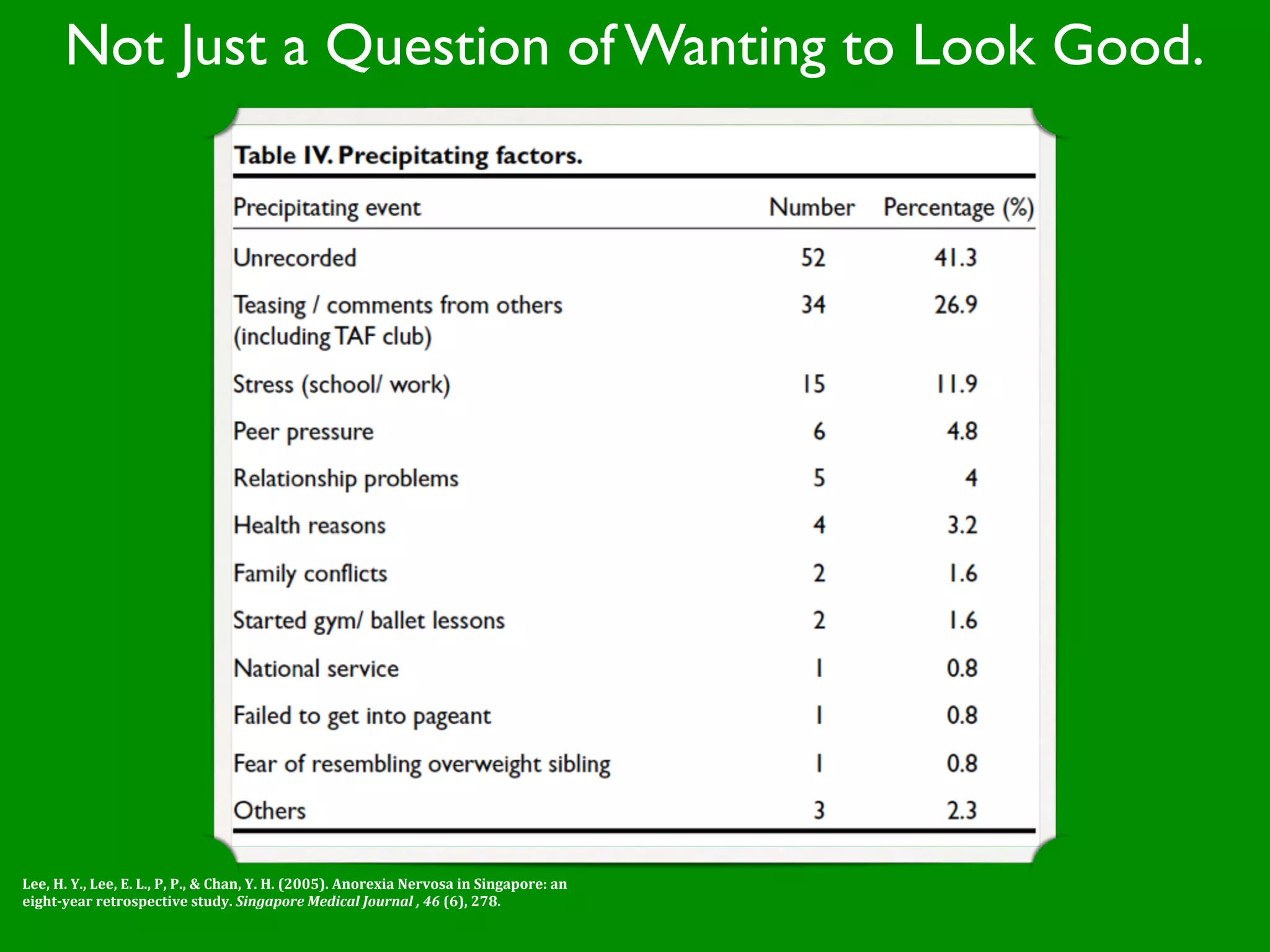
Not Just a Question of Wanting to Look Good.


Lee,
H.
Y.,
Lee,
E.
L.,
P,
P.,
&
Chan,
Y.
H.
(2005).
Anorexia
Nervosa
in
Singapore:
an

eight­year
retrospective
study.
Singapore
Medical
Journal
,
46
(6),
278.
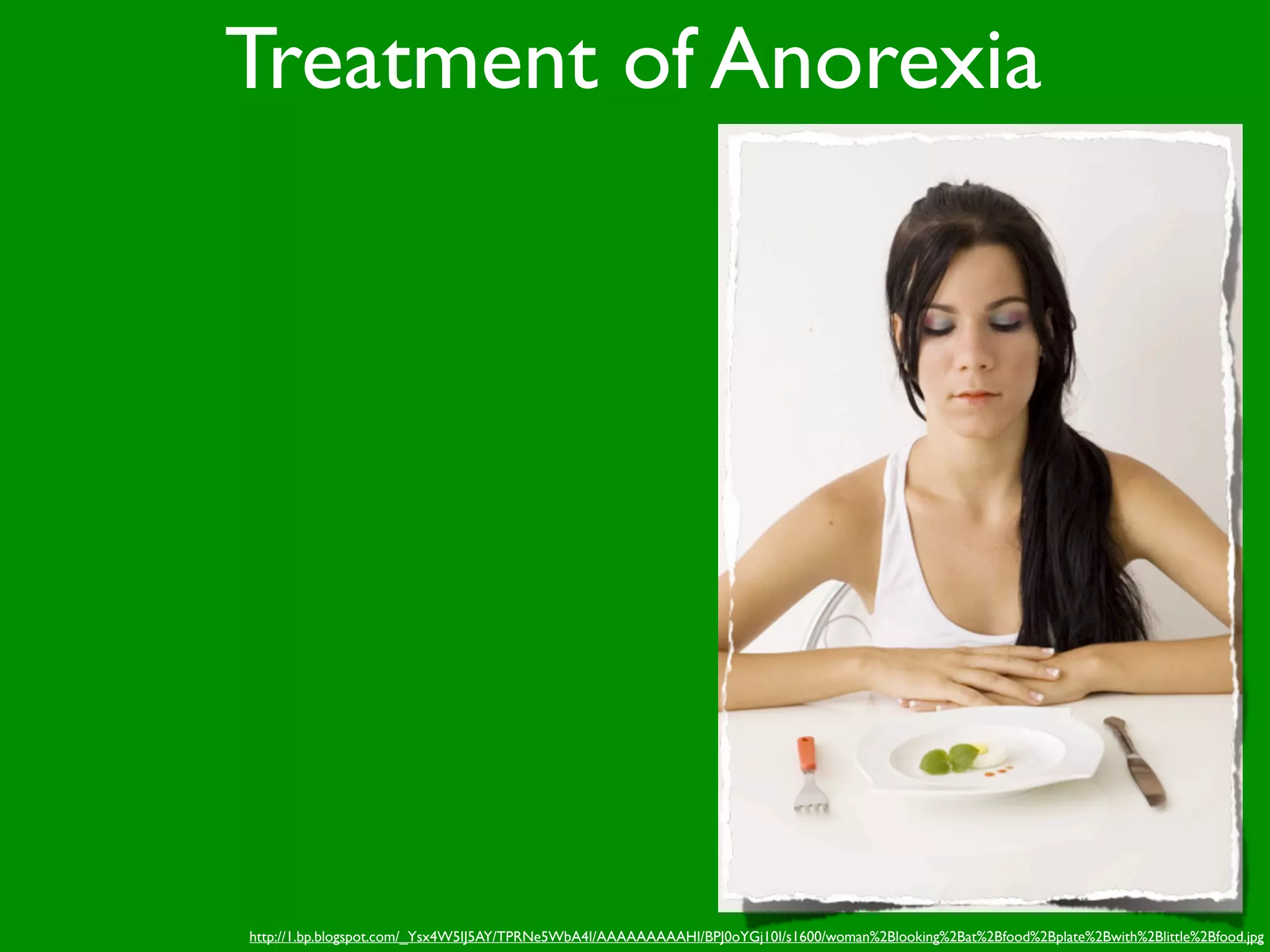
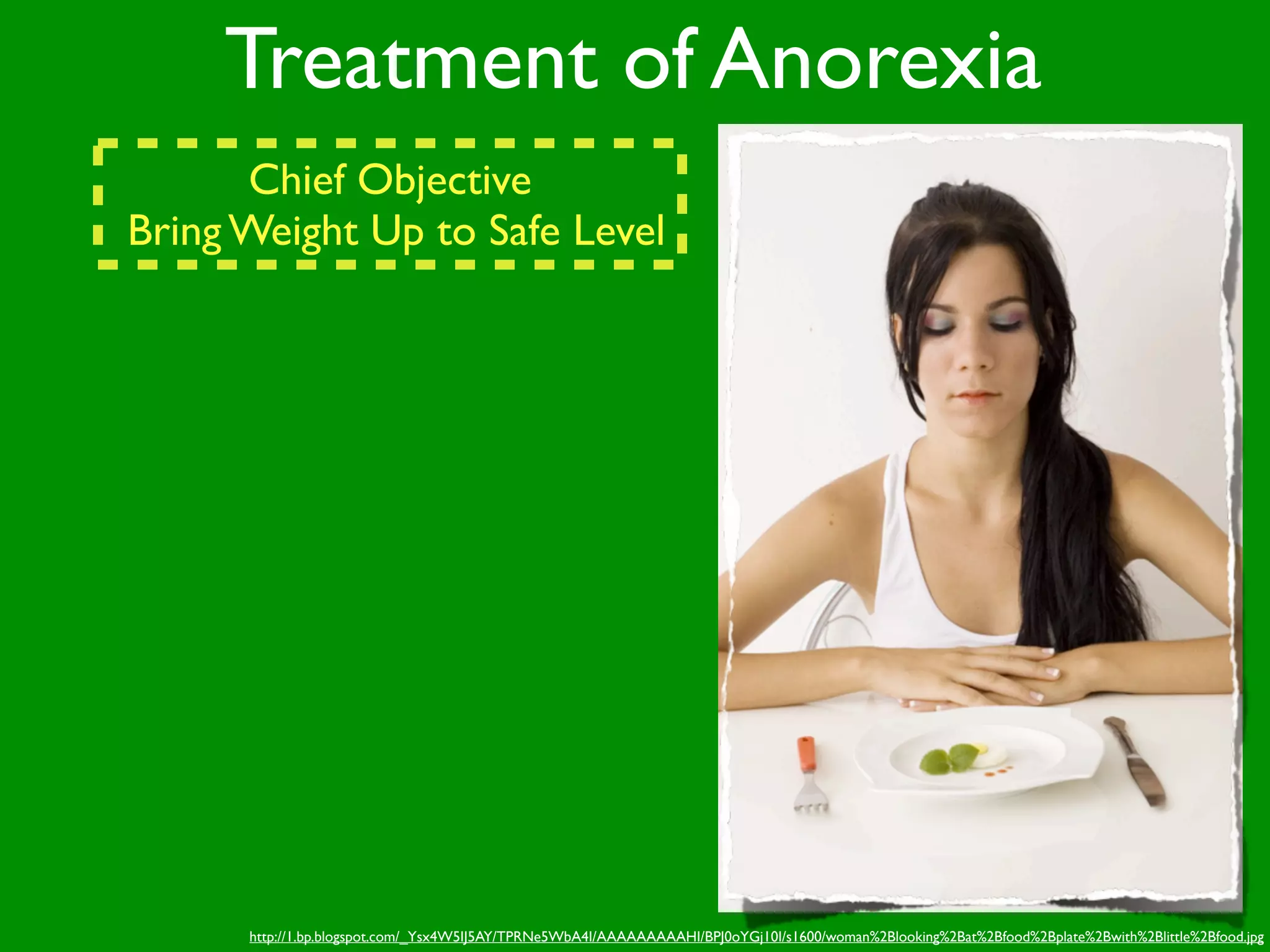
Treatment of Anorexia


http://1.bp.blogspot.com/_Ysx4W5IJ5AY/TPRNe5WbA4I/AAAAAAAAAHI/BPJ0oYGj10I/s1600/woman%2Blooking%2Bat%2Bfood%2Bplate%2Bwith%2Blittle%2Bfood.jpg
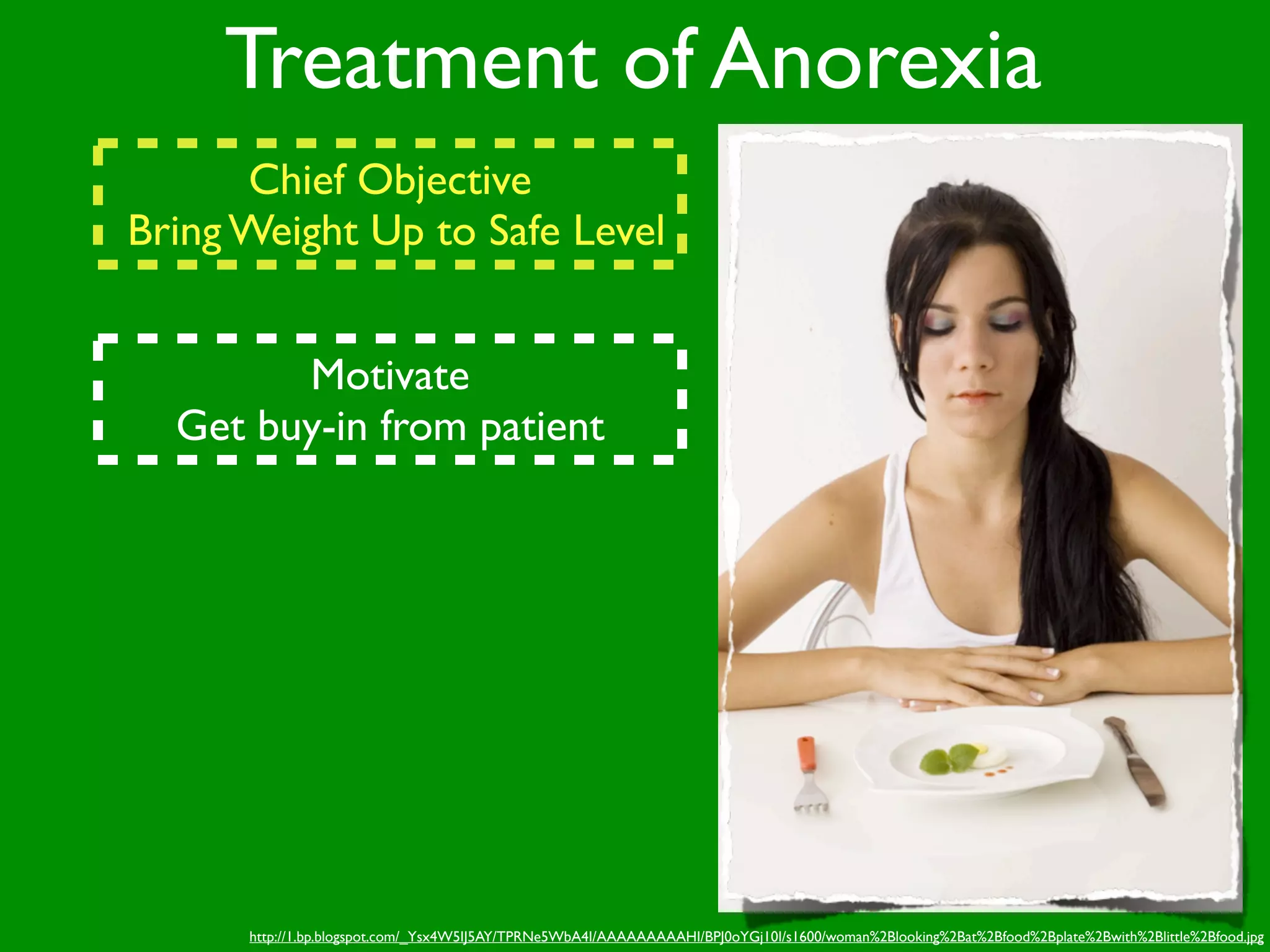
Treatment of Anorexia
      Chief Objective
Bring Weight Up to Safe Level


      http://1.bp.blogspot.com/_Ysx4W5IJ5AY/TPRNe5WbA4I/AAAAAAAAAHI/BPJ0oYGj10I/s1600/woman%2Blooking%2Bat%2Bfood%2Bplate%2Bwith%2Blittle%2Bfood.jpg
Treatment of Anorexia
      Chief Objective
Bring Weight Up to Safe Level


        Motivate
  Get buy-in from patient


      http://1.bp.blogspot.com/_Ysx4W5IJ5AY/TPRNe5WbA4I/AAAAAAAAAHI/BPJ0oYGj10I/s1600/woman%2Blooking%2Bat%2Bfood%2Bplate%2Bwith%2Blittle%2Bfood.jpg
Treatment of Anorexia
      Chief Objective
Bring Weight Up to Safe Level


        Motivate
  Get buy-in from patient


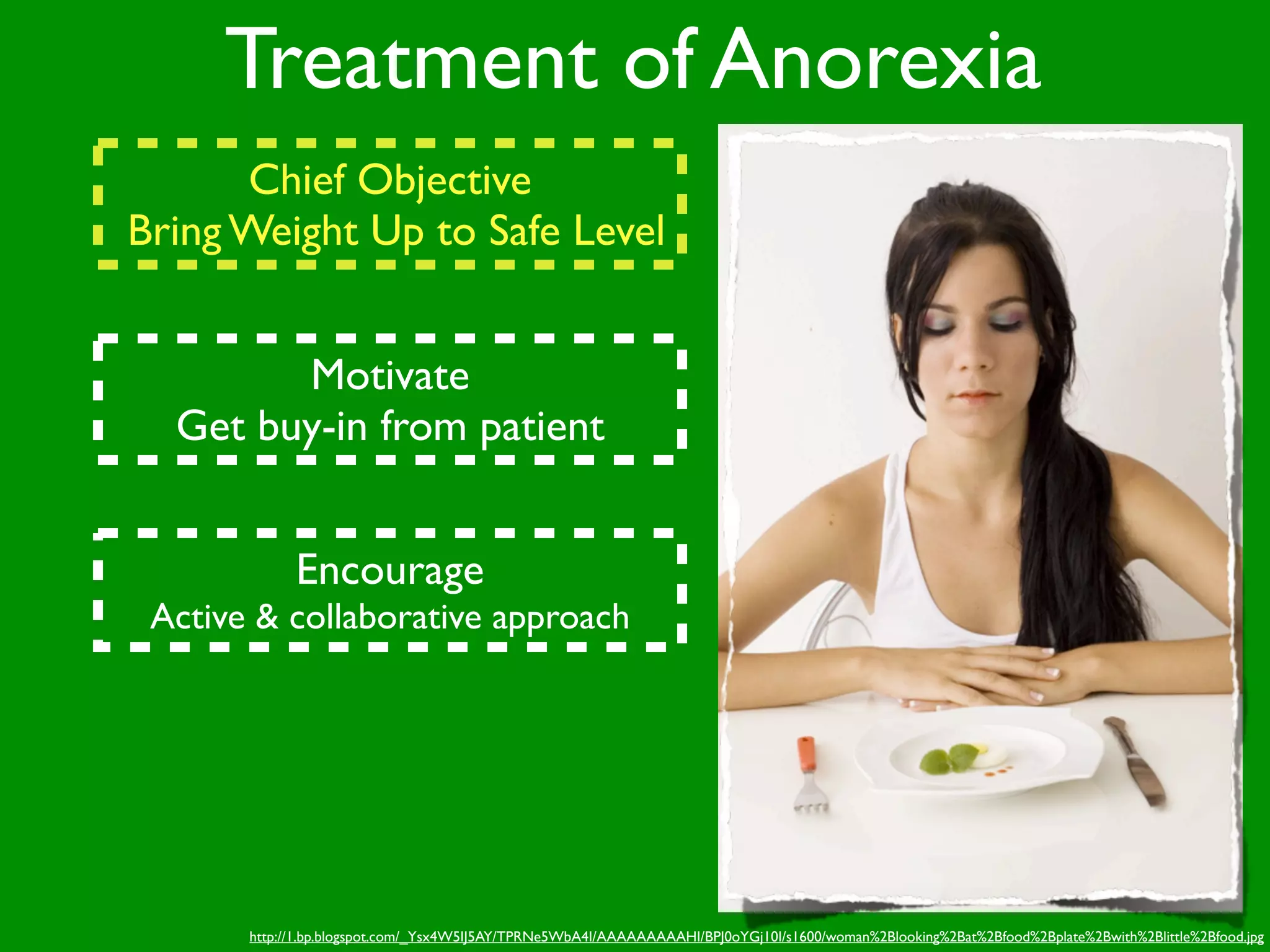
             Encourage
 Active & collaborative approach


       http://1.bp.blogspot.com/_Ysx4W5IJ5AY/TPRNe5WbA4I/AAAAAAAAAHI/BPJ0oYGj10I/s1600/woman%2Blooking%2Bat%2Bfood%2Bplate%2Bwith%2Blittle%2Bfood.jpg
Treatment of Anorexia
      Chief Objective
Bring Weight Up to Safe Level


         Motivate
   Get buy-in from patient


             Encourage
 Active & collaborative approach


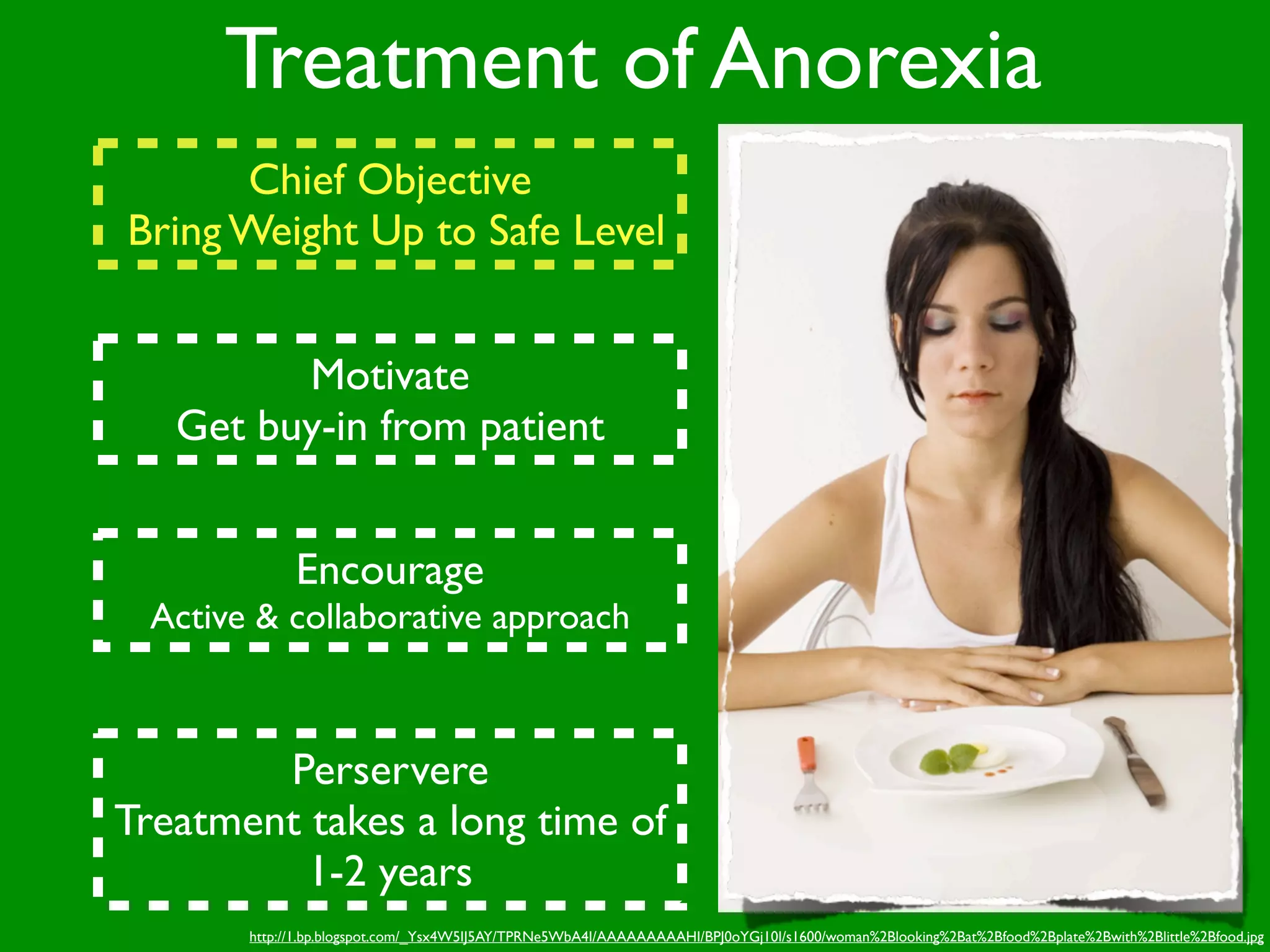
        Perservere
Treatment takes a long time of
          1-2 years
       http://1.bp.blogspot.com/_Ysx4W5IJ5AY/TPRNe5WbA4I/AAAAAAAAAHI/BPJ0oYGj10I/s1600/woman%2Blooking%2Bat%2Bfood%2Bplate%2Bwith%2Blittle%2Bfood.jpg
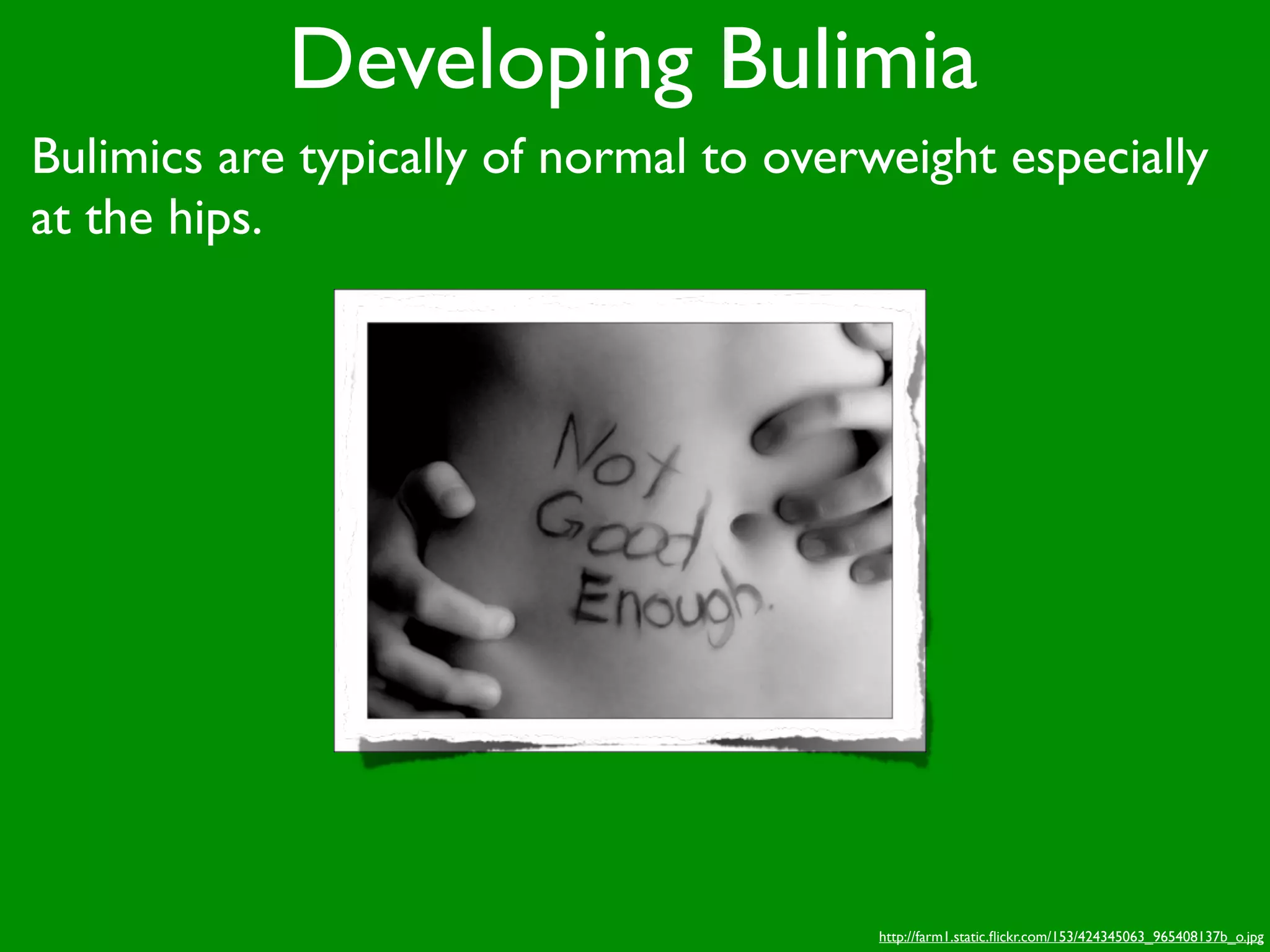
Developing Bulimia
Bulimics are typically of normal to overweight especially
at the hips.


                                         http://farm1.static.flickr.com/153/424345063_965408137b_o.jpg
Developing Bulimia
Bulimics are typically of normal to overweight especially
at the hips.

      Stress


                                         http://farm1.static.flickr.com/153/424345063_965408137b_o.jpg
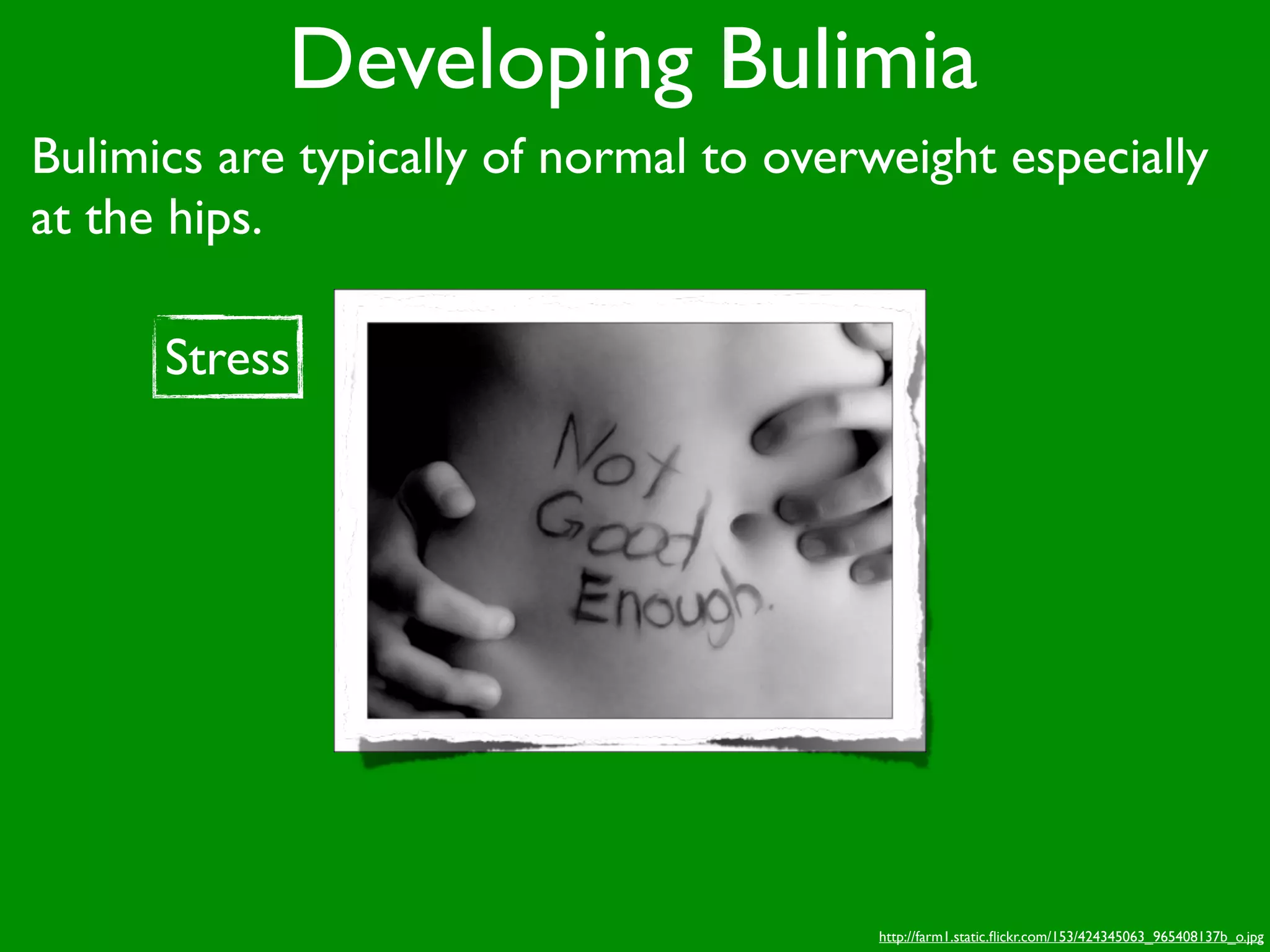
Developing Bulimia
Bulimics are typically of normal to overweight especially
at the hips.

      Stress


      Low Self-Esteem

                                         http://farm1.static.flickr.com/153/424345063_965408137b_o.jpg
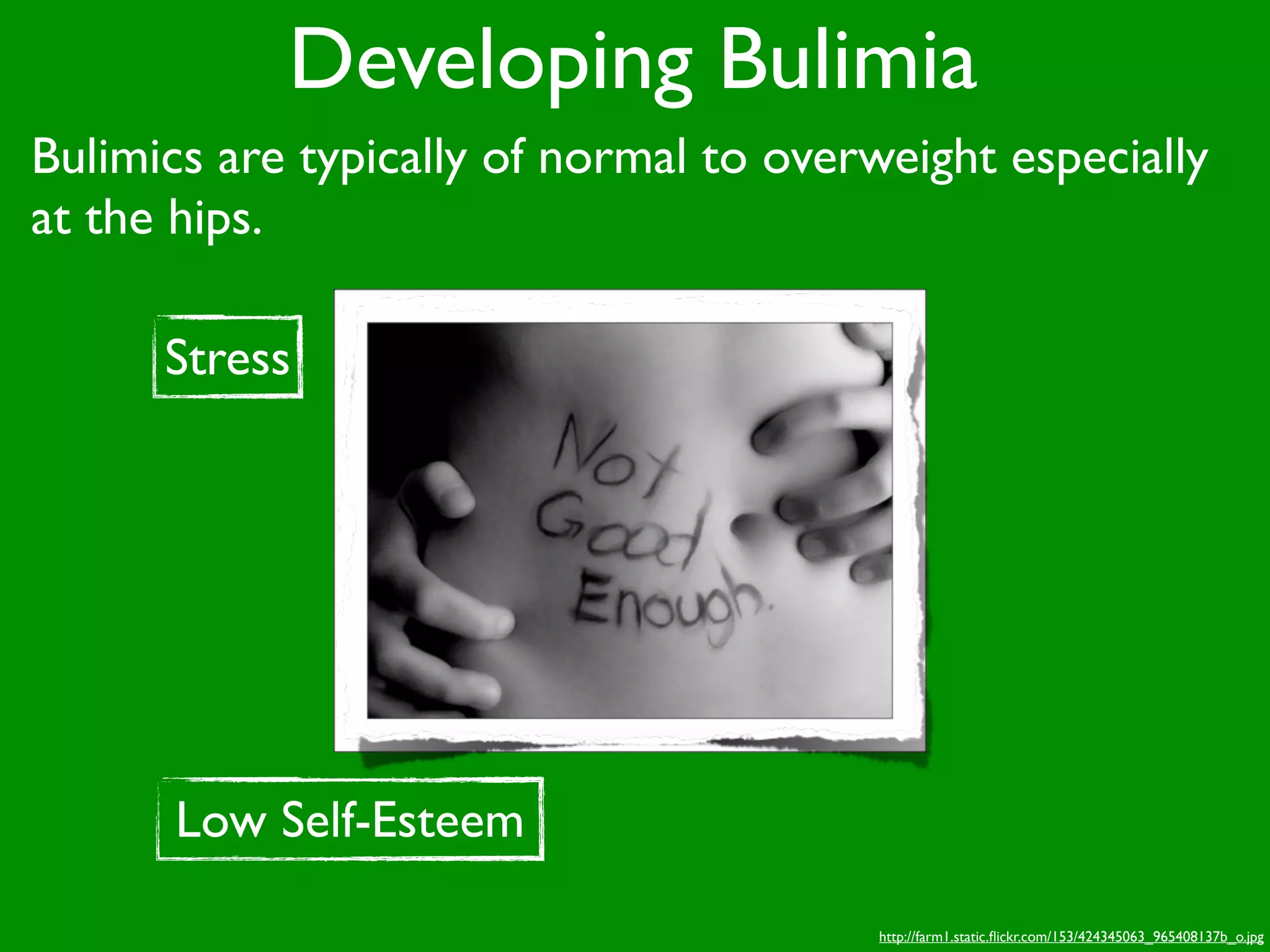
Developing Bulimia
Bulimics are typically of normal to overweight especially
at the hips.
                                         Familial Pressure
      Stress


      Low Self-Esteem

                                        http://farm1.static.flickr.com/153/424345063_965408137b_o.jpg
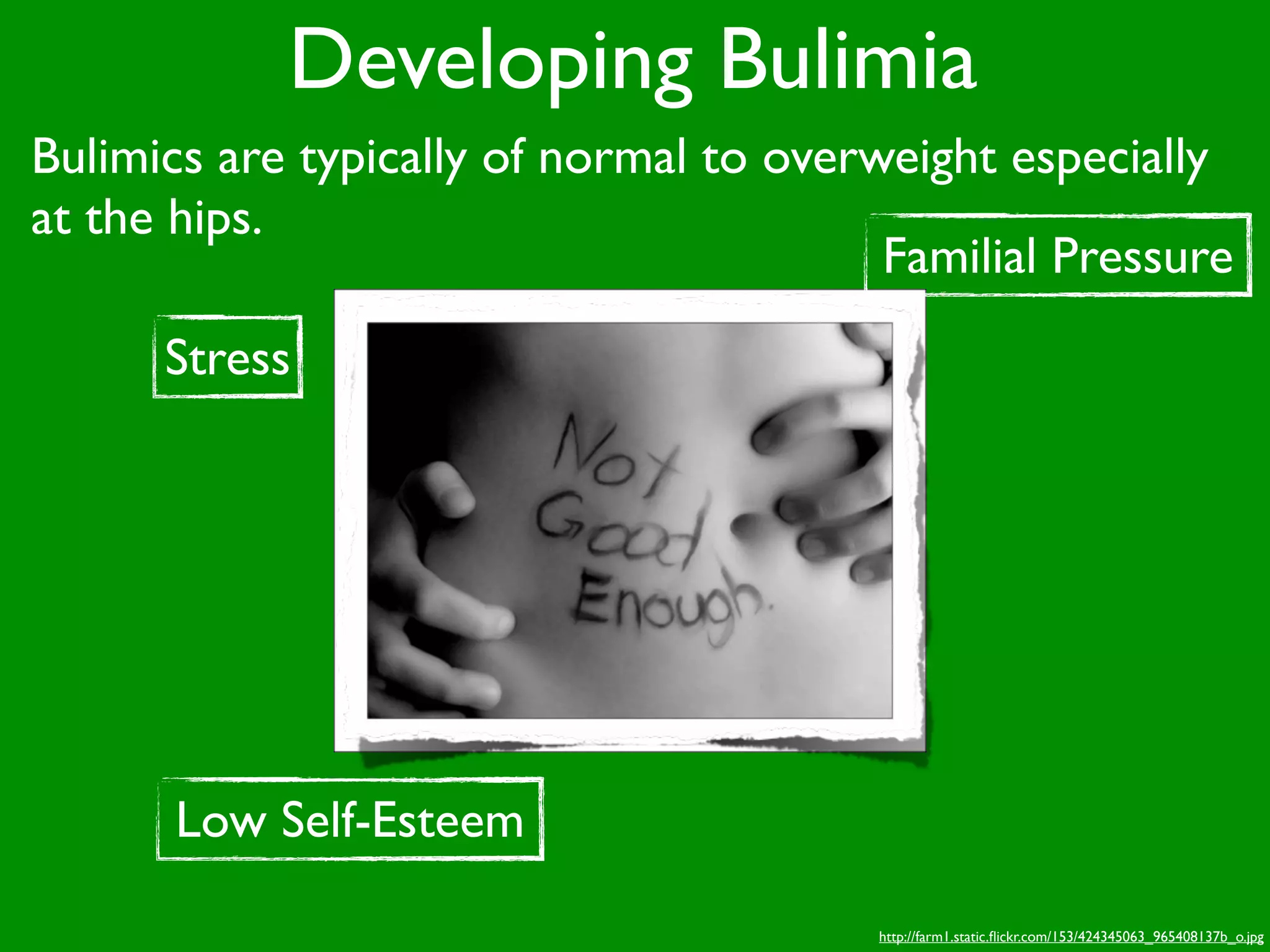
Developing Bulimia
Bulimics are typically of normal to overweight especially
at the hips.
                                         Familial Pressure
      Stress


                                                          Constant
                                                           Food
                                                          Cravings


      Low Self-Esteem

                                        http://farm1.static.flickr.com/153/424345063_965408137b_o.jpg
Developing Bulimia
Bulimics are typically of normal to overweight especially
at the hips.
                                         Familial Pressure
      Stress


                                                          Constant
                                                           Food
                                                          Cravings


      Low Self-Esteem            Control
                                  Issues
                                        http://farm1.static.flickr.com/153/424345063_965408137b_o.jpg
Developing Bulimia
Bulimics are typically of normal to overweight especially
at the hips.
                                         Familial Pressure
      Stress


 Feelings of                                              Constant
   being                                                   Food
unattractive                                              Cravings


      Low Self-Esteem            Control
                                  Issues
                                        http://farm1.static.flickr.com/153/424345063_965408137b_o.jpg
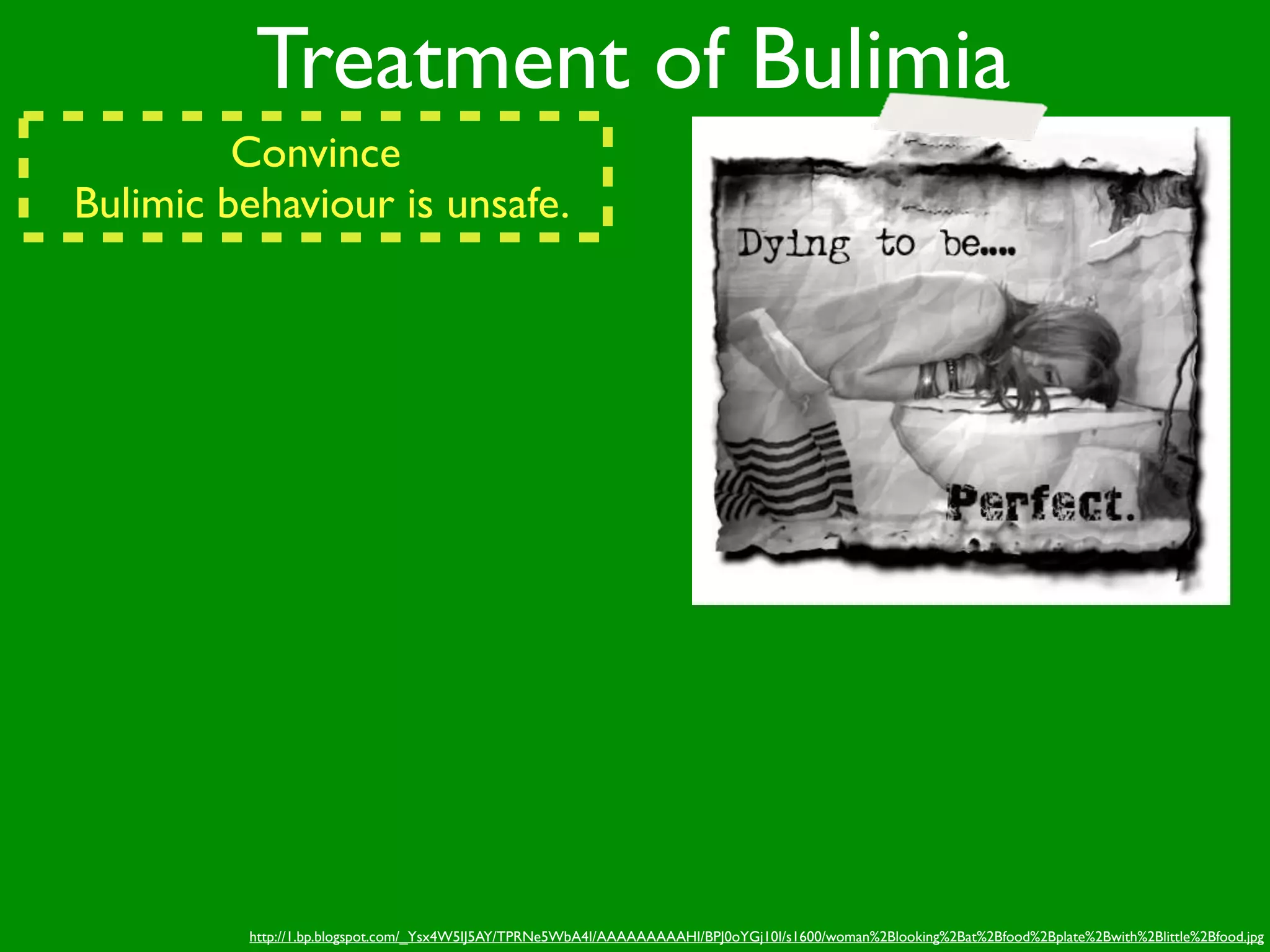
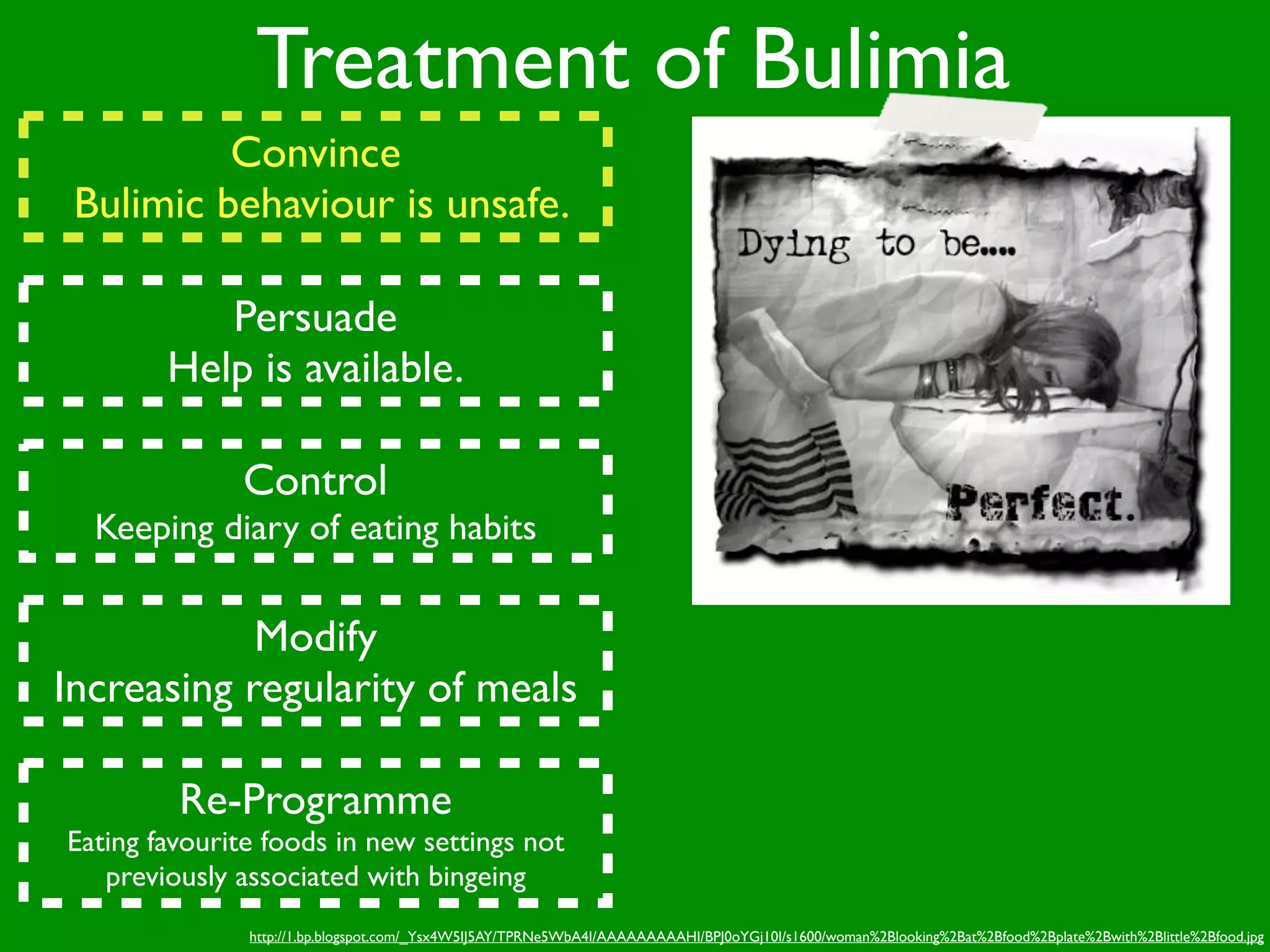
Treatment of Bulimia


http://1.bp.blogspot.com/_Ysx4W5IJ5AY/TPRNe5WbA4I/AAAAAAAAAHI/BPJ0oYGj10I/s1600/woman%2Blooking%2Bat%2Bfood%2Bplate%2Bwith%2Blittle%2Bfood.jpg
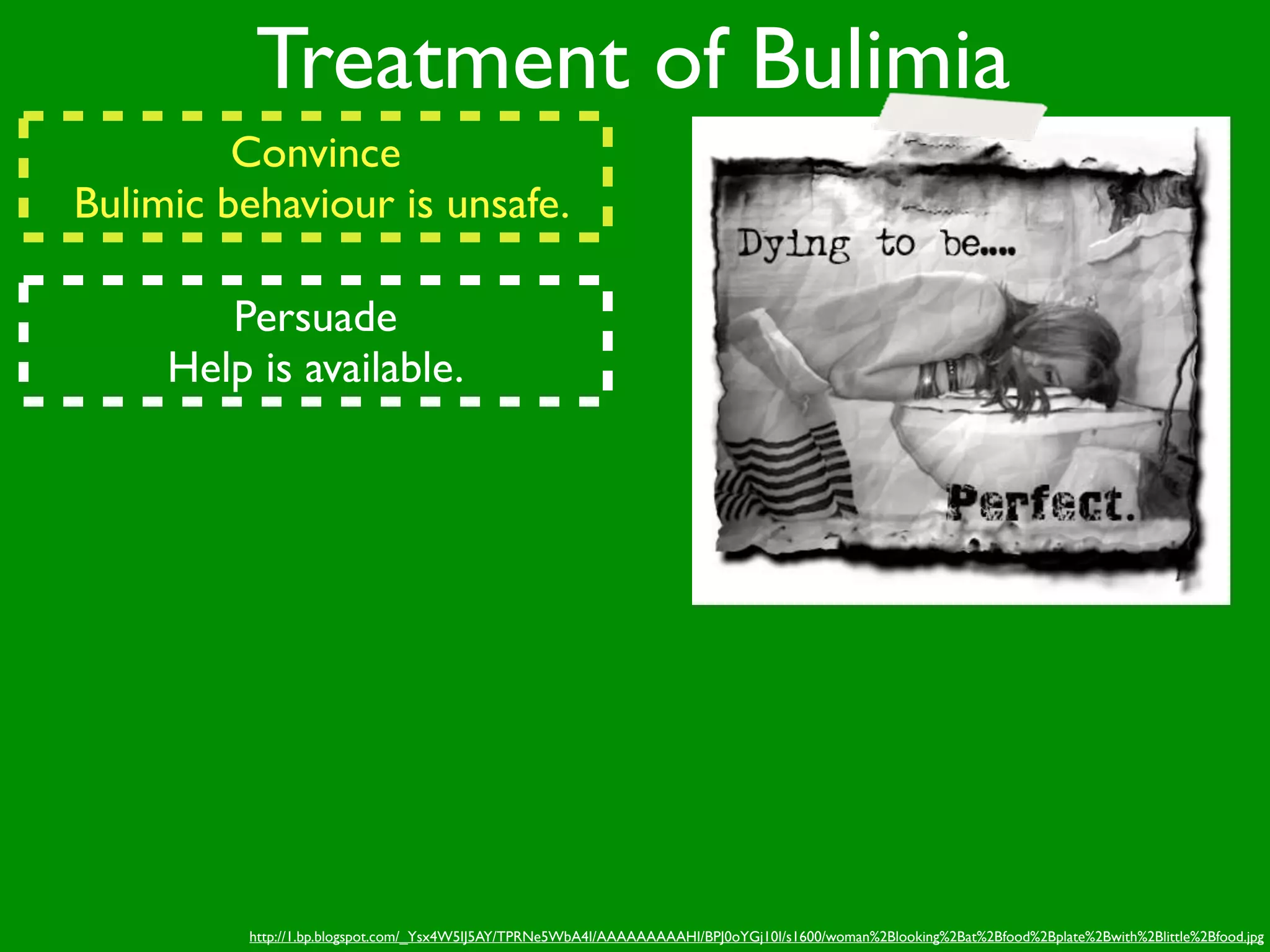
Treatment of Bulimia
         Convince
Bulimic behaviour is unsafe.


         http://1.bp.blogspot.com/_Ysx4W5IJ5AY/TPRNe5WbA4I/AAAAAAAAAHI/BPJ0oYGj10I/s1600/woman%2Blooking%2Bat%2Bfood%2Bplate%2Bwith%2Blittle%2Bfood.jpg
Treatment of Bulimia
         Convince
Bulimic behaviour is unsafe.

        Persuade
     Help is available.


         http://1.bp.blogspot.com/_Ysx4W5IJ5AY/TPRNe5WbA4I/AAAAAAAAAHI/BPJ0oYGj10I/s1600/woman%2Blooking%2Bat%2Bfood%2Bplate%2Bwith%2Blittle%2Bfood.jpg
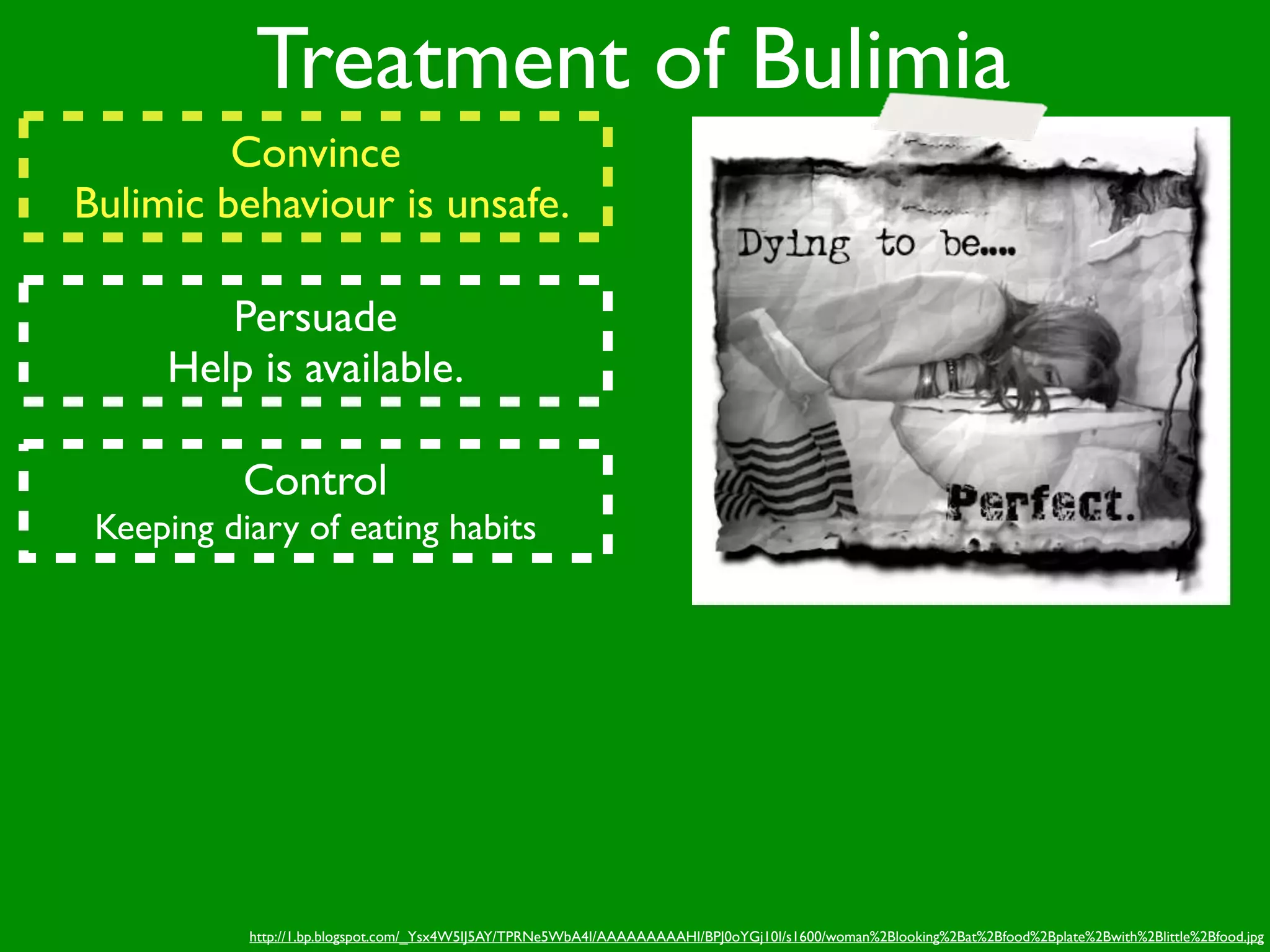
Treatment of Bulimia
         Convince
Bulimic behaviour is unsafe.

        Persuade
     Help is available.

           Control
 Keeping diary of eating habits


           http://1.bp.blogspot.com/_Ysx4W5IJ5AY/TPRNe5WbA4I/AAAAAAAAAHI/BPJ0oYGj10I/s1600/woman%2Blooking%2Bat%2Bfood%2Bplate%2Bwith%2Blittle%2Bfood.jpg
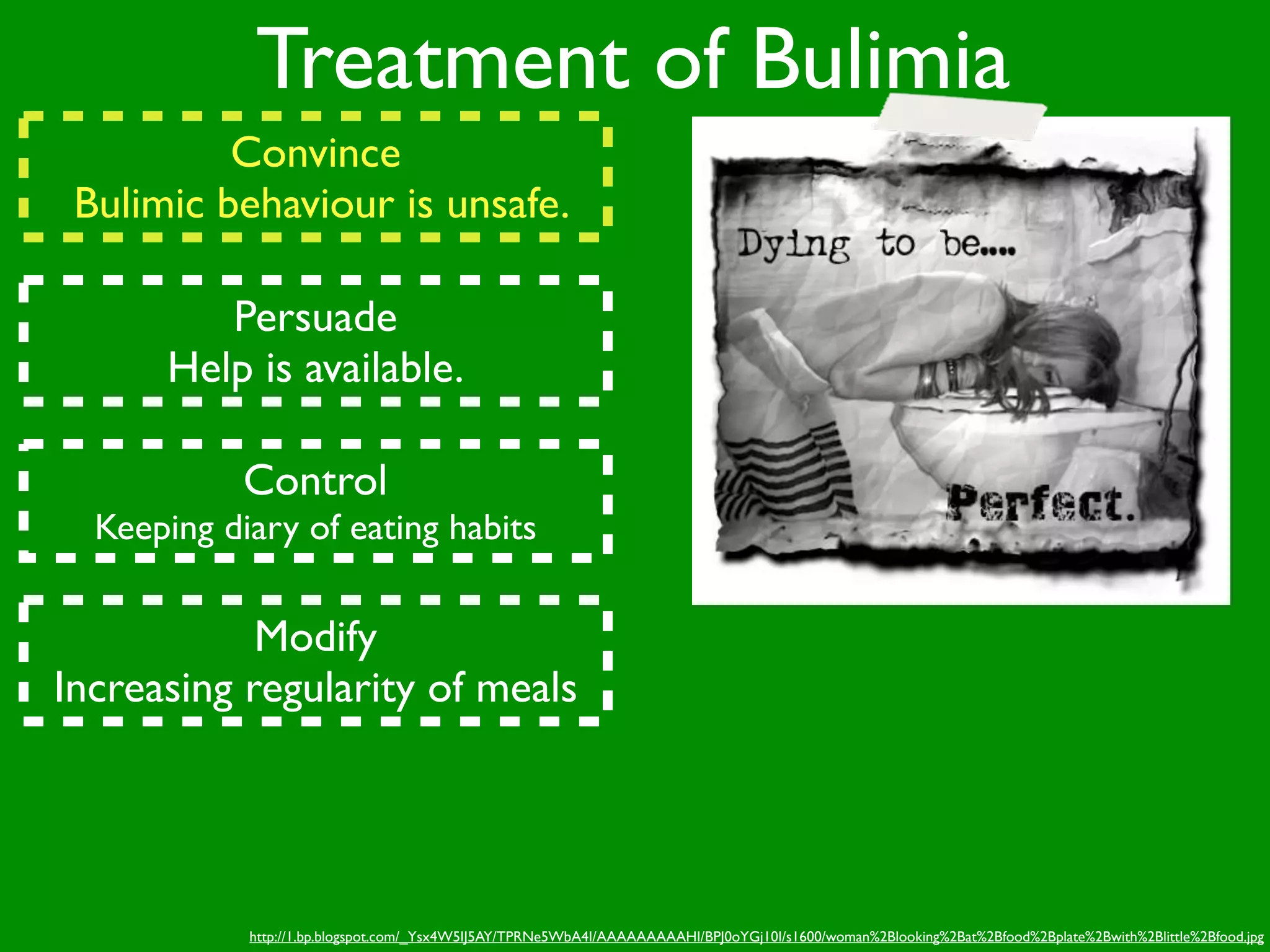
Treatment of Bulimia
          Convince
 Bulimic behaviour is unsafe.

         Persuade
      Help is available.

            Control
  Keeping diary of eating habits


            Modify
Increasing regularity of meals


            http://1.bp.blogspot.com/_Ysx4W5IJ5AY/TPRNe5WbA4I/AAAAAAAAAHI/BPJ0oYGj10I/s1600/woman%2Blooking%2Bat%2Bfood%2Bplate%2Bwith%2Blittle%2Bfood.jpg
Treatment of Bulimia
          Convince
 Bulimic behaviour is unsafe.

           Persuade
        Help is available.

              Control
  Keeping diary of eating habits


            Modify
Increasing regularity of meals

         Re-Programme
Eating favourite foods in new settings not
   previously associated with bingeing
               http://1.bp.blogspot.com/_Ysx4W5IJ5AY/TPRNe5WbA4I/AAAAAAAAAHI/BPJ0oYGj10I/s1600/woman%2Blooking%2Bat%2Bfood%2Bplate%2Bwith%2Blittle%2Bfood.jpg
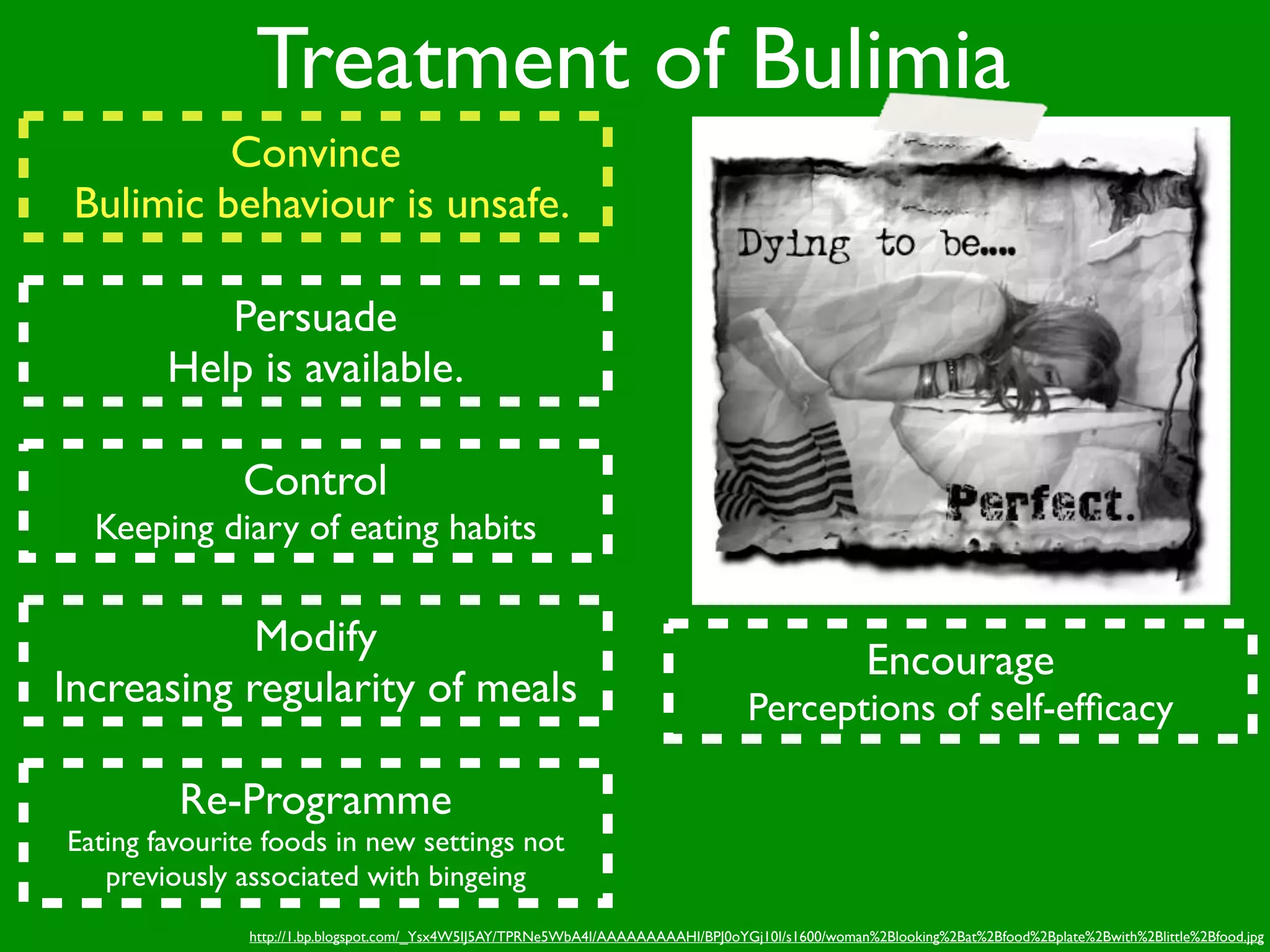
Treatment of Bulimia
          Convince
 Bulimic behaviour is unsafe.

           Persuade
        Help is available.

              Control
  Keeping diary of eating habits


            Modify
                                                                                                     Encourage
Increasing regularity of meals                                                      Perceptions of self-efficacy

         Re-Programme
Eating favourite foods in new settings not
   previously associated with bingeing
               http://1.bp.blogspot.com/_Ysx4W5IJ5AY/TPRNe5WbA4I/AAAAAAAAAHI/BPJ0oYGj10I/s1600/woman%2Blooking%2Bat%2Bfood%2Bplate%2Bwith%2Blittle%2Bfood.jpg
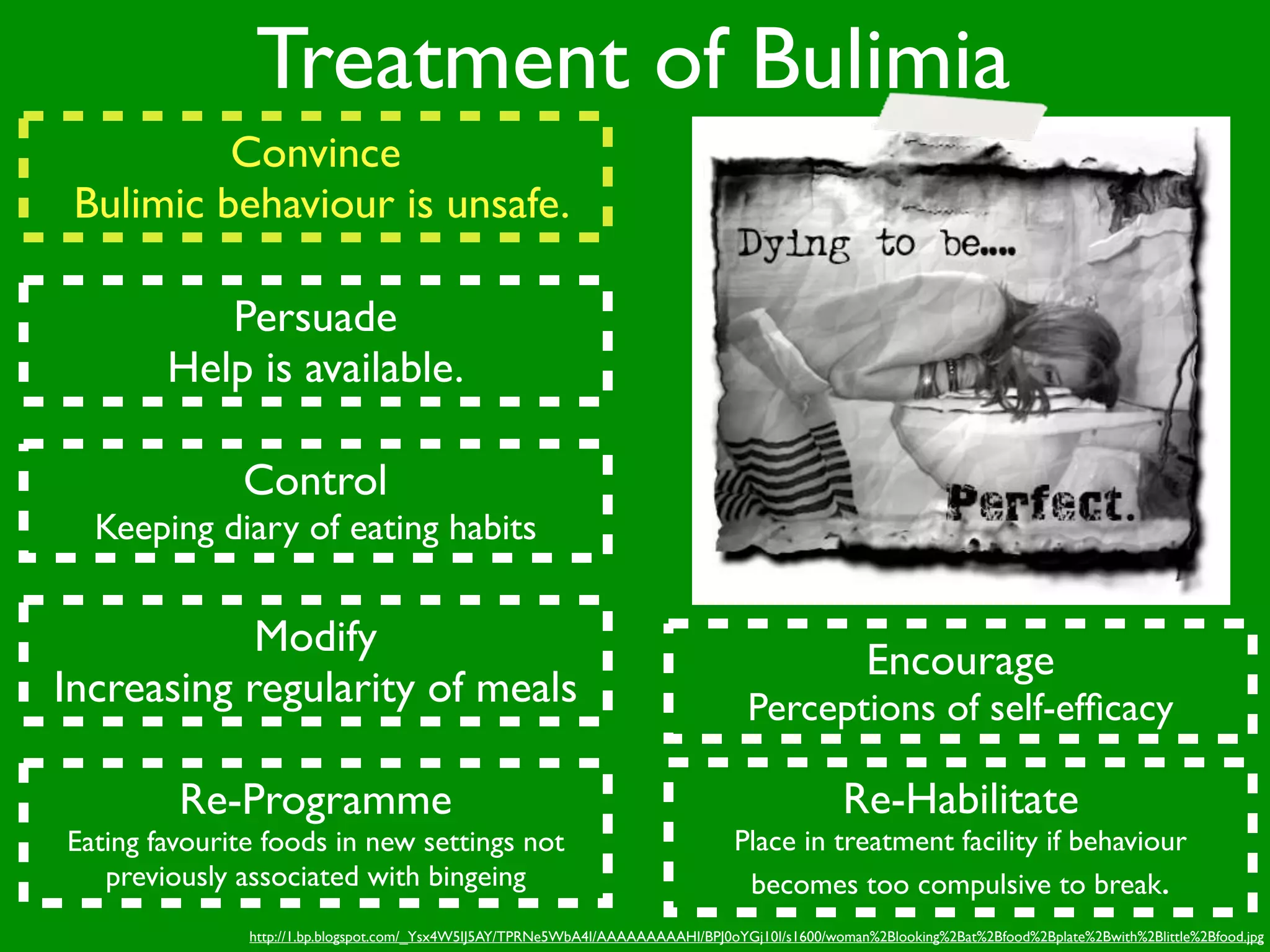
Treatment of Bulimia
          Convince
 Bulimic behaviour is unsafe.

           Persuade
        Help is available.

              Control
  Keeping diary of eating habits


            Modify
                                                                                                     Encourage
Increasing regularity of meals                                                      Perceptions of self-efficacy

         Re-Programme                                                                             Re-Habilitate
Eating favourite foods in new settings not                                        Place in treatment facility if behaviour
   previously associated with bingeing                                             becomes too compulsive to break.
               http://1.bp.blogspot.com/_Ysx4W5IJ5AY/TPRNe5WbA4I/AAAAAAAAAHI/BPJ0oYGj10I/s1600/woman%2Blooking%2Bat%2Bfood%2Bplate%2Bwith%2Blittle%2Bfood.jpg
Sleep


    http://brightwellness.net/wp-content/uploads/2010/07/sleeping-snoopy.jpg
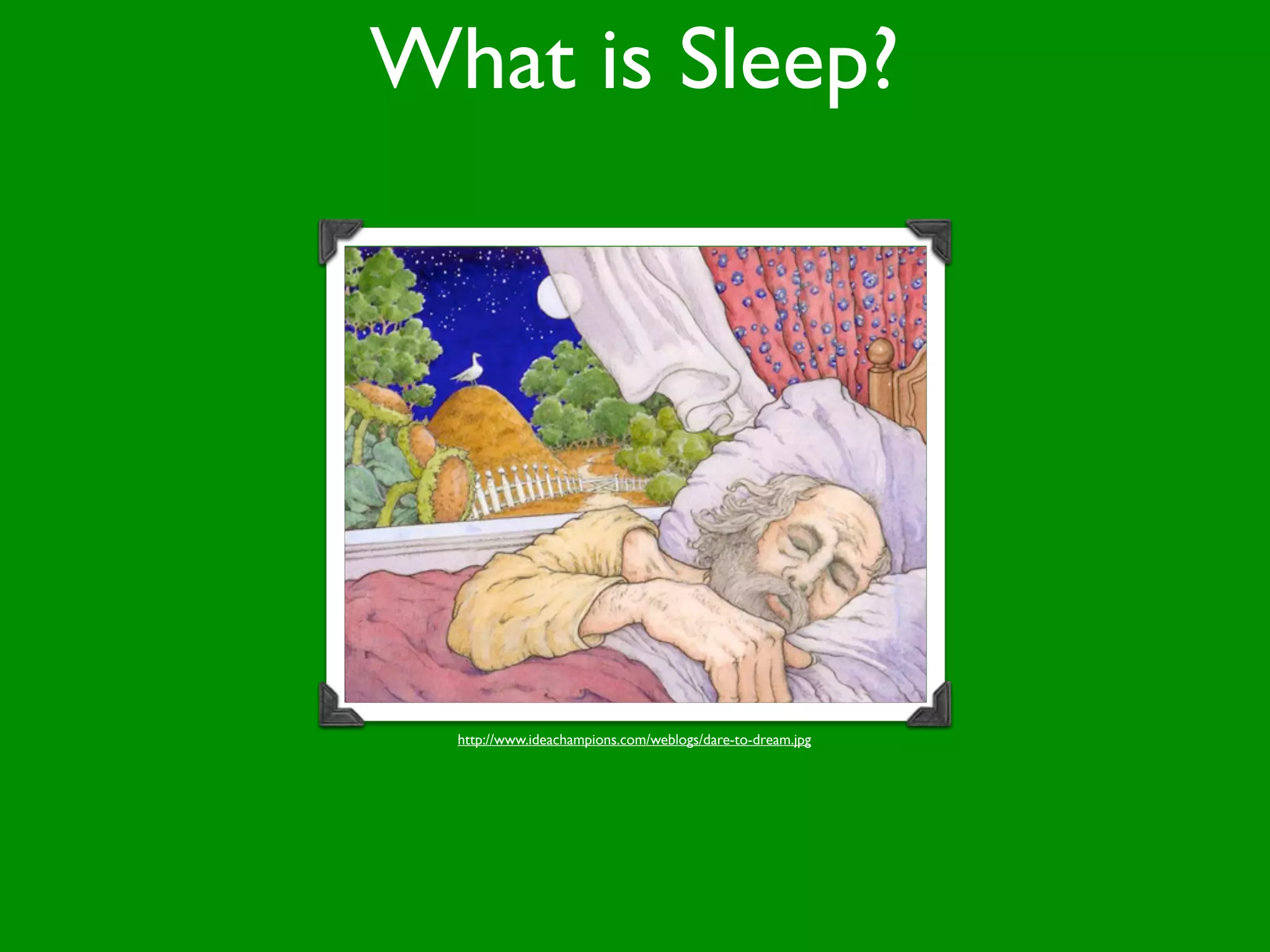
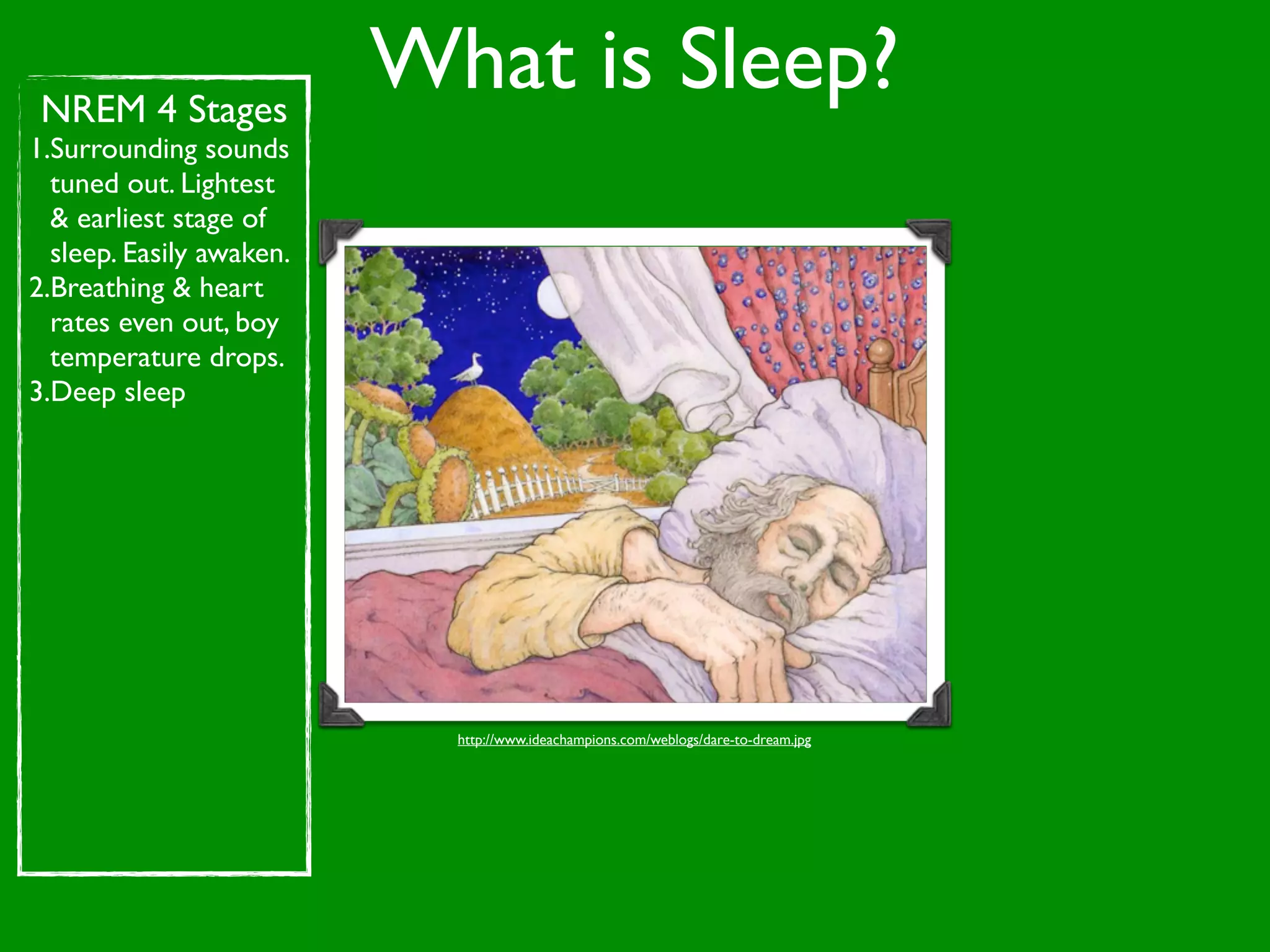
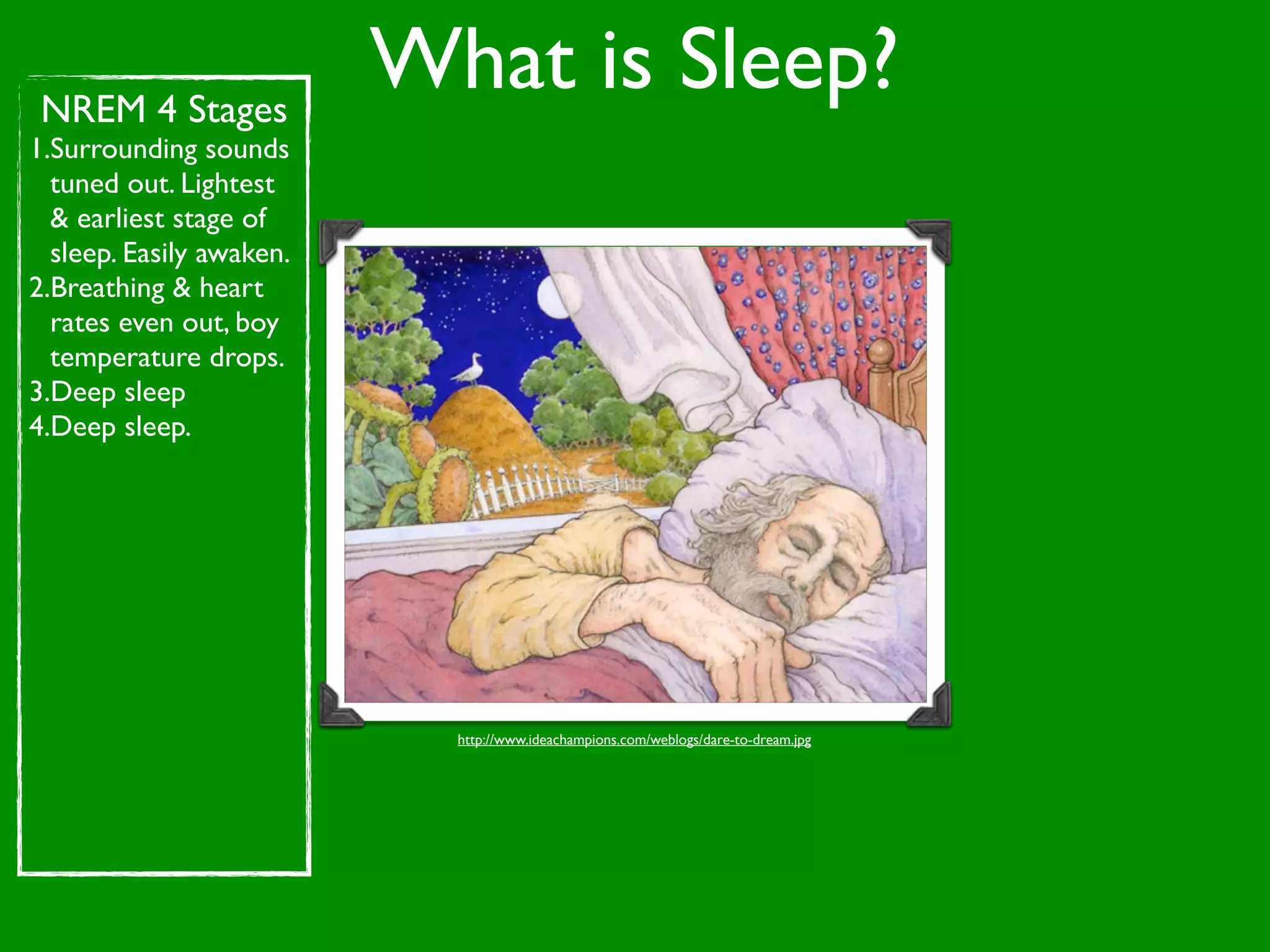
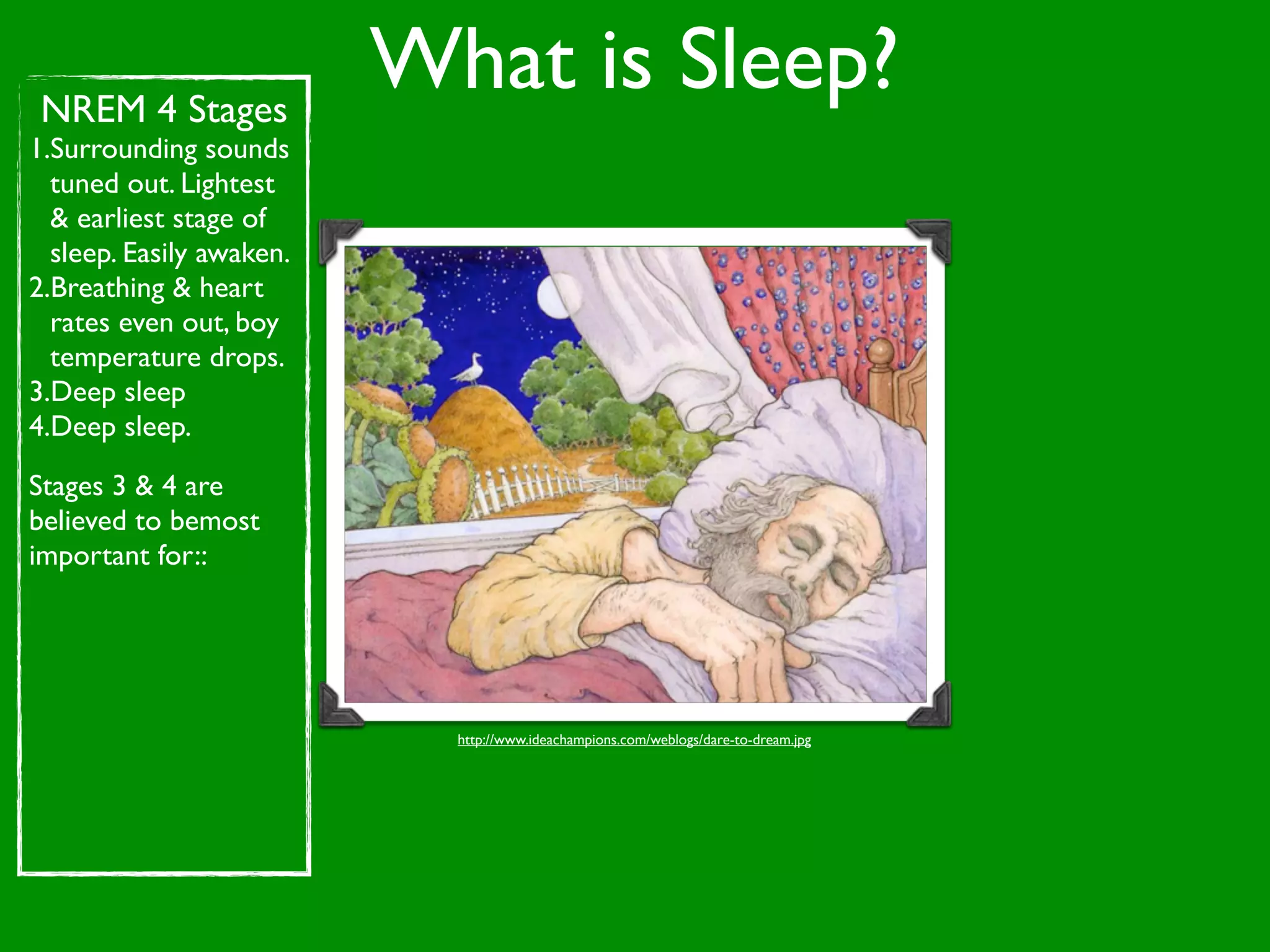
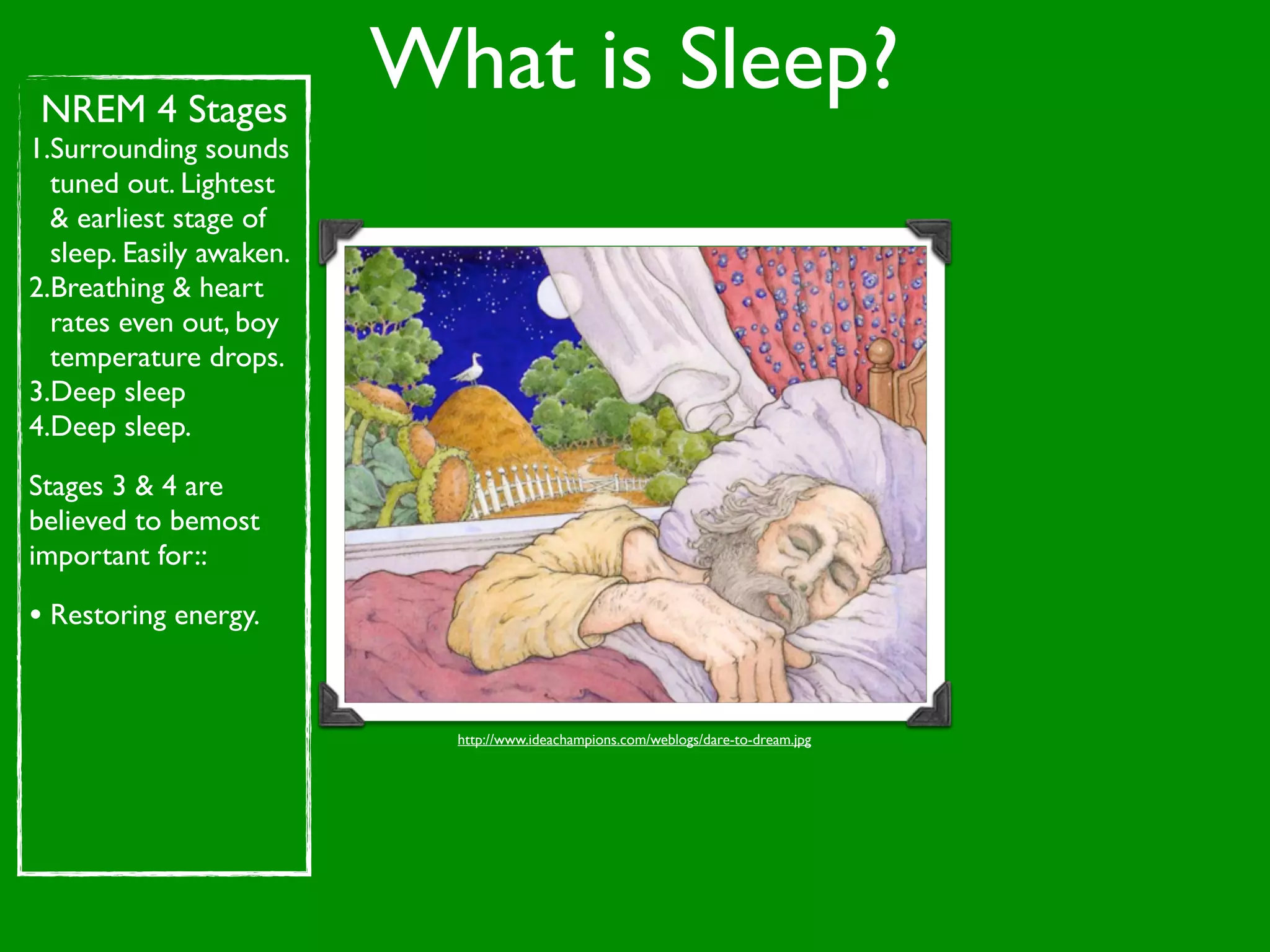
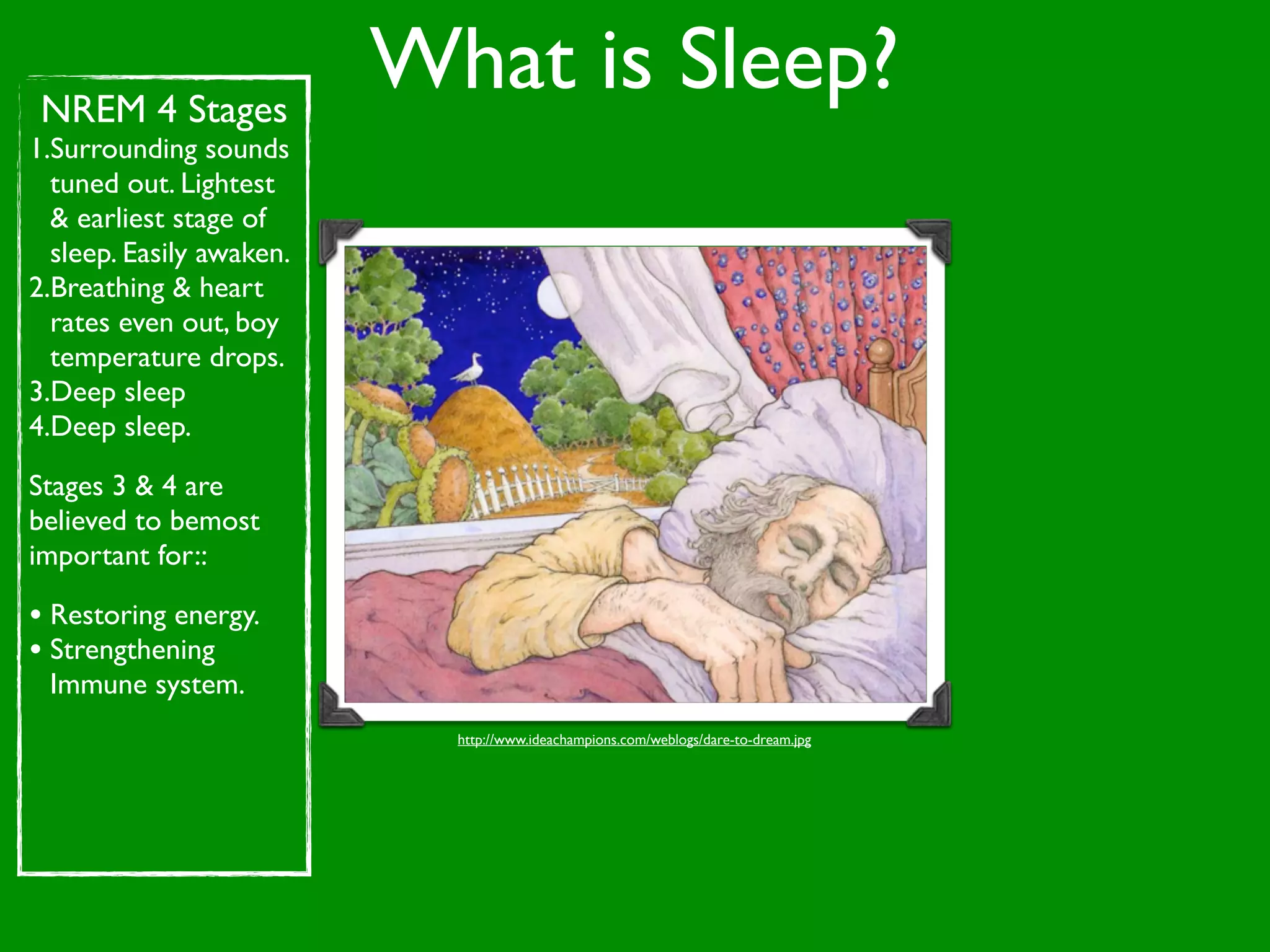
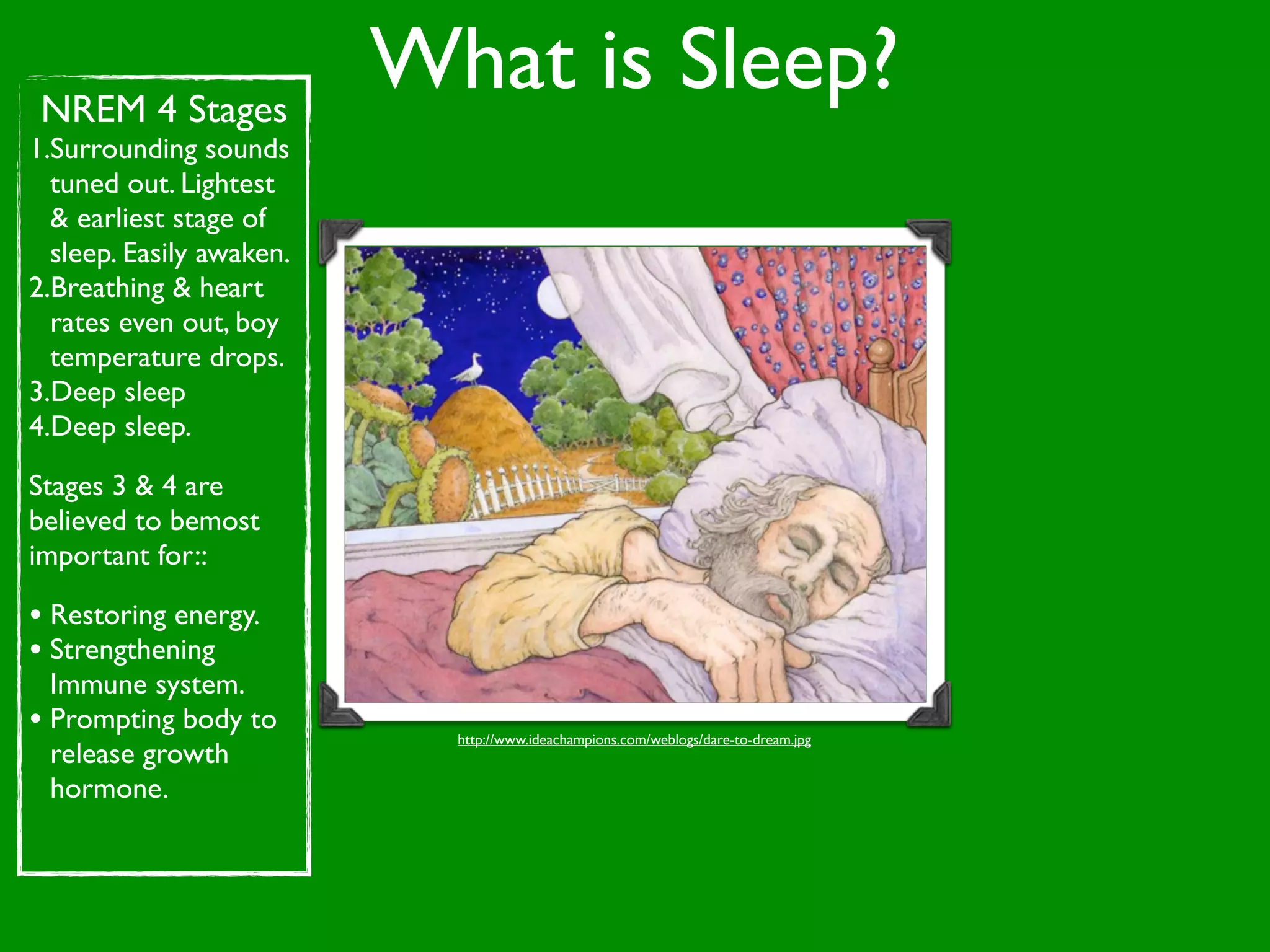
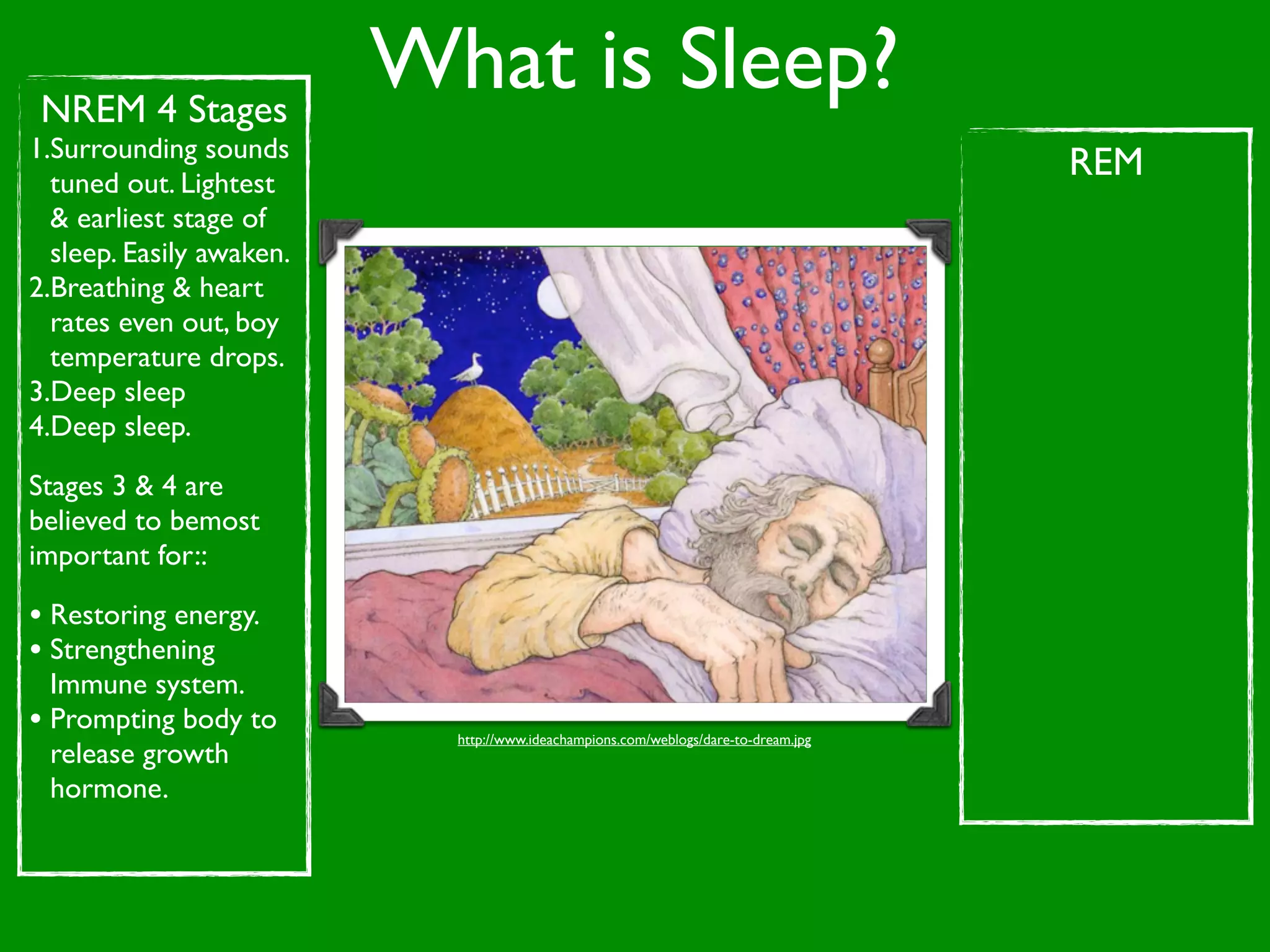
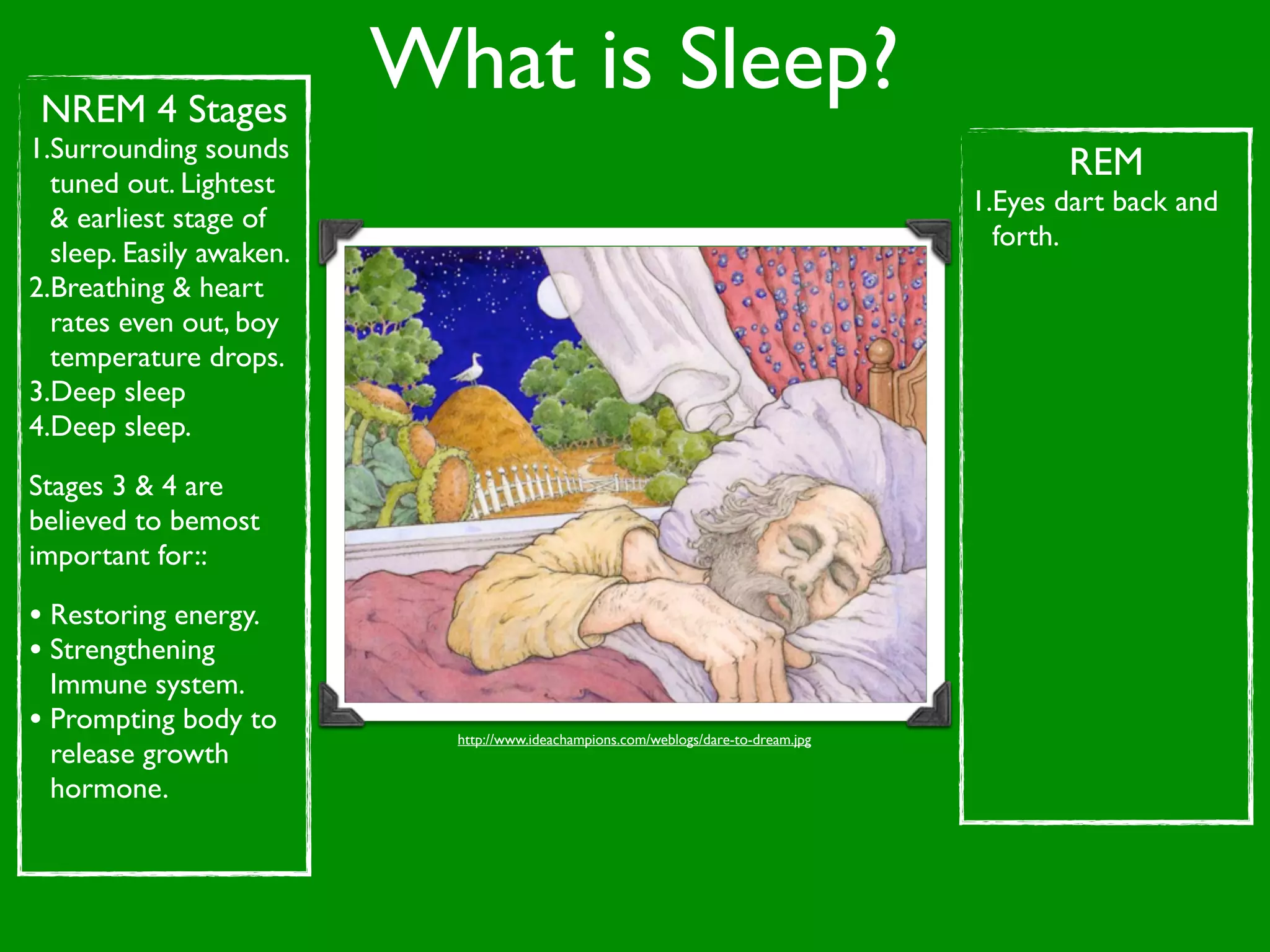
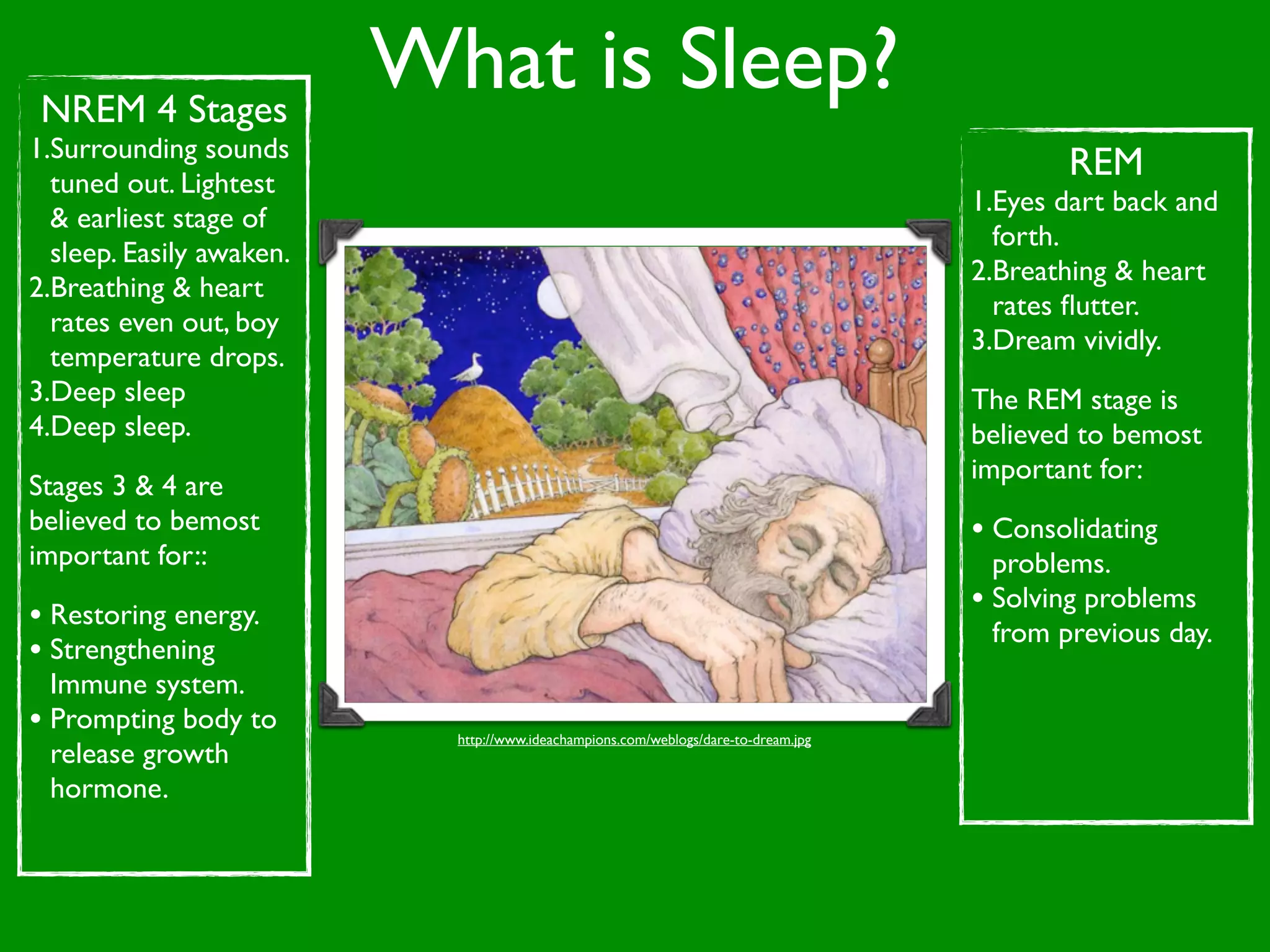
What is Sleep?


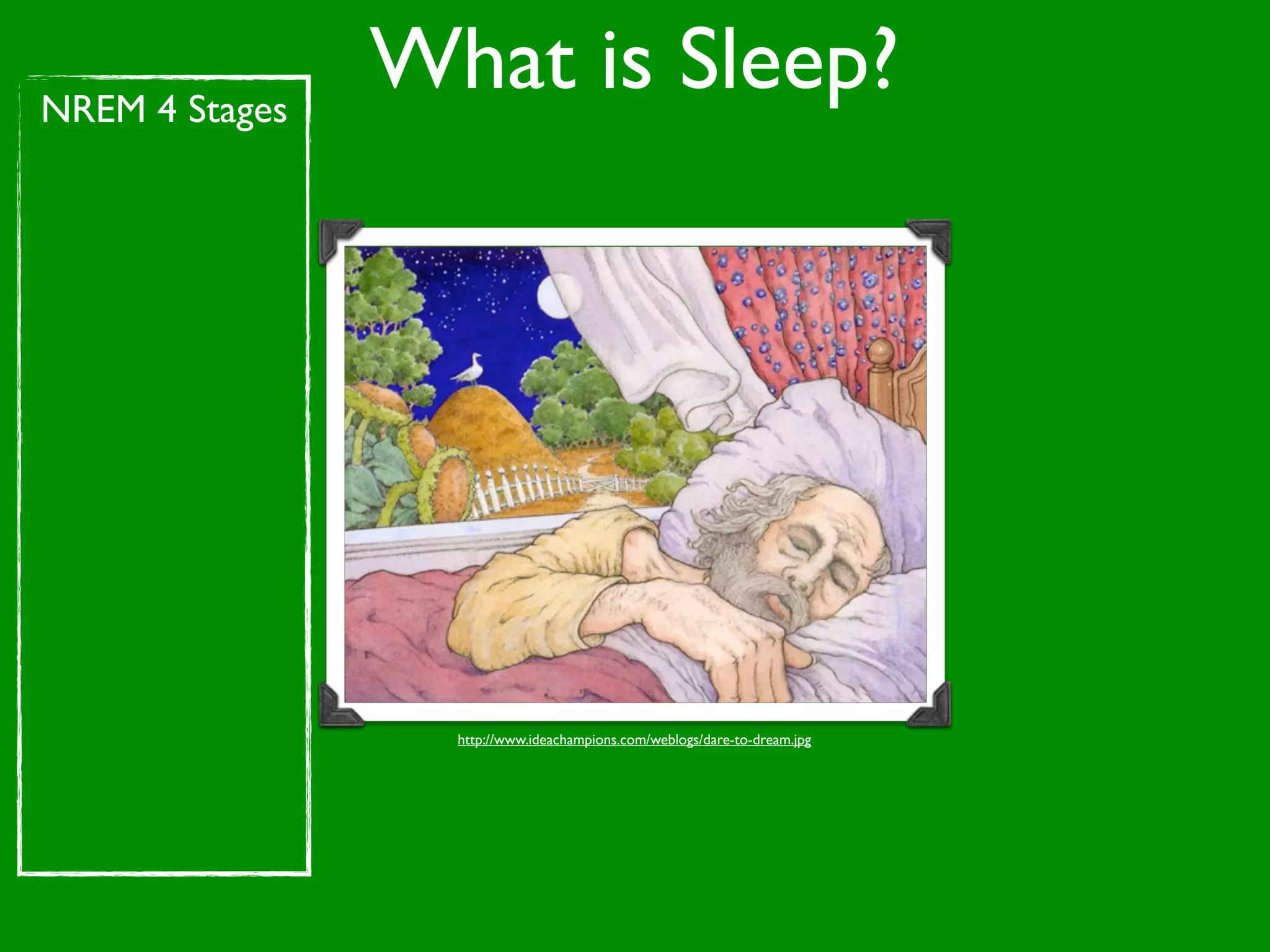
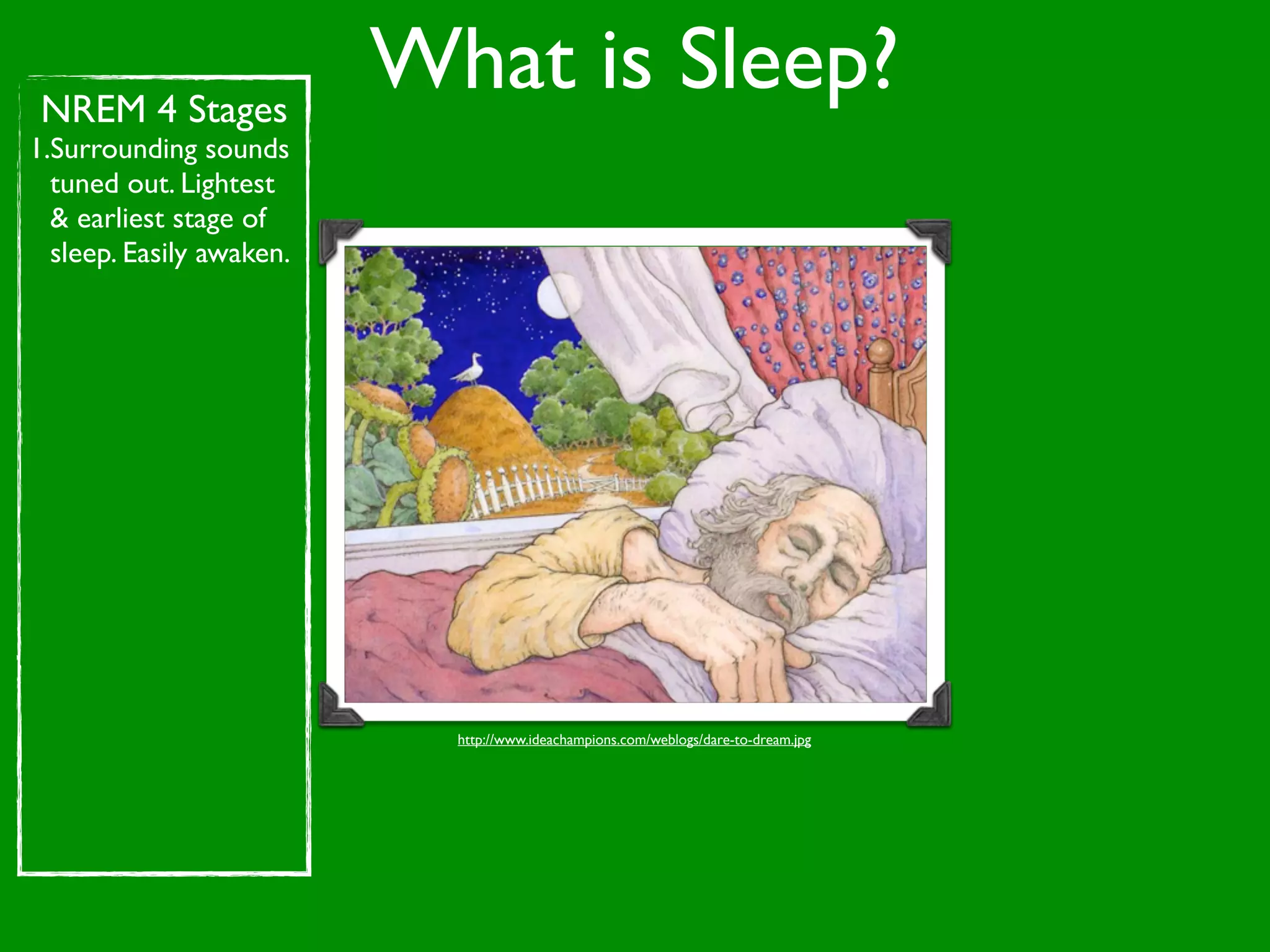
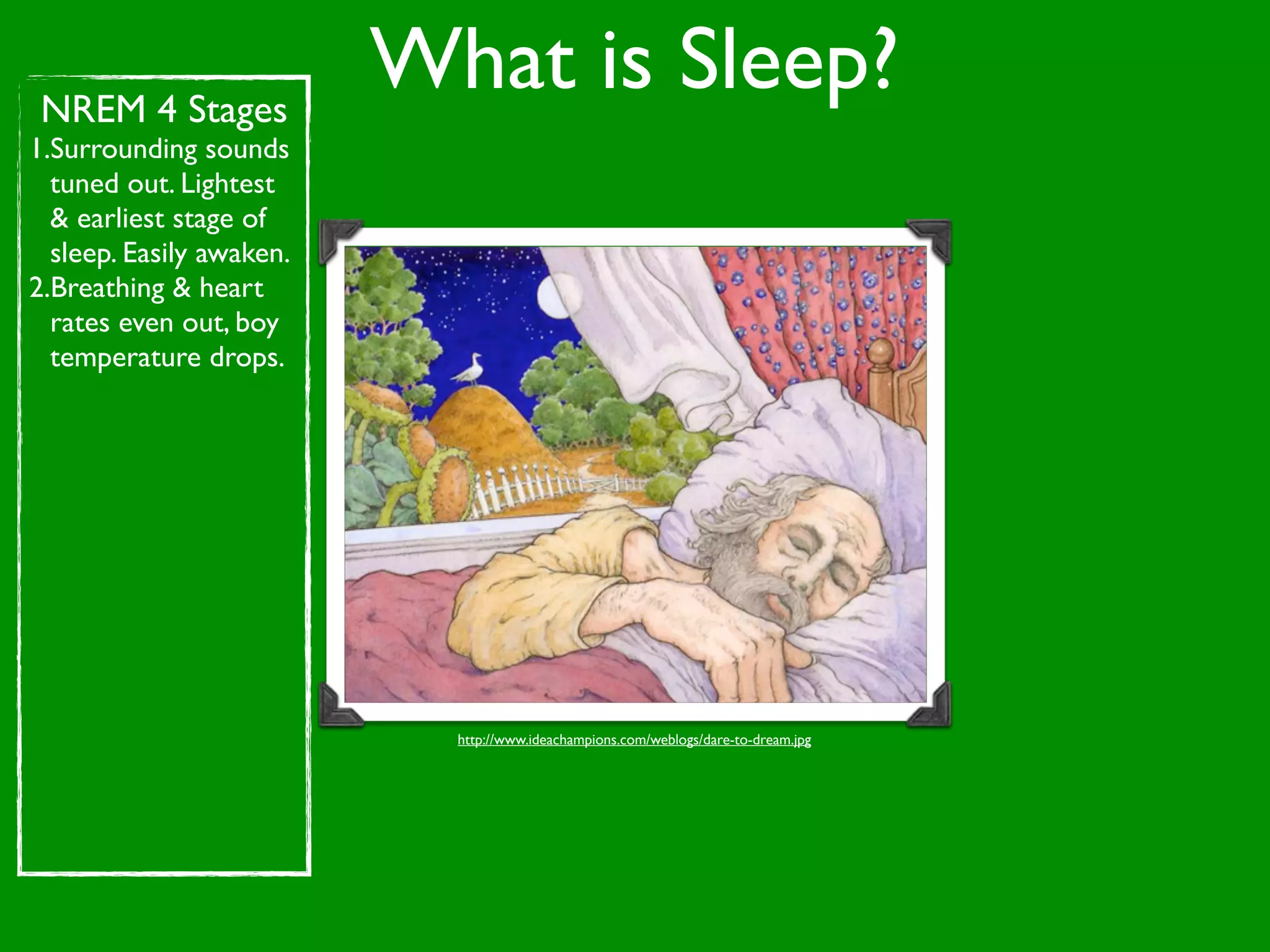
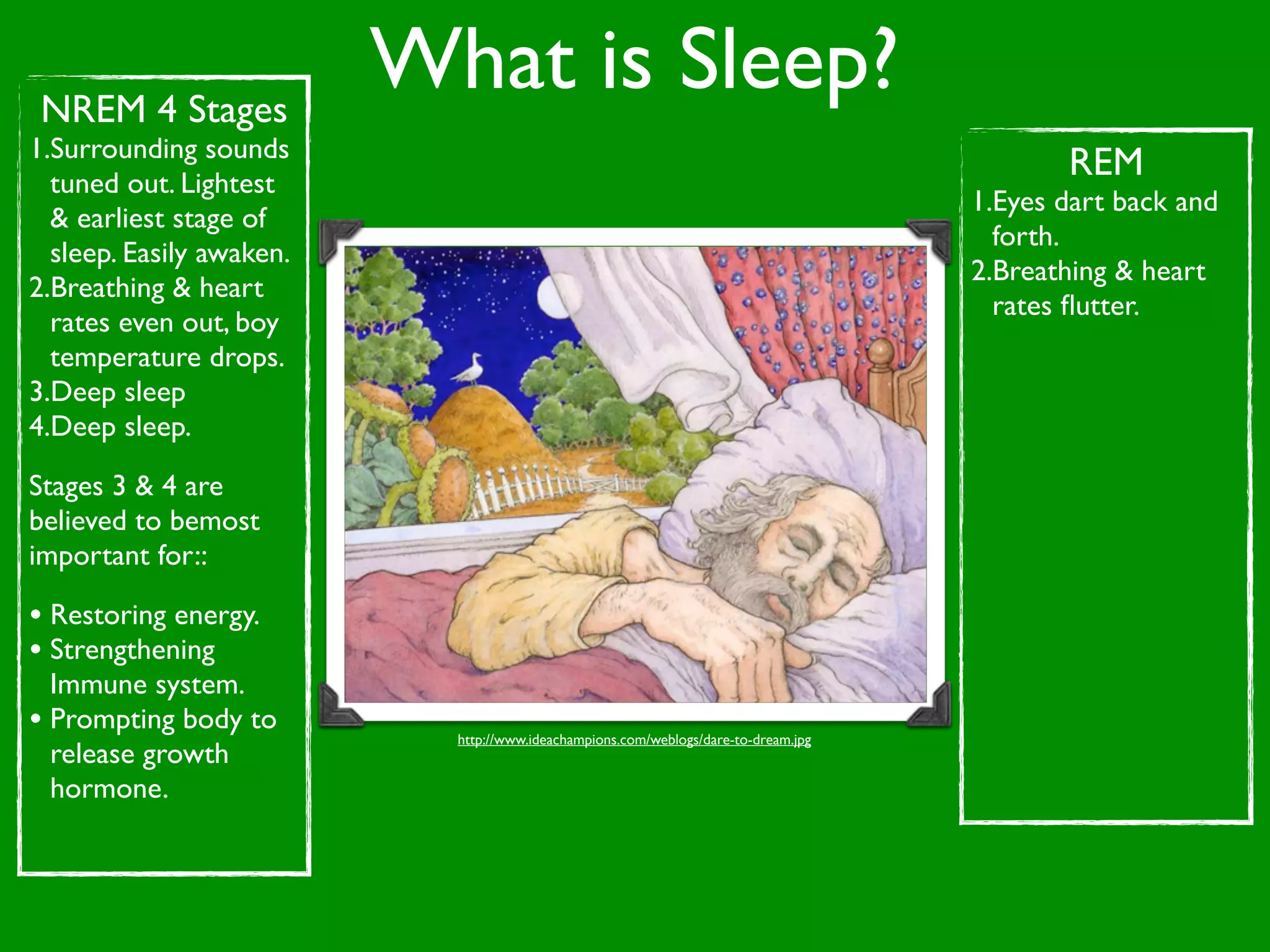
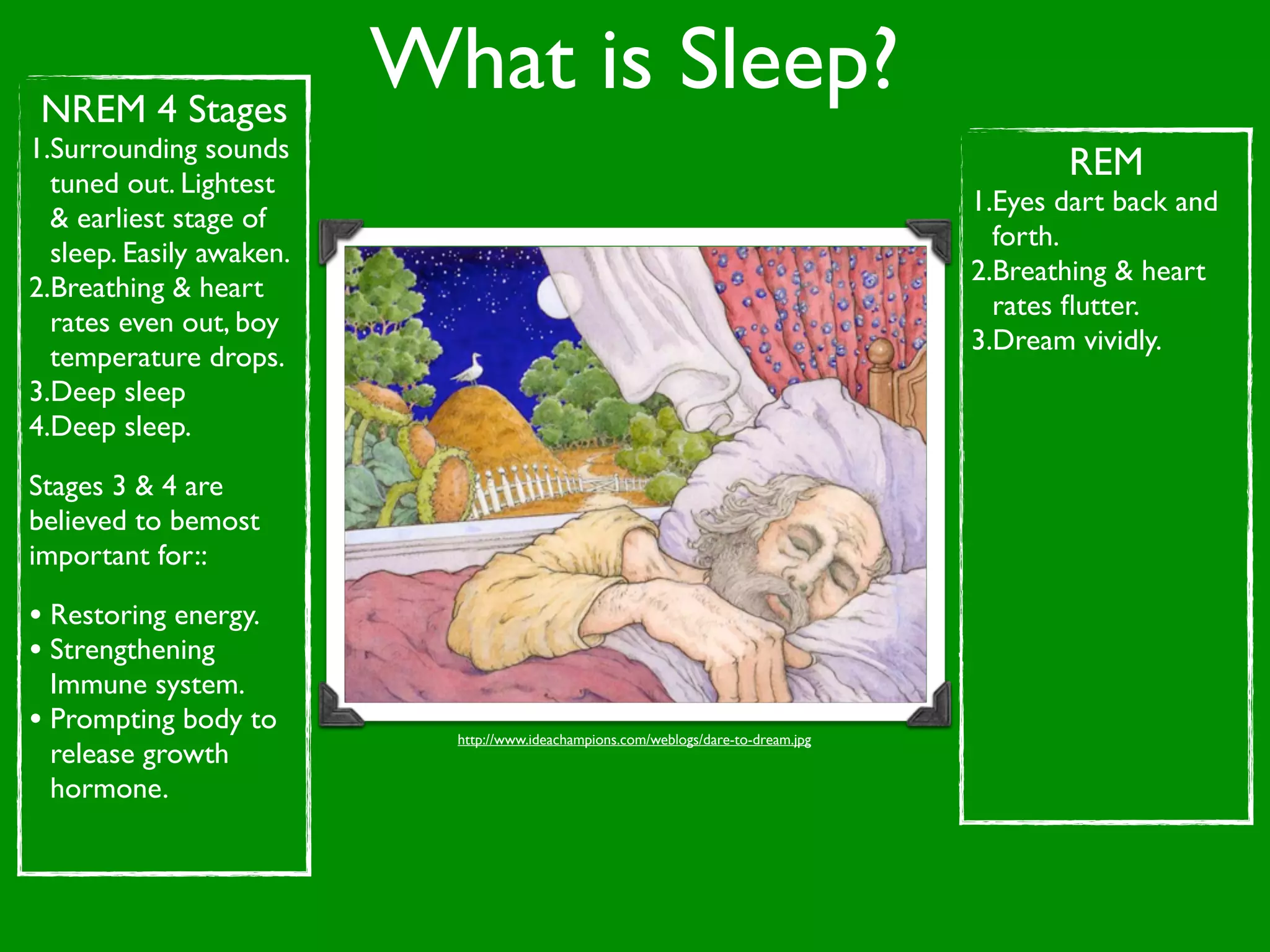
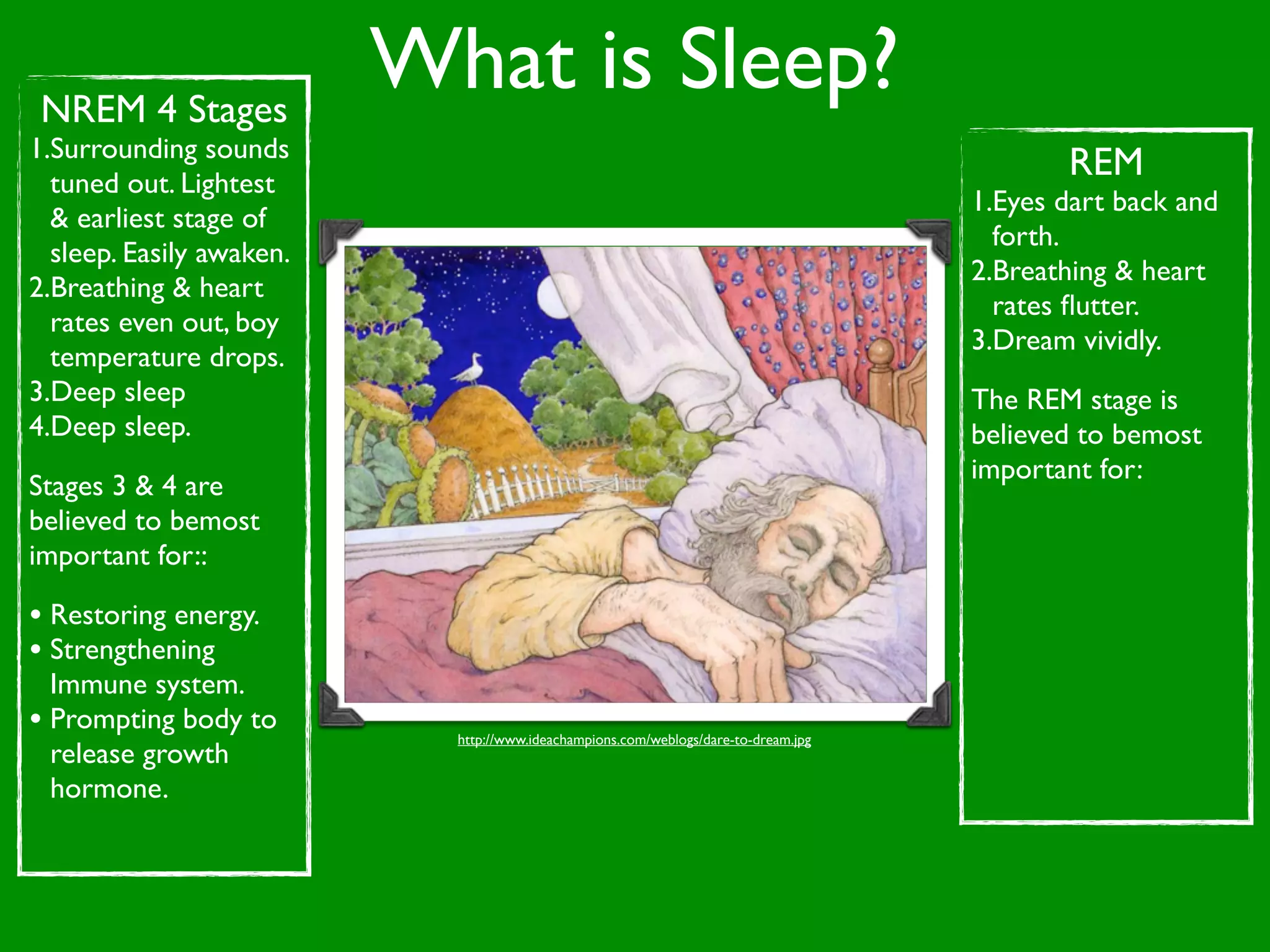
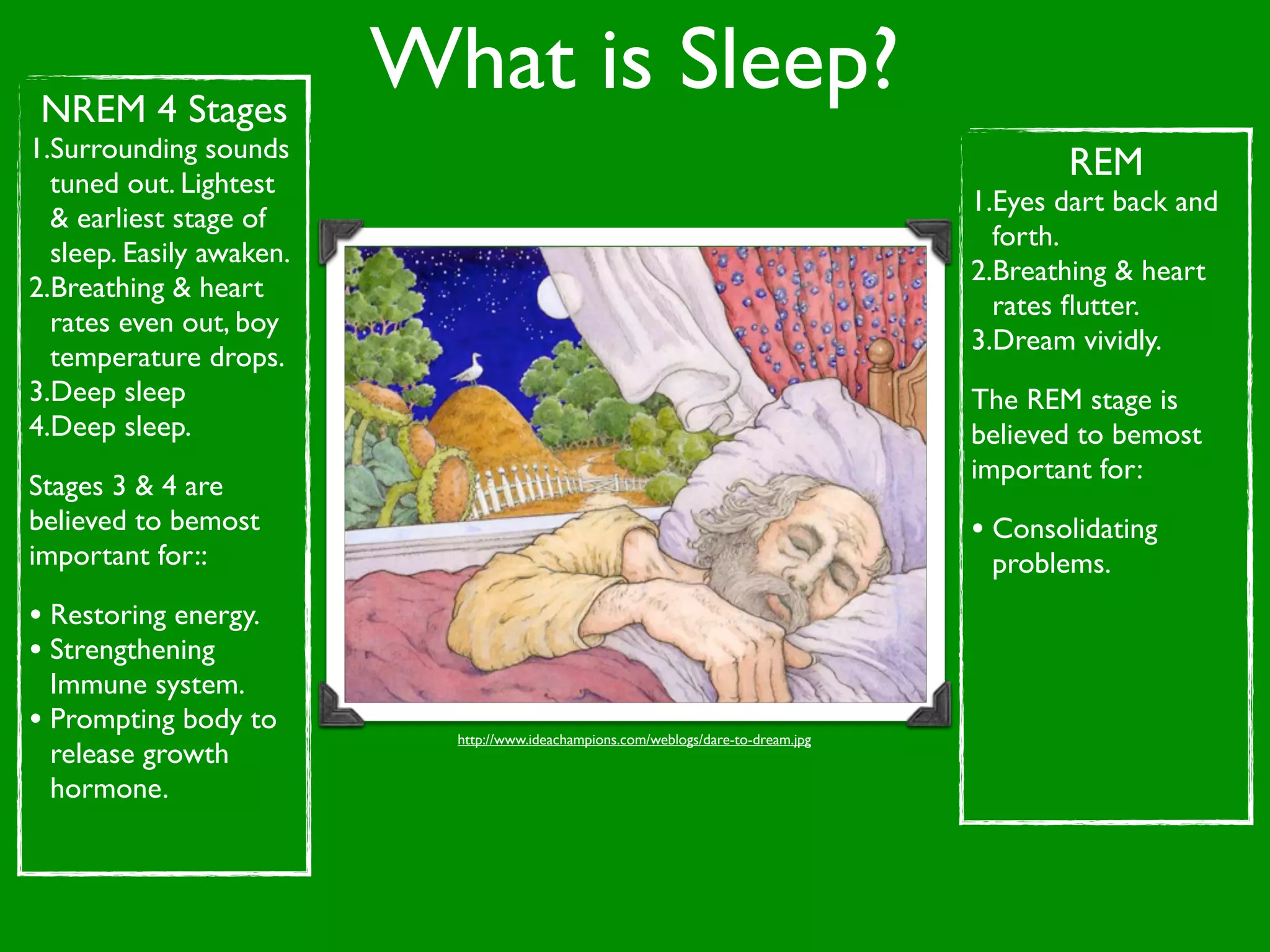
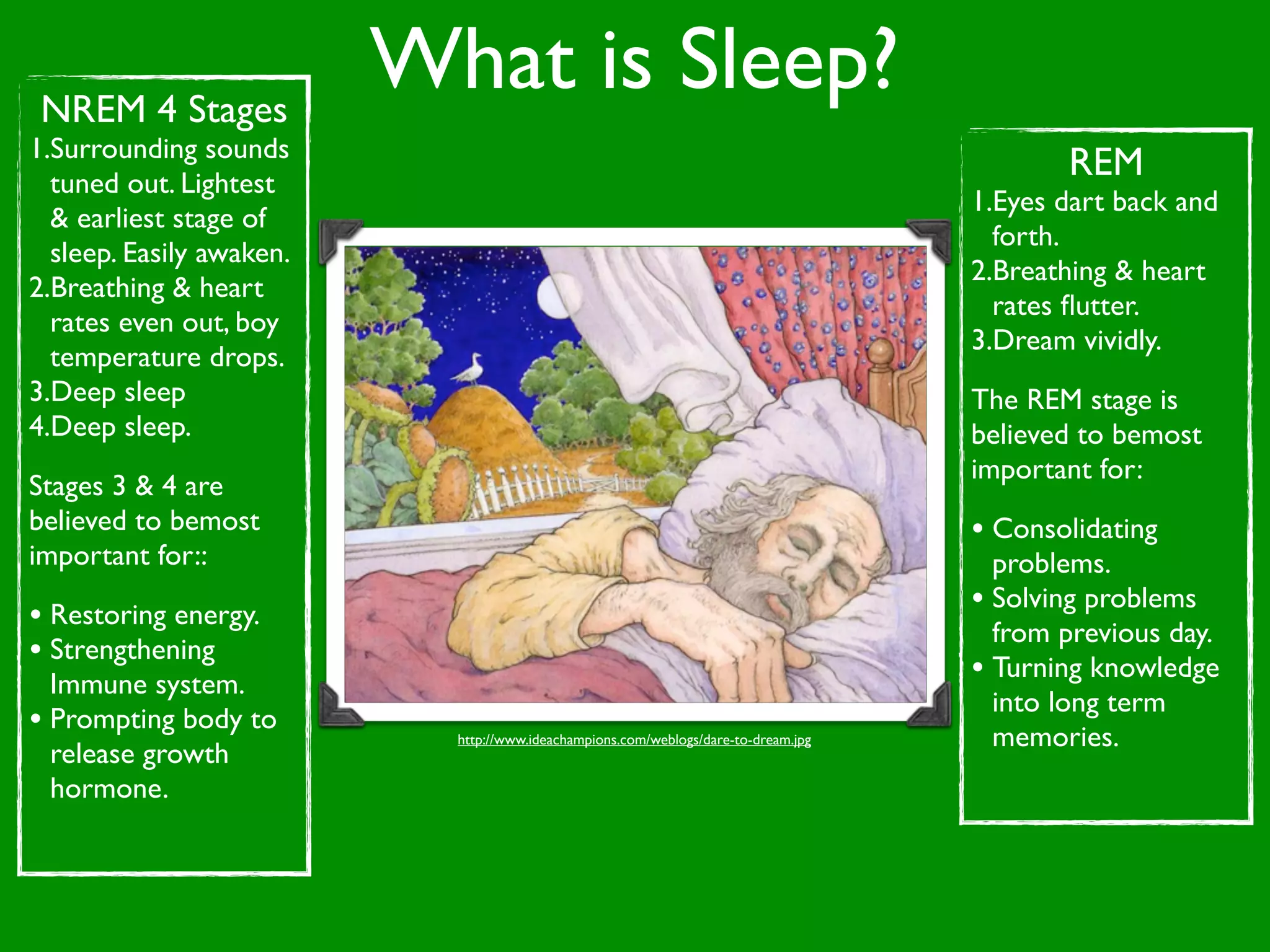
  http://www.ideachampions.com/weblogs/dare-to-dream.jpg
NREM 4 Stages
                What is Sleep?


                  http://www.ideachampions.com/weblogs/dare-to-dream.jpg
NREM 4 Stages
                          What is Sleep?
1.Surrounding sounds
  tuned out. Lightest
  & earliest stage of
  sleep. Easily awaken.


                            http://www.ideachampions.com/weblogs/dare-to-dream.jpg
NREM 4 Stages
                          What is Sleep?
1.Surrounding sounds
  tuned out. Lightest
  & earliest stage of
  sleep. Easily awaken.
2.Breathing & heart
  rates even out, boy
  temperature drops.


                            http://www.ideachampions.com/weblogs/dare-to-dream.jpg
NREM 4 Stages
                          What is Sleep?
1.Surrounding sounds
  tuned out. Lightest
  & earliest stage of
  sleep. Easily awaken.
2.Breathing & heart
  rates even out, boy
  temperature drops.
3.Deep sleep


                            http://www.ideachampions.com/weblogs/dare-to-dream.jpg
NREM 4 Stages
                          What is Sleep?
1.Surrounding sounds
  tuned out. Lightest
  & earliest stage of
  sleep. Easily awaken.
2.Breathing & heart
  rates even out, boy
  temperature drops.
3.Deep sleep
4.Deep sleep.


                            http://www.ideachampions.com/weblogs/dare-to-dream.jpg
NREM 4 Stages
                          What is Sleep?
1.Surrounding sounds
  tuned out. Lightest
  & earliest stage of
  sleep. Easily awaken.
2.Breathing & heart
  rates even out, boy
  temperature drops.
3.Deep sleep
4.Deep sleep.

Stages 3 & 4 are
believed to bemost
important for::


                            http://www.ideachampions.com/weblogs/dare-to-dream.jpg
NREM 4 Stages
                          What is Sleep?
1.Surrounding sounds
  tuned out. Lightest
  & earliest stage of
  sleep. Easily awaken.
2.Breathing & heart
  rates even out, boy
  temperature drops.
3.Deep sleep
4.Deep sleep.

Stages 3 & 4 are
believed to bemost
important for::

• Restoring energy.


                            http://www.ideachampions.com/weblogs/dare-to-dream.jpg
NREM 4 Stages
                          What is Sleep?
1.Surrounding sounds
  tuned out. Lightest
  & earliest stage of
  sleep. Easily awaken.
2.Breathing & heart
  rates even out, boy
  temperature drops.
3.Deep sleep
4.Deep sleep.

Stages 3 & 4 are
believed to bemost
important for::

• Restoring energy.
• Strengthening
 Immune system.
                            http://www.ideachampions.com/weblogs/dare-to-dream.jpg
NREM 4 Stages
                          What is Sleep?
1.Surrounding sounds
  tuned out. Lightest
  & earliest stage of
  sleep. Easily awaken.
2.Breathing & heart
  rates even out, boy
  temperature drops.
3.Deep sleep
4.Deep sleep.

Stages 3 & 4 are
believed to bemost
important for::

• Restoring energy.
• Strengthening
  Immune system.
• Prompting body to         http://www.ideachampions.com/weblogs/dare-to-dream.jpg
  release growth
  hormone.
NREM 4 Stages
                          What is Sleep?
1.Surrounding sounds
  tuned out. Lightest
                                                                                     REM
  & earliest stage of
  sleep. Easily awaken.
2.Breathing & heart
  rates even out, boy
  temperature drops.
3.Deep sleep
4.Deep sleep.

Stages 3 & 4 are
believed to bemost
important for::

• Restoring energy.
• Strengthening
  Immune system.
• Prompting body to         http://www.ideachampions.com/weblogs/dare-to-dream.jpg
  release growth
  hormone.
NREM 4 Stages
                          What is Sleep?
1.Surrounding sounds
  tuned out. Lightest
                                                                                            REM
                                                                                     1.Eyes dart back and
  & earliest stage of
                                                                                       forth.
  sleep. Easily awaken.
2.Breathing & heart
  rates even out, boy
  temperature drops.
3.Deep sleep
4.Deep sleep.

Stages 3 & 4 are
believed to bemost
important for::

• Restoring energy.
• Strengthening
  Immune system.
• Prompting body to         http://www.ideachampions.com/weblogs/dare-to-dream.jpg
  release growth
  hormone.
NREM 4 Stages
                          What is Sleep?
1.Surrounding sounds
  tuned out. Lightest
                                                                                            REM
                                                                                     1.Eyes dart back and
  & earliest stage of
                                                                                       forth.
  sleep. Easily awaken.
                                                                                     2.Breathing & heart
2.Breathing & heart
                                                                                       rates flutter.
  rates even out, boy
  temperature drops.
3.Deep sleep
4.Deep sleep.

Stages 3 & 4 are
believed to bemost
important for::

• Restoring energy.
• Strengthening
  Immune system.
• Prompting body to         http://www.ideachampions.com/weblogs/dare-to-dream.jpg
  release growth
  hormone.
NREM 4 Stages
                          What is Sleep?
1.Surrounding sounds
  tuned out. Lightest
                                                                                            REM
                                                                                     1.Eyes dart back and
  & earliest stage of
                                                                                       forth.
  sleep. Easily awaken.
                                                                                     2.Breathing & heart
2.Breathing & heart
                                                                                       rates flutter.
  rates even out, boy
                                                                                     3.Dream vividly.
  temperature drops.
3.Deep sleep
4.Deep sleep.

Stages 3 & 4 are
believed to bemost
important for::

• Restoring energy.
• Strengthening
  Immune system.
• Prompting body to         http://www.ideachampions.com/weblogs/dare-to-dream.jpg
  release growth
  hormone.
NREM 4 Stages
                          What is Sleep?
1.Surrounding sounds
  tuned out. Lightest
                                                                                            REM
                                                                                     1.Eyes dart back and
  & earliest stage of
                                                                                       forth.
  sleep. Easily awaken.
                                                                                     2.Breathing & heart
2.Breathing & heart
                                                                                       rates flutter.
  rates even out, boy
                                                                                     3.Dream vividly.
  temperature drops.
3.Deep sleep                                                                         The REM stage is
4.Deep sleep.                                                                        believed to bemost
                                                                                     important for:
Stages 3 & 4 are
believed to bemost
important for::

• Restoring energy.
• Strengthening
  Immune system.
• Prompting body to         http://www.ideachampions.com/weblogs/dare-to-dream.jpg
  release growth
  hormone.
NREM 4 Stages
                          What is Sleep?
1.Surrounding sounds
  tuned out. Lightest
                                                                                            REM
                                                                                     1.Eyes dart back and
  & earliest stage of
                                                                                       forth.
  sleep. Easily awaken.
                                                                                     2.Breathing & heart
2.Breathing & heart
                                                                                       rates flutter.
  rates even out, boy
                                                                                     3.Dream vividly.
  temperature drops.
3.Deep sleep                                                                         The REM stage is
4.Deep sleep.                                                                        believed to bemost
                                                                                     important for:
Stages 3 & 4 are
believed to bemost                                                                   • Consolidating
important for::                                                                       problems.
• Restoring energy.
• Strengthening
  Immune system.
• Prompting body to         http://www.ideachampions.com/weblogs/dare-to-dream.jpg
  release growth
  hormone.
NREM 4 Stages
                          What is Sleep?
1.Surrounding sounds
  tuned out. Lightest
                                                                                             REM
                                                                                     1.Eyes dart back and
  & earliest stage of
                                                                                       forth.
  sleep. Easily awaken.
                                                                                     2.Breathing & heart
2.Breathing & heart
                                                                                       rates flutter.
  rates even out, boy
                                                                                     3.Dream vividly.
  temperature drops.
3.Deep sleep                                                                         The REM stage is
4.Deep sleep.                                                                        believed to bemost
                                                                                     important for:
Stages 3 & 4 are
believed to bemost                                                                   • Consolidating
important for::                                                                        problems.
• Restoring energy.                                                                  • Solving problems
                                                                                       from previous day.
• Strengthening
  Immune system.
• Prompting body to         http://www.ideachampions.com/weblogs/dare-to-dream.jpg
  release growth
  hormone.
NREM 4 Stages
                          What is Sleep?
1.Surrounding sounds
  tuned out. Lightest
                                                                                            REM
                                                                                     1.Eyes dart back and
  & earliest stage of
                                                                                       forth.
  sleep. Easily awaken.
                                                                                     2.Breathing & heart
2.Breathing & heart
                                                                                       rates flutter.
  rates even out, boy
                                                                                     3.Dream vividly.
  temperature drops.
3.Deep sleep                                                                         The REM stage is
4.Deep sleep.                                                                        believed to bemost
                                                                                     important for:
Stages 3 & 4 are
believed to bemost                                                                   • Consolidating
important for::                                                                        problems.
• Restoring energy.                                                                  • Solving problems
                                                                                       from previous day.
• Strengthening                                                                      • Turning knowledge
  Immune system.
                                                                                       into long term
• Prompting body to         http://www.ideachampions.com/weblogs/dare-to-dream.jpg     memories.
  release growth
  hormone.
Sleep and Health
Sleep is a health practice that we constantly abuse
without knowing.


                                        http://farm1.static.flickr.com/153/424345063_965408137b_o.jpg
Sleep and Health
Sleep is a health practice that we constantly abuse
without knowing.
 39% sleep
less than 7
hours/night


                                        http://farm1.static.flickr.com/153/424345063_965408137b_o.jpg
Sleep and Health
Sleep is a health practice that we constantly abuse
without knowing.
 39% sleep
less than 7
hours/night


          and mood.


                                        http://farm1.static.flickr.com/153/424345063_965408137b_o.jpg
Sleep and Health
Sleep is a health practice that we constantly abuse
without knowing.                             Chronic insomnia affects
                                                         the ability to secrete and
                                                           respond to diabetes
 39% sleep
less than 7
hours/night


           and mood.


                                                http://farm1.static.flickr.com/153/424345063_965408137b_o.jpg
Sleep and Health
Sleep is a health practice that we constantly abuse
without knowing.                             Chronic insomnia affects
                                                         the ability to secrete and
                                                           respond to diabetes
 39% sleep
less than 7
hours/night                                                          Shift workers who
                                                                            suffered
                                                                      disordered sleep
                                                                      have high rate of
                                                                      respiratory tract
                                                                           infection


           and mood.


                                                http://farm1.static.flickr.com/153/424345063_965408137b_o.jpg
Sleep and Health
Sleep is a health practice that we constantly abuse
without knowing.                             Chronic insomnia affects
                                                         the ability to secrete and
                                                           respond to diabetes
 39% sleep
less than 7
hours/night                                                          Shift workers who
                                                                            suffered
                                                                      disordered sleep
                                                                      have high rate of
                                                                      respiratory tract
                                                                           infection


           and mood.       Stress affects
                         sleep and lack of
                           sleep creates
                           further stress
                                                http://farm1.static.flickr.com/153/424345063_965408137b_o.jpg
Sleep and Health
Sleep is a health practice that we constantly abuse
without knowing.                             Chronic insomnia affects
                                                         the ability to secrete and
                                                           respond to diabetes
 39% sleep
less than 7
hours/night                                                          Shift workers who
                                                                            suffered
                                                                      disordered sleep
                                                                      have high rate of
      Affects                                                         respiratory tract
     cognitive                                                             infection
    functioning

           and mood.       Stress affects
                         sleep and lack of
                           sleep creates
                           further stress
                                                http://farm1.static.flickr.com/153/424345063_965408137b_o.jpg
Sleep and Health
Sleep is a health practice that we constantly abuse
without knowing.                             Chronic insomnia affects
                                                         the ability to secrete and
                                                           respond to diabetes
 39% sleep
less than 7
hours/night                                                          Shift workers who
                                                                            suffered
                                                                      disordered sleep
                                                                      have high rate of
      Affects                                                         respiratory tract
     cognitive                                                             infection
    functioning
                                                           Long sleepers may
           and mood.       Stress affects                      have certain
                                                            psychopathology
                         sleep and lack of                   such as chronic
                           sleep creates                        worrying
                           further stress
                                                http://farm1.static.flickr.com/153/424345063_965408137b_o.jpg
Sleep Apnea
Sleep Apnea is the condition where the airways are
blocked.


                                       http://farm1.static.flickr.com/153/424345063_965408137b_o.jpg
Sleep Apnea
Sleep Apnea is the condition where the airways are
blocked.

    Apnea
disrupts sleep


                                       http://farm1.static.flickr.com/153/424345063_965408137b_o.jpg
Sleep Apnea
Sleep Apnea is the condition where the airways are
blocked.

    Apnea
disrupts sleep


        Daytime sleepiness
        have been linked to
         insulin resistance.


                                        http://farm1.static.flickr.com/153/424345063_965408137b_o.jpg
Sleep Apnea
Sleep Apnea is the condition where the airways are
blocked.                                    Treatment in severe
                                                       cases may involve cutting
                                                        of excessive tissues at
    Apnea                                               the back of the throat.
disrupts sleep


         Daytime sleepiness
         have been linked to
          insulin resistance.


                                             http://farm1.static.flickr.com/153/424345063_965408137b_o.jpg
Sleep Apnea
Sleep Apnea is the condition where the airways are
blocked.                                    Treatment in severe
                                                       cases may involve cutting
                                                        of excessive tissues at
    Apnea                                               the back of the throat.
disrupts sleep
                                                                Other
                                                              treatment
                                                               involves
                                                              relaxation
                                                              therapies
         Daytime sleepiness
         have been linked to
          insulin resistance.


                                             http://farm1.static.flickr.com/153/424345063_965408137b_o.jpg
Sleep Apnea
Sleep Apnea is the condition where the airways are
blocked.                                    Treatment in severe
                                                         cases may involve cutting
                                                          of excessive tissues at
    Apnea                                                 the back of the throat.
disrupts sleep
                                                                  Other
                                                                treatment
                                                                 involves
                                                                relaxation
                                                                therapies
         Daytime sleepiness     Treatment includes
         have been linked to     using machine to
          insulin resistance.
                                force mouth open
                                 and air into body
                                               http://farm1.static.flickr.com/153/424345063_965408137b_o.jpg
Sleep Apnea
Sleep Apnea is the condition where the airways are
blocked.                                    Treatment in severe
                                                             cases may involve cutting
                                                              of excessive tissues at
    Apnea                                                     the back of the throat.
disrupts sleep
                                                                      Other
   Sleeper sometimes
 stops breathing for up                                             treatment
to 3 minutes and might
      have triggered                                                 involves
    nighttime deaths.                                               relaxation
                                                                    therapies
             Daytime sleepiness     Treatment includes
             have been linked to     using machine to
              insulin resistance.
                                    force mouth open
                                     and air into body
                                                   http://farm1.static.flickr.com/153/424345063_965408137b_o.jpg
Rest, Renewal, Savouring


              http://letmebeme1.files.wordpress.com/2011/02/hand-holding-seedling.jpg
Guide to a Good Night’s Sleep
 The first step to Rest, Renewal, Savoring
Guide to a Good Night’s Sleep
           The first step to Rest, Renewal, Savoring

Get Regular Exercise
Guide to a Good Night’s Sleep
           The first step to Rest, Renewal, Savoring

Get Regular Exercise
  at least 3 times
       a week
Guide to a Good Night’s Sleep
           The first step to Rest, Renewal, Savoring

Get Regular Exercise
  at least 3 times
       a week


 Keep Your
 Bedroom
   Cool
Guide to a Good Night’s Sleep
              The first step to Rest, Renewal, Savoring

Get Regular Exercise
  at least 3 times
       a week


  Keep Your
  Bedroom
    Cool
 Sleep in a comfortable
bed that’s big enough for
           you.
Guide to a Good Night’s Sleep
              The first step to Rest, Renewal, Savoring

Get Regular Exercise          Cultivate regular
  at least 3 times          schedule of going to
       a week                bed and waking up.


  Keep Your
  Bedroom
    Cool
 Sleep in a comfortable
bed that’s big enough for
           you.
Guide to a Good Night’s Sleep
              The first step to Rest, Renewal, Savoring

Get Regular Exercise          Cultivate regular
  at least 3 times          schedule of going to
       a week                bed and waking up.

                            Develop nightly
  Keep Your                 rituals before
                            bed such as
  Bedroom                   taking a shower.
    Cool
 Sleep in a comfortable
bed that’s big enough for
           you.
Guide to a Good Night’s Sleep
              The first step to Rest, Renewal, Savoring

Get Regular Exercise          Cultivate regular
  at least 3 times          schedule of going to
       a week                bed and waking up.

                            Develop nightly
  Keep Your                 rituals before
                            bed such as
  Bedroom                   taking a shower.
    Cool                     Use fan or noise
                            generator to mask
 Sleep in a comfortable
                            background sound.
bed that’s big enough for
           you.
Guide to a Good Night’s Sleep
              The first step to Rest, Renewal, Savoring

Get Regular Exercise          Cultivate regular  Don’t smoke or drink
  at least 3 times          schedule of going to      too much.
       a week                bed and waking up.

                            Develop nightly
  Keep Your                 rituals before
                            bed such as
  Bedroom                   taking a shower.
    Cool                     Use fan or noise
                            generator to mask
 Sleep in a comfortable
                            background sound.
bed that’s big enough for
           you.
Guide to a Good Night’s Sleep
              The first step to Rest, Renewal, Savoring

Get Regular Exercise          Cultivate regular  Don’t smoke or drink
  at least 3 times          schedule of going to      too much.
       a week                bed and waking up.    Too much aroma
                                                  therapy can be bad.
                            Develop nightly
  Keep Your                 rituals before
                            bed such as
  Bedroom                   taking a shower.
    Cool                     Use fan or noise
                            generator to mask
 Sleep in a comfortable
                            background sound.
bed that’s big enough for
           you.
Guide to a Good Night’s Sleep
              The first step to Rest, Renewal, Savoring

Get Regular Exercise          Cultivate regular  Don’t smoke or drink
  at least 3 times          schedule of going to      too much.
       a week                bed and waking up.    Too much aroma
                                                  therapy can be bad.
                            Develop nightly
  Keep Your                 rituals before
                            bed such as
  Bedroom                   taking a shower.
    Cool                     Use fan or noise
                            generator to mask
 Sleep in a comfortable
                            background sound.
bed that’s big enough for   Don’t eat too much
           you.                or too little
Guide to a Good Night’s Sleep
              The first step to Rest, Renewal, Savoring

Get Regular Exercise          Cultivate regular  Don’t smoke or drink
  at least 3 times          schedule of going to      too much.
       a week                bed and waking up.    Too much aroma
                                                  therapy can be bad.
                            Develop nightly
  Keep Your                 rituals before        Don’t nap
                            bed such as
  Bedroom                   taking a shower.
                                                  after 3pm!
    Cool                     Use fan or noise
                            generator to mask
 Sleep in a comfortable
                            background sound.
bed that’s big enough for   Don’t eat too much
           you.                or too little
Guide to a Good Night’s Sleep
              The first step to Rest, Renewal, Savoring

Get Regular Exercise          Cultivate regular  Don’t smoke or drink
  at least 3 times          schedule of going to      too much.
       a week                bed and waking up.    Too much aroma
                                                  therapy can be bad.
                            Develop nightly
  Keep Your                 rituals before        Don’t nap
                            bed such as
  Bedroom                   taking a shower.
                                                  after 3pm!
    Cool                     Use fan or noise
                                                   Cut back on that
                                                 afternoon or evening
                            generator to mask
                                                   caffeinated cuppa,
 Sleep in a comfortable
                            background sound.
bed that’s big enough for   Don’t eat too much
           you.                or too little
Guide to a Good Night’s Sleep
              The first step to Rest, Renewal, Savoring

Get Regular Exercise          Cultivate regular  Don’t smoke or drink
  at least 3 times          schedule of going to      too much.
       a week                bed and waking up.    Too much aroma
                                                  therapy can be bad.
                            Develop nightly
  Keep Your                 rituals before        Don’t nap
                            bed such as
  Bedroom                   taking a shower.
                                                  after 3pm!
    Cool                     Use fan or noise
                                                   Cut back on that
                                                 afternoon or evening
                            generator to mask
                                                   caffeinated cuppa,
 Sleep in a comfortable
                            background sound.
                                                  If sleepless, read in another
bed that’s big enough for   Don’t eat too much    corner so that your bed or
           you.                or too little
                                                 bedroom won’t be associated
                                                        with sleeplessness.
Learn to Take Time Outs!


       Appreciate a sunset
       or Mother Nature’s
           offerings
Learn to Take Time Outs!

      at rip.
Go on
       the
 B reak y.
  mon oton


            Appreciate a sunset
            or Mother Nature’s
                offerings
Learn to Take Time Outs!

      at rip.                       Chill out
Go on                              after the
       the
   reak y.
                                  exams o
                                            r
 B
      oton
                                      a
  mon
                                  stressful
                                    day!


            Appreciate a sunset
            or Mother Nature’s
                offerings

Week5 specific health behaviours

  • 1.
    http://gnosticgirl.files.wordpress.com/2011/01/helping_hand.jpg Specific Health-Related Behaviours Schoolof Health Sciences Taylor, S. E. (2009). Health Psychology (7th Edn). Pages 81 - 114. Singapore: Mcgraw-Hill International. http://pedpsych.coe.uh.edu/Future.jpg
  • 2.
    Exercise http://www.trainbodyandmind.com/wp-content/uploads/2010/11/See-Your-Physician-Before-Beginning-An-Exercise-Program-1.jpg
  • 3.
  • 4.
  • 5.
    Exercise Benefits: • 30 minute of exercise can decrease the risk of chronic disease inluding breast cancer.Yet, ...
  • 6.
  • 7.
    Determinants of RegularExercise For most who are not school athletes, these are factors influencing their lack of exercise:
  • 8.
    Determinants of RegularExercise For most who are not school athletes, these are factors influencing their lack of exercise: •smoking
  • 9.
    Determinants of RegularExercise For most who are not school athletes, these are factors influencing their lack of exercise: •smoking •overweight
  • 10.
    Determinants of RegularExercise For most who are not school athletes, these are factors influencing their lack of exercise: •smoking •overweight •lack of time
  • 11.
    Determinants of RegularExercise For most who are not school athletes, these are factors influencing their lack of exercise: •smoking •overweight •lack of time •school, work, family or other social commitments
  • 12.
    Determinants of RegularExercise For most who are not school athletes, these are factors influencing their lack of exercise: •smoking •overweight •lack of time •school, work, family or other social commitments •stress, depression and other psychological factors
  • 13.
    Determinants of RegularExercise For most who are not school athletes, these are factors influencing their lack of exercise: •smoking •overweight •lack of time •school, work, family or other social commitments •stress, depression and other psychological factors Regular exercise is a recognised form of “stress- buster” yet in the above list,
  • 14.
    Determinants of RegularExercise For most who are not school athletes, these are factors influencing their lack of exercise: •smoking •overweight •lack of time •school, work, family or other social commitments •stress, depression and other psychological factors Regular exercise is a recognised form of “stress- buster” yet in the above list, stress is the main reason why people DON’T exercise.
  • 15.
  • 16.
    Characteristics Influencing Regular Exercise Convenient and Easy Access
  • 17.
    Characteristics Influencing Regular Exercise Convenient and Easy Access •people are more likely to work out if the exercise takes place near home.
  • 18.
    Characteristics Influencing Regular Exercise Convenient and Easy Access •people are more likely to work out if the exercise takes place near home. Regular exercise breeds more regular exercise
  • 19.
    Characteristics Influencing Regular Exercise Convenient and Easy Access •people are more likely to work out if the exercise takes place near home. Regular exercise breeds more regular exercise •people usually drop out within 6 months of a regular exercise regime. Beyond 6 months, most continued with routine.
  • 20.
    Characteristics Influencing Regular Exercise Convenient and Easy Access •people are more likely to work out if the exercise takes place near home. Regular exercise breeds more regular exercise •people usually drop out within 6 months of a regular exercise regime. Beyond 6 months, most continued with routine. Strong will-power needed
  • 21.
    Characteristics Influencing Regular Exercise Convenient and Easy Access •people are more likely to work out if the exercise takes place near home. Regular exercise breeds more regular exercise •people usually drop out within 6 months of a regular exercise regime. Beyond 6 months, most continued with routine. Strong will-power needed •exercise is not easy and will-power is needed to sustain individual for the first 6 months and beyond.
  • 22.
  • 23.
  • 24.
    Intervention Theory of PlannedBehaviour •I think I can do it, I want to do it, I will do it.
  • 25.
    Intervention Theory of PlannedBehaviour •I think I can do it, I want to do it, I will do it. •continency contracting, self-reinforcing and goal setting are important
  • 26.
    Intervention Theory of PlannedBehaviour •I think I can do it, I want to do it, I will do it. •continency contracting, self-reinforcing and goal setting are important Spiral model of the Stages of Change Theory
  • 27.
    Intervention Theory of PlannedBehaviour •I think I can do it, I want to do it, I will do it. •continency contracting, self-reinforcing and goal setting are important Spiral model of the Stages of Change Theory •pre-contemplative and contemplative may envelope people with self-doubt about their ability to exercise.
  • 28.
    Intervention Theory of PlannedBehaviour •I think I can do it, I want to do it, I will do it. •continency contracting, self-reinforcing and goal setting are important Spiral model of the Stages of Change Theory •pre-contemplative and contemplative may envelope people with self-doubt about their ability to exercise. •removing these real or perceive obstacles will push the individual towards action stage.
  • 29.
    Accident Prevention http://adsoftheworld.com/files/images/WSIB_earbuds_LG.jpg
  • 30.
  • 31.
    Home Accidents In theUS, accidents in the home are one of the leading causes of deaths for children under 5 through:
  • 32.
    Home Accidents In theUS, accidents in the home are one of the leading causes of deaths for children under 5 through: •falls and accidental poisoning.
  • 33.
    Home Accidents In theUS, accidents in the home are one of the leading causes of deaths for children under 5 through: •falls and accidental poisoning. •Ages 0-4 are the most accident-prone
  • 34.
    Home Accidents In theUS, accidents in the home are one of the leading causes of deaths for children under 5 through: •falls and accidental poisoning. •Ages 0-4 are the most accident-prone In Singapore, accidents in the home is becoming a main concern for the elderlies:
  • 35.
    Home Accidents In theUS, accidents in the home are one of the leading causes of deaths for children under 5 through: •falls and accidental poisoning. •Ages 0-4 are the most accident-prone In Singapore, accidents in the home is becoming a main concern for the elderlies: •In Changi General Hosital, those aged 65 and above - make up about 70 per cent of the home-accident cases handled by its accident and emergency (A&E) (MyPaper, 2010)
  • 36.
    Home Accidents In theUS, accidents in the home are one of the leading causes of deaths for children under 5 through: •falls and accidental poisoning. •Ages 0-4 are the most accident-prone In Singapore, accidents in the home is becoming a main concern for the elderlies: •In Changi General Hosital, those aged 65 and above - make up about 70 per cent of the home-accident cases handled by its accident and emergency (A&E) (MyPaper, 2010) •In the US, over $20billion was spent as a result of falls-related injuries and over 12 000 elderlies die from the same cause.
  • 37.
  • 38.
    Occupational Diseases What is conspicuously missing in this list?
  • 39.
  • 40.
  • 41.
  • 42.
  • 43.
  • 44.
    Reducing Accidents Reduction ofRisky Health Behaviours must be multi-factorials.
  • 45.
    Reducing Accidents Reduction ofRisky Health Behaviours must be multi-factorials. •inthe case of workplace and traffic accidents, the government employs operant conditioning. fines for safety violations, rewards for zero accidents.
  • 46.
    Reducing Accidents Reduction ofRisky Health Behaviours must be multi-factorials. •inthe case of workplace and traffic accidents, the government employs operant conditioning. fines for safety violations, rewards for zero accidents. •inthe case of childhood accidents, theory of planned behaviour may explained why parents are now better equipped to implement child safety at home.
  • 47.
    Reducing Accidents Reduction ofRisky Health Behaviours must be multi-factorials. •inthe case of workplace and traffic accidents, the government employs operant conditioning. fines for safety violations, rewards for zero accidents. •inthe case of childhood accidents, theory of planned behaviour may explained why parents are now better equipped to implement child safety at home. •in the case of elderly casualties at home, both social engineering and cognitive re-adjustment may go hand in hand.
  • 48.
    Cancer-Related Health Behaviours http://theinspirationroom.com/daily/print/2007/10/mercedes_breast_cancer_check.jpg
  • 49.
    Some Numbers AboutCancers The top killers of men and women in Singapore are Colorectal and Breast cancers respectively.
  • 50.
  • 51.
    Self-Examination - ACase Study Breast Self-Examination (BSE)
  • 52.
    Self-Examination - ACase Study Breast Self-Examination (BSE) • Breast cancer is affecting younger and younger women
  • 53.
    Self-Examination - ACase Study Breast Self-Examination (BSE) • Breast cancer is affecting younger and younger women • 90%of all breast cancers are detected through self-examination.
  • 54.
    Self-Examination - ACase Study Breast Self-Examination (BSE) • Breast cancer is affecting younger and younger women • 90%of all breast cancers are detected through self-examination. • Despite this, few women practice BSE.
  • 55.
    Self-Examination - ACase Study Breast Self-Examination (BSE) • Breast cancer is affecting younger and younger women • 90%of all breast cancers are detected through self-examination. • Despite this, few women practice BSE. • Perhaps, it is because it is hard to find lumps.
  • 56.
    Self-Examination - ACase Study Breast Self-Examination (BSE) • Breast cancer is affecting younger and younger women • 90%of all breast cancers are detected through self-examination. • Despite this, few women practice BSE. • Perhaps, it is because it is hard to find lumps. • Women with a family history of breast cancer is more likely to practice BSE
  • 57.
    Self-Examination - ACase Study Breast Self-Examination (BSE) • Breast cancer is affecting younger and younger women • 90%of all breast cancers are detected through self-examination. • Despite this, few women practice BSE. • Perhaps, it is because it is hard to find lumps. • Women with a family history of breast cancer is more likely to practice BSE • Fear may act as a deterent to BSE
  • 58.
    Self-Examination - ACase Study Breast Self-Examination (BSE) • Breast cancer is affecting younger and younger women • 90%of all breast cancers are detected through self-examination. • Despite this, few women practice BSE. • Perhaps, it is because it is hard to find lumps. • Women with a family history of breast cancer is more likely to practice BSE • Fear may act as a deterent to BSE • Other forms of screening such as mammogram might be an alternative.
  • 59.
    Developing a HealthyDiet http://www.zerofrictionfatlossx.net/images/eating.jpg
  • 60.
    The Case forHealthy Eating
  • 61.
    The Case forHealthy Eating •American health researchers estimated that unhealthy eating claims 300,000 lives annually in the US
  • 62.
    The Case forHealthy Eating •American health researchers estimated that unhealthy eating claims 300,000 lives annually in the US •Dietary change is critical for people with chronic diseases such as diabetes, hypertension and cancer (colon, stomach, pancreas, and breast)etc.
  • 63.
    The Case forHealthy Eating •American health researchers estimated that unhealthy eating claims 300,000 lives annually in the US •Dietary change is critical for people with chronic diseases such as diabetes, hypertension and cancer (colon, stomach, pancreas, and breast)etc. •Change to a healthy diet increases health.
  • 64.
  • 65.
  • 66.
    Resistance to HealthyEating •Difficult to get people to modify their eating habits
  • 67.
    Resistance to HealthyEating •Difficult to get people to modify their eating habits •Dietary switch if done is often no tfor health but for looks.
  • 68.
    Resistance to HealthyEating •Difficult to get people to modify their eating habits •Dietary switch if done is often no tfor health but for looks. •Not easy to maintain change.
  • 69.
    Resistance to HealthyEating •Difficult to get people to modify their eating habits •Dietary switch if done is often no tfor health but for looks. •Not easy to maintain change. •Family and social supported may not always be there.
  • 70.
    Resistance to HealthyEating •Difficult to get people to modify their eating habits •Dietary switch if done is often no tfor health but for looks. •Not easy to maintain change. •Family and social supported may not always be there. •Dietary change may be too extreme.
  • 71.
    Resistance to HealthyEating •Difficult to get people to modify their eating habits •Dietary switch if done is often no tfor health but for looks. •Not easy to maintain change. •Family and social supported may not always be there. •Dietary change may be too extreme. •Daily life is stressful leading to indulgence.
  • 72.
    Resistance to HealthyEating •Difficult to get people to modify their eating habits •Dietary switch if done is often no tfor health but for looks. •Not easy to maintain change. •Family and social supported may not always be there. •Dietary change may be too extreme. •Daily life is stressful leading to indulgence. •Not knowing which diet to follow.
  • 73.
    A Psychological Warfare- Why is it called a Happy Meal?
  • 74.
  • 75.
    The Science ofEating •Taste is the chemical gatekeeper of eating.
  • 76.
    The Science ofEating •Tasteis the chemical gatekeeper of eating. •we crave three taste: sugar, salts, & fats
  • 77.
    The Science ofEating •Taste is the chemical gatekeeper of eating. •we crave three taste: sugar, salts, & fats •Hormones help to control food intake, specifically:
  • 78.
    The Science ofEating •Taste is the chemical gatekeeper of eating. •we crave three taste: sugar, salts, & fats •Hormones help to control food intake, specifically: •Insulin: regulate sugar level
  • 79.
    The Science ofEating •Taste is the chemical gatekeeper of eating. •we crave three taste: sugar, salts, & fats •Hormones help to control food intake, specifically: •Insulin: regulate sugar level •Leptin: Signal to our brains whether or not we have sufficient fat reserves. Inhibits appetite.
  • 80.
    The Science ofEating •Taste is the chemical gatekeeper of eating. •we crave three taste: sugar, salts, & fats •Hormones help to control food intake, specifically: •Insulin: regulate sugar level •Leptin: Signal to our brains whether or not we have sufficient fat reserves. Inhibits appetite. •Ghrelin: Secreted by specialised cells in the stomach. Makes us feel hungry.
  • 81.
    Weight Control &Obesity http://4.bp.blogspot.com/_WsdCzOAtN3U/TUDxX9nR1fI/AAAAAAAAAcg/suf5lrgwyHc/s1600/Healthy+diet+over+drug.jpg
  • 82.
    Risks of Obesity Cholestrol Chronic Blood Obesity Disability Cancers Diseases Pressure Level
  • 83.
    Risks of Obesity Blood Pressure Cholestrol Chronic Obesity Disability Cancers Diseases Level
  • 84.
    Risks of Obesity Blood Pressure Chronic Obesity Disability Cancers Diseases Cholestrol Level
  • 85.
    Risks of Obesity Blood Cancers Pressure Chronic Obesity Disability Diseases Cholestrol Level
  • 86.
    Risks of Obesity Blood Cancers Pressure Chronic Obesity Diseases Cholestrol Disability Level
  • 87.
    Risks of Obesity Blood Cancers Pressure Chronic Obesity Diseases Cholestrol Disability Level
  • 88.
  • 89.
    Consequences of Obesity •If I am fat at 40, I am more likely to die 3 years younger than someone who is thin.
  • 90.
    Consequences of Obesity •If I am fat at 40, I am more likely to die 3 years younger than someone who is thin. •Thefatter I am, the more difficult it is for me to exercise.
  • 91.
    Consequences of Obesity •If I am fat at 40, I am more likely to die 3 years younger than someone who is thin. •Thefatter I am, the more difficult it is for me to exercise. •I am more likely to encounter problems in surgery, anaesthesia and childbearing.
  • 92.
    Consequences of Obesity •If I am fat at 40, I am more likely to die 3 years younger than someone who is thin. •Thefatter I am, the more difficult it is for me to exercise. •I am more likely to encounter problems in surgery, anaesthesia and childbearing. •InUSA, obesity accounts for 14% of all deaths from cancer for men, and 20% for women.
  • 93.
    Childhood Obesity Obese Video Internet Genes Diet TV Games Child
  • 94.
    Childhood Obesity Genes Obese Video Internet Diet TV Games Child
  • 95.
    Childhood Obesity Genes Obese Internet Diet TV Video Games Child
  • 96.
    Childhood Obesity Genes Obese Internet Diet Video Games Child TV
  • 97.
    Childhood Obesity Genes Obese Diet Video Games Child TV Internet
  • 98.
    Childhood Obesity Genes Obese Video Games Child Diet TV Internet
  • 99.
    Childhood Obesity Genes Some Points to Ponder Obese Video Games Child Diet TV Internet
  • 100.
    Childhood Obesity Genes Some Points to Ponder USA - 37% Obese Video Games Child Diet TV Internet
  • 101.
    Childhood Obesity Genes Some Points to Ponder USA - 37% Obese Singapore Video -12% Games Child Diet TV Internet
  • 102.
    Childhood Obesity Genes Some Points to Ponder USA - 37% Obese Singapore Video -12% Games Child Diet China -10% TV Internet
  • 103.
    Childhood Obesity Genes Some Points to Ponder USA - 37% Obese Singapore Video -12% Games Child Diet China -10% Overeating babies more likely to become obese adults. TV Internet
  • 104.
    Factors Associated withObesity Set Point Family Obesity Stress Obesity Culture Dieting Wealth Theory of History Weight
  • 105.
    Factors Associated withObesity Not just genes. 44% of dogs belonging to obese owners Family becomes obese. History Set Point Obesity Stress Obesity Culture Dieting Wealth Theory of Weight
  • 106.
    Factors Associated withObesity Family History Set Point Wealth Obesity Stress Obesity Culture Dieting Theory of Weight Healthy food can be expensive.
  • 107.
    Factors Associated withObesity Family History Set Point Wealth Obesity Stress Obesity Dieting Theory of Weight Type of Culture diet. Feeding habits
  • 108.
    Factors Associated withObesity Family History Set Point Wealth Obesity Stress Dieting Theory of Weight Higher basal insulin levels that induces Culture Obesity hunger
  • 109.
    Factors Associated withObesity “YoYo” dieting reduces metabolic Family rate. Off diet weight gained History occurs even when eating less foodd Set Point Wealth Obesity Stress Theory of Weight Dieting Culture Obesity
  • 110.
    Factors Associated withObesity We all have an Set Point ideal weigh. Theory of This set-point Family Weight is like a History thermostat Wealth Obesity Stress Dieting Culture Obesity
  • 111.
    Factors Associated withObesity Stress causes more intake of Set Point food or Less. Theory of Affects normal Family Weight balance History Stress Wealth Obesity Dieting Culture Obesity
  • 112.
  • 113.
  • 114.
  • 115.
    Treatment of Obesity Appetite Suppressing Drugs Dieting Surgery
  • 116.
    Treatment of Obesity The Multi- Appetite Suppressing Modal Approach Drugs Dieting Surgery
  • 117.
  • 118.
  • 119.
  • 120.
  • 121.
    The Multimodal Approach Screening Adding Exercise Self- Monitoring
  • 122.
    The Multimodal Approach Screening Adding Exercise Self- Monitoring Controlling Eating
  • 123.
    The Multimodal Approach Screening Adding Exercise Controlling Self- Self-Talk Monitoring Controlling Eating
  • 124.
    The Multimodal Approach Screening Adding Exercise Controlling Self- Self-Talk Monitoring Social Controlling Support Eating
  • 125.
    The Multimodal Approach Screening Adding Exercise Preventing Controlling Self- Relapse Self-Talk Monitoring Social Controlling Support Eating
  • 126.
    Weight Management Tips A cognitive-behavioural approach
  • 127.
    Weight Management Tips A cognitive-behavioural approach Increasing Awareness
  • 128.
    Weight Management Tips A cognitive-behavioural approach Increasing Awareness •Keep track of what you eat.
  • 129.
    Weight Management Tips A cognitive-behavioural approach Increasing Awareness •Keep track of what you eat. •Keep track of your weight.
  • 130.
    Weight Management Tips A cognitive-behavioural approach Increasing Awareness •Keep track of what you eat. •Keep track of your weight. •Write down what you eat and why.
  • 131.
    Weight Management Tips A cognitive-behavioural approach Increasing Awareness •Keep track of what you eat. •Keep track of your weight. •Write down what you eat and why. While You’re Eating
  • 132.
    Weight Management Tips A cognitive-behavioural approach Increasing Awareness •Keep track of what you eat. •Keep track of your weight. •Write down what you eat and why. While You’re Eating •Pace yourself - Eat slowly
  • 133.
    Weight Management Tips A cognitive-behavioural approach Increasing Awareness •Keep track of what you eat. •Keep track of your weight. •Write down what you eat and why. While You’re Eating •Pace yourself - Eat slowly •Pay attention to your eating process.
  • 134.
    Weight Management Tips A cognitive-behavioural approach Increasing Awareness •Keep track of what you eat. •Keep track of your weight. •Write down what you eat and why. While You’re Eating •Pace yourself - Eat slowly •Pay attention to your eating process. •Pay attention to how full you are.
  • 135.
    Weight Management Tips A cognitive-behavioural approach Increasing Awareness •Keep track of what you eat. •Keep track of your weight. •Write down what you eat and why. While You’re Eating •Pace yourself - Eat slowly •Pay attention to your eating process. •Pay attention to how full you are. •Eat at the same place and at the same time.
  • 136.
    Weight Management Tips A cognitive-behavioural approach Increasing Awareness •Keep track of what you eat. •Keep track of your weight. •Write down what you eat and why. While You’re Eating •Pace yourself - Eat slowly •Pay attention to your eating process. •Pay attention to how full you are. •Eat at the same place and at the same time. •Eat one portion, and serve yourself before beginning the meal.
  • 137.
    Weight Management Tips A cognitive-behavioural approach Increasing Awareness •Keep track of what you eat. •Keep track of your weight. •Write down what you eat and why. While You’re Eating •Pace yourself - Eat slowly •Pay attention to your eating process. •Pay attention to how full you are. •Eat at the same place and at the same time. •Eat one portion, and serve yourself before beginning the meal. Shopping for Food
  • 138.
    Weight Management Tips A cognitive-behavioural approach Increasing Awareness •Keep track of what you eat. •Keep track of your weight. •Write down what you eat and why. While You’re Eating •Pace yourself - Eat slowly •Pay attention to your eating process. •Pay attention to how full you are. •Eat at the same place and at the same time. •Eat one portion, and serve yourself before beginning the meal. Shopping for Food •Plan your shopping trips.
  • 139.
    Weight Management Tips A cognitive-behavioural approach Increasing Awareness •Keep track of what you eat. •Keep track of your weight. •Write down what you eat and why. While You’re Eating •Pace yourself - Eat slowly •Pay attention to your eating process. •Pay attention to how full you are. •Eat at the same place and at the same time. •Eat one portion, and serve yourself before beginning the meal. Shopping for Food •Plan your shopping trips. •Limit number of pre-prepared items.
  • 140.
    Weight Management Tips A cognitive-behavioural approach Increasing Awareness •Keep track of what you eat. •Keep track of your weight. •Write down what you eat and why. While You’re Eating •Pace yourself - Eat slowly •Pay attention to your eating process. •Pay attention to how full you are. •Eat at the same place and at the same time. •Eat one portion, and serve yourself before beginning the meal. Shopping for Food •Plan your shopping trips. •Limit number of pre-prepared items. •Don’t shop when you are hungry.
  • 141.
    Weight Management Tips A cognitive-behavioural approach Increasing Awareness Eating Environment •Keep track of what you eat. •Keep track of your weight. •Write down what you eat and why. While You’re Eating •Pace yourself - Eat slowly •Pay attention to your eating process. •Pay attention to how full you are. •Eat at the same place and at the same time. •Eat one portion, and serve yourself before beginning the meal. Shopping for Food •Plan your shopping trips. •Limit number of pre-prepared items. •Don’t shop when you are hungry.
  • 142.
    Weight Management Tips A cognitive-behavioural approach Increasing Awareness Eating Environment •Keep track of what you eat. •Make healthy foods more •Keep track of your weight. available than unhealthy ones. •Write down what you eat and why. While You’re Eating •Pace yourself - Eat slowly •Pay attention to your eating process. •Pay attention to how full you are. •Eat at the same place and at the same time. •Eat one portion, and serve yourself before beginning the meal. Shopping for Food •Plan your shopping trips. •Limit number of pre-prepared items. •Don’t shop when you are hungry.
  • 143.
    Weight Management Tips A cognitive-behavioural approach Increasing Awareness Eating Environment •Keep track of what you eat. •Make healthy foods more •Keep track of your weight. available than unhealthy ones. •Write down what you eat and •Stick to eating routine whether why. dining in or out. While You’re Eating •Pace yourself - Eat slowly •Pay attention to your eating process. •Pay attention to how full you are. •Eat at the same place and at the same time. •Eat one portion, and serve yourself before beginning the meal. Shopping for Food •Plan your shopping trips. •Limit number of pre-prepared items. •Don’t shop when you are hungry.
  • 144.
    Weight Management Tips A cognitive-behavioural approach Increasing Awareness Eating Environment •Keep track of what you eat. •Make healthy foods more •Keep track of your weight. available than unhealthy ones. •Write down what you eat and •Stick to eating routine whether why. dining in or out. •Think about limitations and While You’re Eating possible adjustments to your •Pace yourself - Eat slowly eating routine before dining out •Pay attention to your eating or eating with other people. process. •Pay attention to how full you are. •Eat at the same place and at the same time. •Eat one portion, and serve yourself before beginning the meal. Shopping for Food •Plan your shopping trips. •Limit number of pre-prepared items. •Don’t shop when you are hungry.
  • 145.
    Weight Management Tips A cognitive-behavioural approach Increasing Awareness Eating Environment •Keep track of what you eat. •Make healthy foods more •Keep track of your weight. available than unhealthy ones. •Write down what you eat and •Stick to eating routine whether why. dining in or out. •Think about limitations and While You’re Eating possible adjustments to your •Pace yourself - Eat slowly eating routine before dining out •Pay attention to your eating or eating with other people. process. •Pay attention to how full you are. Exercise •Eat at the same place and at the same time. •Eat one portion, and serve yourself before beginning the meal. Shopping for Food •Plan your shopping trips. •Limit number of pre-prepared items. •Don’t shop when you are hungry.
  • 146.
    Weight Management Tips A cognitive-behavioural approach Increasing Awareness Eating Environment •Keep track of what you eat. •Make healthy foods more •Keep track of your weight. available than unhealthy ones. •Write down what you eat and •Stick to eating routine whether why. dining in or out. •Think about limitations and While You’re Eating possible adjustments to your •Pace yourself - Eat slowly eating routine before dining out •Pay attention to your eating or eating with other people. process. •Pay attention to how full you are. Exercise •Eat at the same place and at the same time. •Track your exercise. •Eat one portion, and serve yourself before beginning the meal. Shopping for Food •Plan your shopping trips. •Limit number of pre-prepared items. •Don’t shop when you are hungry.
  • 147.
    Weight Management Tips A cognitive-behavioural approach Increasing Awareness Eating Environment •Keep track of what you eat. •Make healthy foods more •Keep track of your weight. available than unhealthy ones. •Write down what you eat and •Stick to eating routine whether why. dining in or out. •Think about limitations and While You’re Eating possible adjustments to your •Pace yourself - Eat slowly eating routine before dining out •Pay attention to your eating or eating with other people. process. •Pay attention to how full you are. Exercise •Eat at the same place and at the same time. •Track your exercise. •Eat one portion, and serve •Look for what you enjoy doing. yourself before beginning the meal. Shopping for Food •Plan your shopping trips. •Limit number of pre-prepared items. •Don’t shop when you are hungry.
  • 148.
    Weight Management Tips A cognitive-behavioural approach Increasing Awareness Eating Environment •Keep track of what you eat. •Make healthy foods more •Keep track of your weight. available than unhealthy ones. •Write down what you eat and •Stick to eating routine whether why. dining in or out. •Think about limitations and While You’re Eating possible adjustments to your •Pace yourself - Eat slowly eating routine before dining out •Pay attention to your eating or eating with other people. process. •Pay attention to how full you are. Exercise •Eat at the same place and at the same time. •Track your exercise. •Eat one portion, and serve •Look for what you enjoy doing. yourself before beginning the •Incorporate exercise into your meal. daily routine. Shopping for Food •Plan your shopping trips. •Limit number of pre-prepared items. •Don’t shop when you are hungry.
  • 149.
    Weight Management Tips A cognitive-behavioural approach Increasing Awareness Eating Environment •Keep track of what you eat. •Make healthy foods more •Keep track of your weight. available than unhealthy ones. •Write down what you eat and •Stick to eating routine whether why. dining in or out. •Think about limitations and While You’re Eating possible adjustments to your •Pace yourself - Eat slowly eating routine before dining out •Pay attention to your eating or eating with other people. process. •Pay attention to how full you are. Exercise •Eat at the same place and at the same time. •Track your exercise. •Eat one portion, and serve •Look for what you enjoy doing. yourself before beginning the •Incorporate exercise into your meal. daily routine. Shopping for Food Working with Others •Plan your shopping trips. •Limit number of pre-prepared items. •Don’t shop when you are hungry.
  • 150.
    Weight Management Tips A cognitive-behavioural approach Increasing Awareness Eating Environment •Keep track of what you eat. •Make healthy foods more •Keep track of your weight. available than unhealthy ones. •Write down what you eat and •Stick to eating routine whether why. dining in or out. •Think about limitations and While You’re Eating possible adjustments to your •Pace yourself - Eat slowly eating routine before dining out •Pay attention to your eating or eating with other people. process. •Pay attention to how full you are. Exercise •Eat at the same place and at the same time. •Track your exercise. •Eat one portion, and serve •Look for what you enjoy doing. yourself before beginning the •Incorporate exercise into your meal. daily routine. Shopping for Food Working with Others •Plan your shopping trips. •Incorporate friends & families •Limit number of pre-prepared into your goals. items. •Don’t shop when you are hungry.
  • 151.
    Weight Management Tips A cognitive-behavioural approach Increasing Awareness Eating Environment •Keep track of what you eat. •Make healthy foods more •Keep track of your weight. available than unhealthy ones. •Write down what you eat and •Stick to eating routine whether why. dining in or out. •Think about limitations and While You’re Eating possible adjustments to your •Pace yourself - Eat slowly eating routine before dining out •Pay attention to your eating or eating with other people. process. •Pay attention to how full you are. Exercise •Eat at the same place and at the same time. •Track your exercise. •Eat one portion, and serve •Look for what you enjoy doing. yourself before beginning the •Incorporate exercise into your meal. daily routine. Shopping for Food Working with Others •Plan your shopping trips. •Incorporate friends & families •Limit number of pre-prepared into your goals. items. •Tell them how they can help you •Don’t shop when you are hungry. achieve your goals.
  • 152.
    Weight Management Tips A cognitive-behavioural approach Increasing Awareness Eating Environment Attitudes •Keep track of what you eat. •Make healthy foods more •Keep track of your weight. available than unhealthy ones. •Write down what you eat and •Stick to eating routine whether why. dining in or out. •Think about limitations and While You’re Eating possible adjustments to your •Pace yourself - Eat slowly eating routine before dining out •Pay attention to your eating or eating with other people. process. •Pay attention to how full you are. Exercise •Eat at the same place and at the same time. •Track your exercise. •Eat one portion, and serve •Look for what you enjoy doing. yourself before beginning the •Incorporate exercise into your meal. daily routine. Shopping for Food Working with Others •Plan your shopping trips. •Incorporate friends & families •Limit number of pre-prepared into your goals. items. •Tell them how they can help you •Don’t shop when you are hungry. achieve your goals.
  • 153.
    Weight Management Tips A cognitive-behavioural approach Increasing Awareness Eating Environment Attitudes •Keep track of what you eat. •Make healthy foods more •Think about your weight loss •Keep track of your weight. available than unhealthy ones. goals - be realistic. •Write down what you eat and •Stick to eating routine whether why. dining in or out. •Think about limitations and While You’re Eating possible adjustments to your •Pace yourself - Eat slowly eating routine before dining out •Pay attention to your eating or eating with other people. process. •Pay attention to how full you are. Exercise •Eat at the same place and at the same time. •Track your exercise. •Eat one portion, and serve •Look for what you enjoy doing. yourself before beginning the •Incorporate exercise into your meal. daily routine. Shopping for Food Working with Others •Plan your shopping trips. •Incorporate friends & families •Limit number of pre-prepared into your goals. items. •Tell them how they can help you •Don’t shop when you are hungry. achieve your goals.
  • 154.
    Weight Management Tips A cognitive-behavioural approach Increasing Awareness Eating Environment Attitudes •Keep track of what you eat. •Make healthy foods more •Think about your weight loss •Keep track of your weight. available than unhealthy ones. goals - be realistic. •Write down what you eat and •Stick to eating routine whether •Progress is good but not why. dining in or out. reaching your goal does not •Think about limitations and mean you failed. While You’re Eating possible adjustments to your •Pace yourself - Eat slowly eating routine before dining out •Pay attention to your eating or eating with other people. process. •Pay attention to how full you are. Exercise •Eat at the same place and at the same time. •Track your exercise. •Eat one portion, and serve •Look for what you enjoy doing. yourself before beginning the •Incorporate exercise into your meal. daily routine. Shopping for Food Working with Others •Plan your shopping trips. •Incorporate friends & families •Limit number of pre-prepared into your goals. items. •Tell them how they can help you •Don’t shop when you are hungry. achieve your goals.
  • 155.
    Weight Management Tips A cognitive-behavioural approach Increasing Awareness Eating Environment Attitudes •Keep track of what you eat. •Make healthy foods more •Think about your weight loss •Keep track of your weight. available than unhealthy ones. goals - be realistic. •Write down what you eat and •Stick to eating routine whether •Progress is good but not why. dining in or out. reaching your goal does not •Think about limitations and mean you failed. While You’re Eating possible adjustments to your •Think about your desire for •Pace yourself - Eat slowly eating routine before dining out food. •Pay attention to your eating or eating with other people. process. •Pay attention to how full you are. Exercise •Eat at the same place and at the same time. •Track your exercise. •Eat one portion, and serve •Look for what you enjoy doing. yourself before beginning the •Incorporate exercise into your meal. daily routine. Shopping for Food Working with Others •Plan your shopping trips. •Incorporate friends & families •Limit number of pre-prepared into your goals. items. •Tell them how they can help you •Don’t shop when you are hungry. achieve your goals.
  • 156.
    Weight Management Tips A cognitive-behavioural approach Increasing Awareness Eating Environment Attitudes •Keep track of what you eat. •Make healthy foods more •Think about your weight loss •Keep track of your weight. available than unhealthy ones. goals - be realistic. •Write down what you eat and •Stick to eating routine whether •Progress is good but not why. dining in or out. reaching your goal does not •Think about limitations and mean you failed. While You’re Eating possible adjustments to your •Think about your desire for •Pace yourself - Eat slowly eating routine before dining out food. •Pay attention to your eating or eating with other people. process. •Manage your food. Work •Pay attention to how full you are. through your cravings. •Eat at the same place and at the Exercise same time. •Track your exercise. •Eat one portion, and serve •Look for what you enjoy doing. yourself before beginning the •Incorporate exercise into your meal. daily routine. Shopping for Food Working with Others •Plan your shopping trips. •Incorporate friends & families •Limit number of pre-prepared into your goals. items. •Tell them how they can help you •Don’t shop when you are hungry. achieve your goals.
  • 157.
    Weight Management Tips A cognitive-behavioural approach Increasing Awareness Eating Environment Attitudes •Keep track of what you eat. •Make healthy foods more •Think about your weight loss •Keep track of your weight. available than unhealthy ones. goals - be realistic. •Write down what you eat and •Stick to eating routine whether •Progress is good but not why. dining in or out. reaching your goal does not •Think about limitations and mean you failed. While You’re Eating possible adjustments to your •Think about your desire for •Pace yourself - Eat slowly eating routine before dining out food. •Pay attention to your eating or eating with other people. process. •Manage your food. Work •Pay attention to how full you are. through your cravings. •Eat at the same place and at the Exercise same time. •Track your exercise. •Eat one portion, and serve •Look for what you enjoy doing. Nutrition yourself before beginning the •Incorporate exercise into your meal. daily routine. Shopping for Food Working with Others •Plan your shopping trips. •Incorporate friends & families •Limit number of pre-prepared into your goals. items. •Tell them how they can help you •Don’t shop when you are hungry. achieve your goals.
  • 158.
    Weight Management Tips A cognitive-behavioural approach Increasing Awareness Eating Environment Attitudes •Keep track of what you eat. •Make healthy foods more •Think about your weight loss •Keep track of your weight. available than unhealthy ones. goals - be realistic. •Write down what you eat and •Stick to eating routine whether •Progress is good but not why. dining in or out. reaching your goal does not •Think about limitations and mean you failed. While You’re Eating possible adjustments to your •Think about your desire for •Pace yourself - Eat slowly eating routine before dining out food. •Pay attention to your eating or eating with other people. process. •Manage your food. Work •Pay attention to how full you are. through your cravings. •Eat at the same place and at the Exercise same time. •Track your exercise. •Eat one portion, and serve •Look for what you enjoy doing. Nutrition yourself before beginning the •Incorporate exercise into your •Be informed. meal. daily routine. Shopping for Food Working with Others •Plan your shopping trips. •Incorporate friends & families •Limit number of pre-prepared into your goals. items. •Tell them how they can help you •Don’t shop when you are hungry. achieve your goals.
  • 159.
    Weight Management Tips A cognitive-behavioural approach Increasing Awareness Eating Environment Attitudes •Keep track of what you eat. •Make healthy foods more •Think about your weight loss •Keep track of your weight. available than unhealthy ones. goals - be realistic. •Write down what you eat and •Stick to eating routine whether •Progress is good but not why. dining in or out. reaching your goal does not •Think about limitations and mean you failed. While You’re Eating possible adjustments to your •Think about your desire for •Pace yourself - Eat slowly eating routine before dining out food. •Pay attention to your eating or eating with other people. process. •Manage your food. Work •Pay attention to how full you are. through your cravings. •Eat at the same place and at the Exercise same time. •Track your exercise. •Eat one portion, and serve •Look for what you enjoy doing. Nutrition yourself before beginning the •Incorporate exercise into your •Be informed. meal. daily routine. •Know your recommended daily calories, vitamins and minerals. Shopping for Food Working with Others •Plan your shopping trips. •Incorporate friends & families •Limit number of pre-prepared into your goals. items. •Tell them how they can help you •Don’t shop when you are hungry. achieve your goals.
  • 160.
    Weight Management Tips A cognitive-behavioural approach Increasing Awareness Eating Environment Attitudes •Keep track of what you eat. •Make healthy foods more •Think about your weight loss •Keep track of your weight. available than unhealthy ones. goals - be realistic. •Write down what you eat and •Stick to eating routine whether •Progress is good but not why. dining in or out. reaching your goal does not •Think about limitations and mean you failed. While You’re Eating possible adjustments to your •Think about your desire for •Pace yourself - Eat slowly eating routine before dining out food. •Pay attention to your eating or eating with other people. process. •Manage your food. Work •Pay attention to how full you are. through your cravings. •Eat at the same place and at the Exercise same time. •Track your exercise. •Eat one portion, and serve •Look for what you enjoy doing. Nutrition yourself before beginning the •Incorporate exercise into your •Be informed. meal. daily routine. •Know your recommended daily calories, vitamins and minerals. Shopping for Food Working with Others •Know your food. •Plan your shopping trips. •Incorporate friends & families •Limit number of pre-prepared into your goals. items. •Tell them how they can help you •Don’t shop when you are hungry. achieve your goals.
  • 161.
    Weight Management Tips A cognitive-behavioural approach Increasing Awareness Eating Environment Attitudes •Keep track of what you eat. •Make healthy foods more •Think about your weight loss •Keep track of your weight. available than unhealthy ones. goals - be realistic. •Write down what you eat and •Stick to eating routine whether •Progress is good but not why. dining in or out. reaching your goal does not •Think about limitations and mean you failed. While You’re Eating possible adjustments to your •Think about your desire for •Pace yourself - Eat slowly eating routine before dining out food. •Pay attention to your eating or eating with other people. process. •Manage your food. Work •Pay attention to how full you are. through your cravings. •Eat at the same place and at the Exercise same time. •Track your exercise. •Eat one portion, and serve •Look for what you enjoy doing. Nutrition yourself before beginning the •Incorporate exercise into your •Be informed. meal. daily routine. •Know your recommended daily calories, vitamins and minerals. Shopping for Food Working with Others •Know your food. •Plan your shopping trips. •Incorporate friends & families •Eat a balanced diet. •Limit number of pre-prepared into your goals. items. •Tell them how they can help you •Don’t shop when you are hungry. achieve your goals.
  • 162.
    Weight Management Tips A cognitive-behavioural approach Increasing Awareness Eating Environment Attitudes •Keep track of what you eat. •Make healthy foods more •Think about your weight loss •Keep track of your weight. available than unhealthy ones. goals - be realistic. •Write down what you eat and •Stick to eating routine whether •Progress is good but not why. dining in or out. reaching your goal does not •Think about limitations and mean you failed. While You’re Eating possible adjustments to your •Think about your desire for •Pace yourself - Eat slowly eating routine before dining out food. •Pay attention to your eating or eating with other people. process. •Manage your food. Work •Pay attention to how full you are. through your cravings. •Eat at the same place and at the Exercise same time. •Track your exercise. •Eat one portion, and serve •Look for what you enjoy doing. Nutrition yourself before beginning the •Incorporate exercise into your •Be informed. meal. daily routine. •Know your recommended daily calories, vitamins and minerals. Shopping for Food Working with Others •Know your food. •Plan your shopping trips. •Incorporate friends & families •Eat a balanced diet. •Limit number of pre-prepared into your goals. •Prepare food that are both items. •Tell them how they can help you healthy and taste good. •Don’t shop when you are hungry. achieve your goals.
  • 163.
  • 164.
    Stigma of Obesity Criticisms from love ones
  • 165.
    Stigma of Obesity Wrong tactics by parents out of concern such as shaming and withdrawing of love Criticisms from love ones
  • 166.
    Stigma of Obesity Wrong tactics by Targets of parents out of concern insensitive such as shaming and comments withdrawing of love Criticisms from love ones
  • 167.
    Stigma of Obesity Wrong tactics by Targets of parents out of concern insensitive such as shaming and comments withdrawing of love Perceived lack of acceptance Criticisms from their from love ones social circle
  • 168.
    Stigma of Obesity Wrong tactics by Targets of parents out of concern insensitive such as shaming and comments withdrawing of love Perceived lack of acceptance Criticisms from their from love ones social circle Feelings of social isolation and alienation
  • 169.
    Stigma of Obesity Wrong tactics by Targets of parents out of concern insensitive such as shaming and comments withdrawing of love Perceived lack of acceptance Criticisms from their from love ones social circle “Blaming the victim” - the public may unfairly blame the obese Feelings of individuals problems on him or her. social isolation This is evident from advice such as and alienation “Why don’t you lose some weight?”
  • 170.
    Eating Disorders http://creoflick.net/images/Anorexia-4071.jpg
  • 171.
    What You SeeIsn’t What You Want
  • 172.
    Is What WeWant Achievable? or Is Barbie Human?
  • 173.
    Is What WeWant Achievable? or Is Barbie Human? Here’s what I have to add or subtract to be like Barbie:
  • 174.
    Is What WeWant Achievable? or Is Barbie Human? Here’s what I have to add or subtract to be like Barbie: • Add 13 cm to your chest.
  • 175.
    Is What WeWant Achievable? or Is Barbie Human? Here’s what I have to add or subtract to be like Barbie: • Add 13 cm to your chest. • Make your neck longer by 8 cm.
  • 176.
    Is What WeWant Achievable? or Is Barbie Human? Here’s what I have to add or subtract to be like Barbie: • Add 13 cm to your chest. • Make your neck longer by 8 cm. • Be taller by 60 cm.
  • 177.
    Is What WeWant Achievable? or Is Barbie Human? Here’s what I have to add or subtract to be like Barbie: • Add 13 cm to your chest. • Make your neck longer by 8 cm. • Be taller by 60 cm. • Reduce your waist by 15 cm
  • 178.
    Prevalence Lee,
H.
Y.,
Lee,
E.
L.,
P,
P.,
&
Chan,
Y.
H.
(2005).
Anorexia
Nervosa
in
Singapore:
 an
eight­year
retrospective
study.
Singapore
Medical
Journal
,
46
(6),
276.
  • 179.
    Prevalence • In theUS, weight control among teenagers is judged to reached epidemic proportions Lee,
H.
Y.,
Lee,
E.
L.,
P,
P.,
&
Chan,
Y.
H.
(2005).
Anorexia
Nervosa
in
Singapore:
 an
eight­year
retrospective
study.
Singapore
Medical
Journal
,
46
(6),
276.
  • 180.
    Prevalence • In theUS, weight control among teenagers is judged to reached epidemic proportions • Ofthe girls, 63% are on diet. 16% of the boys are on diet. Lee,
H.
Y.,
Lee,
E.
L.,
P,
P.,
&
Chan,
Y.
H.
(2005).
Anorexia
Nervosa
in
Singapore:
 an
eight­year
retrospective
study.
Singapore
Medical
Journal
,
46
(6),
276.
  • 181.
    Prevalence • In theUS, weight control among teenagers is judged to reached epidemic proportions • Ofthe girls, 63% are on diet. 16% of the boys are on diet. • In Singapore, what are the figures? Lee,
H.
Y.,
Lee,
E.
L.,
P,
P.,
&
Chan,
Y.
H.
(2005).
Anorexia
Nervosa
in
Singapore:
 an
eight­year
retrospective
study.
Singapore
Medical
Journal
,
46
(6),
276.
  • 182.
    Prevalence • In theUS, weight control among teenagers is judged to reached epidemic proportions • Ofthe girls, 63% are on diet. 16% of the boys are on diet. • In Singapore, what are the figures? • According to the 2005 study on the right, there is a total of 126. Has the situation improved or worsen? Lee,
H.
Y.,
Lee,
E.
L.,
P,
P.,
&
Chan,
Y.
H.
(2005).
Anorexia
Nervosa
in
Singapore:
 an
eight­year
retrospective
study.
Singapore
Medical
Journal
,
46
(6),
276.
  • 183.
    Prevalence • In theUS, weight control among teenagers is judged to reached epidemic proportions • Ofthe girls, 63% are on diet. 16% of the boys are on diet. • In Singapore, what are the figures? • According to the 2005 study on the right, there is a total of 126. Has the situation improved or worsen? • Existence of “Pro-Ana” (Pro Anorexia) sites in Facebook, Tumblr or Twitter a worrying trend? Lee,
H.
Y.,
Lee,
E.
L.,
P,
P.,
&
Chan,
Y.
H.
(2005).
Anorexia
Nervosa
in
Singapore:
 an
eight­year
retrospective
study.
Singapore
Medical
Journal
,
46
(6),
276.
  • 184.
    Prevalence • In theUS, weight control among teenagers is judged to reached epidemic proportions • Ofthe girls, 63% are on diet. 16% of the boys are on diet. • In Singapore, what are the figures? • According to the 2005 study on the right, there is a total of 126. Has the situation improved or worsen? • Existence of “Pro-Ana” (Pro Anorexia) sites in Facebook, Tumblr or Twitter a worrying trend? • How many people do you know have a mild to severe eating disorder (binge diet etc)? Lee,
H.
Y.,
Lee,
E.
L.,
P,
P.,
&
Chan,
Y.
H.
(2005).
Anorexia
Nervosa
in
Singapore:
 an
eight­year
retrospective
study.
Singapore
Medical
Journal
,
46
(6),
276.
  • 185.
    Another Look atNumbers Lee,
H.
Y.,
Lee,
E.
L.,
P,
P.,
&
Chan,
Y.
H.
(2005).
Anorexia
Nervosa
in
Singapore:
an
 eight­year
retrospective
study.
Singapore
Medical
Journal
,
46
(6),
277.
  • 186.
    Not Just aQuestion of Wanting to Look Good. Lee,
H.
Y.,
Lee,
E.
L.,
P,
P.,
&
Chan,
Y.
H.
(2005).
Anorexia
Nervosa
in
Singapore:
an
 eight­year
retrospective
study.
Singapore
Medical
Journal
,
46
(6),
278.
  • 187.
  • 188.
    Treatment of Anorexia Chief Objective Bring Weight Up to Safe Level http://1.bp.blogspot.com/_Ysx4W5IJ5AY/TPRNe5WbA4I/AAAAAAAAAHI/BPJ0oYGj10I/s1600/woman%2Blooking%2Bat%2Bfood%2Bplate%2Bwith%2Blittle%2Bfood.jpg
  • 189.
    Treatment of Anorexia Chief Objective Bring Weight Up to Safe Level Motivate Get buy-in from patient http://1.bp.blogspot.com/_Ysx4W5IJ5AY/TPRNe5WbA4I/AAAAAAAAAHI/BPJ0oYGj10I/s1600/woman%2Blooking%2Bat%2Bfood%2Bplate%2Bwith%2Blittle%2Bfood.jpg
  • 190.
    Treatment of Anorexia Chief Objective Bring Weight Up to Safe Level Motivate Get buy-in from patient Encourage Active & collaborative approach http://1.bp.blogspot.com/_Ysx4W5IJ5AY/TPRNe5WbA4I/AAAAAAAAAHI/BPJ0oYGj10I/s1600/woman%2Blooking%2Bat%2Bfood%2Bplate%2Bwith%2Blittle%2Bfood.jpg
  • 191.
    Treatment of Anorexia Chief Objective Bring Weight Up to Safe Level Motivate Get buy-in from patient Encourage Active & collaborative approach Perservere Treatment takes a long time of 1-2 years http://1.bp.blogspot.com/_Ysx4W5IJ5AY/TPRNe5WbA4I/AAAAAAAAAHI/BPJ0oYGj10I/s1600/woman%2Blooking%2Bat%2Bfood%2Bplate%2Bwith%2Blittle%2Bfood.jpg
  • 192.
    Developing Bulimia Bulimics aretypically of normal to overweight especially at the hips. http://farm1.static.flickr.com/153/424345063_965408137b_o.jpg
  • 193.
    Developing Bulimia Bulimics aretypically of normal to overweight especially at the hips. Stress http://farm1.static.flickr.com/153/424345063_965408137b_o.jpg
  • 194.
    Developing Bulimia Bulimics aretypically of normal to overweight especially at the hips. Stress Low Self-Esteem http://farm1.static.flickr.com/153/424345063_965408137b_o.jpg
  • 195.
    Developing Bulimia Bulimics aretypically of normal to overweight especially at the hips. Familial Pressure Stress Low Self-Esteem http://farm1.static.flickr.com/153/424345063_965408137b_o.jpg
  • 196.
    Developing Bulimia Bulimics aretypically of normal to overweight especially at the hips. Familial Pressure Stress Constant Food Cravings Low Self-Esteem http://farm1.static.flickr.com/153/424345063_965408137b_o.jpg
  • 197.
    Developing Bulimia Bulimics aretypically of normal to overweight especially at the hips. Familial Pressure Stress Constant Food Cravings Low Self-Esteem Control Issues http://farm1.static.flickr.com/153/424345063_965408137b_o.jpg
  • 198.
    Developing Bulimia Bulimics aretypically of normal to overweight especially at the hips. Familial Pressure Stress Feelings of Constant being Food unattractive Cravings Low Self-Esteem Control Issues http://farm1.static.flickr.com/153/424345063_965408137b_o.jpg
  • 199.
  • 200.
    Treatment of Bulimia Convince Bulimic behaviour is unsafe. http://1.bp.blogspot.com/_Ysx4W5IJ5AY/TPRNe5WbA4I/AAAAAAAAAHI/BPJ0oYGj10I/s1600/woman%2Blooking%2Bat%2Bfood%2Bplate%2Bwith%2Blittle%2Bfood.jpg
  • 201.
    Treatment of Bulimia Convince Bulimic behaviour is unsafe. Persuade Help is available. http://1.bp.blogspot.com/_Ysx4W5IJ5AY/TPRNe5WbA4I/AAAAAAAAAHI/BPJ0oYGj10I/s1600/woman%2Blooking%2Bat%2Bfood%2Bplate%2Bwith%2Blittle%2Bfood.jpg
  • 202.
    Treatment of Bulimia Convince Bulimic behaviour is unsafe. Persuade Help is available. Control Keeping diary of eating habits http://1.bp.blogspot.com/_Ysx4W5IJ5AY/TPRNe5WbA4I/AAAAAAAAAHI/BPJ0oYGj10I/s1600/woman%2Blooking%2Bat%2Bfood%2Bplate%2Bwith%2Blittle%2Bfood.jpg
  • 203.
    Treatment of Bulimia Convince Bulimic behaviour is unsafe. Persuade Help is available. Control Keeping diary of eating habits Modify Increasing regularity of meals http://1.bp.blogspot.com/_Ysx4W5IJ5AY/TPRNe5WbA4I/AAAAAAAAAHI/BPJ0oYGj10I/s1600/woman%2Blooking%2Bat%2Bfood%2Bplate%2Bwith%2Blittle%2Bfood.jpg
  • 204.
    Treatment of Bulimia Convince Bulimic behaviour is unsafe. Persuade Help is available. Control Keeping diary of eating habits Modify Increasing regularity of meals Re-Programme Eating favourite foods in new settings not previously associated with bingeing http://1.bp.blogspot.com/_Ysx4W5IJ5AY/TPRNe5WbA4I/AAAAAAAAAHI/BPJ0oYGj10I/s1600/woman%2Blooking%2Bat%2Bfood%2Bplate%2Bwith%2Blittle%2Bfood.jpg
  • 205.
    Treatment of Bulimia Convince Bulimic behaviour is unsafe. Persuade Help is available. Control Keeping diary of eating habits Modify Encourage Increasing regularity of meals Perceptions of self-efficacy Re-Programme Eating favourite foods in new settings not previously associated with bingeing http://1.bp.blogspot.com/_Ysx4W5IJ5AY/TPRNe5WbA4I/AAAAAAAAAHI/BPJ0oYGj10I/s1600/woman%2Blooking%2Bat%2Bfood%2Bplate%2Bwith%2Blittle%2Bfood.jpg
  • 206.
    Treatment of Bulimia Convince Bulimic behaviour is unsafe. Persuade Help is available. Control Keeping diary of eating habits Modify Encourage Increasing regularity of meals Perceptions of self-efficacy Re-Programme Re-Habilitate Eating favourite foods in new settings not Place in treatment facility if behaviour previously associated with bingeing becomes too compulsive to break. http://1.bp.blogspot.com/_Ysx4W5IJ5AY/TPRNe5WbA4I/AAAAAAAAAHI/BPJ0oYGj10I/s1600/woman%2Blooking%2Bat%2Bfood%2Bplate%2Bwith%2Blittle%2Bfood.jpg
  • 207.
    Sleep http://brightwellness.net/wp-content/uploads/2010/07/sleeping-snoopy.jpg
  • 208.
    What is Sleep? http://www.ideachampions.com/weblogs/dare-to-dream.jpg
  • 209.
    NREM 4 Stages What is Sleep? http://www.ideachampions.com/weblogs/dare-to-dream.jpg
  • 210.
    NREM 4 Stages What is Sleep? 1.Surrounding sounds tuned out. Lightest & earliest stage of sleep. Easily awaken. http://www.ideachampions.com/weblogs/dare-to-dream.jpg
  • 211.
    NREM 4 Stages What is Sleep? 1.Surrounding sounds tuned out. Lightest & earliest stage of sleep. Easily awaken. 2.Breathing & heart rates even out, boy temperature drops. http://www.ideachampions.com/weblogs/dare-to-dream.jpg
  • 212.
    NREM 4 Stages What is Sleep? 1.Surrounding sounds tuned out. Lightest & earliest stage of sleep. Easily awaken. 2.Breathing & heart rates even out, boy temperature drops. 3.Deep sleep http://www.ideachampions.com/weblogs/dare-to-dream.jpg
  • 213.
    NREM 4 Stages What is Sleep? 1.Surrounding sounds tuned out. Lightest & earliest stage of sleep. Easily awaken. 2.Breathing & heart rates even out, boy temperature drops. 3.Deep sleep 4.Deep sleep. http://www.ideachampions.com/weblogs/dare-to-dream.jpg
  • 214.
    NREM 4 Stages What is Sleep? 1.Surrounding sounds tuned out. Lightest & earliest stage of sleep. Easily awaken. 2.Breathing & heart rates even out, boy temperature drops. 3.Deep sleep 4.Deep sleep. Stages 3 & 4 are believed to bemost important for:: http://www.ideachampions.com/weblogs/dare-to-dream.jpg
  • 215.
    NREM 4 Stages What is Sleep? 1.Surrounding sounds tuned out. Lightest & earliest stage of sleep. Easily awaken. 2.Breathing & heart rates even out, boy temperature drops. 3.Deep sleep 4.Deep sleep. Stages 3 & 4 are believed to bemost important for:: • Restoring energy. http://www.ideachampions.com/weblogs/dare-to-dream.jpg
  • 216.
    NREM 4 Stages What is Sleep? 1.Surrounding sounds tuned out. Lightest & earliest stage of sleep. Easily awaken. 2.Breathing & heart rates even out, boy temperature drops. 3.Deep sleep 4.Deep sleep. Stages 3 & 4 are believed to bemost important for:: • Restoring energy. • Strengthening Immune system. http://www.ideachampions.com/weblogs/dare-to-dream.jpg
  • 217.
    NREM 4 Stages What is Sleep? 1.Surrounding sounds tuned out. Lightest & earliest stage of sleep. Easily awaken. 2.Breathing & heart rates even out, boy temperature drops. 3.Deep sleep 4.Deep sleep. Stages 3 & 4 are believed to bemost important for:: • Restoring energy. • Strengthening Immune system. • Prompting body to http://www.ideachampions.com/weblogs/dare-to-dream.jpg release growth hormone.
  • 218.
    NREM 4 Stages What is Sleep? 1.Surrounding sounds tuned out. Lightest REM & earliest stage of sleep. Easily awaken. 2.Breathing & heart rates even out, boy temperature drops. 3.Deep sleep 4.Deep sleep. Stages 3 & 4 are believed to bemost important for:: • Restoring energy. • Strengthening Immune system. • Prompting body to http://www.ideachampions.com/weblogs/dare-to-dream.jpg release growth hormone.
  • 219.
    NREM 4 Stages What is Sleep? 1.Surrounding sounds tuned out. Lightest REM 1.Eyes dart back and & earliest stage of forth. sleep. Easily awaken. 2.Breathing & heart rates even out, boy temperature drops. 3.Deep sleep 4.Deep sleep. Stages 3 & 4 are believed to bemost important for:: • Restoring energy. • Strengthening Immune system. • Prompting body to http://www.ideachampions.com/weblogs/dare-to-dream.jpg release growth hormone.
  • 220.
    NREM 4 Stages What is Sleep? 1.Surrounding sounds tuned out. Lightest REM 1.Eyes dart back and & earliest stage of forth. sleep. Easily awaken. 2.Breathing & heart 2.Breathing & heart rates flutter. rates even out, boy temperature drops. 3.Deep sleep 4.Deep sleep. Stages 3 & 4 are believed to bemost important for:: • Restoring energy. • Strengthening Immune system. • Prompting body to http://www.ideachampions.com/weblogs/dare-to-dream.jpg release growth hormone.
  • 221.
    NREM 4 Stages What is Sleep? 1.Surrounding sounds tuned out. Lightest REM 1.Eyes dart back and & earliest stage of forth. sleep. Easily awaken. 2.Breathing & heart 2.Breathing & heart rates flutter. rates even out, boy 3.Dream vividly. temperature drops. 3.Deep sleep 4.Deep sleep. Stages 3 & 4 are believed to bemost important for:: • Restoring energy. • Strengthening Immune system. • Prompting body to http://www.ideachampions.com/weblogs/dare-to-dream.jpg release growth hormone.
  • 222.
    NREM 4 Stages What is Sleep? 1.Surrounding sounds tuned out. Lightest REM 1.Eyes dart back and & earliest stage of forth. sleep. Easily awaken. 2.Breathing & heart 2.Breathing & heart rates flutter. rates even out, boy 3.Dream vividly. temperature drops. 3.Deep sleep The REM stage is 4.Deep sleep. believed to bemost important for: Stages 3 & 4 are believed to bemost important for:: • Restoring energy. • Strengthening Immune system. • Prompting body to http://www.ideachampions.com/weblogs/dare-to-dream.jpg release growth hormone.
  • 223.
    NREM 4 Stages What is Sleep? 1.Surrounding sounds tuned out. Lightest REM 1.Eyes dart back and & earliest stage of forth. sleep. Easily awaken. 2.Breathing & heart 2.Breathing & heart rates flutter. rates even out, boy 3.Dream vividly. temperature drops. 3.Deep sleep The REM stage is 4.Deep sleep. believed to bemost important for: Stages 3 & 4 are believed to bemost • Consolidating important for:: problems. • Restoring energy. • Strengthening Immune system. • Prompting body to http://www.ideachampions.com/weblogs/dare-to-dream.jpg release growth hormone.
  • 224.
    NREM 4 Stages What is Sleep? 1.Surrounding sounds tuned out. Lightest REM 1.Eyes dart back and & earliest stage of forth. sleep. Easily awaken. 2.Breathing & heart 2.Breathing & heart rates flutter. rates even out, boy 3.Dream vividly. temperature drops. 3.Deep sleep The REM stage is 4.Deep sleep. believed to bemost important for: Stages 3 & 4 are believed to bemost • Consolidating important for:: problems. • Restoring energy. • Solving problems from previous day. • Strengthening Immune system. • Prompting body to http://www.ideachampions.com/weblogs/dare-to-dream.jpg release growth hormone.
  • 225.
    NREM 4 Stages What is Sleep? 1.Surrounding sounds tuned out. Lightest REM 1.Eyes dart back and & earliest stage of forth. sleep. Easily awaken. 2.Breathing & heart 2.Breathing & heart rates flutter. rates even out, boy 3.Dream vividly. temperature drops. 3.Deep sleep The REM stage is 4.Deep sleep. believed to bemost important for: Stages 3 & 4 are believed to bemost • Consolidating important for:: problems. • Restoring energy. • Solving problems from previous day. • Strengthening • Turning knowledge Immune system. into long term • Prompting body to http://www.ideachampions.com/weblogs/dare-to-dream.jpg memories. release growth hormone.
  • 226.
    Sleep and Health Sleepis a health practice that we constantly abuse without knowing. http://farm1.static.flickr.com/153/424345063_965408137b_o.jpg
  • 227.
    Sleep and Health Sleepis a health practice that we constantly abuse without knowing. 39% sleep less than 7 hours/night http://farm1.static.flickr.com/153/424345063_965408137b_o.jpg
  • 228.
    Sleep and Health Sleepis a health practice that we constantly abuse without knowing. 39% sleep less than 7 hours/night and mood. http://farm1.static.flickr.com/153/424345063_965408137b_o.jpg
  • 229.
    Sleep and Health Sleepis a health practice that we constantly abuse without knowing. Chronic insomnia affects the ability to secrete and respond to diabetes 39% sleep less than 7 hours/night and mood. http://farm1.static.flickr.com/153/424345063_965408137b_o.jpg
  • 230.
    Sleep and Health Sleepis a health practice that we constantly abuse without knowing. Chronic insomnia affects the ability to secrete and respond to diabetes 39% sleep less than 7 hours/night Shift workers who suffered disordered sleep have high rate of respiratory tract infection and mood. http://farm1.static.flickr.com/153/424345063_965408137b_o.jpg
  • 231.
    Sleep and Health Sleepis a health practice that we constantly abuse without knowing. Chronic insomnia affects the ability to secrete and respond to diabetes 39% sleep less than 7 hours/night Shift workers who suffered disordered sleep have high rate of respiratory tract infection and mood. Stress affects sleep and lack of sleep creates further stress http://farm1.static.flickr.com/153/424345063_965408137b_o.jpg
  • 232.
    Sleep and Health Sleepis a health practice that we constantly abuse without knowing. Chronic insomnia affects the ability to secrete and respond to diabetes 39% sleep less than 7 hours/night Shift workers who suffered disordered sleep have high rate of Affects respiratory tract cognitive infection functioning and mood. Stress affects sleep and lack of sleep creates further stress http://farm1.static.flickr.com/153/424345063_965408137b_o.jpg
  • 233.
    Sleep and Health Sleepis a health practice that we constantly abuse without knowing. Chronic insomnia affects the ability to secrete and respond to diabetes 39% sleep less than 7 hours/night Shift workers who suffered disordered sleep have high rate of Affects respiratory tract cognitive infection functioning Long sleepers may and mood. Stress affects have certain psychopathology sleep and lack of such as chronic sleep creates worrying further stress http://farm1.static.flickr.com/153/424345063_965408137b_o.jpg
  • 234.
    Sleep Apnea Sleep Apneais the condition where the airways are blocked. http://farm1.static.flickr.com/153/424345063_965408137b_o.jpg
  • 235.
    Sleep Apnea Sleep Apneais the condition where the airways are blocked. Apnea disrupts sleep http://farm1.static.flickr.com/153/424345063_965408137b_o.jpg
  • 236.
    Sleep Apnea Sleep Apneais the condition where the airways are blocked. Apnea disrupts sleep Daytime sleepiness have been linked to insulin resistance. http://farm1.static.flickr.com/153/424345063_965408137b_o.jpg
  • 237.
    Sleep Apnea Sleep Apneais the condition where the airways are blocked. Treatment in severe cases may involve cutting of excessive tissues at Apnea the back of the throat. disrupts sleep Daytime sleepiness have been linked to insulin resistance. http://farm1.static.flickr.com/153/424345063_965408137b_o.jpg
  • 238.
    Sleep Apnea Sleep Apneais the condition where the airways are blocked. Treatment in severe cases may involve cutting of excessive tissues at Apnea the back of the throat. disrupts sleep Other treatment involves relaxation therapies Daytime sleepiness have been linked to insulin resistance. http://farm1.static.flickr.com/153/424345063_965408137b_o.jpg
  • 239.
    Sleep Apnea Sleep Apneais the condition where the airways are blocked. Treatment in severe cases may involve cutting of excessive tissues at Apnea the back of the throat. disrupts sleep Other treatment involves relaxation therapies Daytime sleepiness Treatment includes have been linked to using machine to insulin resistance. force mouth open and air into body http://farm1.static.flickr.com/153/424345063_965408137b_o.jpg
  • 240.
    Sleep Apnea Sleep Apneais the condition where the airways are blocked. Treatment in severe cases may involve cutting of excessive tissues at Apnea the back of the throat. disrupts sleep Other Sleeper sometimes stops breathing for up treatment to 3 minutes and might have triggered involves nighttime deaths. relaxation therapies Daytime sleepiness Treatment includes have been linked to using machine to insulin resistance. force mouth open and air into body http://farm1.static.flickr.com/153/424345063_965408137b_o.jpg
  • 241.
    Rest, Renewal, Savouring http://letmebeme1.files.wordpress.com/2011/02/hand-holding-seedling.jpg
  • 242.
    Guide to aGood Night’s Sleep The first step to Rest, Renewal, Savoring
  • 243.
    Guide to aGood Night’s Sleep The first step to Rest, Renewal, Savoring Get Regular Exercise
  • 244.
    Guide to aGood Night’s Sleep The first step to Rest, Renewal, Savoring Get Regular Exercise at least 3 times a week
  • 245.
    Guide to aGood Night’s Sleep The first step to Rest, Renewal, Savoring Get Regular Exercise at least 3 times a week Keep Your Bedroom Cool
  • 246.
    Guide to aGood Night’s Sleep The first step to Rest, Renewal, Savoring Get Regular Exercise at least 3 times a week Keep Your Bedroom Cool Sleep in a comfortable bed that’s big enough for you.
  • 247.
    Guide to aGood Night’s Sleep The first step to Rest, Renewal, Savoring Get Regular Exercise Cultivate regular at least 3 times schedule of going to a week bed and waking up. Keep Your Bedroom Cool Sleep in a comfortable bed that’s big enough for you.
  • 248.
    Guide to aGood Night’s Sleep The first step to Rest, Renewal, Savoring Get Regular Exercise Cultivate regular at least 3 times schedule of going to a week bed and waking up. Develop nightly Keep Your rituals before bed such as Bedroom taking a shower. Cool Sleep in a comfortable bed that’s big enough for you.
  • 249.
    Guide to aGood Night’s Sleep The first step to Rest, Renewal, Savoring Get Regular Exercise Cultivate regular at least 3 times schedule of going to a week bed and waking up. Develop nightly Keep Your rituals before bed such as Bedroom taking a shower. Cool Use fan or noise generator to mask Sleep in a comfortable background sound. bed that’s big enough for you.
  • 250.
    Guide to aGood Night’s Sleep The first step to Rest, Renewal, Savoring Get Regular Exercise Cultivate regular Don’t smoke or drink at least 3 times schedule of going to too much. a week bed and waking up. Develop nightly Keep Your rituals before bed such as Bedroom taking a shower. Cool Use fan or noise generator to mask Sleep in a comfortable background sound. bed that’s big enough for you.
  • 251.
    Guide to aGood Night’s Sleep The first step to Rest, Renewal, Savoring Get Regular Exercise Cultivate regular Don’t smoke or drink at least 3 times schedule of going to too much. a week bed and waking up. Too much aroma therapy can be bad. Develop nightly Keep Your rituals before bed such as Bedroom taking a shower. Cool Use fan or noise generator to mask Sleep in a comfortable background sound. bed that’s big enough for you.
  • 252.
    Guide to aGood Night’s Sleep The first step to Rest, Renewal, Savoring Get Regular Exercise Cultivate regular Don’t smoke or drink at least 3 times schedule of going to too much. a week bed and waking up. Too much aroma therapy can be bad. Develop nightly Keep Your rituals before bed such as Bedroom taking a shower. Cool Use fan or noise generator to mask Sleep in a comfortable background sound. bed that’s big enough for Don’t eat too much you. or too little
  • 253.
    Guide to aGood Night’s Sleep The first step to Rest, Renewal, Savoring Get Regular Exercise Cultivate regular Don’t smoke or drink at least 3 times schedule of going to too much. a week bed and waking up. Too much aroma therapy can be bad. Develop nightly Keep Your rituals before Don’t nap bed such as Bedroom taking a shower. after 3pm! Cool Use fan or noise generator to mask Sleep in a comfortable background sound. bed that’s big enough for Don’t eat too much you. or too little
  • 254.
    Guide to aGood Night’s Sleep The first step to Rest, Renewal, Savoring Get Regular Exercise Cultivate regular Don’t smoke or drink at least 3 times schedule of going to too much. a week bed and waking up. Too much aroma therapy can be bad. Develop nightly Keep Your rituals before Don’t nap bed such as Bedroom taking a shower. after 3pm! Cool Use fan or noise Cut back on that afternoon or evening generator to mask caffeinated cuppa, Sleep in a comfortable background sound. bed that’s big enough for Don’t eat too much you. or too little
  • 255.
    Guide to aGood Night’s Sleep The first step to Rest, Renewal, Savoring Get Regular Exercise Cultivate regular Don’t smoke or drink at least 3 times schedule of going to too much. a week bed and waking up. Too much aroma therapy can be bad. Develop nightly Keep Your rituals before Don’t nap bed such as Bedroom taking a shower. after 3pm! Cool Use fan or noise Cut back on that afternoon or evening generator to mask caffeinated cuppa, Sleep in a comfortable background sound. If sleepless, read in another bed that’s big enough for Don’t eat too much corner so that your bed or you. or too little bedroom won’t be associated with sleeplessness.
  • 256.
    Learn to TakeTime Outs! Appreciate a sunset or Mother Nature’s offerings
  • 257.
    Learn to TakeTime Outs! at rip. Go on the B reak y. mon oton Appreciate a sunset or Mother Nature’s offerings
  • 258.
    Learn to TakeTime Outs! at rip. Chill out Go on after the the reak y. exams o r B oton a mon stressful day! Appreciate a sunset or Mother Nature’s offerings

Editor's Notes