Health and Wellness
Megan Thompson, M.Ed., BCBA
O.R.L.
Alison McManus, M.A.
O.R.L.
Health and Wellness: Why is it
important?
• 80% of adults do not meet the guidelines for exercise
(CDC)
• Physical inactivity is the fourth leading risk factor for
global mortality (WHO)
• Less than 5% of adults get 30 minutes of exercise each
day (Department Of Agriculture)
• Typical American diets exceed the recommended limits
for fats and sugars (CDC)
Health and Wellness: Why is it
important?
• The part can never be well unless the whole is well.
 –Plato
• To keep the body in good health is a duty, otherwise we
shall not be able to keep our mind strong and clear. 
-Buddha
• Physical fitness is not only one of the most important keys
to a healthy body, it is the basis of dynamic and creative
intellectual activity.
 -John F. Kennedy
Moving towards health and
wellness?
• Physical ailments or illnesses directly effecting an
individual
• Mental health or emotional concerns (Atkinson and
Permuth-Levine, 2009)
• Knowledge of how physical exercise impacts health
(Merrill, Chatterly, and Shields, 2005)
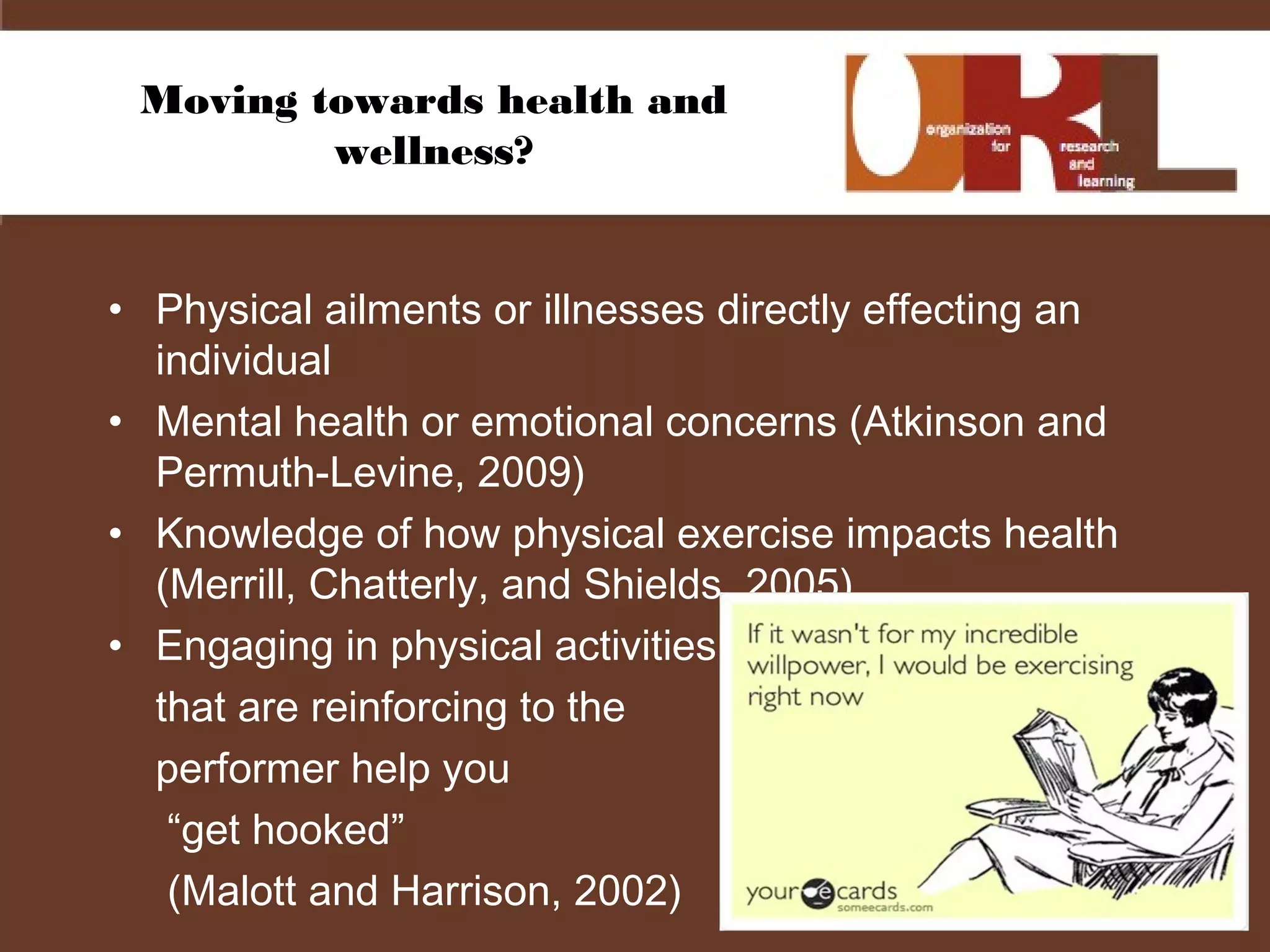
• Engaging in physical activities
that are reinforcing to the
performer help you
“get hooked”
(Malott and Harrison, 2002)
Barriers
• “ Here is the problem: knowing what to do, when to
do it, and why, is not enough to get us to do it”
(Mallott and Harrison, 2002)
Barriers
• “…a variety of physical activity barriers have been
identified: time, inconvenience, lack of self-
motivation, the belief that exercise is boring or
unenjoyable, low self-efficacy, fear of injury, poor
self-management skills, lack of social support, and
insufficient access to safe places to exercise” (Tai-
Seal, 2003)
…contingencies are different
for everyone…
Why does it come up at ORL?
• Chart share
• Staff demographics
• ORL also includes
health and wellness
as a pinpoint on the
professional
evaluation for
professional staff
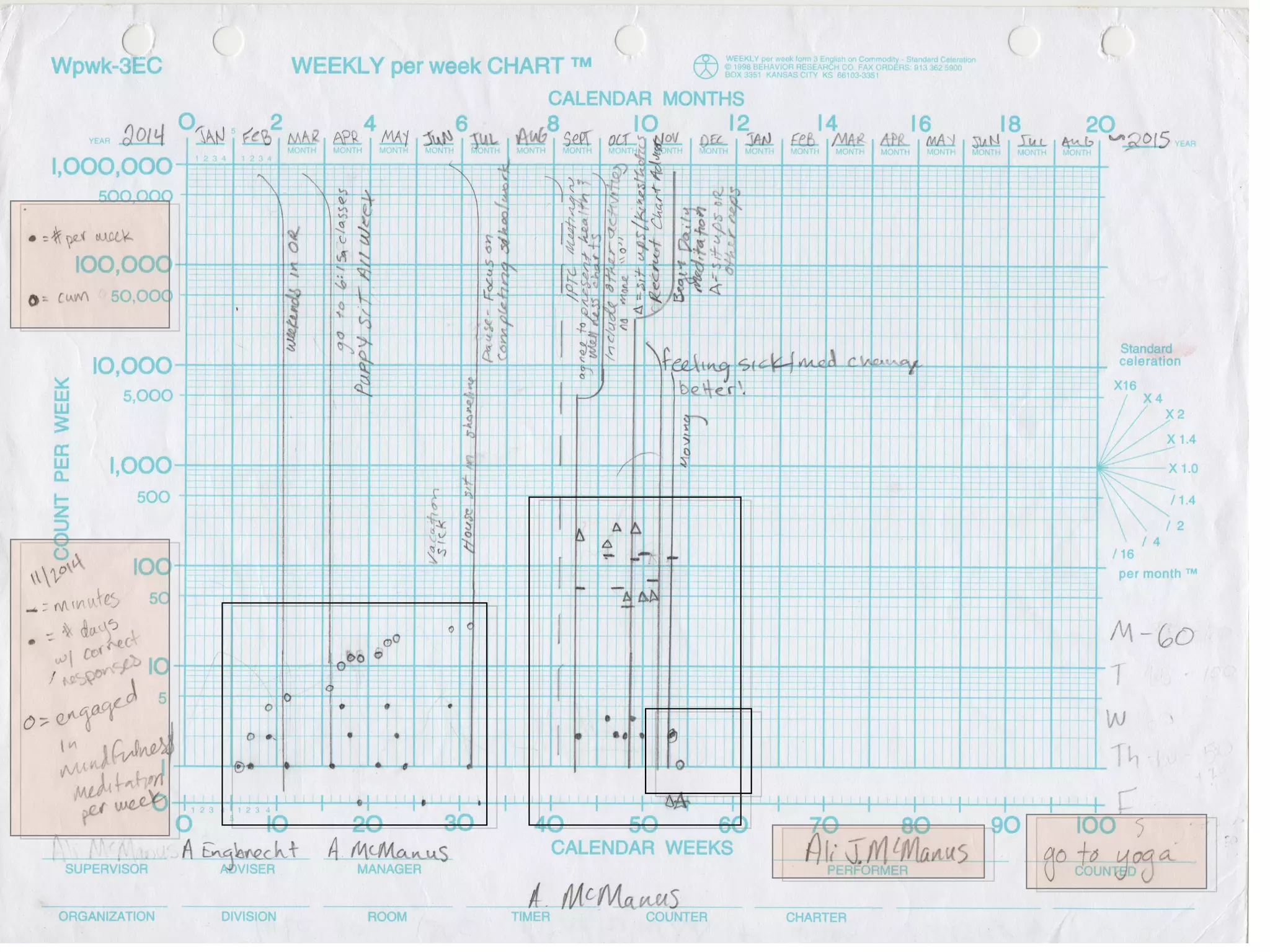
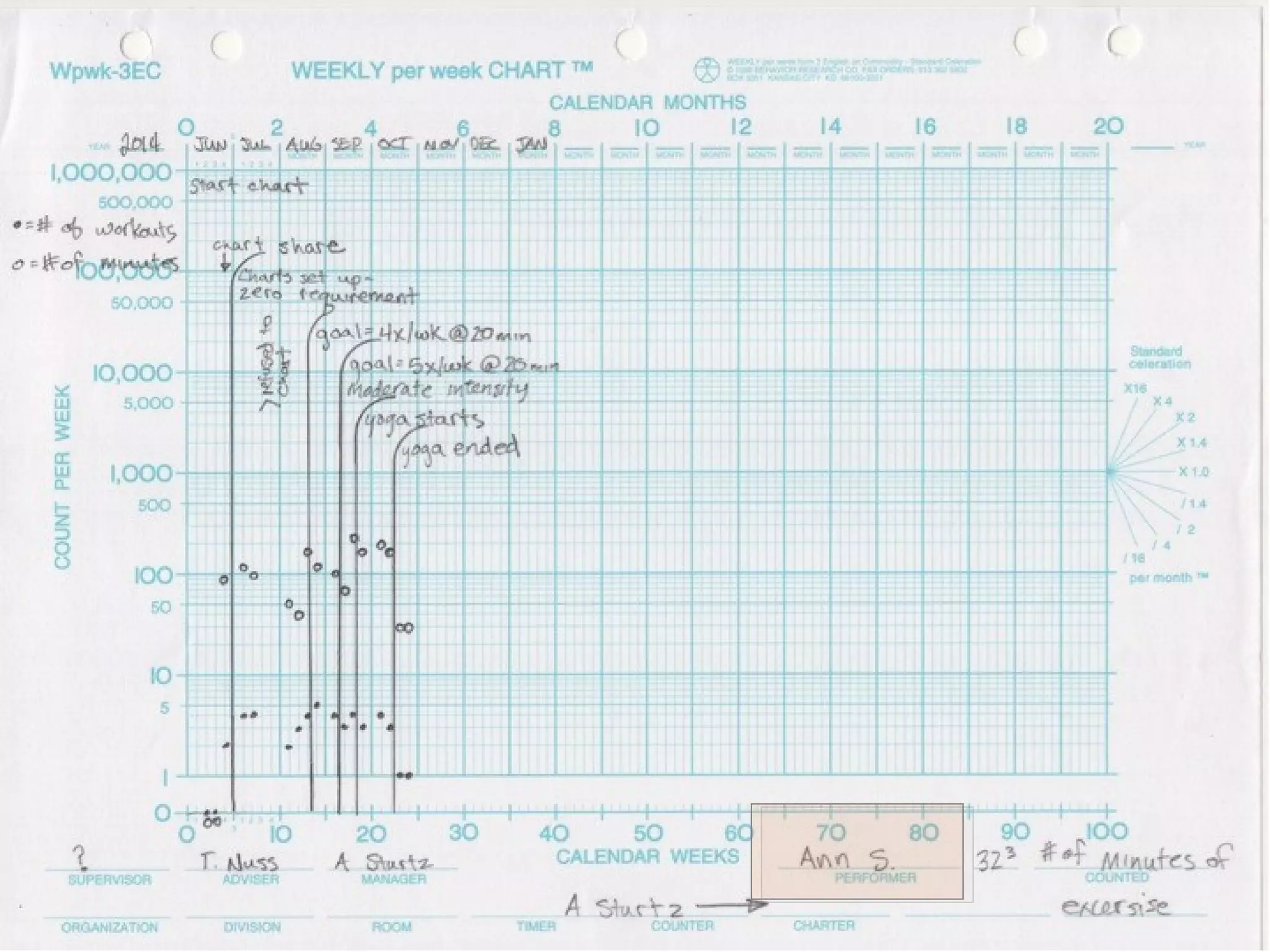
What do our charts look like?
• Data in context
• Themes of intervention
• A note on our charts
– Not learning new motor responses
– These charts look crazy
Bet Money
What Worked
(or at least, what were some common
practices?)
SURPRISE! Setting goals
Recruiting feedback and social
reinforcement, reinforcement
contingencies
Other Common Themes
life happens…
so do competing values
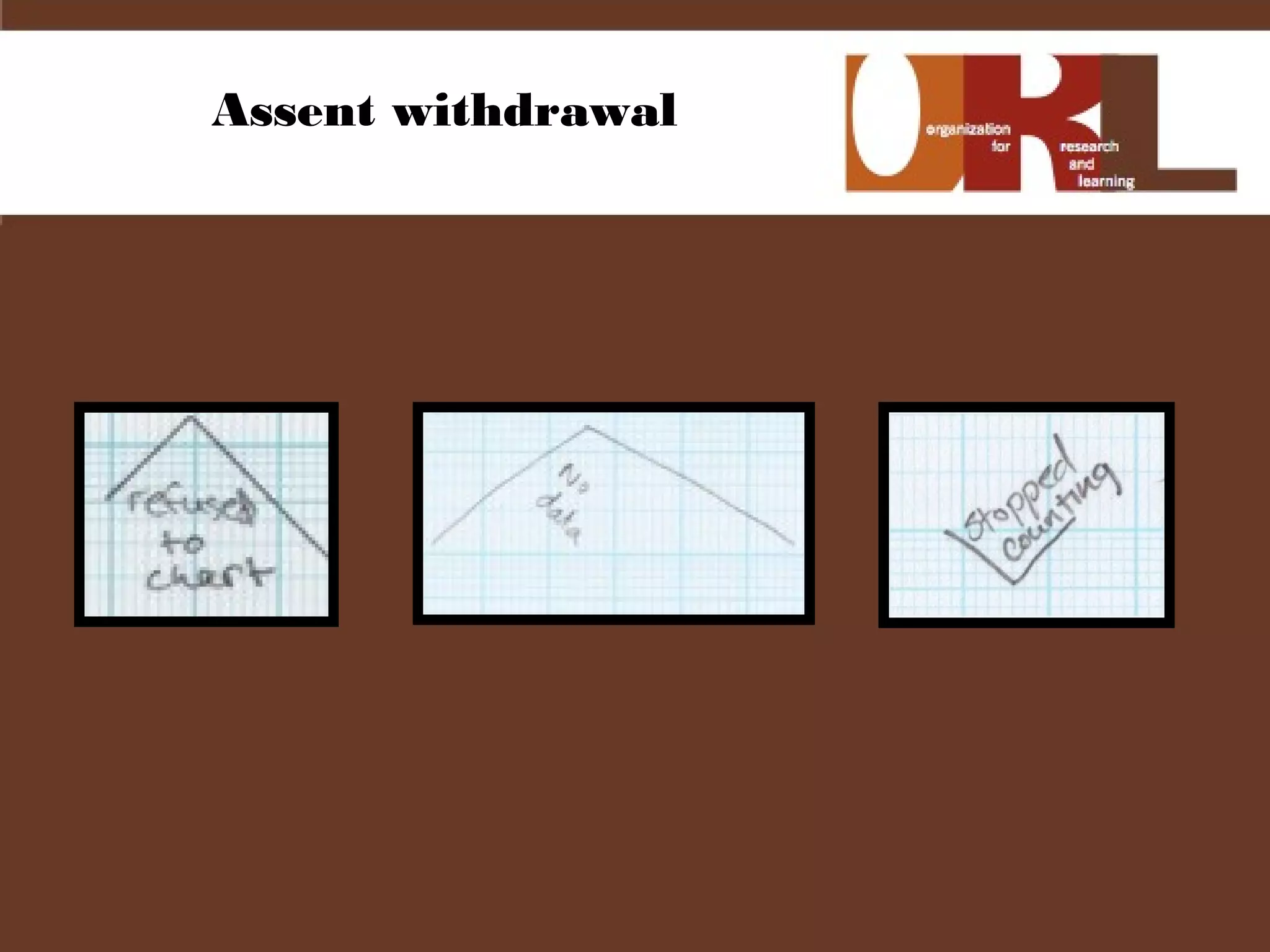
Assent withdrawal
What Did We Miss?
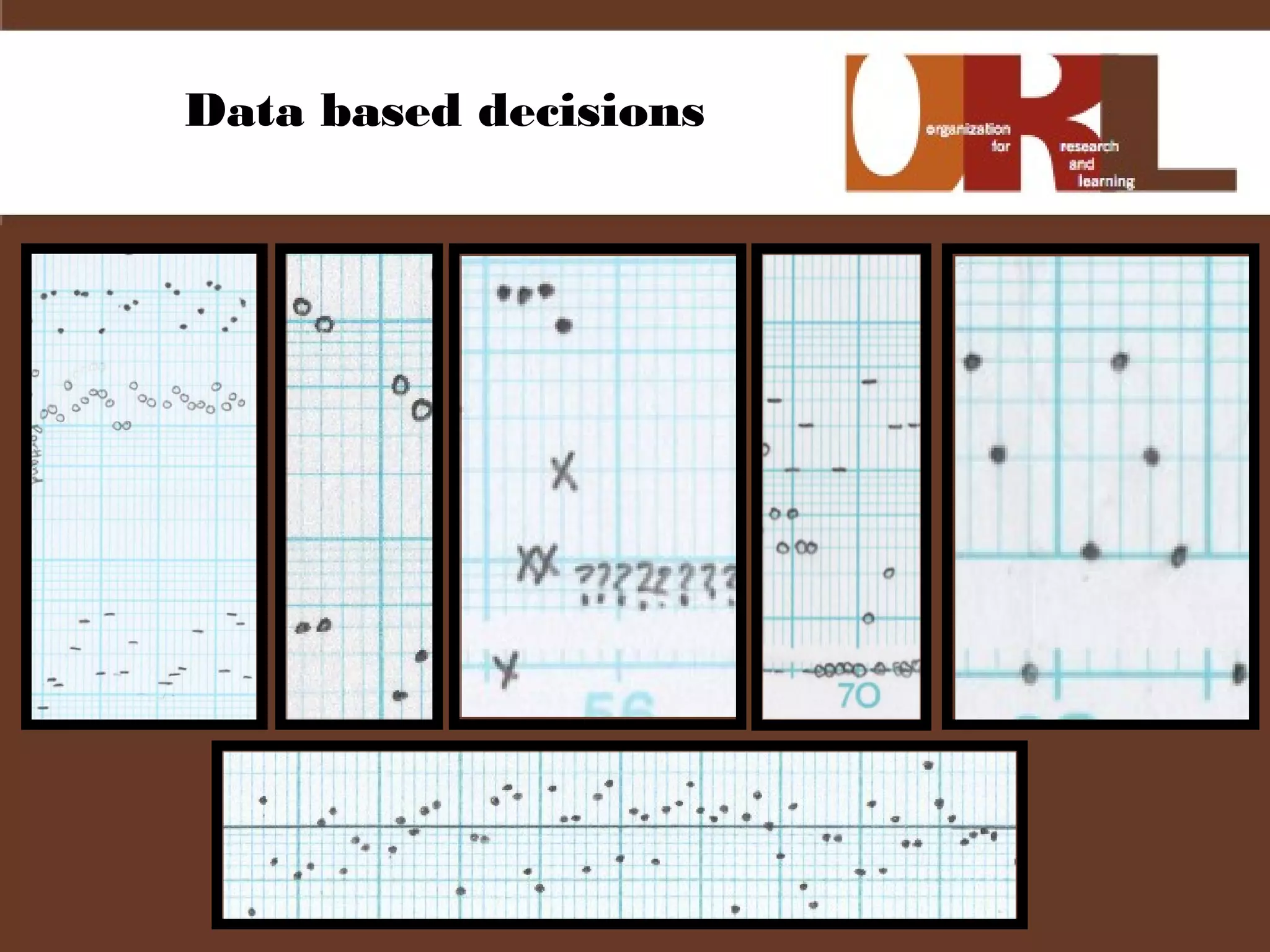
Data based decisions
Goose v. Gander: How can this
inform us going forward?
Our health and wellness
charts:
• Recruit feedback
– Get a chart advisor
– Share publicly
• Try non-linear
approaches
• Use reinforcement
• Have more frequent
contact with the chart
• Put $ on it
• RESPOND TO DATA!!
As an organization, in our
work with clients:
• Let life happen
• Sometimes it is okay to:
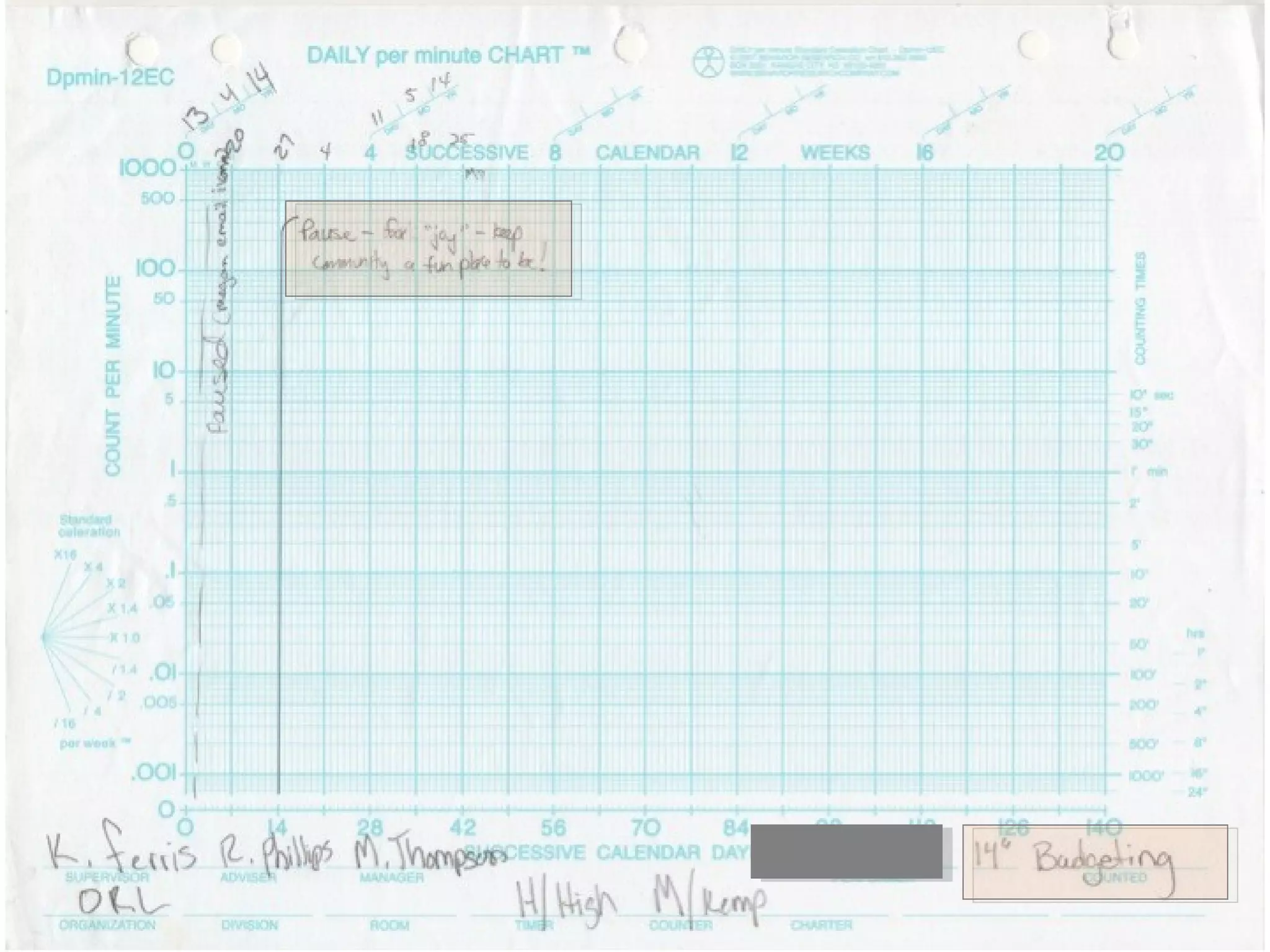
– Intervene on a chart
– Stop counting
– Stop contingencies
– “Stay for joy”
References
Centers for Disease Control and Prevention. CDC Behavioral Risk factor Surveillance
Survey. Available at: http://www.cdc.gov/brfss/
Malott, R.W., Harrison, H. (2002): A behavioranalytic tretise on auto-regulation in
homosapiens. Department of Psychology, Western Michegan University.
Merrill, Ray M., Chatterly, Amanda, Shields, Eric C. (2005). Perceived effectiveness among
college students of selected statistical measures in motivating exercise behavior.
American Journal of Health Education, 36(2), 94-102.
Tai-Seale, T. (2003). Stage of change specific triggers and barriers to moderate physical activity.
American Journal of Health Behavior, 27(3), 219-227. Retrieved from
http://search.proquest.com/docview/211791496?accountid=166077
U.S. department of agriculture. Dietary Guidelines for Americans, 2010. available at:
http://www.cnpp.usda.gov/DietaryGuidelines
World Health Organization http://www.who.int/features/factfiles/physical_activity/en/
The Big Question: Aligning
Values at Work and Home (or
the gym)
• How can the work we do with our clients
inform how we intervene on our own
behavior?
– Let the data inform changes
• How can our data on intervening on our own
behavior guide us to be better practitioners?
– As a group we were good at allowing for life to
happen
• Intervened on chart
• Stopped counting
• Stopped contingencies

IPTC 2014 health and wellness.v4

  • 1.
    Health and Wellness MeganThompson, M.Ed., BCBA O.R.L. Alison McManus, M.A. O.R.L.
  • 2.
    Health and Wellness:Why is it important? • 80% of adults do not meet the guidelines for exercise (CDC) • Physical inactivity is the fourth leading risk factor for global mortality (WHO) • Less than 5% of adults get 30 minutes of exercise each day (Department Of Agriculture) • Typical American diets exceed the recommended limits for fats and sugars (CDC)
  • 3.
    Health and Wellness:Why is it important? • The part can never be well unless the whole is well.  –Plato • To keep the body in good health is a duty, otherwise we shall not be able to keep our mind strong and clear.  -Buddha • Physical fitness is not only one of the most important keys to a healthy body, it is the basis of dynamic and creative intellectual activity.  -John F. Kennedy
  • 4.
    Moving towards healthand wellness? • Physical ailments or illnesses directly effecting an individual • Mental health or emotional concerns (Atkinson and Permuth-Levine, 2009) • Knowledge of how physical exercise impacts health (Merrill, Chatterly, and Shields, 2005) • Engaging in physical activities that are reinforcing to the performer help you “get hooked” (Malott and Harrison, 2002)
  • 5.
    Barriers • “ Hereis the problem: knowing what to do, when to do it, and why, is not enough to get us to do it” (Mallott and Harrison, 2002)
  • 6.
    Barriers • “…a varietyof physical activity barriers have been identified: time, inconvenience, lack of self- motivation, the belief that exercise is boring or unenjoyable, low self-efficacy, fear of injury, poor self-management skills, lack of social support, and insufficient access to safe places to exercise” (Tai- Seal, 2003)
  • 7.
  • 8.
    Why does itcome up at ORL? • Chart share • Staff demographics • ORL also includes health and wellness as a pinpoint on the professional evaluation for professional staff
  • 9.
    What do ourcharts look like? • Data in context • Themes of intervention • A note on our charts – Not learning new motor responses – These charts look crazy
  • 17.
  • 19.
    What Worked (or atleast, what were some common practices?)
  • 20.
  • 21.
    Recruiting feedback andsocial reinforcement, reinforcement contingencies
  • 22.
  • 23.
    life happens… so docompeting values
  • 24.
  • 25.
  • 26.
  • 27.
    Goose v. Gander:How can this inform us going forward? Our health and wellness charts: • Recruit feedback – Get a chart advisor – Share publicly • Try non-linear approaches • Use reinforcement • Have more frequent contact with the chart • Put $ on it • RESPOND TO DATA!! As an organization, in our work with clients: • Let life happen • Sometimes it is okay to: – Intervene on a chart – Stop counting – Stop contingencies – “Stay for joy”
  • 29.
    References Centers for DiseaseControl and Prevention. CDC Behavioral Risk factor Surveillance Survey. Available at: http://www.cdc.gov/brfss/ Malott, R.W., Harrison, H. (2002): A behavioranalytic tretise on auto-regulation in homosapiens. Department of Psychology, Western Michegan University. Merrill, Ray M., Chatterly, Amanda, Shields, Eric C. (2005). Perceived effectiveness among college students of selected statistical measures in motivating exercise behavior. American Journal of Health Education, 36(2), 94-102. Tai-Seale, T. (2003). Stage of change specific triggers and barriers to moderate physical activity. American Journal of Health Behavior, 27(3), 219-227. Retrieved from http://search.proquest.com/docview/211791496?accountid=166077 U.S. department of agriculture. Dietary Guidelines for Americans, 2010. available at: http://www.cnpp.usda.gov/DietaryGuidelines World Health Organization http://www.who.int/features/factfiles/physical_activity/en/
  • 30.
    The Big Question:Aligning Values at Work and Home (or the gym) • How can the work we do with our clients inform how we intervene on our own behavior? – Let the data inform changes • How can our data on intervening on our own behavior guide us to be better practitioners? – As a group we were good at allowing for life to happen • Intervened on chart • Stopped counting • Stopped contingencies

Editor's Notes

  • #3 60% of adults are not sufficiently active to achieve health benefits and 30% report no leisure-time physical activity” (Tai-Seale, 2003)
  • #28 For ourselves, how do we intervene more effectively on our health and wellness charts Clients: Respond to changing contingencies and events in the lives of our clients to maintain rapport
  • #31 As a group we did not intervene on data patterns on our own charts when similar data patterns would have elicited a change on our learner’s charts As a group we were good at allowing for life to happen Intervened on chart Stopped counting Stopped contingencies In short we were very willing to be pretty gentle with ourselves in terms of letting extraneous variables