At the ol’ dirty farm we plan for a family of three to sit down to a meal together at
least once a day. Through my readings in the Permaculture Handbook by Peter Bane,
I learned that our homestead is a “mini-farm” falling between 2.5-8 acres a lot(pg 111
Land-scales and strategies). This seems to go with our strategy of growing smaller
varieties of foods like dwarf fruit trees & with our livestock we go small as well with
our Nigerian Dwarf Goat herd. What I have learned most from reading about needs &
yields is that in order to plan for a full year food supply we will need to harvest some
crops twice a year in order to increase our numbers per crop & to carry our family
through to the next harvest cycle. When reading Mr. Bane discussed how to continue
repairing & soil building by adding organic matter to an already cultivated area to
increase healthy soil structure and eliminate weeds (Permaculture Handbook pg 197
Soil-The real Dirt). This method will become our staple at the house more now. We
have in the past chopped and dropped but we plan to add more mulchy material in
the future to aid in repair
ZUCCHINNI
SQUASH
ONIONS
GARLIC
BROCCOLI
PINK EYE
PEPPERS
LETTUCE
OKRA
CUCUMBER
APPLES
PEACHES
CROP
WATERMELON
STRAWBERRIES
CANTALOUPE
CROP
104 30.588
104
208
30.588 1
1
10.09 1.5
52 .39 .5
26 4.48 .25
52 30.5 3
260 83.7 2
156 23.63 .5
104 20.8 1
104 23.63 2
104 37.14 .75
156 45.88 1
156 57.77 1
104 17.33 .25
104 40 .75
SERVINGS A YEAR POUNDS PER YEAR
# OF 100 SQUARE FT
BEDS REQUIRED
SERVINGS A YEAR POUNDS PER YEAR # OF 100 SQUARE FT
BEDS REQUIRED
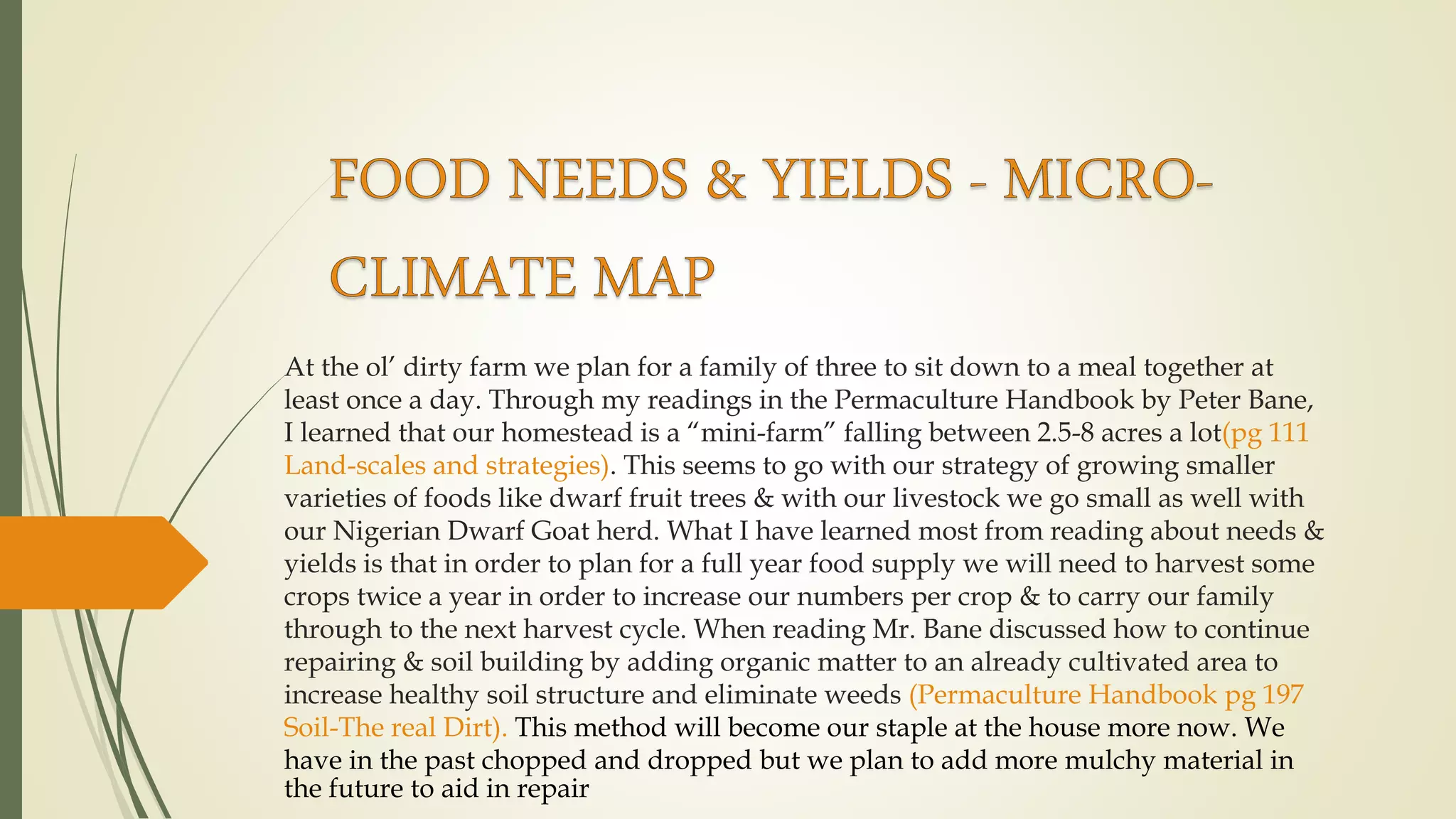
In reading a “Plan for
Food Self Sufficiency” by
Cindy Connor and after
analyzing and assessing
our own Food needs at
“ol’ dirty” I realized that I
have the land necessary
to make enough beds
and achieve these goals
with the possibility of
expanding for future
sells, trades or shares
with the community.
KIDNEY
PINTO
SERVINGS A YEAR POUNDS PER YEAR # OF 100 SQUARE FT
BEDS REQUIRED
CROP
SNO POD PEA II
SERVINGS A YEAR POUNDS PER YEAR # OF 100 SQUARE FT
BEDS REQUIRED
SERVINGS A YEAR
CORN
MILLET
CROP
OATS
104 5.77
4.3326
26 5.2
52 4.03
52 3.63 .75
1
156 91.764 9
1.25
.75
1
SERVINGS A YEAR POUNDS PER YEAR # OF 100 SQUARE FT
BEDS REQUIRED
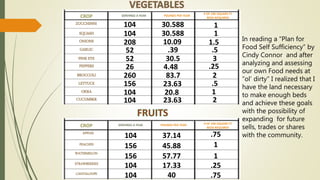
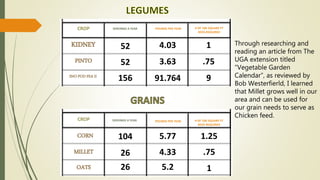
Through researching and
reading an article from The
UGA extension titled
“Vegetable Garden
Calendar”, as reviewed by
Bob Westerfierld, I learned
that Millet grows well in our
area and can be used for
our grain needs to serve as
Chicken feed.
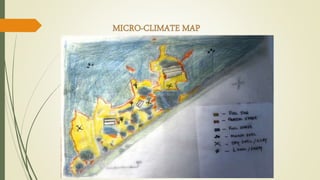
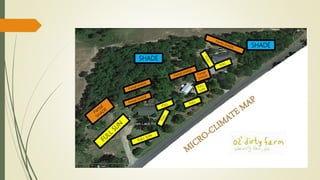
The Micro- Climate areas that would be best suited for
our vegetables reside in and near the wood line, north
on the property, where there is full shade for growing
crops such as leaf lettuces & Broccoli. In the front & side
of the house where there is full sun the area will be
conducive to growing corn, squash and peas. Our
partial shaded areas along the outside of wood line will
allow us to start our Fruit guilds and offer other
eadibles like asparagus within it. In these areas we will
be able to keep the soil cooler in an effort to keep our
Fruit trees from blooming in late winter when there are
spurts of warmer weather. As I read in the
Permaculture Handbook by Peter Bane(pg 143 Heat-
Absorbing surfaces) by positioning their roots near
cooler partial shaded ground it will keep their roots
chilled and prohibit early blooming when the
temperature rises from the onset of Spring & Summer
SHADE
SHADE

Week 3 food_needs_and_yields_and_micro-climate_map

  • 1.
    At the ol’dirty farm we plan for a family of three to sit down to a meal together at least once a day. Through my readings in the Permaculture Handbook by Peter Bane, I learned that our homestead is a “mini-farm” falling between 2.5-8 acres a lot(pg 111 Land-scales and strategies). This seems to go with our strategy of growing smaller varieties of foods like dwarf fruit trees & with our livestock we go small as well with our Nigerian Dwarf Goat herd. What I have learned most from reading about needs & yields is that in order to plan for a full year food supply we will need to harvest some crops twice a year in order to increase our numbers per crop & to carry our family through to the next harvest cycle. When reading Mr. Bane discussed how to continue repairing & soil building by adding organic matter to an already cultivated area to increase healthy soil structure and eliminate weeds (Permaculture Handbook pg 197 Soil-The real Dirt). This method will become our staple at the house more now. We have in the past chopped and dropped but we plan to add more mulchy material in the future to aid in repair
  • 2.
    ZUCCHINNI SQUASH ONIONS GARLIC BROCCOLI PINK EYE PEPPERS LETTUCE OKRA CUCUMBER APPLES PEACHES CROP WATERMELON STRAWBERRIES CANTALOUPE CROP 104 30.588 104 208 30.5881 1 10.09 1.5 52 .39 .5 26 4.48 .25 52 30.5 3 260 83.7 2 156 23.63 .5 104 20.8 1 104 23.63 2 104 37.14 .75 156 45.88 1 156 57.77 1 104 17.33 .25 104 40 .75 SERVINGS A YEAR POUNDS PER YEAR # OF 100 SQUARE FT BEDS REQUIRED SERVINGS A YEAR POUNDS PER YEAR # OF 100 SQUARE FT BEDS REQUIRED In reading a “Plan for Food Self Sufficiency” by Cindy Connor and after analyzing and assessing our own Food needs at “ol’ dirty” I realized that I have the land necessary to make enough beds and achieve these goals with the possibility of expanding for future sells, trades or shares with the community.
  • 3.
    KIDNEY PINTO SERVINGS A YEARPOUNDS PER YEAR # OF 100 SQUARE FT BEDS REQUIRED CROP SNO POD PEA II SERVINGS A YEAR POUNDS PER YEAR # OF 100 SQUARE FT BEDS REQUIRED SERVINGS A YEAR CORN MILLET CROP OATS 104 5.77 4.3326 26 5.2 52 4.03 52 3.63 .75 1 156 91.764 9 1.25 .75 1 SERVINGS A YEAR POUNDS PER YEAR # OF 100 SQUARE FT BEDS REQUIRED Through researching and reading an article from The UGA extension titled “Vegetable Garden Calendar”, as reviewed by Bob Westerfierld, I learned that Millet grows well in our area and can be used for our grain needs to serve as Chicken feed.
  • 5.
    The Micro- Climateareas that would be best suited for our vegetables reside in and near the wood line, north on the property, where there is full shade for growing crops such as leaf lettuces & Broccoli. In the front & side of the house where there is full sun the area will be conducive to growing corn, squash and peas. Our partial shaded areas along the outside of wood line will allow us to start our Fruit guilds and offer other eadibles like asparagus within it. In these areas we will be able to keep the soil cooler in an effort to keep our Fruit trees from blooming in late winter when there are spurts of warmer weather. As I read in the Permaculture Handbook by Peter Bane(pg 143 Heat- Absorbing surfaces) by positioning their roots near cooler partial shaded ground it will keep their roots chilled and prohibit early blooming when the temperature rises from the onset of Spring & Summer
  • 6.