Week 11: SEMESTER REVIEW
Digital journalism tenet #1
NEWS IS SOCIAL
News Is Social
“News is becoming a shared social
experience, with people swapping
links in emails, posting on social
networks, ‘retweeting’ news stories
and haggling over the meaning of
events in discussion threads.”
Pew Internet and American Life Project, 2010
Digital journalism
How does news being
“social” change your job
as journalists?
News Is Social
IT DOESN’T.
Profile of the New Journalist
WHAT DOES BEING
SOCIAL MEAN FOR A
JOURNALIST?
BUILDING A COMMUNTIY
Follow and be followed
Interact
reply and engage with audience
members
facilitate conversations
Give and getting credibility
You all launched blogs:
Why blogs?
You officially became bloggers
• What have ou learned about
producing blogs?
• Are there do’s and don’ts?
• Do you mostly do the do’s and
avoid the dont’s?
KISS
• KISS: Keep It Short and Simple
• get to the point quickly
• readers are curious…and busy
• too much info and too little time
• one idea per paragraph
• straightforward language
Writing for blogs and social media
How is it different from
writing off-line?
YOU’RE NOT JUST
WRITING TO REPORT,
YOU’RE WRITING TO
CONNECT
WRITE FOR YOUR MEDIUM
Write for your medium as well as for your
audience.
• think about the way it will be consumed
• think about structuring the information for
optimal consumption/sharing
– Ex: Write Facebook posts as ledes or blurbs.
– Write tweets as headlines.
– Headline your blog posts strategically.
It’s about telling the same
stories in many different
ways
Twitter
The indispensable
news tool?
What Twitter Does Best
• It creates connections through common interests
rather than friends
• It’s fully public and fully searchable
• It amplifies the news (does not reliably break it)
• Generally a quicker way to do all the things you
can do on other social media too (find sources,
get questions answered, crowdsource content,
push out news blasts, take the temperature of a
community, etc)
What exactly is being social about?
Blogging, Tweeting, live-Tweeting, live-
blogging, Facebooking, Tumblring
and Instagramming – among other
social media – are the new tools of
the social news industry.
What does being social really mean?
BEING SOCIAL =
SHARING
How is sharing today
different from sharing
before?
It’s an open market.
Many consumers and producers,
consumers who are producers,
fewer and fewer gatekeepers,
rapidly evolving rules, and total
transparency.
MANAGING YOUR BRAND
Make sure your content on every
platform is a reflection of your brand:
think through every tweet, blog post, Facebook,
Tumblr or Pinterest post before you publish
think before you reply on any platform
think about what the content you share says
about you
think about what you don’t say
PERSONAL BRAND
You aren’t just a
reporter/writer/producer anymore.
You are a brand.
Is the new model of journalism
personal brand journalism?
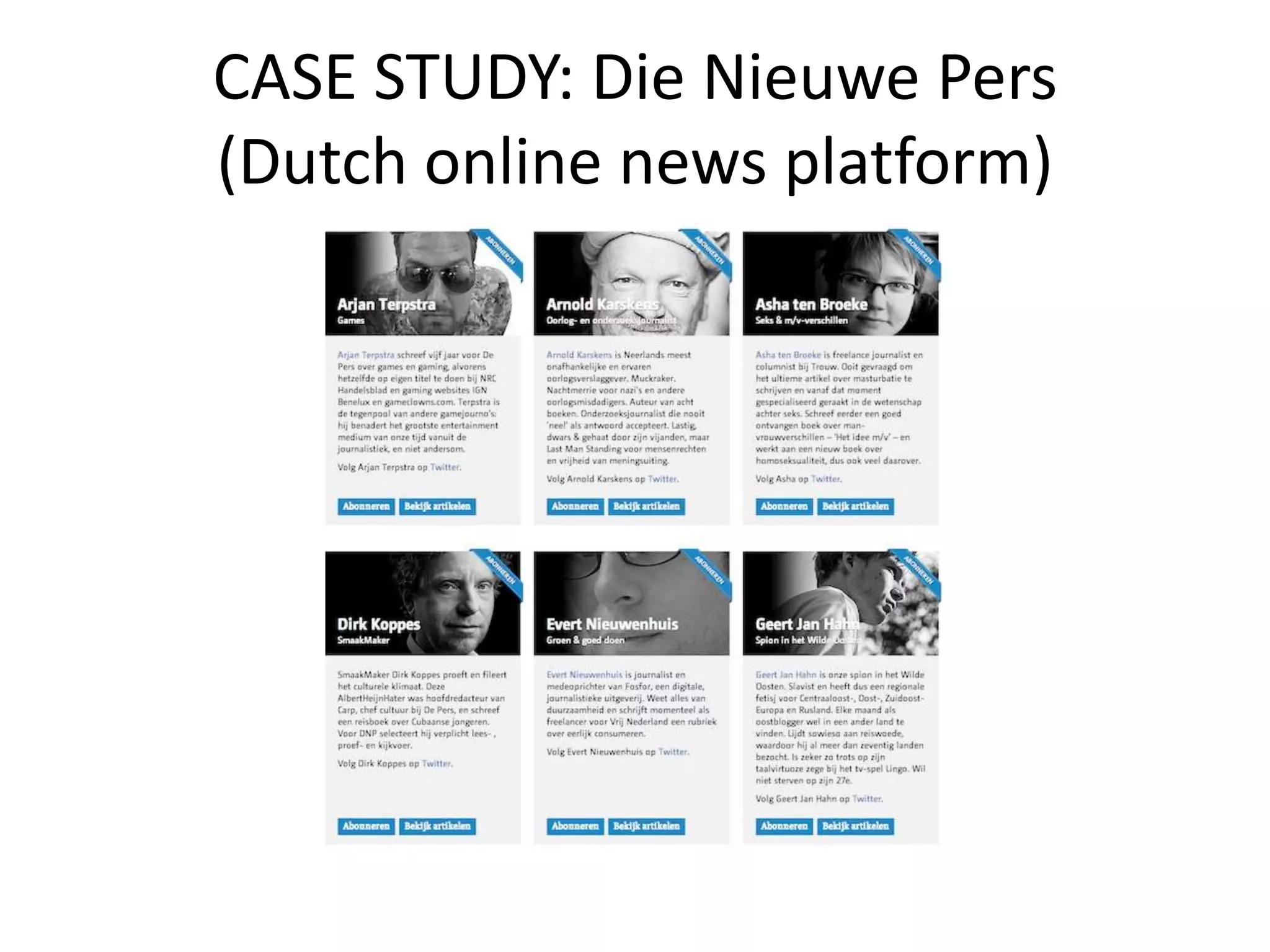
CASE STUDY: Die Nieuwe Pers
(Dutch online news platform)
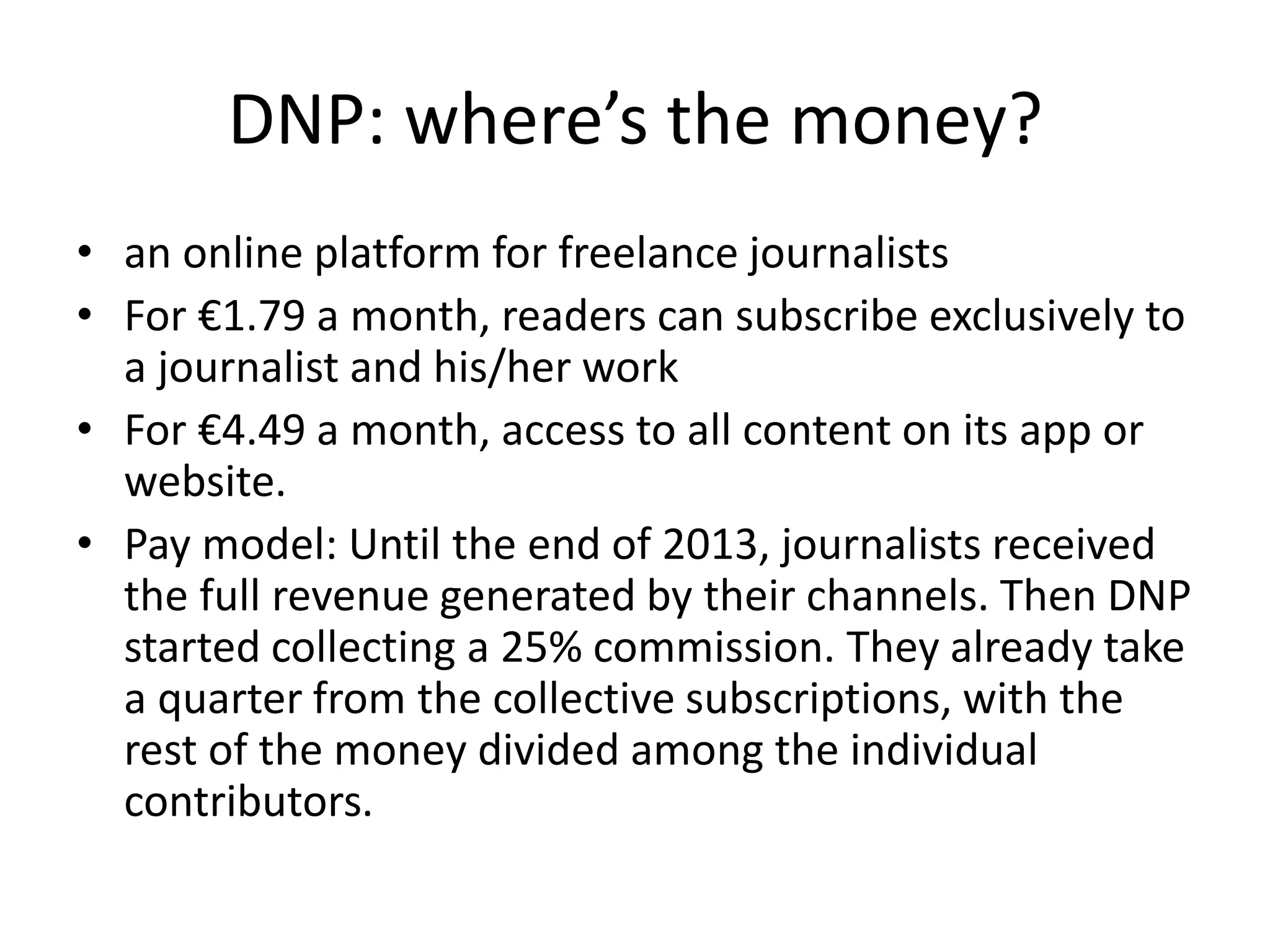
DNP: where’s the money?
• an online platform for freelance journalists
• For €1.79 a month, readers can subscribe exclusively to
a journalist and his/her work
• For €4.49 a month, access to all content on its app or
website.
• Pay model: Until the end of 2013, journalists received
the full revenue generated by their channels. Then DNP
started collecting a 25% commission. They already take
a quarter from the collective subscriptions, with the
rest of the money divided among the individual
contributors.
DNP’s real revenue
• the company managed to sell some of the
technology they developed
• goal is further « product development ».
DNP set to introduce thematic bundles and a
bundle of bundles (i.e. your own customized
newspaper). Currently expanding their pool of
journalists to cover more themes.
DNP: Dutch online news platform
“News has become more personal. People are
interested in the opinions, the beliefs, the
revelations of a certain journalist they know
and trust, much more than an anonymous
person who writes for a large publication.”
-Alain van der Horst, editor in chief of
De Nieuwe Pers
But it didn’t work out.
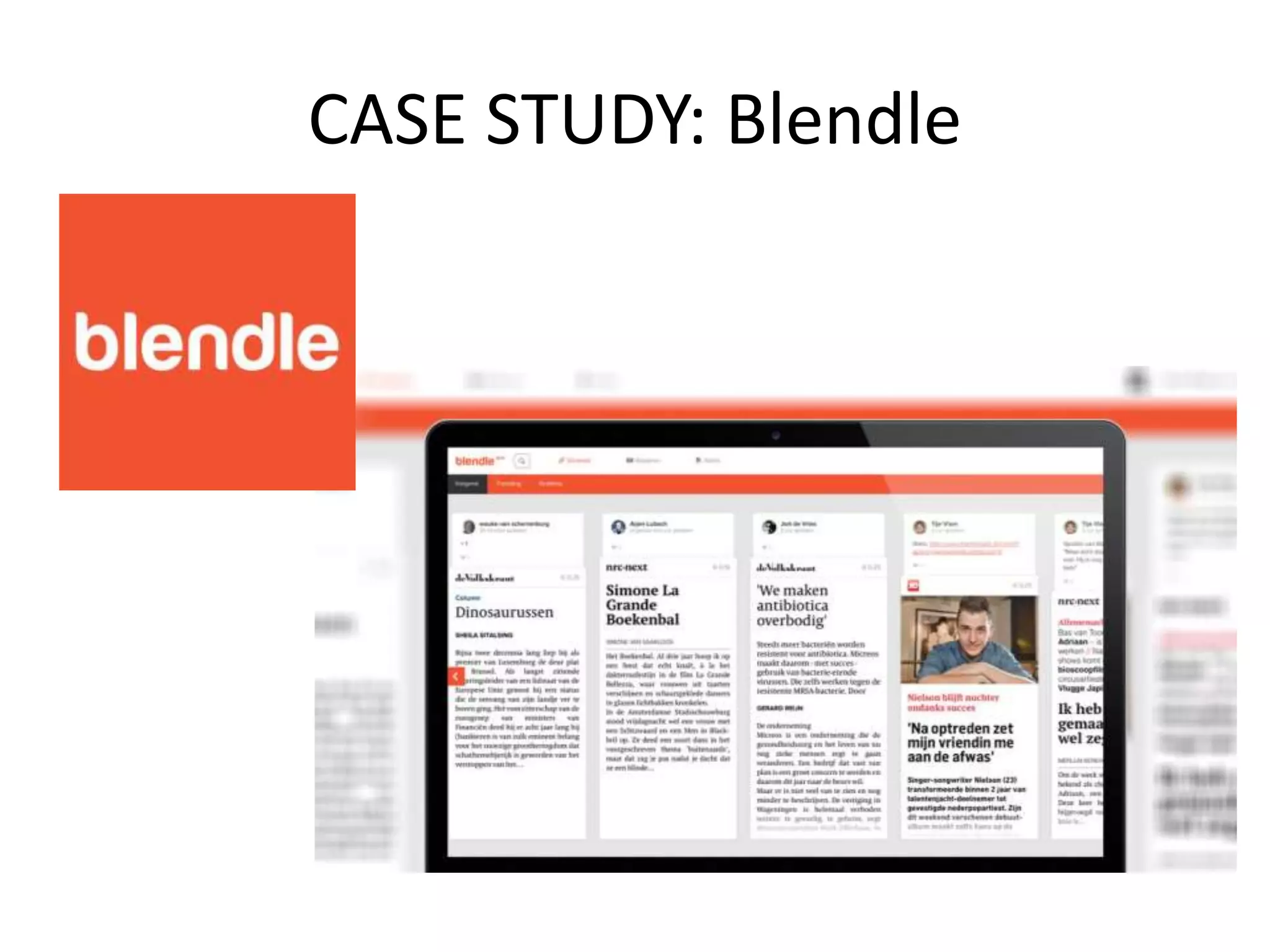
CASE STUDY: Blendle
Blendle, the model:
Concept: a Dutch news startup where readers pay by the
article
• Blendle launched last May
• the site has over 130,000 registered users
• Publishers set the prices for how much each of their
articles cost, and keep 70 percent of the revenue
generated from those stories. Blendle takes the other 30
percent.
• In October, the NYT and Axel Springer invested $3.7
million
• Plans: expand into other markets and other languages.
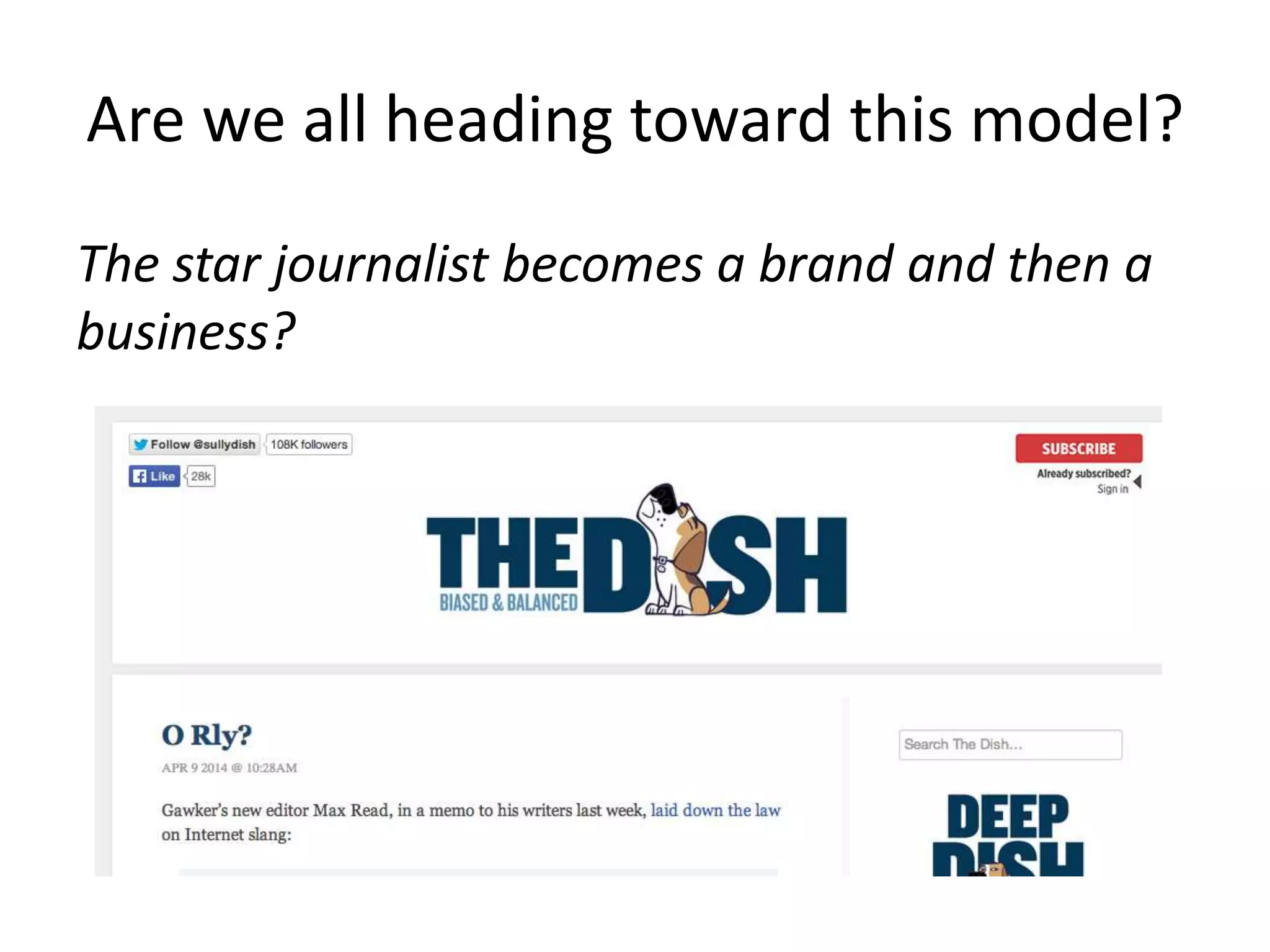
Are we all heading toward this model?
The star journalist becomes a brand and then a
business?
But then after two years of being independent,
he burned out.
Will more and more writers
be going out on their own?
What sis the new model of
media?
And of the journalist?
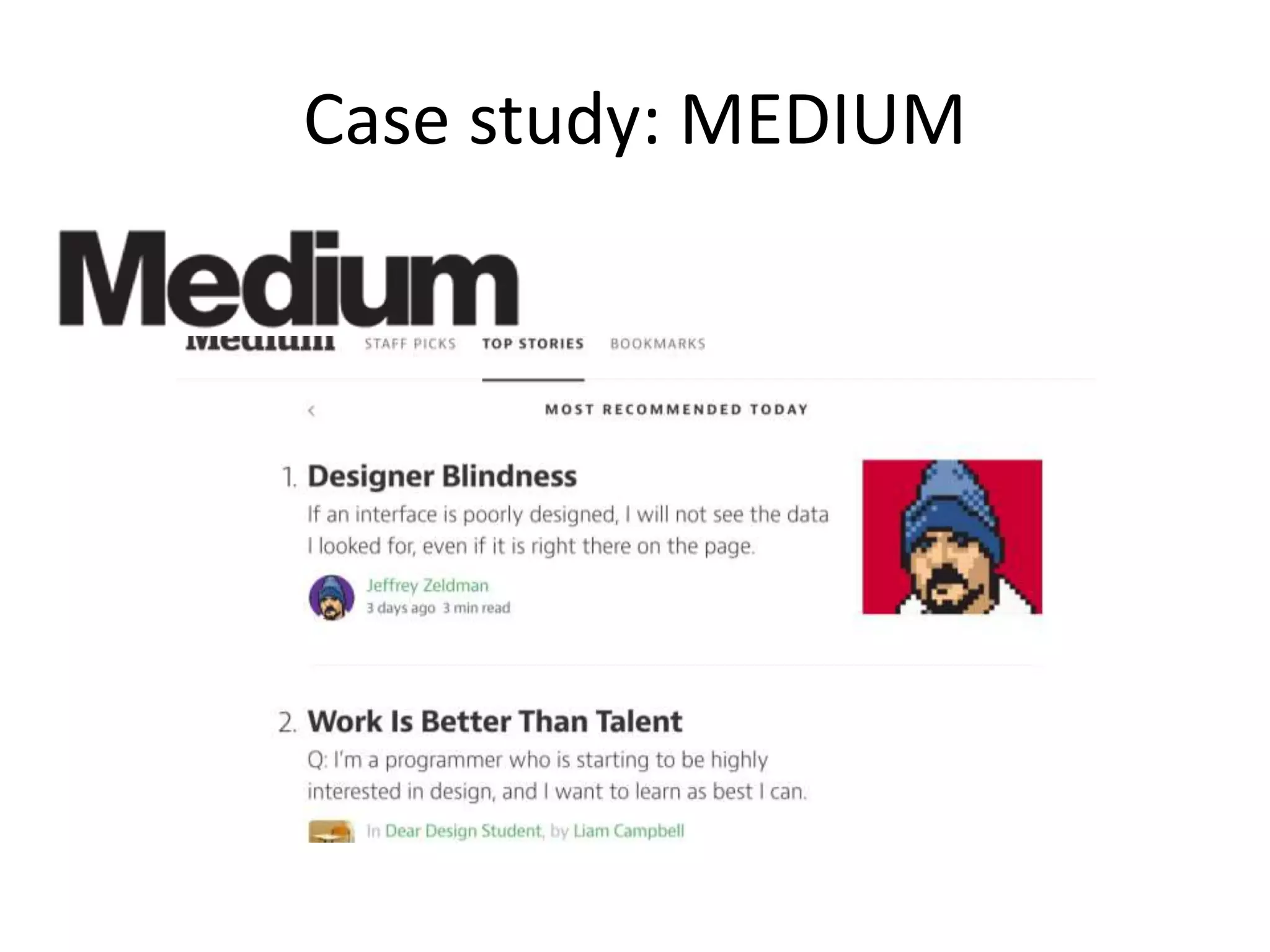
Case study: MEDIUM
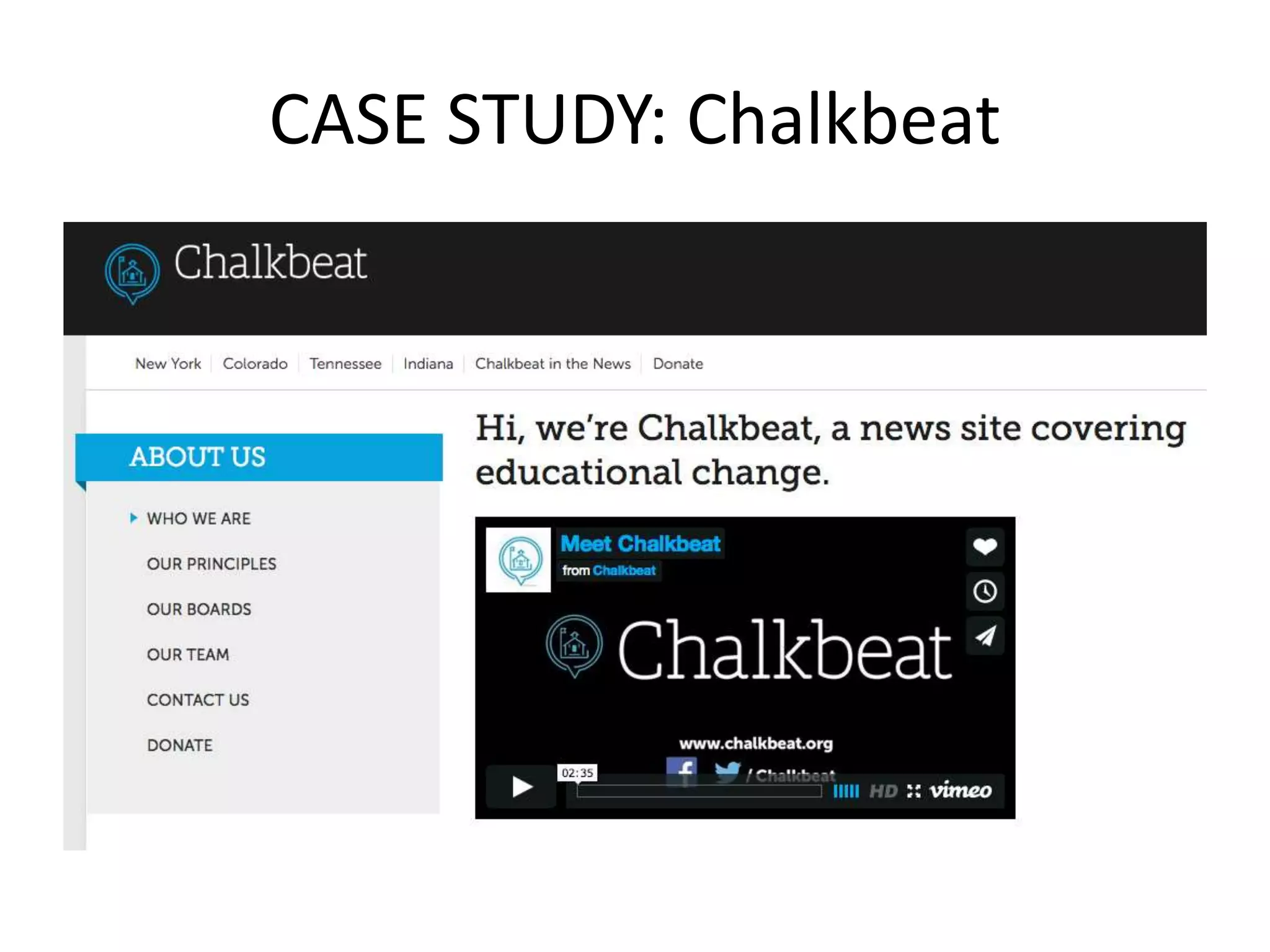
CASE STUDY: Chalkbeat
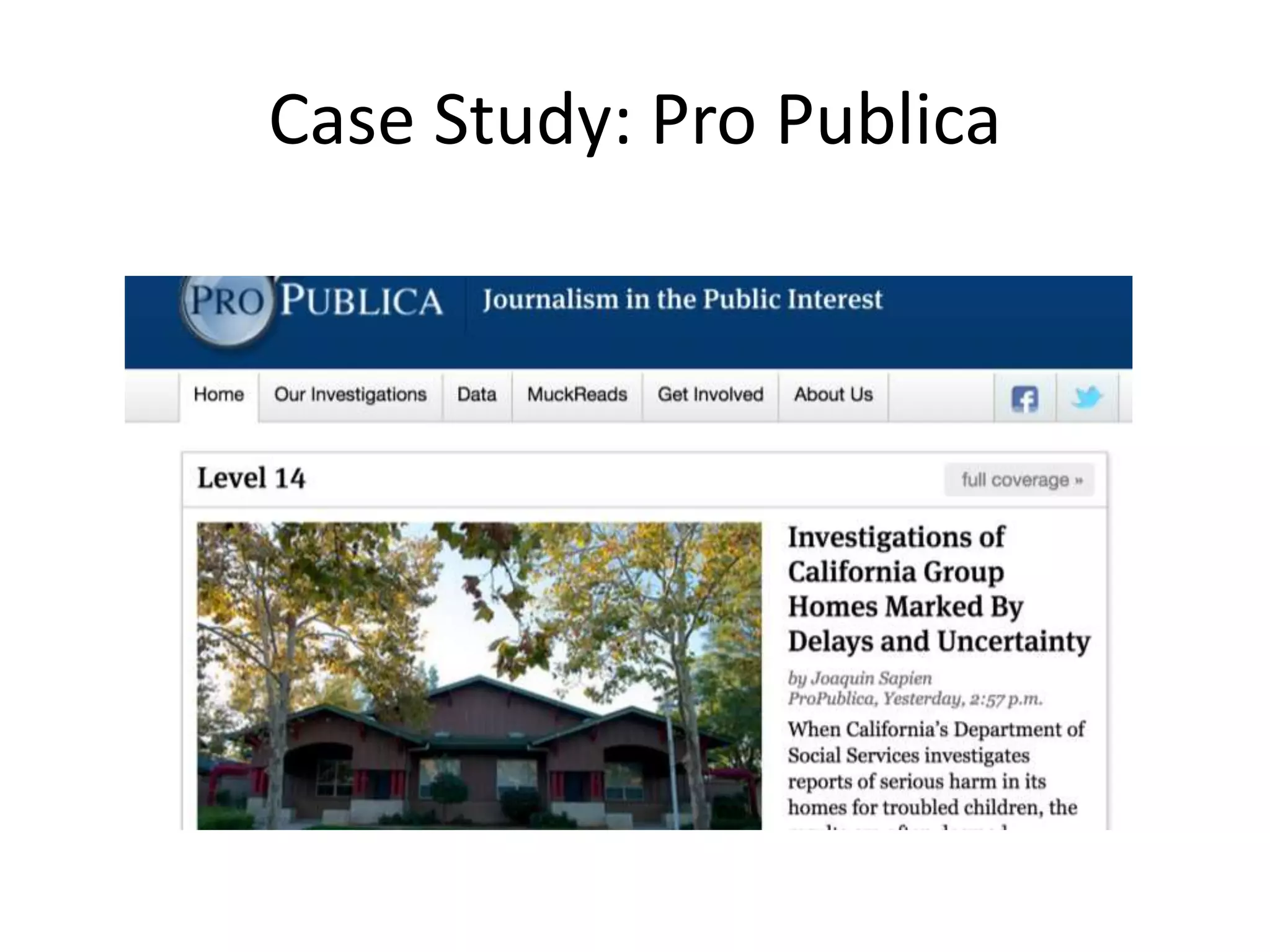
Case Study: Pro Publica
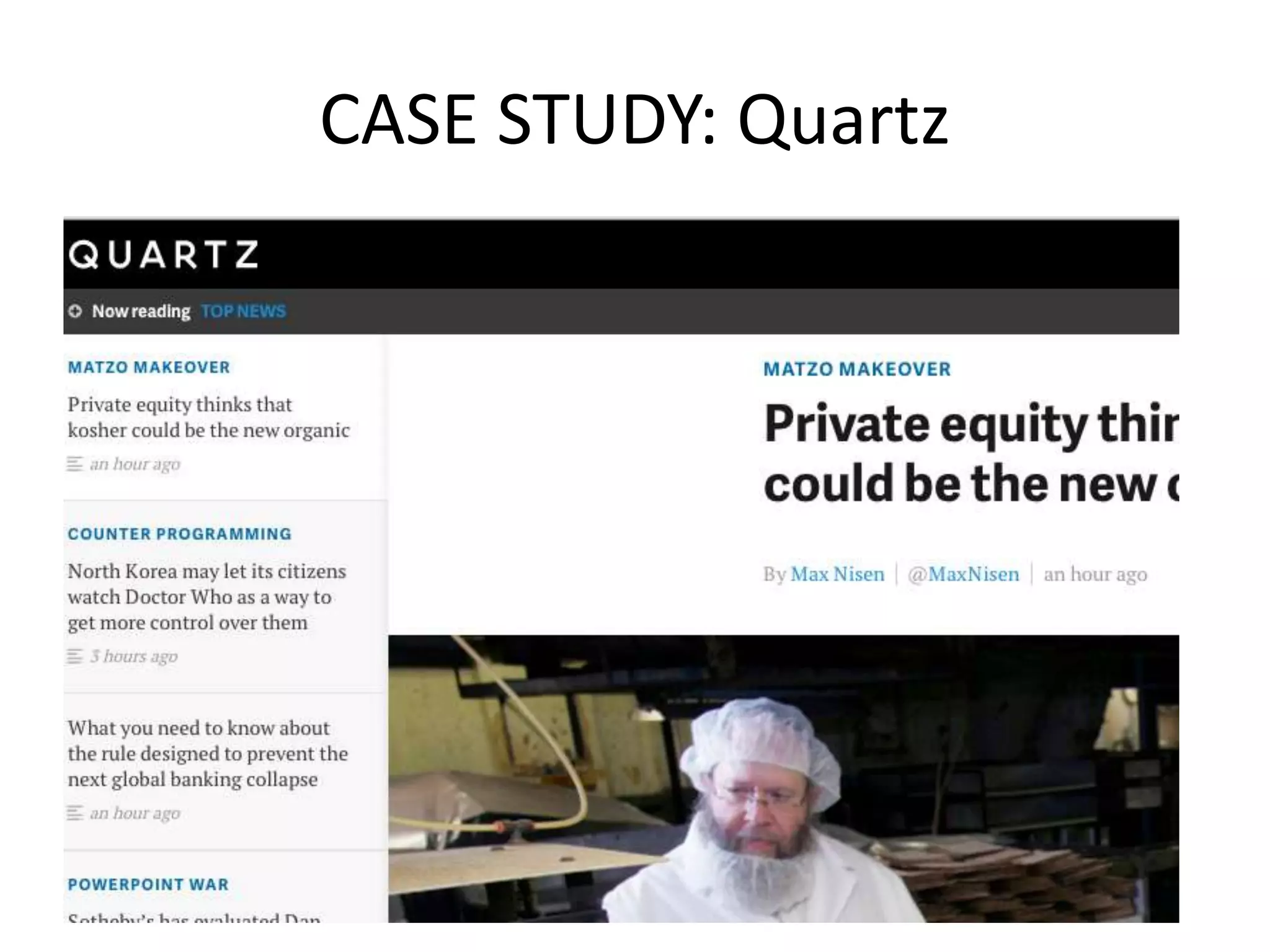
CASE STUDY: Quartz
CASE STUDY: Quartz
1. Mobile and tablet-first focus
2. Elite audience
3. No more “beats,” obsessions instead
4. Free, with ads and sponsored content, or
branded content
And what about branded content?
http://efranfilms.com/women-in-prison/
CONCLUSION:
What’s a journalist today?
« Well, it’s far more than making phone calls, writing a
story and going home. We’re betting on the individual,
and that means the individual must accept more
accountability. They need to write the story, the
headline, publish, market and promote themselves
across the social Web and engage one-on-one with
their readers. Yes, a reporter needs to respond to
comments. They also need to understand the data that
tells them who’s reading what they write and why.
They need to find their information ecosystem and
wade into it to build an audience. »
- Louis D’Vorkin, Chief Product Officer of Forbes Media

Week 11 semester review

  • 1.
  • 2.
    Digital journalism tenet#1 NEWS IS SOCIAL
  • 3.
    News Is Social “Newsis becoming a shared social experience, with people swapping links in emails, posting on social networks, ‘retweeting’ news stories and haggling over the meaning of events in discussion threads.” Pew Internet and American Life Project, 2010
  • 4.
    Digital journalism How doesnews being “social” change your job as journalists?
  • 5.
  • 6.
    Profile of theNew Journalist WHAT DOES BEING SOCIAL MEAN FOR A JOURNALIST?
  • 7.
    BUILDING A COMMUNTIY Followand be followed Interact reply and engage with audience members facilitate conversations Give and getting credibility
  • 8.
    You all launchedblogs: Why blogs?
  • 9.
    You officially becamebloggers • What have ou learned about producing blogs? • Are there do’s and don’ts? • Do you mostly do the do’s and avoid the dont’s?
  • 10.
    KISS • KISS: KeepIt Short and Simple • get to the point quickly • readers are curious…and busy • too much info and too little time • one idea per paragraph • straightforward language
  • 11.
    Writing for blogsand social media How is it different from writing off-line?
  • 12.
    YOU’RE NOT JUST WRITINGTO REPORT, YOU’RE WRITING TO CONNECT
  • 13.
    WRITE FOR YOURMEDIUM Write for your medium as well as for your audience. • think about the way it will be consumed • think about structuring the information for optimal consumption/sharing – Ex: Write Facebook posts as ledes or blurbs. – Write tweets as headlines. – Headline your blog posts strategically.
  • 14.
    It’s about tellingthe same stories in many different ways
  • 15.
  • 16.
    What Twitter DoesBest • It creates connections through common interests rather than friends • It’s fully public and fully searchable • It amplifies the news (does not reliably break it) • Generally a quicker way to do all the things you can do on other social media too (find sources, get questions answered, crowdsource content, push out news blasts, take the temperature of a community, etc)
  • 17.
    What exactly isbeing social about? Blogging, Tweeting, live-Tweeting, live- blogging, Facebooking, Tumblring and Instagramming – among other social media – are the new tools of the social news industry. What does being social really mean?
  • 18.
  • 19.
    How is sharingtoday different from sharing before?
  • 20.
    It’s an openmarket. Many consumers and producers, consumers who are producers, fewer and fewer gatekeepers, rapidly evolving rules, and total transparency.
  • 21.
    MANAGING YOUR BRAND Makesure your content on every platform is a reflection of your brand: think through every tweet, blog post, Facebook, Tumblr or Pinterest post before you publish think before you reply on any platform think about what the content you share says about you think about what you don’t say
  • 22.
    PERSONAL BRAND You aren’tjust a reporter/writer/producer anymore. You are a brand. Is the new model of journalism personal brand journalism?
  • 23.
    CASE STUDY: DieNieuwe Pers (Dutch online news platform)
  • 24.
    DNP: where’s themoney? • an online platform for freelance journalists • For €1.79 a month, readers can subscribe exclusively to a journalist and his/her work • For €4.49 a month, access to all content on its app or website. • Pay model: Until the end of 2013, journalists received the full revenue generated by their channels. Then DNP started collecting a 25% commission. They already take a quarter from the collective subscriptions, with the rest of the money divided among the individual contributors.
  • 25.
    DNP’s real revenue •the company managed to sell some of the technology they developed • goal is further « product development ». DNP set to introduce thematic bundles and a bundle of bundles (i.e. your own customized newspaper). Currently expanding their pool of journalists to cover more themes.
  • 26.
    DNP: Dutch onlinenews platform “News has become more personal. People are interested in the opinions, the beliefs, the revelations of a certain journalist they know and trust, much more than an anonymous person who writes for a large publication.” -Alain van der Horst, editor in chief of De Nieuwe Pers
  • 27.
    But it didn’twork out.
  • 28.
  • 29.
    Blendle, the model: Concept:a Dutch news startup where readers pay by the article • Blendle launched last May • the site has over 130,000 registered users • Publishers set the prices for how much each of their articles cost, and keep 70 percent of the revenue generated from those stories. Blendle takes the other 30 percent. • In October, the NYT and Axel Springer invested $3.7 million • Plans: expand into other markets and other languages.
  • 30.
    Are we allheading toward this model? The star journalist becomes a brand and then a business?
  • 31.
    But then aftertwo years of being independent, he burned out.
  • 32.
    Will more andmore writers be going out on their own? What sis the new model of media? And of the journalist?
  • 33.
  • 34.
  • 35.
  • 36.
  • 37.
    CASE STUDY: Quartz 1.Mobile and tablet-first focus 2. Elite audience 3. No more “beats,” obsessions instead 4. Free, with ads and sponsored content, or branded content
  • 38.
    And what aboutbranded content? http://efranfilms.com/women-in-prison/
  • 39.
    CONCLUSION: What’s a journalisttoday? « Well, it’s far more than making phone calls, writing a story and going home. We’re betting on the individual, and that means the individual must accept more accountability. They need to write the story, the headline, publish, market and promote themselves across the social Web and engage one-on-one with their readers. Yes, a reporter needs to respond to comments. They also need to understand the data that tells them who’s reading what they write and why. They need to find their information ecosystem and wade into it to build an audience. » - Louis D’Vorkin, Chief Product Officer of Forbes Media