‘We Media’ &
Democracy


In what ways is British society democratic?
(3 min.)

Democracy


In what ways is British society democratic?
(3 min.)



In what ways is British society not democratic?
(3 min.)

Democracy


In what ways is British society democratic?
(3 min.)



In what ways is British society not democratic?
(3 min.)



What is Democracy?

Democracy

(3 min.)


The issue with Democracy is that it is very
debatable in terms of what it exactly means and
what it should entitle us as citizens too.

Democracy


The issue with Democracy is that it is very
debatable in terms of what it exactly means and
what it should entitle us as citizens too.



For the purpose of this unit, it is best to adopt a
somewhat critical perspective towards
democracy- to understand that as citizens we
have very little real input into what the
government does.

Democracy
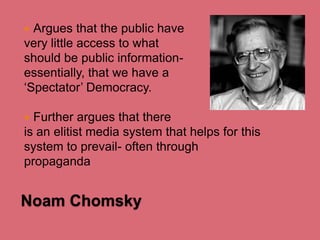
Argues that the public have
very little access to what
should be public informationessentially, that we have a
‘Spectator’ Democracy.


Further argues that there
is an elitist media system that helps for this
system to prevail- often through
propaganda


Noam Chomsky
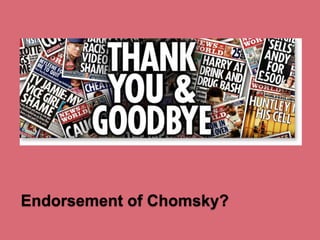
Endorsement of Chomsky?


‘It’s all about power, of course. In the end’
- Roger Silverstone

How does this relate to Media?
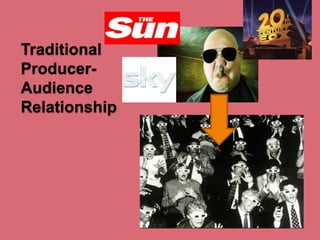
Traditional
ProducerAudience
Relationship
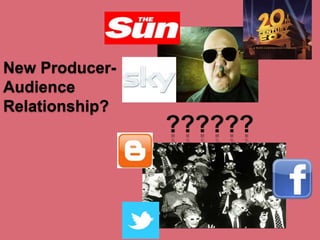
New ProducerAudience
Relationship?


Think of at least 2 examples of why audiences
have become more powerful and/or producers
have become less powerful?

Power Shift?
David Gauntlett summarised the idea of WEB 2.0
In a nutshell, Gauntlett says that we now have an
ability to be more creative and with more freedom
(linking to greater happiness).
WEB 2.0 allows for faster, more collaborative
creativity, and feeds a desire to be connected.
Watch this video to help us understand…

WEB 2.0
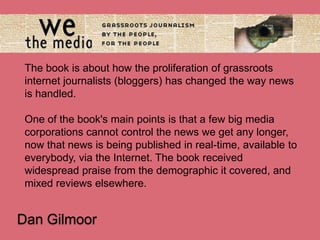
The book is about how the proliferation of grassroots
internet journalists (bloggers) has changed the way news
is handled.
One of the book's main points is that a few big media
corporations cannot control the news we get any longer,
now that news is being published in real-time, available to
everybody, via the Internet. The book received
widespread praise from the demographic it covered, and
mixed reviews elsewhere.

Dan Gilmoor
A Quick Recap
Chomsky:
- we live in a spectatorship democracy
- the media ensures that this system remains in
place
 Media Power:
- traditionally media has been about producers
telling/having power over audiences. This has
changed somewhat

‘We Media’
As the name implies this refers to media that we
(‘normal’ citizens) are able to make.
 The debate is whether these are able to lead to
a more democratic system of media and what
implications this has for wider society

Objective
Develop an understanding
and appreciation for the
(relatively recent) changes in
the media.

Week 1 'we media’ and democracy

  • 1.
  • 2.
     In what waysis British society democratic? (3 min.) Democracy
  • 3.
     In what waysis British society democratic? (3 min.)  In what ways is British society not democratic? (3 min.) Democracy
  • 4.
     In what waysis British society democratic? (3 min.)  In what ways is British society not democratic? (3 min.)  What is Democracy? Democracy (3 min.)
  • 5.
     The issue withDemocracy is that it is very debatable in terms of what it exactly means and what it should entitle us as citizens too. Democracy
  • 6.
     The issue withDemocracy is that it is very debatable in terms of what it exactly means and what it should entitle us as citizens too.  For the purpose of this unit, it is best to adopt a somewhat critical perspective towards democracy- to understand that as citizens we have very little real input into what the government does. Democracy
  • 7.
    Argues that thepublic have very little access to what should be public informationessentially, that we have a ‘Spectator’ Democracy.  Further argues that there is an elitist media system that helps for this system to prevail- often through propaganda  Noam Chomsky
  • 8.
  • 9.
     ‘It’s all aboutpower, of course. In the end’ - Roger Silverstone How does this relate to Media?
  • 10.
  • 11.
  • 12.
     Think of atleast 2 examples of why audiences have become more powerful and/or producers have become less powerful? Power Shift?
  • 13.
    David Gauntlett summarisedthe idea of WEB 2.0 In a nutshell, Gauntlett says that we now have an ability to be more creative and with more freedom (linking to greater happiness). WEB 2.0 allows for faster, more collaborative creativity, and feeds a desire to be connected. Watch this video to help us understand… WEB 2.0
  • 14.
    The book isabout how the proliferation of grassroots internet journalists (bloggers) has changed the way news is handled. One of the book's main points is that a few big media corporations cannot control the news we get any longer, now that news is being published in real-time, available to everybody, via the Internet. The book received widespread praise from the demographic it covered, and mixed reviews elsewhere. Dan Gilmoor
  • 15.
    A Quick Recap Chomsky: -we live in a spectatorship democracy - the media ensures that this system remains in place  Media Power: - traditionally media has been about producers telling/having power over audiences. This has changed somewhat 
  • 16.
    ‘We Media’ As thename implies this refers to media that we (‘normal’ citizens) are able to make.  The debate is whether these are able to lead to a more democratic system of media and what implications this has for wider society 
  • 17.
    Objective Develop an understanding andappreciation for the (relatively recent) changes in the media.