Stephan F. Taylor , M.D.
Professor of Psychiatry & Adjunct Professor of Psychology
Director, Program for Risk Evaluation and Prevention
University of Michigan
Disclosures: Research suport from NIMH, Neuronetics, St. Jude Medical and
Vanguard Research Group
Social Cognition in Schizophrenia
Schizophrenia Research Forum Webinar
February 23, 2016
Social cognition and emotion experience –
Parsing the experience of emotion
• Emotions form the ‘landscape,’ an ‘interpersonal
vocabulary’ for social interaction
• Emotion processing and social processing share many
brain regions
• Green, Horan & Lee identify emotion regulation and
emotion experience as key components of social
cognition
• Suggest that emotion experience is intact for positive
experience, but what of negative experience?
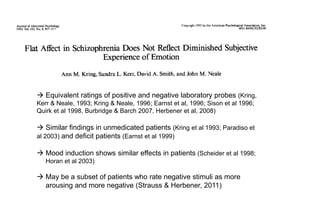
 Equivalent ratings of positive and negative laboratory probes (Kring,
Kerr & Neale, 1993; Kring & Neale, 1996; Earnst et al, 1996; Sison et al 1996;
Quirk et al 1998, Burbridge & Barch 2007, Herbener et al, 2008)
 Similar findings in unmedicated patients (Kring et al 1993; Paradiso et
al 2003) and deficit patients (Earnst et al 1999)
 Mood induction shows similar effects in patients (Scheider et al 1998;
Horan et al 2003)
 May be a subset of patients who rate negative stimuli as more
arousing and more negative (Strauss & Herbener, 2011)
Negative emotional experience in schizophrenia
• Experience sampling: More intense negative emotions, less
intense positive emotions in daily life (Myin-Germeys et al 2000,
2002; Kimhy et al 2006; Oorschot et al 2013)
• Stressful life events in schizophrenia: Probably fewer, but
tendency to appraise negative events as less controllable
(Norman et al 1993; Horan et al 2005)
• Laboratory studies:
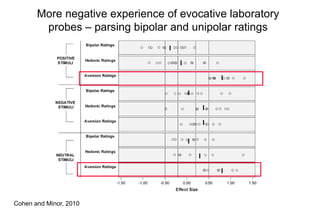
– More negative appraisals of stressful tests (Dinzeo et al 2004; Cohen et al 2004)
– More time to process negative words (Holt et al 2006)
More negative experience of evocative laboratory
probes – parsing bipolar and unipolar ratings
Cohen and Minor, 2010
Emotion is an independent predictor of poor
social adjustment (with executive functioning and
social cognition)
Tso et al, Schiz Research, 2010
Emotion experience – Resolving the
confusing literature in schizophrenia
• Can appraise affective stimuli according to the same
scales as healthy individuals – intact experience in this
sense
• But lived experience entails more negative emotional
experiences
• Negative affects important part of illness & outcome
– Why?
– Overlaps with social cognitive function (social settings are
source of inordinate stress)

Stephan Taylor - Social Cognition in Schizophrenia

  • 1.
    Stephan F. Taylor, M.D. Professor of Psychiatry & Adjunct Professor of Psychology Director, Program for Risk Evaluation and Prevention University of Michigan Disclosures: Research suport from NIMH, Neuronetics, St. Jude Medical and Vanguard Research Group Social Cognition in Schizophrenia Schizophrenia Research Forum Webinar February 23, 2016
  • 2.
    Social cognition andemotion experience – Parsing the experience of emotion • Emotions form the ‘landscape,’ an ‘interpersonal vocabulary’ for social interaction • Emotion processing and social processing share many brain regions • Green, Horan & Lee identify emotion regulation and emotion experience as key components of social cognition • Suggest that emotion experience is intact for positive experience, but what of negative experience?
  • 3.
     Equivalent ratingsof positive and negative laboratory probes (Kring, Kerr & Neale, 1993; Kring & Neale, 1996; Earnst et al, 1996; Sison et al 1996; Quirk et al 1998, Burbridge & Barch 2007, Herbener et al, 2008)  Similar findings in unmedicated patients (Kring et al 1993; Paradiso et al 2003) and deficit patients (Earnst et al 1999)  Mood induction shows similar effects in patients (Scheider et al 1998; Horan et al 2003)  May be a subset of patients who rate negative stimuli as more arousing and more negative (Strauss & Herbener, 2011)
  • 4.
    Negative emotional experiencein schizophrenia • Experience sampling: More intense negative emotions, less intense positive emotions in daily life (Myin-Germeys et al 2000, 2002; Kimhy et al 2006; Oorschot et al 2013) • Stressful life events in schizophrenia: Probably fewer, but tendency to appraise negative events as less controllable (Norman et al 1993; Horan et al 2005) • Laboratory studies: – More negative appraisals of stressful tests (Dinzeo et al 2004; Cohen et al 2004) – More time to process negative words (Holt et al 2006)
  • 5.
    More negative experienceof evocative laboratory probes – parsing bipolar and unipolar ratings Cohen and Minor, 2010
  • 6.
    Emotion is anindependent predictor of poor social adjustment (with executive functioning and social cognition) Tso et al, Schiz Research, 2010
  • 7.
    Emotion experience –Resolving the confusing literature in schizophrenia • Can appraise affective stimuli according to the same scales as healthy individuals – intact experience in this sense • But lived experience entails more negative emotional experiences • Negative affects important part of illness & outcome – Why? – Overlaps with social cognitive function (social settings are source of inordinate stress)