Finance Concepts
Yukti
Rishav

A webinar by PR Cell, IIM Rohtak for Preparation for WAT-PI process,
Admissions-2014

S
Important Financial Concepts

S Accounting (P & L A/C, Cash Flow, Balance Sheet, Ratios)
S Derivatives (Forwards, Futures, Options & Swaps)
S Cost of capital: Cost of Equity & Cost of Debt
Financial Accounting
“Accounting is the art of recording, classifying and
summarizing, in significant manner and in terms of
money, transactions which are, in part, at least of
financial character and interpreting results thereof.”
- AICPA

S
Accounting
Concepts/Principles
S Going Concern
S Accrual
S Business Entity
S Money Measurement
S Conservatism
S Duality concept
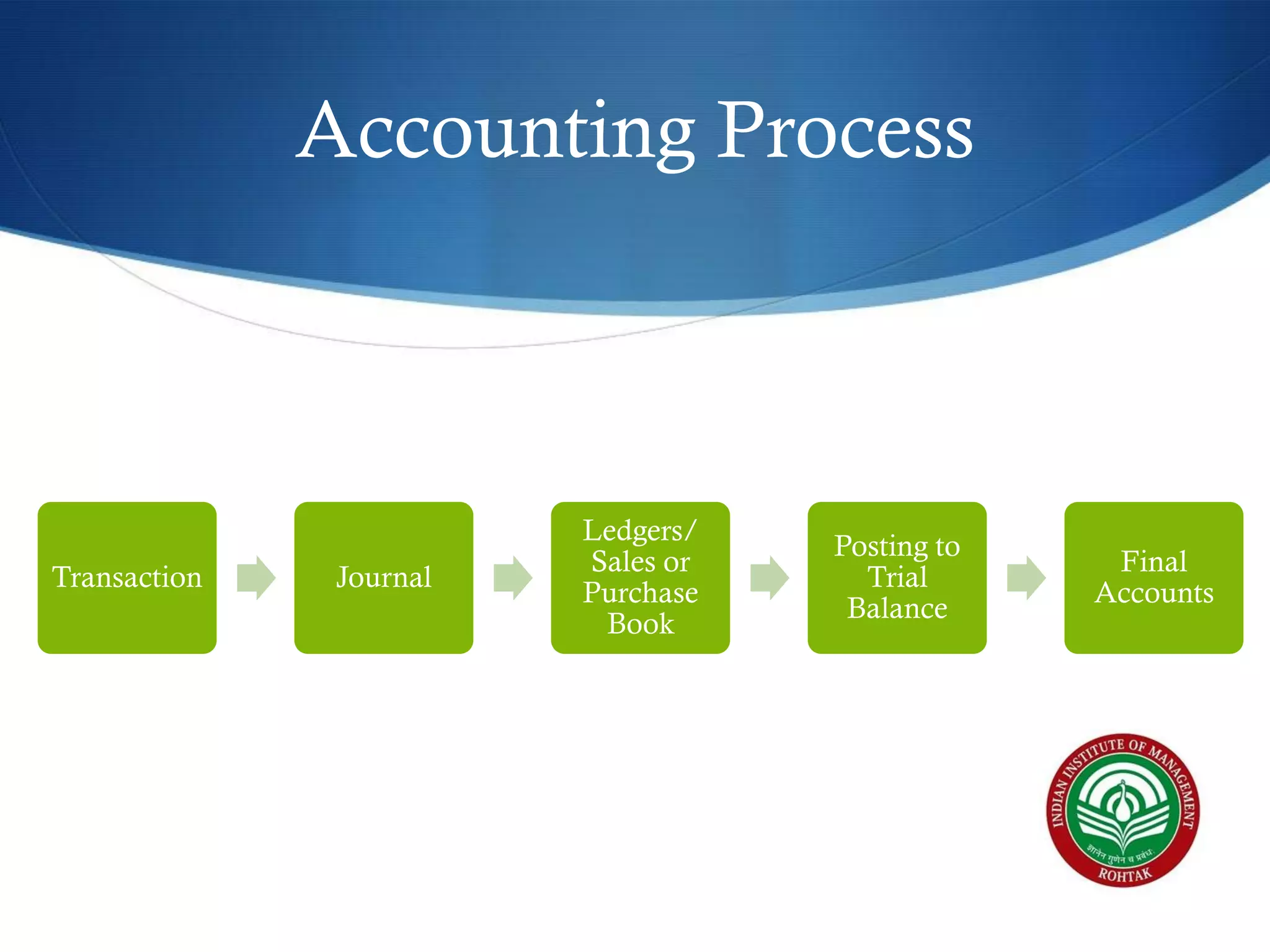
Accounting Process

Transaction

Journal

Ledgers/
Sales or
Purchase
Book

Posting to
Trial
Balance

Final
Accounts
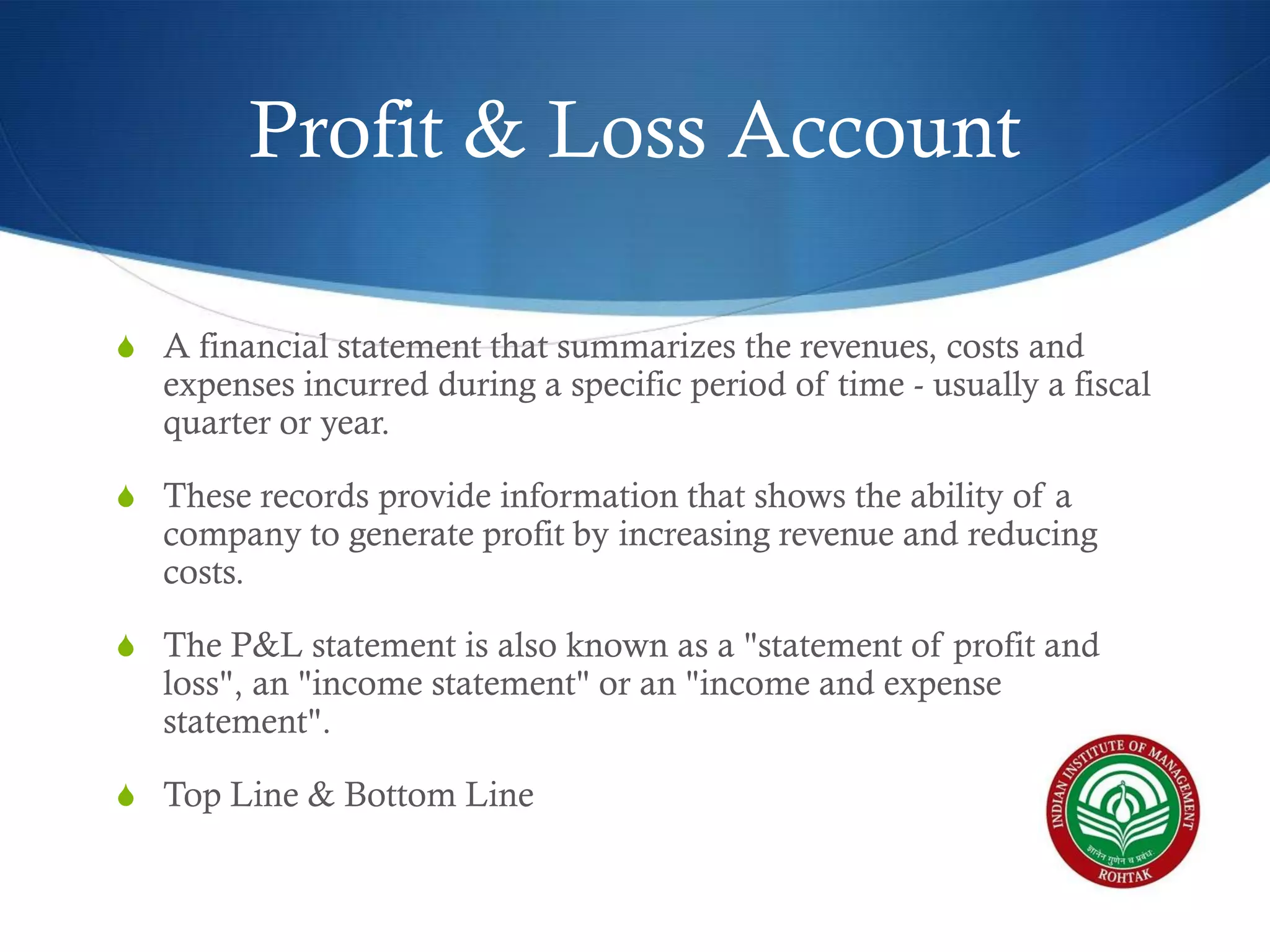
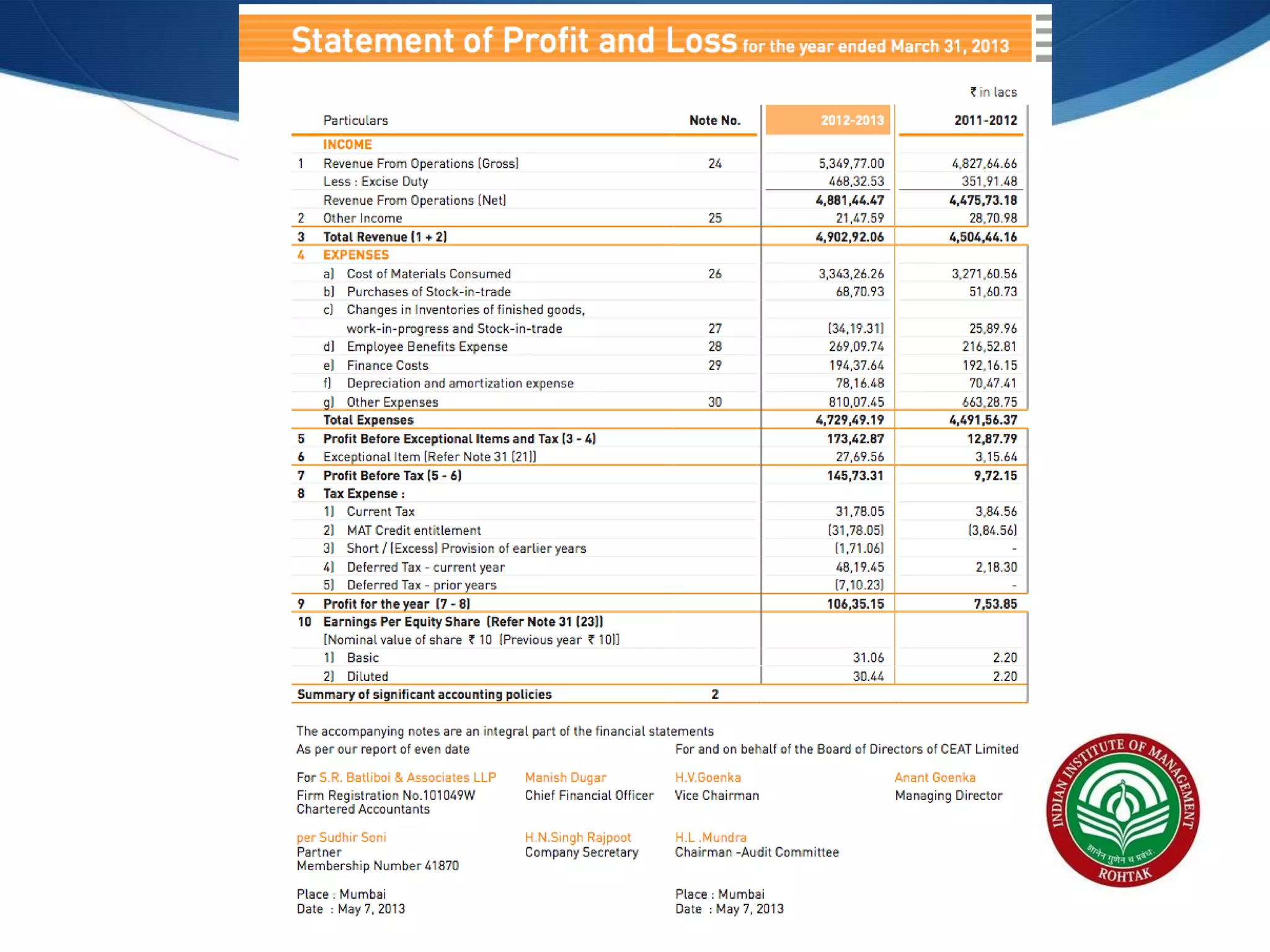
Profit & Loss Account
S A financial statement that summarizes the revenues, costs and

expenses incurred during a specific period of time - usually a fiscal
quarter or year.

S These records provide information that shows the ability of a

company to generate profit by increasing revenue and reducing
costs.

S The P&L statement is also known as a "statement of profit and

loss", an "income statement" or an "income and expense
statement".

S Top Line & Bottom Line
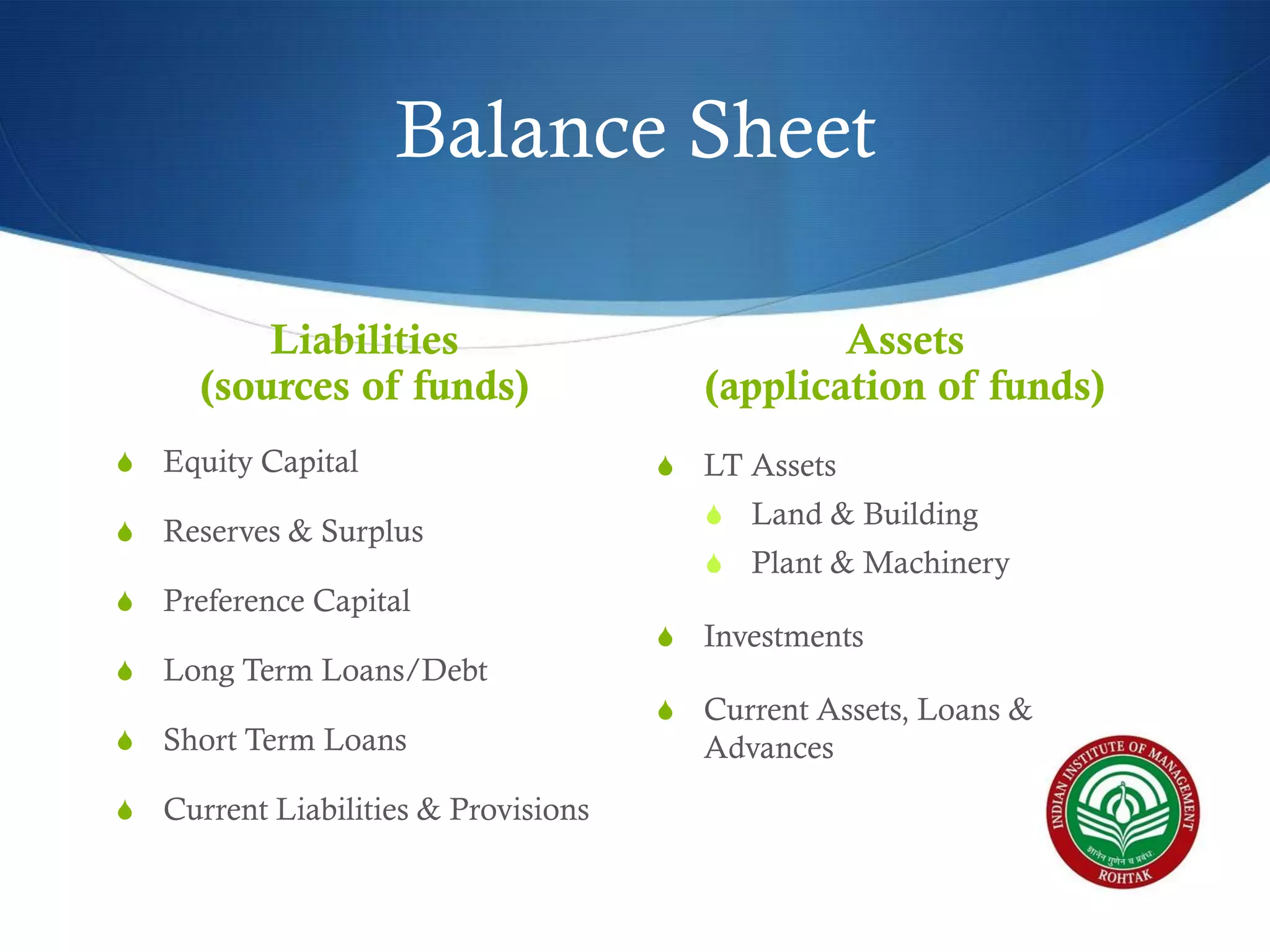
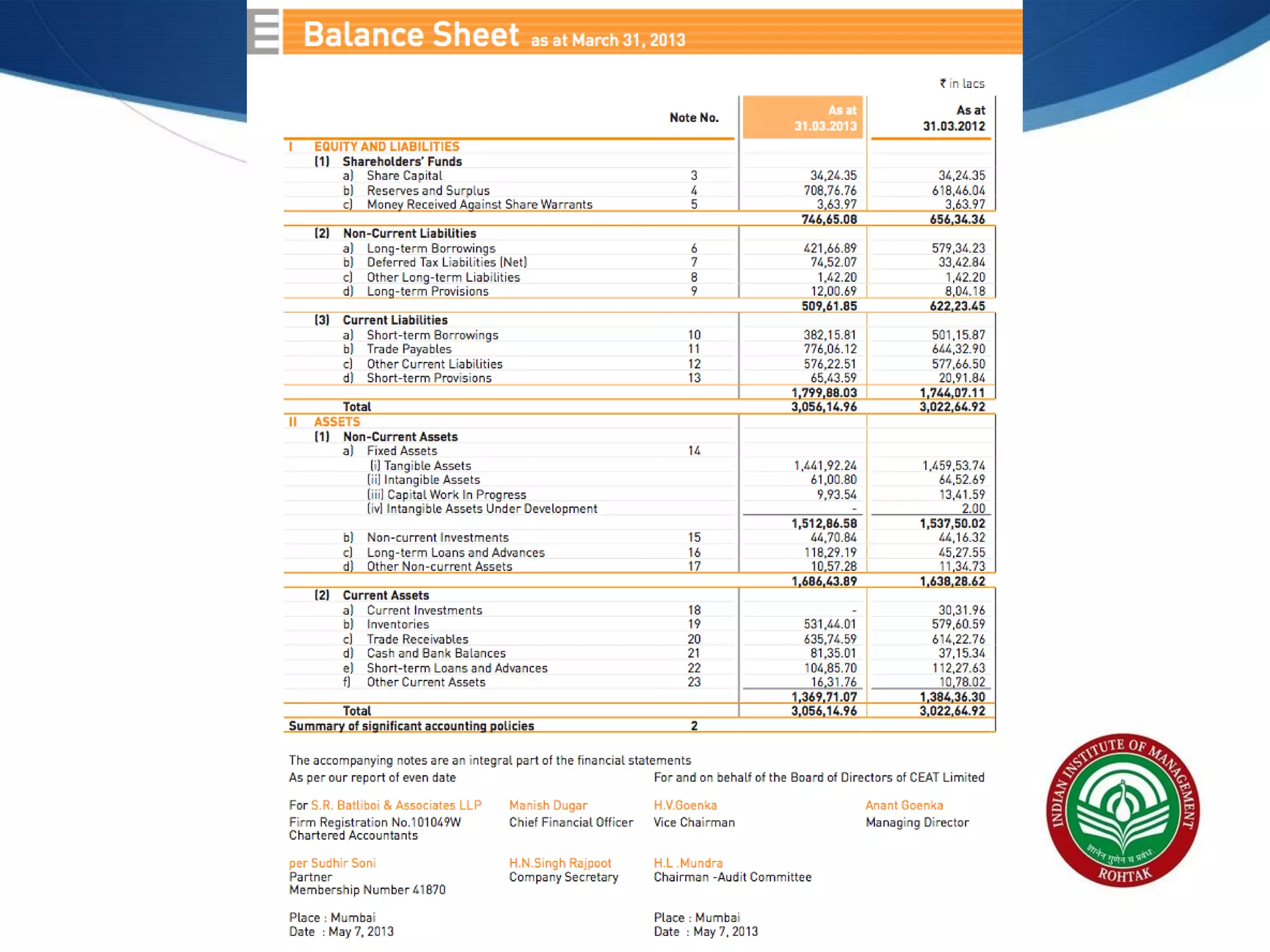
Balance Sheet
Liabilities
(sources of funds)
S

Equity Capital

S

Reserves & Surplus

S

Assets
(application of funds)

Preference Capital

S

Long Term Loans/Debt

S

Short Term Loans

S

Current Liabilities & Provisions

S

LT Assets
S Land & Building
S Plant & Machinery

S

Investments

S

Current Assets, Loans &
Advances
Types of Capital
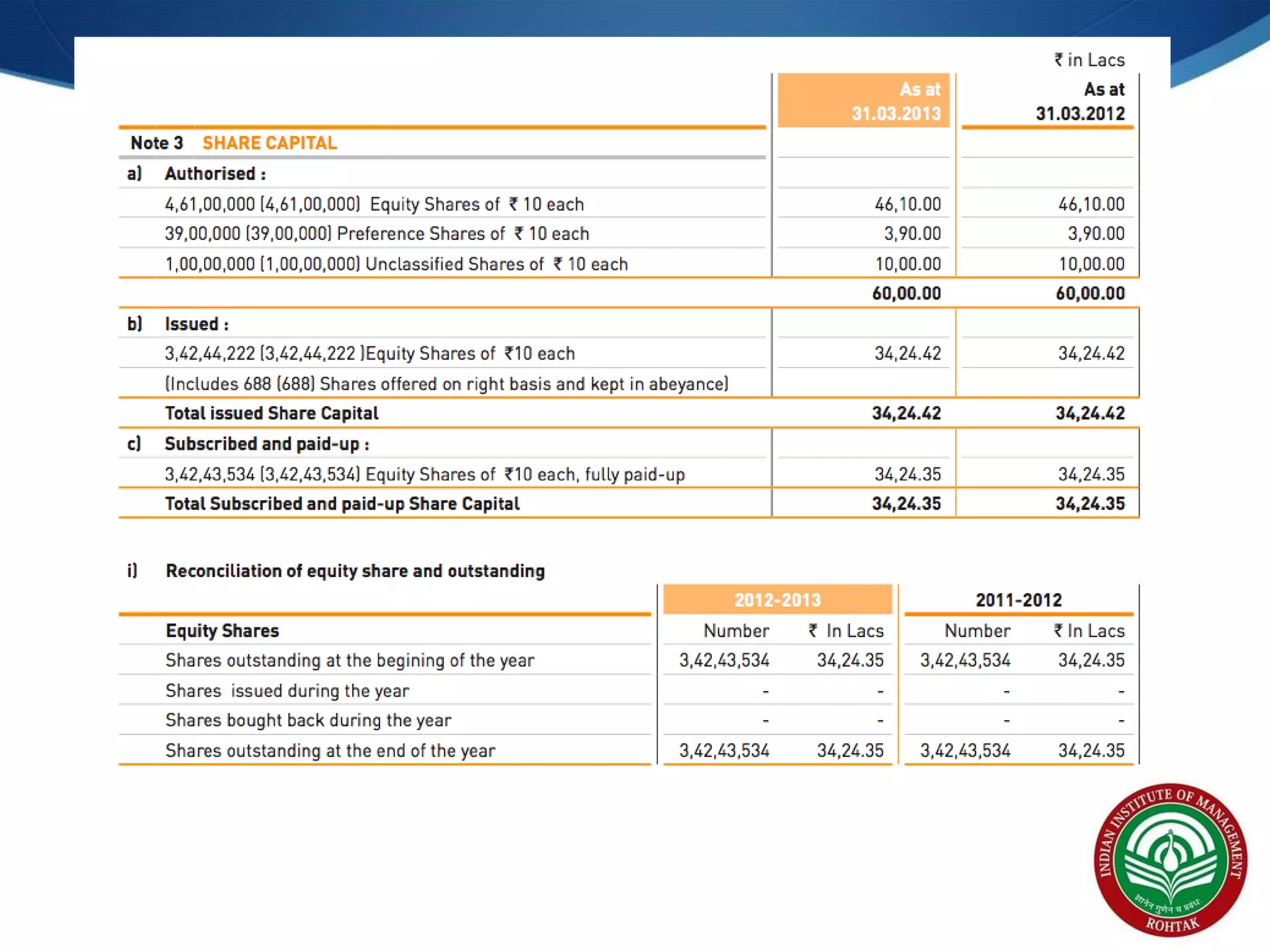
S Equity Share Capital
S Preference Share Capital
S Reserves & Surplus
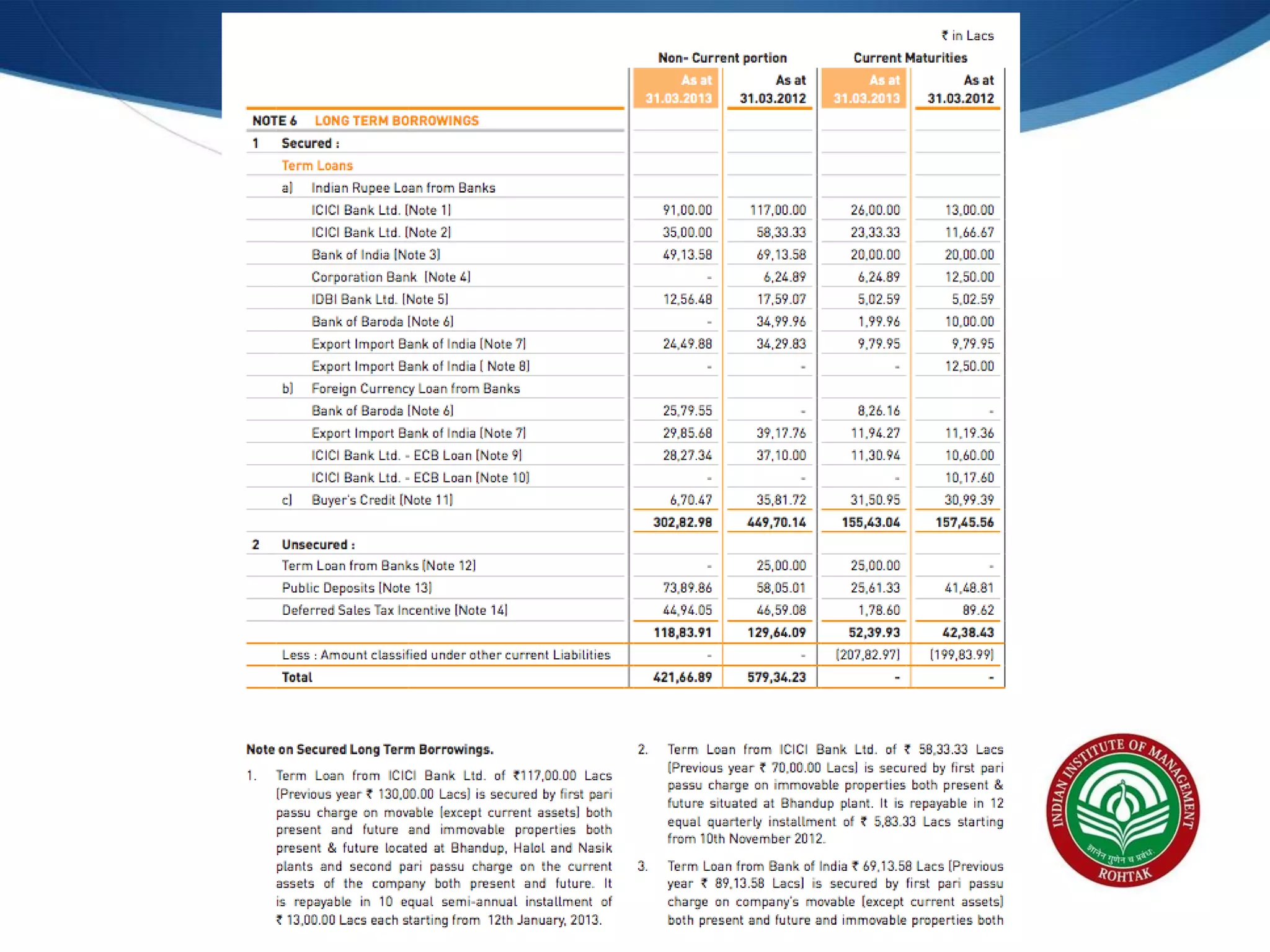
S Long term loan funds:
S Term Loans
S Debentures
S Short term loan funds:
S Bank Overdraft
S Credit Limit
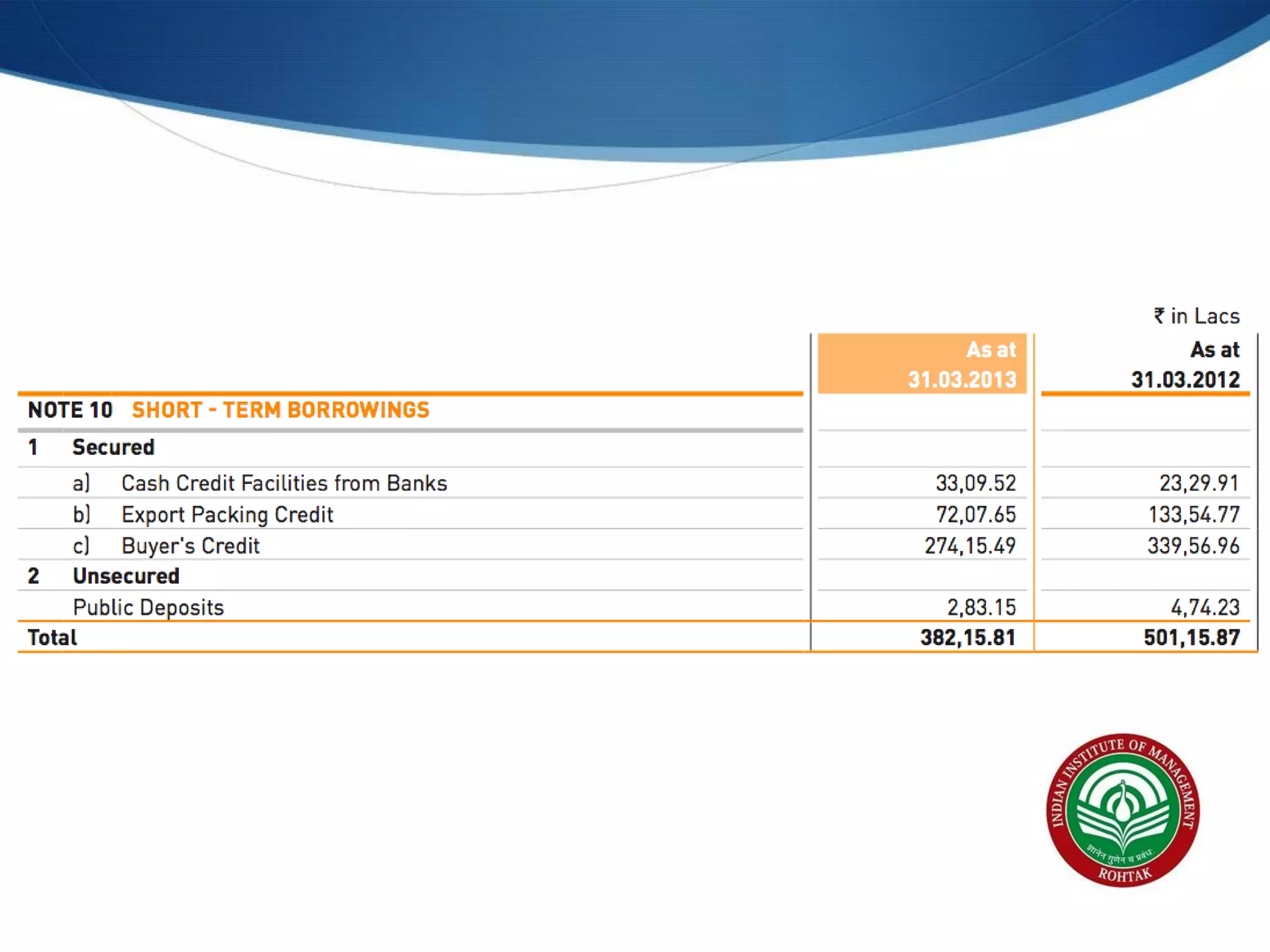
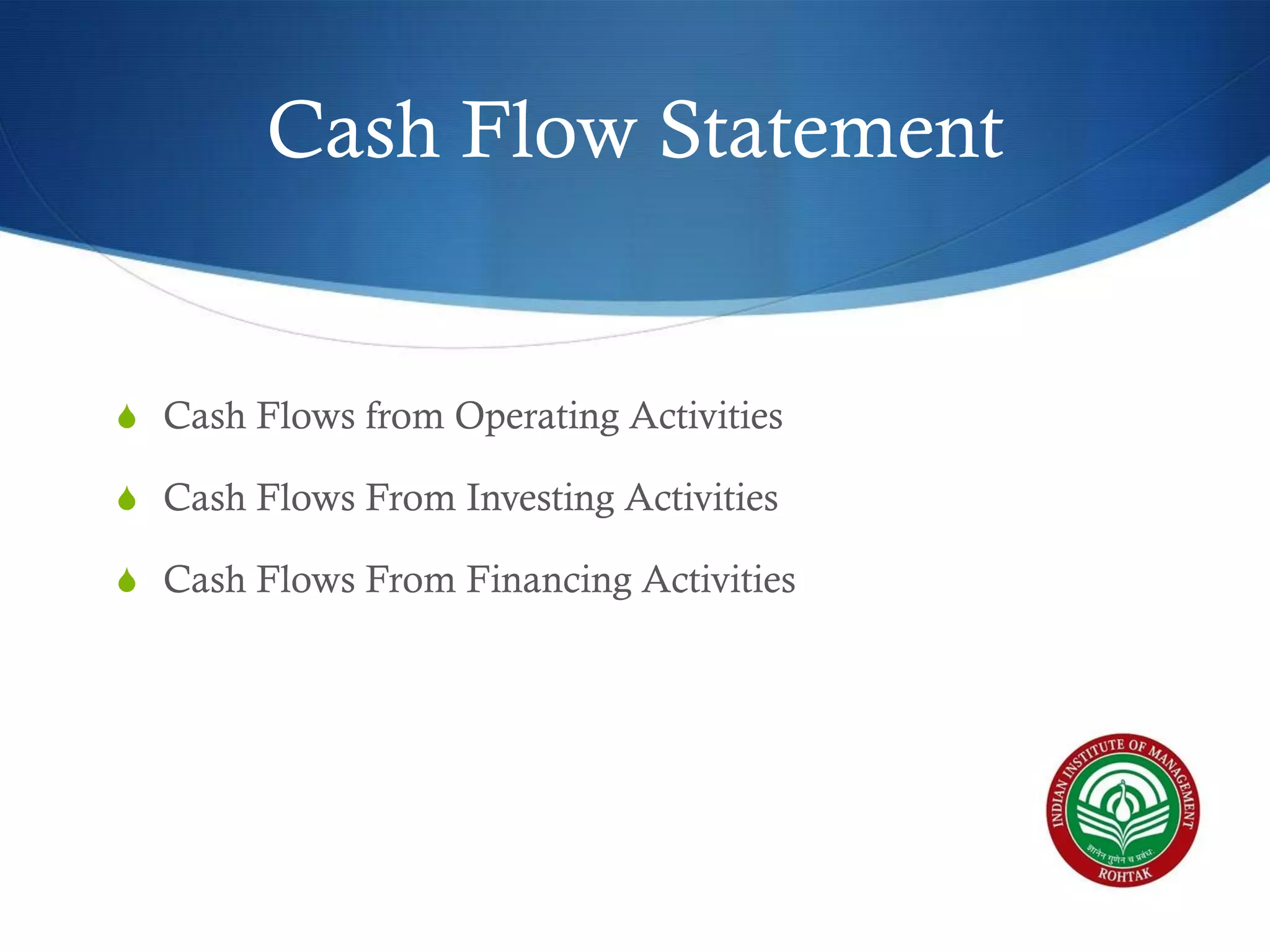
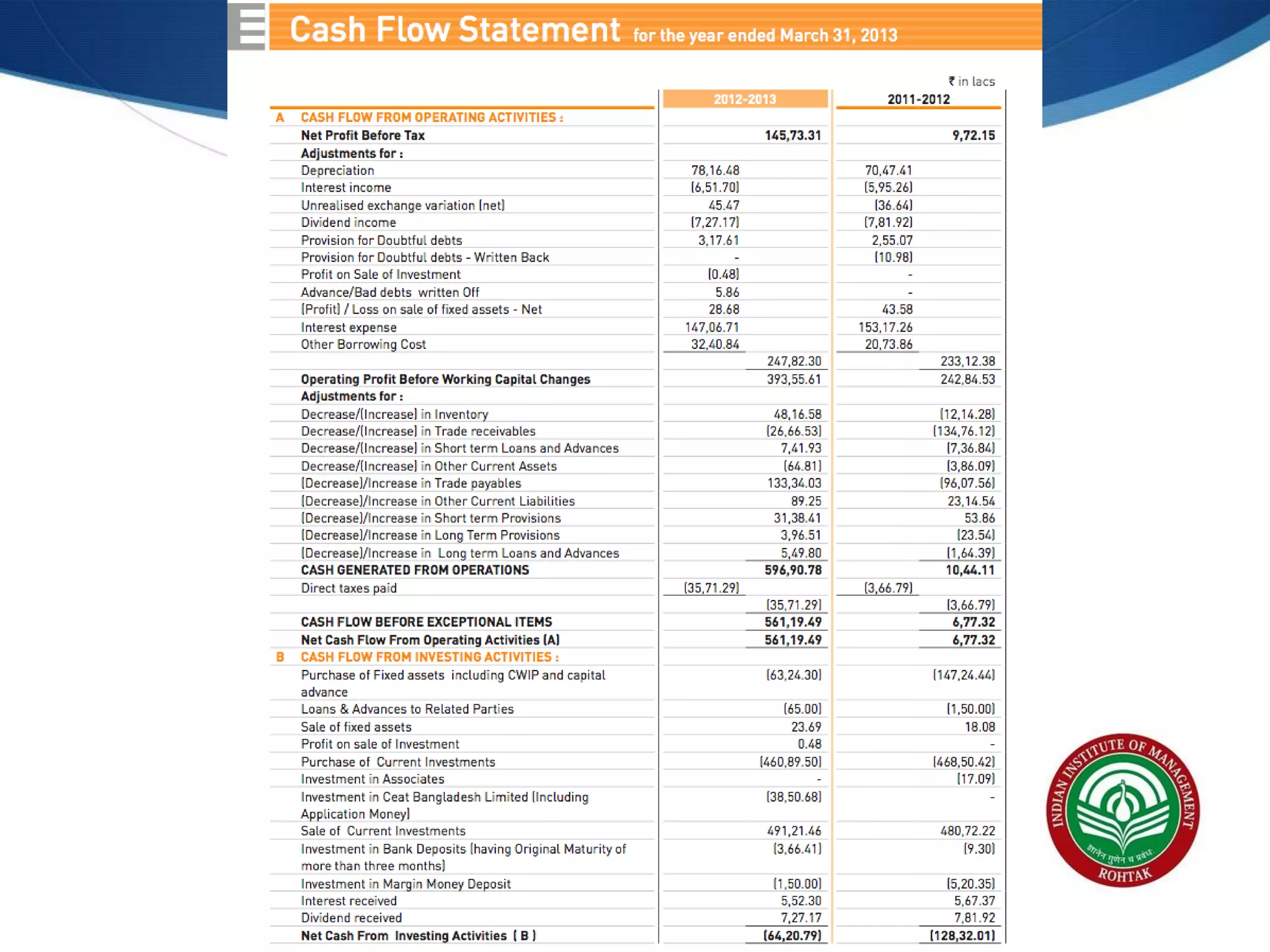
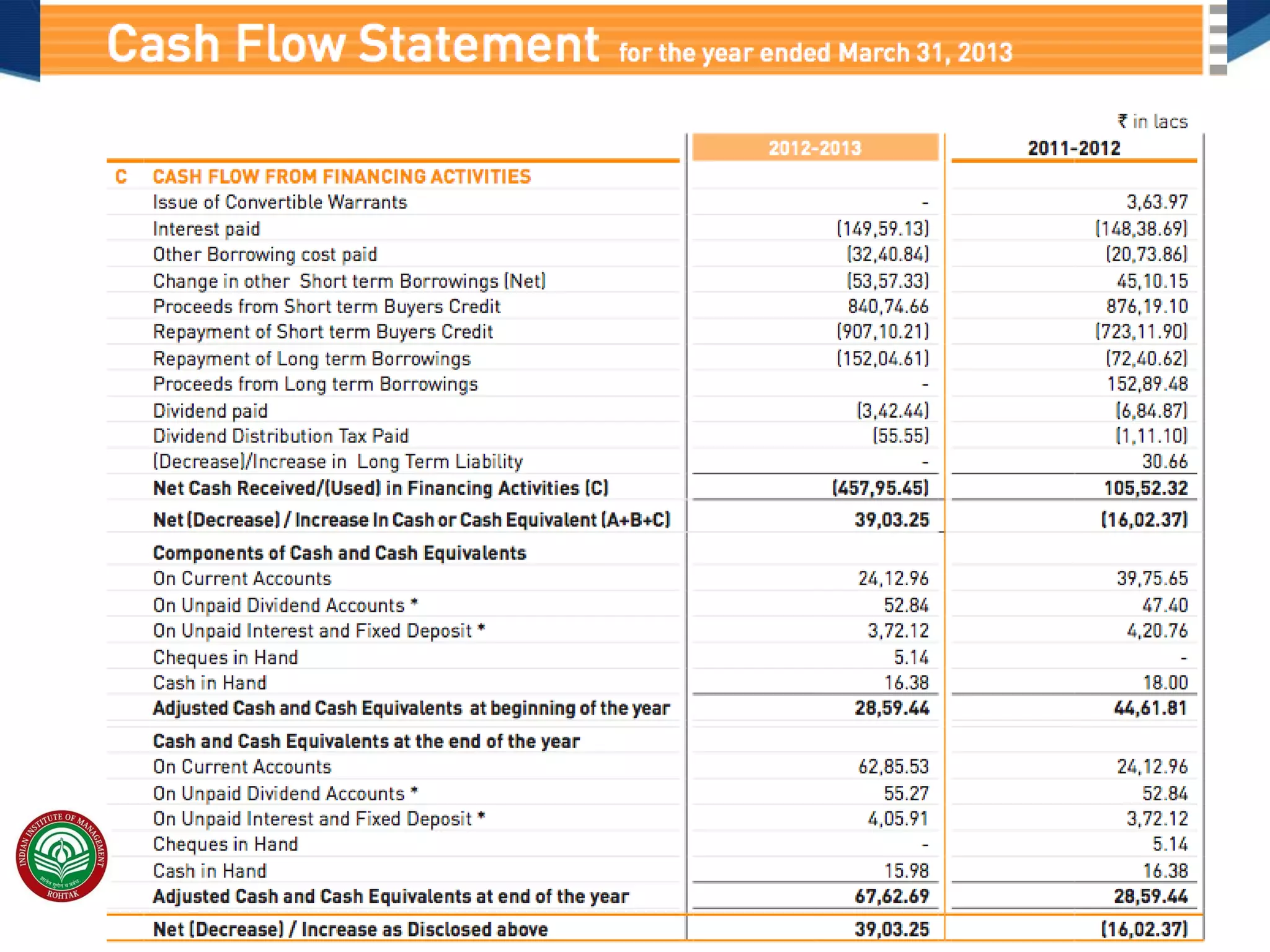
Cash Flow Statement

S Cash Flows from Operating Activities
S Cash Flows From Investing Activities
S Cash Flows From Financing Activities
Ratios

S Liquidity ratios
S Activity ratios
S Debt ratios
S Profitability ratios
S Market ratios
Derivatives
A derivative is a financial contract which derives its
value from the performance of another entity such
as an asset, index, or interest rate, called the
"underlying".

S
Futures and Forwards
Futures

Forwards

•

Futures are standardized
instruments (contracts) transacted
through brokerage firms through
an exchange.

•

Forwards are entirely customized
and all the terms of the contract
are privately negotiated between
parties.

•

Terms of a futures contract including delivery places and dates,
volume, technical specifications,
and trading and credit procedures are standardized for each type of
contract.

•

They can be keyed to almost any
conceivable underlying asset or
measure.

•

The settlement date, notional
amount of the contract and
settlement form (cash or physical)
are entirely up to the parties to the
contract.

•

Forwards entail both market risk
and credit risk.

•

Exchange acts as a Clearing
House as well as counterparty to
every trade mitigating the credit
risk on the transaction.
Options
Put Option

Call Option

S

An option contract giving the
owner the right, but not the
obligation, to sell a specified
amount of an underlying security
at a specified price within a
specified time.

S

An option contract that gives an
investor the right, but not the
obligation, to buy a stock, bond,
commodity, or other instrument
at a specified price within a
specific time period.

S

A put becomes more valuable as
the price of the underlying stock
depreciates relative to the strike
price.

S

You profit on a call when the
underlying asset increases in
price.

The option may be an European Option or American Option
Swaps

S Interest Rate Swaps
S Currency Swaps
S Commodity Swaps
S Credit Default Swaps
Cost of Capital

S
Cost of Capital
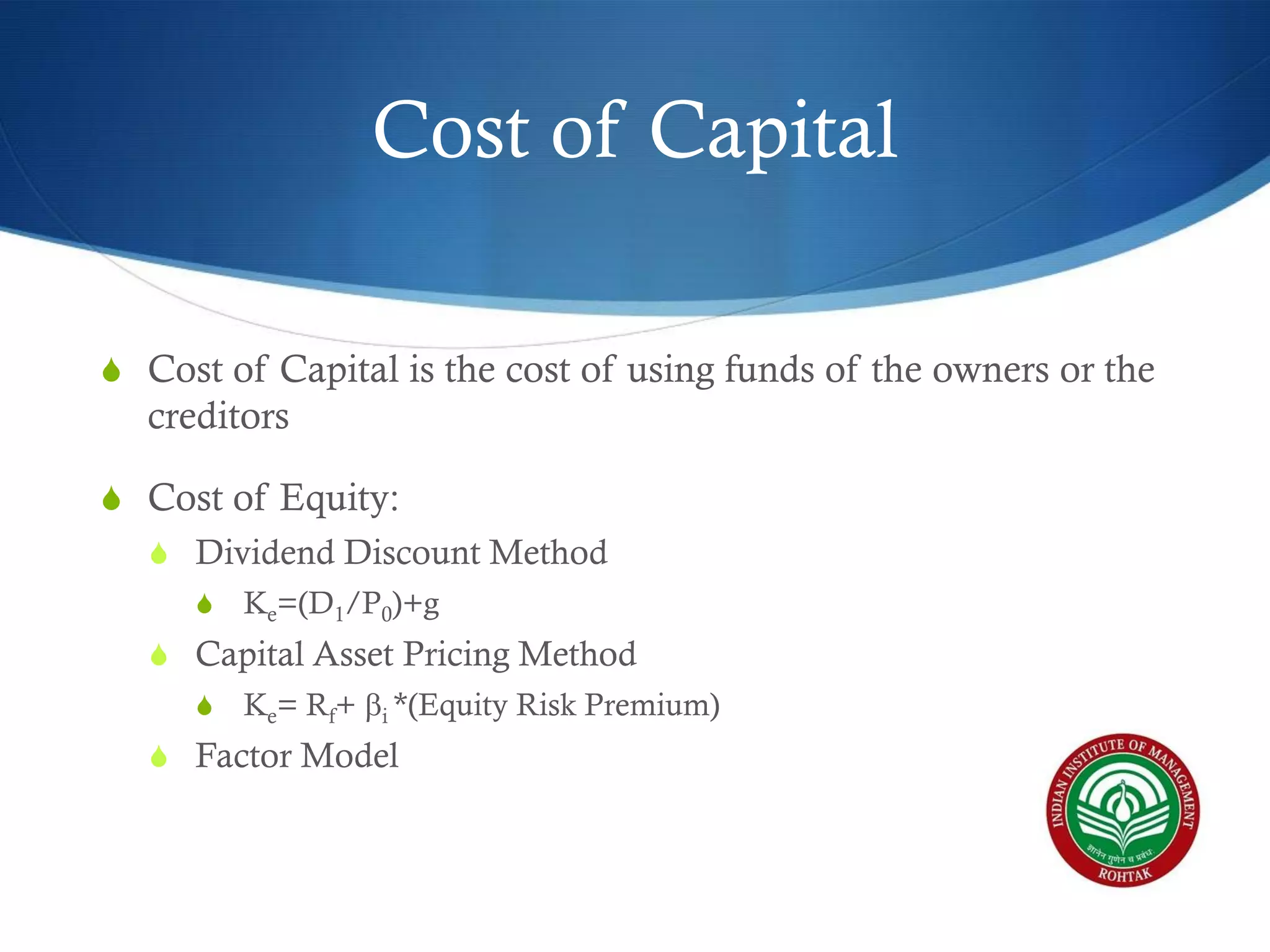
S Cost of Capital is the cost of using funds of the owners or the

creditors
S Cost of Equity:
S Dividend Discount Method
S

Ke=(D1/P0)+g

S Capital Asset Pricing Method
S

Ke= Rf+ bi *(Equity Risk Premium)

S Factor Model
Cost of Capital
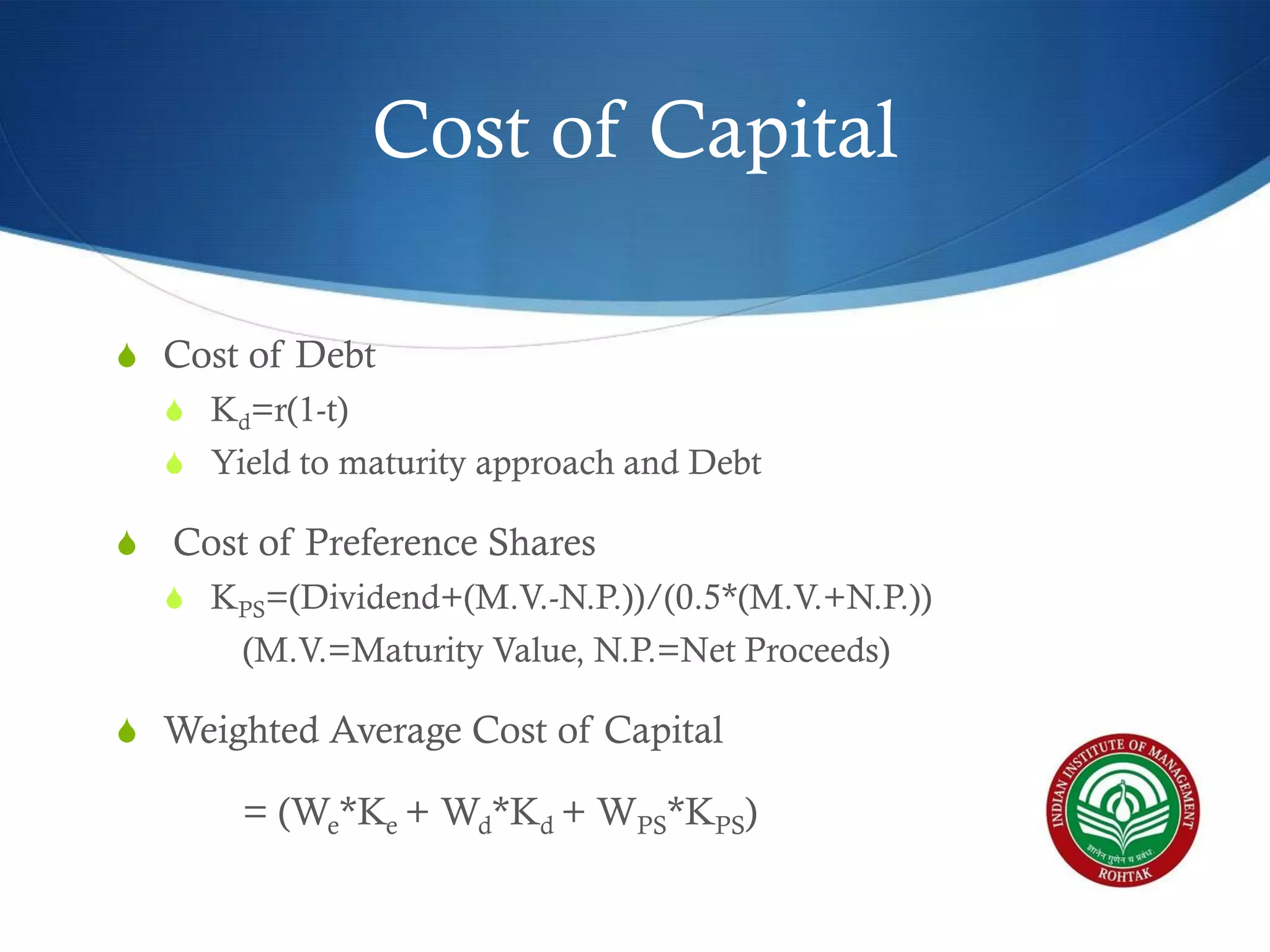
S Cost of Debt
S Kd=r(1-t)

S Yield to maturity approach and Debt

S Cost of Preference Shares
S KPS=(Dividend+(M.V.-N.P.))/(0.5*(M.V.+N.P.))

(M.V.=Maturity Value, N.P.=Net Proceeds)
S Weighted Average Cost of Capital

= (We*Ke + Wd*Kd + WPS*KPS)
Thank You

Webinar on Finance Basics by IIM Rohtak for Admissions-2014

  • 1.
    Finance Concepts Yukti Rishav A webinarby PR Cell, IIM Rohtak for Preparation for WAT-PI process, Admissions-2014 S
  • 2.
    Important Financial Concepts SAccounting (P & L A/C, Cash Flow, Balance Sheet, Ratios) S Derivatives (Forwards, Futures, Options & Swaps) S Cost of capital: Cost of Equity & Cost of Debt
  • 3.
    Financial Accounting “Accounting isthe art of recording, classifying and summarizing, in significant manner and in terms of money, transactions which are, in part, at least of financial character and interpreting results thereof.” - AICPA S
  • 4.
    Accounting Concepts/Principles S Going Concern SAccrual S Business Entity S Money Measurement S Conservatism S Duality concept
  • 5.
  • 6.
    Profit & LossAccount S A financial statement that summarizes the revenues, costs and expenses incurred during a specific period of time - usually a fiscal quarter or year. S These records provide information that shows the ability of a company to generate profit by increasing revenue and reducing costs. S The P&L statement is also known as a "statement of profit and loss", an "income statement" or an "income and expense statement". S Top Line & Bottom Line
  • 8.
    Balance Sheet Liabilities (sources offunds) S Equity Capital S Reserves & Surplus S Assets (application of funds) Preference Capital S Long Term Loans/Debt S Short Term Loans S Current Liabilities & Provisions S LT Assets S Land & Building S Plant & Machinery S Investments S Current Assets, Loans & Advances
  • 10.
    Types of Capital SEquity Share Capital S Preference Share Capital S Reserves & Surplus S Long term loan funds: S Term Loans S Debentures S Short term loan funds: S Bank Overdraft S Credit Limit
  • 14.
    Cash Flow Statement SCash Flows from Operating Activities S Cash Flows From Investing Activities S Cash Flows From Financing Activities
  • 17.
    Ratios S Liquidity ratios SActivity ratios S Debt ratios S Profitability ratios S Market ratios
  • 18.
    Derivatives A derivative isa financial contract which derives its value from the performance of another entity such as an asset, index, or interest rate, called the "underlying". S
  • 19.
    Futures and Forwards Futures Forwards • Futuresare standardized instruments (contracts) transacted through brokerage firms through an exchange. • Forwards are entirely customized and all the terms of the contract are privately negotiated between parties. • Terms of a futures contract including delivery places and dates, volume, technical specifications, and trading and credit procedures are standardized for each type of contract. • They can be keyed to almost any conceivable underlying asset or measure. • The settlement date, notional amount of the contract and settlement form (cash or physical) are entirely up to the parties to the contract. • Forwards entail both market risk and credit risk. • Exchange acts as a Clearing House as well as counterparty to every trade mitigating the credit risk on the transaction.
  • 20.
    Options Put Option Call Option S Anoption contract giving the owner the right, but not the obligation, to sell a specified amount of an underlying security at a specified price within a specified time. S An option contract that gives an investor the right, but not the obligation, to buy a stock, bond, commodity, or other instrument at a specified price within a specific time period. S A put becomes more valuable as the price of the underlying stock depreciates relative to the strike price. S You profit on a call when the underlying asset increases in price. The option may be an European Option or American Option
  • 21.
    Swaps S Interest RateSwaps S Currency Swaps S Commodity Swaps S Credit Default Swaps
  • 22.
  • 23.
    Cost of Capital SCost of Capital is the cost of using funds of the owners or the creditors S Cost of Equity: S Dividend Discount Method S Ke=(D1/P0)+g S Capital Asset Pricing Method S Ke= Rf+ bi *(Equity Risk Premium) S Factor Model
  • 24.
    Cost of Capital SCost of Debt S Kd=r(1-t) S Yield to maturity approach and Debt S Cost of Preference Shares S KPS=(Dividend+(M.V.-N.P.))/(0.5*(M.V.+N.P.)) (M.V.=Maturity Value, N.P.=Net Proceeds) S Weighted Average Cost of Capital = (We*Ke + Wd*Kd + WPS*KPS)
  • 25.