Net security 101
 Internet is hostile network

        Kristaps Kūlis
“Real” security


●   Security trough security, not obscurity
      House secured by door keys, not by putting doors
      on roof.
●   Ongoing process
Web applications
Be conservative in what you do; be liberal in what
            you accept from others
                                         /Postel's law/
SQL injection
SQL injections
●   Creating queries by string concatenation is “the
    wrong way”
●   MySQL don't do multiple queries.
●   Let DB do validation - use parametrized queries
●   ORM frameworks lift the burden
    ●   It is easy to forget to validate inline SQL somewhere
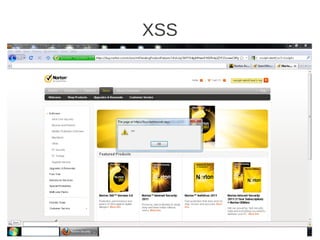
XSS
XSS
●   Escape HTML/JS/XML special characters on
    output
●   Vulnerability can exist on client side (JS).
    ●   It can get hairy with JS, AJAX, JSONP etc ...
CSRF
    <img src=”http://www.bank.lv/pay?to=kristaps&amount=100” />


●   Third party unauthorized request to web site
●   Include unique token into each response and
    validate on request.
●   Never update data with GET
Storing passwords

●   Do not expose DB / other credentials
●   MD5 is too “cheap”. SHA1 is not “expensive
    enough”
●   Make hash functions slow.
    ●   Multiple iterations
    ●   Bcrypt
Authorization vs Authentication

Autentication: authenticating user credentials.
            Usually done once per session.

Authorization: checks that user is authorized to
             do particular action.
            Must be done on every request.
Session fixation
●   Session cookie stealing / guessing
    ●   Initialize sessions
    ●   Tie sessions to IP address / User Agent
    ●   Expire / invalidate sessions.
PHP specific problems
register_globals
~50% of open source PHP app vulnerabilities
  works only when register_globals are on
safe_mode
Wrong place, wrong solution
magic_quotes
Gives false sense of security and
        no real protection
display_errors
 Gives away too much information
Log your errors, do not display them
One .php file as one script
     PHP engine has no “application” concept.
 Class files, configuration files, etc should not be
                    executable …
...everything that is not .php by default is dumped
               as plaintext in browser
include and require accepts URLs as
              parameters
    Remote code injection made dead easy

If you disable remote_url_fopen, you cannot open
                    any URL
                   (without CURL)
All these settings should be disabled by default
      On most hosting servers they are not
Server security
  enviroment matters
TLS (SSL)
●   Public-Private key infrastructure
●   Server verification and data encryption
●   Ultimate trust to Certificate Authorities (CA)
●   Don't use self-signed certificates. Roll out your
    own CA .
Secure / insecure protocols
●   HTTP sends all information in plaintext
●   So does FTP/IMAP/POP3/STMP
●   Use HTTPS / SFTP / IMAPs / POP3s / STMP
    over TLS
●   DNS is built on trust. DNSSEC is not (yet)
    working.
[D]DoS
●   DoS – “million” requests from one client
●   DDoS – “zillion” requests from “million” clients
●   Handle DoS at firewall level.
●   Try to survive DDoS at router level.
Shared hosting
●   Easy, fast, secure – pick two
●   “Jail” each site
●   Selinux / AppArmor to rescue
●   IDS / mod_security is slow
●   Test backups.
Real life 100% secure system


       Slide intentionally left blank
Personal security
   weakest chain link
Passwords


         Passwords are like underwear.
You don't share them and you change them often.


                  KeepassX
Think
●   Don't use plaintext protocols over open WiFi
●   Secure your home router
●   Check URLs and filenames
●   Malware doesn't expose itself anymore
    ●   Botnet
    ●   Information stealing
●   Avoid buggy and insecure software (flash and
    acrobat reader).
Securing digital communication
●   Skype is sort-of secure
●   PGP
●   S/MIME
Handling incidents
●   Not all hackers all bad
●   Preserve evidence
●   Presume that attacker obtained maximum
    information.
●   System is compromised
●   Eliminate attack vectors
●   Offline backups help.
Questions ?
Futher reading
●   www.owasp.org – knowledge
●   www.cert.lv – Latvia netsecurity team
                        Books
●   Stealing the Network: How to Own the Box by
    R. Russel – hacking “fiction” book.
●   Art of Deception by Kevin Mitnick – hacker
    “memoirs”

Web security 101

  • 1.
    Net security 101 Internet is hostile network Kristaps Kūlis
  • 2.
    “Real” security ● Security trough security, not obscurity House secured by door keys, not by putting doors on roof. ● Ongoing process
  • 3.
    Web applications Be conservativein what you do; be liberal in what you accept from others /Postel's law/
  • 4.
  • 5.
    SQL injections ● Creating queries by string concatenation is “the wrong way” ● MySQL don't do multiple queries. ● Let DB do validation - use parametrized queries ● ORM frameworks lift the burden ● It is easy to forget to validate inline SQL somewhere
  • 6.
  • 7.
    XSS ● Escape HTML/JS/XML special characters on output ● Vulnerability can exist on client side (JS). ● It can get hairy with JS, AJAX, JSONP etc ...
  • 8.
    CSRF <img src=”http://www.bank.lv/pay?to=kristaps&amount=100” /> ● Third party unauthorized request to web site ● Include unique token into each response and validate on request. ● Never update data with GET
  • 9.
    Storing passwords ● Do not expose DB / other credentials ● MD5 is too “cheap”. SHA1 is not “expensive enough” ● Make hash functions slow. ● Multiple iterations ● Bcrypt
  • 10.
    Authorization vs Authentication Autentication:authenticating user credentials. Usually done once per session. Authorization: checks that user is authorized to do particular action. Must be done on every request.
  • 11.
    Session fixation ● Session cookie stealing / guessing ● Initialize sessions ● Tie sessions to IP address / User Agent ● Expire / invalidate sessions.
  • 12.
  • 13.
    register_globals ~50% of opensource PHP app vulnerabilities works only when register_globals are on
  • 14.
  • 15.
    magic_quotes Gives false senseof security and no real protection
  • 16.
    display_errors Gives awaytoo much information Log your errors, do not display them
  • 17.
    One .php fileas one script PHP engine has no “application” concept. Class files, configuration files, etc should not be executable … ...everything that is not .php by default is dumped as plaintext in browser
  • 18.
    include and requireaccepts URLs as parameters Remote code injection made dead easy If you disable remote_url_fopen, you cannot open any URL (without CURL)
  • 19.
    All these settingsshould be disabled by default On most hosting servers they are not
  • 20.
    Server security enviroment matters
  • 21.
    TLS (SSL) ● Public-Private key infrastructure ● Server verification and data encryption ● Ultimate trust to Certificate Authorities (CA) ● Don't use self-signed certificates. Roll out your own CA .
  • 22.
    Secure / insecureprotocols ● HTTP sends all information in plaintext ● So does FTP/IMAP/POP3/STMP ● Use HTTPS / SFTP / IMAPs / POP3s / STMP over TLS ● DNS is built on trust. DNSSEC is not (yet) working.
  • 23.
    [D]DoS ● DoS – “million” requests from one client ● DDoS – “zillion” requests from “million” clients ● Handle DoS at firewall level. ● Try to survive DDoS at router level.
  • 24.
    Shared hosting ● Easy, fast, secure – pick two ● “Jail” each site ● Selinux / AppArmor to rescue ● IDS / mod_security is slow ● Test backups.
  • 25.
    Real life 100%secure system Slide intentionally left blank
  • 26.
    Personal security weakest chain link
  • 27.
    Passwords Passwords are like underwear. You don't share them and you change them often. KeepassX
  • 28.
    Think ● Don't use plaintext protocols over open WiFi ● Secure your home router ● Check URLs and filenames ● Malware doesn't expose itself anymore ● Botnet ● Information stealing ● Avoid buggy and insecure software (flash and acrobat reader).
  • 29.
    Securing digital communication ● Skype is sort-of secure ● PGP ● S/MIME
  • 30.
    Handling incidents ● Not all hackers all bad ● Preserve evidence ● Presume that attacker obtained maximum information. ● System is compromised ● Eliminate attack vectors ● Offline backups help.
  • 31.
  • 32.
    Futher reading ● www.owasp.org – knowledge ● www.cert.lv – Latvia netsecurity team Books ● Stealing the Network: How to Own the Box by R. Russel – hacking “fiction” book. ● Art of Deception by Kevin Mitnick – hacker “memoirs”