WEB DESIGN
PRINCIPLES
by
Dan Phelan
Haleigh Sills
Cheyenne Garrison
Stanton Sailsbury
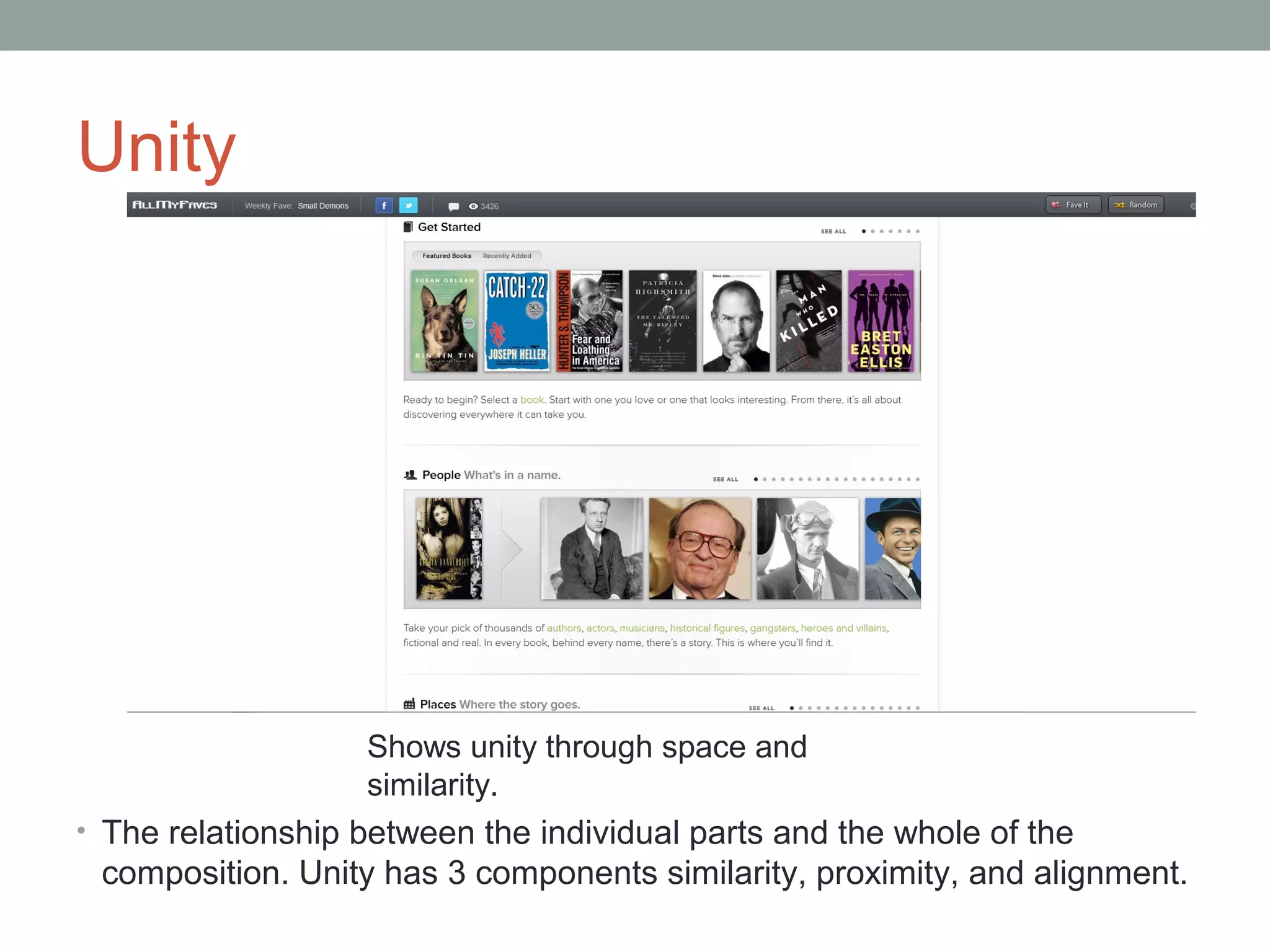
Unity


                   Shows unity through space and
                   similarity.
• The relationship between the individual parts and the whole of the
 composition. Unity has 3 components similarity, proximity, and alignment.
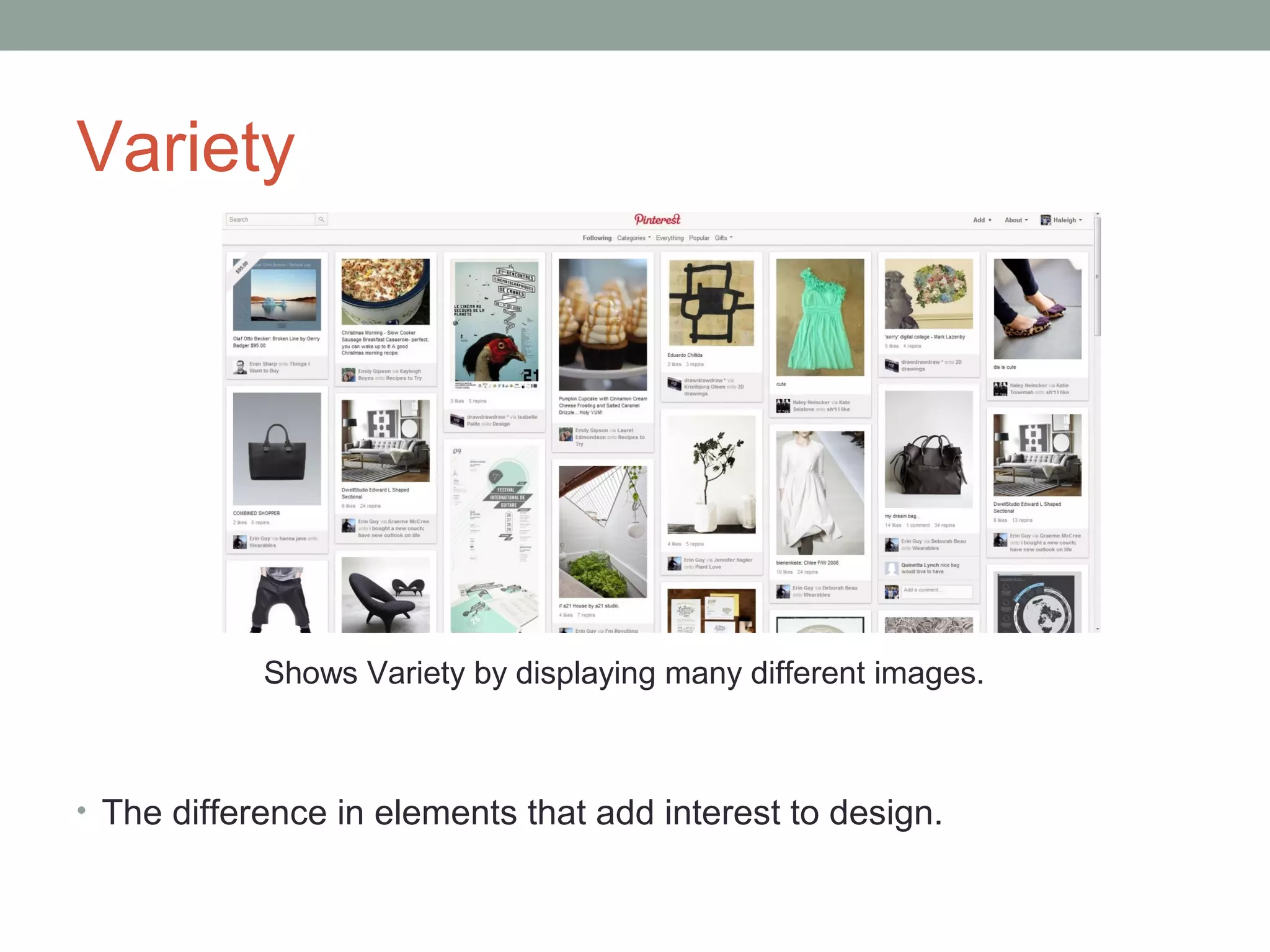
Variety


            Shows Variety by displaying many different images.


• The difference in elements that add interest to design.
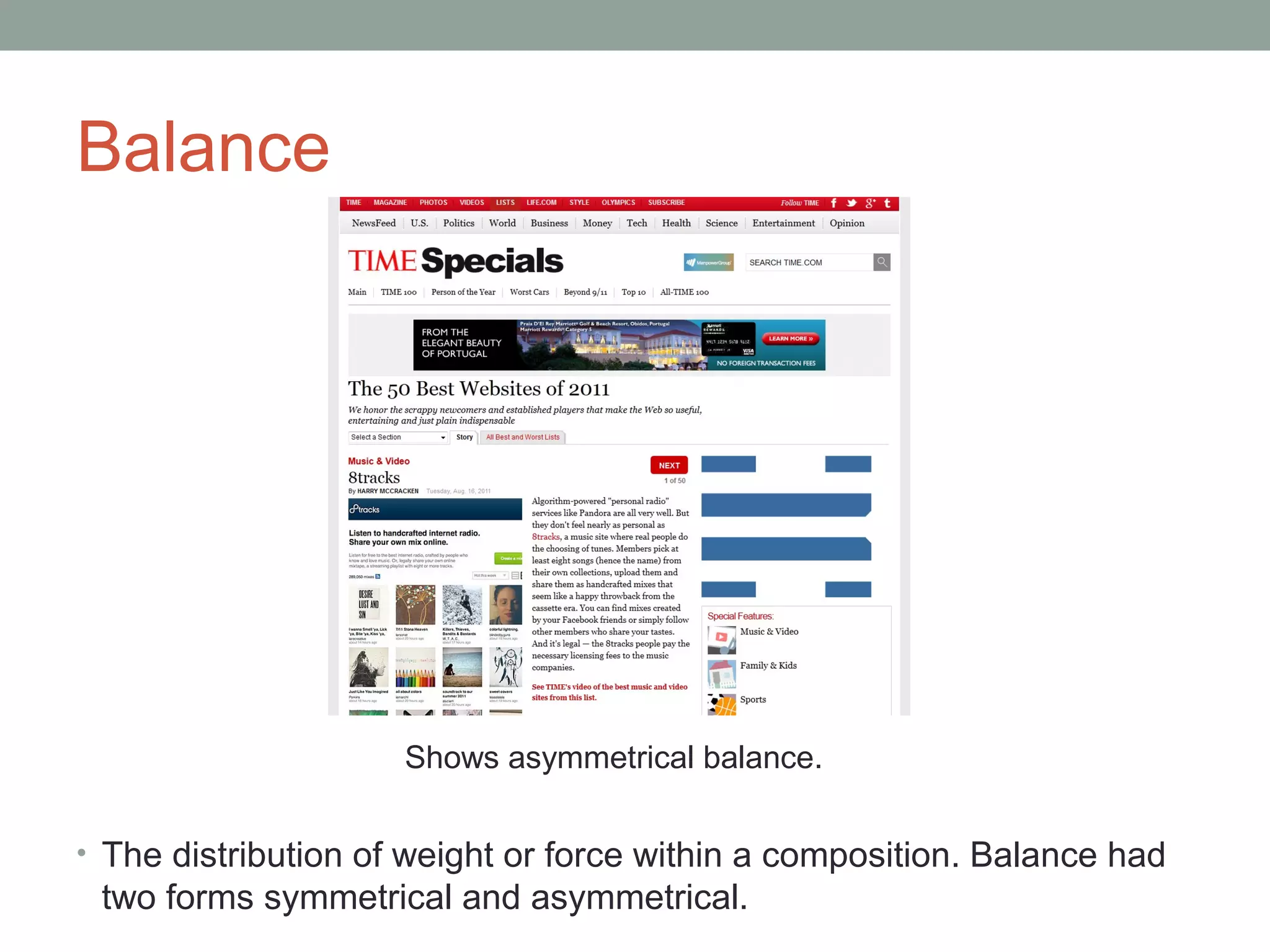
Balance


                     Shows asymmetrical balance.

• The distribution of weight or force within a composition. Balance had
 two forms symmetrical and asymmetrical.
Scale & Proportion


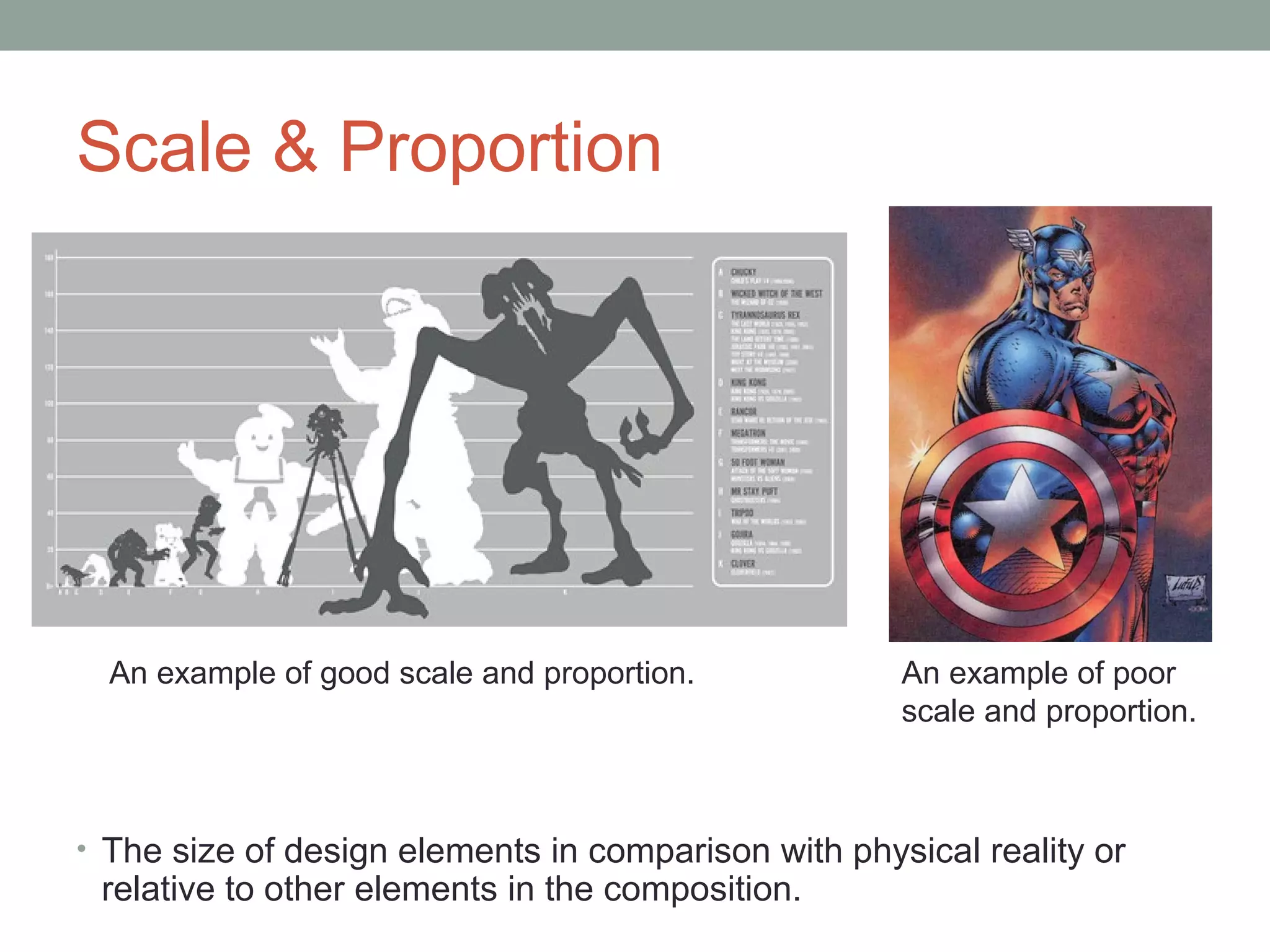
  An example of good scale and proportion.           An example of poor
                                                     scale and proportion.


• The size of design elements in comparison with physical reality or
 relative to other elements in the composition.
Rhythm


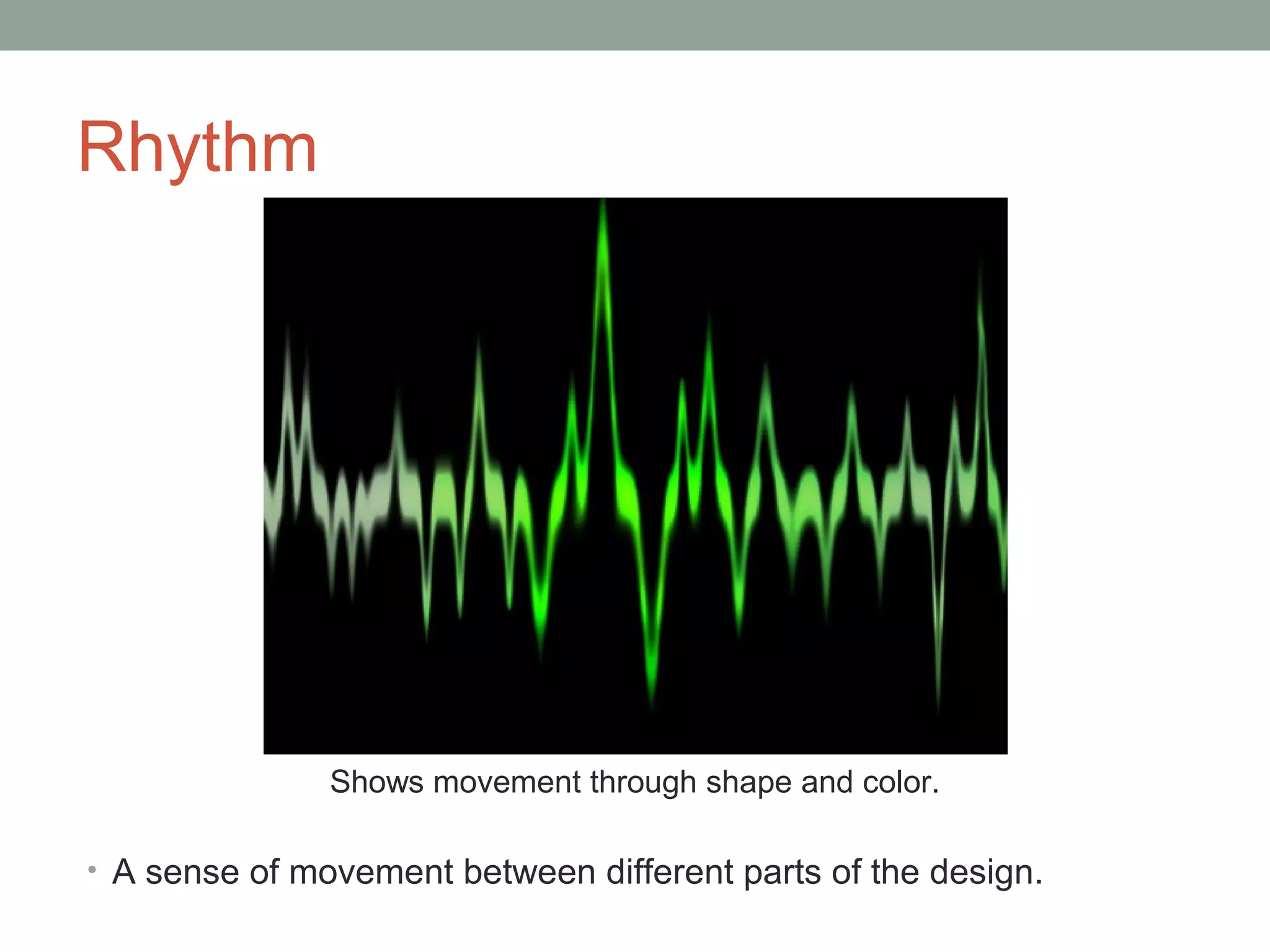
               Shows movement through shape and color.

• A sense of movement between different parts of the design.
Emphasis


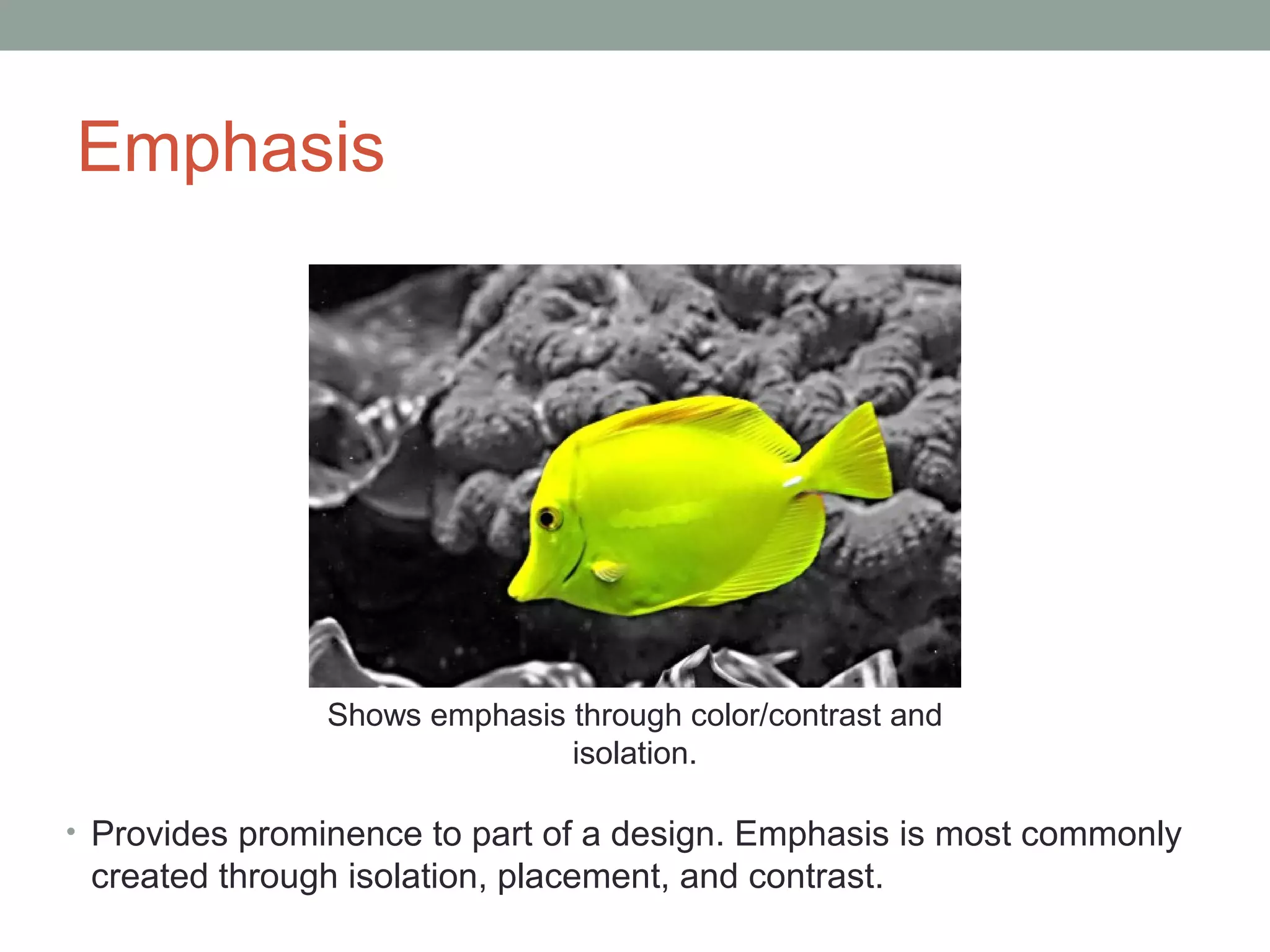
                Shows emphasis through color/contrast and
                               isolation.

• Provides prominence to part of a design. Emphasis is most commonly
 created through isolation, placement, and contrast.
Simplicity


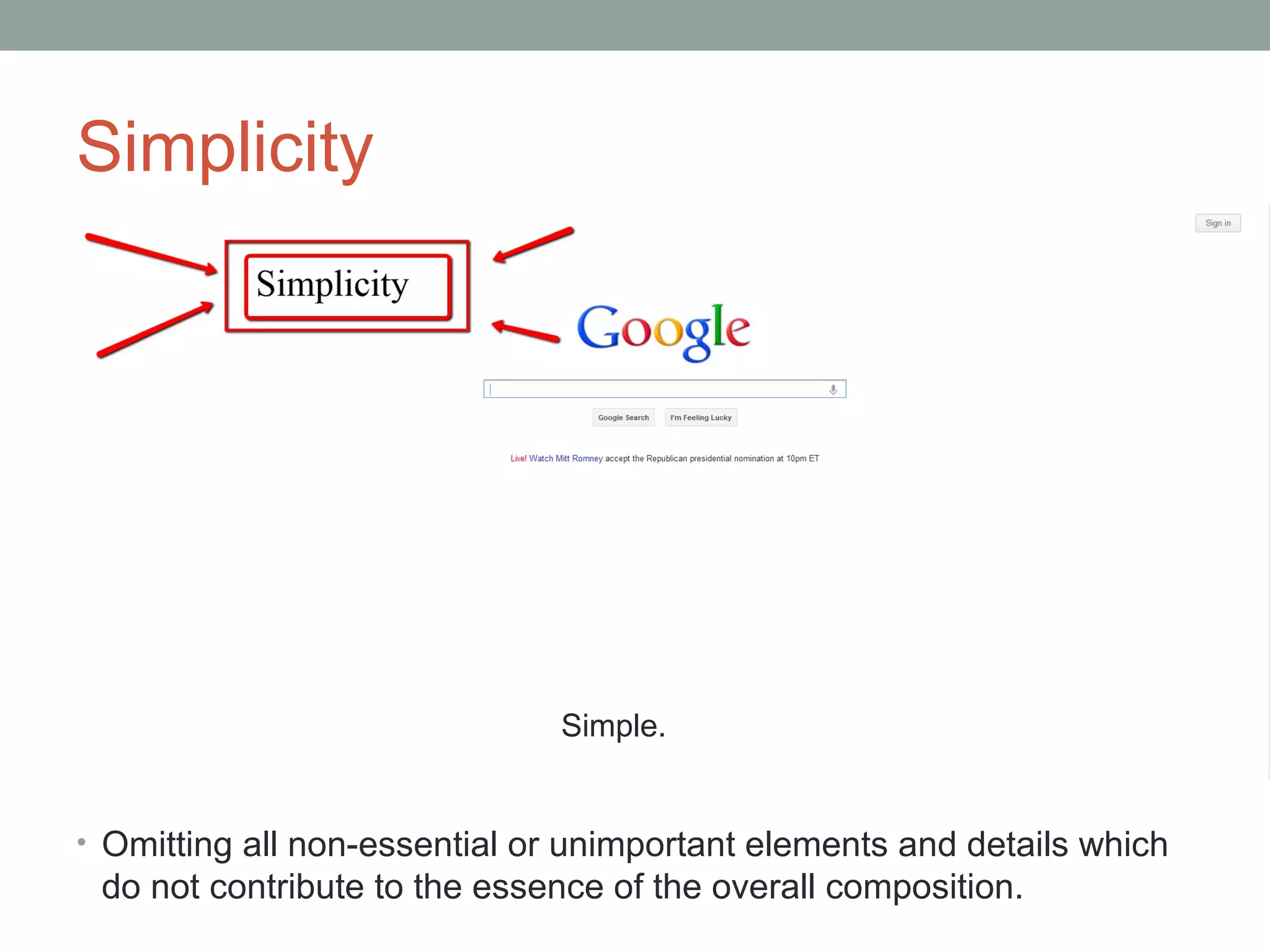
                               Simple.


• Omitting all non-essential or unimportant elements and details which
 do not contribute to the essence of the overall composition.

Web Design Principles

  • 1.
    WEB DESIGN PRINCIPLES by Dan Phelan HaleighSills Cheyenne Garrison Stanton Sailsbury
  • 2.
    Unity Shows unity through space and similarity. • The relationship between the individual parts and the whole of the composition. Unity has 3 components similarity, proximity, and alignment.
  • 3.
    Variety Shows Variety by displaying many different images. • The difference in elements that add interest to design.
  • 4.
    Balance Shows asymmetrical balance. • The distribution of weight or force within a composition. Balance had two forms symmetrical and asymmetrical.
  • 5.
    Scale & Proportion An example of good scale and proportion. An example of poor scale and proportion. • The size of design elements in comparison with physical reality or relative to other elements in the composition.
  • 6.
    Rhythm Shows movement through shape and color. • A sense of movement between different parts of the design.
  • 7.
    Emphasis Shows emphasis through color/contrast and isolation. • Provides prominence to part of a design. Emphasis is most commonly created through isolation, placement, and contrast.
  • 8.
    Simplicity Simple. • Omitting all non-essential or unimportant elements and details which do not contribute to the essence of the overall composition.