Web 2.0 ... Huh?! Leigh Dodds, Engineering Manager, IngentaConnect [email_address] 23 rd  May 2006
A Definition?
 
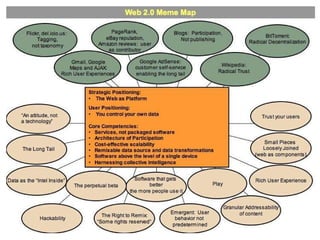
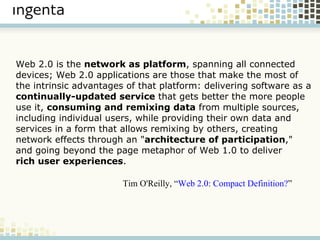
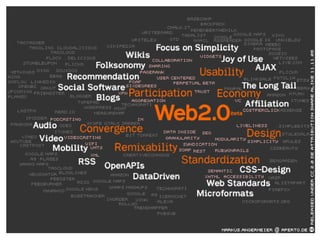
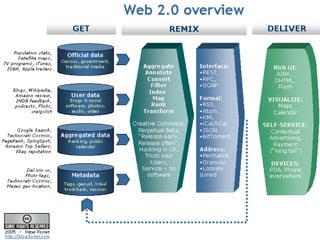
Web 2.0 is the  network as platform , spanning all connected devices; Web 2.0 applications are those that make the most of the intrinsic advantages of that platform: delivering software as a  continually-updated service  that gets better the more people use it,  consuming and remixing data  from multiple sources, including individual users, while providing their own data and services in a form that allows remixing by others, creating network effects through an " architecture of participation ," and going beyond the page metaphor of Web 1.0 to deliver  rich user experiences . Tim O'Reilly, “ Web 2.0: Compact Definition? ”
Lets continue looking...
 
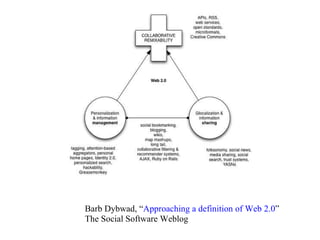
Barb Dybwad, “ Approaching a definition of Web 2.0 ” The Social Software Weblog
 
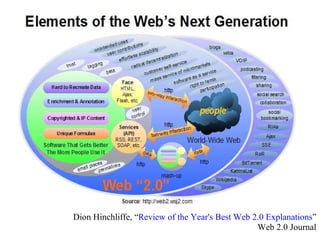
Dion Hinchliffe, “ Review of the Year's Best Web 2.0 Explanations ” Web 2.0 Journal
Web 2.0 = Ineffable! Web 2.0 = Ineffable! Or...maybe it's nothing more than...
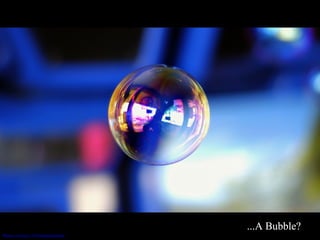
...A Bubble? A Bubble? ...A bubble? ...A Bubble? ...A Bubble? ...A Bubble? ...A Bubble? ...A Bubble? Photo courtesy of  brokenchopstick
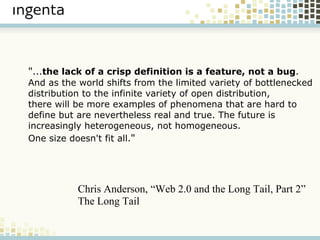
" ... the lack of a crisp definition is a feature, not a bug .  And as the world shifts from the limited variety of bottlenecked  distribution to the infinite variety of open distribution,  there will be more examples of phenomena that are hard to  define but are nevertheless real and true. The future is  increasingly heterogeneous, not homogeneous. One size doesn't fit all. " Chris Anderson, “Web 2.0 and the Long Tail, Part 2” The Long Tail
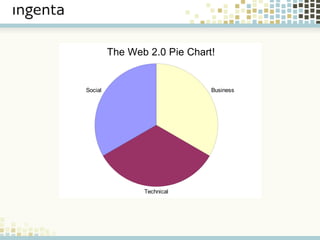
So, forget the definition Lets look at the trends What's actually happening?
 
Social Trends Spread of Broadband Increasingly ubiquitous connections A generation of “web natives” Living on the web Social networking; blogging; instant messenger  Create, not just consume Some hard lessons about data ownership Don’t steal my data; don’t lock me in
Business Trends Exploit the Long Tail At internet scale even niche communities are very large “ We sold more books today that we didn't sell at all yesterday, than we sold today of all the books that did sell yesterday.” Amazon employee quoted on Wikipedia Success of web services   No need to own the user interface. It's your data that they want Users can enrich your data “ Harnessing collective intelligence of users” Review and Recommend;  Social Bookmarking; Folksonomies
Technology Trends The Power of XML Easier to exchange and process application independent data Agile Engineering Incrementally developer your product; short release cycles Continually adapt to user needs “ The Perpetual Beta” Maturation of the browser XHTML, DOM, CSS, Javascript Browser as platform, not just document viewer
Web 2.0 Technologies
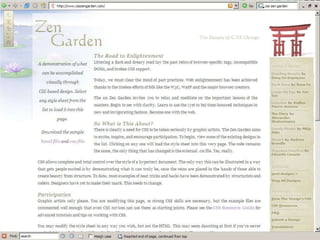
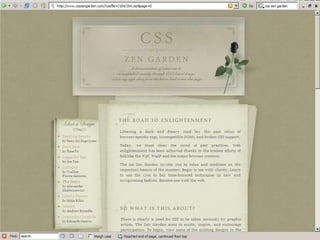
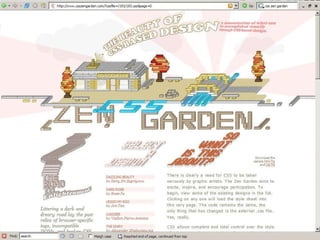
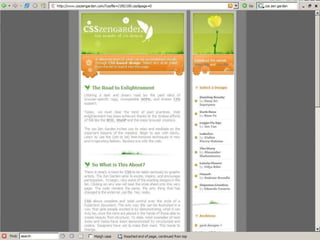
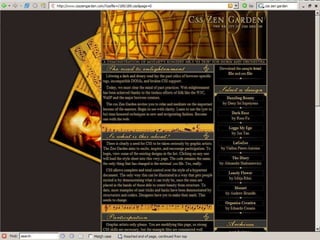
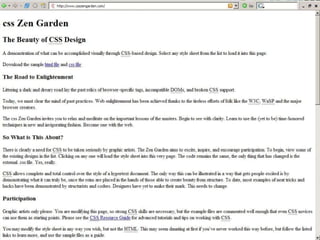
CSS Content with Style


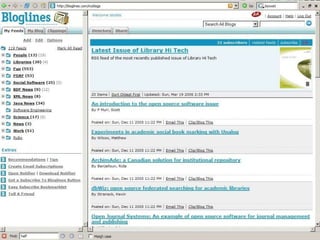
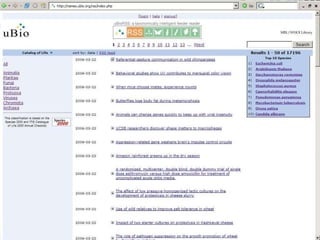
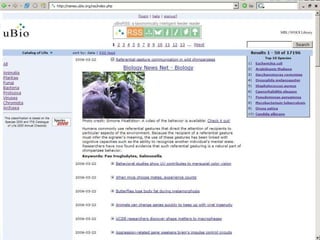
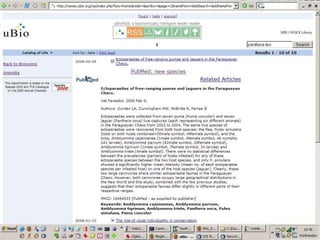
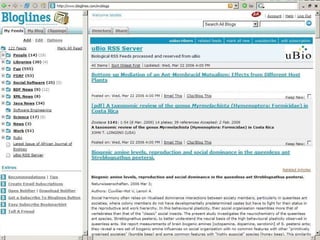
RSS : Content Syndication


Web Services: Open Data
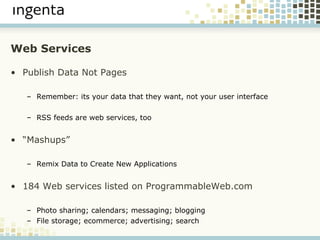
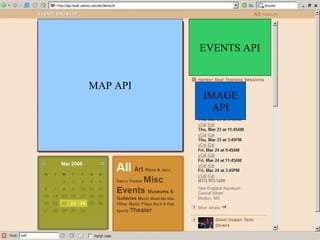
Web Services Publish Data Not Pages Remember: its your data that they want, not your user interface RSS feeds are web services, too “ Mashups” Remix Data to Create New Applications 184 Web services listed on ProgrammableWeb.com Photo sharing; calendars; messaging; blogging File storage; ecommerce; advertising; search
AJAX (Asynchronous Javascript and XML)
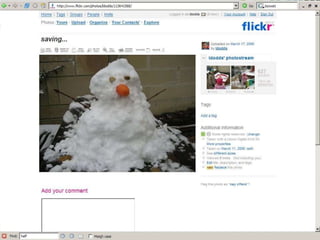
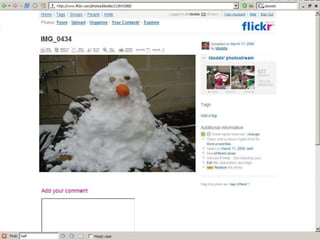
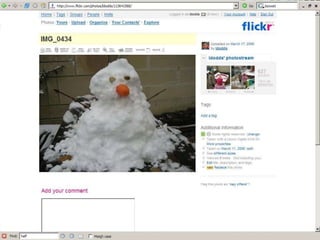
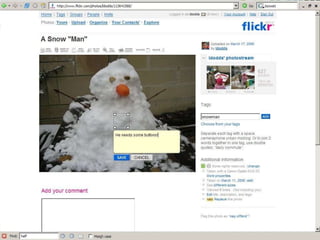
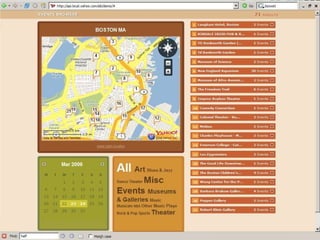
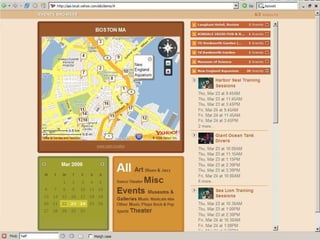
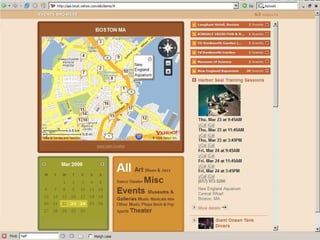
AJAX Dynamic User Interfaces


MAP API EVENTS API IMAGE API
Summing Up
Summing Up Web 2.0 hard to define, but very far from just hype Culmination of a number of web trends Importance of Open Data Allows communities to assemble unique tailored applications Importance of Users Seek and create network effects Browser as Application Platform Huge potential for new kinds of web applications
Links and Contact Mail Me : ldodds@ingenta.com Get the Slides : http://allmyeye.blogspot.com Browse the Links : http://del.icio.us/ldodds/alpsp-2006-03

Web20 huh-final

  • 1.
    Web 2.0 ...Huh?! Leigh Dodds, Engineering Manager, IngentaConnect [email_address] 23 rd May 2006
  • 2.
  • 3.
  • 4.
    Web 2.0 isthe network as platform , spanning all connected devices; Web 2.0 applications are those that make the most of the intrinsic advantages of that platform: delivering software as a continually-updated service that gets better the more people use it, consuming and remixing data from multiple sources, including individual users, while providing their own data and services in a form that allows remixing by others, creating network effects through an " architecture of participation ," and going beyond the page metaphor of Web 1.0 to deliver rich user experiences . Tim O'Reilly, “ Web 2.0: Compact Definition? ”
  • 5.
  • 6.
  • 7.
    Barb Dybwad, “Approaching a definition of Web 2.0 ” The Social Software Weblog
  • 8.
  • 9.
    Dion Hinchliffe, “Review of the Year's Best Web 2.0 Explanations ” Web 2.0 Journal
  • 10.
    Web 2.0 =Ineffable! Web 2.0 = Ineffable! Or...maybe it's nothing more than...
  • 11.
    ...A Bubble? ABubble? ...A bubble? ...A Bubble? ...A Bubble? ...A Bubble? ...A Bubble? ...A Bubble? Photo courtesy of brokenchopstick
  • 12.
    " ... thelack of a crisp definition is a feature, not a bug . And as the world shifts from the limited variety of bottlenecked distribution to the infinite variety of open distribution, there will be more examples of phenomena that are hard to define but are nevertheless real and true. The future is increasingly heterogeneous, not homogeneous. One size doesn't fit all. " Chris Anderson, “Web 2.0 and the Long Tail, Part 2” The Long Tail
  • 13.
    So, forget thedefinition Lets look at the trends What's actually happening?
  • 14.
  • 15.
    Social Trends Spreadof Broadband Increasingly ubiquitous connections A generation of “web natives” Living on the web Social networking; blogging; instant messenger Create, not just consume Some hard lessons about data ownership Don’t steal my data; don’t lock me in
  • 16.
    Business Trends Exploitthe Long Tail At internet scale even niche communities are very large “ We sold more books today that we didn't sell at all yesterday, than we sold today of all the books that did sell yesterday.” Amazon employee quoted on Wikipedia Success of web services No need to own the user interface. It's your data that they want Users can enrich your data “ Harnessing collective intelligence of users” Review and Recommend; Social Bookmarking; Folksonomies
  • 17.
    Technology Trends ThePower of XML Easier to exchange and process application independent data Agile Engineering Incrementally developer your product; short release cycles Continually adapt to user needs “ The Perpetual Beta” Maturation of the browser XHTML, DOM, CSS, Javascript Browser as platform, not just document viewer
  • 18.
  • 19.
  • 20.
  • 21.
  • 22.
  • 23.
  • 24.
  • 25.
  • 26.
    RSS : ContentSyndication
  • 27.
  • 28.
  • 29.
  • 30.
  • 31.
  • 32.
  • 33.
    Web Services PublishData Not Pages Remember: its your data that they want, not your user interface RSS feeds are web services, too “ Mashups” Remix Data to Create New Applications 184 Web services listed on ProgrammableWeb.com Photo sharing; calendars; messaging; blogging File storage; ecommerce; advertising; search
  • 34.
  • 35.
  • 36.
  • 37.
  • 38.
  • 39.
  • 40.
  • 41.
  • 42.
  • 43.
  • 44.
  • 45.
  • 46.
    MAP API EVENTSAPI IMAGE API
  • 47.
  • 48.
    Summing Up Web2.0 hard to define, but very far from just hype Culmination of a number of web trends Importance of Open Data Allows communities to assemble unique tailored applications Importance of Users Seek and create network effects Browser as Application Platform Huge potential for new kinds of web applications
  • 49.
    Links and ContactMail Me : ldodds@ingenta.com Get the Slides : http://allmyeye.blogspot.com Browse the Links : http://del.icio.us/ldodds/alpsp-2006-03