We Will Rock You
          September 13, 2012
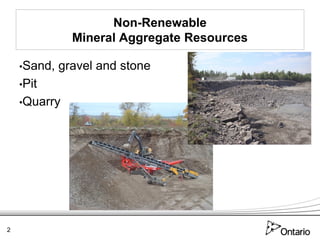
Non-Renewable
               Mineral Aggregate Resources

    •Sand,   gravel and stone
    •Pit
    •Quarry


2
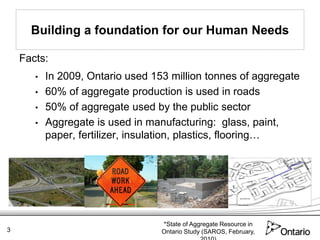
Building a foundation for our Human Needs

    Facts:
       •   In 2009, Ontario used 153 million tonnes of aggregate
       •   60% of aggregate production is used in roads
       •   50% of aggregate used by the public sector
       •   Aggregate is used in manufacturing: glass, paint,
           paper, fertilizer, insulation, plastics, flooring…


                                   *State of Aggregate Resource in
3                                  Ontario Study (SAROS, February,
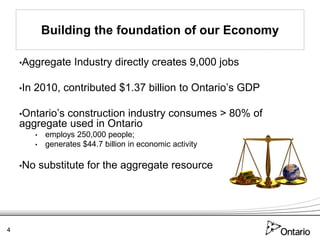
Building the foundation of our Economy

    •Aggregate         Industry directly creates 9,000 jobs

    •In   2010, contributed $1.37 billion to Ontario’s GDP

    •Ontario’s
             construction industry consumes > 80% of
    aggregate used in Ontario
          •    employs 250,000 people;
          •    generates $44.7 billion in economic activity

    •No       substitute for the aggregate resource


4
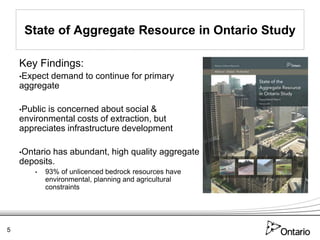
State of Aggregate Resource in Ontario Study

    Key Findings:
    •Expectdemand to continue for primary
    aggregate

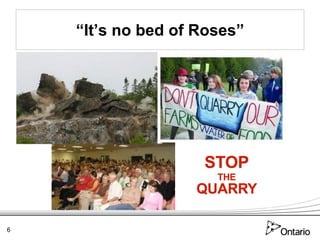
    •Publicis concerned about social &
    environmental costs of extraction, but
    appreciates infrastructure development

    •Ontariohas abundant, high quality aggregate
    deposits.
        •   93% of unlicenced bedrock resources have
            environmental, planning and agricultural
            constraints


5
“It’s no bed of Roses”


6
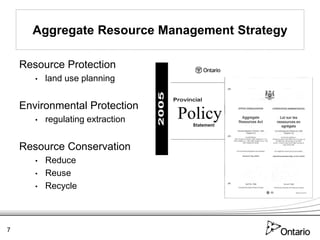
Aggregate Resource Management Strategy

    Resource Protection
       •   land use planning


    Environmental Protection
       •   regulating extraction


    Resource Conservation
       •   Reduce
       •   Reuse
       •   Recycle


7
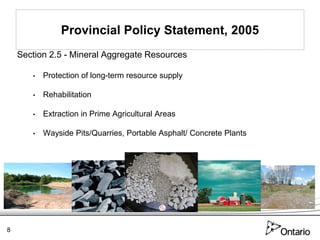
Provincial Policy Statement, 2005
    Section 2.5 - Mineral Aggregate Resources

       •   Protection of long-term resource supply

       •   Rehabilitation

       •   Extraction in Prime Agricultural Areas

       •   Wayside Pits/Quarries, Portable Asphalt/ Concrete Plants


8
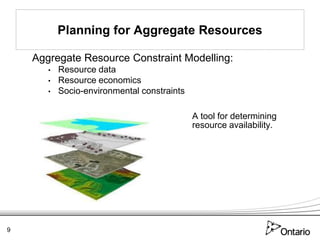
Planning for Aggregate Resources

    Aggregate Resource Constraint Modelling:
       •   Resource data
       •   Resource economics
       •   Socio-environmental constraints

                                             A tool for determining
                                             resource availability.


9
“We are the Champions”

     Aggregates:
       •   non-renewable resource, fixed locations;
       •   Basic necessity of our economy and society;
     What is available for future use?
       •   protect resources & operations
       •   land use planning, legislation, resource conservation
     Aggregate Resources Inventory Master Plan –
          United Counties of Prescott and Russell


10
Contact the Ministry of Natural
              Resources:

                 mnr.gov.on.ca

              ontario.ca/aggregates

                   Kemptville District Office
              10 Campus Drive, Postal Bag 2002,
           10 Campus Drive, Kemptville, ON K0G 1J0
                      (613) 258-8204

                 Anda Rungis, District Planner
                        613 258-8414
                   Anda.Rungis@ontario.ca


11

We will rock you mnr

  • 1.
    We Will RockYou September 13, 2012
  • 2.
    Non-Renewable Mineral Aggregate Resources •Sand, gravel and stone •Pit •Quarry 2
  • 3.
    Building a foundationfor our Human Needs Facts: • In 2009, Ontario used 153 million tonnes of aggregate • 60% of aggregate production is used in roads • 50% of aggregate used by the public sector • Aggregate is used in manufacturing: glass, paint, paper, fertilizer, insulation, plastics, flooring… *State of Aggregate Resource in 3 Ontario Study (SAROS, February,
  • 4.
    Building the foundationof our Economy •Aggregate Industry directly creates 9,000 jobs •In 2010, contributed $1.37 billion to Ontario’s GDP •Ontario’s construction industry consumes > 80% of aggregate used in Ontario • employs 250,000 people; • generates $44.7 billion in economic activity •No substitute for the aggregate resource 4
  • 5.
    State of AggregateResource in Ontario Study Key Findings: •Expectdemand to continue for primary aggregate •Publicis concerned about social & environmental costs of extraction, but appreciates infrastructure development •Ontariohas abundant, high quality aggregate deposits. • 93% of unlicenced bedrock resources have environmental, planning and agricultural constraints 5
  • 6.
    “It’s no bedof Roses” 6
  • 7.
    Aggregate Resource ManagementStrategy Resource Protection • land use planning Environmental Protection • regulating extraction Resource Conservation • Reduce • Reuse • Recycle 7
  • 8.
    Provincial Policy Statement,2005 Section 2.5 - Mineral Aggregate Resources • Protection of long-term resource supply • Rehabilitation • Extraction in Prime Agricultural Areas • Wayside Pits/Quarries, Portable Asphalt/ Concrete Plants 8
  • 9.
    Planning for AggregateResources Aggregate Resource Constraint Modelling: • Resource data • Resource economics • Socio-environmental constraints A tool for determining resource availability. 9
  • 10.
    “We are theChampions” Aggregates: • non-renewable resource, fixed locations; • Basic necessity of our economy and society; What is available for future use? • protect resources & operations • land use planning, legislation, resource conservation Aggregate Resources Inventory Master Plan – United Counties of Prescott and Russell 10
  • 11.
    Contact the Ministryof Natural Resources: mnr.gov.on.ca ontario.ca/aggregates Kemptville District Office 10 Campus Drive, Postal Bag 2002, 10 Campus Drive, Kemptville, ON K0G 1J0 (613) 258-8204 Anda Rungis, District Planner 613 258-8414 Anda.Rungis@ontario.ca 11