KAYAKING PADDLES
WHY IS A KAYAKING PADDLE
DIFFERENT FROM A CANOE PADDLE
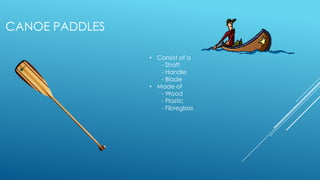
CANOE PADDLES
• Consist of a
- Shaft
- Handle
- Blade
• Made of
- Wood
- Plastic
- Fibreglass
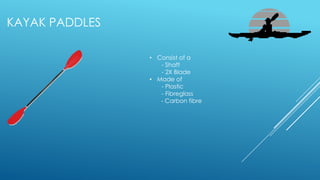
KAYAK PADDLES
• Consist of a
- Shaft
- 2X Blade
• Made of
- Plastic
- Fibreglass
- Carbon fibre
WHAT DIFFERENCES EXIST BETWEEN
KAYAK PADDLES
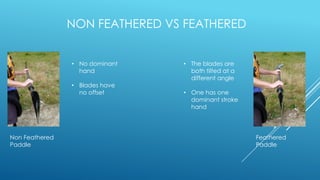
NON FEATHERED VS FEATHERED
Feathered
Paddle
Non Feathered
Paddle
• No dominant
hand
• Blades have
no offset
• The blades are
both tilted at a
different angle
• One has one
dominant stroke
hand
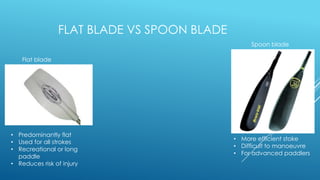
FLAT BLADE VS SPOON BLADE
Flat blade
Spoon blade
• Predominantly flat
• Used for all strokes
• Recreational or long
paddle
• Reduces risk of injury
• More efficient stoke
• Difficult to manoeuvre
• For advanced paddlers
COMMON MATERIALS USED IN
KAYAK PADDLES
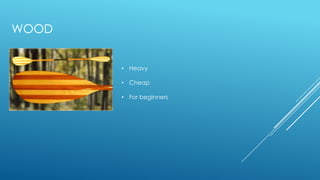
WOOD
• Heavy
• Cheap
• For beginners
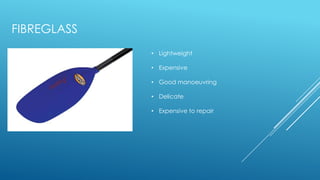
FIBREGLASS
• Lightweight
• Expensive
• Good manoeuvring
• Delicate
• Expensive to repair
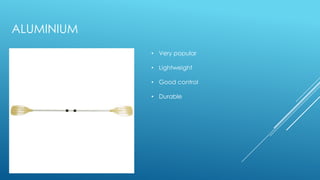
ALUMINIUM
• Very popular
• Lightweight
• Good control
• Durable
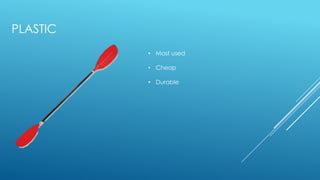
PLASTIC
• Most used
• Cheap
• Durable
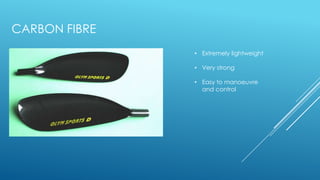
CARBON FIBRE
• Extremely lightweight
• Very strong
• Easy to manoeuvre
and control
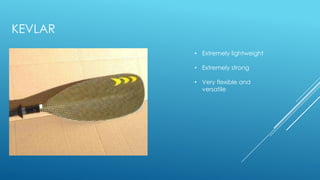
KEVLAR
• Extremely lightweight
• Extremely strong
• Very flexible and
versatile
WHAT ARE THE MAIN STROKES USED IN
KAYAKING
• Hands shoulder width apart
• Insert one side of the paddle into the water
• Rotate torso and pull the blade through the
water alongside the boat
• Keep the top hand steady
• Remove paddle from water at appropriate
point
THE FORWARD STROKE
• Twist torso so that shoulders parallel to the
kayak
• Put the paddle into the water at the rear
end of the kayak
• Rotate torso back so that shoulders are
perpendicular to the kayak
• Sweep paddle forwards along the side of
the boat
• Remove paddle from water at the tip of the
kayak
THE BACKWARD STROKE
• Twist torso in the desired turning direction
• Insert paddle as far back and away as
possible
• Bring blade back towards the kayak
• This will turn the boat to the desired direction
THE DRAW STROKE
• Perform the draw stroke on desired turning
side
• Perform a wide forwards stroke on opposite
side
• Let the kayak spin around
THE SPIN MANOEUVRE

Kayaking and canoeing paddles

  • 1.
  • 2.
    WHY IS AKAYAKING PADDLE DIFFERENT FROM A CANOE PADDLE
  • 3.
    CANOE PADDLES • Consistof a - Shaft - Handle - Blade • Made of - Wood - Plastic - Fibreglass
  • 4.
    KAYAK PADDLES • Consistof a - Shaft - 2X Blade • Made of - Plastic - Fibreglass - Carbon fibre
  • 5.
    WHAT DIFFERENCES EXISTBETWEEN KAYAK PADDLES
  • 6.
    NON FEATHERED VSFEATHERED Feathered Paddle Non Feathered Paddle • No dominant hand • Blades have no offset • The blades are both tilted at a different angle • One has one dominant stroke hand
  • 7.
    FLAT BLADE VSSPOON BLADE Flat blade Spoon blade • Predominantly flat • Used for all strokes • Recreational or long paddle • Reduces risk of injury • More efficient stoke • Difficult to manoeuvre • For advanced paddlers
  • 8.
    COMMON MATERIALS USEDIN KAYAK PADDLES
  • 9.
  • 10.
    FIBREGLASS • Lightweight • Expensive •Good manoeuvring • Delicate • Expensive to repair
  • 11.
    ALUMINIUM • Very popular •Lightweight • Good control • Durable
  • 12.
    PLASTIC • Most used •Cheap • Durable
  • 13.
    CARBON FIBRE • Extremelylightweight • Very strong • Easy to manoeuvre and control
  • 14.
    KEVLAR • Extremely lightweight •Extremely strong • Very flexible and versatile
  • 15.
    WHAT ARE THEMAIN STROKES USED IN KAYAKING
  • 16.
    • Hands shoulderwidth apart • Insert one side of the paddle into the water • Rotate torso and pull the blade through the water alongside the boat • Keep the top hand steady • Remove paddle from water at appropriate point THE FORWARD STROKE
  • 17.
    • Twist torsoso that shoulders parallel to the kayak • Put the paddle into the water at the rear end of the kayak • Rotate torso back so that shoulders are perpendicular to the kayak • Sweep paddle forwards along the side of the boat • Remove paddle from water at the tip of the kayak THE BACKWARD STROKE
  • 18.
    • Twist torsoin the desired turning direction • Insert paddle as far back and away as possible • Bring blade back towards the kayak • This will turn the boat to the desired direction THE DRAW STROKE
  • 19.
    • Perform thedraw stroke on desired turning side • Perform a wide forwards stroke on opposite side • Let the kayak spin around THE SPIN MANOEUVRE