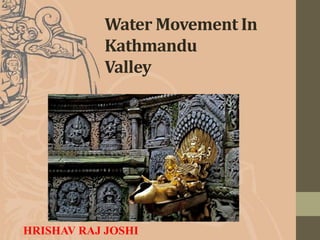
Water Movement In
Kathmandu
Valley
HRISHAV RAJ JOSHI
History Of Water System
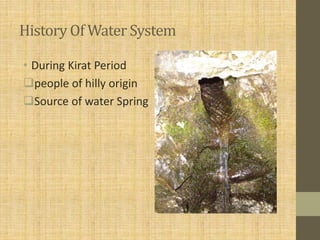
• During Kirat Period
people of hilly origin
Source of water Spring
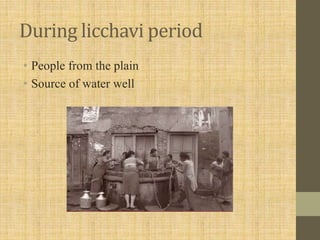
During licchavi period
• People from the plain
• Source of water well
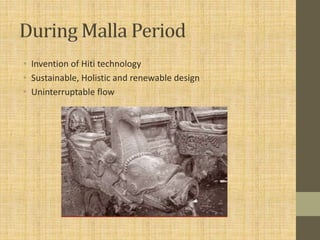
• Invention of Hiti technology
• Sustainable, Holistic and renewable design
• Uninterruptable flow
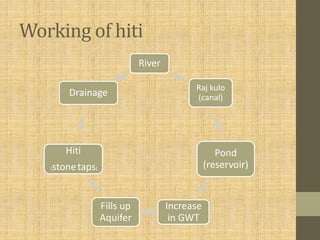
Working of hiti
River
Raj kulo
(canal)
Pond
(reservoir)
Increase
in GWT
Fills up
Aquifer
Hiti
(stonetaps)
Drainage
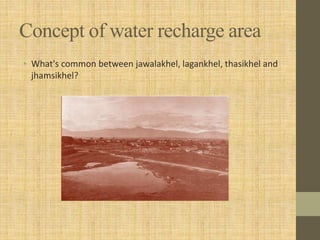
Concept of water recharge area
• What's common between jawalakhel, lagankhel, thasikhel and
jhamsikhel?
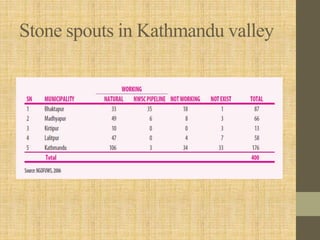
Stone spouts in Kathmandu valley
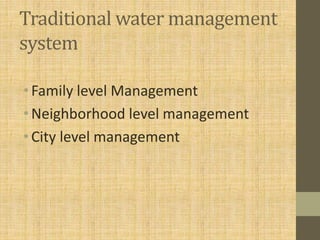
Traditional water management
system
•Family level Management
•Neighborhood level management
•City level management
Family level management
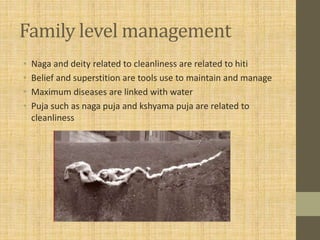
• Naga and deity related to cleanliness are related to hiti
• Belief and superstition are tools use to maintain and manage
• Maximum diseases are linked with water
• Puja such as naga puja and kshyama puja are related to
cleanliness
Neighborhood level
management
• Guthi are formed for management of hiti
• Different auspicious days were used for the puja and
maintenance of hities by the guthies e.g
Yenya Punhi, (the full moon in September)
Khai Sahnu (the New year day of Bikarm Era in April)
Nag Panchami (the 5th day of the new moon in August)
Fagu Punhi (the full moon in March, the day Karunamaya Jatra
starts)
Sithinakha, one of the driest day in June
City level Management
• City level infrastructures were maintained under
the leadership of city level institutions
• Festivals were created (or utilised) to draw
attention to these infrastructures.
• Rato machindranath jatra an example
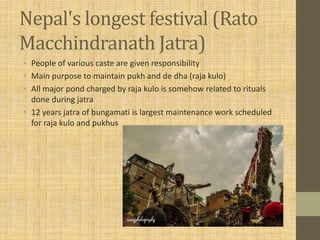
Nepal's longest festival (Rato
Macchindranath Jatra)
• People of various caste are given responsibility
• Main purpose to maintain pukh and de dha (raja kulo)
• All major pond charged by raja kulo is somehow related to rituals
done during jatra
• 12 years jatra of bungamati is largest maintenance work scheduled
for raja kulo and pukhus
Thank you

Water movement in kathmandu

  • 1.
  • 2.
    History Of WaterSystem • During Kirat Period people of hilly origin Source of water Spring
  • 3.
    During licchavi period •People from the plain • Source of water well
  • 4.
    • Invention ofHiti technology • Sustainable, Holistic and renewable design • Uninterruptable flow
  • 5.
    Working of hiti River Rajkulo (canal) Pond (reservoir) Increase in GWT Fills up Aquifer Hiti (stonetaps) Drainage
  • 6.
    Concept of waterrecharge area • What's common between jawalakhel, lagankhel, thasikhel and jhamsikhel?
  • 7.
    Stone spouts inKathmandu valley
  • 8.
    Traditional water management system •Familylevel Management •Neighborhood level management •City level management
  • 9.
    Family level management •Naga and deity related to cleanliness are related to hiti • Belief and superstition are tools use to maintain and manage • Maximum diseases are linked with water • Puja such as naga puja and kshyama puja are related to cleanliness
  • 10.
    Neighborhood level management • Guthiare formed for management of hiti • Different auspicious days were used for the puja and maintenance of hities by the guthies e.g Yenya Punhi, (the full moon in September) Khai Sahnu (the New year day of Bikarm Era in April) Nag Panchami (the 5th day of the new moon in August) Fagu Punhi (the full moon in March, the day Karunamaya Jatra starts) Sithinakha, one of the driest day in June
  • 11.
    City level Management •City level infrastructures were maintained under the leadership of city level institutions • Festivals were created (or utilised) to draw attention to these infrastructures. • Rato machindranath jatra an example
  • 12.
    Nepal's longest festival(Rato Macchindranath Jatra) • People of various caste are given responsibility • Main purpose to maintain pukh and de dha (raja kulo) • All major pond charged by raja kulo is somehow related to rituals done during jatra • 12 years jatra of bungamati is largest maintenance work scheduled for raja kulo and pukhus
  • 13.