WATER LOGGING
Waterlogging is simply the saturation of
soil with water, either temporarily or
permanently. When there is too much water in
an area, the soil is unable to absorb the water
as it should ordinarily.
Waterlogging constraints plant growth and
production in the anaerobic conditions, leading
to the death of certain crops and plants.
DIFFERENT TYPES OF WATERLOGGING
 Riverine Flood Waterlogging
 It is a type of waterlogging which occurs during the rainy seasons, where
floods come to nearby lands from the river because it carries excess water.
The water is waterlogged in the land and leads to the death of a number of
plants or crops.
 Oceanic Flood Waterlogging
 As the name suggests and borrowing from the aforementioned type,
oceanic flood waterlogging is characterized by oceanic waters spreading
onto nearby lands and causing waterlogging.
 Seasonal Waterlogging
 Sometimes during the rainy seasons, runoff water might accumulate into
the lowlands and depressions, leading to waterlogging.
 Perennial Waterlogging
 This happens when deep water or swamps get rainwater and the runoff and
seepage water spreads onto neighboring lands, causing perennial
waterlogging.
 Sub-soil Waterlogging
 It is another type of waterlogging which occurs when water tables rise up
high, especially during the rainy seasons, causing waterlogging.
 Physiography
 The topography, slope, shape and drainage patterns of a
place could cause waterlogging. In other words, physiography
determines the speed of surface runoff and the time it takes
for the soil to drain surface water.
 Weather
 Weather is another natural cause of waterlogging, meaning
that areas facing constant or prolonged rainfall, will tend to
become waterlogged, either temporarily or permanently.
 Soil Type
 Heavy clay soils like black cotton soils, and soils prone to
surface sealing, hold moisture for long periods, meaning they
become waterlogged easily.
 Geology
 An impervious stratum below the topsoil, obstructs the
infiltration of rainfall, causing a false water table or perched
water table.
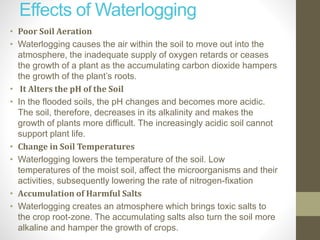
Effects of Waterlogging
• Poor Soil Aeration
• Waterlogging causes the air within the soil to move out into the
atmosphere, the inadequate supply of oxygen retards or ceases
the growth of a plant as the accumulating carbon dioxide hampers
the growth of the plant’s roots.
• It Alters the pH of the Soil
• In the flooded soils, the pH changes and becomes more acidic.
The soil, therefore, decreases in its alkalinity and makes the
growth of plants more difficult. The increasingly acidic soil cannot
support plant life.
• Change in Soil Temperatures
• Waterlogging lowers the temperature of the soil. Low
temperatures of the moist soil, affect the microorganisms and their
activities, subsequently lowering the rate of nitrogen-fixation
• Accumulation of Harmful Salts
• Waterlogging creates an atmosphere which brings toxic salts to
the crop root-zone. The accumulating salts also turn the soil more
alkaline and hamper the growth of crops.
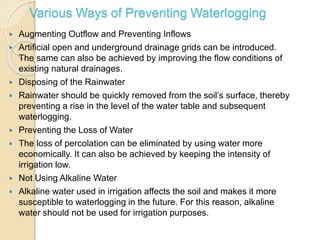
Various Ways of Preventing Waterlogging
 Augmenting Outflow and Preventing Inflows
 Artificial open and underground drainage grids can be introduced.
The same can also be achieved by improving the flow conditions of
existing natural drainages.
 Disposing of the Rainwater
 Rainwater should be quickly removed from the soil’s surface, thereby
preventing a rise in the level of the water table and subsequent
waterlogging.
 Preventing the Loss of Water
 The loss of percolation can be eliminated by using water more
economically. It can also be achieved by keeping the intensity of
irrigation low.
 Not Using Alkaline Water
 Alkaline water used in irrigation affects the soil and makes it more
susceptible to waterlogging in the future. For this reason, alkaline
water should not be used for irrigation purposes.

WATER LOGGING.pptx

  • 1.
    WATER LOGGING Waterlogging issimply the saturation of soil with water, either temporarily or permanently. When there is too much water in an area, the soil is unable to absorb the water as it should ordinarily. Waterlogging constraints plant growth and production in the anaerobic conditions, leading to the death of certain crops and plants.
  • 2.
    DIFFERENT TYPES OFWATERLOGGING  Riverine Flood Waterlogging  It is a type of waterlogging which occurs during the rainy seasons, where floods come to nearby lands from the river because it carries excess water. The water is waterlogged in the land and leads to the death of a number of plants or crops.  Oceanic Flood Waterlogging  As the name suggests and borrowing from the aforementioned type, oceanic flood waterlogging is characterized by oceanic waters spreading onto nearby lands and causing waterlogging.  Seasonal Waterlogging  Sometimes during the rainy seasons, runoff water might accumulate into the lowlands and depressions, leading to waterlogging.  Perennial Waterlogging  This happens when deep water or swamps get rainwater and the runoff and seepage water spreads onto neighboring lands, causing perennial waterlogging.  Sub-soil Waterlogging  It is another type of waterlogging which occurs when water tables rise up high, especially during the rainy seasons, causing waterlogging.
  • 3.
     Physiography  Thetopography, slope, shape and drainage patterns of a place could cause waterlogging. In other words, physiography determines the speed of surface runoff and the time it takes for the soil to drain surface water.  Weather  Weather is another natural cause of waterlogging, meaning that areas facing constant or prolonged rainfall, will tend to become waterlogged, either temporarily or permanently.  Soil Type  Heavy clay soils like black cotton soils, and soils prone to surface sealing, hold moisture for long periods, meaning they become waterlogged easily.  Geology  An impervious stratum below the topsoil, obstructs the infiltration of rainfall, causing a false water table or perched water table.
  • 4.
    Effects of Waterlogging •Poor Soil Aeration • Waterlogging causes the air within the soil to move out into the atmosphere, the inadequate supply of oxygen retards or ceases the growth of a plant as the accumulating carbon dioxide hampers the growth of the plant’s roots. • It Alters the pH of the Soil • In the flooded soils, the pH changes and becomes more acidic. The soil, therefore, decreases in its alkalinity and makes the growth of plants more difficult. The increasingly acidic soil cannot support plant life. • Change in Soil Temperatures • Waterlogging lowers the temperature of the soil. Low temperatures of the moist soil, affect the microorganisms and their activities, subsequently lowering the rate of nitrogen-fixation • Accumulation of Harmful Salts • Waterlogging creates an atmosphere which brings toxic salts to the crop root-zone. The accumulating salts also turn the soil more alkaline and hamper the growth of crops.
  • 5.
    Various Ways ofPreventing Waterlogging  Augmenting Outflow and Preventing Inflows  Artificial open and underground drainage grids can be introduced. The same can also be achieved by improving the flow conditions of existing natural drainages.  Disposing of the Rainwater  Rainwater should be quickly removed from the soil’s surface, thereby preventing a rise in the level of the water table and subsequent waterlogging.  Preventing the Loss of Water  The loss of percolation can be eliminated by using water more economically. It can also be achieved by keeping the intensity of irrigation low.  Not Using Alkaline Water  Alkaline water used in irrigation affects the soil and makes it more susceptible to waterlogging in the future. For this reason, alkaline water should not be used for irrigation purposes.