SUBMITTED BY –
ASHISH KUMAR SAHOO-114030
DIVAKAR -114052
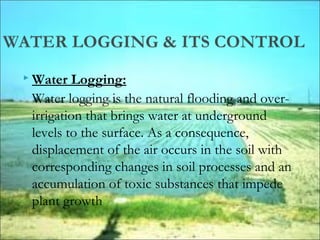
 Water Logging:
Water logging is the natural flooding and over-
irrigation that brings water at underground
levels to the surface. As a consequence,
displacement of the air occurs in the soil with
corresponding changes in soil processes and an
accumulation of toxic substances that impede
plant growth
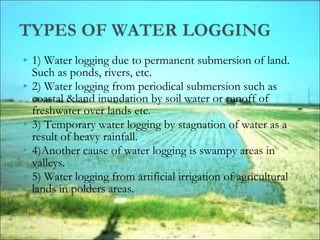
 1) Water logging due to permanent submersion of land.
Such as ponds, rivers, etc.
 2) Water logging from periodical submersion such as
coastal &land inundation by soil water or runoff of
freshwater over lands etc.
 3) Temporary water logging by stagnation of water as a
result of heavy rainfall.
 4)Another cause of water logging is swampy areas in
valleys.
 5) Water logging from artificial irrigation of agricultural
lands in polders areas.
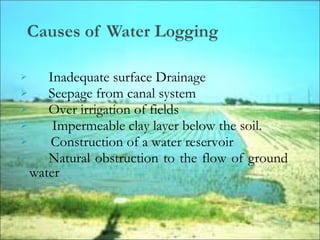
 Inadequate surface Drainage
 Seepage from canal system
 Over irrigation of fields
 Impermeable clay layer below the soil.
 Construction of a water reservoir
 Natural obstruction to the flow of ground
water
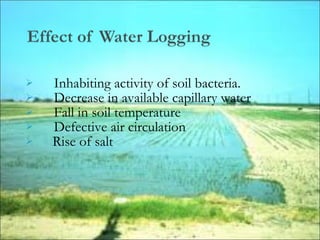
 Inhabiting activity of soil bacteria.
 Decrease in available capillary water
 Fall in soil temperature
 Defective air circulation
     Rise of salt   
 Delay in cultivation operations
     Growth of flora(unwanted plants species)
 Adverse effects on community health
 Less availability of oxygen
 
 Providing efficient surface Drainage.
 Reducing percolation(the slow passage of a
liquid through a filtering medium) from canals.
 Restriction of unwanted irrigation.
 Adoption of sprinkler method for irrigation
 Removing obstructions in natural drainage.
   If the concentration of harmful salts in the root
zone of a plant increases to such on extent that
plant growth is effected, this situation is called
Salinity.Salinity.
 The factors contributing towards the problem
of salinity are almost same as that of water
logging.
 Every agricultural soil has certain mineral salt is
also called alkali salts in it like NaCl, Na2CO3,
Na2SO4 etc.
 When these soluble alkali salts are excess in
soil these salts get mixed with ground water
and with upward movement of   water not
only accumulated in first 3~4ft of soil layer
below ground surface but also form a tin
2”~3” crust on surface.
 Corrosive Action to Plants.
 Formation of Alkali Soil.
 Controlled Irrigation.
 Providing adequate surface drainage.
 Allowing lower intensity of irrigation.
 Reducing surface evaporation.
 Not using alkaline water for irrigation purpose.
 https://stats.oecd.org/glossary/detail.asp?ID=2905
 https://en.wikipedia.org/wiki/Waterlogging_(agricultur
e)
 http://www.yourarticlelibrary.com/water/waterlogging/
waterlogging-definition-causes-effects-with-statistics

Water logging salinity

  • 1.
    SUBMITTED BY – ASHISHKUMAR SAHOO-114030 DIVAKAR -114052
  • 2.
     Water Logging: Waterlogging is the natural flooding and over- irrigation that brings water at underground levels to the surface. As a consequence, displacement of the air occurs in the soil with corresponding changes in soil processes and an accumulation of toxic substances that impede plant growth
  • 3.
     1) Water loggingdue to permanent submersion of land. Such as ponds, rivers, etc.  2) Water logging from periodical submersion such as coastal &land inundation by soil water or runoff of freshwater over lands etc.  3) Temporary water logging by stagnation of water as a result of heavy rainfall.  4)Another cause of water logging is swampy areas in valleys.  5) Water logging from artificial irrigation of agricultural lands in polders areas.
  • 4.
     Inadequate surfaceDrainage  Seepage from canal system  Over irrigation of fields  Impermeable clay layer below the soil.  Construction of a water reservoir  Natural obstruction to the flow of ground water
  • 5.
     Inhabiting activityof soil bacteria.  Decrease in available capillary water  Fall in soil temperature  Defective air circulation      Rise of salt   
  • 6.
     Delay incultivation operations      Growth of flora(unwanted plants species)  Adverse effects on community health  Less availability of oxygen  
  • 7.
     Providing efficientsurface Drainage.  Reducing percolation(the slow passage of a liquid through a filtering medium) from canals.  Restriction of unwanted irrigation.  Adoption of sprinkler method for irrigation  Removing obstructions in natural drainage.
  • 8.
       If the concentrationof harmful salts in the root zone of a plant increases to such on extent that plant growth is effected, this situation is called Salinity.Salinity.
  • 9.
     The factorscontributing towards the problem of salinity are almost same as that of water logging.  Every agricultural soil has certain mineral salt is also called alkali salts in it like NaCl, Na2CO3, Na2SO4 etc.
  • 10.
     When thesesoluble alkali salts are excess in soil these salts get mixed with ground water and with upward movement of   water not only accumulated in first 3~4ft of soil layer below ground surface but also form a tin 2”~3” crust on surface.
  • 11.
     Corrosive Actionto Plants.  Formation of Alkali Soil.
  • 12.
     Controlled Irrigation. Providing adequate surface drainage.  Allowing lower intensity of irrigation.  Reducing surface evaporation.  Not using alkaline water for irrigation purpose.
  • 13.
     https://stats.oecd.org/glossary/detail.asp?ID=2905  https://en.wikipedia.org/wiki/Waterlogging_(agricultur e) http://www.yourarticlelibrary.com/water/waterlogging/ waterlogging-definition-causes-effects-with-statistics